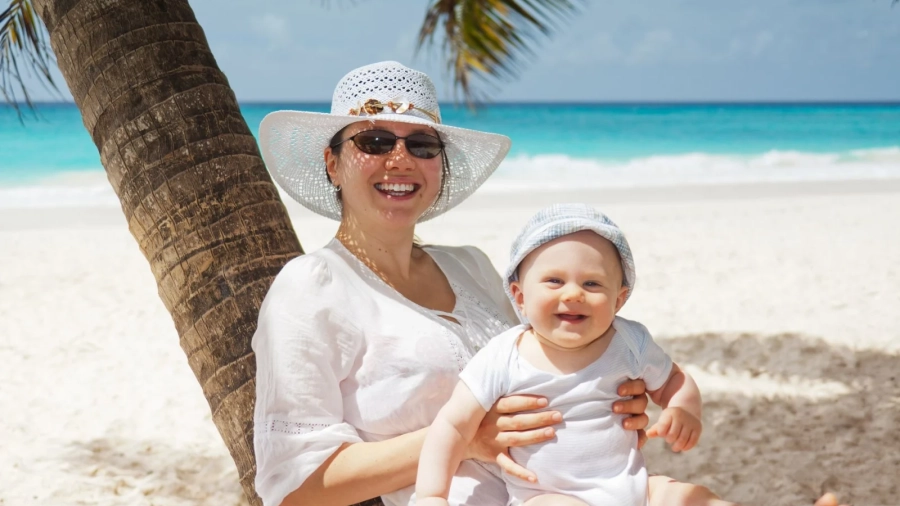
Baby in a sun hat at the beach, illustrating what to include on a baby cruise packing list

Baby and Toddler Cruise Packing List: The Complete Checklist (2026)

A good baby cruise packing list covers six things: travel documents, enough nappies and wipes for the whole trip, familiar food and milk, sleep kit for the cabin, sun protection, and a compact pushchair or carrier. Ships supply some baby basics, such as cots and high chairs, but rarely stock the brands and sizes you rely on, so pack the essentials and check what your cruise line provides before you go.

The checklists below are grouped by category so you can tick items off as you pack. There is no separate download: simply print this page from your browser if you prefer a paper copy. The lists work for UK and US families alike, with notes where terms differ (nappies and diapers, pushchairs and strollers, cots and cribs).

Before You Pack: Age Rules and Documents

Check the minimum age before you book, because babies who are too young are refused boarding with no refund. Most big-ship lines set the limit at 6 months on the first day of the cruise, rising to 12 months on longer voyages with several sea days in a row.

Cruise line Standard minimum age When 12 months applies
Royal Caribbean 6 months Transatlantic, transpacific, Hawaii, selected South American sailings and any cruise with 3+ consecutive sea days
Disney Cruise Line 6 months Transatlantic, Panama Canal and Hawaii itineraries
P&O Cruises 6 months Selected longer voyages, such as transatlantic crossings
Carnival 6 months Transatlantic, transpacific, Hawaii and South America
Celebrity Cruises 6 months Transatlantic, transpacific, Hawaii, Australia and selected South American sailings
Norwegian Cruise Line 6 months Cruises with 3+ consecutive sea days
Princess and Cunard 6 months Selected longer sailings
Oceania, Regent and other luxury lines Often 12 months or older Varies by line and ship

Policies change, so confirm your line’s current rules at the time of booking.

Documents checklist

  • Baby’s own passport (UK babies need one for any cruise leaving the UK; US families should check whether their sailing accepts a birth certificate)
  • Birth certificate, especially if your child’s surname differs from yours
  • Signed consent letter from the other parent if only one parent is travelling
  • Booking confirmation and any onboard requests (cot, high chair, baby food) in writing
  • Travel insurance documents that list the baby by name
  • GHIC or EHIC card for UK families on European sailings
  • Copies of any prescriptions and a short medical summary if your child has a health condition

Nappies, Wipes and Changing Checklist

This is the category that families most often under-pack. A young baby can easily go through 8 to 10 nappies a day, and onboard shops tend to carry only a small range of sizes at higher prices than you pay at home.

  • Nappies for every day of the cruise, plus two or three days spare
  • Wipes (more than you think: they clean faces, hands and sticky tables too)
  • Nappy cream
  • Nappy sacks or small bags for dirty nappies
  • Portable changing mat
  • Swim nappies, only if your ship has a baby splash area that allows them
  • Hand sanitiser
  • A small wet bag for damp clothes and swimwear

Swim nappy rules on cruise ships

Under public health rules, children in nappies or who are not fully toilet trained are generally not allowed in the main pools or hot tubs, even in swim nappies. Royal Caribbean, for example, limits them to Baby Splash areas found on selected ships such as Oasis of the Seas, Icon of the Seas and Wonder of the Seas. Disney ships have toddler splash zones too. If your ship has no baby splash area, a small inflatable paddling pool for the balcony or a shallow beach day in port can fill the gap. Our guide to the best Royal Caribbean ships for kids of each age shows which ships suit babies and toddlers.

Feeding Checklist for Babies and Toddlers

  • Formula or milk in the brand your baby is used to, enough for the whole trip
  • Bottles, teats and a compact bottle brush
  • Steriliser bags or cold-water sterilising tablets
  • Pouches or jars of baby food for the first days and port days
  • Toddler snacks (oat bars, rice cakes, dried fruit)
  • Sippy cup or beaker
  • Silicone or wipe-clean bibs
  • Baby spoons and a small travel bowl
  • Insulated bag for milk or snacks on shore excursions
  • Breast pump and storage bags if you express

Most buffets and main restaurants can mash or purée food on request, and high chairs are standard on all big family lines. Disney prepares puréed vegetables in its main dining rooms or through room service, provides bottle warmers and sterilisers, and lets you carry unopened, pre-packaged baby food and formula on board. Royal Caribbean also allows you to bring your own and has offered pre-ordered baby supplies delivered to your cabin. UK lines such as P&O Cruises and Cunard have traditionally offered jars of baby food, but check the current list before you rely on it. One tip that many lists miss: US-based ships rarely have kettles in cabins, so if you make up powdered formula with freshly boiled water, ask guest services how they can help or pack ready-to-feed cartons instead.
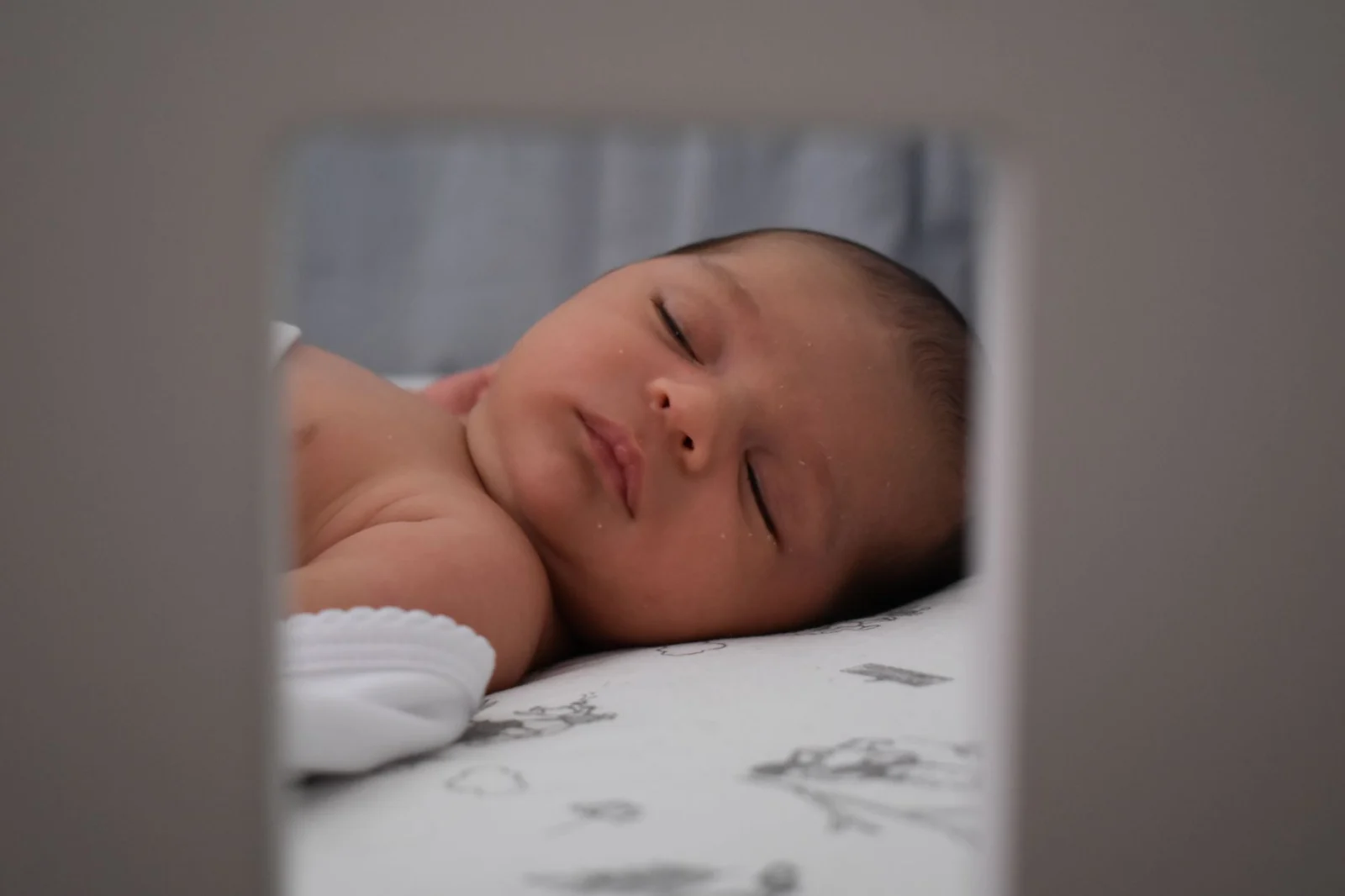
Baby sleeping peacefully in a travel cot, the sort of setup families request in a cruise cabin
Most cruise lines supply a cot free on request, but bring your own baby bedding. Photo: Liz Serafini M on Pexels

Sleep and Cabin Checklist

Cabins are compact, so a few small items make bedtime much easier. Request your cot when you book, then pack the bedding your baby is used to.

  • Fitted cot sheets (ship cots often come with adult linen or none at all)
  • Baby sleeping bag or sleep suit
  • Portable blackout blinds or a pop-up sleep tent
  • White noise machine or app
  • Night light, since inside cabins are pitch dark
  • Favourite comforter, dummy and a spare
  • Baby monitor (check it works across the cabin and balcony)
  • Magnetic hooks for hanging bags and hats on the metal walls
  • Socket covers and a door stop or strap for wardrobe doors
  • Small inflatable bath or bath seat, as many cabins only have a shower

Cabin choice matters too. An inside cabin is dark for daytime naps and cheaper, while a balcony gives parents somewhere to sit after an early bedtime. Our balcony vs inside cabin comparison weighs up both. If you book a balcony, keep chairs and tables well away from the railing and never leave a toddler out there alone.

Clothes and Sun Protection Checklist

  • Two outfits per day for babies, plus a few spares for spills
  • Pyjamas or sleepsuits for every night
  • Long-sleeved UV swimsuit or rash vest
  • Wide-brimmed sun hat with a chin strap (bring two)
  • Baby-safe high-factor sunscreen (sun cream is generally not advised for babies under 6 months, so rely on shade and clothing)
  • Light cardigan or fleece for air-conditioned venues and windy decks
  • Water shoes or soft sandals for toddlers
  • An outfit for formal or themed nights, if you want family photos
  • Travel wash liquid, as some ships have self-service launderettes

Medicine and First Aid Checklist

The ship’s medical centre can treat babies, but consultations are charged and it may not stock children’s medicines in the brands or doses you know.

  • Infant paracetamol and ibuprofen suitable for your baby’s age
  • Digital thermometer
  • Oral rehydration sachets
  • Teething gel or granules
  • Antihistamine suitable for children, if your GP or paediatrician recommends one
  • Plasters, antiseptic cream and after-sun
  • Saline drops and a nasal aspirator
  • Any prescribed medicines in original packaging

Ask your doctor about seasickness before giving any remedy to a baby or toddler, as many adult treatments are unsuitable for young children.
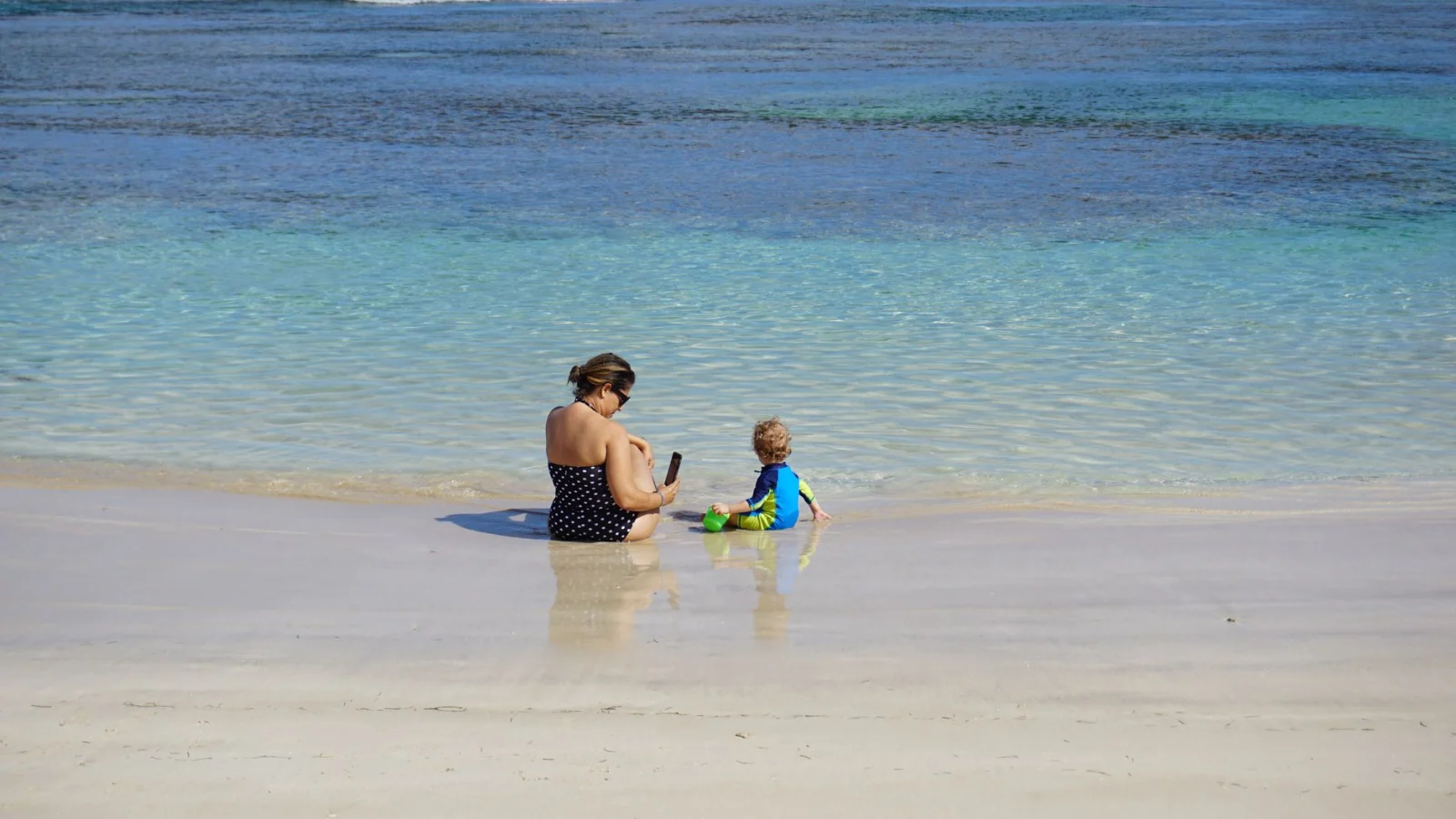
Parents walking with a toddler on the beach, a typical port day on a family cruise with a baby
A compact pushchair is easier to steer through cabin doors and lifts. Photo: Jose Peguero on Pexels

Pushchair, Carrier and Toddler Kit

Choose a lightweight, compact pushchair (stroller) that folds small enough to store in your cabin, because corridors are narrow and lifts get busy. Some lines, including Disney, offer complimentary strollers on board, but availability is limited. A carrier is often quicker for embarkation day, tender boats and excursions with steps or cobbles.

  • Compact folding pushchair with sunshade and rain cover
  • Sling or soft carrier
  • Clip-on fan for the pushchair
  • Small toys, board books and a tablet with downloaded shows (onboard Wi-Fi can be slow and costly)
  • Bucket and spade for beach days
  • Reins or a wrist strap for busy ports
  • Lanyard or ID wristband with your cabin number and mobile number

Embarkation Day Bag

Your main luggage may not reach the cabin until late afternoon, so keep a separate hand-luggage bag for the first few hours.

  • Passports and boarding documents
  • Nappies, wipes and a changing mat for at least six hours
  • Milk, bottles, snacks and a change of clothes
  • Medicines
  • Swimwear and sun cream
  • A comforter and dummy for the first nap

What Not to Pack

  • A full-size travel system or heavy double buggy, unless you truly need it
  • Your own travel cot, as the ship will provide one free
  • Extension leads with surge protectors, which are banned on most ships
  • Plug-in candle warmers, irons or anything with a heating element (bottle warmers are often fine, but check)
  • Too many toys: kids’ clubs, play areas and the ship itself keep little ones busy
  • Every outfit you own, if your ship has a launderette or a laundry service

Is Cruising With a Baby Worth It?

For many families, yes. You unpack once, food is included in the fare on most lines, and babies under two often sail at a reduced fare as a third or fourth guest, so it is worth comparing prices across lines. Our guide to cruise deals and when to book explains how to find the best value. Pack well using the lists above, confirm what your ship supplies, and you will spend more time enjoying the holiday and less time hunting for the right size of nappy in a port shop.

Still choosing a ship? Our guide to the best cruise ships for kids and families compares kids clubs and family facilities by age.

For the rest of your planning, our complete cruise checklist covers documents, check-in and embarkation day.

Parents may also want a roomy cruise carry-on bag for nappies, snacks and swimwear on embarkation day.

FAQs

How old does a baby have to be to go on a cruise?

Most major lines, including Royal Caribbean, Disney, P&O Cruises, Carnival, Celebrity and Princess, require babies to be at least 6 months old on the first day of the cruise. Transatlantic, Hawaii, transpacific and other long sea-day itineraries usually require 12 months, and some luxury lines set 12 months or older for every sailing.

Can babies in nappies go in cruise ship pools?

Usually not. Public health rules mean children in nappies or swim nappies, or who are not fully toilet trained, are kept out of the main pools and hot tubs. Some ships have dedicated baby splash areas where swim nappies are allowed, so check your ship before you pack the swimming kit.

Do cruise ships provide cots for babies?

Yes, nearly all mainstream lines supply a cot or travel cot free of charge if you request it in advance. Many do not supply fitted sheets or sleeping bags in baby sizes, so bring your own bedding.

Should I bring nappies on a cruise or buy them on board?

Bring them. Onboard shops on most lines carry a limited range of sizes at higher prices, and they can sell out. Pack enough for the whole trip plus a few days spare, or pre-order through the line if it offers a delivery service.

Do I need a passport for my baby on a cruise?

For UK families, yes: every baby needs their own passport for any cruise leaving the country. US families on some closed-loop sailings from US ports can use a birth certificate, but a passport is the safer choice in case you need to fly home from a foreign port.

Family of different ages on a cruise ship deck, illustrating cruise age requirements for every generation

Cruise Age Requirements 2026: Every Age Limit From Babies to Over-50s

Cruise age requirements depend on the cruise line and where the ship sails from. Babies usually need to be at least 6 months old (12 months on longer or ocean-crossing voyages). You normally need to be 21 to book and sail without an older adult on North American departures, or 18 from most UK and European ports. The drinking age at sea is 21 on US-based sailings and usually 18 on British lines and in Europe.

After that, a string of other age limits shapes your holiday: kids’ club bands, potty-training rules, teen clubs, casino and spa ages, adults-only ships and even a minimum age of 50 on Saga. This guide works through every milestone, then puts the main lines side by side in one table so you can check the rules before you book.

Babies: the minimum age to cruise

The most common minimum age to cruise is 6 months on the first day of the voyage. Royal Caribbean, Celebrity, Norwegian, Carnival, Disney, Princess, P&O Cruises, Cunard and Fred. Olsen all start from 6 months on most itineraries. That rises to 12 months for transatlantic and transpacific crossings, Hawaii, many South American and South Pacific voyages, and, for several lines, any cruise with three or more consecutive days at sea. Princess applies 6 months only to Alaska, Canada/New England, Caribbean, Europe, Mexico and Panama Canal trips, and 12 months to everything else.

The rule is strictly enforced. An infant who is a day too young can be refused boarding with no refund, so check the date carefully against your child’s birthday. For line-by-line detail on cots, baby food and nurseries, see our guide to taking babies on a cruise and infant age limits.

Nursery ages

Supervised nurseries are less common than kids’ clubs and often carry a fee. Royal Caribbean’s Royal Babies and Tots Nursery takes 6 to 36 months on most of its larger ships, for an hourly charge. Disney’s It’s a Small World Nursery covers children under 3. P&O Cruises runs a free Night Nursery for children from 6 months to under 4, while under-2s can use the daytime nursery area with a parent. Carnival’s Night Owls group babysitting takes children from 6 months to 11 years for a fee.

Cruise age limits for kids’ clubs and potty training

Most kids’ clubs start at 3, but a few take younger children, and the nappy rules vary more than many parents expect.

  • Carnival Camp Ocean: Penguins 2 to 5, Stingrays 6 to 8, Sharks 9 to 11. Children do not need to be potty trained, but you must hand over nappies at each drop-off.
  • Royal Caribbean Adventure Ocean: Aquanauts 3 to 5, Explorers 6 to 8, Voyagers 9 to 11. Children must be fully potty trained. Nappies and pull-ups are not allowed.
  • Disney: Oceaneer Club and Lab for ages 3 to 10.
  • Princess: The Treehouse 3 to 7 and The Lodge 8 to 12 (Sun and Star Princess use Firefly Park, which covers 6 months to 7 years).
  • P&O Cruises: The Reef for Splashers 2 to 4, Surfers 5 to 8 and Scubas 9 to 12.

One rule applies almost everywhere: babies in nappies cannot use the main pools. Swim nappies are usually only allowed in dedicated splash areas.

Teen club ages

Teen programmes generally run from 12 or 13 to 17. Royal Caribbean’s Teen Club covers 12 to 17, split into 12 to 14 and 15 to 17. Carnival has Circle C for 12 to 14 and Club O2 for 15 to 17. Disney uses Edge for 11 to 14 and Vibe for 14 to 17. P&O runs Scene or H2O for 13 to 17, and Princess The Beach House for 13 to 17. Teens can usually sign themselves in and out, which younger children cannot.

Group of young people relaxing by a pool, the age group most affected by cruise age limits for travelling alone
Rules for 18 to 20-year-olds vary more than any other cruise age limit. Photo: Jeremy Angerson on Pexels

Minimum age to book or go on a cruise alone

This is where cruise age requirements vary most. The age to go on a cruise alone usually depends on the departure port, not your nationality.

  • Royal Caribbean and Celebrity: 21 from North America; 18 from Europe, South America, Asia, Australia and New Zealand. Underage married couples and active-duty US or Canadian military can be exempt with proof.
  • Norwegian: on cruises that call at a US, Canadian or Chinese port, under-21s must share (or connect to) a cabin with someone 21+. On other itineraries the line uses 18.
  • Carnival: under-21s must travel with a relative or guardian aged 25 or over, linked on the same booking. For bookings made from 1 October 2026, children 14 and under must share or connect to that adult’s cabin, and 15 to 20-year-olds must be no more than three cabins away. Married couples and qualifying military aged 18 to 20 are exempt.
  • Princess: under-21s must share a cabin with someone 21+, with some leeway for family bookings across several cabins.
  • Disney and Virgin Voyages: 18. Virgin is adults-only, so 18 is also its minimum age to sail at all.
  • UK lines (P&O Cruises, Cunard, Marella, Fred. Olsen): generally 18 on UK and European sailings. Cunard lets under-16s share with anyone aged 16+ in the same cabin.

If you are 18 to 20 and want to sail with friends, our guide to the best cruises for 18-year-olds without parents covers which lines and itineraries work.

Documents for minors

Children travelling with only one parent, or with grandparents or another adult, may need a signed consent letter from the absent parent or parents. Norwegian, for example, asks for a Parent/Guardian Release Form for under-18s travelling with a non-parent and may refuse boarding without it. Carry it even if the line does not ask in advance.

Drinking age at sea

There is no single drinking age on cruise ships. Each line sets its own policy by departure region.

  • US-based sailings (Caribbean, Alaska, Mexico, Hawaii): 21 on Royal Caribbean, Carnival, Princess, Celebrity, Disney and MSC.
  • Europe, South America, Asia, Australia and New Zealand: 18 on Royal Caribbean and MSC. On Disney, guests aged 12 to 20 can drink with a parent present and a signed consent form on certain European and Australian round trips.
  • Norwegian: 21 in Alaska and Hawaii. Elsewhere, 18 to 20-year-olds may drink beer and wine in international waters if a parent on board gives written consent.
  • British lines: P&O Cruises, Marella and Fred. Olsen generally serve from 18. Cunard uses 18 on most sailings, but check its North American departures.

Private islands follow their own rules. Royal Caribbean applies 21 at Perfect Day at CocoCay and Labadee. Turning legal age mid-cruise? Royal Caribbean and MSC will update your record at Guest Services if you show ID.

Casino, spa, gym and adults-only area ages

  • Casino: 18 is standard on Royal Caribbean, Norwegian, Princess, Carnival and most UK lines. Royal Caribbean raises it to 21 on Alaska sailings.
  • Spa: treatments are typically 18+. Princess and others offer teen treatments for 13 to 17-year-olds with parental consent. Norwegian’s Thermal Suite is 18+.
  • Gym: Norwegian bars under-16s from the fitness centre. Other lines let younger teens in with an adult or at set times.
  • Adults-only areas: Carnival’s Serenity is 21+. Princess’s Sanctuary and Disney’s Quiet Cove pool, Palo and Remy restaurants are 18+. Royal Caribbean’s Solarium is 16+ on most ships.
Adults relaxing on sun loungers on a quiet deck, the kind of space covered by adults-only cruise age rules
Many ships set aside quiet adults-only decks, usually for guests 18 and over. Photo: Lisa Fotios on Pexels

Adults-only cruise lines and ships

If you’d rather not share the ship with children, several options set a fixed minimum age for every guest:

  • Virgin Voyages: 18+ fleetwide.
  • Viking ocean ships: 18+.
  • Oceania: new bookings made from 7 January 2026 are for guests aged 18 and over only.
  • P&O Cruises Arcadia and Aurora: adults-only for most of the year, but a limited number of family sailings, mostly around Christmas and school holidays, run from December 2026 to September 2027. Check the specific date.
  • Marella Explorer 2: adults-only, joined by Marella Discovery for summer 2026.
  • Ambassador: every no-fly itinerary in the 2027-28 season is child-free.

Over-50s and older travellers: is there an upper age limit?

Saga is the one major line with a minimum age at the top end. Saga cruises are for anyone aged 50 or over, and a travelling companion can be 40 or over. Nobody else sets a lower limit for older guests, and no mainstream line has a maximum age. Instead, older travellers should expect to declare medical conditions or mobility needs when booking. Lines can ask for evidence of fitness to travel or require a companion for guests who need help. Travel insurance, not the cruise line, is usually where age makes the biggest difference to cost. If you’re planning a trip in later life, see our pick of the best cruises for over-50s.

Pregnancy limit

It isn’t an age rule, but it catches people out. Most lines, including Princess, Royal Caribbean and Disney, refuse passengers who will be 24 weeks pregnant or more at any point during the cruise.

Cruise age requirements by line: comparison table

Cruise line Minimum infant age Sail without parent/older adult Drinking age Kids’ club starts
Carnival 6 months (12 on transatlantic, Hawaii, South America) 21, or under-21s with a 25+ relative 21 (US sailings) 2 (nappies OK)
Royal Caribbean 6 months (12 on long/ocean voyages) 21 North America / 18 elsewhere 21 North America / 18 elsewhere 3 (potty trained)
Norwegian 6 months (12 with 3+ sea days) 21 if US/Canada/China port / 18 otherwise 21 Alaska/Hawaii; 18-20 with parental consent elsewhere 3
Princess 6 months (12 on most long voyages) Under-21s with a 21+ cabin mate 21 (US-based ships) 3 (6 months on Sun/Star Princess)
Disney 6 months (12 on some routes) 18 21 (12-20 with consent on some Europe/Australia trips) 3
MSC Under 1 allowed on shorter cruises; stricter on 11+ nights 18 (21 on US port cruises) 21 North America / 18 Europe Varies by club
P&O Cruises 6 months (12 on some long or remote trips) 18 18 2
Cunard 6 months (12 on world voyages and transatlantics) Under-16s with a 16+ cabin mate 18 on most sailings Varies by ship
Virgin Voyages Adults only 18 21 US / 18 Europe None
Saga Adults only 50 (companion 40+) 18 None

Policies change, and Carnival tightened its rules for young adults twice between 2025 and 2026, so confirm the current terms on the line’s website before you pay a deposit.

Tips for checking cruise age requirements

  1. Use age on embarkation day. Most lines judge every limit by your age on day one. A birthday during the cruise usually won’t count unless Guest Services updates your record.
  2. Check the itinerary, not just the line. The same ship can switch between 21 and 18 rules when it moves from the Caribbean to Europe.
  3. Book cabins together. If teens or young adults will be in a separate cabin, book connecting or neighbouring cabins on the same reservation to satisfy the rules.

FAQs

Do you have to be 18 or 21 to go on a cruise by yourself?

It depends on the line and the departure port. Most US lines require 21 on North American sailings, while Royal Caribbean, Celebrity and most UK lines accept 18 on European departures. Disney and Virgin Voyages use 18.

Can I go on a Carnival cruise at 18?

Yes, but only alongside a relative or guardian aged 25 or over on the same booking, unless you are legally married or qualifying military. From 1 October 2026 bookings, 18 to 20-year-olds must also be within three cabins of that adult.

What is the minimum age to cruise for a baby?

Usually 6 months on embarkation day. That rises to 12 months for transatlantic, Hawaii, South Pacific and other voyages with three or more consecutive sea days.
Is there an upper age limit for cruises?

No major cruise line has a maximum age. Saga has a minimum age of 50 (companions 40+). Every line may ask older passengers to declare medical conditions and prove they are fit to travel.

What is the drinking age on a cruise ship?

Usually 21 on sailings from the US and 18 on British lines and on most European, Australian and South American sailings. Norwegian and Disney allow some 18 to 20-year-olds to drink with parental consent on certain itineraries.

adam-header-e1661960972173.jpg

Cruising With A Baby Or Toddler On P&O Cruises

Many people ask me whether babies can go on P&O Cruises and the answer is yes! Not only can babies sail on board P&O Cruises’ family-friendly ships, but this is a great cruise line to choose for babies and toddlers for so many reasons…

Toddler on P&O Britannia

P&O’s Baby Policy

Babies must be at least six months to sail with P&O
Cruises and at least 12 months for exotic fly-cruises. If you want to cruise
with a baby who is younger than six months old, you should look into other
cruise lines such as MSC Cruises.

P&O Cruises Infant Pricing

Infants under two years old sail at a ‘reduced rate’ with P&O Cruises. Exactly how much you’ll pay for your baby varies depending on the cruise – the P&O Cruises infant prices do vary. According to online forums, people have paid between £50 and £300 to bring a baby on their cruise.

From time to time, P&O Cruises has promotions where the third or fourth passenger in a cabin can sail for as little as £1. So booking your cruise whilst one of these promotions is live can be a great way to save you money on your cruise.

Click to see how P&O Cruises baby prices compare to other cruise lines.

Get Help Booking Your Family Cruise

Cruise Family are the only UK specialists in cruises for families of 5+ (and smaller ones too!)

Let them find your perfect trip…

Accommodation For Babies

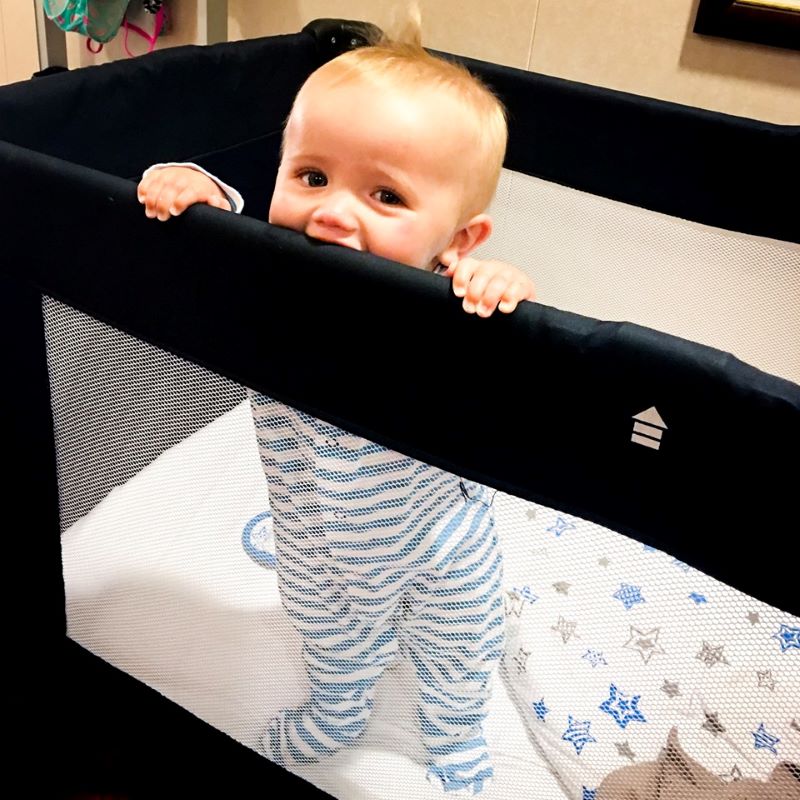
P&O Cruises provides travel cots free of charge. There is space in even the smallest of inside cabins for a travel cot but if you do require a bit of extra space in your cabin, your cabin steward will be happy to take down the travel cot in the morning and put it back up for you in the evening.

Baby in cot

The travel cots come with a thin mattress and a sheet. Guests are requested to bring their own cot bedding such as duvets, pillows or sleeping bags as required.

It might be a good idea to bring a thick blanket or small quilt to create some extra padding if your little one is used to a softer bed. If you forget to bring your own bedding, you may request a thin blanket from your cabin steward.

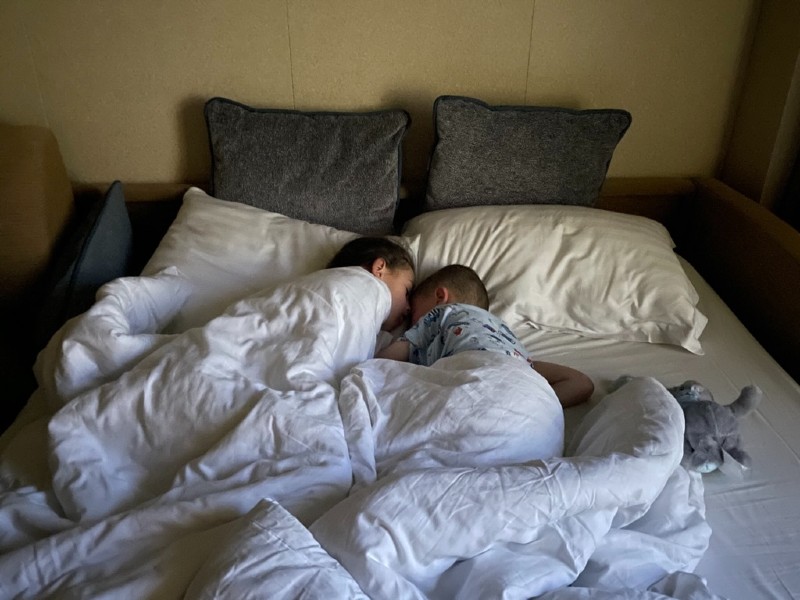
If you’d prefer for your toddler to sleep in a bed, you can request a bed guard to make sure that they can’t fall out. Some cabins have sofa beds and others have Pullman beds that come down from the ceiling like bunk beds. When you book, you can request a cabin with a sofa bed if you prefer this option.

Two children asleep in a sofa bed onboard P&) Azura
Sofa bed on P&O Azura

Read more: What is a Pullman bed on a cruise ship?

A variety of cabin types are available. Budget-conscious travellers might be best to opt for an inside cabin.

But if your baby will only sleep in a cot and you’re likely to be confined to the cabin at nap times or in the evening, then it’s probably worth considering upgrading to a balcony cabin so that you can relax on the balcony while your child sleeps.

Suggested read: Are Cruise Ship Balconies Safe for Toddlers?

nap time on a cruise

Onboard Activities For Babies And Toddlers

You’ll find lots to keep tots entertained on board P&O Cruises’ family-friendly ships. One of the best things about P&O Cruises is that children wearing swimming nappies are allowed in designated pools. On many other cruise ships swimming nappies are completely banned from all pools.

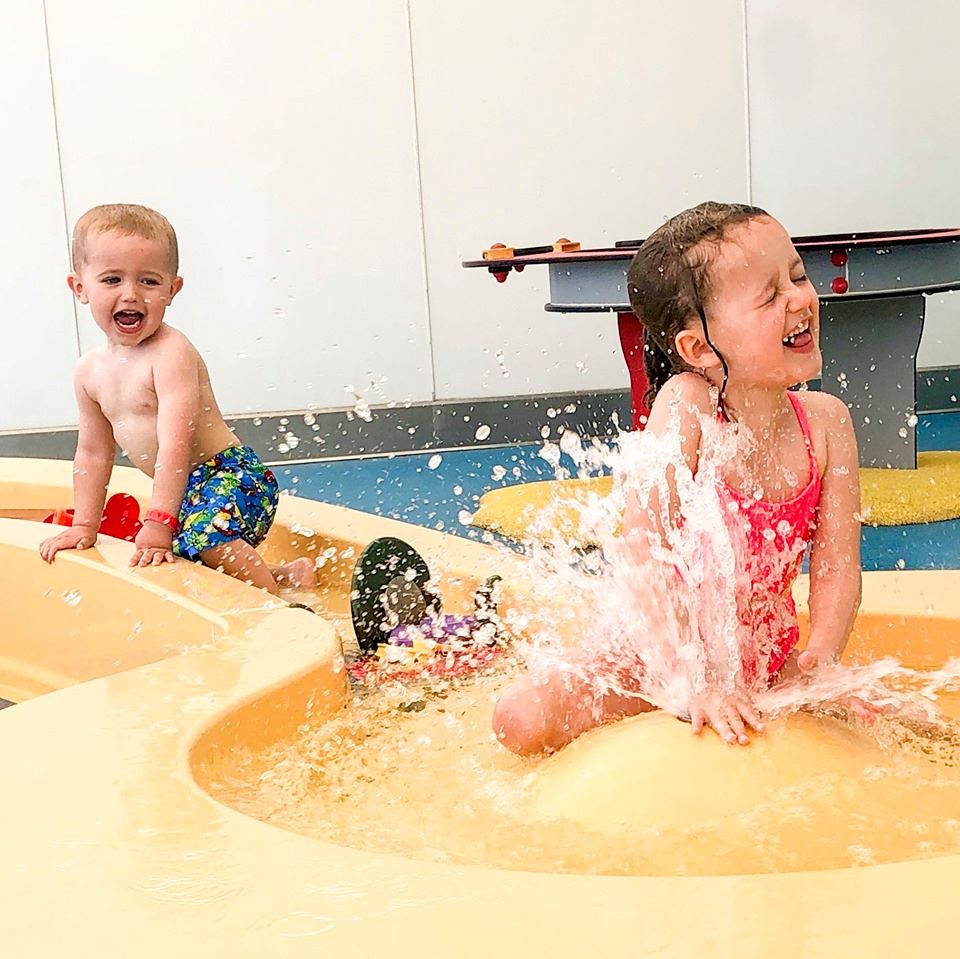
We sailed on P&O Britannia and our two-year-old loved splashing in the shallow paddling pool in between the two main pools. He also loved the splash area which has a fountain and flowing water that can be stopped with various levers and wheels.

This area is a little bit hidden on the ship between the shuffleboard court and The Reef kids’ club, so make sure you don’t miss it if you sail on Britannia.

P&O Cruises splash area

P&O Cruises ships are very spacious and your little ones will love crawling around the open decks. Railings are either high with a double hand-rail or made of glass walls, which makes the decks a very safe environment for little ones to roam as long as you keep an eye on them.

Although under-twos aren’t permitted to be left in the kids’ club, they can attend with parents for supervised play sessions. You’ll also find a variety of family events on board such as discos and magic shows.

Babysitting

Although there is no in-cabin babysitting, P&O Cruises offers a Night Nursery for free-of-charge group babysitting.

The Night Nursery is a dark, quiet room with beds and cots where under-fives can sleep under the supervision of two qualified members of staff. This is open from 6 pm until midnight and extended until 2 am on request.

Places are available on a first-come, first-served basis. Parents are given a pager so that they can be contacted should their children wake up.

P&O Azura night nursery

Baby Food

P&O Cruises provides baby food free of charge. Hipp Organic baby food jars are available in an assortment of savoury and dessert flavours in stage 1 (4 months +) and stage 2 (7 months+).

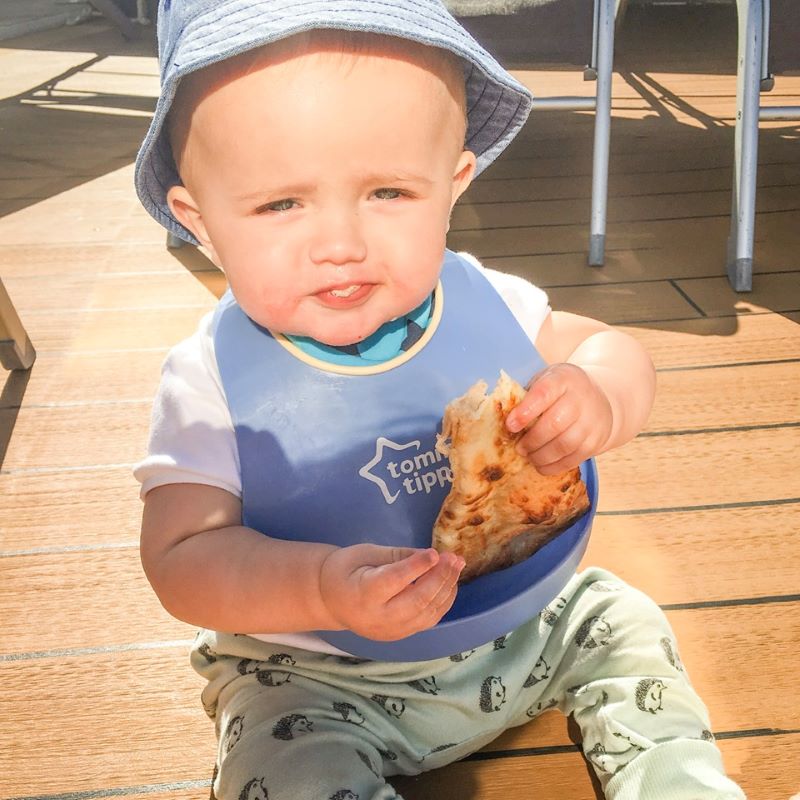
Alternatively, you can request that any food from the main restaurant menu be pureed or mashed. There are also always plenty of foods on offer that are suitable for baby-led weaning such as bread, fruit and vegetable sticks.

Read more: How to feed your baby on a cruise

Baby Adam eating Pizza onboard cruise ship

Children and babies can dine in any of the dining areas on board. In addition, there is a special children’s tea at around 5 pm each evening (the exact time varies by ship).

Here, you’ll find a variety of kids’ favourites on offer in a relaxed atmosphere – perfect for parents who’d like to eat a little later in the evening than the children.

Toddlers can choose from the extensive children’s menu or try a small portion of any dish on the main menu. You’ll also find plenty of high chairs available in the restaurants.

Toddler drinking juice during dinner at a cruise ship dining room

Baby Milk

P&O Cruises can provide baby milk powder free of charge on request. The brand offered is SMA progress. If you prefer an alternative brand, you should bring your own baby milk.

Whole cows’ milk or plant-based milk can also be provided. Just call your cabin steward to place your request for warm or cold milk to be delivered to your cabin.

If you ask for a large jug or carton of milk, this can be kept in the fridge in your cabin. Alternatively, you can help yourself to milk from the buffet restaurant.

Glass of milk

Breastfeeding is also welcome in all areas of the ship.

Read more: How to feed your baby on a cruise

Pushchairs

You are welcome to bring a pram or pushchair on board. The only restriction on this is that they are not allowed to be left in the corridor outside your room as they are with some other cruise lines.

If your pushchair is collapsible, you’ll find plenty of storage space under the beds, should you wish to keep it out of the way.

For those travelling with two children, side-by-side pushchairs are not recommended as they can be too wide for some of the corridors. Instead, opt for a narrower style or take two pushchairs or a buggy board.

Baby Paraphernalia

Babies come with a lot of equipment, but luckily, much of what you need is available to borrow free of charge, which means you can cut down on your packing list substantially.

Items available on request include:

  • Travel cot
  • Baby bath
  • Bottle/food warmers
  • Sterilisers
  • Nappy disposal units (although normal bins are emptied twice daily too)
  • Bed guards

Just mention if you would like any of when you book and you’ll find them waiting in the cabin for you.

For a full list of baby items to pack on a cruise, get the free printable checklist that I use. Just enter your email address below and it will be sent to your inbox.

Laundry

On board P&O Cruises you’ll find self-service launderettes with washing machines, tumble driers and irons which are free of charge.

You needn’t worry about packing lots of clothes for your children, as you’ll be able to do washing during your cruise should you need to. I’d recommend bringing your own washing tablets, as they cost £1 each to buy in the on-board shop.

If you prefer someone else to do the washing for you, there is also a laundry service available for a fee.

baby on a cruise

Summary

Whilst many cruise lines cater very well for babies and children, the P&O Cruises baby policy is one of the best and you can’t go wrong. The staff are all very friendly and on-hand to help wherever they can to make your family holiday as stress-free and enjoyable as possible.

Do you have any more tips for cruising with young children on board P&O Cruises? Please share them in the comments below. Or if you have any questions, let me know and I’ll do my best to answer them for you.

Get Help Booking Your Family Cruise

Cruise Family are the only UK specialists in cruises for families of 5+ (and smaller ones too!)

Let them find your perfect trip…

Related posts:

If you found this interesting, please share!

Cruise Mummy

Jenni Fielding is the founder of Cruise Mummy. She has worked in the cruise industry since 2015 and has taken over 30 cruises. Now, she helps over 1 million people per month to plan their perfect cruise holidays.

Read more about me


Source link

ocean-baby-names.jpg

125 Ocean Names to Inspire You

Ocean-related names always have a lot of meaning behind them. What better name to give your baby (or fur-baby) than something which relates to the features of the sea – strong, mysterious and beautiful.

Many of the ocean-themed baby names are names that mean ocean in other languages. Some mythical ocean names refer to gods of the sea and others are related to the sea in different ways.

In researching this article I found that my own name, Jennifer, means ‘white wave’, which is something I’m thrilled about! I love having a water-themed name.

ocean baby names

Names that mean ‘Ocean’

There are many baby names that mean water or ocean to choose from. Some of these aquatic names are obvious, but others have a hidden meaning and you wouldn’t know that these names mean ocean unless you looked it up.

Ocean-inspired baby names

I’ve split this list of ocean-themed names and ocean-related names into boy names, girl names and dog names. However, some names are unisex and some of the dog names can definitely also be used by humans so please don’t be offended if your ocean baby name is on the dog name list!

Also, if you have any more suggestions for sea related names or names meaning sea then please do let me know in the comments!

Ocean names for girls

This list includes girls’ names that mean ocean and other water-related girl names.

Giving your baby girl a name meaning ocean, sea or water is a great idea because the ocean is powerful, beautiful and mysterious – just like your daughter! There are so many beautiful water names for girls.

Whether you want a subtle ocean-themed girl name like Jennifer or a strong name like Ocean, take a look at this list of the best ocean names for girls.

ocean girl names
  • Aerwyna – Old English, means ‘friend of the sea’
  • Amphitrite – In Greek mythology, Amphitrite was the wife of Poseidon and was said to be the personification of the sea
  • Ariel – Thanks to Disney, probably one of the most popular mermaid names right now
  • Asherah – This awesome name has an awesome meaning – ‘she who walks on the sea’
  • Aukai – Hawaiian girls name that means ‘explorer of the sea’
  • Avisa – Means ocean in Sankrit
  • Beryl – Now considered a more old-fashioned name, these eventually get popular again and this means ‘sea-green jewel’ – one to consider if your girl has green eyes
  • Cari – In Welsh, it means ‘beloved’ but it also has a Turkish meaning, ‘flows like water’
  • Chantara – A more unusual name, this Thai word means ‘moon water’
  • Coral – A classic ocean-inspired name that makes you think of reefs
  • Cordelia – She is the Celtic goddess of the sea and also an Indian cruise line
  • Daria – A variant of the Persian name ‘Darya’, which means ‘ocean’
  • Delja – This Polish girls’ name means ‘daughter of the sea’
  • Delmare – French in origin, and meaning ‘of the sea’
  • Derya – This Turkish name is one of the prettiest names that mean ‘sea’
  • Doris – This name is of Greek origin and means ‘gift of the ocean’
  • Dwyn – A Welsh name, this power word means ‘wave’
  • Ezili – This name comes from the Benin goddess of water and beauty
  • Firtha – An old Scottish name that means ‘arm of the sea’
  • Gali – In Hebrew, this name means ‘wave’.
  • Ginevra – A name similar to Guinevere, this means ‘white wave’
  • Iluka – This Aboriginal name means ‘by the sea’
  • Itsaso – This Spanish girls’ name means ‘sea’
  • Jennifer – Cornish for ‘white wave’
  • Kailani – This pretty Hawaiian girls’ name means ‘sea and sky’
  • Kaimana – This Hawaiian name means ‘the power of the ocean’. It’s suitable for both girls and boys.
  • Kairi – This Japanese girls’ name means ‘ocean’
  • Kendra – A pretty name meaning ‘water baby’
  • Lana – A name from Hawaii, this means ‘afloat in calm waters’
  • Manami – This Japanese name has several possible meanings, one of which is ‘ocean’
  • Mar – Mar is the Spanish and Portuguese word for ‘sea’
  • Marcelline – A pretty French name meaning ‘defender of the sea’
  • Maree – This is a variation of Mary, and means ‘ocean tides’
  • Marella – Latin for ‘star of the sea’
  • Maren – Another Latin name, this time meaning ‘sea’
  • Marina – As well as being a place where boats are kept, Marina is a Latin name meaning ‘from the sea’
  • Marissa – A pretty alternative to Melissa that means ‘drop of the sea’
  • Maya – Of all the girls’ names that mean ‘water’, this one is very popular right now
  • Mayim – A Hebrew name, this is another that simply translates to ‘water’
  • Meri – A name of Estonian and Finnish origin, meaning ‘sea’
  • Mira – This beautiful Latin name has several meanings including ‘ocean’
  • Moana – This Polynesian name means ‘sea’ and is also the title of a well-known Disney movie
  • Morgan – This popular unisex Welsh name means ‘sea-born’. An alternative that’s just for girls would be Morgana.
  • Morwenna – This is a Welsh girls’ name which means ‘waves of the sea’.
  • Murial – An Irish name meaning ‘of the bright sea’
  • Naia – A name from the Basque region that means ‘wave’ or ‘seafoam’
  • Nerida – One of the most exotic sea names for girls, this name means ‘mermaid’ in Greek
  • Nerissa – A Greek name meaning ‘from the sea’
  • Nori – Japanese for seaweed, and also the nickname Kim Kardashian uses for her daughter North West
  • Ocean – This strong name is perfect for a baby girl
  • Onda – Italian for ‘wave’
  • Ondine – A Latin name meaning ‘little wave’
  • Pearl – English in origin, named for the birthstone found in the sea
  • Sedna – A more unusual name, it is shared with the Goddess of the sea
  • Sereia – The Portuguese word for ‘mermaid’
  • Serena – The Latin origin of this name means ‘clear’ or ‘tranquil’
  • Stellamaris – This is a girls’ name meaning ‘star of the sea’
  • Tarni – A favourite in Australia for girls, this name means ‘wave’ or ‘surf’
  • Thalassa – This unusual girls’ name means ‘ocean’ 
  • Ula – This unusual name means ‘gem of the sea’
  • Umiko – A Japanese girl’s name that means ‘child of the sea’
  • Vanora – This unique girl’s name is Welsh in origin and means ‘white wave’
  • Varuna – In Hindi, this is the god of water and oceans, and it’s a popular girls’ name
  • Yara – A popular name from the recent Game of Thrones books and TV series, this Brazilian name means ‘water lady’
  • Zarya – This Slavic name once belonged to an exotic water priestess

Ocean names for boys

This list includes boy names meaning ocean and other ocean-themed names for boys.

Water-inspired names are flowing back into fashion for boys and are especially popular with nature lovers. The ocean is strong, interesting and limitless – just like your baby son will surely be!

Ocean names for boys can be traditional or modern, common or unusual. There’s a sea-inspired name to suit every young man.

ocean boy names
  • Aalto – A Scandinavian boys’ name, this means ‘wave’
  • Adrian – The name Adrian was originally used to refer to a person from the Adriatic Sea
  • Alon – This sophisticated-sounding boys’ name means ‘waves’
  • Arnav – This Hindi name means ‘ocean’
  • Calder – Becoming more popular in the last 10 years, this name means ‘rocky water’
  • Caspian – The Caspian Sea is an inland body of water between Europe and Asia
  • Cove – Gaining popularity as a baby name in the US, a cove is a coastal inlet
  • Delmar – Translated from Spanish, this boys’ name means ‘of the sea’
  • Delmore – This French boys’ name means ‘of the sea’
  • Deniz – This Turkish name means ‘sea’. It was traditionally a boys’ name but nowadays it’s unisex. Variations include Dennis and Denise.
  • Douglas – This Scottish boys’ name means ‘black water’. It can be shortened to Doug.
  • Dylan – Commonly used for boys, but can also be unisex, Dylan is a Welsh name meaning ‘son of the sea’
  • Earwyn – Surprisingly common in the US, this name means ‘friend of the sea’
  • Eldoris – The inspiration for Doris in the girls’ list above, and also meaning ‘of the sea’, but a great unisex version of the name
  • Gyatso – This is a Buddhist boys’ name which means ‘ocean’
  • Hali – This unisex name is of Greek origin and means ‘sea’.
  • Heli – A Celtic unisex name which means ‘saltwater’ It’s found in the name of the Welsh town Pwllheli, which translates as ‘saltwater pool’
  • Hurley – An Irish boys’ name meaning ‘sea tide’
  • Irving – More common as a surname, this Scottish name means ‘sea friend’
  • Jordan – This popular name means ‘to flow down’. It can also be used for girls
  • Kai – A really popular name in the UK, this means ‘sea’ in its Hawaiian derivation.
  • Kano – Mixed routes from Japan and Africa, this means ‘god of the water’
  • Laguna – Another name that can be used for boys or girls, it’s Italian and means ‘pond’ or ‘lake’, which is similar to ocean
  • Llyr – This Welsh name means ‘the sea’, but is virtually impossible to pronounce if you’re not Welsh
  • Malik – This Arabic boys’ name means ‘wave’. It can also be spelled as Malek or Maliq.
  • Marino – The male version of Marina, it means ‘of the sea’
  • Maury – With a Latin heritage, this name means ‘sea channel’
  • Moses – Really popular in the UK right now, this biblical name means ‘delivered from the water’
  • Murdoch – Also spelled as Murdock, this was originally a nickname for a person associated with the sea
  • Murray – An old Scottish name that means ‘settlement by the sea’
  • Okeanos – In Greek mythology this was the body of water that was believed to surround the earth 
  • River – This is a great name because all rivers lead to the ocean
  • Trent – In Latin, Trent means ‘gushing water’
  • Wade – You can ‘wade’ through the sea, so this is surely one of the best subtle water names for boys.

Ocean names for dogs

This list of dog names is for boy and girl dogs. However, this list of mostly unisex names can certainly also be used for human babies as well as fur babies!

The breed of dog or puppy that you choose will likely influence the name that you choose for your dog. Big strong dogs might suit strong ocean names like Captain whereas smaller breeds might be more suited to cute sea names like Pasha.

ocean dog names
  • Azure – The colour of deep blue water, like the sea. Great for female dogs
  • Bardo – A name with mixed routes, but in several cultures, it means ‘water’
  • Blue – Another simple option named for the colour of the sea
  • Bo – A great short name for a dog, it means ‘wave’ in Chinese
  • Captain – This ship-related name would be great for a boy dog
  • Chop – While it doesn’t inspire calm, a name that is related to choppy waters
  • Crest – This short, sharp name is like the crest of a wave
  • Cruise – Well why not? It can definitely work as a cool name for a dog.
  • Knot – Another strong name, this relates to the speed travelled on the ocean
  • Marley – The name of the naughty labrador in the movie ‘Marley & Me’. Marley means ‘pleasant seaside meadow’
  • Marvin – This boy dog’s name means ‘sea hill’ in Welsh. An alternative with the same meaning is Mervin.
  • Merlin – Perhaps a bit too wizardly for a human, this name which means ‘sea fortress’ is perfect for a dog
  • Murphy – This jaunty Irish name means ‘sea warrior’
  • Murray – Meaning ‘settlement by the sea’
  • Nen – Short and snappy, this Egyptian name means ‘ancient waters’
  • Neptune – This mythical ocean name comes from the god of the sea according to the Romans
  • Nixie – A great girl dog name, Nixie is a Maori name that means ‘reflections on the water’
  • Pasha – This unisex name means ‘of the ocean’
  • Poseidon – Greek god of the seas, and a great one to shorten to ‘Po’.
  • Reef – This relaxing name probably works best for boy dogs, but could be unisex
  • Siren – In Greek mythology, sirens were alluring mermaid creatures. Now, it makes a good name for a female dog.
  • Tallulah – A name with both Irish and Native American heritage, this means leaping water – great for a bouncy female dog.
  • Tiberius – The Tiber is a river in Italy, not strictly the sea, but this would make a great name for a big male dog.
  • Tide – This is another strong name that would work great for a dog
  • Triton – Greek god Triton was the son of Neptune
  • Zale – A powerful name that means ‘strength of the sea’

To conclude

Whether you’re thinking of a name for a baby boy, girl, dog, cat or other pet, I hope that you’ve found inspiration in this list of ocean and water-related names.

Can you think of any other ocean, water, sea or otherwise aquatic names? Please feel free to add your suggestions in the comments!

Related posts:

If you found this interesting, please share!

Cruise Mummy

Jenni Fielding is the founder of Cruise Mummy. She has worked in the cruise industry since 2015 and has taken over 30 cruises. Now, she helps over 1 million people per month to plan their perfect cruise holidays.

Read more about me


Source link

baby-adam-e1631625106230.jpg

Are Babies Free on Cruises?

Babies can be expensive little things, can’t they? However, one of the upsides of travelling with a baby is that they get in pretty much everywhere for free.

But do babies cruise for free?

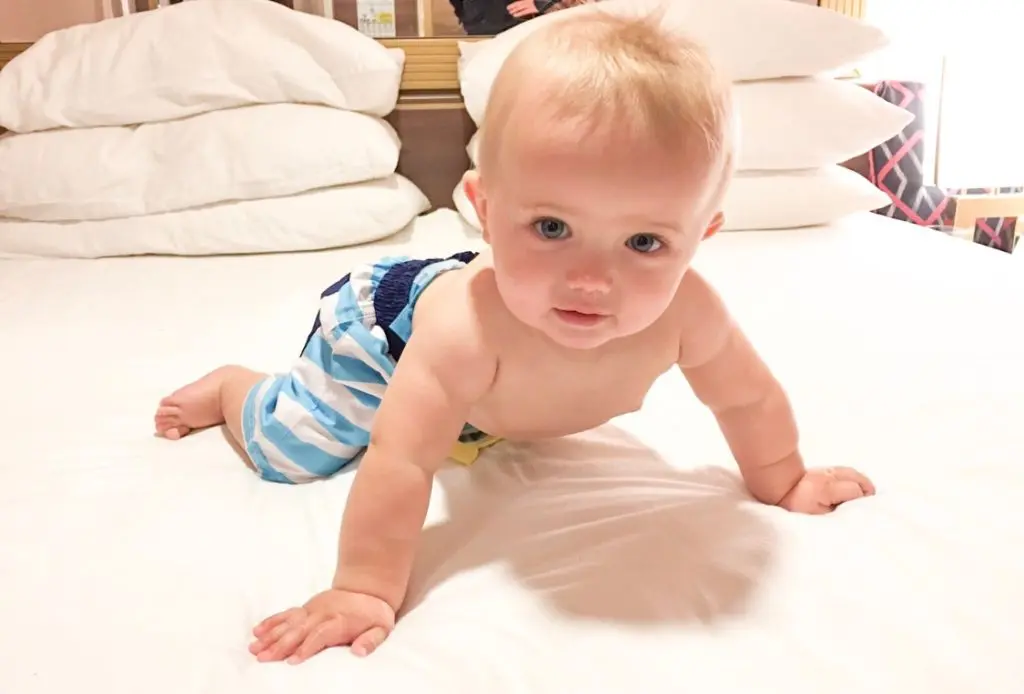
Baby Adam on the bed
My baby on his first cruise

On holiday you wouldn’t expect to pay for a baby to stay in your hotel room, visit tourist attractions with you or eat bits of your plate in a restaurant.

So, you might think that your baby would also travel for free on a cruise, right?

Do You Have to Pay For a Baby On a Cruise?

Babies typically aren’t free on a cruise. MSC Cruises and Cunard don’t charge for babies, but any other cruise lines that accept them will charge, though it will often be a reduced fare.

Many cruise lines charge the FULL ADULT PRICE for babies on-board.

Shocking! So does that mean that your cruising days are over once your little bundle of joy arrives? Or that you suddenly need to pay for a whole extra person when you add a baby to your booking?

Thankfully, no. Read on to find out how you can take your baby on a cruise for a reduced rate, or even for free…

Cruise Lines Where Babies Sail For Free

If you want to get the best value for money when taking your baby on a cruise, you’ll want to know about these two cruise lines that don’t charge for infants…

MSC Cruises

The baby facilities on-board MSC Sinfonia
The baby facilities on board MSC Sinfonia

If you want to take your baby on a cruise for free, one of the best cruise lines to choose is MSC Cruises as children under two sail free of charge.

Cruises from the UK are available, or, if you need to take a flight to start your cruise, you’ll just have to pay a very small amount to your airline to have the babysitting on your knee. The exact amount depends on the airline, but it won’t be much.

Not only do babies sail for free with MSC Cruises, but there are loads of facilities for them on-board too. In fact, MSC Cruises have partnered with the Observatorio Chicco Baby Research Center in order to create holidays that are ‘tailormade for babies’.

They even now offer babysitting services for kids as young as six months old, as of summer 2024. So you can drop them off for a nap, and go explore. There is the option to have your baby supervised in your cabin but that’ll cost extra.

I took my six-month-old son on his first-ever cruise with MSC Cruises on MSC Preziosa and we had a fantastic time – I would highly recommend this cruise line.

Cunard

Queen Victoria
Cunard’s Queen Victoria

Under-twos sail for free on board Cunard cruise ships, but you will still need to pay Cunard’s daily gratuities for them.

Whilst traditional cruise line Cunard isn’t the first cruise line that comes to mind for most families, it is actually really good for babies.

Unlike MSC Cruises, which has a limited choice of sailings from the UK, Cunard has plenty. However, you won’t find the same level of facilities for them on-board.

One great thing about Cunard cruises that MSC Cruises doesn’t offer, however, is the complimentary night nursery.

Open from 6 pm until 11 pm, under-twos can be left to sleep under the supervision of professional staff whilst you enjoy dinner, a show, or a trip to the onboard casino.

Cruise Lines Where Babies Sail For a Reduced Rate

The following cruise lines are also certainly worth considering if you’re looking for a cheap cruise with a baby…

Costa
Cruises

Costa Cruises Peppa Pig
Peppa Pig onboard Costa Cruises

Not only will you find Peppa Pig on board, but Costa Cruises doesn’t charge any cruise fare for children under the age of 18 years. Rejoice!

However, they do charge port fees and taxes for children of all ages, including babies. Port charges are what the cruise line must pay to the local authority of each port that the ship calls at, and taxes are what they have to pay to the government.

The cost of port charges and taxes varies depending on the ports that you call at but is usually around 10-20% of the adult cruise fare. This means that you’re still making a great saving when you take your children on a Costa cruise compared to other cruise lines.

P&O Cruises

P&O Cruises Night Nursery

On P&O Cruises, infants under two years old travel at a ‘reduced rate’ which varies by cruise. P&O Cruises doesn’t publish details of what the rate is, but as it varies by cruise, this is likely to be based on port taxes and charges, as well as possibly some other factors.

Passengers have reported paying anywhere from £50 to £300 to bring their baby on-board, which is always a great reduction on the adult fare.

What’s more, P&O Cruises regularly have promotions which offer child places for as little as £1 outside of the school holidays. So if you can travel then, and book at the right time, you can make great savings.

The complimentary night nursery is open from 6 pm until 2 am, which means that you can spend each evening child-free, should you wish.

Suggested read: 10 essential tips for cruising with a baby or toddler on P&O Cruises

Disney Cruise Line

Disney Cruise
Disney Cruise

On Disney cruises, under-threes pay half of the child fare. The child fare varies and isn’t a set % of the adult fare.

Disney’s pricing is a bit different than other cruise lines in that they don’t display a ‘per person’ price, just the overall price for your group. This makes it a bit tricky to see how much you’re paying for the kids, but it won’t be a great deal extra to add on a baby.

What might be worth noting, is that Disney Cruise Line is one of the few cruise lines to provide cabins that sleep five people.

On other cruise lines, you’ll be forced to book two cabins, or a family suite, for the five of you, whereas with Disney you can all fit in one room, which is generally cheaper.

Suggested read: The best cruises for a family of 5

Cruise Lines That Charge Full Price For a Baby

Most other family-friendly cruise lines such as Carnival Cruise Line, Princess Cruises, Royal Caribbean, Celebrity Cruises and Norwegian Cruise Line don’t make any reductions in pricing for children or babies.

This means that, in theory, your baby could be charged up to the full adult fare for your bundle of joy.

Royal Caribbean's baby facilities
Royal Caribbean’s baby facilities

However, it’s important to note that almost all cruise lines DO have reductions for the third and fourth passengers in a cabin – which applies whether they are babies, children, or even adults.

The reductions for the third and fourth passengers varies. It can be just a 10-20% reduction, or it can be much more, depending on your choice of the cruise line, sailing, whether it is in the school holidays or not, and any promotions which are currently running.

Does Royal Caribbean Charge For Infants?

Royal Caribbean charges the standard cruise fare for babies – there is no discounted Royal Caribbean infant price. However, if your baby is the third or fourth passenger in a cabin, you will often pay a reduced rate for them. Infants are also charged the full gratuity rate per day.

How to Decide Which Cruise Line is the Cheapest For a Baby

To decide which cruise has the best price, you need to work out the price of the entire cruise holiday, not just the price for the baby.

Whilst babies might get a highly reduced rate on a Disney cruise yet no discount on a Carnival cruise, the Disney cruise could still cost you three times as much.

Suggested read: How Much is a Disney Cruise Compared to Other Cruises?

Baby Adam in his cot on MSC Preziosa

You also need to add in the cost of other added extras such as gratuities. Some cruise lines will add up to $15 per person, per day to your bill at the end of your cruise to cover tips for the staff. Often, the gratuity charge applies to all passengers, even babies.

On a seven-night cruise for two adults and a baby, gratuities could add up to an extra £250.

If you’re not expecting it, this can be an unwelcome surprise at the end of your cruise. But if you choose a cruise line that doesn’t charge any gratuities, such as P&O Cruises or MSC Cruises, you won’t need to worry about it.

Read more: Should You Prepay Gratuities on a Cruise?

Babies tend to be free of charge (or only have a very small fee) on most airlines.

Of course, if you decide to fly, you’ll have airline luggage restrictions to think about because let’s face it, babies tend to need a lot of stuff! One of the great things about cruising from your nearest post is that you don’t have any limits on how much luggage you can bring.

Here’s a handy list of what you need if you choose a fly-cruise: Flying with a Baby Checklist

Finally, remember, that the cheapest cruise isn’t always the best. When you’re travelling with a baby, you’ll want to be really mindful of things like awkward flight times, long coach journeys in each port and whether the cruise has like-minded passengers who will be happy to see families joining them on-board.

NEW DEALS JUST RELEASED!

Don’t miss these hot cruise offers…

Have you cruised with a baby? Did you get a good deal?

And if you need a little more help, why not sign up for my baby cruise packing list?

And if you fancy bagging yourself a free cruise for the whole family, check out this article next: How To Get A Free Cruise.

Related Posts:

If you found this interesting, please share!

Cruise Mummy

Jenni Fielding is the founder of Cruise Mummy. She has worked in the cruise industry since 2015 and has taken over 30 cruises. Now, she helps over 1 million people per month to plan their perfect cruise holidays.

Read more about me


Source link

Baby-and-toddler-in-restaurant-on-cruise.jpg

How to feed your baby on a cruise (breastfeeding, formula & baby food)

Cruising with a baby is one of the best ways to travel, but it’s important to plan ahead and know exactly what and how you’re going to feed your baby during your cruise.

feeding baby on a cruise

Whether you’re breastfeeding, bottle feeding or have moved on to pureed or solid food, feeding your baby on a cruise is easy, as long as you plan ahead.

Breastfeeding on a cruise

Breastfeeding in public is welcomed on all cruise ships, and there’s no need to cover yourself unless you prefer to. Most cruise lines have breastfeeding policies that explicitly state that it’s acceptable to breastfeed without a cover anywhere on a cruise ship.

Depending on the countries that your cruise visits, you may need to check the attitudes toward breastfeeding in your cruise destinations.

If you plan to visit one of the few countries where public breastfeeding isn’t widely accepted, it might be a good idea to take something to cover yourself with (I like this cute nautical cover-up, which also doubles as a sun-shade!)

As well as being best for your baby’s health, breastfeeding is the most convenient way to feed your baby while you cruise. It does, however, mean that you might have to turn down the option of an alcoholic drinks package!

If you plan to enjoy a couple of drinks, leave your baby with on-board babysitters, or like your other half to do their share of the night feeds, then you might want to express some milk during your cruise. In this case, don’t forget to pack your breast pump, baby bottles, and anything you need to sanitise them.

You’ll also need to think about where you will store any breast milk. Some cruise ship cabins have a mini-fridge, but it isn’t always cold enough for milk.

If you don’t have a fridge, or it feels too warm, then just ask your stateroom attendant to store the milk for you. There’s a main fridge that they use to store people’s medication, so you can keep your milk in there.

Formula feeding on a cruise

Bottle feeding your baby on a cruise is pretty straightforward; you’ll just need to do some planning to make sure that you have all the equipment you need.

I’ve cruised with a six-month-old formula-fed baby and found that it was no different to staying in a hotel.

Here are my top tips for bottle-feeding your baby on a cruise:

1. Pack plenty of formula

Some cruise ships carry baby formula, and P&O Cruises actually offer it free of charge! However, it might not be the brand that your baby is used to, and it may be expensive to buy onboard.

I’d definitely recommend packing enough formula to last your whole cruise rather than relying on being able to get it on the ship or in ports.

2. Take powdered and ready-to-drink formula

Powdered formula is good because it’s relatively cheap and doesn’t take up a lot of space in your luggage. However, it’s also a good idea to pack some of the pre-mixed bottles for convenience.

I would generally make up powdered formula on the ship. But once you head ashore for your excursions, popping open a carton of the ready-made stuff is super fast and easy.

3. Cruise ship water is safe

Cruise ship water is safe to drink for children and adults, but you should boil it if giving it to babies or using it to make up formula milk.

Of course, using bottled water to make baby formula is an option too, but you’ll still need to boil it, so you might as well use the tap water.

Some bottled water contains too much salt or sodium for babies, so be careful if you choose this option.

Read more: Can You Bring Bottled Water On A Cruise?

4. Check what baby equipment is available on the ship

The following cruise lines allow you to hire bottle warmers and sterilisers free of charge:

  • Costa Cruises
  • Cunard
  • Disney Cruise Line
  • P&O Cruises

If you’d like to hire any baby equipment, be sure to let the cruise line know before you sail.

If you’re cruising with a different cruise line, you’ll need to bring your own bottle warmers and/or steriliser if you need these.

NEW DEALS JUST RELEASED!

Don’t miss these hot cruise offers…

5. Check if your cabin has a kettle

The general rule is that if you’re cruising from the UK, you can expect to find a kettle in your room on most ships. Cruise lines know how much us Brits like a cup of tea first thing in the morning!

You won’t be allowed to bring a travel kettle on your cruise ship, so if you’ll need hot water to make baby milk, then it’s definitely worth asking your cruise line if they can provide you with one.

As a last resort, you can get boiling water from the buffet or from room service.

6. Don’t forget bottle cleaning equipment

As a minimum, you’ll need to pack a bottle brush (I like this travel bottle brush with a built-in drying rack) and some dishwashing liquid. If you usually sterilise bottles at home, then you’ll probably want to do so on your cruise.

I’ve always found that a cold water steriliser with tablets is the best for travel. But if you prefer to bring a travel steam steriliser then these are generally allowed, but you might want to confirm this with your particular cruise line first.

If your baby is a little older, you may opt to sterilise bottles using boiling water from the kettle.

Suggested read: What can you not bring on a cruise?

Toddler milk on a cruise

Once your child is over 12 months old, you might want to give them whole cow’s milk instead of baby formula. If you do, then you’ll always be able to get this free of charge on your ship.

Whole cow’s milk is available in the buffet and any of the ship’s restaurants. You can also request it via room service and keep it in the fridge in your cabin if you have one.

When we cruised on P&O Britannia when Adam was a toddler, we asked for a jug of milk for our room. After the first couple of days, it appeared in our fridge each day without us having to ask, which was lovely.

If your toddler has an afternoon bottle of milk, I’d recommend filling the bottle at the breakfast buffet, then placing it in a cool bag so that it’s ready when they need it, even if you’re off on an excursion.

Can I bring milk on a cruise?

Cruise line policies normally only specifically mention water and soda for beverages that guests can bring onboard. But generally, if a cruise line allows you to bring water, they’ll let you bring milk as well – as long as you follow the same rules for water.

Some cruise lines don’t allow bottles, but will allow cartons and cans – so milk cartons should be OK. Always check with your cruise line on what drinks you can bring onboard, if you’re not sure.

Baby food on a cruise

If your baby eats pureed food, then you have three options on a cruise:

  1. Ask the restaurant staff to puree some food for you
  2. Bring your own pre-packaged baby food jars or pouches
  3. Use pre-packaged baby food provided on the ship

On almost any cruise ship, the restaurant staff will be happy to make up some mashed baby food for you using fresh fruits, vegetables and rice. MSC Cruises even has a special baby food menu for babies aged six to twelve months!

Although the freshly-prepared mashed food is great, you’ll probably want another option too, for when baby wants to at a different time of day to you, or for when you’re off the ship.

Suggested read: Can you take food off a cruise ship?

The following cruise lines provide baby food jars or pouches free of charge:

  • Cunard
  • P&O Cruises
  • Princess Cruises

On other cruises, baby food may be available to buy in the on-board shop. It’s probably best to bring your own, though.

Baby-led weaning on a cruise

If you’ve decided to skip the pureed food and go straight to solid food, then a cruise is food heaven for a baby!

We cruised when my son was six months old, and he absolutely loved trying all the different fruits, vegetable sticks, rice, and potatoes, and he even had his first slice of pizza!

First slide of pizza on MSC Cruises
Adam with a pizza slice on MSC Preziosa

Of course, baby-led weaning can be messy, but you really don’t need to worry as the cruise ship staff are incredibly friendly and do a great job of cleaning the floor! If you feel guilty about all the sweeping up, you could always slip them an extra tip at the end of your cruise.

Don’t forget to pack some food-catching bibs. The disposable bibs can be handy as an alternative to washing plastic bibs in your cabin sink.

Whilst cruise ships are kept scrupulously clean, if you’re concerned about your child eating food that’s touched the table, you might also want to take some disposable stick-on placemats.

For a full list of things to pack for a cruise with a baby, I recommend that you get my free baby packing list. You can save it on your phone or print it off and tick off items as you pack.

Cruises can be fantastic for babies!

However you choose to feed your baby, you’ll be able to do that on a cruise. What’s available on the ship and whether it’s free or you have to pay for it varies depending on the cruise line and also on the ship.

If you have any unanswered questions about what to expect on your particular cruise, then you should get in touch with your cruise line as they will be able to give you the best answer.

If you’d like to borrow any baby equipment, you should be sure to give your cruise line at least three weeks’ notice so that they can ensure that it’s ready for you when you board the ship.

Suggested read: Taking a baby on a cruise ship? Read this first!

Fussy eaters are well catered-for on cruise ships

Related posts

If you found this interesting, please share!

Cruise Mummy

Jenni Fielding is the founder of Cruise Mummy. She has worked in the cruise industry since 2015 and has taken over 30 cruises. Now, she helps over 1 million people per month to plan their perfect cruise holidays.

Read more about me


Source link

Parent holding a baby on holiday, the kind of trip families plan when cruising with an infant

Can Babies Go on Cruises? Cruising With an Infant: Age Limits by Line (2026)

Yes, babies can go on cruises. Most major cruise lines accept infants from 6 months old on the first day of the sailing. That rises to 12 months for transatlantic, transpacific, Hawaii and other long or sea-day-heavy itineraries, and on MSC to 2 years for cruises of 11 nights or more. Cruising with an infant also means planning around a few firm rules, especially swim diapers and pools, plus nurseries that only some lines offer.

Below is a line-by-line comparison of current infant policies for 2026-27, followed by what to know about nurseries, splash zones, cribs, fares and packing. Policies change, so always confirm the rules for your exact sailing before you pay a deposit.

Minimum infant age by cruise line

The age is checked on embarkation day, and lines are strict about it. Royal Caribbean, for example, denies boarding to infants who don’t meet the requirement, and won’t give a refund. The table summarises each line’s published policy for infants on a cruise, along with the onboard childcare available for under-3s.

Cruise line Minimum age (most sailings) Higher minimum applies to Childcare for babies and toddlers
Royal Caribbean 6 months 12 months for cruises with 3+ consecutive sea days, transatlantic, transpacific, Hawaii and select South America Royal Babies & Tots nursery, 6 to 36 months, paid by the hour (on most ships)
Carnival 6 months 12 months on longer itineraries such as Hawaii and transoceanic sailings No daytime nursery for under-2s in the US fleet; Night Owls paid late-evening group babysitting from 6 months
Disney Cruise Line 6 months 12 months for transatlantic, Panama Canal and Hawaii It’s a Small World Nursery, 6 months to 3 years (from 1 year on those longer itineraries), paid by the hour
Norwegian (NCL) 6 months 12 months on certain long or sea-day-heavy itineraries Guppies parent-and-baby open play, 6 months to 3 years (parents stay); Splash Academy from age 3
MSC Cruises 6 months on shorter cruises 2 years (24 months) for sailings of 11 nights or more departing from 15 May 2025 Baby and toddler areas vary by ship; kids clubs from age 3
Celebrity Cruises 6 months 12 months on select sailings No nursery; Camp at Sea from age 3 (must be fully potty trained)
Princess Cruises 6 months 12 months on selected longer voyages No nursery; youth programmes from age 3
P&O Cruises (UK) 6 months 12 months on selected sailings Free evening Night Nursery, 6 months to 4 years; daytime play areas with a parent
Marella Cruises (UK) Generally 6 months (confirm with TUI) Check at booking No nursery; kids club from 3 to 12 years. Marella Explorer 2 is adults-only

Royal Caribbean’s 12-month rule is easy to trip over. A stop at Perfect Day at CocoCay counts as a sea day under its policy, so a sailing with two sea days either side of a CocoCay call can trigger the higher minimum. Count the sea days on your itinerary before you book.

If you or your partner is pregnant, most lines will not carry a guest who will be 24 weeks pregnant or more at any point during the cruise. Marella, for example, applies the 24-week limit to the end of the cruise, and lines usually ask for a doctor’s letter confirming fitness to travel.

Nurseries and childcare for under-3s

Most cruise kids clubs start at age 3 and require children to be fully toilet trained, so for babies the real question is whether the ship has a nursery.

  • Royal Caribbean runs the Royal Babies & Tots nursery for 6 to 36 months on most ships. RoyalCaribbeanBlog reported fees of $9 per child per hour during the day and $12 per hour in the evening; check current prices on board.
  • Disney Cruise Line has the It’s a Small World Nursery for 6 months to 3 years, with extended hours and an hourly fee. Spaces can fill up, so reserve as early as your booking allows.
  • P&O Cruises offers a free supervised Night Nursery in the evenings for 6 months to 4 years, booked with the youth team in advance, so parents can have dinner or see a show.
  • Norwegian doesn’t offer drop-off care for babies, but Guppies is a parent-and-child play session for 6 months to 3 years, and diapers are fine.
  • Carnival Night Owls is paid group babysitting late in the evening that has accepted children from 6 months. The day clubs start at age 2.

Celebrity, Princess and Marella don’t offer nurseries, so plan on looking after your baby yourself the whole time. For a wider look at which fleets suit young families, see our guide to the best cruise lines for families with kids.

Toddler playing in a shallow splash area, similar to the baby splash zones on some cruise ships
Swim diapers are only allowed in designated baby splash areas. Photo: Franco Monsalvo on Pexels

Can babies go in the pool on a cruise?

This catches out a lot of families. Because of public health rules, children in diapers, including swim diapers and pull-ups, cannot use the main pools or hot tubs on any major line.

  • Royal Caribbean allows children who are not fully toilet trained only in its Baby Splash areas. These are on selected ships, including the Oasis- and Icon-class ships and many Quantum-, Freedom- and Voyager-class ships.
  • Disney ships have splash zones designed for little ones in swim diapers.
  • Marella does not allow children in nappies, swim nappies or pull-ups in any onboard pool.
  • On ships with no baby splash area, babies cannot get in the water on board, so look for a beach day in port instead.

If water play matters to your family, choose a ship with a dedicated baby splash zone. Our guide to the best Royal Caribbean ships for kids of each age can help you narrow it down.

Cribs, cabins and sleeping arrangements

Cruise lines generally provide cribs or pack-and-play travel cots free of charge on request. Disney’s stateroom hosts will even set the cot up and take it down each day. Request one when you book, or through your online booking’s special requests form, because supplies are limited and allocated first come, first served.

Some practical points to keep in mind:

  • A cot takes up a lot of floor space in a standard cabin. A larger cabin, a family stateroom or a suite with a separate living area can make naps and early bedtimes easier for everyone.
  • Balcony doors need constant attention with a mobile baby. Some families choose an inside or ocean-view cabin for that reason, and for the darkness at nap time.
  • Babies count towards a cabin’s maximum occupancy, which matters if you are a family of four or five.
  • Baby food, formula and diapers are generally not sold on board, or only in a small range. Some lines, including Marella, will warm milk and baby food for you, but you need to bring your own.
Baby travel essentials including diapers, bottles and clothes packed for a family cruise holiday
Bring enough formula and diapers for the whole trip. Photo: Tanya Gorelova on Pexels

Do babies cruise free?

Usually not. An infant is a passenger with their own ticket, so most lines charge a fare for them, often at the lower third- or fourth-guest rate, plus government taxes, fees and port charges. Some lines and agents run “kids sail free” or reduced-fare promotions that include under-2s, but these depend on the sailing and the fare type. Daily gratuities may also apply per guest depending on the line. Ask for an itemised quote that shows the infant’s fare, taxes and service charges separately before you book.

What to pack for a cruise with a baby

Because supplies on board are limited, packing is the part of cruising with an infant that needs the most planning. The essentials:

  1. Diapers and wipes for the whole trip, plus extras for delays.
  2. Formula, baby food and snacks in sealed packaging.
  3. Swim diapers and a sun suit for baby splash areas and beach days.
  4. A lightweight stroller that folds small enough for tenders and narrow corridors.
  5. A baby carrier for embarkation, tender boats and shore excursions.
  6. Baby sunscreen (check suitability with your pharmacist), a sun hat and a portable fan.
  7. Medicines your doctor recommends, plus copies of any prescriptions.
  8. A night light, white noise, blackout covers and familiar bedding to help with sleep.
  9. Passport or travel documents for the baby. Every infant needs their own.

For a complete, printable checklist, use our baby and toddler cruise packing list.

Tips for cruising with an infant

  • Choose shorter, port-rich itineraries first. A 3 to 7-night sailing with plenty of ports keeps you within the 6-month rule on most lines and breaks up the days.
  • Speak to your doctor. Check vaccinations and any advice for the ports you will visit. Ship medical centres are not specialist paediatric units.
  • Insure the whole family. Make sure your travel insurance names the baby and includes emergency medical cover at sea.
  • Book dining times that suit naps. Earlier sittings or flexible dining usually suit babies better than late dinners.

Once your little one is older, our guide to cruise age requirements for every age covers kids’ club ages, teen clubs and the rules for sailing without parents.

FAQs

How old does a baby have to be to go on a cruise?

On most major lines, at least 6 months old on the first day of the cruise. Longer sailings, such as transatlantic, transpacific, Hawaii or cruises with three or more consecutive sea days, usually require 12 months. MSC requires 2 years for sailings of 11 nights or more.

Can you take a baby under 6 months on a cruise?

Not on the major lines covered here, including Royal Caribbean, Carnival, Disney, Norwegian, Celebrity, Princess and P&O. Infants who don’t meet the age requirement on embarkation day can be refused boarding.

Can babies go in the pool on a cruise ship?

Not in the main pools. Children in diapers or swim diapers can use only designated baby splash areas, found on selected Royal Caribbean and Disney ships. Marella doesn’t allow nappies in any pool.

Do babies need a passport to cruise?

Yes, for most international cruises every infant needs their own passport or other valid travel document, just like adults. Check the documentation rules for your departure port and itinerary.

Which cruise lines have nurseries for babies?

Royal Caribbean (Royal Babies & Tots), Disney Cruise Line (It’s a Small World Nursery) and P&O Cruises (free evening Night Nursery) offer care for children from 6 months. Norwegian’s Guppies is a parent-accompanied play session.

Toddler-on-PO-Britannia.jpg

Cruise Ship Balcony Rooms Are NOT Safe for Toddlers

If you’re planning a cruise with your toddler, then one of the biggest concerns is their safety. And if you’re constantly worrying about your little one, you’re simply not going to have fun.

I’ve been cruising since my son was six months old and I’ve done it plenty of times with toddlers in tow. So I know exactly how you feel.

Toddler on P&O Britannia

I’m not saying you can’t have a cabin with a balcony with young children. But if you do, you’ll have to be as vigilant as a hawk. So, read on and I’ll help you decide which is the best stateroom to choose for your family.

What Are Cruise Ship Balconies Like?

Cruise ship balconies are usually pretty small, with just enough space for two chairs and sometimes, if you’re lucky, a little table or footstool. The side is made of glass that comes up to waist height, and if you look down, the drop will be between four and 20 storeys, either into the sea, or onto a promenade deck.

cruise ship balconies on Iona
Balconies on Iona

People do go overboard from cruise ship balconies several times per year, and it’s almost always fatal. It’s important to note, though, that these instances are pretty much always caused by passengers who jump on purpose, or are doing something silly, like climbing.

You can’t fall off a cruise ship balcony by accident. But If you’re standing up holding a toddler near the edge, or letting them climb up on furniture, then the risk of them falling overboard is very real.

me on balcony

What Parents Need to Be Aware Of

Cruise lines go to great lengths to ensure the safety of their guests, but their measures are not foolproof. And as you’ll know, toddlers, are as nifty as they come.

Here are the things that you need to know about cruise ship balcony rooms, so you know what to expect if you book one…

1. The height of balcony rails

Waist-heigh glass barriers may seem impossible. But that’s not always the case, and you should never assume that your child won’t be able to climb over. Toddlers are very curious as you’ll know, and they may find a foothold somewhere that you haven’t spotted.

my daughter on the balcony
The height of balcony railings

While most modern cruise ships have balcony barriers made of glass, some do have either solid metal or metal railings. The solid metal balcony fronts usually have a ledge that a child could use to step up, and the metal bars of a railing make them the easiest to climb.

solif-fronted balconies
Solid-fronted balconies on Nieuw Statendam

2. Balcony furniture

A chair or a table may seem like an exciting climbing frame to our little explorers. But once a child has that added height, it becomes all to easy for them to go overboard.

You can ask your cabin steward to remove the furniture from your balcony, but this isn’t always possible. On our cruise on P&O Cruises Iona, we tried to bring the chairs in from the balcony, but they were simply too wide to fit through the door.

balcony furniture on Iona cruise ship
Our large balcony on Iona

3. Balcony doors

Cruise cabins usually have glass doors that open onto the balcony. Most have a lock at the top of the door that’s tough for a toddler to reach unless they get creative with a chair.

However, the locks aren’t always at the top, sometimes they’re much lower. As you can see in this photo that I took onboard MSC Virtuosa, my six-year-old was able to open the balcony door lock with ease.

Child opening balcony on MSC Virtuosa
Balcony door on MSC Virtuosa

The Golden Rule

There’s a golden rule you’ve got to stick to when you’re cruising with your little ones. Never, ever leave a young child unattended with access to a balcony. Even if you use the bathroom, make sure that there’s another adult watching your child so they can’t sneak out there.

Of course, the exact age at which you can trust your child to behave sensibly on a balcony depends on the child. I could trust my eight-year-old daughter not to do anything dangerous with 100% confidence. But when I remind my six-year-old son not to climb on the balcony footstool, he’ll likely forget five minutes later and do it anyway.

Baby and toddler on a cruise
Cruising with a baby and toddler

Other Areas of Cruise Ships That Can Be Dangerous For Toddlers

Aside from your cabin, there are several public areas that could prove to be hazardous for your child. It’s important to be aware of these and take necessary precautions.

1. Railings in Public Areas

Out on deck, the barriers are usually chest height to an adult and made of glass. Sometimes, they’re over head height. This makes them impossible to climb, unless there’s furniture involved.

However, many older cruise ships also have horizontal metal railing instead of glass, making it much easier for small adventurers to climb.

Railings on Bolette
Promenade deck on Bolette

River cruise ships are probably the most dangerous, with metal guardrails only reaching an adult’s waist height. These would be very easy to climb, and this is one of the reasons why most river cruise lines do not allow children under five on board.

balcony on a river cruise ship
Our balcony on A-Rosa Sena

You may remember the horror story when a grandfather accidentally dropped his grandchild through an 11th-storey window on a Royal Caribbean cruise ship in 2019. He lifted the 18-month-old toddler up to what he believed was a wall of glass, but it was actually an open window. The child fell through his hands and sadly died.

2. Swimming Pools

Most cruise ships don’t allow toddlers who aren’t yet toiletry trained to use the pools. But that doesn’t mean that they aren’t dangerous to young kids.

When my son was two, he was walking around the edge of a very deep swimming pool on P&O Cruises’ Britannia. I was walking right behind him. In the blink of an eye, he dove head-first into the water and immediately sank down to the bottom. I had no idea that a child would sink so fast! 

My toddler on Britannia

Frantically, I reached down and plunged my whole arm into the water to grab his ankle and haul him out.

Luckily, my son was absolutely fine and somehow not upset at all. But I was very shaken, and also felt very lucky that he was underwater for just a couple of seconds.

Depending on the cruise line, the pools on your ship may or may not have lifeguards. But even if they do, the pools are often very busy, so you should always keep a very close eye on your toddler near the water.

3. Bars and Restaurants

Your little one might think it’s all fun and games at the bars and restaurants on a cruise ship, but it could be a recipe for danger. People come and go, toting trays laden with food and drink. One unexpected toddler dash could lead to someone tripping and spilling a hot drink or smashing a glass in the vicinity of your child.

While you’re enjoying your food and drinks, it’s vital that you don’t let your children run around. Be sure to pack some tabletop toys and activities that will keep them entertained between courses.

Toddler on a cruise with her drink

4. Stairs

The stairs on cruise ships can be incredibly dangerous for little ones. The problem is that they often have gaps in between each step. While these gaps may be small to an adult, they could be huge to a toddler, so they could fall through.

Kids on a river cruise ship
The stairs on A-Rosa Sena

As each deck is quite heigh, a flight of stairs may have 15 or more steps, and they’re sometimes made of marble, crystal or other materials that won’t give a soft landing.

5. Elevators

Ready for another tale from my accident-prone son?

A couple of years ago we were in the elevator on an MSC Cruise ship when he let out an almighty shriek. As the elevator doors opened, his finger had got sucked into the side and trapped.

We frantically pressed the button to close the doors in an attempt to free his finger, but they didn’t move. All that was left to do was to pull his finger out with force. Luckily, it wasn’t too badly damaged, but it was red and swollen for a few days. It could have been much worse. 

Cruise ship elevators

6. Falling out of bed

Most cruise lines allow you to borrow a travel cot for your baby. But once they’re over a year old, you may find that they’re simply to big for it, or they try to climb out, which can be dangerous.

At that point, you’ll have to put them in a full-size bed. So it’s important to know what kind of beds are in the room when you book. Your best option would be a sofa bed.

kids asleep on sofa bed
A double sofa bed on Azura

If they’re likely to fall out you should bring your own bed guard from home, tuck a pool noodle under the sheet, or place some spare pillows on the floor. Alternatively, you could bring an inflatable ‘Ready-Bed’ for them to sleep on the floor.

Some cabins have Pullman beds that come down from the ceiling. These sometimes have age restrictions, but not always. When we cruised on MSC Virtuosa, our two-year-old slept up on the top bunk.

That bed had a large guard rail, but not all do. Here’s an example of what extra beds may look like on a cruise…

Iona sofa bed
Sofa bed on Iona

If, when you arrive, you’re at all concerned about the safety of where your toddler sleeps, you should be sure to let your stateroom attendant know.

Should You Book A Balcony Stateroom With A Toddler?

Cruise ship balcony staterooms do have their advantages for parents with young kids. It’s a private space where you can relax while your kids nap, with the fresh air from the sea making you feel alive.

But, if you feel that you wouldn’t be able to relax with a balcony, then an ocean view stateroom might be a better bet. As well as being safer, they’re more affordable and come with enough room and amenities for a comfortable stay.

The lure of a balcony stateroom can feel strong, but remember, the child’s safety comes first. Logically, an Ocean View stateroom might just hit that right balance of budget and safety.

Ocean View stateroom with kids

My Recommendation

When it comes to cruising with kids, it’s all about ensuring they have a memorable time while staying safe. If you’re torn about which type of room to book, then make sure you read my article about why I (almost) always choose an inside cabins for a family cruise. 

Choose your accommodation wisely, keep a keen eye on your kids, and you’re good to go. After all, a safe cruise is a happy cruise. And as a parent, that’s all we truly want.

Related Posts:

If you enjoyed this article please share!
Cruise Mummy

Jenni Fielding is the founder of Cruise Mummy. She has worked in the cruise industry since 2015 and has taken over 30 cruises. Now, she helps over 1 million people per month to plan their perfect cruise holidays.

Read more about me

Source link