
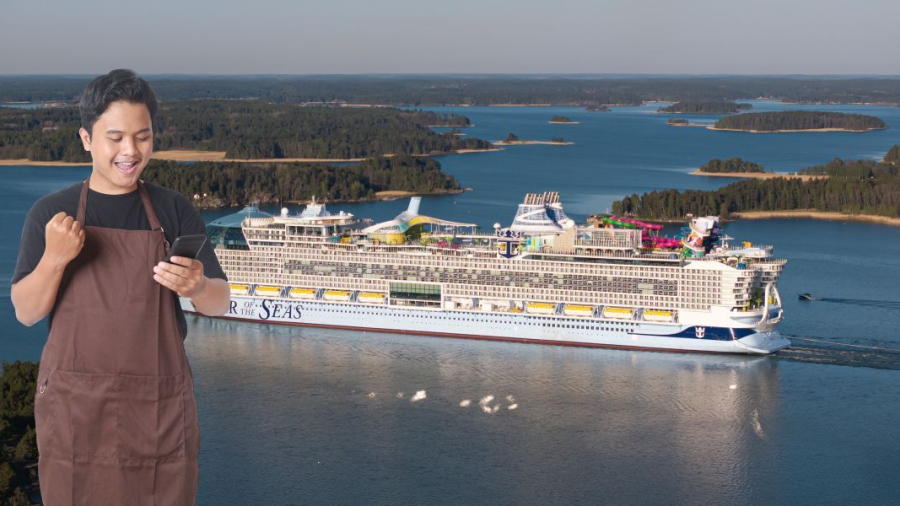
Cruise ships feel like a digital playground for guests – provided you’ve paid for the WiFi. You can FaceTime from the pool, WhatsApp your cabin mate from the buffet and livestream sailaway to jealous friends back home.
But life online looks very different below deck. For many crew members, the internet is not just entertainment. It is the only way they can be present in their family life while working thousands of miles away.
The trouble is, that connection still comes at a huge cost.
Most Cruise Crew Do Not Get Free WiFi
It surprises a lot of passengers to learn that in most cases, cruise crew must pay for their own internet access. Despite spending half the year onboard, they are not simply given unlimited WiFi as part of the job.
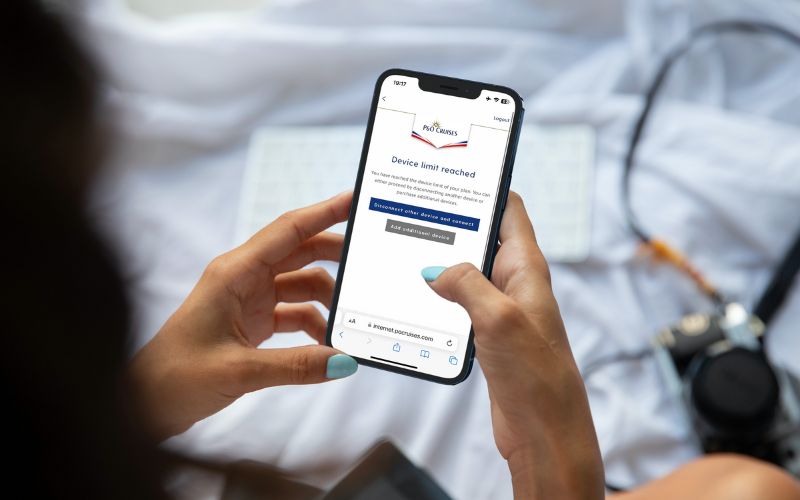
There are exceptions of course. Virgin Voyages, Viking Ocean and Ritz-Carlton Yacht Collection are some of the cruise lines offering complimentary crew WiFi as standard. These lines tend to position themselves as progressive employers with smaller ships, higher fares and more modern tech.

Mainstream ocean lines, however, still largely charge crew for data. Some allow free access to internal company networks or essential training sites, but that does not help when you want to check if your child has learnt to walk yet. The reality for most crew is: to stay connected, they must pay up.
Personally, I think crew should get at least some free WiFi. It is not a luxury for them. It is a lifeline.
How Much Crew Pay For WiFi
One of the biggest issues is that there is no standard across the industry. Prices vary by cruise line, by ship and sometimes even by itinerary. Cruise lines do not tend to publish crew rates publicly, so the clearest picture usually comes from crew members sharing what they actually pay onboard.
And when you line those figures up, it becomes clear why so many crew describe WiFi as their biggest expense at sea.
On Carnival, one crew-shared breakdown showed a $4 package for 24 hours of access to selected social platforms like Instagram, Facebook, WhatsApp and Messenger.
That sounds manageable until you stretch it across a month. Used daily, that comes to roughly $120 a month just for basic social and messaging access.
Carnival also reportedly offered $10 for 100 minutes, $40 for 450 minutes, $12 for 24 hours or 250MB, and around $4 for one hour of broader internet use.
Royal Caribbean’s crew packages are often time-based too. Crew have shared examples including $3.99 for 60 minutes over 24 hours, $29.99 for 300 minutes over seven days, $59.99 for 900 minutes over 30 days and $89.99 for 1,800 minutes over 60 days.
That top package sounds substantial until you do the maths – 1,800 minutes is just 30 hours of internet over two months.
MSC crew have shared data-based pricing instead, with examples such as $9 for 400MB, $30 for 1.6GB and $80 for 6GB.
Disney crew have reported packages of$10 for 250MB and $20 for 500MB.
On Norwegian Cruise Line, crew have described plans like $5 for 55 minutes, $10 for 110 minutes and $20 for 220 minutes.
There are cheaper examples. P&O Cruises has been described by crew as offering 65p for 24 hours of social access, £1.25 for 24 hours of broader surfing, £18 for 28 days of social access and £32 for 28 days of surf access.
Compared with some of the dollar-based packages elsewhere, that looks far more reasonable. But it is very much not the norm across the industry.
Even when free messaging is included, it is often limited. On some Royal Caribbean ships, for example, crew have described free WhatsApp messaging capped at tiny amounts of data, with no photos, no videos and no voice notes. Useful, yes. Generous, not really.
Here’s a rough snapshot of real crew-reported pricing across major cruise lines. These aren’t directly comparable (some are time-based, others data-based), but they give a clear sense of the scale.
| Cruise Line | Example Crew WiFi Pricing | Notes |
|---|---|---|
| Carnival | $4 per 24h (social only) | ~$120/month if used daily |
| Carnival | $10 for 100 minutes | Time-based usage |
| Royal Caribbean | $3.99 for 60 minutes | Entry-level package |
| Royal Caribbean | $89.99 for 1,800 minutes (60 days) | ~30 hours total |
| MSC Cruises | $9 for 400MB | Data-based pricing |
| MSC Cruises | $80 for 6GB | Larger bundle |
| Disney Cruise Line | $10 for 250MB | Data-based |
| Norwegian Cruise Line | $20 for 220 minutes | Time-based |
| P&O Cruises | £0.65 per day (social) | One of the cheapest reported |
| P&O Cruises | £32 for 28 days (surf) | Monthly-style access |
Why Minutes Vs MB Makes Such a Difference
The pricing only tells half the story. The other problem is the way these plans are structured.
Some plans are sold by the minute. That means time starts running the moment you log in and keeps going until you log out. If a crew member checks messages, gets called back to work and forgets to disconnect, those paid minutes can disappear for nothing. Crew members often say this is one of the most frustrating parts of ship internet – not just the cost, but how easy it is to waste it.
Other plans are sold by data usage instead. That can sound fairer, until you remember how much background activity smartphones get through without you noticing. Apps refresh, photos download, updates run quietly in the background, and suddenly a small allowance is gone.
A single video call can eat through hundreds of megabytes. So can uploading photos or downloading voice notes. That is why a package that sounds reasonable on paper can vanish in one conversation.
This is also why crew often become extremely cautious online. They turn off auto-downloads, avoid video, keep calls short and rely heavily on text because it is the only way to make the money stretch.

How Fast Costs Add Up
This is where the “shocking” part of the headline really starts to earn its place.
A few dollars here and there does not look dramatic at first glance. But spread across weeks and months, the total can be huge.
Take that Carnival social package at $4 per day. Over 30 days, that is about $120 a month. Royal Caribbean’s $89.99 package works out to 30 hours across 60 days, so crew using more than around half an hour a day could burn through it quickly and need more time.
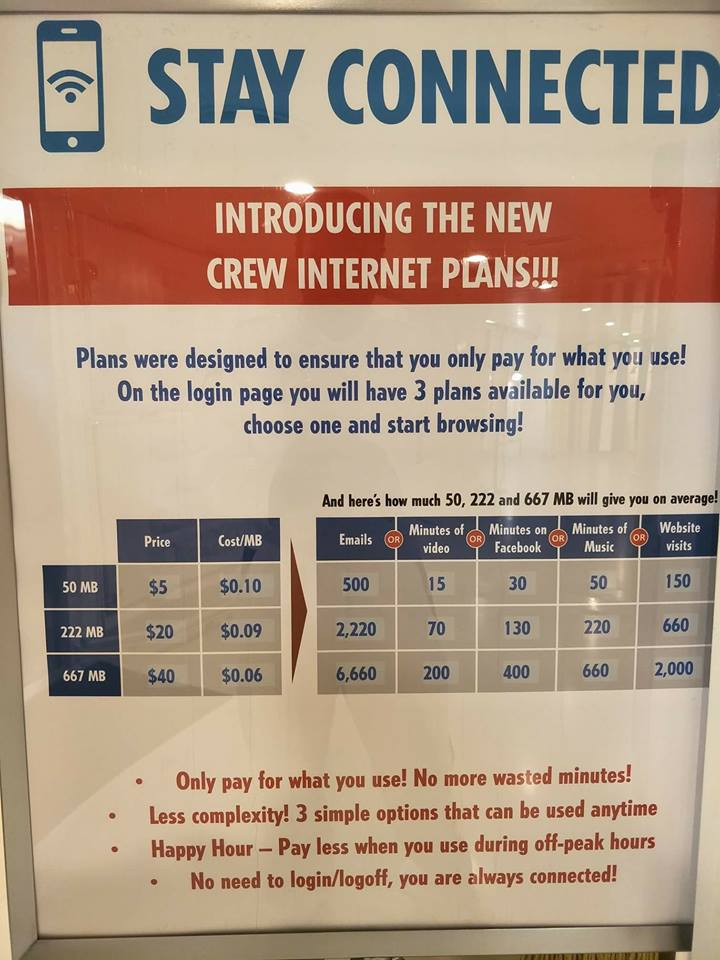
On smaller plans, one crew member described spending $20 for 220 minutes – less than four hours online.
Some crew estimate they can easily spend $50 in a week if they are trying to keep up with regular calls home. Over a six-month contract, that would be around $1,300. Even a more modest spend of $90 to $120 a month adds up fast over a long contract.
And that is before you factor in the quality. Crew are not paying for premium, home-speed internet. They are paying for access that is often slow, unreliable and heavily limited.
One active Royal Caribbean crew member even showed an onboard statement including an $89.99 WiFi purchase in a single week’s account summary. In that case, internet was one of the biggest personal expenses listed.
There are occasional ways around it. One Royal Caribbean crew member shared that by working an hour or two a week at the WiFi desk, she earned 300 free minutes per hour worked, giving her around five to ten free hours of internet a week. But that is hardly a standard benefit. It is a workaround.
For most crew, staying connected simply means paying.
Why Crew Need WiFi
Crew contracts are long. Anywhere from four to nine months is standard, and some roles stretch even longer. Imagine missing every school pick-up for half a year. Missing your sister’s wedding. Not being able to comfort a parent through illness except over a sometimes-glitchy call.

Moments slip by quickly when you are at sea. Families grow and change while crew are busy serving thousands of guests.
So, they cling tightly to every chance to connect with home. A birthday video. A mischievous pet photo.
Crew also rely on the internet for life admin: banking, visa renewals, travel planning and helping relatives who cannot use the internet themselves. Without WiFi they are cut off not just emotionally, but practically too.
Slow Speeds and Little Privacy
Even when crew pay for WiFi, they do not necessarily get much use out of it. Speeds fluctuate hugely as satellites struggle to serve thousands of smartphones mid-ocean. Passenger networks often get priority, leaving the crew version sluggish or temporarily unusable during peak times.

Location matters too. Many crew cabins are deep inside the ship where thick steel competes with signal strength.
Crew tend to gather in corridors, stairwells or designated crew-only lounges in hopes of a stronger connection.
Privacy is another hurdle. Most crew share a cabin with one or even two colleagues. Video calling a spouse while someone else sleeps three feet away is awkward at best. Some crew say they time calls to the middle of the night or sit in uniform on the floor outside the laundry room… just to hear a loved one say hello.
What Crew Do Get Included
To be fair, cruise lines do provide a lot: accommodation, meals, uniforms, essential toiletries, some medical care, and laundry service for work clothes. Crew also have their own recreation room, bar and gym where they can unwind after long shifts.
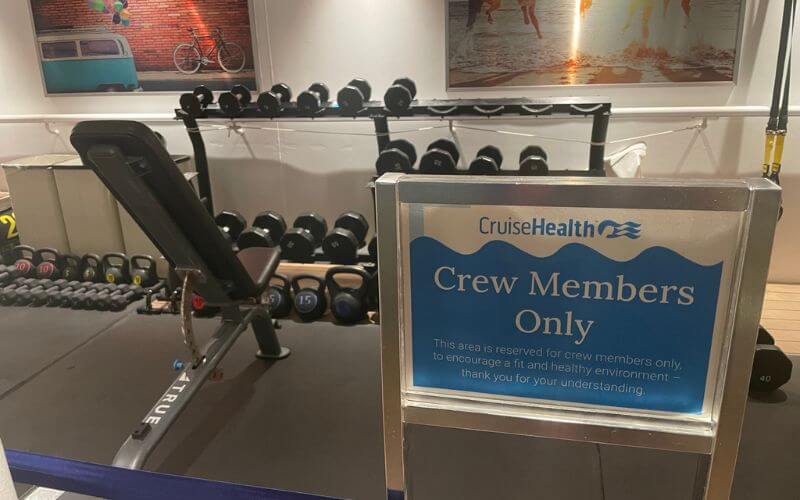
But these benefits are designed to support work life at sea, not life back home. WiFi is the only direct connection to family, and right now that still sits outside the list of essentials.

Guests often see the fancy parts of cruising. Behind the scenes, crew live a different reality, juggling limited downtime with the digital thread that keeps them tied to home.
With new technology making internet access cheaper and faster, many hope that basic connectivity will soon be considered a necessary welfare benefit rather than an add-on.
The Role of New Tech Like Starlink
There is some good news. Starlink and other modern maritime systems are transforming guest WiFi, making it more affordable and substantially faster. On the bridge and in the offices, better connectivity is already a safety and operations upgrade.
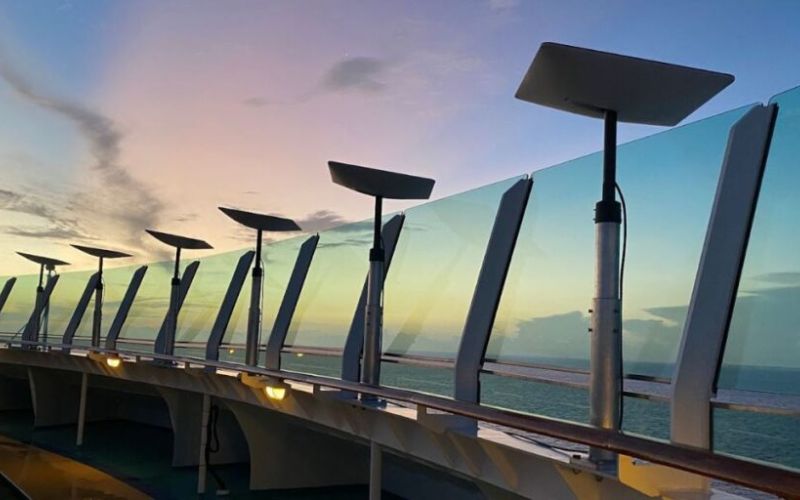
For crew, the improvement is less guaranteed. Some lines roll out new service tiers for guests first. Crew networks are improved later or not at all. Others are doing it more equitably, introducing unlimited texting and modestly priced plans tied to the new tech.
Many crew members are hopeful that in a few years the idea of crew paying to call home might feel outdated.
Free WiFi Ashore: The Great Connection Dash
If you have ever noticed crew dashing down the gangway on port days, this is why. Cafés, cruise terminals, fast-food chains and even the rocky walls near a harbour hotspot become gathering points. Phones light up with hundreds of missed messages, photos flood in and the real catch-ups begin.

Crew rapidly download TV episodes to watch later when off-shift. They update parents on their health. They video call children without worrying the picture will freeze. Port days can be work days too, but even a short break ashore can restore a frayed connection to home.
You can always spot the crew WiFi corner: maximum focus, minimal small talk and chargers plugged into every available socket.
How Guests Can Be Supportive
There is no expectation that cruise passengers need to do anything to help out crew members who need WiFi. Having said that, a little bit of kindness goes a long way.
Some guests like to buy international calling cards or a small top-up voucher as a thank-you to someone who has made their cruise special.
Again, it’s by no means expected, but it can make a world of difference to someone far from home.
Of course, not everyone agrees that it’s needed…

TODAY’S BEST CRUISE DEALS!
Don’t miss these offers…
Final Word
Cruise crew make holidays feel effortless. Every meal served, cabin cleaned, cocktail poured and show performed depends on people working hard while living far away from the people they love.
And in most cases, they still have to pay extra just to stay part of life back home.
When you look at the actual numbers – $4 a day here, $20 for a few hundred megabytes there, $89.99 for a limited block of time, or hundreds of dollars over a single contract – it stops sounding like a small onboard expense and starts looking like something much bigger.
Staying connected should not be a luxury for the people keeping the ship running.
It should be easier. It should be cheaper. And really, it should be free.i will not erase the distance, but it will make those long months feel that little bit closer to home.
Related Posts
If you found this interesting, please share!

Source link