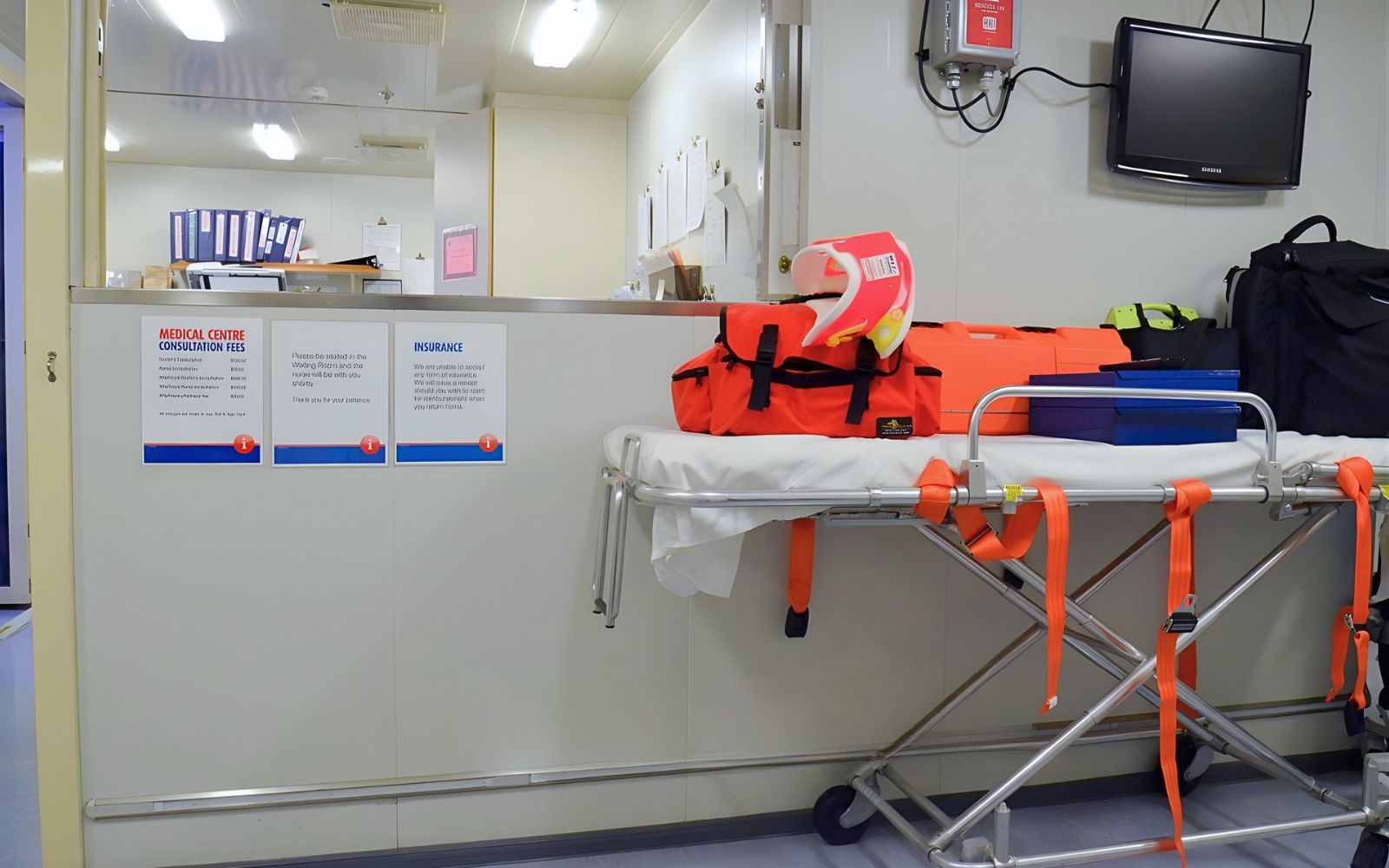
Most passengers never think twice about the medical center hidden on Deck 2, until they need it.
I learned that the hard way after a basketball mishap left me with a badly injured thumb. While getting treated on Deck 2, I started chatting with the ship’s doctor.
What he told me about life as a cruise ship physician was so interesting I almost forgot about my injury.

He was an older man who had retired from his medical profession, but when he saw the opportunity to explore the world and get paid for it, he took it.
Cruise passengers are often very curious to know what it would be like to be a doctor on a cruise ship. After all, that’s why shows like “Doctor Odyssey” came to be so popular.
But what’s the reality of being a physician at sea?
My conversation with that retired doctor made me realize the job is nothing like the dramas on TV.
To separate fact from fiction, I looked to a recent Reddit AMA where a cruise ship doctor revealed exactly what life is like.
The physician with a background in internal medicine and critical care offered an interesting look behind the scenes.
Wishing to remain anonymous, the ship doc invited questions in his online post, saying “I’m an open book except for which cruise line I work for.”
Here’s a look at some of the questions and responses that came into the post.
Why Leave a Hospital ICU for Life at Sea?
After completing residency in internal medicine and three years as an intensivist, this doctor was looking for a lifestyle change.
“I’m one of two doctors on the ship, so we get to call the shots together,” they shared.
Many colleagues worried they’d “lose skills,” but the physician said that working on a cruise ship offers a blend of emergency medicine, urgent care, and primary care on fewer resources than a hospital.
Across the industry, cruise ship doctors typically need at least three years of post-graduate experience (often in emergency or ICU), plus certifications like ACLS, and sometimes PALS or ATLS.
Contract Time and Pay
Contracts commonly run four months on, two months off, matching the doctor’s schedule and allowing time for family or temporary contract work back home.
Pay often falls in the $8,000–$15,000 per month range, but that goes along with free room, board, travel, and amenities. In this doctor’s case, the pay is about $10,000 a month.

The Medical Setup: What Resources Are Actually on Board?
Larger ships usually have two doctors, several nurses (the doctor’s ship has four plus a paramedic), and a well-equipped infirmary.
Capabilities include lab tests like CBC (complete blood count), urinalysis, basic imaging or X-rays on many vessels, cardiac monitors, defibrillators, ventilators, and minor surgical supplies.
It’s not a full hospital but meets or exceeds American College of Emergency Physicians guidelines for maritime care.
But sometimes other passengers can swoop in to help as well if they have medical experience.
In one memorable case, the doctor recalled that the team needed help with a woman’s crushed pinky (from a door injury) and had the captain announce for passenger volunteers. An ortho surgeon on board was able to save the woman’s pinky and save the ship from having to reroute.
Doctors on board also handle everything from routine visits to stabilizing patients for potential medevac by helicopter or Coast Guard.
Dramatic Emergencies
Because of the lack of resources, cruise ship doctors have to be creative. The doctor shared in one story that a patient with cirrhosis arrived with severe anemia and black blood in his stool.
“We don’t carry blood products on the ship, so I had to look through medical records of the crew and luckily, someone had a compatible blood type.” The doctor performed an emergency transfusion, which likely saved the patient’s life.
Other challenges include dental emergencies (limited to pain relief, antibiotics, and referral at the next port) and rare but serious events. The doctor has seen only one suicide (an overboard incident with no recovery) during their time aboard. Ships do have basic morgue capabilities for natural deaths, which are more common among older passengers.
What About Pregnancies?
Pregnancy policies are strict for any cruise line. Most of them bar women beyond 24 weeks gestation at the end of the cruise, as there’s no NICU and medevacs are a lot more complicated.
It’s mostly honor-system based, with doctor’s notes sometimes required.
Everyday Ailments: From Seasickness to Overindulgence
Most visits are for simple things and are fairly mundane, unlike the TV show. Motion sickness is the reason for most visits, especially first-time cruisers still getting their sea legs.
Other common complaints include indigestion, GERD flares, foodborne illness from overeating or unfamiliar foods, respiratory issues, and injuries from slips or activities.
Retirees who essentially live on cruise ships more often than on land account for many patients, as they lack regular land-based care.
Alcohol-related issues and minor traumas round out the list of the most common reasons for visiting the medical center.

The Tougher Side: Assaults and Vulnerabilities
Cruise ships see occasional sexual assaults as well. The doctor noted there have been a few cases, handled primarily by a trained SANE (Sexual Assault Nurse Examiner) nurse, with mandatory reporting to the FBI and Coast Guard regardless of victim preference.
These incidents are reported industry-wide and cruise lines treat them very seriously. While they are a fraction of medical visits, each case is treated delicately.
Perks, Lifestyle, and Is It Worth It?
The cruise ship doctor said that the biggest draw is autonomy and travel. They enjoy four months off yearly with family and can get higher paying work during the downtime.
Housing and food costs are a non-factor, and amenities are free.
Cruise ship medicine isn’t for everyone; it demands flexibility and the willingness to be “stuck” in the lower decks of a moving vessel for long periods of time.
But for this physician, it’s a refreshing mix of medicine, adventure, and work-life balance that hospitals just can’t match.
As they put it:
“A lot of my colleagues back home thought that I would ‘lose my skills’ doing this work, but it’s actually very satisfying. A mix of emergency med, urgent care, primary care. I deal with it all on less resources than I did at the hospital.”
Looking for the Best Cruise Deals?
Search Multiple Sites at Once
Instant Real Time Pricing
Search Now