We are the attorneys representing Hannah Smith in her lawsuit against Carnival Cruise Line. Attorneys Tom Scolaro and Keith Brais are in active litigation against Carnival and the operators of the shore excursion that changed Hannah’s life on May 12, 2025. Anyone who has ever booked one of these excursions will see themselves in how Hannah’s day began. How it ended, and everything that was done to her along the way, is something every person who steps off a ship onto an excursion’s boat must know and understand.
We have all stood at a cruise line’s shore excursion desk or scrolled the excursion listings in the app, choosing between a beach day, a snorkel trip, or a catamaran sail. Hannah did the same thing. What happened to her afterward had little to do with a careless tourist and everything to do with the operation running that excursion. According to the complaint we filed, the staff set a young woman up to be harmed, and Carnival profited from sending passengers to them.
A Graduate, a Celebration, and a Beach Day That Was Never What It Seemed
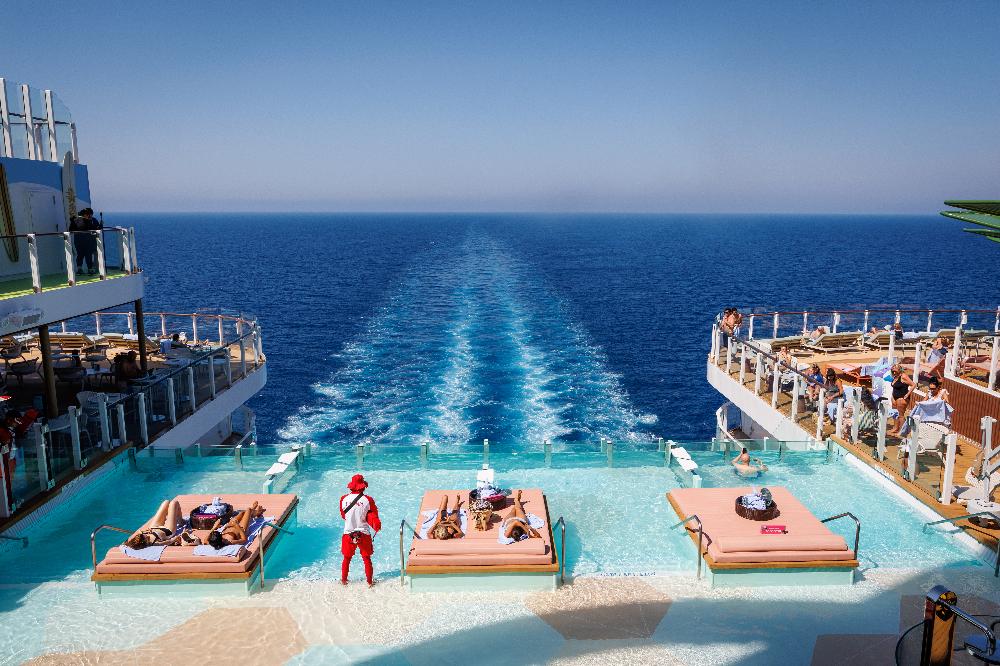
Hannah was 22 years old. Two weeks earlier, she had graduated summa cum laude from Miles College in Alabama, and the cruise was her reward to herself. She boarded the Carnival Celebration out of Miami with a close friend, the way thousands of people start a vacation every week of the year.
In the Bahamas, she and her friend booked an excursion Carnival sold as the Pearl Island Beach Escape; now renamed Sun Cay Beach Club with Lunch. Carnival marketed its excursion partners the way it always does, describing them as carefully chosen, dependable, the best available in each port. To a passenger reading that language in the app, it sounds like the cruise line has done the vetting for you. That impression is the whole point of how these excursions are sold, and it is central to why Carnival is a defendant in this case.
What the Excursion Staff Did Once Hannah Was Ashore
Here is where the version most people have heard, the one built around a propeller and a tragic accident, falls apart. By the time Hannah was anywhere near that propeller, the staff running the excursion had spent more than an hour systematically stripping away her ability to keep herself safe.
It started almost the moment she arrived. An employee handed her a large rum punch, sixteen ounces of it, before she had done much more than step onto the sand. The drinks did not stop there, and they escalated fast. On three separate occasions, a worker had Hannah tilt her head back so he could pour liquor directly into her mouth from an upended liter bottle. No one was letting Hannah pace herself at an open bar. Staff were pouring alcohol into a young woman as fast as she could swallow it.
The complaint we filed alleges something worse than overserving. It alleges that at least one of those drinks was spiked with a substance of the type used to facilitate sexual assault, a sedative that flattens awareness and judgment and leaves a person unable to protect herself. On top of the alcohol and the drug, the staff handed Hannah and her companions marijuana, two joints, all of it free of charge. The entire sequence unfolded in roughly seventy minutes.
While they were doing this, the same employees were separating Hannah’s group from everyone else. They offered the group a private oceanfront cabana, the kind that normally rents for several hundred dollars, and gave it to them at no cost. Picture what that accomplishes. A young woman is being plied with alcohol and, as alleged, a sedating drug, and at the same time she is being moved away from the crowd, away from witnesses, into a secluded space. Inside that isolation, one of the workers pressed himself against Hannah’s friend, who shoved him off and told him to stop.
By the time the group was loaded onto the catamaran for the return trip to Nassau, Hannah’s blood alcohol had been driven far past any legal limit, a sedative was working through her, and she could no longer look after herself. The people who had put her in that condition knew exactly what state she was in, because they were the ones who created it.
The Ride Back, and the Moment Everything Broke
On the catamaran, impaired and disoriented, Hannah needed to use a restroom. She asked a crew member where to go. He told her to use the water. It was the same instruction she had been given on the island, where staff had told guests, in plain terms, that the ocean was their toilet.
So that is what she did. Following what the crew had told her, badly impaired, she lowered herself off the back of the vessel from the aft dive platform and into the water. The captain was sitting at a raised helm with a clear, unobstructed view of those platforms. With Hannah in the water on that side of the boat, he put the engine into gear. No one sounded a horn. No one warned her. No crew member was posted at the stern to watch for a passenger in the water. The propeller caught her and pulled her in.
Injuries and Hospitalization
Hannah’s injuries are catastrophic in the literal sense of the word. The propeller amputated her left leg below the knee where she floated. It tore her right leg apart. Surgeons in Nassau and later in Miami tried to save that right leg through one operation after another, and they could not. They were forced to amputate it in stages, first below the knee, then above the knee with the removal of the femur, and finally at the hip joint itself in a procedure called a hip disarticulation, which removes the entire leg.
She reached the hospital in Nassau, having lost more than 60 percent of her blood. An air ambulance flew her to a trauma center in Miami, where her care ran past twenty-five separate operative procedures, more than twenty units of transfused blood, and a stretch in intensive care while her body fought multi-organ failure. She was not discharged until the middle of July, more than two months after a trip that was supposed to last seven days. The medical bills from that single hospital are already expected to exceed ten million dollars, and her care is nowhere near finished.
The Question Every Cruise Passenger Should Understand
If you take one practical thing from Hannah’s story, make it this: When a cruise line tells you it cannot be held responsible for a shore excursion because an outside company ran it, that statement is not the end of the matter, and very often it is not even true. We litigate these cases, and the cruise lines raise that same defense in nearly every one. It fails more often than the public realizes, and understanding why can change the entire course of a case.
Excursions are enormously profitable for cruise lines. They sell them aggressively, brand them as their own, and take a cut of every booking. The law has developed several doctrines to make sure a company that profits from an activity and vouches for its safety cannot simply walk away when that activity maims someone. Here is how those doctrines apply to what happened to Hannah.
When a cruise line presents an operator as its own
Hannah did not find this excursion through a vendor on a Nassau street. She booked it inside Carnival’s own app, paid Carnival directly, and picked up a Carnival-issued voucher at Carnival’s guest services desk on the ship. Carnival advertised the trip under its own Carnival Adventures brand, on the screens in the cabins, in the app, and through its crew, and it assured passengers that it had hand-selected the most reputable operators at every port.
Maritime law calls this apparent agency, sometimes agency by estoppel. When a cruise line holds an operator out as its agent, a passenger reasonably believes it, and the passenger relies on that belief to her detriment, the cruise line can be held responsible for the operator’s conduct. The doctrine exists for a simple reason. A company should not be allowed to collect the profit from a product it sells under its own name while disowning the danger that product carries. Hannah booked a Carnival experience because Carnival told her, at every step, that is what it was.
The duty to choose safe operators
A cruise line has to use reasonable care in deciding which operators it funnels its passengers toward. It cannot keep sending thousands of guests to a dangerous operation while ignoring what a basic inquiry would reveal.
This is where Hannah’s case becomes especially hard for Carnival. According to the complaint, the warning signs around this excursion went back at least six years before Hannah was hurt. Guests had left reviews describing exactly the dangers she would later face, including extreme overserving of alcohol and drug use by staff. One review carried a headline calling the place a dangerous dump and told people to stay away if they cared about their safety. Other reviews described the catamaran failing to tie off properly and running its engines while passengers climbed on and off, and they referenced a passenger hurt at that same boarding gap about a year before Hannah’s incident. The complaint also alleges that Carnival’s own officers, standing on the bridge of the Celebration at the Nassau pier, could watch the ferry’s dangerous practices with their own eyes. A company that keeps selling tickets to an operation with that record has made a choice it has to answer for.
The danger they had to disclose but never did
Closely tied to the duty to choose carefully is the duty to warn. When a cruise line knows, or should know, that an excursion carries a particular danger, it has to tell passengers. The complaint alleges Carnival did the opposite, and that it actively deleted and buried negative reviews of its Carnival Adventures excursions, so that a passenger like Hannah saw a curated wall of reassurance instead of the warnings other guests had tried to leave. Less than two months before Hannah’s trip, the United States State Department had issued a Bahamas travel advisory flagging boating safety and assault risks. Hannah was told none of it.
Two businesses, one profitable enterprise
Carnival and these operators were not strangers who happened to cross paths. They ran an ongoing and lucrative arrangement built on shared marketing, a shared flow of customers, and a shared interest in selling as many excursions as possible. When two businesses work that closely toward a common commercial goal, with shared control and shared profit, the law can treat them as engaged in a joint venture and hold the cruise line responsible for what happens inside that enterprise. Carnival booked this excursion thousands of times across many years and earned money on every single booking. That history is very difficult to reconcile with the claim that the operators were strangers to it.
Why “independent contractor” is not a shield
Carnival’s defense leans on two words, independent contractor, and the claim that it controlled nothing. Courts do not stop at the label on a contract. They examine what actually happened, how the excursion was marketed, who took the payment, what the passenger was told, how much the cruise line shaped the experience, and how intertwined the two companies really were. A clause calling an operator independent does not erase the duties a cruise line takes on by selling and vouching for the trip. Both excursion operators have already asked the court to dismiss the case on the theory that a Florida court has no power over foreign companies, and Carnival leans on the contractor label. These are familiar fights. We have spent years contesting them on behalf of injured passengers, and the legal ground here is well traveled.
If you want to understand these claims in more depth, our firm maintains detailed resources on shore excursion injuries and on cruise ship accidents generally, along with related areas such as cruise ship sexual assault. You can also see how we have resolved serious maritime cases on our results page.
The Operators and Their American Footprint
The two companies behind the excursion, Pearl Investment Management Group and Sun Cay, want to be treated as Bahamian businesses that no American court can touch, and both have moved to dismiss the case on that basis. The facts make that a hard sell. They operate through a web of connected entities with direct ties to Florida, including a Naples address and a South Florida phone number, and one affiliated website describes the business as United States based with its servers in this country. The excursion is sold almost entirely to American passengers through cruise lines headquartered around Miami, and the operators carried insurance specifically built to respond to lawsuits filed in South Florida. A business assembled to sell to Americans and woven into the American cruise market belongs in an American courtroom, which is exactly where the case now sits.
Who Hannah Is
It would be easy to let a case like this reduce Hannah to an injury list and a docket number. Anyone trying to understand what is truly at stake should know the person at the center of it.
She graduated with honors. She was an athlete who spent real time in the gym, someone whose sense of herself was bound up in what her body could do. Months into her recovery, after more than two dozen surgeries, she stood up at a survivors event held by the hospital that saved her and spoke in front of the doctors and nurses who had carried her through the worst of it. She chose to talk not about what was taken from her, but about what she had found.
In her own words, describing how she came back to herself, she said: “I chose to embrace my limb difference, and I chose to always look better than I feel.”
“I chose to embrace my limb difference, and I chose to always look better than I feel.” – Hannah Smith
She also wrote a poem about everything she has lived through, and it now sits in the public court record. We are not going to reproduce it here, because some writing deserves to be encountered whole, on its own terms, rather than mined for a line. It is enough to say the words are unflinching, and that they belong to a young woman confronting a loss most people will never have to imagine. Her family has stayed close throughout. Her father and stepmother relocated to be at her side, and her mother supports her from Tennessee while also caring for Hannah’s brother, who was paralyzed in a motorcycle crash.
If You Were There, We Need to Hear From You
Our investigation is ongoing, and the readers of this site may hold pieces of it. If you sailed on this excursion, or on any excursion run by these operators, we are asking you to come forward. We are specifically looking for anyone with firsthand knowledge of the following, especially involving anything that happened before May 12, 2025:
- Excessive serving or handing out of alcohol to passengers on the Pearl Island excursion;
- Distribution, sale, or use of marijuana or any other drug by excursion staff;
- Any instance of a substance being slipped into a passenger’s drink on the Pearl Island excursion;
- Unsafe or improper boarding and exiting on the catamaran ferry, including the boat failing to tie off or running its engines while passengers climbed on or off;
- Inappropriate, aggressive, or sexual behavior by any Pearl Island or Sun Cay employee toward a guest;
- Any earlier injury, near miss, or accident involving the catamaran ferry used by this excursion;
- Any complaint made to Carnival, Pearl Island, or Sun Cay about any of the above.
Every account is treated in strict confidence. If any of this sounds familiar, please reach our firm through CruiseInjury.law. What you saw could matter more than you realize.
If This Happened to You
Hannah’s case is the one in the headlines, but the conduct behind it is not unique to a single beach in the Bahamas. If you or someone you love was hurt during a shore excursion on any cruise, the legal doctrines described above may apply to your situation too. A cruise line that branded the excursion, sold it, and assured you it was safe does not get to disappear the moment you are injured, and an injury that happened in another country does not put that cruise line beyond the reach of U.S. courts.
These cases are also time sensitive. Cruise ticket contracts routinely shorten the window to file and often require written notice of a claim within months of the injury, so the sooner a case is reviewed, the better it can be built. Reach our team through CruiseInjury.law for a confidential conversation about what happened and what your options are.
Tom Scolaro is a maritime and personal injury attorney with Scolaro Law | CruiseInjury.law in Miami. Along with lead counsel Keith Brais of Brais Law Firm, he represents Hannah Smith in her litigation against Carnival Cruise Line. The allegations described in this article are drawn from the Amended Complaint filed in the United States District Court for the Southern District of Florida and reflect the plaintiff’s allegations, which the defendants dispute.