
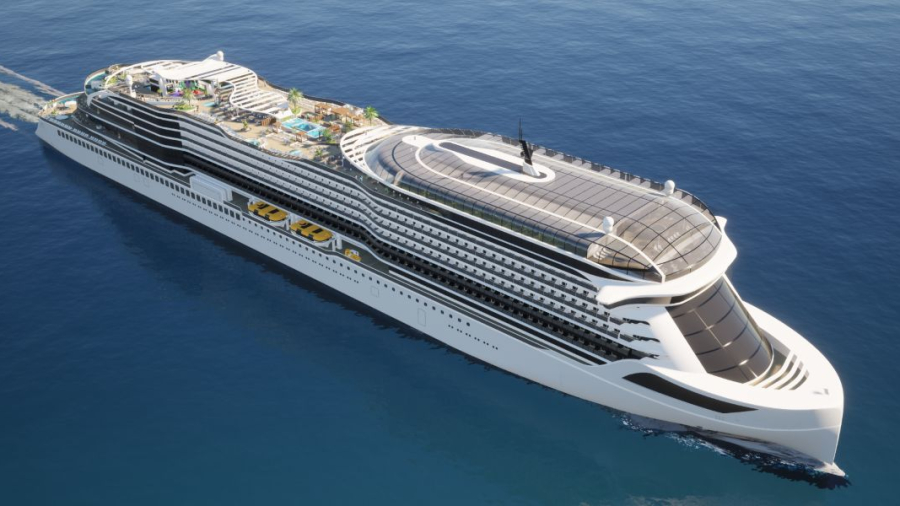
A fully battery-electric cruise ship capable of carrying nearly 2,000 passengers could enter service within the next decade, according to a newly revealed concept from German shipbuilder Meyer Werft.
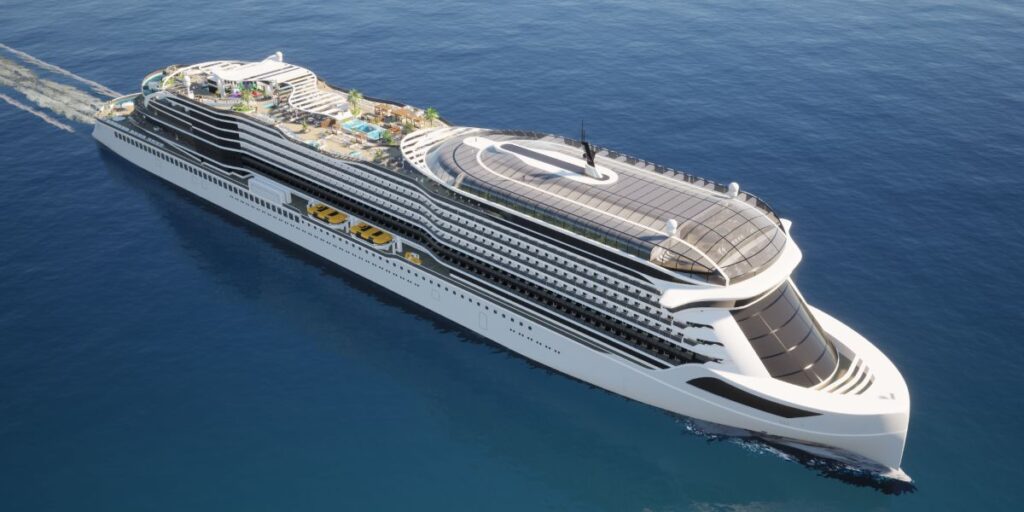
Unveiled during Seatrade Cruise Global in Miami, the proposed vessel, known as Project Vision, would measure approximately 902 feet in length and accommodate 1,856 guests, with a gross tonnage of around 82,000. The shipyard says the design could reduce greenhouse gas emissions by up to 95 percent compared with conventional cruise ships powered by marine fuels.
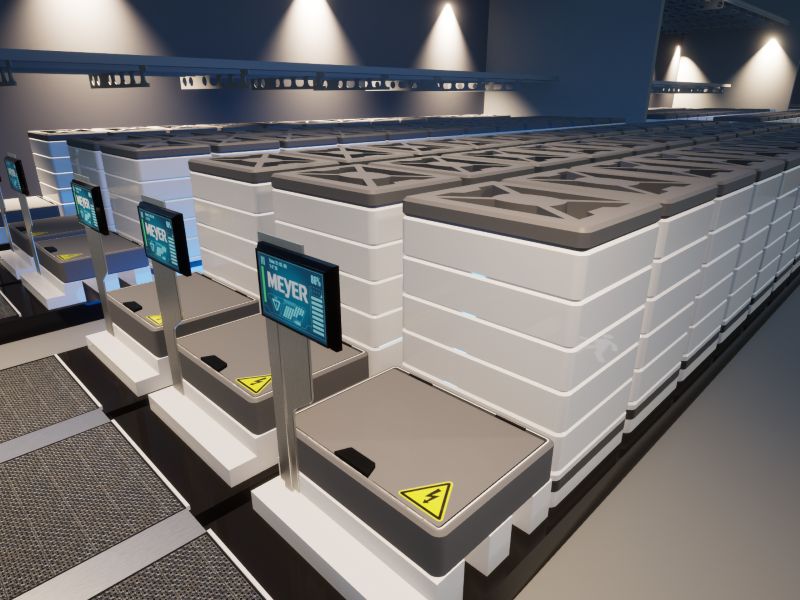
The concept replaces traditional propulsion systems with a large-scale battery installation supplied by Norwegian company Corvus Energy. Unlike existing ships that rely on liquified natural gas or marine diesel engines, Project Vision would operate entirely on stored electrical energy for certain routes.
“We asked ourselves how we can use innovation to reduce CO2 and contribute to decarbonization – not in 50 years, but much sooner,
“We enable a reduction in greenhouse gas emissions of up to 95 percent.”
Tim Krug of Meyer Werft’s Concept Development Group.
The company believes the technology required to build such a vessel is already available.
According to chief sales officer Thomas Weigend, a ship ordered today could be delivered as early as 2031.
Design Built Around Shorter, Regional Cruises
Project Vision has been designed with shorter itineraries in mind, particularly in regions where port infrastructure can support frequent recharging. Meyer Werft said many popular European routes could be completed entirely on battery power, highlighting sailings between Barcelona and Civitavecchia as a potential example.
The success of such operations would depend heavily on shoreside charging capabilities. Around 100 European ports are expected to have the required infrastructure in place by 2030, driven largely by the European Union’s Fit for 55 climate initiative. The policy aims to cut emissions by at least 55 percent by 2030 compared with 1990 levels, while working towards climate neutrality by 2050.
Under these rules, ships visiting EU ports will also be required to connect to shore power and account for their carbon emissions, adding further pressure on cruise lines to adopt cleaner technologies.
For longer voyages, Meyer Werft suggests the concept could be adapted into a hybrid configuration. In this scenario, supplementary generators would extend the vessel’s range, making routes such as transatlantic crossings feasible while still delivering significant emissions reductions.
Rethinking Cruise Ship Design
Removing conventional engines and exhaust systems would allow for a fundamental redesign of onboard spaces. Without the need for funnels and internal exhaust structures, more room could be dedicated to passenger areas, particularly on upper decks.
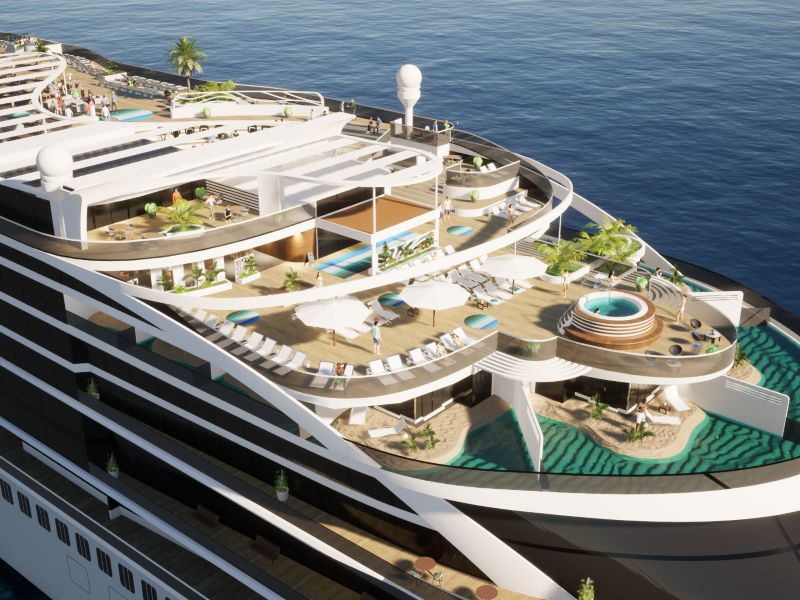
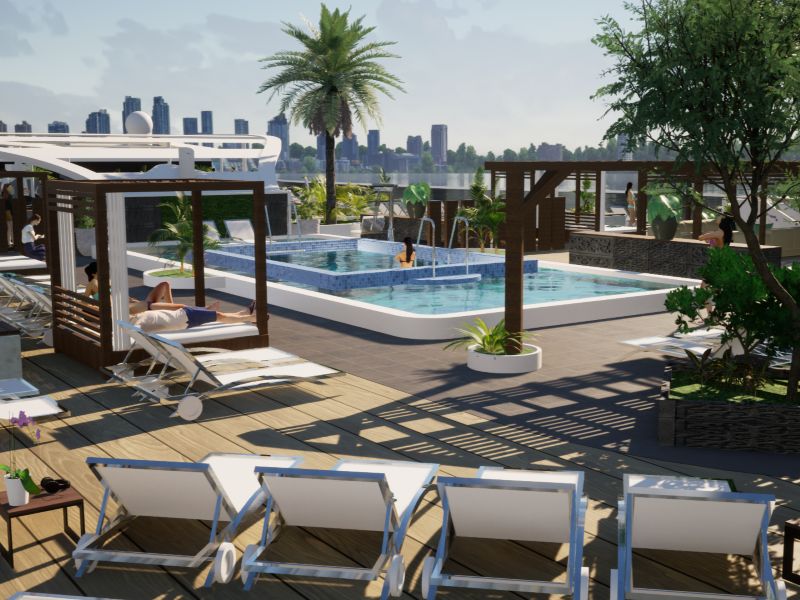
The concept includes an expanded open-air sun deck as well as enclosed, weather-protected attractions designed for year-round use. Among the standout features is a glass-enclosed indoor aqua park at the stern, allowing guests to enjoy the facility even in colder or wetter climates typical of northern Europe.
In addition to environmental benefits, the absence of traditional propulsion machinery would significantly reduce onboard vibration and noise levels, potentially improving overall passenger comfort.
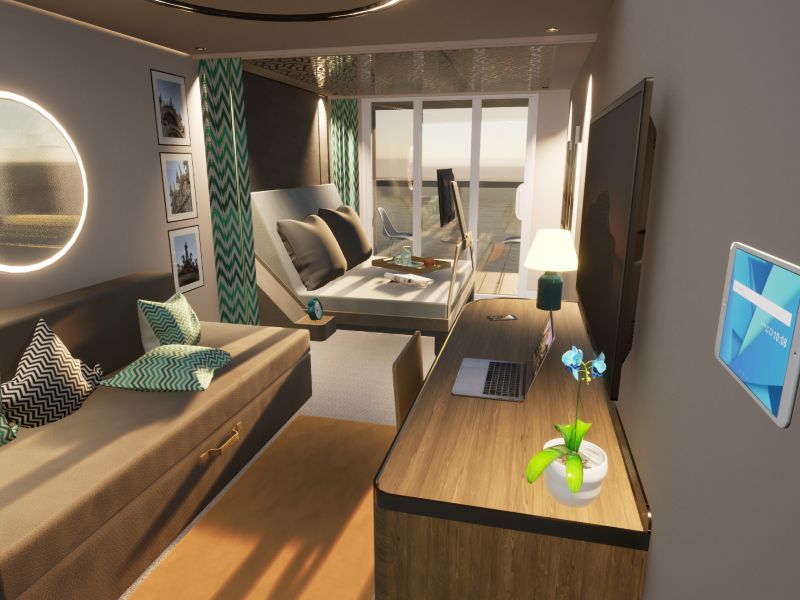
Project Vision also aligns with broader industry experimentation around alternative propulsion, including hybrid systems, shore power connections and fuels such as LNG and methanol.
Growing Momentum For Zero-Emission Cruising
Meyer Werft’s concept reflects increasing momentum across the cruise sector to develop low and zero-emission vessels as regulatory and public pressure intensifies.
European legislation is playing a central role in accelerating this shift, but cruise lines and shipbuilders are also investing heavily in future technologies to remain competitive in a decarbonising market.
The project now joins other initiatives, including efforts by Hurtigruten in Norway, to develop fully zero-emission cruise ships. While still at the concept stage, Project Vision demonstrates how existing battery technology could soon make large-scale electric cruising a practical reality.
Get the best price on your cruise…

Related Posts
If you found this interesting, please share!
A viral social media post is claiming that a man was fired from his job, after it was discovered that he had been working remotely from a Carnival cruise ship…
Seabourn’s expedition ship Seabourn Pursuit has provided essential medical assistance to residents of Chile’s remote Robinson Crusoe Island, offering diagnostic services that had been unavailable for several months. The vessel…
A new Formula 1-inspired experience is set to arrive on board P&O Cruises’ Arvia this summer, bringing a mix of interactive racing, shopping and themed entertainment to guests at sea….
A passenger has launched legal action against Celebrity Cruises after allegedly sustaining a fractured foot during a fall on the dance floor of Celebrity Reflection. Jeannette Beres, a Florida resident,…
Source link