
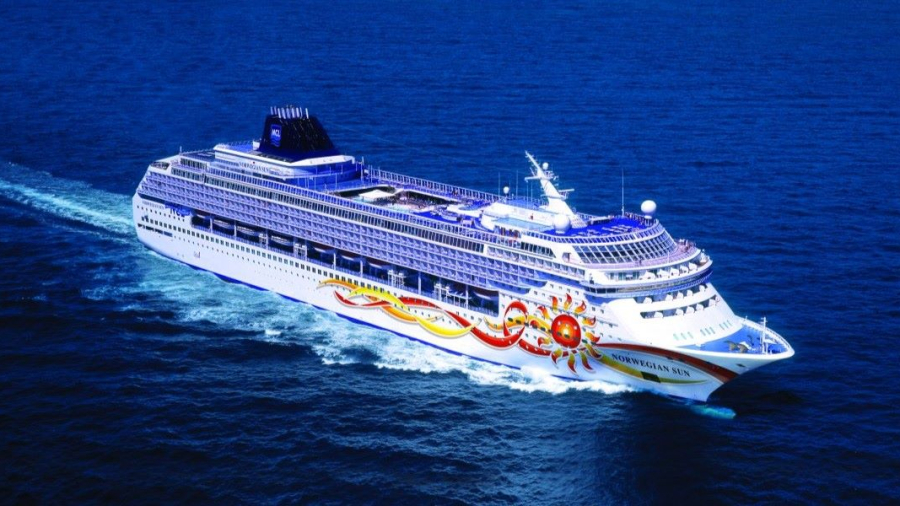
Norwegian Cruise Line has informed passengers booked on Norwegian Sun’s 23rd September 2026 sailing that the ship will remain in Copenhagen for two additional overnight stays whilst undergoing unplanned maintenance.
The extended port stay will result in the cancellation of the scheduled call to Oslo, Norway, though the cruise line has emphasised that the required work does not compromise vessel safety or passenger wellbeing.
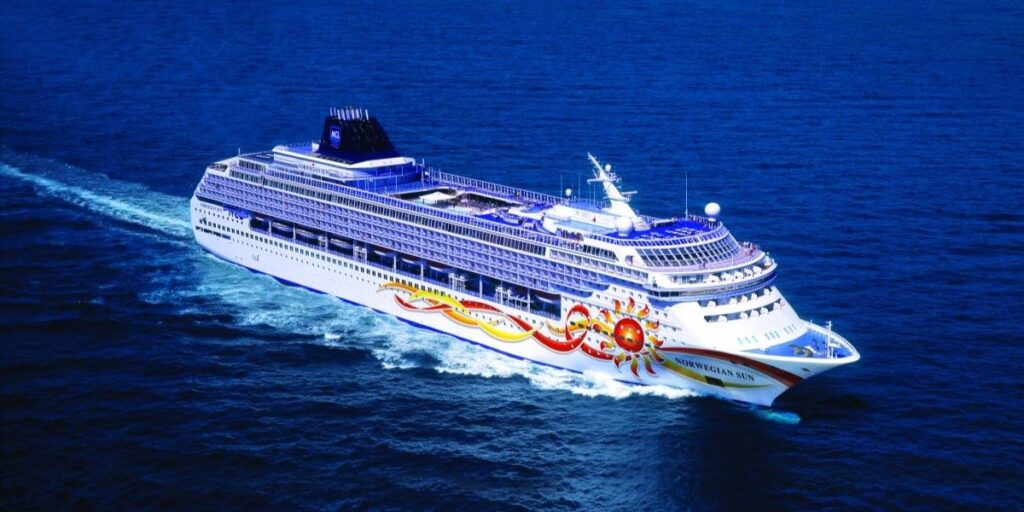
The 1,976-passenger Norwegian Sun was originally scheduled to depart Copenhagen on the evening of embarkation day, 23rd September, before calling at Oslo, Norway the following day.
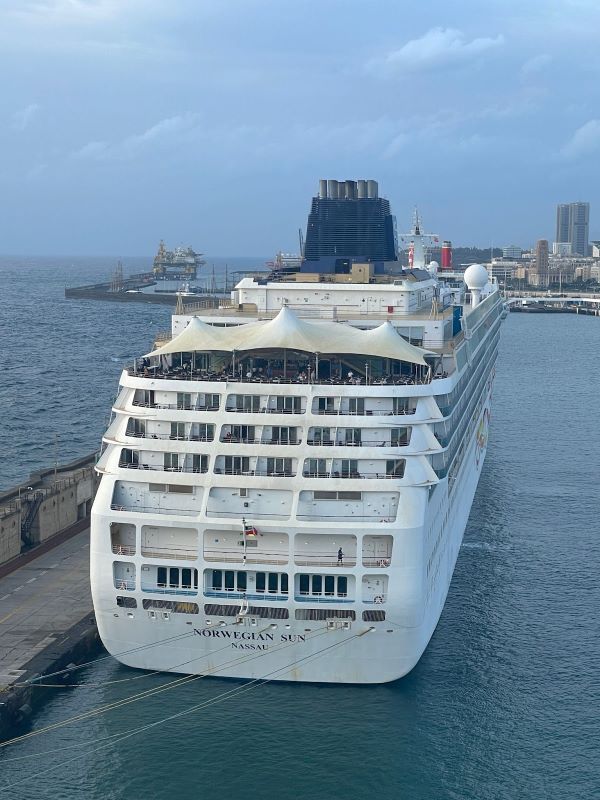
Instead, the vessel will now remain docked at the Danish capital through 25th September whilst shore-side teams complete necessary repairs.
Norwegian Cruise Line has sent email notifications to all affected guests explaining the itinerary modifications. The cruise line confirmed that embarkation will proceed as scheduled on Wednesday, 23rd September, and passengers must still adhere to their pre-selected arrival time windows despite the ship’s delayed departure.
The prolonged Copenhagen stay means the planned Oslo visit on Thursday, 24th September – scheduled from 10:00 a.m. to 9:00 p.m. – has been cancelled entirely.
Additionally, what was originally programmed as a day at sea on Friday, 25th September will now serve as the second overnight in port whilst maintenance work continues.
Revised Itinerary Maintains Majority Of Baltic Calls

Norwegian Sun will finally depart Copenhagen at 5:00 p.m. on Friday, 25th September, setting course for Warnemünde (Berlin), Germany.
The relatively short distance between the two ports – just over 100 miles – should allow the vessel to arrive in time for its scheduled call from 6:00 a.m. to 8:00 p.m. on Saturday, 26th September.
The remainder of the ten-day itinerary will proceed without further alterations at this time.
Following the German port call, Norwegian Sun will continue its Baltic circuit with visits to several Eastern European destinations that have become increasingly popular with cruise passengers seeking alternatives to Western Mediterranean routes.
On Sunday, 27th September, the ship will call at Gdynia, Poland from 1:30 p.m. to 9:30 p.m., offering guests access to the historic port city that serves as a gateway to Gdańsk and the broader Tri-City metropolitan area.
The following day, Monday, 28th September, brings a visit to Klaipeda, Lithuania from 10:00 a.m. to 5:30 p.m., where passengers can explore one of the Baltic’s most charming coastal cities.
Tuesday, 29th September features a call at Riga, Latvia from 9:30 a.m. to 5:30 p.m., allowing time to discover the Latvian capital’s UNESCO-listed Art Nouveau architecture and medieval Old Town.
The itinerary then moves to Nynäshamn, Sweden on Wednesday, 30th September from 8:00 a.m. to 6:00 p.m., providing access to Stockholm and the surrounding archipelago.
The final port call before debarkation takes place on Thursday, 1st October, when Norwegian Sun visits Tallinn, Estonia from 11:00 a.m. to 8:00 p.m.
The cruise concludes with arrival in Helsinki, Finland at 7:00 a.m. on Friday morning, 2nd October for passenger disembarkation.
Compensation Package Offered To Affected Passengers
Norwegian Cruise Line is providing a $100 non-refundable onboard credit to guests booked on the modified sailing as compensation for the itinerary changes.
The credit will be split between the first two passengers registered in each stateroom, meaning qualifying cabins will receive $50 per person to spend on board.
This gesture follows industry standard practice when cruise lines make significant alterations to published itineraries.
The onboard credit can typically be used for speciality dining, beverage packages, spa treatments, shore excursions, and retail purchases throughout the voyage.
Whilst some passengers may be disappointed by the loss of the Oslo port call, others may welcome the extended time in Copenhagen.
The Danish capital consistently ranks among Europe’s most popular cruise destinations, offering world-class museums, historic palaces, the famous Tivoli Gardens, and the colourful Nyhavn waterfront district.
Nature Of Required Maintenance Remains Undisclosed
Norwegian Cruise Line’s communication emphasised that the required maintenance “does not affect the safety of our ship or that of our guests and crew, our highest priority,” yet the cruise line has not disclosed specific details about which shipboard systems require attention.
This lack of specificity is not unusual in the cruise industry, where operators typically avoid providing technical details that might unnecessarily alarm passengers or reveal competitive information about vessel operations.
The fact that the work requires two full days in port suggests it may involve systems that cannot be adequately serviced whilst underway or during brief port calls.
Marine maintenance can encompass a wide range of systems, from propulsion and navigation equipment to hotel operations such as galley facilities, air conditioning, or water treatment.
Given that the work is described as “required” rather than optional or routine, it likely represents an issue identified during regular operational monitoring that necessitates prompt attention.
Norwegian Sun’s Service Profile And Fleet Position
The 78,309-tonne Norwegian Sun entered service in 2001 and represents Norwegian Cruise Line’s first generation of purpose-built freestyle cruising vessels.
At over two decades old, the ship requires more frequent maintenance interventions than newer fleet members, though Norwegian has invested in periodic refurbishments to keep the vessel competitive.
The ship accommodates 1,976 passengers at double occupancy and features 10 dining venues, 11 bars and lounges, and a variety of entertainment options spread across its 258-metre length.
Norwegian Sun primarily serves Norwegian’s European and global deployment needs, often positioning in regions where smaller, older vessels can navigate ports that larger contemporary ships cannot access.
Throughout her service life, Norwegian Sun has sailed itineraries spanning Alaska, the Caribbean, South America, Asia, and Europe.
The ship’s size and configuration make it particularly well-suited for Baltic cruises, where many historic ports have infrastructure constraints that limit the size of vessels that can call.
Baltic Cruise Market Continues Strong Performance
The scheduled itinerary represents Norwegian’s commitment to the Baltic market, which has experienced robust growth in recent years as travellers seek cooler-weather alternatives to Mediterranean cruising.
The region’s appeal lies in its combination of historic cities, cultural richness, and relative proximity for both North American and European passengers.
September departures capture the tail end of the Baltic season before ships typically reposition to warmer climates for autumn and winter operations.
Whilst weather can be unpredictable during shoulder season, passenger volumes often benefit from reduced crowds compared to peak summer months and more attractive pricing.
The loss of Oslo represents the deletion of one of the itinerary’s marquee calls, as Norway’s capital consistently ranks among the Baltic’s most sought-after destinations.
The city offers attractions ranging from the Viking Ship Museum and Vigeland Sculpture Park to the striking Oslo Opera House and the historic Akershus Fortress overlooking the harbour.
However, the extended Copenhagen stay partially mitigates this loss, as the Danish capital provides arguably even more diverse sightseeing opportunities and is generally considered one of Europe’s most cruise-friendly cities with excellent transport links and attractions within easy reach of the cruise terminals.
Industry Context For Unplanned Maintenance Stops
Whilst cruise lines strive to complete all maintenance during scheduled drydock periods, unplanned technical issues occasionally require vessels to extend port stays or modify itineraries to allow for repairs.
Such incidents have become more visible in the social media age, when passengers can instantly share information about itinerary changes with broader audiences.
Norwegian Cruise Line has handled several such situations across its fleet in recent years, typically offering compensation packages that balance passenger goodwill with operational realities.
The $100 onboard credit offered in this instance falls within industry norms for a single missed port call on a multi-day itinerary.
Other major cruise lines have adopted similar approaches, with compensation varying based on factors including the number of ports affected, the prominence of cancelled destinations, and whether passengers are still able to enjoy alternative experiences.
Some operators also offer the option for passengers to cancel without penalty when significant itinerary changes occur before sailing.
For passengers booked on the affected Norwegian Sun voyage, the key consideration will likely be whether the extended Copenhagen time and onboard credit adequately compensate for missing Oslo.
Those primarily interested in maximising port experiences may feel shortchanged, whilst passengers who value shipboard relaxation and the opportunity to explore Copenhagen more thoroughly may view the change more favourably.
The cruise line’s emphasis that safety remains uncompromised should provide reassurance that the vessel will be fully operational for the remainder of the sailing once the maintenance work concludes on 25th September.
TODAY’S BEST CRUISE DEALS!
Don’t miss these offers…