
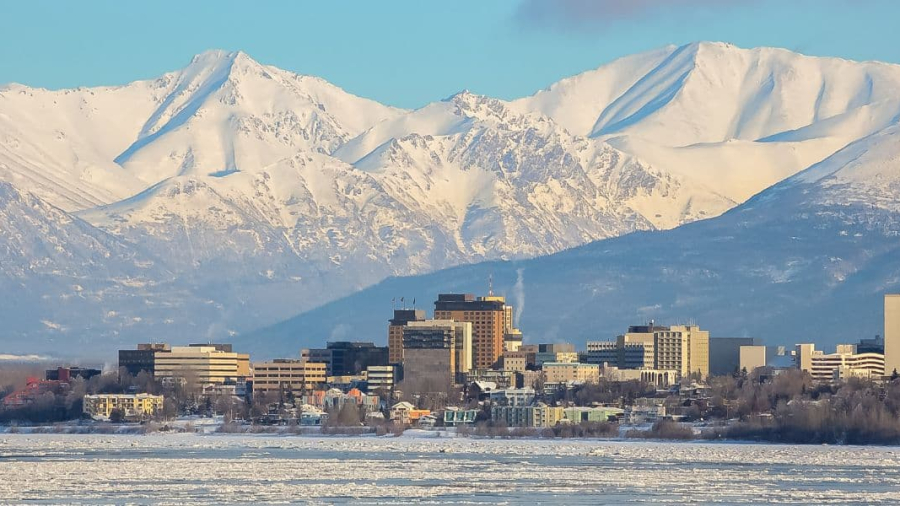
The small-ship cruise operator UnCruise Adventures came to the rescue of a stranded skiff in Alaska’s remote southeastern waters on the night of 3rd August 2026. Wilderness Legacy, an 88-guest expedition vessel, towed the fuel-depleted craft several miles to safety after a luxury superyacht owned by Facebook founder Mark Zuckerberg reportedly failed to respond to the assistance call.

The maritime incident unfolded in the intricate fjords of southeastern Alaska, approximately 85 miles south-southeast of Juneau near Point Highland. At 9:32 p.m. on Monday evening, 3rd August, a 21-foot Hewescraft boat contacted the United States Coast Guard (USCG) requesting help after running out of fuel in the challenging waterways.
The vessel’s occupants – believed to be two women, a child, and a dog – found themselves adrift in waters known for their beauty but also their navigational complexity. Alaska’s southeastern region is characterised by narrow passages, strong currents, and remote locations where assistance can be hours away even in ideal conditions.
Coast Guard Coordinates Marine Assistance Request
After establishing communication with the stranded craft, USCG personnel assessed the situation and determined there was no immediate distress or danger to life. However, the vessel clearly required assistance to reach safety, prompting the Coast Guard to issue a marine assistance request at 9:56 p.m., approximately 24 minutes after the initial contact.
This distinction between a distress call and an assistance request carries significant legal implications under international maritime law. Whilst distress calls trigger mandatory response obligations under the International Convention for the Safety of Life at Sea (SOLAS), assistance requests do not carry the same legal weight, though maritime tradition and ethics strongly encourage vessels to render aid when safely able to do so.
The USCG’s role in this incident exemplifies the challenges of coordinating maritime safety across Alaska’s vast and often isolated coastal regions, where commercial vessels, small recreational craft, and luxury yachts frequently share the same waters.
Wilderness Legacy Responds and Executes Towing Operation
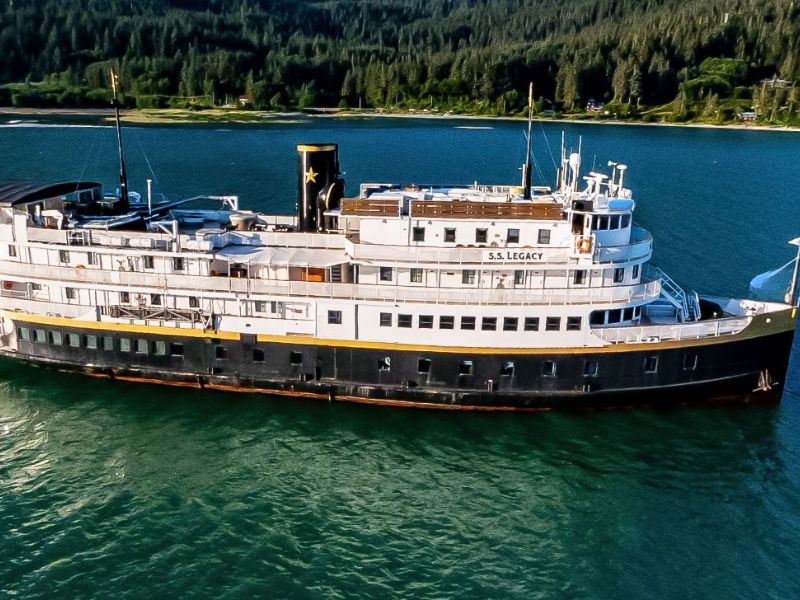
Wilderness Legacy received the assistance request and immediately altered course to intercept the disabled skiff. By 10:58 p.m., the expedition cruise ship had reached the smaller vessel and begun rendering aid, demonstrating the vessel’s crew training and commitment to maritime safety protocols.
The cruise ship’s crew assessed the situation and determined that towing would be the safest method to bring the skiff to protected waters. Over the next hours, Wilderness Legacy towed the 21-foot craft approximately nine miles east to Farragut Bay, a sheltered anchorage that would provide the stranded boaters with protection from weather and currents.
In addition to providing the tow service, the cruise ship’s crew supplied supplementary fuel to the skiff, ensuring the smaller vessel would have enough resources to maintain position at anchor and eventually continue to their intended destination once additional assistance or fuel could be arranged.
Safe Anchorage Achieved in Under Four Hours
By approximately 12:50 a.m. on Tuesday, 4th August, Wilderness Legacy reported to the Coast Guard that the skiff was safely anchored in Farragut Bay. The entire rescue operation, from the initial call for assistance to confirmed safe anchorage, took just under three and a half hours – a relatively swift resolution given the remote location and nighttime conditions.
The occupants of the skiff chose to remain with their vessel after assistance was rendered, a common decision when the craft is undamaged and safely positioned. No injuries were reported amongst the boat’s passengers or crew, and neither vessel sustained damage during the towing operation.
Details regarding the identities of those aboard the smaller boat and the specific circumstances that led to their fuel depletion have not been publicly released. Such information is typically not disclosed by the Coast Guard unless relevant to ongoing investigations or public safety concerns.
Limited Impact to Cruise Itinerary and Guest Experience
Despite the several-hour diversion, Wilderness Legacy was not significantly delayed on her scheduled 7-night Alaska expedition voyage. The ship had departed Juneau on Saturday, 1st August, and had already visited Robert Islands and the spectacular Glacier Bay National Park before the rescue occurred.
At the time of the incident, the vessel was en route to Wrangell Narrows, one of the most challenging and scenic passages in southeastern Alaska. The slight delay did not prevent the ship from continuing with her planned itinerary, which showcases the type of intimate, off-the-beaten-path Alaska experiences that larger cruise ships cannot offer.
A guest aboard Wilderness Legacy, Michael Love, shared details of the incident on social media, noting that passengers were kept informed through captain’s announcements throughout the rescue operation. Such transparency is characteristic of small-ship expedition cruising, where passengers often develop a closer connection with crew and operations than is typical on larger vessels.
Launchpad’s Non-Response Raises Questions About Maritime Protocols
According to USCG information, Wilderness Legacy was not actually the closest vessel to the stranded skiff when the assistance call was issued. The 387-foot superyacht Launchpad, owned by Meta Platforms founder and CEO Mark Zuckerberg, was positioned nearer to the disabled craft but reportedly failed to respond to communications regarding the assistance request.
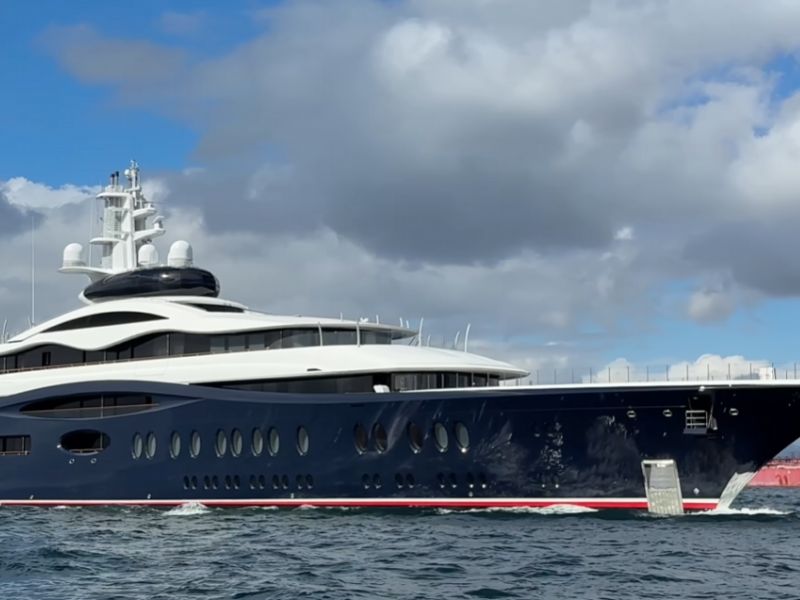
Launchpad significantly exceeds Wilderness Legacy in both length and tonnage, measuring 387 feet compared to the cruise ship’s 190 feet, with a gross tonnage of 5,528 tons versus 1,472 tons. The luxury yacht, which represents one of the most sophisticated private vessels in the world, would theoretically have been well-equipped to render assistance.
No information has been released regarding why Launchpad did not respond to the request or who may have been aboard the vessel at the time. Possible explanations could range from communication equipment issues to the vessel being unmanned at anchor, though no official explanation has been provided by representatives of the yacht or its owner.
Legal and Ethical Obligations in Maritime Assistance
The incident highlights the important distinction between legal obligations and maritime tradition when it comes to rendering assistance at sea. Under SOLAS regulations, vessels are legally required to respond to distress calls – situations where life or property is in grave and imminent danger.
However, the USCG has been clear that this particular situation was classified as a request for assistance rather than a distress call. This means there was no immediate danger to life, and therefore no vessel was legally compelled to respond under international maritime law.
Nevertheless, maritime culture has long held that vessels should render assistance to those in need when safely able to do so, regardless of strict legal obligations. This tradition stems from the inherent dangers of sea travel and the understanding that any vessel may one day require similar help.
The decision by Wilderness Legacy to respond, despite not being the closest vessel and having no legal requirement to do so, reflects positively on UnCruise Adventures’ commitment to maritime safety and the professionalism of the vessel’s crew and master.
UnCruise Adventures’ Small-Ship Alaska Programme
Wilderness Legacy represents the type of intimate expedition cruising that has grown increasingly popular amongst travellers seeking authentic experiences beyond the reach of mainstream cruise tourism. The vessel accommodates just 88 guests, a fraction of the thousands carried by major cruise line ships that dominate Alaska’s summer season.
Based in Juneau, Wilderness Legacy operates 7-night and 12-night expedition voyages throughout Alaska’s Inside Passage and surrounding waters. These itineraries are specifically designed to access narrow waterways, remote anchorages, and pristine wilderness areas that larger vessels simply cannot navigate.
UnCruise Adventures has built its reputation on providing these immersive experiences, with activities including kayaking, skiff excursions, hiking, and wildlife viewing in some of North America’s most spectacular and unspoiled landscapes. The company’s fleet of small ships allows for the flexibility to adjust itineraries based on wildlife sightings, weather conditions, and – as this incident demonstrates – maritime emergencies.
The rescue operation showcases not only the vessel’s capabilities but also the training and preparedness of crew members who must be ready to handle a wide variety of situations in Alaska’s challenging maritime environment, far from major port facilities and support services.
TODAY’S BEST CRUISE DEALS!
Don’t miss these offers…
Related Posts
If you found this interesting, please share!

MSC Musica diverted from its scheduled approach to Ibiza on Friday, 31st July 2026, to rescue eight men found adrift in a small, distressed craft approximately 16 miles east of…
Royal Caribbean’s newest cruise ship Legend of the Seas has suffered a shattered glass panel in its signature AquaDome attraction, just over a month after entering service. The incident marks…

Port Canaveral has commenced a $95 million expansion and renovation of Cruise Terminal 10, with completion targeted for November 2027. The ambitious project will increase the facility’s footprint by nearly…
Explora Journeys has officially welcomed EXPLORA III into its growing fleet, with the luxury cruise ship departing on her maiden voyage after a naming ceremony in Barcelona on 4th August…
Source link