
Free: download our 2027 Luxury Cruise Calendar →
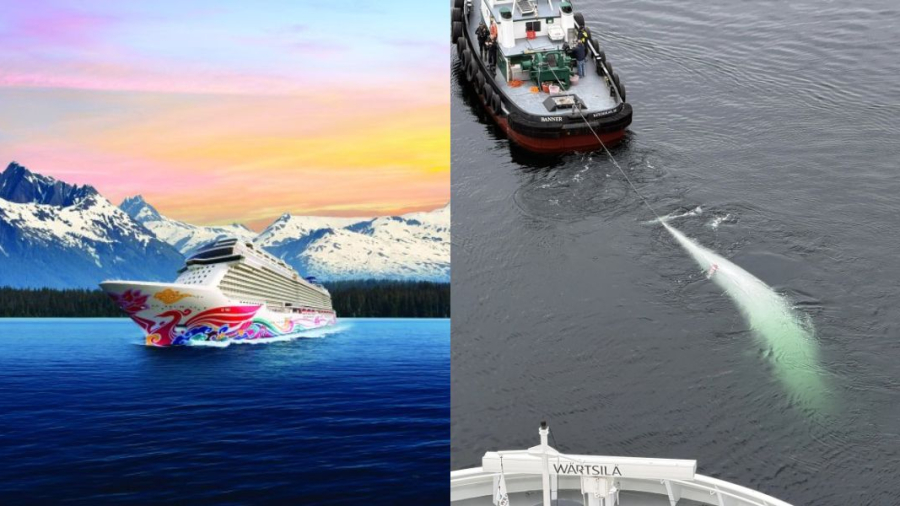
Norwegian Cruise Line is cooperating with federal wildlife authorities after Norwegian Joy arrived in Sitka, Alaska on Thursday, 17th September 2026 with a deceased fin whale lodged on its bulbous bow. This caused delays to the vessel’s port call and prompted an official investigation into the marine mammal death.
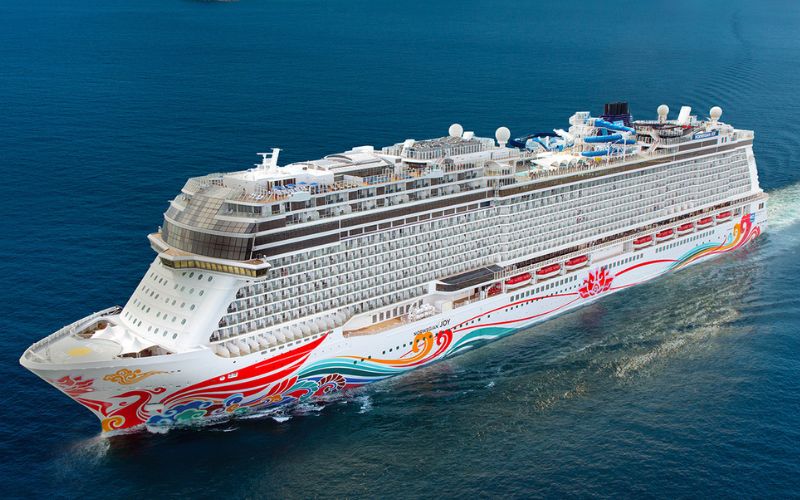
The 167,725-gross-ton Norwegian Joy was approaching its scheduled 8:00 a.m. arrival in Sitka when crew members discovered the deceased cetacean on the ship’s bow. The vessel’s docking was delayed by approximately two hours as authorities assessed the situation and coordinated removal of the whale carcass.
Passengers aboard the 3,802-guest vessel did not begin disembarking until roughly 10:00 a.m., significantly later than the published itinerary indicated. To partially compensate guests for the lost time ashore, Norwegian Cruise Line extended the ship’s departure by one hour, with Norwegian Joy now scheduled to remain alongside until 4:30 p.m. instead of the originally planned 3:30 p.m. departure time.
Federal Wildlife Officials Launch Investigation Into Marine Mammal Death
The National Oceanic and Atmospheric Administration (NOAA) has deployed its Alaska Marine Mammal Stranding Network team to assess the deceased fin whale and determine appropriate next steps. The federal agency maintains responsibility for investigating marine mammal deaths and enforcing protections under the Marine Mammal Protection Act and Endangered Species Act.
According to reports from My Northwest and KIRO Newsradio, the whale was successfully removed from Norwegian Joy’s bulbous bow. This rounded protrusion below the waterline is designed to improve a vessel’s hydrodynamic efficiency and reduce fuel consumption. The carcass was then towed away from the cruise terminal for further examination.
Photographic evidence shared by passengers on social media platforms shows the whale being transported away from the vessel in an inverted position. The images captured visible injuries near the tail area. Standard protocol in such incidents requires authorities to conduct a comprehensive necropsy to determine the precise cause of death and whether the vessel strike occurred ante-mortem or post-mortem.
Norwegian Cruise Line Issues Statement On Tragic Incident
In an official statement addressing the situation, Norwegian Cruise Line expressed sorrow over the whale’s death whilst committing to full cooperation with relevant authorities. The cruise line emphasised its dedication to responsible maritime operations and marine conservation efforts.
“We are deeply saddened by this situation, and we are cooperating with the appropriate authorities and any relevant scientific and wildlife experts as part of the assessment process,” the company stated. “This is a sobering reminder of the importance of ongoing collaboration among the maritime, scientific and conservation communities.”
The Miami-based cruise operator further reinforced its commitment to environmental stewardship. “We remain committed to operating responsibly, complying with applicable laws and regulations and supporting efforts that contribute to the long-term health of marine life.”
Timeline Of Norwegian Joy’s Ten-Night Alaska Sailing
Norwegian Joy departed Seattle, Washington on Friday, 11th September 2026 for a 10-night roundtrip Alaska voyage. This is the vessel’s penultimate cruise of the 2026 Alaska season. The ship’s itinerary includes multiple ports throughout Southeast Alaska and British Columbia.
Sitka represented the fourth port of call on this sailing, following previous stops in Ketchikan on Sunday, 13th September; Juneau on Tuesday, 15th September; and Icy Strait Point on Wednesday, 16th September. The ship also navigated through Glacier Bay National Park for scenic cruising on Monday, 14th September.
Following the Sitka call, Norwegian Joy remains scheduled to visit Skagway on Friday, 18th September, and Victoria, British Columbia on Sunday, 20th September before returning to Seattle for disembarkation on Monday, 21st September. At present, no additional itinerary modifications have been confirmed beyond the extended Sitka port time.
Uncertainty Surrounds Location And Circumstances Of Whale Impact
Critical questions remain unanswered regarding precisely where and when Norwegian Joy may have struck the fin whale. The vessel traversed hundreds of nautical miles of Alaska waters between multiple port calls and scenic cruising areas before the whale was discovered on approach to Sitka.
It remains unknown whether the whale was alive when it came into contact with the ship or if the carcass was already deceased and floating in the vessel’s path. Bulbous bows protrude below the waterline and can strike marine mammals without crew members on the bridge detecting any impact. This is particularly true in rough seas or when whales are submerged.
Fin whales are the second-largest whale species on Earth, reaching lengths of up to 85 feet and weighing as much as 80 tonnes. These baleen whales are classified as endangered under the Endangered Species Act. This makes any human-caused mortality a matter of serious concern for federal wildlife regulators.
Passenger Reactions And Social Media Documentation
Guests aboard Norwegian Joy shared their experiences and photographic evidence through social media platforms, particularly on Reddit. Multiple passengers contributed to discussion threads about the incident, including user Alternative-Hat-9627, who provided detailed timeline information about the delayed arrival and extended departure.
The unexpected discovery created a sombre atmosphere aboard the vessel as passengers witnessed the whale removal operations. Many cruise enthusiasts expressed sadness over the marine mammal’s death. They acknowledged that such incidents, though tragic, occur across the maritime industry.
Passengers who had booked shore excursions or made independent touring arrangements in Sitka faced disruption due to the two-hour delay. Despite this, the extended port time provided some additional opportunity for guests to explore Alaska’s former Russian colonial capital and its surrounding natural attractions.
Growing Pattern Of Cruise Ship Whale Strikes In Alaska Waters
This incident with Norwegian Joy represents the second confirmed whale strike involving a major cruise ship in Alaska waters during the 2026 season. On Friday, 19th June 2026, Royal Caribbean International’s Ovation of the Seas arrived in Seward with a deceased fin whale on its bulbous bow.
In that earlier incident, Ovation of the Seas docked with the whale carcass still attached to the vessel. Authorities covered it with a tarp until removal could be coordinated. The whale was subsequently towed to a protected nearby lagoon for examination. Investigators made the heartbreaking discovery that the animal had been pregnant at the time of death.
Following the Ovation of the Seas incident, the Center for Biological Diversity submitted formal correspondence to Royal Caribbean Group executives. They urged the implementation of reduced vessel speeds when transiting known whale habitat areas. The cruise company has not issued any public response to that request.
The unfortunate pattern extends beyond 2026, with documented whale strikes involving multiple cruise lines over recent years. In May 2024, MSC Cruises’ MSC Meraviglia arrived in New York Harbor with a deceased whale on its bow. In 2016, Holland America Line’s Zaandam struck a young male fin whale near Seward, Alaska.
Maritime Industry Faces Ongoing Whale Strike Challenge
Whale strikes represent a persistent challenge for the maritime industry. This affects not only cruise vessels but also cargo ships, ferries, and other commercial vessels transiting waters inhabited by large cetaceans. Alaska’s Inside Passage and Gulf of Alaska waters provide critical feeding habitat for humpback whales, fin whales, and other marine mammals during summer months.
Ships travelling at higher speeds have less time to detect and avoid whales. Whales have a reduced ability to hear approaching vessels and take evasive action. The bulbous bow design, whilst improving fuel efficiency, creates a particular hazard as it protrudes below the waterline where whales commonly swim and feed.
Conservation organisations have advocated for vessel speed restrictions in designated whale habitat areas. They argue that reduced speeds would provide more time for detection and avoidance. This would also reduce the severity of impacts when strikes do occur. However, such restrictions also affect cruise line operations, port schedules, and the broader maritime logistics network.
The cruise industry has made significant investments in environmental monitoring technology and crew training programmes designed to reduce wildlife interactions. Many cruise lines employ dedicated environmental officers and have established protocols for whale watching and marine mammal avoidance. The effectiveness of these measures remains subject to ongoing debate among scientists and conservationists.
As Norwegian Joy continues its Alaska voyage and federal investigators examine the deceased fin whale, the incident serves as a stark reminder of the complex relationship between commercial maritime operations and marine ecosystem protection in one of the world’s most spectacular cruising destinations.
TODAY’S BEST CRUISE DEALS!
Don’t miss these offers…