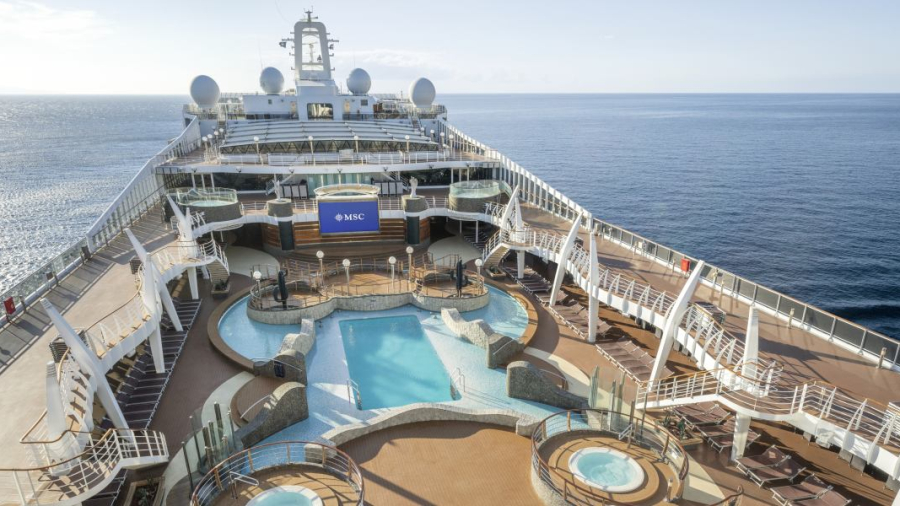
Six male passengers aboard MSC Divina are facing criminal charges after allegedly hacking into the ship’s communications system and broadcasting fake emergency announcements during an Eastern Mediterranean cruise.
Italian authorities boarded the vessel in Naples on 30th July 2026, following the early morning incident that caused alarm amongst passengers and crew.
Unauthorised Access to Restricted Ship Systems
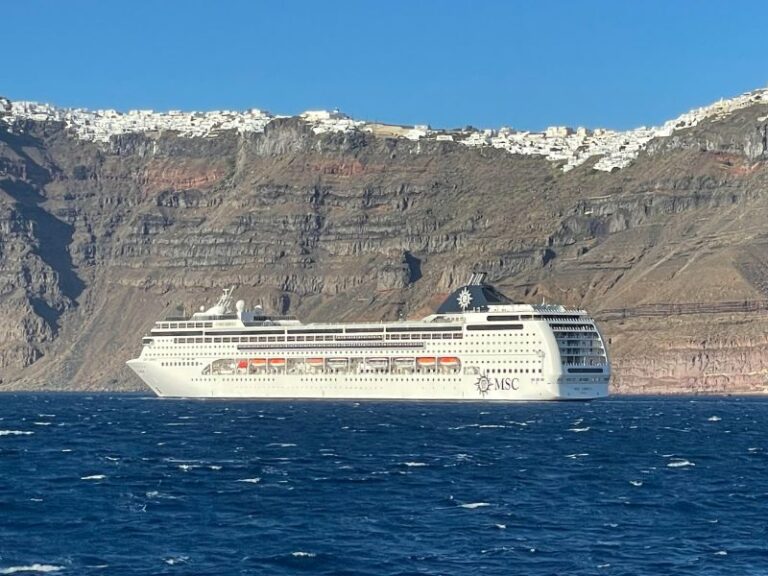
The incident occurred in the early hours of Thursday, 30th July 2026, whilst MSC Divina was sailing towards Naples from Marmaris, Turkey.
According to reports from Napoli Today, the six passengers – all young adults of Neapolitan origin – managed to bypass security protocols to gain access to the ship’s restricted intercom and public address system.
The ship’s communications infrastructure is protected by security codes specifically designed to prevent unauthorised access.
These systems are critical for ship operations and passenger safety, allowing the bridge and crew to communicate vital information throughout the vessel during both routine operations and emergency situations.
False Announcements Broadcast Across Multiple Decks
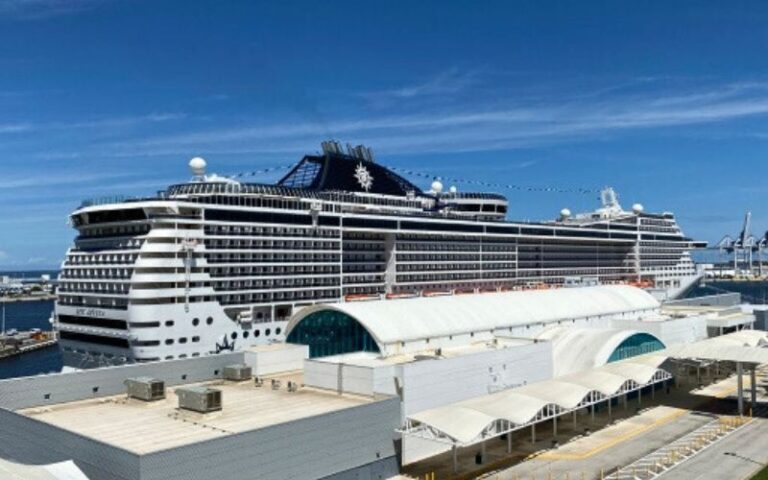
The unauthorised broadcasts were transmitted to public areas across two decks of the 3,502-passenger cruise ship.
Whilst the exact wording of the fake announcements has not been publicly disclosed, reports suggest the messages falsely indicated that the captain had lost control of MSC Divina and that the vessel was adrift at sea.
Such announcements would understandably cause significant concern amongst passengers, particularly given that legitimate emergency communications use the same system.
The incident highlights the potential for serious panic and confusion when ship safety systems are compromised.
Swift Response from Passengers and Authorities
Alert passengers who heard the alarming announcements reported the incident to crew members at approximately 6:30 a.m.
The ship’s master immediately lodged a formal complaint and contacted shore-side authorities whilst the vessel continued its approach to Naples.
The Operations Centre of the Coast Guard’s General Command in Rome coordinated the response, dispatching officers to board MSC Divina upon arrival.
Despite the serious nature of the incident, the ship maintained its schedule and docked in Naples at 11:00 a.m. as planned, ensuring minimal disruption to the broader itinerary.
The cruise line’s technical team and security personnel worked alongside the Coast Guard to trace the source of the illegal transmissions.
Their investigation quickly identified the six passengers responsible for the security breach.
Multiple Criminal Charges Filed Against Passengers
Italian authorities have filed several charges against the six men, who were travelling together in two staterooms aboard the vessel.

The charges include conspiracy to violate the law, unauthorised access to a computer system, and causing a public alarm.
The identities and exact ages of the men have not been released to the public, though they have been identified as adults from the Naples area.
The decision to withhold their personal information is consistent with Italian legal procedures during ongoing investigations.
The investigation continues as authorities work to determine precisely how the passengers managed to circumvent the ship’s security systems.
Understanding the methodology used in this breach is crucial for preventing similar incidents in the future, both aboard MSC vessels and throughout the wider cruise industry.
International Maritime Legal Implications
Because MSC Divina operates under a Panamanian flag registry, the results of the Italian investigation will be shared with Panamanian maritime authorities.
This is standard procedure for incidents occurring aboard vessels registered in Panama, which maintains one of the world’s largest ship registries.
Flag state jurisdiction plays a significant role in maritime law, and incidents aboard cruise ships often involve multiple legal frameworks.
In this case, the passengers face Italian criminal charges because the incident occurred in Italian territorial waters and the ship was bound for an Italian port.
The involvement of multiple jurisdictions demonstrates the complexity of maritime law enforcement and the cooperation required between nations to address crimes committed at sea.
Panama’s maritime authority will review the case to determine whether any additional actions are warranted under its registry regulations.
Cruise Itinerary Continues Despite Disruption
Following the authorities’ intervention in Naples, MSC Divina continued with its scheduled itinerary.
Passengers enjoyed their day exploring Naples before the ship departed that evening for Civitavecchia, the port serving Rome.
The vessel arrived in Civitavecchia on Friday, 31st July, marking the conclusion of the seven-night Eastern Mediterranean sailing.
The cruise had originally departed on 24th July 2026, calling at various ports throughout the region before the incident occurred.
MSC Cruises’ decision to maintain the published schedule demonstrated the company’s commitment to minimising disruption for the thousands of innocent passengers aboard.
The incident, whilst serious, did not compromise the ship’s operational capabilities or safety systems once the unauthorised access was terminated.
Potential Lifetime Ban from MSC Cruises
Beyond the criminal charges filed by Italian authorities, the six passengers likely face severe consequences directly from MSC Cruises under the company’s Guest Conduct Policy.
This policy explicitly prohibits unsafe behaviour and states that “guests may not enter or access any area that is restricted and/or for the use of crew members.”
Whilst the policy typically refers to physical spaces aboard the ship, the digital nature of this breach represents an equally serious violation.
Unauthorised access to the ship’s communications system poses significant safety risks and could potentially endanger all passengers and crew members aboard.
The Guest Conduct Policy allows MSC Cruises to impose consequences ranging from security intervention to “denial of boarding on the current or any future MSC Cruises Group cruise.”
This means the six passengers could face lifetime bans not only from MSC Cruises but also from Explora Journeys, the luxury brand operating under the same corporate umbrella.
Such bans are becoming increasingly common throughout the cruise industry as companies take firmer stances against passengers who engage in dangerous or illegal behaviour.
Cruise lines share information about banned passengers through industry databases, meaning a ban from one major cruise line can sometimes affect a passenger’s ability to book with other companies.
Industry-Wide Security Implications
This incident raises important questions about cybersecurity aboard cruise ships and the vulnerability of onboard systems to unauthorised access.
Modern cruise vessels rely heavily on integrated computer systems that control everything from navigation and propulsion to communications and entertainment.
The cruise industry has invested billions in technology to enhance the passenger experience and improve operational efficiency.
However, this increased connectivity and digitalisation also creates potential security vulnerabilities that must be continuously monitored and addressed.
MSC Cruises, like other major cruise lines, employs sophisticated security measures to protect its shipboard systems.
The fact that passengers were able to bypass these protections – even temporarily – will likely prompt a comprehensive review of security protocols across the fleet.
The incident also serves as a reminder that cruise ship security extends beyond traditional concerns such as preventing theft or managing unruly behaviour.
As ships become increasingly reliant on digital systems, protecting against cyber threats and unauthorised system access becomes paramount to ensuring passenger safety and operational integrity.
NEW DEALS JUST RELEASED!
Don’t miss the latest MSC Cruises offers…
Related Posts
If you found this interesting, please share!

A Viking river cruise ship carrying more than 235 passengers and crew members ran aground on the Danube River in Bulgaria on Tuesday, forcing a full evacuation of the vessel…

A newly released children’s book that spotlights the dedicated professionals working behind the scenes on cruise ships has made its debut exclusively aboard Oceania Cruises. “DogToon Adventures: Cruise Crew” is…

Norwegian Getaway will remain docked in Nassau until nearly midnight on 1st August 2026 to complete essential propulsion repairs, extending the port call by seven hours. The 3,903-passenger vessel experienced…
Mardi Gras has gone viral, with hundreds of cruisers reacting with a mixture of disbelief, disgust and jokes. The post, shared by Facebook user MaLana N Kerry Jefferson, claims the…
[ad_2]
Source link