
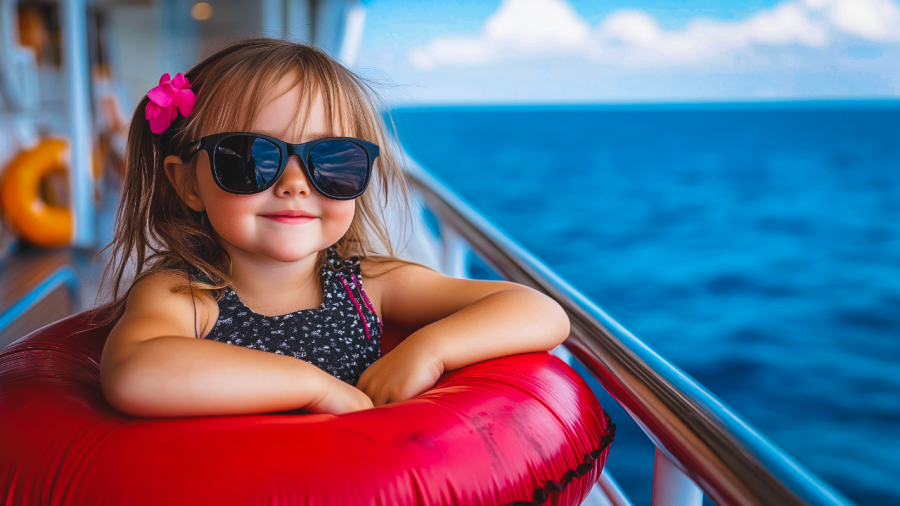
I have spent nearly three decades litigating against the world’s largest cruise lines. In that time, I have sat across from families who booked what was supposed to be the trip of a lifetime and came home carrying something no parent should ever have to carry. So when I read the recent string of arrests tied to cruises sailing out of Florida, I did not see isolated headlines. I saw a pattern that parents deserve to understand before they ever step on the gangway.
This is not written to scare you off cruising. My own view is that most families sail and return with nothing but good memories. But a handful of recent cases show exactly how predators operate at sea, and once you understand the playbook, you can take a few simple steps that meaningfully lower the risk to your children.
The cases that should be on every parent’s radar
The threat aboard a cruise ship is not one thing. It comes in a few distinct forms.
Crew members hiding cameras in cabins and bathrooms. In August 2024, a Royal Caribbean stateroom attendant named Arvin Joseph Mirasol was sentenced to 30 years in federal prison after pleading guilty to producing child pornography. According to the U.S. Attorney’s Office for the Southern District of Florida, Mirasol had been placing hidden cameras inside passenger cabins on the Symphony of the Seas since December 2023. A guest discovered a camera concealed under the bathroom sink and reported it to ship security. Investigators later identified children in the footage, ranging in age from 2 to 17 years old. Prosecutors said Mirasol would enter cabins while guests were showering and hide under their beds to record them.
Sit with that for a moment. A crew member with a key to the room, someone the family never thought twice about, gained access and did the unthinkable.
Passengers hiding cameras in public restrooms. The crew is not the only concern. In 2023, the FBI arrested Jeremy Froias after he allegedly placed a hidden Wi-Fi camera in a public bathroom on the top deck of the Harmony of the Seas, tucked between a surf simulator and a bar. As CBS News reported, another passenger spotted the camera and alerted the crew. In the short window it was running, the device captured more than 150 people, including at least 40 minors, some appearing to be as young as 4 or 5. Froias was charged with video voyeurism and attempted possession of child exploitation material.
The trusted adult sharing your child’s cabin. This next one is the case I wish every parent would read twice. In April 2026, according to FOX10 News, an Ohio man named Kevin Six was arrested after he allegedly set his phone inside a backpack to secretly record a 15-year-old boy in their shared cabin’s bathroom. Six was described in the affidavit as a “friend” of the teen. The boy noticed the phone’s camera pointing toward the shower, checked the device, found the video, and told his grandmother, who told him to report it to security. Six was held until the ship docked at Port Everglades.

Offenders who sail among families and get caught at port. Finally, there are the passengers who bring their crimes aboard with them. In late July 2026, Local 10 News reported that customs officers pulled a passenger named Steve Lawson aside for a secondary inspection after he disembarked the Norwegian Getaway at PortMiami. Investigators said they found more than a dozen child sexual abuse videos on his phone, and that he admitted buying them with cryptocurrency while the ship was docked in the Bahamas. Days later, Local 10 reported that a second passenger from that same sailing, Michael William Simmons, was also arrested, accused of possessing such material and of having recorded children years earlier. Both men face pending charges.
I include these last two not because a parent could have spotted either man on the ship, but to make a point I make in court all the time. The people who commit these crimes look ordinary. One was a father of seven who photographed weddings for a living. Predictability is a myth while vigilance is not.
What parents should do when they go on a cruise with young children
Here is the part I care about most. None of this is complicated, and none of it takes much time. Every step below comes straight from how the cases above actually happened, and I would follow all of them if I were sailing with my own children tomorrow.
1. Have the safety talk before you board. Before the trip, sit your kids down and keep it calm and age-appropriate. Tell them plainly that no one should photograph or record them, especially in a bathroom or while they are changing, and that no adult should ever ask them to keep a secret from you. Let them know that if anything feels wrong, they should come to you right away and they will never be in trouble for it. The 15-year-old in the Kevin Six case protected himself precisely because he knew to speak up. That instinct is something you build before you ever leave the dock.
2. Debrief with your kids every day. Use a meal, breakfast or dinner, to bring everyone back together and actually talk. Ask what they did during the day’s shipboard activities, who they spent time with, and how it went. Make this a normal, expected part of the trip, not an interrogation. When checking in becomes routine, kids tell you things they might otherwise shrug off, and you catch small concerns before they become big ones.
3. Teach them which questions are red flags. Kids do not always know when an adult has crossed a line, so give them a short list of warning signs. If any adult, crew or passenger, asks where their cabin is, who they are traveling with, or where their parents are right now, that is a red flag, and they should walk away and find you immediately. Predators gather that information to figure out whether a child is easy to isolate. A child who knows those specific questions are off-limits is far harder to target.
4. Never separate from your minor child in public areas. A cruise ship feels safe, and that feeling is exactly the problem. Stay with your younger children as you move around the ship, and keep your eyes open even when you are relaxed and enjoying yourself. You can have a wonderful time and still keep your child within sight. Safety comes first, every hour of every day of the trip.
5. Walk your kids to the bathroom. For younger children, do not send them off to a pool deck or public restroom alone. Go with them, matching parent to child, dad with your son and mom with your daughter. Remember that the hidden camera in the Harmony of the Seas case was in a public deck bathroom, and the one in the Symphony of the Seas case was in a cabin bathroom. A restroom is not a safe place to let a child wander off on their own.
6. Set a nightly curfew for teens. Kids in the 14-18 range want independence, and a cruise can give them a healthy amount of it. But set a firm curfew and hold to it. Everyone knows what time they need to be back, and there is no negotiating it after the fact. A clear boundary removes the gray area that older kids and predators both exploit.
7. Make teens travel in groups, never alone. Require your teenagers to move around the ship as a group rather than splitting off one by one. Every kid should have a working phone, and every phone should have your number, the other parents’ numbers, and everyone else’s in the group saved before the ship leaves port. There is real safety in numbers, and a child who is never alone is far harder to approach.
8. Require voice check-ins, not texts. Have your kids check in on a set schedule, every 60 to 90 minutes, and require that the check-in be a phone call, not a text. You want to hear your child’s actual voice and ask them where they are. A text tells you nothing about who is holding the phone or whether your child is genuinely okay. Hearing them say it, and hearing how they say it, tells you everything a text cannot.
9. Use real-time location tracking like Princess Medallion and Disney. This is the tip most parents have never heard, and it is worth choosing a cruise line over. Princess Cruises gives every guest a free wearable device called the Medallion, and through the OceanCompass feature in the Princess app, you can add everyone in your party and see exactly where each person is on the ship in real time, either on your phone or on the touchscreen portals placed throughout the ship. Because the ship’s sensors read the Medallion, the location is precise down to the deck and the venue, so you always know whether your teenager is really at the pool or three decks away at the arcade. Disney Cruise Line offers its own wearable and app technology in the same spirit, so if you are weighing lines, this feature alone may tip you toward Princess or Disney. If you sail a line that does not offer it, ask before you book whether they have a comparable option.
You can also add a layer of your own with a phone app. Apple’s Find My app, built into every iPhone, lets family members share their location with each other, and Life360 does the same across both iPhone and Android. The one catch at sea is connectivity: these apps only update when the phones are online, so you would need to buy the ship’s internet package for each child’s phone, and even then, the positions they show are rougher than the cruise line’s own sensor system. Used as a backup, though, they are a simple way to keep tabs on your kids the same way you already do at home.
10. Keep young kids in your stateroom whenever possible. Whenever you can, have your young children sleep in your own stateroom. If your booking makes that impossible and the kids are in a connecting or separate room, treat that room with extra caution and check on it often. The fewer hours a young child spends in a space you are not in, the better.
11. Never let a child share a cabin overnight with a non-guardian. This is the uncomfortable one, and it is also the most important. Never let your child sleep in a cabin alone with an adult who is not a parent or legal guardian, no matter how much you trust that person. The Six case involved a man the teen considered a friend. If your child is traveling with a coach, a family friend, or a relative’s partner, arrange the sleeping situation so that a child is never alone overnight with a non-guardian. Full stop.
12. Vet the kids’ club staff before you sail. Before you hand your child to the youth program, ask questions and expect real answers. Find out the staff-to-child ratio, how many counselors are on shift at a time, and their names, and take a look at who these people are when you drop your child off. A well-run program will welcome the questions. Hesitation or vague answers tell you something too.
13. Nail down the pickup and one-on-one rules. Get the specifics in writing or straight from the staff. How do they verify who is allowed to pick up your child? Are children ever permitted to leave the club on their own? And most importantly, is your child ever alone one-on-one with a single staff member, including for bathroom trips? Know the answer to that last question before you leave your child in anyone’s care.
14. Learn to spot grooming behavior. Grooming has a pattern, and once you know it, you can see it. Be alert to any adult, whether crew or a fellow passenger, who gives your child unusual amounts of attention, offers gifts, or repeatedly tries to get your child alone or away from you. Trust your gut. If an adult shows interest in your child, you are allowed to shut it down without apology.
15. Sweep every stateroom for hidden cameras. When you first board, take five minutes in every room your kids will use and look for anything that does not belong. Check under and around the sink and vanity, above the door frame, inside smoke detectors and air vents, and in alarm clocks, TV consoles, USB chargers, and decorative items. Turn off the lights and slowly scan the room with your phone flashlight, watching for the glint of a lens or a tiny indicator light in the dark. The cameras in these cases were found by ordinary people who simply noticed something out of place. If you find anything, leave it where it is and call ship security.
If something happens on board
If you believe your child has been recorded, photographed, touched, or approached inappropriately, what you do in the first few hours matters enormously. Act quickly and deliberately.
Report it to ship security immediately and ask for a written report. Do not let the conversation happen only verbally. You want a documented record that you notified the crew, including the date, time, and the names of the officers you spoke with.
Preserve everything. If a device, photo, or video is involved, do not delete anything, and do not let anyone else handle or wipe it more than absolutely necessary. Take your own photos and videos of anything relevant, including the scene, any suspicious device, and its location, before it can be moved or lost.
Get names, and get them fast. Write down the names and contact information of every security officer, every crew member involved, and every witness, not just the staff. If other children were affected, get their names and the names and contact information of their parents when they are not part of your own family. These witnesses can scatter the moment the ship docks, making them difficult to track down later.
Talk to your kids right away, while it is fresh. A child’s memory of what happened fades within a week or two, and details that seem obvious now can blur quickly. Gently ask them to tell you what happened, who was involved, and where, and write down what they say in their own words as close to the event as possible.
Get medical care if there was any physical contact, and insist on proper documentation.
Finally, do not sign anything the cruise line puts in front of you before you speak with a lawyer, and do not confront a suspected offender on your own. Because these crimes usually fall under federal jurisdiction, report to the FBI or Homeland Security Investigations once the ship reaches a U.S. port. HSI operates a tip line at 1-866-347-2423. A maritime attorney can help you preserve evidence, protect your child’s rights, and hold the cruise line accountable for whatever failure allowed this to happen.
Scolaro Law is a Miami-based personal injury and maritime firm that represents passengers and crew members in cruise ship sexual abuse, sexual assault, and rape cases. Because these lawsuits are almost always filed in the U.S. District Court for the Southern District of Florida, our location in the heart of the cruise industry lets us move quickly to preserve evidence and hold cruise lines accountable. We have spent more than 25 years litigating against every major cruise line, and we handle each case with discretion and compassion.
If your child or a loved one was harmed on a cruise ship, contact Scolaro Law for a free and confidential consultation. Call (305) 424-2300 or reach us through our contact page. Learn more about how we handle cruise ship accident cases and cruise ship sexual assault claims.