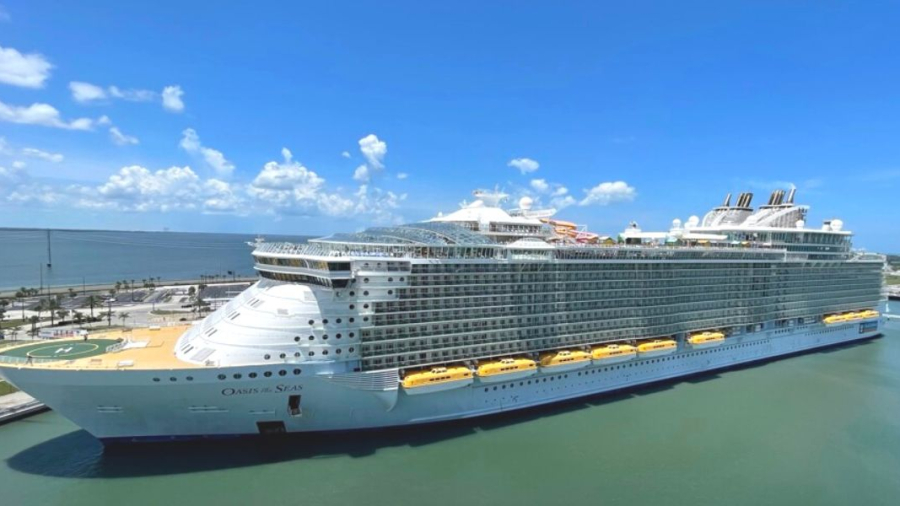
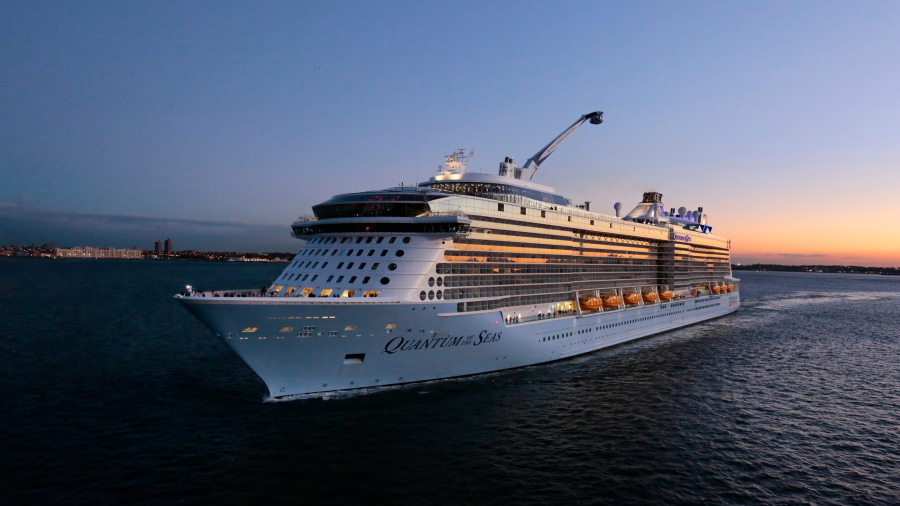
A major overboard scare aboard Royal Caribbean’s Oasis of the Seas turned out to be a false alarm after crew carried out a full search operation prompted by what was later revealed to be a prank by teenagers onboard.
The incident unfolded on 20th March 2026 as the 226,838-gross ton vessel was sailing between Amber Cove in Puerto Plata and Fort Lauderdale during a 6-night Western Caribbean itinerary that departed Florida on 15th March.
According to passengers, the ship altered course near Cayo Guajaba off the coast of Cuba after an overboard report was raised. Crew immediately initiated emergency procedures, deploying life rings and contacting the US Coast Guard for support while a search operation began.
The response lasted around 90 minutes, with guests onboard describing a tense atmosphere as word spread of a possible person overboard.
Search Called Off After Captain’s Announcement
The situation took a dramatic turn when the ship’s captain addressed passengers via the public address system at approximately 1:45pm, confirming there had been no overboard incident.
Passengers later reported that the alarm stemmed from a prank involving a group of teenagers. One account circulating on social media suggested the confusion began when a girl’s friends falsely told her grandmother that she had fallen overboard, triggering panic that quickly escalated into a full emergency response.
Following the announcement, the search was halted, the Coast Guard was informed, and Oasis of the Seas resumed its original course back to Fort Lauderdale.
Despite the disruption, the ship remained on schedule and was expected to arrive on 21st March as planned, with no reported impact to the itinerary.
Passengers Call For Consequences
The incident has sparked widespread criticism among passengers and online, with many calling for strict consequences for those responsible.
A knowingly false overboard report can divert significant resources and place unnecessary strain on both crew and rescue services.
“The only way cruise lines will get parents to actually parent is to become much more aggressive with the lifetime bans on the parents for the children’s behavior,” wrote one Reddit user.
Royal Caribbean’s guest conduct policy states, “Parents and guardians are responsible for the behavior and appropriate supervision of their accompanying minor(s) and young adult(s) throughout their vacation.”
While the cruise line has not yet issued an official statement regarding potential penalties, the situation comes as operators continue to emphasise appropriate behaviour during the busy Spring Break period.
False Alarms Highlight Serious Risks
Although false overboard alerts do occur, they are typically the result of misunderstandings rather than deliberate actions.
Earlier in March, a similar incident aboard MSC Seashore led to hours of disruption as crew carried out search procedures and conducted a full passenger count, requiring guests to remain in their cabins.
Incidents like these underline the seriousness of overboard reports. Cruise ships are equipped with advanced safety systems and strict protocols, and even a suspected case prompts an immediate and comprehensive response.
While genuine overboard situations remain rare due to modern ship design and safety measures, every report is treated as a potential emergency where rapid action can be critical.
NEW DEALS JUST RELEASED!
Don’t miss the latest Royal Caribbean offers…
Related Posts
If you found this interesting, please share!
Virgin Voyages is preparing to make cruise history with the first-ever full fleet meetup at sea, as all four of its ships are set to converge in the Caribbean on…
Carnival Encounter has arrived back in Brisbane, Australia, after completing a 17-day dry dock in Singapore that has delivered a major refresh across the ship, from a new exterior look…
Norwegian Cruise Line is facing two separate personal injury lawsuits filed in March 2026, with passengers alleging negligence in unrelated incidents both onboard and during a shore excursion. The claims,…
Norwegian Cruise Line has confirmed a reversal of its controversial drink package policy for Great Stirrup Cay, while also announcing a temporary return to tender operations at the private island…
Norwegian Cruise Line is facing two separate personal injury lawsuits filed in March 2026, with passengers alleging negligence in unrelated incidents both onboard and during a shore excursion.
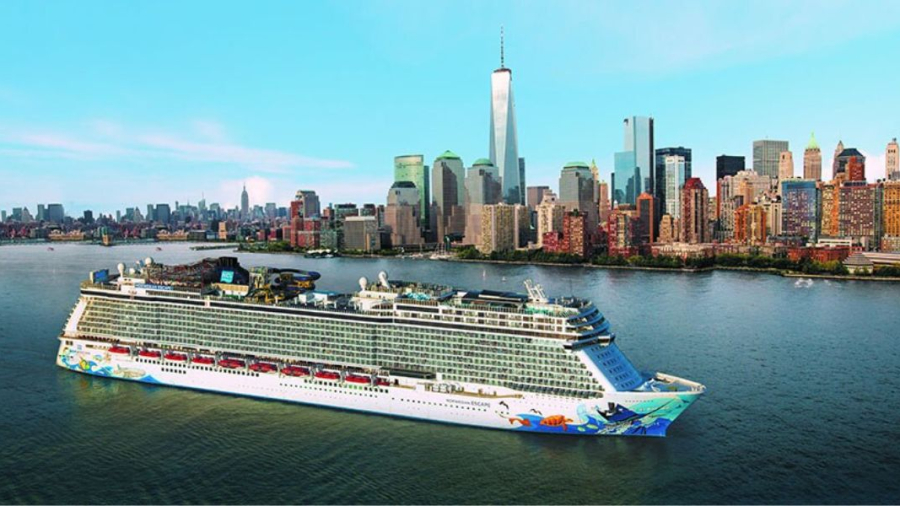
The claims, filed in the United States District Court for the Southern District of Florida, stem from incidents that occurred in early 2025 aboard Norwegian Escape and during a port call in Roatan, Honduras, involving Norwegian Joy.
The first lawsuit was filed on 2nd March 2026 by Donka Kennedy, who claims she was injured while sailing on Norwegian Escape. According to the complaint, the incident occurred on 31st January 2025 when she slipped on a transparent, slippery substance on Deck 16 near one of the ship’s swimming pools.
Kennedy was walking towards the Garden Café buffet when she fell, sustaining a fractured left femur that required surgery and ongoing physical therapy.
Her legal team alleges that the cruise line failed to properly maintain the area and did not adequately warn guests of the hazard.
The lawsuit also claims that crew members did not sufficiently inspect the high-traffic pool deck and failed to implement appropriate non-slip flooring or cleaning measures that could have reduced the risk.
Norwegian Cruise Line has not publicly commented on the allegations, and there is no publicly available evidence confirming the exact conditions at the time of the incident.
Pool Deck Safety Under Scrutiny
While Kennedy’s claim raises concerns about onboard safety procedures, pool decks are widely recognised as areas where wet conditions are difficult to avoid entirely due to constant guest activity.
Norwegian Cruise Line states that its ships feature American Red Cross-certified lifeguards, slip-resistant surfaces, and enforced safety rules such as prohibiting running and requiring children under 12 to be supervised.
However, the lawsuit argues that such measures were insufficient in this case. Additional details, such as what footwear Kennedy was wearing or whether other contributing factors played a role, have not been disclosed.
Norwegian Escape continues to operate as scheduled, sailing Caribbean itineraries from New Orleans through mid-May.
Shore Excursion Incident Leads To Second Claim
A second lawsuit was filed on 18th March 2026 by Kelly Damron, a former passenger aboard Norwegian Joy, following an ATV accident during a shore excursion in Roatan, Honduras.
The incident took place on 19th March 2025 during the “Buggy Eco-Adventure & Mayan Eden Park” tour, which involved navigating steep terrain in off-road vehicles.
According to the claim, Damron lost control of her ATV while attempting to pass a stalled buggy on a hill, causing the vehicle to overturn and land on top of her.
“As DAMRON attempted to safely maneuver around the stalled buggy, she began descending the steep hill and attempted to brake,” the claim states.
“Due to the steepness and dangerous condition of the trail, and the lack of adequate supervision or guidance from excursion staff positioned along the trail, DAMRON lost control of the ATV, causing it to overturn and land on top of her,” the claim continues.
Damron reportedly suffered serious injuries, including a shattered collarbone requiring surgery, multiple fractured ribs, lower back injuries, neuropathy in her legs, memory loss, and possible cervical spine damage.
Her lawsuit is seeking at least $250,000 in damages and includes multiple allegations, including negligence, failure to warn, and claims that Norwegian Cruise Line is responsible for the actions of the third-party excursion operator.
“The subject excursion was purchased by DAMRON through NCL’s excursion website. There was no sufficient mention in the advertisement or the purchase confirmation for the excursion from NCL that the excursion was being operated by independent contractors,” the claim argues.
The filing also alleges that the cruise line had prior knowledge of safety concerns linked to similar ATV excursions, citing passenger complaints, reviews, and previous lawsuits.
Wider Questions Around Risk And Responsibility
Together, the two lawsuits highlight broader questions around passenger safety and liability, both onboard and during shore excursions operated by third parties.
Excursions such as ATV tours are typically classified as high-intensity activities and require guests to acknowledge potential risks before participating.
Norwegian Cruise Line’s listings for similar tours in Roatan note that they are intended for physically fit and adventurous travellers and involve uneven or steep terrain.
At the same time, onboard environments such as pool decks remain challenging to manage due to their inherently wet conditions.
Both cases are likely to explore the extent to which cruise lines are responsible for mitigating these risks, as well as how clearly those risks are communicated to passengers.
As of publication, Norwegian Joy is sailing Caribbean and Bahamas itineraries from Port Canaveral before repositioning to Seattle for the Alaska season in May, while Norwegian Escape continues her scheduled voyages without disruption.
NEW DEALS JUST RELEASED!
Don’t miss the latest NCL offers…
Related Posts
If you found this interesting, please share!
Norwegian Cruise Line has confirmed a reversal of its controversial drink package policy for Great Stirrup Cay, while also announcing a temporary return to tender operations at the private island…
Disney Cruise Line has unveiled Disney Believe as the name of its next newbuild, confirming the vessel will become the fourth ship in the line’s Wish class when it enters…
Holland America Line has confirmed that it will no longer send cruise ships into Tracy Arm Fjord during its 2026 Alaska season, citing ongoing safety concerns following a significant landslide…
A 64-year-old British passenger has been medically evacuated from Royal Caribbean’s Star of the Seas after suffering a serious health emergency while the ship was at sea in the Caribbean….
The most beautiful cruise ports are the ones where the scenery starts before you step ashore: Geiranger’s waterfall-lined fjord, Santorini’s caldera, the Bay of Kotor, Sydney Harbour and Bora Bora’s lagoon top almost every list. If you judge the best cruise ports on looks plus practicality (where the ship docks, how easy the walk is, and when to go), the 12 below are the ones worth planning an itinerary around.
For each port you’ll find why it’s beautiful, whether ships dock or tender, the best viewpoint, the best months and which regions call there. There’s also a quick table, a list of sail-in moments worth setting an alarm for, and tips for seeing these places before the crowds arrive.
The best cruise ports at a glance
Port
Region
Docked or tender
Best months
Geiranger, Norway
Norwegian fjords
Floating pier or tender
May to August
Bergen, Norway
Norwegian fjords
Docked
May to September
Santorini, Greece
Eastern Mediterranean
Tender
April to May, October
Kotor, Montenegro
Adriatic
Docked or tender
May to June, September
Dubrovnik, Croatia
Adriatic
Docked (Gruž) or tender
May to June, September to October
Valletta, Malta
Central Mediterranean
Docked
April to June, September to November
Juneau, Alaska
Alaska Inside Passage
Docked
June to August
Quebec City, Canada
Canada and New England
Docked
September to mid-October
Bora Bora, French Polynesia
South Pacific
Tender
May to October
Sydney, Australia
Australia
Docked
October to April
Cape Town, South Africa
Southern Africa
Docked
November to March
Hong Kong
East Asia
Docked
October to December
We picked ports where natural setting or architecture is the main event, spread across regions so there’s at least one on most popular itineraries. Busy shopping stops and private islands didn’t make the cut, however good the beach.
Most scenic cruise ports in Norway
1. Geiranger
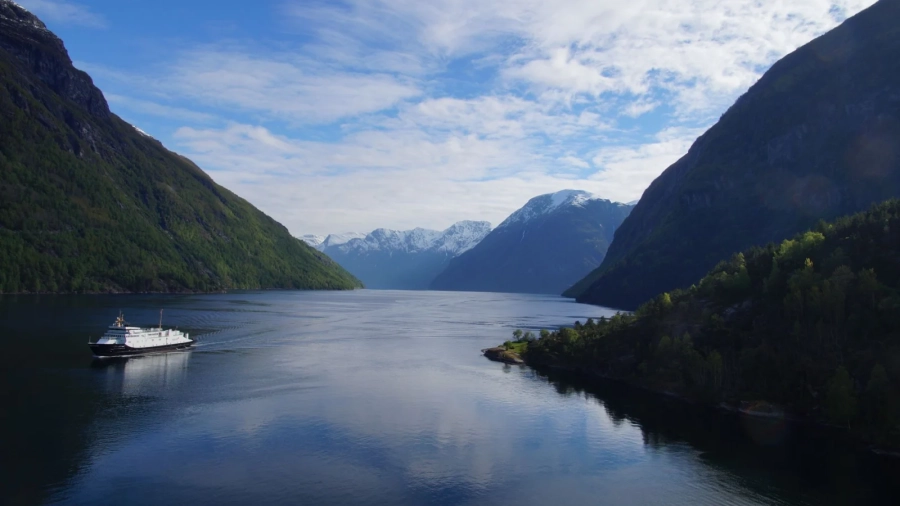
Why it’s beautiful: The Geirangerfjord is a UNESCO World Heritage site, with sheer walls and the Seven Sisters and Suitor waterfalls facing each other across the water. Where ships dock: There’s no conventional cruise berth. One ship a day can use the SeaWalk floating pier; the rest anchor and tender to a landing a few minutes from the village. Best viewpoint: Flydalsjuvet on the road up, or Dalsnibba at around 4,900 feet for the full view down the fjord. Lines: Most Norwegian fjord cruises from Southampton, Hamburg, Copenhagen and Kiel. Norway now requires small passenger ships in its World Heritage fjords to be zero-emission, with larger cruise ships following from 2032, so check that your sailing still includes the fjord. Our Geiranger cruise port guide covers tours and timing in detail.
2. Bergen
Why it’s beautiful: The painted wooden warehouses of Bryggen line the harbor beneath seven hills. Where ships dock: Most ships berth near Bergenhus Fortress, about a 10 to 15 minute walk from Bryggen. Overflow berths are further out. Best viewpoint: Take the Fløibanen funicular up Mount Fløyen and look straight down on the harbor and your ship. Best months: May to September, though bring a rain jacket whatever the month. For transport and timings, see our Bergen cruise port guide.
Many of the most beautiful Mediterranean ports are reached by tender from an anchored ship. Photo: Diego F. Parra on Pexels
Most beautiful cruise ports in the Mediterranean
3. Santorini
Why it’s beautiful: Ships anchor inside a flooded volcanic caldera, with Fira and Oia’s white villages lining the cliff rim above. Where ships dock: It’s a tender port. Under a 2026 local rule, at least 70% of each ship’s passengers tender to Fira’s old port, and up to 30% can land at Athinios for coach tours. From the old port, you either take the cable car or climb the switchback path of nearly 600 steps. What to know: Greece now caps Santorini at 8,000 cruise passengers a day and charges a per-passenger levy of €20 from June to September (lower in spring, autumn and winter), usually built into your fare or port charges. Best months: April, May and October, when it’s quieter and the levy is lower.
4. Kotor
Why it’s beautiful: Kotor sits at the far end of a winding, fjord-like bay ringed by limestone mountains, with medieval walls zig-zagging up the slope behind the old town. Where ships dock: Depending on size and berth availability, ships either tie up right outside the city walls or anchor and tender. Either way, the Sea Gate is minutes away. Best viewpoint: The climb of more than 1,350 steps to San Giovanni Fortress. Start early, because the steps are exposed to the sun. Best months: May, June and September.
5. Dubrovnik
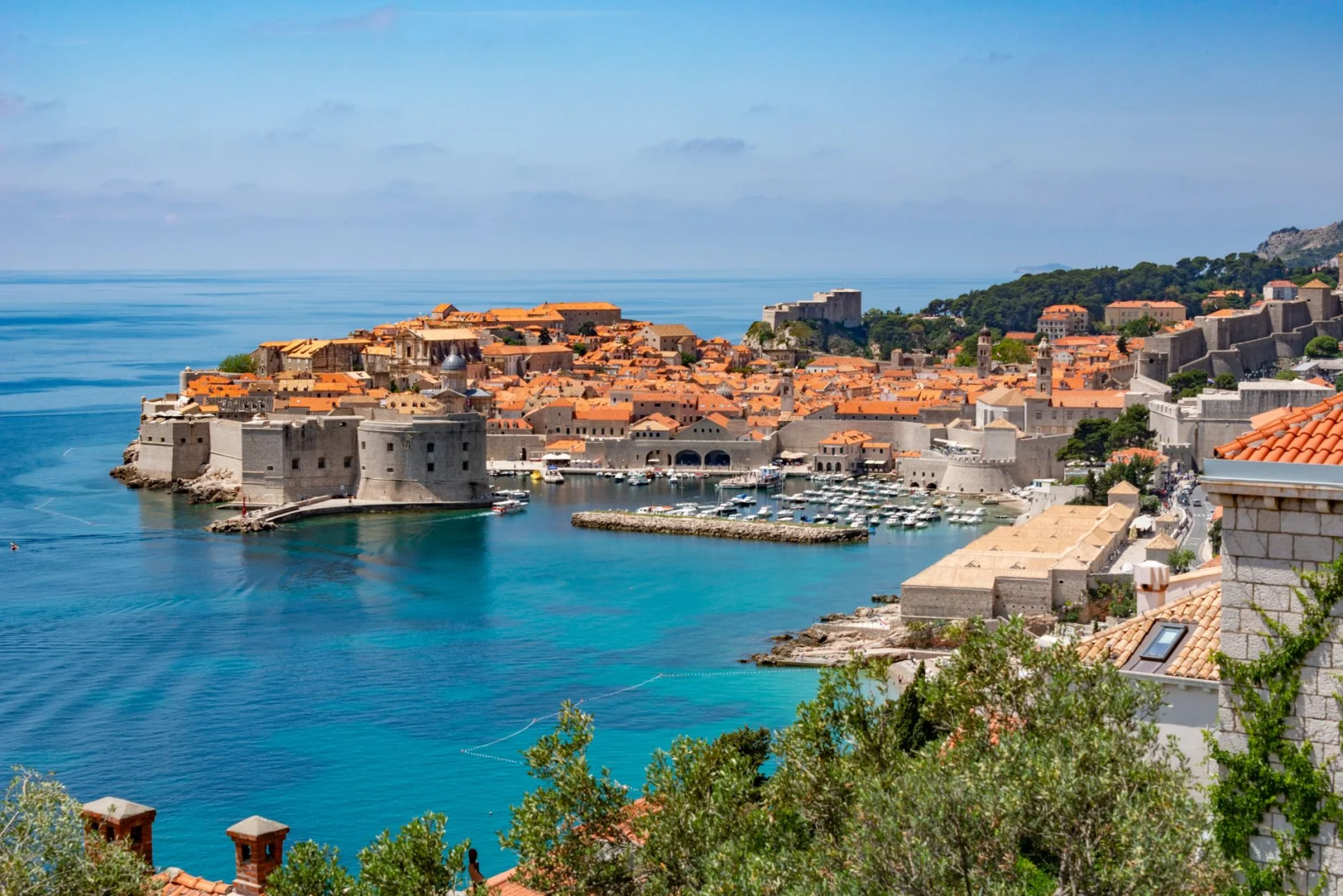
Why it’s beautiful: A walled old town of polished limestone and terracotta roofs juts into the Adriatic. Where ships dock: Most ships use Gruž port, about two miles from the old town, so it’s a shuttle or city bus ride. Some smaller ships anchor off the old town and tender. What to know: Under the city’s Respect the City program, there’s a limit of two ships at the dock at once, roughly 4,000 cruise visitors, and calls of at least eight hours. Best viewpoint: The city walls walk (go as soon as it opens) or the cable car up Mount Srđ. Best months: May to June and September to October.
6. Valletta
Why it’s beautiful: Grand Harbour is ringed by honey-colored fortifications, with Valletta on one side and the Three Cities on the other. Where ships dock: At the Valletta Waterfront, directly below the city. The Barrakka Lift takes you up to Upper Barrakka Gardens in under a minute. Best viewpoint: Upper Barrakka Gardens, timed for the noon gun salute. Best months: April to June and September to November.
Best cruise destinations in North America
7. Juneau
Why it’s beautiful: Alaska’s capital is wedged between Gastineau Channel and steep rainforest mountains, with the Mendenhall Glacier a short drive away. Where ships dock: At downtown berths along the waterfront, within walking distance of shops and the Mount Roberts Tramway. What to know: From 2026, Juneau limits visits to five large ships a day, with up to 16,000 passengers on weekdays and 12,000 on Saturdays. Best viewpoint: The tramway’s upper station, or the Nugget Falls trail at Mendenhall. Best months: June to August. Our guide to the best time to cruise Alaska compares months for wildlife, weather and price.
8. Quebec City
Why it’s beautiful: The Château Frontenac towers over the St. Lawrence and the only walled city north of Mexico. Where ships dock: In the Old Port at Pointe-à-Carcy, a short walk from the cobbled lanes of Lower Town. Best viewpoint: Take the funicular up to Dufferin Terrace, then follow the boardwalk to the Governors’ Promenade. Best months: September to mid-October, when Canada and New England cruises coincide with fall color.
Lagoon ports in the South Pacific are usually reached by tender from ships anchored offshore. Photo: Popoy Dev on Pexels
Most beautiful cruise ports in the Southern Hemisphere and Asia
9. Bora Bora
Why it’s beautiful: A jagged volcanic peak, Mount Otemanu, rises from a lagoon in every shade of turquoise. Where ships dock: Ships anchor in the lagoon and tender to Vaitape. Bora Bora limits cruise visitors to about 1,200 a day, and French Polynesia turns away ships carrying more than 3,500 passengers, so this is mostly small and mid-size ship territory. What to do: A lagoon snorkel or motu beach trip. Best months: May to October, the drier season. Lines: Paul Gauguin, Windstar and premium lines on Tahiti and transpacific routes.
10. Sydney
Why it’s beautiful: Few cities match the Opera House and Harbour Bridge as a backdrop for docking. Where ships dock: The Overseas Passenger Terminal at Circular Quay is a short stroll from the Opera House. Ships berthing west of the bridge use White Bay, which is a taxi or shuttle ride away. Best viewpoint: Mrs Macquarie’s Chair, or the Harbour Bridge pylon lookout. Best months: October to April, Australia’s main cruise season.
11. Cape Town
Why it’s beautiful: Table Mountain’s flat top hangs over the harbor, often draped in its cloud “tablecloth.” Where ships dock: At the Cape Town Cruise Terminal beside the V&A Waterfront. The main waterfront area is roughly 15 to 30 minutes on foot. For the city center or the cableway, take a taxi or the hop-on bus. Best viewpoint: Table Mountain by cableway (go early, as wind closes it), or Signal Hill at sunset. Best months: November to March, within the October to April season.
12. Hong Kong
Why it’s beautiful: Victoria Harbour’s skyline, backed by green peaks, is especially spectacular after dark. Where ships dock: Smaller ships use Ocean Terminal in Tsim Sha Tsui, steps from the Star Ferry. Larger ships go to Kai Tak Cruise Terminal on the old airport runway, which requires a taxi or shuttle. Best viewpoint: Victoria Peak by tram, or the Tsim Sha Tsui promenade for the evening light show. Best months: October to December, when it’s clearer and less humid.
Sail-in moments worth being on deck for
In several of these ports, the arrival is the highlight. Check the scheduled arrival time the night before and set an alarm for:
Geirangerfjord: The last hour or so in from Hellesylt, passing the Seven Sisters waterfalls.
Bay of Kotor: The narrow Verige Strait and the islet churches off Perast, roughly an hour before docking.
Grand Harbour, Valletta: Ships pass between Fort St. Elmo and Fort Ricasoli, the fortifications almost close enough to touch.
Sydney Heads: The turn through the Heads and the first sight of the Opera House, usually at dawn.
Santorini: Sailing into the caldera with the cliff villages lit by early sun. Sail-away at sunset is just as good.
Hong Kong: Entering through the Lei Yue Mun channel into Victoria Harbour.
Forward-facing open decks and the jogging track usually give the clearest views, so claim a spot by the rail early.
How to see these best cruise ports before the crowds
Get off first, see the icon first. Go straight to the headline sight (Dubrovnik’s walls, the Kotor fortress, Santorini’s cable car) and leave lunch and shopping for later.
Tender tickets matter. At tender ports, ship’s tours usually go ashore first. If you’re exploring independently, collect tender tickets early or wait until the mid-morning rush clears.
Check the port schedule. Sites like CruiseMapper list how many ships are in port each day. A day with one ship feels very different from a day with four.
Consider shoulder season and small ships. Caps in Santorini, Dubrovnik, Juneau and Bora Bora favor smaller ships and quieter months, and the views are the same.
Two notable absences: Venice is still one of the best cruise destinations to sail from or near, but ships over 25,000 gross tons have been barred from the historic lagoon and Giudecca Canal since 2021. Larger ships now use Marghera or nearby ports such as Trieste and Ravenna. Royal Caribbean’s Labadee in Haiti, a former favorite, is closed through at least April 2028.
FAQs
What is the most beautiful cruise port in the world?
There’s no official ranking, but Geiranger in Norway, Santorini, Kotor, Sydney and Bora Bora are the names most often cited, because the scenery starts before you even leave the ship.
What are the most popular cruise ports?
By passenger numbers, Caribbean calls such as Cozumel, Nassau and St. Maarten, plus homeports like Miami, are the busiest. Popular doesn’t always mean beautiful, though.
Which beautiful cruise ports require a tender?
Santorini and Bora Bora always use tenders. Geiranger uses one floating pier plus tenders, and Kotor and Dubrovnik can go either way depending on ship size and berth availability.
Are cruise ports limiting ship visits?
Yes. Santorini, Dubrovnik, Juneau and Bora Bora all cap daily cruise visitors, Venice bans large ships from its lagoon, and Norway is phasing in zero-emission rules for its World Heritage fjords. Check your itinerary for any changes.
I love cruising, but I’ve always thought one part of the experience could be far clearer – tipping.
Not because tipping itself is a problem – but because the way it’s presented often feels half-hidden, vaguely explained, or quietly added on when you’re not looking.
For a first-time cruisers, tipping sounds simple: show appreciation for good service.
In reality, it’s layered, pre-charged, auto-added, bundled into packages, and sometimes framed as “optional” even when it doesn’t feel that way in practice.
It’s not uncommon for people to sail thinking everything is covered, only to discover a surprisingly large gratuities total on their onboard account near the end of the trip and an envelope on their bed requesting cash on top.
So, let’s pull back the curtain a little so you can understand everything about tipping – and make the right decisions to benefit the crew who look after you so well!
How Cruise Tipping Actually Works
Although each cruise line has its own wording, most mainstream cruise lines follow a very similar system when it comes to tips.
Automatic Daily Gratuities
Instead of relying purely on guests to tip individually, cruise lines add a fixed daily charge to your onboard account.
This is usually called something like:
“Gratuities”
“Crew appreciation”
“Daily service charge”
This amount is charged per person, per night, and it adds up quietly in the background as your cruise goes on.
You don’t hand money over – it appears automatically on your onboard bill in the same way drinks or excursions would.
The cruise line then pools this money and distributes it across various crew departments.
Who Those Tips Are Meant to Cover
The daily gratuities are designed to cover far more than just the people you see the most. While your cabin steward and your dining room team are included, the pool also usually supports:
Galley staff who prepare food
Housekeeping support teams
Laundry staff
Buffet and behind-the-scenes hotel crew
This is one of the reasons cruise lines push guests towards the automatic system – it ensures that the less visible crew are also included in the tipping structure, rather than only those with direct guest contact.
What’s less clearly explained is exactly how this money is split between departments and individuals.
Most cruise lines don’t publish the detailed breakdown, which makes it difficult for guests to understand where their money really ends up.
Prepaid Vs Onboard Gratuities
Cruise lines give you two main ways to pay these daily tips:
Prepaying Before Your Cruise
You can add gratuities to your booking in advance. This locks the cost into your holiday price and means you won’t see daily tip charges appearing on your onboard account.
Paying Onboard
If you don’t prepay, the cruise line will simply add the charges to your onboard account each day. You usually won’t need to do anything – it happens automatically.
The part that isn’t made especially clear in marketing is this: whether you prepay or not, the system assumes you will be paying these gratuities.
They aren’t something you actively opt into – they’re something you have to actively opt out of, and even that isn’t straightforward.
From a guest’s point of view, the confusion often comes from how cruises are sold:
They’re advertised as “great value” or “almost all-inclusive”
The daily gratuity amounts are often buried, not made completely clear
The wording makes them sound optional, even though they’re added automatically
If you don’t go looking for the information yourself, it’s easy to board thinking it’s all covered, only to feel caught off guard later.
What Cruise Lines Don’t Clearly Explain About Tipping
This is where most people get caught out. The information technically exists, but it’s rarely presented in a way that’s easy to understand unless you already know what to look for.
How Tips Impact Salaries
This is one of the most hotly debated parts of cruise tipping, and it’s where a lot of misinformation circulates online.
A common claim you’ll see on social media is that cruise lines use guest gratuities to top up crew wages – in other words, that the company pays staff less and uses your tips to make up the difference.
Cruise lines strongly deny that this is how their payroll works.
Carnival, for example, has repeatedly stated that gratuities given by guests are not used to reduce or replace a crew member’s contracted salary.
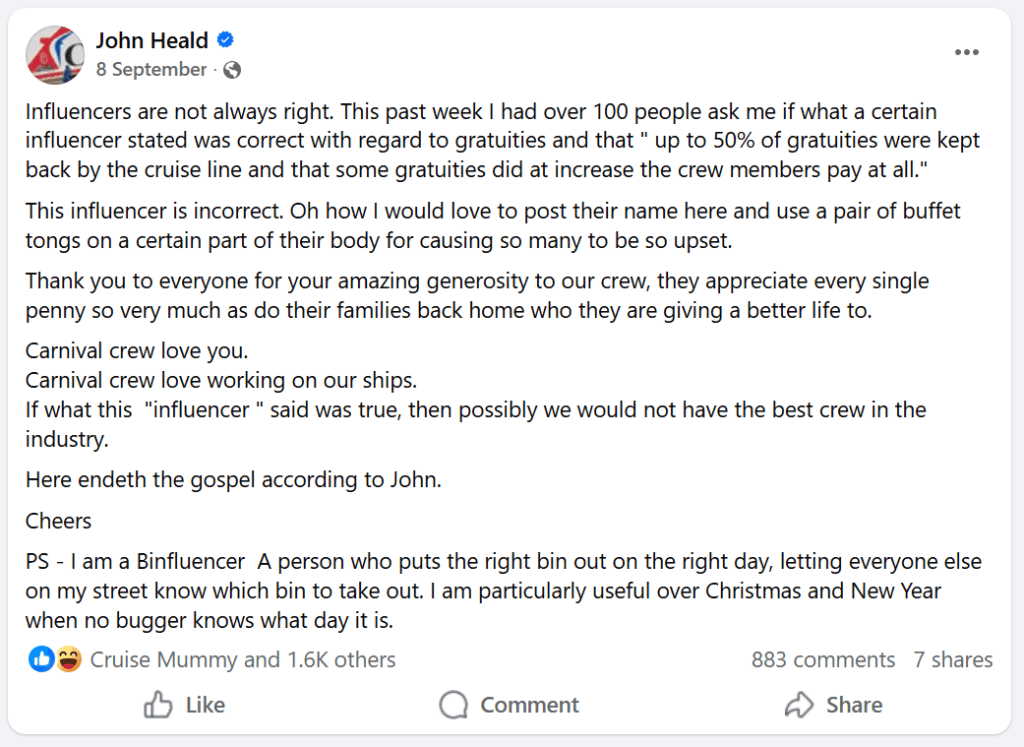
Brand ambassador John Heald has publicly described these claims as false and misleading, saying that tips go to the crew and are not kept by the company to fund wages.
What’s undeniably true, though, is this: on most mainstream cruise lines, crew members’ base salaries are relatively low (by US standards) and gratuities make up a significant and important part of their overall take-home pay.
Even if tips are technically paid “on top” of salary rather than instead of it, the reality is that:
Many crew contracts are designed with gratuities in mind
The expected income from tips is baked into how attractive (or not) the base wages are
If large numbers of guests removed or stopped paying gratuities, many crew members would see a meaningful drop in their real-world earnings
That’s the uncomfortable grey area cruise lines don’t tend to explain very clearly. They deny using tips to replace wages – but they also rarely advertise just how heavily many roles rely on gratuities to make the job financially viable.
For guests, the key point is this: whether structurally “on top” or not, gratuities are not a small bonus to many crew members. They are a core part of what makes the job workable.
Cruise lines often describe daily gratuities as “discretionary” or “optional”. That wording sounds reassuring – but the reality is a bit different.
On most mainstream cruise lines:
The tips are added to your account automatically.
You don’t actively opt in – they’re just there.
If you want to change or remove them, you usually have to visit Guest Services and ask.
In practice, that can mean queueing, explaining your reasons, and feeling uncomfortable about it. Some cruise lines have made the process more difficult over time, asking guests to justify changes or, in certain cases, directing them to contact the cruise line after the sailing instead.
The end result is that although the tips are described as “optional”, the system is designed around the assumption that almost everyone will pay them.
Drink Packages Aren’t Tip-Free
One of the most common misconceptions is that buying a drinks package means tipping isn’t an issue anymore.
In reality, gratuities are very much built into that part of the experience too.
Depending on the cruise line:
An automatic service charge (often around 15–20%) is added when you buy the drinks package.
The same type of charge can apply to speciality dining, spa services and salon treatments.
If you don’t buy a package and pay per drink, gratuities are usually added to each purchase.
So while you may not be handing over cash at the bar, you’re still tipping – it just happens invisibly in the background. Cruise lines rarely highlight this in their marketing for packages, which is why so many people are surprised when they see the charges.
Why It’s Usually Cheaper to Prepay Gratuities Early
This is something cruise lines almost never shout about, even though it can make a real difference to your budget.
Many cruise lines increase their gratuity rates over time – typically once every 12-18 months.
If you prepay your gratuities when you book, or at least well before your cruise, you usually lock in the current rate.
That means:
If the cruise line increases the daily gratuities later, you’re protected.
You won’t be charged the new, higher rate onboard.
If you wait and let the tips be added during the cruise instead, you normally pay whatever the rate is at the time you sail, not the rate that applied when you booked.
It’s one of the few areas where booking early can genuinely save money, yet it’s rarely promoted clearly because higher gratuities benefit the cruise line’s overall pricing structure.
Cash Tipping Still Exists
Even with automatic gratuities and service charges, there’s still an unspoken culture of cash tipping in certain situations.
This commonly includes:
Cabin stewards who give particularly good service
Dining staff in speciality restaurants
Butler or concierge staff in suite areas
Spa staff and excursion guides
Room service delivery
The cruise line messaging tends to imply that everything is “taken care of”, but onboard reality can feel a bit different. It’s not usually mandatory, but it’s still very much part of cruise culture.
TODAY’S BEST CRUISE DEALS!
Don’t miss these offers…
Should You Tip Extra?
This is where it gets personal, and there isn’t one right answer.
When Tipping Extra Makes Sense
Extra tipping can be a thoughtful gesture when:
A crew member goes well beyond what’s expected
Someone makes a special effort for dietary needs or accessibility
Staff help make a celebration, anniversary or birthday genuinely memorable
You’re on a private or small-group shore excursion
In these cases, extra cash isn’t about obligation – it’s about recognition.
You don’t have to tip extra (you never HAVE to) but a lot of people feel like these are the situations that would justify an extra tip, if you wanted to.
When You Don’t Need to Feel Guilty for Not Tipping Extra
It’s also perfectly reasonable not to “double tip” when:
You’ve already paid substantial daily gratuities.
Service charges have already been added to spa, salon or dining bills.
You’re sailing with a truly all-inclusive luxury line.
You’re not being stingy by trusting that the systems in place have already covered the basics.
The Cultural Side of Things
Cruises attract guests from all over the world. Tipping expectations are different depending on where you’re travelling from.
Cruise lines often expect US-style tipping behaviour, even though many guests are more familiar with European models where service is built into prices. A lot of confusion comes from that cultural clash.
But there are British cruise lines like P&O Cruises and Marella Cruises where no tipping is expected, because of the culture.
MSC Cruises are a global brand that have different models, depending on where you’re sailing. Cruising in Europe? No tip needed. Sailing the Caribbean from a US port? Automatic gratuities will apply.
How to Tip Smart on a Cruise
There are a number of ways you can make sure you thank the people who need it, without causing yourself any unnecessary stress.
Set a simple tipping budget
Before you sail:
Look up your cruise line’s daily gratuity.
Multiply it by the number of nights and people.
Add a small buffer for occasional cash tips.
Once you’ve done this, anything extra becomes a choice rather than a surprise.
And if you don’t have the budget for extra cash tips – cruises are expensive sometimes – then don’t stress over it!
Decide Whether to Prepay Or Pay Onboard
There’s no moral right or wrong here, just practical differences:
Prepay if you:
Like predictable costs.
Want to lock in the current rate before possible increases.
Prefer not to see daily charges stacking up onboard.
Pay onboard if you:
Want flexibility (depending on the line’s policies).
Prefer to keep everything in one final bill.
Carry Small Amounts of Cash
Even in a fairly cash-free cruise environment, it helps to have small notes in local currency.
These are useful for porters, guides, drivers and staff who fall outside the normal tipping pool.
There are cash machines/ATMs on most cruise ships but they’ll often have a minimum withdrawal amount of $50. And Guest Services can’t/won’t always break a note for you. So try not to forget this or, if you feel you want to leave a cash tip, it might end up being $50 at least.
If you’re already paying daily gratuities, your cash tips don’t need to be random or constant.
They’re most meaningful when used for genuinely exceptional service, or for people who make your holiday noticeably easier or better.
What Crew Members Really Think About Tips
This is where the subject becomes more serious.
For many crew members on mainstream cruise lines, their base wages are relatively low. So, gratuities make up a significant part of their overall income.
Because tips are often pooled, your daily gratuities don’t just reward one person – they support a larger ecosystem of staff you never see.
The downside is that this system is not always transparent. Guests rarely know exactly how the money is divided, and crew members aren’t usually able to talk openly about it.
What’s clear is this: when guests remove all gratuities as a protest against the cruise line, it often affects the crew far more than the company.
That doesn’t mean guests should feel forced into tipping. It does mean the system is more complex – and more human – than it first appears.
In theory, sometimes. In practice, the entire pay structure for many crew assumes that most guests will pay the automatic gratuities. So yes, technically it’s optional, but if everyone treated it that way, cruise lines would struggle to retain those fantastic crew members.
“If I buy a drinks package, tips are covered”
They are – but usually through automatic service charges that are already built into what you paid. Still, a couple of small additional tips for bartenders can make all the difference for how good the service is.
“The crew are already well paid”
On most mainstream lines, tips are not really a bonus. They’re a core part of income, even if ‘technically’ that’s not the case.
You don’t have to. But small, thoughtful tips are usually welcomed, even on lines that say they aren’t necessary.
“Only Americans bother tipping”
Cruises are international. Once people understand the system, tipping habits tend to converge more than you’d expect. Yes, there’s more of a tipping culture amongst US guests, but most people are happy to pay the automatic gratuities, and tip a little extra if they feel it’s warranted.
TODAY’S BEST CRUISE DEALS!
Don’t miss these offers…
Final Thoughts
I’m not against tipping, quite the opposite. I’m not even against automatic gratuities. What I am against is confusion and surprise.
Cruising should feel relaxing, not like you’re constantly trying to decode what’s really included and what isn’t. Once you understand how tipping works, it becomes much easier to budget properly, make fair choices, and feel good about rewarding great service.
My approach is simple: plan for the automatic gratuities, tip extra when someone genuinely deserves it, and never feel pressured into tipping blindly.
If nothing else, knowing what cruise lines don’t always say out loud helps you stay in control of your holiday – and that’s how it should be.
The best cruise drink package hacks in 2026 are the ones cruise lines allow: buy your package before you sail, use your wine carry-on allowance, use loyalty or suite drink perks, and pick a smaller package (soda, coffee or wine bottles) if you won’t drink enough alcohol to justify the full one. None of these needs you to bend a rule. They just need a bit of planning and some honest maths about how much you drink.
Below are eight legitimate loopholes that still work for 2026 and 2027 sailings. We’ve also added a simple break-even check so you can see whether a package makes sense for you at all.
Why most cruise drink package hacks are really about timing and maths
Drink packages on mainstream lines are priced per person, per day, and almost always come with an automatic service charge on top. Royal Caribbean adds 18%, and Carnival raised its beverage service charge from 18% to 20% in December 2025. Most lines also require every adult in a cabin to buy the same alcoholic package if one adult does. That rule is why so many “hacks” online are really ways of cheating the system. Sharing a package or swapping cards breaks the terms and can get a package cancelled without a refund. If you want the details, our guide to Royal Caribbean drink package rules and why cheating isn’t worth it covers what goes wrong.
The good news is that the legal options save more money than most of the rule-breaking tricks anyway.
The 8 cruise drink package loopholes that still work in 2026
1. Buy before you board, and keep watching the price
Pre-cruise prices are almost always lower than onboard prices. Royal Caribbean sells its packages through the Cruise Planner, and prices for the same sailing go up and down with frequent sales. Because a package can usually be cancelled and rebought before sailing, a common, allowed tactic is to buy early and then check again during later sales. If the price drops, cancel and rebuy at the lower rate. Carnival also charges less for CHEERS! when you buy it ahead of time than when you buy it onboard, and it honoured old prices for passengers who had already bought packages before its April 2026 price changes. Buying early also protects you from the next increase.
2. Use your wine and champagne carry-on allowance
Most big lines still let adults bring a limited amount of wine or champagne on embarkation day. This is the closest thing to a true loophole, and it is completely within the rules. Drink your bottle in your cabin and you usually pay no corkage. Open it in a restaurant and a corkage fee applies. The allowances at the time of writing are in the table further down.
3. Choose a partial package instead of the full one
If you mainly want fizzy drinks, specialty coffee or a glass of wine at dinner, an alcoholic package is usually poor value. Look instead at:
Soda packages such as Royal Caribbean’s Classic Soda package or Carnival’s Bottomless Bubbles (now $11.99 per adult per day before the service charge, after an April 2026 increase)
Refreshment-style packages covering specialty coffee, mocktails, juices and bottled water
Wine bottle packages, where you prepay for a set number of bottles at a discount and the restaurant stores any you don’t finish for your next dinner
Non-alcoholic packages are often exempt from the rule that everyone in the cabin must buy the same package, so a couple can mix and match.
4. Book a fare that already includes drinks
Sometimes the cheapest drink package is the one built into the fare. Celebrity’s All Included fares bundle a drinks package. Norwegian’s More at Sea promotion includes an open bar on most fares, though you still pay the service charge. Princess Plus and Premier fares include a beverage package. Compare the bundled fare with the cheapest fare plus a package bought separately. Sometimes the bundle wins and sometimes it doesn’t, especially if one person in the cabin barely drinks.
5. Pick a line where the basics are free
Virgin Voyages includes soft drinks, juices, filtered water and basic coffee for all guests. You only pay for alcohol, through a bar tab rather than an all-or-nothing package. At the luxury end, lines such as Regent Seven Seas, Seabourn, Silversea and Explora Journeys include most drinks in the fare, and Viking includes beer and wine with lunch and dinner. If drinks are a big part of your budget, a higher fare with drinks included can work out cheaper. Our comparison of the Virgin Voyages bar tab versus traditional drink packages sets out how the numbers compare.
6. Earn loyalty and suite drink perks
Frequent cruisers get some of the best legitimate free drinks at sea:
Royal Caribbean Crown & Anchor: Diamond members get four drink vouchers per person per day, Diamond Plus get five and Pinnacle Club get six. Each voucher covers a drink up to a set value (around $14 on most sailings) and resets daily.
Celebrity Captain’s Club: Elite, Elite Plus and Zenith members get an evening happy hour, usually 5pm to 7pm, at participating bars, with a set menu of house cocktails, wine, beer and spirits.
Suites: top suite categories on several lines include lounge access with complimentary drinks at certain hours, or a full drinks package.
If you’re close to the next loyalty tier, booking back-to-back sailings or a slightly longer cruise can unlock these perks sooner.
7. Use happy hours, drink-of-the-day specials and onboard events
Without a package, the daily planner is your friend. Many ships run a discounted drink of the day, bar happy hours, and wine or spirit tastings that cost less than buying the same drinks separately. Formal nights, captain’s receptions and art auctions sometimes come with complimentary sparkling wine. Casino players who rack up enough play can earn free drinks while gambling, though you shouldn’t gamble just to get them.
8. Make port days work for you
Port days are where many passengers lose value on a full package, because they’re ashore for most of the day. Drinking ashore at local prices is often cheaper than a ship’s bar. On very port-heavy itineraries, skipping the package and paying as you go can save a lot. Some lines also let you buy wine or local spirits in port, although spirits are usually held until the end of the cruise rather than handed back straight away.
Bringing your allowed bottle of wine aboard is one of the simplest legal savings. Photo: Rachel Claire on Pexels
Can you bring alcohol on a cruise? Carry-on rules by line
Yes, on most major lines, but usually only wine or champagne, in limited amounts, carried on at embarkation. Beer and spirits are generally not allowed. Policies change, so always check your cruise line’s official FAQ before you pack.
Cruise line
Wine/champagne allowed at embarkation
Typical corkage outside your cabin
Royal Caribbean
One 750ml bottle per adult (21+)
Around $15 in dining venues
Carnival
One sealed 750ml bottle per adult (21+)
$15 per bottle
Norwegian (NCL)
Sealed bottles, no fixed limit
$15 per 750ml, $30 per 1.5L, charged wherever opened
Celebrity
A small allowance (check current per-cabin limit)
$25
Princess
One 750ml bottle per adult; extra bottles allowed for a fee
$20 in public areas, and $20 on extra bottles
Disney
One bottle of wine or six beers per adult
About $20 in dining rooms
Virgin Voyages
Two 750ml bottles per cabin
Fee applies outside the cabin
MSC
Generally not permitted at embarkation
Not applicable
Two practical tips. First, put the bottle in your hand luggage, not your checked bag, so it’s visible at security and isn’t lost in the luggage system. Second, check how the wine would be handled if you open it in a restaurant: corkage fees are often charged per bottle regardless of size.
How to save money on cruise drinks: a quick break-even check
This is the step most guides skip, and it’s the one that saves the most money. Before you buy any package:
Take the daily price and add the service charge (18% to 20% on most lines).
Divide by what a typical drink you’d order costs onboard. Cocktails on mainstream ships often cost $13 to $16 before the service charge.
That’s how many drinks you need every day, including port days and the first and last days, just to break even.
For example, a package costing $80 a day plus 18% comes to about $94.40. With cocktails at around $15, you’d need six or more drinks every single day to come out ahead. Specialty coffees, bottled water and mocktails help, but if you’re realistically a three-drink-a-day person, paying as you go plus one or two of the loopholes above will almost certainly cost less. Our cruise drink packages comparison lists what each line’s packages include, so you can plug in real numbers.
Counting the drinks you will really order is the best way to judge a package. Photo: HM Grand Central Hotel on Pexels
Cruise drink hacks to avoid
Some tips that circulate online can cost you more than they save. Hiding spirits in mouthwash bottles or “rum runners”, sharing one package between two people, or ordering doubles for a friend all break cruise line rules. Security scanners at embarkation regularly find hidden alcohol, and the line can confiscate it, cancel your package or, in serious cases, remove you from the ship. Stick to the legitimate options and you keep both the savings and your peace of mind.
If you haven’t booked yet, it’s also worth looking at current cruise deals for 2027, as many promotions now include drinks or onboard credit that you can put towards your bar bill.
On Norwegian, the drinks package often comes bundled with the fare, so check what NCL Free at Sea includes before buying extras.
FAQs
Is there a legal way to share a cruise drink package?
Not for alcoholic packages on most mainstream lines. If one adult in a cabin buys one, every adult usually has to buy the same one. Non-alcoholic packages such as soda or coffee packages are often exempt, so a couple can each choose a different option.
Can you bring alcohol on a cruise?
On most big lines you can bring a limited amount of wine or champagne at embarkation, typically one 750ml bottle per adult. Beer and spirits are generally not allowed, and MSC usually doesn’t permit any. Check your line’s current policy before packing.
Is a cruise drink package cheaper before the cruise?
Yes. Pre-cruise prices are normally lower than onboard prices, and lines such as Royal Caribbean run regular sales in their online planners. You can often cancel and rebuy if the price drops before you sail.
How many drinks a day make a drink package worth it?
Divide the daily price plus the service charge by the cost of a typical drink. For many mainstream packages that works out at five to seven drinks a day, every day of the cruise.
Do port days affect whether a drink package is worth it?
Yes. You pay for the package every day, even when you’re ashore. On itineraries with lots of port stops, paying as you go is often the cheaper option.
Norwegian Cruise Line has confirmed a reversal of its controversial drink package policy for Great Stirrup Cay, while also announcing a temporary return to tender operations at the private island as construction work continues.
The cruise line has now extended its “Free at Sea” beverage package to include use on Great Stirrup Cay indefinitely, abandoning earlier plans that would have restricted its availability at the destination.
Travel agents were informed of the change, and the update has also been reflected on the company’s website, where the island is no longer listed as an exclusion for the package.
“The Free at Sea beverage package has been extended indefinitely for Great Stirrup Cay. So if you have the FAS drink package it will still work on GSC after March 31; you don’t need to upgrade to FAS+,” a travel agent shared on social media.
Guests who previously upgraded to the more expensive “Free at Sea Plus” package in order to retain drink benefits ashore can still cancel or downgrade, provided they are at least three days away from embarkation.
Why The Original Change Sparked Backlash
The now-scrapped policy would have removed access to standard onboard drink packages while visiting the island, replacing them with a yet-to-be-detailed, destination-specific offering.
In practice, guests were being encouraged to upgrade to the “Free at Sea Plus” package, priced at $49.99 per person, per day, in order to maintain drink privileges ashore.
This marked a notable increase from the standard “Free at Sea” rate of $28.50 per person, per day. Over the course of a seven-night cruise, that difference would total an additional $150.43 per guest.
The proposal drew widespread criticism from cruisers, prompting Norwegian Cruise Line to first delay its rollout from 1st March 2026 to 31st March 2026, before ultimately abandoning the change altogether.
While beverage packages remain optional, basic drinks such as water, lemonade, tea and coffee continue to be included in the cruise fare, with other options available for purchase individually.
Tendering To Resume During Pier Construction
In a separate update, the cruise line has confirmed that Great Stirrup Cay will temporarily return to tender operations starting in April.
Although a pier began welcoming ships in late 2025, it was only a temporary structure. Work is now set to begin on a permanent pier, requiring ships to anchor offshore while construction is completed.
“Many of you have used the pier built at GSC and noticed it was temporary. NCL will be working on the permanent pier, so tendering will return beginning in April,” the travel advisor’s update continued.
Tendering had previously been a point of frustration for some guests, as it can lead to delays and missed port calls in poor weather conditions.
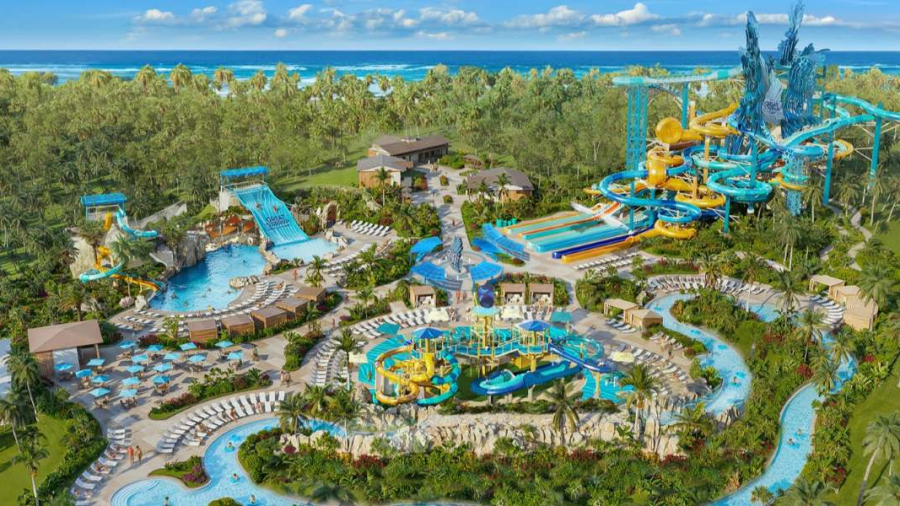
The cruise line expects construction to be completed by July, in time for the anticipated debut of the new Great Tides Waterpark, which will feature 19 slides and form a major part of the island’s expanded attractions.
NEW DEALS JUST RELEASED!
Don’t miss the latest NCL offers…
Related Posts
If you found this interesting, please share!
Disney Cruise Line has unveiled Disney Believe as the name of its next newbuild, confirming the vessel will become the fourth ship in the line’s Wish class when it enters…
Holland America Line has confirmed that it will no longer send cruise ships into Tracy Arm Fjord during its 2026 Alaska season, citing ongoing safety concerns following a significant landslide…
A 64-year-old British passenger has been medically evacuated from Royal Caribbean’s Star of the Seas after suffering a serious health emergency while the ship was at sea in the Caribbean….
Celestyal Cruises has cancelled a series of late March sailings as ongoing instability in the Middle East continues to disrupt the line’s transition to its Mediterranean summer season. The cruise…
Quantum of the Seas will once again call Singapore home in 2027, giving adventurers across the region more ways to explore Asia. From October 2027 to March 2028, families and friends can choose from 3- to 10-night vacations from Singapore, sailing to the beaches, cities and cultures of Malaysia, Thailand, Vietnam, Hong Kong and Japan with the convenience of starting and ending their holiday in one of Asia’s best-connected hubs.
“Quantum of the Seas has become a familiar and much-loved ship for guests across Asia, and we’re excited to bring these thrilling adventures back to Singapore,” said Chad Grospe, vice president and managing director, Asia-Pacific, Royal Caribbean. “With these 2027-28 holidays, we’re building on strong demand we’ve seen over past seasons – from 3- and 4-night getaways to longer adventures that connect vacationers to spectacular landscapes, cuisines and cultural wonders around Asia. Whether it’s a multigenerational family holiday or a getaway with friends, it’s all about making memories together.”
Holidaymakers of all ages on Quantum of the Seas can choose from a variety of adventures and must-see destinations in the region, with easy access for both local guests and fly-cruise holidaymakers. Highlights of the 2027-28 season include:
Guests can experience the ultimate weekend escape with 3- and 4-night getaways through Southeast Asia’s most captivating destinations, savouring the world-renowned street food ofPenang’s historic George Town and unwinding on the sun-soaked shores of Phuket.
Those looking for more time away can choose between 4-and 5-night adventures to the sun-soaked shores of Phuket, Thailand, or delight in 10-night journeys that reach further to the bustling city of Bangkok, Thailand.
For an extended journey, guests can embark on longer holidays of up to 10 nights to iconic cities like Ho Chi Minh City, Vietnam, and Hong Kong , along with bucket-list destinations in Japan such as Tokyo, Nagoya and Kobe where holidaymakers can experience each city’s unique heritage as they travel westward from Tokyo to Nagoya’s industrial origins and Kobe’s awe-inspiring mountain views.
On Quantum, thrill-seekers of all ages can test new heights on the Ripcord by iFly skydiving simulator, catch waves on the FlowRider, scale the rock-climbing wall and soak in sweeping ocean views from the North Star – the all-glass observation capsule that rises more than 300 feet above the sea. At SeaPlex, the largest indoor activity complex at sea, guests can keep the energy high with bumper cars, basketball and roller-skating, while younger vacationers can make a splash at the H2O Zone, a dedicated water play area designed just for them.
Quantum of the Seas features a variety of dining and drink options to choose from allowing guests to savour a world of flavours between every adventure. The lineup features a medley of cuisines, including an exclusive five-course dining experience at Chef’s Table, fresh sushi at Izumi, Tuscan family-style plates at Jamie’s Italian, premium cuts at Chops Grille and imaginative dishes at Wonderland. Guests can also look forward to one-of-a-kind entertainment options designed to delight all ages, from full-scale productions at the Royal Theater to transformative performances at Two70 and a variety of live music spots for all moods.
Vacationers can now book their Quantum of the Seas holidays on Royal Caribbean’s website here.
Royal Caribbean is unveiling its most exciting Australian summer yet with all-in holiday adventures and the debut of Royal Beach Club Lelepa*, the Southern Hemisphere’s first Royal Caribbean exclusive cruise destination for a holiday like no other. From October 2027 to April 2028, travellers can look forward to more short getaways, weekend departures and ways to bask in island time on Anthem of the Seas from Sydney and Voyager of the Seas from Brisbane, delivering 2- to 12-night holidays across Australia, the sun-soaked South Pacific – including the ultimate beach day at the all-new Royal Beach Club Lelepa – and breathtaking New Zealand. The new lineup of 2027-28 holidays on two of the boldest ships at sea are now available to book on Royal Caribbean’s website.
“As the most trusted holiday partner in Australia, Royal Caribbean continues to raise the bar on the ultimate family holiday with Royal Beach Club Lelepa – a first-of-its-kind destination in the Southern Hemisphere inspired by the natural beauty and spirit of the South Pacific region,” said Gavin Smith, vice president and managing director, Australia and New Zealand, Royal Caribbean. “We know Australian families love holidaying in the South Pacific, and Lelepa takes that to an entirely new level with an experience they won’t find anywhere else in the world. With an expanded lineup of weekend sailings, short escapes and longer ways to holiday, we’re giving travellers even more reasons to explore fan-favourite destinations across Australia, New Zealand and the South Pacific.”
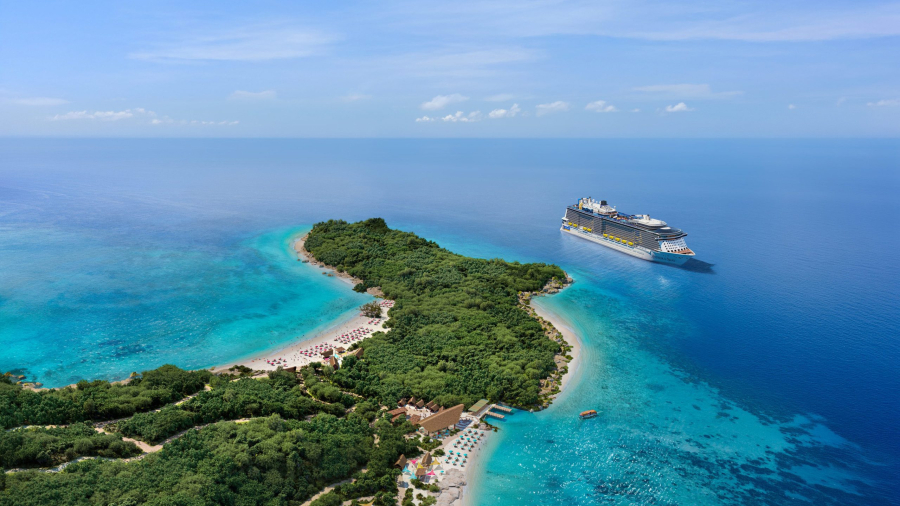
The ultimate island time is in store at Royal Beach Club Lelepa – a first-of-its-kind destination located on the island nation of Vanuatu in the Southern Hemisphere, included on every South Pacific getaway from Sydney and Brisbane starting October 2027. Guests can enjoy two pristine beaches, including a serene adults-only retreat and an activity-packed family beach where friendly competitions invite travellers to become the island’s champion. Whether it’s unwinding on sun-soaked shores, hiking a scenic nature trail or snorkeling in crystal-clear waters, Lelepa offers something for every kind of holidaymaker. From 10 bars and unlimited island eats to umbrellas, loungers and towels all included, guests can enjoy the perfect day in untouched paradise.
Australian Summer 2027-2028 Highlights:
Anthem of the Seas – From Sydney, Australia
Across 24 headline-making getaways ranging from three to 17 nights, the Quantum Class favourite is providing more ways to celebrate the weekend with 3-night escapes and South Pacific holidays, including visits to Royal Beach Club Lelepa for guests to bask in spectacular island beauty.
9- to 12-night New Zealand holidays take holidaymakers to far-flung destinations, including Wellington, Christchurch, Dunedin and Milford Sound, for families looking to experience landscapes, culture and cuisine that deliver on the wow factor in one seamless getaway.
Adding to the adventures are ways to ring in the festivities with a 9-night South Pacific Christmas holiday – featuring Christmas Day at Royal Beach Club Lelepa – and a New Zealand New Year getaway that welcomes 2028 in the beauty of the Sounds, turning the most wonderful time of year into a once-in-a-lifetime celebration.
The spectacle of the season is a 17-night Transpacific adventure departing from Honolulu. Swapping the long-haul flight for a Pacific crossing, travellers can journey across the world’s largest ocean before arriving in Australia in bold, unforgettable style.
Voyager of the Seas – From Brisbane, Australia
Bringing the heat to the Sunshine State from October 2027, Voyager will deliver 29 sun-soaked holidays ranging from two to 25 nights, turning Queensland into the launchpad for memory-maxing adventures and more weekends for families and friends to experience the ultimate getaway.
Starting at the beginning of the Queensland summer holidays, travellers can go from Brisbane to beyond beautiful 7-night South Pacific adventures visiting the brand-new Royal Beach Club Lelepa, along with Noumea, Lifou, Mystery Island, Port Vila and Luganville, including Christmas and New Year escapes.
Closer to home, 4-night Whitsundays getaways to Airlie Beach, alongside six vibrant short escapes, put bragworthy beach days in Queensland’s own backyard.
For those ready to go bigger, a spectacular 25-night Transpacific adventure departing Seattle calls French Polynesia and Hawaii before arriving in Brisbane.
With two iconic ships owning the lineup, the 2027-28 season brings bold adventures to maximise every moment at sea. Thrill-seekers can reach new heights on the RipCord by iFly skydiving simulator, master the waves on the FlowRider surf simulator, enjoy sweeping 360-degree ocean views from the North Star observation capsule, and have a friendly face off in the glow-in-the-dark Battle for Planet Z laser tag clash. When it’s time to refuel, holidaymakers can discover flavours from around the world, including fresh sashimi at Izumi, premium steaks at Chops Grille, and rustic Italian classics at Giovanni’s Table. World-class entertainment is the star of the show on both ships as Anthem hits the high notes with the Olivier Award-winning phenomenon “We Will Rock You,” while Voyager dazzles with the ice-skating spectacular “Ice Odyssey,” where professional skaters bring the magic and mystery of tarot cards to the rink.
More details on the 2027-28 holidays are available on Royal Caribbean’s website.
Explora Journeys launches In Balance: A Jannik Sinner Ocean Wellness Programme, which is now open for reservation and will be available across all journeys from April 24 on EXPLORA I and from May 18 on EXPLORA II.
This marks a significant evolution of the brand’s partnership with Grand Slam champion and Global Brand Ambassador Jannik Sinner, opening a new chapter in wellbeing at sea. The program will be further brought to life through Jannik’s presence during a special segment of EXPLORA III’s Prelude Journey. Taking place before her Maiden Journey, thanks to the ship’s early delivery, this unprecedented five-night sailing from Genoa to Civitavecchia (Rome), from July 24 to 29, 2026 will welcome Jannik aboard from July 24 to 25.
Developed in close collaboration with Jannik and his Performance Team, In Balance: A Jannik Sinner Ocean Wellness Programme translates the discipline of elite competition into a bespoke guest experience focused on long-term physical and mental vitality. Bookings for the full wellness program debuting aboard EXPLORA I on April 24, EXPLORA II on May 18, are now live on Explora Journeys’ website.
“Jannik embodies the composure and meticulous focus that define our vision for ocean travel,” said Anna Nash, President of Explora Journeys. “This partnership goes beyond wellness; it is about creating the space and providing the expertise for our guests to find clarity, balance and peace of mind at sea. “Welcoming Jannik aboard EXPLORA III for her first Journey adds a special sense of occasion, as we introduce both our newest ship and this new wellness programme to further enrich the Ocean State of Mind.”
In Balance: A Jannik Sinner Ocean Wellness Programme
Rooted in the brand’s Ocean Wellness philosophy, the program reimagines high performance through a holistic lens. Inspired by Jannik’s calm discipline and composed style of play that defines Jannik’s game – one that appears fluid and effortless yet is underpinned by years of rigorous preparation – the program is structured around four foundational pillars:
Train: one-to-one workout session focusing on precision, control and balanced performance, adapting elite performance principles for a range of fitness levels.
Re-centre: guided breathwork practice, supporting mental clarity and nervous system regulation through calm, intentional breathing techniques.
Restore: a restorative treatment combining targeted muscle-release techniques with therapeutic touch to ease fatigue, enhance mobility, and promote deep relaxation.
Renew: program concludes with a revitalizing wellness circuit in the thermal area of Ocean Wellness – The Spa, where alternating hot and cold therapies stimulate circulation, support recovery, and restore balance.
Every element has been thoughtfully designed to anchor guests in the present moment, allowing the Ocean State of Mind to extend well beyond their time at sea.
A Journey of Firsts: The EXPLORA III Mediterranean Prelude Journey
Offering an intimate behind-the-scenes ocean experience alongside the visionaries and leadership who brought the ship to life, EXPLORA III’s Mediterranean Prelude Journey departs Genoa on July 24, calling at Marseille, Saint-Tropez, Villefranche-sur-Mer and Livorno, before arriving in Civitavecchia (Rome) on July 29.
Jannik and his Performance Team will join guests onboard for the first leg, from Genoa to Marseille, participating in a carefully curated program of onboard experiences:
Intimate Q&A Sessions: Offering all guests direct access to Jannik, exploring the mindset, the discipline and philosophy behind his approach to elite performance.
Charity Gala Dinner: An elegant evening at the French-inspired Fil Rouge restaurant, attended by Jannik Sinner and Explora Journeys’ leadership. This exclusive event supports both the Jannik Sinner Foundation and the MSC Foundation.
Private Coaching Sessions: A limited number of guests will have the opportunity to participate in private coaching sessions, led by members of Jannik Sinner’s professional Coaching and Performance Team, with appearances by Jannik Sinner throughout the program.
Wellness Sessions: A limited number of guests will also have the opportunity to experience In Balance wellness sessions, guided by Jannik Sinner’s dedicated Performance Team, with appearances by Jannik Sinner throughout the experience.
Following the Prelude Journey, EXPLORA III arrives in Barcelona on August 1 for her official Naming Ceremony. She then departs on her Maiden Journey from Barcelona to Lisbon on August 3, marking the start of an inaugural season that spans Western Europe, the United Kingdom, Iceland, and Greenland.
To learn more about In Balance: A Jannik Sinner Ocean Wellness Programme or the EXPLORA III Mediterranean Prelude Journey, please visit explorajourneys.com
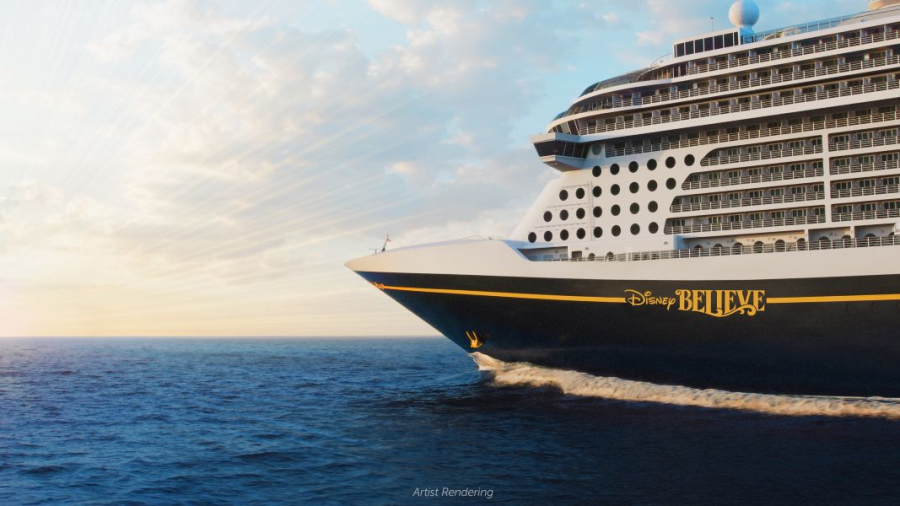
Disney Cruise Line has unveiled Disney Believe as the name of its next newbuild, confirming the vessel will become the fourth ship in the line’s Wish class when it enters service in late 2027.
The new ship will continue Disney’s strategy of building large-scale family cruise ships centred on storytelling from Disney, Pixar, Marvel and Star Wars.
According to Disney, the ship will carry a design theme built around promise and possibilities, giving it a distinct identity within the Wish class.
That continues the approach already used across its sister ships, with each vessel in the class given its own creative motif that influences onboard spaces, entertainment and décor. The Disney Wish is built around enchantment, Disney Treasure around adventure, and Disney Destiny around heroes and villains.
Disney said the new ship will bring stories about characters who believe in themselves and their dreams to life at sea, drawing inspiration from films including Encanto, Frozen, Snow White, Moana and The Little Mermaid.
While full venue and itinerary details have not yet been released, the ship is expected to follow the formula that has defined the Wish class, with immersive entertainment, themed dining and heavily story-driven public areas.
What Disney Has Revealed So Far
Disney Believe is expected to debut in late 2027, although the company has not yet confirmed its homeport, maiden season or booking timeline.
For now, Disney has focused on positioning the ship as the next step in its rapid cruise expansion, with more details expected in the coming months.
The ship will join a Wish-class line-up that has become central to Disney Cruise Line’s modern growth plans.
The class began with Disney Wish, followed by Disney Treasure, while Disney Destiny is also part of the same family of ships.
Disney Believe will therefore arrive as the fourth vessel in that series and one of several ships being added as Disney pushes towards a much larger global fleet.
Part Of Disney’s Wider Cruise Expansion
The announcement comes as Disney Cruise Line continues one of the biggest fleet expansion programmes in its history.
Disney said in 2024 that the business was on track to grow to 13 ships by 2031, with additional vessels scheduled to arrive between 2027 and 2031. That expansion includes Disney Believe, Disney Adventure in Singapore, and a new class of smaller ships due later in the decade.
That wider build-out underlines how important cruising has become to Disney’s experiences division.
By the time Disney Believe debuts, it is expected to be part of a fleet serving a broader range of international markets than ever before, as the cruise line looks beyond its traditional North American base and adds new capacity across several regions.
NEW DEALS JUST RELEASED!
Don’t miss the latest Disney Cruise Line offers…
Related Posts
If you found this interesting, please share!
Holland America Line has confirmed that it will no longer send cruise ships into Tracy Arm Fjord during its 2026 Alaska season, citing ongoing safety concerns following a significant landslide…
A 64-year-old British passenger has been medically evacuated from Royal Caribbean’s Star of the Seas after suffering a serious health emergency while the ship was at sea in the Caribbean….
Celestyal Cruises has cancelled a series of late March sailings as ongoing instability in the Middle East continues to disrupt the line’s transition to its Mediterranean summer season. The cruise…
Royal Caribbean has shared new details and initial imagery for Royal Beach Club Lelepa, a major new private destination in the South Pacific that is scheduled to welcome guests from…