Untitled-design-3-44.jpg

Cruisers Just Can’t Stop Complaining About These Things

Cruisers are a friendly bunch… right up until someone saves six sunbeds with a pair of flip-flops and disappears for three hours.

Common cruise complaints

Spend enough time at sea and you start noticing the little things people do that quietly drive everyone else mad. Some are annoying. Some are baffling. A few should probably be banned altogether, or at least that’s what people will say!

And while nobody likes to admit they complain onboard, cruise passengers can turn almost anything into a heated debate by day three…

1. Chair Hogs at Sunrise

There’s something that’s actually almost impressive about the dedication of cruise chair hogs!

While most passengers are still asleep, these determined early risers are already marching onto the pool deck at dawn, strategically placing towels, books and the occasional lonely flip-flop across an entire row of loungers.

towels on sun loungers

The real frustration isn’t just the saved chairs – it’s that half of them stay empty until lunchtime. Because once they’ve reserved their loungers, those cruisers will nip back to bed, or go enjoy a leisurely breakfast, or even head ashore if the ship’s in port!

Cruise lines constantly threaten crackdowns, but the towel wars continue on practically every sailing. Nothing sparks passive-aggressive muttering faster than watching somebody stroll back to their “reserved” lounger four hours later with zero shame whatsoever.

Suggested read: 11 Ways I Beat Chair Hogs On Cruises

2. People Who Stop Dead in Corridors

Cruise ships somehow turn perfectly normal adults into people who abruptly stop in the middle of walkways like they’ve hit an invisible forcefield.

A long, narrow corridor onboard a cruise ship with patterned blue carpet featuring star motifs, flanked by cabin doors with decorative fish plaques, suggesting a theme that evokes the oceanic environment of the journey.

Maybe they’re checking the daily planner. Maybe they’re deciding where to eat. Maybe they’ve spotted a friend three decks away. Whatever the reason, there’s always somebody causing a human traffic jam outside the buffet entrance.

The problem gets even worse on mega ships where thousands of passengers are all trying to move around at once. Suddenly one family stopping side-by-side becomes the maritime version of a motorway pile-up.

Bonus annoyance points if they stop directly outside an elevator. Those guys are awesome…

3. Buffet Queue Jumpers

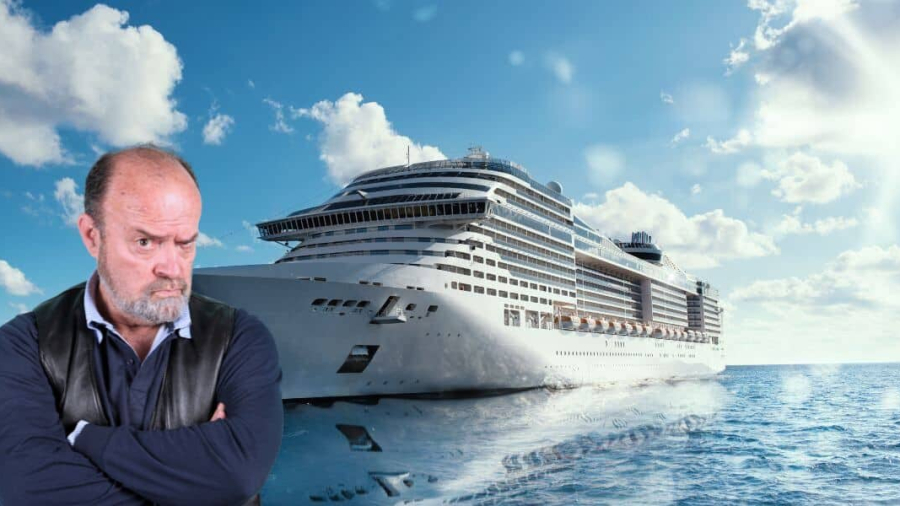
Cruise buffets can sometimes feel like fascinating social experiments. Most passengers politely shuffle along, waiting their turn for scrambled eggs or roast potatoes. Then there’s always one person who treats the whole thing like supermarket sweep.

Buffet grumpy man

Queue jumpers appear from nowhere. They squeeze into tiny gaps. They hover awkwardly beside trays waiting for fresh food to arrive before anyone else can grab it.

And somehow, despite buffet layouts being almost identical across cruise lines, there’s always confusion about where the queue actually starts.

I don’t actually mind a queue-jumper if they’re just nipping in for one or two items. After all, the queue for the bacon my stetch right past the mushrooms, so if you just want mushrooms, go for it. As long as you’re respectful and don’t aggressively push in!

4. Loud Balcony Neighbours

Balconies are supposed to be peaceful little private escapes. But there’s often a decent chance your neighbours will treat theirs like an all-night pub garden.

Noisy balcony guests

Some passengers genuinely seem unaware that sound travels incredibly easily between balconies. Conversations, phone calls, music and drunken late-night chats drift straight through the partitions.

Then there are the smokers who technically aren’t supposed to be smoking out there, but somehow think nobody notices. We do notice, though.

The worst offenders are the groups who decide midnight is the perfect time for balcony drinks and storytelling. Lovely for them. Less lovely for the people next door trying to sleep before an early excursion.

Suggested read: 9 Cruise Balcony Mistakes That Could Get You in Serious Trouble

5. The Elevator Standoff

Cruise ship elevators bring out survival instincts nobody knew they had.

A man in a wheelchair, with a concerned expression, is at the forefront of an elevator on a cruise ship, surrounded by other passengers who appear to be ignoring him. The passengers include a woman carrying a bag, an older man in a suit, and several others in the background, all looking away or preoccupied. The scene conveys a sense of neglect and lack of awareness towards the needs of the disabled passenger.

You’ll wait patiently for several minutes watching full lifts arrive one after another while people inside refuse to move an inch away from the buttons. Then finally one arrives with space for three people… and somehow eight still attempt to squeeze in.

There’s also an unwritten battle over whether to wait or simply take the stairs. On sea days especially, elevators become strangely emotional places.

And somehow there’s always one child repeatedly pressing every single deck button while their parents stare into the middle distance pretending not to notice.

One complaint that is definitely justified though – those people who try to cram into an elevator before letting people get off. Just wait 10 seconds!

6. Theatre Seat Savers

Saving one extra theatre seat for your partner? Fair enough.

Saving twelve seats with cardigans, handbags and cocktails while your entire group finishes dinner elsewhere? Straight to cruise jail.

MSC Virtuosa theatre

The pre-show scramble in cruise theatres can get surprisingly intense, especially on newer ships with popular productions, or on ships where the theatres aren’t the biggest. People arrive ridiculously early to claim prime spots, only to defend entire empty rows like security guards.

It becomes even more irritating when late arrivals expect everyone to shuffle around mid-performance so their giant group can sit together. Or worse is when they don’t turn up, leaving the seats empty when others have had to miss out!

Nobody wants to become territorial over seats on holiday. And yet somehow cruise entertainment has a magical ability to turn grown adults feral.

7. Kids Treating the Ship Like a Playground

Most kids onboard are absolutely fine. You barely notice them. Then there are the ones sprinting through corridors at full speed at midnight while slamming cabin doors hard enough to shake neighbouring walls.
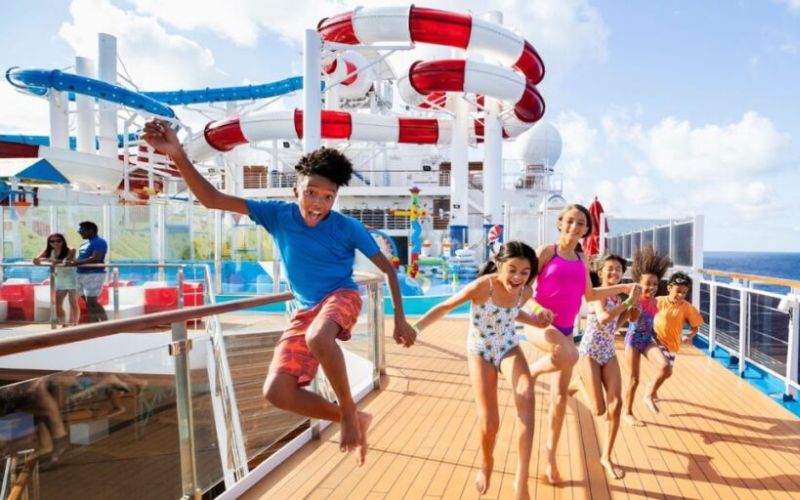
A group of joyful children racing towards the Waterworks aqua park on the deck of a Carnival Cruise ship, with clear blue skies above and the expansive ocean in the backdrop, highlighting the thrill and excitement of cruise ship activities for kids.

Cruise ships naturally give children freedom they don’t usually get at home, which is partly why families love cruising. But occasionally that freedom turns into total chaos while exhausted parents quietly give up trying to intervene. Or they just don’t seem to care at all in the first place.

Stairwells become playgrounds. Elevators become amusement rides. Hot tubs become unofficial swimming lessons.

Nobody expects children to sit silently all cruise long. But there’s definitely a line between “having fun” and “running completely wild across Deck 12”.

8. People Using Speakerphone by the Pool

For reasons science may never fully explain, some cruise passengers genuinely believe the entire pool deck wants to hear their video call.
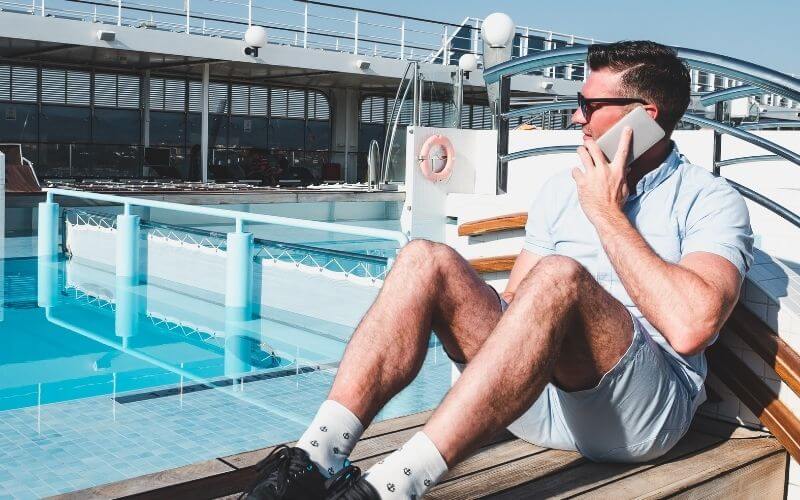
Phone use by the pool

Maybe it’s a friend back home. Maybe it’s somebody loudly discussing dinner plans. Either way, nobody relaxing beside the pool needs accidental front-row access to someone else’s conversation.

Music played through phone speakers is equally bad. Especially when several people decide to do it at once, creating a strange overlapping soundtrack of dance music, TikTok clips and muffled FaceTime calls.

Cruise ships already have enough background noise without passengers personally contributing to it through terrible phone speakers.

Headphones exist for a reason, people.

9. Unlimited Drink Package Behaviour

Drink packages can absolutely be worth it. Unfortunately they also inspire some truly fascinating behaviour by day two.

Two men, appearing to be intoxicated, are engaged in a physical altercation in a cruise ship's bar or lounge area. One man is holding a drink while the other grabs his arm, and both have distressed expressions. The setting is dimly lit with other passengers visible in the background, some of whom seem to be observing the commotion.

Suddenly passengers who barely drink at home become determined to “get their money’s worth” from sunrise cocktails onwards. Pool bars turn chaotic. Frozen drinks appear before breakfast. Somebody always ends up loudly insisting they’re “not even tipsy” while walking sideways.

Most people on a cruise handle drink packages perfectly responsibly. But every cruise has at least a few passengers treating the unlimited cocktails like an Olympic endurance challenge nobody asked for and it does spoil the fun a bit.

10. Cabin Door Slammers

Cruise cabin doors are surprisingly heavy, and this is something everyone discovers approximately once.

And then there’s those handful of passengers who just never seem to learn.
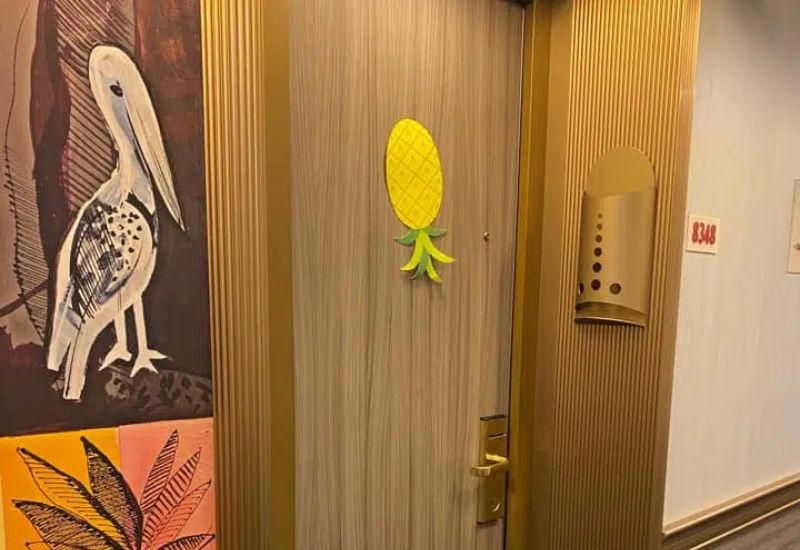
Pineapple on cruise door

At all hours of the day and night, corridor silence is interrupted by enormous slams echoing deck after deck. Early risers heading for excursions. Late-night wanderers returning from the casino. Families repeatedly entering and exiting adjoining cabins every five minutes.

It’s one of those cruise annoyances that sounds minor until you’re trying to sleep and the cabin opposite appears determined to recreate a SWAT raid at 6am.

The strange part is that people often don’t realise they’re doing it. Meanwhile half the corridor quietly hates them by day four.

11. People Who Never Wash Their Hands

Cruise ships work incredibly hard to keep passengers healthy, which makes it so frustrating when some people completely ignore basic hygiene.

You know how some cruise lines actually pay people to stand outside a buffet and sing songs encouraging people to wash their hands? How have we got to a place where that person is needed?!

And still, some guests will just confidently stroll straight past. Others somehow leave public toilets without touching a sink once.

A cruise ship guest with dirty, mud-covered hands holds them up in front of a buffet, highlighting the unsanitary condition amidst a backdrop of other passengers enjoying their meals. The scene emphasizes the importance of cleanliness and hygiene in communal dining areas.

Then come the buffet horrors – grabbing pastries with bare hands, touching serving utensils after coughing, or letting children treat food stations like interactive exhibits. Yuck!

Nothing destroys your appetite faster than watching somebody sneeze into their hand before reaching for bread rolls. Cruise passengers love complaining about outbreaks onboard, but sometimes fellow guests are part of the problem.

12. Overcrowded Hot Tubs

Hot tubs onboard always look relaxing in promotional photos but there are never enough hot tubs to go around…

Royal Caribbean hot tub

On sea days especially, hot tubs become mysteriously overcrowded from morning onwards. Sometimes they’re packed with loud groups clutching cocktails. Sometimes they’ve been unofficially claimed by children cannonballing endlessly while adults hover awkwardly nearby wondering whether to give up entirely.

And there’s always one person sitting directly beside the jets for two straight hours refusing to move. Which is worrying, when they’re often getting drinks.

How are they going to the bathroom? Oh.

13. Last-Minute Pier Runners

Every cruiser secretly loves watching pier runners. Nobody admits it, but it’s true. It’s properly fun.

There’s always a crowd lining upper decks filming late passengers sprinting dramatically toward the ship while security staff wait impatiently nearby.

To be fair, sometimes delays genuinely aren’t passengers’ fault. Traffic happens. Tours overrun. Ferry schedules collapse. But occasionally you can absolutely tell somebody ignored “all aboard” time because they wanted one final cocktail near the beach.

The reason people complain isn’t just the delay – it’s the stress. Nobody wants to wonder whether departure will be held up because someone lost track of time in Cozumel.

Still, everyone watches. And heaven forbid the pier runner acts like they don’t care. That’s when the booing starts!

14. The WiFi Complaints

Cruise WiFi has improved massively over the past few years, yet complaints about it somehow remain completely undefeated.
Guests expect flawless streaming in the middle of the ocean while thousands of other people attempt exactly the same thing simultaneously. Then outrage erupts when Instagram takes three extra seconds to load.

Older cruise internet packages were genuinely terrible, so some frustration is fair. But modern ships now offer speeds that would’ve seemed impossible not long ago.

Of course, that doesn’t stop people angrily testing connection speeds every hour before announcing to Facebook that “the WiFi onboard is unusable” using the very WiFi they claim doesn’t work.

15. People Wearing Swimwear in the Buffet

There’s always debate around cruise dress codes, but most passengers can agree on one thing – nobody really wants to see dripping swimwear beside the pasta station. This is another gross scenario and yet it happens!

Middle aged man on a cruise in swimwear in the buffet

Every sailing has at least a handful of guests wandering into the buffet barefoot and soaking wet straight from the pool deck. Sometimes without cover-ups. Occasionally without much else either.

It’s not about formal rules or being overdressed. It’s more the strange combination of wet swimsuits and self-service food areas that feels slightly chaotic. Crew rarely say much unless somebody pushes it too far, so the silent judging falls entirely to fellow passengers trying to enjoy lunch in peace.

16. Cruise Ducks Everywhere

Cruise ducks somehow became one of cruising’s strangest traditions. Some passengers absolutely love hiding tiny rubber ducks around ships for others to find. Families treat it like a floating treasure hunt. Kids get ridiculously excited spotting them tucked beside artwork or hidden near staircases.
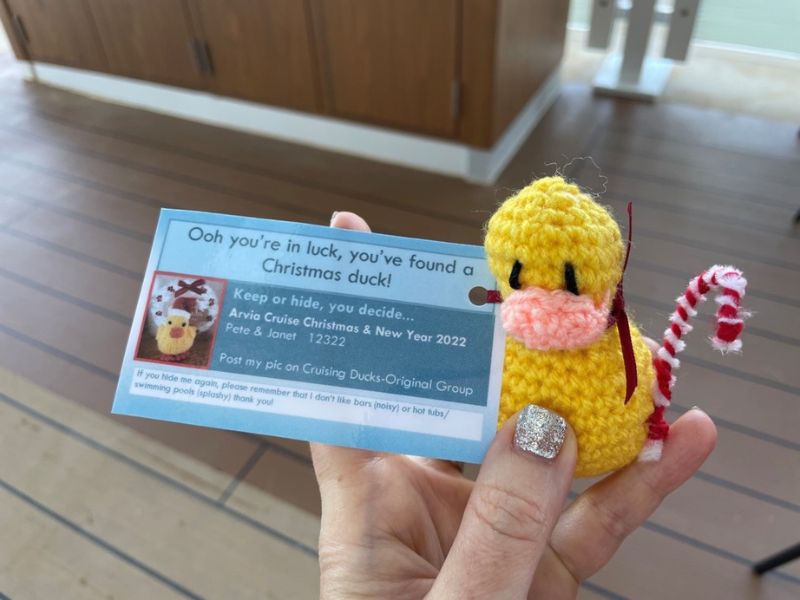
Duck

Other passengers absolutely cannot stand them. To critics, cruise ducks are clutter. They create mess. They encourage people to crawl around public areas searching behind decorations like detectives in a crime drama.

The funniest part is how seriously both sides take it. Few cruise topics escalate faster online than innocent little rubber ducks mysteriously dividing the entire cruising community into opposing camps.

I’m fine with the duck craze, personally, though I won’t go out of my way to join in.

17. The Buffet Plate Pile-Up

Cruisers often behave very differently around “included” food, as if they’ve never been full before.

Even people who eat modestly at home suddenly return from evening shows carrying towering late-night buffet plates like they’re preparing for hibernation.
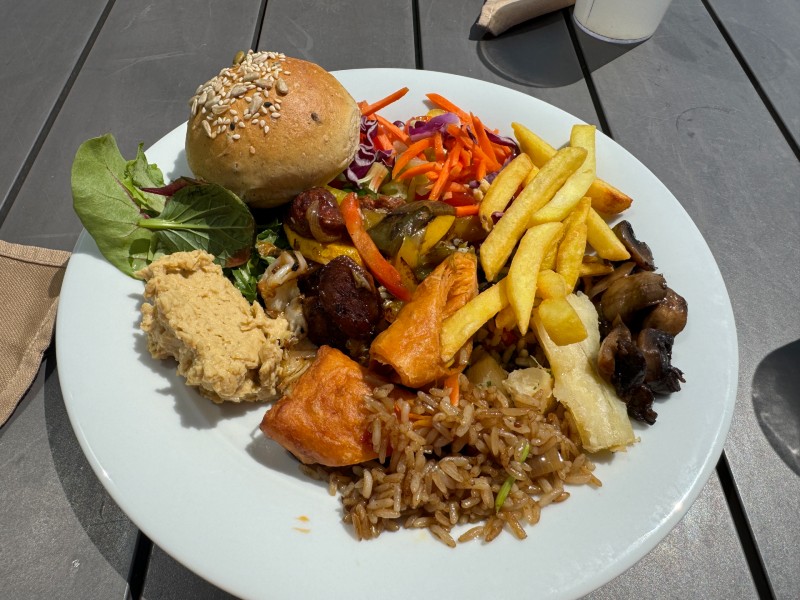
Vegan buffet food

There’s always someone balancing pizza, chips, cake, noodles and ice cream simultaneously despite clearly only wanting half of it. Then tables end up abandoned with mountains of untouched food and melting desserts.

Part of it is excitement, just getting giddy at the variety of options available. Partly it’s the weird cruise mentality that encourages people to maximise absolutely everything. You have to get your money’s worth, right?!

Still, watching enormous amounts of wasted food being cleared away night after night can get surprisingly frustrating after a while. Especially when buffet queues are already packed.

Suggested read: New Royal Ships Will Revolutionise Waste Management

18. Overpriced Shore Excursions

Cruise line excursions regularly trigger the exact same conversation onboard.

“Yes, it’s expensive… but what if we miss the ship?”
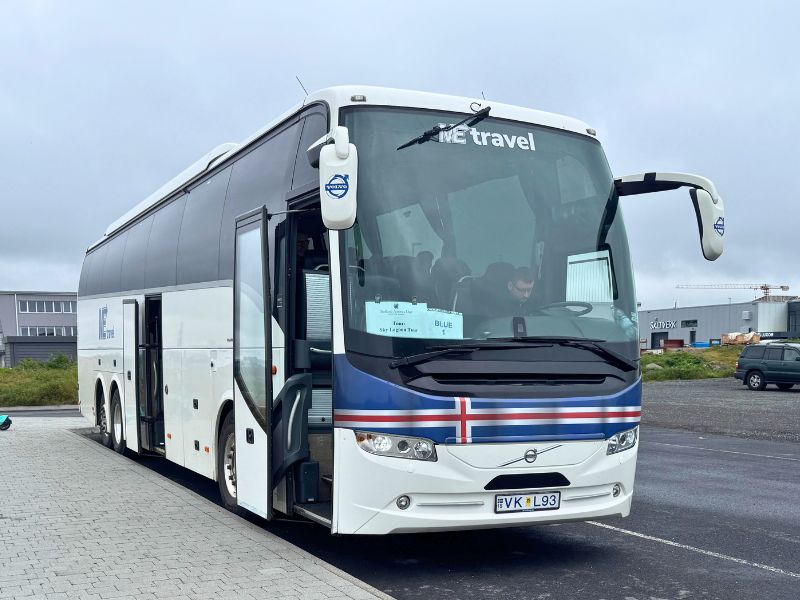
Passengers know cruise-sponsored tours offer protection and convenience, but that doesn’t stop the sticker shock when prices appear in the planner. Suddenly a simple beach transfer somehow costs the same as a decent restaurant meal back home.

Then there’s the frustration when excursions feel rushed, overcrowded or overly commercialised once you actually arrive.

I use Shore Excursions Group, because their pricing is often much more competitive than the cruise lines’, and they’ll still always get you back to the ship. They have a guarantee – if you miss the ship, they’ll pay for you to meet it at the next port AND give you $1,000pp as an apology. Almost makes me want to miss the ship!

Save up to 40% on Cruise Excursions!

Choose from over 4,000 excursions with a return-to-ship guarantee

19. Tender Queue Chaos

Tender ports always sound lovely in theory. Small boats ferrying passengers ashore to picturesque destinations feels wonderfully old-school cruise travel.

Until you’re stuck in a giant queue at 8am holding a numbered ticket while hundreds of equally impatient passengers slowly lose morale around you.
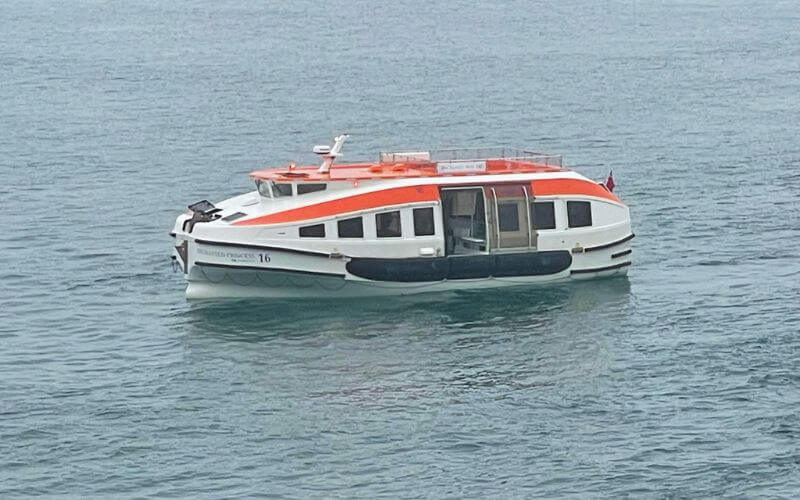
tender boat

Tendering works reasonably well on smaller ships, but on larger vessels it can become painfully slow. Weather delays make everything worse. Mobility issues complicate things further. And once frustration starts building, the atmosphere changes quickly.

The thing is, you just have to learn to be patient. Trust me, you’ll get plenty of time ashore. Try to let that frustration go!

20. Motion at Sea

Cruise ships are enormous these days, but they still move. That’s generally how boats work.

Even so, every sailing seems to include passengers acting personally betrayed whenever the ocean behaves like… ocean.

OK, on very rare occasions it can be pretty bad…

But on a more typical cruise, even light vibrations become dramatic conversations in elevators. Mild swaying inspires frantic weather Googling. Somebody inevitably declares they “never felt movement like this before” despite cruising annually.

To be fair, seasickness genuinely can ruin trips for some people. But there’s always a difference between understandable discomfort and passengers demanding perfectly still conditions in the middle of the Atlantic.

Suggested read: Cruise Seasickness Tips That Actually Work

21. The Constant Upselling

Cruise lines have mastered the art of selling absolutely everything possible once you step onboard. This varies depending on who you’re sailing with, as some are worse than others, but even on one of the better lines, it’s not always fun to be reminded of extras you’ve not yet paid for.

Speciality dining. Spa packages. Bingo. Art auctions. Photography packages. Premium desserts. VIP seating. Extra attractions. Better drinks. Faster internet. More exclusive sun decks.

cruise ship art

Occasionally it feels like you can’t walk ten metres without somebody trying to upgrade something.

Some cruisers genuinely don’t mind it because ignoring sales pitches becomes easy after day one. Others find the constant upselling exhausting, especially when cruises already aren’t cheap holidays to begin with.

The irony is that most people complaining about onboard spending will still somehow return home with a surprisingly large bill anyway.

22. Influencer Photo Shoots

Cruise ships are beautiful places and so naturally people want photos.

But there’s a growing category of passengers turning entire public areas into full-scale social media productions complete with outfit changes, portable lighting and dramatic slow-motion posing.

Woman taking a selfie on a cruise ship

You’ll spot them blocking staircases, monopolising infinity pools or spending 40 uninterrupted minutes attempting the exact same sailaway shot while everybody awkwardly waits nearby.

Most people taking holiday photos aren’t bothering anyone. It’s the extreme versions that become unintentionally hilarious.

Yes, I’m technically a cruise influencer, and I do use my phone a lot. I usually get up at silly-o’clock in the morning to go film what I need when the ship is dead, so that a) I’m not annoying other guests, and b) it’s easier to film without having people walking in front of my shot. It works so much better.

23. Complaining About the Food… Then Going Back for More

Passengers complain the buffet is repetitive while returning three times daily. They declare desserts disappointing moments before ordering another two. Somebody loudly announces the pizza is “terrible” while actively eating a fourth slice.

Cruise buffet

Of course, food is subjective and not every meal onboard will be brilliant. But cruise ships feed thousands of people every single day, which is honestly quite impressive when you think about it.

The funniest complainers are usually the ones behaving like unpaid restaurant critics despite clearing every plate entirely.

24. The “Everything Was Better Before” Cruisers

Every cruise has at least one veteran passenger explaining how cruising peaked approximately 15 years ago.
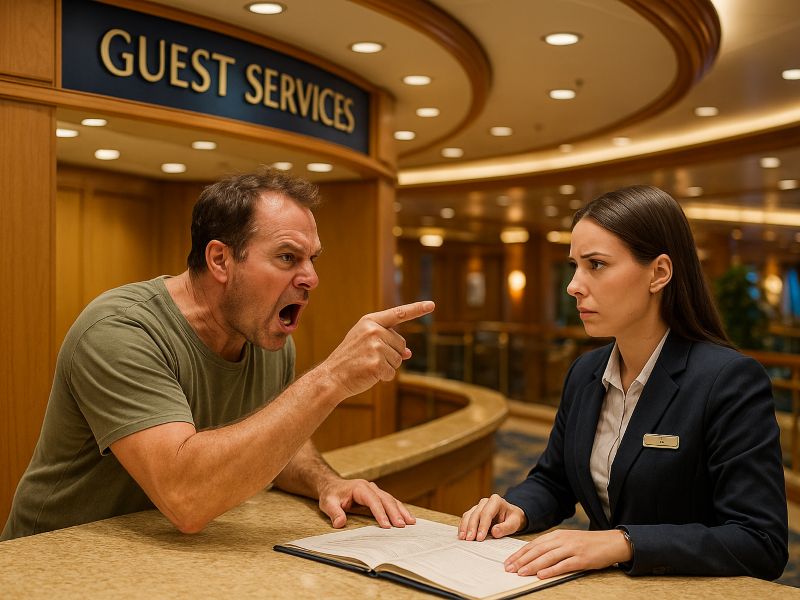
Guest Services Complaints

The food used to be better. The service was better. The entertainment was better. Formal nights were better. Passengers were classier. Buffets were quieter. Sunbeds were easier to find. Everything, apparently, has declined dramatically since 2009.

To be fair, some complaints are valid. Cruising absolutely has changed over the years. But certain passengers seem determined to spend entire holidays mourning the golden age of cruising instead of enjoying the one they’re currently on.

Ironically, complaining about modern cruisers has quietly become one of cruising’s most enduring traditions itself.

Suggested read: 7 Annoying Cruise Cutbacks Passengers Can’t Stand

TODAY’S BEST CRUISE DEALS!

Don’t miss these offers…

Final Word

Cruise ships bring together thousands of people in a floating hotel with unlimited food, limited sunbeds and just enough cocktails to lower everybody’s patience levels slightly by day four. So honestly, it’s impressive things run as smoothly as they do.

Most of these annoyances are harmless, even if they inspire plenty of eye-rolling along the way. And the funny thing is, half the habits people complain about are probably things we’ve all done ourselves at some point – yes, even saving a theatre seat “just for two minutes”.

Still, if you can avoid slamming doors, hogging loungers and blasting TikToks by the pool, your fellow passengers will probably appreciate it.

And if not? At least you’ll give them something to complain about.

Related Posts

Source link

Untitled-design-1-97.jpg

How Some People Get Free Cruises By Teaching Their Hobbies Onboard

Free cruises sound like the ultimate travel hack – and for some people, they’re very real. Not through loyalty points or casino perks, but by sharing something they already love doing.

From teaching bridge to leading photography walks at sunrise, cruise lines regularly bring guests onboard to run sessions, workshops, and talks.

Cruise guest speaker

And the surprising bit? Many of these roles don’t require you to be a world-famous expert. But there’s a catch most people don’t hear about until much later.

What “Teaching Onboard” Actually Means

Cruise lines often run enrichment programmes – think of them as a timetable of activities that go beyond quizzes and pool games. On longer sailings especially, there’s demand for structured, engaging sessions that give passengers something to learn or immerse themselves in.

That’s where guest hosts come in. Instead of being full crew members, they’re usually passengers with a skill to share. In return for hosting sessions – whether that’s a daily class, a few talks across the voyage, or informal meet-ups – they may receive a free or heavily discounted cabin.

The exact deal varies wildly, which is where things get interesting.

1. Bridge And Card Game Instructors

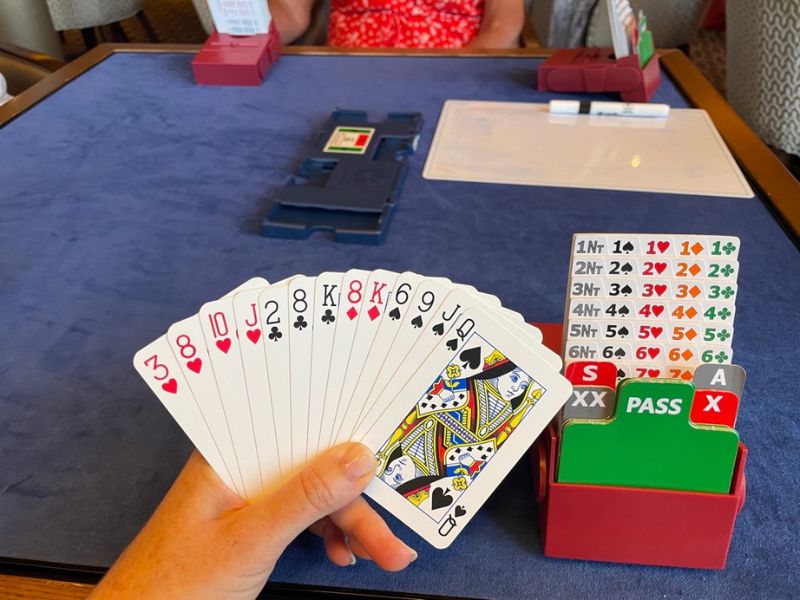
Bridge is a cruise staple, particularly on longer voyages and more traditional lines. A dedicated bridge instructor will typically organise daily sessions, tournaments, and beginner lessons.

Bridge class

It’s not just about knowing how to play – you need to be able to teach it clearly and keep a group engaged over multiple sea days. Some instructors travel almost full-time this way, moving from one sailing to another. On certain lines, it’s one of the more established “free cruise” routes, but competition can be surprisingly high.

2. Clergy And Faith Leaders

Many cruise lines – especially those with a large British or American passenger base – will have a clergy member onboard for Sunday services and pastoral support.

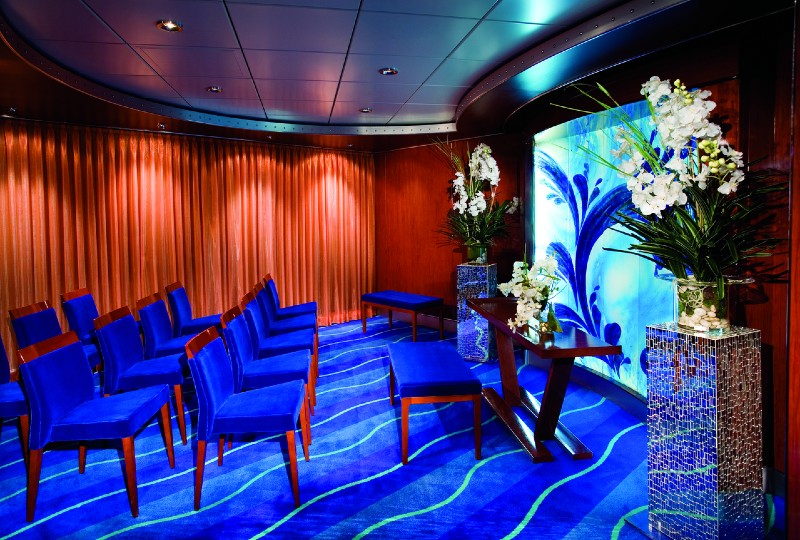
NCL Pearl Chapel

This role is often more about presence than packed schedules. Services might only take place once or twice during a sailing, but the expectation is that the clergy member is available to passengers throughout. In return, they’re typically offered a complimentary cabin, sometimes for themselves and a partner.

3. Guest Lecturers And Enrichment Speakers

If you’ve got a deep knowledge of a subject – history, wildlife, politics, even true crime – guest lecturing can be one of the most rewarding ways to cruise.

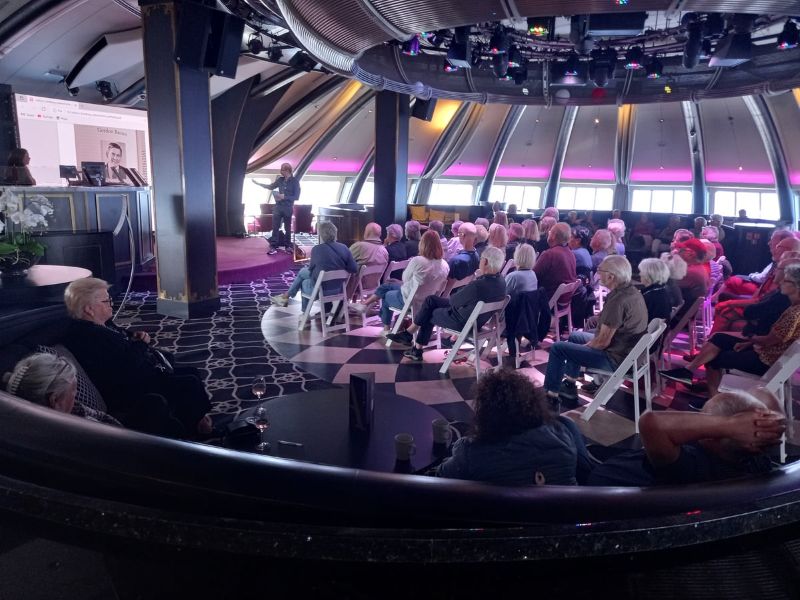
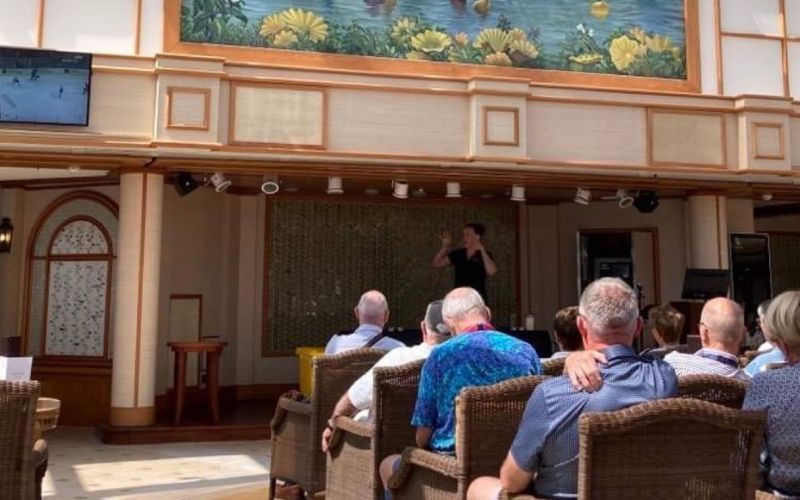
Ambassador Cruise Line talk

These speakers are particularly common on expedition cruises or itineraries with a strong destination focus. Think talks on Norwegian fjords before sailing through them, or wildlife briefings ahead of an Antarctic landing. Cruise lines usually look for credible experience or professional backgrounds, but you don’t always need to be an academic – engaging delivery matters just as much.

4. Arts And Crafts Hosts

From watercolour painting to knitting circles, arts and crafts sessions are hugely popular with passengers looking for a slower-paced activity.

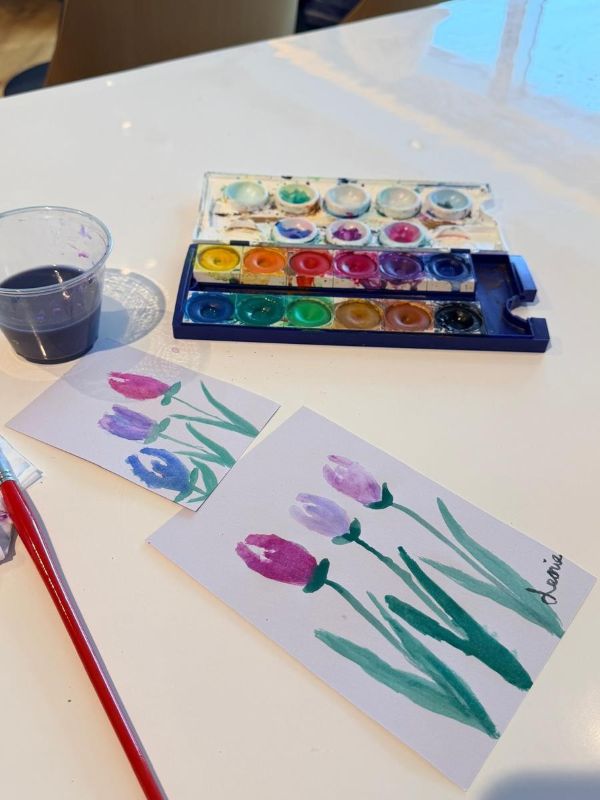
Painting class on a cruise

Hosts might run daily workshops or drop-in sessions, helping people complete small projects over the course of the cruise. It’s a sociable role, often with repeat attendees, and it suits people who are patient and happy to guide beginners. Materials are sometimes provided by the cruise line, but not always – and that’s one of those small details worth checking upfront.

5. Photography Experts

Photography hosts often wear a few hats. They might run classroom-style sessions on composition or editing, host photo walks in port, and offer informal advice throughout the sailing.

Photography lesson on a cruise

With so many people keen to improve their holiday photos, this is a popular enrichment area. Cruise lines tend to favour those with a strong portfolio or teaching experience, but enthusiasm and approachability count for a lot. Early mornings and late evenings can be part of the deal if you’re chasing the best light.

6. Dance Instructors

Ballroom and Latin dance are cruise classics, especially on ships with dedicated dance floors. Instructors usually host classes ranging from absolute beginner to more advanced sessions, often leading into evening dances.

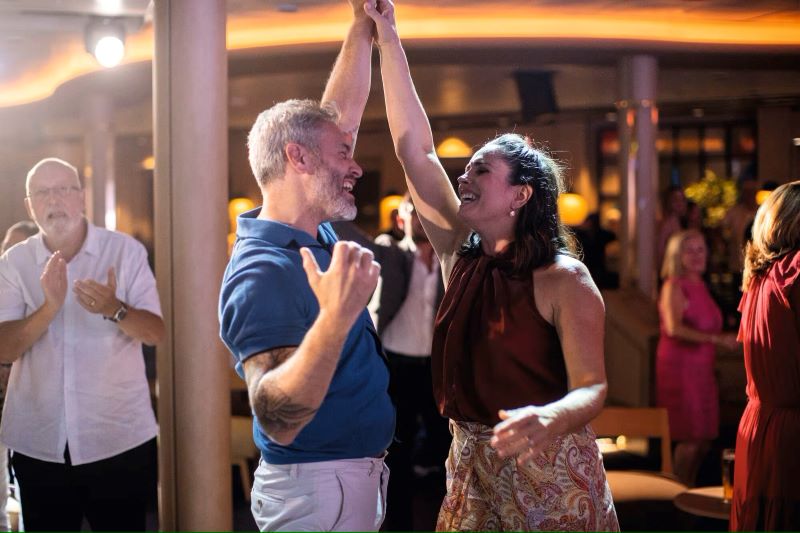
Marella Dancing

Some roles are filled by professional couples, but solo instructors can also be brought onboard. It’s a fairly visible position – you’re not just teaching, you’re helping to create a lively atmosphere onboard. Energy levels matter here just as much as technical skill.

7. Language Teachers

On longer or more culturally focused itineraries, basic language sessions can be a hit. Think “Italian for travellers” or simple conversational Spanish before a series of port stops.

Language

These aren’t formal classes – they’re designed to be fun, accessible, and immediately useful. You don’t necessarily need to be a qualified teacher, but you do need to keep things light and engaging. Passengers aren’t looking for homework – they want confidence to order a coffee or ask for directions.

8. Fitness And Wellness Coaches

Yoga, Pilates, meditation, even posture workshops – wellness has become a big part of cruise programming in recent years.

A group fitness class on a Carnival cruise ship is in full swing, with participants smiling and engaging in exercises on blue mats. The room is surrounded by mirrors and bathed in natural light from the ceiling, enhancing the energetic atmosphere of the workout session at sea.

Some ships already have dedicated fitness staff, but guest instructors may be brought in for specific styles or themed sailings. Sunrise yoga on deck is a common highlight. It’s worth noting that this can be one of the more demanding roles physically, with multiple sessions and high expectations around professionalism.

TODAY’S BEST CRUISE DEALS!

Don’t miss these offers…

9. Music And Performance Coaches

This is a slightly lesser-known one, but some cruises bring onboard vocal coaches, choir leaders, or even amateur theatre directors.

ukelele lesson

Passengers might rehearse throughout the sailing and then put on a small performance at the end. It’s a great way to build a sense of community onboard, but it does require organisation and confidence managing groups. Not every cruise line offers this, but it’s more common than people think.

10. Cookery And Food Demonstrators

Food-focused sessions can range from simple demonstrations to interactive workshops. Think knife skills, regional dishes, or even chocolate-making.

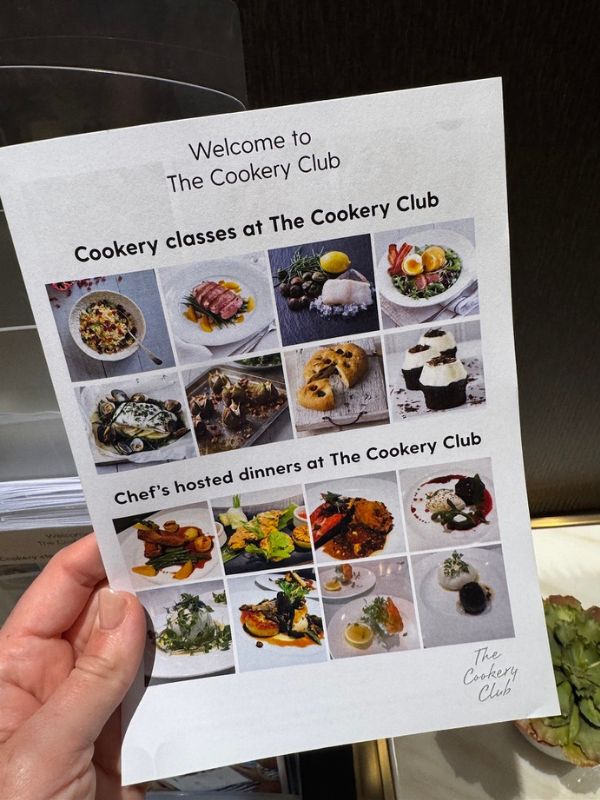
cookery club

These roles are sometimes filled by guest chefs or specialists rather than professional instructors. On certain itineraries, there’s a strong link to destinations – local cuisine, wine pairings, that sort of thing. It’s a good fit if you’re comfortable speaking in front of a crowd and keeping things entertaining as well as informative.

11. Technology Tutors

Not everyone onboard is confident with smartphones, tablets, or cameras – and that’s where tech tutors come in.

kid with tablet

These sessions can be surprisingly popular, covering everything from organising photos to using social media or video calling family back home. Patience is key here, as skill levels vary massively. It’s less glamorous than some roles, but often in steady demand.

12. Wine And Drinks Experts

Wine tastings, cocktail workshops, whisky appreciation – these sessions can be a real highlight for guests.

Wine tasting

Cruise lines usually look for formal qualifications or industry experience here, particularly for wine. Sessions might be ticketed rather than included, which changes the dynamic slightly. It’s not just about knowledge – presentation and storytelling play a big role in making these events memorable.

13. Special Interest Hosts (From Genealogy To Astronomy)

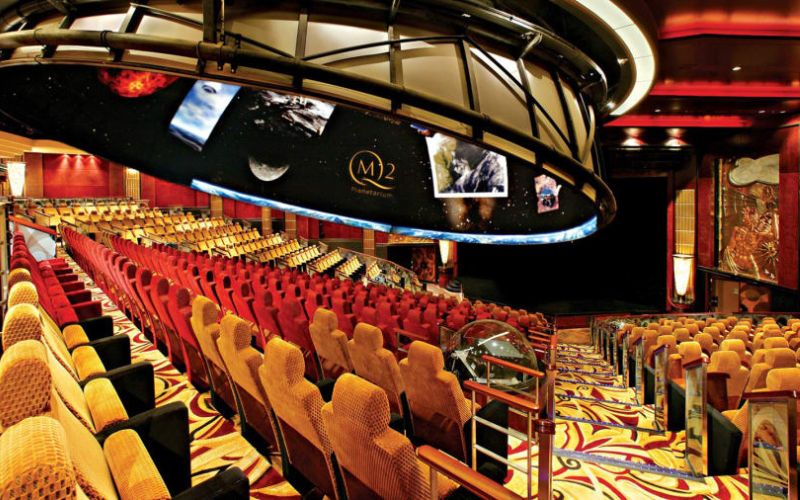
This is where things get really varied. Genealogy experts helping passengers trace family roots, astronomy guides leading stargazing sessions at sea, even hobbyists running niche interest groups.

Inside the elegant planetarium on a Cunard cruise ship, with rows of comfortable seating under a dome featuring images of outer space, providing an educational and entertaining stargazing experience to guests at sea.

If there’s a genuine audience for it, there’s a chance it could work onboard. These roles tend to pop up on themed cruises or longer voyages where passengers are looking for something a bit different.

What Cruise Lines Expect In Return

This isn’t a free holiday where you occasionally show up for an hour. Cruise lines expect commitment, reliability, and a polished experience for guests.

You’ll usually be given a schedule in advance – sessions, meet-and-greets, possibly even social hosting duties in the evenings or helping out on excursions.

You’ll likely have to provide your own resources, such as art supplies or musical instruments.

You’ll be epresenting the cruise line, so professionalism matters. It’s closer to a working holiday than a traditional break.

How You Actually Land One Of These Roles

There’s no single application portal for this, which is where many people get stuck.

Cunard Garden Journey Cruise - garden talks

Some cruise lines work with agencies that specialise in guest speakers and enrichment hosts. Others recruit directly, particularly for niche skills. Networking can play a surprisingly big role – having a visible profile in your field, even at a local level, helps.

A clear proposal outlining what you can offer – including session ideas and how they’d benefit passengers – can go a long way. It’s not just about what you know, but how you’d translate that into an onboard experience.

Not Actually “Free”

Here’s the bit most people don’t realise: “free” rarely means everything is covered.

You might get a complimentary cabin, but still need to pay port taxes, gratuities, flights, or even some onboard expenses. Internet access and drinks packages aren’t always included either.

And then there’s the time commitment. You’re not free to do whatever you like all day – your schedule comes first. That said, you still get to experience the ship, visit ports, and enjoy the journey in a way most crew can’t.

Final Word

Getting a free cruise by teaching your hobby isn’t a myth – but it’s not quite as effortless as it sounds either. For the right person, though, it’s a brilliant way to travel with purpose. You’re not just ticking off destinations, you’re adding something to the experience for other passengers too.

And if you’ve got a skill people genuinely want to learn? You might be closer to your next cruise than you think.

Related Posts

Source link

Jenni-with-Emerald-river-ship-1.jpg

What You Actually Get On An Emerald River Cruise (It’s A Long List!)


Booking a river cruise is never as simple as comparing prices. If only!

You might spot one sailing that’s £500 cheaper than another and assume you’ve found a bargain. Then you realise the cheaper fare doesn’t include the excursions, the drinks, the gratuities or even the transfers. Suddenly, it’s not looking quite so cheap after all…

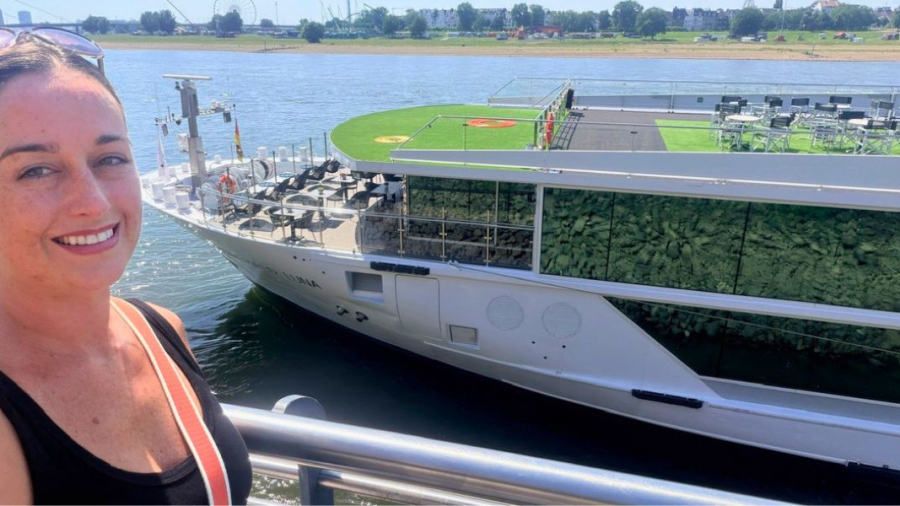
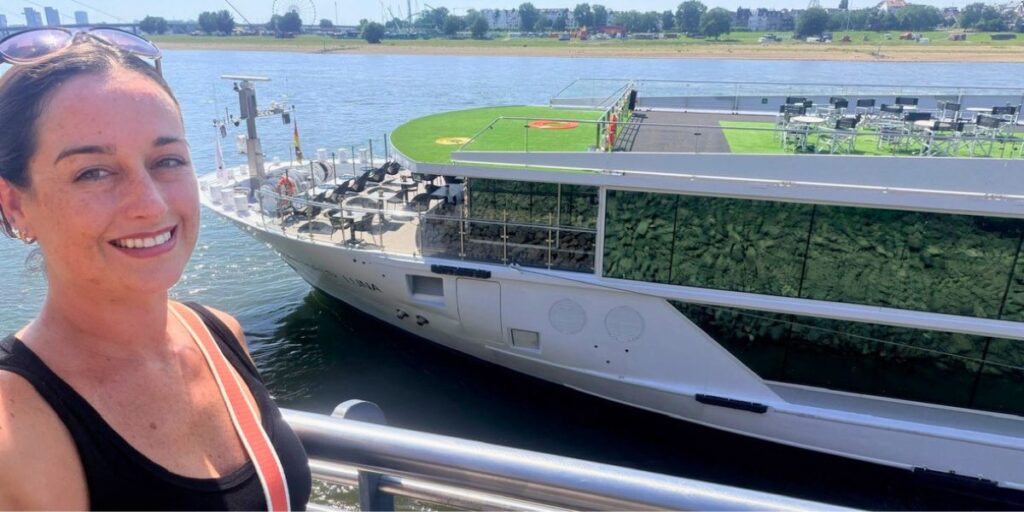
Me with Emerald Luna

Before I was invited to sail on Emerald Luna, I knew a lot was included. What I didn’t expect was just how rarely I actually had to think about my budget. Once I’d stepped onboard, there wasn’t much left to pay for unless I actively wanted to.

That doesn’t mean everything’s included. There are a few optional extras if you want them. But there were also several things I hadn’t realised were covered until I experienced them for myself.

Some of them genuinely surprised me.

1. Before You Step Onboard

One thing that’s easy to overlook when comparing river cruise prices is what happens after you land.

Airport transfers between the airport and the ship are included, so there’s no need to figure out trains, taxis or public transport in an unfamiliar city. Instead, someone is there to meet you and take you straight to the ship, with the same service provided at the end of your cruise too. It’s so much easier than having to sort it yourself!

transfer van

On my Rhine cruise, it made the whole journey feel incredibly straightforward. Rather than worrying about directions or dragging luggage across a city, I could just relax knowing everything had already been arranged.

It might seem like a small detail, but after a flight it’s one less thing to think about. And it’s exactly the kind of inclusion that’s easy to miss when you’re comparing cruise fares at first glance.

As for the flights themselves, they aren’t included in the fare prices you’ll typically see advertised, but Emerald Cruises can organise them for you, which does make things a lot simpler.

Hate flying? There are some river cruises that pair well with the Eurostar too, and again there will be transfers arranged to get you to the ship once you get off the train.

Emerald Cruises River Exclusive Offer

Get an additional £150pp saving on any departure year (2026 or 2027) when quoting the discount code JENNI.

(Valid on bookings made 01/08/26 to 31/10/26)

Terms and conditions apply

2. A Modern Ship With More Than Just A Cabin

When you book an Emerald river cruise, you’re not just getting a place to sleep. The ship itself is a big part of the experience.

Emerald Luna

Emerald’s purpose-built Star-Ships are bright, contemporary and designed to make the scenery the star of the show. Huge windows fill the public spaces with natural light, while comfortable lounges and the Sun Deck give you plenty of places to sit back and watch Europe’s rivers roll by.

Most cabins feature Emerald’s signature Panorama Balcony. Instead of a traditional step-out balcony, the top half of the floor-to-ceiling window lowers electronically, creating an indoor balcony where you can enjoy the fresh air and the views without sacrificing valuable cabin space.

Emerald balcony suite

My Panorama Balcony Suite also included everything I’d expect from a comfortable hotel room, including a queen-size bed, WiFi, bottled water replenished daily, ESPA toiletries, a safe, bathrobes and slippers, a hairdryer and plenty of storage for a week’s holiday.

One of Emerald Luna’s standout features is the indoor swimming pool at the back of the ship. During the day, it’s a great place to cool off or even swim against the built-in current. In the evening, the pool floor rises, the water disappears underneath and the space transforms into a cinema complete with a giant screen and popcorn.

You’ll also find a fitness area, complimentary use of walking poles, inviting lounge spaces and a spacious Sun Deck with loungers, making it easy to relax onboard between ports. For me, it struck a really nice balance – there was plenty to enjoy on the ship, but it never distracted from the destinations themselves.

Emerald Luna outdoor seating

3. Food, Drinks And Gratuities

Food is included throughout your cruise, so once you’re onboard, there’s no need to think about paying for breakfast, lunch or dinner. It’s really good, too!

Breakfast and lunch combine generous buffets with freshly cooked dishes, while dinner is served at your table with a choice of starters, mains and desserts. The menus change every day, often taking inspiration from the countries you’re sailing through, so there’s always something new to try.

If you have any dietary requirements, Emerald makes things really easy. At the start of the cruise, guests can speak to the head chef about allergies or preferences, and each evening I received the following day’s menu in my cabin. It meant there was plenty of time to ask for any tweaks if I needed them.

Drinks are included too, although not quite all day. Beer, wine and soft drinks are served with lunch and dinner, while speciality teas, coffees and filtered water are available throughout the day.

Outside mealtimes, you can either pay as you go or buy a drinks package if you think you’ll make the most of it.

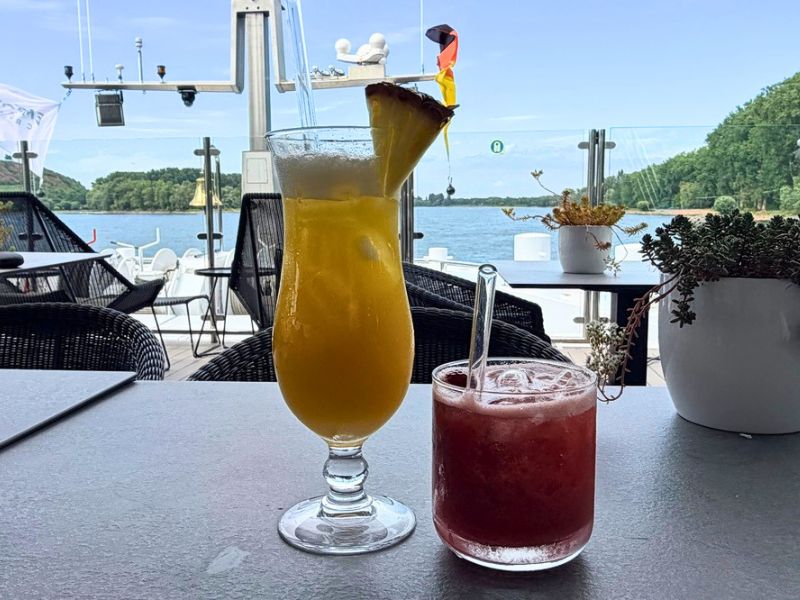
frozen cocktail on Emerlad cruise

One inclusion I absolutely loved was the gratuities. They’re already covered for both the crew onboard and the guides and drivers on Emerald’s included excursions, so there were no awkward moments wondering who to tip or how much to leave.

It’s one of those things that’s easy to forget about when you’re booking, but it can make a real difference by the end of the cruise. When you consider most cruise lines charge this as an extra, it’s good to know it’s already covered. But even cruise lines that include gratuities don’t usually cover the tips for excursion guides – that’s properly above-and-beyond stuff!

4. Excursions That Are Already Included

For me, this is where Emerald really starts to shine.

On every touring day, there’s at least one included excursion, so you don’t arrive in a new destination and immediately have to decide whether to spend another £50 or £100 seeing the sights.

excursion

The included excursions vary depending on where you’re cruising, but they generally fall into three categories.

The classic guided tours are exactly what you’d expect, with knowledgeable local guides showing you around historic towns, famous landmarks and places that you’d probably struggle to appreciate on your own.

excursion in Germany

If you’d rather do something a bit more active, EmeraldACTIVE excursions include things like guided hikes and bike rides using the ship’s complimentary e-bikes. It’s a nice option if you’d rather explore under your own steam than follow a walking tour.

Then there are EmeraldPLUS experiences, which are designed to immerse you in the local culture. On my Rhine cruise, that meant a private classical concert, and I genuinely couldn’t believe it was included. It felt like exactly the sort of thing I’d have expected to pay extra for.

classical concert

Of course, if you want to do even more, there are optional DiscoverMORE excursions available at an additional cost. But that’s exactly how they felt to me – optional. I never had the impression that I was missing out because I hadn’t paid extra.

One thing I also really liked was that Emerald caters for different walking speeds. During my cruise there was a gentle walking group as well as the standard-paced excursions, making it much easier for everyone to enjoy the destinations without feeling rushed. Considering I was cruising with a broken big toe after an injury at home, it was really handy to find excursions that suited me.

5. It’s The Little Things, Too

It’s often the smaller inclusions that make the biggest difference during a holiday.

WiFi is included throughout the ship, so you can easily keep in touch with family back home, share photos from your trip or look up information about the next destination without paying extra. I used it for a light bit of work too – there’s nothing better than relaxing on the Sun Deck while browsing cruise deals to share with my email subscribers!

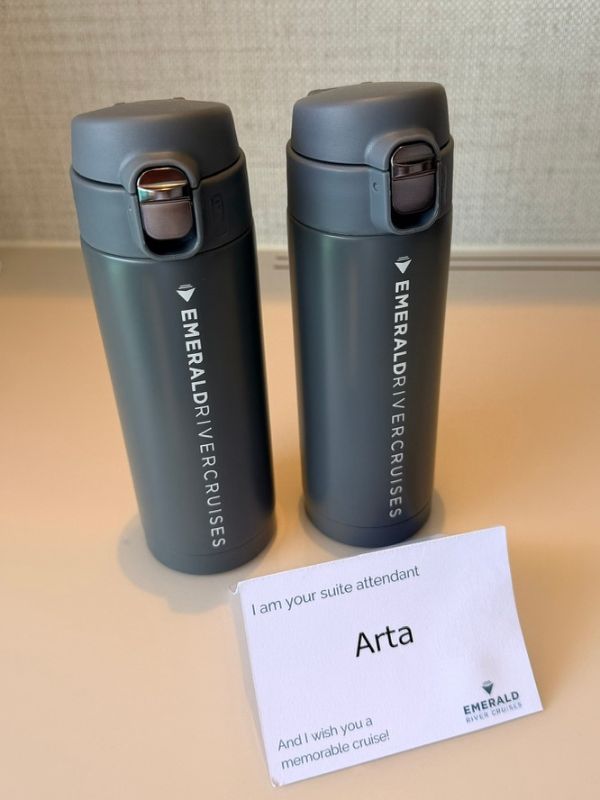
You’ll also find complimentary tea, speciality coffee and filtered water available throughout the day. You also get Emerald Cruises water bottles, which are yours to keep. A lovely touch!

Bottled water is replenished in your cabin daily too, which is especially welcome after a long day exploring ashore.

If you like to stay active, there’s a small fitness area onboard along with classes such as yoga and stretching on selected sailings. I also made use of the gym, which was very well equipped for such a small space.

emerald gym

The complimentary walking poles in your cabin are another thoughtful touch, particularly if you’re tackling cobbled streets or uneven paths on excursions.

The ship’s e-bikes are included too, whether you’re joining one of Emerald’s guided cycling excursions or borrowing one independently when they’re available. European river cruises are perfect for cycling, with long, flat paths running alongside many of the rivers, and having the bikes ready to go means you can explore in a completely different way without paying to hire one locally.

None of these inclusions would necessarily persuade me to book a cruise on their own. But together they make the whole holiday feel that bit easier, and they’re exactly the sort of things I’d miss if they weren’t there.

Emerald includes a lot, but not absolutely everything.

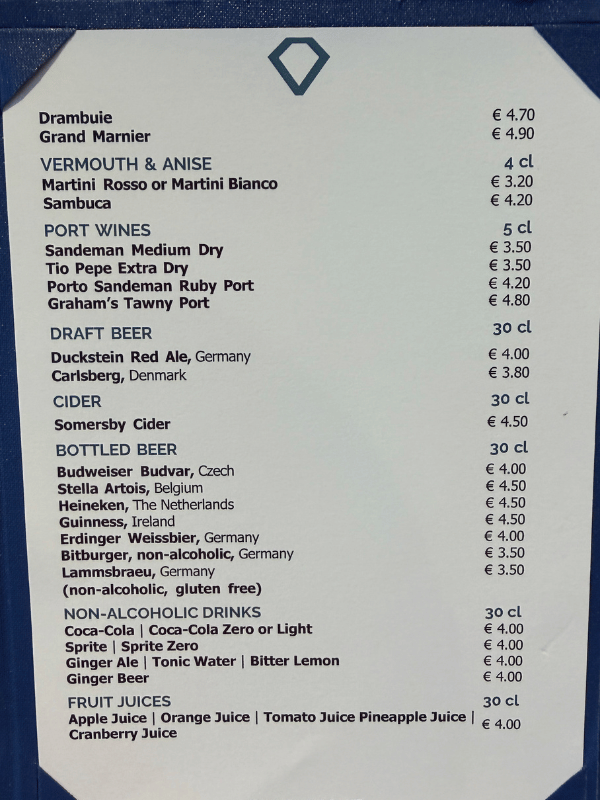
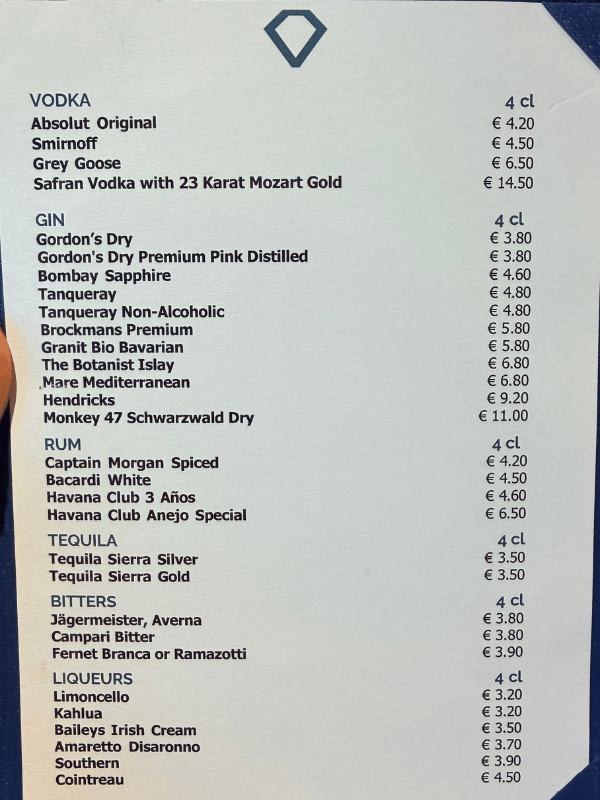
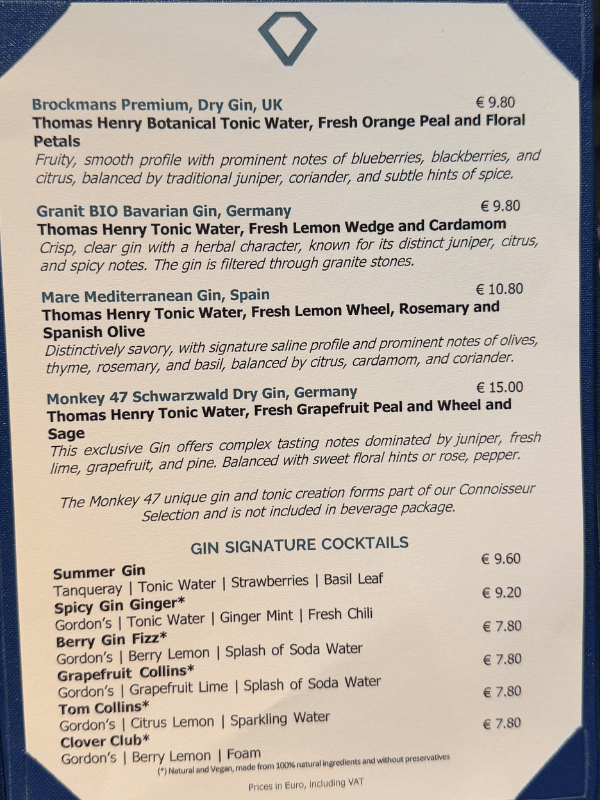
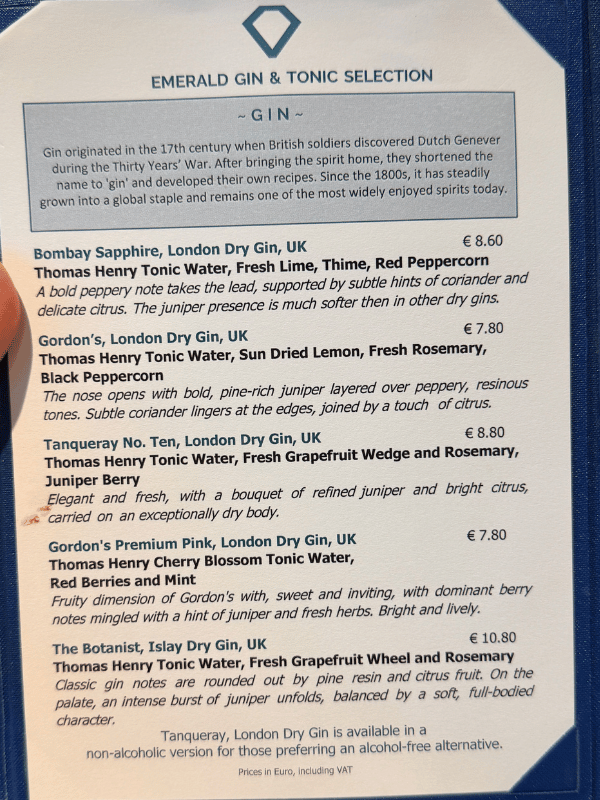
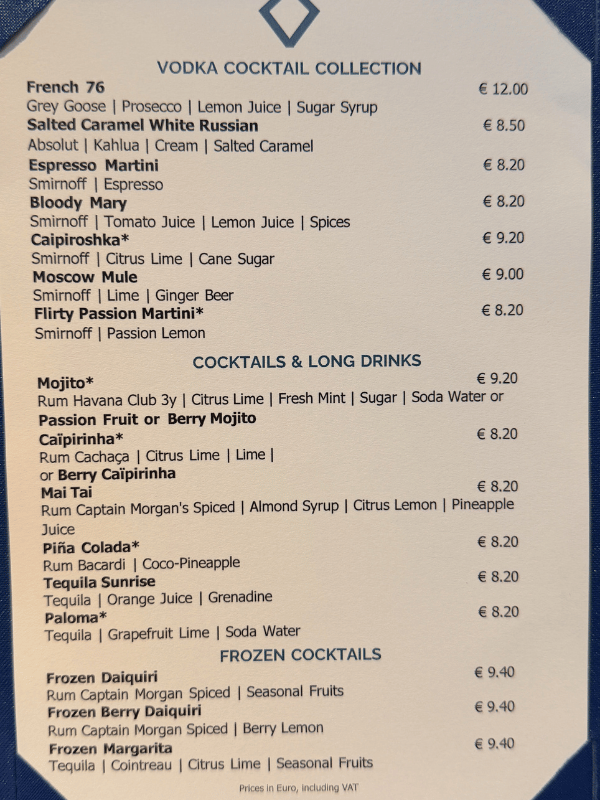
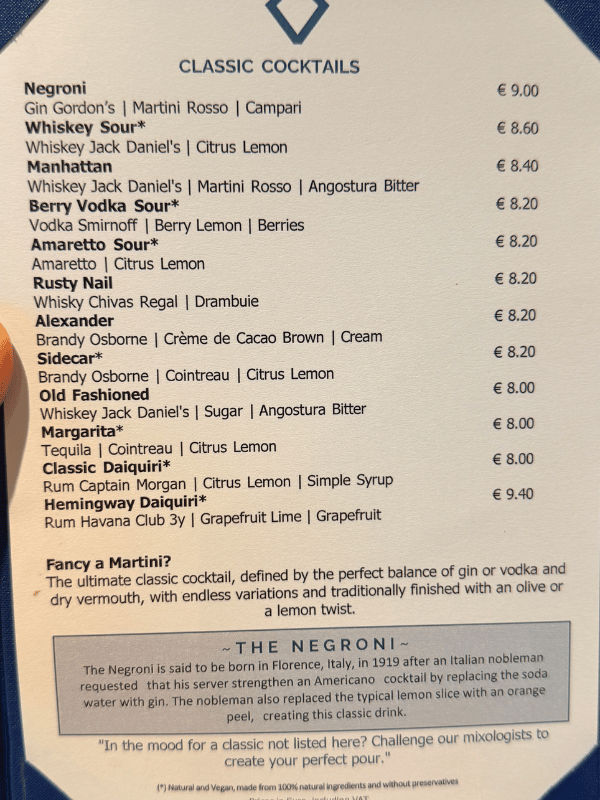
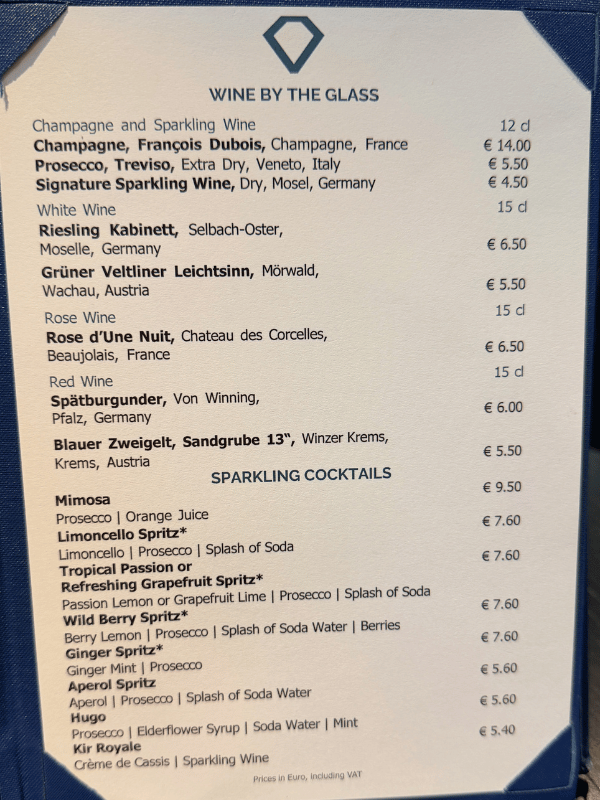
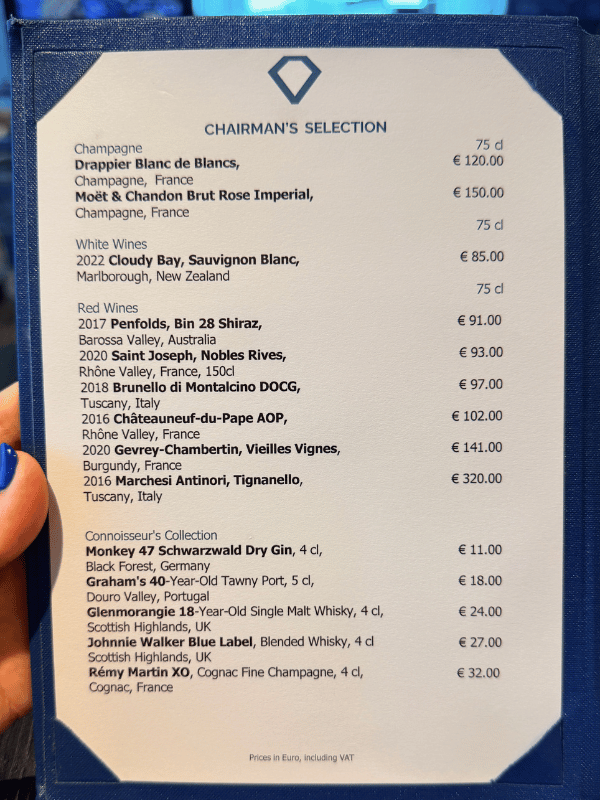
If you’d like a drink outside lunch or dinner, you’ll either need to pay as you go or buy one of the drinks packages. Personally, I found the bar prices to be pretty reasonable. Here are the drinks menus if you’d like to take a look for yourself…

If you’d like to get a beverage package you have the choice of:

Premium Package: €14.50pp per day. Enjoy red and white house wines by the glass, draft beers, non-alcoholic beers, soft drinks, juices and mocktails.

Platinum Package: €28.50pp per day. Everything in the Premium Package as well as cocktails, house-brand spirits and mixers, bottled wines (priced below €27), sparkling wine, Prosecco and bottled beers.

emerald cocktails

Another optional extra you might want to consider is the DiscoverMORE excursions. These are designed to give you an even deeper look at the destinations you’re visiting.

They’re completely optional though, and I never felt like I was missing out by sticking to the included programme. Sometimes they would be offered as an alternative to an included excursion, and sometimes they would be in addition, such as in the evening.

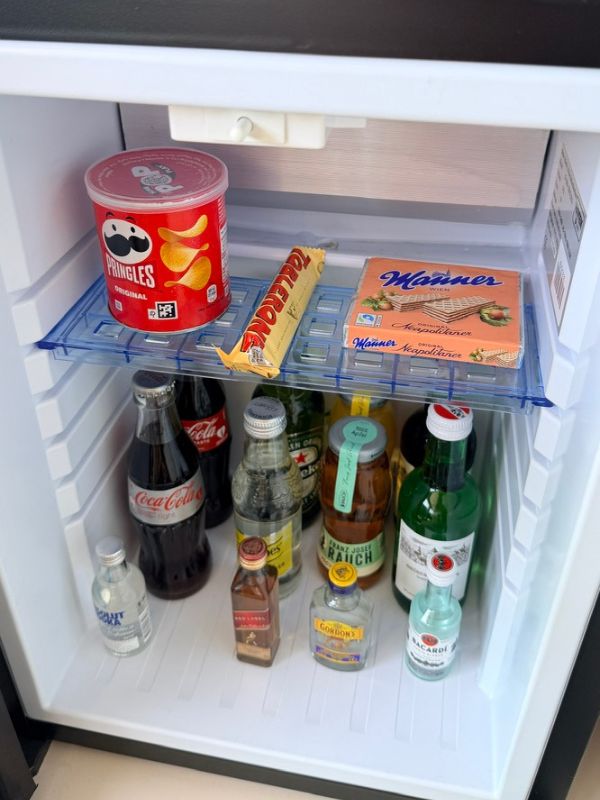
Spa treatments, purchases from the onboard shop and drinks from the minibar in your cabin all cost extra too, which you’d expect. I do think that putting crisps and chocolate in your mini bar is a great idea though!

Emerald river cruise mini bar

For me, that’s a pretty sensible list. The essentials are already covered, while the extras are exactly that – extras. It means you can keep your spending to a minimum if you want to, or treat yourself here and there without feeling like you’re constantly being upsold.

Is It Good Value?

Before my cruise, I knew Emerald Cruises included quite a lot. I just hadn’t realised quite how much of the holiday would already be taken care of.

Once you add up the airport transfers, accommodation, meals, drinks with lunch and dinner, gratuities, excursions, WiFi and all of the other little touches, there’s surprisingly little left to pay for unless you choose to.

That’s why I’d always encourage people to look beyond the headline cruise fare. A cheaper price doesn’t necessarily mean a cheaper holiday if you’re paying extra for excursions, tips and everything else once you’re onboard.

Emerald isn’t an all-inclusive cruise line, and it doesn’t pretend to be. But I came away feeling that it includes the things that really matter, while leaving the genuinely optional extras up to you.

For me, that’s a really nice balance.

Emerald Cruises River Exclusive Offer

Get an additional £150pp saving on any departure year (2026 or 2027) when quoting the discount code JENNI.

(Valid on bookings made 01/08/26 to 31/10/26)

Terms and conditions apply

Related Posts

If you found this interesting, please share!


Jenni with Disney Cruise ship at Castaway Cay


Source link
emove-the-6.jpg

Bringing Medication On A Cruise? Don’t Make These Mistakes


You don’t really think about medication when you’re booking a cruise.

You think about the ship, the cabin, the ports, whether you’ve packed enough for warm evenings on deck. Then, usually quite late in the day, it hits you – what about your tablets? Can you put them in a weekly pill organiser? Do they need to stay in the original box? And what if one of the countries on your itinerary has rules you know nothing about?

Bringing medication onto a cruise

The good news is that taking medication on a cruise is usually very straightforward. Most people bring what they need, board without any fuss, and never get asked about it at all.

The catch is that a few small details can matter a lot if they go wrong.

It’s not normally the ship itself that causes problems. It’s everything around it – the flight, the airport, security, and the fact that you may be entering several different countries, all with their own rules.

So before you travel, there are really three things worth checking:

• how you’re packing your medication
• what your cruise line allows on board
• whether any of your ports have restrictions on what you’re carrying

Get those right, and the rest is usually pretty simple.

Don’t Worry – You Can Take (Most) Medications Onto A Cruise Ship

In general, yes, you can take medication on a cruise. That includes prescription drugs, over-the-counter treatments, and most medical supplies.

Close-up of hands pouring white pills from an orange prescription bottle, symbolizing medication management or healthcare.

Cruise lines are used to this. They expect passengers to travel with medication, and they’re not trying to make life difficult. For most people, it’s a complete non-issue.

  • You can take most prescription and over-the-counter medication on a cruise without any issue.
  • Keep medication in your hand luggage, not your checked suitcase.
  • Original packaging is the safest option, even if you normally use a pill organiser.
  • Bring enough for the full trip, plus extra in case of delays.
  • Check the rules for every country on your itinerary, not just the cruise line’s policy.
  • Carry a prescription copy or doctor’s letter for anything controlled, injectable, or likely to raise questions.
  • Don’t assume medical cannabis or cannabis-based products will be allowed, even with a prescription.

Where people come unstuck is when they assume that because something is fine on the ship, it must also be fine everywhere else involved in the trip. That’s not always true.

You may be flying before you cruise. You may be going through airport security. You may be visiting countries with much stricter rules than the UK. That’s why it’s worth thinking about the whole journey, not just embarkation day.

Read more: The 14 Most Commonly Confiscated Items at Cruise Ports (and What to Pack Instead)

Most major cruise lines are broadly similar when it comes to medication. Prescription medicines are generally allowed, and you’re expected to bring enough for the full cruise, ideally with a little extra in case of delays.

The smaller differences tend to be around practical things such as whether medication should stay in its original packaging, whether you need to tell the cruise line about certain medical equipment, and whether they can provide refrigeration for medication that needs it.

Below is a simplified comparison of what you can usually expect from the bigger cruise lines:

Cruise LineMedication In Original Packaging?Is There A Fridge In Cabins For Storing Temperature Controlled Meds?
Ambassador Cruise LineYesYes on Ambience & Renaissance, only in limited cabins on Ambition. Use Guest Services.
CarnivalYesYes but guests are told not to use them. Limited mini-coolers can be borrowed otherwise use Guest Services.
Celebrity CruisesYes*Coolers that may not be cold enough – best to use Guest Services.
Costa“If possible”Coolers aren’t cold enough. Medical fridges occasionally supplied, or use Guest Services
Cunard LineOnly specifies “for flights”Use Guest Services.
Disney Cruise Line“Recommended”Yes – but check with the Health Center onboard if temperature has to be strictly regulated.
Fred. OlsenNot specifiedYes
Holland AmericaYesIn most cabins – otherwise use Guest Services.
MSC CruisesYesCoolers aren’t cold enough. Use Guest Services
Norwegian Cruise LineYesCoolers aren’t cold enough. Medical fridges occasionally supplied, or use Guest Services
P&O CruisesYesCoolers aren’t cold enough. Medical fridges occasionally supplied, or use Guest Services
Princess CruisesYesYes – but check with Guest Services if temperature has to be strictly regulated.
Royal Caribbean“Advised”Coolers aren’t cold enough. Medical fridges occasionally supplied, or use Guest Services
Virgin VoyagesYesCoolers that may not be cold enough – best to use Guest Services.

Where there isn’t a link to a cruise line’s policy, that simply means there isn’t a relevant section published on its website. I’ve checked directly with those cruise lines to confirm the details.

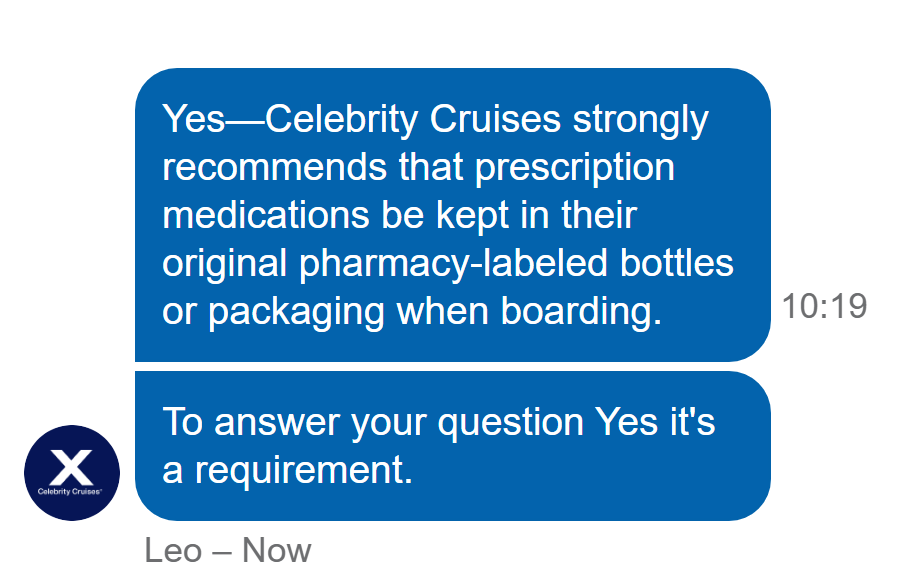
Celebrity Cruises’ wording is slightly inconsistent, as it describes original packaging as both “strongly recommended” and a “requirement”. Realistically, it’s safest to treat that as required.

Celebrity Cruises medication reply.

Original Packaging Vs Pill Dispensers – What’s Actually Allowed?

This is the bit that confuses people most, because the official guidance and real-life experience don’t always sound like they match.

Most cruise lines say medication should be kept in its original packaging, with the pharmacy label visible. Sometimes that’s framed as a requirement, sometimes as strong advice, but the general message is the same.

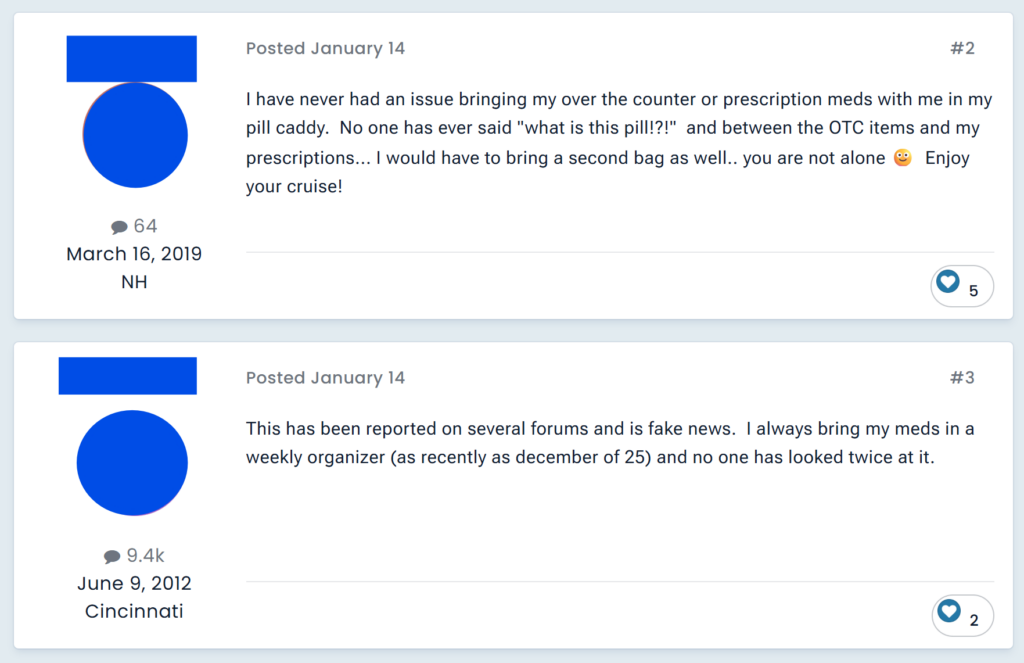
At the same time, plenty of regular cruisers will tell you they use pill organisers all the time and have never had a problem.

Honestly, both can be true.

"I have never had an issue bringing my over the counter or prescription meds with me in my pill caddy.  No one has ever said "what is this pill!?!"  and between the OTC items and my prescriptions... I would have to bring a second bag as well.. you are not alone 🙂  Enjoy your cruise!""This has been reported on several forums and is fake news.  I always bring my meds in a weekly organizer (as recently as december of 25) and no one has looked twice at it. "

In day-to-day reality, cruise staff rarely inspect medication closely. Most people aren’t stopped, questioned, or asked to explain what’s in their organiser. But that doesn’t mean the rule is meaningless. It just means you may not be checked.

The issue is what happens if you are.

Original packaging makes everything much easier. It shows exactly what the medication is, who it belongs to, and that it’s been legitimately prescribed or purchased. If you’re dealing with airport security, embarkation staff, or border officials in a stricter country, that clarity helps.

Loose tablets in a pill organiser are much harder to identify. Even when they’re completely legitimate, they can invite extra questions simply because they’re not obvious at a glance.

Honestly, the bigger risk usually isn’t the cruise line at all. It’s airport security or border control in one of your ports of call, where rules may be stricter and staff may be less relaxed about unlabelled medication.

Port security check

So while pill organisers are undeniably convenient – and for some people essential – they’re best used as a backup to original packaging, not a replacement for it.

The most sensible approach is to take both. Travel with your medication in its original boxes or labelled containers, then use a pill organiser once you’re on board if that makes daily life easier.

That way, you’re covered if anyone asks questions, and you’re not relying on luck or vague reassurance from people online who “never had a problem”.

Because chances are, you won’t have a problem either. But it’s not something you want to be sorting out at the check-in desk while a queue forms behind you.

Medications That Are Restricted or Banned in Certain Countries

A medication that’s completely routine in your home country can be restricted – or even banned – somewhere on your itinerary. It doesn’t matter that it’s prescribed, labelled, and essential. Local laws still apply.

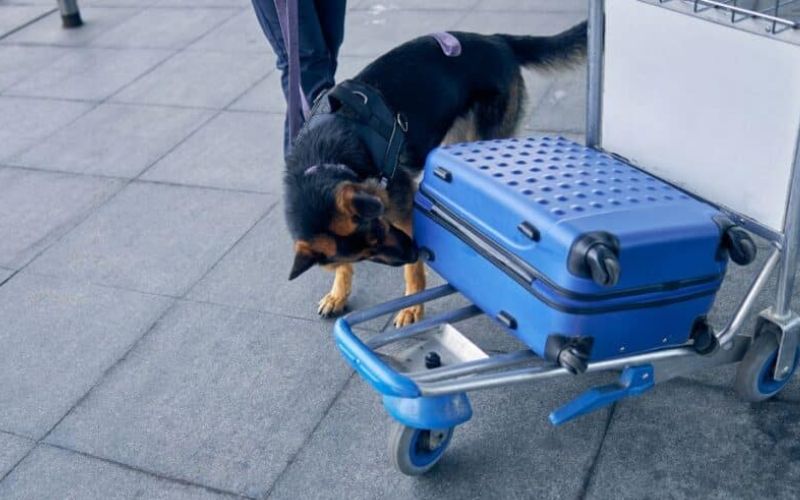
drug dogs at cruise ports and on ships

Some countries take a much stricter approach to controlled substances, and that includes medications many people take every day.

A few examples that regularly trip people up:

  • United Arab Emirates: anti-anxiety meds, sleeping tablets, and strong painkillers (including codeine) may need approval in advance.
  • Japan: certain ADHD medications and stimulants aren’t allowed at all, even with a prescription, except with special clearance.
  • Singapore: strict drug laws apply to some sedatives and sleeping pills – documentation is key.
  • Thailand: controlled medications like codeine can require a permit, especially in larger quantities.
  • Indonesia (including Bali): some prescription drugs, particularly stronger painkillers, are tightly restricted.

Even something as familiar as codeine can sit in a grey area depending on where you are and how much you’re carrying.

And it’s worth saying again – cruise line policies don’t override any of this. A medication can be perfectly fine on board and still be an issue when you step ashore.

Sometimes you won’t be asked about it at all. Other times, especially in stricter destinations, you might be stopped and questioned.

Checking official government or embassy guidance for each country might feel like overkill, but it’s the one thing that removes the guesswork.

Read more: 12 Things That Are Banned on Cruise Ships (But Fine on Land)

Cannabis-Based Medications – A Special Case

Even with a valid prescription, cruise lines won’t allow cannabis or cannabis-derived products on board. That can include oils, edibles, and CBD products depending on how they’re classified.

That’s before you even factor in local laws, which in many countries are far stricter than people expect.

A bottle of CBD oil with a dropper cap is placed on a wooden surface surrounded by dried cannabis buds, leaves, and empty capsules. An open glass jar lies in the background, emphasizing the natural and holistic presentation of CBD products.

So you can end up in a situation where your medication is legal at home, banned by the cruise line, and illegal in one or more of your ports.

If this applies to you, it’s worth speaking to your doctor well in advance about alternatives that are actually suitable for travel.

This isn’t something that tends to get waved through quietly. Rules around cannabis are usually clear, and they’re enforced.

Read more: Everything You Need To Know About Bringing Marijuana On A Cruise – Edibles, Pens, Delta 8

Controlled Drugs Explained In Plain English

“Controlled drugs” sounds more intimidating than it needs to. It simply means certain medications are more tightly regulated because they carry a higher risk of misuse. Many of them are commonly prescribed and taken without any issues day to day.

The difference shows up when you travel.

There may be limits on how much you can carry, extra documentation required, or stricter checks at borders. In some cases, you may need permission before you travel.

If you’re unsure whether your medication falls into this category, it’s worth checking before your trip rather than trying to figure it out mid-journey.

Carrying A Doctor’s Letter Or Prescription Copy Can Be Helpful

Most people won’t be asked for proof of their medication. But if you are, having something to hand makes things much smoother.

Prescription medication

A prescription copy is a good baseline. For anything more sensitive – controlled drugs, injectables, or larger quantities – a doctor’s letter is a sensible extra.

It should confirm:

  • your name and date of birth
  • the medication
  • the dosage
  • that it’s for personal use

Nothing complicated, just clear and official.

You’ll probably never need to show it. But if you do get asked, it can turn a potentially awkward situation into a quick formality.

Travelling With Medical Equipment (CPAP, Oxygen, Injectables, Dialysis)

Tablets are one thing. Equipment takes a bit more planning.

Cruise lines are generally well set up for this, but they do expect advance notice.

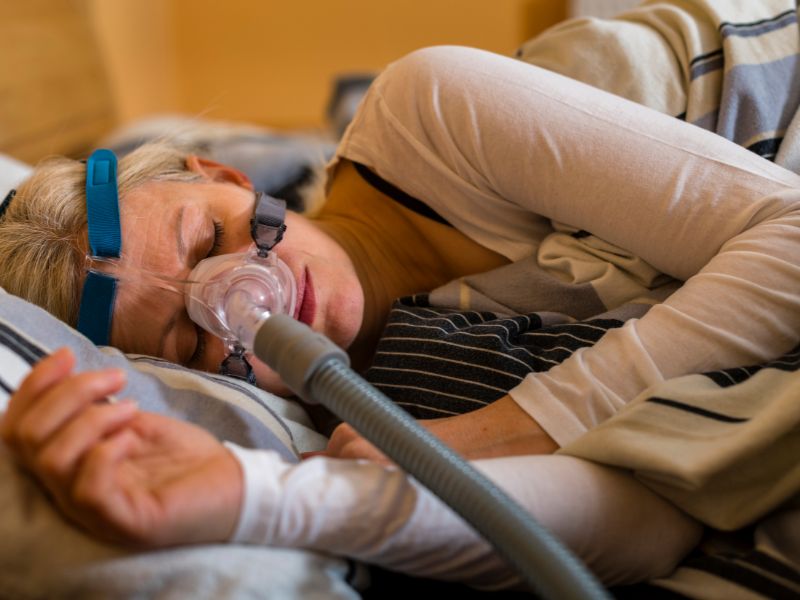
CPAP user sleeping on a cruise

There are medical facilities on any cruise ship, but they’re designed to handle emergencies or unexpected treatments. If you need use of a CPAP machine, oxygen canisters, injectable meds or you’re on Peritoneal dialysis treatment, you need to bring your own equipment and make sure you’ve cleared it with the cruise line in advance.

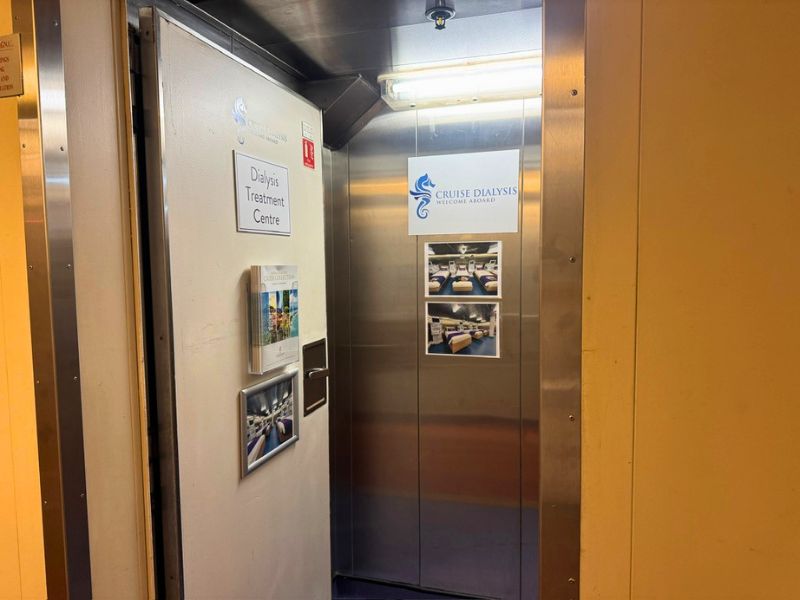
If you’re on haemodialysis, you may be able to book a specific cruise which has a dialysis treatment room onboard for you.

dialysis treatment room on Ambassador cruise

If you plan to bring any medical equipment, you should let the cruise line know in advance. There may be some nuanced rules on things like the size of oxygen canisters that you’ll need to consider.

Also for CPAP machines, consider distilled water requirements. Cruise lines may be able to provide it but some may charge. Again, ask in advance.

Travelling With Liquid Medication And Airport Security

A quick bit of reassurance for you – liquid medication isn’t treated the same as toiletries. You can carry more than 100ml in your hand luggage if it’s essential and for personal use.

liquid medication

Still, a bit of preparation helps.

Keep it in your hand luggage, not checked bags. If it’s a larger quantity, mention it at security rather than waiting to be asked. And make sure it’s clearly labelled so there’s no confusion about what it is.

Sometimes it’ll be screened separately. That’s routine, not a red flag.

If you’re unsure how it’ll be handled, just give yourself a bit of extra time at the airport. It removes the stress.

TODAY’S BEST CRUISE DEALS!

Don’t miss these offers…

Once you’re on the ship, things tend to settle down. At that point, it’s less about rules and more about making sure your medication stays effective and easy to manage.

Keeping Medication At The Right Temperature

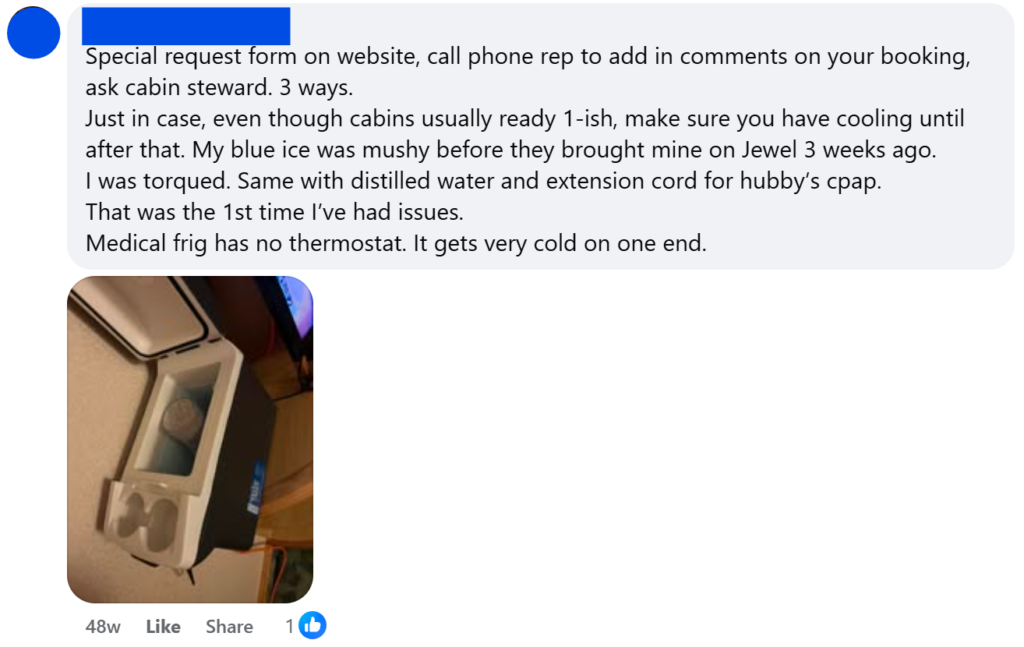
Cabin mini coolers aren’t always true fridges, and they’re not reliable for medication that needs strict temperature control.

If that applies to you, it’s worth requesting a medical fridge ahead of time or speaking to Guest Services as soon as you board.

"Special request form on website, call phone rep to add in comments on your booking, ask cabin steward. 3 ways.Just in case, even though cabins usually ready 1-ish, make sure you have cooling until after that. My blue ice was mushy before they brought mine on Jewel 3 weeks ago.I was torqued. Same with distilled water and extension cord for hubby’s cpap.That was the 1st time I’ve had issues.Medical frig has no thermostat. It gets very cold on one end."

Also think about embarkation day – there’s a good chance you won’t be getting access to your cabin until later in the afternoon or even early evening, so you might not have access to cooling equipment for a large part of your day.

Most people in this situation use ice packs or other coolers in their hand luggage, just to make sure their meds stay at the right temperature until they can get it stored properly onboard.

Where To Store Medication In Your Cabin

Some people overlook this, but it’s worth thinking about. Bathrooms seem convenient, but they’re usually too warm and humid – extractor fans on cruise ships aren’t always the best!
A drawer or shelf in the main cabin area is a better option – somewhere dry, relatively cool, and out of direct sunlight. Or you could always use the safe, if it’s not something you’re going to need emergency access to at any point, such as allergy medication.

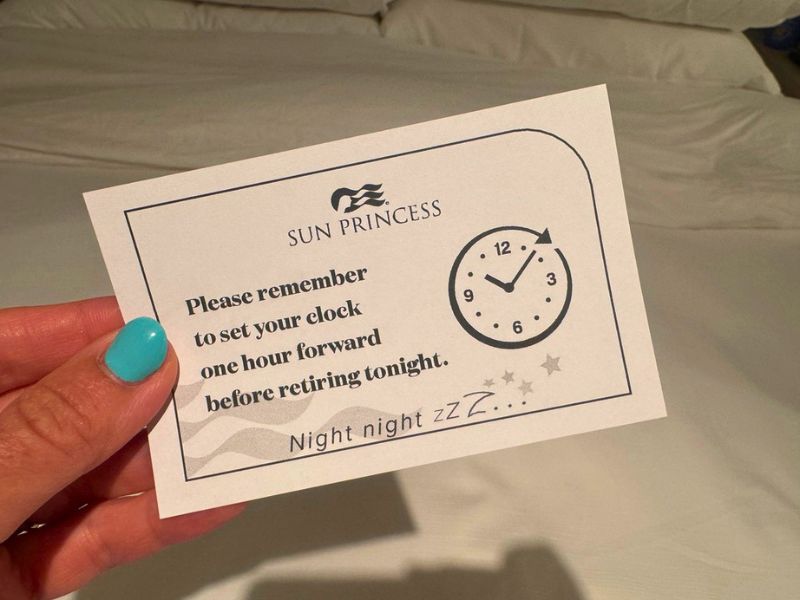
Time Zones And When To Take Your Medication

Crossing time zones can throw off your usual routine more than you expect – it’s another of those little things that people just don’t consider!

clocks go forward card

For most medications, a slight shift isn’t a problem. But if timing matters, it’s worth planning ahead.

Gradual adjustments tend to work better than sudden changes, and if the timing is critical, your GP or pharmacist can give you specific guidance before you travel.

Sharps Disposal Onboard

You won’t be left to deal with this on your own.

Sharps bin for medication

Sharps containers are available on board, usually via Guest Services or the medical centre. When one fills up, it can be collected and replaced.

It’s worth sorting early so it’s not something you’re thinking about later in the trip.

Forgetting your medication, accidentally not bringing enough, or losing it – all sound like nightmare scenarios, but all are manageable. Don’t panic!

The ship’s medical centre is your first stop. They won’t have everything, but they can often help with basic medication or short-term solutions.

For more specific prescriptions, things depend on where you are. You may need to arrange a replacement in port, which can involve seeing a local doctor first.

This is where having documentation helps. A prescription copy, GP details, or even a photo of the medication can make the process quicker.

Doctor and patient on a cruise

It’s also why bringing extra is so important. Replacing medication abroad isn’t always fast or straightforward.

The team onboard your ship can hopefully help direct you to a reputable pharmacy ashore, if needed, or give you information on who to contact port-side for official recommendations.

Unfortunately, in some ports, there will be some dodgy retailers offering cheap medication – don’t risk it.

Medication You Can Buy On A Cruise Ship

Think convenience, not pharmacy – that’s the sort of thing you’ll find on a cruise ship.

You’ll usually find basics on board, either in the shop or via the medical centre:

  • pain relief (paracetamol, ibuprofen)
  • seasickness remedies
  • cold and flu treatments
  • antihistamines
  • simple stomach medications

That’s enough for minor issues, but the range is limited. It’s also more expensive than buying it at home.

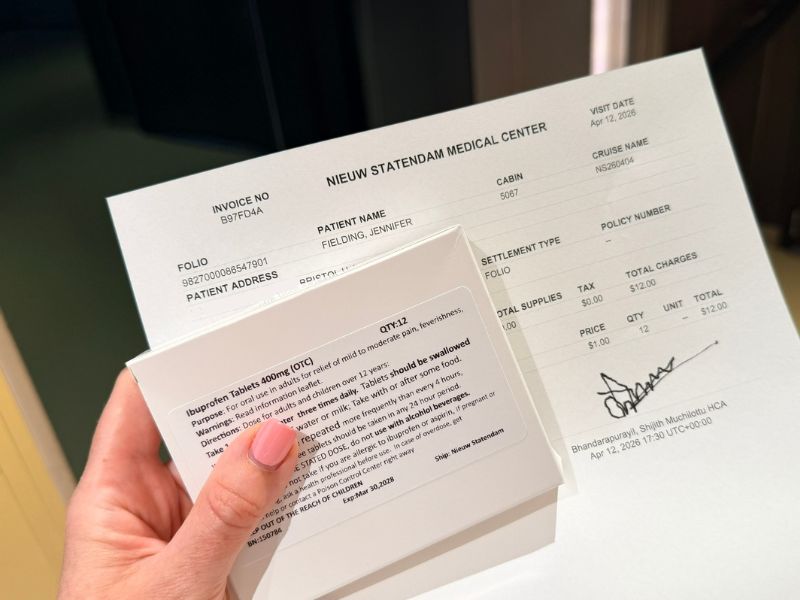
Anything more specific will usually mean seeing the ship’s doctor, which comes with a consultation fee.

Read more: Cruise Ship Doctors: What Passengers Don’t Realise

Why It’s Almost Always Cheaper To Bring Your Own

Prices on board can be surprisingly high, even for simple items.

You’re paying for convenience, and there’s no real competition once you’re at sea.

Something inexpensive at home can easily cost several times more on a ship. It’s fine as a backup. It’s not something you want to rely on. So if you think you might need any of the above, buy before you sail!

Seasickness Medication – What To Bring Vs Buy Onboard

This is one of the few things worth planning for even if you’re not sure you’ll need it.

Most treatments work better if you take them before symptoms start, which is much easier if you already have them with you.

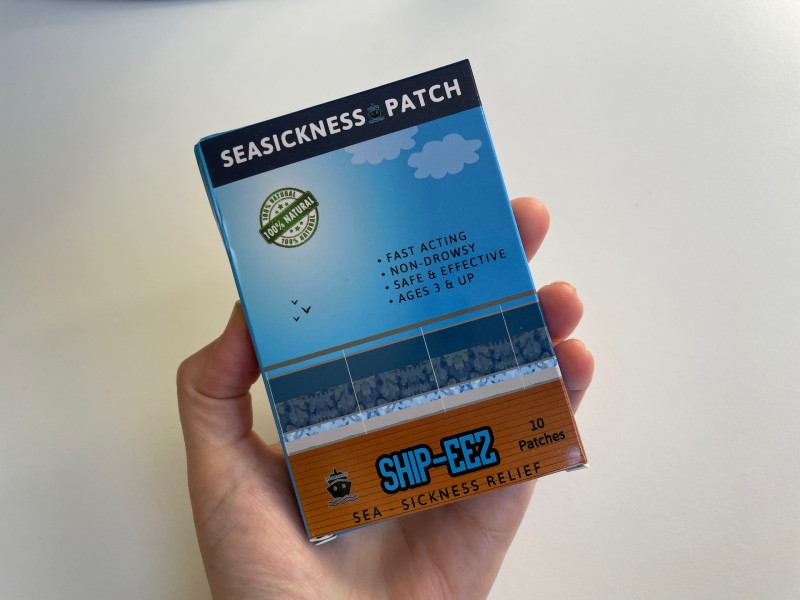
A hand holding a box of seasickness patches labeled "SHIP-EEZ" for sea sickness relief. The box indicates that the patches are fast-acting, non-drowsy, safe and effective, and suitable for ages 3 and up. The packaging design features a maritime theme with a blue sky, clouds, and ocean waves.

There’s no single best option. Tablets, patches, wristbands, and natural remedies all work for different people.

If you’ve found something that works for you, bring it. Onboard options are usually limited and more expensive. If you’ve never encountered seasickness before then I’d say it’s not an essential purchase before you cruise, but a cheap pack of tablets or patches could be worth buying if you’re at all concerned.

Read more: Cruise Seasickness Tips That Actually Work

Supplements, Vitamins And Non-Prescription Medication

Vitamins, supplements, and over-the-counter medication can generally be packed without much thought.

Where people run into minor issues is with quantity or unclear labelling. Large amounts of unlabelled tablets can attract questions, particularly at airports or in stricter countries.

Herbal supplements can also fall into a grey area if ingredients aren’t clearly listed or widely recognised.

Keeping everything labelled and, where possible, in original packaging avoids most of that.

For small, personal quantities, problems are rare. It’s just about making things easy to explain if anyone does ask.

Final Checklist – Taking Medication On A Cruise

By now, it probably feels like a lot of detail for something that’s usually straightforward.

In reality, it comes down to a few key habits:

  • keep medication in your hand luggage
  • stick to original packaging where you can
  • bring copies of prescriptions or a doctor’s letter if needed
  • check rules for every country on your itinerary
  • avoid anything that may be banned, including cannabis-based products
  • arrange storage or equipment needs in advance
  • pack extra in case of delays
  • bring basic remedies so you’re not relying on onboard shops

Get those right and, for most people, the whole thing passes without a single issue.

My Recommendation

My recommendation for cruise insurance depends on where you live.

These are trusted price comparison sites that will quickly get you lots of quotes to match your exact needs.

Related Posts

If you found this interesting, please share!


Jenni with Disney Cruise ship at Castaway Cay


Source link
carry-on-bag.jpg

11 Packing Tricks That Let You Cruise With Just A Carry-On


You don’t need a giant suitcase to enjoy a cruise – but most people pack like they do.

Between “just in case” outfits, multiple pairs of shoes and things you never even touch, it’s easy to end up dragging far more than you need.

I’ve found that sticking to a single carry-on for a whole week isn’t just doable, it actually makes the whole trip smoother. No waiting around, no heavy lifting, no stress. But there are a few tricks that make it work – and a couple of things people don’t realise until it’s too late.

1. Plan Your Outfits Backwards from Your Cruise

It’s tempting to start with what you want to wear, but the smarter move is to start with your itin erary.

Think about your ports, excursions, sea days and onboard evenings, then build outfits around those. A beach-heavy Caribbean sailing looks very different to a Norwegian fjords cruise, after all.

Your packing list might look like this:

  • 4 port outfits for exploring
  • 3 sea day outfits for by the pool
  • 1 formal outfit
  • 4 smart evening outfits
  • 2 casual evening outfits

Get those outfits out of the closet, but, here’s the key part, know that you’re not going to pack all of those!

That’s because many things can be worn multiple times. You don’t need two brand new outfits for every day. A pair of jeans, for example, might be worn on three days with different tops. If you only wear an evening dress for three hours, you can probably wear it again on another evening.

I promise, if your clothes look clean and smell clean, nobody will notice or care if you rewear things.

Suggested read: What To Wear On A Cruise (And What Not To Pack)

2. Be Realistic About Cruise Dress Codes

Dress codes aren’t as strict as they once were.

Many cruise lines now treat formal nights as optional, and you can always dine in more casual venues if you’d rather skip dressing up entirely. That’s an easy way to cut down your packing.

This is especially true if you’re a man, as the dress code may require long trousers and a jacket, whereas women can get away with a lightweight dress.

Formal night Iona

If you do enjoy getting dressed up, you can still make it work with a carry-on – just stick to one versatile outfit rather than several “Plan B” options. A simple dress or shirt that can be styled differently goes further than you’d expect.

Read more: The Best Cruise Dresses for Formal Night

3. Try Everything On To Narrow Down Your Top Picks

The next step is annoying, but definitely worth it. Once you’ve laid out all of your clothes, try everything on in front of the mirror.

Doing this not only ensures everything fits (and has space left for post-buffet bloat!) but it means that you can identify which shorts or skirts go with which tops, and which cardigans or jackets you might need to match those.

If you don’t love any of the outfits, now’s the time to remove them from your packing pile.

Read more: 5 Stylish Cruise Outfits That Make Me Feel Confident (Even After Two Desserts!)

4. Choose The Right Case for the Job

Not all carry-ons are equal. A lightweight case with four wheels makes a huge difference when you’re navigating terminals or rolling along pavements near the port.

Level 8 luggage set

Hard shells protect better, but soft cases can squeeze into tighter spaces or expand slightly if needed.

If you’re flying with carry-on, most airlines only care about the size, not the weight. So check their policy, get a case that’s as large as your airline will allow, and then stuff it full. (see number 7 for how I do that)

Read more: The BEST Suitcase I’ve Ever Had (Finally!)

Get 10% OFF Level8 Luggage

Enter code CruiseMummy10 at checkout to get this discount

5. Limit Shoes Ruthlessly

Shoes are the quickest way to fill a suitcase. A good rule of thumb is three pairs max – something comfortable for walking, something lighter or smarter for evenings, and something practical for beach or pool days.

Choose pairs that work across multiple outfits rather than niche options. And if you’ve got bulkier shoes, wear them during travel instead of packing them. You’ll instantly free up a surprising amount of space.

Read more: The 6 Pairs Of Shoes Every Woman Needs For a Cruise

On that note…

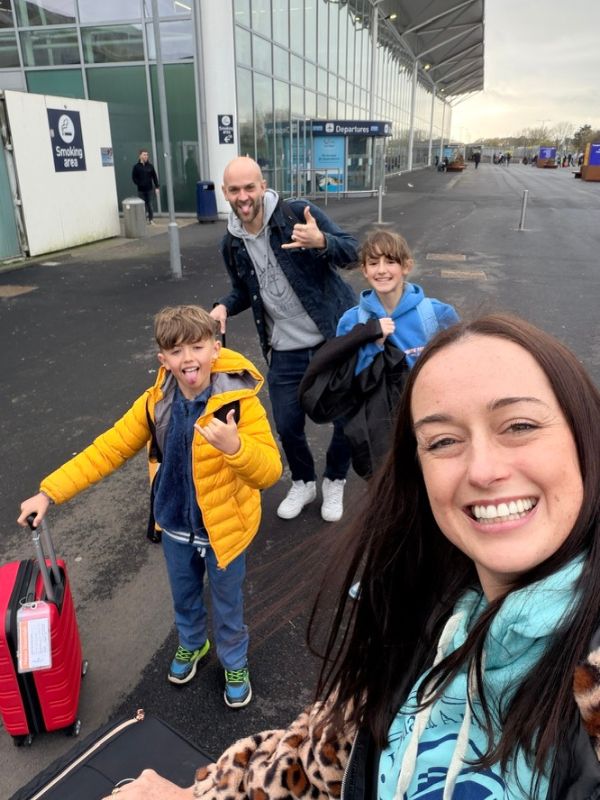
6. Wear Your Bulkiest Items on Travel Day

Anything chunky should go on your body, not in your case.

Think trainers, jackets, hoodies or even jeans. This is especially useful if you’re flying, but it still applies for no-fly cruises too – less bulk in your bag means easier handling.

wearing coats at airport

Layers are your friend here, especially if you’re heading somewhere with a different climate. You can always take things off once you’re onboard or settled.

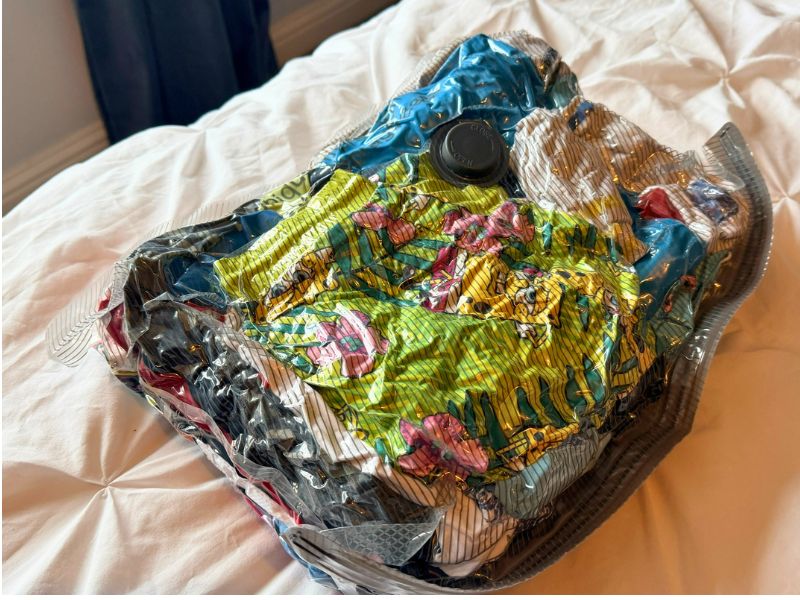
7. Use Vacuum Compression Bags

With these bags, I can get 20kg of clothes into a carry-on bag. So I don’t actually need to pack any less than I would have done with a large checked bag!

The bags I use come with a miniature vacuuum device that sucks the air out. That’s key, as it I can take the device with me to enable me to vacuum pack everything again on the way home.

These are the bags I use. They’re strong, come in all sizes, and the pump is tiny yet powerful.

8. Plan For Laundry Instead of Packing More

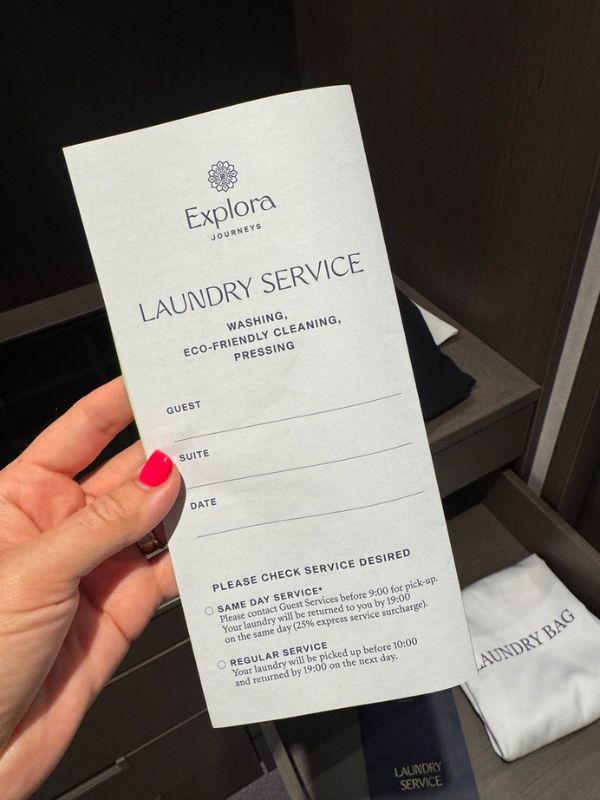
You don’t need a fresh outfit for every single day. Most cruise lines offer laundry services, and some even sell packages with unlimited washing during your trip, which can be surprisingly good value. That can be a game-changer for carry-on travellers.

Explora Journeys laundry

Even without that, a bit of sink washing with travel detergent goes a long way. Packing for half the cruise and re-wearing items makes a huge difference to space, especially on longer sailings.

Read more: Laundry on Cruise Ships: What They Don’t Tell You

9. Downsize Your Toiletries Properly

Cruise cabins always come with the basics like shower gel and shampoo, so you don’t need to bring those.

Some also provide conditioner and body lotion, so check that as you may be able to leave those at home too.

cruise toiletries

Decant your essentials into smaller containers and only bring what you’ll actually use. And if you need something specific like a big spray deodorant, consider buying it at the airport.

10. Bring A Big Backpack

Your carry-on isn’t just your suitcase. A small backpack or personal bag is just as important. This is where you keep travel documents, valuables, electronics and anything you might need during embarkation.

This is the one I use…

It’s also handy for excursions later in the cruise, so you don’t need to pack an extra bag. Think of it as your day bag for the entire trip, not just the journey.

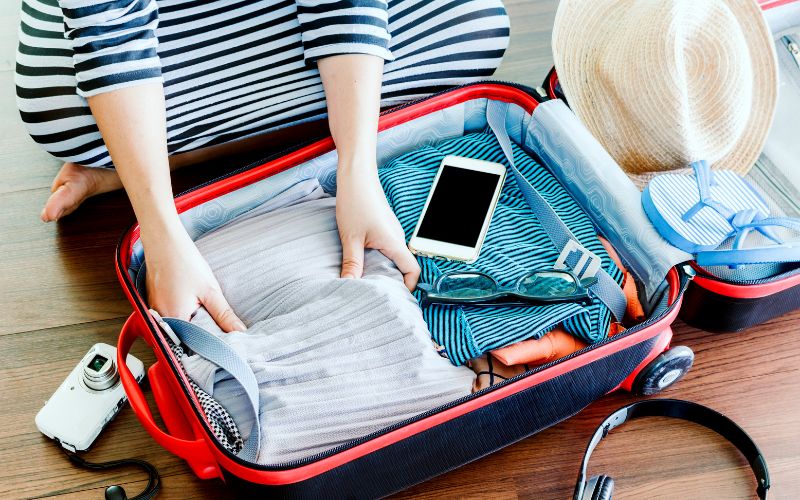
11. Use Every Inch of Space

Think beyond the obvious. Stuff socks inside shoes, use gaps between compression bags, and make the most of every corner.

Person in a striped shirt packing a red suitcase with neatly organized clothes, a sun hat, smartphone, camera, and headphones, capturing the process of preparing for a trip with essential travel gadgets and attire.

Smaller items can disappear into unused spaces if you’re strategic.

It’s a bit like a puzzle, but once you get the hang of it, you’ll fit far more into a small case than you expect. Hard cases in particular reward careful packing.

TODAY’S BEST CRUISE DEALS!

Don’t miss these offers…

The One-Carry-On Mindset – Why It’s Worth It

There’s something genuinely freeing about travelling this light.

No waiting at baggage claim, no worrying about lost luggage, no dragging heavy cases around. On a cruise, where you’re already unpacking once, it makes things even simpler.

It also forces you to pack more intentionally, which usually leads to a better, less cluttered trip overall. Once you’ve done it successfully, it’s hard to go back to overpacking again.

Related Posts

If you found this interesting, please share!


Jenni with Disney Cruise ship at Castaway Cay


Source link
uwKuMgDuN1RxWVxFLiL9sU.jpg

The Best Travel Deals We Found This Week

John Shallohttp://www.cruiseaddicts.com

John Shallo is the founder and editor of Cruise Addicts, one of the web’s longest-running cruise travel communities. Since 1999, Cruise Addicts has been a trusted destination for cruise travelers seeking the latest industry news, in-depth ship reviews, expert travel tips, and a passionate community of self-proclaimed cruise enthusiasts.

Source link

1-The-KitchenTable-rotated.jpeg

What It’s Like To Experience The Kitchen Table On A Viking Ocean Cruise

It’s been a bit over a month since I returned home from my spectacular 15-day Viking Ocean Cruises’ British Isles Explorer cruise. I’m still reliving so many of its highlights: my visit to the extraordinary Titanic Museum in Belfast, the majestic castle in Edinburgh, a Beatles tour in Liverpool that delivered me to where my favorite music began, and the breathtaking view of Bergen, Norway after a mesmerizing funicular ride up the mountain.  

I’m reliving, too, the extraordinary Viking Sky, with its casual yet elegant surroundings, the comfort of my spacious deluxe balcony stateroom, the ship’s dramatic (but not ostentatious) atrium, the lush pool deck, the Nordic Spa with its quirky sauna/snow room alongside heated loungers and a bubbling thermal pool and, of course, Torshavn, where I’d go after dinner to dance off those irresistible dishes I indulged in at Viking Sky’s five exquisite dining venues.

Oddly, it is these irresistible dishes that I find myself returning to most frequently. My photos and video clips can take me back to my amazing shore experiences, but each time I whip up a tuna sandwich or slip a frozen Trader Joe’s chicken vindaloo in the oven for dinner, I can’t help but cast my mind back to things like Viking Ocean’s heavenly chili soft shell crab course on The Chef’s Table’s Lotus Menu, the brown sugar and red chili flake-rubbed Bistecca Fiorentina rib eye at Manfredi’s or Mamsen’s delectable open-faced sandwiches, savory pea soup and waffles.

Fortunately, Viking has come to the rescue with The Kitchen Table, an exciting focus on its exquisite dining… that you can actually return home with! 

You can get a sneak peek at The Kitchen Table by attending a complimentary cooking demonstration where chefs take to the stage! On my sailing, they prepared both seafood-studded paella and a decadent tiramisu, each step broadcast onto a large screen behind the live demonstration. Best of all, we not only left the theater with printed copies of the recipes (in familiar measurements, not that “grams” and “ml” nonsense), but that glorious paella was offered at Aquavit during a special pop-up Officer’s Cooking Station at lunchtime.

For the greatest culinary experience, however, consider booking an official Kitchen Table cooking class—you’ll find one listed among each day’s shore excursion options as you prepare for your upcoming Viking cruise. Prices vary depending upon your sailing’s itinerary.

Now Offered Daily During Your Cruise

While The Kitchen Table is not an entirely new concept at Viking Ocean Cruises, this intimate, hands-on cooking program, led by one of the ship’s chefs, has been expanded and is now offered daily.

Depending upon the ship’s location, your Kitchen Table experience might begin at the local market where, along with the chef, you’ll gather the ingredients for that evening’s cooking class and dinner—that’s right! The sumptuous dishes you’ll prepare during your class will be your dinner that evening, served at the very table where you chopped, diced, and peeled the ingredients. Aboard Viking Sky, this working kitchen/dining venue was completely private, tucked away behind The Restaurant.   

I had chosen our day in the Shetland Islands for my Kitchen Table experience. The Shetlands are best known for cute little ponies and the popular TV series–not colorful food markets–so our group of eight participants skipped the shopping trip and, late afternoon, headed straight to our meeting place where Viking sous chef Joseph escorted us to the working kitchen. (Before the class, I visited guest services to make sure the dishes we’d be preparing were to my liking and discovered we’d be creating a Mediterranean menu:  mushroom risotto, saltimbocca, and tiramisu. I hit the jackpot!)

With our waivers signed (we would, after all, be playing with knives), we donned our chef hats and aprons; tasks were assigned, and wine and champagne were poured. Some of us chopped basil or tomatoes while others grated lemon rind or sautéed a pan of aromatic ingredients atop the electric burners. Several of us took turns stirring the risotto and whipping cream for tiramisu, while Chef Joseph circulated, providing tips and evaluating our techniques.   

Time to assemble the saltimbocca! When all of the ingredients were cooked, chopped, and ready to go, we gathered around while Chef Joseph demonstrated the final step for our saltimbocca:  atop each piece of seasoned, pounded veal went two slices of mozzarella and two sage leaves. We followed his instruction, rolling each piece tightly before wrapping in two thin slices of prosciutto to sauté over medium heat.

Dinner that evening was a triumph and a triumph that a small group of my shipmates and I created ourselves…well, with significant assistance from Chef Joseph, of course.

We left The Kitchen Table proud, our hunger more than satisfied and, like that Star Theater cooking demonstration, armed with the recipes that would allow us to duplicate our culinary achievements when we returned home.

So why am I still having dinners of tuna salad and frozen Trader Joe’s chicken vindaloo now that I’m home? Well, somehow whipping up a saltimbocca without Chef Joseph and my shipmates by my side isn’t nearly as much fun as The Kitchen Table aboard Viking Ocean Cruises.  

Viking Ocean Cruises’ Kitchen Table Tiramisu (4 servings)

1 egg yolk

¾ c. sugar

6 oz. mascarpone

1 1/3 c. whipping cream

2/3 c. coffee

¼ c. Amaretto

1 package ladyfingers (8 count)

2 T. cocoa powder

Directions:

Make the Cream:  Using a stand mixer, thoroughly beat egg yolk with sugar; add mascarpone; beat until well mixed. Pour in cream; whip until stiff and transfer to a pastry bag with a star tip. Next, mix coffee and Amaretto in a small bowl. Dip ladyfingers into the coffee-Amaretto mix briefly, then place two ladyfingers into the bottom of each of four small dessert glasses. Layer 1/8 of the mascarpone cream into each of the four glasses. Repeat for the second layer using the remaining four ladyfingers and the remaining cream. Sprinkle the top with cocoa powder.

Source link

celebrity-cruises-couple-with-drinks-1-1.jpg

Celebrity Cruises Raises Daily Gratuities By $1.50 Across Fleet


Celebrity Cruises has implemented a gratuity increase of $1.50 per guest, per day across all stateroom categories, effective 29th July 2026.

The adjustment brings standard stateroom gratuities to $19.50 daily, whilst The Retreat guests now pay $24.50 – a percentage increase ranging from 6.5% to 8.3% depending on cabin type.

The premium cruise line began notifying guests on 29th July 2026, the same day the new rates took effect, according to email communications sent to booked passengers. This timing has sparked significant frustration within the Celebrity Cruises community, as many guests discovered they had no opportunity to prepay gratuities at the previous lower rate.

celebrity cruises couple with drinks

The notification email outlined how gratuity charges are distributed throughout the vessel’s crew. “These gratuities are thoughtfully shared among our dining, bar and culinary teams, stateroom attendants, and the many crew members who help create the elevated experience you’ll enjoy onboard,” the communication stated.

New Rate Structure Affects All Accommodation Categories

The $1.50 daily increase applies uniformly across Celebrity Cruises’ entire stateroom inventory, though the base rates vary by accommodation tier. Inside, oceanview, and veranda staterooms now carry a gratuity charge of $19.50 per guest, per day, up from the previous $18 rate.

Concierge and AquaClass staterooms, which offer additional amenities and premium access, now require $20.50 per guest, per day in gratuities. The previous rate for these mid-tier premium accommodations stood at $19 per guest, per day.

The Retreat, Celebrity Cruises’ ship-within-a-ship concept offering exclusive access to private lounges, dedicated dining venues, and personalised butler service, now commands $24.50 per guest, per day. This represents an increase from the former $23 daily rate.

Percentage Increases Vary By Stateroom Category

When calculated as percentage increases, the adjustments impact different stateroom categories at varying rates. Standard staterooms – inside, oceanview, and veranda categories – experienced the steepest proportional increase at 8.3%.

Cruise Mummy Celebrity Apex Infinite Veranda

Concierge and AquaClass staterooms saw a 7.9% increase in their daily gratuity charges. The Retreat, despite having the highest absolute gratuity rate, experienced the smallest percentage increase at 6.5%.

For a typical seven-night cruise, a couple in a standard stateroom will now pay an additional $21 in gratuities compared to the previous rate structure. A family of four on the same sailing would see an extra $42 in gratuity charges, whilst larger groups face proportionally higher increases.

Pre-Payment Option Offers Limited Window For Savings

The notification email provided guests with instructions to prepay gratuities at the current rate before their sailing, potentially allowing them to lock in the lower price. However, the simultaneous timing of the announcement and implementation severely limited this opportunity.

“If you’d like, you’re welcome to prepay these discretionary gratuities at the current rate prior to your sailing,” the email explained, directing guests to the cruise line’s website for the prepayment process. “Otherwise, they will be conveniently applied to your onboard account daily at the new rate starting July 29, 2026.”

Many guests reported receiving the notification on 29th July itself, meaning the system had already updated to reflect the new higher rates by the time they attempted to prepay. This effectively eliminated the opportunity to secure the lower pricing that the email appeared to offer.

Celebrity Cruises maintains its policy allowing guests to review and adjust gratuities at their discretion through the Guest Relations desk whilst onboard. However, modifications cannot be made after a sailing concludes, and the cruise line does not permit adjustments via its website or customer service channels prior to embarkation.

Passenger Reaction Reflects Growing Frustration

Social media platforms and cruise enthusiast forums erupted with criticism following the announcement, with many passengers expressing dismay at both the increase itself and the manner of its implementation. The timing particularly rankled guests who had bookings departing within days or weeks of the announcement.

Celebrity Ascent

“Leaving in a week with a family of five. So we effectively just got a last minute price increase of $52.50,” one Reddit user posted in a popular cruise discussion thread. “Feels like kind of a cheap move for a ‘premium’ cruise line.”

The sentiment reflects broader concerns amongst Celebrity Cruises’ customer base regarding value proposition and transparency. As a premium cruise brand positioned above mass-market operators but below ultra-luxury lines, Celebrity attracts guests who expect superior service but remain price-conscious regarding add-on costs.

The discussion extended beyond mere price sensitivity to questions about the fundamental structure of cruise industry gratuities. Passengers increasingly question whether these charges truly function as discretionary tips or have evolved into mandatory service charges that subsidise crew wages.

Industry Context Shows Steady Gratuity Escalation

The latest increase continues a steady upward trajectory in Celebrity Cruises’ gratuity rates over recent years. In late 2021, approximately five years before this most recent adjustment, the cruise line charged $15.50 per person, per day for standard staterooms, $16 for concierge and AquaClass accommodations, and $19 for The Retreat.

This historical comparison reveals a striking reality: standard staterooms now pay more in daily gratuities than The Retreat passengers paid just five years ago. The lowest accommodation category’s current $19.50 rate exceeds the 2021 suite-level rate of $19, illustrating the significant escalation in gratuity expectations.

The cruise industry broadly has increased gratuity rates with regularity over the past decade. Major cruise lines typically adjust their suggested gratuity amounts every 18 to 24 months, citing increased crew wages, enhanced service offerings, and general inflationary pressures as justifications.

Celebrity Cruises’ parent company, Royal Caribbean Group, has implemented similar increases across its family of brands. Sister lines Royal Caribbean International and Silversea Cruises have both adjusted their gratuity structures within the past two years, though timing and amounts have varied by brand positioning.

Transparency Concerns Mount Amongst Cruise Passengers

Beyond the price increase itself, passengers are increasingly vocal about demanding greater transparency regarding how gratuity charges are distributed amongst crew members. Current cruise line policies provide only generalised descriptions of which departments receive portions of the collected funds.

“Transparency is needed. Celebrity needs to make a statement about where the money goes. Is it extra for the staff or is it just part of payroll?” another concerned passenger commented in online discussions following the announcement.

This question touches upon a fundamental tension in cruise industry labour practices. Whilst cruise lines describe gratuities as being “shared among” various crew members, the specific distribution formulas remain proprietary information. Passengers cannot verify what percentage of their daily gratuity charge reaches their cabin steward, waiter, or other service personnel.

Some cruise passengers are responding by removing automatic gratuities entirely and instead providing cash tips directly to crew members who deliver exceptional service. This approach offers passengers greater control and ensures their intended recipients receive the full amount, though it requires guests to carry sufficient cash and remember to tip appropriately throughout their voyage.

The practice remains controversial within cruising communities. Some argue it ensures crew members receive fair compensation for superior service, whilst others contend it undermines the collective distribution system that supports crew members in less visible roles who contribute significantly to the overall experience.

Comparative Analysis With Other Major Cruise Lines

At the new pricing structure, Celebrity Cruises positions itself slightly above most mass-market competitors but below ultra-luxury operators in terms of daily gratuity charges. Royal Caribbean International, Celebrity’s sister brand, currently charges $18 per guest, per day for standard staterooms and $20.50 for suites, making Celebrity’s new rates marginally higher.

Norwegian Cruise Line’s gratuity structure stands at $20 per guest, per day for most staterooms and $25 for suites and The Haven, positioning it comparably to Celebrity’s revised rates. Carnival Cruise Line maintains the lowest gratuity rates amongst major contemporary cruise operators at $16 per person, per day for standard staterooms and $18 for suites.

According to industry reporting from February 2026, Margaritaville at Sea holds the distinction of charging the highest gratuity rates in the mainstream cruise market. However, ultra-luxury lines such as Regent Seven Seas Cruises and Seabourn include gratuities in their upfront pricing, eliminating separate daily charges entirely.

Industry analysts anticipate other cruise lines may follow Celebrity’s lead with gratuity increases of their own in coming months. Cruise operators typically monitor competitors’ pricing adjustments carefully, and coordinated increases across multiple brands often occur within relatively short timeframes.

Implications For Celebrity Cruises’ Premium Positioning

The gratuity increase and its controversial implementation raise questions about Celebrity Cruises’ market positioning and value proposition. The brand has long marketed itself as offering premium experiences at accessible price points, appealing to guests seeking elevated service without ultra-luxury costs.

Last-minute price increases, even those categorised as gratuity adjustments rather than base fare changes, risk undermining the trust relationship between cruise line and passenger. For a brand that emphasises its “modern luxury” positioning, the perception of unexpected fees or charges conflicts with the premium experience promise.

Celebrity Cruises operates a fleet of 14 ships ranging from the Millennium-class vessels built in the early 2000s to the innovative Edge-class ships featuring revolutionary design elements. The line carries approximately 2.8 million passengers annually across itineraries spanning Alaska, the Caribbean, Europe, and beyond.

The cruise line has invested significantly in fleet modernisation and onboard experience enhancements in recent years. The Edge-class ships introduced the Magic Carpet, a cantilevered platform that moves between decks, alongside the Rooftop Garden and reimagined accommodation concepts.

These innovations support Celebrity’s premium market positioning but also require substantial capital investment and operational costs.

Whether passengers will accept higher gratuity rates as a reasonable cost of maintaining premium service levels or view them as erosion of value remains to be seen. Social media sentiment suggests significant resistance, though actual booking behaviour and onboard gratuity adjustment patterns will provide more reliable indicators of passenger response.

The coming months will reveal whether Celebrity Cruises’ latest gratuity increase represents an isolated adjustment or the beginning of a broader industry trend towards higher daily service charges across the premium cruise segment.

AMAZING DEALS WAITING FOR YOU

Don’t miss the latest Celebrity Cruises offers…

Related Posts

If you found this interesting, please share!


Jenni with Disney Cruise ship at Castaway Cay
Allure of the Seas Cabin Leak

A substantial water leak has flooded part of Deck 12 aboard Royal Caribbean’s Allure of the Seas after water began pouring through the ceiling of an inside cabin. Video of…

Foot fork scratching incident Carnival

A viral video showing a passenger using a dinner fork to scratch her foot aboard Carnival Sunrise has prompted Carnival Cruise Line to issue a public response, but conflicting accounts…

Disney Dream docked

Spanish authorities have launched an investigation into an alleged poisoning incident involving two crew members aboard Disney Cruise Line’s Disney Dream after the vessel arrived in Vigo, Spain, on 24th…

Valiant Lady

Virgin Voyages has revealed its first-ever Scandinavia and Baltic season for summer 2028. This marks a significant expansion into northern European waters with Valiant Lady based in Amsterdam, a new…


Source link
359585bc-3cc5-43f0-888e-7d50e50e6217-scaled.jpeg

How To Stay Connected In France With An ESIM

Travel is arguably one of the most exciting things you can do. And when you’re lucky enough to travel to a place like France, with cities like Paris and Bordeaux just calling your name, you need to make sure you have a phone that can answer those calls. There is nothing more frustrating than planning the best day, only to leave your hotel or Airbnb and see that you’re not connected. You can’t remember the street name of that famous bakery, and you can’t find the boat schedule for the sunset cruise on the Seine. Running around for Wi-Fi seems time-consuming and pointless. But what can you do? Keep reading to find out.

The easiest solution to connection issues in France is going with an eSIM. Never heard of this? Well, it’s just like a SIM card; however, it’s digital, meaning that there is no physical SIM that you have to insert. Most modern devices are compatible with this option. You just need to make sure you find the right provider with the right deal, i.e., data and call options. 

Why an eSIM Can Be Handy in France

If you want to stay connected, France is a destination where having mobile data can be particularly useful. There is a lot to see and discover in the country, and your phone can help you manage each stage of the journey.

Again, an eSIM removes one small practical task from the travel process because there is no physical card. Your phone stores the digital SIM profile instead. For example, https://travel.orange.com/en/buy-a-sim/offers/france offers eSIM plans with different data allowances and validity periods. Its available options are made for travelers looking for connectivity while visiting France. They often use partner networks to provide service, and this service can even reach you in the depths of the metro station; that’s how reliable it is. 

But before purchasing anything, check your particular smartphone model. eSIM support is not available on every device and compatibility can depend on the exact model or market in which the phone was purchased. 

How do you check this? Just go to your settings and you’ll see somewhere on your mobile data page that there’s an ‘eSIM’ activation option. Click on it and follow the instructions. You often need a different eSIM for different countries, so once you leave France, you will likely have to get a new one for your next place. Or you can look for an international eSIM if you want more flexibility. 

How Should You Pick the Right Plan?

There is no single data plan that will suit every traveler. Someone visiting Paris for a few days may use their phone very differently from someone spending several weeks traveling around France.

That is why choosing an eSIM for travelers starts with thinking about your own habits. Will you mainly use maps, messaging and occasional searches? Or are you likely to upload lots of photos, watch videos and use data-heavy apps throughout the day? Are you just going to use your mobile data sporadically or do you plan on uploading to social media all day? 

Your needs will determine the eSIM for travelers that you need. 

Get Your eSIM Ready Before You Leave

One of the easiest ways to make an eSIM work for you is to arrange it before your journey begins. This ensures you have mobile data abroad. Doing so means you can focus on getting around once you arrive instead of trying to sort out mobile connectivity at the airport or elsewhere. 

It also means you can rest assured that once you land in France, you can immediately connect. There is nothing worse than landing, seeing the text message pop up that says “Welcome to France” and then not being able to book a taxi or check the metro times because you first need to connect to dodgy airport Wi-Fi to download your eSIM. You need an internet connection to install a travel eSIM.

A few simple travel eSIM tips can make the setup much smoother:

  • Check your phone’s eSIM compatibility before purchasing.
  • Install the eSIM while connected to reliable Wi-Fi.
  • Keep the activation instructions somewhere easy to access.
  • Check which SIM is selected for mobile data.
  • Review your roaming settings before using the connection.
  • Keep your regular SIM active if you still want access to your usual number.

Use Your Data Wisely While Traveling

Once you are in France, there are countless ways your phone can make the journey easier. Navigation is an obvious example but you may also use mobile data to check restaurant menus, look up attractions, translate text, confirm reservations or check train information.

Depending on the plan and device, hotspot functionality can provide another useful option. For longer journeys, it is also worth checking whether your chosen service allows you to add more data or extend the validity period. 

All in all, having a connection on your trip to France is very much worth it. So plan ahead and get the right one. 

Source link

emove-the-6.jpg

Bringing Medication On A Cruise? Don’t Make These Mistakes


You don’t really think about medication when you’re booking a cruise.

You think about the ship, the cabin, the ports, whether you’ve packed enough for warm evenings on deck. Then, usually quite late in the day, it hits you – what about your tablets? Can you put them in a weekly pill organiser? Do they need to stay in the original box? And what if one of the countries on your itinerary has rules you know nothing about?

Bringing medication onto a cruise

The good news is that taking medication on a cruise is usually very straightforward. Most people bring what they need, board without any fuss, and never get asked about it at all.

The catch is that a few small details can matter a lot if they go wrong.

It’s not normally the ship itself that causes problems. It’s everything around it – the flight, the airport, security, and the fact that you may be entering several different countries, all with their own rules.

So before you travel, there are really three things worth checking:

• how you’re packing your medication
• what your cruise line allows on board
• whether any of your ports have restrictions on what you’re carrying

Get those right, and the rest is usually pretty simple.

Don’t Worry – You Can Take (Most) Medications Onto A Cruise Ship

In general, yes, you can take medication on a cruise. That includes prescription drugs, over-the-counter treatments, and most medical supplies.

Close-up of hands pouring white pills from an orange prescription bottle, symbolizing medication management or healthcare.

Cruise lines are used to this. They expect passengers to travel with medication, and they’re not trying to make life difficult. For most people, it’s a complete non-issue.

  • You can take most prescription and over-the-counter medication on a cruise without any issue.
  • Keep medication in your hand luggage, not your checked suitcase.
  • Original packaging is the safest option, even if you normally use a pill organiser.
  • Bring enough for the full trip, plus extra in case of delays.
  • Check the rules for every country on your itinerary, not just the cruise line’s policy.
  • Carry a prescription copy or doctor’s letter for anything controlled, injectable, or likely to raise questions.
  • Don’t assume medical cannabis or cannabis-based products will be allowed, even with a prescription.

Where people come unstuck is when they assume that because something is fine on the ship, it must also be fine everywhere else involved in the trip. That’s not always true.

You may be flying before you cruise. You may be going through airport security. You may be visiting countries with much stricter rules than the UK. That’s why it’s worth thinking about the whole journey, not just embarkation day.

Read more: The 14 Most Commonly Confiscated Items at Cruise Ports (and What to Pack Instead)

Most major cruise lines are broadly similar when it comes to medication. Prescription medicines are generally allowed, and you’re expected to bring enough for the full cruise, ideally with a little extra in case of delays.

The smaller differences tend to be around practical things such as whether medication should stay in its original packaging, whether you need to tell the cruise line about certain medical equipment, and whether they can provide refrigeration for medication that needs it.

Below is a simplified comparison of what you can usually expect from the bigger cruise lines:

Cruise LineMedication In Original Packaging?Is There A Fridge In Cabins For Storing Temperature Controlled Meds?
Ambassador Cruise LineYesYes on Ambience & Renaissance, only in limited cabins on Ambition. Use Guest Services.
CarnivalYesYes but guests are told not to use them. Limited mini-coolers can be borrowed otherwise use Guest Services.
Celebrity CruisesYes*Coolers that may not be cold enough – best to use Guest Services.
Costa“If possible”Coolers aren’t cold enough. Medical fridges occasionally supplied, or use Guest Services
Cunard LineOnly specifies “for flights”Use Guest Services.
Disney Cruise Line“Recommended”Yes – but check with the Health Center onboard if temperature has to be strictly regulated.
Fred. OlsenNot specifiedYes
Holland AmericaYesIn most cabins – otherwise use Guest Services.
MSC CruisesYesCoolers aren’t cold enough. Use Guest Services
Norwegian Cruise LineYesCoolers aren’t cold enough. Medical fridges occasionally supplied, or use Guest Services
P&O CruisesYesCoolers aren’t cold enough. Medical fridges occasionally supplied, or use Guest Services
Princess CruisesYesYes – but check with Guest Services if temperature has to be strictly regulated.
Royal Caribbean“Advised”Coolers aren’t cold enough. Medical fridges occasionally supplied, or use Guest Services
Virgin VoyagesYesCoolers that may not be cold enough – best to use Guest Services.

Where there isn’t a link to a cruise line’s policy, that simply means there isn’t a relevant section published on its website. I’ve checked directly with those cruise lines to confirm the details.

Celebrity Cruises’ wording is slightly inconsistent, as it describes original packaging as both “strongly recommended” and a “requirement”. Realistically, it’s safest to treat that as required.

Celebrity Cruises medication reply.

Original Packaging Vs Pill Dispensers – What’s Actually Allowed?

This is the bit that confuses people most, because the official guidance and real-life experience don’t always sound like they match.

Most cruise lines say medication should be kept in its original packaging, with the pharmacy label visible. Sometimes that’s framed as a requirement, sometimes as strong advice, but the general message is the same.

At the same time, plenty of regular cruisers will tell you they use pill organisers all the time and have never had a problem.

Honestly, both can be true.

"I have never had an issue bringing my over the counter or prescription meds with me in my pill caddy.  No one has ever said "what is this pill!?!"  and between the OTC items and my prescriptions... I would have to bring a second bag as well.. you are not alone 🙂  Enjoy your cruise!""This has been reported on several forums and is fake news.  I always bring my meds in a weekly organizer (as recently as december of 25) and no one has looked twice at it. "

In day-to-day reality, cruise staff rarely inspect medication closely. Most people aren’t stopped, questioned, or asked to explain what’s in their organiser. But that doesn’t mean the rule is meaningless. It just means you may not be checked.

The issue is what happens if you are.

Original packaging makes everything much easier. It shows exactly what the medication is, who it belongs to, and that it’s been legitimately prescribed or purchased. If you’re dealing with airport security, embarkation staff, or border officials in a stricter country, that clarity helps.

Loose tablets in a pill organiser are much harder to identify. Even when they’re completely legitimate, they can invite extra questions simply because they’re not obvious at a glance.

Honestly, the bigger risk usually isn’t the cruise line at all. It’s airport security or border control in one of your ports of call, where rules may be stricter and staff may be less relaxed about unlabelled medication.

Port security check

So while pill organisers are undeniably convenient – and for some people essential – they’re best used as a backup to original packaging, not a replacement for it.

The most sensible approach is to take both. Travel with your medication in its original boxes or labelled containers, then use a pill organiser once you’re on board if that makes daily life easier.

That way, you’re covered if anyone asks questions, and you’re not relying on luck or vague reassurance from people online who “never had a problem”.

Because chances are, you won’t have a problem either. But it’s not something you want to be sorting out at the check-in desk while a queue forms behind you.

Medications That Are Restricted or Banned in Certain Countries

A medication that’s completely routine in your home country can be restricted – or even banned – somewhere on your itinerary. It doesn’t matter that it’s prescribed, labelled, and essential. Local laws still apply.

drug dogs at cruise ports and on ships

Some countries take a much stricter approach to controlled substances, and that includes medications many people take every day.

A few examples that regularly trip people up:

  • United Arab Emirates: anti-anxiety meds, sleeping tablets, and strong painkillers (including codeine) may need approval in advance.
  • Japan: certain ADHD medications and stimulants aren’t allowed at all, even with a prescription, except with special clearance.
  • Singapore: strict drug laws apply to some sedatives and sleeping pills – documentation is key.
  • Thailand: controlled medications like codeine can require a permit, especially in larger quantities.
  • Indonesia (including Bali): some prescription drugs, particularly stronger painkillers, are tightly restricted.

Even something as familiar as codeine can sit in a grey area depending on where you are and how much you’re carrying.

And it’s worth saying again – cruise line policies don’t override any of this. A medication can be perfectly fine on board and still be an issue when you step ashore.

Sometimes you won’t be asked about it at all. Other times, especially in stricter destinations, you might be stopped and questioned.

Checking official government or embassy guidance for each country might feel like overkill, but it’s the one thing that removes the guesswork.

Read more: 12 Things That Are Banned on Cruise Ships (But Fine on Land)

Cannabis-Based Medications – A Special Case

Even with a valid prescription, cruise lines won’t allow cannabis or cannabis-derived products on board. That can include oils, edibles, and CBD products depending on how they’re classified.

That’s before you even factor in local laws, which in many countries are far stricter than people expect.

A bottle of CBD oil with a dropper cap is placed on a wooden surface surrounded by dried cannabis buds, leaves, and empty capsules. An open glass jar lies in the background, emphasizing the natural and holistic presentation of CBD products.

So you can end up in a situation where your medication is legal at home, banned by the cruise line, and illegal in one or more of your ports.

If this applies to you, it’s worth speaking to your doctor well in advance about alternatives that are actually suitable for travel.

This isn’t something that tends to get waved through quietly. Rules around cannabis are usually clear, and they’re enforced.

Read more: Everything You Need To Know About Bringing Marijuana On A Cruise – Edibles, Pens, Delta 8

Controlled Drugs Explained In Plain English

“Controlled drugs” sounds more intimidating than it needs to. It simply means certain medications are more tightly regulated because they carry a higher risk of misuse. Many of them are commonly prescribed and taken without any issues day to day.

The difference shows up when you travel.

There may be limits on how much you can carry, extra documentation required, or stricter checks at borders. In some cases, you may need permission before you travel.

If you’re unsure whether your medication falls into this category, it’s worth checking before your trip rather than trying to figure it out mid-journey.

Carrying A Doctor’s Letter Or Prescription Copy Can Be Helpful

Most people won’t be asked for proof of their medication. But if you are, having something to hand makes things much smoother.

Prescription medication

A prescription copy is a good baseline. For anything more sensitive – controlled drugs, injectables, or larger quantities – a doctor’s letter is a sensible extra.

It should confirm:

  • your name and date of birth
  • the medication
  • the dosage
  • that it’s for personal use

Nothing complicated, just clear and official.

You’ll probably never need to show it. But if you do get asked, it can turn a potentially awkward situation into a quick formality.

Travelling With Medical Equipment (CPAP, Oxygen, Injectables, Dialysis)

Tablets are one thing. Equipment takes a bit more planning.

Cruise lines are generally well set up for this, but they do expect advance notice.

CPAP user sleeping on a cruise

There are medical facilities on any cruise ship, but they’re designed to handle emergencies or unexpected treatments. If you need use of a CPAP machine, oxygen canisters, injectable meds or you’re on Peritoneal dialysis treatment, you need to bring your own equipment and make sure you’ve cleared it with the cruise line in advance.

If you’re on haemodialysis, you may be able to book a specific cruise which has a dialysis treatment room onboard for you.

dialysis treatment room on Ambassador cruise

If you plan to bring any medical equipment, you should let the cruise line know in advance. There may be some nuanced rules on things like the size of oxygen canisters that you’ll need to consider.

Also for CPAP machines, consider distilled water requirements. Cruise lines may be able to provide it but some may charge. Again, ask in advance.

Travelling With Liquid Medication And Airport Security

A quick bit of reassurance for you – liquid medication isn’t treated the same as toiletries. You can carry more than 100ml in your hand luggage if it’s essential and for personal use.

liquid medication

Still, a bit of preparation helps.

Keep it in your hand luggage, not checked bags. If it’s a larger quantity, mention it at security rather than waiting to be asked. And make sure it’s clearly labelled so there’s no confusion about what it is.

Sometimes it’ll be screened separately. That’s routine, not a red flag.

If you’re unsure how it’ll be handled, just give yourself a bit of extra time at the airport. It removes the stress.

TODAY’S BEST CRUISE DEALS!

Don’t miss these offers…

Once you’re on the ship, things tend to settle down. At that point, it’s less about rules and more about making sure your medication stays effective and easy to manage.

Keeping Medication At The Right Temperature

Cabin mini coolers aren’t always true fridges, and they’re not reliable for medication that needs strict temperature control.

If that applies to you, it’s worth requesting a medical fridge ahead of time or speaking to Guest Services as soon as you board.

"Special request form on website, call phone rep to add in comments on your booking, ask cabin steward. 3 ways.Just in case, even though cabins usually ready 1-ish, make sure you have cooling until after that. My blue ice was mushy before they brought mine on Jewel 3 weeks ago.I was torqued. Same with distilled water and extension cord for hubby’s cpap.That was the 1st time I’ve had issues.Medical frig has no thermostat. It gets very cold on one end."

Also think about embarkation day – there’s a good chance you won’t be getting access to your cabin until later in the afternoon or even early evening, so you might not have access to cooling equipment for a large part of your day.

Most people in this situation use ice packs or other coolers in their hand luggage, just to make sure their meds stay at the right temperature until they can get it stored properly onboard.

Where To Store Medication In Your Cabin

Some people overlook this, but it’s worth thinking about. Bathrooms seem convenient, but they’re usually too warm and humid – extractor fans on cruise ships aren’t always the best!
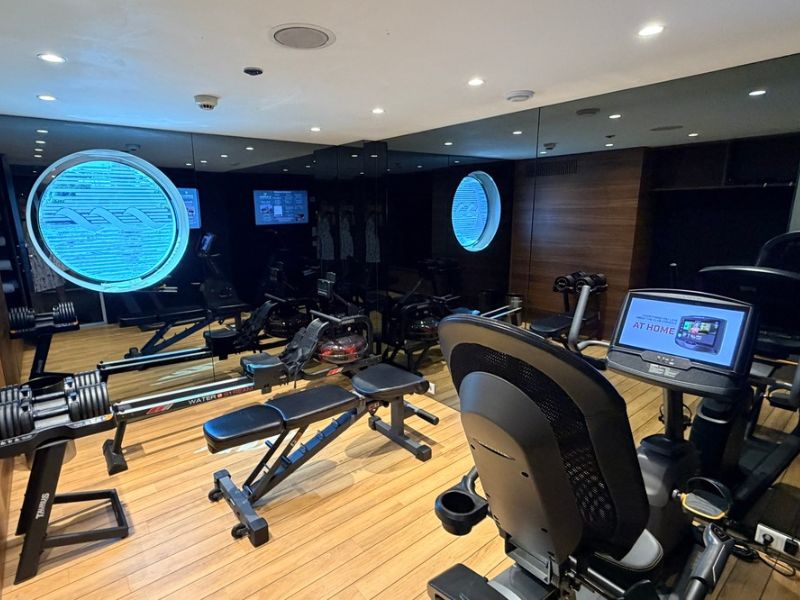
A drawer or shelf in the main cabin area is a better option – somewhere dry, relatively cool, and out of direct sunlight. Or you could always use the safe, if it’s not something you’re going to need emergency access to at any point, such as allergy medication.
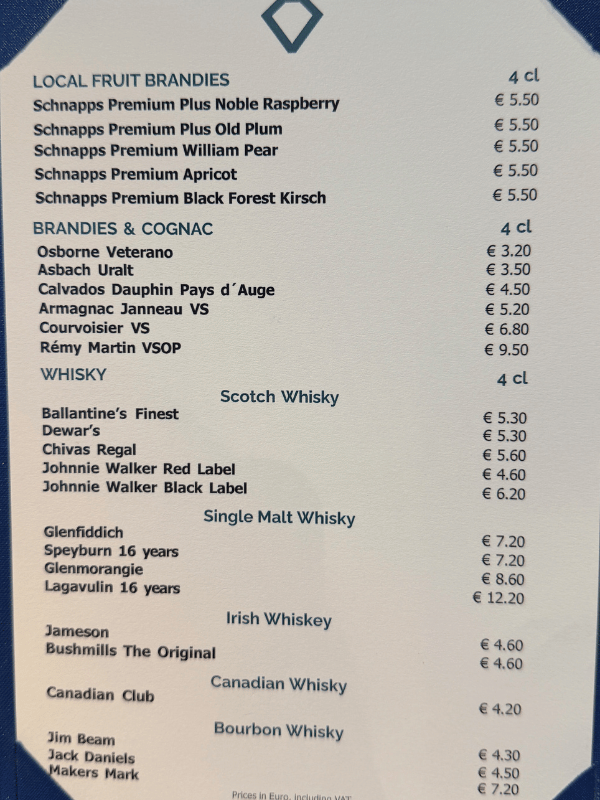
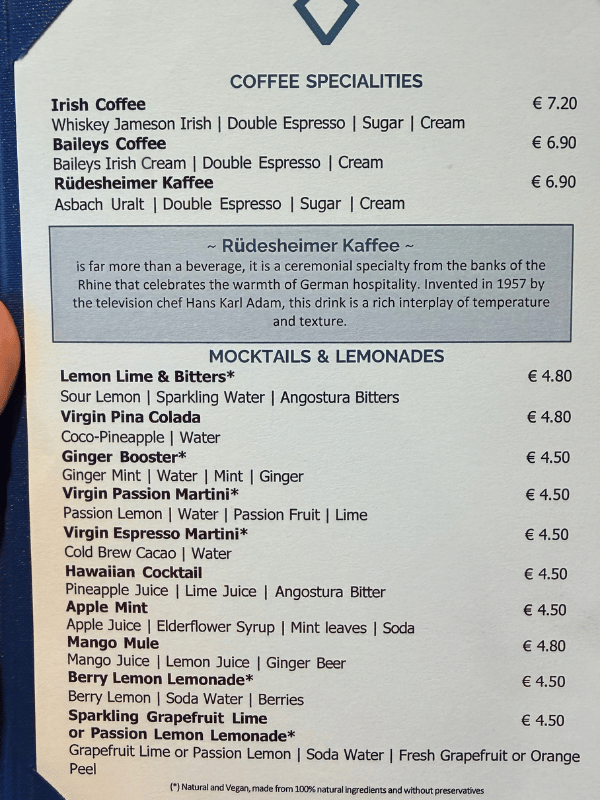
Time Zones And When To Take Your Medication

Crossing time zones can throw off your usual routine more than you expect – it’s another of those little things that people just don’t consider!

clocks go forward card

For most medications, a slight shift isn’t a problem. But if timing matters, it’s worth planning ahead.

Gradual adjustments tend to work better than sudden changes, and if the timing is critical, your GP or pharmacist can give you specific guidance before you travel.

Sharps Disposal Onboard

You won’t be left to deal with this on your own.

Sharps bin for medication

Sharps containers are available on board, usually via Guest Services or the medical centre. When one fills up, it can be collected and replaced.

It’s worth sorting early so it’s not something you’re thinking about later in the trip.

Forgetting your medication, accidentally not bringing enough, or losing it – all sound like nightmare scenarios, but all are manageable. Don’t panic!

The ship’s medical centre is your first stop. They won’t have everything, but they can often help with basic medication or short-term solutions.

For more specific prescriptions, things depend on where you are. You may need to arrange a replacement in port, which can involve seeing a local doctor first.

This is where having documentation helps. A prescription copy, GP details, or even a photo of the medication can make the process quicker.

Doctor and patient on a cruise

It’s also why bringing extra is so important. Replacing medication abroad isn’t always fast or straightforward.

The team onboard your ship can hopefully help direct you to a reputable pharmacy ashore, if needed, or give you information on who to contact port-side for official recommendations.

Unfortunately, in some ports, there will be some dodgy retailers offering cheap medication – don’t risk it.

Medication You Can Buy On A Cruise Ship

Think convenience, not pharmacy – that’s the sort of thing you’ll find on a cruise ship.

You’ll usually find basics on board, either in the shop or via the medical centre:

  • pain relief (paracetamol, ibuprofen)
  • seasickness remedies
  • cold and flu treatments
  • antihistamines
  • simple stomach medications

That’s enough for minor issues, but the range is limited. It’s also more expensive than buying it at home.

Anything more specific will usually mean seeing the ship’s doctor, which comes with a consultation fee.

Read more: Cruise Ship Doctors: What Passengers Don’t Realise

Why It’s Almost Always Cheaper To Bring Your Own

Prices on board can be surprisingly high, even for simple items.

You’re paying for convenience, and there’s no real competition once you’re at sea.

Something inexpensive at home can easily cost several times more on a ship. It’s fine as a backup. It’s not something you want to rely on. So if you think you might need any of the above, buy before you sail!

Seasickness Medication – What To Bring Vs Buy Onboard

This is one of the few things worth planning for even if you’re not sure you’ll need it.

Most treatments work better if you take them before symptoms start, which is much easier if you already have them with you.

A hand holding a box of seasickness patches labeled "SHIP-EEZ" for sea sickness relief. The box indicates that the patches are fast-acting, non-drowsy, safe and effective, and suitable for ages 3 and up. The packaging design features a maritime theme with a blue sky, clouds, and ocean waves.

There’s no single best option. Tablets, patches, wristbands, and natural remedies all work for different people.

If you’ve found something that works for you, bring it. Onboard options are usually limited and more expensive. If you’ve never encountered seasickness before then I’d say it’s not an essential purchase before you cruise, but a cheap pack of tablets or patches could be worth buying if you’re at all concerned.

Read more: Cruise Seasickness Tips That Actually Work

Supplements, Vitamins And Non-Prescription Medication

Vitamins, supplements, and over-the-counter medication can generally be packed without much thought.

Where people run into minor issues is with quantity or unclear labelling. Large amounts of unlabelled tablets can attract questions, particularly at airports or in stricter countries.

Herbal supplements can also fall into a grey area if ingredients aren’t clearly listed or widely recognised.

Keeping everything labelled and, where possible, in original packaging avoids most of that.

For small, personal quantities, problems are rare. It’s just about making things easy to explain if anyone does ask.

Final Checklist – Taking Medication On A Cruise

By now, it probably feels like a lot of detail for something that’s usually straightforward.

In reality, it comes down to a few key habits:

  • keep medication in your hand luggage
  • stick to original packaging where you can
  • bring copies of prescriptions or a doctor’s letter if needed
  • check rules for every country on your itinerary
  • avoid anything that may be banned, including cannabis-based products
  • arrange storage or equipment needs in advance
  • pack extra in case of delays
  • bring basic remedies so you’re not relying on onboard shops

Get those right and, for most people, the whole thing passes without a single issue.

My Recommendation

My recommendation for cruise insurance depends on where you live.

These are trusted price comparison sites that will quickly get you lots of quotes to match your exact needs.

Related Posts

If you found this interesting, please share!


Jenni with Disney Cruise ship at Castaway Cay


Source link