The Bahamas Maritime Authority is now leading the investigation into the death of a passenger who reportedly went overboard from Ambassador Cruise Line’s Ambition off the coast of Fife, Scotland. STV News reported August 24 that the Bahamas authority confirmed it is in contact with relevant parties and authorities as inquiries continue.
The passenger was reported overboard on Friday, August 21, roughly 40 nautical miles from Anstruther. Coastguard, RNLI and Police Scotland teams were involved in the response, and a body was recovered later that day. Ambition is registered in the Bahamas, giving Bahamian maritime authorities the primary investigative role under international maritime rules unless the death is treated as suspicious.
Most airlines still run reservation logic written for hardware that no longer exists anywhere but a museum. Rail operators are stretching budgets between ESG reporting and predictive maintenance, often without enough headcount to do either properly. Freight companies want live visibility into every container, yet half their warehouse floor still runs on spreadsheets emailed at shift change. Picking a technology partner for any of this isn’t really an IT decision — it’s closer to choosing who gets to touch your nervous system for the next five years. So which vendors actually do this work well, and what should that choice hinge on?
Fifty Years of Trying to Modernize Without Breaking Anything
Nobody designed travel technology from scratch in one go. It was built in layers, and most operators never tore out the old ones — they just bolted new systems on top and hoped the seams held.
A rough timeline, for context:
1970s–80s — SABRE and its peers digitize airline booking on mainframes; some descendants of that code, oddly enough, are still alive today
1990s — Global distribution systems mature, while rail and freight lean on EDI messaging for cargo tracking
2000s — Web check-in shows up, GPS fleet tracking spreads, ERP starts threading through logistics
2010s — Cloud migration picks up speed; mobile boarding passes, dynamic pricing, IoT sensors on containers and locomotives become normal
2020s — AI-driven forecasting, digital twins for airports and rail corridors, biometric gates
Every decade left a residue. That residue is what every vendor below gets paid to manage,
Companies Worth Knowing
DXC Technology
Works across airlines, airports, rail, and logistics on legacy modernization, cybersecurity, and AI-driven operations management. Counts Lufthansa and American Airlines among airline clients, plus Swiss Federal Railways on the rail side, and often takes on the Master Systems Integrator role for large, multi-vendor airport programs — the kind where someone has to own the whole mess end to end.
Sopra Steria
French-headquartered, with a long history inside European transport ministries rather than just transport operators directly. Builds ticketing platforms and Mobility-as-a-Service integrations, and has run public-sector procurement processes in France and the UK that most vendors wouldn’t touch — the paperwork alone scares people off. Good fit when the regulatory layer is as complex as the engineering.
Tata Technologies
Spun off specifically for engineering work, not general IT services, which shows in who they serve. Aerospace and automotive manufacturers use Tata Technologies for product lifecycle management and digital-twin simulation of physical hardware — trains, EVs, aircraft components — rather than airline booking systems. Delivery runs out of India and Europe, with an engineering-first culture that reads differently from a typical systems integrator.
Endava
London-listed, with roots across Central and Eastern Europe, and a reputation built on speed rather than decade-long mega-contracts. Travel-tech startups and freight marketplaces scaling past their first few hundred customers tend to land here, because Endava ships fast and iterates faster. Less suited to operators wanting heavy governance and slower, document-everything delivery.
Atos (Eviden)
Carries serious weight in cybersecurity and high-performance computing, particularly around protecting critical infrastructure — rail signaling systems, airport operational technology, the stuff that can’t go down. French-rooted, methodical, occasionally slow, but thorough in a way that matters once an attacker gets past the front door. Worth a look when compliance risk outweighs delivery speed.
Globant
Argentina-founded, now listed globally, and noticeably more design-led than most names on this list. Hospitality groups and travel brands building loyalty platforms or booking apps often end up working with Globant because the product thinking comes first, engineering second — backwards from how most systems integrators operate. Makes sense if customer experience is the actual problem, not backend plumbing.
Computacenter
UK-headquartered, unglamorous, and built around keeping physical infrastructure running — device lifecycle, workplace tech, cloud migration — across thousands of endpoints in distribution centers and transport depots. Nobody writes case studies on endpoint management, but someone has to keep 10,000 handheld scanners working across a logistics network, and that’s exactly the gap Computacenter fills.
Tietoevry
Nordic, strong on public transit and rail across Finland, Sweden, and Norway, and smaller in scale than the global names here. Builds smart mobility platforms and payment systems for regional transport authorities who need a partner that actually understands Nordic transit policy — which moves faster than most outsiders realize. Limited reach outside the region, but deep where it operates. Whether they call it modernization, integration, or something fancier in a sales deck.
Choosing a Partner: What Actually Separates Good Picks From Bad Ones
A regional commuter rail line and an intercontinental airline are not shopping for the same thing, even when both phrase the request as “we need digital transformation.” Worth checking before any contract gets signed:
Has the vendor actually worked inside an airport ops center or a rail control room — not adjacent industries, the real thing
Can they touch a 20-year-old PNR system without demanding a multi-year rip-and-replace — legacy fluency matters more than buzzwords
Do they take OT security and aviation/rail compliance seriously, or is it an afterthought bolted onto the pitch
Do they hold up under real peak load — holiday surges, weather chaos, sudden booking spikes
Do they understand your specific regulatory geography — EU data residency rules read nothing like TSA requirements
Does their delivery culture match yours — some vendors run heavy governance, others move fast and skip ceremony, and mismatches here cause more friction than the tech itself
None of this sounds exciting. It’s the boring stuff that decides whether year two looks like steady progress or a slow-motion fire drill.
What Tends to Decide the Outcome
No single name on this list covers legacy depth, delivery speed, regulatory weight, and design quality all at once — that combination doesn’t really exist in one vendor. Match track record to sector, not to the slickness of the pitch deck. And ask for reference clients in your actual niche, not a neighboring one that happens to sound similar.
FAQ
Do these vendors only take on massive enterprise contracts? Most scale down, though minimum deal sizes vary a lot — worth asking directly rather than assuming.
Is AI forecasting standard everywhere by now? Pretty much, yes — predictive maintenance and demand forecasting show up in nearly every pitch by 2026, in some form.
Should an airport and its airline tenants use the same vendor? Not necessarily. Terminal infrastructure and airline operations often need different specialists, sometimes from the same firm, sometimes not.
How much does regional presence actually matter? More than people expect — data residency rules and local aviation or rail regulation often require people on the ground, not remote delivery from another continent.
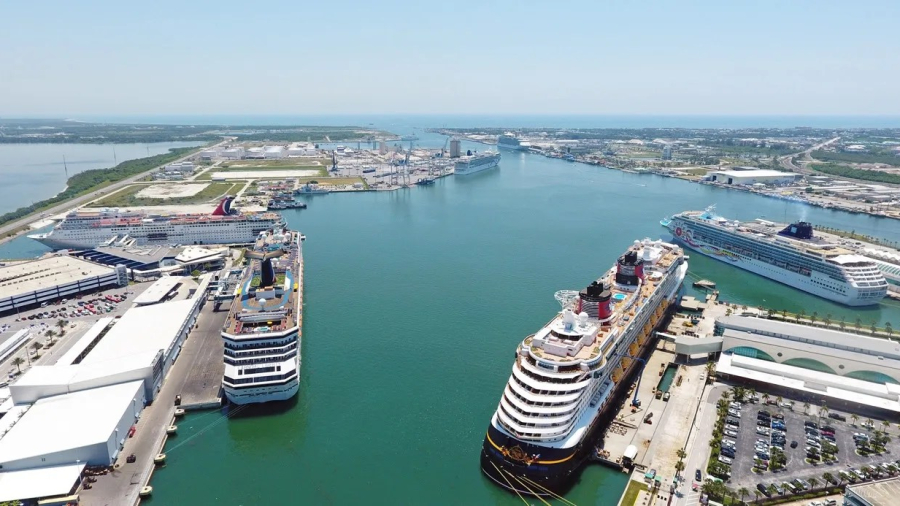
Two cruise passengers are facing criminal charges after authorities say a late-night confrontation escalated into an alleged forced entry and assault inside another guest’s stateroom at Port Canaveral.
The Brevard County Sheriff’s Office identified the suspects as Gannon Jacox and Brooklyn Hicks. According to Sheriff Wayne Ivey, the incident began after the couple had been arguing loudly following alcohol consumption and another passenger asked them to keep the noise down.
Authorities allege Hicks then confronted the other guests while Jacox followed with his phone and recorded the encounter. Investigators say the pair subsequently pushed their way into the victims’ stateroom, where three people were inside, including a 9-year-old child.
The sheriff’s office says Jacox struck all three occupants during the confrontation, including the child, while Hicks also allegedly threw punches. None of the victims was reported to have suffered serious injuries.
Jacox and Hicks were arrested and booked into the Brevard County Jail on August 15. Local reporting based on arrest records says Jacox faces charges that include burglary with assault, child abuse without great bodily harm and misdemeanor battery, while Hicks faces burglary-related and misdemeanor battery charges.
As with all criminal cases, the allegations remain accusations unless and until proven in court.
One important detail remains unresolved: authorities have not publicly identified the cruise ship or cruise line involved. Several ships were at Port Canaveral around the time of the arrests, but that alone is not enough to determine where the incident occurred. Cruise Addicts therefore does not name a ship or cruise line unless law enforcement or the operator confirms it.
Cruise Addicts will continue to monitor the case for additional details, including confirmation of the ship involved and any response from the cruise operator.
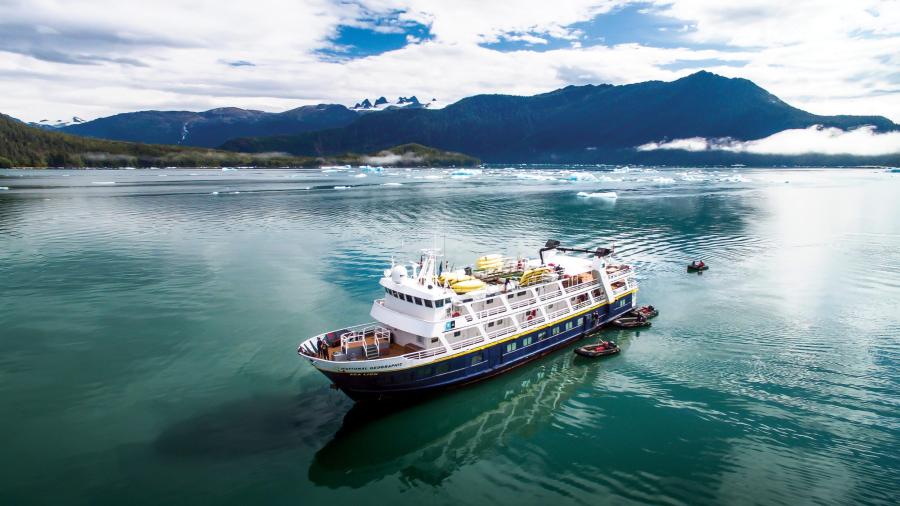
National Geographic Sea Lion has received a score of 86 in a newly posted U.S. Centers for Disease Control and Prevention Vessel Sanitation Program inspection, placing the small expedition ship at the lowest score the agency still considers satisfactory.
Cruise Fever surfaced the newly posted result on August 17, reporting that inspectors documented 42 deficiencies aboard the 62-guest vessel. The CDC’s Vessel Sanitation Program classifies scores of 86 or higher as satisfactory, while scores of 85 or below are considered not satisfactory.
According to the newly surfaced inspection findings, deficiencies cited aboard National Geographic Sea Lion included issues with food storage practices, rusted utensils, and gastrointestinal illness reporting procedures. One cited reporting issue involved the timing of an acute gastroenteritis report ahead of the ship’s expected arrival in Sitka, Alaska. The inspection also reportedly found that a symptomatic crew member did not promptly report symptoms and was released from isolation after 24 hours to perform non-food-handling duties.
The result is notable because 86 is the minimum passing score under the CDC program. It also continues an unusual pattern for the vessel: Cruise Fever reports that Sea Lion’s previous CDC inspections in 2016 and 2017 also resulted in scores of 86.
The CDC’s Vessel Sanitation Program conducts operational inspections of cruise ships that call at U.S. ports, reviewing areas such as food safety, potable water, recreational water facilities, medical operations, housekeeping, and procedures intended to prevent the spread of gastrointestinal illness.
National Geographic Sea Lion is operated by National Geographic–Lindblad Expeditions and carries just 62 guests in 31 outside cabins. The U.S.-flagged expedition ship sails in Alaska, the Pacific Northwest and other destinations along the western coast of North America and Central America.
The ship has also had a recent history of public health issues. In April 2025, the CDC reported a gastrointestinal illness outbreak aboard the National Geographic Sea Lion, during which five of 43 passengers and two of 37 crew members reported becoming ill.
An inspection score of 86 does not mean the ship failed its CDC inspection. The score is officially considered satisfactory. Still, the number and nature of the cited deficiencies make the newly posted result relevant to travelers, particularly because the score sits directly on the passing threshold.
Disney Cruise Line has revealed a major new look at Disney Believe, giving future guests their clearest preview yet of the ship’s interior and exterior design ahead of its planned debut in late 2027.
The new details were presented during the Horizons: D23 Disney Experiences Showcase and include the ship’s Grand Hall, stern character sculptures and distinctive bow artwork. Disney Believe was first announced in March as the fourth ship in Disney Cruise Line’s Wish-class family, joining Disney Wish, Disney Treasure and Disney Destiny.
The centerpiece of the newest reveal is the Grand Hall, which will draw inspiration from Disney’s Moana films. Disney says the space will reflect themes of exploration and the South Pacific, with a bronze statue of Moana as its focal point, alongside Pua and Heihei.
Concept art shows Moana standing prominently in the atrium-like space with her paddle in hand, surrounded by decorative elements influenced by Polynesian design. The Grand Hall will serve as one of the primary gathering spaces aboard the ship, continuing a tradition seen on Disney’s other Wish-class vessels.
Disney also revealed a notably playful change for the ship’s stern.
Woody and Buzz Lightyear from Pixar’s Toy Story will appear as larger-than-life sculptures on the back of Disney Believe. In the concept, the pair are shown using oversized yellow crayons to create the ship’s name.
That detail gives Disney Believe a slightly different visual identity from its sister ships. Rather than relying entirely on the familiar flowing Disney Cruise Line script, the stern treatment incorporates block-style lettering inspired by Toy Story.
The ship’s bow will carry another familiar Disney character.
Tinker Bell, depicted in the style of Disney’s 1953 animated Peter Pan, will anchor the decorative filigree on the bow. Silhouettes of Peter Pan, Wendy, Captain Hook and other characters will be incorporated into the surrounding artwork.
Disney Cruise Line has long used character artwork to make each ship immediately recognizable. Those decorative details have become part of the line’s visual identity, with different characters appearing on bows and sterns throughout the fleet.
Disney Believe is expected to begin sailing in late 2027. Disney has already said the ship will feature stories and environments inspired by Encanto, Frozen, Snow White and the Seven Dwarfs, Moana and The Little Mermaid, with additional venue and entertainment details still to come.
For cruise travelers following Disney’s rapid fleet expansion, the latest reveal is significant because it begins to show how Disney Believe will differentiate itself from its Wish-class sisters rather than simply repeating the same design formula.
Disney has also created an official online Ship’s Log for Disney Believe, where future updates are expected to include construction progress from Meyer Werft, behind-the-scenes looks at Disney Imagineering and Disney Live Entertainment, and additional details about venues and shows.
That means this is likely only the beginning of the Disney Believe reveal cycle. More details about the ship’s accommodations, restaurants, lounges, entertainment, itineraries and homeport are expected as its 2027 debut approaches.
For Cruise Addicts readers already following Disney Cruise Line’s expansion, the new artwork offers the first real sense of the ship’s personality — and suggests Disney Believe will lean heavily into themes of optimism, exploration and familiar character storytelling.
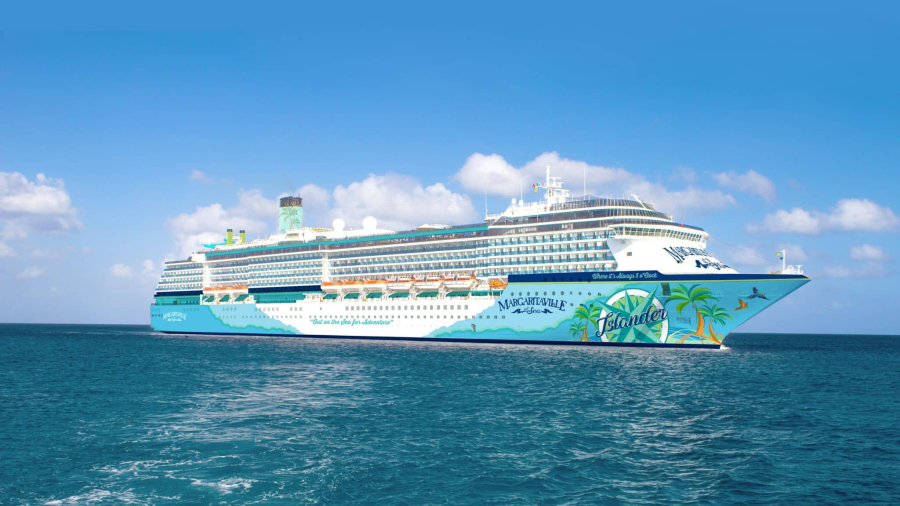
Margaritaville at Sea has adjusted two port calls on an upcoming 10-night cruise aboard Margaritaville at Sea Islander, changing the order and timing of the ship’s visits to Aruba and Curaçao.
The sailing is scheduled to depart Port Tampa Bay on September 5, 2026, for a Southern Caribbean itinerary that also includes Grand Cayman and Jamaica.
According to a notice sent to booked guests and newly reported by Cruise Hive, Islander will now visit Aruba before Curaçao. The revised plan calls for the ship to arrive in Oranjestad, Aruba, on September 9 from 2 p.m. to 11 p.m., followed by Willemstad, Curaçao, on September 10 from 7 a.m. to 5 p.m.
Earlier published schedules showed Curaçao first, with a noon-to-11 p.m. call on September 9, followed by Aruba from 8 a.m. to 6 p.m. on September 10.
The change does not remove a destination from the itinerary, but it could still matter to guests who have arranged independent tours, transportation or activities based on the original schedule. Travelers booked on the sailing should review their updated cruise documents and confirm excursion times directly with their tour providers.
The remainder of the itinerary is expected to stay intact. The ship is scheduled to call at George Town, Grand Cayman, on September 7 and Ocho Rios, Jamaica, on September 12 before returning to Tampa on September 15.
Margaritaville at Sea’s own website confirms Islander operates voyages from Tampa to destinations throughout Mexico and the Caribbean, including longer Southern Caribbean sailings. The cruise line has not publicly explained the reason for this particular port-order adjustment on its main website.
For cruise travelers, port-order changes are not unusual and can occur for operational, berth-availability, weather or other scheduling reasons. In this case, the most important takeaway is that both Aruba and Curaçao remain on the itinerary, but guests with independently booked plans should verify that their arrangements match the new dates and times.
Cruise Addicts will monitor the sailing for any additional changes ahead of the September 5 departure.
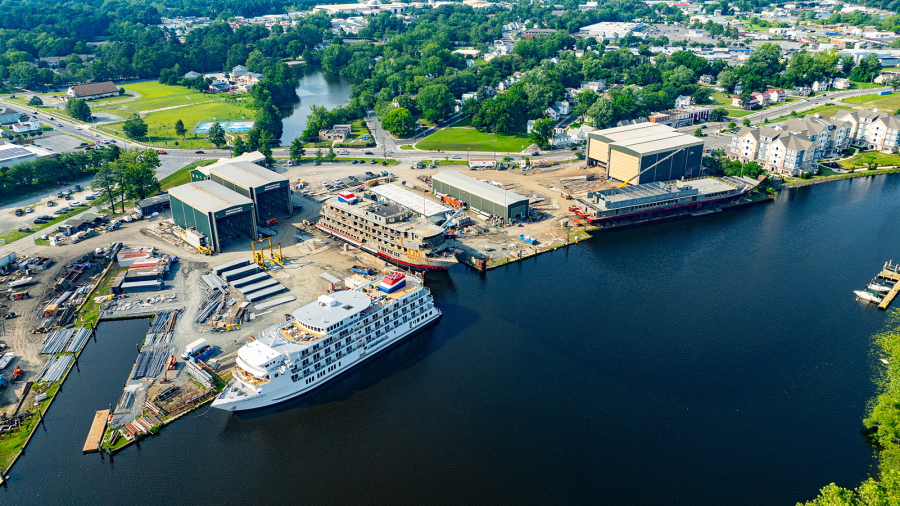
American Cruise Lines has announced the names of two more U.S.-built small ships: American Beauty, a new riverboat for the Mississippi that will launch in 2028, and American Rhapsody, another new riverboat for the Columbia and Snake Rivers that will launch in 2029. These riverboats represent the 29th and 30th ships in the company’s ever-expanding fleet and will be the finest new riverboats in the world. All American Cruise Lines’ new ships are built at Chesapeake Shipbuilding in Salisbury, Maryland.
American Cruise Lines Growing Fleet
American Beauty will begin cruising the Mississippi River in September 2028, operating the company’s popular 8-Day Upper Mississippi River cruises between St. Louis, MO and St. Paul, MN. Toward the end of the season, American Beauty will also cruise the company’s new 8-Day Gulf Coast cruises, which operate between New Orleans, LA and Pensacola, FL. In 2029, American Rhapsody will begin cruising the company’s 9-Day Columbia & Snake Rivers cruises between Portland, OR and Clarkston, WA.
American Beauty and American Rhapsody are both part of the company’s acclaimed modern American Riverboat™ series, which began in 2018, when American Song became the first modern-style riverboat ever available for U.S. River cruising. Since then, the demand for these world-class riverboats has increased year after year. American Beauty and American Rhapsody follow 3 others previously announced: American Encore (which debuted in May 2026), American Anthem (sailing in April 2027), and American Grace (sailing in April 2028). All the company’s American Riverboats accommodate 180 guests in 100% private balcony accommodations and showcase the finest amenities available in river cruising worldwide.
The demand for U.S. River cruising around the country continues to grow rapidly. In order to keep pace, American Cruise Lines is introducing new ships at a rate of 3 per year. The company has introduced more new U.S.-built cruise ships over the last 10 years than all the U.S.-built cruise ships combined in the previous 4 decades. The company has also expanded and developed new itinerary options across 40 states, including many cruises that are totally exclusive to the Line.
In addition to these new riverboats for the Mississippi and the Columbia and Snake Rivers, American continues aggressively expanding their fleet in many other regions of the USA, with new small ships sailing over 50 U.S. itineraries along the East, West, and Gulf Coasts, as well as all the major U.S. rivers, lakes, bays, and inland waterways in-between. Today, the new ships and the breadth of domestic itinerary options offer more diversity than at any other time in history and the U.S. market is a booming sector of the global cruise industry, rivaling Europe and all other river regions worldwide.
American Ranger, the company’s 3rd new ship this year (launching in September) will cruise the Line’s exclusive Hudson River Fall Foliage cruises, Potomac River & Chesapeake Bay cruises, and Florida Gulf Coast & Keys cruises throughout the holiday season and into the New Year. One of American’s new 2025 ships, American Patriot, is currently sailing the company’s first season of domestic cruises on the Great Lakes (these are the only all-domestic cruises available in the Great Lakes market). In 2027, when American Anthem debuts, it will sail the company’s newest regional itinerary, 16-Day Grand Columbia & Snake Rivers cruises, throughout its entire inaugural season.
American Cruise Lines’ 13 new ships from 2025 to 2029
Note: the new riverboats below are all modern American Riverboats, accommodating 180 guests
2025: American Patriot and American Pioneer (130-guest/small ships)
2026: American Encore (riverboat); American Maverick and American Ranger (130-guest/small ships)
2027: American Anthem (riverboat); American Mariner and American Navigator (130-guest/small ships)
2028: American Grace and American Beauty (two riverboats)
2029: American Rhapsody (riverboat) and 2 other new ships (names & details to come at later date).
American Beauty and American Rhapsody will feature 6 decks, all private balcony staterooms, including Singles and Suites (and each will showcase the company’s newest accommodation—the 1,500 sq/ft Signature Suite). These new riverboats will also offer numerous spacious lounges throughout, including spectacular top-deck lounges with walking tracks, chart rooms, beautiful main restaurants and casual cafés, as well as large fitness centers, among other onboard amenities that are unusual for cruise ships of this size.
American Cruise Lines is the largest river cruise line in the U.S.A. with 30 small ships sailing the Mississippi River, the Columbia and Snake Rivers, the Great Lakes, and protected waterways all over the country. American’s award-winning fleet reflects the company’s 50-year history of offering domestic small ship cruises that explore exclusively in the United States. Today, it is the only fleet of 100% U.S.-flagged riverboats and small ships in the world. American offers 50+ domestic cruise itineraries across 40 states, operating year-round, including National Parks Cruises and Extended Cruises over 50 days in length.
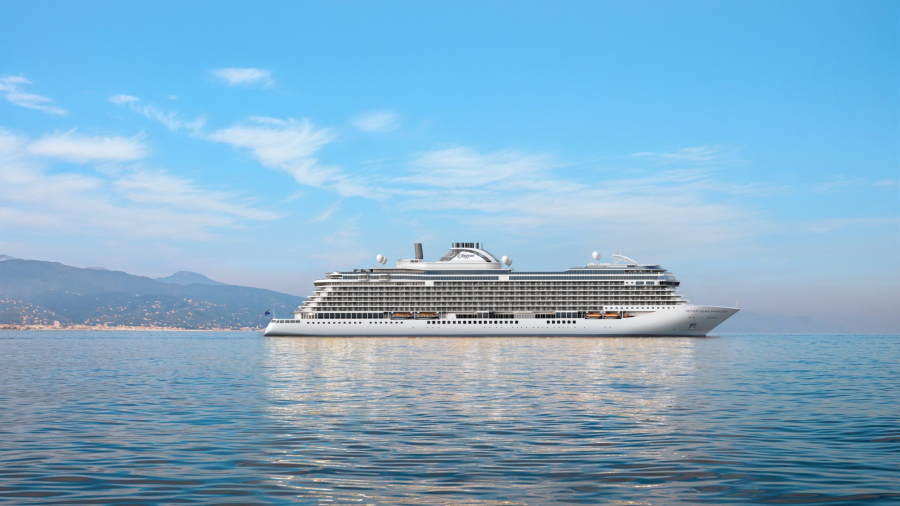
Regent Seven Seas Cruises® has announced the senior officer team that will lead Seven Seas Prestige™, the inaugural vessel in Regent’s first new ship class in a decade, into service ahead of her highly anticipated debut this December. Led by Captain Luksa Kristovic, the seven senior officers bring more than 150 combined years of maritime and hospitality expertise, years of experience working together across The World’s Most Luxurious Fleet®, and a shared commitment to shaping every detail of the guest experience.
Together, they are helping bring Seven Seas Prestige to life while guiding the 630 crew members who will deliver Regent’s renowned Heartfelt Hospitality™ to guests on board. “Seven Seas Prestige represents Regent’s next chapter in our relentless Pursuit of Perfection, and we are proud to place her in the hands of a team with the experience and passion to bring that promise to life,” said Wesley D’Silva, President of Regent Seven Seas Cruises. “Captain Kristovic and his fellow officers embody the standards of excellence, care and attention to detail that define the Regent experience. We could not be more confident in this team as they lead Seven Seas Prestige into service and set a new standard of ultra-luxury cruising.”
To mark the announcement, Captain Kristovic filmed a special message from the Fincantieri shipyard in Marghera, Italy, updating guests on the ship’s progress and reflecting on what it means to command the newest vessel in the fleet. Captain Kristovic’s video can be viewed here.
“It is an immense honor to be named Captain of Seven Seas Prestige and lead such an exceptional team as we prepare to introduce Regent’s first new ship class in 10 years,” said Captain Luksa Kristovic, Master of Seven Seas Prestige. “From her all-new suite categories and beautifully designed public spaces to new dining experiences that will further elevate life on board, Seven Seas Prestige represents an exciting new era for Regent.”
At 76,550 gross tons, with just 411 suites and 630 dedicated crew members, Seven Seas Prestige will offer one of the highest crew-to-guest ratios in the cruise industry. Forty percent larger than previous Regent ships yet accommodating only 10 percent more guests, Seven Seas Prestige will deliver truly Unrivaled Space at Sea®. Each successive Prestige-class vessel will build upon the hallmark design innovations and elevated guest experiences, ensuring Regent’s position at the forefront of all-inclusive, ultra-luxury cruising.
Introducing Seven Seas Prestige’s Senior Officer Team
Captain Luksa Kristovic
Captain Kristovic’s love of the sea began as a boy growing up in Dubrovnik, Croatia, a seafarer’s city that has long welcomed cruise ships to its shores, an early influence that would shape the course of his career. After completing his Master’s in Maritime Navigation and Business in 1999, he joined his first ship as a cadet on a bulk carrier before moving into the cruise industry in 2003 and discovering his true calling, becoming a Captain in 2013, fulfilling a lifelong ambition. He now resides with his family in São Paulo, Brazil, where he enjoys biking and swimming.
General Manager, Stéphane Carriou
General Manager StéphaneCarriou was born near St. Malo, France, and trained at one of the country’s top-ranked culinary schools for hotel management. At 24, encouraged to pursue a career at sea, he embarked on what would become the majority of his professional life afloat. Stéphane joined Regent Seven Seas Cruises in 2017, where he helped to launch Seven Seas Splendor® and Seven Seas Grandeur® as Food & Beverage Director before being promoted to General Manager. Away from the ship, he enjoys motorcycling and long-distance swimming, and takes great pride in working alongside his crew to exceed guest expectations at every turn.
Chief Engineer Germain Bouvet
Chief Engineer Bouvet has spent more than 26 years with Regent Seven Seas Cruises. He trained at the École Nationale Supérieure Maritime in Nantes, France, earning a dual qualification as both Captain and Chief Engineer, a foundation that gave him equal command of navigation and marine engineering. Before joining Regent, he worked as a Principal Surveyor with Bureau Veritas in Saint-Nazaire, where in 1999 he became closely involved in the construction of Seven Seas Mariner®. Over the following two decades, he has served as Chief Engineer across the fleet and now oversees the technical construction of Seven Seas Prestige at the Fincantieri shipyard in Marghera, a rare privilege he is experiencing for the second time in his career. He lives on the French Riviera, just outside Monaco, with his wife and son.
Senior Executive Chef Michael Meyepa
Chef Michael Meyepa’s career began with Sun International Hotels across the Comoros Islands, The Palace Hotel and Table Bay Hotel in Cape Town. In 2002, he moved to life at sea aboard The World of ResidenSea, the world’s largest residential cruise ship, rising to Executive Chef in 2006. For Chef Meyepa, cuisine is defined by integrity: whatever the dish, it should be prepared with determination and passion to achieve the very best result. He is excited to lead the culinary team aboard Seven Seas Prestige as the ship enters a new chapter for the brand.
Staff Captain Alexander Tiniakov
Staff Captain Alexander Tiniakov discovered his passion for the sea at age six when his father, a Chief Engineer, brought the family aboard the cruise ship where he worked and introduced him to the navigational bridge. A graduate of Odessa National Maritime Academy, he began his career aboard ferries before joining Regent Seven Seas Cruises in 2011 as a Deck Cadet aboard Seven Seas Navigator®. Since then, he has held a variety of bridge and leadership positions, contributed to the launch teams of Seven Seas Explorer® and Seven Seas Splendor®, and was promoted to Staff Captain in 2021. Most recently serving aboard Seven Seas Grandeur®, he now joins the team preparing Seven Seas Prestige for her debut. Alexander resides in Alanya, Türkiye, with his wife and daughter and looks forward to welcoming guests aboard Regent’s newest ship.
Born in Ottawa and raised in Vancouver, Canada, Dru Pavlov studied theatre at the University of British Columbia, where he won Best Director at the Vancouver One-Act Play Festival and served as president and on-air host of the university’s radio station, CiTR FM. He began his cruising career as a DJ in 1999 and was promoted to Cruise Director in 2002. Since then, Dru has sailed on 28 ships across all seven continents, a career at sea that also introduced him to his wife, Melanie. He joined Regent Seven Seas Cruises in February 2022 and has since become known for creating memorable moments for guests through his warmth, energy and natural stage presence. Dru recently relocated to Jacksonville, Florida, where he’s now trying to convince Melanie that they should buy a boat of their own.
Food and Beverage Director Alin Aricescu
Food and Beverage Director Alin Aricescu hails from the harbor city of Constanța, Romania, where his career at sea began in 2001, and a deep passion for hospitality soon followed. He joined Regent Seven Seas Cruises in 2010 as a Head Waiter, drawn by the line’s reputation for ultra-luxury cruising, and has brought unwavering dedication and meticulous attention to detail to every role since. Alin regards food and beverage service as the heart of the Regent experience, and with the debut of Seven Seas Prestige, he is focused on leading his team to new heights of quality, consistency and genuine hospitality.
For more information about Seven Seas Prestige or to book a voyage, please visitRSSC.com/Ships/Seven_Seas_Prestige, call 1-844-4REGENT (1-844-473-4368) or contact a professional travel advisor.
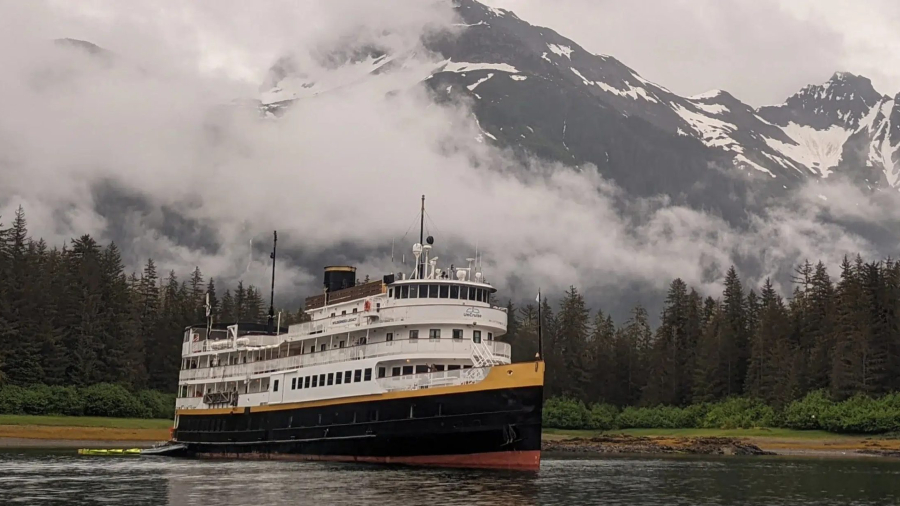
An expedition cruise ship sailing in Southeast Alaska changed course this week to assist boaters stranded after their small vessel became disabled in a remote coastal area.
UnCruise Adventures’ Wilderness Legacy responded after a 21-foot skiff reportedly ran out of fuel on the night of August 3. According to reporting from the Alaska Beacon, the expedition ship diverted to the scene and helped tow the disabled boat to a safe anchorage in Farragut Bay.
The incident occurred in a part of Alaska where communities and emergency resources can be separated by significant distances. In situations like these, commercial vessels operating nearby can become an important part of the maritime safety network.
Wilderness Legacy is an 86-guest expedition vessel operated by UnCruise Adventures. The ship regularly sails Alaska itineraries focused on wilderness exploration and visits to remote coastal destinations.
The incident has also attracted attention because another large private yacht was reportedly closer to the stranded skiff during part of the situation. While that detail has fueled some online discussion, the notable cruise-industry story is the decision by Wilderness Legacy and its crew to divert and provide assistance.
For cruise travelers, the episode highlights another side of operating ships in remote waters. Cruise vessels are more than vacation platforms, and their crews are professional mariners who may be called upon to assist other vessels when circumstances and operating conditions allow.
The U.S. Coast Guard regularly coordinates maritime search-and-rescue operations throughout Alaska, where mechanical problems, fuel shortages, rapidly changing weather and cold water can quickly turn a boating problem into a potentially serious emergency.
Cruise Addicts is seeking additional confirmation from official sources regarding the exact timeline of the incident and the roles played by the vessels involved.
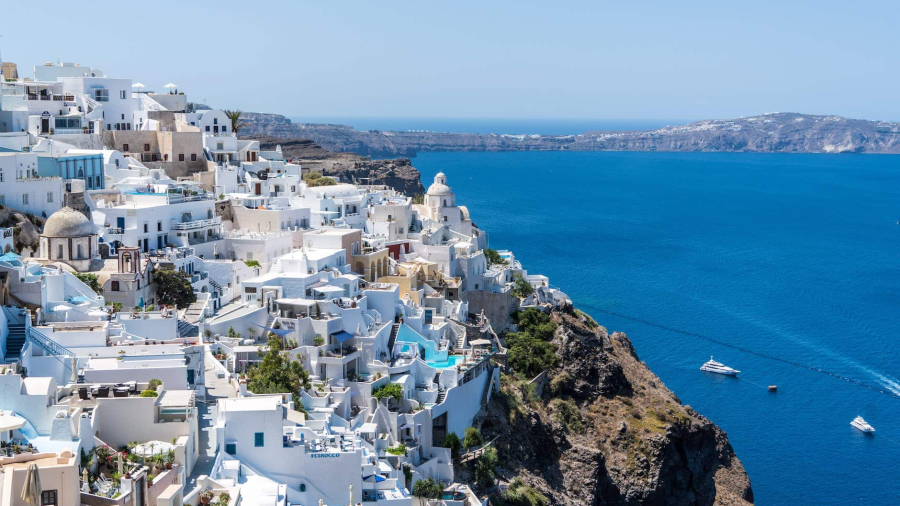
Cruise passengers visiting Santorini once again have access to one of the island’s traditional routes between the Old Port and the clifftop town of Fira after a temporary closure disrupted visitor movement during the busy summer cruise season.
The stepped pathway connecting Santorini’s Old Port with Fira reopened in early August after being closed in late July when part of a wall from a private building collapsed, sending debris onto the route.
The reopening is particularly important for cruise guests. Many cruise ships visiting Santorini anchor offshore and tender passengers to the Old Port directly beneath Fira. From there, visitors typically reach the town using the cable car or the historic stepped pathway.
While the path was closed, local authorities adjusted cruise passenger movements and shore excursion operations. Organized tours were redirected through Athinios, Santorini’s main ferry port, adding another logistical challenge during one of the busiest periods of the Mediterranean cruise season.
With the pathway available again, passengers arriving at the Old Port now have an additional option for reaching Fira. Its reopening may also help reduce some of the pressure on the cable car when multiple cruise ships are visiting the island.
Santorini is one of Greece’s most popular cruise destinations, but its dramatic geography can create transportation bottlenecks. Fira sits high above the waterfront along the edge of the island’s famous caldera, meaning thousands of arriving passengers may be trying to move between the port and town within a relatively short period.
The cable car is often the preferred option for cruise passengers, particularly during the summer heat, but long lines can develop during busy port days.
Travelers with upcoming Santorini calls should still follow guidance provided by their cruise line and shore excursion operators. Local conditions and passenger-routing procedures can change, especially when several ships are scheduled to visit at the same time.
For cruise travelers heading to Santorini, however, the reopening restores an important access route and removes one recent complication from visiting one of the Mediterranean’s most iconic cruise ports.