
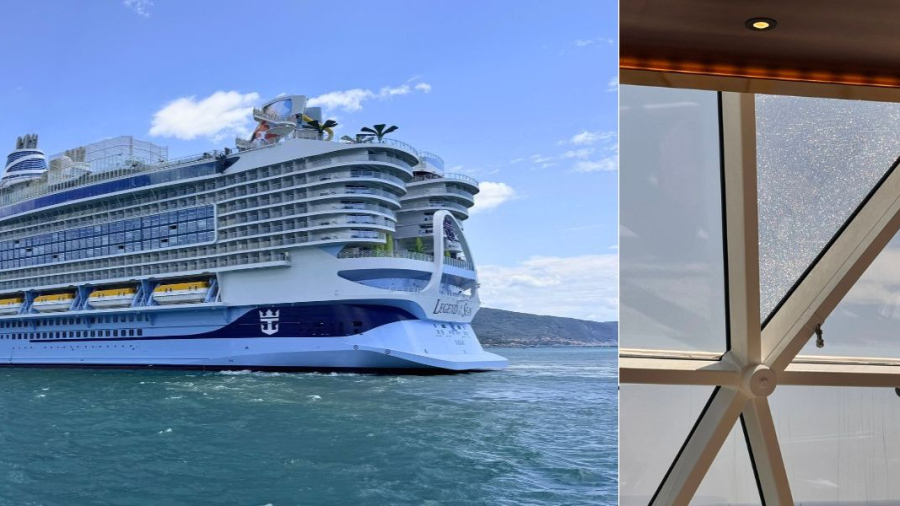
Royal Caribbean’s newest cruise ship Legend of the Seas has suffered a shattered glass panel in its signature AquaDome attraction, just over a month after entering service. The incident marks the latest in a series of glass-related issues affecting the cruise line’s Icon-class vessels since the groundbreaking ship class debuted in 2024.
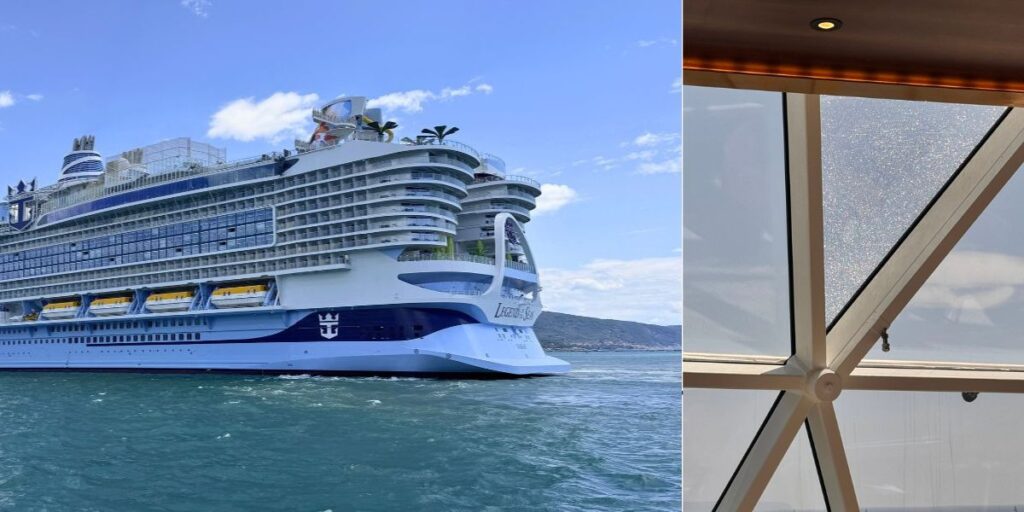
A passenger aboard Legend of the Seas shared photographic evidence of the damaged panel on social media on 3rd August 2026, questioning how such damage could occur on a ship barely a month into service.
The vessel officially launched on 4th July 2026, making it one of the youngest ships in Royal Caribbean International’s fleet. The broken component is one of 673 individual glass panels that comprise the AquaDome, the ship’s forward-facing glass dome that serves as a signature architectural feature of the Icon class.
The triangular segment appears to have remained intact within its frame despite the shattering, preventing glass fragments from falling onto the deck areas below where passengers typically gather.
Understanding The AquaDome’s Design And Purpose
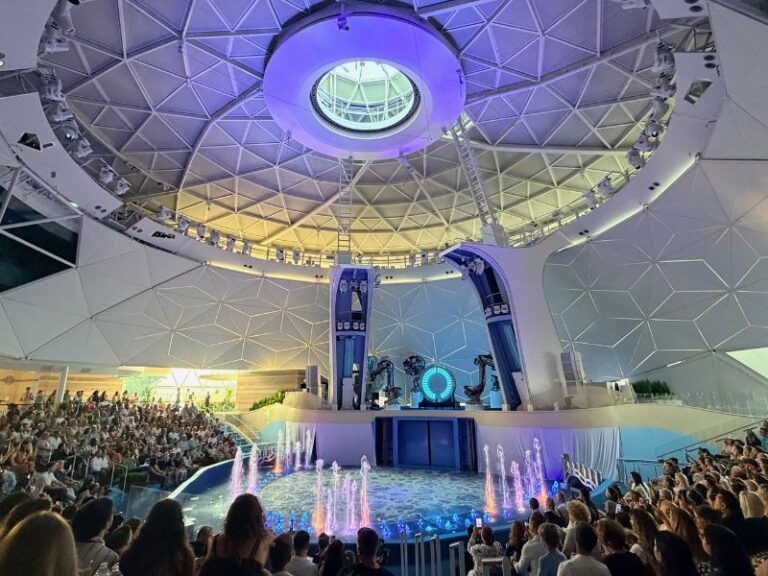
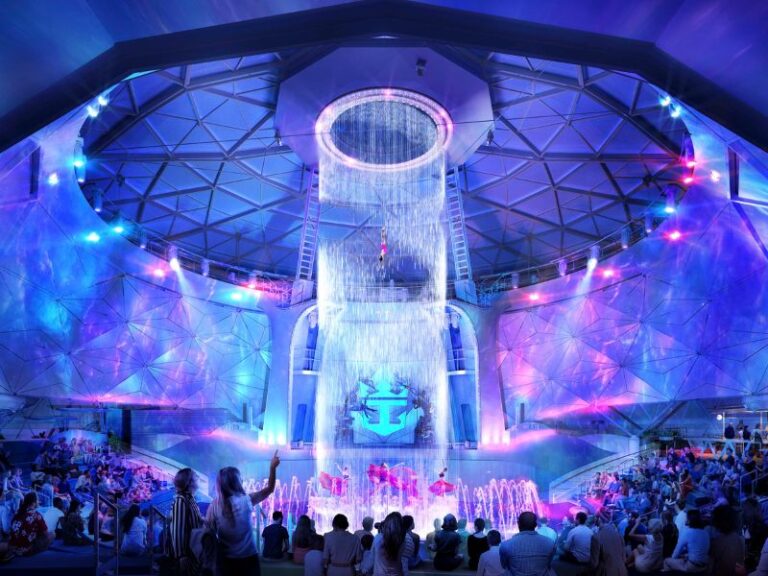
The AquaDome represents one of the most innovative architectural achievements in modern cruise ship design, occupying the forward section of the upper decks aboard Icon-class vessels. During daylight hours, this expansive glass-enclosed space functions as a tranquil retreat where passengers can relax whilst enjoying panoramic ocean views through the transparent ceiling and walls.
As evening approaches, the AquaDome transforms into a vibrant entertainment venue, hosting performances, events, and gatherings that take advantage of the unique architectural setting. The dual-purpose design philosophy reflects Royal Caribbean’s commitment to maximising the utility of onboard spaces whilst creating Instagram-worthy moments that help market the cruise line to younger demographics.
The 248,663-gross tonne Legend of the Seas accommodates up to 5,610 passengers at maximum capacity, making it one of the largest cruise ships currently operating worldwide. The vessel continues Royal Caribbean’s tradition of pushing the boundaries of cruise ship size and amenity offerings, following in the wake of sister ships Icon of the Seas and Star of the Seas.
Potential Causes Behind The Shattered Panel
Royal Caribbean has not issued an official statement identifying the specific cause of the glass failure, leaving industry observers and passengers to speculate about the underlying reasons. Marine glass can shatter for numerous reasons, each presenting unique challenges for shipbuilders and operators.
Inherent manufacturing defects represent one possible explanation, particularly with specialised marine-grade glass produced in such large quantities for these massive installations. Microscopic flaws in the glass composition or tempering process might not become apparent until the material experiences stress from environmental conditions at sea.
Environmental factors also play a significant role in the structural integrity of glass panels aboard cruise ships. Bird strikes, whilst less common in open ocean sailing, can occur during port calls or coastal navigation. The Mediterranean region where Legend of the Seas currently operates hosts numerous seabird populations that could potentially collide with the transparent structure.
Weather-related stresses including sudden temperature fluctuations, storm conditions, and rogue waves create additional pressure on large glass installations. The Icon-class ships, with their unprecedented size and innovative designs, may encounter environmental stresses that weren’t fully anticipated during the design and testing phases.
Current Sailing Status And Passenger Safety
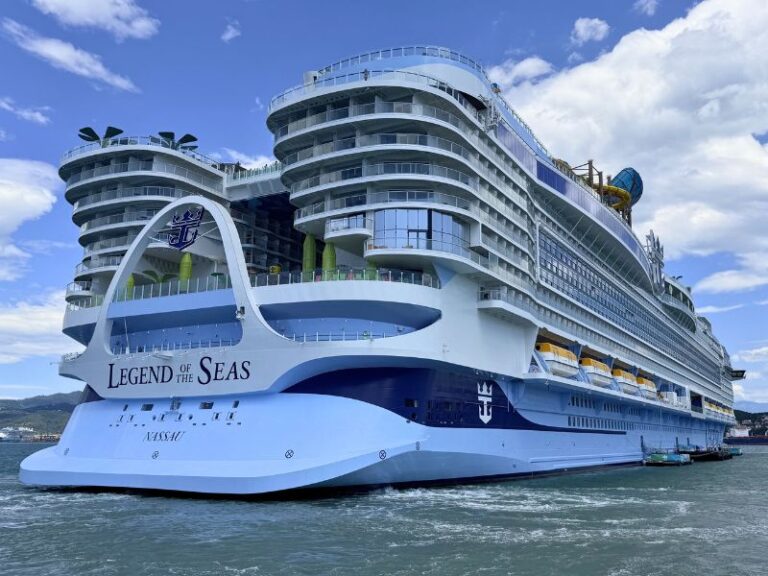
According to maritime tracking data, Legend of the Seas continues operating its scheduled itinerary without disruption despite the damaged panel. The vessel was nearing completion of a seven-night Mediterranean voyage at the time of the incident, with disembarkation scheduled for 9th August 2026 in Barcelona, Spain.
Importantly, no injuries to passengers or crew members have been reported in connection with this glass failure. The structural design of the AquaDome appears to have functioned as intended, with the shattered panel remaining secured within its mounting framework rather than falling and potentially injuring persons below.
This safety feature reflects the rigorous engineering standards applied to cruise ship construction, particularly for innovative architectural elements that push traditional design boundaries. Multiple redundancies and fail-safe mechanisms ensure that even when individual components fail, the overall structure maintains its integrity and protects those aboard.
Pattern Of Glass Issues Across Icon-Class Fleet
The Legend of the Seas incident represents the third significant glass-related event affecting Icon-class vessels since the ship class entered service. Star of the Seas, the second Icon-class ship and the slightly older sister to Legend of the Seas, experienced its own AquaDome glass failure in May 2026.
That earlier incident involved a triangular panel nearly identical to the one that shattered aboard Legend of the Seas, raising questions about whether a systematic design or manufacturing issue might be affecting these specific components. The similarity between the two failures suggests a potential common cause rather than isolated random incidents.
Even before her official maiden voyage on 31st August 2025, Star of the Seas encountered glass problems during a preview sailing. On the morning of 26th August 2025, a tempered glass panel forming part of an aesthetic safety barrier on Deck 15 suddenly shattered.
The panel served as a protective barrier preventing passengers from accidentally falling overboard whilst maintaining unobstructed ocean views. Crew members responded quickly to that incident, securing the opening with a white tarp and crowd control barriers until permanent repairs could be completed.
No injuries occurred, though nearby passengers who were sunbathing and relaxing reported being startled by the unexpected breakage.
Icon Of The Seas’ Different Glass Challenge

Icon of the Seas, the inaugural vessel of the Icon class that launched on 27th January 2024, navigated its first year of service without reported AquaDome glass failures. However, the flagship vessel encountered a different glass-related safety incident that garnered significant media attention and regulatory scrutiny.
In August 2025, an acrylic panel shattered on the Frightening Bolt waterslide whilst a passenger was actively using the attraction. Unlike the AquaDome incidents where no injuries occurred, this failure resulted in injury to the rider, prompting immediate action by Royal Caribbean.

The cruise line temporarily closed the drop slide on both Icon of the Seas and Star of the Seas whilst conducting a thorough investigation into the cause of the failure and implementing necessary repairs. This precautionary measure demonstrated Royal Caribbean’s commitment to passenger safety, even when it meant temporarily closing a popular onboard attraction.
The Frightening Bolt represents one of several waterslide attractions that have become signature features of Icon-class ships, appealing particularly to families and younger cruisers seeking thrilling experiences at sea. The temporary closure affected thousands of passengers who had specifically chosen Icon-class sailings partly because of these unique amenities.
Royal Caribbean’s Safety Framework And Regulatory Compliance
Despite these incidents, it remains crucial to contextualise them within Royal Caribbean’s broader safety record and the stringent regulatory framework governing cruise operations. The cruise line operates its entire fleet in compliance with the International Convention for the Safety of Life at Sea (SOLAS), the most important international treaty concerning maritime safety.
SOLAS establishes minimum safety standards for the construction, equipment, and operation of ships, with flag states responsible for ensuring compliance. Beyond international requirements, Royal Caribbean’s vessels must also satisfy national regulatory bodies including the United States Coast Guard, which conducts regular inspections and maintains oversight of vessels calling at American ports.
Public health agencies including the Centers for Disease Control and Prevention’s Vessel Sanitation Program add another layer of oversight, conducting unannounced inspections to ensure cruise ships maintain high standards of sanitation and public health protection.
These multiple regulatory frameworks create a comprehensive safety net that protects passengers and crew members. Royal Caribbean has publicly emphasised that safety remains its top priority across all operations, a commitment reflected in the company’s investment in crew training, maintenance programmes, and new safety technologies.
The cruise line’s maintenance schedule involves regular dry dock periods where ships undergo extensive inspections and upgrades to address wear and emerging issues.
Industry Context And Future Implications
The Icon-class ships represent a quantum leap in cruise ship design, introducing architectural features and amenities never before attempted at sea. With innovation inevitably comes unforeseen challenges as theoretical designs encounter real-world operating conditions.
The AquaDome’s extensive use of glass creates a stunning visual experience but also introduces engineering challenges related to thermal expansion, structural flex, and environmental stresses. As Royal Caribbean and its shipbuilding partners gather operational data from the three Icon-class vessels currently in service, they will likely refine designs and specifications for future ships.
The cruise industry’s competitive nature drives constant innovation, with each major cruise line striving to differentiate its offerings through unique architectural features and experiential amenities. Royal Caribbean’s Icon class, MSC Cruises’ World-class vessels, and other next-generation ships push traditional boundaries, sometimes encountering unexpected issues that inform future designs.
Passenger sentiment remains generally positive towards Icon-class ships despite these glass incidents, with the vessels consistently receiving strong reviews for their innovative design, diverse dining options, and entertainment offerings.
Most cruisers recognise that isolated technical issues are inevitable with groundbreaking new ship classes and judge the overall experience rather than individual incidents. As Legend of the Seas continues its inaugural Mediterranean season, Royal Caribbean will likely conduct a thorough investigation into the latest glass failure and implement any necessary corrective measures.
The cruise line’s track record suggests it will prioritise passenger safety whilst working to prevent similar incidents aboard Legend of the Seas and her sister ships.
Want the best Royal Caribbean deal?
Get a free quote from Cruise Mummy’s trusted travel agent, with exclusive onboard credit and expert help at no extra cost.
Related Posts
If you found this interesting, please share!


Port Canaveral has commenced a $95 million expansion and renovation of Cruise Terminal 10, with completion targeted for November 2027. The ambitious project will increase the facility’s footprint by nearly…
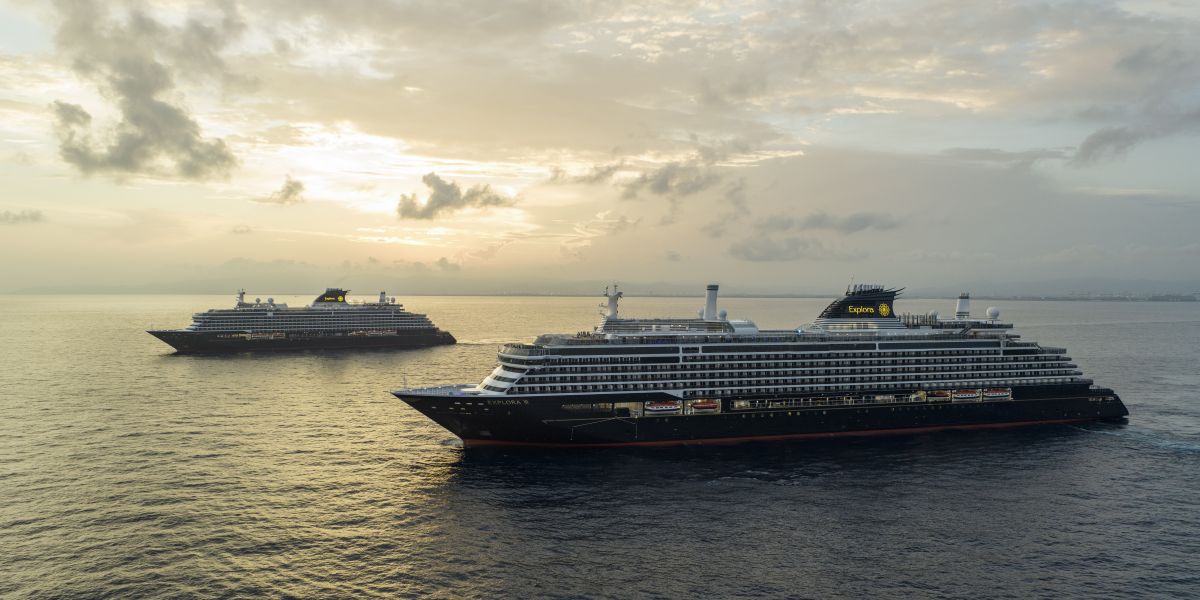
Explora Journeys has officially welcomed EXPLORA III into its growing fleet, with the luxury cruise ship departing on her maiden voyage after a naming ceremony in Barcelona on 4th August…

Carnival Cruise Line has suspended several key Platinum-tier benefits for passengers booked on Carnival Legend’s groundbreaking solar eclipse sailing departing 9th August 2026 from Dover. The 11-night voyage, timed to…
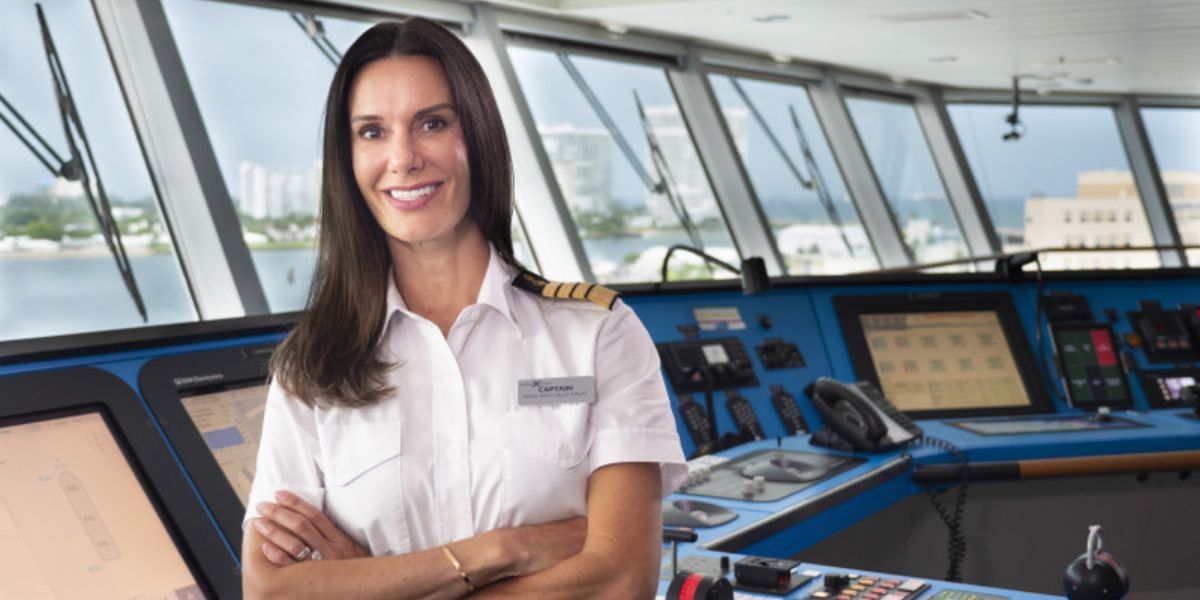
Captain Kate McCue, one of the world’s most recognisable cruise ship captains, has resigned from her position at Four Seasons Yachts to spend more time with family following the unexpected…
Source link