
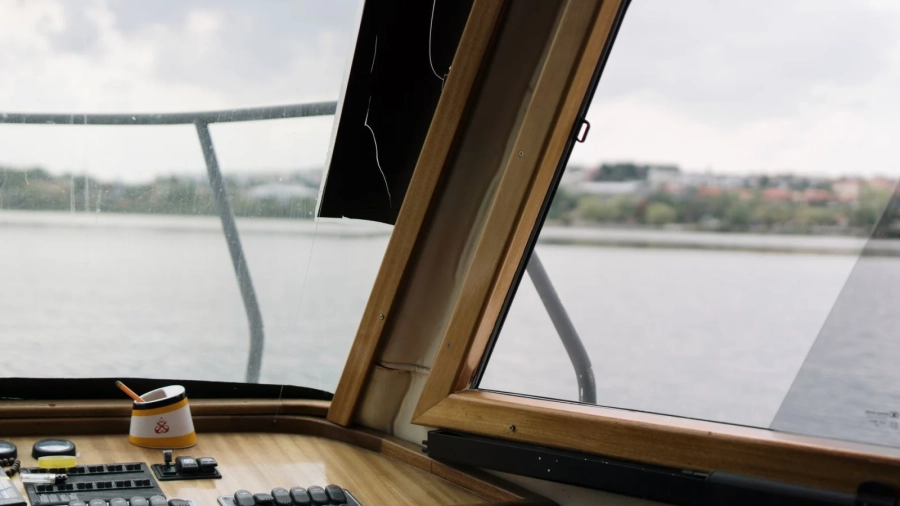
A French balcony on a cruise ship is a cabin with floor-to-ceiling sliding glass doors that open onto a railing, with no outdoor floor space to step onto. You get fresh air, river or sea sounds and a big view from inside the room, but you can’t put a chair outside. The French balcony is most common on European river ships, where narrow hulls leave little room for full verandas.
Free: download our 2027 Luxury Cruise Calendar →
If you’re comparing cabins for a Rhine, Danube or Seine sailing, it helps to know what each line means when it says “balcony”. The term covers several different designs, and the price gap between them can be large. This guide explains how a French balcony works, how it compares with a full veranda and a Juliet balcony, which cruise lines use which design, and when it’s worth paying extra.
What is a French balcony on a cruise ship?
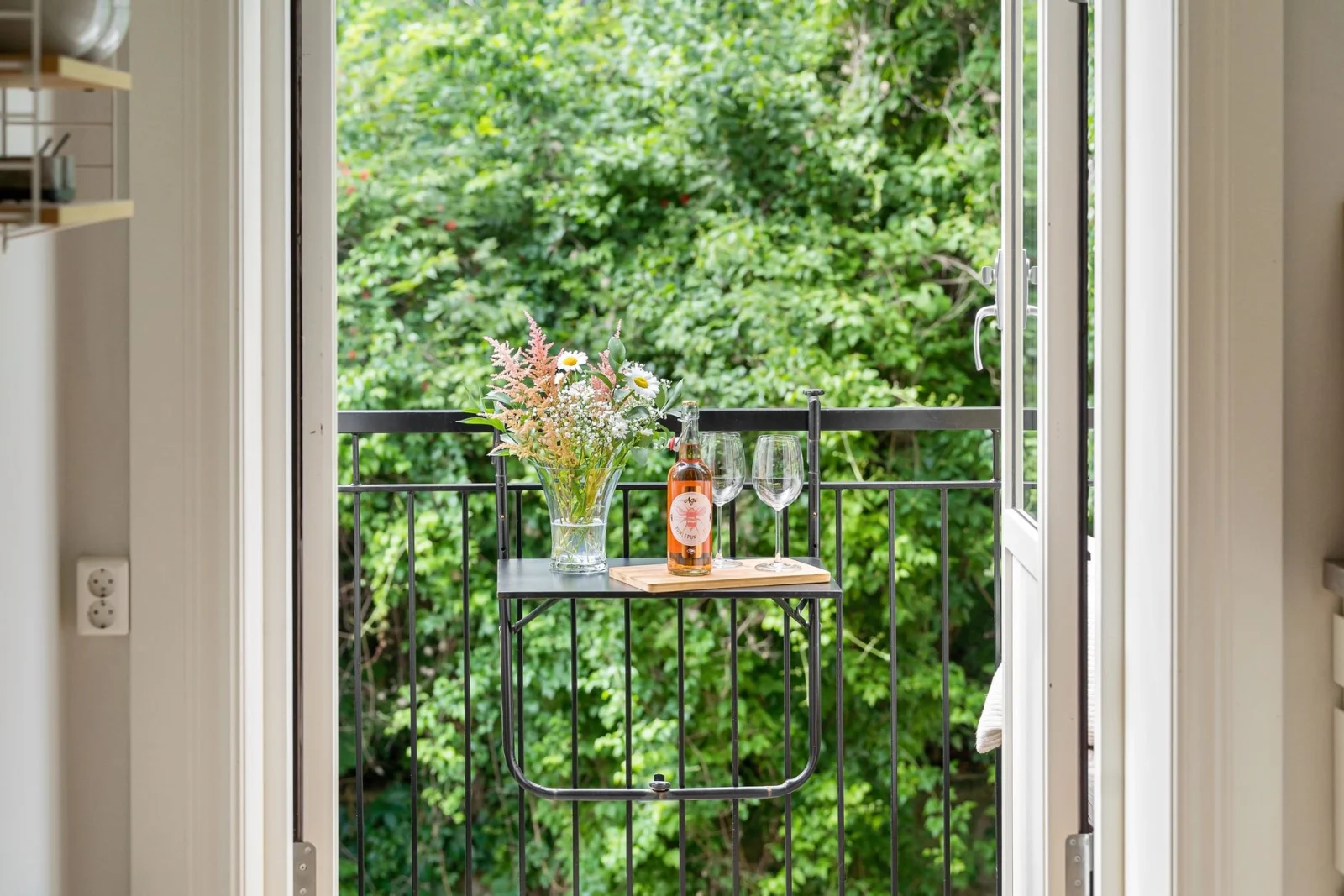
The name comes from the classic French townhouse window: tall double doors that open inward or slide aside, with a decorative rail across the opening. On a ship, the idea is the same. Behind the glass there’s a safety railing, usually a few inches from the doors, so the doorway is fully open to the outside but there’s nowhere to stand.
In practice, a French balcony cabin gives you:
- A full-height window rather than the half-height or high-set windows of a standard river cabin.
- Doors that open, so you can let in the breeze, hear the river and take photos without a pane of glass in the way.
- No outdoor seating. The “balcony” is the doorway itself, and your seating stays inside the cabin.
Because the French balcony doesn’t take up any space outside the hull, the cabin inside is often about the same size as one with a full veranda. On some ships it is actually smaller, because the veranda cabins are built wider.
French balcony vs veranda vs Juliet balcony
These three terms are often mixed up, and cruise lines don’t always use them the same way. Here is the general difference.
Full veranda (step-out balcony)
A veranda is a real outdoor space beyond the sliding door, with a floor, a railing and usually two chairs and a small table. On river ships these are fairly narrow, often only big enough for two chairs side by side. On Viking longships, for example, the veranda in a 205 sq ft Veranda Stateroom is only about 27 sq ft, or roughly the size of a small bistro table and two chairs.
French balcony
Sliding doors and a rail, with nothing to step out onto. Some lines also call this a “French-style balcony”, and Avalon markets its version as an “Open-Air Balcony”.
Juliet balcony
In everyday building terms, a Juliet balcony is very close to a French balcony: a railing across a door or window with a tiny ledge or none at all. On cruise ships the two names are used almost interchangeably. If a line lists a “Juliet balcony”, read the cabin description or deck plan to check whether there’s any floor space at all. Most of the time there isn’t.
Cabin types compared: which balcony gets you what
The table below compares the common cabin types on a typical European river ship. Sizes vary by line and ship, so use these as a guide and check the deck plan for your sailing.
| Cabin type | Window or door | Outdoor seating | Typical river-ship size | Best for |
|---|---|---|---|---|
| Standard / river view | Fixed window, often high on the wall near the waterline | No | About 150-160 sq ft | Travelers on a budget who spend most of their time ashore or in the lounge |
| French balcony | Floor-to-ceiling sliding doors with a rail | No | About 135-170 sq ft | Fresh air and big views without paying for a veranda |
| Drop-down window or sun lounge (Emerald, Scenic, Avalon style) | Large glass wall, part of which lowers or slides open | Seating inside, by the open window | Varies by ship | People who want an open-air feel that also works in cool weather |
| Twin balcony (AmaWaterways) | French balcony plus a separate step-out balcony | Yes, two chairs and a small table | About 210-235 sq ft | Couples who want both options in one room |
| Full veranda | Sliding door onto an outdoor deck | Yes | About 205 sq ft including the veranda (Viking) | People who love sitting outside to watch the scenery |
| Suite with veranda | Sliding doors, often a separate living area | Yes, sometimes wraparound | About 275-445 sq ft (Viking) | Longer trips, special occasions and anyone who wants space |
Which cruise lines have French balconies?
Almost every European river line uses French balconies somewhere, but each one has its own design and naming. Here’s how the main lines handle it.
Viking River Cruises
Viking’s longships use an off-center corridor design: one side of the ship has cabins with full verandas and the other side has French balcony cabins. On the standard longship layout, French Balcony Staterooms (categories C and D) are about 135 sq ft, while Veranda Staterooms are about 205 sq ft. Interestingly, Viking’s Standard Staterooms on the lowest deck are about 150 sq ft, so the French balcony cabin is slightly smaller than the entry-level room. You pay for the view and the opening doors, not for extra floor space.
AmaWaterways
AmaWaterways is known for its “twin balcony” design. On many of its ships, most upper-deck cabins have a French balcony and a separate outside balcony side by side. On AmaKristina, for example, the twin balcony cabins are around 210-235 sq ft, with two padded chairs and a small table outside. AmaWaterways also sells some French balcony-only cabins, at about 155-170 sq ft, which are a cheaper way to get opening doors.
Avalon Waterways
Avalon’s Suite Ships replace small step-out balconies with what the line calls an Open-Air Balcony. In the Panorama Suites, which Avalon puts at about 200 sq ft, the wall-to-wall window slides open, and the bed faces the river rather than a wall. In effect, the whole room becomes the balcony.
Emerald Cruises and Scenic
Both lines use variations of an indoor balcony. Emerald’s Panorama Balcony Suites have a floor-to-ceiling window whose upper section lowers at the touch of a button. Scenic’s Sun Lounge works in a similar way, with a glass-enclosed seating area that opens at the push of a button. These designs give you more usable space in cool weather than a French balcony, and you can sit right by the open window. If you’re thinking about Emerald, our honest Emerald river cruise review covers what the ships are like overall.
Uniworld and Tauck
Uniworld’s layouts vary by ship. Many have French balconies on one deck and opening or outside balconies higher up. Tauck has mostly used French balconies, sliding glass doors with no outdoor deck, across its river fleet.
What about ocean ships?
True French balconies are much less common on big ocean ships, where cabins usually come as inside, ocean view, or step-out balcony. The nearest well-known equivalent is Celebrity’s Infinite Veranda, found on Celebrity Edge, Apex, Beyond, Ascent and Xcel. The top half of a floor-to-ceiling window lowers at the press of a button, and the “veranda” is a seating area inside the cabin that bifold doors can close off. One thing to know is that opening the window switches off the cabin’s air conditioning. If you see “French balcony” on an ocean ship’s cabin list, look at the deck plan and photos for that exact cabin, since the description can vary.
Pros and cons of a French balcony cruise cabin
Pros
- Fresh air and sound. Opening the doors as you pass vineyards, castles or riverside villages is the main appeal.
- Bigger view than a standard cabin. On river ships, standard cabins often sit near the waterline with high windows. French balcony cabins are higher up, with full-height glass.
- Lower price than a veranda. You get much of the experience for a smaller premium.
- Useful in shoulder seasons. On spring and fall sailings it’s often too cool to sit outside anyway, so a veranda you can’t use may not be worth extra money.
Cons
- No outdoor seating. If you picture morning coffee outside, a French balcony won’t give you that.
- Sometimes less floor space. As on Viking, the French balcony cabin can be smaller than the standard cabin below it.
- Docking can block the view. In busy river ports, ships often tie up side by side (“rafting”). If yours is the inside ship, you may open your doors to a view of another ship’s cabin. This affects verandas too, but it matters more when the view is the main thing you paid for.
- Privacy and noise. With the doors open you’ll hear the deck, passing boats or the quay. You may also need to close the curtains in port.
Is a French balcony worth it?
Whether a French balcony is worth paying for depends on how you travel. Most river cruise days are spent ashore on tours, and evenings are often spent in the lounge or on the sun deck, which on most river ships has plenty of seating. If that sounds like you, a French balcony is often the best value: you get full-height views and fresh air without paying veranda prices.
A full veranda or twin balcony makes more sense if you’re on a summer sailing, love quiet time outside or are booking a route with long scenic cruising stretches, such as the Rhine Gorge or the Wachau Valley on the Danube. An indoor-balcony design such as Emerald’s or Scenic’s is a good middle ground if you want space by the window that you can still use on a chilly day.
A few practical tips before you book:
- Compare square footage, not just names. “Balcony” means different things on different lines, and some French balcony cabins are smaller than standard ones.
- Look at the price per night difference. On an eight-day river cruise, a small per-night premium can add up to a lot. Decide what the view is worth to you.
- Check the deck. Higher decks usually cost more but sit further from the waterline, and they may be closer to sun-deck noise.
- Watch for promotions. Upgrades and reduced fares on balcony categories come up regularly. Our roundup of cruise deals for 2027 is a good place to start.
If you’re still deciding between cabin types more generally, our guide to booking a balcony vs an inside cabin goes through the trade-offs in more detail.
If you would rather have a step-out verandah, see our guide to the best full-size balcony cabins at sea.
FAQs
Can you sit on a French balcony?
No. A French balcony has no outdoor floor, just sliding doors and a railing. You can put a chair just inside the open doors, but you can’t sit outside.
What is the difference between a French balcony and a veranda?
A veranda is an outdoor space you can step onto, usually with two chairs and a small table. A French balcony is a full-height door that opens to a railing, with no space outside the cabin.
Is a French balcony the same as a Juliet balcony?
Mostly, yes. Both describe a door or window that opens to a railing with little or no floor space. On cruise ships the names are used almost interchangeably, so check the cabin description for your specific ship.
Do ocean cruise ships have French balconies?
Not many. Most ocean ships offer inside, ocean view and step-out balcony cabins. Celebrity’s Infinite Veranda, on its Edge-class ships, is a similar idea: a window that lowers to open up a seating area inside the cabin.
Is a French balcony worth it on a river cruise?
For many passengers, yes. It gives you full-height views and fresh air for less than a veranda, and you spend much of the trip ashore or in public areas anyway. If sitting outside in your own space matters to you, choose a veranda or a twin balcony.