
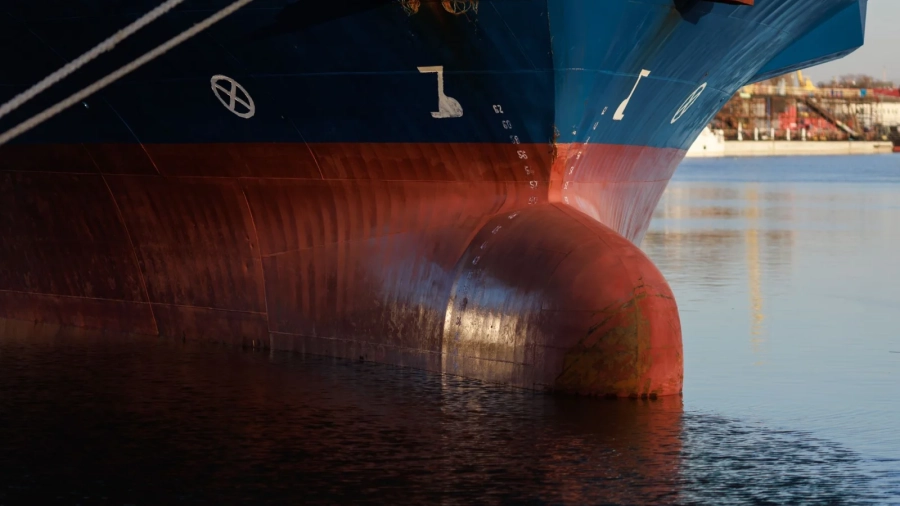
The draft of a ship (also spelled draught) is the vertical distance between the waterline and the lowest point of the hull, usually the bottom of the keel. In plain terms, it tells you how deep the vessel sits in the water, and therefore how much water it needs to float safely without touching the seabed.
Free: download our 2027 Luxury Cruise Calendar →
Draft is not a fixed number. It rises and falls with cargo, fuel, water density and even the way weight is spread along the hull. Below, we explain what ship draft means, how crews read it, how it differs from freeboard and air draft, and how deep different types of ships actually sit.
What Is the Draft of a Ship? A Clear Definition
Picture a ship floating in calm water. Everything below the surface is the underwater body of the hull. The draft is the height of that underwater part, measured straight down from the waterline to the deepest fixed point, which is normally the keel. On some vessels a propeller, rudder or sonar dome sits slightly lower, and navigators will use the true lowest point when working out clearance.
A few related terms come up again and again:
- Forward draft and aft draft: the draft read at the bow and at the stern.
- Midship draft: the draft read halfway along the hull.
- Mean draft: the average of the forward and aft readings, used as a quick summary of how deep the ship is sitting.
- Design or summer draft: the deepest draft a ship is allowed to reach in summer seawater, set by its load line certificate.
“Draft” is the usual American spelling, while “draught” is common in British and international shipping documents. They mean exactly the same thing.
Why Ship Draft Matters
Draft is one of the first numbers a captain, pilot or port planner checks, because it controls where a ship can go and how much it can carry.
- Grounding risk: navigators compare the ship’s draft with charted water depth and the tide to work out under-keel clearance, the gap between the hull and the seabed.
- Port and canal access: channels, berths and locks all have maximum drafts. A ship that sits too deep must wait for high tide, reduce cargo or go elsewhere.
- Cargo and fuel planning: every extra tonne pushes the hull a little deeper, so draft limits translate directly into how much a ship can load.
- Safety and stability: keeping the draft within the load line marks preserves enough reserve buoyancy for heavy weather.
A detail many explainers skip is squat. When a ship moves through shallow or confined water, the flow of water under the hull lowers the pressure there and the vessel sinks slightly deeper than its static draft. The faster it goes, the stronger the effect. That is why pilots slow down in narrow channels and why ports build a safety margin on top of the published draft.
Draft Marks: How to Read a Ship’s Draft
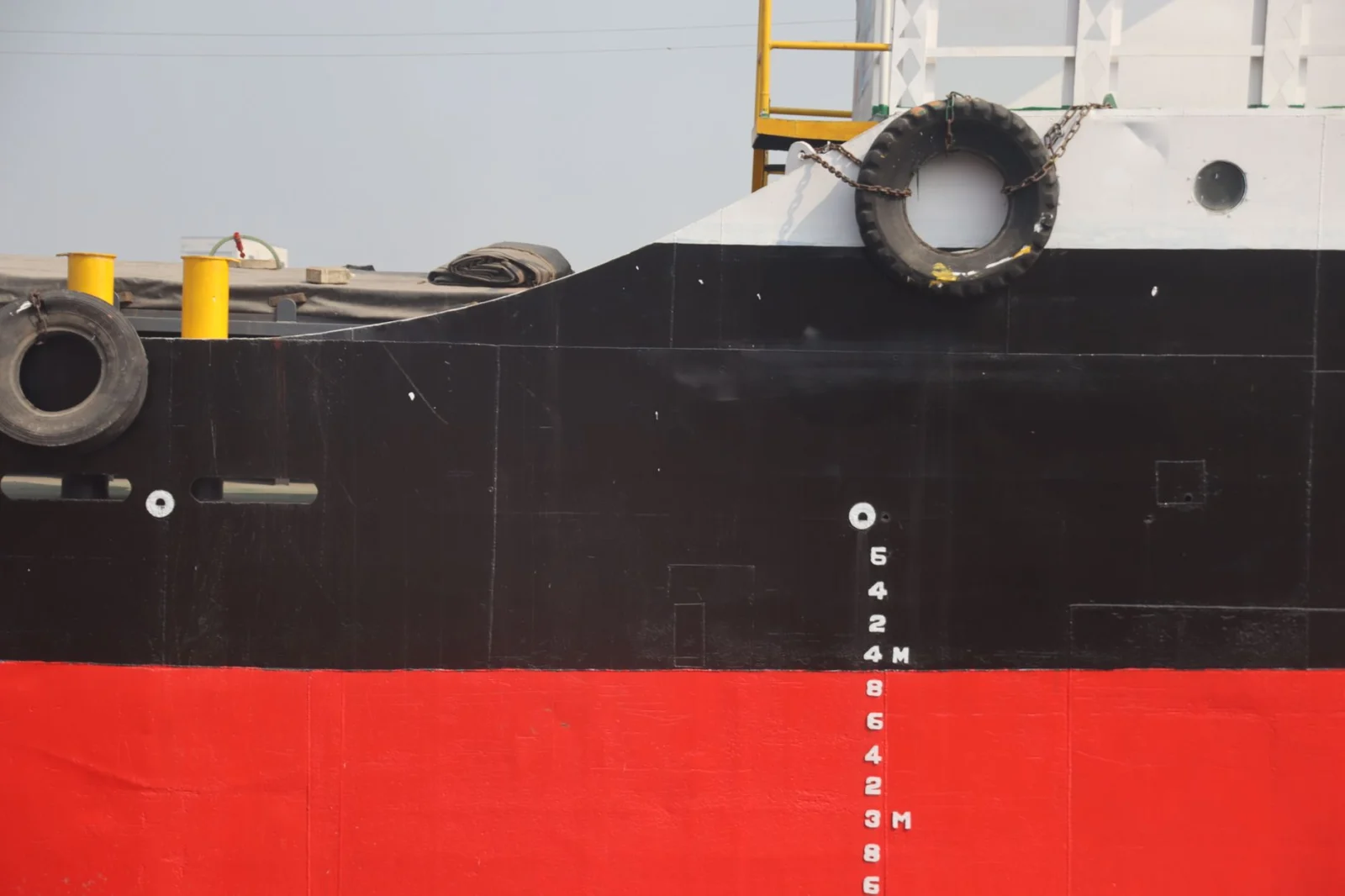
Draft marks are the numbers painted (and often welded) onto both sides of the hull near the bow and stern, and usually amidships too. They work like a giant ruler that starts at the keel.
Imperial draft marks
On ships marked in feet, each number is 6 inches tall and the numbers are spaced 12 inches apart, bottom to bottom. The bottom edge of a number marks that exact draft in feet. If the water touches the bottom of the “28”, the draft is 28 feet; if it reaches the top of the “28”, the draft is 28 feet 6 inches.
Metric draft marks
On metric ships, each figure is 10 cm tall and the marks are spaced 20 cm apart, so the bottom of each figure shows the draft in decimetres. Whole metres are usually shown with an “M”, for example “9M”, followed by figures such as 2, 4, 6 and 8 for each 20 cm step.
Reading the marks in practice
- Read the forward, midship and aft marks on both sides of the hull.
- Average port and starboard readings at each position to cancel out any list (a sideways lean).
- Calculate the mean of forward and aft drafts; the difference between them is the trim.
- Compare the midship reading with the mean to spot hogging (hull bending up in the middle) or sagging (bending down).
Surveyors use these readings in a “draft survey” to estimate how much cargo a bulk carrier has loaded. Modern ships also carry electronic draft gauges based on pressure sensors, which give a continuous reading on the bridge.
Draft vs Freeboard vs Air Draft vs Depth
These four measurements describe different parts of the same hull and are easy to mix up.
| Term | What it measures | Why it matters |
|---|---|---|
| Draft | Waterline down to the keel | Clearance over the seabed, port and canal limits |
| Freeboard | Waterline up to the main (freeboard) deck | Reserve buoyancy and protection from waves |
| Air draft | Waterline up to the highest point of the ship | Clearance under bridges and power lines |
| Moulded depth | Keel up to the main deck | A fixed hull dimension; roughly draft plus freeboard |
The key difference between depth and draft is that depth is built into the hull and never changes, while draft changes every time the ship loads or unloads. As draft increases, freeboard shrinks by the same amount.
What Changes a Ship’s Draft?
Load
Cargo, fuel, fresh water, stores and ballast all add weight. A loaded tanker can sit almost twice as deep as the same tanker sailing empty. Cruise ships see smaller swings, but fuel and water consumption over a voyage still lift the hull a little.
Water density
Seawater is denser than fresh water, so it supports a ship more strongly. When a vessel sails from the ocean into a river or freshwater lake, it sinks slightly deeper without any change in weight. Warm water is also a little less dense than cold water. Ship officers use the “fresh water allowance”, calculated from the ship’s displacement and its tonnes per centimetre immersion, to predict the change.
Trim and list
Trim is the difference between forward and aft draft. A ship “trimmed by the stern” sits deeper aft, which is common because it keeps the propeller well submerged. List is a sideways lean caused by uneven weight, and it makes one side of the hull sit deeper than the other.
Load Line (Plimsoll) Marks and Maximum Draft
The maximum draft of a ship is set by its load line, the familiar circle-and-bar symbol painted amidships on both sides of cargo vessels. It is named after Samuel Plimsoll, the British MP whose campaign against overloaded “coffin ships” led to the Merchant Shipping Act 1876. Today the rules are international, under the IMO’s 1966 International Convention on Load Lines.
Next to the disc is a ladder of lines for different conditions:
- TF: tropical fresh water
- F: fresh water
- T: tropical seawater
- S: summer seawater (the reference line through the disc)
- W: winter seawater
- WNA: winter North Atlantic, for smaller ships in rough winter waters
A ship is fully and legally loaded when the water reaches the right line for its season and location, and never above it. The two letters beside the disc identify the classification society or authority that assigned the marks.
Draft and Stability
Draft also affects stability. Loading weight low in the hull raises the draft but lowers the centre of gravity, which generally increases the metacentric height (GM), a measure of how strongly a ship resists rolling over. Too little GM and the ship becomes tender and slow to right itself; too much and it snaps back violently, which is uncomfortable for crew and passengers. Naval architects balance hull shape, draft and weight distribution to keep GM in a sensible range.
Typical Ship Drafts by Type
Ship draft varies enormously by vessel type. The figures below are approximate, fully loaded values from published specifications and industry data.
| Ship type or example | Approximate draft |
|---|---|
| Small container ship (about 1,000 TEU) | 8.3 m (27 ft) |
| Large cruise ship, e.g. Icon of the Seas | 9.25 m (30 ft 4 in) |
| RMS Titanic (1912) | 10.5 m (34 ft 7 in) |
| Nimitz-class aircraft carrier | 11.3 m (37 ft) |
| Panamax container ship (about 4,000 TEU) | about 12.5 m (41 ft) |
| Ultra-large container ship (14,000+ TEU) | about 16 m (52 ft) |
| VLCC crude oil tanker, fully loaded | about 20 m (66 ft) |
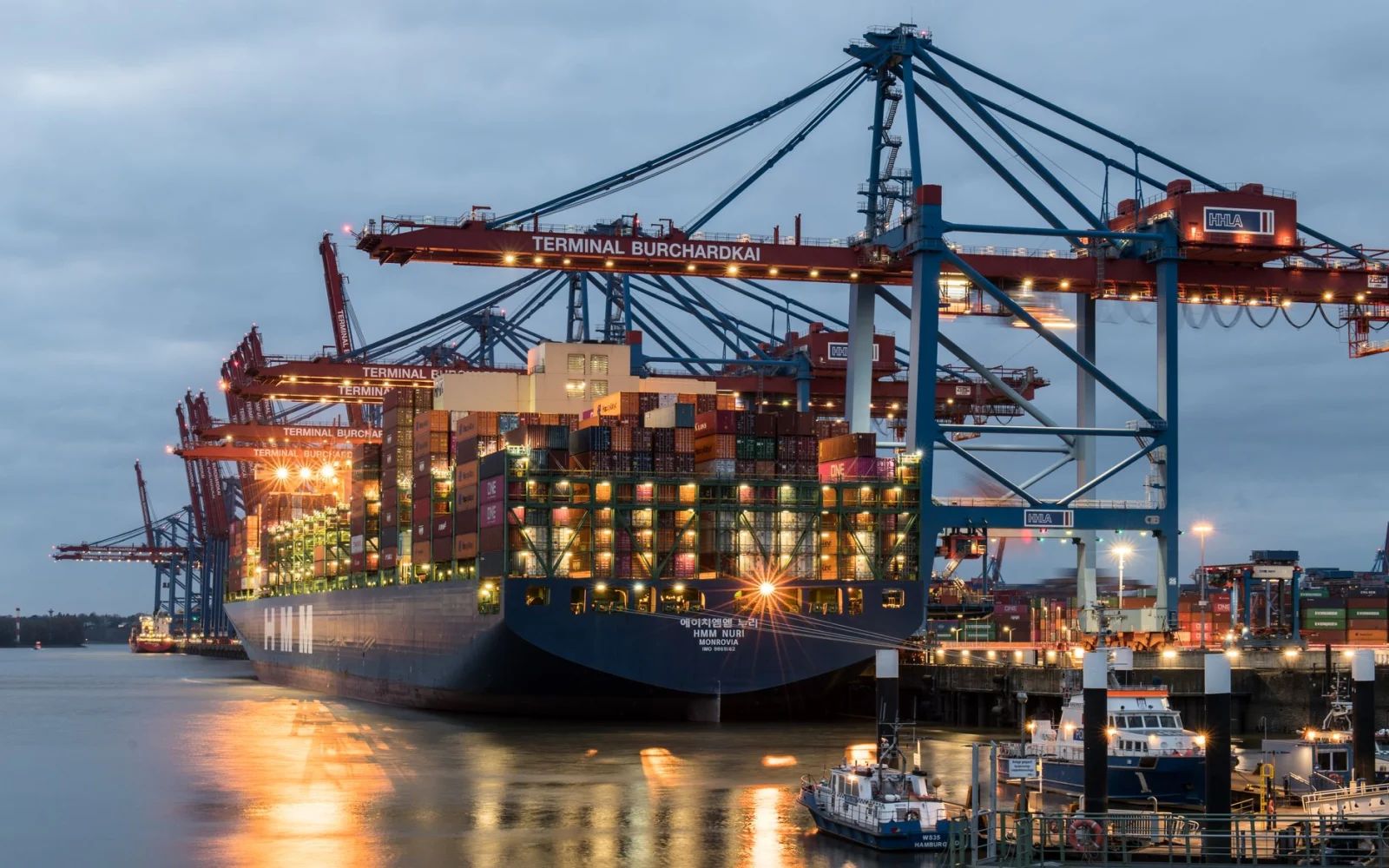
The contrast between cruise ships and cargo ships is striking. Icon of the Seas is roughly 365 m long, yet its draft is only about 9.25 m, because passenger ships carry mostly air-filled accommodation rather than dense cargo. A VLCC tanker of around 340 m, by contrast, sits about 20 m deep when full and only about 11 m when empty. Our comparison of Titanic and today’s modern cruise ships shows how much bigger passenger ships have become while keeping drafts in a similar range.
Canal and strait draft limits
Many ship sizes are defined by the waterways they must fit through:
- Panamax (original Panama Canal locks): up to 12.04 m (39.5 ft) in tropical fresh water.
- Neopanamax (expanded locks opened in 2016): designed for up to 15.2 m (50 ft), although the canal authority has temporarily reduced this in dry seasons when Gatun Lake runs low.
- Suezmax: the Suez Canal allows up to about 20.1 m (66 ft) for ships with a beam of 50 m or less, with lower limits for wider ships.
Because the Panama Canal uses fresh water from Gatun Lake, its limits are quoted in tropical fresh water, a neat real-world example of water density changing draft.
Cruise Ship Draft in Brief
Most modern ocean cruise ships draw somewhere around 8 to 9.5 m, which lets them reach a wide range of ports but still keeps the very biggest ships out of shallow harbors and some island anchorages. River and expedition ships are designed with much shallower drafts. For ship-by-ship figures and what draft means for your itinerary, see our full guide to cruise ship draft, and if you are curious about life aboard the giants, read whether the world’s biggest cruise ship is worth it.
FAQs
What is the maximum draft of a ship?
Each ship’s maximum draft is set by its load line marks and varies with season and water type. Across the world fleet, the deepest are loaded supertankers at around 20 m or more, while waterways set their own limits, such as about 15.2 m at the Panama Canal’s new locks.
What is the difference between depth and draft?
Depth is a fixed hull measurement from the keel to the main deck. Draft is the variable distance from the waterline down to the keel, and it changes as the ship loads or unloads.
What are draft marks on a ship?
Draft marks are numbers painted on both sides of the hull at the bow, stern and usually midships. They show how deep the ship sits, in feet (6-inch figures every 12 inches) or in metric units (10 cm figures every 20 cm).
How do you check the draft of a ship?
Crew read the draft marks where the water meets the hull at the bow, stern and midships on both sides, then average them to get the mean draft. Many ships also have electronic draft gauges on the bridge.
Does a ship sit deeper in fresh water?
Yes. Fresh water is less dense than seawater, so a ship floats slightly deeper in it. Load lines include separate fresh water marks for this reason.