The best time for an Antarctica cruise is December to February. That’s when you’ll get the mildest weather, penguin chicks and the longest days. November has the lowest fares and the freshest snow, and March is best for whales. Most voyages are 10 to 12 nights from Ushuaia, Argentina, including two days each way crossing the Drake Passage. Expect to pay about $7,000 to $15,000 per person on a small expedition ship, and more for a luxury line or a fly-the-Drake trip.
Free: download our 2027 Luxury Cruise Calendar →
This guide covers the routes, how each month differs, the wildlife you’ll see, what’s included and what isn’t, and how to pick a ship that actually gets you ashore.
Antarctica cruises at a glance
| Question | Short answer |
|---|---|
| Season | Late October to March (the Southern Hemisphere summer) |
| Best overall | December to February |
| Main departure port | Ushuaia, Argentina (fly-the-Drake trips start in Punta Arenas, Chile) |
| Typical length | 10 to 12 nights for the Antarctic Peninsula; 18 to 22 nights with the Falklands and South Georgia |
| Typical cost | About $7,000 to $15,000 per person on an expedition ship; $15,000 to $30,000+ for luxury lines or flying the Drake |
| Ship size to look for | Under 200 guests, so everyone gets ashore |
The main Antarctica cruise routes
1. The Antarctic Peninsula from Ushuaia (10 to 12 nights)
This is the classic trip and the one most people take. You sail from Ushuaia down the Beagle Channel, cross the Drake Passage in about two days, and spend roughly five days among the islands and bays of the Antarctic Peninsula, usually with one or two landings or Zodiac cruises a day. Then you cross the Drake back. It’s the best balance of time, cost and wildlife.
2. Fly the Drake (about 6 to 10 nights)
If you’re worried about seasickness or short on time, fly-the-Drake trips skip the crossing. You fly about two hours from Punta Arenas, Chile, to King George Island in the South Shetlands and board the ship there. The trade-off is price, and weather: if the flight can’t land, you wait in Punta Arenas until it can. Some voyages sail one way and fly the other.
3. Falklands, South Georgia and Antarctica (18 to 22 nights)
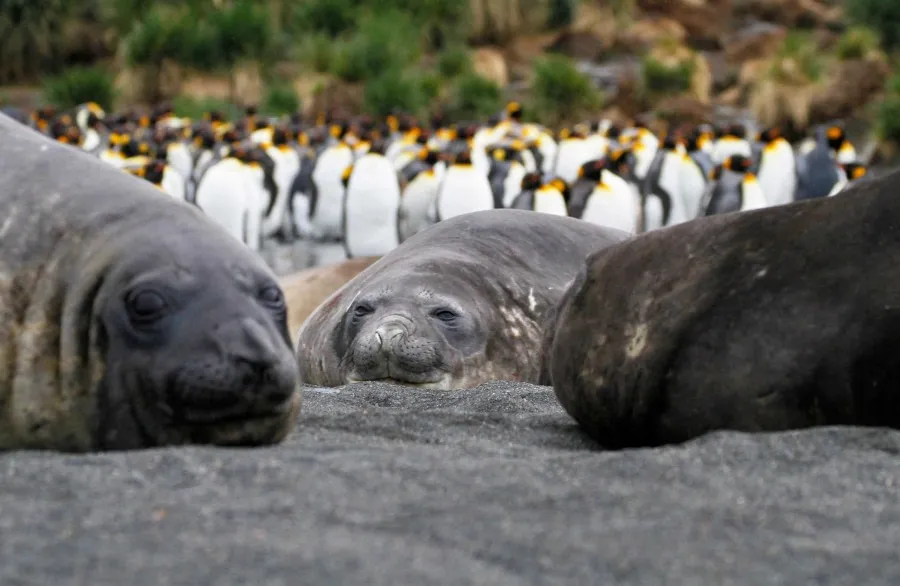
For wildlife lovers, this is the trip of a lifetime. South Georgia has king penguin colonies of hundreds of thousands of birds, beaches packed with elephant and fur seals, and Grytviken, the old whaling station where Ernest Shackleton is buried. The Falklands add rockhopper penguins and albatross colonies. It takes three weeks and costs roughly double a Peninsula trip.
4. Crossing the Antarctic Circle (11 to 14 nights)
These voyages sail further south along the Peninsula to cross the Antarctic Circle at 66°33′ south, weather and ice permitting. You get more remote scenery and a certificate to prove it, at the cost of a day or two less at the classic northern landing sites.
5. Specialist voyages: the Weddell Sea and the Ross Sea
A few voyages head into the ice-choked Weddell Sea, where some trips try to reach the emperor penguin colony at Snow Hill Island by helicopter early in the season. Ross Sea voyages leave from New Zealand or Australia and last around four weeks. Both depend heavily on ice, and both are for travelers who have been before or want something truly remote.
The Drake Passage: what it’s really like
The Drake Passage is the stretch of open ocean between Cape Horn and the South Shetland Islands, roughly 600 miles across. There is no land to shelter behind, so the swell can be big. Some crossings are flat calm, which crews call the “Drake Lake.” Others are the “Drake Shake,” with a day or two when moving around the ship is hard work.
Modern expedition ships have stabilizers, and the crossing is spent on lectures, seabird watching from the deck (look for albatrosses) and briefings. Take seasickness tablets or a patch before you leave Ushuaia, choose a cabin low and in the middle of the ship, and you’ll be fine. Many people say the crossing is part of the adventure.
When to go: Antarctica month by month
| Month | What you’ll see | Good to know |
|---|---|---|
| Late Oct to Nov | Pristine snow, huge icebergs, penguins courting and building nests | The lowest fares of the season; colder, and some landings still snowed in |
| December | Penguin eggs and the first chicks, up to 20 hours of daylight | Peak demand around Christmas and New Year |
| January | Chicks everywhere, the mildest temperatures (often just above freezing) | The most popular and most expensive month |
| February | Chicks growing up, whale numbers climbing, the most open water | Ice has retreated, so ships can reach further south |
| March | The best whale watching, dramatic sunsets, fur seals on the beaches | Often the best value; penguin colonies start to empty |
The wildlife you can expect
- Penguins: gentoo, chinstrap and Adélie penguins on the Peninsula; king, rockhopper and macaroni penguins on South Georgia and the Falklands. Emperor penguins are rarely seen on regular voyages.
- Whales: humpbacks are the most common, plus minke whales and orcas. Late season is best.
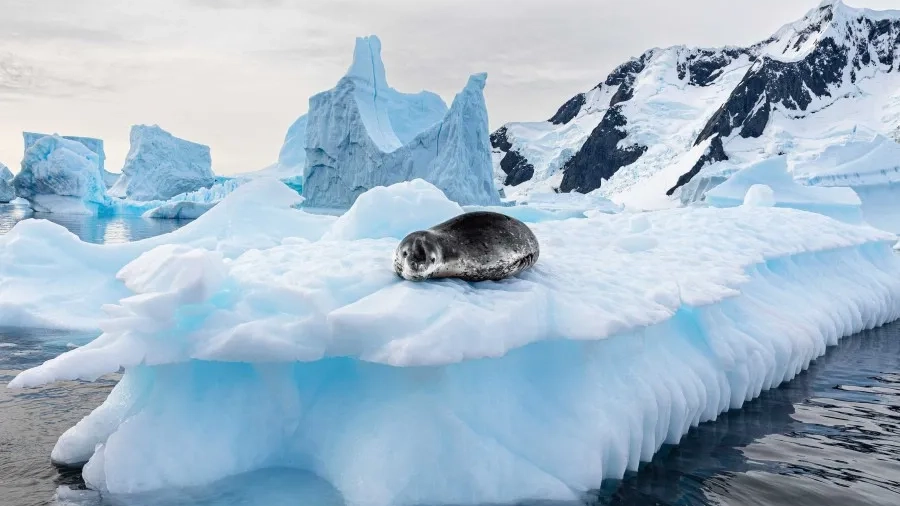
- Seals: leopard seals hunting near penguin colonies, plus Weddell, crabeater and fur seals, and elephant seals on South Georgia.
- Seabirds: wandering and black-browed albatrosses over the Drake, plus petrels, skuas and Antarctic terns.
Note that there are no polar bears in Antarctica. They live only in the Arctic; if you want to see them, read our Svalbard cruise guide.
What an Antarctica cruise costs
Prices are per person, two sharing a cabin, in US dollars. As a rough guide:
- Antarctic Peninsula, 10 to 12 nights on an expedition ship: about $7,000 to $15,000, depending on the month and the cabin.
- Falklands, South Georgia and Antarctica, 18 to 22 nights: about $14,000 to $25,000 on an expedition ship.
- Fly-the-Drake voyages and luxury expedition lines: from about $15,000, and over $30,000 for top suites.
Sales can bring these down a lot. In November 2026, for example, Oceanwide Expeditions’ Black Friday sale had a 10-night Antarctica voyage from $5,850 (prices checked Nov 17, 2026).
Usually included: your cabin, all meals, landings and Zodiac cruises, the expedition team’s talks, and on many ships, rubber boots on loan and a parka to keep.
Usually extra: flights to Ushuaia or Punta Arenas, a hotel night before you sail, optional activities such as kayaking or camping, drinks on some ships, gratuities, and travel insurance with emergency medical evacuation cover, which almost every line requires.
How to choose an Antarctica cruise ship
Size matters more than anything. Under the rules followed by Antarctic tour operators (the IAATO guidelines), ships carrying more than 500 passengers cannot land anyone, and no more than 100 people may be ashore at one site at a time. On a ship with 100 to 200 guests, everyone gets ashore at almost every landing. On a 500-passenger ship, groups take turns. Big cruise ships that advertise “Antarctica” only sail past.
Check the ice class. A higher polar or ice class lets the ship push further into the ice, which matters most early in the season and on Antarctic Circle or Weddell Sea voyages.
Compare what’s included. Some lines include kayaking, snowshoeing or a camping night in the fare; others charge several hundred dollars for each. Compare the total cost, not just the headline price.
Decide on comfort. Expedition ships range from comfortable and practical, with shared tables and a lecture room, to luxury ships with suites, butlers and spas. The landings and the wildlife are the same; the price is not.
Small polar ships of 108 to 170 guests, with landings and many activities included. Peninsula, Antarctic Circle, South Georgia and Weddell Sea voyages.
BLACK FRIDAY Up to 25% off, booking by Dec 2.
See voyages & prices →Affiliate link: we may earn a commission at no extra cost to you. Prices in US dollars.Rules ashore: what to expect on a landing
- Biosecurity checks: before every landing, you’ll vacuum your outer clothing and bags for seeds, and scrub your boots before and after, so nothing is carried between sites.
- Keep your distance: stay at least 15 feet (5 meters) from wildlife, and further if the animals react. Penguins have right of way on their “highways” through the snow.
- Take nothing, leave nothing: no food ashore, no stones or feathers as souvenirs, and no going to the toilet on land.
- Follow the expedition team: they mark out the safe area at each landing, and the time ashore is usually one to three hours.
What to pack for Antarctica
- Thermal base layers, a fleece or mid layer, and a waterproof, windproof outer jacket (some lines give you a parka)
- Waterproof pants for Zodiac rides, which can be wet
- A warm hat, a neck warmer, thin gloves for your camera and waterproof outer gloves
- Polarized sunglasses and strong sunscreen: the light off snow and ice is intense
- A dry bag or waterproof backpack for your camera
- Seasickness tablets or patches for the Drake Passage
- Binoculars, and a spare camera battery (batteries drain faster in the cold)
You usually don’t need to buy expedition boots: most lines lend rubber boots for landings. Check with your cruise line before you buy.
Antarctica cruise FAQ
How cold is it on an Antarctica cruise?
Colder than you might think in the wind, but not as cold as you might fear. On the Peninsula in summer, temperatures are often around 30 to 40°F (about -1 to 4°C). Wind chill is what makes it feel cold, which is why layers and a windproof jacket matter.
How far ahead should I book?
For peak weeks and the best cabins, 12 to 18 months ahead. Expedition lines also run sales, such as Black Friday offers in November, and sometimes release last-minute cabins at a discount.
Is an Antarctica cruise suitable for older travelers?
Yes, for most people who can walk on uneven ground and step into a Zodiac with help from the crew. You can skip any landing, and ships carry a doctor. If you have mobility or health concerns, talk to the cruise line before you book, as the nearest hospital can be days away.
Do I need a visa for Antarctica?
No one issues visas for Antarctica, but you’ll need the right entry documents for Argentina or Chile, depending on where your voyage starts. Check the current rules for your passport before you book flights.
Can I see Antarctica on a big cruise ship?
You can see it, but you can’t land. Ships carrying more than 500 passengers are limited to scenic cruising. If setting foot on the continent matters to you, choose an expedition ship.
Planning a polar trip? See our expedition cruises guide for Antarctica, Svalbard and Greenland side by side.