cruise-ship-water.jpg

Cruise Ships Don’t Carry All That Fresh Water – Here’s How They Make It

Cruise ships can carry over 6,000 passengers – plus a full crew – all needing fresh water to drink and shower, plus the cooking and cleaning done by the crew. That’s tens of thousands of gallons, every single day.

So where does it all come from?

cruise ship tap water

Spoiler: it’s not stored in giant tanks. That space is needed for fuel. The way cruise ships create fresh water is surprisingly efficient – and kind of fascinating.

Cruise Ships Make Their Own Fresh Water!

Cruise ships make their own drinking water. It’s unsurprising since they’re constantly surrounded by sea water – they use either steam evaporation or reverse osmosis processes to desalinate the water before minerals and chlorine are added.

It’s the same as a home filtration system, only much, much larger.

Cruise ships do have large stores for bringing water onto the ship at port, but there’s still nowhere near enough space to store all the drinking water needed for a cruise. Not if you also want to eat, anyway.

And since it’s easier to create drinking water than it is to source food in the middle of the ocean, food storage is prioritised.

The minerals added to the desalinated water are for flavour, while chlorine is a cleaning agent which will kill any unwanted bacteria. Don’t worry, it won’t taste like pool water, it’s a much lower amount – the same that would be in typical tap water.
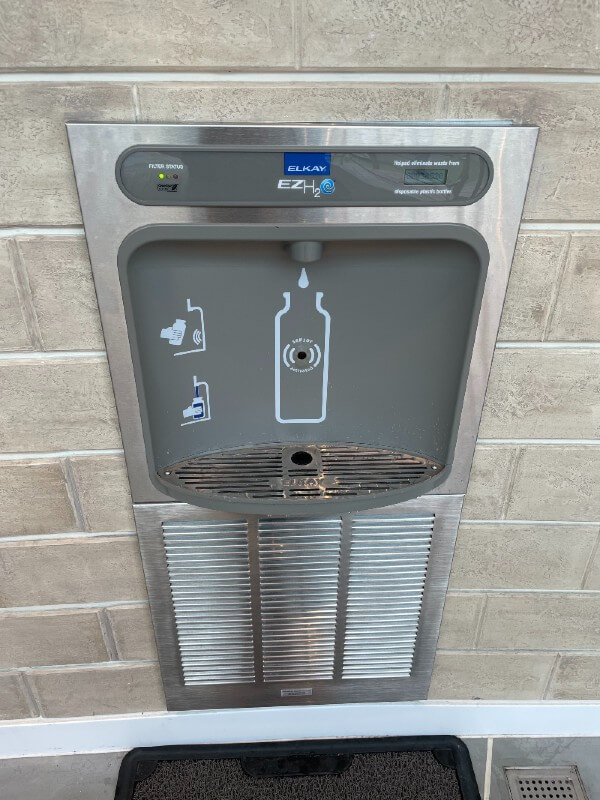
water machine on a cruise ship
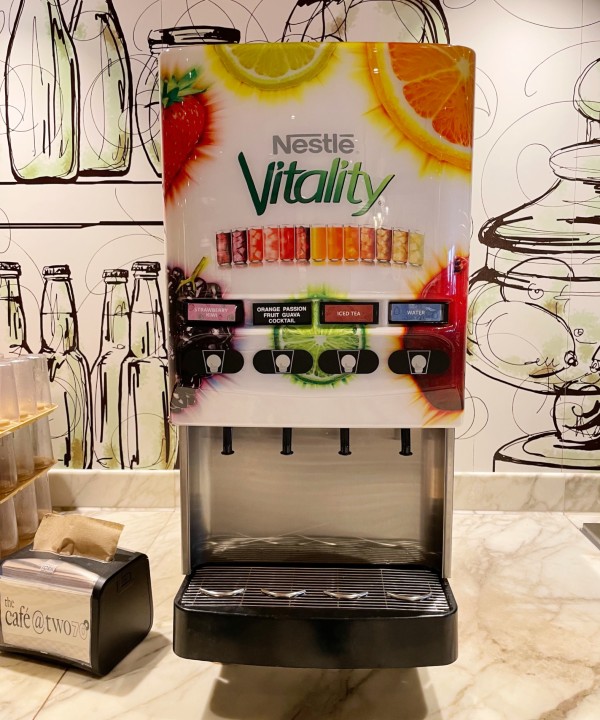
Water dispenser on P&O Cruises’ Iona

The water from dispensers generally tastes better than the tap water in your cabin. That’s because it’s filtered a second time and cooled to a more pleasant temperature for drinking.

There Is Still A Lot Of Storage For Water

Cruise ships tend to be able to store around 500,000 gallons of fresh water in massive tanks in the hold. Once it’s been used by passengers for laundry, showering or in the toilet, it’ll be treated before it’s released into the ocean.

Ships make take fresh water on board at ports, but this isn’t suitable for drinking, and instead is limited for use in laundry, cooling the engines or as ballast. The drinking water tends to only be taken from the seawater that undergoes desalination.

River cruise ships tend to have much smaller water stores, and so need to top up their fresh water supplies at each port. This is less of an issue since they don’t usually go for days in between each port.

Cruise Water Cleanliness

Cruise ship water is generally very clean. It goes through intensive filtration processes to make sure it is safe to use. And there are rules about water recycling – water that has been used won’t be re-used for passengers on the ship.

Instead, used water is separated into grey water (laundry and showers) and black water (toilet) before being treated appropriately.

It then gets released into the oceans after it has been rendered safe, which must be done at a safe distance from land as dictated by the International Maritime Organization.

Tap Water Is Safe To Drink Onboard

Unless you are told otherwise, cruise ship tap water is safe for drinking. It is heavily filtered and chlorinated to an appropriate level to remove any toxins, with minerals added to make it taste a lot more pleasant too.

Some ship engineers have even supposedly described the drinking water on cruise ships as being healthier than bottled water. While that’s anecdotal, you shouldn’t be concerned about drinking the tap water unless you’ve been told that there’s a temporary problem.

This is good since bottled water tends to cost extra on a cruise, unless you have a drink package.

Some cruise lines let you bring your own bottled water on board. Some specify that it must be in cans or cartons (no plastic or glass) and others ban you from bringing water altogether. To find out which category yours falls into, read this guide to bringing bottled water on a cruise.

cans of water on a cruise
Canned or bottled water is available for an extra charge

You should avoid drinking the water in the shower though – that’s good life advice, not just on a cruise ship.

A couple of other points worth mentioning – firstly, the ice on board is made using the same drinking water that’s been through the same processes. It’s handled carefully to the same standards as any food on board.

So, even if you don’t intend to drink the tap water, you can at least know that the ice cubes in your drink are also not going to cause you any harm. This is much better than many holiday resorts on land which use tap water to make ice, even when the tap water isn’t safe to drink.

Secondly, while the water on a cruise ship is safe for drinking, it might have a slightly different level of chlorine than tap water and so might not be suitable for baby formula. Also if you need distilled water for a medical reason, you should avoid tap water.

Suggested read: How to Feed Your Baby on a Cruise

Speak to your cruise line – they’ll have different policies on how much water you can bring on board if you have a specific need, and while they can always provide bottled water and usually they can source distilled water for you, it may be a paid-for extra. Some luxury ships may have it available for you free of charge.

Swimming Pool Water

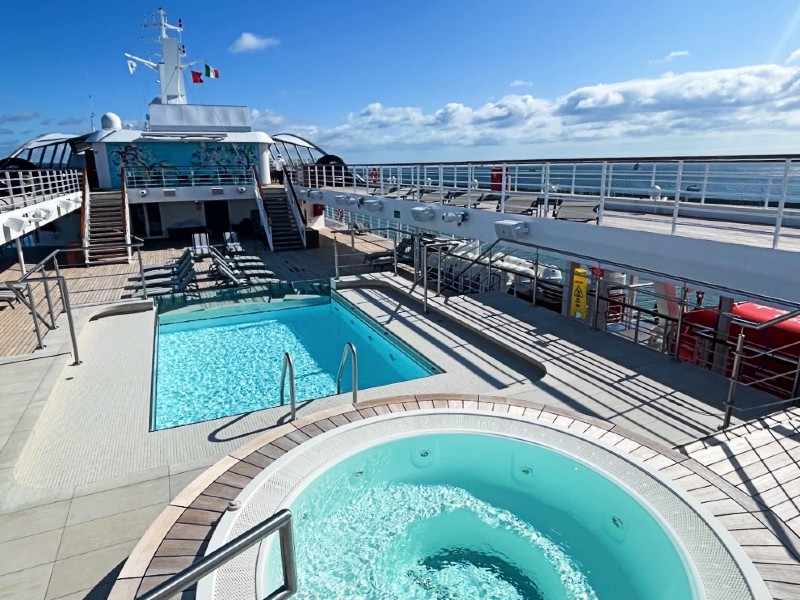
Many cruise ship pools are filled with treated seawater. Chemicals are used to make sure it is clean and safe to swim in. Some ships will use fresh water and others will offer both – so you can see just how much more buoyant you are in a saltwater pool.

The trend seems to be that more modern cruise ships lean towards freshwater pools, which is probably a sign that the freshwater is easier to maintain and keep filtered.

The salt content of seawater will damage pumps over time, after all. And the modern larger ships have more storage space so they can filter in more fresh water than older ships would be able to.
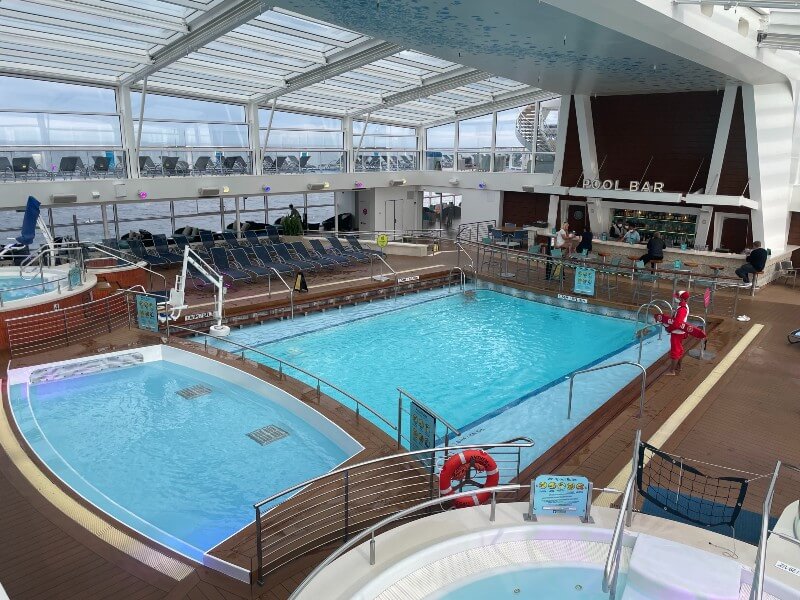
cruise ship pools
Fresh water swimming pool on Anthem of the Seas

Hot Water Systems Onboard

Cruise ships will have a robust hot water system on board to deliver the hot water around the ship where it is needed. Despite being a temporary home to thousands of passengers at once, it’s rare to see complaints about cold or low-pressured showers.

The fresh water that’s been desalinated will be fed into different plumbing systems throughout the ship for drinking, cooking and for showers and baths. It’s heated through the consumption of whatever fuel is used on the ship, before being pumped around each deck as required.

It’s not really any different to a typical domestic hot water system at home – just significantly larger and with a lot more plumbing involved.
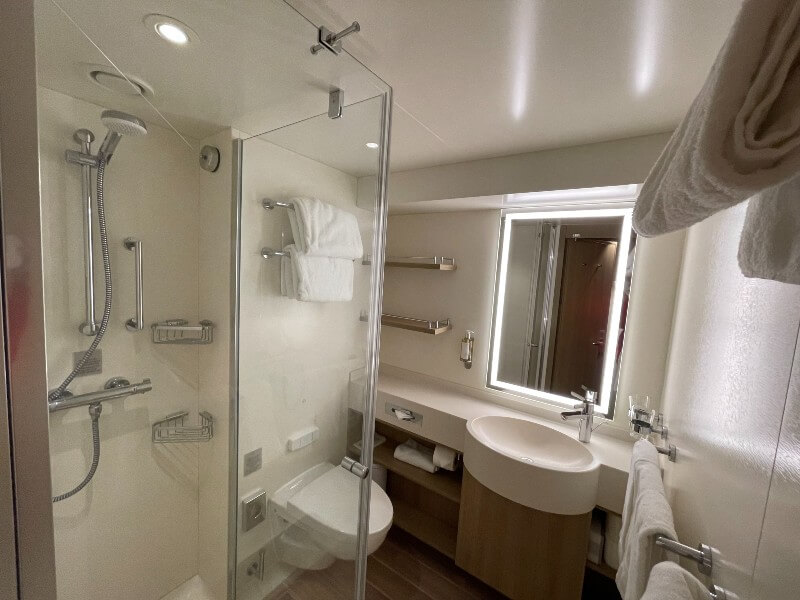
cruise ship bathroom
You can drink the tap water in your room, but it may not be very cold

To Conclude

It would be strange for a cruise ship to be surrounded by so much water and not try to take advantage, so you probably expected that ships used some sort of purification process to make sea water safe for drinking and washing. And now you know you were right.

You can wash in fresh clean water, your food will be prepared in safe water too, and you can feel comfortable drinking the tap water – if you aren’t too busy enjoying the soft drinks, cocktails and Champagnes, anyway.

Related Posts:
If you found this interesting, please share!
Cruise Mummy

Jenni Fielding is the founder of Cruise Mummy. She has worked in the cruise industry since 2015 and has taken over 30 cruises. Now, she helps over 1 million people per month to plan their perfect cruise holidays.

Read more about me


Source link

DCLBlog_Special-Offers.png

Special Offers on Disney Cruise Line Sailings as of April 21, 2025 • The Disney Cruise Line Blog


Source link

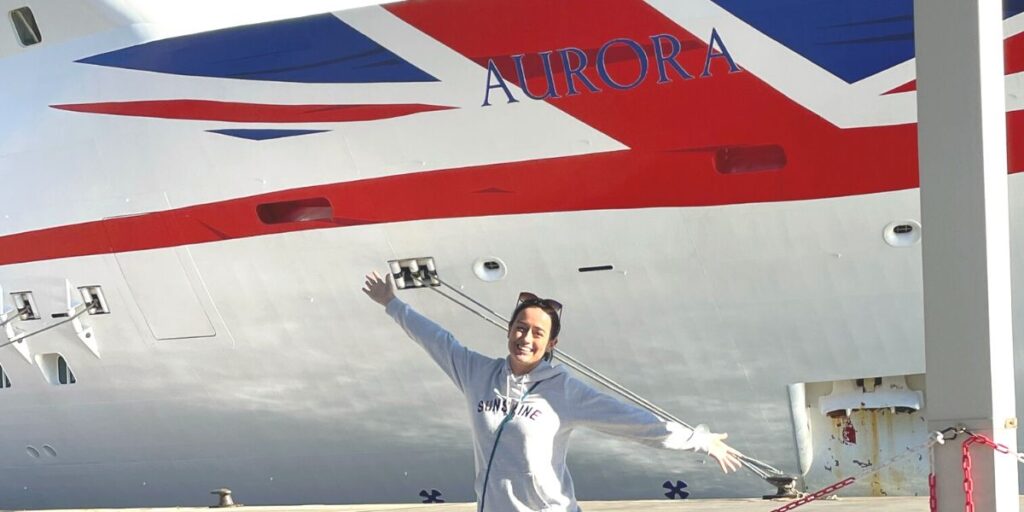
Me-with-Aurora-1.jpg

Cruise Line Cancels Voyage With Just 24 Hours’ Notice, Leaving Passengers Reeling

A three-night cruise to Zeebrugge was abruptly cancelled just one day before departure, leaving dozens of would-be passengers scrambling.

Cruise Mummy with Aurora

P&O Cruises called off the sailing of its 25-year-old ship Aurora due to delays in its scheduled maintenance dry dock, sparking frustration among travellers who had already packed and, in some cases, travelled to the port.

The voyage, scheduled to depart 21st April from Southampton, was meant to be Aurora’s first trip post-refit – a standard five-year maintenance stop that began two weeks ago.

According to a statement from the cruise line, delays in completing the refit meant the ship would not be ready in time.

“Following a delay to Aurora’s refit, we need to cancel Aurora’s R505 cruise from Southampton to Zeebrugge,” the email sent to passengers read.

In compensation, guests were offered a full refund and a future cruise credit worth 20% of the fare paid.

The short notice has prompted a wave of criticism from cruisers, many of whom had already made non-refundable travel arrangements or taken time off work.

Among them were Cruising With The 4Bs – cruise vloggers who shared their reaction in a YouTube video shortly after receiving the cancellation notice.

“We even upgraded to a mini-suite – we were so excited for a short getaway with friends. Then, with less than 24 hours to go, boom – cancelled.”

The video delved into the possible reasons behind the cancellation and questioned whether P&O Cruises had built in enough buffer time post-refit.

It may just be that 14 days wasn’t sufficient for a ship of Aurora’s age, especially given the potential for unforeseen issues during refurbishment.

“This could have been avoided,” the vloggers said. “There was no wiggle room in the schedule. If they’d given just a couple of extra days, this wouldn’t have happened.”

The incident has sparked debate over whether cruise lines should more transparently communicate the risks of booking trips immediately following major refits.

While seasoned cruisers might be aware of the possibility of delays, most passengers aren’t aware of ship maintenance schedules when they book.

This isn’t the first time P&O Cruises has faced criticism for post-refit readiness. The vlogger said how they went on a cruise immediately after Britannia’s refit last year, where parts of the ship were still shut.

As for Aurora, the ship is now expected to return to service once refit work is fully complete and safety sign-offs are finalised.

Meanwhile, disappointed passengers will have to make do with cruise credit – and, as the vlogger put it, “lots and lots of Easter chocolate.”

NEW DEALS JUST RELEASED!

I’m ALWAYS looking for cruise bargains! These are the best deals I found this week…

Related Posts

If you found this interesting, please share!

Cruise Mummy

Jenni Fielding is the founder of Cruise Mummy. She has worked in the cruise industry since 2015 and has taken over 30 cruises. Now, she helps over 1 million people per month to plan their perfect cruise holidays.
Read more about me

A recent guest on a Princess Cruises ship was left frustrated by a policy surrounding the use of Pullman beds in their cabin. The guest took to social media to…

Princess Cruises has apparently closed a play area on one of its biggest ships, after placing the smoking area for the ship adjacent to it. Cruise blogger mumatsea (Juliet) shared…

Cruise Mummy Sun Princess

Princess Cruises has announced a price hike for its Princess Plus and Princess Premier cruise packages – although it won’t impact every guest. Starting from 1st May 2025, guests who…

A Minecraft builder has taken to TikTok to show off their incredible recreation of one of the biggest cruise ships in the world – and both gamers and cruise fans…


Source link

refuelling-a-cruise-ship.jpg

The Seriously Impressive Stats Surrounding Cruise Ship Fuel Tanks

Have you ever wondered how a gigantic cruise ship can sail across the ocean, all the while keeping the lights on, the pools filled, and the ice cream machines churning? The secret lies in a treasure trove not of gold, but of fuel!

refuelleing a cruise ship

And we aren’t just talking a little – this is seriously industrial, jaw-dropping quantities of the stuff.

Even with the impressive size of modern cruise ships, you might be surprised at just how much fuel they can hold…

Firstly – There Isn’t One Fuel Type

Cruise ships, especially older ones, primarily use a type of fuel called Heavy Fuel Oil (HFO), a residual product from the crude oil refining process, which is cheap but highly polluting.

That’s why a lot of the newest ships are powered by Liquefied Natural Gas (LNG), which is cleaner but more expensive.

Oil rig in the middle of the ocean

While Heavy Fuel Oil is known for its cost-effectiveness, this type of fuel has raised environmental concerns due to the high sulfur content, contributing to air pollution and potentially accelerating climate change.

These issues have led to stricter International Maritime Organization (IMO) regulations regarding the sulfur content in fuel, driving the industry towards cleaner alternatives.

One such alternative is Liquefied Natural Gas (LNG). This type of fuel has less impact on the environment, emitting fewer greenhouse gases and virtually no sulfur oxides or particulate matter.

However, the infrastructure for LNG refuelling is not yet widespread, and the fuel itself is more expensive than HFO, making the transition challenging for the cruise ship industry.

Suggested read: List Of LNG-Powered Cruise Ships

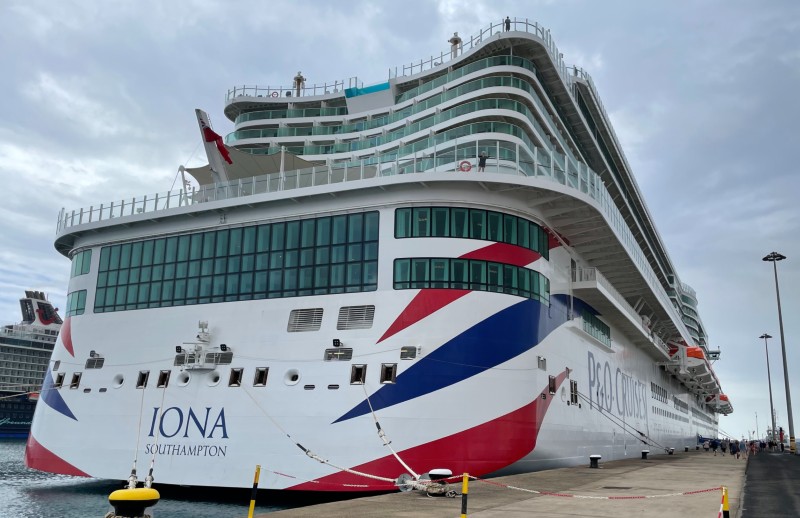
Iona is powered by LNG

Other cruise ships use Marine Gas Oil (MGO), especially in environmentally sensitive areas like the Arctic, where cleaner fuel use is mandated.

Some modern cruise ships are even exploring the possibilities of hybrid propulsion systems, combining diesel engines with battery power, or potentially using renewable sources such as wind or solar power.

However, these are still in the early stages of development and implementation.

Suggested read: The Future is Bright for Solar-Powered Cruise Ships

It’s important to note that the choice of fuel for a cruise ship often depends on a variety of factors, including the ship’s size, the length of the voyage, the availability of fuel at different ports, cost, and environmental regulations.

Despite the challenges, the cruise ship industry is gradually moving towards cleaner, more sustainable fuels in response to growing environmental concerns and regulations.

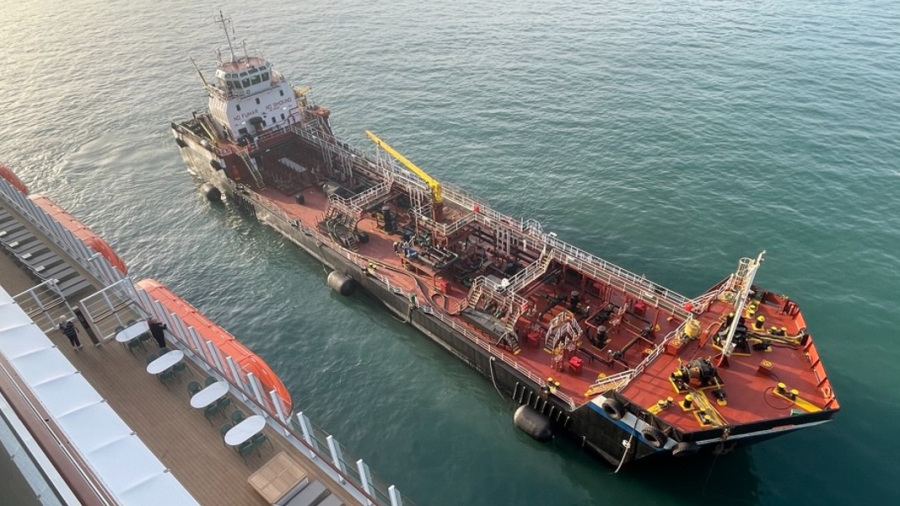
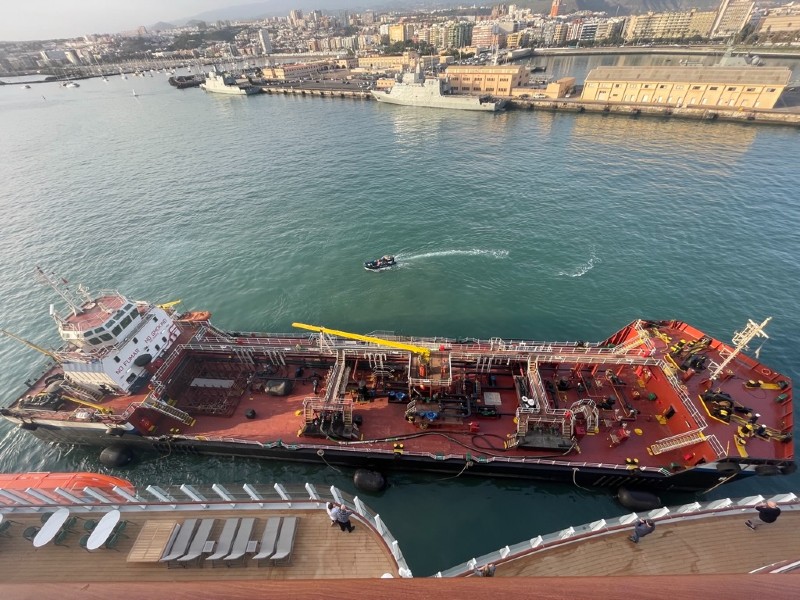
cruise ship fuel tanker

Millions of Gallons Needed

A large cruise ship, such as Royal Caribbean’s Oasis-class ships, can carry approximately 1.33 million gallons (approximately 5 million litres) of fuel.

However, the exact amount of fuel a cruise ship needs to filll the tank varies depending on the size of the ship, its engine efficiency, and the length and nature of its voyages.

Fuel containers

For example, a small-to-midsize cruise ship might require several hundred thousand gallons of fuel, while a larger vessel, like the Wonder of the Seas, one of the world’s largest cruise ships, can carry up to 1.33 million gallons (approximately 5 million litres) of fuel.

It’s important to note that these numbers represent the total capacity of the ship’s fuel tanks and not necessarily the amount used in a single voyage.

Fuel Tank Sizes

It’s important to understand that a ship’s fuel tank isn’t a single giant container, but usually a complex system of tanks located in different parts of the ship. This distribution helps maintain the balance and stability of the ship.

A fire hazard sign at a gas tank

These tanks are not only designed to hold fuel but also have mechanisms to manage the fuel’s temperature and viscosity, ensuring it’s in the optimal state for combustion in the ship’s engines.

Smaller cruise ships, naturally, have smaller fuel tanks. They may carry several hundred thousand gallons (up to a couple of million litres) of fuel, sufficient for shorter voyages.

Even within a single ship, the capacity of individual fuel tanks can vary, with some tanks designed to hold the primary fuel supply and others for reserve or emergency use.

Ultimately, the size of a cruise ship’s fuel tank will be designed to meet the operational requirements of the ship, considering factors like the length and nature of its voyages, its fuel efficiency, and the availability of refuelling facilities along its routes. 

Time To Fill

The time it takes to refuel a cruise ship depends on various factors, including the size of the ship and the type of fuel.

On average, refuelling a large cruise ship with Heavy Fuel Oil (HFO) can take up to 8-10 hours. For Liquefied Natural Gas (LNG), the process can take somewhat longer due to the complexities of handling this type of fuel.

waiting for cruise ship to be refuelled

The process of refuelling a cruise ship, also known as bunkering, is a complex operation that involves both the delivery of the fuel and its safe transfer to the ship’s tanks. The time required can vary widely depending on the ship’s size, its fuel capacity, the type of fuel, and the infrastructure and procedures in place at the refuelling port.

Cruise ships are often refuelled while in port during passenger turnover, so the refuelling process is often designed to align with the ship’s broader operational schedule. For example, the bunkering process may start in the early morning when a ship arrives in port and aim to finish by the afternoon when the ship departs.

The Costs Are Staggering!

The cost to fill a cruise ship with fuel will, as with every other stat here, depend on the specific ship and also the type of fuel.

For instance, if a large cruise ship has a fuel capacity of 1.33 million gallons and the price of Heavy Fuel Oil (HFO) is $3 per gallon, it would cost approximately $4 million to fill it.

A person counting up the money before paying

If LNG costs, for example, $4 per gallon, the cost to fill the same-sized ship would be over $5.3 million.

However, actual costs could be higher or lower, given that LNG prices can also vary widely, influenced by factors like regional availability, demand, and the costs of storage and transportation.

Those prices aren’t necessarily up to date because the price of fuels fluctuates a lot! But that’s the sort of costs you can expect as a very rough guideline.

Fuel Efficiency Of Ships

For a large, modern cruise ship, the fuel efficiency might be around 0.002 miles per gallon (mpg) or even less. This means that the ship travels approximately 0.002 miles for every gallon of fuel it consumes.

A representation of point A to B

Another way to express this is to say that the ship consumes approximately 14 gallons of fuel for every mile it travels.

In terms of cost, if the current price of Heavy Fuel Oil (HFO) is $3 per gallon, it would cost approximately $42 to propel the ship one mile.

These are rough estimates and actual fuel efficiency can vary based on so many different factors. These can include the ship’s size, speed, and load, the sea and weather conditions, and the efficiency of the ship’s engines and other systems.

For example, a ship travelling at higher speeds will consume more fuel per mile, as will a ship that is carrying a heavy load of passengers and cargo.

The fuel efficiency of a cruise ship is much lower than that of most other forms of transportation, largely due to the massive size and weight of these vessels.

Fuel Per Hour

On average, a large cruise ship may consume up to around 250 tons of fuel per day, translating to about 10 tons per hour, assuming the ship is operating continuously for 24 hours.

In terms of cost, if we assume the price of Heavy Fuel Oil (HFO) – the most commonly used fuel for cruise ships – is around $600 per ton (a rough estimate, as prices can fluctuate), the hourly fuel cost for a cruise ship is around $6,000 – or a daily cost of $145,000.

It can be a lot higher too – up to $200,000 per day!

Cruise ship operators continually seek to manage and reduce their fuel costs, which represent a significant portion of their operating expenses. Strategies can include optimizing ship speeds and routes, improving the fuel efficiency of ships through technological upgrades or better maintenance practices, and exploring alternative fuels or power sources.

It’s also important to note that environmental regulations in many parts of the world are encouraging or requiring ship operators to reduce their emissions, which can add another layer of cost and complexity to the management of a cruise ship’s fuel consumption.

This is leading to increased interest in cleaner fuels like Liquefied Natural Gas (LNG), as well as technologies like fuel cells and battery power for certain shipboard systems.

The Bottom Line

So, to wrap things up, really big cruise ships can hold a lot of fuel – about 1.33 million gallons, or similar to 5 million big soda bottles!

That’s way more than cars which usually only hold around 12 to 20 gallons, and even more than aeroplanes which can carry around 60,000 gallons

However, cruise ships aren’t as good at using fuel as cars or planes, which means they need more fuel to travel the same distance. That’s why people who make cruise ships are always trying to find ways to make them use less fuel and be kinder to the environment.

NEW DEALS JUST RELEASED!

I’m ALWAYS looking for cruise bargains! These are the best deals I found this week…

Related Topics

If you found this interesting, please share!

Cruise Mummy

Jenni Fielding is the founder of Cruise Mummy. She has worked in the cruise industry since 2015 and has taken over 30 cruises. Now, she helps over 1 million people per month to plan their perfect cruise holidays.

Read more about me


Source link

Untitled-design-3-19.jpg

Guests Complain Over Pullman Bed Issue (I Had The Opposite Problem!)

A recent guest on a Princess Cruises ship was left frustrated by a policy surrounding the use of Pullman beds in their cabin.

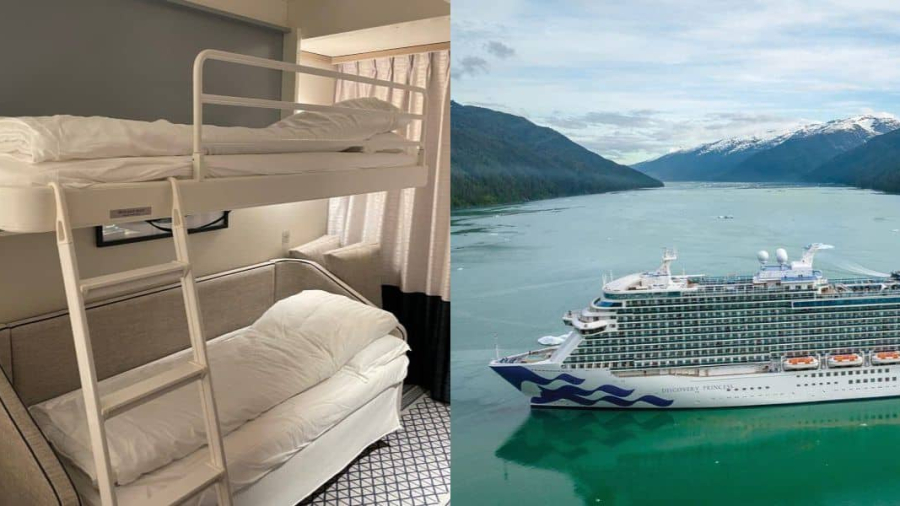
Discovery Princess pullman bed issue

The guest took to social media to share their complaints after they tried to spend more time in their cabin during the day as a family.

Pullman beds – fold-down bunk-style beds that are tucked into the ceiling or wall – are a common feature in many standard cruise staterooms.

They allow families and groups to comfortably sleep up to four passengers in one cabin.

But the guest wasn’t happy after trying to use their stateroom during the daytime on their cruise. The family of four, sailing on Discovery Princess, discovered that their Pullman beds would only be set up during nightly turndown service.

The cabin steward reportedly refused to keep the beds down during the day, citing safety concerns.

This left the family – two adults and two children aged 12 and 9 – with only two twin beds to use during the day.

The guest said the arrangement made their cabin experience “miserable” and wished they had been informed of the policy before booking.

My Opposite Experience

While the steward reportedly cited safety concerns – including potential hazards during emergencies or turbulent sailing conditions – other guests have shared different experiences, stating their Pullman beds remained down for the duration of their voyages aboard the same ship or other Princess Cruises vessels.

I recently sailed on a P&O Cruises ship and I had the opposite problem to this Discovery Princess guest!

Our cabin layout meant that the Pullman beds made the room feel super cramped when they were down – and they often stayed down during the day.

We tried to return to the cabin to relax while the kids were at the kids’ club, and found that the beds were still taking up loads of space!

Of course, it’s a different cruise line, but P&O Cruises and Princess Cruises are both owned by the Carnival Group.

This discrepancy suggests the policy may be enforced differently across sailings or crews.

The situation has sparked broader discussion about the challenges of booking cabins for families, especially when cruise lines offer vague or inconsistent information about room layouts and sleeping arrangements.

Pullman beds and sofa beds are all common solutions for accommodating additional guests in cruise ship staterooms, but room setups can vary widely.

Some travellers suggest booking connecting cabins or suites with multiple sleeping areas to avoid surprises.

Cruise lines, including Princess Cruises and its sister brands like Carnival and Holland America Line, encourage guests to review deck plans and stateroom specifications in detail when booking.

Guests are also advised to confirm with customer service or a travel agent if they have specific needs, especially when traveling with children or in groups.

With hundreds or even thousands of staterooms per ship, small oversights in configuration or communication can quickly become pain points for guests.

While some policies – such as bed configurations and Pullman bed availability – may be driven by safety protocols, clearer communication from cruise lines may help manage expectations and avoid similar frustrations in the future.

NEW DEALS JUST RELEASED!

I’m ALWAYS looking for cruise bargains! These are the best deals I found this week…

Related Posts

If you found this interesting, please share!

Cruise Mummy

Jenni Fielding is the founder of Cruise Mummy. She has worked in the cruise industry since 2015 and has taken over 30 cruises. Now, she helps over 1 million people per month to plan their perfect cruise holidays.

Read more about me

Princess Cruises has apparently closed a play area on one of its biggest ships, after placing the smoking area for the ship adjacent to it. Cruise blogger mumatsea (Juliet) shared…

Cruise Mummy Sun Princess

Princess Cruises has announced a price hike for its Princess Plus and Princess Premier cruise packages – although it won’t impact every guest. Starting from 1st May 2025, guests who…

A Minecraft builder has taken to TikTok to show off their incredible recreation of one of the biggest cruise ships in the world – and both gamers and cruise fans…

Cruise crew members broadly follow the same rules as passengers when it comes to permitted items in cabins. But a former worker has revealed the one unusual item that workers…


Source link

Large cruise ship moored at a harbour with white cliffs, the scene for Dover cruise parking and embarkation

Dover Cruise Parking: On-Port Valet, Shuttle Car Parks and Alternatives

The most convenient option for Dover cruise parking is the official on-port valet service run by Cruise and Passenger Services (CPS) for the Port of Dover: you drive straight to the cruise terminal, hand over your keys, and your car is kept in a secure, undercover car park inside the port. If you want to spend less, off-site operators such as Port Parking Cruise and Relyon run shuttle buses to the terminals in around 6 to 10 minutes. Whichever you choose, book ahead, because peak summer sailings fill up.

Dover is having a busy run as a cruise port. Around 200,000 cruise guests and 115 ship calls were expected in 2026, and Carnival has confirmed that Carnival Miracle will be based in Dover from May to September 2027. That means more cars competing for spaces on the busiest days. Below we explain how the terminals work, compare the main parking choices, and cover the train and chauffeur alternatives so you can pick what suits your cruise.

Dover Cruise Terminals: Where You Are Heading

Dover’s cruise terminals sit in the Western Docks, a short distance from the town centre and well away from the busy Eastern Docks ferry port. When you drive in, follow signs for “Western Docks” and “Cruise Terminals” rather than the ferry lanes, which can queue heavily in summer.

Terminal 1 and Terminal 2

There are two cruise terminals. Terminal 1 is the older of the two and is housed in a converted Victorian railway station, a listed building with plenty of character. Terminal 2 is a newer, purpose-built building on the same stretch of dockside. Both handle embarkation and disembarkation, and on busy days two or more ships can be in port at once. Your cruise line will tell you which terminal you are using in your boarding documents, and some lines (Holland America, for example) state it on their port pages. The satnav postcode commonly used for the cruise terminals is CT17 9DQ.

Which Cruise Lines Sail From Dover?

More than 20 cruise lines use Dover. Saga Cruises, Holland America Line, Carnival Cruise Line, AIDA and Seabourn are regulars, and Viking ships call frequently. Carnival Miracle’s 2027 summer season from Dover adds 8 to 12 night sailings to the British Isles, Northern Europe, Scandinavia and the Baltic. If you are weighing up lines that suit a more relaxed, grown-up style of cruising, our guide to the best cruises for over 50s covers several that sail from UK ports.

Dover Cruise Terminal Parking: The Official On-Port Option

The Port of Dover has contracted Cruise and Passenger Services (CPS) to run its cruise car parking. CPS is a specialist cruise valet operator and also works at other UK ports. The service is booked through the CPS website (cruiseparking.co.uk) or by phone, and the Port of Dover’s own cruise car parking page points passengers there.

How Dover Cruise Terminal Parking Works

  1. Drive directly to the cruise terminal and follow the signs for cruise parking.
  2. Reception staff log your booking, complete security checks and photograph your car.
  3. You receive a barcoded receipt and head into the terminal to check in for your cruise, while your bags go to the ship.
  4. A CPS driver takes your car to the secure, undercover car park within the port.
  5. When you return, follow the signs from the arrivals hall to key collection, hand over your receipt, and marshals direct you to your car.

The big advantage is that there is no shuttle bus and no extra transfer: you leave the car at the terminal and collect it in the same place. The car park is inside the port’s security perimeter, and it is regularly patrolled by the Dover Harbour Board Police. This is the option to choose if you have mobility needs, lots of luggage, or simply want the least hassle.

How Much Is Parking at Dover Cruise Terminal?

Prices vary by length of cruise and season, and CPS does not publish a fixed tariff, so the only reliable way to see the current rate is to get a quote for your dates on the CPS site. As a rule, on-port valet parking costs more per day than off-site parking, and a minimum charge typically applies on short stays. Booking in advance is cheaper than turning up, and spaces are not guaranteed on the day.

Aerial view of rows of parked cars in a secure car park, similar to long-stay cruise parking near Dover
Off-site car parks near Dover can be cheaper than parking at the terminal. Photo: Altaf Shah on Pexels

Off-Site Dover Cruise Parking With a Shuttle

If you are happy to take a short bus ride, off-site car parks in and around Dover usually cost less than parking at the terminal. The two best-known cruise-focused operators are below. Both are bookable direct or through comparison sites such as Holiday Extras.

Port Parking Cruise (Western Heights)

Port Parking’s cruise car park is on South Military Road at Western Heights, on the hill above the Western Docks (postcode CT17 9UE; satnavs may not recognise it, so use the full address and the operator’s directions). You park outside reception, hand over your keys, and staff help load your bags onto a free shuttle that reaches the port in about 6 minutes. Staff then move your car to the main compound.

  • Security includes 24-hour CCTV, lighting, electric gates and a heavy-duty main gate.
  • There are a small number of EV charging points (pay on arrival and bring your own lead).
  • Only standard cars are accepted: no trailers or commercial vehicles.
  • The shuttle runs between 7am and 6pm only, with no transfers on Christmas Day, Boxing Day or New Year’s Day.

Relyon Cruise and Port Parking (Coombe Valley)

Relyon is based on the Coombe Valley industrial estate (Poulton Close, CT17 0HL), roughly two and a half miles from the docks. It is a private, secure compound with CCTV and 24-hour security patrols, staffed around the clock, and its shuttle buses run to the cruise and ferry terminals. Comparison sites have listed Relyon from around £5.25 per day, though rates change with demand, so check the latest price for your dates. It is well reviewed on Google, and it is a sensible choice if your ship returns early in the morning, because its shuttles are not limited to daytime hours.

Dover Cruise Parking Options Compared

Option Location Transfer to ship Best for Watch out for
CPS official valet (on-port) Inside the Western Docks None: drop off at the terminal Convenience, mobility needs, heavy luggage Usually the most expensive; prices only shown when you quote
Port Parking Cruise Western Heights, CT17 9UE Free shuttle, about 6 minutes Value with a very short transfer Shuttle runs 7am to 6pm only; no trailers
Relyon Coombe Valley, CT17 0HL Shuttle, about 10 minutes Lower cost, 24-hour staffing Slightly longer ride; check the drop-off arrangements for cruise passengers
Hotel stay and park Dover and nearby towns Taxi or hotel shuttle (varies) Travelling the day before Not every hotel allows parking for the length of a cruise

Which Dover Cruise Parking Option Should You Choose?

A simple way to decide is to think about your arrival and return times, not just the price:

  • Your ship docks very early. Cruise ships often arrive back at around 6am to 7am and start disembarking soon after. If you are taking an early self-carry departure, an off-site car park whose shuttle starts at 7am may mean waiting around, so on-port valet or a 24-hour operator is the safer bet.
  • You have limited mobility or lots of bags. On-port valet removes every transfer. You hand your car over at the door and collect it at the same building.
  • You are on a long voyage. Over two or three weeks the daily difference adds up, so an off-site shuttle car park can save a meaningful amount.
  • You are towing or driving a large vehicle. Check size limits before booking. Port Parking only takes standard cars in a 2.4m by 4.8m bay, so ask the official operator or Relyon about vans and larger vehicles.

One thing many guides miss: make sure your booking covers the full cruise, including the return day. Most operators give a short grace period if your ship is delayed, but overstay charges can apply, so keep their phone number handy and call if your return changes.

Passengers waiting on a railway platform, an alternative to driving to a Dover cruise
Southeastern high-speed trains link London St Pancras with Dover Priory. Photo: Mike Norris on Pexels

Alternatives to Parking at Dover

Train From London to Dover Priory

If you live near London or along a Kent rail line, the train is a good alternative to parking. Southeastern high-speed services run from London St Pancras to Dover Priory in about 1 hour 5 minutes, with direct trains roughly hourly. Advance fares can be cheap if you book early. Dover Priory is about 2.5km from the cruise terminals, roughly a five-minute drive. Uber does not operate in Dover and taxis can be scarce on busy mornings, so pre-book a taxi to the terminal rather than relying on the rank.

Cruise Line Transfers and Chauffeur Services

Some lines take the journey out of your hands. Saga Cruises, for example, includes a chauffeur service with its ocean cruises: a private car for up to 75 miles each way, or a shared nationwide service from elsewhere on the UK mainland. Other lines sell coach transfers from London or regional pick-up points. If one is included in your fare, you may not need to park at all.

Stay the Night Before

Travelling the day before takes the stress out of embarkation, especially if you live a long way from Kent. Some hotels in and around Dover offer stay-and-park deals, but check whether parking is allowed for the length of your cruise and how you get to the port. Our round-up of hotels near UK cruise ports is a good place to start.

Tips for a Smooth Arrival at Dover

  • Book your Dover cruise parking as soon as your cruise is confirmed, particularly for summer and school holiday sailings.
  • Allow extra time on the A20 and A2 in summer, when traffic for the ferry port can back up through Dover. Follow signs for the Western Docks to avoid the ferry queues.
  • Check your arrival window in your cruise documents and do not turn up hours early: terminals manage check-in by time slot.
  • Keep your parking confirmation and the operator’s phone number on your phone for the return trip.
  • Take valuables, house keys and medication out of the car before handing it over.

Also sailing from Southampton at some point? Our Southampton cruise parking guide covers the options there. And if you are still choosing your next voyage, see the latest cruise deals for 2027.

FAQs

Can I leave my car at Dover cruise terminal?

Yes. The Port of Dover’s official cruise parking is a valet service run by Cruise and Passenger Services. You drop your car at the terminal and it is kept in a secure, undercover car park inside the port. Book in advance, as spaces are not guaranteed on the day.

How much is cruise parking at Dover?

It depends on the length of your cruise and the season. On-port valet parking is usually the priciest option, while off-site car parks with shuttles have been listed from around £5 per day. Get a quote for your dates from each operator to compare.

Is there free parking in Dover for cruise passengers?

There is no free long-stay parking for cruise passengers at the port. On-street and town centre parking is not suitable for a week or more, so use a paid cruise car park or travel by train or transfer instead.

Which is the best place to park for a cruise from Dover?

For convenience, the official on-port valet service is best because there is no transfer. For value, off-site operators such as Port Parking Cruise or Relyon are cheaper and only a short shuttle ride from the terminals.

How far is Dover Priory station from the cruise terminal?

Dover Priory is about 2.5km from the cruise terminals, around five minutes by taxi. Pre-book a taxi on busy mornings, as Uber is not available in Dover.

Cruise ship berthed in a Scottish harbour, the kind of departure that needs Rosyth cruise terminal parking

Rosyth Cruise Terminal Parking: Prices, Booking and Alternatives

Rosyth cruise terminal parking is on site, a short walk from the terminal building, and it must be booked in advance through your cruise line. Fred. Olsen, the main line sailing round trips from Rosyth, currently charges £16 per night for a standard car. You book by phone at least three days before departure, and the car park recognises your number plate, so there is no voucher to print.

The rest of this guide covers how the port car park works and what it costs. It also covers parking near a hotel or station instead, and the easiest driving routes to Rosyth from Edinburgh, the north and the west.

Who sails from Rosyth cruise terminal?

Rosyth sits on the Fife side of the Firth of Forth, just across the water from South Queensferry, and is often sold as “Edinburgh (Rosyth)”. It is a small terminal run by port operator Forth Ports. Most of the ships that start and end their cruises here belong to Fred. Olsen Cruise Lines.

For 2027, UK agents list Balmoral on a spring and early-summer programme of round trips from Rosyth, from late April to late June. The programme includes Norwegian fjords sailings of five to ten nights, Scottish islands cruises and a longer British Isles voyage. If you are weighing up the fleet, our guide to the best Fred. Olsen cruise ships compares Balmoral with its fleet-mates.

One common mix-up: ships calling at “Edinburgh” for a day often anchor off South Queensferry or berth at Leith or Newhaven, not Rosyth. Check the port printed on your ticket before you plan your parking. The arrangements below apply only to Rosyth.

How Rosyth cruise terminal parking works

There is one official car park for cruise passengers, inside the port and about 50 metres from the main terminal entrance. Spaces are limited, so it is not a turn-up-and-pay car park. Here is how it works with Fred. Olsen:

  • Book ahead: call Fred. Olsen Guest Services on 0800 0355 145 at least three days before you sail. Have your registration number and car make ready, and say if you need a disabled space.
  • Price: £16.00 per night for a standard car. Camper vans, vans and anything larger than a normal car cost 50% more.
  • No vouchers: the car park uses vehicle recognition linked to your registration, so you do not need a paper permit. Book in the car you will actually drive, and tell the line if that changes.
  • Unbooked parking: if you arrive without a booking and a space is available, the charge goes on your onboard account. Do not count on getting a space this way.

As a rough guide at the current rate, parking for a 7-night cruise costs about £112, and a 10-night voyage about £160. Prices can change between seasons, so confirm the rate when you book. If you sail with a different line, ask them directly, because parking is arranged through the cruise operator rather than sold separately to the public.

Arriving on embarkation day

Follow the signs for the cruise terminal and the port gatehouse. Drive first to the luggage drop area, where porters take your cases, then staff direct you to the car park. Port staff check your car against the pre-booked list. The terminal seats about 250 people and is used for disembarking guests in the morning and embarking guests in the afternoon. Turn up at the check-in time printed on your ticket rather than early.

From the terminal to the ship is about 1 km, and a transfer coach usually takes passengers along the quay. Let the line know in advance if anyone in your party has limited mobility. The line says there is no wheelchair assistance in the car park itself.

Things worth knowing before you go

  • No EV charging: Fred. Olsen says there are no electric car charging points at Rosyth. Arrive with enough charge for the trip home, or plan a charging stop near Dunfermline or Inverkeithing.
  • No left luggage and no shops or cafes within easy walking distance of the terminal.
  • Satnav: use KY11 2XP. The what3words address for the car park is blatantly.across.luggage.
Rows of parked cars in an open car park, similar to the secure parking used at Rosyth cruise terminal
Parking at Rosyth must be pre-booked through your cruise line. Photo: Luke Miller on Pexels

Cheaper alternatives to parking at Rosyth

Rosyth does not have the crowd of independent cruise parking firms you find around Southampton. Still, there are a few other ways to get there, and they can make sense depending on where you live and how long you are away.

Park at or near a station and take a taxi

Inverkeithing is the nearest railway station, roughly a 10-minute taxi ride from the terminal. Station parking and private driveway spaces in Rosyth and Inverkeithing are listed on booking apps such as JustPark, sometimes from a few pounds a day. Before you book, check the space allows stays of a week or more. Then add the return taxi fare and compare the total with the port car park. For a short cruise the official car park often wins on simplicity, while on a longer voyage the gap can widen. Fred. Olsen lists Cowdenbeath Taxi Service (01383 610111), and other local firms also cover the port. Pre-book your return taxi for disembarkation morning.

Stay the night before at a hotel with parking

If you are driving from England, the Highlands or the islands, a hotel stay before you sail takes the stress out of embarkation day. The DoubleTree by Hilton Edinburgh Queensferry Crossing sits at North Queensferry, about five minutes’ drive from Inverkeithing, and has free on-site parking for guests. Rosyth also has a small choice of hotels, and Dunfermline, about 10 to 15 minutes away, has the widest range of budget and mid-range chains.

Some hotels will let you leave the car for the length of your cruise, either free or for a fee. This is the “hotel and parking” deal people search for. It varies by hotel and season, so ask the hotel directly and get it confirmed in writing. For more options around the country, see our round-up of hotels near UK cruise ports.

Get dropped off

Friends or family can drop you at the luggage area on embarkation day and pick you up after disembarkation. This costs nothing in parking. Collections can be busy on disembarkation morning, so agree a meeting point near the terminal in advance.

Train to Inverkeithing, then a taxi or shuttle

Trains between Edinburgh Waverley and Inverkeithing take about 25 minutes and run frequently through the day. From Inverkeithing, take a taxi to the terminal, as there is no train or bus straight to the quay. On disembarkation day Fred. Olsen sometimes runs a paid shuttle back to Inverkeithing station. It is booked on board on a first-come, first-served basis.

Rosyth cruise parking options compared

Option Typical cost Best for Watch out for
Official port car park £16 per night (Fred. Olsen); 50% more for larger vehicles Ease: luggage drop and a short walk to check-in Must book 3+ days ahead; limited spaces; no EV charging
Station or driveway parking plus taxi Varies; check app prices plus two taxi fares Longer cruises, if it works out cheaper Check maximum stay and security; pre-book taxis
Hotel stay and park Room rate, plus any parking fee Long drives the day before Long-stay parking is not guaranteed; confirm in writing
Drop-off and pick-up Free Locals and those with a willing driver Busy at disembarkation; agree timings
Train to Inverkeithing plus taxi Rail fare plus a short taxi Edinburgh and central belt travellers Luggage on trains; shuttle back is not guaranteed
A modern cable-stayed road bridge crossing a wide estuary, like the Queensferry Crossing route to Rosyth
Most drivers reach Rosyth over the Queensferry Crossing. Photo: Anthony oz on Pexels

Driving to Rosyth cruise terminal

The terminal address is Rosyth Cruise Terminal, Forth Ports, Rosyth, Dunfermline KY11 2XP. Once you are close, follow the brown and white cruise signs and the directions to the port gatehouse.

From Edinburgh and the south

Head for the M90 and cross the Firth of Forth on the Queensferry Crossing. It is free to use, unlike the old tolled Forth Road Bridge, which is now mostly for buses and taxis. Once in Fife, leave the motorway and follow the cruise signs into Rosyth. Allow around 40 minutes from central Edinburgh and about 30 minutes from Edinburgh Airport, plus extra time for traffic on the approach to the bridge.

From Aberdeen, Dundee, Perth and the north

Come south on the M90. Fred. Olsen’s directions say to leave at junction 1B for the B981, then follow the cruise signs to the port. The roads near Perth and Kinross can be slow on summer Saturdays, so build in a buffer.

From Glasgow and the west

You can take the M8 and M9 towards the Queensferry Crossing, or cross further west on the Kincardine Bridge (A985) and follow the Forth coast east towards Rosyth. The A985 route can be quieter if the motorway approaches to the crossing are busy.

Tips for a smooth start to your Rosyth cruise

  • Book parking when you book or confirm your cruise. Spaces are limited and popular sailings, such as Norwegian fjords departures in May and June, fill up first.
  • Double-check the registration you gave the line. Vehicle recognition depends on it.
  • Pack a small bag with medication and documents to keep with you. Your cases go at the luggage drop, before you park.
  • Plan for drinks and onboard extras. Our guide to Fred. Olsen drinks packages explains what is included.

FAQs

How much is parking at Rosyth cruise terminal?

Fred. Olsen currently charges £16 per night for a standard car, and 50% more for camper vans, vans and larger vehicles. Confirm the rate when you book, as it can change.

Do I need to pre-book parking at Rosyth?

Yes. Book through your cruise line at least three days before departure. Unbooked parking, if a space is available, is charged to your onboard account.

Is there free parking at Rosyth cruise terminal?

No, the port car park is paid. A free drop-off and pick-up is the only no-cost option. Some hotels may include parking during your cruise, but check first.

What is the nearest train station to Rosyth cruise terminal?

Inverkeithing is the nearest station, about a 10-minute taxi ride from the terminal. Trains from Edinburgh Waverley take about 25 minutes.

Are there EV charging points at Rosyth cruise terminal?

No. Fred. Olsen says there are no electric vehicle charging points at the Rosyth terminal car park, so plan your charging before you arrive.

Laxative-featured.jpg

Some People Believe Cruise Lines Put Laxatives In The Food! Here’s The Truth…

There’s a rumour circulating online that cruise ship chefs intentionally put laxatives in food to keep the ship’s plumbing working properly.

Person after taking laxatives

This belief may have been fuelled by the fact that certain food items served on board, like those high in fat, can have a laxative effect.

But surely – surely – they can’t be actually putting laxatives into the food they’re preparing just to make sure the ship’s plumbing runs smoothly… Right?

Breaking Down the Myth: Cruise Ships and Laxatives

Of course cruise ships don’t put laxatives in the food!

Any connection with that sort of ‘laxative effect’ of high fat foods is purely coincidental and not a deliberate attempt by the crew members to prevent the plumbing from getting clogged or backed up!

Cruise lines have strict food safety protocols in place. The emphasis is on maintaining a clean and safe environment, rather than resorting to dubious methods to ensure that the plumbing works properly.

The myth that laxatives are covertly added to cruise ship food is often circulated among first-time cruisers. However, this is a complete fabrication. There is no need for laxatives as cruise ship toilets are designed well enough to handle large quantities of pee, poop and paper. 

cruise ship bathroom

And of course, it would be both unethical and illegal for chefs to add laxatives to food without the knowledge or consent of the guests.

That said, my friend Emma Cruises discovered on a Royal Caribbean cruise in Japan, that Coca-Cola Plus is often served instead of Coke Zero – and this drink can indeed have a laxative effect due to the extra fibre!

Reasoning Behind the Myth: Do Cruisers Need Laxatives?

One theory behind this myth is that the change in diet, sparked by the abundance and variety of food on a cruise ship, can lead to irregular bowel movements.

A man wondering about something

The introduction of certain foods, such as powdered eggs, can naturally stimulate the digestive system without the need for laxatives.

Plus, with drink packages, most cruisers will consume more alcohol and sugar-free soft drinks than they usually would at home – both of which can have a laxative effect when consumed in excess.

Any initial discomfort experienced by passengers is often short-lived and can be managed with balanced eating and regular exercise. The cruise ship medical team are also on hand to provide advice and assistance, should any more serious concerns arise.

cruise ship medical team

Ultimately, it’s important to remember that while a cruise ship vacation may involve indulging in a variety of rich and exotic foods, moderation is key. This will not only ensure a comfortable journey but also dispel any fears of unwanted laxative effects.

What To Be Cautious Of To Avoid Stomach Upsets

Sometimes, diarrhoea at sea can be the result of a mild stomach bug, rather than laxatives. Diseases like norovirus may spread more quickly at sea where people are in close contact.

1. The Pools And Hot Tubs

You can easily catch germs from using the pool or hot tub with someone who has an upset stomach. So for that reason, if you ever experience diarrhoea on a cruise ship, it’s vital that you avoid swimming for at least two weeks.

Star legend pools

Yes, I know, that’s probably the rest of your cruise. But honestly, it’s only fair that you don’t pass your bacteria or viruses onto anyone else. Serious germs can survive in chlorinated water for days, and could cause others to become very sick if they swallow even a tiny amount of contaminated water.

According to US Law, children in swim diapers are not allowed to use cruise ship pools.

On British-owned cruise ships like those owned by P&O Cruises, kids in swim nappies are allowed in some of the largest, deepest pools. But ships like this are rare, and in most cases, toddlers are confined to a small splash area.

kids in splash area

2. Touching Surfaces

If someone with an upset stomach has germs on their hands and then touches a surface, those germs can spread like wildfire. The most common culprits are the elevator buttons, stairway handrails and drinks machines in the buffet.

juice machine in buffet on Royal Caribbean cruise ship

To avoid picking up anything nasty here, I always use my knuckle rather than my finger to call the elevator. You should avoid using handrails unless you have to. If the sea is rough, you can rest your wrist on the handrail so that you can quickly grab it if you need to steady your balance.

cruise ship elevators

When it comes to the buffet or restaurant, be sure to always wash your hands before you visit. There’s usually a handwashing station available.

Older cruise ships don’t always have handwashing stations, but they should always have sanitiser. That said, it doesn’t hurt to sanitise your hands again in between pressing the button on the water machine and touching your bread roll. 

handwashing station on Arvia

3. The Salad Bar

Many of us enjoy a good salad, especially when we’re trying to eat healthy on vacation. But, you should be cautious when it comes to pre-made salads on cruise ships. There is always a risk of cross-contamination. The vegetables in the salad could have come in contact with meat or other food that is not safe without being cooked.

Salad from the cruise

Of course, there are strict rules in place to prevent cross-contamination between meat and salad, but as you’ll see from the case of the MSC Seaside that has in the past failed a hygiene inspection, those rules aren’t always followed.

Most cruise ships are incredibly clean though, so if you’d like to put your mind at rest before your next cruise, be sure to take a look at this list of the cleanest cruise ships in the world.

Understanding Cruise Ship Food Standards

While you may have heard stories of cruise ships secretly adding laxatives to their passengers’ food in cruise forums, these are just rumours.

vegan barbecue food

There’s no concrete evidence to support these claims. It’s highly unlikely that cruise ships would resort to such measures, given the strict regulations and inspections they are subjected to.

Rest assured, cruise ship food standards are stringent. They aim to provide a safe and enjoyable dining experience for all their guests. So, while it’s essential to be cautious about what you eat and how you avoid germs, it’s also important not to let unfounded rumours spoil your cruise experience.

How To Deal with Unexpected Food-Related Problems on Board

Food-related issues on a cruise ship can range from minor digestive discomfort to serious illnesses. While the myth of laxatives in food is debunked, over-indulgence in the rich and diverse food offerings can indeed lead to bowel problems.

This is not due to the cruise line adding anything to the food, but rather a result of poor dietary choices and portion control.

Stomach problems

It’s important to be mindful of your eating habits while on board. Moderation is key, and it’s recommended to balance indulgent meals with healthier options.

In case of any food-related problems, cruise ships have medical facilities on board equipped to handle most situations. But if you’re worried about being caught short, then you may wish to pack some medication in your bag, just in case.

Related Topics

If you found this interesting, please share!

Cruise Mummy

Jenni Fielding is the founder of Cruise Mummy. She has worked in the cruise industry since 2015 and has taken over 30 cruises. Now, she helps over 1 million people per month to plan their perfect cruise holidays.

Read more about me


Source link

Untitled-design-82.jpg

Princess Prioritises Smokers Over Children With Play Area Closure?

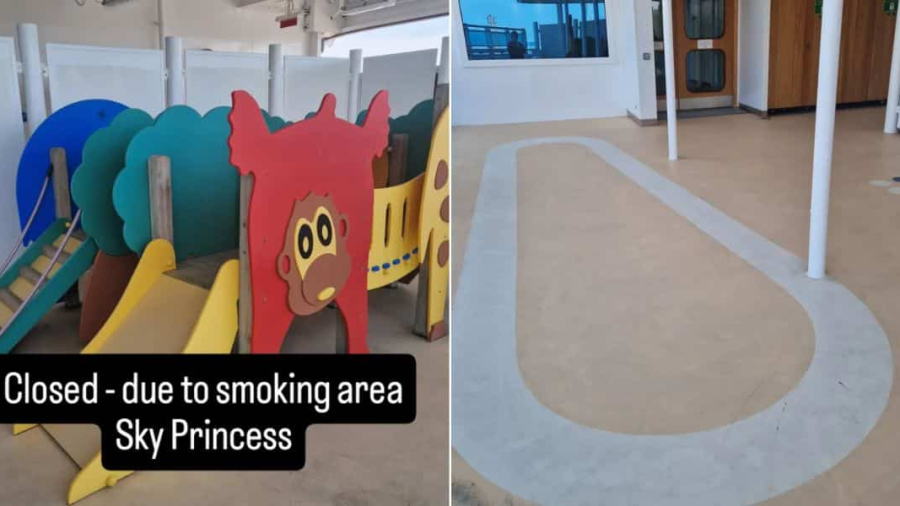
Princess Cruises has apparently closed a play area on one of its biggest ships, after placing the smoking area for the ship adjacent to it.

Princess play area closed

Cruise blogger mumatsea (Juliet) shared a photo of the play area on Instagram, which included a small climbing area and slide, and explained how she had been told it was closed and that children weren’t allowed to use it.

When she asked why, the crew told her that due to the placement of the smoking area next to it, directly behind the low metal fence separating the playground, the play area was closed off.

It’s obviously a relatively recent change to rules, otherwise the play area wouldn’t have been constructed in the first place. One person did comment that when they visited the ship in 2024, the play area was in use.

Juliet also revealed that, during their cruise, a new sign was added to the shallower pool on the ship saying that, despite it being 1 metre deep, it was now for adults only.

Princess Cruises is generally seen as a family-friendly cruise line, although not to the extent of a cruise line like Royal Caribbean or Disney Cruise Line.

Sky Princess doesn’t have water slides or other attractions that are aimed at children. Its highlights are definitely aimed more at adult guests, including the elegant Piazza hub of the ship, the casino and the Princess Theater.

The ship does operate kids clubs (which this play area was a part of), along with offering a range of fun activities and facilities for younger guests, particularly on the newer and bigger ships.

But you could argue that there are concerns over the forward planning of the cruise line. In 2024 new ship Sun Princess set sail with many of the facilities in the Park19 space closed.

Ultimately the Rollglider, Coastal Climb and Ropes Course features never opened.

It was never officially confirmed why the features were closed, although it’s assumed they were due to problems with construction or safety certification.

They were removed from the ship once she had completed her debut season in Europe, and sister ship Star Princess (due to launch 2025) will not be getting them either.

NEW DEALS JUST RELEASED!

I’m ALWAYS looking for cruise bargains! These are the best deals I found this week…

Related Posts

If you found this interesting, please share!

Cruise Mummy

Jenni Fielding is the founder of Cruise Mummy. She has worked in the cruise industry since 2015 and has taken over 30 cruises. Now, she helps over 1 million people per month to plan their perfect cruise holidays.

Read more about me

Cruise Mummy Sun Princess

Princess Cruises has announced a price hike for its Princess Plus and Princess Premier cruise packages – although it won’t impact every guest. Starting from 1st May 2025, guests who…

A Minecraft builder has taken to TikTok to show off their incredible recreation of one of the biggest cruise ships in the world – and both gamers and cruise fans…

Cruise crew members broadly follow the same rules as passengers when it comes to permitted items in cabins. But a former worker has revealed the one unusual item that workers…

Carnival Horizon

Thousands of Carnival Cruise Line guests were recently disappointed to learn that their 2026 sailings have been cancelled. This is due to affected ships having their dry dock schedules adjusted,…


Source link

River cruise ship sailing past a riverside town in Europe, typical of Nicko Cruises river itineraries

Nicko Cruises: A Guide to the German River and Ocean Cruise Line

Nicko Cruises (styled “nicko cruises”) is a Stuttgart-based German cruise line. It runs river cruises on Europe’s main waterways and ocean voyages on one classic ship, the Vasco da Gama. It belongs to the Portuguese group Mystic Invest and is aimed mainly at German-speaking travelers, so English speakers should check the language arrangements on their sailing before booking.

This guide explains who Nicko Cruises is, what its river and ocean fleets look like in late 2026, what is included, and whether it is a sensible choice if you mainly speak English.

Nicko Cruises at a glance

Detail Nicko Cruises
Headquarters Stuttgart, Germany
Parent company Mystic Invest (Mystic Cruises), Portugal
Cruise types River cruises and ocean cruises
Ocean ship Vasco da Gama (built 1994, around 1,200 guests)
River fleet Around 20 river ships, including nickoSPIRIT and nickoVISION
Main market German-speaking guests
Philosophy “Time to discover”: slower itineraries and longer port stays

A short history of Nicko Cruises

The company began in Stuttgart as a river cruise operator, originally trading as nicko tours. It says it has more than 30 years of experience on Europe’s rivers. Over that time it grew from chartering river ships to running a large fleet across more than 20 countries.

The bigger change came after the Portuguese company Mystic Invest took control. Mystic, led by entrepreneur Mário Ferreira, also owns the Douro river company DouroAzul and the US-focused expedition brand Atlas Ocean Voyages. Under Mystic, nicko tours became nicko cruises and moved into ocean cruising.

Who owns Nicko Cruises?

Nicko Cruises is part of Mystic Invest’s cruise group, which trades as Mystic Cruises. Mystic Cruises CEO Mário Ferreira has spoken publicly on Nicko’s behalf, including about the Vasco da Gama’s repairs in 2026. The Ferreira family holds the majority stake in the cruise business, and US investment firm Certares took a significant minority stake in 2019. We have not found any reports of insolvency or formal restructuring at Nicko Cruises as of November 2026.

River cruise ship moored on a calm European river beside a historic town
Most of the Nicko Cruises fleet sails Europe's rivers, from the Rhine to the Douro. Photo: Nikita Korchagin on Pexels

Nicko Cruises river fleet

River cruising is still the core of the business. The fleet changes from year to year as charters begin and end, but it has recently included around 20 ships. Nicko describes its ships as rated four to five stars under German hotel standards.

  • nickoSPIRIT and nickoVISION: the flagships, launched in 2020. nickoSPIRIT carries about 170 guests, has three restaurants, a sauna and fitness area, and cabins of about 14 square meters. Many cabins on the upper decks have drop-down panoramic windows.
  • Rhine ships such as Rhein Melodie, Rhein Symphonie, Belvedere and Bellejour sail the Rhine, Main and Moselle.
  • Douro ships such as Douro Queen operate in Portugal, where Mystic’s DouroAzul business is based.
  • Other ships sail the Danube, Elbe, Seine, Rhône and smaller waterways. Some itineraries are run on chartered vessels.

Popular routes include the Danube from Passau, the Rhine and Moselle, the Elbe through Germany and the Czech Republic, and Portugal’s Douro Valley. If you are comparing this with English-language river lines, our guide on how to pick the best European river cruise for you covers the key differences in style and inclusions.

Nicko Cruises ocean fleet: the Vasco da Gama

Nicko’s only ocean ship is the Vasco da Gama. It was built in 1994 and has sailed for Holland America Line, P&O Cruises Australia and Cruise & Maritime Voyages. Mystic bought it at auction in late 2020 and it now carries around 1,200 guests for Nicko.

A few points to know for 2026 and beyond:

  • Repairs in 2026. Technical problems in late April 2026 cut the ship’s world cruise short. Repairs to propulsion and engine systems at a shipyard in Brest, France, led to six cancelled sailings and more than two months out of service. The ship returned to service from Kiel in July 2026.
  • World cruises. A 2026-27 world cruise was scheduled to depart in early November 2026. Nicko has also announced a 172-day 2027-28 world cruise from Lisbon, which can be booked in full or in segments.
  • Summer in Northern Europe. Summer seasons focus on the Norwegian fjords, the Baltic, the British Isles, Iceland and the Arctic, mostly from Kiel and Hamburg. The 2028 summer program is already on sale.

What about World Explorer and World Voyager?

Nicko once sold expedition cruises on Mystic’s small ships, most recently World Voyager. That ship moved to sister brand Atlas Ocean Voyages in 2023, after weak German demand for high-priced expedition cruises. World Explorer has sailed for Atlas and on charter to other operators. Neither ship is part of Nicko’s current program, so Nicko’s ocean cruises are now all on the Vasco da Gama.

Dining table set with wine glasses in a restaurant with a water view
Relaxed full board dining is part of what to expect onboard with Nicko Cruises. Photo: ivi nnnnnn on Pexels

What to expect onboard

Nicko’s style is relaxed and destination-focused rather than glitzy. Itineraries tend to have longer stays in port and smaller harbors, which the line calls “time to discover.” Expect a mostly German-speaking crowd, many of them older and experienced travelers.

Language onboard

German is the main language for announcements, entertainment and guided excursions. Some river ships, including nickoSPIRIT, list both German and English as onboard languages, and certain sailings are sold in English-speaking markets. On the Vasco da Gama and most river departures, you should expect German first. If you do not speak German, ask before booking which languages will be used for excursions, daily programs and talks.

Menus and dining

Food reflects the market: German and Central European classics sit alongside regional dishes from the area you are sailing through. River ships typically serve buffet breakfasts and lunches with plated dinners, and the larger river ships have more than one dining venue. Fares are generally full board, so meals are included.

Is Nicko Cruises all-inclusive?

Not by default in its home market. German-market fares usually include full board, with drinks packages available to book. Inclusions differ by ship, itinerary and the country you book from. Some packages sold through UK agents, for example on the Douro, have bundled drinks, gratuities, Wi-Fi, excursions and flights. Read the fare details carefully and compare like for like.

Children on Nicko Cruises

Nicko is designed for adults. Children can sail, but there are no dedicated kids’ clubs or family facilities on the river ships, and the atmosphere is quiet. Families with young children will usually be happier with a more family-oriented line.

Is Nicko Cruises a good choice for English speakers?

Nicko Cruises can work well for English speakers who are comfortable in a German-speaking environment, perhaps with some basic German. It can also suit travelers who want a less-touristy, more European experience, or who are booking a specific English-supported departure. Prices can be competitive compared with US and UK-focused lines.

It is less suitable if you want everything explained in English, value extensive English-guided excursions, or expect an American-style all-inclusive fare. In that case, an English-language river line is a safer fit. Our honest review of an Emerald river cruise shows what an English-first river experience is like. You can also compare UK-focused options in our TUI river cruise ships guide.

How to book Nicko Cruises

The main booking site is in German, with an English version for some content. Nicko is also sold through travel agents in Germany, Austria and Switzerland, and through some agents in the UK and elsewhere. Booking through an agent who knows the line can help you confirm language, inclusions and travel insurance before you commit.

FAQs

What is Nicko Cruises?

Nicko Cruises is a German cruise line based in Stuttgart. It runs river cruises across Europe and ocean voyages on the Vasco da Gama, mainly for German-speaking guests.

How many ships does Nicko Cruises have?

It has one ocean ship, the Vasco da Gama, plus a river fleet of around 20 ships. The river fleet varies from year to year as charters change.

Are Nicko river cruises good?

Nicko rates its ships as four to five stars under German standards, and its newest ships, nickoSPIRIT and nickoVISION, are modern and well equipped. They suit travelers happy with a German-speaking atmosphere.

Is English spoken on Nicko Cruises?

Crew often speak some English, and a few river ships list English as an onboard language. However, German is the main language for most announcements, talks and excursions.

Who owns the Vasco da Gama cruise ship?

The Vasco da Gama is owned by Portugal’s Mystic Invest group and operated by its German brand, Nicko Cruises.