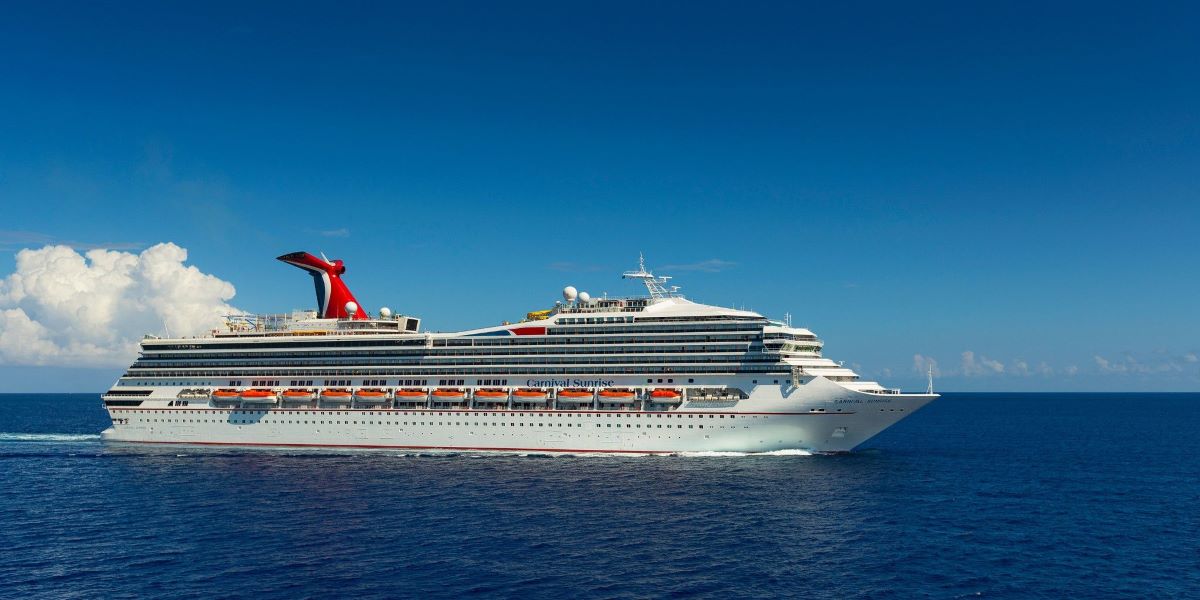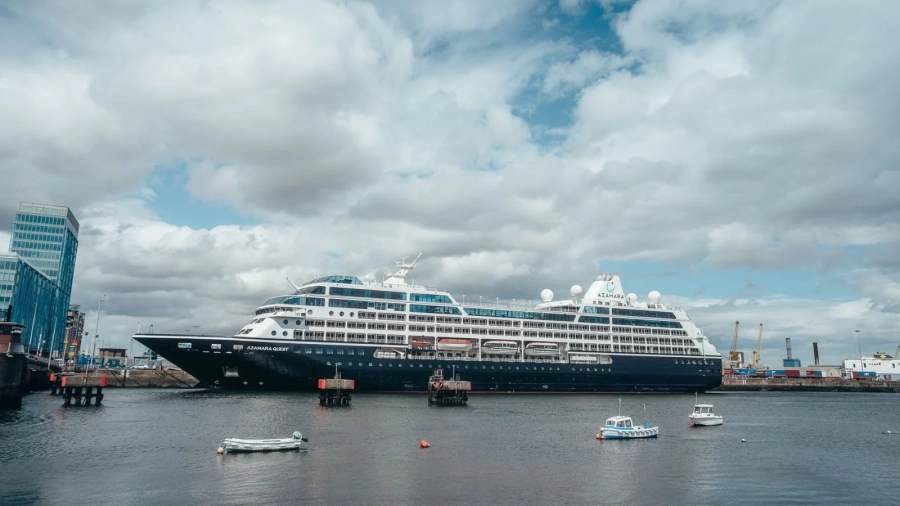
Cruise ship moored in an English harbour, illustrating Portsmouth International Port parking for cruise passengers

Portsmouth International Port Parking: Cruise Parking Guide 2026-27

For most cruise passengers, the easiest choice for Portsmouth International Port parking is the on-site APCOA multi-storey car park, a few minutes’ walk from the terminal, at £15 per 24 hours. If you would rather hand over your keys at the door, Cruise and Passenger Services (CPS) runs the official valet service. Book either one before you travel: the port says it cannot guarantee spaces for drivers who turn up without a booking.

Below you’ll find each option for Portsmouth cruise parking: how it works, what it costs, cheaper alternatives in the city, the train and taxi route, and hotels that let you park for the length of your cruise.

Where cruise ships dock in Portsmouth

Cruise ships use Portsmouth International Port, on George Byng Way in the north of Portsea Island. Cruise traffic shares the site with the cross-Channel ferries to France and Spain. The terminal sits just off the end of the M275, so you reach it without driving through the city centre. The postcodes are worth saving:

  • PO2 8RU takes you to the cruise terminal and the drop-off area.
  • PO2 8SP takes you to the APCOA multi-storey car park. The what3words address is ///teach.rich.index.

Portsmouth is smaller than Southampton, but it has become a regular stop for mid-sized and smaller ships. The port expected more than 70 cruise calls in 2026, its 50th year. Fred. Olsen opened the season with Borealis, and Ambassador Cruise Line ran its first Portsmouth turnaround sailings with Ambition. Virgin Voyages, Saga, Viking, AIDA, Phoenix Reisen and expedition lines such as Lindblad also called. Shore power is being added in 2026, so ships can plug into the local grid while they are alongside. Sailing schedules for 2027 are still being published, so check your own cruise documents for the terminal and check-in time.

Portsmouth International Port parking: the on-site car park

The official self-park option is the long-stay multi-storey run by APCOA. It is open 24 hours and is only a few minutes’ walk from the terminal. APCOA lists around 525 spaces, including disabled bays and EV charging points. It is Park Mark accredited and uses number plate recognition cameras.

Prices at the APCOA car park

Length of stay Charge
Up to 10 minutes Free
Up to 1 hour £5.50
Up to 3 hours £7.50
Up to 5 hours £9.50
Up to 24 hours £15.00
Each extra 24 hours (or part of one) £15.00
Motorcycles Free

These are the tariffs the port and APCOA listed in late 2026. Check the latest rate when you book, because they can change.

Booking and paying

Cruise passengers are strongly advised to pre-book through APCOA’s Portsmouth booking site. The car park can sell out on busy days when cruise ships and ferries are both in port. If you pay on the day, you pay on arrival, not when you leave. The ground-floor machines take cards only, or you can use the APCOA Connect app. Some cruise lines, including Ambassador, also let you arrange a parking permit through your booking. Check with your line before you book separately.

Things to check before you drive in

  • Height limit: the maximum height is 2.1 metres. That rules out most campervans and cars with roof boxes.
  • EV charging: there are a small number of chargers inside the car park and more outside the terminal entrance. Don’t rely on getting a charge after a long cruise.
  • Accessible parking: APCOA has a few disabled bays that can only be pre-booked, so reserve one early if you need it.

Valet parking at Portsmouth cruise terminal

The port’s official valet partner is Cruise and Passenger Services (CPS), which also runs valet parking at Southampton, Dover and Liverpool. You drive straight to the terminal, a CPS team member checks your car in and moves it to a secure car park, and you walk in with your luggage. When you get back, your car is returned to the terminal for you.

CPS doesn’t publish fixed Portsmouth prices on its public pages. Valet usually costs more than self-parking, so get a quote for your exact dates and compare it with the APCOA price. Valet is the better choice if you have mobility needs, a lot of luggage, or no wish to walk across a car park on a wet morning.

Drop-off and pick-up

If someone is driving you to the ship, use the drop-off point outside the terminal building (PO2 8RU). There are short-stay bays of about 20 minutes nearby. APCOA’s car park is also free for the first 10 minutes, which helps if you need to unload or wait briefly. On disembarkation morning, agree a meeting time with your driver. Ships often clear passengers in groups, and the bays fill quickly.
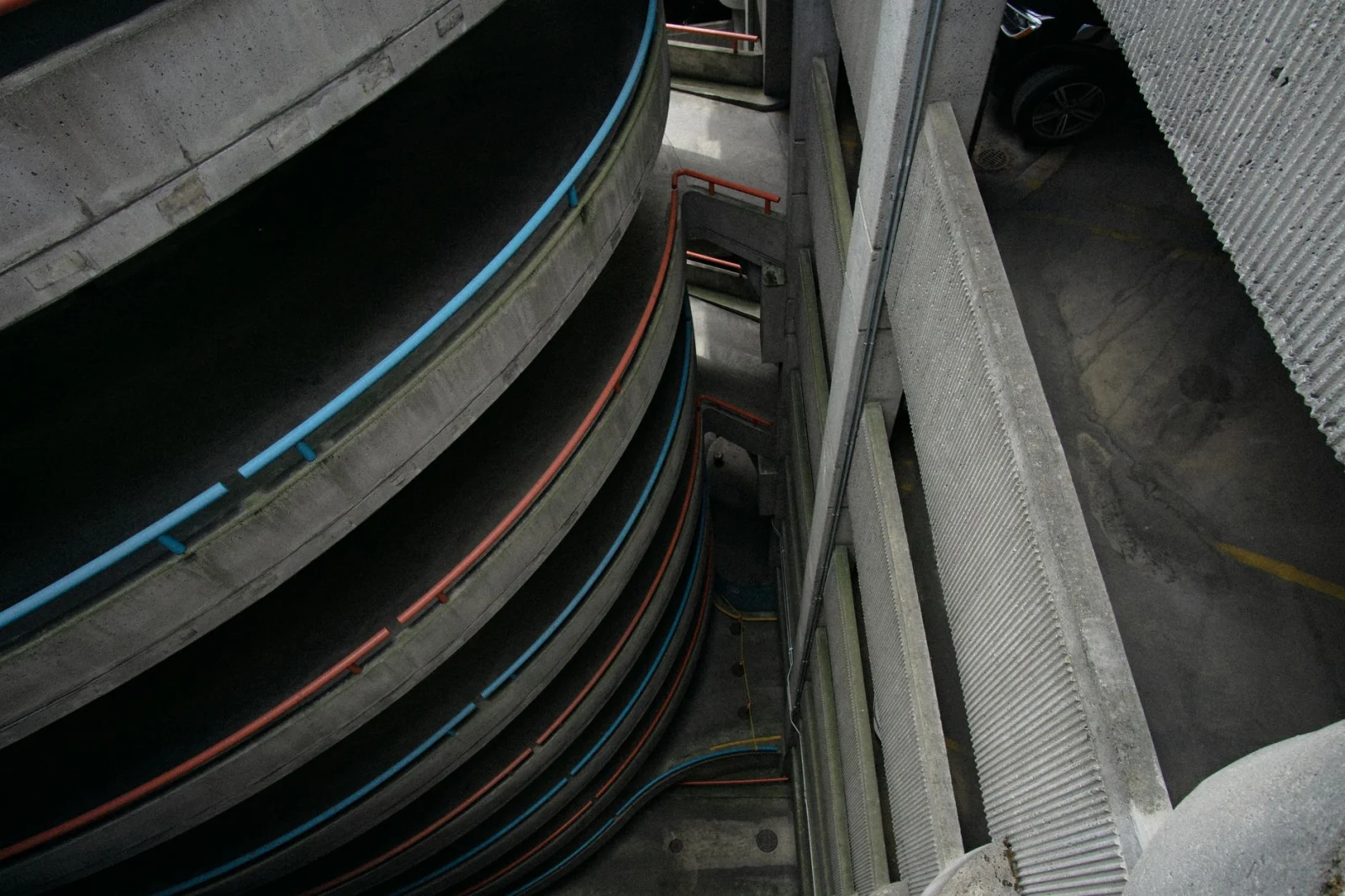
Rows of parked cars on a level of a multi-storey car park, like the long-stay option at a cruise port
Pre-booking is the safest way to get a long-stay space near the terminal. Photo: chickenbunny on Pexels

Cheaper parking near Portsmouth cruise terminal

If you are looking for the cheapest parking at Portsmouth cruise terminal, look slightly further afield. The port itself points passengers to several alternatives:

  • NCP Portsmouth Market Way (PO1 4AH): a 24-hour city-centre car park that can be pre-booked. Its pay-on-the-day rate for 3 to 24 hours was listed at £9.95, which can work out cheaper than the port for a long cruise. Confirm the multi-day price when you book. It is about two miles from the terminal, so allow for a short taxi ride.
  • Gunwharf Quays: the shopping centre by Portsmouth Harbour offers bookable parking. Check its current rates and maximum stay before you commit.
  • Portsmouth City Council car parks: several council car parks allow long stays. Check the conditions on each, because not all of them allow multi-day parking.
  • Private driveways and garages: sites such as JustPark list residents’ spaces near the port. Read the reviews, check the access arrangements and ask what happens if your ship returns late.

Whatever you choose, add the cost of two taxi journeys to the parking price before you decide. For a short cruise, the on-site car park often ends up costing about the same once the taxis are included, and it is far less hassle.

Park and sail from Southampton Airport

The port also lists a park-and-sail product from Southampton Airport, about 22 miles away. It can suit people driving from the west or north who prefer to leave the car off Portsea Island. Check what the transfer to Portsmouth includes before you book.

How to work out the real cost of your parking

The APCOA car park charges in 24-hour blocks, so the time you arrive matters as much as the length of your cruise. If you park at 11am on embarkation day and your ship docks back seven days later at 7am, you’ll pay for seven 24-hour periods, which is about £105. If disembarkation runs late and you leave the car park after 11am, you move into an eighth block and pay £120. Here’s a quick guide based on the current tariff:

Cruise length APCOA on-site (approx.) Best for
3 nights £45 to £60 Short breaks. On-site parking is simplest.
7 nights £105 to £120 Most passengers. Compare with a valet quote.
14 nights £210 to £225 Worth comparing with city car parks and park and sail.

Plan to arrive no earlier than your check-in slot, because arriving hours early can push you into an extra day. For longer cruises, compare the options carefully.

Getting to the port by train and taxi

Leaving the car at home is often the least stressful choice. Direct trains run to Portsmouth from London Waterloo, London Victoria, Brighton, Gatwick Airport, Southampton and Cardiff. There are two stations to know:

  • Portsmouth & Southsea is the closest station for the cruise terminal. There is a taxi rank outside, and the port is about five minutes away by car.
  • Portsmouth Harbour is the end of the line, next to Gunwharf Quays and the Isle of Wight ferries. It is further from the cruise terminal, so expect a slightly longer taxi ride.

Walking from Portsmouth & Southsea takes about 20 minutes, which isn’t practical with cruise luggage. Book a local taxi firm ahead for early arrivals. Ambassador’s port guide lists several Portsmouth firms. Many cruise lines, Ambassador among them, also run coach transfers from towns around the UK, which can work out cheaper than parking for a couple travelling together.
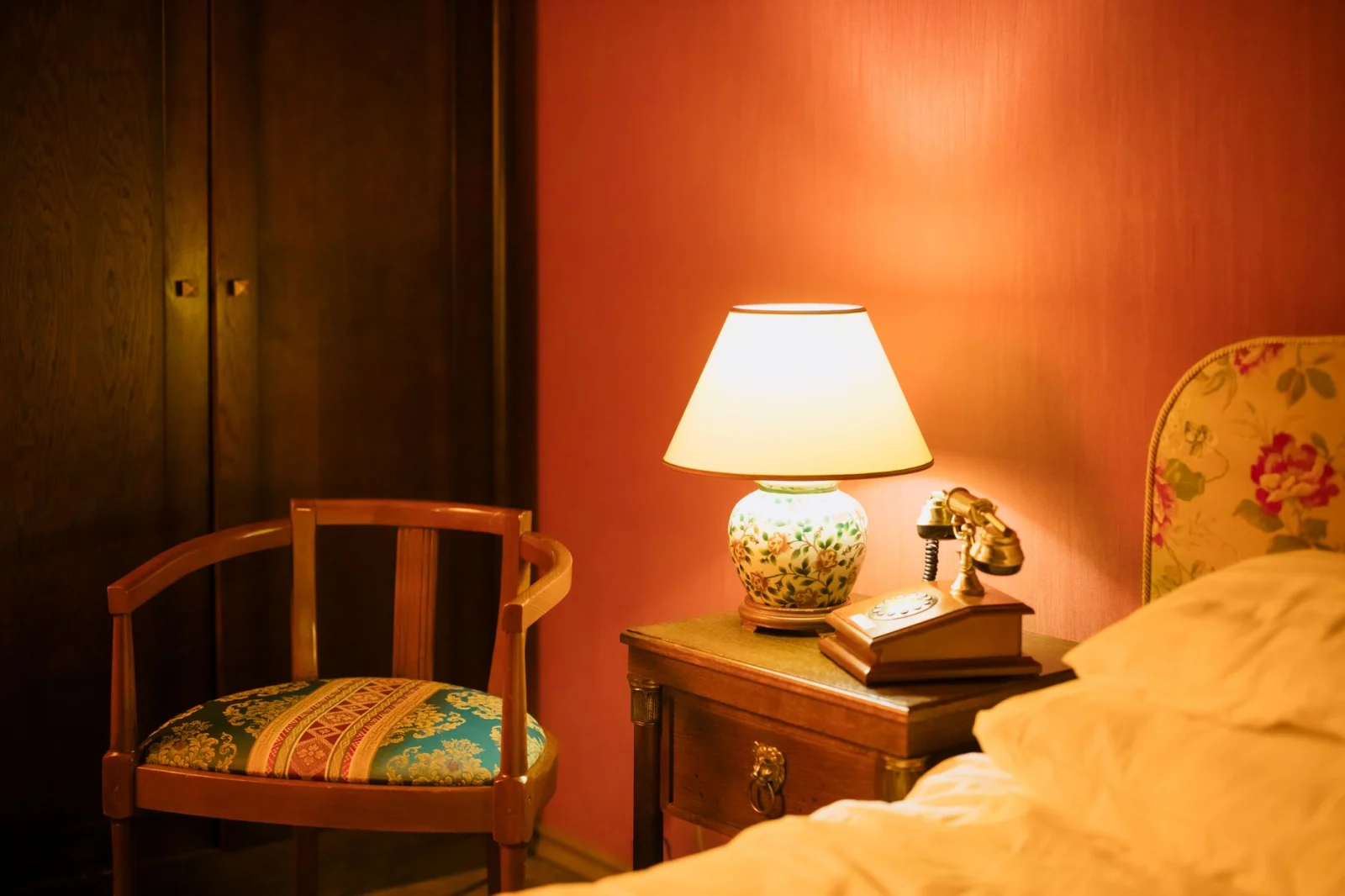
A neat hotel room with a made bed, the kind of stay-and-park option cruise passengers book the night before sailing
A night nearby means an unhurried start on embarkation day. Photo: cottonbro studio on Pexels

Hotels near Portsmouth port with parking

If you live a long drive away, a stay-and-park deal lets you arrive the night before and leave the car at the hotel while you cruise. The port suggests checking:

  • ibis Portsmouth Centre: close to the city centre and the stations. It has offered stay-and-park packages, which are worth comparing with the port car park.
  • Solent Hotel & Spa: at Whiteley, near junction 9 of the M27. It is a more comfortable pre-cruise base with easy motorway access, but you’ll need a taxi to the port.

Always confirm that the hotel will keep your car for the full length of your cruise, whether parking is charged per night, and how you get to the terminal in the morning. For more options, see our guide to hotels near UK cruise ports.

Motorhomes, campervans and tall vehicles

Vehicles taller than 2.1 metres can’t use the multi-storey. The port has limited hard standing in front of the car park for vehicles boarding early ferry sailings. After 10pm, vehicles may only park along the yellow fence line, and you must report to terminal security. This arrangement is meant for ferry passengers waiting overnight, not for leaving a motorhome while you cruise. Portsmouth City Council also restricts overnight parking for motorhomes on its streets and in its car parks. If you are travelling by campervan, book a valet service or private secure storage before you go.

Our recommendation

For most cruises from Portsmouth, pre-booking the APCOA car park is the best balance of price, convenience and peace of mind. Choose CPS valet if you want door-to-door service or have mobility needs. On a long cruise, compare a city car park or a hotel package once taxis are included. If you are also weighing up sailings from Southampton, our Southampton cruise parking guide compares options there. For inspiration on where to sail next, browse our cruise deals for 2027.

FAQs

How much is parking at Portsmouth International Port?

The on-site APCOA car park charges £15 for up to 24 hours and £15 for each extra 24 hours, so a seven-night cruise costs about £105 to £120. Shorter stays start at £5.50 for an hour.

Do I need to pre-book Portsmouth cruise parking?

Yes, it is strongly recommended. The port says it cannot guarantee spaces for drivers who arrive without a booking, and the car park can sell out on busy cruise and ferry days.

Is there valet parking at Portsmouth cruise terminal?

Yes. Cruise and Passenger Services (CPS) runs the port’s valet service. You hand over your car outside the terminal, and it is returned there when your cruise ends.

What is the postcode for Portsmouth cruise terminal parking?

Use PO2 8SP for the APCOA multi-storey car park and PO2 8RU for the cruise terminal drop-off.

Which train station is closest to Portsmouth cruise port?

Portsmouth & Southsea is the most convenient station. The terminal is about a five-minute taxi ride away, and there is a taxi rank outside the station.
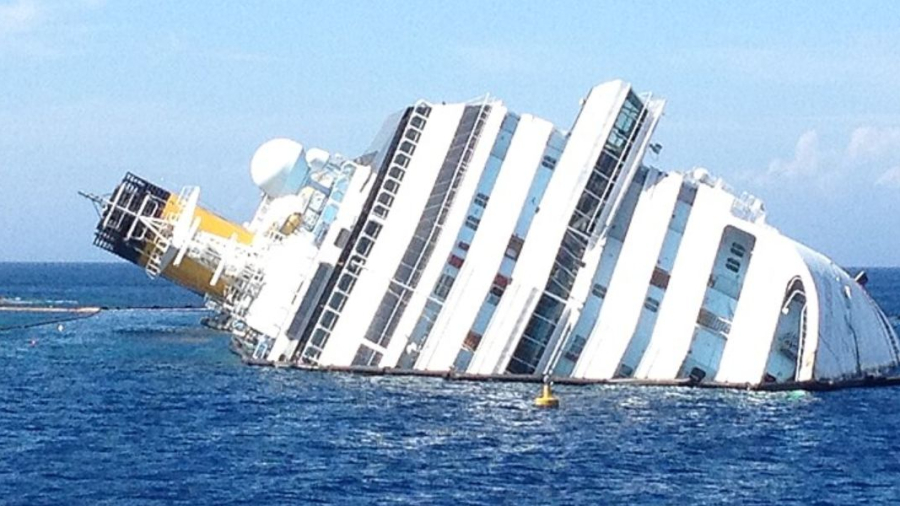
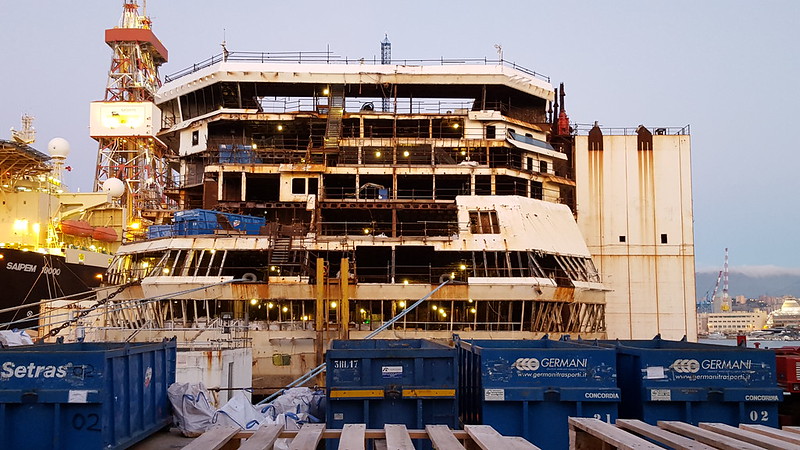
Costa-Concordia.jpg

Inside The Search Effort After The Costa Concordia Tragedy

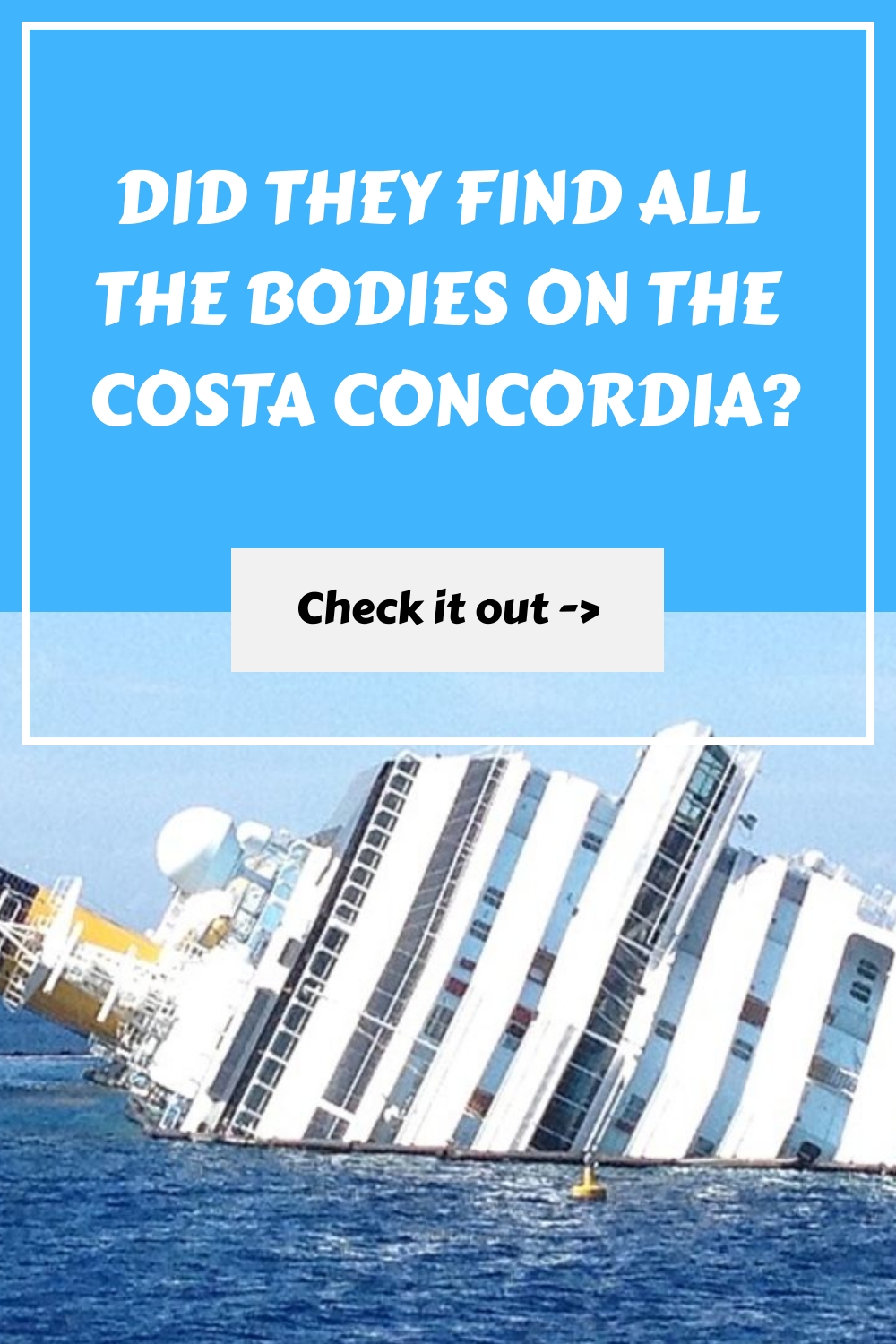
The Costa Concordia was the biggest cruise ship disaster of recent times, when the ship hit rocks off the coast of a Tuscan island and partially sank.

33 people lost their lives due to the errors of the ship’s Captain, including 27 passengers, five crew members, and one member of the salvage team.

But was everybody found? Let’s take a look.

Recovering The Bodies

All 32 bodies of those who died on the Costa Concordia were recovered, although only some of these were discovered in the immediate aftermath of the disaster. In total, it took almost three years to find the last body, which happened during the scrapping of the ship.

The 33rd casualty was never lost at sea – he was a Spanish diver working on the wreck in 2014, preparing it to be righted and towed. He cut his leg on a sheet of metal during the operation, and while he was brought to the surface by a fellow diver, he later died.

Where The Bodies Were Found

The first 17 victims of the Costa Concordia disaster were found in the water and in various accessible parts of the ship when the search first began. Other bodies were found between the hull and the seabed, on Deck 4, and on Deck 3, in difficult parts of the ship to search.

Here’s a timeline of the bodies being found:

  • 13th January 2012 – The Costa Concordia partially sinks. Within the next couple of days, the initial bodies are recovered, with 17 people found and a further 15 confirmed to be missing.
  • February 2012 – A mini-submarine is sent to search the lifeboat deck (Deck 4), which has previously been unsearched due to it being difficult to access. Eight bodies are recovered, including an American couple, a German couple, and the youngest victim, a 5-year-old girl from Italy. Seven bodies remain unaccounted for.
  • March 2012 – As the ship is prepared for the parbuckling process, which will right it in the water, five further bodies are found trapped between the hull and the seabed.
  • October 2013 – With the ship now righted, searches continue and one more body is found, the last passenger – Maria Grazia Trecarichi. Only a crew member remains unaccounted for.
  • November 2014 – The final body is found in a cabin while the ship is being dismantled in Genoa.

After the initial victims were recovered, efforts were made to find the bodies amongst the shipwreck, but they proved difficult.

It wasn’t until April when a previously unsearched area of the lifeboat deck was explored by a mini-submarine, and that’s when eight of the missing bodies were found. It appears as those some of the victims may have been sucked into an elevator shaft or were trapped in the elevators.

The next five bodies were found by divers who were working to set up a robotic device to search the ship as it was being prepared for parbuckling. The bodies had been trapped between the hull and the seabed for over 18 months by this point.

The Last Two To Be Discovered

The last two bodies were found on the Costa Concordia, but only once the ship had been righted. The last passenger to be discovered was Maria Grazia Trecarichi, who was found trapped near the third deck at the back of the ship, in an area where dishes were washed.

Because of the location of the body, it was originally believed that it was the body of the missing crew member, although later tests confirmed it was Maria.

The Last Body Found On The Costa Concordia

The last body to be found on the Costa Concordia was that of Russel Rebello, an Indian waiter on the ship. His body was recovered from a cabin during the scrappage of the ship.

By this time the ship had been righted and towed to Genoa. The dismantling of the ship began in July 2014, and it wasn’t until November that Russel’s body was found. Once the remains were recovered, the body was identified and then received by Russel’s brother, to be flown back to Mumbai to be buried.

The Last Movements Of The Costa Concordia

The Costa Concordia is no longer where it sank. She was removed in 2014 and towed to Genoa, where she was dismantled, with the process taking three years in total and being completed in July 2017.

Costa Concordia scraped
Photo: Rab Lawrence, (CC BY 2.0)

All of the bodies on Costa Concordia were recovered, and the ship has been completely broken down. 

Read more: Where Is The Costa Concordia Cruise Ship Now?

Final Word

While it was extremely tragic that these people lost their lives as part of the disaster, it may provide some comfort to the families to have recovered the bodies for proper burial ceremonies and other forms of grieving.

Often, when ships sink, the bodies can be lost at sea. But because of the nature of the disaster, being so close to land, most people were able to escape, and those who sadly died did so on the ship itself or in the entry to the water.

The incident has been attributed to the error of Captain Schettino, and hopefully, with all the new processes we have in place to avoid any course changes that he made, we won’t see another disaster like it. 

The ship’s captain, Francesco Schettino.
Francesco Schettino – Captain of The Costa Concordia

If you want to know what happened to the Captain after the sinking, then read this article next: What Happened To The Costa Concordia Captain.

NEW DEALS JUST RELEASED!

I’m ALWAYS looking for cruise bargains! These are the best deals I found this week…

Related Posts:

If you found this interesting, please share!

Cruise Mummy

Jenni Fielding is the founder of Cruise Mummy. She has worked in the cruise industry since 2015 and has taken over 30 cruises. Now, she helps over 1 million people per month to plan their perfect cruise holidays.

Read more about me


Source link

Costa-Concordia.jpg

Costa Concordia: Passenger Payouts Revealed

While cruise ship disasters are extremely rare, there is still a very slim chance that something could go wrong. This was proven in 2012 when, due to negligence from the onboard crew, the Costa Concordia sank off the shore of Isola del Giglio in Italy.

There were 3,229 passengers and 1,023 crew on the ship when she sank, and sadly 32 people lost their lives, including some crew and some passengers.

But how about those who survived? What action have they taken since, and what compensation (if any) have they received?

Costa Concordia Passengers Sued The Cruise Line

Some of the passengers of the Costa Concordia did sue the cruise line. The cruise line made an offer of compensation regardless, but some chose to seek litigation, either because the offered sum was too low in their eyes, or because of the trauma brought on by the event.

The biggest lawsuit was brought in Miami, and it wasn’t against Costa Cruises, but instead was a lawsuit against Carnival Group PLC, the parent company (which also owns Carnival Cruise Lines, P&O Cruises, Princess Cruises and more).

This lawsuit was originally brought in 2012 by six of the passengers who had been on the ship and survived. It was asking for $528 million in total damages – $78 million in compensation and $450 million in punitive damages.

The original six plaintiffs were later joined by 33 more survivors who hoped to take the class action suit against Carnival to a successful end, and claim their own share of the hundreds of millions being sought.

Over time, the suits grew and a second was launched. By 2016, there were two suits being brought against Carnival Group – one with 57 plaintiffs, and one with 52 plaintiffs. However, a court in Miami threw the suits out and declared that the survivors weren’t able to seek compensation in the US for the disaster, regardless of whether they were US citizens or not.

Instead, the recommendation was made for affected passengers to bring litigation through the Italian courts, specifically in Genoa. The alternative was to accept the compensation package being offered.

Some other passengers sued the cruise line directly, seeking compensation for post-traumatic stress disorder and other long-term conditions. A lot of the settlements have been made privately, but one passenger was paid $105,000 in 2021 after they won their lawsuit against the company.

Person counting up the compensation money

The Compensation Offer

All of the passengers of the Costa Concordia who survived the disaster were offered compensation, and the cruise line made separate compensation offers to the families of those who lost their lives in the incident.

Around a third of passengers took the compensation offer when it was first made, while others sought legal advice and a smaller percentage tried to take the cruise line to court. Most of the suits failed, but the compensation offers for those passengers still stood.

By 2015, 85% of passengers from the cruise ship had accepted compensation payments. Most of the crew had negotiated their compensation payments and accepted them by this point as well.

The Compensation Package

The compensation package offered to surviving passengers of the Costa Concordia disaster was worth €11,000, which is approximately £9,434 or $12,500. The crew were reimbursed differently, being paid their full wages for either two months or the remainder of their contract, whichever was longer.

The ship’s captain, Francesco Schettino.
Francesco Schettino – Captain of the Costa Concordia

On top of the compensation offered, passengers also received a full refund of their cruise fare and reimbursement for other costs they had incurred, including air and bus travel costs that were originally included in the holiday, and the travel expenses for returning home.

Guests weren’t charged for any expenses they had incurred during the cruise, and they were also able to claim back any medical costs that resulted from the sinking of the ship.

The cruise line recovered as much property from the safes on the ship as possible and paid to have it returned to guests, but there was no separate reimbursement for other belongings lost in the disaster – this was already covered by the compensation offer.

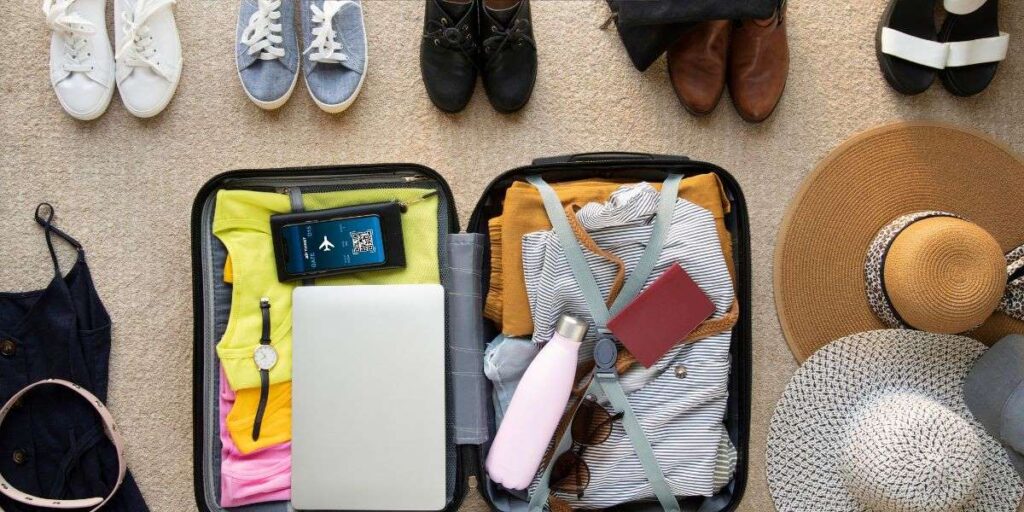
An open suitcase packed for a cruise trip shows neatly organized clothing, a passport, a water bottle, a watch, and a laptop. Surrounding the suitcase are various shoes, a sun hat, and other travel essentials, all laid out on the floor in preparation for the journey.

Costa made clear that the payments made by the cruise line would not impact any payments made to guests by their travel insurance – so guests with insurance would be able to claim for their lost belongings that way as well.

Alongside the financial offer, the cruise line also granted all survivors access to a programme for psychological assistance.

The crew’s compensation was negotiated by a trade union, and alongside their paid wages, they were able to claim up to £2,250 for any lost property on the ship, as well as any expenses incurred as a result of the disaster.

In total, the cruise line paid out over €84 million in compensation to passengers and crew. An average of around €1 million was paid out to family members of the deceased, although for a time the cruise line was unable to find any successors to a German passenger who died on the ship. It’s unclear whether the cruise line has since been able to find family members to make a payment to.

Final Word

The Costa Concordia may seem like a disaster which happened a long time ago, but some of the lawsuits have only been settled as recently as 2021, and there is a chance that further litigation could be brought against the cruise line.

Most of those who were onboard the ship and survived have accepted the offers made to them, closing that chapter. Lessons have certainly been learned and hopefully – with the heightened safety awareness of the senior crew members on ships – we will never see a disaster of this extent ever again.

NEW DEALS JUST RELEASED!

I’m ALWAYS looking for cruise bargains! These are the best deals I found this week…

Related Posts:

If you found this interesting, please share!

Cruise Mummy

Jenni Fielding is the founder of Cruise Mummy. She has worked in the cruise industry since 2015 and has taken over 30 cruises. Now, she helps over 1 million people per month to plan their perfect cruise holidays.

Read more about me


Source link

20221111_092757-1.jpg

AT&T Revamps Cell Phone Plan to Include Cruise Ships

AT&T has revamped their AT&T International Day Pass to include both land and cruise ships for a daily flat fee.

cruise ships

AT&T’s International Day Pass now includes over 400 cruise ships and allows for seamless use on both cruise ships and in foreign ports.

The travel package now includes the following:

  • Unlimited talk and text on the ship and in port
  • 500MB a day of data
  • No data overages*
  • Daily flat fee of $20 per day

*At sea, after 500MB of data use within a 24-hour period, data speeds may be reduced to a maximum of 512Kbps on certain cruise ships. The highest available data speed will be restored at the beginning of the next 24-hour period.

Because of this new plan, AT&T’s Cruise Basic and Cruise Plus plans will no longer be available. This includes Cruise Day passes as they are no longer available.

AT&T cruise and land package

Erin Scarborough, senior vice president of Consumer Product for AT&T, gave the following statement:

“AT&T’s guiding North Star will always be our customers. They keep us grounded and help guide us in creating deals and services they deserve – that’s why we do what we can to connect customers wherever they are. We’re in this journey together with our customers, so it’s important they experience seamless connectivity wherever they go.”

Our free cruise newsletter offers the latest news and deals: Sign Up

Source link

Untitled-design-2025-04-16T091307.040.jpg

Cruise Passenger Films Woman Who Slipped by Hot Tub

A recent incident on a Carnival cruise has been brought under the spotlight after one passenger was reportedly seen filming another who had slipped and fallen near a hot tub.

In a world where clicks and views are treated like currency, it appears that common decency is not as common as we would like to think. 

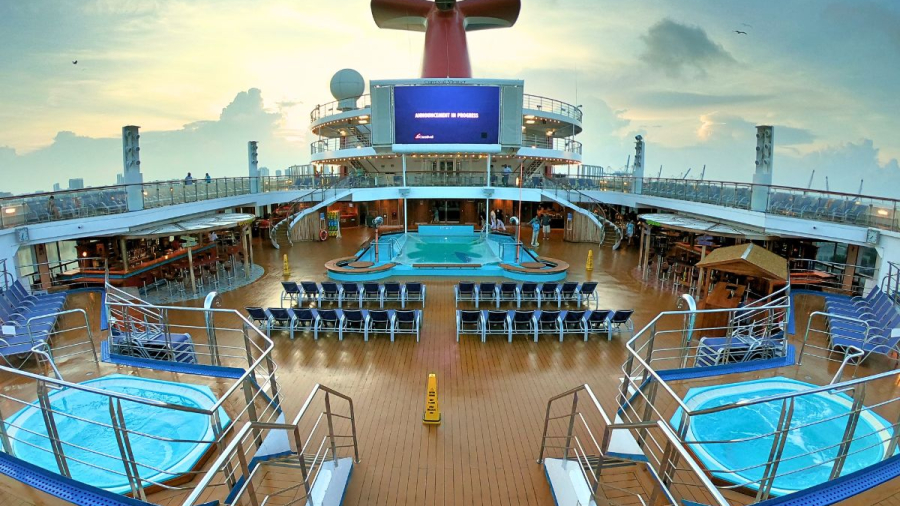
Carnival lido deck on Carnival Victory with hot tubs and pool
Photo credit: Cruise Fever

The incident, which was recently the focus of a Facebook live video by Carnival Cruise Line’s Brand Ambassador John Heald, is raising questions about cruise etiquette and privacy.

Heald addressed the issue head-on, asking his followers, “Would you do this?”

According to the account shared with Heald by a guest named Connie, the incident occurred on the Lido deck.

While the ship’s medical team responded quickly and crew members thoughtfully used beach towels to shield the injured woman who had fallen, Connie was disturbed to witness another guest holding their phone high in the air, seemingly recording the scene.

Heald quoted Connie’s message during his live broadcast:

“Is it OK for another guest to be filming the incident? It upset me when I saw someone holding her phone high in the air to capture the incident. I asked her why she would think it’s OK to film this and it was very disrespectful… to film an incident like this in my opinion is very disrespectful, John. What do you think?”

John Heald, known for his direct and creative communication style, didn’t mince words in his response. Admitting that phone cameras are everywhere and a part of reality, he stated:

“Well, you know, wherever we are in the world, you see an accident on the road, somebody’s filming it. There is always somebody with their phone in the air filming everything.”

Heald then gave his own feelings about the issue which seemed to echo the sentiment of the comments on the Facebook post as well

“Would I do it? Not in a million years. Do I think it’s awful? Yes.”

Heald further challenged his audience to consider the perspective of the person who had fallen:

“Do I think that people don’t think, ‘What if that was me laying at the bottom of the steps of the hot tub if I just slipped over, I want someone filming me now?’ Of course, you wouldn’t…”

While expressing his strong personal disapproval, Heald also offered a realistic view:

“…but there’s nothing we could do. It is the world that we live in, it really is.”

Heald’s message is a reminder that just because we can film something doesn’t mean we should. This isn’t about the legality of filming in a public space; it’s about basic human decency.  

We can prioritize compassion over content, right?  How’s that for alliteration! 

Our free cruise newsletter offers the latest news and deals: Sign Up

Source link

Labadee-Haiti.jpg

Cruise Destination Removed From Schedules AGAIN Due To Unrest

Just months after Royal Caribbean resumed calls to its private Haitian destination of Labadee, the cruise line is once again pulling out – at least temporarily – due to escalating unrest in the country.

Aerial view of Labadee, Haiti

Guests currently sailing aboard Voyager of the Seas and Oasis of the Seas have confirmed that Labadee has been removed from their itineraries, replaced by alternate Caribbean ports.

One guest onboard Voyager of the Seas reported that the captain announced all calls to Haiti have been suspended for the next month.

“The captain has just come over the Tano and said that Royal Caribbean have [cancelled] all stops to Haiti for the next month due to the ongoing situation which is rapidly escalating. We are now going to Puerto Plata in the Dominican Republic,”

That sailing, a 5-night Eastern Caribbean cruise that departed Port Canaveral on 14th April 2025, will still include a visit to Royal Caribbean’s other private destination, Perfect Day at CocoCay in the Bahamas.

Similarly, guests aboard Oasis of the Seas, currently on a 6-night voyage from Fort Lauderdale, were informed of a switch from Labadee to Nassau, Bahamas.

Letters distributed onboard cited “an abundance of caution” as the reason for the itinerary change.

More Changes Likely

Initial reports suggest Royal Caribbean will avoid Labadee through at least mid-May, meaning other ships scheduled to call on the port – including Adventure of the Seas, Explorer of the Seas, Symphony of the Seas, Freedom of the Seas, and Grandeur of the Seas – may also see changes to their itineraries.

This comes after Royal Caribbean Group’s Celebrity Cruises made a similar move, quietly adjusting a dozen sailings to remove Labadee.

No official explanation was given at the time, but many suspected the ongoing unrest throughout Haiti was behind the changes.

While Labadee itself is a fenced-off, controlled-access resort with private security and limited access to the broader country, Haiti as a whole remains under a Level 4 “Do Not Travel” advisory from the US State Department.

The alert cites risks such as kidnapping, violent crime, and civil unrest.

The worst of the violence is centred in Port-au-Prince – more than 100 miles away from Labadee – but the humanitarian crisis continues to worsen, prompting concern even for restricted-access locations.

When Royal Caribbean resumed visits to Labadee in October 2024 after a seven-month hiatus, they did so with limited shore excursions that stayed within the safe bounds of the 260-acre destination.

However, in light of recent developments and worsening conditions reported by agencies like the UN and Red Cross, the cruise line is once again erring on the side of caution.

Travellers booked on upcoming cruises featuring Labadee should prepare for potential itinerary changes.

Royal Caribbean has not yet released an official blanket statement, but based on shipboard announcements, the destination may be off the schedule for at least the next month.

Guests are encouraged to monitor communications from the cruise line and check for itinerary updates in their cruise planner or booking portal.

For now, it seems Labadee is once again on pause – a decision made to prioritise guest safety amid an unpredictable and rapidly shifting situation on the ground.

NEW DEALS JUST RELEASED!

I’m ALWAYS looking for cruise bargains! These are the best deals I found this week…

Related Posts

If you found this interesting, please share!

Cruise Mummy

Jenni Fielding is the founder of Cruise Mummy. She has worked in the cruise industry since 2015 and has taken over 30 cruises. Now, she helps over 1 million people per month to plan their perfect cruise holidays.

Read more about me

Carnival Sunrise

A 19-year-old man has been jailed for 8 months after emailing in a bomb hoax to a cruise over a trivial disagreement. Joshua Lowe, a Michigan resident, has been sentenced…

Norwegian Cruise Line (NCL) has announced an ambitious transformation of its private Bahamian island, Great Stirrup Cay. The update will include a long-awaited multi-ship pier and a range of new…

A long-awaited cruise holiday turned into an expensive ordeal for a British couple after one of them was denied boarding their Cunard voyage in Sydney, Australia – all due to…

The cruise community has been sharing concerns over the safety of cruises following layoffs as the Centers for Disease Control and Prevention (CDC), prompting a response from the agency. Despite…


Source link

Carnival-Sunrise.jpg

Teenager Jailed After Cruise Bomb Hoax

A 19-year-old man has been jailed for 8 months after emailing in a bomb hoax to a cruise over a trivial disagreement.

Carnival Sunrise

Joshua Lowe, a Michigan resident, has been sentenced to 8 months in a federal prison after the hoax, which was attributed to him being upset that his girlfriend cruised without him, leaving him to look after the pets.

The threat, sent via email to the Carnival Sunrise in January 2024, prompted immediate and widespread emergency action.

More than 1,100 crew members onboard were forced to conduct an urgent search of over 1,000 staterooms as the ship followed security protocols.

The Sunshine-class vessel was also escorted by the US Coast Guard and Jamaica Marine Police during the scare.

The cruise, which had departed from PortMiami, was carrying thousands of passengers when the threat caused panic and operational disruption.

Ultimately, the email was traced back to Lowe, who confessed he was angry about being left behind to pet sit while his girlfriend vacationed with her family.

“We take every threat of mass violence seriously,” said US Attorney Mark Totten following Lowe’s sentencing on April 14, 2025, in Kalamazoo, Michigan.

“Hoaxes can endanger lives, incur needless costs, and divert public safety resources needed to address real threats. My office has zero tolerance for wrongdoers who intentionally convey false and misleading information,” Totten added.

Although Lowe received an eight-month sentence, the punishment could have been more severe.

Under Section 35 of Title 18 of the US Department of Justice’s Criminal Resource Manual, making a false bomb threat carries penalties of up to five years in prison and/or a $5,000 fine.

In a comparable case in 2010, a Florida woman was sentenced to a full year behind bars after falsely claiming a female terrorist with a bomb was aboard Carnival Fascination.

Despite the disruption and wasted resources, Lowe expressed remorse. In a letter to US District Judge Paul Maloney, he wrote, “This is all my fault and [I] take full responsibility.”

A Costly Mistake

Lowe’s actions not only caused fear and confusion aboard Carnival Sunrise, but also resulted in the unnecessary deployment of emergency services.

Given the heightened sensitivity surrounding cruise ship security, hoax threats are treated with full seriousness, regardless of the motivation.

“Anyone making a bomb threat should expect to be taken at his word. Fortunately, this particular hoax did not result in physical injury,” said Assistant US Attorney Nils Kessler.

The Carnival Sunrise scare wasn’t the only recent cruise-related bomb threat.

On 3rd March 2025, PortMiami – one of the world’s busiest cruise hubs – experienced chaos after an unrelated threat disrupted port operations for hours. Though no explosive was found and no one has been arrested, the investigation remains ongoing.

Five cruise ships were in port that day, including Independence of the Seas, MSC Divina, Norwegian Joy, and both Carnival Sunrise and Carnival Conquest.

The key takeaway: real threats should always be reported to cruise security teams or authorities. But making false reports – even in moments of anger or jealousy – can result in serious legal consequences.

Carnival Cruise Line and other operators have strict security protocols in place for any kind of threat, with teams trained to handle emergencies both onboard and ashore. While most cruises are safe, enjoyable experiences, safety will always remain the top priority.

For Lowe’s girlfriend, if her pet is a dog then she may wish to consider a dog-friendly cruise in future instead of leaving any partner behind where they might be so upset as to fake a bomb!

NEW DEALS JUST RELEASED!

I’m ALWAYS looking for cruise bargains! These are the best deals I found this week…

Related Posts

If you found this interesting, please share!

Cruise Mummy

Jenni Fielding is the founder of Cruise Mummy. She has worked in the cruise industry since 2015 and has taken over 30 cruises. Now, she helps over 1 million people per month to plan their perfect cruise holidays.

Read more about me

Just months after Royal Caribbean resumed calls to its private Haitian destination of Labadee, the cruise line is once again pulling out – at least temporarily – due to escalating…

Norwegian Cruise Line (NCL) has announced an ambitious transformation of its private Bahamian island, Great Stirrup Cay. The update will include a long-awaited multi-ship pier and a range of new…

A long-awaited cruise holiday turned into an expensive ordeal for a British couple after one of them was denied boarding their Cunard voyage in Sydney, Australia – all due to…

The cruise community has been sharing concerns over the safety of cruises following layoffs as the Centers for Disease Control and Prevention (CDC), prompting a response from the agency. Despite…


Source link

Bright cruise ship suite living area with sofa and ocean-view windows, similar to Icon of the Seas suites

Icon of the Seas Suites: Every Category, Size and Perk Explained

Icon of the Seas suites come in 13 categories, from the 325 sq ft Junior Suite up to the three-deck Ultimate Family Townhouse at roughly 1,770 sq ft indoors. Every suite falls into one of three Royal Suite Class tiers: Star Class (Royal Genie, included specialty dining, drinks and gratuities), Sky Class (concierge, the suite lounge and sun deck, all-day Coastal Kitchen) and Sea Class (a bigger room with a few light perks). Which suite you should book depends less on the square footage than on which tier it sits in.

Below you’ll find sizes, locations, tier perks, rough prices and the best picks for families and couples. For regular cabins, see our guide to Icon of the Seas cabins to avoid and the best rooms to book.

Icon of the Seas Suites at a Glance

The ship has 179 suites out of about 2,805 staterooms. Sizes below are approximate and taken from published deck plans. They can vary a little from one cabin to the next in the same category, especially for corner and aft-facing suites.

Suite (code) Interior / balcony (sq ft) Sleeps Class Where
Ultimate Family Townhouse (UL) 1,770 / 750 + backyard 8 Star Decks 7-9, aft, Surfside
Royal Loft Suite (RL) 1,480 / 705 6 Star Decks 17-18, midship
Icon Loft Suite (IL) 655 / 150-185 4 Star Decks 17-18, forward
Owner’s Suite (OS) 660 / 190 4 Sky Decks 16-17
Sunset Corner Suite (SN) 380-480 / 280-360 4 Sky Decks 8-12, aft corners
Infinite Grand Suite (IG) 430 / about 105 4 Sky Deck 9
Grand Suite (GS) 430 / 110 4 Sky Decks 16-17, forward
Sunset Suite, aft-facing (SS) 390 / 65-120 4 Sky Decks 9 and 11, aft
Panoramic Ocean View Suite (VP) 370-440 / none 4 Sky Decks 16-17, forward
Sky Junior Suite (JY) 325 / 80 4 Sky Decks 16-17
Surfside Family Suite (SF) 270 / 55 4 Sky Decks 9-11, Surfside
Sunset Junior Suite (JT) 325 / 115-130 4 Sea* Deck 10, aft corners
Junior Suite (JS) 325 / 80 4 Sea Decks 9-11

*The Sunset Junior Suite is usually listed as Sea Class, but some sources have placed it in Sky Class. The tier printed on your booking is the one that counts, so check it before you pay.

Where the Suite Neighborhood Is

Most top-end suites sit together in the Suite Neighborhood, high up on decks 16 to 18 toward the front of the ship. This area holds the Grand Suites, Owner’s Suites, Panoramic Suites, Sky Junior Suites and the Icon and Royal Lofts. It also has the suite-only spaces:

  • Coastal Kitchen: a two-level restaurant for suite guests. Star and Sky Class can use it all day. Sea Class gets dinner there, subject to availability.
  • The Suite Lounge: evening drinks and snacks for Sky and Star Class.
  • The Grove: a private sun deck with its own pool, open to Sky and Star Class.

The Townhouse and Surfside Family Suites face Surfside, the family area at the back of the ship. The Sunset suites wrap around the aft corners, and the Infinite Grands are on deck 9. Guests in these suites get the same tier perks but have to take the elevator up to Coastal Kitchen and The Grove.

Spacious cruise ship suite balcony with lounge chairs overlooking the open ocean
A big balcony is one of the main reasons to book a suite on a mega-ship. Photo: Jean-Paul Wettstein on Pexels

Royal Suite Class Explained: Star, Sky and Sea

Two suites of similar size can come with very different perks. Here’s what each tier includes, based on Royal Caribbean’s published benefits. Perks change from time to time, so check them when you book.

Star Class

This is the all-inclusive tier, available in the Ultimate Family Townhouse, Royal Loft and Icon Loft. It includes:

  • A Royal Genie, a personal host who plans and books things for you
  • Included dining at most specialty restaurants
  • The Deluxe Beverage Package for guests 21 and over, or a refreshment package for younger guests
  • Gratuities for standard onboard staff (many guests tip their Genie on top)
  • VOOM Wi-Fi, expedited boarding and departure, and priority entry to many activities
  • Reserved seats at select shows, a stocked minibar, and laundry and pressing
  • All-day Coastal Kitchen, the Suite Lounge and The Grove

Sky Class

This covers most of the ship’s suites. You get suite concierge service, all-day access to Coastal Kitchen, the Suite Lounge and The Grove, VOOM Wi-Fi (one device per guest), priority boarding and departure, priority dining reservations and reserved seating at some shows. Gratuities, drinks packages and specialty dining are not included.

Sea Class

This is basically an upgraded balcony room. You get a dedicated check-in line, priority boarding, dinner at Coastal Kitchen (subject to availability), a Lavazza espresso machine, robes and nicer bedding. There’s no lounge, no Grove and no concierge.

To compare these perks with Royal Caribbean’s paid priority add-on, read The Key vs suite perks. The Key can match some Sea Class perks for less.

The Star Class Suites

Icon of the Seas Ultimate Family Townhouse

There is only one on the ship. It spreads over three decks at the back, with roughly 1,770 sq ft inside, around 750 sq ft of balcony and a private “backyard” opening onto Surfside. Extras include an in-suite slide, a cinema room with karaoke, a ping-pong table and a kids’ room. It sleeps up to eight.

Royal Loft Suite

A two-level suite of about 1,480 sq ft with a balcony of around 705 sq ft. It sleeps six and has two bedrooms, a wet bar, a piano and a soaking tub. It suits a small group or multi-generation family who care more about space than slides.

Icon of the Seas Icon Loft Suite

The Icon Lofts are the cheapest way into Star Class. They’re two-level suites of about 655 sq ft with balconies of roughly 150 to 185 sq ft. Each has a sofa bed, a bathroom on each level and floor-to-ceiling windows. There are only a handful of them, including one accessible loft with an elevator, wider doors and roll-in showers.

The Sky Class Suites

Owner’s Suite

At about 660 sq ft with a 190 sq ft balcony, it’s almost as big as an Icon Loft but on one level, with a separate bedroom and a soaking tub. It’s Sky Class, though, so drinks, specialty dining and a Genie aren’t included.

Sunset Corner Suite and Sunset Suite

The Sunset Corner Suites have the biggest balconies for the price: roughly 280 to 360 sq ft of wraparound deck over the ship’s wake. The aft-facing Sunset Suites are similar inside (about 390 sq ft) but have smaller balconies. Aft balconies can pick up noise from Surfside and the decks above, so check the deck plan around your cabin.

Grand Suite and Infinite Grand Suite

Both measure around 430 sq ft. The Grand Suite is in the Suite Neighborhood and has a regular balcony and a curtain that splits the bedroom from the living area. The Infinite Grand on deck 9 has an “infinite” balcony: the window drops down at the touch of a button, so the balcony becomes part of the room.

Panoramic Ocean View Suite

These forward-facing suites (about 370 to 440 sq ft) have no balcony, just a wall of glass looking over the bow. Skip them if outdoor space matters to you.

Sky Junior Suite

It has the same 325 sq ft layout as a standard Junior Suite but is classed as Sky, so it comes with the lounge, The Grove, concierge and all-day Coastal Kitchen. It’s the best-value suite on the ship, but there are only around eight, and they sell out early.

Surfside Family Suite

The smallest Sky Class suite (about 270 sq ft) overlooks Surfside. It has a kids’ nook with a sofa bed and TV, plus a split bathroom.

Children playing in a shallow cruise ship pool area while parents relax nearby on loungers
Families with young kids often pick suites close to the ship's family zone. Photo: Oliver LOK on Pexels

The Sea Class Suites

The Junior Suite (about 325 sq ft, 80 sq ft balcony) is the most common suite on board, with a bathtub and more room than a balcony cabin. The Sunset Junior Suite has the same interior on an aft corner, with a 115 to 130 sq ft balcony. Both are good rooms, but they don’t include lounge or Grove access.

How Much Do Icon of the Seas Suites Cost?

Prices change a lot by sailing date, school holidays and how far ahead you book. As a rough guide for a 7-night Caribbean cruise from Miami at the time of writing:

  • Junior Suites: often around $3,500 to $6,000 per person
  • Sky Class suites (Grand, Owner’s, Sunset Corner and others): commonly $5,000 to $10,000+ per person
  • Icon and Royal Lofts: generally much higher, with Star Class often around two to three times the price of a comparable Sky Class suite
  • Ultimate Family Townhouse: early sailings were advertised from about $23,000 per person for a family of four, and later ones have been quoted at well above $75,000 for the whole suite

A worked example: two adults paying $6,000 each in Sky Class versus $15,000 each in Star Class is an $18,000 gap. The extras Star Class includes (gratuities of roughly $250 to $300, a drinks package for two that is often $1,000 or more, and specialty dining) come nowhere near that. People book Star Class for the Genie and the space, not to save money.

Which Icon of the Seas Suite Is Best for You?

  1. Best for big families or groups: the Ultimate Family Townhouse (eight guests) or the Royal Loft (six).
  2. Best for families with young kids: the Surfside Family Suite. You get Sky Class perks and a kids’ nook beside Surfside at a much lower price than the Townhouse.
  3. Best for couples: a Sunset Corner Suite for the huge aft balcony, or an Icon Loft if you want the full Star Class experience.
  4. Best value: the Sky Junior Suite. You get Sky Class perks in a Junior Suite-sized room.
  5. Best for foodies: any Star Class suite, since specialty dining is included. Browse our Icon of the Seas restaurants guide to see what you’d be eating.

Quick checklist before you book

  • Check the tier (Star, Sky or Sea) on the booking, not just the suite name.
  • Look at the deck plan for venues above and below you, especially on aft and Surfside-facing suites.
  • Count beds properly. “Sleeps 4” often means a sofa bed in the living area.
  • Book early for Sky Junior, Sunset Corner and the Lofts, since there are only a few of each.
  • Watch for price drops closer to sailing.

For current fares and the official suite descriptions, see Royal Caribbean’s website.

Several of these suites qualify for Star Class; here is what Star Class includes.

FAQs

What is the best suite on Icon of the Seas?

The Ultimate Family Townhouse is the biggest and most lavish suite, with three decks, an in-suite slide and space for eight. For couples, the Icon Loft gets you full Star Class perks for much less, and the Sky Junior Suite is usually the best value.

What deck are the suites on Icon of the Seas?

Most suites are in the Suite Neighborhood on decks 16 to 18, toward the front of the ship. The Ultimate Family Townhouse (decks 7-9), Surfside Family Suites (decks 9-11), Infinite Grand Suites (deck 9) and Sunset suites (aft) are elsewhere.

What is the difference between Star, Sky and Sea Class?

Star Class includes a Royal Genie, specialty dining, a drinks package and gratuities. Sky Class includes concierge, the Suite Lounge, The Grove sun deck and all-day Coastal Kitchen. Sea Class is a larger room with dinner at Coastal Kitchen and a few comfort upgrades.

How much is the Ultimate Family Townhouse on Icon of the Seas?

Prices depend on the sailing. It has been advertised from about $23,000 per person for a family of four on a 7-night cruise, and many dates now cost well above $75,000 for the whole suite. Check current pricing with Royal Caribbean.

Do Junior Suites on Icon of the Seas get lounge access?

Standard Junior Suites are Sea Class, so they don’t include the Suite Lounge or The Grove. The Sky Junior Suite, which is in the Suite Neighborhood, does include both.

how-fast-can-a-cruise-ship-go-1.jpg

Cruise Ship Speeds – How Fast Can They Go, And How Fast Do They Usually Sail?

Cruise ships are like huge floating cities, transporting up to 7,600 passengers around the world. Given their mammoth size, you may be wondering how fast cruise ships go…

Of course, how fast they ‘can’ go and how fast they choose to sail are two completely different measurements. Your car ‘can’ go a lot faster than you drive (I hope).

Two people on a cruise enjoying the view and the breeze

So it’s interesting to take a look at what’s possible, and the speeds they actually travel (and why).

Cruise Ships Average A Relatively Slow Speed

The average speed of a cruise ship is 18 to 22 knots (20 to 25 miles per hour). The maximum top speed of a cruise ship is around three knots faster than its real-life average cruising speed. The fastest cruise ship, Cunard’s Queen Mary 2, can reach top speeds of up to 30 knots.

But when asking how fast does a cruise ship go, that’ll depend on how far it needs to travel. The average cruise ship speed is exactly that – an average.

In reality, the ship will only travel as fast as it needs to in order to reach the next port by morning. It’s very rare for a cruise ship top speed to be used – in fact, for itineraries visiting ports close to each other, the average speed of cruise ship travel might be much lower.

Converting Knots to MPH

To convert a speed in knots to miles per hour, you can multiply the knots by 1.151. 

Why We Use Knots Instead of Miles Per Hour

Knots means ‘nautical miles per hour’. A nautical mile is 6,076 feet, which is about 15% more than a mile on dry land (which is called a statute mile). 

Regent Seven Seas Cruise

I once heard Captain Wesley Dunlop, who was the captain of P&O Cruises’ Britannia at the time (he’s since joined Disney Cruise Line), joke that a nautical mile was longer because the land is quite flat but the sea goes up and down! Of course, this isn’t the real reason for the difference between nautical miles and statute miles.

The measurement of miles on land dates back to Roman times and is based on 1,000 paces (only counting the left foot). Nautical miles were defined much later, in 1929, and are based on degrees of latitude around the earth. 

The equator is a circle, which has 360 degrees. Each degree is divided into sixty nautical miles. This actually makes much more sense than statute miles, which are based on 1,000 times the length of two strides.

Read more: What Is A Knot In Terms of Speed And Why Is It Called That?

The Maximum Speed of a Cruise Ship

Cruise ships tend to have a top speed of around 25 knots, though it’ll vary by ship. The top speed of cruise ships is usually considered quite irrelevant, as cruise ships hardly ever reach their maximum speeds!

The only time a cruise ship tends to reach its top speed is during sea trials. These are test voyages in which a brand new cruise ship is taken out into the ocean and put through its paces to confirm that it meets specifications.

So, even if a cruise ship has a top speed of 25 knots, it will realistically only ever travel at about 20 knots because this speed is much more efficient. 

Just like when you drive your car on the motorway, if you drive at 80 mph, you’ll burn much more fuel during the journey than you would if you stuck to a steady 60 mph. With something as large as a cruise ship, that extra fuel will be very expensive.

Suggested read: How Much Fuel Does A Cruise Ship Hold?

When a cruise ship goes faster, the ride also becomes bumpier for the passengers. The slower the ship is travelling, the more submerged the hull is, which makes for a smoother ride.

Cruise ships do sometimes go faster than the standard speed, such as when there is bad weather that they must quickly move away from. If another ship puts out a distress call, then a cruise ship may also speed up to offer assistance as soon as possible.

Top Speed is an Average

Cruise ships can go faster when they’re going in the same direction as the waves. However, rather than waiting for the right sea conditions to break speed records, cruise lines always use an average that factors in going both with and against the waves. This is a more accurate way to measure the top speed.

Newer Ships Are Quicker

Faster cruise ships don’t necessarily have more powerful engines. The difference in speed is due to efficiency.

Newer cruise ships have more advanced technology, like air bubble systems under the hull. These reduce friction between the ship and the water, meaning that they can go faster with the same fuel, or, as more commonly happens, go the same speed with less fuel.

The Fastest Cruise Ship

Deciding which is the fastest cruise ship depends on your definition of a cruise ship. Small passenger ships and ocean liners are the fastest, but these aren’t technically cruise ships. Smaller ships can go faster because they carry less weight, while ocean liners are designed to be more aerodynamic.

Cunard's Queen Mary 2
Queen Mary 2
Photo credit: Cunard

Some people may consider Cunard’s Queen Mary 2 to be the fastest cruise ship with a top speed of 30 knots. However, you may be surprised to learn that she’s not technically a cruise ship, she’s an ocean liner! This ship is designed to transport passengers across the Atlantic, sitting lower in the water with a pointed bow and an extra-thick hull compared to a true cruise ship.

You can read more about the differences between cruise ships and ocean liners here.

There’s no official record of the fastest cruise ship as cruise ships rarely, if ever, use their top speed. However, several ships from Holland America Line, Norwegian Cruise Line and Royal Caribbean have been known to reach speeds of over 25 knots (29 mph) during sea trials.

The Fastest Ocean Liner On Record

The fastest ocean liner ever built was the SS United States which, on her maiden voyage in 1952, shattered the trans-Atlantic speed record and reached a top speed of 39 knots (45 mph). [Source].

Although the 1,928-passenger SS United States retired from service in 1969, she still holds the record as the fastest ocean liner to cross the Atlantic in either direction.

In the 1950s, the time it would take to complete an ocean crossing was a major selling point for cruise lines. These days, however, people prefer to cruise at a more leisurely pace and call at several destinations during the voyage.

The Average Speed of a Cruise Ship

The speed at which cruise ships travel on open seas is known as ‘cruising speed’ or ‘service speed’. This speed offers the best combination of distance travelled and fuel economy.

The actual speed at which a cruise ship travels may be influenced by:

  • Itinerary: Cruise ships travel slower when they have plenty of time to reach the next port of call
  • Fuel: Faster speeds are less fuel-efficient so a ship will slow down if it needs to conserve fuel
  • Distance to shore: Cruise ships slow down as they approach ports. If they arrive early they may even stop and anchor at sea
  • Hazards: In some areas, such as Alaska, cruise ships proceed with extra caution to avoid glaciers
  • Weather: Cruise ships may speed up to move out of the path of storms. If the weather is rough, they may also slow down, preferring to make up progress over flat seas

Have you noticed how time of day isn’t listed there?

Cruise ships don’t travel any faster or slower in the night. While visibility is obviously reduced in the dark, cruise ships have equipment that means that they can look out for hazards, even in the dark. Plus, other vessels have lights, so they’re easy to spot.

The Maximum Distance a Cruise Ship Can Travel in a Day

In 24 hours, a cruise ship travelling at the standard service speed can cover about 480 nautical miles (which equates to 552 land miles).

  • From the UK: A cruise ship departing from Southampton on the south coast of England, could reach as far as Newcastle Upon Tyne in the North East of England in 24 hours. 
  • From Florida: A cruise ship departing from Port Canaveral, Florida, could reach as far as Havana, Cuba in 24 hours
  • From Spain: A cruise ship departing from Barcelona, Spain, could reach as far as Livorno (Pisa), Italy in 24 hours

Of course, these are hypothetical journeys. Cruise ships time their journeys to dock at ports in the early morning and depart in the evening to allow passengers to explore. If the distance between two ports is too great, the ship will spend a day at sea.

The Bottom Line

Cruise ships travel relatively slowly, with an average speed of 18 to 22 knots (20 to 25 miles per hour). Ocean liners like Queen Mary 2 can reach top speeds of 30 knots, but for true cruise ships, the maximum speed is more like 25 knots.

So when asking how fast can a cruise ship go, really you’re asking about theoreticals – because ships will only travel as fast as they need to.

Related Posts:

If you found this interesting, please share!

Cruise Mummy

Jenni Fielding is the founder of Cruise Mummy. She has worked in the cruise industry since 2015 and has taken over 30 cruises. Now, she helps over 1 million people per month to plan their perfect cruise holidays.

Read more about me


Source link

1744776808_sddefault.jpg

Why Famous Teepees Are Becoming Must-Stay Destinations

Water transportation continues to advance, thus shifting how we expect our lodging setups to appear. Modern travellers no longer desire hotels with standard rooms and typical cabins. Alongside the contemporary travel trends, people nowadays pursue lodgings that provide profound experiences and visually striking stays. Questers discover the teepee as it emerges as an impressive wilderness experience for modern travellers despite being initially used by nomadic people to shelter their homes. 

Cultural Roots Meet Modern Travel

Native Americans maintained teepees (tipis) as their portable dwelling solution, which protected them from the weather according to traditional plains tribal life. Teepees, in their contemporary form, highlight the original cultural tradition with modern features that enhance convenience. Guests who stay in teepees gain access to a respectful panoramic view of traditional lifestyle traditions along with their outdoor adventure experience. The modern teepees present an exceptional tribute to the past through authentic design, blending cultural heritage with luxurious contemporary comforts.

Glamping Trends & Eco-Tourism

The rapidly growing trend of glamorous camping called glamping incorporates teepees as its essential element. People who love nature enjoy rustic experiences but still desire comfort elements, including comfortable beds and air-conditioning paired with personal restrooms. The accommodations of teepees grant all features and much more than basic camping services. Teepee stays have gained popularity as people choose them instead of usual accommodations because they combine eco-tourism advantages with limited environmental effects. Guests at Westgate’s famous teepees enjoy experiencing teepees in peaceful natural landscapes, enabling them to bond with nature without creating ecological harm.

Where to Find These Famous Teepees

Teepee accommodations have been spreading throughout the United States, beginning with the desert of Arizona and then transitioning to the mountain vicinity of Colorado. Among these, Westgate’s famous teepees at Westgate River Ranch Resort in Florida stand out for their exceptional blend of luxury and outdoor adventure. These upscale accommodations go beyond typical glamping, offering access to ranch activities such as horseback riding, airboat tours, and evening campfires. Guests can enjoy all the comforts of a luxury resort while connecting with nature in a unique and memorable setting. It’s the ideal destination for travellers seeking an unforgettable vacation experience.

Who Should Stay in a Teepee?

The teepee experience is the best option for those seeking unique accommodation. These portable camps provide couples with their desired romantic nights under the stars. Family members find value in the authentic campfire experience because it gives them room to develop lasting bonds. Those who travel alone with remote workers find peace in the special atmosphere of the teepees. Westgate’s famous teepees are a distinctive vacation choice that appeals to travellers with various interests and goals.

What to Expect Inside

Don’t let the rustic exterior fool you. Step inside and find climate control, high-end bedding, modern lighting, and even private bathrooms. Some teepees include flatscreen TVs, mini-fridges, and Wi-Fi. The interiors of Westgate’s famous teepees feel more like boutique hotel rooms than tents, combining indigenous-inspired décor with modern luxury to create a truly magical ambience.

Booking Tips & What to Bring

Teepees are gaining popularity fast, especially during peak seasons, so book early. Look for weekday deals and seasonal promotions to score the best rates. When packing, bring layers (even luxury teepees can get chilly at night), outdoor-friendly footwear, and your sense of adventure. And, of course, check out any exceptional amenities offered by Westgate’s famous teepees, like on-site activities or dining packages, to enhance your stay.

Conclusion

Teepees are no longer just symbols of the past — they are the future of experiential travel. With their perfect mix of heritage, nature, and high-end hospitality, it’s no wonder they’re becoming must-stay destinations. And if you’re looking for the best in this category, Westgate’s famous teepees deliver an unforgettable escape that’s equal parts cultural, comfortable, and calm.

Source link