Traveling is inevitable, but you can pack for it smartly. Based on the location and region, you can include everything you need from must-haves to might needs. Apart from clothes and accessories, there is a lot more you need to fit in your bag. Some of them ensure your digital accessibility while others cover different aspects of your well-being. In this blog, we are listing ten extremely vital items that should be on your checklist. Read on to confirm if your list matches ours!
From over-the-counter medications to strict regimes, your travel kits are incomplete without healthcare items. Traveling can take a toll on your health and your vitals. Storing supplements, digestive medicines, and painkillers will be a good decision. Also, visit a travel doctor to observe any specific details related to the destination’s atmosphere and health implications. We suggest preparing a suitable kit beforehand.
Let’s be real, no matter how well-acquainted we are with the roads, we still need an informed perspective for guidance. There are many apps and navigation resources that can help you get to any location. However, this should not be the only concern of a location tracing structure. If you enable the ‘Find my Phone’ option on your smartphone, you can protect it better. This works wonderfully for individuals with a lost or stolen mobile device. Be sure to download it before you arrive at your destination.
Even a few kilometers worth of traveling can be demanding. For farther locations, the process becomes even more excruciating. Keeping a pair of good-quality earphones can provide the entertainment you need.
Your phone can run out of battery pretty fast while traveling. To avoid losing connection and stay safe, keep a fully-fueled portable charger at all times. So, even when your phone dies, you can regain access by simply plugging in.
A lot of internet providers have facilities encouraging hotspot services in various areas. For instance, Cox has descriptive network features to empower a fully digital user experience. Similarly, many other telecom companies have accessible internet points and nationwide sites that ensure a consistent and dedicated flow of signals even when you are moving from one point to another. Having a device or accessible data can help you stay on track and get all the information you need without any worries. For instance, if you are a Mexican native traveling to say, Las Vegas, you can always contact Cox las vegas servicio al cliente en español to know more about free Wi-Fi hotspots.
Allergies, doctor’s notes, identity documents, and everything else. You need to keep it all in a neatly organized folder. Every piece of information that concerns your well-being and will impact your traveling experience needs to be included in that folder. Itineraries and bookings need to be kept along with such stuff based on their importance and order. Don’t forget to pack your work documents or any remotely needed data that you might or might not utilize while traveling.
This is super important. Adapters and widely applicable electric converters need to be packed safely and away from all liquids. You may find an electrical outlet but not a compatible adapter for your devices. A universally used plug or converter can solve this problem and make sure nothing stands in the way of your devices and the needed power supply. However, pack them separately to avoid a damaging mess and remove stuff that can compromise their quality.
You should and might have your local currency sorted but if you are traveling internationally, it’s extremely necessary to get it converted and exchanged. Emergencies may strike but we need the relevant currency to get food, water, a place to stay, and other necessities. We suggest getting this done at least two days before your departure so any unpredictable spikes or drops can be covered accordingly.
Water is a universal element that should be available and can be purchased from anywhere. However, if you do have any drinking water outlets available in sight, your reusable water bottle can be an economical and wise choice. Get a sturdy tumbler with a dark or light color based on weather preferences to stay hydrated and keep your budget in check. Buy one with a nifty hook to keep it hanging as you go about your day while pulling it up when needed.
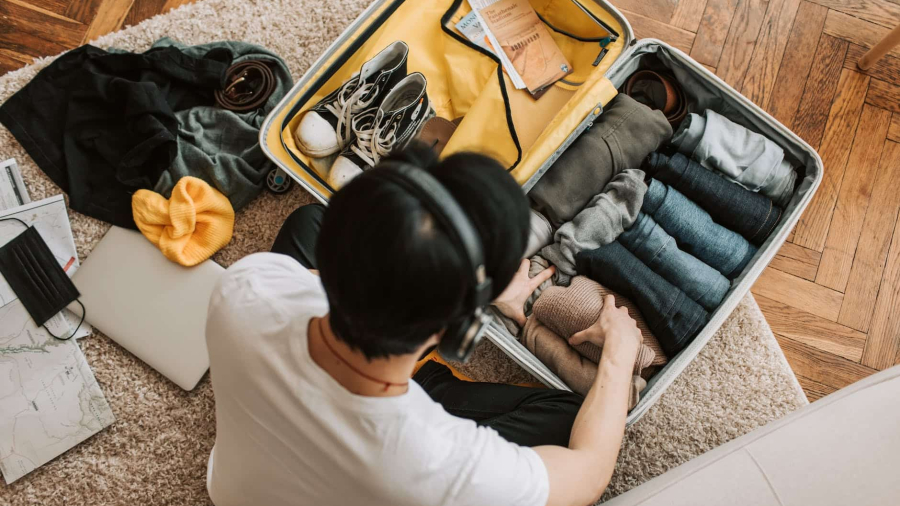
Traveling requires you to pack with awareness. Based on the duration of your stay, you will need to either pack less or a lot. Either way, a haphazard and disorganized session can leave your packing messy. Invest in packing cubes to correctly place all the items and then sort them in your baggage. This will help you save space and be responsible with your packing.
One payment option is not enough, which is why you need a card along with cash. Research the tax division between your current and future points and pick the sites to exchange money or withdraw cash. Regardless of your journey, you will need at least two payment methods to have a stress-free traveling experience.
On MSC Cruises sailings priced in US dollars, most bar drinks cost roughly $3.50 to $16 on the menu: soft drinks are about $3.50, beers $9 to $10, glasses of wine $14 to $16, and standard cocktails around $14, with signature cocktails from $16. An automatic 18% service charge is then added to every drink bought without a package (15% on euro-priced sailings). Tap water, brewed coffee, hot tea, iced tea and lemonade are free in the buffet and at main dining room meals.
This guide is all about MSC drink prices when you pay as you go: what a typical bar menu costs, which drinks are free, how the service charge works, and how many drinks a day you need before a package starts to pay off. If you already know you want a package and just need the details, our full MSC drink package guide with prices and what is included covers Premium Extra, Alcohol-Free and Minors packages in depth.
MSC drink prices at a glance (2026)
MSC does not publish its onboard bar menus online, and prices vary a little by ship, venue and region. The figures below are typical US dollar menu prices reported for the fleet through late 2025 and 2026. Treat them as a planning guide rather than a guarantee, and remember that menu prices do not include the service charge.
Drink
Typical menu price (USD)
With 18% service charge
Still bottled water
$3.25 to $4.25
about $3.85 to $5
Soft drink (can or glass)
about $3.50
about $4.15
Espresso, cappuccino, latte
$4 to $6
about $4.70 to $7.10
Energy drink
about $5
about $5.90
Mocktail
about $10
about $11.80
Fresh juice or smoothie
about $11
about $13
Beer (bottle or draught)
$9 to $10
about $10.60 to $11.80
Glass of wine
mostly $14 to $16
about $16.50 to $18.90
Classic cocktail or spritz
about $14
about $16.50
Signature or speakeasy cocktail
$16 to $22
about $18.90 to $26
Premium spirits, Champagne and bottles of wine from the wine list cost more, and speciality venues on newer ships can be at the top of these ranges. Prices are set by MSC and can change at any time, so check the menu on board or in the MSC for Me app once you sail.
Beer and wine prices on MSC
Beer is usually the cheapest alcoholic option, typically around $9 to $10 for a standard bottle or draught. Wine by the glass mostly falls between $14 and $16, with bottles on the wine list starting at roughly $50 and climbing quickly for premium labels. If you and a companion each have two glasses with dinner, a bottle is often the better deal.
Cocktail and spirit prices
Most classic cocktails, spritzes and frozen drinks sit around $14. Signature cocktails and those served in speakeasy-style or themed bars start at about $16 and can go above $20. A standard spirit with a mixer usually costs less than a cocktail, but premium and top-shelf brands are priced individually.
Coffee, soda and water prices
Speciality coffees from the bars and coffee venues are mostly $4 to $6. Soft drinks are about $3.50 and energy drinks about $5. Bottled still or sparkling water starts at roughly $3.25. These small purchases add up faster than many people expect, which is why some families look at the Alcohol-Free or Minors packages instead.
What drinks are free on MSC?
Every MSC fare includes a basic set of complimentary drinks. You can usually get these at no extra cost:
Tap (iced) water in the buffet around the clock and at main dining room meals.
Brewed (filter) coffee and hot tea from the buffet stations, plus at meals in the main dining room.
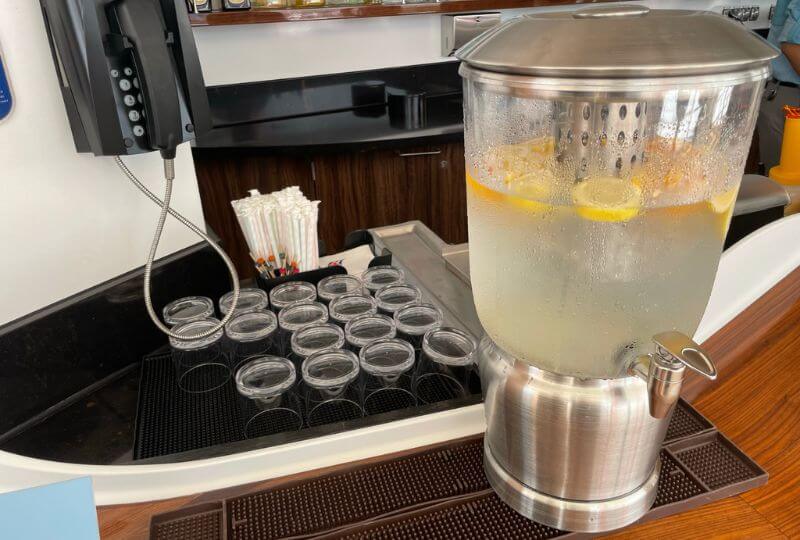
Iced tea and lemonade from the buffet drink dispensers.
Juice at breakfast in the buffet and main dining room.
What is not free: canned or fountain soft drinks, bottled water, espresso-based coffees, fresh juices outside breakfast, smoothies and, of course, any alcohol. In the main dining room, waiters will often offer bottled water first, so if you only want tap water, simply ask for it.
Guests in the MSC Yacht Club are the main exception. Their fare includes the Premium Extra package, so most drinks in the Yacht Club and around the ship are already covered.
Cocktails are where pay-as-you-go drink costs climb fastest. Photo: Rick Leal de Sousa on Pexels
The service charge on MSC drinks explained
The single biggest surprise on an MSC bar bill is the service charge. When you buy a drink without a package, MSC automatically adds:
18% on sailings where the onboard currency is US dollars (Caribbean, North America, South America and Japan, for example).
15% on sailings priced in euros (such as the Mediterranean and Northern Europe).
That charge is added to every item, including a $3.50 soda or a bottle of water. It is separate from the daily hotel service charge on your onboard account. The good news is that drink packages include gratuities in their price, so you do not pay the percentage again on drinks covered by a package. If you upgrade a single drink above your package level, the service charge applies only to the price difference.
A quick way to estimate your real cost on a US-dollar sailing is to multiply the menu price by 1.18. A $14 cocktail becomes about $16.52, and a $10 beer becomes $11.80.
Can you bring your own drinks on MSC?
No. MSC is stricter than many cruise lines here. Guests may not bring any alcoholic drinks on board at embarkation, and that includes wine and Champagne. Bottles bought ashore during port calls or in the onboard shops are held by the ship and handed back at the end of the cruise. Security can also check items such as mouthwash or toiletry bottles for hidden alcohol.
Because there is no “one bottle of wine” allowance, you cannot offset onboard prices by carrying your own. Soft drinks and bottled water are also generally not permitted in quantity, so check the current policy for your sailing in your MSC booking documents before you pack. Drinking ages follow local law: 21 on North American sailings, 20 in Japan and 18 in most other regions including Europe.
Drinks at meals: buffet and main dining room
MSC meals come with free water, coffee, tea and, in the buffet, iced tea and lemonade. Anything else at dinner is charged at menu price plus the service charge, and the waiter will add it to your cruise card. Wine at dinner is where many couples spend the most, so it is worth deciding in advance whether you will order by the glass, share a bottle each night, or rely on a package.
Specialty restaurants are a separate case. Only the Premium Extra package is accepted there, and MSC asks that everyone dining together in a specialty restaurant has the same package type. If you are on the Alcohol-Free or Minors package, expect to pay menu prices for drinks in those venues.
A little maths before you sail can save real money. Photo: https://kaboompics.com/ on Pexels
Pay as you go or buy a package? The break-even maths
On US-dollar sailings, the alcohol package now sold is Premium Extra (the older Easy package was withdrawn for new purchases from December 2024). Onboard prices reported in late 2025 were about $85 per person per day on cruises of four nights or more and about $95 on three-night sailings, with gratuities included. Buying in advance through your MSC account is usually cheaper, often by around 20% or more during sales. For the full package breakdown, see our complete MSC drink package guide.
Here is how the numbers stack up against typical MSC drink prices with the 18% charge added:
At the onboard price of $85 a day, you would need about five $14 cocktails (about $16.52 each with service) every day to break even.
At a pre-cruise price of about $68 a day (roughly 20% off), the break-even drops to about four cocktails, or around six beers.
Coffees and soft drinks count too. Two lattes ($11 or so with service) and two sodas ($8 or so) a day add nearly $20, which lowers the number of alcoholic drinks you need.
Light drinkers usually save by paying as you go. A glass of wine at dinner, one cocktail and a coffee comes to roughly $40 a day with service, less than half the onboard package price.
Remember that Premium Extra has a cap of 15 alcoholic drinks per person in each 24-hour period (6am to 6am), and the package rules can require adults in the same cabin to buy matching packages. Read the terms for your sailing before committing. If you are comparing MSC with other lines, our guide to cruise drink packages compared across the major lines shows how MSC’s prices stack up.
Ways to keep MSC drink prices down
Use the free drinks well. Refill a reusable bottle with tap water from the buffet and take coffee from the buffet rather than the bars.
Watch for happy hours and drink-of-the-day offers. Many bars run promotions, especially on sea days and in the early evening.
Order beer rather than cocktails if you are paying per drink; it is typically $4 to $5 cheaper.
Share a bottle of wine at dinner instead of ordering by the glass.
Check your onboard account in the app every couple of days so the service charge does not catch you out at the end.
Buy packages before you sail if you decide you want one. Onboard prices are almost always higher than pre-cruise offers.
A soft drink such as a Coke costs about $3.50 on US-dollar sailings, which comes to roughly $4.15 once the 18% service charge is added. Prices can vary by ship and region.
What drinks are free on MSC Cruises?
Tap water, brewed coffee, hot tea, iced tea and lemonade are free in the buffet and at main dining room meals, and juice is free at breakfast. Sodas, bottled water, speciality coffee and alcohol are extra.
Does MSC add a gratuity to drinks?
Yes. Drinks bought without a package carry an automatic 18% service charge on US-dollar sailings and 15% on euro-priced sailings. Drink packages already include gratuities.
What are the hidden fees on MSC Cruises?
The most common extras are the daily service charge, the automatic charge on drinks, speciality coffees, bottled water, specialty restaurants, Wi-Fi and shore excursions. Budgeting for drinks with the service charge included avoids the biggest surprise.
Can I bring wine on an MSC cruise?
No. MSC does not allow guests to bring wine, Champagne or any other alcohol on board at embarkation, and bottles bought in port are held until the end of the cruise.
A cruise line is adding more port visits to Barbados in 2025 and 2026 on new cruises that opened for bookings this week.
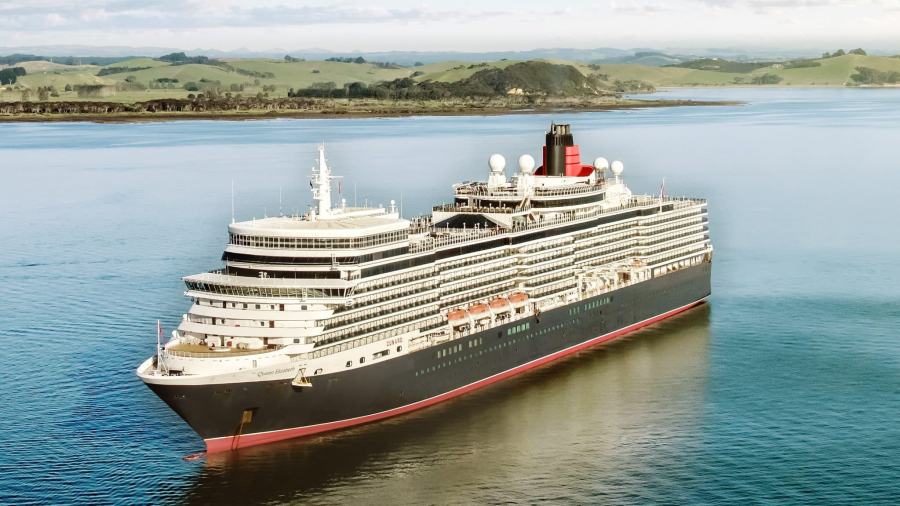
Cunard Line, one of nine cruise lines owned by Carnival Corporation, has added 13 new cruises that have port stops in Barbados. The cruise line will have a ship, Queen Elizabeth, based in Miami throughout 2025 and 2026.
When the ship arrives in Barbados in October 2025, it will be the first time in 10 years that the vessel has visited the island.
Sponsored Links
In addition, the cruise line’s flagship and the only ocean liner in the world, Queen Mary 2, will visit Barbados six times between November 2024 and December 2026. Lastly, Queen Victoria will make three port stops in Barbados in 2025 and 2026 on longer Caribbean cruises from Southampton.
Our free cruise newsletter offers the latest cruise news and deals: Sign Up
Katie McAlister, President of Cunard, gave the following statement about these new cruises to Barbados: “Barbados is one of the most beautiful destinations in the world and we are thrilled to announce that we are significantly increasing the number of times our guests will be able to explore the breath-taking shores of this gorgeous island in the coming years. We are proud pioneers of luxury ocean travel and there are few experiences more luxurious than sailing to the charming port of Bridgetown to sample a unique slice of Caribbean culture.”
Queen Elizabeth is introducing a new program in the Caribbean with 33 cruises from Miami that will range from 12 to 21 nights in length.
Mia Mottley, Prime Minister of Barbados, added: “Barbados warmly welcomes the return of Cunard, a truly iconic name in the world of luxury travel. The partnership between Cunard and Barbados reflects a shared commitment to excellence in hospitality and creating unforgettable holiday memories that showcase an authentic Caribbean experience. We look forward to hosting Cunard’s guests and, with our local charm, cuisine, and coastline, showing why a visit to Barbados will always be special.”
All of these new cruises from Cunard are now open for bookings.
Cruises from Newcastle leave from the Port of Tyne International Passenger Terminal in North Shields, about nine miles east of the city centre. In 2027 the main ocean cruise lines sailing round trips from the Tyne are Fred. Olsen Cruise Lines, with its biggest-ever Newcastle programme on Bolette, and Ambassador Cruise Line, with a late-summer and autumn season on Ambition. Destinations range from the Norwegian fjords and the Northern Lights to Iceland, Svalbard, Scotland, the Baltic and Spain, all without a flight.
Below you will find who sails from Newcastle in 2027, where they go, how long the cruises last, and the practical details: getting to the terminal, parking, and how a cruise differs from the DFDS ferry to Amsterdam that uses the same port.
Which cruise lines sail from Newcastle in 2027?
Newcastle is a smaller, regional cruise port, so the choice of lines is narrower than Southampton or Dover. That said, 2027 is a bumper year for no-fly cruises from Newcastle.
Fred. Olsen Cruise Lines
Fred. Olsen first sailed from Newcastle in 2006 and marked 20 years on the Tyne in August 2026. The line says more than 180,000 guests have sailed with it from the city in that time, and it has scheduled 27 sailings from Newcastle in 2027, its largest programme from the port to date. Most 2027 departures are on Bolette, a mid-sized ship of around 1,300 guests, and run from late February to October.
Ambassador Cruise Line
Ambassador bases Ambition (up to around 1,200 guests) at Newcastle for part of the year. Its 2027 Newcastle season runs from late August to mid October, with short breaks and longer voyages to Norway, France and Iberia. Ambition made her inaugural sailing from the Port of Tyne in May 2023.
Other cruise lines calling at Newcastle
Several other lines visit the Tyne as a port of call rather than a home port. AIDA has calls scheduled in spring 2027, and lines such as Norwegian Cruise Line, Oceania, Regent Seven Seas, Hapag-Lloyd and Costa have called in recent seasons. Some agents list occasional one-way or repositioning voyages that start in Newcastle, but these are irregular, so check the specific sailing.
P&O Cruises, Princess, Royal Caribbean and MSC do not run a regular programme of round trips from the Tyne. If you want those lines, Southampton or Dover are the usual departure ports. Some travel agents also sell fly-cruises from Newcastle Airport, which is a different thing: you fly to join a ship overseas, for example in the Canary Islands.
Cruises from Newcastle 2027: where can you go?
Because Newcastle faces the North Sea, the itineraries lean towards Scandinavia and the north, with a handful of longer trips south. The table below summarises published 2027 departures by region; dates and durations come from the lines’ published schedules and may change.
Destination
Line and ship
Typical length
2027 timing
Northern Lights (Arctic Norway)
Fred. Olsen, Bolette
10 nights
22 Feb, 4 Mar, 14 Mar
Norwegian fjords
Fred. Olsen, Bolette; Ambassador, Ambition
5 to 9 nights
April to late September
Iceland
Fred. Olsen, Bolette
10 nights
May
Svalbard and the Midnight Sun
Fred. Olsen, Bolette
14 nights
Late June
Scandinavia and the Baltic
Fred. Olsen, Bolette
8 to 14 nights
March, June, July, September
Scotland, Ireland and the British Isles
Fred. Olsen, Bolette
7 to 10 nights
May, July, August, September
Netherlands, Belgium and France
Fred. Olsen, Bolette; Ambassador, Ambition
6 to 12 nights
April, May, September
Spain, Portugal, Gibraltar and Morocco
Fred. Olsen, Bolette; Ambassador, Ambition
10 to 17 nights
April, August, late September, October
Norway's fjords are the most common destination for cruises from Newcastle. Photo: Efrem Efre on Pexels
Norwegian fjords and Northern Lights cruises from Newcastle
Norway is the bread-and-butter destination. From the Tyne it is a relatively short crossing, which makes fjord cruises possible in as little as five nights. In 2027 Fred. Olsen has fjord sailings from April through September, including Bank Holiday breaks in late May and late August, while Ambassador has an 8-night fjords cruise from 31 August and a 5-night autumn fjords trip from 20 September. For a wider look at the options, see our guide to Norwegian fjords cruises from the UK.
For the aurora, Fred. Olsen’s three 10-night “In Search of the Northern Lights” sailings in February and March 2027 head up the Norwegian coast and cross the Arctic Circle. The March 2027 departure calls at Ålesund, Harstad, Sortland and Molde. Sightings are never guaranteed, as they depend on solar activity and clear skies. Our guide to Northern Lights cruises from the UK compares the options from other ports.
Iceland, Svalbard and the Arctic
Longer northern voyages include a 10-night Iceland cruise in May and a 14-night Svalbard, Arctic Norway and Midnight Sun sailing in late June, when the sun does not set in the high Arctic.
Scandinavia, the Baltic and Northern Europe
Fred. Olsen’s “Scandinavian Waterways & Way of Life” (10 nights from 25 July 2027) visits Copenhagen, Stockholm, Aarhus and Kristiansand and sails through the Stockholm Archipelago. There are also two “Nine Nations of Northern Europe” voyages of 13 to 14 nights, plus an 8-night Easter trip to Scandinavian capitals.
Round Britain, Scotland and Ireland
Shorter trips around Scotland’s islands and Highlands, and a 10-night Ireland cruise in July, suit anyone who wants scenery without long sea days.
Warmer-weather cruises from Newcastle
There is no winter Canary Islands programme from the Tyne in 2027, but a few longer cruises head south. Fred. Olsen has a 17-night “Sunlit Shores of Spain” cruise in April and a 15-night Spain, Morocco and Portugal voyage from 2 October calling at ports including La Coruña, Tangier, Gibraltar, Casablanca and Matosinhos. Ambassador’s 17-night France, Spain, Portugal and Gibraltar sailing leaves on 25 September.
Mini cruises from Newcastle
If you want to try cruising without committing a week or more, there are a few short options in 2027:
Ambassador “Back To The Beat”: a 4-night themed sailing from 27 August.
Ambassador “Battle of the Bands”: a 3-night music-themed sailing from 12 October.
Fred. Olsen fjord breaks: 5-night Norway cruises over the late May and late August Bank Holidays.
Ambassador autumn fjords: a 5-night Norway cruise from 20 September.
Cruise or DFDS ferry?
Many searches for a “mini cruise from Newcastle” are really about the DFDS ferry to IJmuiden, near Amsterdam, which leaves from the same International Passenger Terminal. It is an overnight ferry crossing rather than a cruise: the DFDS “mini cruise” package is typically two nights on board with a day ashore in Amsterdam, and the ship carries cars and freight as well as passengers. It is good value for a city break, but it does not offer the itineraries, included dining or entertainment programme of a cruise ship.
Arrive at the terminal with time to spare and parking booked in advance. Photo: Leyla M on Pexels
Newcastle cruise terminal: getting there and parking
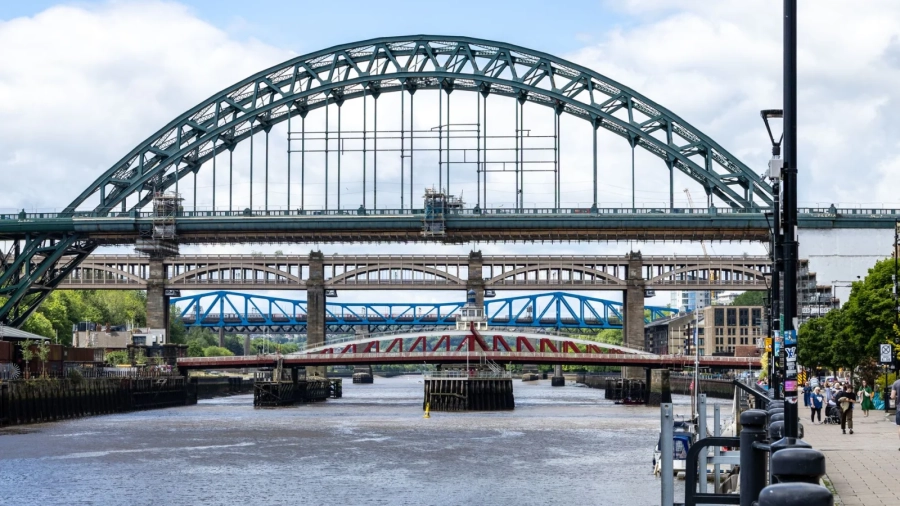
All cruises from Newcastle use the Port of Tyne International Passenger Terminal, Coble Dene, North Shields, NE29 6EE. It sits on the north bank of the Tyne, about nine miles east of Newcastle city centre, and has a passenger lounge, a café and a small shop.
By car
From the north (A1/A1(M)): take the A194(M) and the Tyne Tunnel, then the A187 to Coble Dene. The tunnel toll is cashless, so pay online in advance or by midnight on the day of travel.
From the south (A1): join the A19 and follow signs for Royal Quays, then the A193 and A187.
Parking
Cruise parking is close to the terminal but must be booked in advance through your cruise line, and spaces are limited. Fred. Olsen asks guests to book at least three days before departure and quotes £19.25 per night for its car park, which uses number-plate recognition and is about 100 metres from the terminal entrance. Ambassador also describes secure parking a few minutes from the terminal. Prices and arrangements can change, so check with your line when you book.
By train, Metro, taxi or plane
Train: travel to Newcastle Central Station. A taxi to the port takes roughly 20 to 30 minutes, depending on traffic.
Metro: take the Tyne and Wear Metro to Percy Main, then walk about 20 minutes or take a short taxi ride.
Air: Newcastle International Airport is about a 35-minute taxi ride away, or you can take the Metro via the city centre.
Fred. Olsen offers a paid shuttle from the terminal to Newcastle Central Station on disembarkation day, booked on board. If you are travelling from further afield, staying nearby the night before reduces the stress; see our round-up of hotels near UK cruise ports.
Tips for choosing a cruise from Newcastle
Book Northern Lights sailings early. Only three are scheduled from Newcastle in 2027, all in late winter.
Pick the right ship size for you. Both Bolette and Ambition are mid-sized ships, which suits a quieter, traditional style of cruising rather than big-ship attractions.
Pack for the North Sea. Even summer sailings can be breezy and cool, so bring layers and waterproofs.
Check what is included. Fares, drinks packages and gratuities differ between lines, so compare the full cost rather than the headline price.
Book parking with your cruise. The cruise car park is limited and fills up on busy departures.
FAQs
Where do cruise ships sail from in Newcastle?
Cruises from Newcastle depart from the Port of Tyne International Passenger Terminal in North Shields (NE29 6EE), about nine miles east of the city centre, not from the Quayside in town.
Does P&O sail from Newcastle?
P&O Cruises does not run a regular programme of cruises from Newcastle. Its UK sailings mainly leave from Southampton. In 2027 the main lines sailing round trips from the Tyne are Fred. Olsen and Ambassador.
Where can you sail to from Newcastle?
Published 2027 itineraries include the Norwegian fjords, Northern Lights cruises to Arctic Norway, Iceland, Svalbard, Scandinavia and the Baltic, Scotland and Ireland, the Netherlands and France, and longer voyages to Spain, Portugal and Morocco.
How many cruises leave Newcastle in 2027?
Fred. Olsen has scheduled 27 sailings from Newcastle in 2027, its biggest programme from the city, and Ambassador lists six departures on Ambition between late August and October.
Can you park at Newcastle cruise terminal?
Yes. There is a car park close to the terminal, but it must be pre-booked through your cruise line and spaces are limited. Fred. Olsen quotes £19.25 per night and asks guests to book at least three days ahead.
There are a lot of people I know that don’t feel comfortable drinking water that comes from a tap, especially somewhere like a hotel or a cruise ship.
They have this nagging feeling like maybe the water isn’t properly clean – it’s OK for brushing your teeth but you wouldn’t want to drink it.
Are they right? Is cruise ship water safe to drink? And how about the other water sources around the ship?
I’ve got some good news.
Can You Drink the Water on a Cruise Ship?
You can safely drink the water on a cruise ship, including the water from your bathroom tap. The only water you would probably want to avoid is the water from hand washing stations or public bathrooms, and only then because it may be warm and other people may have left bacteria behind.
The actual drinking water on cruise ships though? Clean as you’d like. And so you shouldn’t worry about drinking it.
As well as the world’s unhealthiest breakfasts, Adam loves drinking water
Here’s a look at where you can find water on a cruise ship, and whether or not it’s suitable for drinking:
Bars & Restaurants
The water you’re served in the bars and restaurants on your cruise ship is absolutely fine for drinking. Only filtered water is served as tap water in a restaurant, and this water has added ice so it’s extra refreshing.
In poolside bars, the water may have lemon slices too. Just what you need to cool down om a hot day!
If you’re eating in the Main Dining Room, this water is likely to be your only free option if you don’t have a drinks package, or at least one of just a few free options. It’s a good choice for keeping costs down!
You can ask for a glass of water with or without ice for free in any bar and you can also help yourself to water from the buffet.
The only exception is if you’re cruising with Costa Cruises – this is the only cruise line that doesn’t provide free drinking water in bars and restaurants. You can get it in the buffet, though.
Cruise ships generally filter their own water for guests to drink, so there’s always plenty available even on longer itineraries, and it is properly treated to make sure it is safe.
Water Dispensers
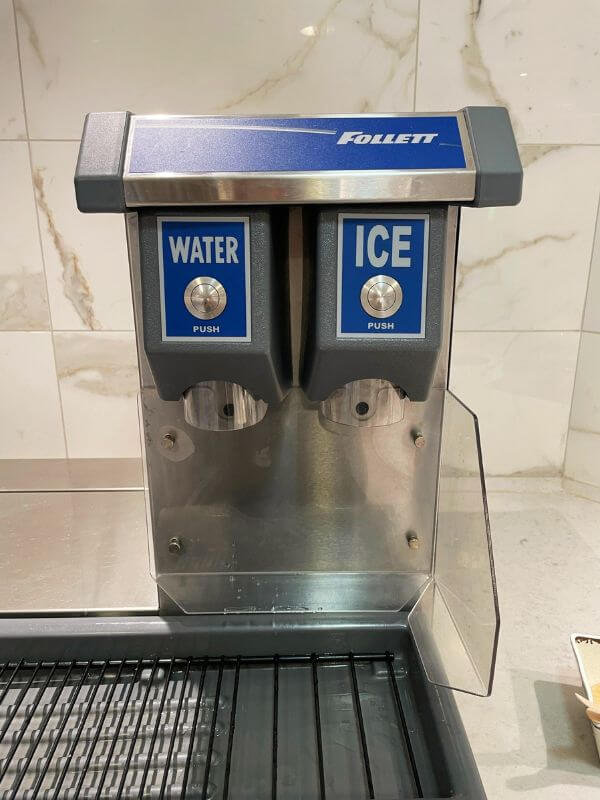
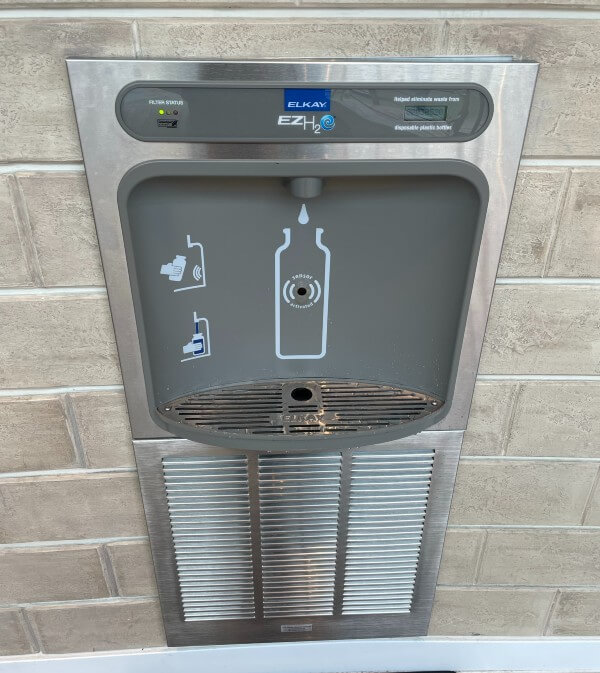
Your ship will have water dispensers in the buffet restaurant, and potentially other locations around the ship too. Again, this is another excellent place to drink water from, as it is clean and cool.
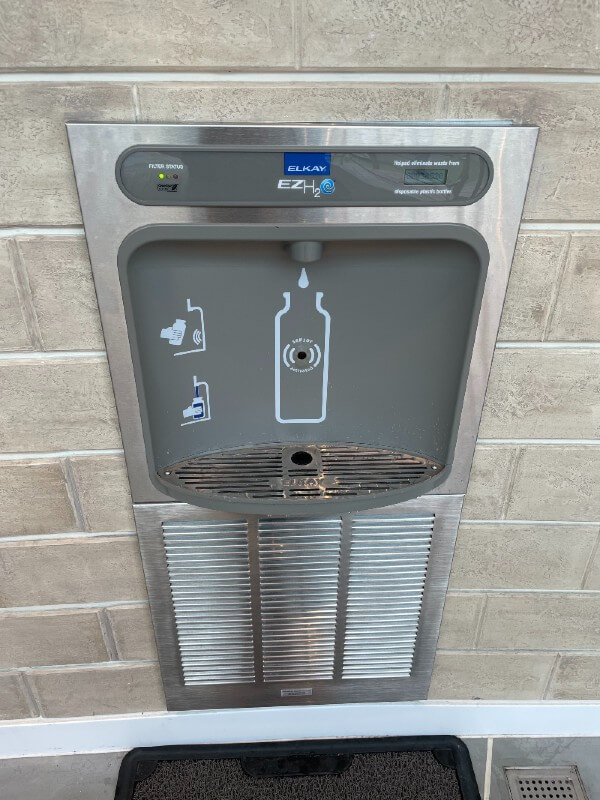
Some dispensers are designed to let you refill water bottles, while others aren’t, so just be aware you might not be able to carry a bottle around with you – you might be limited to grabbing a cup of water when you need one instead.
Also, some dispensers may seem like they fit a water bottle, but you’re not allowed to. It’s for hygiene reasons. What you can do instead is fill a cup and then pour that into your bottle – that’s fine.
As long as you aren’t putting the part of the bottle where you’ve been drinking next to the water dispenser, you should be OK.
A refillable water bottle is definitely a must-pack item for any cruise though. You can fill it up before you go to bed to drink in the night, take it to the gym or running track and also take it with you on excursions.
I love this Iron Flask water bottle because it’s made of double-walled stainless steel to keep your water cold (or coffee hot) and comes with three different lids – a straw lid, flip lid and metal lid.
The Bathroom Tap In Your Cabin
Cruise ship tap water in your stateroom is perfectly safe to drink. It likely won’t be as cold as the water you’d get in the restaurants or from the dispensers around the ship, and since it isn’t filtered as heavily it may not taste the same, but there’s nothing wrong with it.
I find that the taste of the bathroom water really varies on cruise ships. On some it’s lovely. But on others, it’s warm and tastes funny.
Don’t worry if you wake up in the middle of the night and you feel thirsty – you don’t need to get dressed and trek to the nearest dispenser just to grab a drink. It might not be the best water, but it’ll do when you’re desperate.
Handwashing Stations and Public Bathrooms
The one place on a ship where I wouldn’t recommend drinking the water is the taps in the handwashing stations and public bathrooms.
The actual water is clean enough to drink, but the taps themselves may not be – this is where everyone is washing their hands after all, so there may be bacteria around the taps.
Not only that, the water will be warm too – and nobody likes to drink warm water, do they?
The Spa
The best water on cruise ships can be found in the spa. Here, you’ll usually find a selection of water dispensers, each ice cold and flavoured with tropical fruits or cucumbers.
The same can also be found in any private retreat areas that you have to pay extra for. These don’t have so many guests so you get extra special treatment and the most refreshing water.
Should You Buy Bottled Water on a Cruise Ship?
You don’t need to buy bottled water on your cruise ship, but it’s always an option if you prefer it. You may have a particular brand that you like, or you might just prefer to have a bottle of water with you in your cabin at night.
And if you like sparkling water, then the only way you’re going to get it is by buying a bottle, or possibly in the restaurants at dinner time. They don’t dispense that at the buffet, unfortunately!
Some cruise lines like Azamara and Virgin Voyages will include bottled water in your stateroom for you already, while there are some cruise lines which are all-inclusive – Silversea and Regent Seven Seas are two of the most well-known. These will also have bottled water available in your cabin at no charge.
With other cruise lines, you may get bottled water included when you buy a drinks package.
It’s worth pointing out that some cruise lines, like Carnival and Disney, will also let you bulk-buy bottles of water for your cabin. They tend to be pretty good value too – Disney’s is $60 for a 24-pack of water, which is $2.50 a bottle. You can get 6-packs and 12-packs too.
Carnival’s is even cheaper though – 12 bottles for $11.95. That’s (just) less than $1 a bottle, and probably less than you’d pay ashore in some places! So if you’re determined to drink bottled water, rather than drinking from the tap, it’s worth checking this out.
Of course, the cheapest way would be to bring your own. But are you allowed? The answer varies by cruise line.
Some cruise lines will let you bring as many soft drinks and bottles of water onboard with you as you want, while others have limitations in place.
Cruise Line
How much bottled water you can bring onboard
Carnival
12 x 330ml cans or cartons (no bottles) per passenger
Celebrity
Unlimited
Costa
None – unless it is for medical purposes (distilled)
Cunard
Unlimited
Disney
Unlimited
Fred. Olsen
Unlimited
Holland America Line
12 x 500ml or 6 x 1-litre cans or cartons (no bottles) per stateroom
MSC Cruises
None – unless it is for medical purposes (distilled)
NCL
None – unless it is for medical purposes (distilled)
P&O Cruises
Unlimited
Princess Cruises
Unlimited
Royal Caribbean
12 x 500ml bottles, cans or cartons per stateroom
Virgin Voyages
12 x 12oz (350)ml cans or cartons (no bottles) per passenger
Some cruise lines will have cheaper drinks packages focusing on fountain sodas. These won’t include bottled water, but might be worth considering if you’re just looking to avoid tap water and want something with flavour.
One other thing to consider – if you don’t like the flavour of tap water in general, and you’re cruising with a line that lets you bring soft drinks onboard, why not bring some cordial?
You don’t have to lug a heavy bottle around in your carry-on luggage – buy one of the small concentrated squeezy containers that fits in the palm of your hand and makes 20+ drinks. It’s small, so will barely take up any packing space, but will improve the flavour of the tap water with every drink.
Final Word
Cruise ship water is fine to drink. They’re hardly pumping the sea water around the ship! Just be aware of the rules around refilling bottles at public water stations, and consider buying bottled water or squash if you don’t like the idea of drinking plain, unfiltered tap water.
Related Posts:
If you enjoyed this article please share!
Jenni Fielding is the founder of Cruise Mummy. She has worked in the cruise industry since 2015 and has taken over 30 cruises. Now, she helps over 1 million people per month to plan their perfect cruise holidays.
Yes, you can go on a cruise while pregnant, as long as you will not reach your 24th week of pregnancy before or during the sailing. That cut-off is shared, with small wording differences, by every major cruise line, and many also ask for a doctor’s or midwife’s letter confirming your due date and that your pregnancy is not high risk.
If you want to cruise while pregnant, the rules are only half the story. This guide covers each line’s policy, what the letter should say, insurance, onboard medical care, choosing a sensible itinerary and what happens if you find out you are expecting after you book. Policies can change, so always confirm with your cruise line, and talk to your doctor or midwife before booking.
The 24-week rule for cruising while pregnant
Almost every ocean cruise line uses the same basic rule: you cannot sail if you will have entered your 24th week of pregnancy at any point up to the last day of the cruise. In practice that means you need to be no more than 23 weeks and 6 days pregnant on the day you disembark, not the day you board.
The reason is simple. Ships carry a doctor and nurses, but not obstetricians, neonatal specialists or the equipment needed for a premature birth. Around the 24-week mark, a baby born early may be viable but would need intensive neonatal care that no ship can provide, and the ship may be days from a suitable hospital.
How to work out your week count
Use the due date your care provider gives you and count forward to your disembarkation date, not your departure date. A 14-night cruise that starts at 22 weeks would end at 24 weeks, so it would not be allowed. If your dates are close to the line, call the cruise line before paying a deposit.
Cruise line pregnancy policies compared
The table below summarizes current published policies as of November 2026. Wording varies, but every line below effectively requires you to stay under 24 weeks for the entire cruise.
Cruise line
Pregnancy limit
Documentation
Royal Caribbean
No more than 23 weeks at any time during the cruise
Health questionnaire at check-in; no doctor’s letter listed, but check before sailing
Celebrity Cruises
No more than 23 weeks at any time during the cruise
Health questionnaire at check-in
Carnival
Must not enter the 24th week before or during the cruise
Should carry a physician’s letter confirming good health, fitness to travel and due date
Norwegian (NCL)
Must not have entered the 24th week by the end of the cruise
Medical certificate confirming fitness to travel
MSC Cruises
Must not reach 24 weeks by the end of the cruise
No letter generally required; check your booking terms
Princess
Must not enter the 24th week at any time during the cruise
Physician’s letter with due date, fitness to travel and normal progress
Disney Cruise Line
Must not have entered, or enter, the 24th week during the cruise
No exceptions; doctor’s statements and waivers are not accepted
P&O Cruises
24 weeks or less on the day of disembarkation (wording differs from US lines; confirm with P&O)
Letter from a doctor or midwife confirming fitness to travel
Virgin Voyages
No more than 23 weeks pregnant by the end of the voyage
Medical documentation of good health, not high risk and week count; boarding denied without it
Cunard
Must not enter the 24th week at any point during the voyage
Doctor’s or midwife’s letter with due date and fitness to travel
Lines enforce these rules strictly. Carnival, for example, says guests who reach the limit may be denied boarding or disembarked without compensation or refund. River cruises sometimes have different rules because the ship stays close to land, so check those separately.
Doctor’s letter requirements
Even where a line does not insist on a letter, carrying one is a good idea because staff at the pier may ask for proof of your dates. A typical fit-to-travel letter should be on your provider’s letterhead, signed and recently dated, and include:
Your full name and date of birth
Your estimated due date (and, if asked, your last menstrual period or ultrasound dating)
Confirmation that you and your baby are in good health
Confirmation that the pregnancy is progressing normally and is not considered high risk
A statement that you are fit to travel for the dates and itinerary of your cruise
Some lines, including Virgin Voyages, say you will be refused boarding at your own expense if you cannot produce the required documentation, so pack it in your carry-on with your passport.
A calm, close-to-home itinerary suits most pregnant cruisers best. Photo: António Ribeiro on Pexels
Travel insurance when you cruise while pregnant
Travel insurance matters more than usual when you are expecting. Look for a policy that:
Covers pregnancy-related complications as a medical emergency, not as an exclusion
Includes medical evacuation from a ship, which can cost tens of thousands of dollars
Explains whether a newborn would be covered if you gave birth unexpectedly abroad
Has cancellation cover that applies if your doctor advises you not to travel
Normal pregnancy is often not a covered reason to cancel, so read the wording carefully or consider “cancel for any reason” cover, which reimburses part of your fare. Our cruise insurance buyer’s guide explains what to look for in more detail.
Medical facilities on board
Cruise ship medical centers are built to handle emergencies and everyday illness. Industry guidelines followed by major lines call for a doctor and another clinician to be available 24 hours a day at sea, with monitors, defibrillators, oxygen and basic lab tests. What they do not have is an obstetric unit, ultrasound for detailed pregnancy scans in every case, or neonatal intensive care.
If something goes wrong, the medical team will stabilize you and arrange transfer to a hospital ashore, by tender at the next port or by helicopter if needed. That can be slow on sea days or remote routes. Treatment on board is charged to your onboard account and is not covered by most US health plans or Medicare, so your travel insurance is what pays.
Choosing the right itinerary
The best pregnancy cruises are short, close to home and port-intensive. Good choices include:
Short sailings of three to seven nights, so you are never far from your own care provider
Routes with frequent ports and good hospitals, such as the Bahamas, the Caribbean’s larger islands, the Mediterranean or Northern Europe
Itineraries without long ocean crossings; transatlantic, transpacific, Antarctica and remote expedition routes leave you days from help
Zika and other health risks
The CDC advises pregnant travelers to avoid areas with current Zika outbreaks and to talk to their provider before visiting places where Zika has been reported, which historically has included parts of the Caribbean, Mexico, Central and South America. The risk changes over time, so check the CDC Travelers’ Health pages for each port of call close to your departure. Some vaccines are not recommended in pregnancy, so routes needing yellow fever vaccination are worth avoiding. Food and water precautions, sun protection and avoiding mosquito bites (use a repellent your provider has approved) apply on any itinerary.
Sensible food choices help keep a pregnancy cruise comfortable. Photo: Rachel Claire on Pexels
Tips for a comfortable pregnant cruise
Talk to your doctor or midwife first, ideally before you pay a deposit, especially if you have any complications, a history of preterm birth or are expecting twins.
Book a midship cabin on a lower deck, where motion is felt least. Ask your provider which seasickness remedies are safe for you; our guide to preventing seasickness on a cruise has practical non-medication ideas too.
Bring your own medications and copies of prescriptions and prenatal records. The ship’s pharmacy may not stock pregnancy-safe options.
Skip hot tubs and saunas, and choose gentle shore excursions; many lines restrict pregnant guests on activities such as zip-lines, diving or certain water sports.
Eat and drink sensibly. Avoid raw fish, unpasteurized cheese and undercooked meat, and stay hydrated. Most lines have mocktails, and some drink packages include non-alcoholic options.
Wash your hands often to reduce the risk of stomach bugs, which spread easily on ships.
Plan rest. Sea days are ideal for naps, and a balcony cabin gives you somewhere quiet to put your feet up.
What if you become pregnant after booking?
If you discover you will be past the limit by your sailing date, contact your cruise line or travel advisor straight away. Before final payment you can usually cancel and lose only your deposit, if it was refundable. After final payment, most lines apply their standard cancellation charges, and most do not treat pregnancy as a reason for a refund or credit.
Your options are usually to move to an earlier sailing, change the booking into a future cruise (fees may apply) or claim on insurance if your policy covers it. Some lines have offered flexibility in specific situations, such as MSC’s past policy allowing free changes for pregnant guests booked to Zika-affected areas with a medical certificate, so it is always worth asking. If you are already thinking ahead, see our guide to age limits for babies on cruises, as most lines require infants to be at least six months old.
FAQs
Can you go on a cruise while pregnant?
Yes. Major cruise lines accept pregnant guests as long as they will not reach their 24th week of pregnancy by the end of the cruise. Many also ask for a fit-to-travel letter from your doctor or midwife.
Can I cruise beyond the 24th week of pregnancy?
No. None of the major ocean cruise lines allow it, and they will not make exceptions even with a doctor’s letter. You can be refused boarding without a refund.
Is it safe to cruise in the first trimester?
Many people cruise in early pregnancy without problems, but nausea and fatigue can be worse at sea, and onboard medical care is limited. Discuss your plans with your doctor or midwife first.
Do I need a doctor’s note to cruise while pregnant?
It depends on the line. Princess, Cunard, P&O, NCL and Virgin Voyages require medical documentation, and Carnival advises carrying a letter. Bringing one is wise whichever line you choose.
Will I get a refund if I can’t cruise because I’m pregnant?
Usually not after final payment, as most lines apply normal cancellation charges. Contact the line early to ask about changing dates, and check whether your travel insurance covers it.
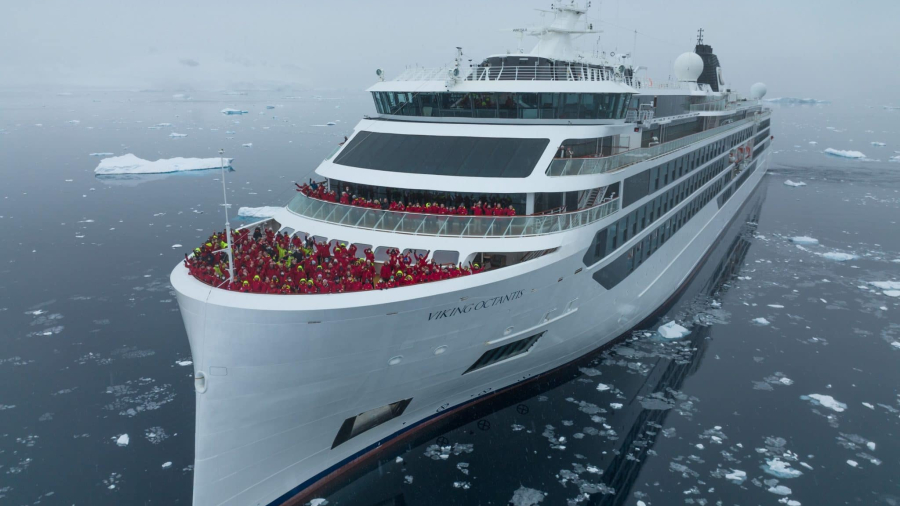
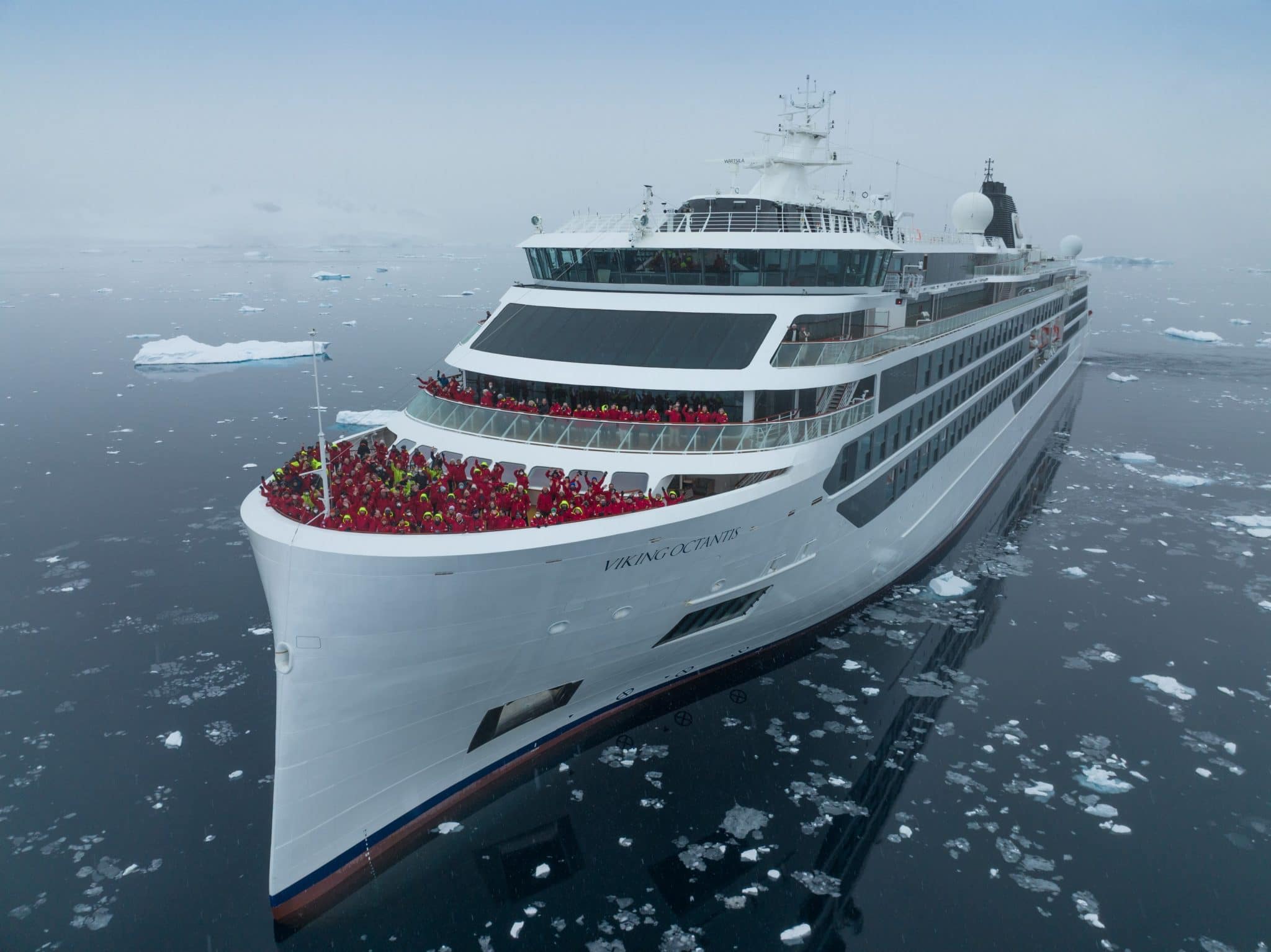
Viking discovered a new chinstrap penguin colony on a recent expedition cruise to Antarctica on Viking Octantis.
The new colony, which was previously unknown to science, was discovered on Diaz Rock near Astrolabe Island, in Antarctica. Astrolabe Island is a three mile long island in the Bransfield Straight of the Trinity Peninsula.
During the visit, Viking’s scientific partner, Oceanites, the leading field research entity in Antarctic penguin monitoring, conducted a visual and thermal aerial survey. The fieldwork documented the first survey in nearly 40 years of the known chinstrap penguin colony of Astrolabe Island and in the process, discovered the additional colony on Diaz Rock.
Sponsored Links
“With our third season in Antarctica underway, we are pleased to have supported another significant scientific development that will allow for further understanding of the region,” said Torstein Hagen, Chairman of Viking. “From the thoughtful design of our expedition vessels, each with a well-appointed Science Lab, to our partnerships with some of the world’s most prestigious institutions, our intention has always been to provide our guests and scientists with opportunities for meaningful discovery during each voyage. We look forward to supporting other critical research opportunities on future voyages.”
Viking has two expedition ships, Viking Octantis and Viking Polaris, that support scientific discovery as they cruise around the world.
Our free cruise newsletter offers the latest cruise news and deals: Sign Up
“The Antarctic peninsula is well-traveled and explored, and it is not often we find a new penguin colony,” said Dr. Grant Humphries, Director of Science at Oceanites. “Our partnership with Viking opened a new opportunity to not only count the chinstrap penguins on Astrolabe Island for the first time since the 1980s, but it also allowed us to locate and map a colony of chinstrap penguins previously unknown to us. This work will allow us to get a better understanding of how Antarctic penguin population dynamics are shifting in an ever-changing world.”
During each expedition voyage on Viking, a 36 person expedition team lead guests through meaningful scientific research, providing guiding and interpretation during shore excursions and delivering world-class lectures. The team is comprised of visiting researchers from partner institutions.
“Viking’s expedition vessels continue to showcase the potential of reimagined ‘ships of opportunity’ and the research capabilities available for scientific efforts,” said Dr. Damon Stanwell-Smith, Head of Science and Sustainability at Viking. “With scientists from our partner organizations on board, like Oceanites, we can conduct real, meaningful research in the regions. We look forward to continuing our partnership with Oceanites and other science partners to bring more findings forward in the future.”
Viking two expedition ships offers voyages to Antarctica, the Arctic, and the Great Lakes.
The 378 guest ships were specifically built to sail to some of the remote parts of the earth. They also offer comfort, safety, and unrivalled range of activities in remote destinations.
If you have young kids, you’ll know to never go anywhere without snacks. A hungry child can turn into the Tasmanian Devil far faster than you can find the nearest shop when you’re out and about. Ain’t that the truth?
And it’s not just kids who need snacks. Whether you’ve got a medical condition such as diabetes, you’re pregnant and suffering from morning sickness, or you just have a tendency to get ‘hangry’ without warning, you may be wondering if you can bring food off the cruise ship when you visit ports of call.
The answer to this question is not straightforward. It very much depends on the country you’re visiting and the type of food you plan to take off the ship.
We took this food off the ship in Spain
Cruising in Europe
Europe is the most laid-back of all places when it comes to taking food off a cruise ship. In most European countries, you can feel free to make your kids a packed lunch from the ship’s breakfast buffet and bring it ashore with you.
My kids are super-fussy eaters, so if we didn’t take healthy food off the ship they would be limited to chips, bread and ice cream when eating out. When cruising in the Mediterranean, I like to take a small plastic container and fill it with fruit, raisins, dry cereal, bread, cheese and boiled eggs.
As an adult, it’s generally wise to sample the local cuisine of the places you visit if you have the chance. But some countries, such as Norway can be incredibly expensive.
If you’ve just about managed to afford a cruise and don’t have a lot of extra money to spend, then you could either make yourself a sandwich to take with you or head back to the ship for lunch.
We took snacks for the kids in Norway
Cruising in the Caribbean
Bringing most types of food into the Caribbean is illegal. If you take fresh food off your cruise ship, it will be confiscated. Bags are often checked and there may even be sniffer dogs who are trained to check for food.
If you deny having fruit or vegetables and then you’re caught with them, you could face a hefty fine. This is because Caribbean islands have delicate ecosystems so you can’t risk bringing anything that could cause harm to the natural balance.
If you need to carry snacks in the Caribbean, then you should opt for pre-packaged food only. Depending on the ship, you may find mini boxes of cereal at the breakfast buffet, which are good for kids. If you need something like energy bars, you’re best to bring that from home.
When you get off the ship, keep any packaged food unopened and in your bag. If it’s in your hand, the staff could take it off you even if it’s technically allowed as their instructions could just be to confiscate any food that they see people with.
Cruising Elsewhere
Each country has different rules about whether you can take food off a cruise ship into the port. Australia and New Zealand are extremely strict in prohibiting food to enter the country. Chewing gum is illegal in Singapore. In Brunei, it’s illegal to import meat that isn’t halal.
You should check the rules for the countries that you’re visiting before your cruise. Once on board, take a look at your daily cruise programme. If there are any rules prohibiting bringing food ashore, they should be listed there.
Can You Bring Drinks Off a Cruise Ship?
Taking a bottle of water with you when you explore ashore is always a good idea and there are no rules to stop you from taking water off a cruise ship.
Many cruise ships have water dispensers where you can fill your bottle before you leave the ship and take it with you.
It should also be fine to take coffee or soft drinks with you. However, taking alcohol ashore is not a good idea.
Many port cities and towns ban drinking in public places, so if you want a drink you should find a nearby bar, or stay on the ship and drink there.
Can You Bring Food and Drinks on to a Cruise Ship?
There are some rules about exactly what kinds of food you’re allowed to bring on to a cruise ship when you embark and when you board in each port of call.
If you’re wondering about what drinks you can bring on the ship, then the rules are different for each cruise line. Some let you bring any kind of alcohol, some only a single bottle of wine and others don’t let you bring anything, even water.
Jenni Fielding is the founder of Cruise Mummy. She has worked in the cruise industry since 2015 and has taken over 30 cruises. Now, she helps over 1 million people per month to plan their perfect cruise holidays.
One of Carnival Corporation’s cruise ports in the Caribbean is now 80% powered by solar after the company opened a new solar park.
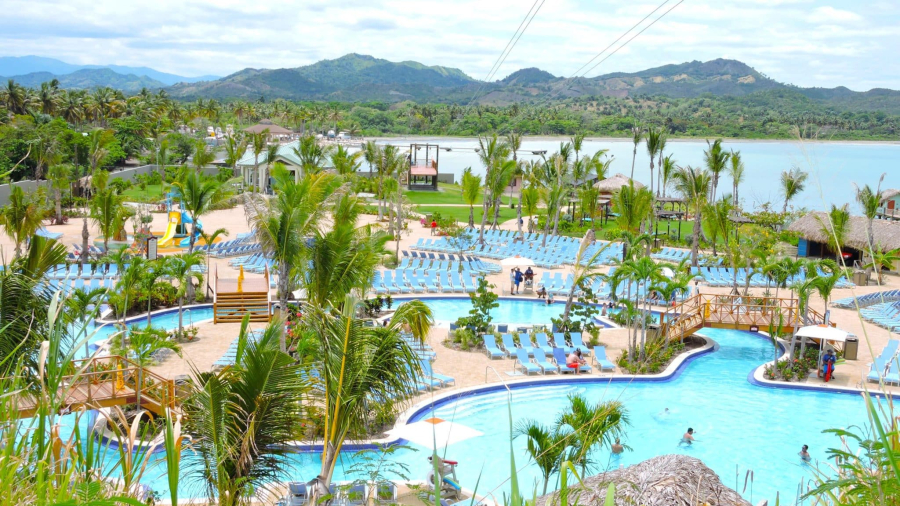
Amber Cove, a cruise port in the Dominican Republic that is visited by four of Carnival’s cruise lines, has a new 1,800+ solar panel park that is able to produce 80% of the port’s power needs.
The company held a ribbon cutting ceremony this week to celebrate the port switching over to mostly renewable energy.
Sponsored Links
“As we bring guests to enjoy the beauty and rich culture of the Dominican Republic, we also take our environmental stewardship here and everywhere we visit very seriously,” said Duffy. “With this new solar park in Amber Cove, we are furthering our commitment to sustainability at our destinations by focusing on renewable energy sources to power the vast majority of the port’s needs.”
Our free cruise newsletter offers the latest cruise news and deals: Sign Up
From the left: Jesus Mendez, Regional Director, Global Ports and Development, Carnival Corp.; Sharon Mei, Amber Cove General Manager; Vicky Rey, Vice President, Government Affairs, Latin America, Carnival Corp.; Jeff Rannik, President, Rannik Group; Alejandro Campos, President of the Board of Directors of the Dominican Port Authority; Elba Tineo, Municipal Director, Maimon; Joel Santos Echevarría Minister of the Presidency, Dominican Republic; Christine Duffy, President, Carnival Cruise Line; Claritza Rochtte, Governor, Puerto Plata; Juan Fernández, VP, Strategic Operations, Carnival Corp.
“On behalf of the Government, we celebrate this achievement, which makes Amber Cove the first cruise terminal in the country with a project of this scale,” said Joel Santos, minister of the presidency of the Dominican Republic. “This project will undoubtedly contribute to the production of clean energy and environmental sustainability in Puerto Plata, the first tourist destination in the Dominican Republic.”
Carnival Corporation estimates that the new solar park at Amber Cove will reduce greenhouse gas emissions by approximately 1,000 tons per year.
Carnival Cruise Line, Princess Cruises, Holland America Line, and Costa Cruises all have cruise ships that visit Amber Cove on Caribbean itineraries.
Amber Cove is a private cruise port built by Carnival Corporation that opened in late 2015. Carnival invested over $80 million building the port.
Other private ports built by Carnival Corporation include Grand Turk and Mahogany Bay.
The easiest way to choose a cruise is to work in order: decide where you want to go and when, set a realistic total budget, then pick the cruise line whose style suits you, followed by the ship, the cabin and how you book. If you get the line and ship right, most other decisions fall into place. This guide on how to choose a cruise takes you through each step, with a quick table to match your travel style to a type of cruise line and a checklist of the extra costs that catch first-timers out.
Step 1: Decide where you want to cruise
Start with the destination, because it narrows your options more than anything else. Some regions are served by lots of lines all year round. Others only run in short seasons and on a smaller choice of ships.
Caribbean and Bahamas: These sail all year, mostly from Florida, Texas and Puerto Rico. There are lots of short three- to five-night trips, so they work well for a first cruise. From the UK you would usually fly out, although some lines also sail winter fly-cruises from Barbados.
Mediterranean: The main season runs from spring to autumn. Days are full of ports, so you get a lot of sightseeing but less time to relax on board. UK passengers can often sail round trip from Southampton, or fly to Barcelona, Rome (Civitavecchia) or Athens (Piraeus).
Northern Europe and the Norwegian fjords: These are summer sailings from Southampton, Dover, Copenhagen and other ports. A fjords trip with no flights is popular with UK cruisers.
Alaska: The season runs from roughly May to September, from Seattle, Vancouver or Seward. You go for the glaciers and wildlife, not the beaches.
River cruises: These sail the Rhine, Danube, Douro and other rivers on small boats. You often dock right in the town centre, and there are no sea days.
Expedition regions: These include Antarctica, the Arctic and the Galápagos. Seasons are short, ships are small and prices are high, and bad weather can change the plan.
Also decide how much you want sea days. Some people love them for the pools, spa and shows, while others get restless. Count the sea days on each itinerary before you commit.
Step 2: Choosing a cruise line that fits your style
Choosing a cruise line matters more than anything else on this list. Two ships in the same port can feel completely different. The usual way to sort the lines is into five broad styles. The table below is a quick decision tool. Lines change their products often, so treat the examples as typical rather than fixed.
If you are…
Look at
Typical examples
What to expect
A family with kids or teens, or a first-timer on a budget
Mainstream
Royal Caribbean, Carnival, Norwegian, MSC, P&O Cruises
Big ships, waterslides and kids’ clubs, lively nightlife, a low starting fare with lots of paid extras
A couple wanting better food and a calmer feel without paying luxury prices
Premium
Celebrity, Princess, Holland America, Cunard, Virgin Voyages (adults only)
Stronger dining, more space per guest and longer itineraries. Some fares bundle drinks or wifi
Travellers who want most things included and a small, quiet ship
Zodiac landings, onboard experts and a flexible route. The ship is comfortable but not a resort
Look past the brochure pictures and check the age range of guests and the dress code, and whether the line is known for families or for quiet adults. It is also worth checking which lines get the worst feedback. Our round-up of the worst cruise lines according to reviews shows the complaints that come up again and again, such as crowding, extra charges and service.
Step 3: Pick the right ship, big or small
Within one line, ships can differ a lot by age and size. The newest mega-ships carry well over 5,000 guests and have themed areas, big shows and many restaurants. Older or smaller ships in the same fleet can feel more traditional, and they often visit ports the giants can’t reach.
Choose a big ship if you want lots of things to do, dining options and entertainment, or you are travelling with children who need plenty to keep them busy.
Choose a smaller ship if you dislike queues and want a more personal feel. Small ships can also visit smaller ports, and you may find tendering and getting off the ship quicker.
Check the ship’s age and refit history. A recently updated older ship can be better value than paying top price for the newest one.
Ship size shapes everything from how busy the pool deck is to which ports you can visit. Photo: Hans-Jörg B. on Pexels
Step 4: Choose your dates and how far ahead to book
Your dates affect price, weather and how busy the ship is.
School holidays: Fares and crowds peak in US summer break, spring break, Thanksgiving and Christmas, and in UK school holidays (summer, Easter and the October and February half-terms). If you can travel outside these times, you will usually pay less and share the ship with fewer children.
Weather: The Atlantic hurricane season runs officially from 1 June to 30 November, and the peak risk is usually from late August to October. Ships reroute around storms, so you may miss a port, but the cruise is rarely cancelled. Mediterranean summers can be very hot, so May, June, September and October are often more comfortable.
Booking window: For peak dates, suites, family cabins or connecting cabins, booking 9 to 18 months ahead gives you the best choice. The busiest sales period, known as “wave season”, runs roughly from January to March, when many lines offer perks such as onboard credit or bundled extras. Last-minute deals do exist, but they suit flexible travellers who aren’t fussy about cabin location.
Most lines sell four main cabin types: inside, oceanview, balcony and suite. Within each type, the location of the cabin matters as much as the type.
Which cabins are best?
Prone to seasickness? Pick a cabin low down and in the middle of the ship, where you feel the least movement.
Light sleeper? Avoid cabins directly above or below the theatre, nightclub, pool deck, galley or a self-service laundry. Check the deck plan for the decks above and below you as well as your own.
Balcony worth it? A balcony is usually worth the extra on scenic routes such as Alaska, the fjords or a river. It matters less on a port-heavy Caribbean trip where you are ashore most days.
One cabin or two for a family?
A family of four squeezed into one standard cabin can feel cramped very quickly. Two connecting cabins, or an inside cabin for the children across the corridor from your balcony cabin, can cost about the same as one family suite and give you two bathrooms. Most lines ask that each cabin has at least one adult aged 21 or over (18 on some lines and in some regions), so check the rules before you book.
Choose your own cabin number or take a guarantee?
A “guarantee” fare means the line assigns your cabin. It is cheaper and you sometimes get a free upgrade, but you could end up under a noisy deck or with a restricted view. If location matters to you, pay to choose your exact cabin and check the deck plan first.
Step 6: Work out the real total cost
Many first cruise tips focus on the fare and stop there. Yet on a mainstream line the extras can add a third or more to your bill. Before you compare two cruises, put each one through this checklist. Prices change often, so treat these figures as rough guides and check them when you book.
Gratuities: Most US-style lines add a daily service charge per guest. At the time of writing, Carnival charges about $17 a day in standard cabins, Princess and Holland America about $18, Royal Caribbean about $18.50 and Norwegian about $20 (more in suites). For two people on a seven-night trip, that comes to roughly $240 to $280. Many luxury lines include tips in the fare. Our guide on whether you should prepay gratuities on a cruise covers the pros and cons.
Drinks: Unlimited alcohol packages on mainstream lines often cost somewhere around $60 to $110 per person per day, plus a service charge. Many lines also require both adults in a cabin to buy the package. If you drink little, paying per drink is usually cheaper.
Wifi: Internet is much faster than it used to be, but it is often charged per device, per day. Some fares, such as Celebrity’s All Included, bundle basic wifi.
Shore excursions: Ship-run tours often cost $80 to $200 or more per person at popular ports. Independent tours or simply exploring on foot can cost far less.
Speciality dining: Steakhouses, sushi bars and chef’s tables usually charge a cover price or charge for each dish.
Getting there: Flights, a hotel the night before (strongly recommended if you are flying in), port parking and transfers.
Travel insurance: Get a policy with cover for cruises, including medical evacuation. This matters especially for anyone travelling from the UK, as normal home health cover doesn’t apply at sea.
A luxury or “all included” fare that looks expensive can work out close to a mainstream fare once you add these costs. Always compare total cost, not the fare alone.
Shore excursions and port days are one of the biggest extra costs to budget for. Photo: Muffin Creatives on Pexels
Step 7: Decide who to book with
You can book direct with the cruise line, through an online travel agency or through a specialist cruise travel agent. The fare is often similar because lines control pricing, so the difference usually comes from perks and service.
Direct: Booking direct is easy to manage online, and you get the line’s own offers.
Specialist agent: An agent may add onboard credit, prepaid tips or a group rate. They can also help if something goes wrong, and many will watch for price drops for you.
Online agencies and package sites: These are handy for comparing sailings and, in the UK, for package deals that include flights. Check that the booking is financially protected, for example by ATOL in the UK for packages with flights.
Whichever you choose, read the deposit, cancellation and final payment terms, and check whether the fare is refundable.
How to pick a cruise: a quick recap
Choose the region and season.
Match your style to a type of cruise line using the table above.
Choose the ship by size, age and onboard features.
Avoid peak school holidays if you can, and book early for popular cabins.
Pick a cabin location that suits how you sleep and how easily you get seasick.
Compare total cost, including tips, drinks, wifi and excursions.
Book with someone who adds real value and offers clear protection.
FAQs
What is the best cruise line for a first-time cruiser?
No single line is best for everyone. Mainstream lines such as Royal Caribbean, Carnival or P&O Cruises suit families and first-timers who want lots to do. Premium lines such as Celebrity or Princess suit couples who want a calmer trip. A short three- to five-night sailing is a low-risk way to try cruising.
How far in advance should you book a cruise?
For school-holiday dates, suites or connecting cabins, book about 9 to 18 months ahead. If you are flexible on cabin and dates, you can find good last-minute fares, but the choice will be smaller.
Which cabin is best if you get seasick?
Choose a cabin on a lower deck in the middle of the ship. You feel the least movement there. A window or balcony also helps, because looking at the horizon can ease nausea.
How much extra should you budget on top of the cruise fare?
On mainstream lines, many passengers spend roughly 25% to 50% of the fare again on gratuities, drinks, wifi, excursions and speciality dining. On luxury lines that include most of these, the extra spend is usually much lower.
Is a big or small cruise ship better?
Big ships offer more activities, dining and entertainment, so they suit families and groups. Small ships feel more personal, have shorter queues and can reach smaller ports, so they suit travellers who care most about the places they visit.