

Sometimes cruise lines announce a new feature or change to their policies and the reaction is more mixed than they hoped. But to call the reaction of Carnival’s new loyalty program, Carnival Rewards, “mixed” would be extremely generous.
“Overwhelmingly negative” feels a bit more accurate.

And there are plenty of reasons people are expressing that anger across social media – let me tell you why.
One of the biggest issues people have with Carnival Rewards is how it will, eventually, wipe out many years of loyalty that people have built up with the cruise line.
Many people commented on how they’d been sailing with the cruise line for 20+ years, and had reached Platinum or Diamond status, but now wouldn’t be able to maintain it.
You can read my explainer on Carnival Rewards if you want to get all the detail of how it works, but in summary – you no longer maintain your status level for life.
Under the new program, you earn your status every two years – and then it resets.

Tiers are being grandfathered into the system, but for Gold and Platinum that’s only for 2 years. Diamond members get more, with 6 years of status protection.
But that means, if you’re a Platinum VIFP member, you’ll enjoy Platinum status from June 2026 to May 2028, while starting at zero to earn your status for the June 2028 to May 2030 period.
A lot of long-time fans aren’t happy about this because they don’t have the money to spend to maintain their status (and more on that later in the list). So they feel like the ‘work’ they’ve put in to remain loyal to Carnival is being wiped out.
And it is, essentially.

There are two very different mindsets here of course. The people who are upset believe that their loyalty deserves rewards and status.
And there are those who believe that they’re just paying for a cruise holiday, and any loyalty benefits are a nice bonus to have.
The former group are the ones who are upset, even though the actual cruise experience isn’t changing – minus a few extra perks that those guests will lose.
Another key complaint with the new Carnival Rewards system is that it clearly incentivises spending more money – not just cruising more often.
Previously, under the old VIFP program, you earned loyalty status based on cruise nights – so the more time you spent on a Carnival ship, the better your status. It didn’t matter how much you spent onboard or how much your cruise fare cost.

Now, your status is based on how much money you spend – whether that’s cruise fare, shore excursions, drinks, spa treatments, or other onboard purchases. Even a casino flutter counts (and earns you both points and stars).
So, if you’re a budget cruiser who loves the Carnival experience but doesn’t splash out on extras, you’ll find yourself falling behind. Meanwhile, someone who cruises less frequently but spends big when they do will climb the tiers faster.
To many, that feels less like a loyalty program and more like a spending competition.
Then there’s the credit card angle.

Under the new Carnival Rewards system, the Carnival Mastercard has become a much more important tool for earning points – although it doesn’t help you earn stars for status.
Still, it means that cardholders can build up points to spend on rewards like drinks or excursions, even without cruising regularly.

On the surface, that might seem like a good thing. But to many guests, it feels like a shift towards rewarding financial products over actual cruising loyalty.
Worse still, this benefit isn’t even available to everyone…
One of the most frustrating aspects for international cruisers is that the Carnival Mastercard is only available to US residents.
So while American guests can rack up points with everyday spending – even between cruises – guests from Canada, the UK, Australia and beyond are at a clear disadvantage.
That means fewer points to spend on rewards, and less flexibility to build value within the program.
Carnival might be a US-based cruise line, but they have a huge international following – and this change makes those guests feel like second-class citizens.

Again, it’s important to clarify that the credit card can only be used on Rewards Points, not on Status Qualifying Stars.
And it’s not new – the Carnival World Mastercard already exists, and lets people earn FunPoints. Not a huge amount is really changing here.
But, because it’s all being bundled together under this new umbrella of Carnival Rewards, it does make some people from non-US countries feel like they’re not being considered.
Let’s talk about the cost of loyalty under the new system.
To reach Platinum status, you’ll need to earn 50,000 stars in a two-year period. That’s the equivalent of spending $16,667 on eligible purchases with Carnival.

Diamond status? You’ll need to spend over $33,000 within two years.
For frequent cruisers, those numbers might be just about achievable. Especially if you’re a casino player. But for many loyal Carnival fans, especially those on a budget or retired guests cruising more modestly, that level of spend is completely out of reach.
And because your stars reset every two years, this isn’t a one-time hurdle – you have to hit that same spending target again and again to maintain your tier.
It’s not just that the program is changing – in some cases, guests are outright losing perks they previously enjoyed.
Many of the benefits that came with higher VIFP tiers are now harder to earn, or gated behind a higher spending threshold.

For example, complimentary laundry services – you still get it at Platinum level, but not as much. And Diamond isn’t completely unlimited either.
The Platinum and Diamond party? Gone.

The pin badge for reaching Gold status? Also gone.
The loyalty gifts are gone too, as is the Chocolate Delight treat that Platinum guests would get to try once for free.
These may sound small but they all add it, and that’s a bitter pill to swallow – especially for those who felt their past loyalty had “earned” them a level of treatment that now vanishes overnight.
Finally, one of the biggest sources of frustration is the perception that Carnival isn’t really listening to its guests.
Yes, Brand Ambassador John Heald has acknowledged the backlash. And yes, there have been vague suggestions that Carnival might tweak the program based on feedback. But for many guests, that simply isn’t enough.

The announcement went ahead despite clear and immediate criticism. And even though there’s nearly a year until the new system takes effect, there’s no concrete indication that any changes will be made in response.
Carnival’s reasoning – that the old system couldn’t keep up with the number of guests reaching higher tiers – might make sense from a business point of view.
But for many cruisers, the new program feels like a betrayal of the loyalty they’ve shown over years, even decades.
There are always growing pains when a major loyalty program changes, but Carnival’s rollout of Carnival Rewards has struck a nerve with many guests.

While some may adjust and adapt to the new system, others are left wondering if their loyalty was ever truly valued – or just a number on a spreadsheet.
The coming year will be crucial for Carnival. Whether they listen, adjust, and respond to the criticism, or stay the course, could make a real difference in how loyal their most dedicated fans choose to remain.
What do you think about these changes? Please do share your view in the comments below.
See the latest Carnival cruise offers…
Jenni Fielding is the founder of Cruise Mummy. She has worked in the cruise industry since 2015 and has taken over 30 cruises. Now, she helps over 1 million people per month to plan their perfect cruise holidays.
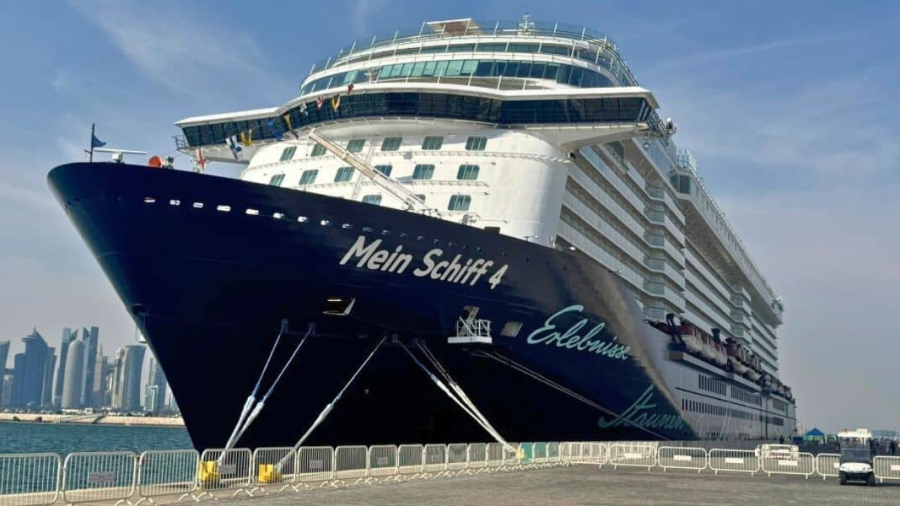
It seems like every week there’s another cruise ship breaking free from the dock – and passengers are left wondering how on earth these floating hotels manage to slip away like runaway balloons.
Well, I’ve spoken to a real port pilot to find out exactly what’s going on behind the scenes. Let’s break it down.

When cruise ships dock, they’re secured with a very specific arrangement of ropes (called mooring lines). But even with multiple lines holding them in place, a sudden gust of wind can push with tons of force. Literally.
“The pressure on the side of the ship rises exponentially with wind speed,” the pilot explained.
Here’s a rough idea of how much force the wind can apply on a huge cruise ship like Icon of the Seas (365 metres long):
That’s right — a bit of extra wind can turn into hundreds of tons of sideways force. The bigger the ship, the bigger the target for the wind.
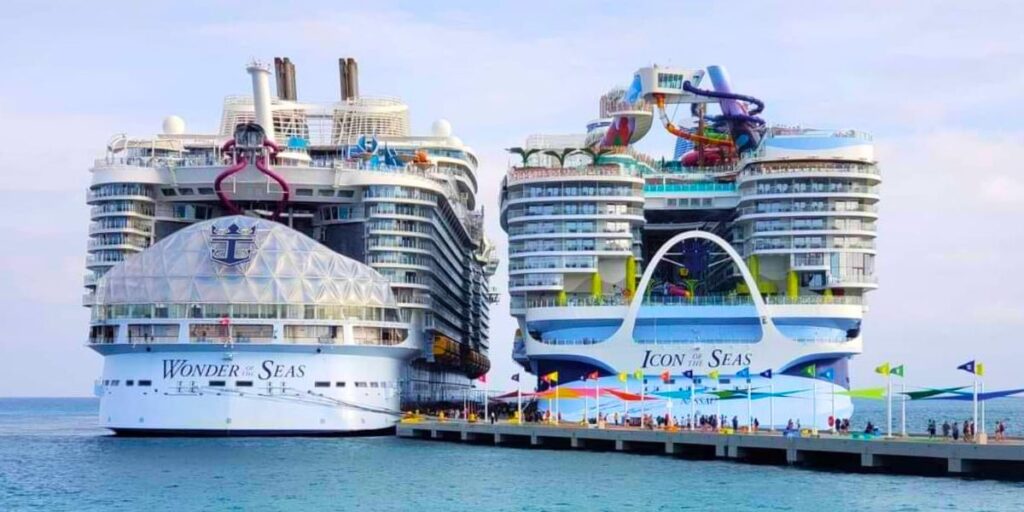
The size of the ship makes a bit difference too. Take a look at this table which shows how much more pressure is placed on bigger cruise ships compared to smaller ones…
| Ship | Gentle Breeze (Force 3 – 8 knots) | Strong Breeze (Force 6 – 25 knots) | Gale (Force 8 – 37 knots) |
|---|---|---|---|
| Icon of the Seas (365m long) |
21 tons | 128 tons | 449 tons |
| Serenade of the Seas (294m long) |
13 tons | 128 tons | 284 tons |
| Silver Moon (212m long) |
8 tons | 79 tons | 174 tons |
As ships have grown bigger, the forces involved have grown too, making even a short burst of wind enough to overwhelm carefully planned mooring setups.
Let’s take a closer look at some of the incidents we’ve seen recently…
Severe weather hit as passengers enjoyed their port day in Alaska. Gusts of up to 60 mph snapped the mooring lines, and Celebrity Edge drifted into open water. The crew quickly regained control, but not before giving everyone a good scare.

MSC Seascape faced its own drama while docked at Ocean Cay, MSC Cruises’ private island in the Bahamas.
A sudden squall snapped the lines, dropped the gangway into the water, and injured a guest who was disembarking. Thankfully, they were treated onboard and rejoined the cruise shortly after.
In Sicily, strong winds ripped Norwegian Epic’s mooring lines free, sending parts of the dock flying. Two passengers fell into the water when the gangway collapsed, but were rescued quickly with only minor injuries.

Westerdam broke loose in Ketchikan after sudden 60-knot winds caused the ship to shift dramatically. Passengers caught the moment on camera as the gangway dangled before plunging into the sea.
Here’s a super simple version of how cruise ships stay put:
“A typical big cruise ship might use something like six or seven lines forward, six or seven lines at the stern, and two or three spring lines at each end,” the pilot told me. “We always err on the side of caution, especially with larger vessels.”
So with all these lines in place, how can things still go wrong?

For mooring lines to do their job, the tension needs to be perfectly balanced. If one line takes too much strain, it can snap. And when one line goes, the extra load shifts to the others — which can also fail in quick succession.
“Lines are most likely to break if they are not tensioned evenly – and sometimes it’s obvious when that happens,” the pilot said.
It’s not just about the ropes either. The metal posts on the dock where the lines are secured (called bollards) also have their limits.

“I’ve seen bollards rated up to 200 tons, but many are much lower,” the pilot added. “That’s why we always try to spread the lines across multiple bollards.”
Most cruise ships use drum winches, which require the crew to manually adjust line tension. Some cargo ships use self-tensioning winches that automatically adjust as tides rise or winds shift.
“Self-tensioning winches are very effective – but even they can be overwhelmed if a sudden squall hits and the wind pressure exceeds the setting,” the pilot explained. “That’s when you see them paying out – and that’s when you lose your gangways.”
In other words, even the best equipment can’t always keep up when Mother Nature throws a tantrum.
“Tending the moorings whilst a ship is alongside is vital,” the pilot stressed.
The crew monitor the tension continuously, making adjustments as conditions change – but some storms escalate so fast that there’s little time to react.
When bad weather is forecast, captains and port pilots have tough decisions to make. Sometimes that means calling in tugboats to push the ship against the dock. Other times, they may choose not to dock at all.

“In extreme cases, if offshore winds are forecast, we’ll employ tugs to push up,” the pilot said. “But sailing early or aborting the call completely is often the safest option.”
Cruise ships breaking free from the dock might seem like freak accidents, but there’s a lot of science behind why it happens. When strong winds hit these giant floating hotels, even dozens of heavy-duty ropes and powerful winches can struggle to keep them in place.
So next time you’re relaxing on board in port, spare a thought for the crew – and the port pilots – who are constantly watching the skies, calculating forces, and making sure your cruise ship stays exactly where it’s supposed to.
Jenni Fielding is the founder of Cruise Mummy. She has worked in the cruise industry since 2015 and has taken over 30 cruises. Now, she helps over 1 million people per month to plan their perfect cruise holidays.

Antarctica may be the most untouched continent on Earth – but booming cruise tourism is starting to leave a destructive mark beneath the icy surface. A new scientific study has…

Some people will go to great lengths for an Alaska cruise – but for one man, the desire to set sail allegedly crossed the line into serious criminal territory. Enrico…
Cruise fans can look forward to a “wave” of enhanced experiences next year as Royal Caribbean has confirmed it will amplify three of its most beloved ships in time for…

Cruising to Alaska is all about dramatic landscapes, wildlife, and natural wonders. But in 2025, travellers might get more drama than expected. Mount Spurr, an active volcano located around 80…
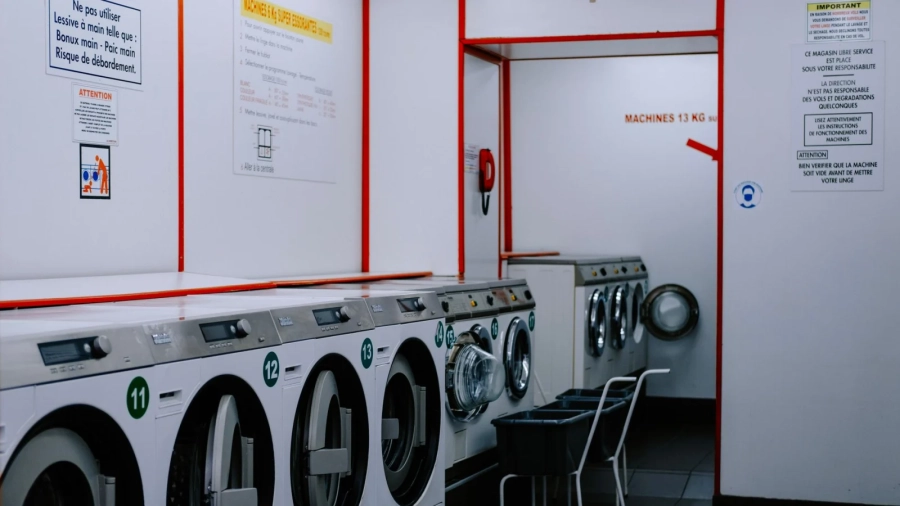
You can do laundry on a cruise ship in three ways: pay the ship’s laundry service (per item, or a cheaper fill-a-bag wash-and-fold deal), use a self-service launderette if your cruise line has one, or hand-wash small items in your cabin. Carnival, Princess, Disney, Cunard, P&O and Fred. Olsen have guest launderettes. Royal Caribbean, Celebrity, Norwegian, MSC and Holland America don’t, so on those lines you either send clothes out or wash them yourself in the sink.
This guide covers how each option works and what it typically costs. It also has a line-by-line comparison table, the rules on irons and steamers, and the loyalty and suite perks that can get your laundry done for free. Policies and prices below were checked against official cruise line pages and current reporting in October 2026. They do change, so check your own ship’s details before you pack.
Every major ocean cruise line runs a professional onboard laundry. Your cabin will have a laundry bag and a form: list the items, tick the service (wash and press, pressing only or dry cleaning) and leave the bag for your cabin steward. On most lines, anything handed in by about 9 a.m. comes back the next day. Same-day express service usually costs extra, often 50% more, and a few lines don’t offer it at all.
Per-item pricing is convenient but adds up quickly. Celebrity’s current price list, for example, shows a T-shirt at $5.00 and a pair of socks at $3.75 for laundry. Use per-item service for things that need pressing or dry cleaning, such as a suit, a formal dress or a linen shirt, rather than for everyday clothes.
For casual clothes, underwear and swimwear, the flat-rate bag is usually the best value. You get one laundry bag, fill it as full as it will close, and pay a single price. Some examples as of 2026:
Bag deals usually stop a day or two before the end of the cruise so everything can be returned in time. Send your bag out mid-cruise, not on the last full day.
Some lines give guests their own laundry rooms with washers, dryers and, usually, irons and ironing boards. This is the cheapest choice for families and longer voyages, and you control how your clothes are treated. On some lines it’s free, and on others you pay a small charge per load to your onboard account or with tokens. Launderettes get busy on sea days and the last few days of a cruise, so go early in the morning or while most passengers are at dinner.
On ships without launderettes, a lot of passengers wash small items in the cabin sink or shower. Pack a few travel detergent sheets or a small bottle of travel wash (liquids in checked bags), and an elastic travel clothesline or some inflatable hangers. Most cabin bathrooms have a retractable line over the bathtub or shower. Roll a wet item in a dry towel and press down hard before you hang it, and it will dry much faster.

This is the question most people ask before they decide how much to pack. Here’s how the main lines compare. Facilities can differ from ship to ship within a fleet, especially on older or smaller ships.
| Cruise line | Self-service launderette? | Wash-and-fold / package | Notes |
|---|---|---|---|
| Carnival | Yes, on most ships (paid per load) | Bag deals sold onboard | Machines are charged to your Sail & Sign account on most ships. Free bags for Platinum and Diamond Carnival Rewards members. |
| Princess | Yes, on all ships (small charge) | Per-item service; 48-hour return | Tokens are bought with your Medallion. Irons are in the launderette only. Free laundry for full suites and Elite members. |
| Disney Cruise Line | Yes, 24-hour (paid) | Full-service laundry for a fee | Paid with your Key to the World card. Detergent sold onsite. Free use of irons in the laundry room. |
| Cunard | Yes, free | Bag of about 15 items (around $52) | Detergent, irons and ironing boards provided. |
| P&O Cruises | Yes (on many ships, on most passenger decks) | Wash and press bag of 10 items (about £32) | Popular with UK passengers. Bring or buy your own detergent. |
| Fred. Olsen | Yes, at least one per ship | Per-item service | Get a token from Guest Services for a small fee. Detergent, dryers and irons provided. |
| Holland America Line | No | Pre-bookable laundry packages | No ships in the current fleet have guest launderettes. Free laundry for Neptune and Pinnacle Suite guests. |
| Royal Caribbean | No | Wash and fold $34.99 per bag | No self-service “for safety concerns”. No irons in staterooms. |
| Celebrity Cruises | No | $59.99 wash and fold; $71.99 wash and press | Three-bag package $149.99. Top suites have historically included laundry. |
| Norwegian (NCL) | No | Fill-a-bag day, typically around $30 | Free or discounted bag for higher Latitudes tiers. |
| MSC Cruises | No | Per-item service | Same-day service on most days for a fee. |
| Marella Cruises | No | Wash and fold bag (around £17) | UK line with service laundry only. |
Luxury and premium lines are different again. Viking, Seabourn, Silversea, Regent Seven Seas and Azamara all offer free self-service laundry on their ocean ships, usually with detergent included. On the most expensive voyages, laundry is often included in the fare or the suite perks.
Older articles still list Holland America as a line with coin-operated launderettes. Those were on ships that have since left the fleet. Holland America’s own FAQ now says none of its ships have self-service laundry rooms. If you’re sailing on the Koningsdam, Rotterdam or any other current ship, plan on the laundry service or a pre-purchased package.
As a rough guide for mainstream US lines in 2026:
If you’re travelling as a family on a 7-night cruise without launderettes, two bag deals mid-cruise often cost less than packing a second suitcase and paying airline baggage fees.
Before you pay, check whether you already qualify for free laundry:

Clothes irons are banned in cruise cabins on all the major lines because they’re a fire risk. Most lines also ban garment steamers in cabins. Holland America’s FAQ specifically lists travel irons, steamers and kettles as not allowed in staterooms, and Princess says ironing and personal steamers aren’t permitted in any stateroom. If security finds one in your luggage, it will usually be held until the end of the cruise.
Ways to deal with creases:
Most lines ban irons and steamers in cabins, so see our guide on how to iron clothes on a cruise for the alternatives that work.
Most passengers either send clothes to the ship’s laundry service (per item or with a flat-rate wash-and-fold bag) or use the self-service launderettes on lines such as Carnival, Princess, Disney and Cunard. On ships without launderettes, many people also hand-wash small items in the cabin sink.
A wash-and-fold bag typically costs about $30 to $60 depending on the cruise line. Per-item service runs about $3 to $8 for everyday clothes. Self-service machines are free on Cunard and many luxury lines, and cost a few dollars per load on lines like Carnival, Princess and Disney.
No. Royal Caribbean doesn’t provide self-service laundry rooms for safety reasons. It offers washing, pressing and dry cleaning, plus a wash-and-fold bag for $34.99.
No. Irons are banned in cabins on all major cruise lines, and most lines, including Princess and Holland America, ban personal steamers too. Use the irons in the ship’s launderette if there is one, or pay for pressing.
Yes, for some guests. Suite guests and top-tier loyalty members on lines such as Princess, Holland America and Carnival get free laundry or a set number of free bags. Cunard and most luxury lines also have free self-service launderettes.
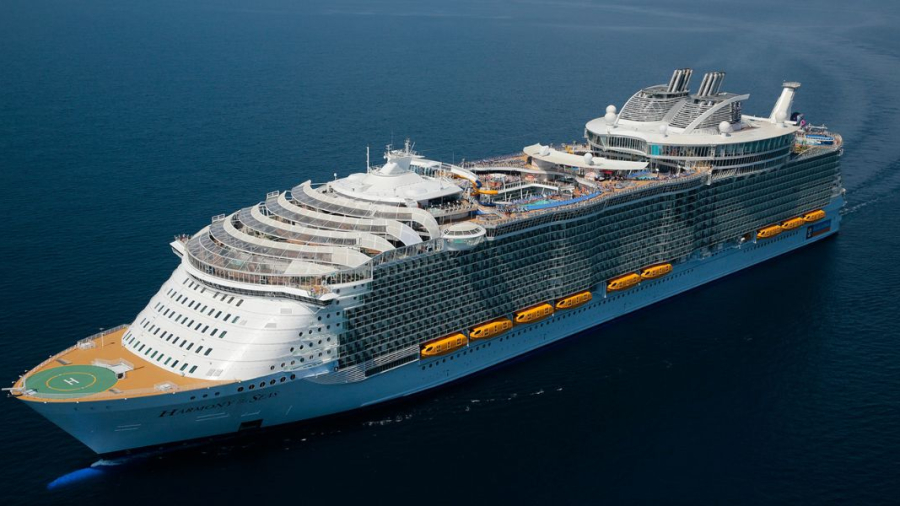
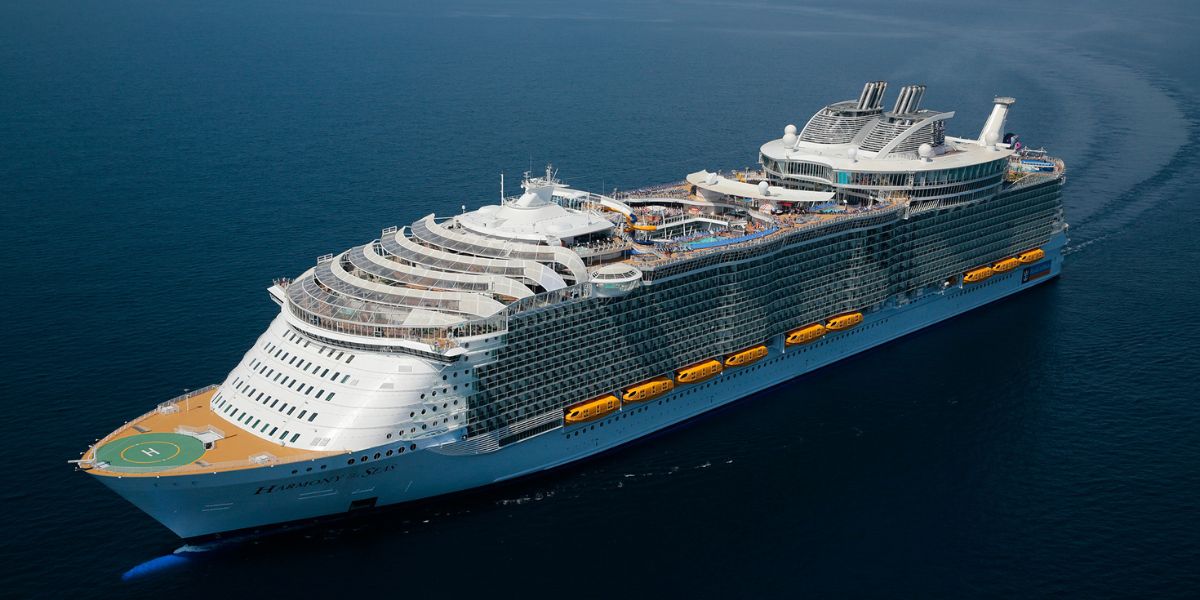
Cruise fans can look forward to a “wave” of enhanced experiences next year as Royal Caribbean has confirmed it will amplify three of its most beloved ships in time for the 2026 cruise season.

Announced on 18th June 2025, the refurbishments are part of the line’s long-running Royal Amplified programme, which began in 2018 to modernise and elevate older ships in the fleet.
The upgrades will see the vessels – Ovation of the Seas, Harmony of the Seas, and Liberty of the Seas – receive new dining venues, entertainment concepts, upgraded staterooms, redesigned pool areas, and other improvements tailored to their upcoming regional deployments.
“After seeing incredible success and guest satisfaction with the amplification of Allure of the Seas, we’re excited to bring three new amplifications to our fleet in 2026,”
Jay Schneider, Chief Product Innovation Officer at Royal Caribbean.
The 4,182-guest Ovation of the Seas will return to Alaska with new upgrades that include:
Notably, Ovation of the Seas will also become the first Quantum-class ship to offer land-based Cruisetours, combining cruise sailings with guided overland experiences in Alaska.
One of Royal Caribbean’s largest ships, the 6,687-guest Harmony of the Seas, will be revamped before spending summer 2026 in Europe and returning to Port Canaveral, Florida for Caribbean itineraries. New features include:
Her Caribbean sailings will include stops at Perfect Day at CocoCay and the new Royal Beach Club on Paradise Island, opening in 2025.
The 3,798-passenger Liberty of the Seas will begin her 2026 season after her upgrades with 7-night Northern Europe cruises from Southampton, visiting ports in Norway, Belgium, and Denmark, before repositioning to Galveston, Texas for Western Caribbean routes. Key upgrades include:
Once in Texas, Liberty of the Seas will call at the new Royal Beach Club in Cozumel, set to open in late 2026.
This latest announcement underscores Royal Caribbean’s continued investment in its aging yet still immensely popular ships, ensuring they remain competitive alongside new-builds like Icon of the Seas and Utopia of the Seas.
“Royal Caribbean continues to raise the bar on delivering the best of every vacation with revolutionary ships and top-rated exclusive destinations,” said Schneider.
With 28 ships in its fleet and more set to launch soon, Royal Caribbean’s Royal Amplified initiative is creating refreshed experiences for loyal guests while helping attract new cruisers with expanded dining, entertainment, and suite options across multiple price points.
As 2026 approaches, passengers booking Ovation, Harmony, or Liberty of the Seas can look forward to brand-new features while enjoying the ships they already love – in destinations ranging from Alaska to the Bahamas and northern Europe to Mexico.
Don’t miss the latest Royal Caribbean offers…
Jenni Fielding is the founder of Cruise Mummy. She has worked in the cruise industry since 2015 and has taken over 30 cruises. Now, she helps over 1 million people per month to plan their perfect cruise holidays.
Some people will go to great lengths for an Alaska cruise – but for one man, the desire to set sail allegedly crossed the line into serious criminal territory. Enrico…
Cruising to Alaska is all about dramatic landscapes, wildlife, and natural wonders. But in 2025, travellers might get more drama than expected. Mount Spurr, an active volcano located around 80…

Loyal Carnival cruisers are in for a sea of change. The cruise line announced today, 18th June 2025, that its current VIFP (Very Important Fun Person) program will be phased…
A routine call at Juneau, Alaska, turned into a tense afternoon for passengers and crew on Celebrity Edge after the cruise ship broke free from its mooring lines during severe…
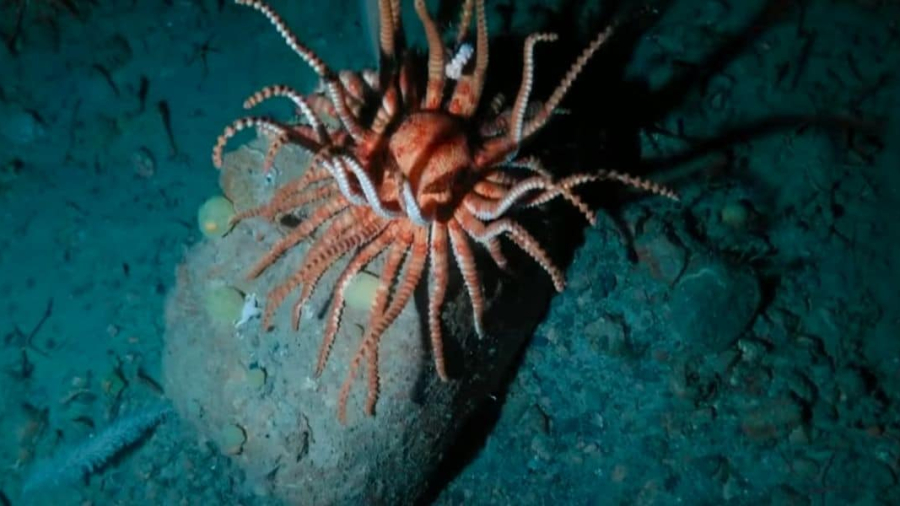
Antarctica may be the most untouched continent on Earth – but booming cruise tourism is starting to leave a destructive mark beneath the icy surface.
A new scientific study has revealed that cruise ship anchors and chains are causing long-lasting damage to fragile Antarctic marine life, including some of the world’s oldest and slowest-growing species, like giant volcano sponges.
The research, published in Frontiers in Conservation Science by scientists from Memorial University of Newfoundland and New Zealand’s National Institute of Water & Atmospheric Research, is the first to document this kind of ecological damage on video.
Using 62 hours of underwater 4K footage, the team observed crushed sponges and scarred sea beds across multiple popular cruise landing sites – while nearby untouched areas revealed thriving marine ecosystems.
The problem stems from the fact that even small, polar-class cruise ships must anchor offshore due to the region’s lack of infrastructure.
While only ships with fewer than 500 guests are allowed to land under IAATO (International Association of Antarctica Tour Operators) rules, their anchors still impact the vulnerable shallow coastal zones where marine life flourishes.
One of the worst-hit sites was Yankee Harbour in the South Shetland Islands – home to Gentoo penguins and a popular stop for expedition cruises.
In 2023, just eight ship visits caused damage to nearly 1,600 metres of seabed, according to the report.
This isn’t ordinary ocean floor – it’s a slow-growing, cold-water ecosystem where recovery from anchor strikes could take over a century, if it occurs at all.
“This is not an environment where the seafloor bounces back quickly… It’s more like breaking coral or slicing through a centuries-old forest.”
Researchers’ comments
Cruise tourism to Antarctica has skyrocketed in recent years.
During the 2022–2023 season, over 70,000 passengers visited. That number climbed to a record 123,000 in 2023–2024, and it’s expected to grow even more in 2025 and beyond.
While expedition vessels like those from Hurtigruten or Ponant dominate the region, larger ships such as Majestic Princess are slated to visit in 2026–2027, offering scenic-only sailings with no landings.
IAATO limits landings to just 100 people at a time, and only for ships carrying 500 or fewer passengers – a safeguard meant to reduce human footprint onshore.
Still, all ships must rely on anchors or dynamic positioning systems to remain stationary, especially when tendering guests to and from land.
The researchers behind the study aren’t calling for a halt to Antarctic tourism – but they do urge new policies and technologies to minimise harm.
Among their top recommendations:
Antarctica has long been referred to as “the last frontier” – a vast, ice-covered wilderness that has remained relatively untouched by human activity.
But as more travellers seek out bucket-list cruises to the polar south, experts say there’s a pressing need to develop eco-conscious protocols that allow for exploration without irreversible damage.
Don’t miss these offers…


Jenni Fielding is the founder of Cruise Mummy. She has worked in the cruise industry since 2015 and has taken over 30 cruises. Now, she helps over 1 million people per month to plan their perfect cruise holidays.
Some people will go to great lengths for an Alaska cruise – but for one man, the desire to set sail allegedly crossed the line into serious criminal territory. Enrico…
Cruise fans can look forward to a “wave” of enhanced experiences next year as Royal Caribbean has confirmed it will amplify three of its most beloved ships in time for…
Cruising to Alaska is all about dramatic landscapes, wildlife, and natural wonders. But in 2025, travellers might get more drama than expected. Mount Spurr, an active volcano located around 80…
Loyal Carnival cruisers are in for a sea of change. The cruise line announced today, 18th June 2025, that its current VIFP (Very Important Fun Person) program will be phased…
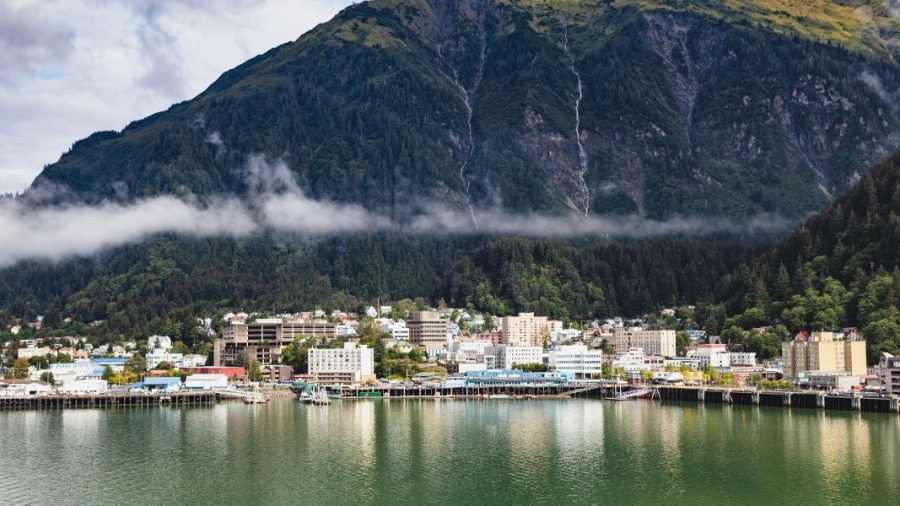
Some people will go to great lengths for an Alaska cruise – but for one man, the desire to set sail allegedly crossed the line into serious criminal territory.

Enrico Ronquillo, a 37-year-old Philippine national legally residing in the US, has been indicted on multiple federal charges after allegedly stealing the identity of an American citizen in order to board a cruise ship bound for Alaska earlier this year.
According to a June 2025 press release from the US Attorney’s Office for Alaska, Ronquillo is accused of using a fake California driver’s license and birth certificate to impersonate the victim and board a ship operating between 11th – 14th May 2025.
Officials also say Ronquillo submitted a fraudulent IRS Form W-9 using the same stolen identity. This form is typically used to report a taxpayer’s identification number and certification, indicating the impersonation may have extended beyond just cruise access.
“Ronquillo is charged with one count of false impersonation of a US citizen, one count of making and using a false document, and two counts of aggravated identity theft,”
US Attorney’s Office statement
He is expected to appear before a US Magistrate Judge in Alaska at a future date.
If convicted, Ronquillo faces a mandatory minimum of two years in prison for each aggravated identity theft charge, as well as up to five additional years and a $250,000 fine for the false impersonation and document charges.
Authorities have not revealed which cruise line or ship was involved, nor how the impersonation was discovered.
The cruise line may have detected inconsistencies during ID verification or flagged the documents through digital screening systems.
Though international travellers often board Alaska cruises with ease – typically requiring only valid travel documents such as passports and visas – Ronquillo’s exact motives or visa status remain unclear.
This latest case is part of a growing list of recent cruise-related arrests, especially in Alaska, where law enforcement works closely with federal agencies at busy cruise ports considered legal ports of entry.
Just days earlier, on 12th June 2025, a woman named Karen Bryan was arrested in Ketchikan while attempting to re-board her ship.
Bryan was flagged by local authorities due to an outstanding warrant from Laramie County, Wyoming, where she is accused of embezzling church funds.
“She was contacted by law enforcement in Alaska as she was boarding a cruise ship, and has been arrested,” confirmed Laramie County Sheriff Brian Kozak.
Ketchikan’s high cruise traffic makes it a hotspot for warrant checks, with facial recognition and ID scanning systems regularly used at security checkpoints.
The recent identity theft and Wyoming embezzlement cases are part of a larger global pattern of cruise-related arrests.
In a separate incident this June, a couple was detained in Ibiza, Spain, after allegedly trying to flee their cruise without paying a €3,196 ($3,630 USD) bar tab.
The pair attempted to disembark quickly and avoid the bill but were arrested by Spain’s National Police before leaving the port.
Cruise lines make it relatively simple to track and manage onboard expenses using mobile apps, stateroom TVs, and guest services. Attempting to bypass these systems is not only unwise – it can result in international legal consequences.
While rare, these incidents highlight the importance of honest travel documentation and adhering to cruise line policies.
Ports of call, especially in North America and Europe, are subject to the same security standards as airports, and passengers can and do face arrest if flagged by law enforcement.
With more than 1.6 million cruise visitors expected in Alaska during 2025, local officials are staying vigilant – and so should passengers.
Whether planning to cruise Alaska or elsewhere, the safest (and simplest) route to a dream vacation is through legitimate travel documentation and onboard conduct that stays well within the law.
Don’t miss these offers…
Jenni Fielding is the founder of Cruise Mummy. She has worked in the cruise industry since 2015 and has taken over 30 cruises. Now, she helps over 1 million people per month to plan their perfect cruise holidays.
Cruise fans can look forward to a “wave” of enhanced experiences next year as Royal Caribbean has confirmed it will amplify three of its most beloved ships in time for…
Cruising to Alaska is all about dramatic landscapes, wildlife, and natural wonders. But in 2025, travellers might get more drama than expected. Mount Spurr, an active volcano located around 80…
Loyal Carnival cruisers are in for a sea of change. The cruise line announced today, 18th June 2025, that its current VIFP (Very Important Fun Person) program will be phased…
A routine call at Juneau, Alaska, turned into a tense afternoon for passengers and crew on Celebrity Edge after the cruise ship broke free from its mooring lines during severe…
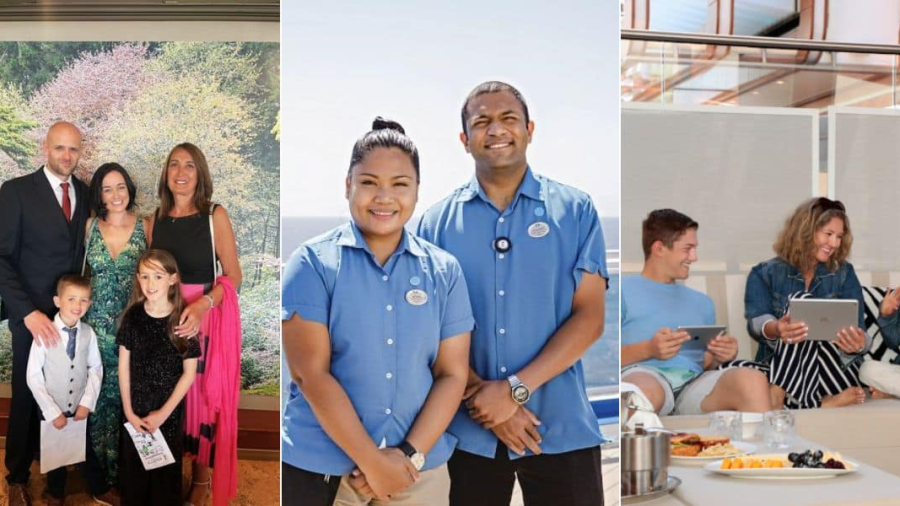
There are a surprising number of cruise traditions that have already been abolished as cruise lines have modernised over the years.
Midnight buffets, skeet shooting off the back of the ship, the Baked Alaska parade… In most (but not all) cases, a lot of these traditions have been consigned to the cruise history books.

But what else should be thrown into the sea (not literally) when it comes to cruising tradition?
I asked my Facebook audience about the cruise traditions they hate and it kickstarted some feisty discussions…
In a world where even the most average café offers free WiFi with your overpriced flat white, why are we still shelling out for patchy-at-best internet access at sea?
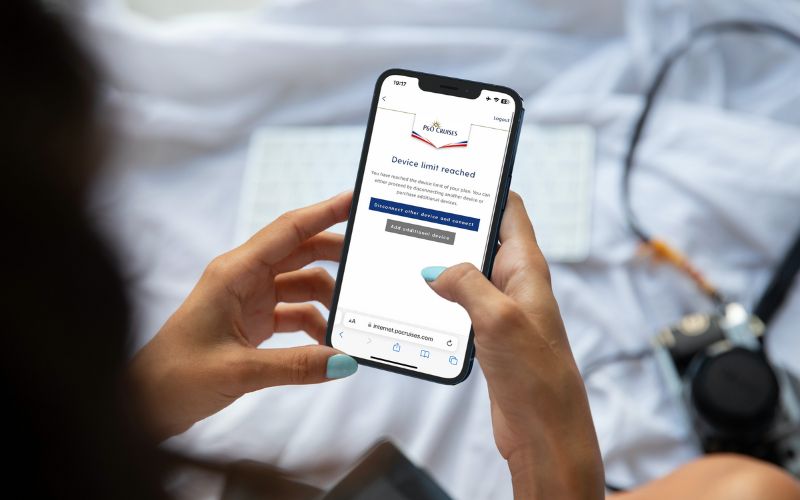
Yes, I know satellites aren’t cheap and we’re literally floating in the middle of the ocean, but come on – it’s 2025.
Many cruisers, especially first-timers, are shocked to find that staying connected can cost as much as an excursion.
Cruise lines – please just include it in the price or at least throw in basic access!
I’m not trying to livestream my life, I just want to check WhatsApp, or make sure I can still help my email subscribers get the best cruise deals…
In all seriousness, I do know that WiFi at sea requires a more expensive satellite connection and so there is justification for a charge. But the price you end up paying can be sky-high, which is why I’m not surprised it was the most common ‘tradition’ people want binned.
Enter code CRUISEMUMMY10 at checkout to get this discount
Ah, formal nights – the Marmite of cruising. Some people live for the chance to dress up, sip bubbly, and take a hundred photos on a staircase.

Others would rather not be judged for wearing smart-casual and enjoying dinner without packing half the contents of their wardrobe.
This one definitely splits opinion, and did so when I asked my Facebook fans. Almost as many people jumped to the defence of formal nights and don’t want it to go anywhere.

I get the appeal, and I’ll admit it can feel special, but maybe make it optional or have a designated ‘come as you are’ dining room for those of us who value comfort over cufflinks. Sometimes you don’t want to have to go hide in the buffet just because you’ve not packed your suits or dresses.
If I’m on a two-week cruise, I definitely don’t need four formal nights. Two is my absolute maximum.
Here’s a spicy one.
Most of us want to tip fairly, but being automatically charged a daily fee with no real explanation of where it goes doesn’t always sit right. Many people believe in rewarding good service – but would rather do it directly.

Cruise lines argue that pooling tips supports all staff, not just front-of-house, which makes sense. There are a lot of people who work behind the scenes.
It’s why I don’t advocate for removing gratuities when you have the option, especially if it’s just because someone guest-facing has upset you.
Still, giving passengers more transparent choices and control over it might reduce the grumbling and increase actual generosity.
For the extroverts, shared tables are a treat – new faces, interesting chats, possibly even holiday friendships.
For the introverts (or just those who fancy a quiet meal without small talk), they can be a nightmare.

While some love meeting fellow cruisers over dinner, plenty of us would rather not have to pretend we care about Colin’s stamp collection.
Let’s keep the option but make solo or couple tables more accessible without jumping through hoops. A lot of cruise lines have made this move already, but it should be easy to choose your dining preference in advance or by booking a table.

You shouldn’t need to go out of your way to pull the maître d’ aside to ask for a small table as a favour.
We don’t eat dinner at exactly 5.45pm at home, so why must we on a cruise?
The rigidity of set dining times often clashes with, you know, the whole holiday vibe. Freedom dining or ‘dine when you fancy’ options are increasingly popular for a reason – they fit better with excursions, poolside naps, or just the whim of the moment.
I’m not anti-structure, but I am anti- being rushed out of the hot tub for my dinner just because the clock says that I need to.
No shade if you’ve picked up a painting or two, but many of us are quietly wondering: who actually enjoys cruise ship art auctions?

They often feel like a high-pressure sales pitch dressed up as a cultural event, and most of the art seems… well, it would look a bit weird on your wall.
I’d rather spend that hour sipping wine on deck than bidding on an overpriced seascape I’ll regret hanging next to the telly.
You’re enjoying your evening, maybe slightly sunburnt, cocktail in hand – and suddenly you’re lined up next to a stranger in epaulettes for a forced photo op.
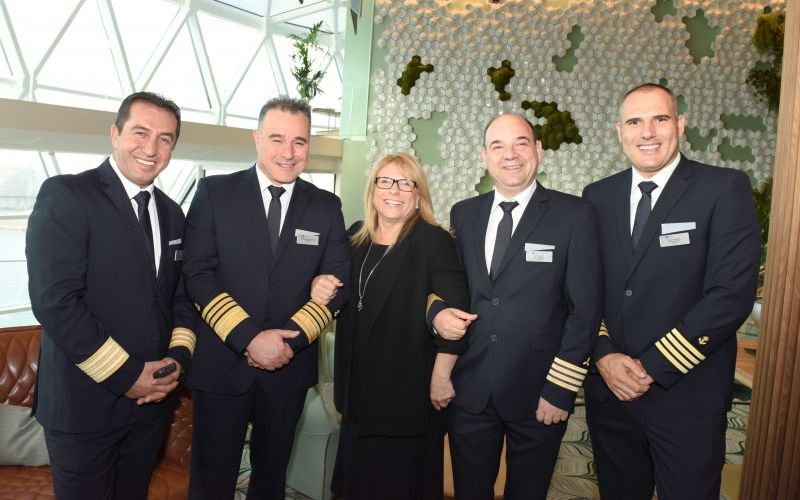
It’s awkward, often unflattering, and let’s be honest, nobody really wants it. I’m sure the officers are lovely, but can we let them get on with running the ship instead of posing with tipsy guests and answering the same questions over and over?
This one’s divisive and I think a little unfair on those who do smoke, but more cruisers are calling for smoke-free ships – or at least fewer smoking zones.

It’s not just about health; it’s about walking through a haze of cigarette smoke to get to the buffet. There are designated areas, but the smoke doesn’t respect the signs.
I know smokers have rights too, but at the very least it might be time to rethink the locations, at least on some ships – and possibly add better ventilation while we’re at it?
Suggested read: Princess Cruises Prioritises Smokers Over Children With Play Area Closure
Every cruise has that one person (or twenty) lamenting the golden age of cruising – when men wore tuxedos nightly, children were seen and not heard, and there wasn’t a burger bar in sight.

Nostalgia is fine, but times change. Modern cruises are more inclusive, flexible, and – dare I say it – fun for a wider variety of people.

Let’s stop moaning about what’s gone and embrace what’s next. The sea’s big enough for us all.
Cruising has come a long way from lobster thermidor in the main dining room, shooting guns off the back of the ship and conga lines around the midnight buffet.
And while some traditions still hold charm for certain passengers, others are frankly overdue for retirement. The beauty of modern cruising is that it’s evolving to suit all sorts – from first-timers in hoodies to seasoned sailors in bow ties.
We won’t all agree on what belongs in the cruise history books (and that’s half the fun), but it’s clear that cruise lines are listening and adapting. That said, there’s still room for improvement – WiFi that doesn’t cost the moon, dining that fits real-life schedules, and less being hustled for a glossy photo you didn’t ask for.
Which tradition would you toss overboard?
Don’t miss these offers…

Jenni Fielding is the founder of Cruise Mummy. She has worked in the cruise industry since 2015 and has taken over 30 cruises. Now, she helps over 1 million people per month to plan their perfect cruise holidays.

Cruising to Alaska is all about dramatic landscapes, wildlife, and natural wonders. But in 2025, travellers might get more drama than expected.
Mount Spurr, an active volcano located around 80 miles west of Anchorage, is showing signs it could erupt in the coming weeks or months. Still, experts and cruise lines agree there’s no reason to panic just yet.
Here’s what you need to know if you’re booked on an Alaskan cruise this year.
Back in March, scientists noticed more volcanic activity at Mt. Spurr – including extra gas emissions and minor earthquakes. These signs suggest magma could be rising beneath the surface.
The last two major eruptions in 1953 and 1992 sent ash clouds spreading for hundreds of miles. The Alaska Volcano Observatory says if Mt. Spurr erupts again, it’ll likely resemble those past events.
However, a recent update from the US Geological Survey (USGS) reports that no major changes have been seen since then. According to their 5th May statement, the current signs don’t suggest the volcano is on the verge of erupting.
If a major eruption were on the way, scientists say we’d see stronger earthquakes, ground movement, and more intense gas emissions – all of which would give plenty of warning.
The main risk to travellers is volcanic ash, which can affect air quality and disrupt flights.
Cruises that start or finish in Anchorage (through the nearby ports of Seward or Whittier) are the ones most likely to be impacted, since these areas are roughly 125 miles from the volcano.

If you’re flying into or out of Anchorage for your cruise, there’s a chance flights could be delayed or cancelled if ash reaches the area.
That said, many Alaskan cruises sail round-trip from cities much farther away – such as Vancouver, Seattle, or ports in California. These are all over 1,000 miles from Mt. Spurr and are unlikely to be affected by an eruption.
Most travellers are taking a cautious but calm approach.
Even if your cruise begins or ends in Alaska, there’s no need to panic. Cruise lines are keeping a close eye on the situation and are ready to adjust their plans if necessary.
In a joint statement to Cruise Critic, Princess Cruises and Holland America Line said: “We constantly monitor the locations we visit, and the safety of our passengers and crew is always our top priority. Most of our itineraries focus on southeast Alaska, which is far from the Mount Spurr area. If any changes are needed, we’ll inform affected guests directly.”
Although several cruise lines operate in Alaska – including Norwegian Cruise Line, Royal Caribbean and Cunard – Princess and Holland America dominate the region. Both companies also run their own land tours and lodges in areas like Denali National Park.
Most Alaskan cruises visit southeast ports like Juneau, Skagway and Ketchikan, which are all hundreds of miles from the volcano.
When Iceland’s Eyjafjallajökull volcano erupted in April 2010, it caused a major disruption to global air travel.

Ash from the eruption spread across much of Europe’s airspace, grounding more than 100,000 flights and leaving millions of travellers stranded.
Despite the chaos in the skies, cruise ships themselves largely unaffected. Since the ash cloud drifted high in the atmosphere, it posed no threat to sea travel, and most cruise itineraries continued as planned.
However, the situation still caused headaches for cruise passengers who had flights cancelled, either on their way to join a cruise or when trying to fly home afterwards.
Cruise lines responded quickly, helping travellers with alternative arrangements and, in some cases, offering extended onboard stays for those unable to disembark. A few lines even adjusted itineraries or used ships to transport stranded guests back to mainland Europe.
The Eyjafjallajökull eruption proved that while volcanoes can severely disrupt air travel, cruises offer a more flexible form of transport. Ships can reroute, stay at sea, or adjust schedules without being grounded, making them a relatively stable option when natural disasters strike.
Don’t miss these offers…
If the idea of seeing a volcano excites rather than worries you, there are plenty of cruise itineraries around the world that bring passengers up close to active – and often safely monitored – volcanoes. Here are a few notable ones:
One of the most active volcanoes in the world, Mount Etna offers unforgettable views from ports like Catania or Messina, which are popular stops on Mediterranean cruises. You can take guided tours to the slopes or even ride a cable car partway up the mountain.

Known as the “Lighthouse of the Mediterranean,” Stromboli has been erupting continuously for over 2,000 years. Some smaller cruise lines and luxury yachts include Stromboli on itineraries, where passengers can watch its frequent eruptions – especially dramatic at night – from the sea.
Hawaiian cruises often include a stop at Hilo, from where you can visit Hawaii Volcanoes National Park. Kilauea, one of the world’s most active volcanoes, has erupted frequently in recent years. Lava flows, steam vents, and craters create a surreal, otherworldly landscape.
This lesser-known gem in the South Pacific offers one of the most accessible active volcano experiences on Earth. Expedition and adventure cruise lines that call at Tanna Island often include evening visits to watch the spectacular lava eruptions up close.
Although currently closed to visitors due to a tragic eruption in 2019, White Island was once a popular cruise excursion from Tauranga. It’s a reminder that volcano tourism requires careful monitoring and respect for local safety guidance.
Cruises to southern Japan sometimes stop in Kagoshima, where you can see the constantly smoking Sakurajima volcano. Ferries take visitors close to the volcano, and observation points around the city offer safe viewing spots.
It’s always wise to get travel insurance when booking a cruise, but be aware that coverage for natural disasters can vary.
If you’re worried about the risk of cancellation, look for a policy with a “cancel for any reason” option. This can offer more flexibility, even if you simply change your mind before travelling.
It’s also a good idea to pack a couple of N95 masks, just in case ash affects the air during your cruise.
If you’re flying to your departure port, consider arriving a few days early.
Booking your flight and hotel in advance gives you a buffer if anything changes. It’s also smart to make backup plans for your return – like childcare or pet sitters – in case your journey home is delayed.
While the idea of a volcanic eruption near Anchorage may sound alarming, there’s little cause for concern if you’re heading to Alaska by cruise ship.
The chances of an eruption disrupting your plans are relatively low, and cruise lines are well-equipped to handle changes if needed.
With most Alaskan itineraries far from Mount Spurr, and ample warning likely before any major activity, you can look forward to your scenic voyage with confidence.
As always, a bit of preparation goes a long way – and who knows, a volcano sighting might even become the most unforgettable part of your adventure.
My recommendation for cruise insurance depends on where you live.
These are trusted price comparison sites that will quickly get you lots of quotes to match your exact needs.
Jenni Fielding is the founder of Cruise Mummy. She has worked in the cruise industry since 2015 and has taken over 30 cruises. Now, she helps over 1 million people per month to plan their perfect cruise holidays.
Loyal Carnival cruisers are in for a sea of change. The cruise line announced today, 18th June 2025, that its current VIFP (Very Important Fun Person) program will be phased…
A routine call at Juneau, Alaska, turned into a tense afternoon for passengers and crew on Celebrity Edge after the cruise ship broke free from its mooring lines during severe…

For passengers aboard Regal Princess this week, a call to Invergordon, Scotland turned into a logistical headache when shuttle delays of up to four hours caused hundreds to miss out…

For one would-be cruiser, a dream Alaskan getaway came to a screeching halt in Ketchikan, Alaska, when law enforcement arrested her just as she was preparing to board her ship….
The Carnival Rewards program is Carnival Cruise Line’s loyalty scheme, which replaced the VIFP Club on September 1, 2026. You earn 3 redeemable points and 3 Status Qualifying Stars for every eligible dollar spent with Carnival. Stars decide your tier (Red, Gold, Platinum or Diamond) over a two-year window, and points can be spent on cruise fares and onboard extras.
The big shift is that status now comes from what you spend rather than how many days you sail. That suits guests who book suites, excursions and drink packages, and it makes things harder for frequent cruisers on a budget. This guide covers how the new Carnival loyalty program works, what each level gets you, what happened to old VIFP members, and how much you would actually need to spend to move up a tier.
Earning works the same for everyone, whatever your tier.
Each eligible dollar spent with Carnival earns 3 points and 3 stars. That covers your cruise fare and prepaid gratuities, plus onboard and pre-cruise purchases such as excursions booked through Carnival, spa treatments, specialty restaurants, drink packages, WiFi and shopping. Points and stars usually post about 14 days after your cruise ends.
Government taxes and port fees, Fly2Fun airfare, parking, medical charges, cancellation fees, penalties and charitable donations do not earn. Neither does anything paid with onboard credit you did not fund yourself, some future cruise credits, or purchases made with Carnival Rewards points. Some promotional fare types are also excluded, so check the terms when you book.
Casino spending follows its own rules. You earn 1 star for every casino point, even if you later turn that casino point into Funplay onboard. You also get 1 redeemable point for every casino point still unused at the end of the sailing. For regular slot players this can be a faster route to status than cruise spending.
The co-branded card, issued by Barclays for US residents, has no annual fee. It earns up to 6x points on Carnival purchases (3x from the card plus 3x from the program), 2x at restaurants and grocery stores, and 1x on everything else. For status it gives up to 4 stars per $1 on Carnival purchases combined and 1 star per $1 on everyday spending. At launch the welcome offer was 50,000 points after spending $1,000 in the first 90 days, plus a 2,500-point anniversary bonus after $2,000 of yearly spending. Existing Carnival World Mastercard holders were moved across automatically, and their FunPoints converted 1:1 into Carnival Rewards points.
Days at sea still count for something through the separate Milestone Recognition program. Reaching 50 days sailed earns 5,000 points and a special Sail & Sign card. Every 100 days brings 10,000 points plus recognition such as a commemorative coin and onboard credit, with larger gifts at higher milestones.

These are the four Carnival Rewards levels. Each one includes everything in the levels below it. The spend figures assume the standard 3 stars per $1 with no casino play or credit card.
| Level | Stars needed | Approx. spend in 2 years | Key benefits |
|---|---|---|---|
| Red | Enrollment | $0 | Earn and redeem points, members-only offers, a complimentary bottle of water each sailing |
| Gold | 10,000 | About $3,334 | Dedicated Gold phone line, one free drink on sailings of 5+ days, Gold Sail & Sign card |
| Platinum | 50,000 | About $16,667 | Early online check-in, priority check-in, boarding and debarkation, priority guest services and spa booking, preferred dining times, a second free drink, complimentary wash-and-fold laundry (1-4 bags by cruise length), Platinum pin |
| Diamond | 100,000 | About $33,334 | Guaranteed main dining time, an extra laundry bag, captain’s event invitation, Diamond Sail & Sign card and pin |
If you use the Carnival Rewards Mastercard for Carnival purchases, the spend needed drops by roughly a quarter. That works out to about $2,500 for Gold, $12,500 for Platinum and $25,000 for Diamond, all within the two-year window.
Because status is now spend-based, a little planning helps. These are the practical levers:
For many guests, Gold is reachable with one or two week-long cruises for a couple. Platinum takes the kind of spending usually associated with suites or several cruises a year, and Diamond is out of reach for most people without heavy casino play.
Under the old VIFP Club, status was based on lifetime days sailed and never expired. Carnival Rewards changes almost all of that:
| Feature | VIFP Club (until Aug 2026) | Carnival Rewards (from Sep 2026) |
|---|---|---|
| Status based on | Days sailed | Eligible spend (stars) |
| Status length | Lifetime | Two-year cycles, then requalify |
| Redeemable currency | None for most guests | Points usable on fares and extras |
| Free Diamond upgrade and specialty dinner | Included | Removed |
| VIFP parties and milestone free cruises | Included | Discontinued |
Existing members had to opt in personally, either through an emailed enrollment link or by logging in to their Carnival account, by August 31, 2026. Travel advisors could not do this for them. Members who opted in kept their VIFP tier through December 31, 2028. Members who did not opt in did not have their status or sailing history carried over.
After a strong backlash when the program was announced in 2025, Carnival added two protections. Diamond members who qualified before the deadline keep Diamond for life. Legacy Platinum members receive 10,000 bonus stars at the start of every two-year cycle, which guarantees them at least Gold and gives them a head start toward Platinum. Children take the status of the responsible adult on the booking.
The honest answer depends on how you cruise. First-time and occasional cruisers come out ahead. They used to get almost nothing, and now earn points from the first dollar with no minimum to redeem. Big spenders, suite guests and casino regulars can reach Platinum much faster than the old 75 days at sea.
Loyal budget cruisers lose out. Someone who took several short inside-cabin cruises a year could build lifetime Platinum under VIFP. They are now unlikely to get past Gold. Redemptions also have no published chart and are priced dynamically, which makes it hard to compare offers and leaves room for future devaluation. Early examples suggest points are worth roughly a third of a cent each. At 3 points per dollar, that is about a 1% return on spending.
The first weeks after launch brought some friction. Guests reported mismatches between their old status and their new stars, and the website had an outage just before the switchover. Carnival has also cut Platinum priority perks such as early boarding and luggage drop-off on several sailings with very large numbers of Platinum guests, including Mardi Gras, Carnival Legend and Carnival Pride sailings in late October and early November 2026. Carnival says this is due to high Platinum numbers, which is unsurprising given that everyone’s VIFP status carries over until 2028.
If you are deciding between lines partly on loyalty perks, our Royal Caribbean vs Carnival comparison is a useful next read. And since drink packages now earn stars too, it is worth reading up on the cruise drink package loopholes that still work before you buy one.
Program terms can change, so check Carnival’s official Carnival Rewards pages before you plan a booking around a specific tier.
If you want to earn points faster from everyday spending too, our review of the Carnival credit card explains its earn rates, welcome bonus and who it suits.
If you want to know what your new Sail & Sign card says about your status, our Carnival card colors explained guide shows every tier color and what it means on board.
Carnival does not publish a fixed value, and redemptions are priced dynamically by sailing and reward. Early examples work out at roughly a third of a cent per point, which would put 50,000 points somewhere around $150 to $170 in cruise spending, but your actual value depends on what you redeem them for.
At the rates seen so far, 10,000 points usually covers something in the region of $30 to $35 of Carnival spending, such as part of a specialty dinner or a few drinks. Check the price in points against the cash price before redeeming.
Log in to your Carnival account and apply points toward cruise fares (including deposits) or eligible add-ons such as shore excursions, specialty dining, spa treatments, drinks and shopping. There is no minimum, and you can mix points with cash. Points generally appear about 14 days after your sailing ends.
If you opted in before August 31, 2026, your VIFP tier carried over and stays in place through December 31, 2028. Diamond members keep Diamond for life, and legacy Platinum members get 10,000 bonus stars every two-year cycle. Members who did not opt in did not have their status or days sailed transferred.
No. Anyone enrolled earns 3 stars and 3 points per eligible $1 spent with Carnival. The card simply speeds things up, with up to 4 stars per $1 on Carnival purchases and 1 star per $1 on everyday spending.