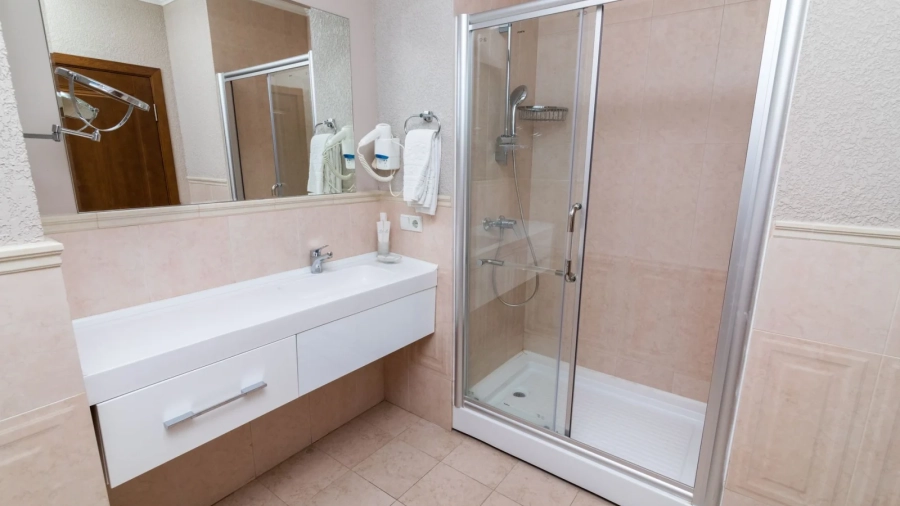
A cruise ship bathroom is a compact, private ensuite with a toilet, a small sink and (usually) a stand-up shower. In a standard cabin it measures roughly 25 to 30 square feet, while suites have bigger bathrooms that may include a tub, double sinks or a second toilet. Every cabin on the major ocean lines has its own bathroom, so you never have to share with strangers.
Free: download our 2027 Luxury Cruise Calendar →
The details, though, vary more than most first-time cruisers expect: some lines split the bathroom into two rooms, some give you only a dispenser of all-in-one shampoo, and the toilets work very differently from the one at home. This guide answers the questions people most often ask about cruise ship bathrooms, from size and showers to outlets, toiletries, accessible bathrooms and what you must never flush.
Does every cruise cabin have a private bathroom?
On mainstream and luxury ocean ships, yes. Every inside, oceanview, balcony and suite cabin has its own ensuite bathroom with a toilet, sink and shower. You will not find shared corridor bathrooms on lines such as Royal Caribbean, Carnival, Norwegian, Princess, Celebrity, Holland America, MSC or Disney.
The only places you might still come across shared facilities are some very small expedition vessels, tall ships or older river and coastal boats, and even those are rare today. If you are booking a niche expedition or sailing-ship trip, check the cabin description before you pay.
How big is a cruise ship bathroom?
The typical cruise ship bathroom in a standard cabin is about 25 to 30 square feet in total, and that figure includes the shower and the cabinets. Usable floor space is much smaller. Expect a couple of feet of counter beside the sink, a shelf or two around the mirror and a cabinet underneath. Two adults can’t really get ready at the same time.
Here is roughly what to expect by cabin type:
| Cabin type | Typical bathroom | Shower or tub |
|---|---|---|
| Inside / oceanview | Around 25 to 30 sq ft, single sink | Stand-up shower, often small or rounded |
| Balcony | Usually the same as or slightly larger than inside cabins | Mostly shower only; tubs on some lines |
| Mini-suite | Larger, more storage | Tub and shower combination on some lines, such as Princess |
| Full suite | Often several times larger, sometimes double sinks | Tub plus separate shower is common; some have a second bathroom |
If bathroom space matters to you, it is one of the clearest differences between cabin grades. Our guide to suites vs mini-suites vs balcony cabins explains what else you gain as you move up.
Which cruise lines have split bathrooms and bathtubs?
A split bathroom divides the toilet and the shower or tub into two separate small rooms, each with its own sink, so one person can shower while another uses the toilet or brushes their teeth. Disney Cruise Line is the line best known for it: the split layout is the most common arrangement in Disney staterooms, although some inside categories (including all inside staterooms on Disney Wish, Disney Treasure and Disney Destiny) have a single bathroom instead. Elsewhere, true split bathrooms are uncommon outside of suites and some family cabins.
The table below summarizes what you typically get in a standard cabin. Amenities change by ship and over time, so always check the description for your exact cabin.
| Cruise line | Split bathroom? | Bathtubs | Standard-cabin toiletries |
|---|---|---|---|
| Disney Cruise Line | Yes, in most non-inside staterooms | Tub and shower combo in many staterooms | Shampoo, conditioner, body lotion, soap |
| Royal Caribbean | No (some large suites have more than one bathroom) | Mainly suites | Shampoo and soap; conditioner generally in suites |
| Carnival | No | Mainly suites | Shampoo and liquid soap from wall dispensers |
| Norwegian | No | Mainly suites and The Haven | Conditioning shampoo and shower gel from dispensers |
| Princess | No | Mini-suites and suites | Shampoo, conditioner, body lotion |
| Holland America | No | Suites and many verandah cabins on several ships | Shampoo, conditioner, shower gel, lotion (Elemis) |
| Celebrity | No | Mainly suites | Shampoo, conditioner, body lotion |
Upscale and luxury lines go further: Oceania, Regent Seven Seas, Seabourn and Cunard all supply branded bottled toiletries, and suites across most lines get upgraded products.
Cruise ship showers: what to expect
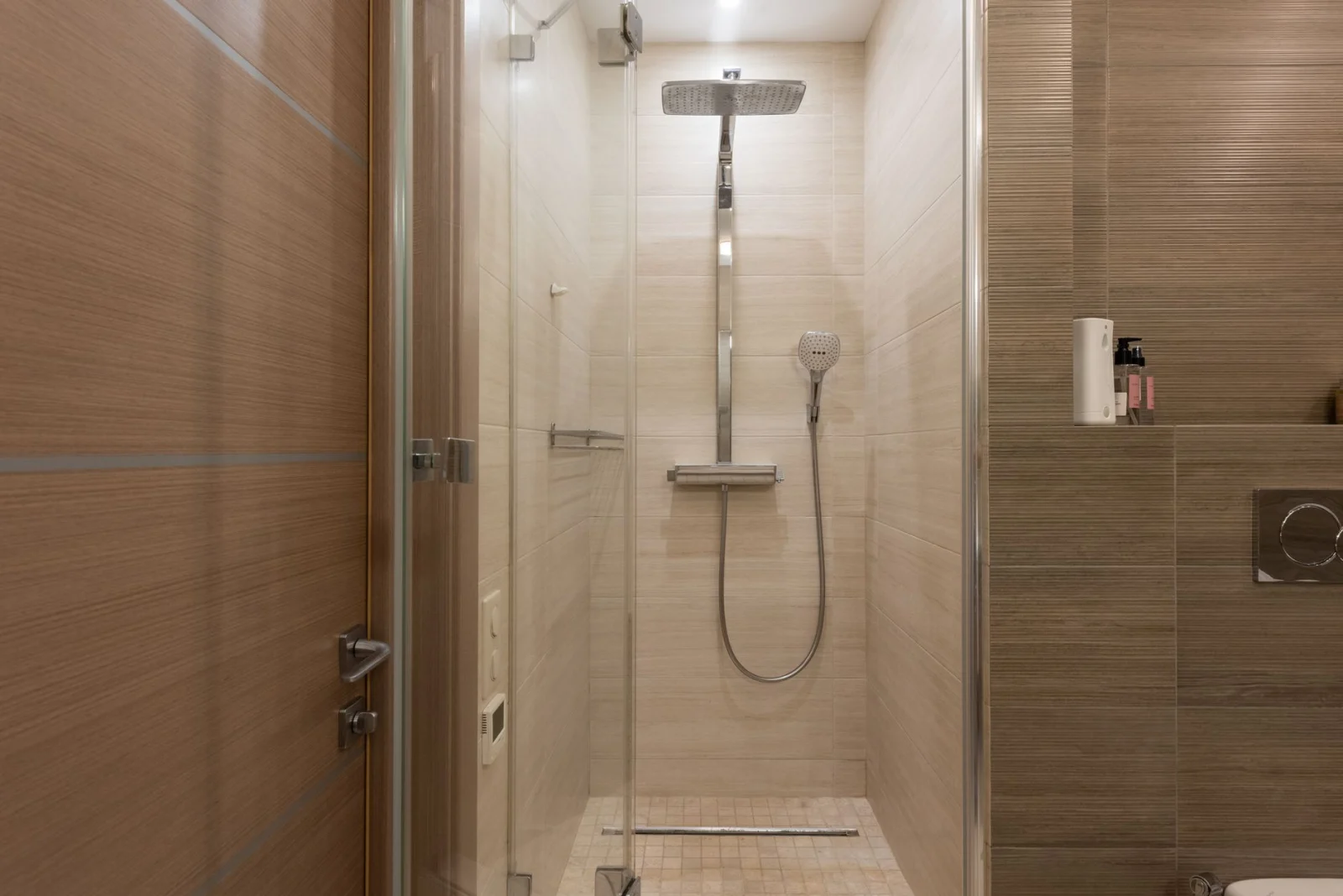
Most cruise ship showers are stand-up cubicles, a little narrower than a typical hotel shower. On many ships they are rounded or curved to save space. You will usually find:
- A handheld showerhead on a hose, mounted on a sliding rail so you can adjust the height. Newer cabins often add a fixed rainfall head.
- A curtain or a glass door. Older ships and many standard cabins still use a curtain, which can cling when wet; many newer cabins have a glass door or sliding panel instead. A couple of clips or magnetic hooks can stop a clingy curtain.
- Wall dispensers for shampoo and body wash on most mainstream lines.
- A retractable clothesline above the shower for swimwear and hand-washed items.
Water pressure and temperature are usually good, but the bathroom fan runs continuously and can’t be switched up, so a long hot shower can steam up the cabin. Leave the bathroom door ajar afterwards to let it clear.
Outlets and hair dryers in the cruise bathroom
Most cabin bathrooms have a single low-power outlet, often near the mirror light, and it is normally labeled for shavers only. These outlets are fine for an electric toothbrush or an electric razor, but they are not built for high-wattage appliances, so never plug a hair dryer into one.
You probably won’t need to bring a dryer at all. Norwegian, for example, says every stateroom has a hair dryer, and the same is true on the other big lines. It is usually tucked in a vanity drawer in the main cabin rather than in the bathroom, and it is often a modest, low-powered model, so pack your own if you have thick hair and use it at the desk outlet. Curling irons and flat irons are generally allowed; clothes irons and steamers are banned on most lines for fire-safety reasons.
Toilet paper, toiletries and towels
Toilet paper is supplied and restocked by your cabin steward, as are soap, shampoo and the other toiletries listed above. The paper is thin by design, because it has to break down quickly in a vacuum system. Many cruisers pack a small bag of their own favorites (conditioner, face wash, cotton pads) rather than relying on the dispensers.
Each bathroom has bath towels, hand towels, washcloths and a bath mat. To save water and energy, many lines replace towels only if you leave them on the floor or in the tub; hang them up and they will be refreshed less often. Cabin towels should stay in the cabin: pool and beach towels are provided separately on deck or at the gangway.
Storage is the real squeeze. A hanging toiletry bag, an over-the-door organizer and magnetic hooks on the metal walls all help, and you will find more space-saving ideas in our tips to make your stateroom more livable.
Accessible cruise ship bathrooms
Every major line has a limited number of accessible cabins with larger, step-free bathrooms. Royal Caribbean’s accessible staterooms, as one example, feature:
- Bathroom doors 32 to 34 inches wide, depending on the ship
- Ramped thresholds and a five-foot turning radius
- A roll-in shower with a fold-down bench and handheld showerhead
- Grab bars, a lowered sink and raised toilet seats (mostly 17 to 19 inches)
Commode or shower chairs can usually be requested before sailing. Accessible cabins sell out early, so book well ahead and contact the line’s accessibility department.
Relief areas for service dogs
Service dogs can’t use the cabin bathroom, so ships set up dedicated relief areas on an outer deck. On Royal Caribbean these are 4-foot by 4-foot boxes filled with cypress mulch, shared by any service dogs on board, and you need to request one through the Access Department when you book and no later than 30 days before sailing. Other lines have similar arrangements, so ask when you book.
How cruise ship toilets work
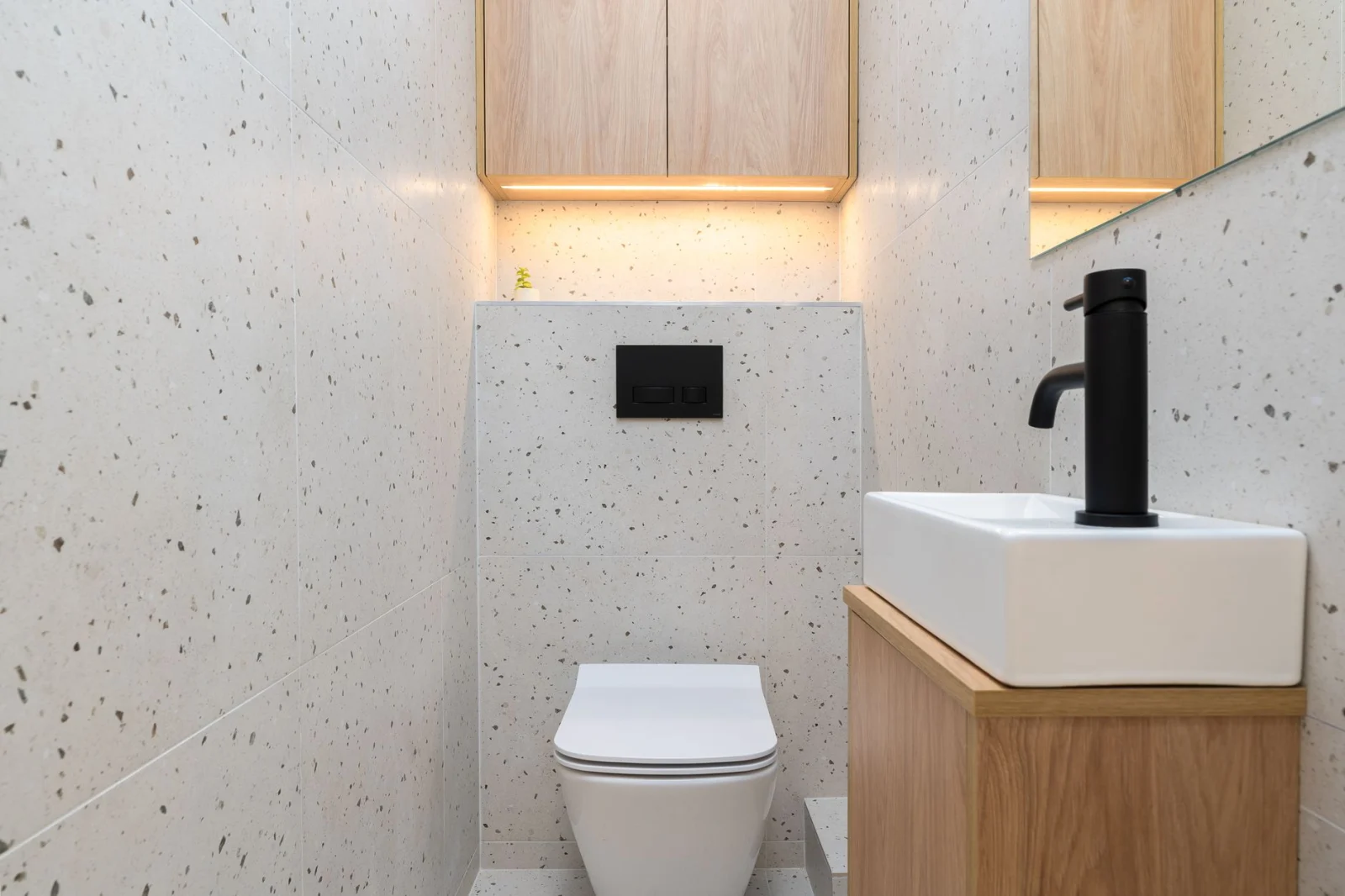
A cruise ship toilet uses vacuum suction rather than gravity and lots of water. When you press the button, a valve opens and the contents are pulled at speed through narrow pipes to the ship’s treatment plant. The result is a loud whoosh that can be heard through cabin walls, so late-night flushing may wake a cabinmate.
The flush is fierce, but the system is easy to block. Because the pipes are narrow and a section of cabins can share the same vacuum line, a single blockage can sometimes affect several neighboring bathrooms until the engineers clear it.
What not to flush on a cruise ship
Only toilet paper and human waste should go into a cruise ship toilet. Put everything else in the bathroom bin:
- Wet wipes, baby wipes and “flushable” wipes
- Tampons, pads and other feminine hygiene products
- Diapers and swim diapers
- Paper towels, tissues and napkins
- Cotton swabs, cotton pads and dental floss
- Hair, contact lenses, cigarette butts or anything plastic
If your toilet does stop working, call guest services rather than trying to fix it yourself; it is a routine job for the maintenance team. It is also sensible to close the lid before flushing.
Where does the waste go?
Everything flushed travels to an onboard wastewater treatment plant. According to the Cruise Lines International Association (CLIA), its member ships do not discharge untreated sewage anywhere in the world during normal operations, and ships carrying around 84% of member passenger capacity use advanced wastewater treatment systems. These combine biological treatment, filtration and UV disinfection, and the cleaned water can be reused on board for non-drinking purposes.
International rules under MARPOL Annex IV only allow treated discharges at set distances from shore, and many regions, including Alaska and the Baltic Sea, apply stricter standards. Leftover solids are dried and either incinerated or offloaded in port.
Is the bathroom tap water safe to drink?
Yes. Royal Caribbean, for example, explains that its drinking water is either distilled from seawater or loaded on board in port, and that it meets U.S. Vessel Sanitation Program standards, with inspections throughout the year. The water from your bathroom tap is the same treated supply used in the restaurants and bars, so you can fill a reusable bottle and brush your teeth with it. It can taste slightly of chlorine; the buffet’s chilled water stations are an easy alternative.
Quick tips for your cruise ship bathroom
- Check the shower and toilet as soon as you board so any problem is fixed on day one; it is one of the things to do as soon as you get to your cruise cabin.
- Pack a night light: the cabin is pitch-black, especially in inside cabins.
- Bring a few magnetic hooks and a hanging toiletry bag for storage.
- Use the public restrooms near the dining room, pool deck or theater during the day if you share a cabin.
- If you need a tub, check deck plans and book a cabin category that clearly lists one.
Once the vacuum toilet has done its job, the waste heads to an onboard treatment plant, as explained in this guide to cruise ship waste management.
FAQs
How do cruise ship toilets work?
Cruise ship toilets use a vacuum system. Pressing the flush button opens a valve and suction pulls the contents through narrow pipes to an onboard treatment plant, using far less water than a toilet at home. That is why they are loud and why only toilet paper should go in them.
Can you drink the tap water in a cruise ship bathroom?
Yes. On major lines the cabin tap water is made by distilling or filtering seawater, or is loaded in port, and then treated to U.S. Vessel Sanitation Program standards. It is the same water used in the ship’s restaurants and bars.
Do cruise ship cabins have bathtubs?
Most standard inside, oceanview and balcony cabins on big ships have a shower only. Tubs are mostly found in suites, Princess mini-suites, many Disney Cruise Line staterooms and some Holland America verandah cabins, so check the cabin description before you book.
Can I use my hair dryer in the cruise cabin bathroom?
Not in the bathroom outlet, which is usually rated for shavers only. Almost every cabin already has a hair dryer, often in a vanity drawer in the main room. If you bring your own, plug it into a desk outlet.
Are there public bathrooms on cruise ships?
Yes. Public restrooms are near the main dining rooms, theaters, bars, pool decks, the gym and the spa, so you rarely need to go back to your cabin. Some, but not all, have baby-changing tables.