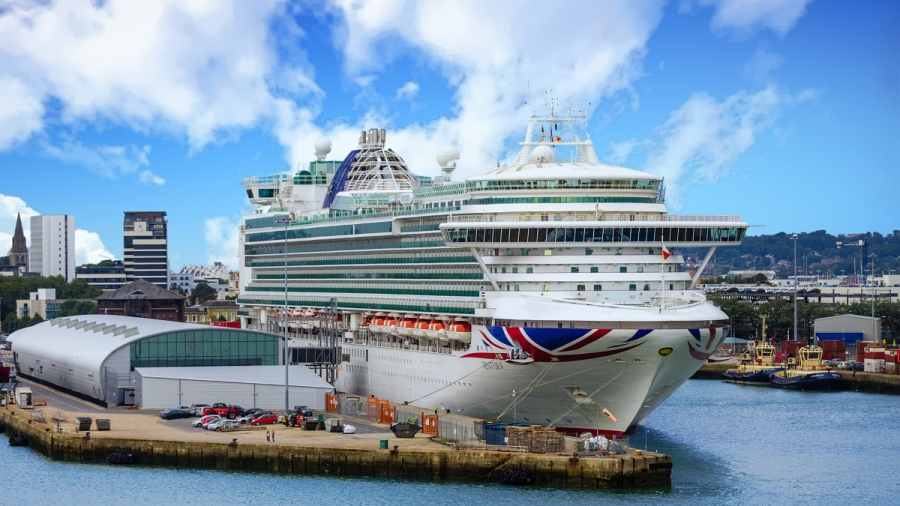
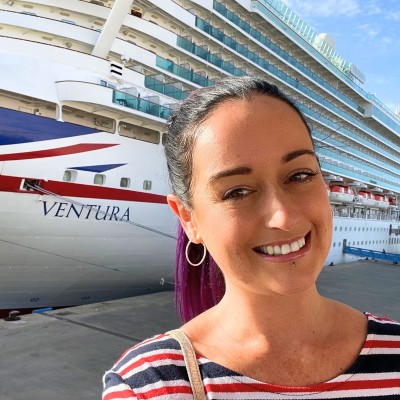
During the ship’s latest 14-night voyage, P&O Cruises’ Ventura is experiencing a gastrointestinal virus outbreak affecting at least 2% of its occupants.
Unofficial reports suggest up to 250 suspected cases including crew and passengers, though the cruise line has yet to confirm exact numbers and has so far only said that around 2% of those onboard were suffering from symptoms of vomiting, diarrhoea and other symptoms. As a guide, 2% of the ship’s total capacity (crew and guests) would be around 100 people.
Those reports from unnamed sources onboard suggest that there has been issues with vomiting in public spaces, uncleaned staterooms for guests placed in isolation, and long waits for the medical centre. Apparently, some guests have chosen to disembark the ship and fly home early.
The illness symptoms were reported early in the voyage, prompting swift action by the crew to contain the spread and treat passengers.
The cruise line has only released limited information, but it has confirmed an outbreak and that a range of enhanced sanitation protocols have been put in place, including an increase in cleaning, laundrettes being closed to guests, and the buffet restaurant becoming crew-service rather than self-serve.
While docked in Tenerife on 17th May, the ship underwent a deep clean, with all able guests asked to leave the ship from 10 am until 2 pm while a full sanitisation programme was carried out. Guests were given £15 as onboard credit as a thank you for cooperating, regardless of whether they already planned to explore Tenerife or not.
“Whilst we have proactively stepped up our already robust disinfection measures, I would like to stress that these measures are only successful if we all comply with the health and wellbeing protocols that we have in place.
Washing your hands regularly, particularly before eating and using the bathroom is the single most effective step we can all take. I would urge anyone who experiences symptoms, no matter how mild you feel they may be, to report to the medical centre.“
Letter sent to guests onboard
While it has not been confirmed as norovirus yet, it would not be a surprise – the virus is the more common of gastro illnesses to impact cruise ships.
NEW DEALS JUST RELEASED!
Don’t miss the latest P&O Cruises offers…
Related Posts
If you found this interesting, please share!
Jenni Fielding is the founder of Cruise Mummy. She has worked in the cruise industry since 2015 and has taken over 30 cruises. Now, she helps over 1 million people per month to plan their perfect cruise holidays.
The draft of a ship (also spelled draught) is the vertical distance between the waterline and the lowest point of the hull, usually the bottom of the keel. In plain terms, it tells you how deep the vessel sits in the water, and therefore how much water it needs to float safely without touching the seabed.
Draft is not a fixed number. It rises and falls with cargo, fuel, water density and even the way weight is spread along the hull. Below, we explain what ship draft means, how crews read it, how it differs from freeboard and air draft, and how deep different types of ships actually sit.
What Is the Draft of a Ship? A Clear Definition
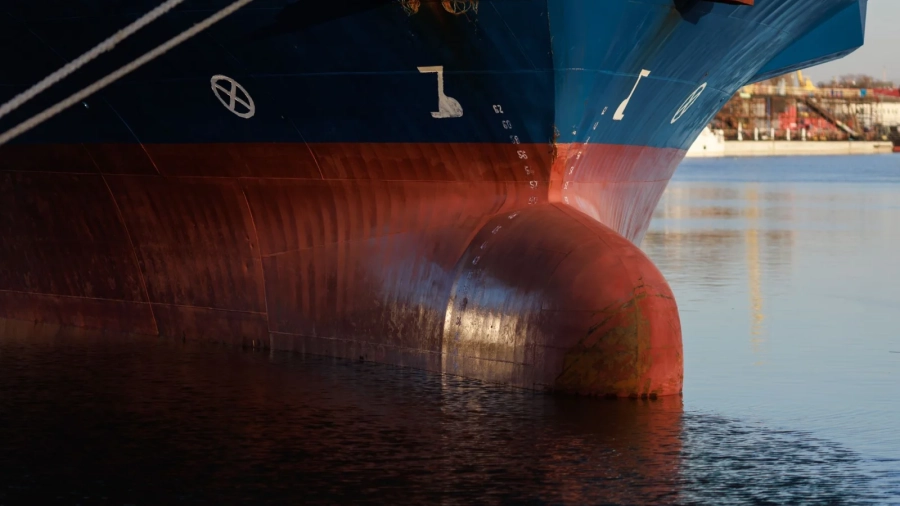
Picture a ship floating in calm water. Everything below the surface is the underwater body of the hull. The draft is the height of that underwater part, measured straight down from the waterline to the deepest fixed point, which is normally the keel. On some vessels a propeller, rudder or sonar dome sits slightly lower, and navigators will use the true lowest point when working out clearance.
A few related terms come up again and again:
Forward draft and aft draft: the draft read at the bow and at the stern.
Midship draft: the draft read halfway along the hull.
Mean draft: the average of the forward and aft readings, used as a quick summary of how deep the ship is sitting.
Design or summer draft: the deepest draft a ship is allowed to reach in summer seawater, set by its load line certificate.
“Draft” is the usual American spelling, while “draught” is common in British and international shipping documents. They mean exactly the same thing.
Why Ship Draft Matters
Draft is one of the first numbers a captain, pilot or port planner checks, because it controls where a ship can go and how much it can carry.
Grounding risk: navigators compare the ship’s draft with charted water depth and the tide to work out under-keel clearance, the gap between the hull and the seabed.
Port and canal access: channels, berths and locks all have maximum drafts. A ship that sits too deep must wait for high tide, reduce cargo or go elsewhere.
Cargo and fuel planning: every extra tonne pushes the hull a little deeper, so draft limits translate directly into how much a ship can load.
Safety and stability: keeping the draft within the load line marks preserves enough reserve buoyancy for heavy weather.
A detail many explainers skip is squat. When a ship moves through shallow or confined water, the flow of water under the hull lowers the pressure there and the vessel sinks slightly deeper than its static draft. The faster it goes, the stronger the effect. That is why pilots slow down in narrow channels and why ports build a safety margin on top of the published draft.
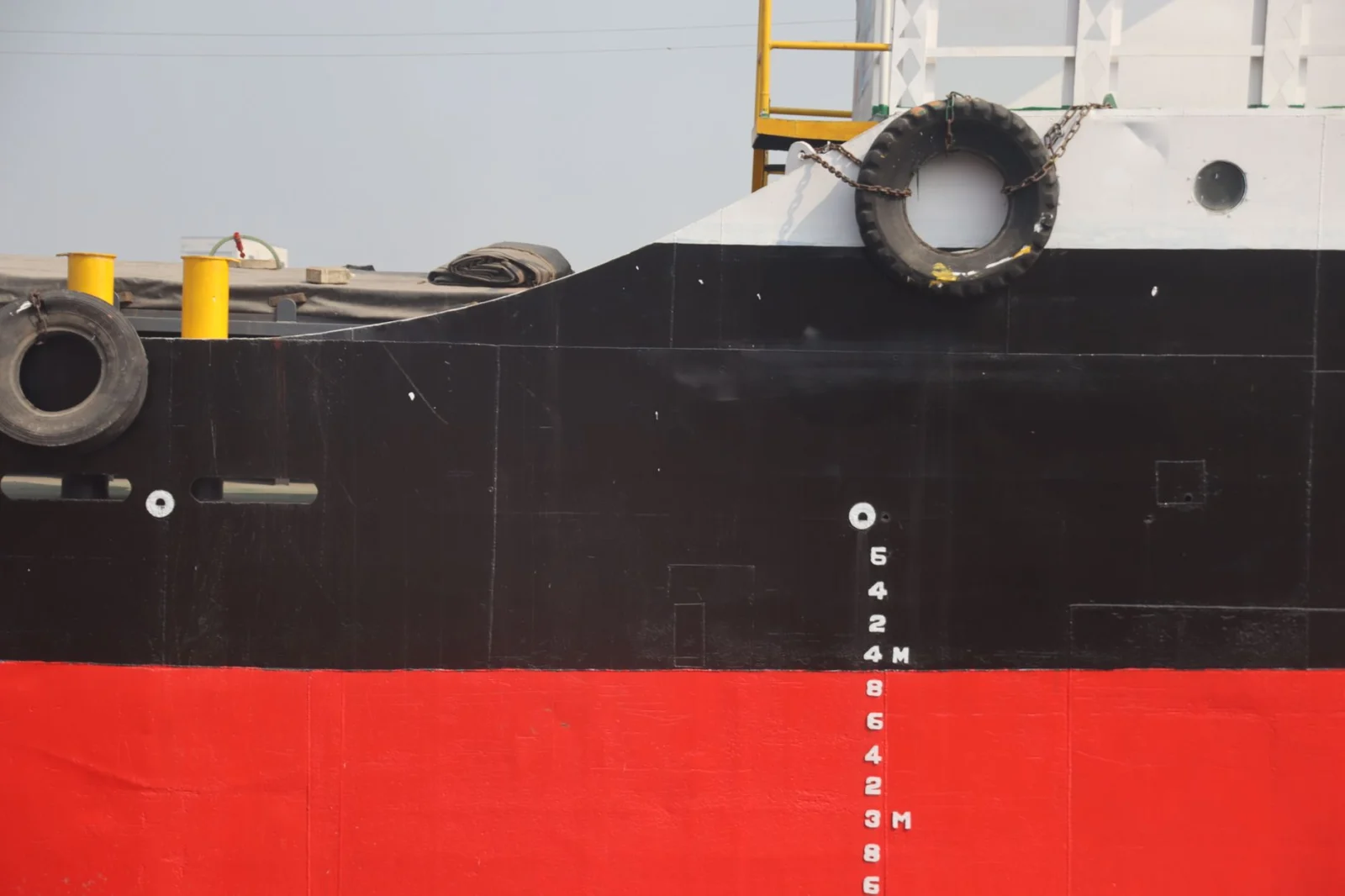
Draft is read from numbers painted on the hull at the bow, stern and midships. Photo: Saad Bin Hasan on Pexels
Draft Marks: How to Read a Ship’s Draft
Draft marks are the numbers painted (and often welded) onto both sides of the hull near the bow and stern, and usually amidships too. They work like a giant ruler that starts at the keel.
Imperial draft marks
On ships marked in feet, each number is 6 inches tall and the numbers are spaced 12 inches apart, bottom to bottom. The bottom edge of a number marks that exact draft in feet. If the water touches the bottom of the “28”, the draft is 28 feet; if it reaches the top of the “28”, the draft is 28 feet 6 inches.
Metric draft marks
On metric ships, each figure is 10 cm tall and the marks are spaced 20 cm apart, so the bottom of each figure shows the draft in decimetres. Whole metres are usually shown with an “M”, for example “9M”, followed by figures such as 2, 4, 6 and 8 for each 20 cm step.
Reading the marks in practice
Read the forward, midship and aft marks on both sides of the hull.
Average port and starboard readings at each position to cancel out any list (a sideways lean).
Calculate the mean of forward and aft drafts; the difference between them is the trim.
Compare the midship reading with the mean to spot hogging (hull bending up in the middle) or sagging (bending down).
Surveyors use these readings in a “draft survey” to estimate how much cargo a bulk carrier has loaded. Modern ships also carry electronic draft gauges based on pressure sensors, which give a continuous reading on the bridge.
Draft vs Freeboard vs Air Draft vs Depth
These four measurements describe different parts of the same hull and are easy to mix up.
Term
What it measures
Why it matters
Draft
Waterline down to the keel
Clearance over the seabed, port and canal limits
Freeboard
Waterline up to the main (freeboard) deck
Reserve buoyancy and protection from waves
Air draft
Waterline up to the highest point of the ship
Clearance under bridges and power lines
Moulded depth
Keel up to the main deck
A fixed hull dimension; roughly draft plus freeboard
The key difference between depth and draft is that depth is built into the hull and never changes, while draft changes every time the ship loads or unloads. As draft increases, freeboard shrinks by the same amount.
What Changes a Ship’s Draft?
Load
Cargo, fuel, fresh water, stores and ballast all add weight. A loaded tanker can sit almost twice as deep as the same tanker sailing empty. Cruise ships see smaller swings, but fuel and water consumption over a voyage still lift the hull a little.
Water density
Seawater is denser than fresh water, so it supports a ship more strongly. When a vessel sails from the ocean into a river or freshwater lake, it sinks slightly deeper without any change in weight. Warm water is also a little less dense than cold water. Ship officers use the “fresh water allowance”, calculated from the ship’s displacement and its tonnes per centimetre immersion, to predict the change.
Trim and list
Trim is the difference between forward and aft draft. A ship “trimmed by the stern” sits deeper aft, which is common because it keeps the propeller well submerged. List is a sideways lean caused by uneven weight, and it makes one side of the hull sit deeper than the other.
Load Line (Plimsoll) Marks and Maximum Draft
The maximum draft of a ship is set by its load line, the familiar circle-and-bar symbol painted amidships on both sides of cargo vessels. It is named after Samuel Plimsoll, the British MP whose campaign against overloaded “coffin ships” led to the Merchant Shipping Act 1876. Today the rules are international, under the IMO’s 1966 International Convention on Load Lines.
Next to the disc is a ladder of lines for different conditions:
TF: tropical fresh water
F: fresh water
T: tropical seawater
S: summer seawater (the reference line through the disc)
W: winter seawater
WNA: winter North Atlantic, for smaller ships in rough winter waters
A ship is fully and legally loaded when the water reaches the right line for its season and location, and never above it. The two letters beside the disc identify the classification society or authority that assigned the marks.
Draft and Stability
Draft also affects stability. Loading weight low in the hull raises the draft but lowers the centre of gravity, which generally increases the metacentric height (GM), a measure of how strongly a ship resists rolling over. Too little GM and the ship becomes tender and slow to right itself; too much and it snaps back violently, which is uncomfortable for crew and passengers. Naval architects balance hull shape, draft and weight distribution to keep GM in a sensible range.
Large cargo ships need some of the deepest channels in the world. Photo: Wolfgang Weiser on Pexels
Typical Ship Drafts by Type
Ship draft varies enormously by vessel type. The figures below are approximate, fully loaded values from published specifications and industry data.
Ship type or example
Approximate draft
Small container ship (about 1,000 TEU)
8.3 m (27 ft)
Large cruise ship, e.g. Icon of the Seas
9.25 m (30 ft 4 in)
RMS Titanic (1912)
10.5 m (34 ft 7 in)
Nimitz-class aircraft carrier
11.3 m (37 ft)
Panamax container ship (about 4,000 TEU)
about 12.5 m (41 ft)
Ultra-large container ship (14,000+ TEU)
about 16 m (52 ft)
VLCC crude oil tanker, fully loaded
about 20 m (66 ft)
The contrast between cruise ships and cargo ships is striking. Icon of the Seas is roughly 365 m long, yet its draft is only about 9.25 m, because passenger ships carry mostly air-filled accommodation rather than dense cargo. A VLCC tanker of around 340 m, by contrast, sits about 20 m deep when full and only about 11 m when empty. Our comparison of Titanic and today’s modern cruise ships shows how much bigger passenger ships have become while keeping drafts in a similar range.
Canal and strait draft limits
Many ship sizes are defined by the waterways they must fit through:
Panamax (original Panama Canal locks): up to 12.04 m (39.5 ft) in tropical fresh water.
Neopanamax (expanded locks opened in 2016): designed for up to 15.2 m (50 ft), although the canal authority has temporarily reduced this in dry seasons when Gatun Lake runs low.
Suezmax: the Suez Canal allows up to about 20.1 m (66 ft) for ships with a beam of 50 m or less, with lower limits for wider ships.
Because the Panama Canal uses fresh water from Gatun Lake, its limits are quoted in tropical fresh water, a neat real-world example of water density changing draft.
Cruise Ship Draft in Brief
Most modern ocean cruise ships draw somewhere around 8 to 9.5 m, which lets them reach a wide range of ports but still keeps the very biggest ships out of shallow harbors and some island anchorages. River and expedition ships are designed with much shallower drafts. For ship-by-ship figures and what draft means for your itinerary, see our full guide to cruise ship draft, and if you are curious about life aboard the giants, read whether the world’s biggest cruise ship is worth it.
FAQs
What is the maximum draft of a ship?
Each ship’s maximum draft is set by its load line marks and varies with season and water type. Across the world fleet, the deepest are loaded supertankers at around 20 m or more, while waterways set their own limits, such as about 15.2 m at the Panama Canal’s new locks.
What is the difference between depth and draft?
Depth is a fixed hull measurement from the keel to the main deck. Draft is the variable distance from the waterline down to the keel, and it changes as the ship loads or unloads.
What are draft marks on a ship?
Draft marks are numbers painted on both sides of the hull at the bow, stern and usually midships. They show how deep the ship sits, in feet (6-inch figures every 12 inches) or in metric units (10 cm figures every 20 cm).
How do you check the draft of a ship?
Crew read the draft marks where the water meets the hull at the bow, stern and midships on both sides, then average them to get the mean draft. Many ships also have electronic draft gauges on the bridge.
Does a ship sit deeper in fresh water?
Yes. Fresh water is less dense than seawater, so a ship floats slightly deeper in it. Load lines include separate fresh water marks for this reason.
Cruise ship engines are enormous, moving these massive ships across the sea. They use a lot of fuel – up to 250 tons a day. This is the same as 80,000 gallons every day. The marine diesel engines power the ship’s propulsion systems, carrying thousands to far-off places.
Modern ships have five to six engines, each between nine and fifteen megawatts. For example, the biggest cruise ship, Wonder of the Seas, has six big diesel sets. These machines can produce up to 50,000 horsepower. That’s enough to power a small city.
While older ships might still use diesel engines, new ships use gas turbines or diesel-electric engines. These newer engines are more efficient and lessen their environmental impact. This lets cruise ships travel worldwide without using too much fuel.
Key Takeaways:
Larger cruise ships can consume up to 250 tons of fuel daily, equivalent to 80,000 gallons
Modern cruise ships have between five and six engines, each with a power rating of 9-15 megawatts
The largest cruise ship, Wonder of the Seas, uses six marine diesel sets composed of three 16-cylinder Wartsila engines
Cruise ship engines can consume power up to 50,000 horsepower, roughly equivalent to 37,300 kilowatts
Modern cruise ships employ advanced technologies such as gas turbines or diesel-electric engines for enhanced efficiency and performance
Introduction to Cruise Ship Engines
Cruise ship engines are the heart of these incredible ships. They make it possible for ships to travel across the seas, and passengers enjoy a smooth and fun ride thanks to these engines. These engines are marvels in their own right. They generate tremendous power and keep the ship running right. There are many types of cruise ship engines, each with its benefits.
Diesel engines, gas turbines, and diesel-electric engines are commonly found on cruise ships. Diesel engines are the oldest choice, offering a solid and efficient way to move the ship. But, with stricter rules about pollution, many ships are looking for cleaner options.
Gas turbine engines are becoming more popular. They are more efficient and produce fewer harmful gases than diesel engines. They work by compressing air and using it in a combustion chamber to create power to drive the ship forward.
Diesel-electric engines are a mix of both diesel and electricity. They turn diesel power into electricity. This electricity then drives the ship’s propellers. This setup helps in using fuel better. It also makes it easier to power everything on the ship.
About 85% of the power in a diesel-electric system moves the ship, while the other 15% powers the ship’s various needs.
Choosing the right engine is vital for performance and the environment. Many cruise lines now go for engines that are better for the planet. ABB’s Azipod system, for example, can cut down on fuel use and pollution by 20%.
Propulsion System
Fuel Efficiency
Emission Control
Diesel Engines
Moderate
Impacted by sulfur cap regulations
Gas Turbine Engines
High
Lower emissions compared to diesel
Diesel-Electric Engines
High
Flexibility in power distribution
LNG-Powered Engines
Very High
Significantly reduced emissions
As interest in sustainable travel grows, cruise engines are changing too. New ships often use LNG for power because it’s better for the environment. These new technologies help cruise ships step towards cleaner seas.
Keeping the engines running well is very important. Cruise ship engine rooms are big and complex, including many parts, such as the main engines, generators, and cooling systems.
Next, we’ll examine cruise ship engines. We’ll discuss the different types, how much fuel they use, and their environmental impact. We’ll also discuss how cruise lines are making their ships more efficient and eco-friendly.
Types of Cruise Ship Engines
Cruise ships depend on strong engines to sail the vast seas, creating a comfortable journey for everyone on board. They use different engines like diesel, gas turbine, and diesel-electric to best fit the ship and its route. In this guide, we’ll look at these three main engine types used in modern cruise ships.
Diesel Engines
Traditionally, cruise ships employ diesel engines for power. These engines burn diesel fuel to move the ship. They are popular because they are reliable and efficient. For example, ships like the Cunard QE2 use up to 380 tons of fuel daily to travel at high speeds, proving the strength of diesel engines.
Gas Turbine Engines
Gas turbine engines are a newer choice in cruise ship technology. They turn heat into power by heating air and using it to create electricity, making them cleaner than diesel engines. Royal Caribbean was the pioneer in using gas turbines, focused on a more environmentally friendly approach for its ships.
Diesel-Electric Engines
Diesel-electric engines are a mix of diesel and electric power. Diesel engines make electricity that then powers the ship’s electric motors. This mix is known for flexibility and efficiency. About 85% of this power goes to moving the ship, while the rest powers its areas through long cables.
Choosing an engine type for a cruise ship depends on many things, including ship size and the route. With time, we will see more improvements in the propulsion system. The goal is to increase efficiency, cut down on emissions, and make the whole journey special for travelers.
LNG-Powered Engines
LNG-powered engines use liquefied natural gas as fuel, which is known for its lower emissions compared to traditional fuels. LNG is stored in special tanks on the ship and then used to generate power through combustion. This technology helps reduce air pollution and contributes to a more sustainable and eco-friendly cruising experience.
Cruise Ship Engine Size and Power
Cruise ship engines push these giant vessels across the seas. Some are as big as a basketball court. Their size and power are unique, delivering a smooth ride for everyone aboard.
Engine Dimensions
The size of a cruise ship’s engine depends on its class. For example, the Wärtsilä RT-flex96C engine is 44 feet tall and 87 feet long. It weighs as much as 2,300 tons, showing off amazing engineering skills.
Horsepower and Power Output
A cruise ship requires a lot of horsepower to move. A typical ship has four to six engines, each producing 9 to 15 MW power. This is a lot of power needed for such large ships.
Now, let’s see how the biggest cruise ships match up:
Cruise Ship
Number of Engines
Engine Type
Power Output per Engine
Total Power Output
Wonder of the Seas (Royal Caribbean)
6
Wärtsilä 16V 46D (3x) & 12V 46D (3x)
19,480 kW
116,880 kW
Oasis-class (Royal Caribbean)
6
Wärtsilä 16V 46D (3x) & 12V 46D (3x)
19,480 kW
116,880 kW
RMS Queen Mary 2 (Cunard)
4 (main) + 2 (gas turbines)
Wärtsilä 16V 46C (4x) & GE LM2500+ (2x)
16,800 kW (main) & 25,000 kW (gas turbines)
117,200 kW
The largest cruise ships can have 50,000 horsepower, which allows them to travel at up to 34.5 mph. However, they normally cruise at a slower 23 mph for comfort and fuel savings.
It’s critical to check and care for these engines regularly. This ensures a safe and comfy journey for those sailing the seas.
Fuel Consumption of Cruise Ship Engines
DCIM100MEDIADJI_0041.JPG
Cruise ships are famous for being huge and offering luxury. But, to move these ships, they need a lot of fuel. Bigger ships use more fuel than smaller ones. For example, a big ship may use 250 tons a day. This is about 80,000 gallons. In comparison, smaller ships use 150 tons daily.
The amount of fuel a ship can hold depends on its size. Big cruise ships carry up to two million gallons. On the other hand, ferries and other smaller vessels only hold about 130,000 gallons. As a fun fact, a cruise ship might burn through a gallon of fuel for every 30 to 60 feet it moves. Filling up a cruise ship takes about 110 tons of fuel every hour.
The fuel type matters for the ship’s efficiency and the environment. Typically, cruise ships use heavy fuel oil, which is not as clean as diesel cars. But due to new rules and environmental alarms, ships are turning to cleaner options. They now use marine gas, oil, low-sulfur fuels, and sometimes even LNG.
Ship Size
Daily Fuel Consumption
Fuel Capacity
Large Cruise Ships
250 tons (80,000 gallons)
Up to 2 million gallons
Smaller Cruise Ships
150 tons
Around 130,000 gallons
Cruise lines are trying to reduce the fuel they use. They’ve come up with ways like “slow steaming,” which means moving at speeds below 20 knots. This can cut down fuel use by about 20%. Also, making the ship’s body, surfaces, and propellers more efficient can save up to 8% on fuel.
The concern over cruise ship fuel and the environment has risen. As a response, the cruise industry is looking for solutions. They’re using new fuels, making their ships more efficient, and applying fuel-saving methods. This way, they aim to lower their environmental impact while giving passengers great experiences.
Location of Engines on a Cruise Ship
The heart of a cruise ship is its engine room. It’s an ample space filled with the ship’s engines and other essential machines. You’ll find it deep within the ship, near the bottom. This placement helps keep the ship stable and steady. The engine room is very big, stretching over many floors. It holds engines, fuel tanks, generators, and rooms for engine maintenance and control.
Ships like Royal Caribbean’s Oasis-class have six engines. Most others have four. These engines are very loud, making over 173 decibels of noise. To keep passengers comfortable, the rooms are soundproofed. The engine room is key to ensuring everything works well, like the electricity and air, during the trip.
Engine Room Layout
The engine room layout is all about saving space and working efficiently. It includes the ship’s main parts:
Engines: They move the ship forward.
Generators: They make electricity for the ship.
Fuel tanks: They hold the fuel for engines and generators.
Engine workshop: This is where machines get fixed.
Control room: Where engineers look after the ship’s systems.
The engine room also has heat exchangers, which help cool hot gases from the engines. They lower the gas temperature from 663°F (350°C) to about 86°F (30°C) before it leaves the ship. The cool gas helps make fresh water and can even heat fuel.
Safety Considerations
Keeping the engine room safe is critical. Ships today often have two engine rooms, named forward and aft DG rooms. These rooms are separated by solid and watertight walls. If there’s a problem in one room, the other can work independently, with its own supplies.
In the engine room, there are also backup generators and batteries. They’re there to keep important ship systems running in an emergency, including lights, communication systems, and navigation. Keeping everything well maintained and following safety rules is key to avoiding accidents and keeping the ship running smoothly.
Component
Function
Engines
Primary propulsion systems that power the ship’s movement
Generators
Produce electricity to power the ship’s various systems and amenities
Fuel tanks
Store fuel required to operate engines and generators
Engine workshop
Dedicated space for maintaining and repairing ship’s machinery
Control room
Nerve center of the engine room, where engineers monitor and control mechanical systems
The engine room is like the ship’s heart. But, it can be noisy and cause some shaking. Rooms near the engine are usually smaller and don’t have windows. They might also feel more vibrations when the ship docks. Still, these rooms cost less and are a good choice for those who don’t mind some noise and movement.
Largest Cruise Ship Engines
Big cruise ships, like Royal Caribbean’s Oasis-class vessels, have huge engines. These engines help the ships travel easily across the sea. They use powerful Wärtsilä engines, which are known for being reliable and effective.
Ships like the Oasis of the Seas and Allure of the Seas have particular engines. They use six sets of three engines each. These are the 16-cylinder Wärtsilä 16V 46D type, built for top performance. There are also three 12-cylinder Wärtsilä 12V 46D engines working on these ships.
The power these engines create is awe-inspiring. Each 16V 46D engine makes 18,480 kW (24,780 hp), while the 12V 46D engines each produce 13,860 kW (18,590 hp). Altogether, the engines on these ships add up to about 97,020 kW (130,110 hp) of power.
Cruise Ship Engine Failure and Passenger Safety
Cruise ship engines are built to high standards but sometimes fail. This is why modern ships have several layers of safety measures for passengers. Thanks to the Safe Return to Port initiative, ships after 2010 can keep running even if the main engine stops. They have double engine rooms for this purpose.
Today, cruise ships feature many diesel engines, up to six in some cases, for backup. If one engine fails, the others ensure safe travel. The ships also have emergency generators to power necessary systems like navigation and communication.
Despite the rareness of engine failures on cruise ships, extensive safety measures are always in place. These include strict construction standards and regular maintenance. Cruise companies put passenger safety as their top priority, ensuring everyone knows what to do in an emergency.
Should a cruise be canceled due to engine failure, passengers might get compensation per the Cruise Industry Bill of Rights:
Full or partial refund
Credit toward a future cruise
Reimbursement for costs from the cancellation
Buying personal travel insurance is a good idea to protect against losses from a possible engine failure. This insurance can cover any pre-planned activities affected by a cruise cancellation.
Final Thoughts
In 2019, the Viking Sky faced engine issues that led to a remote, dangerous situation. The ship lost power near the Norwegian coast in rough waters, and nearly 500 people had to be rescued by helicopter.
After this, Viking Ocean Cruises and the Norwegian Maritime Authority took action. They made sure all sister ships were safe and issued a warning. The alert focused on properly keeping engine oils at the required levels during bad weather.
The investigation found that the ship’s fuel system might have affected the failure. The ship’s design and the amount of fuel in its tanks could have caused problems, which could lead to performance issues when crossing rough seas.
Big storms can also twist and strain a ship. This extra stress might shut down the engines. Unique situations, like unusual waves interfering with engine cooling, were also examined.
To prevent such issues, experts suggest some solutions. They recommend adding more fuel and oil tanks, using particular parts inside tanks to control fuel flow, and placing extra fuel tanks closer to engines.
This event and others show the importance of keeping cruise ship engines running. They point out the continuous need for making marine engines more secure and dependable. By learning from these events, the cruise industry promises to keep their passengers safe and happy on every trip.
Cruise Ship Engines FAQ
How big are cruise ship engines?
Cruise ship engines can vary in size, but they are typically massive in order to power the ship’s propulsion and provide electrical power for all onboard systems. Cruise ships may have multiple large engines to generate the necessary power for the ship.
Where are the engines located on a cruise ship?
The engines on a cruise ship are usually located in the ship’s machinery space, which is typically towards the aft (rear) of the ship. This area is designed to house the engines, generators, and other propulsion systems.
What type of propulsion do cruise ships use?
Cruise ships are commonly powered by diesel-electric propulsion systems. These systems utilize diesel engines to generate electrical power, which is then used to turn propellers or pods that provide thrust to move the ship through the water.
What type of propulsion do cruise ships use?
Cruise ships are commonly powered by diesel-electric propulsion systems. These systems utilize diesel engines to generate electrical power, which is then used to turn propellers or pods that provide thrust to move the ship through the water.
How many engines are aboard a cruise ship?
Cruise ships can have multiple engines onboard, typically four or more depending on the size and power requirements of the ship. These engines work together to provide the necessary propulsion power for the ship.
What is the role of the chief engineer on a cruise ship?
The chief engineer on a cruise ship is responsible for overseeing the operation and maintenance of the ship’s engines and propulsion systems. They ensure that the engines are running efficiently and address any mechanical issues that may arise during the voyage.
Do cruise ships use electric motors for propulsion?
Yes, some cruise ships use electric motors for propulsion, especially those with pod propulsion systems. These electric motors drive propellers or pods at the bottom of the ship, providing efficient and environmentally friendly propulsion.
How do cruise ships generate power for onboard systems?
Cruise ships generate power for onboard systems through a combination of main engines and generators. The main engines produce electrical power, which is then distributed throughout the ship to support operations like air conditioning, lighting, and engine control
After recent reports of Carnival Cruise Line attempting to bring Carnival Pride back to Baltimore last week, the cruise line has announced an official return.
Our free cruise newsletter offers the latest cruise news and deals: Sign Up
Carnival Pride will be offering the first Carnival sailings out of Baltimore in 3 months.
Three months after the tragic collapse of the Francis Scott Key Bridge, enough progress has been made to resume cruise sailings again.
Carnival announced on Friday that Carnival Pride would be returning to the Baltimore, Maryland cruise port on May 26, 2024.
The cruise line revealed that the 2,124-passenger vessel will arrive in Baltimore after a 7-day cruise out of Norfolk, Virginia.
According to a statement from Carnival, the ship will set sail on a 14-day Carnival Journeys cruise to Greenland and will then resume regular sailings out of Baltimore well into 2026.
Carnival Cruise Line President Christine Duffy expressed gratitude to first responders and local officials in Baltimore and Norfolk for their swift action in a recent, unspecified situation.
“We are extremely grateful to the officials and incredible first responders in Baltimore, who’ve shown great leadership and resolve in this difficult time,” said Duffy. “Their efforts, along with the rapid response from our partners in Norfolk, allowed us to continue delivering our scheduled sailings for our guests.”
Carnival Brand Ambassador John Heald posted the message on his Facebook page, adding,
“I’m so happy for the people of Baltimore that they will have the ship back home again. And a special Thank you to everybody for their understanding and patience during the changes that we had to make. And a massive thank you also to my colleagues for everything they did to make sure the Cruises continued from Norfolk.”
This news comes a day after Royal Caribbean announced plans for Vision of the Seas to sail out of the cruise port on May 25 for a 5-night cruise to Bermuda and back.
Learn the cruise secrets most people don”t know and cruise like a boss. Check out Intelligent Cruiser here for a better cruise vacation. (Sponsored)
The main benefits of cruising are convenience and value: you unpack once, wake up in a new place most days, and your cabin, most meals and evening entertainment are included in one fare. A cruise can be the best vacation for families, groups, first-timers and anyone who wants to see several destinations without the hassle, though it isn’t the right fit for every traveller.
Plenty of people agree. According to Cruise Lines International Association (CLIA), a record 37.2 million people cruised in 2025, around 31% of them first-timers, and nearly 90% of surveyed cruisers say they intend to sail again. Below are 10 reasons a cruise can be the best vacation, followed by an honest look at the downsides and how a cruise compares with a land trip.
10 benefits of cruising
1. You unpack once
On a land tour covering four cities you’d normally pack, check out, travel and check in again several times. On a cruise, your hotel moves with you. You unpack on day one and your cabin stays your base until the last morning, which takes a lot of stress out of multi-destination travel.
2. Several destinations in one trip
A week in the Caribbean might take in three or four islands; a Mediterranean cruise can link cities such as Barcelona, Marseille and Rome. It’s an efficient way to sample a region and decide where you’d like to return for longer. Many travellers use a cruise as a “taster” for future land holidays.
3. Strong value for what’s included
Your fare typically includes your cabin, main dining room and buffet meals, basic drinks such as water, coffee and tea, most entertainment, pools, the gym and kids’ clubs. As a rough guide, NerdWallet’s 2026 figures put seven-night mainstream fares from around $500 to $800 per person for an inside cabin, which can work out at well under $100 per person per night before extras. That’s hard to match with a hotel plus meals and shows in many destinations. To compare fares properly, see our guide to finding cruise deals that are actually worth it.
4. Food without planning
You won’t need to research restaurants every night. Even without paying extra, most ships offer a main dining room, a buffet and several casual venues, with specialty restaurants available if you want a splurge. Dietary requirements are usually easier to manage when you can tell the dining team once at the start.
5. Entertainment on your doorstep
Production shows, live music, comedy, trivia, lectures and deck parties are included on most ships, and you can walk back to your cabin afterwards. On larger ships you’ll also find water parks, climbing walls and other attractions that would cost extra on land.
Ships make it easy for different ages to do their own thing and meet up later. Photo: Rahime Gül on Pexels
More reasons to go on a cruise
6. Easier for multigenerational groups
CLIA reports that around a third of cruises now involve multigenerational groups, and it’s easy to see why. Grandparents can relax by a quiet pool, kids can join supervised clubs, teenagers get their own spaces, and everyone meets up for dinner. Nobody has to compromise on one shared itinerary all day.
7. Accessible travel
Most modern ships have accessible cabins with roll-in showers, lifts to every deck and staff used to helping guests with mobility, hearing or visual needs. Not having to change hotels or arrange transport between destinations is a big advantage for travellers with limited mobility. Accessibility in ports varies a lot, especially at tender ports, so check with your cruise line’s access team before booking.
8. Solo-friendly options
Solo travellers have historically paid a “single supplement”, but several lines now offer studio cabins designed and priced for one person, often with access to a solo lounge and organised meet-ups. Hosted activities and shared dining tables make it easy to be sociable when you want to and private when you don’t.
9. Sea days to genuinely rest
Sea days are one of the most underrated benefits of cruising. With no port to rush to, you can sleep in, read by the pool, book a spa treatment or simply watch the ocean. If relaxation is your main goal, choose an itinerary with several sea days and consider one of the best cruise lines for a quiet and relaxing vacation.
10. Private islands and new ships
Cruise lines keep investing in experiences you can’t easily get elsewhere. Several lines run private island or beach destinations in the Bahamas and Caribbean, such as Royal Caribbean’s Perfect Day at CocoCay and its Royal Beach Club Paradise Island, which opened in January 2026, and Carnival’s Celebration Key. New ships arrive every year with fresh restaurants, entertainment and cabin designs, so even repeat cruisers find something new.
Pros and cons of cruising
No vacation suits everyone. Here is a balanced look at the pros and cons of cruising before you book.
Pros
Cons
Unpack once, visit several places
Limited time in each port, often 6 to 10 hours
Meals, entertainment and cabin in one fare
Extra costs: gratuities, drinks, Wi-Fi, excursions, specialty dining
Something for every age group
Big ships and popular ports can feel crowded
Little day-to-day planning
Seasickness is possible, especially on open-ocean routes
Accessible, step-free travel between destinations
Environmental footprint of large ships
Popular ports can get busy when several ships call on the same day. Photo: Diego F. Parra on Pexels
When a cruise isn’t the best vacation
Being honest about the downsides helps you decide whether a cruise is worth it for you.
You want depth, not breadth. A day in Rome or Barcelona is a highlight reel. If you’d rather spend a week getting to know one city, a land trip is better.
You hate add-on charges. Gratuities typically add around $17 to $20 per person per day on mainstream lines, and drinks packages, Wi-Fi and excursions add up fast. Budget for them, or look at more inclusive premium and luxury lines.
Crowds bother you. The largest ships carry several thousand guests, and popular ports can see multiple ships on the same day. Smaller ships, river cruises or off-peak sailings help.
You’re prone to seasickness. Modern ships have stabilisers, and a midship, lower-deck cabin helps, but routes with open-ocean crossings can still be rough. Calmer options include river cruises and sheltered itineraries such as Alaska’s Inside Passage.
The environmental impact matters to you. Cruise ships burn a lot of fuel. A 2023 study by the campaign group Transport & Environment estimated that Europe’s cruise ships emitted as much sulphur oxide as around a billion cars. Lines are investing in LNG, shore power and other measures, but critics argue progress is slow.
Cruise vs land vacation: a quick comparison
Cruise
Land vacation
Planning effort
Low: one booking covers room, food, transport
Higher: hotels, transport and meals booked separately
Destinations
Several, briefly
Fewer, in more depth
Cost predictability
Good, if you budget for extras
Varies widely with dining and transport
Flexibility
Fixed itinerary and port times
Change plans whenever you like
Best for
Families, groups, first-time visitors to a region, relaxation
Independent travellers, food and culture deep-dives
A useful tip that’s often overlooked: price both options on a like-for-like basis. Add up the cruise fare, taxes, gratuities and your likely onboard spending, then compare it with hotels, meals, transfers and entertainment for the same number of nights on land. Many people find the cruise comes out cheaper for multi-destination trips and more expensive for a single-city stay.
For many travellers, yes: one fare covers your room, most meals, entertainment and travel between several destinations, and you only unpack once. It’s less worthwhile if you want long, in-depth stays in each place, dislike crowds or are prone to seasickness.
What are the main pros and cons of cruising?
The main pros are convenience, visiting several places on one trip, good value for what’s included, and something for every age group. The main cons are limited time in port, extra charges onboard, busy ships and ports, the chance of seasickness and the environmental footprint.
Is a cruise cheaper than a land vacation?
It can be. Base fares on mainstream lines can work out under $100 per person per night for an inside cabin, including food and entertainment. Once you add gratuities, drinks, Wi-Fi and excursions the gap narrows, so compare the full cost of both trips.
What is the main purpose of a cruise?
A cruise combines your hotel, restaurants, entertainment and transport into one trip, so you can see several destinations without repacking or arranging travel between them. Some people cruise mainly for the ship itself and the relaxation of sea days.
Who is a cruise not a good fit for?
Travellers who want to explore one destination deeply, who prefer independent, spontaneous travel, who get badly seasick, or who dislike being around large numbers of people may be happier on a land trip or a small-ship or river cruise.
A gulet cruise from Bodrum is a week (or a few days) aboard a traditional wooden Turkish motor-sailer, starting and usually ending in Bodrum’s harbour. The classic route loops east into the Gulf of Gökova for swimming stops, quiet anchorages and village dinners, while some private charters cross the short stretch of water to Kos and other Greek islands. You can book a single cabin on a shared boat or charter the whole gulet for your own group.
This guide focuses on Bodrum specifically: where boats leave from, the bays you are likely to visit, what is and isn’t included in the price, and how to make the most of the town before you board. For a wider look at the Turkish coast, including Göcek, Fethiye and Marmaris, see our main guide to gulet holidays in Turkey, with routes, costs and booking advice.
Why Start a Gulet Cruise from Bodrum?
Bodrum has a strong claim to being the home of the gulet. Its boatyards have built these broad-beamed wooden vessels for generations, and the town is closely linked with the “Blue Voyage” (Mavi Yolculuk), the idea of drifting from cove to cove that was popularised by the writer Cevat Şakir Kabaağaçlı, known as the Fisherman of Halicarnassus, and his circle in the mid-20th century. Today the harbour beneath Bodrum Castle is lined with gulets of every size.
Practical reasons matter too:
Easy access from the UK. Milas-Bodrum Airport (BJV) has seasonal direct flights from several UK airports, and the transfer to Bodrum town takes roughly 40 minutes by road.
Two very different cruising areas on the doorstep. The sheltered, pine-fringed Gulf of Gökova lies to the east, and the Greek Dodecanese, with Kos just across the water, lie to the west and south.
A lively base before and after. Bodrum has good restaurants, a castle museum and plenty of hotels, so adding a night or two either side of the cruise is easy.
Where Bodrum Gulet Cruises Depart From
Most boats board in Bodrum town, either at the main harbour along the waterfront or at the marina at its western end, a short walk from the castle. Some gulets are based elsewhere on the peninsula, such as Yalıkavak or Turgutreis, so always check the exact meeting point in your booking. Embarkation is usually in the late afternoon (often from around 3pm to 4pm) and you typically spend the first night on board in port or at a nearby anchorage, with disembarkation after breakfast on the final morning. Many operators can arrange transfers from BJV, sometimes at extra cost.
The Classic Route: Bodrum to the Gulf of Gökova
The Gökova loop is the most popular gulet cruise from Bodrum, and it is the route most cabin charters follow. Exact stops depend on the captain, the wind and the number of boats around, but a typical week looks something like this:
Day
Typical stops
What to expect
1
Bodrum
Board in the afternoon, meet the crew, dinner on board
2
Orak Island, then Çökertme
Clear-water swimming and snorkelling, then crossing into the gulf
3
Karacasöğüt and nearby bays
Quiet village bays and waterfront restaurants
4
English Harbour (İngiliz Limanı) and nearby coves
Deep, wooded inlets, a good overnight anchorage
5
Longöz, Tuzla or the eastern bays
Shallow, sheltered water and kayaking
6
Sedir (Cleopatra) Island
Famous sandy beach and ancient ruins, then sailing west
7
Karaada (Black Island) and Akvaryum Bay
Thermal spring cave and a final swim close to Bodrum
8
Bodrum
Breakfast and disembark
Highlights worth knowing about
Sedir (Cleopatra) Island. Legend says the island’s unusually fine, pale sand was shipped from North Africa for Cleopatra. The beach is protected: you can’t take sand away, towels and sunbeds aren’t allowed on it, and swimming is limited to a marked area. There is a visitor fee, and it gets busy around midday, so captains often aim for early morning or late afternoon. The ruins of ancient Kedrai, including a small theatre, are worth the walk.
English Harbour. Named after British boats said to have sheltered here in the Second World War, it is one of the prettiest anchorages in the gulf.
Çökertme. A small bay with a handful of simple restaurants, popular for an evening ashore.
Orak Island. A rocky islet off the peninsula, known for some of the clearest water in the area. Good for snorkelling.
Karaada and Akvaryum Bay. Karaada sits just off Bodrum and has a cave with warm, mineral-rich spring water. Akvaryum (“Aquarium”) Bay nearby is named for its visibility.
Gökova's sheltered bays are the heart of most cruises from Bodrum. Photo: El gringo photo on Pexels
Sailing from Bodrum to Kos and the Greek Islands
Bodrum faces Kos across a narrow channel, so a two-country cruise is tempting. A typical private route might combine Kos with Pserimos, Kalymnos or Nisyros before returning to Turkish waters. Before you plan around it, keep these points in mind:
It is usually private-charter only. Cabin charters almost always stay in Turkish waters, and some operators don’t allow their boats to enter Greek waters at all.
There are formal border crossings. The gulet must clear out of Turkey and into Greece at official ports of entry, with passport and customs checks on both sides, and do the same again on the way back. The crew handles the paperwork, but it takes time and can add fees.
Schengen rules apply in Greece. UK passport holders entering Greece are subject to the EU’s Entry/Exit System and the 90-in-180-day limit, so carry your passport at all times and check the latest advice on GOV.UK before you travel.
Turkey entry. At the time of writing, UK citizens don’t need a visa for Turkish holidays of up to 90 days in 180, but your passport must have at least 150 days’ validity from arrival. Rules can change, so check the FCDO’s Turkey travel advice a few weeks before departure.
If you want the islands without the admin, Kos is also served by local ferries from Bodrum, so you could add a day trip before or after a Turkey-only cruise.
Cabin Charter or Private Bodrum Gulet Charter?
There are two main ways to book.
Cabin charter
You book a double or twin cabin on a gulet that sails a fixed route on fixed dates, usually Saturday or Sunday to Saturday or Sunday. You share the boat with other guests, typically 8 to 16 people in total. It suits couples and solo travellers on a budget. As a rough guide, 2026 brochure prices for a 6 or 7-night Bodrum and Gökova cabin cruise started at around €900 to €1,100 per person on standard boats, and from about €1,700 per person on more luxurious gulets. These are starting prices for shared cabins in quieter weeks, so expect more in July and August.
Private charter
You hire the whole boat, crew included, for your group. You can shape the route, set meal times and decide how long to stay in each bay. Weekly rates depend heavily on the boat’s size, age and finish, and on the season. Simple older gulets can cost a few thousand euros a week early or late in the season. Well-specified luxury gulets with four to six cabins commonly start in the tens of thousands of euros a week, and the very top end runs well beyond that. Split between eight or twelve guests, a private Bodrum gulet charter can cost less per head than you might expect.
What’s Included and What Costs Extra
Read the contract carefully, because inclusions vary more than most people expect.
Cabin charters usually include accommodation, crew, fuel for the set route and most meals (often full board). Drinks, port and national park fees, and transfers may be extra.
Private charters are often quoted for the boat, crew and fuel for a standard number of engine hours. Food and drink are then covered either by a full-board or half-board package priced per person, or by an APA (Advance Provisioning Allowance), a deposit paid on top of the charter fee that the captain uses for food, drink, fuel and harbour fees. With an APA you get an account at the end and any unspent balance back. On luxury yachts it is often set at around 20% to 30% of the charter fee, but gulets vary, so ask.
Usual extras include alcohol (on some boats you pay as you drink from the onboard bar), mooring fees in marinas, Greek cruising taxes and clearance fees if you cross the border, water toys such as jet skis, and a crew tip. Tipping around 5% to 10% of the charter price is a common guideline for private charters, and is entirely at your discretion.
Bodrum's harbour and castle make a fine first or last evening of the cruise. Photo: GEORGE DESIPRIS on Pexels
Best Time for a Gulet Cruise from Bodrum
The season runs from roughly May to October.
May and early June: green hills, quieter bays and pleasant temperatures. The sea is still warming up.
Late June and September: the sweet spot for many people, with warm sea, long days and fewer crowds than high summer.
July and August: the hottest and busiest weeks, and the most expensive. The afternoon meltemi wind can make the open water between Bodrum and the islands lively, although Gökova’s deep bays offer good shelter.
October: warm water, softer light and lower prices, with a slightly higher chance of unsettled weather towards the end of the month.
Before You Board: What to See in Bodrum
Allow at least a morning in town. The landmark is Bodrum Castle (the Castle of St Peter), built by the Knights Hospitaller from the early 15th century partly with stone taken from the ruined Mausoleum. Inside is the Museum of Underwater Archaeology, which displays finds from shipwrecks off the Turkish coast. The castle went through a long restoration, with halls reopening in stages, so check current opening hours and which galleries are open before you go. A short walk inland is the site of the Mausoleum at Halicarnassus, the tomb of Mausolus and one of the Seven Wonders of the Ancient World. Little stands today.
Ask for recent photos of the cabins and bathrooms, not just the deck, and check whether the cabins have air conditioning and when the generator runs at night.
Confirm the route is flexible if wind or crowds make a planned stop a poor choice.
Check the included engine hours, as gulets motor more than they sail and extra hours may cost more.
Pack a soft holdall, as storage is limited.
Book early for July and August, especially for the best private gulets, which are often reserved a year ahead.
FAQs
How long is a typical gulet cruise from Bodrum?
Most run for seven nights (eight days), Bodrum to Bodrum. Shorter three or four-night trips and day cruises are also available, and private charters can be arranged for almost any length.
Can you sail from Bodrum to Greece on a gulet?
Yes, on many private charters, as Kos is very close. The boat must clear out of Turkey and into Greece at official ports of entry, which adds time and fees. Cabin charters generally stay in Turkish waters.
How much does a Bodrum gulet charter cost?
Cabin cruises started at around €900 to €1,100 per person for a week in 2026, with luxury boats costing more. Private charters range from a few thousand euros a week for simple gulets to tens of thousands for luxury boats, plus food, drink and extras.
Which airport do you fly into for a Bodrum gulet cruise?
Milas-Bodrum Airport (BJV), about 40 minutes by road from Bodrum town. There are seasonal direct flights from the UK.
When is the best month for a gulet cruise from Bodrum?
June and September offer the best balance of warm sea, settled weather and fewer crowds. July and August are hottest, busiest and most expensive.
Cruise ships are one of the most popular ways to see the world. You can travel across the entire globe and see every country you’ve been wanting to see. It’s a convenient way to travel for those who might be scared of flying, and a much more enjoyable experience for everyone.
You have everything you could ever need on a cruise ship. There are pools, restaurants, bars and even shops and cinemas. Another added bonus is that there is typically a casino on board as well.
Anyone who is worried about leaving their gaming behind when they’re on board doesn’t need to worry – it’s coming along with you! But what are the differences you could expect to find when you’re on a cruise ship casino?
We’ve got all of the inside info so you know exactly what to expect when you visit a casino on a cruise ship.
Differences to expect at a cruise ship casino
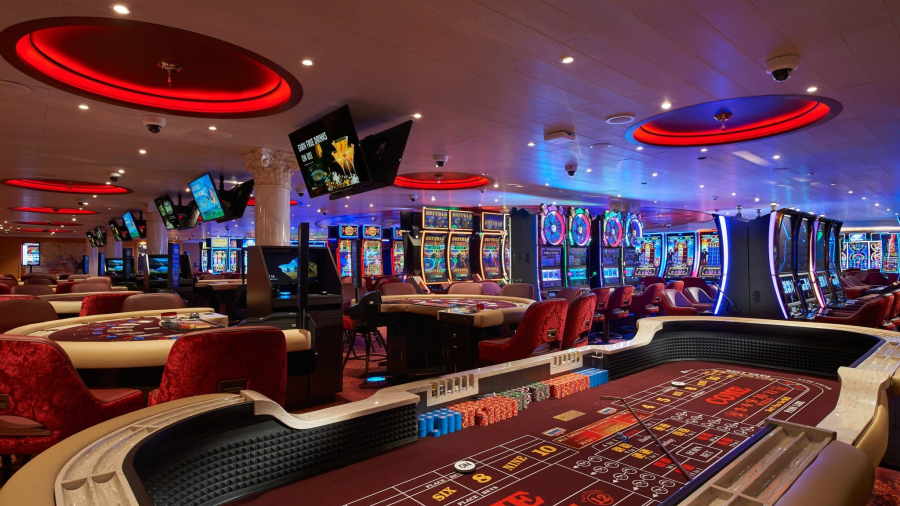
Norwegian Cruise Line Casino
One massive benefit to visiting a cruise ship casino is that you don’t need to carry a wad of cash around with you in order to play. Most cruise ship casinos will let you charge any deposits to your room, so there’s no need to even have a card with you.
Of course, you do need to keep an eye on how much you’re spending, so it could be worth looking out for that. But as long as you’re sensible, it’s a really handy benefit. There’s no need to use the cash machines on board, which can charge a fee.
You can usually print off a slip at the end of your gaming to keep an eye on how much you’ve spent that day, so you know what to expect at the end of your trip.
Odds are not in your favour
One unfortunate difference between a casino on land and a casino on a cruise ship, is that the cruise ship casino will have worse odds. Obviously, the house holds most of the power in any casino, but this is even more prevalent on a cruise ship.
When you’re visiting a casino somewhere like Las Vegas, the payout is typically around 90%. However, when you’re on a cruise ship, this goes down to something like 80%. It’s still going to be fun, but don’t expect to be making your millions if you’re playing on board.
So although the payout might not be as good, the minimum you have to put down in order to play at a table is lower. This encourages people who might not usually play to have a go as they’re not going to lose out on too much.
It also makes you play a bit longer and enjoy yourself a bit more as you haven’t had to part with too much money in the first place. This is a great benefit and means you can game more than you usually would.
Most casinos you find on land will be open all hours, every day of the week. This is one of the biggest benefits to land based casinos as there’s always an opportunity to get a game in. However, this all changes when you’re on a cruise ship.
Cruise ship casinos will have much stricter rules when it comes to opening hours and therefore won’t be open all of the time. This is because when you’re travelling on international waters, the rules for any kind of gaming are different.
It also means that this could change during your trip, so make sure you keep an eye out for any changes in opening and closing times. It might be that only certain games are allowed to be played during certain hours, so make sure you check with staff on board.
More opportunities to socialise
When you’re at your local casino, there might be the regulars who are there just to play and relax by themselves. There might be people who solely want to hang out with the people they came there with. All of these are totally fine, but it does mean that there doesn’t tend to be much mixing of groups.
However, that all changes when you’re on a cruise ship. You’re all there together for typically a long period of time. Therefore, people are more up for getting to know one another. People also tend to be more relaxed when they’re on holiday so they might be more up for socialising.
This makes a cruise ship one of the best places to visit a casino as you know that the atmosphere is going to be great. It’s a great way to meet people you’re on board with and make new friends in the process.
Playing at a cruise ship casino is different to playing on land, but there are lots of benefits to be had. Will you be playing on your next cruise?
With UEFA Euro 2024 just around the corner, MSC Cruises is presenting a unique opportunity for football fans to enjoy the tournament like never before.
MSC Cruises has partnered with UEFA to bring the live broadcast of UEFA Euro 2024 matches to its guests.
The coverage will include all major matches, ensuring that fans don’t miss a moment of the action. But it will only be available on cruise ships operating out of Europe – not those in the US or elsewhere in the world.
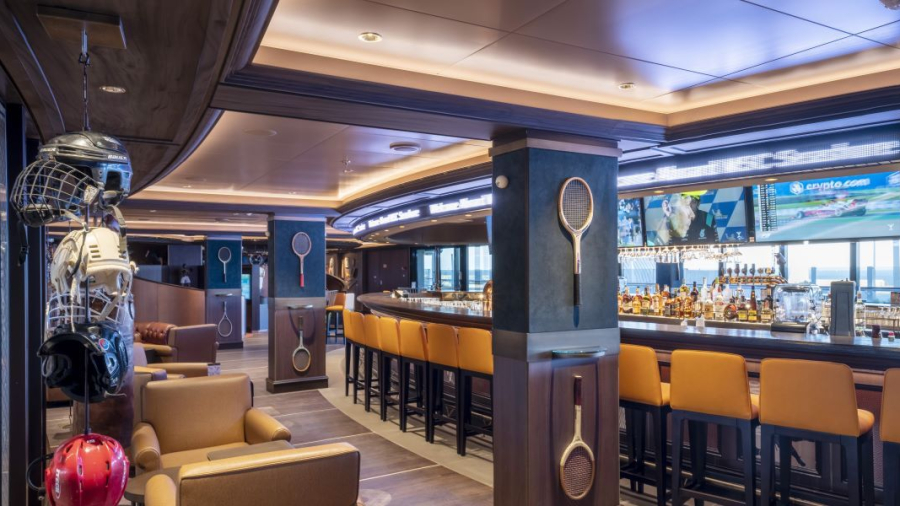
Specially designated venues onboard will host the live broadcasts. These areas will feature large screens and comfortable seating, creating an immersive viewing experience.
With ample capacity, these venues will accommodate numerous guests, ensuring everyone can enjoy the matches in a vibrant and communal atmosphere.
Special events and themed activities related to the tournament will be organised, offering guests opportunities to socialise and celebrate with fellow football fans.
These will include penalty shoot-out challenges, trivia competitions, create-your-own-shirt competitions and more, perfect for guests of all ages.
Of course, this could put some people off cruising with MSC, if you aren’t a football fan. You might want to avoid the ships showing the games in the communal areas, especially if your priority is a relaxing cruise.
But for those who are excited for the Euros tournament, this could be the best way to experience them outside of attending the games in person.
NEW DEALS JUST RELEASED!
Don’t miss the latest MSC Cruises offers…
Related Posts
If you found this interesting, please share!
Jenni Fielding is the founder of Cruise Mummy. She has worked in the cruise industry since 2015 and has taken over 30 cruises. Now, she helps over 1 million people per month to plan their perfect cruise holidays.
After sailing out of Port Canaveral for the last couple of years, a Carnival Cruise Line ship has come to New Orleans to offer 7-day sailings to the Caribbean.
Our free cruise newsletter offers the latest cruise news and deals: Sign Up
Photo Credit: Cruise Fever
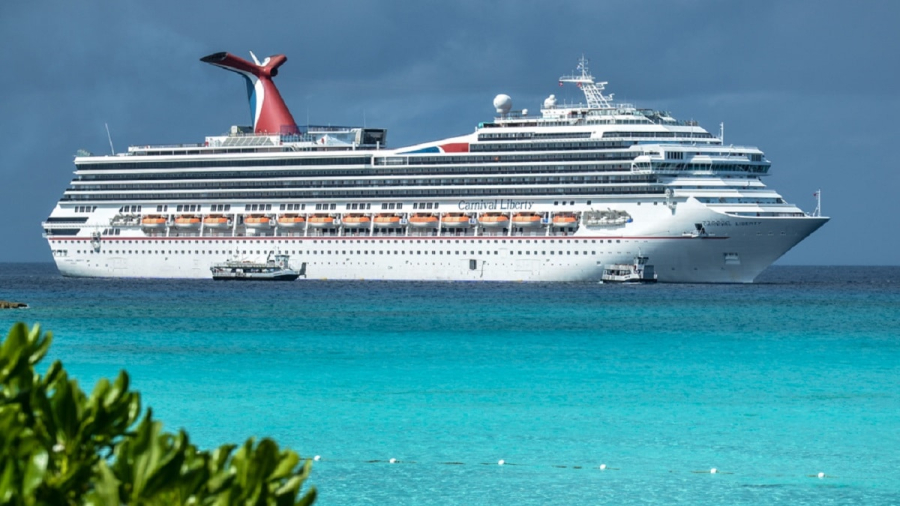
Carnival Liberty just sailed her first voyage out of the Louisiana cruise port and will be homeporting at the new location through April of 2026.
The 2,974-passenger vessel recently came to New Orleans, offering the first cruise on May 6. The ship replaces Carnival Glory which is now homeporting in Port Canaveral.
This move brings new and exciting cruise options for travelers departing from the Big Easy.
New Cruise Offerings for New Orleans
Carnival Liberty is offering a variety of week-long cruise itineraries from New Orleans:
Western Caribbean Cruises: These cruises will include stops at popular destinations such as Cozumel and Costa Maya in Mexico, Belize City in Belize, Montego Bay in Jamaica, Grand Cayman, and Mahogany Bay in Honduras.
Bahamas and Eastern Caribbean Cruises: Another seven-night itinerary will take passengers to Nassau and Freeport in the Bahamas, providing a mix of relaxation and adventure in these beautiful islands.
Additionally, in December 2024, Carnival Liberty will sail on a unique 14-night Carnival Journey, which will include visits to Grand Cayman, Aruba, Curaçao, Cartagena, Colón, Puerto Limón, and Cozumel while sailing to the Panama Canal and the Southern Caribbean.
In 2025, Carnival Liberty is expected to offer itinerary visits to Carnival’s new private island, Celebration Key
Impact on New Orleans Cruise Industry
The arrival of Carnival Liberty is a significant boost for the New Orleans cruise industry. This repositioning is expected to attract more visitors to the city, benefiting the local economy.
Both Carnival Liberty and Carnival Glory are Conquest-class ships, and therefore the newly arrived ship has the same basic passenger capacity that local residents had with the previous Carnival ship.
Port officials and cruise industry experts are optimistic about this development. “We are thrilled to welcome Carnival Liberty to New Orleans,” said a spokesperson for the Port of New Orleans. “This addition not only provides more cruising options for travelers but also supports local businesses and contributes to the overall economic growth of the region.”
Carnival Liberty’s arrival is part of a broader trend of increasing cruise activity in New Orleans. Another Carnival ship is helping to expand the cruise line’s presence in the city:
Carnival Valor: This ship will continue to sail from New Orleans, offering four- and five-night cruises to Mexico and the Western Caribbean, with itineraries visiting Cozumel, Costa Maya, and Puerto Progreso.
Learn the cruise secrets most people don”t know and cruise like a boss. Check out Intelligent Cruiser here for a better cruise vacation. (Sponsored)
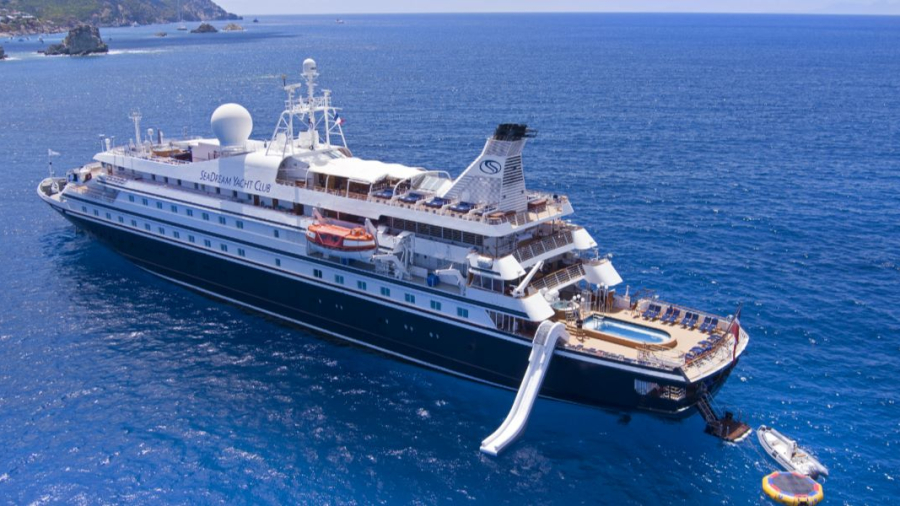
SeaDream Yacht Club has announced exciting news for the 2024 summer season, including new upgrades, expanded menus and an incredible slide making its debut in the Mediterranean.
Firstly, the cruise line has unveiled an expanded plant-based menu. SeaDream was the first cruise line to introduce a plant menu all the way back in 2011, and now it has the best options at sea, with 2024 seeing more options than ever before.
Guests who want to enjoy a plant-based menu can enjoy five-course dinners each night, with new items every day and no repeated menu on a seven-day cruise.
And of course, like all SeaDream guests, they can enjoy outdoor dining at any time – there’s capacity for all guests to enjoy al fresco dining together if they wish, something you won’t find on any other cruise ship.
Guests will also be able to enjoy the first and only water slide that takes you directly from the ship to the sea.
The 23.5-foot-long inflatable slide takes guests on a 19-foot plunge from the pool deck into the waters of the Caribbean or, for the first time in 2024, the Mediterranean.
SeaDream I underwent a dry dock renovation in May 2024, with SeaDream II soon to get the same treatment.
As part of these upgrades, SeaDream I has seen all suites and staterooms refreshed, along with public areas and open deck spaces.
The SeaClub lounging space now has new couples’ hot tubs with unobstructed views, along with plush sun loungers, a golf simulator and hammocks for unwinding.
The panoramic gym, sauna and SeaDream Spa were also renovated during the drydock.
There were ‘behind-the-scenes’ upgrades too, with the ship now enabled to connect to shore power, eliminating emissions in ports where shore power is available.
SeaDream II already has this upgrade, meaning that SeaDream is the first cruise line to have an entire fleet enabled for shore power.
There are a host of new ports that guests can enjoy in both the Mediterranean and Caribbean too. New ports on Europe cruises include Taranto (Italy), Vlore (Albania), Krk (Croatia) and two African ports – Tangier (Morroco) and Tunis (Tunisia).
The Caribbean season will start in November and will include first-time visits to Boqueron (Puerto Rico), which is exclusive to SeaDream Yacht Club and has one of the country’s most beautiful beaches.
Guests can also visit Salinas in Puerto Rico, and Deshaies in Guadeloupe, for the first time on a SeaDream ship.
The cruise line has also committed to improving Transatlantic cruises, for guests who want to sail on a ship as it transitions between the Mediterranean and Caribbean seasons.
While the sailings have already featured a number of guest lecturers across a range of subjects, and a host of enrichment activities, there will now also be professional instructors for art and bridge on select voyages.
Other Transatlantic cruises offer guests the chance to sleep under the stars on a Balinese Dream Bed or, weather permitting, swim in the middle of the Atlantic Ocean.
2024 certainly looks like a very exciting time to book a SeaDream Yacht cruise!
The best way to book a SeaDream cruise
Want expert help to plan your perfect cruise?
Related Posts
If you found this interesting, please share!
Jenni Fielding is the founder of Cruise Mummy. She has worked in the cruise industry since 2015 and has taken over 30 cruises. Now, she helps over 1 million people per month to plan their perfect cruise holidays.