The best deck on a cruise ship depends on what matters most to you. For seasickness, pick a low passenger deck in the middle of the ship. For views and big balconies, go higher or aft. For a quiet night’s sleep, choose a mid-level deck with other cabins above and below you.
Free: download our 2027 Luxury Cruise Calendar →
No single deck number wins on every ship, because each line lays out its decks differently. This guide explains what changes as you go up or down the ship, which spots to avoid, and how to read a deck plan before you pay a deposit.
Best Deck on a Cruise Ship: Quick Answer Table
Use this table as a starting point, then check the deck plan for your ship (more on that below).
| If you are… | Choose… | Why |
|---|---|---|
| Prone to seasickness | Lowest passenger deck, midship | The least movement on the ship |
| A light sleeper | Mid-level deck, cabins above and below | Cabins insulate you from venue noise |
| Travelling with young children | Mid-to-upper deck near a lift | Short trips to the pools, kids’ club and buffet |
| Using a wheelchair or walking aid | Deck near the dining room, close to lifts | Fewer long corridors and lift waits |
| Here for the views | Upper deck, or aft | Wider horizons and, aft, views of the wake |
| After the biggest balcony | Aft corner or “hump” cabins | The outdoor space is often larger |
| On a tight budget | Lower-deck inside or oceanview cabin | Usually the lowest fares, and stable too |
How Cruise Ship Deck Levels Work
Ocean ships usually have somewhere between about 10 and 20 decks, depending on size, with the newest mega-ships at the top of that range. Passenger cabins tend to begin around deck 2, 3 or 4, and crew areas, storage and machinery fill the levels below. Most lines number decks from the bottom up, so deck 2 is low and deck 14 is high, though the first passenger deck can carry a different number from ship to ship.
Many lines also give decks names as well as numbers, such as Lido, Promenade or Riviera. That is why you will hear about the “Lido deck” (the main pool and buffet level on lines such as Carnival and Holland America) rather than a number.
Roughly speaking, a typical large ship breaks down like this:
- Lower decks: inside and oceanview cabins, the medical centre, the gangway and the tender platform.
- Middle decks: the atrium, main dining rooms, theatre, casino, shops and bars, often with cabin decks stacked above them.
- Upper decks: balcony cabins and suites, then the pools, buffet, spa, sports areas and sun decks at the top.
Best Deck for Seasickness on a Cruise
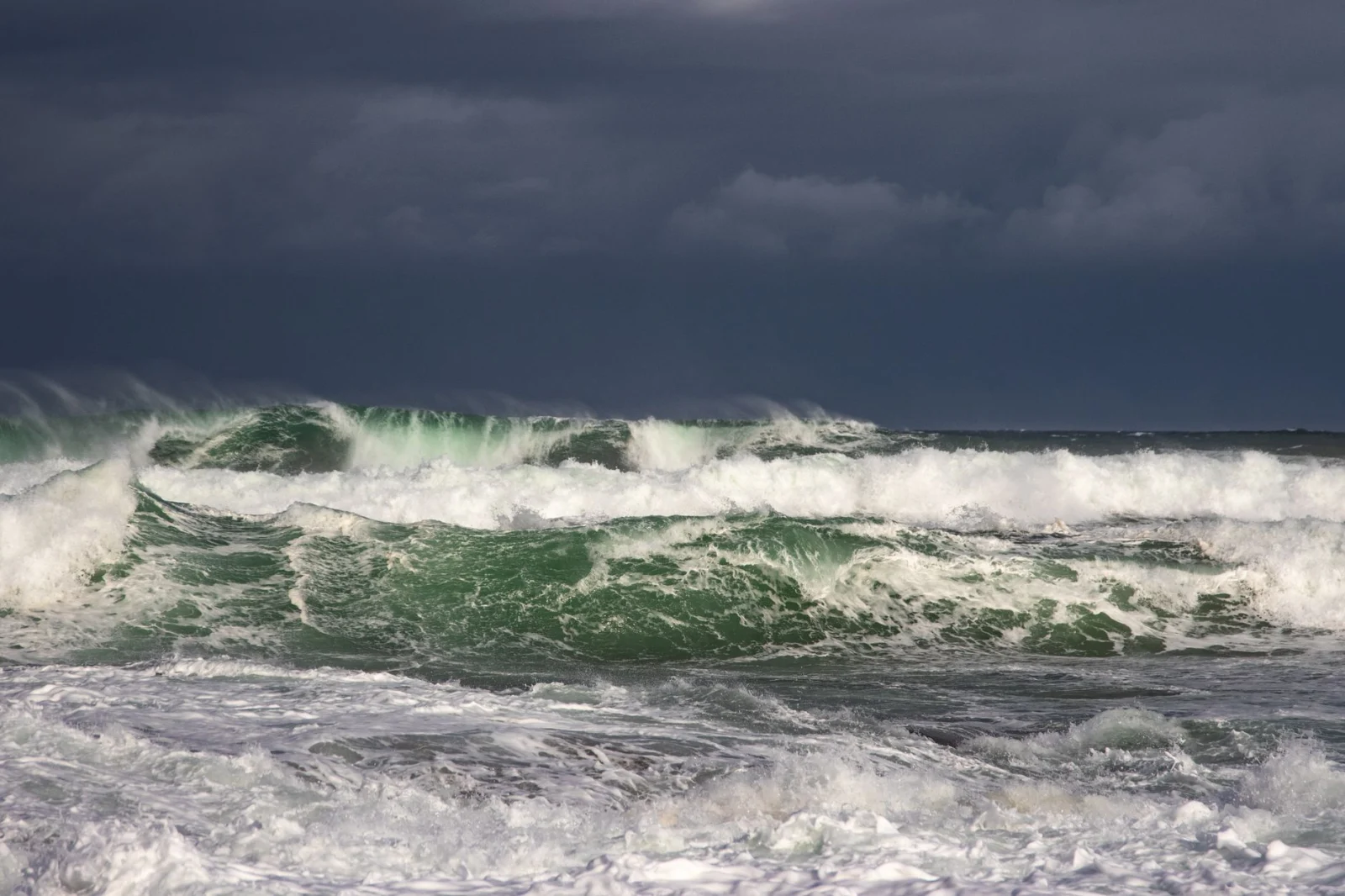
If motion is your main worry, location matters more than anything else. Picture a seesaw: the middle barely moves while the ends rise and fall. A ship works in a similar way. The area low down and midship is closest to the pivot point, so it feels the least pitching (front-to-back movement) and rolling (side-to-side movement).
So the best location on a cruise ship for seasickness is:
- Low: the lowest passenger deck available, or as close to it as your budget and cabin type allow.
- Midship: halfway between the bow and the stern, usually near the main lift lobby.
- With a view if possible: watching a fixed horizon helps many people, so an oceanview cabin can be easier to cope with than an inside cabin.
The trade-off is that balconies usually begin a few decks up, often from deck 6 or higher. If you want a balcony and suffer from motion sickness, take the lowest balcony deck you can find, midship. Avoid cabins far forward, which meet the waves first, especially on high decks.
Modern ships have stabilisers that reduce rolling a lot, so most guests on mainstream routes feel very little. If you know you are sensitive, though, pack your usual remedy and talk to a pharmacist or doctor before you sail.
What Deck Is Best on a Cruise Ship for Views and Balconies?
Higher decks give you a wider, more dramatic view, and the higher you go, the less spray and harbour clutter you will see. They also put you close to the pools and sun decks, which is handy on sea days.
Aft-facing cabins at the stern are popular because the balconies are often deeper and look straight out over the wake. Corner aft cabins can wrap around the side of the ship. On many ships, cabins in the “hump”, where the hull widens midship, also have larger or angled balconies.
Keep in mind that higher and aft cabins tend to feel more motion, wind and engine vibration. If you are weighing up whether the extra cost is worth it, our guide to the pros and cons of booking a balcony vs an inside cabin sets out the trade-offs.
Best Deck to Stay On for Quiet, Families and Easy Access
Light sleepers
The quietest cabins are “sandwiched”: passenger cabins directly above, below and on each side. Middle cabin decks between two other cabin decks are ideal. Noise usually comes from public spaces nearby rather than from other guests.
Families
Families often prefer a mid-to-upper deck close to a lift, which keeps trips to the pool deck, kids’ club and buffet short. Choosing a cabin a few doors from the lift lobby rather than right next to it gives you convenience without the corridor chatter.
Limited mobility
Pick a cabin near a lift bank, ideally on or close to the deck with the main dining room. Big ships can be several hundred metres long, so a cabin at the far end of a corridor adds a lot of walking each day.
Budget cruisers
Lower-deck inside and oceanview cabins are usually the cheapest category on board, and they happen to be among the most stable, which is a nice bonus.
Decks and Cabin Locations to Avoid
Some locations come up again and again in passenger complaints. None of them are dealbreakers for everyone, but it pays to know what you are booking.
- Directly below the pool or Lido deck: sun loungers are often set out or stacked early in the morning and late at night, and scraping furniture carries through the ceiling.
- Below the buffet or a galley: trolleys and prep work can start well before breakfast.
- Above or below nightlife: nightclubs, theatres, casinos and late bars can mean bass and crowds until the early hours.
- Low and forward: cabins near the bow on the lowest decks can be loud when the anchor is dropped or raised, and they also move more in a swell.
- Next to the tender platform or gangway: on port days there can be early noise and foot traffic outside, and the area may be busy with crew.
- Aft on very low decks: some guests notice vibration or a hum from the engines and thrusters.
- Interior “view” cabins over an indoor promenade or atrium: Royal Caribbean’s Promenade-view inside cabins, for example, look over a busy indoor street, so they can be livelier late at night than a standard inside cabin.
- Obstructed views: some oceanview and balcony cabins look out on lifeboats or structure. The cruise line usually flags these in the cabin description.
For ship-specific examples, see our list of Royal Caribbean cabins to avoid.
How to Read a Deck Plan Before You Book
Deck plans are free on every cruise line’s website. Five minutes with one can save you a week of poor sleep. Run through this checklist for the exact cabin number you are offered:
- Look one deck up. Is the space directly above your cabin another cabin, or a pool, buffet, jogging track or bar?
- Look one deck down. Is it a theatre, nightclub, casino, galley or dining room?
- Check the corridor. Look for laundry rooms, crew doors, service lifts or storage marked next to or opposite your door.
- Find the lifts and stairs. Decide if you want to be close (convenient) or a few doors away (quieter).
- Check the position along the ship. Forward, midship or aft makes a real difference to motion and walking time.
- Look outside. Check for lifeboats, tender stations or a public deck in front of your window or balcony.
- Read the symbols key. Note connecting doors (sound can travel through them), accessible cabins and sofa beds.
- Use the right plan. Ships are refitted, so make sure you are using the current deck plan for your specific ship, not a sister ship.
What About Guarantee Cabins?
A guarantee fare means you pick the cabin category, but the cruise line assigns the exact cabin later, sometimes only days before sailing. You will get at least the category you paid for, and occasionally an upgrade, but you cannot control the deck or position. If you are prone to seasickness, a light sleeper or need a cabin near a lift, it is usually worth paying a little more to choose your own cabin number.
Whichever deck you choose, a bit of preparation goes a long way. If this is your first sailing, our first-time cruise tips cover other things worth knowing before you board.
For a ship-specific example of how deck choice plays out, see our breakdown of the best and worst cabins on Serenade of the Seas.
FAQs
Are higher or lower decks better on a cruise ship?
Lower decks are better for stability, as you feel less sway there. Higher decks are better for views, quick access to the pools and larger balconies. If neither matters much, a middle deck near the centre of the ship is a safe all-round choice.
What is the best deck for seasickness on a cruise?
The lowest passenger deck you can get, in a cabin midship. That position is closest to the ship’s pivot point, so it moves the least. An oceanview or balcony cabin helps too, because seeing the horizon can ease nausea.
Where should you not stay on a cruise ship?
Avoid cabins directly under the pool deck, buffet or a nightclub, cabins low and forward near the anchor, and cabins next to crew doors or service areas. Cabins above or below theatres and casinos can also pick up noise late at night.
Is deck 2 on a cruise ship good?
It can be. On many ships, deck 2 or 3 holds the lowest passenger cabins, which are among the most stable and usually the cheapest. Check the deck plan first, as these decks can sit near the tender platform, the gangway or the engine area.