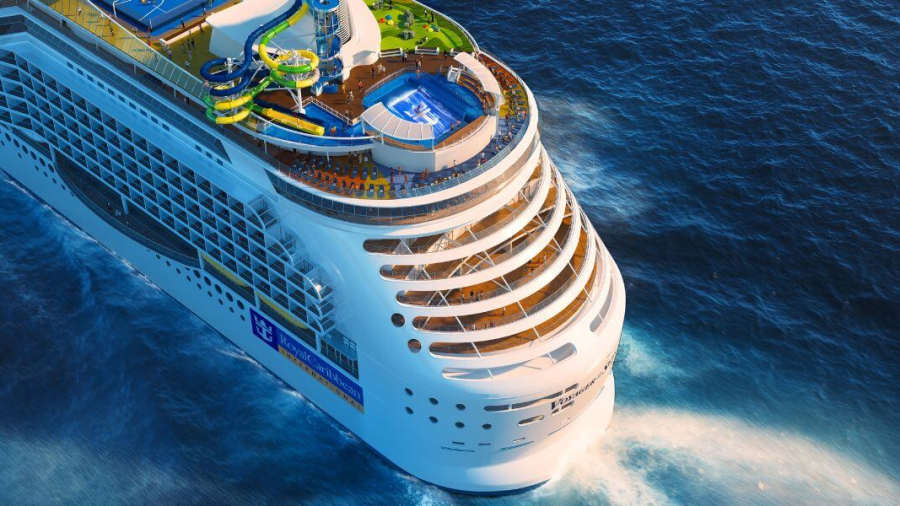
Royal Caribbean has announced changes to the latest itinerary of the Voyager of the Seas, citing delays in drydock operations caused by adverse weather conditions.
The transatlantic cruise, originally scheduled to depart from Barcelona on 10th November 2024, was delayed by a day and instead set off on 11th November 2024.
Because of this change, the planned visit to Valencia had to be cancelled, while the rest of the itinerary remains unchanged, bar a one-day delay to the visit to Palma de Mallorca.
The 16-night voyage (which is now a 15-night voyage) concluding in Port Canaveral, was set to include seven European destinations before reaching North America.
Royal Caribbean has assured guests that any pre-paid shore excursions for the cancelled port will be automatically reimbursed.
As well as this, the cruise line is offering a pro-rated refund of one day of the cruise fare, which will be paid as onboard credit to use on the cruise. Any other purchases such as WiFi or drinks packages will also get the pro-rated refund.
And for any guests who were forced to change their travel plans, up to $200 could be claimed for domestic flights or $400 for international flights.
While these refunds are typical, the cruise line also announced that, due to the nature of the late cancellation from Barcelona, it would cover up to $250 of hotel costs per stateroom for guests who needed to stay in the city for the night before the cruise.
The delay in drydock operations was primarily due to adverse weather conditions, which hindered the timely completion of necessary maintenance and preparations for the ship.
Following the transatlantic crossing, Voyager of the Seas is scheduled to offer a series of four- and five-night cruises to the Caribbean and the Bahamas, departing from Port Canaveral.
Several other cruise ships have suffered delays to drydock renovations or essential repairs in the past few months.
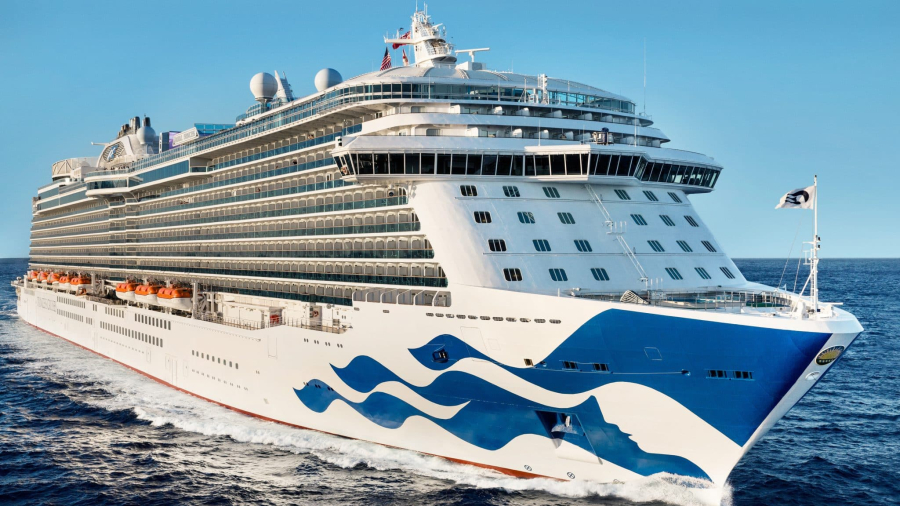
Perhaps most notably, Regal Princess was forced to cancel three cruises after repairs were continuously delayed.
NEW DEALS JUST RELEASED!
Don’t miss the latest Royal Caribbean offers…
Related posts
If you found this interesting, please share!
Jenni Fielding is the founder of Cruise Mummy. She has worked in the cruise industry since 2015 and has taken over 30 cruises. Now, she helps over 1 million people per month to plan their perfect cruise holidays.
Bodrum Cruise Port and Marella Cruises have launched a joint social responsibility project aimed at promoting environmental conservation and maritime education. The initiative began with a beach clean-up at Giritli…
Disney Cruise Line will feature seven new cruise horn melodies when she starts sailing for the cruise line from December 2024. Disney Cruise Line ships have long been renowned for…
While Royal Caribbean has now resumed sailings to its private resort of Labvadee on the island of Haiti, it hasn’t given the destination a full vote of confidence – shore…
Royal Caribbean’s Spectrum of the Seas has encountered technical difficulties, leading to the cancellation of its cruise scheduled for 9th November 2024. The ship, based in Shanghai, was set to…
A cruise ship bathroom is a compact, private ensuite with a toilet, a small sink and (usually) a stand-up shower. In a standard cabin it measures roughly 25 to 30 square feet, while suites have bigger bathrooms that may include a tub, double sinks or a second toilet. Every cabin on the major ocean lines has its own bathroom, so you never have to share with strangers.
The details, though, vary more than most first-time cruisers expect: some lines split the bathroom into two rooms, some give you only a dispenser of all-in-one shampoo, and the toilets work very differently from the one at home. This guide answers the questions people most often ask about cruise ship bathrooms, from size and showers to outlets, toiletries, accessible bathrooms and what you must never flush.
Does every cruise cabin have a private bathroom?
On mainstream and luxury ocean ships, yes. Every inside, oceanview, balcony and suite cabin has its own ensuite bathroom with a toilet, sink and shower. You will not find shared corridor bathrooms on lines such as Royal Caribbean, Carnival, Norwegian, Princess, Celebrity, Holland America, MSC or Disney.
The only places you might still come across shared facilities are some very small expedition vessels, tall ships or older river and coastal boats, and even those are rare today. If you are booking a niche expedition or sailing-ship trip, check the cabin description before you pay.
How big is a cruise ship bathroom?
The typical cruise ship bathroom in a standard cabin is about 25 to 30 square feet in total, and that figure includes the shower and the cabinets. Usable floor space is much smaller. Expect a couple of feet of counter beside the sink, a shelf or two around the mirror and a cabinet underneath. Two adults can’t really get ready at the same time.
Here is roughly what to expect by cabin type:
Cabin type
Typical bathroom
Shower or tub
Inside / oceanview
Around 25 to 30 sq ft, single sink
Stand-up shower, often small or rounded
Balcony
Usually the same as or slightly larger than inside cabins
Mostly shower only; tubs on some lines
Mini-suite
Larger, more storage
Tub and shower combination on some lines, such as Princess
Full suite
Often several times larger, sometimes double sinks
Tub plus separate shower is common; some have a second bathroom
If bathroom space matters to you, it is one of the clearest differences between cabin grades. Our guide to suites vs mini-suites vs balcony cabins explains what else you gain as you move up.
Which cruise lines have split bathrooms and bathtubs?
A split bathroom divides the toilet and the shower or tub into two separate small rooms, each with its own sink, so one person can shower while another uses the toilet or brushes their teeth. Disney Cruise Line is the line best known for it: the split layout is the most common arrangement in Disney staterooms, although some inside categories (including all inside staterooms on Disney Wish, Disney Treasure and Disney Destiny) have a single bathroom instead. Elsewhere, true split bathrooms are uncommon outside of suites and some family cabins.
The table below summarizes what you typically get in a standard cabin. Amenities change by ship and over time, so always check the description for your exact cabin.
Cruise line
Split bathroom?
Bathtubs
Standard-cabin toiletries
Disney Cruise Line
Yes, in most non-inside staterooms
Tub and shower combo in many staterooms
Shampoo, conditioner, body lotion, soap
Royal Caribbean
No (some large suites have more than one bathroom)
Mainly suites
Shampoo and soap; conditioner generally in suites
Carnival
No
Mainly suites
Shampoo and liquid soap from wall dispensers
Norwegian
No
Mainly suites and The Haven
Conditioning shampoo and shower gel from dispensers
Princess
No
Mini-suites and suites
Shampoo, conditioner, body lotion
Holland America
No
Suites and many verandah cabins on several ships
Shampoo, conditioner, shower gel, lotion (Elemis)
Celebrity
No
Mainly suites
Shampoo, conditioner, body lotion
Upscale and luxury lines go further: Oceania, Regent Seven Seas, Seabourn and Cunard all supply branded bottled toiletries, and suites across most lines get upgraded products.
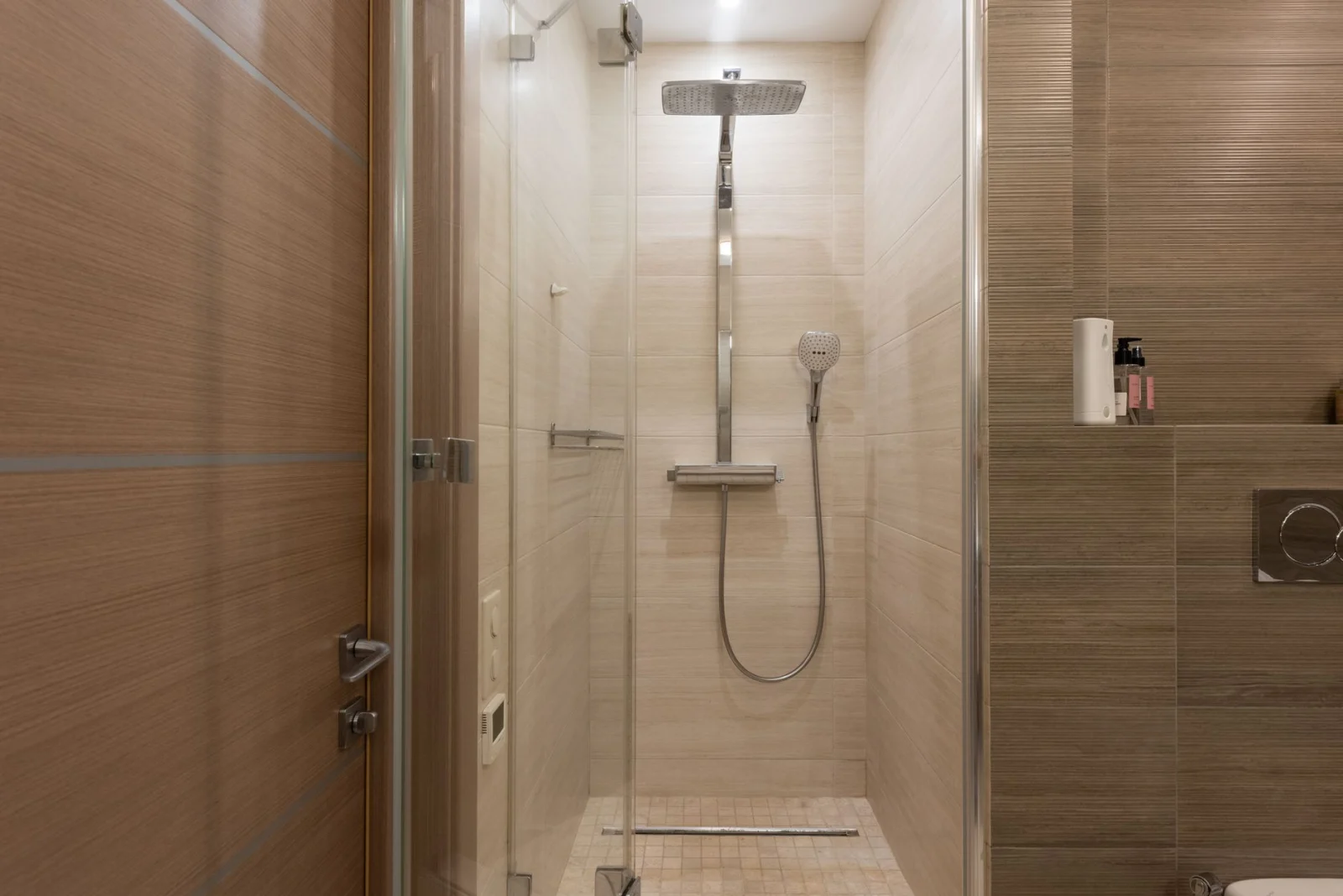
Most cabin showers are compact, with a handheld spray and a curtain or glass door. Photo: Max Vakhtbovych on Pexels
Cruise ship showers: what to expect
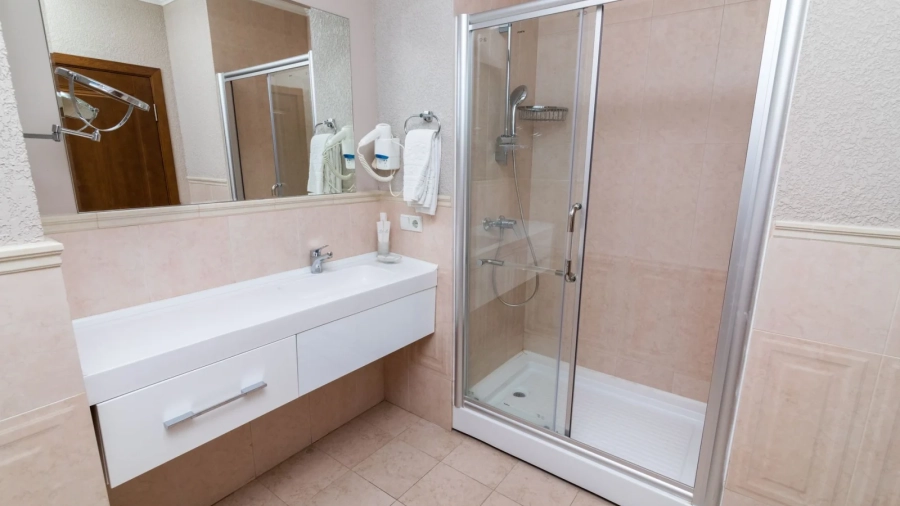
Most cruise ship showers are stand-up cubicles, a little narrower than a typical hotel shower. On many ships they are rounded or curved to save space. You will usually find:
A handheld showerhead on a hose, mounted on a sliding rail so you can adjust the height. Newer cabins often add a fixed rainfall head.
A curtain or a glass door. Older ships and many standard cabins still use a curtain, which can cling when wet; many newer cabins have a glass door or sliding panel instead. A couple of clips or magnetic hooks can stop a clingy curtain.
Wall dispensers for shampoo and body wash on most mainstream lines.
A retractable clothesline above the shower for swimwear and hand-washed items.
Water pressure and temperature are usually good, but the bathroom fan runs continuously and can’t be switched up, so a long hot shower can steam up the cabin. Leave the bathroom door ajar afterwards to let it clear.
Outlets and hair dryers in the cruise bathroom
Most cabin bathrooms have a single low-power outlet, often near the mirror light, and it is normally labeled for shavers only. These outlets are fine for an electric toothbrush or an electric razor, but they are not built for high-wattage appliances, so never plug a hair dryer into one.
You probably won’t need to bring a dryer at all. Norwegian, for example, says every stateroom has a hair dryer, and the same is true on the other big lines. It is usually tucked in a vanity drawer in the main cabin rather than in the bathroom, and it is often a modest, low-powered model, so pack your own if you have thick hair and use it at the desk outlet. Curling irons and flat irons are generally allowed; clothes irons and steamers are banned on most lines for fire-safety reasons.
Toilet paper, toiletries and towels
Toilet paper is supplied and restocked by your cabin steward, as are soap, shampoo and the other toiletries listed above. The paper is thin by design, because it has to break down quickly in a vacuum system. Many cruisers pack a small bag of their own favorites (conditioner, face wash, cotton pads) rather than relying on the dispensers.
Each bathroom has bath towels, hand towels, washcloths and a bath mat. To save water and energy, many lines replace towels only if you leave them on the floor or in the tub; hang them up and they will be refreshed less often. Cabin towels should stay in the cabin: pool and beach towels are provided separately on deck or at the gangway.
Storage is the real squeeze. A hanging toiletry bag, an over-the-door organizer and magnetic hooks on the metal walls all help, and you will find more space-saving ideas in our tips to make your stateroom more livable.
Accessible cruise ship bathrooms
Every major line has a limited number of accessible cabins with larger, step-free bathrooms. Royal Caribbean’s accessible staterooms, as one example, feature:
Bathroom doors 32 to 34 inches wide, depending on the ship
Ramped thresholds and a five-foot turning radius
A roll-in shower with a fold-down bench and handheld showerhead
Grab bars, a lowered sink and raised toilet seats (mostly 17 to 19 inches)
Commode or shower chairs can usually be requested before sailing. Accessible cabins sell out early, so book well ahead and contact the line’s accessibility department.
Relief areas for service dogs
Service dogs can’t use the cabin bathroom, so ships set up dedicated relief areas on an outer deck. On Royal Caribbean these are 4-foot by 4-foot boxes filled with cypress mulch, shared by any service dogs on board, and you need to request one through the Access Department when you book and no later than 30 days before sailing. Other lines have similar arrangements, so ask when you book.
Only toilet paper should go into a cruise ship vacuum toilet. Photo: Mateusz Pielech on Pexels
How cruise ship toilets work
A cruise ship toilet uses vacuum suction rather than gravity and lots of water. When you press the button, a valve opens and the contents are pulled at speed through narrow pipes to the ship’s treatment plant. The result is a loud whoosh that can be heard through cabin walls, so late-night flushing may wake a cabinmate.
The flush is fierce, but the system is easy to block. Because the pipes are narrow and a section of cabins can share the same vacuum line, a single blockage can sometimes affect several neighboring bathrooms until the engineers clear it.
What not to flush on a cruise ship
Only toilet paper and human waste should go into a cruise ship toilet. Put everything else in the bathroom bin:
Wet wipes, baby wipes and “flushable” wipes
Tampons, pads and other feminine hygiene products
Diapers and swim diapers
Paper towels, tissues and napkins
Cotton swabs, cotton pads and dental floss
Hair, contact lenses, cigarette butts or anything plastic
If your toilet does stop working, call guest services rather than trying to fix it yourself; it is a routine job for the maintenance team. It is also sensible to close the lid before flushing.
Where does the waste go?
Everything flushed travels to an onboard wastewater treatment plant. According to the Cruise Lines International Association (CLIA), its member ships do not discharge untreated sewage anywhere in the world during normal operations, and ships carrying around 84% of member passenger capacity use advanced wastewater treatment systems. These combine biological treatment, filtration and UV disinfection, and the cleaned water can be reused on board for non-drinking purposes.
International rules under MARPOL Annex IV only allow treated discharges at set distances from shore, and many regions, including Alaska and the Baltic Sea, apply stricter standards. Leftover solids are dried and either incinerated or offloaded in port.
Is the bathroom tap water safe to drink?
Yes. Royal Caribbean, for example, explains that its drinking water is either distilled from seawater or loaded on board in port, and that it meets U.S. Vessel Sanitation Program standards, with inspections throughout the year. The water from your bathroom tap is the same treated supply used in the restaurants and bars, so you can fill a reusable bottle and brush your teeth with it. It can taste slightly of chlorine; the buffet’s chilled water stations are an easy alternative.
Pack a night light: the cabin is pitch-black, especially in inside cabins.
Bring a few magnetic hooks and a hanging toiletry bag for storage.
Use the public restrooms near the dining room, pool deck or theater during the day if you share a cabin.
If you need a tub, check deck plans and book a cabin category that clearly lists one.
Once the vacuum toilet has done its job, the waste heads to an onboard treatment plant, as explained in this guide to cruise ship waste management.
FAQs
How do cruise ship toilets work?
Cruise ship toilets use a vacuum system. Pressing the flush button opens a valve and suction pulls the contents through narrow pipes to an onboard treatment plant, using far less water than a toilet at home. That is why they are loud and why only toilet paper should go in them.
Can you drink the tap water in a cruise ship bathroom?
Yes. On major lines the cabin tap water is made by distilling or filtering seawater, or is loaded in port, and then treated to U.S. Vessel Sanitation Program standards. It is the same water used in the ship’s restaurants and bars.
Do cruise ship cabins have bathtubs?
Most standard inside, oceanview and balcony cabins on big ships have a shower only. Tubs are mostly found in suites, Princess mini-suites, many Disney Cruise Line staterooms and some Holland America verandah cabins, so check the cabin description before you book.
Can I use my hair dryer in the cruise cabin bathroom?
Not in the bathroom outlet, which is usually rated for shavers only. Almost every cabin already has a hair dryer, often in a vanity drawer in the main room. If you bring your own, plug it into a desk outlet.
Are there public bathrooms on cruise ships?
Yes. Public restrooms are near the main dining rooms, theaters, bars, pool decks, the gym and the spa, so you rarely need to go back to your cabin. Some, but not all, have baby-changing tables.
Bodrum Cruise Port and Marella Cruises have launched a joint social responsibility project aimed at promoting environmental conservation and maritime education.
The initiative began with a beach clean-up at Giritli Teyze Beach, where secondary school students collaborated with the crew of the Marella Discovery to improve the local environment.
This event marked the beginning of a series of activities designed to engage the community and raise environmental awareness.
After the clean-up, students participated in an educational tour at Bodrum Cruise Port. The tour offered insights into the operations of the marina, customs-controlled areas, and the functions of passport and customs authorities.
Students also learnt about the role of Pilot Captains, and they were lucky enough to be given a tour of the Marella Discovery, gaining firsthand experience of maritime life.
“We’re thrilled to partner with Bodrum Cruise Port as Marella Discovery joins local students in a beach cleanup at Giritli Teyze Beach. This event not only supports the coastal environment but also provides students with insight into various roles and a tour of Marella Discovery. We look forward to many more community activities like this in Bodrum in the future.”
Olivia Wells, Sustainability Manager at Marella Cruises
In collaboration with the Coast Guard Command and Atilla Suyolcu, president of Bodrum Sea Rescue, participants received a presentation on the “Yaşam” sea ambulance and emergency response operations at sea.
This session provided an in-depth understanding of maritime rescue operations within Bodrum, highlighting the essential role of emergency services in ensuring safety at sea.
This initiative demonstrates a commitment to fostering a sustainable future and enhancing awareness of maritime operations and conservation among young people.
Bodrum Cruise Port and Marella Cruises plan to continue their collaboration, with future community activities and educational initiatives aimed at furthering environmental stewardship and maritime education.
NEW DEALS JUST RELEASED!
Don’t miss the latest Marella Cruises offers…
Related posts
If you found this interesting, please share!
Jenni Fielding is the founder of Cruise Mummy. She has worked in the cruise industry since 2015 and has taken over 30 cruises. Now, she helps over 1 million people per month to plan their perfect cruise holidays.
Disney Cruise Line will feature seven new cruise horn melodies when she starts sailing for the cruise line from December 2024. Disney Cruise Line ships have long been renowned for…
While Royal Caribbean has now resumed sailings to its private resort of Labvadee on the island of Haiti, it hasn’t given the destination a full vote of confidence – shore…
Royal Caribbean’s Spectrum of the Seas has encountered technical difficulties, leading to the cancellation of its cruise scheduled for 9th November 2024. The ship, based in Shanghai, was set to…
Princess Cruises has announced the cancellation of the 10th November 2024 sailing of the Regal Princess, despite reassurances from the cruise line that repair work would be complete in time….
The Regal Princess cruise ship is still in Galveston, after missing a third straight sailing since a reported engine fire weeks ago caused it to limp into port late last month. – Read More
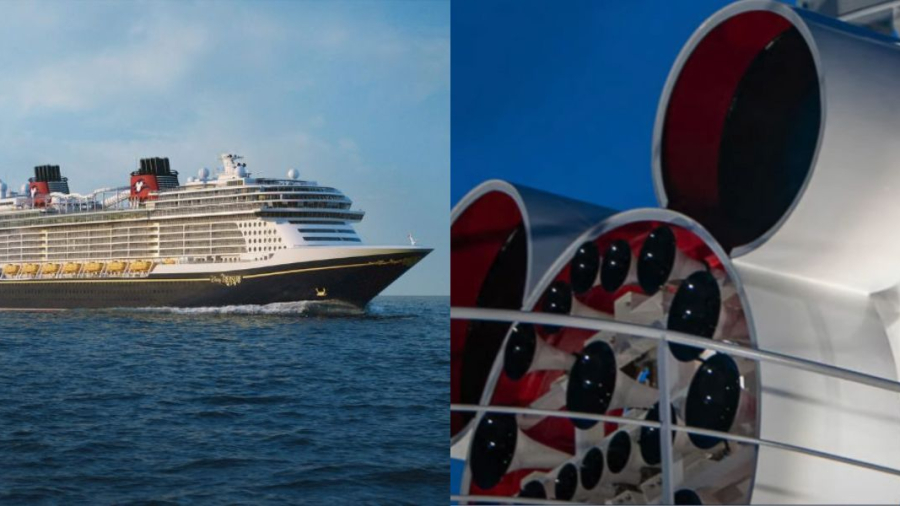
Disney Cruise Line will feature seven new cruise horn melodies when she starts sailing for the cruise line from December 2024.
Disney Cruise Line ships have long been renowned for their cruise horns, with even the oldest ships in the fleet known for playing “When You Wish Upon A Star”.
Newer ships have introduced more songs, but it’s been announced that Disney Treasure will get seven completely new ones for the cruise fleet.
Only three have been announced so far, including “A Whole New World” from Aladdin and “Remember Me” from Coco.
The other song announced is “Grim Grinning Ghosts”, the popular song from the Haunted Mansion rides at Disney theme parks. The ship will have a Haunted Mansion Parlor onboard too.
It also seems like existing songs will be enhanced with new chords as part of the new horn array.
You can hear a little teaser in this video:
Excitement building for new ship
Disney Treasure will offer way more than just some new cruise horn melodies when she officially joins the fleet in December.
Dining highlights will include an immersive Coco-themed restaurant and Worlds of Marvel, including two distinct nights of “heroic dining”.
Guests can look forward to Broadway-style shows based on Moana and Beauty and the Beast, and an original stage production named Disney Seas the Adventure.
The AquaMouse water coaster returns with brand-new theming, based on a short called Curse of the Golden Egg.
Plus guests will be able to splash around in 10 pools, take part in gameshow-style competitions as a family, and so much more.
NEW DEALS JUST RELEASED!
Don’t miss the latest Disney Cruise Line offers…
Related posts
If you found this interesting, please share!
Jenni Fielding is the founder of Cruise Mummy. She has worked in the cruise industry since 2015 and has taken over 30 cruises. Now, she helps over 1 million people per month to plan their perfect cruise holidays.
While Royal Caribbean has now resumed sailings to its private resort of Labvadee on the island of Haiti, it hasn’t given the destination a full vote of confidence – shore…
Royal Caribbean’s Spectrum of the Seas has encountered technical difficulties, leading to the cancellation of its cruise scheduled for 9th November 2024. The ship, based in Shanghai, was set to…
Princess Cruises has announced the cancellation of the 10th November 2024 sailing of the Regal Princess, despite reassurances from the cruise line that repair work would be complete in time….
On 7th November 2024, Royal Caribbean’s Explorer of the Seas was unexpectedly hit by a sudden squall, resulting in hurricane-force winds that caused a massive wave, resulting in the ship…
Fred. Olsen Cruise Lines offers a variety of cruises to Iceland, which are well-suited to those seeking an immersive and scenic journey through this stunning Nordic destination. Their Iceland cruise itineraries typically include visits to places with natural beauty, such as dramatic landscapes, geothermal hotspots, volcanic mountains, and striking coastlines. The cruise line’s ships, often smaller and more intimate than some larger cruise liners, provide a more personalised experience, with the ability to reach less-visited ports.
Classic Iceland Cruises: These cruises typically last from 8 to 15 nights and visit popular Icelandic ports like Reykjavik, Ísafjörður, Akureyri, and Seyðisfjörður. Each port offers unique attractions, from waterfalls and geothermal spas to scenic fjords and fishing villages.
Iceland & Norway Combo: Some cruises combine Iceland with Norway, allowing guests to experience Norway’s fjords before heading across the North Atlantic to explore Iceland.
Expedition Cruises: For a more adventurous experience, Fred. Olsen also offers “sailings of discovery” that focus on nature, wildlife, and dramatic landscapes, including special excursions like whale watching, glacier hiking, and volcanic tours.
Ship Options
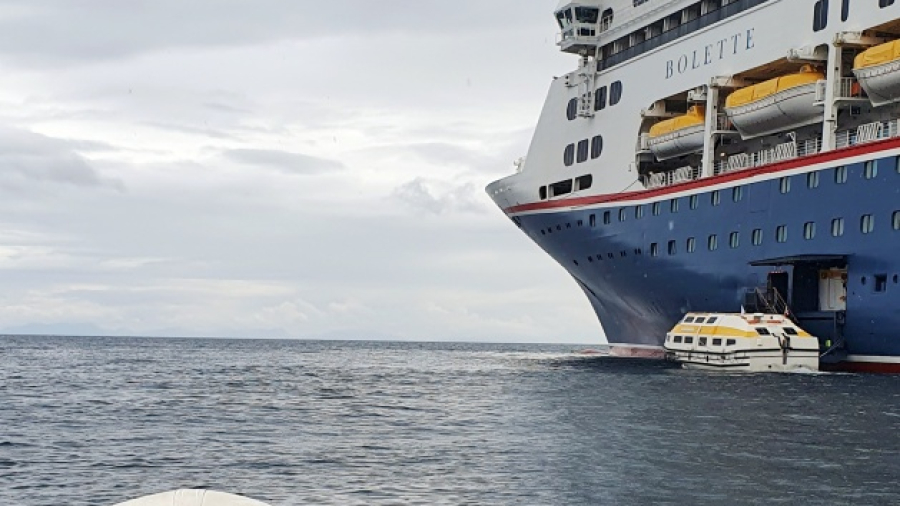
Fred. Olsen has a small to mid-size fleet, which is ideal for Iceland’s intimate ports. Ships like Borealis, Bolette, and Balmoral are popular for Iceland routes, offering comfortable amenities while ensuring a smaller, friendly onboard experience.
Onboard Experience
Iceland cruises often feature Nordic-themed cuisine alongside classic British favourites. Onboard dining options vary but include buffet and à la carte options, with special themed dinners.
Onboard lectures about Icelandic culture, wildlife, and natural history add to the experience, with guest speakers providing insights into what you’ll see.
While there’s a range of entertainment options, the ships provide a cosy atmosphere with lounges, observation decks, and wellness facilities.
Excursions & Activities
Golden Circle & Blue Lagoon: Many cruises include excursions to Iceland’s Golden Circle and the famous Blue Lagoon near Reykjavik.
Nature & Wildlife: Iceland offers incredible wildlife, including puffins, seals, and whales, with guided excursions available for bird-watching and whale-watching.
Adventure Options: Glacier tours, lava cave exploring, and waterfall hikes are among the adventurous options.
Best Time for Iceland Cruises
The summer months (June to August) are generally the best for Iceland cruises due to milder weather and extended daylight. However, late spring and early autumn offer beautiful landscapes with fewer crowds.
Iceland is a favourite cruise destination due to its breathtaking natural wonders and unique culture. Here are some popular cruise ports in Iceland that are often included in cruise itineraries:
Reykjavik
Highlights: As Iceland’s capital and largest city, Reykjavik is a hub for Icelandic culture, history, and nightlife. It’s a great starting point for excursions to the Golden Circle, which includes the Thingvellir National Park, Gullfoss Waterfall, and Geysir geothermal area. The famous Blue Lagoon is also nearby.
Attractions: Hallgrímskirkja Church, Harpa Concert Hall, Perlan Museum, and local hot springs.
Akureyri
Highlights: Known as the “Capital of the North,” Akureyri is a gateway to the stunning natural landscapes of northern Iceland. It’s close to the Lake Mývatn area, known for its volcanic landscapes, and Goðafoss, the “Waterfall of the Gods.”
Attractions: Botanical Gardens, Akureyri Church, whale-watching tours, and the town’s charming centre.
Isafjordur
Highlights: Located in the Westfjords, Isafjordur is one of Iceland’s most remote and beautiful ports. It’s surrounded by steep fjords, making it an ideal spot for scenic views and outdoor adventures like kayaking and hiking.
Attractions: Westfjords Heritage Museum, nearby Hornstrandir Nature Reserve, and Vigur Island for birdwatching.
Seydisfjordur
Highlights: Seydisfjordur is a picturesque town nestled in a fjord and known for its charming wooden buildings, vibrant art scene, and easy-going atmosphere. It’s a great spot for hiking and exploring waterfalls.
Attractions: The Blue Church, Skaftfell Art Centre, rainbow-colored streets, and several nearby waterfalls.
Grundarfjordur
Highlights: This small town on the Snaefellsnes Peninsula is famous for the iconic Kirkjufell mountain, which has been featured in TV shows and movies. The area offers hiking trails and dramatic coastal views.
Attractions: Kirkjufell Mountain, Kirkjufellsfoss Waterfall, Snaefellsjokull National Park, and lava fields.
Heimaey (Westman Islands)
Highlights: The Westman Islands offer unique volcanic landscapes, especially after the 1973 eruption that reshaped the island of Heimaey. It’s one of the best places in Iceland to see puffins.
Attractions: Eldfell Volcano, Sea Life Trust Beluga Whale Sanctuary, and the “Pompeii of the North” museum.
Each of these ports showcases Iceland’s unique blend of volcanic landscapes, fjords, waterfalls, and wildlife. Cruises that include a mix of these ports provide a well-rounded experience of Iceland’s natural beauty and cultural heritage.
Iceland is a favourite cruise destination due to its breathtaking natural wonders and unique culture.
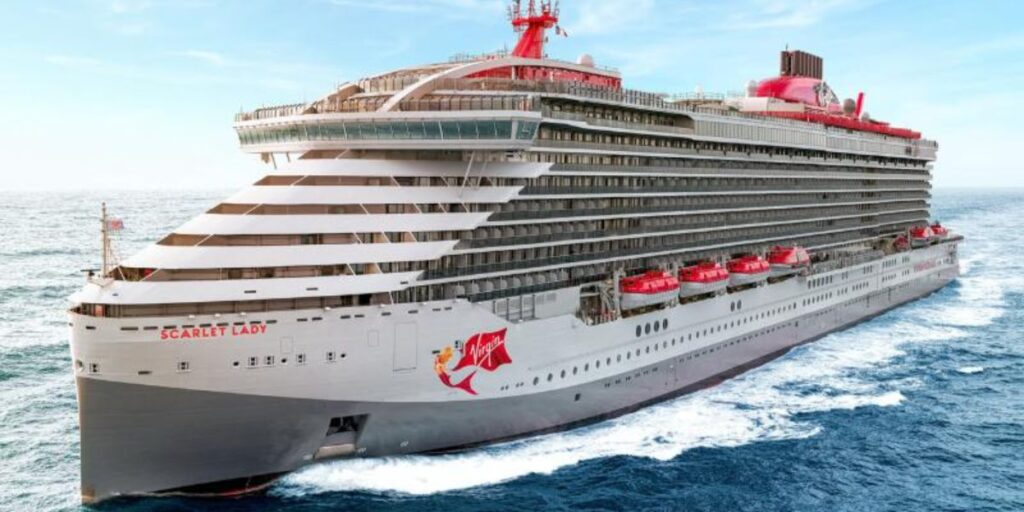
Virgin Voyages offers some fantastic cruises for adults, with a lot of extras included in the fare that you pay. But is it an all-inclusive cruise line, or are there some things you’ll still need to pay for?
In this guide I’ll take you through everything that’s included, and what’s not included, when you book a Virgin Voyages cruise.
Everything that’s included with Virgin Voyages
On a cruise with Virgin Voyages, you’ll get your accommodation, your food, soft drinks and simple hot drinks, entertainment and WiFi included, and tips are covered by your fare as well. There are very few extras that you need to pay for on a Virgin Voyages cruise.
It’s not quite all-inclusive though, and while some food and drink is covered, not everything is.
1. Food
Almost all of the food on a Virgin Voyages cruise is included when you pay your cruise fare. This includes all of the speciality restaurants on board – there’s no cover charge no matter where you choose to dine. However, some items may have an extra cost.
On most standard and even premium cruise lines, you’ll have a selection of restaurants that are free, and then speciality restaurants where you’ll pay a set cover charge for dining at the venue. But that’s not the case with Virgin Voyages.
Instead, all of the dining options are included, and then each menu will have some premium items that you can choose or add to your meal if you want to. But you absolutely don’t have to.
So for example, when dining at Extra Virgin you can choose your starter, main course and dessert from almost anything on the menu, but if you want to make your meal a little more special, you can add some fresh truffles to your dish for $15.
All of the ships have over 20 dining options so you’ve plenty of choices without paying extra, just make sure you book in advance to secure a table. And the late-night snack bar is open 24/7 for pizza and noodles and that’s included too.
Room service has a small charge
On a Virgin Voyages cruise, there’s a $5 delivery fee for room service, but then items are either included as normal or cost the same as they would elsewhere on the ship. This means all foods are free, as are soft drinks, water and basic tea or coffee. You just need to pay the $5 delivery every time you order.
Having breakfast in bed is, therefore, a great choice on a Virgin Voyages cruise because you’re only paying a small fee, the food is completely included.
The room service menu isn’t as extensive as you’d get in a restaurant but there are still lots of choices, and a lot of options for lighter bites during the rest of the day too.
2. Drinks
Soft drinks are included on a Virgin Voyages cruise – but alcoholic drinks and many speciality drinks are not. There is no option for a drinks package either, although you can save money by pre-loading a bar tab before you cruise.
The prices of drinks on a Virgin Voyages cruise are similar to many of the American cruise lines – you’ll pay around $5 to $8 for a beer, between $12 and $17 for a cocktail, and anywhere from $7 up to $22 for a glass of wine.
Speciality coffees aren’t too bad though – usually between $3 and $5. Hot chocolate is $4 which is a little more expensive than you’d maybe pay on other cruise lines.
Instead of a drinks package, Virgin Voyages lets you prepay for a bar tab, and will then give you bonus money. For every $300 that you pre-load onto your bar tab, you get a free $50.
It’s not as good as having your drinks included, but it’s still better than being forced to pay full price without any kind of special offer.
Other free drinks
A selection of ‘basic bevvies’ are included for free, including filtered still and sparkling water, soft drinks, fruit juices and simple teas and drip coffees. Any other drinks on the ship need to be paid for, although these basic bevvies are free when you order room service (and pay the delivery charge).
This is great value, compared to other cruise lines. While most cruise lines will offer free water, and maybe tea, coffee and juices during breakfast or from the buffet, you’ll normally have to pay for them. And soft drinks are definitely not included as standard.
At best you might usually get a soda drinks package for around $8-12 per day, so if you’re someone who doesn’t drink alcohol and you’re happy sticking to sodas and the basic teas and coffees that are included, Virgin Voyages’ cruise fares are great value.
3. Entertainment
A Virgin Voyages cruise includes almost all of your entertainment at no extra cost, including live shows, parties and DJ sets. The only experiences that have an additional cost are the Another Rose acrobatics spectacular on Resilient Lady, and some eating and drinking classes held at different times across the fleet.
All of the shows on Scarlet Lady and Valiant Lady, and those planned for Brilliant Lady, will be free. Another Rose is a special attraction on Resilient Lady and so there is an entry fee, though it hasn’t been disclosed how much that’ll be yet.
On pretty much any cruise line, the live shows are included so the fact that most are included with Virgin Voyages isn’t anything particularly noteworthy.
However, Virgin Voyages does work with more renowned DJs for party nights, and so the live events tend to be a little more premium and spectacular. As such, you are still getting more value for your fare.
4. Gratuities
Unlike on most cruise lines, tips are included in your fare when you book a Virgin Voyages cruise. There’s no expectation to pay additional daily gratuities or even to tip crew members individually for good service.
Crew members working for Virgin Voyages are paid a higher salary than on other cruise lines and so don’t need to be tipped. They’re really well looked after – they get more perks than crew on other cruise lines as well, and work hard to offer a high level of service.
Sometimes they’ll even turn down a tip!
5. WiFi
WiFi is included as standard on a Virgin Voyages cruise, which is a nice advantage over many other cruise lines. There is the option to upgrade to Premium WiFi if you want to do more intensive tasks such as streaming movies and music during your cruise.
Basic WiFi is free to all guests and is designed for simple web browsing, or checking emails and messages. It’s not very fast and you’re likely to be frustrated if you were expecting cable-type speeds, but that’s a common problem with cruise ship WiFi.
The upgrade to Premium internet varies in cost – a one-day pass is often $15 but you can usually get a Premium Voyage pass for your entire cruise for a lower price, sometimes with a discounted rate.
That’s still really affordable compared to many other cruise lines.
6. Bimini Beach Club
Access to the Bimini Beach Club is included with Virgin Voyages, but if you want a cabana then you’ll need to pay extra. The Bimini Beach Club operates as a sort of private destination for all guests on the cruise ship, but you’ll have to pay for drinks while you’re there.
Bimini is a popular cruise port for all cruise lines, but the Bimini Beach Club is only open to Virgin Voyages guests while a Virgin ship is in port. It’s an upmarket resort with six bars and direct access to the beach, as well as a pool if you’d prefer a freshwater dip.
The food is free while you’re at Bimini Beach Club but drinks have to be paid for and cabanas cost $350 per day to hire.
As we’ve established, there are a lot of things included with Virgin Voyages, but it’s not a completely all-inclusive cruise line.
Here’s a quick rundown of everything you’ll need to pay extra for (if you want it):
Premium menu items in all restaurants
Alcoholic drinks, speciality teas and coffees and pressed juices
Premium WiFi access
Select entertainment shows and classes
Shore excursions
Spa treatments
Apart from the drinks that you buy, the highest costs on the ship are the shore excursions and the spa treatments. Excursion costs vary by port and what the activity is, and spa treatments start at around $175 for a facial and go up to around $400 for a 125-minute full-body treatment.
None of these are essential though – if you’re happy drinking soft drinks, you don’t mind exploring ports on your own without an arranged excursion and you don’t need shore excursions then you can cruise without paying a penny extra.
Overall, is it good value? Yes and no…
I’ve established that a Virgin Voyages cruise includes a lot more than many other cruise lines do, but is it good value? That depends on what you want from a cruise and how much you’re paying in order to get everything included.
There aren’t too many cruise lines that offer the same style of cruising as Virgin Voyages, but let’s take a look at how they compare against Celebrity Cruises – another premium, contemporary cruise line.
Virgin Voyages
Celebrity Cruises
7-night Caribbean cruise, Balcony Cabin
Approximately $3,000 total
Approximately $2,600 total
Speciality restaurants included?
Yes, except premium items
$45-75 per person, per meal
Soft drinks
Included
$30 per person, per day for non-alcoholic drinks package
Tips
Included
$17.50 per person, per day
Basic WiFi Cost
Included
$15 per device, per day
While a Celebrity Cruise appears to be cheaper upfront, if you pay for 2 speciality dining visits and buy a soft drinks package and the basic WiFi, your total cost would actually be closer to $3,600 – more than what you’d pay with Virgin Voyages.
So yes – for the style of cruising and everything that’s included, I think it’s fair to say it’s good value.
Final word
It’s not easy to compare cruise lines since they all include different things – some you’ll pay for tips, some you won’t, some offer drinks packages and so on.
That’s why it’s always worth looking into what a cruise line gives you, and working out whether it’s good value.
Virgin Voyages may not be all-inclusive but it’s certainly ‘more inclusive’ compared to other cruise lines, and well worth considering if you want a lively adults-only all-inclusive cruise.
Related posts:
If you found this interesting, please share!
Jenni Fielding is the founder of Cruise Mummy. She has worked in the cruise industry since 2015 and has taken over 30 cruises. Now, she helps over 1 million people per month to plan their perfect cruise holidays.
The Titanic is one of the most famous cruise ships to have ever existed – as briefly as it did. While Carnival is one of the most famous cruise lines of the modern era.
But how do they compare? We know Titanic was the biggest ocean liner of her time, but do all modern cruise ships make her look small, or would Titanic still hold her own in current times?
Let’s take a look…
Even the smallest Carnival ships are bigger than Titanic, but…
In terms of gross tonnage – the measurement of the total internal volume of a cruise ship – all Carnival ships are bigger than the Titanic. However, the Titanic was longer than two Carnival ships, and had a higher passenger capacity than seven of the ships in the Carnival fleet.
As a quick guide, here’s a look at how the Titanic compares to the smallest ship still sailing for Carnival (Carnival Elation), a mid-sized ship in the Carnival fleet (Carnival Magic), and the largest ship sailing for Carnival (Carnival Jubilee).
Ship
Length
Width
Gross Tonnage
Passenger Capacity
Crew capacity
Guest-to-crew ratio
Decks
Titanic
269 metres / 882 feet
28 metres / 92 feet
46,329 GT
2,453
874
2.8:1
9
Carnival Elation
261 metres / 855 feet
32 metres / 105 feet
70,367 GT
2,052
900
2.28:1
13
Carnival Magic
306 metres / 1005 feet
37 metres / 122 feet
128,048 GT
4,724
1,386
3.41:1
17
Carnival Jubilee
344 metres / 1130 feet
42 metres / 137 feet
183,521 GT
6,500
1,735
3.75:1
19
Length
When the Titanic was built, she was the largest ocean liner in the world, and that’s primarily down to her length. She did have a lot of decks too, but it was the length of the ship that was the most impressive.
So it may not be a complete shock that she would still have been longer than two ships in the Carnival fleet – Carnival Elation and sister ship Carnival Paradise. And not by a hair either – by a good 4% or so.
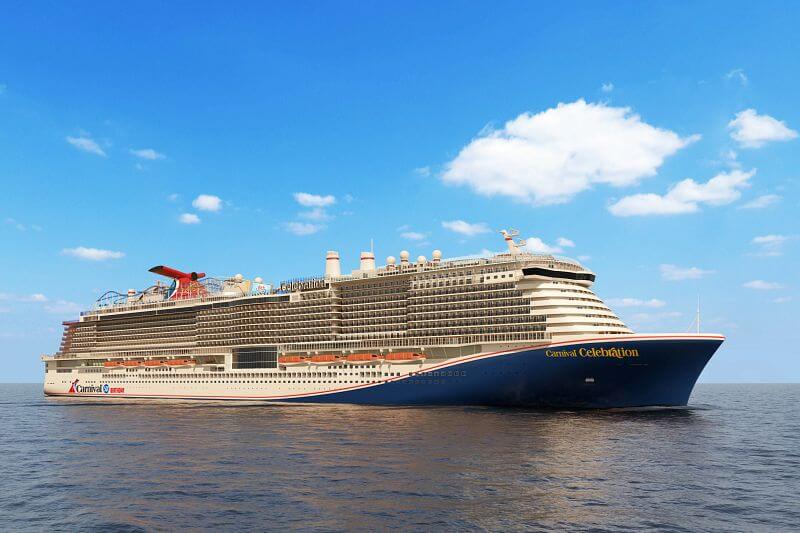
But most of the Carnival fleet is longer than the Titanic, and the biggest ships, including Carnival Celebration, are longer by around 250 feet, so the difference is significant.
Width
The Titanic was not a narrow ship when she launched, but most modern cruise ships are wider than she was, except for those designed to offer a small-ship experience.
And so every ship in the Carnival fleet is wider than the Titanic, with the newest Excel-class ships such as Carnival Celebration being exactly 50% wider than she was.
Carnival Celebration
Gross tonnage
Gross tonnage is one of the best measurements for determining the size of a cruise ship. It tells you the internal volume, taking into account the height, the width and the length. And the Titanic may have been huge in her day, but her 46,329 gross tonnes doesn’t hold up against Carnival’s fleet.
The smallest ship in the fleet, Carnival Elation, is around 50% bigger in total volume compared to the Titanic. And the Carnival Celebration, the biggest ship in the fleet, is almost four times the size of the Titanic. That’s some size difference.
Passenger capacity
The Titanic may not compare too well in physical size against the modern ships of the Carnival fleet, but she still managed to have a large capacity – up to 2,453 passengers would have sailed on her when she was at maximum occupancy.
That’s larger than the Carnival Elation and Carnival Paradise, and the five ships in the Spirit Class too – Carnival Spirit, Carnival Pride, Carnival Legend, Carnival Miracle and Carnival Luminosa.
The rest of the Carnival ships are capable of carrying a lot more passengers, and in more comfort too.
Crew
Titanic’s crew of 874 isn’t too far away from the smallest crew numbers on Carnival’s fleet, which stand at 900 crew on the Carnival Elation and Carnival Paradise.
As you would expect, the largest ships in the fleet have a much larger crew than the Titanic – double the size, on the newest ships like the Carnival Celebration or Carnival Jubilee.
But the interesting stat is in passenger to crew ratio. In theory, the lower the ratio, the more attention each crew member can give passengers. And while Carnival Elation outperforms the Titanic, the larger ships don’t. The crew numbers don’t scale up in the same ratio, so in theory, there was a better percentage of crew on the Titanic.
Decks
Modern cruise ships have continued to build up and up, and so it’s no surprise that the Titanic has fewer decks than any ship in the Carnival fleet.
It may be surprising that she has fewer than half the decks of the Carnival Celebration though – that shows you just how far modern cruise ships have come.
Safety features
When comparing the size of the ships, it’s worth doing a quick comparison between other features, such as the safety measures onboard.
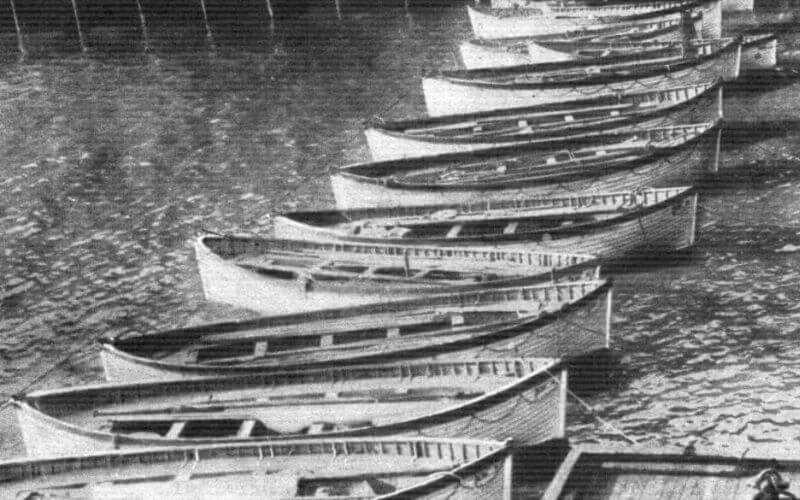
The Titanic obviously sparked huge changes in safety after the disaster, and part of that was down to the lifeboat numbers – there were only 20, capable of holding around 30% of the ship at maximum capacity.
Modern passengers can be reassured in knowing that, as well as improved protocols and safety awareness, the Carnival fleet all have enough lifeboats for >100% capacity on the ship.
The onboard experience
Carnival ships offer a very different onboard experience to that which was offered on the Titanic. But while the Titanic was formal, it still had entertainment features, including a swimming pool, a gym, a squash court and a Turkish bath.
Of course, it doesn’t quite rival the 20+ dining venues, the roller coasters at sea, the VR experiences and more that ships like Carnival Celebration have to offer…
Final word
The Titanic was a huge ship, and compared to some of the smaller ships in the Carnival fleet she’s not hugely different. But the bigger ships do still make her seem quite small in comparison. Cruise ships have really come a long way.
And of course, there are even bigger ships than the Carnival fleet. Why not check out my guide on Icon of the Seas vs the Titanic?
Related posts:
If you found this interesting, please share!
Jenni Fielding is the founder of Cruise Mummy. She has worked in the cruise industry since 2015 and has taken over 30 cruises. Now, she helps over 1 million people per month to plan their perfect cruise holidays.
Have you ever wondered how a massive cruise ship stays anchored in one spot? Me too.
Well, with the help of my cruise ship pilot friend, John, who has generously given up some of his time to help me with the technical stuff, we’ll break it down into simple terms for you.
Most ships have multiple anchors
Typicall a cruise ship will have two anchors, one on each side of the ship.
There’s an old saying that the starboard anchor is used in the southern hemisphere and the port anchor in the northern hemisphere. This is due to the Coriolis force, which causes storm systems to rotate clockwise in the north and anticlockwise in the south. Using the appropriate anchor can prevent cables from getting tangled when a second anchor is dropped.
But in reality, the anchors are alternated so that they wear equally.
Sometimes, if you’re cruising into a place and you’re going to be turning into a current slightly, it’s more prudent to put down the anchor which is on the current side of the vessel.
Anchor weight varies – some are really huge!
The weight of the anchor is determined by the size of the ship. On a large cruise ship, the anchor may weigh in the region of 8 tons. That’s about the same weight as an African elephant or a standard school bus.
Here’s a photo of the anchor of an average-sized cruise ship, the Norwegian Jewel, next to a person…
And below, you can see me with the anchor of the S.S. Great Britain – the world’s first ocean liner which sailed from 1845 until 1886.
As you can see, the size is similar, although the shape of cruise ship anchors has changed quite a lot over the past 170 years.
Anchor chain length
Anchor chains are measured in lengths called shackles. One shackle of the chain is 15 fathoms long, this equates to 90 feet or approximately 27 metres.
Most cruise ships have chains that are either ten or eleven shackles long, but it could be up to 13 shackles long. So the anchor chains are around 900-990 feet or 270-297 metres long.
For comparison, Wonder of the Seas is 1,188 feet or 362 metres long. So the anchor chain is roughly as long as the ship, but it may be a bit longer or a bit shorter.
The chain’s pretty heavy too…
For a large cruise ship, each link in an anchor chain weighs around 50 kg – that’s roughly the same weight as a 12-year-old child.
There are around 1,000 links in the chain, so the whole anchor chain will weigh around 50 tons. Of course, with smaller ships, the anchor and the chain will weigh less than this.
Not all of the chain is let out. When it comes to dropping the anchor, the general rule of thumb is to lay out four to five times the length of the water’s depth in chain.
So, if the water is 25 meters deep, you’ll need approximately 100 to 125 meters of chain. The length of the chain can vary due to wind and currents, and sometimes it’s necessary to let out more of the chain, or shorten it.
Anchor chain storage explained
Anchor chains are contained in a chain locker on both the port and starboard sides. This is located underneath the windlass (the winch that recovers the anchor from the ocean floor), towards the front of the ship.
The end of the chain is secured to the ship, which is called the bitter end. In emergencies, the chain can be released by knocking out a pin in the bitter end. In dry docks, the entire chain can be removed and then reversed and put back in. This equalises the wear on it.
The pipe that the anchor cable chain goes down from the windlass to the outside of the ship is called the hawsepipe. The anchors are hauled up into this hawsepipe and secured in place. When a ship anchors, it does so at zero speed over the ground or with a very small amount of stern way.
When the anchor drops…
When a ship is brought to anchor, the speed is reduced to the minimum necessary for steering. The engines are then put into reverse to generate sternway, and the anchor is dropped onto the bottom.
The machine that’s used to drop and recover the anchor is called a windless. This handy contraption is usually electrically powered on cruise ships, but usually hydraulically powered on tankers and cargo ships.
Letting go of the anchor is known as ‘walking the anchor out’. The anchor will be brought to just above the water where it hangs free. The nautical term for this is a ‘cockabill and anchor’.
When it’s time to drop the anchor, an officer on the bridge will give the command to release it, and the brake on the windlass is released.
The anchor cannot be dropped all at once or it will pile up. The speed at which the anchor drops is controlled by a brake.
This can be a pretty noisy and messy process, with dust and rust flying around. The anchor will hit the bottom of the ocean, and then the ship will start to lay it out.
Watching a ship come to anchor early in the morning can be quite the spectacle. If you’re lucky enough to see it, you may notice the wash from the propellers come alongside the vessel as it comes astern. Once the wash reaches the middle of the ship, it’s a sign that the ship has stopped moving through the water.
This interesting video shows how an anchor is dropped on Island Princess…
Then it gets to work…
A ship is not held by an anchor when it anchors. So when you’re on a cruise and it anchors to tender, the anchor will go down on the bottom and the hooks in the end, which are called the flukes will lay towards the bottom and will usually bury themselves. Then the chain is laid out across the seabed.
When you’re in the tender boat, you’ll see that the chain is almost vertical. That’s called the catenary of the chain.
The catenary of the chain is what holds the ship in place and the ship will swing around this but not drift very far.
Anchors don’t always work
Some places are better for anchoring than others. On a chart on a ship, it indicates the nature of the bottom – whether it’s what’s known as ‘good holding ground’ or ‘poor holding ground’.
Good holding ground would suggest that the anchor will sit on the bottom there and will hold successfully. On poor holding ground the anchor would not sit successfully on the seabed and would drag.
Mud or softer ground is very good holding ground, but harder ground generally isn’t. If an anchor drags, in other words, the ship is moving away from the anchor and the cables come tight, the anchor breaks away from the bottom. Dragging can be caused by a number of things like wind or current.
There are a number of remedies for this. The first method would be to lengthen the cable so you have a longer catenary. If this is unsuccessful, then the crew may have to pick the anchor up again and re-anchor in a different position.
If this is unsuccessful again the vessel keeps tracking anchor, the only remedy is to pick up the anchor and go and steam off somewhere safe and just drift.
Anchors can be used for manoeuvring
Anchors can be used as a manoeuvring aid. While cruise ships typically have various tools such as bow thrusters, propellers and Azipods or rudders, there are occasions where an anchor can be useful.
The process involves lowering the anchor until it just touches the bottom, causing the ship to turn on that position. This transfers the steering point of the vessel to where the anchor comes out of the ship and the ship will turn on that position.
Raising the anchor
To recover the anchor, the process of dropping it is reversed. The officer on the bridge lets the captain know which way the cable is laying and how much weight is in it. Then, the ship will turn towards the cable to take the weight off it, and the anchor will be heaved back up onto the ship.
You can tell when the anchor comes off the bottom because starts to sway very gently. This will be relayed to the bridge as ‘anchor away’.
The anchor is hauled up and when it breaks the water the term ‘anchor sighted’ will be relayed to the bridge. Then, it’s hauled all the way back up into the hawsepipe and the message is ‘anchor home’.
When the anchor is sighted, the ship can commence moving safely forward.
The bottom line
I hope that this article has answered your questions about cruise ship anchors. I find all this info fascinating and am very grateful to John for helping me learn all the details.
If you have any questions, please make use of the comments section below to ask. Otherwise, why not check out some of our other technical cruise ship articles:
If you found this interesting, please share!
Jenni Fielding is the founder of Cruise Mummy. She has worked in the cruise industry since 2015 and has taken over 30 cruises. Now, she helps over 1 million people per month to plan their perfect cruise holidays.
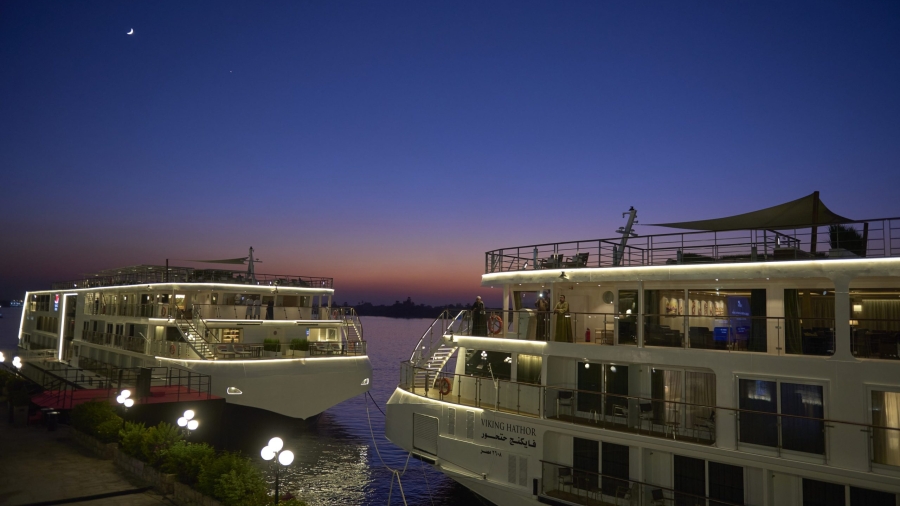
Viking® (www.viking.com) (NYSE: VIK) recently named its newest river ships, the Viking Hathor and the Viking Sobek, with a special celebration in Luxor, Egypt. The Hon. Edward Herbert served as the ceremonial godfather of the Viking Hathor; his great-great-grandfather, the 5th Earl of Carnarvon, was Howard Carter’s benefactor and co-explorer, whose excavation uncovered the tomb of King Tutankhamen near Luxor almost precisely 102 years ago on November 4, 1922. Mohamed El Banna, founder of Cosmos Egypt and a member of the Egyptian Senate, served as the ceremonial godfather of the Viking Sobek. The Viking Hathor and the Viking Sobek are identical sister ships to the Viking Aton and the Viking Osiris. They are state-of-the-art vessels explicitly designed to navigate the Nile River on Viking’s popular 12-day Pharaohs & Pyramids itinerary and built at Massara shipyard in Cairo.
Viking’s Newest Nile River Ships
“Today, we are proud to welcome the Viking Hathor and the Viking Sobek to our growing fleet in Egypt. Along with their sister ships, we believe they are by far the most elegant vessels on the Nile,” said Torstein Hagen, Chairman and CEO of Viking. “We are very grateful for our continued close friendship with the Carnarvon family and that Eddie has honored us by serving as godfather of the Viking Hathor. For more than 15 years, Mohamed El Banna has been a part of the extended Viking family, helping to take good care of our guests in Egypt, and it is a great honor that he is serving as the godfather of the Viking Sobek. As our award-winning fleet on the Nile continues to grow, we look forward to introducing even more curious travelers to this phenomenal destination.”
Torstein Hagen and Karine Hagen with Egyptian officials and members of the extended Viking family at the naming ceremony of the Viking Hathor and the Viking Sobek in Luxor, Egypt. (Credit: Viking)
The naming ceremony of the Viking Hathor and the Viking Sobek took place at Viking’s exclusive docking location in Luxor and was followed by a celebratory dinner inside the nearby Karnak Temple. Viking’s guests also enjoyed a performance by Sissel Kyrkjebø, one of the world’s leading crossover sopranos and godmother of the Viking Jupiter®, who sang the Egyptian, Norwegian and United Kingdom’s national anthems in their native languages.
The Hon. Edward Herbert, Godfather of the Viking Hathor
The Hon. Edward Herbert is the son of George Herbert, the 8th Earl of Carnarvon, and Fiona Carnarvon, the Countess of Carnarvon. Edward joins his father and mother in his new godfather role, who are also Viking’s first “godparents.” In 2022, Lord Carnarvon became Viking’s first godfather, fulfilling the role of the Viking Osiris. Lady Carnarvon is the godmother of a Viking Longship, the Viking Skadi and an ocean ship, the Viking Mars®. Edward’s great-great-grandfather, the 5th Earl of Carnarvon, spent 16 years working in Luxor and later, in 1922, with his colleague Howard Carter, discovered the tomb of King Tutankhamun. In Lady Carnarvon’s newest book, The Earl and the Pharaoh: From the Real Downton Abbey to the Discovery of Tutankhamun, she explores the unparalleled life of the 5th Earl of Carnarvon and tells the behind-the-scenes story of the historic discovery.
Highclere Castle, Egypt & Viking
For years, Viking has offered a variety of ways for its guests to experience life at Highclere Castle, the home of the Earl and Countess of Carnarvon, and the historic estate best known as the filming location of Downton Abbey. Among the 5th Earl’s many talents, he was an avid amateur photographer with an artistic eye for composition. His photographs are currently at Highclere Castle, stored in photo albums in The Library, and show the process of discovering and excavating the tomb of Tutankhamun and scenes of daily life in Egypt of the period. With kind permission, the Carnarvons have allowed Viking to share this private collection for guests sailing on board the Viking Hathor, the Viking Sobek, and their sister ships, the Viking Osiris and the Viking Aton.
For guests interested in extending their exploration of Egypt, Viking offers Pre and Post Extensions that provide Privileged Access® to archives and exhibits. Guests on the five-day British Collections of Ancient Egyptextension will begin the journey in London, where they will meet their Viking Tour Director, an expert Egyptologist, and experience Privileged Access to two museums: first a private, early morning visit to the Egyptian Collection at the British Museum before it opens to the general public —and then a visit to the home and personal museum of world-renowned architect, Sir John Soane, where the tour will be illuminated by candlelight, a re-enactment of how Soane entertained guests and showcased his exquisite collection of Egyptian antiquities, including a 3,000-year-old Egyptian sarcophagus. Guests will also visit London’s Petrie Museum, which houses more than 80,000 artifacts from ancient Egypt and Sudan. In Oxford, guests will visit the Ashmolean Museum, one of the oldest in the world, and home to a varied collection of Egyptian mummies and art—and go behind the scenes at Oxford University’s Griffith Institute, where they will enjoy a Privileged Access visit to see Howard Carter’s archives, which detail the discovery of Tutankhamen’s tomb. Lastly, guests will have further Privileged Access with an exclusive visit to Highclere Castle to view the Earl of Carnarvon’s magnificent private collection of Egyptian artifacts, as well as archives and exhibits not normally accessible to the public.
Mohamed El Banna, Godfather of the Viking Sobek
With his exceptional communication and interpersonal skills and deep interest in world cultures, Mohamed El Banna was destined for a career in the travel industry. He completed a bachelor’s degree in commerce and began working in tourism in 1970. Seven years later, he founded Cosmos Tourism Company—now Cosmos Egypt—a Cairo-based tour operator and the country’s oldest destination management company. He continues to run the business with his son, Sherif El Banna, who serves as CEO. Viking has proudly partnered with Cosmos Egypt and Mr. El Banna for more than 15 years to promote exploration along the Nile River. As Viking’s exclusive tour operator in Egypt, the company continues to handle all ground operations and transportation for shore excursions and helps source English-speaking tour guides and Egyptologists. Mr. El Banna also helped Viking create its operational division in Egypt, which now includes more than 500 company employees that work in the country. Through these extensive partnerships, Viking consistently provides its guests with an award-winning and seamless travel experience in Egypt. As one of Egypt’s most devoted ambassadors for travel, Mr. El Banna has held several influential government positions throughout his distinguished career. Previously, he was a member of the Chamber of Tourism from 1986 to 1994 and served two terms as the Deputy of the Tourism and Antiquities Committee in the House of Representatives from 2005 to 2015. Currently, he is a senator in the Egyptian Senate, a role he will fulfill through the end of his five-year term in 2025.
The Viking Hathor, the Viking Sobek & Viking’s Growing Egypt Fleet
Hosting 82 guests in 41 staterooms, the new Viking Hathor and Viking Sobek are inspired by Viking’s award-winning river and ocean ships with the elegant Scandinavian design for which Viking is known. An identical sister ship to the Viking Osiris and the Viking Aton, the Viking Hathor and Viking Sobek feature several aspects familiar to Viking guests, such as a distinctive square bow and an indoor/outdoor Aquavit Terrace. Other ships in the Egypt fleet include the Viking Ra and the MS Antares. Viking plans to welcome four additional ships in the next two years—the Viking Amun and the Viking Thoth in 2025 and the Viking Sekhmet and the Viking Ptah in 2026—which would bring Viking’s fleet to 10 vessels on the Nile River.
Viking was rated #1 for Rivers, as well as #1 for Oceans and #1 for Expeditions, by Condé Nast Traveler in the 2024 Readers’ Choice Awards for the second consecutive year. This achievement marked the first time a travel company won these three categories in back-to-back years. Viking’s Egypt ships have also been included in Condé Nast Traveler’s “Hot List” the last two years. Viking was also named a “Best Luxury River Cruise of 2024” in Forbes’ “Best Luxury Cruises” list. Additionally, TIME magazine featured both Giza and Saqqara on its “World’s Greatest Places” 2023 list, mentioning sailing the Nile River with Viking. TIME notes that Viking is among the very few who stop in both Giza and the village of Sakkara, where excavation sites, like the megatombs of animal and human mummies, are active.
Viking’s Pharaohs & Pyramids Itinerary
During the 12-day Pharaohs & Pyramids itinerary, guests begin with a three-night stay at a first-class hotel in Cairo, where they can visit iconic sites such as the Great Pyramids of Giza, the necropolis of Sakkara, the Mosque of Muhammad Ali, or the Grand Egyptian Museum. Guests then fly to Luxor, where they visit the Temples of Luxor and Karnak before boarding a Viking river ship for an eight-day roundtrip cruise on the Nile River, featuring visits to the tomb of Nefertari in the Valley of the Queens and the tomb of Tutankhamen in the Valley of the Kings, and excursions to the Temple of Khnum in Esna, the Dendera Temple complex in Qena, the temples at Abu Simbel and the High Dam in Aswan, and a visit to a colorful Nubian village, where guests can experience a traditional elementary school. Finally, the journey concludes with a flight back to Cairo for a final night in the ancient city.
Get To Know Viking
Viking (NYSE: VIK) was founded in 1997 and provides destination-focused journeys on rivers, oceans, and lakes around the world. Designed for curious travelers with interests in science, history, culture and cuisine, Chairman and CEO Torstein Hagen often says Viking offers experiences For The Thinking Person™. Viking has more than 450 awards to its name, including being rated #1 for Rivers, #1 for Oceans and #1 for Expeditions by Condé Nast Traveler in the 2023 and 2024 Readers’ Choice Awards. Viking is also rated a “World’s Best” for rivers, oceans and expeditions by Travel + Leisure. No other travel company has simultaneously received the same honors by both publications.
For additional information, contact Viking at 1-800-2-VIKING (1-800-284-5464) or visit www.viking.com. For Viking’s award-winning enrichment channel, visit www.viking.tv.