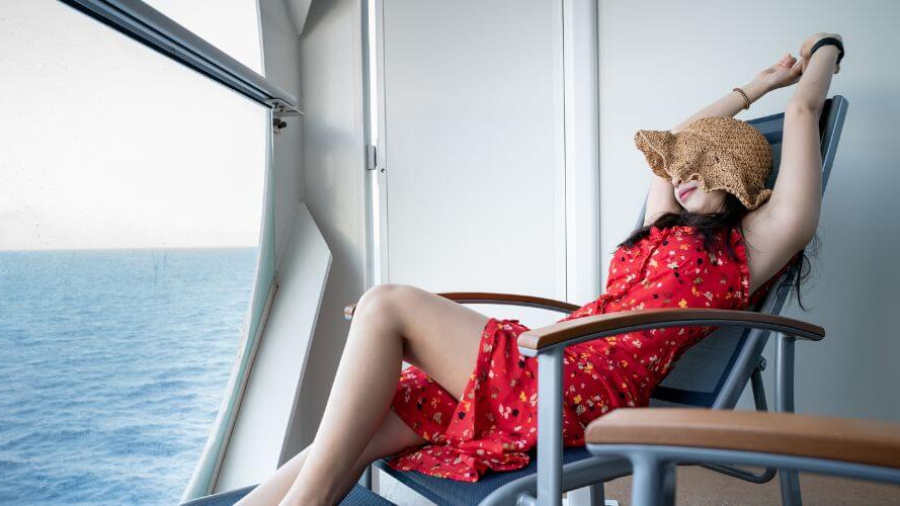
Cruise ships can feel wonderfully romantic, especially when you’re watching the sunset from your balcony with a glass of bubbly.
But how private are those balconies really – and what happens if things get a little too romantic?
Let’s clear up some common myths about cruise ship balconies and what’s actually allowed when it comes to public displays of affection at sea.
Your Balcony Isn’t as Private as You Think
Some cruise ship balconies are overlooked from above
Balconies are not always as private as you might think. Some cruise ships have balconies that are overlooked, either by other balconies or by the public deck above. Meanwhile, others might have dividers to the left and right that aren’t entirely opaque.
So while a quick kiss under the stars is fine, anything more is best kept inside your cabin.
There are cameras
Cruise ships are equipped with cameras that monitor the outside areas, because if they didn’t and someone went missing, then they would have no way to check whether that person had fallen overboard.
So yes, your balcony may well have a security camera pointed at it. That means anything that happens on your balcony could be visible to the security team.
If it is, don’t expect the security staff to leave you to it – they could get in trouble if they didn’t act.
It’s probably more likely that you would get a warning though, if you weren’t visible to the other guests. But this would still be quite embarrassing for most people (unless you’re exceptionally confident).
Sound Travels
Cabin walls are surprisingly thin. If you’re laughing, chatting loudly, or playing music, your neighbours will hear it.
And as for being outside? Well, you can hear every word of your neighbours conversations. So make of that what you will.
I once heard a couple getting frisky through the plughole in the shower in my cabin. I imagine they would have been embarrassed if they’d have known.
You could get kicked off the ship
Every cruise line enforces strict policies about behaviour on board. Anything that could be considered indecent or disruptive may lead to a warning, a fine, or even being asked to disembark.
Public indecency is a crime and yes, laws do apply at sea.
If you break the law then the cruise ship is within its rights to ask you to leave the ship at the next port of call, no matter where that is, either to be dealt with by the police or just to make your own way home.
In 2019, a couple were removed from the Mein Schiff cruise ship because they were making love loudly with the balcony door open.
Plus, leaving aside all the light-hearted discussion, most cruise ships are family-friendly these days. It’s not just a worry about another adult seeing you, but there could easily be a child that catches a glimpse if you’re in view of other balconies or public decks.
So you really need to think twice about whether you want to risk doing anything dodgy your balcony, not just because of the legal ramifications, but the moral ones too.
You could fall overboard
Depending on your chosen positions and how energetically you’re going at it, who’s to say you couldn’t fall overboard if you were leaning on your balcony in any way? Particularly if things get a little bit frenetic, you might get carried away and not realise just how much danger you’re in.
In 2007, a 22-year-old man and a 20-year-old woman both fell overboard on a Princess Cruises ship in the Gulf of Mexico. Luckily, they were both retrieved, unclothed, from the water.
Is it really worth the risk, when there’s a perfectly good bed just a couple of metres away?
If you’re going to ignore me anyway…
I can only make recommendations on why you shouldn’t get intimate cruise ship balcony, but I’m not your boss.
You might be adamant that it’s going to happen, and if that’s the case, then at least consider one of these options for your safety (and to minimise the risk of getting caught).
1. Book a Cove Balcony
Cove balconies are much more private
You can find a Cove Balcony on Carnival’s Excel-class, Vista-class and Dream-class ships. They’re also on P&O Cruises’ Iona and Arvia, as well as some Disney and Cunard ships.
These balconies are more enclosed, having sides and a bottom-half railing made from a solid steel panel.
This means they’re much more private, so you won’t be anywhere near as visible. There’s no overhang to worry about, and you still get that ‘outdoors’ experience, even if the opening of the balcony is a little smaller.
You still need to be careful with noise, but at least you will have that extra seclusion.
2. Book a Balcony with a hammock
Sea Terrace rooms on Virgin Voyages ships all have hammocks
One way to maybe hide what you’re getting up to is to try out the hammock. Virgin Voyages’ Sea Terrace rooms come with a hammock already installed, although it’s sheer so you might want to stay clothed and wear a floaty dress while you do it.
Be mindful of the weight limit though. It’s 330lbs (150kg), so these hammocks aren’t really designed for two.
Many people take their own hammocks on cruises. You’ll need to check with the crew on the rules around hanging it, since some may not allow it (it’s quite the risk if you fell out near the balcony edge). But provided it’s hung on a larger balcony away from the railing you should be OK.
Of course, getting it on in a hammock is probably a bit of adventure in itself, so have fun trying.
3. Book a Balcony with a hot tub
Private hot tub on MSC Seashore
There are a selection of cruise lines that offer balcony hot tubs in some of their suites.
These include Royal Caribbean’s Royal Suite, some of the suites on MSC Cruises ships, the Pinnacle Suite on Holland America Line’s Eurodam, and both the Haven Spa Suites on Norwegian Escape and the Owner’s Suites on Norwegian Sky for NCL.
At least in a hot tub, you’re partially covered and, if you’re leaving some swimwear on, you can probably be quite subtle about what you’re getting up to.
It’s still a risk, and certain movements are going to be pretty obvious, but these suites are pretty private so, in theory, you should get away with it. But don’t blame me if you don’t!
The bottom line
Cruise ships are full of magical, intimate moments —-sunset strolls, stargazing on deck or a quiet dinner for two.
But remember that balconies are semi-public spaces. Keep things romantic, not risky, and you’ll avoid any awkward conversations with ship security.
Jenni Fielding is the founder of Cruise Mummy. She has worked in the cruise industry since 2015 and has taken over 30 cruises. Now, she helps over 1 million people per month to plan their perfect cruise holidays.
This is a guest post written by a friend of mine who recently went on her first cruise. She wanted to share her unique perspective with you – enjoy!
As an autistic person preparing for my first cruise, I had no idea what to expect. On one hand it sounded incredibly exciting and, on the other, it sounded like a potential almost-week-long sensory overload that would be way, way out of my comfort zone.
There were plenty of challenges I was expecting, but actually I was surprised…
About Me
Of course, not all autistic people are the same, and so the challenges that you face might not be the same ones I did.
So, here’s a brief bit of information about me and my sensory profile:
I’m sensory avoidant when it comes to certain textures and tastes. With sound, I’m sensory seeking – the more noise, the better (unless I’m trying to hear what people are saying). I have audio processing difficulties, and also dyspraxia.
I struggle with bright lights, but at my age also have the typical age-related struggle to see in dim lighting. Those two are a great combination!
Socially I’m relatively confident but I also have to script all my speech, and as a result I struggle a lot when I’m put on the spot in conversations I’ve not scripted in advance. I also struggle enormously with crowds and busy places.
So, how did this autistic near-middle-aged woman find cruising?
Embarkation – Getting Onboard!
1. Saying Goodbye to the Suitcases
There’s something really unnerving about setting your suitcase down amongst a hundred others and walking away. As someone very attached to my belongings, I found that difficult.
For a while I insisted we stand and watch until I was sure they’d been loaded. After several minutes of them being pushed from side to side as others were loaded instead, I found myself able to trust the process (after all, nobody had run away with them by now!) and left to head through security.
2. Getting Through Security
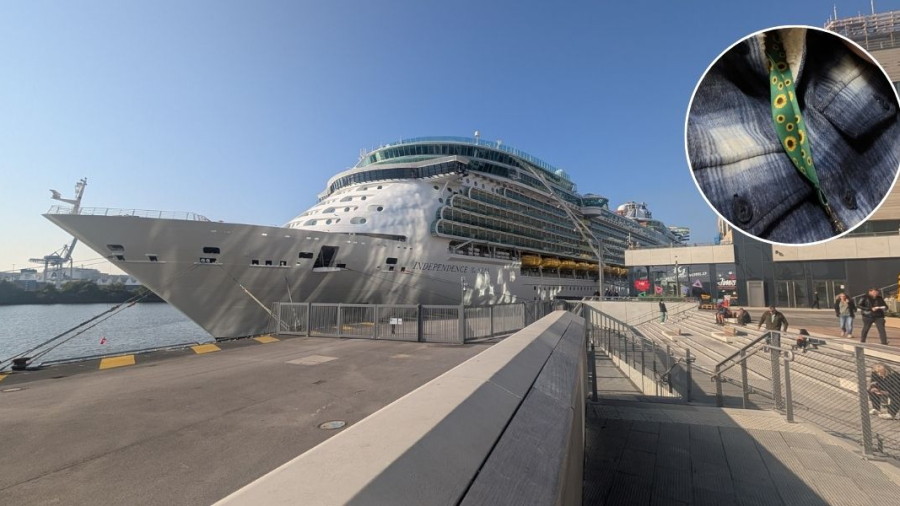
I wear a sunflower lanyard, and so does my (ADHD) daughter. The moment we stepped into the main building for security, someone walked over to us and welcomed us with a discreet but friendly “Hi, please follow me this way!”.
We were led straight to a fast-track queue, and were the only people in it.
Not having to queue helped both myself and my daughter enormously – she’d struggle with the wait, and I’d struggle with being surrounded by people whilst also trying to cope with a new environment.
When we reached the front it was suddenly time for our hand luggage to go through the scanners. Luckily, being the only people in this particular lane I had time to work things out in a situation that’s always high-pressure and can lead to meltdowns.
I could crouch on the floor, go through my bag at my own pace and remove the necessary items without feeling rushed. Within minutes we were through security and onto the ship!
I almost cried – not because I was overwhelmed, but because I was so relieved and happy. A rarity when travelling!
It’s Nowhere Near as Overwhelming as Airports!
At airports I find the sunflower lanyard is largely ignored unless you’ve specifically requested assistance, which I don’t.
Even when it’s noticed and you’re given extra support, it feels like it’s given begrudgingly. Staff often sound rude and snappy, or rush you, or get annoyed if you struggle to understand them.
In Southampton, I felt like people really cared. Everything felt efficient and professional, yet welcoming and safe.
The Ship Overall
3. Managing The Crowd Levels – Not Too Bad!
I’d imagined that boarding the ship amongst everyone else would feel like too much immediately, and I was very conscious of the fact I wouldn’t immediately have my own private space to retreat to – it would be at least an hour until our stateroom was ready.
This had me predicting that I’d be close to meltdown, hiding in a corridor or stairwell, just trying to escape the crowds.
Yet, the ship is so big that even with everyone onboard, you can still find lots of quiet spaces. And that was the case from the first moments on the ship, right through to the last.
Since there were plenty of activities and hangout spaces to choose from onboard, it was rare that large crowds seemed to congregate in one place. With a couple of exceptions…
4. Handling The Few Crowded Places
The two places I found consistently crowded were the Windjammer at breakfast specifically (some days worse than others, but always overwhelming, more on that later!), and the Schooner Bar.
We autistics love a good quiz, so there were lots of ‘name that tune’ and ‘trivia’ sessions I wanted to be a part of, yet the Schooner Bar simply isn’t designed for the number of quizzers it attracts. Every quiz came with the extra challenge of lots of overwhelm to navigate.
There aren’t anywhere near enough seats, and even every inch of standing space gets filled. I’m grateful to have had my husband to seek out the safest spaces for me, though we did get it wrong when we tried to take up a spot at the bar and I had people crowding me and leaning over to order drinks.
In the end, standing around the piano near the quiz host was my favourite spot and I’d recommend that if you can get it.
My daughter, meanwhile, having experienced the Schooner Bar once didn’t stick around for any other quizzes – too overwhelmed to cope, she chose to go back to our room and sit them out.
Well-Designed Spaces Really Helped
Issues with the Schooner Bar aside (a negative on a ship of positives!), I was in awe of how suited to my needs the rest of the space felt.
Rooms like the lounges had the tables separate enough that they didn’t feel overcrowded even when full. I always felt like I had my own safe space, with enough of a barrier between myself and other people. Things like solid, high-backed chairs helped with that feeling of a barrier, too.
The space between tables and chairs, even in rooms full of them, also meant that I could move between and around them pretty easily. That’s so rarely the case with my dyspraxia!
5. Temperature Regulation is Tough!
Temperature regulation was a real challenge onboard the ship.
As someone that’s naturally cold-sensitive, I’d been really concerned about how I’d feel on deck out at sea. What I hadn’t considered was how much I’d struggle with the indoor spaces, where temperatures could vary suddenly from room to room and deck to deck.
Although the ice rink was nowhere near as cold as I’d anticipated…
I’m one of those ‘can’t change my outfit once I’m wearing it’ autistics. Whatever I put on in the morning feels ‘safe’ and it’s really challenging for me to add or remove layers.
On this ship I simply had to force myself to do that, because things changed so much. You’d go up one flight of stairs from a comfortable space, and be met by stifling heat, then you’d go into a different room and things would change again. And if you stepped onto an open deck, then you were changing again!
It was manageable if we were just passing through, but of course you’re often not.
As the week went on, I learned to predict the temperatures of various spaces a little better, and plan my outfits based on where I knew we’d be spending most of our time. But, that’s a definite learning journey I had to go on.
6. Light Sensitivity – Not a Problem (Mostly)!
The ambient lighting throughout the ship is warm and soft. There are very few areas where fluorescent lighting is used. Even given the large number of windows around the ship, I never found that the sun shone in at levels too bright to cope with.
Indoors, I was able to wear my normal glasses without struggling with light sensitivity.
Being out on deck on a sunny day is a whole different experience. I’d have to switch to my sunglasses every time I wanted to go outside, then switch back when I moved inside again.
7. Noise Levels & Noise Issues
Of course, there are a lot of loud places on a cruise ship.
Expect loud music, public parties and lots of talking. As someone that doesn’t mind a lot of noise, that wasn’t an issue for me but could be for others.
That said, the soundproofing seemed excellent so when you were in a loud space it was very loud, but as soon as you got out the noise stopped.
We heard no noise through our stateroom walls, and there were plenty of quiet corridors and little seating areas where there was relative calm.
For those with audio processing struggles, a word of warning: whilst announcements onboard were loud and clear, the handheld microphones used by staff throughout the ship were pretty terrible.
They were extremely muffled, and sometimes cut out momentarily. As someone with audio processing difficulties, this meant that I couldn’t hear any of what was said when people were speaking through microphones.
It meant I missed all the speaking during the Sail Away party, which was a shame, and also the instructions given to my husband and daughter when they took part in the on-board ‘Field Day’ games – thank goodness I wasn’t taking part!
A Little Tip for Overwhelmed Cruisers
For the more sensory-avoidant cruisers, the on-board library would be an ideal space.
Quiet, with lots of seating. There was a communal jigsaw to work on, which was a lovely touch for those not wanting to read or use the PCs.
And as I discovered (on the last night only, unfortunately), they also have some printed trivia sheets, which they swap out daily – perfect if you like a set routine. So if you did want to do trivia quietly, you could grab one and work on it in peace.
NEW DEALS JUST RELEASED!
Don’t miss the latest Royal Caribbean offers…
Dining & Eating Onboard
8. Working Around a Limited Diet – What’s Available?
Let’s face it – one of the highlights of a cruise is the ‘free’ food!
As someone with quite a limited diet (made even more limited by the fact I’m vegetarian), I had my concerns.
On a recent trip to Egypt I survived 10 days eating nothing but tomato pasta and fries, and as much as I loved the trip it felt miserable to dine like that, and I didn’t look forward to mealtimes.
On Indy, no such problems!
We had decided in advance to avoid the Main Dining Room purely because we knew it would be difficult for all of us to find things we like. So we stuck to the Windjammer Marketplace for most meals, which is the included buffet.
It included so many options that I had different foods to look forward to every day, and quickly found safe options that I knew I’d like.
Importantly, many foods came plain with the option to customise and add. When you got a burger, you built it yourself to your liking. At the pasta station, the pasta was left plain with optional sauces. So even those with really restricted diets, and difficulties with mixed textures, could hopefully find something to suit them!
9. Windjammer Buffet Crowd Levels
Within the Windjammer venue, everything was spaced well enough that it never felt overcrowded as long as you were moving along.
I often struggle with buffet-style dining because I can’t predict how other people will move and I feel constantly crowded and surrounded. I didn’t have that issue in the Windjammer on the first evening, or on any other.
The only time I did get overwhelmed was at the burger station, where if you wanted a vegetarian burger it would be cooked-to-order.
This was the one issue on my first evening onboard, because as soon as I had to wait in one place I felt suddenly suffocated by the crowds moving around me. I quickly learned to stick to foods that were on display and ready to go!
Breakfast: A Different Experience
Whilst evening meals always felt manageable, including on the very first day, breakfasts were so much busier!
At breakfast on my first morning onboard, I was immediately overwhelmed. It felt like everyone was in the same room at the exact same time. I’d scouted out where the eggs were, I’d found the bread products, and I planned to combine these as quickly as possible and then add a couple of hash browns.
Thankfully, my husband scouted even more efficiently and found pre-made egg and cheese burritos which I really did appreciate for ease!
By our second morning I was more confident with locating the items I wanted for a quick ‘get in, grab the food, get out’ approach.
Still, throughout the entire cruise it didn’t seem to matter what time we went for breakfast, the crowds never let up!
Thankfully the amount of space to move around, and the number of food options, still ensured that things never felt too bad, but there were times when I found breakfast really difficult (and times when we had to walk in circles looking for a table), and it was never a nice, relaxing start to the day.
So Many Dining Options!
Of course, the great thing is that I didn’t ever need to eat at the Windjammer. Whilst we stuck to the free and casual dining options, this also meant I could get pizza from Sorrento’s or a sandwich from the on-board café, plus chips from Fish & Ships near the pool.
I was never short of food options and if I didn’t feel able to manage a whole sit-down meal, I could quickly grab a bite to eat and graze wherever I wanted.
Also, wherever you choose to get your food you can always take it back to your room and eat in private! There’s never any need to be out of your room for long, if you prefer your own space.
Drinking On The Cruise
10. Availability of Soft Drinks
We paid for a drinks package, just for soft drinks. As someone that’s unable to drink plain water, this wasn’t just a nice-to-have but an essential purchase.
Whilst I loved being able to access unlimited soft drinks (and the choice is vast!) there were a few downsides for me.
Firstly, the Coca Cola Freestyle machines are few and far between and in some of the busiest places – the main promenade and the Windjammer buffet area, for example.
This meant refilling amongst the crowds, with the pressure of people waiting for their turn, which I found incredibly overwhelming. That was an ongoing issue for the whole trip, though definitely worse on the first day when the queues for drinks felt much longer!
11. Refillable Cup Problems
It’s worth mentioning that the refillable cup you receive – though beautiful – has no handle. My dyspraxia makes it hard for me to carry things for very long, and especially with the lack of handle this was a real challenge that added to my struggles every day.
Though the cup seemed to seal well, it leaked in the side pocket of my backpack. This meant that I had no choice but to carry it around most of the time, which was something I did struggle a lot with.
I’d love if it came with an optional lanyard clip to hang hands-free, or sealed properly for storage in a bag. If I’d known in advance, I’d have bought my own crossbody bottle/tumbler holder before boarding!
As it was, if I knew I was going somewhere with a bar I’d leave my cup in my room and order at the bar so I didn’t have to carry my drink around. Of course, often you’re moving around the ship and need to keep your drink with you.
My Stateroom Onboard
12. Size and Layout Concerns – Not For Me!
I’m one of those ‘loves small spaces’ autistics, so I was in heaven in my small stateroom.
The beds were separated from the main living space by curtains, so a few people sharing a room could still have an element of privacy.
13. Towel Size Was Problematic
If you’re someone that struggles with the sensory transition of wet-to-dry and getting out of the shower, the towels won’t help with that.
I knew they were provided but if I’d have known how small they were I would definitely have brought my own.
They were just about big enough to wrap around me as a mini-skirt, and I’m not the biggest adult.
Just a word of warning!
14. Housekeeping Intrusions – Our Cabin Assistant Was Brilliant, But…
It’s worth me saying that I’m the person that refuses housekeeping in a hotel, whenever possible. When I’m away from home, my room is my safe space and any intrusion makes me feel incredibly uncomfortable, just as it would if someone walked into my house back on land.
Of course, some hotels insist on it and I just have to cope. But, where possible, I’ll refuse this service.
What I found was that my discomfort felt so much worse on the cruise.
On the first day, we met the attendant that would be servicing our room every day. She introduced herself in person and asked some questions about our preferences.
It’s friendly and professional, but for me it meant putting a name and face to the person that would be ‘invading’ my safe space. I struggled even more, with that knowledge.
Interestingly it’s also worth noting, though we ended up grateful for this over the coming days when we were tired in the afternoons and wanted a break, that though we were given the option of ‘morning’ or ‘afternoon’ housekeeping and chose afternoon thinking we’d be out and about, every day we came back to find the room had already been serviced in the morning.
Not a problem for us, but something people may want to be aware of if they feel they need predictability.
A Safe Space Moments Away
Even with the above complaints, that stateroom did remain my safe space, and I absolutely loved that I was never more than a few minutes from it.
On a typical holiday you might go out for the day, then have to factor in the return journey. Usually, I spend every trip carefully evaluating my overwhelm levels, predicting when I might reach my limit, and factoring in the journey back to safety at the end of the day.
My best regulation tools are very rarely close at hand. And if I got overwhelmed out and about? Well, I’d just have to deal with it. Onboard the ship, that’s something I didn’t have to worry about.
I could make the most of everything on the ship, knowing I was just a very short walk from my stateroom as soon as I needed a break.
That knowledge allowed me to relax and enjoy every moment. I could do things I would never usually cope with, and properly enjoy them, because I knew that I had an escape route (and all my regulation tools) just moments away.
Disembarking
15. Queues and Crowd Levels When Leaving The Ship
Leaving the ship meant queuing for around 20 minutes, without the sunflower lanyard benefits we’d enjoyed when we left Southampton.
Our queue took us on a full loop of the Dining Room but, for the most part, was calm and manageable. My ADHD daughter struggled a little with the wait, but 20 minutes is about her maximum limit so things didn’t get too dicey.
Meanwhile I’m alright waiting, but the overwhelm increases as time goes on because I’m building up to the ‘unknown’ – the point at the end of the wait where something’s going to happen.
In this case, the ‘something’ that happened was my card was scanned (manageable) to allow me to leave the ship, and then we bottlenecked to enter the gangway (less manageable).
People were coming at the gangway from different directions, and those with wheelchair assistance were also trying to get down having fast-tracked, so there were three queues of people all merging into one to enter a narrow tunnel.
For me, this kind of thing is a disaster – I can’t predict when people will move, or work out when it should be my turn, and of course I feel like I’m surrounded, and the resulting overwhelm made this final bit of the cruise experience a real challenge.
In my case I’m lucky that my husband knows to take the lead in these situations, and I keep my head down and just follow his feet whilst trying to block out my surroundings. This wasn’t a long-lasting part of the experience, but felt very different to when we’d arrived and the process had gone so smoothly!
My Final Thoughts
If you’re neurodivergent, you’ll know that everyday life is overwhelming for so many reasons.
Whilst the Independence of the Seas was far from being a ‘dream space’ where overwhelm is eradicated by thoughtful planning and ND-friendly environments, I’d say it’s better in general than most.
Yes there were challenges, but as you can see, most of them were actually quite manageable!
I could easily have wrapped myself up in the cruise ship world forever, never venturing onto land again! The Independence of the Seas has been designed, for the most part, with the crowd levels in mind.
As well as the amount of space available, the crucial difference is choice.
There are so many ways to spend your time, so many quiet spots if you need them, and so many ways to access the essentials onboard, so you can really tailor your cruise to meet your needs. And when it all gets too much? Your stateroom is just moments away!
NEW DEALS JUST RELEASED!
Don’t miss the latest Royal Caribbean offers…
Related Posts
If you found this interesting, please share!
Jenni Fielding is the founder of Cruise Mummy. She has worked in the cruise industry since 2015 and has taken over 30 cruises. Now, she helps over 1 million people per month to plan their perfect cruise holidays.
Yes, an inside cabin is a sensible choice for most first cruises. An inside cabin cruise is usually the cheapest way onto a ship, you get the same bed, bathroom, food and entertainment as everyone else, and the dark room is excellent for sleep. It suits first-timers who plan to spend their days on deck and ashore, but it can feel cramped if you are claustrophobic, prone to seasickness or travelling on a scenic itinerary where the view is the point.
This guide explains what an interior cabin actually is, who it works for (and who should spend more), where to book one on the ship, and simple tricks to make a small, windowless room feel bigger.
What is an inside cabin on a cruise ship?
An inside (or interior) cabin is a stateroom in the middle of the ship with no window, porthole or balcony. Cruise lines use both names; Royal Caribbean and Princess say “interior stateroom”, many travel agents still say “inside cabin”. It is normally the entry-level category on any ship.
What you give up is the view and natural light. What you keep is almost everything else. A standard interior cabin typically includes:
Two twin beds that convert into one larger bed (often called a European king or a queen, depending on the line)
A private bathroom, usually with a shower rather than a tub
A wardrobe and drawers, a desk or vanity, a TV, a safe, a phone and a hair dryer
Daily housekeeping from a stateroom attendant
Full access to the ship’s main dining rooms, buffet, pools, shows and kids’ clubs
Sizes vary a lot by ship. Many interior cabins on mainstream lines sit somewhere around 140 to 200 square feet, while some family interiors are much larger; Royal Caribbean lists interior staterooms of up to 340 sq ft sleeping up to six. Always check the exact square footage for your ship and category before booking.
Is an inside cabin good for a first cruise? The pros
1. It is the cheapest way to try cruising
If you are not sure yet whether you will love cruising, it makes sense to test it without paying for extras. Interior fares are almost always the lowest on the ship. That leaves more budget for things first-timers often underestimate: gratuities, drinks, Wi-Fi, specialty dining and shore excursions.
2. You will not spend much time in it
Most passengers on a first cruise, especially a short Caribbean or Bahamas sailing, are out from breakfast to bedtime. You will be at the pool, in port, at dinner and at the show. The cabin is mostly for sleeping, showering and changing.
3. Excellent sleep
With the lights off, an inside cabin is pitch black, day or night. Light sleepers, shift workers and anyone who likes an afternoon nap after a busy port day often prefer this. The flip side is that you can easily oversleep, so set an alarm or leave the TV on the bridge-camera channel if your ship has one.
4. Often quieter than you would expect
Interior cabins are away from wind, deck chairs being dragged across a balcony above you and noise from neighbours sitting outside. A well-placed interior cabin can be one of the quieter rooms on the ship. A badly placed one can be the noisiest, which is why location matters (see below).
5. Location can be better than an outside cabin at the same price
Inside cabins are often found midship on central decks, the most stable part of the ship. For the price of an ocean-view room at the very front or back, you may be able to get an interior cabin right next to the main lifts.
The cons of an inside cabin to weigh up first
No natural light or view. You cannot check the weather, see a port as you sail in, or wake up to the sea. You lose any sense of time of day.
It can feel small. Two adults with large suitcases will notice the lack of floor space, and three or four people in a standard interior gets tight quickly.
Not ideal if you feel claustrophobic. Some people simply find a windowless room oppressive after a few days.
Seasickness can feel worse. Without a horizon to look at, some people find motion harder to manage in an inside room.
Scenic cruises lose something. On itineraries such as Alaska, Norway or a river-like transit, a lot of the experience is watching the scenery, and having your own private viewing spot has real value.
Who should book an inside cabin cruise, and who should not
An inside cabin suits you if…
Consider ocean view or balcony if…
You are on a budget or testing cruising for the first time
You get claustrophobic or dislike windowless rooms
You plan to be out of the cabin most of the day
You are prone to seasickness and like to see the horizon
You want a very dark room for sleeping
You are sailing a scenery-heavy route like Alaska or the fjords
Your itinerary is port-intensive (a port almost every day)
The cruise has many sea days and you like quiet time in your room
You would rather spend money on excursions, dining or a longer trip
It is a special occasion such as a honeymoon or milestone anniversary
A typical interior cabin trades the view for a lower fare and a very dark room. Photo: Aleksandr Poklad on Pexels
Inside cabin vs ocean view and balcony: how much do you save?
Price gaps change constantly by ship, season and how full the sailing is, so treat these as rough guides only. Based on typical fares at the time of writing, double occupancy:
Cabin type
Rough price vs inside cabin
What you gain
Inside / interior
Baseline (lowest fare)
Same ship access, darkest room
Ocean view
Often around 10% to 25% more
Window or porthole, natural light
Balcony
Often around 30% to 60% more, sometimes close to double
Private outdoor space, usually a bit more room
Suite
Often several times the interior fare
Much more space and extra perks
Royal Caribbean Blog’s analysis of its own fares found a balcony averaged roughly $390 more per person than an inside cabin on the sailings it checked, but the difference can be far smaller on some cruises and much larger on others. The practical tip: price every category for your exact sailing. If the jump to ocean view or balcony is small, the upgrade can be worth it; if it is hundreds of dollars per person, an interior room frees that money for other things. Keeping an eye on cruise deals for 2027 can also help you spot sailings where the gap narrows.
Interior cabins with a “view”: virtual balconies and promenade rooms
Some ships offer interior cabins that are not completely closed off, and they can be a good middle ground for first-timers who are nervous about a windowless room.
Virtual balcony (Royal Caribbean). Selected interior staterooms have a large high-definition screen, which Royal Caribbean describes as around 80 inches and nearly floor to ceiling, showing a live feed of the sea and ports outside. Royal Caribbean lists them on ships including Anthem, Quantum, Ovation, Odyssey, Spectrum, Harmony, Symphony, Wonder, Utopia, Navigator, Voyager and Explorer of the Seas. Not every interior room on those ships has one, so check the category before booking.
Promenade view interiors. On some Royal Caribbean ships, interior cabins have a window looking down onto the indoor Royal Promenade shopping street. You get light and people-watching, but also some noise from late-night events.
Central Park view interiors. On Oasis-class ships, some interior rooms look onto the open-air Central Park neighbourhood, so they have natural daylight without facing the sea.
Other lines also have interior variations, such as larger family interiors or studio cabins for solo travellers, so it is worth looking beyond the cheapest category code.
Inside cabin cruise tips: picking the right location
Where your cabin sits matters more in an interior room, because you cannot escape to a balcony. Use the ship’s deck plans and look at what is directly above, below and beside the cabin.
For seasickness: go low and midship
The middle of the ship and the lower passenger decks move the least. If you are worried about motion, choose an interior cabin midship on a low or middle deck and avoid the very front (forward) of the ship, which tends to feel movement most.
For noise: check what is above and below
Avoid cabins directly under the pool deck, buffet or sports deck, where chairs scrape and equipment is moved early in the morning.
Avoid cabins directly above or below the theatre, nightclub, bars or casino.
Be cautious with rooms next to lift banks, crew service doors and laundry rooms, which can see traffic at all hours.
Very low aft cabins can pick up vibration and noise from the engines and anchors in some ships.
Ship-specific reviews and deck plans with venue overlays help here, because the layout differs from ship to ship even within the same cruise line.
For convenience: near, but not next to, the lifts
A cabin a few doors from a lift bank saves a lot of walking on large ships without the constant footfall right outside your door.
Smart packing makes a small interior cabin feel much roomier. Photo: Kindel Media on Pexels
Should you book a guarantee inside cabin?
A guarantee (often shown as GTY) booking lets you pick the category, such as interior, while the cruise line chooses the exact cabin later. It is often cheaper than selecting a specific room. On Royal Caribbean, guests commonly see their assignment somewhere between a few days and a few weeks before sailing, and the line can assign it right up to check-in.
The catch is that you have no control over location. You could be placed under the pool deck, near the nightclub or at the far front of the ship. Upgrades to a higher category are possible but rare and never promised. A guarantee inside cabin can be a smart way to save if you are a sound sleeper and not prone to seasickness. If location matters to you, or you are travelling with friends who want cabins close together, paying a little more to choose your room is usually worth it. For more on when the usual booking rules do and do not apply, see these cruise booking tips.
How to make an inside cabin feel bigger
Unpack fully on day one. Then slide the empty suitcases under the bed. Most cabins are designed for this.
Bring a hanging organiser. An over-the-door shoe organiser is handy for toiletries, sunscreen and chargers. Check your line’s rules on what you can attach to walls (many cabin walls are metal, so magnetic hooks are popular).
Use a small night light. A pitch-black room is great for sleep but awkward for bathroom trips. A battery night light solves this (avoid anything with a heating element, which lines typically ban).
Keep the beds split or together on purpose. Ask your stateroom attendant to arrange the beds in the layout that gives you the most usable floor space.
Turn on the bow camera. Many ships stream a live forward view on the TV, giving you a sense of the weather and time of day.
Pack light and wrinkle-free. Fewer, mix-and-match outfits mean less clutter in a small wardrobe.
Bring a non-surge-protected multi-USB charger. Outlets are limited, and cruise lines generally prohibit surge-protected power strips.
Bottom line: is an inside cabin worth it for a first cruise?
For most first-time cruisers, an inside cabin is worth it. You pay the least, enjoy the same ship, and sleep well. Book midship on a lower or middle deck, check what is above and below the room, and consider a virtual balcony or promenade interior if a windowless room worries you. Spend more on ocean view or a balcony only if you know you get claustrophobic or seasick, or if the itinerary is all about the scenery.
Before you settle into your cabin you will need to complete the cruise muster drill, which on most lines now takes only a few minutes.
FAQs
Is an inside cabin OK for a 7-night cruise?
Yes, for most people. On a port-heavy week-long cruise you will spend little time in the cabin. On a cruise with many sea days, some passengers miss natural light, so consider a virtual balcony or ocean-view room if you like downtime in your room.
Do you feel the motion more in an inside cabin?
The cabin itself does not move more than an outside room in the same spot. Motion depends mostly on location, so a midship cabin on a low deck is the calmest. Some people do find it harder to cope without a horizon to look at.
What is a guaranteed cabin on a cruise?
It is a booking where you choose the category and price, but the cruise line assigns the exact cabin later, often within a few weeks of sailing. It is usually cheaper, but you give up control over location.
How big is an inside cabin on a cruise ship?
It depends on the ship. Many standard interiors on mainstream lines are roughly 140 to 200 square feet, while some family interiors are considerably larger. Check the deck plan for your exact category.
Can you tell if it is day or night in an inside cabin?
Not without help. Set an alarm, leave a small light on, or tune the TV to the ship’s live bow camera if available. Virtual balcony cabins show a live outside view.
I heard that Virgin Voyages was pretty different from other cruises. But I wasn’t aware of quite how different it would be, until I took a week-long cruise in Northern Europe.
When tycoon Richard Branson first started visualising his cruise line, jotted down some notes on a piece of paper. This is what he wrote…
So how many of these visions became a reality? Well, all of them, actually (although a recent update has changed a couple of them)!
But this list alone doesn’t cover all the reasons why Virgin Voyages feels nothing like the cruises you’re used to.
So if you’d like to learn more, then read on and I’ll tell you all the things that I found to be completely different to what I’m used to as a frequent cruiser…
Note: I was invited onboard Scarlet Lady for a press trip. As always, all of my opinions are my own and the cruise line has no control over the content I produce.
1. It’s Adults Only, But Not Just For Retirees
Virgin Voyages is strictly 18+.
While some other lines like P&O Cruises and Marella have adults-only ships, those are the oldest and smallest ships in the fleet and they attract a 50+ crowd who are arguably more interested in the destinations they visit than the ships themselves.
There are a couple of luxury cruise lines that are completely adults only. For example, Saga Cruises has a minimum age of 50 to sail. The minimum age to sail on a Viking cruise is 18, but you usually won’t find anyone under 50 onboard.
Virgin Voyages, on the other hand, is buzzing with people in their 20s, 30s and 40s. The result is a lively, party-style atmosphere with zero kids in sight, which makes it a very different experience from the usual adults-only cruise.
And yes, you can party on a family cruise too. But anyone who has to collect their kids from the club at 10pm probably isn’t going to party as hard as they would if their kids are at home with the grandparents.
Each ship has a dedicated nightclub. This isn’t just a lounge with a dancefloor, it’s a proper nightclub, and one of the best I’ve been to on land or sea.
For those aged 18, 19 or 20, Virgin Voyages is an excellent choice. It’s actually one of the only cruise lines that will allow people in that age bracket to cruise out of the United States without their parents.
And 18-year-olds can drink alcohol in international waters too, something that the other American cruise lines restrict to over 21s.
2. So Much Is Included!
Okay so you might look at the price of a Virgin Voyages cruise and think: “Wooooah, that’s more than I’m used to”.
BUT, there are some things you need to consider.
Firstly, Virgin Voyages displays the CABIN price, not the per person price on the website. And I actually prefer that.
Okay, so you’ve halved it to per person, but it still looks high? Now’s when you need to think about all the things that Virgin Voyages includes and how much they would cost if you were to pay for them separately.
I have a full guide to what’s included in a Virgin Voyages cruise, but for now, here’s a little list for you…
Multiple award-winning speciality restaurants
All soft drinks and water
Ice cream
WiFi
Group fitness classes
Name and date changes (within set time periods)
NEW DEALS JUST RELEASED!
Don’t miss the latest Virgin Voyages offers…
I recommend taking advantage of all the included extras – especially the workout classes. I did a bungee workout class and it was SO much fun!
3. There’s No Main Dining Room and No Buffet!
A ship with no MDR and no buffet is certainly unusual, but I love the way that Virgin Voyages does dining!
Each ship has six signature restaurants:
The Wake (steak and seafood)
Lucy Lotus by Razzle Dazzle (Asian)
Extra Virgin (Italian)
Gunbae (Korean BBQ)
Pink Agave (Mexican)
Test Kitchen (experimental dining)
The food here is incredible. Each one feels like something you’d pay at least $50 for on any other cruise, yet these are all included in your cruise fare.
I’d advise booking your dining times on the app as soon as bookings open (look out for an email).
Dining is from 5.45pm until 9.45pm. If only the very early and very late times are left, then try again as soon as you get on the ship as more slots open up. The restaurants also offer walk-ins, subject to availability.
On Scarlet Lady, we were also able to eat at Lolz Supper Club. Located in The Manor (which is usually a nightclub), this comedy and dinner combo is well worth attending if you get the chance to.
Instead of a buffet, you’ll find The Galley, which is a stylish food court. Here there are outlets serving burgers, sushi, salads, Asian food, desserts and all-day brunch. It’s open around the clock.
And as if that wasn’t enough, there’s also a pizza restaurant (you can eat in or get takeaway in a box), an American Diner and an ice cream parlour – all included of course
4. The Ship Feels Like a Boutique Hotel
Virgin ships don’t actually feel like cruise ships at all, once you step onboard. The design is modern and relaxed, more like a boutique hotel. Spaces are filled with trendy furniture, neon lighting, hammocks on balconies and quirky art installations.
There are no dress codes, so you can wear trainers and shorts to dinner if you like, or go all out with a ball gown or something more flamboyant. It’s a place where you can completely be yourself without worrying about formality, which is refreshing if you’ve ever felt restricted on more traditional cruise lines.
Many of the cruise ship traditions are gone too. There are no captain’s galas, no announcements, no formal portrait photographers waiting to grab you on the way to dinner, and no set dining times with the same tablemates every night.
Instead, you can eat where you like, when you like, and the whole experience feels much more spontaneous.
Even the entertainment is different. Rather than West End-style theatre shows, you’ll find immersive events like Scarlet Night where the entire ship becomes a giant themed party.
There are pop-up performances in unexpected places, intimate comedy nights, drag shows and live music scattered around the ship. It feels less like following a rigid schedule and more like stumbling across something exciting every time you walk into a new space.
5. There’s A Super Social Vibe
The layout of Virgin Voyages ship is designed to be social, with seating areas and restaurants that make it easy to chat to the people next to you without forcing it.
That means it’s really easy to meet new friends, and I found people to be much more open and chatty compared to other cruises I’ve taken.
There are also regular solo-traveller meetups, making this one of the friendliest cruise lines for people travelling alone.
Scarlet Night (where everyone dresses in red) and the PJ Party (where everyone wears nightwear!) are both excellent opportunities to mingle with fellow cruisers.
I came home with more new friends than I usually do from a week at sea, which says a lot about how the atmosphere is created on board.
6. Tech That Actually Works
Virgin Voyages has some really clever technology.
Each cabin has a tablet that controls everything from the lights and curtains to the TV, room service and even reporting maintenance issues.
Instead of a cruise card, you get a bracelet, which makes it impossible to lose your key when you’re out and about. I love this technology and I wish that more cruise lines had it. It certainly beats stuffing your cruise card down your bra!
The Virgin Voyages app is also excellent. There’s a printed daily schedule if you want it, but everything is on the app. You can favourite the activities you want to do and get reminders when they’re starting.
Final Thoughts
I honestly can’t believe I waited this long to try Virgin Voyages. It’s fun, modern, great value and unlike any cruise I’ve ever taken.
The ticket price can look a little high at first, but that’s because so much is included! On other cruises, you could easily end up paying £500 per person more for things like WiFi and speciality dining – but these are all included on Virgin Voyages.
If you’re thinking of booking, I would say go for it. Just don’t expect anything traditional, because this is a cruise line that really does things differently. And I love that.
NEW DEALS JUST RELEASED!
Don’t miss the latest Virgin Voyages offers…
Related Posts:
If you found this interesting, please share!
Jenni Fielding is the founder of Cruise Mummy. She has worked in the cruise industry since 2015 and has taken over 30 cruises. Now, she helps over 1 million people per month to plan their perfect cruise holidays.
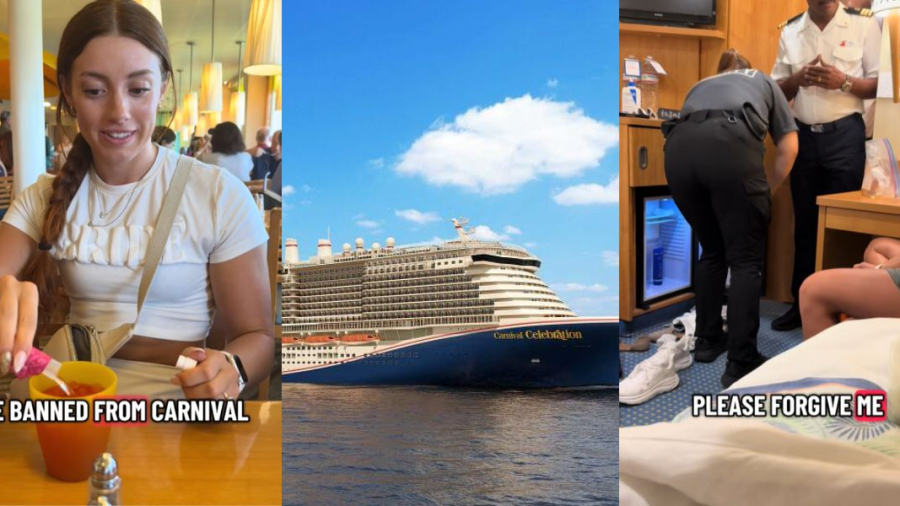
A bride-to-be celebrating her bachelorette cruise has been banned for life from Carnival Cruise Line after being caught smuggling alcohol onboard and posting about it on social media.
The passenger, known as Maddie on TikTok (@madisonwest2000), shared a now-viral video showing how she disguised alcohol inside feminine hygiene product wrappers to sneak it onto the ship.
In the clip, she poured the hidden liquor into her drink while onboard – something that quickly drew attention from fellow TikTok users, many of whom tagged Carnival Cruise Line.
It didn’t take long for ship security to come knocking. In a follow-up video, Maddie said that crew members searched her cabin and found more of the disguised alcohol in her mini fridge.
“He made me change my written statement from ‘brought’ to ‘smuggled’. Again, this was on me and I accept my punishment,” Maddie wrote.
She later confirmed that she received an email from Carnival after disembarking, informing her of a lifetime ban from sailing with the line.
TikTok Troubles Lead to Lifetime Ban
Many of Maddie’s viewers suggested that her mistake was posting the video while still onboard.
However, Carnival can and does take action even after a cruise has ended – as seen earlier this year when another guest was banned for posting a similar smuggling video weeks after returning home.
Under Carnival’s strict alcohol policy, guests are only permitted to bring one 750-ml bottle of sealed wine or champagne per adult in their carry-on luggage.
All other alcoholic beverages are prohibited and will be confiscated without compensation.
“All liquor, beer, and other forms of alcoholic and non-alcoholic beverages outside of the exceptions referenced above are strictly prohibited in both carry-on and checked luggage,” the cruise line’s policy states.
The policy exists for several reasons: safety, responsible service, and – primarily – revenue. Cruise lines must monitor alcohol consumption carefully to prevent dangerous behaviour onboard, and they rely heavily on bar and beverage sales as part of their overall income.
“Please Let Me Back On”
After receiving her ban, Maddie admitted regret in a follow-up post, saying Carnival held a special place in her heart because she met her fiancé on one of the line’s cruises.
“Me and my husband actually met on a Carnival cruise so Carnival means a lot to us. So it kinda sucks that I got banned. So I take it all back. Just let me back on, please,” she pleaded.
Unfortunately for her, cruise lines rarely overturn lifetime bans once they’ve been issued.
Little Sympathy From Cruise Fans
While some viewers sympathised with her disappointment, most commenters were unsympathetic, noting that Carnival’s alcohol policy is clear and that her punishment was self-inflicted.
“I’m sorry because I got caught. Actions have consequences,” one person wrote.
“Please don’t hold me accountable for decisions I make as an adult. What a joke,” another added sarcastically.
The incident serves as a cautionary tale for would-be rule breakers. Smuggling alcohol onto a cruise ship might seem like a harmless prank, but as Maddie learned, it can cost you your cruising future.
NEW DEALS JUST RELEASED!
See the latest Carnival cruise offers…
Related Posts
If you found this interesting, please share!
Jenni Fielding is the founder of Cruise Mummy. She has worked in the cruise industry since 2015 and has taken over 30 cruises. Now, she helps over 1 million people per month to plan their perfect cruise holidays.
Royal Caribbean is promising its “most legendary vacation yet” with the upcoming Legend of the Seas, the third ship in the cruise line’s groundbreaking Icon class. Although the ship won’t…
CroisiEurope, Europe’s largest river cruise operator, is introducing the first-ever paddlewheel cruises on the River Seine in 2026, unveiling two brand-new itineraries aboard its elegant paddlewheel ship, MS R.E. Waydelich…
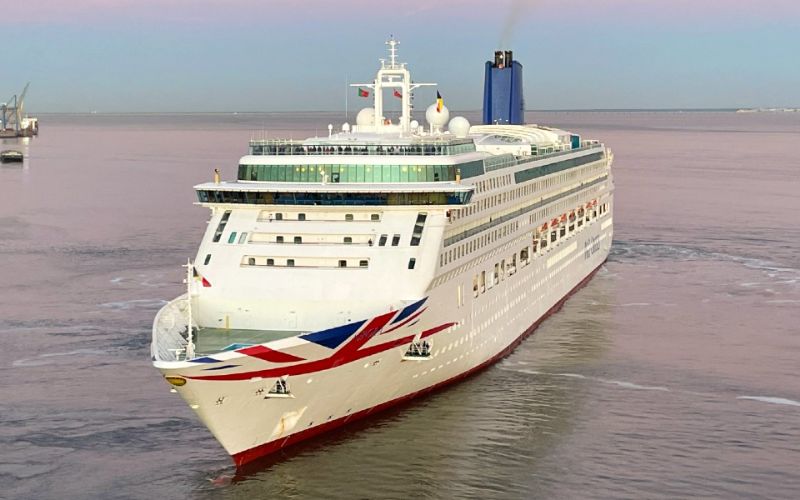
P&O Cruises will open its two adult-only ships, Arcadia and Aurora, to guests of all ages on select sailings from December 2026, allowing families to experience the smaller, more traditional…
Victoria Cruises Line (VCL), which promoted itself as the world’s first “affordable residential cruise,” is facing mounting criticism after years of delays, unfulfilled promises, and unrefunded deposits. The line advertised…
I’d heard all the rumours – people getting free cruises just for spending a few nights in the ship’s casino. Play the slots, rack up some points, and voilà… your email inbox is filled with offers of free sailings.
It sounds too good to be true, I’ll admit. Yet after speaking to multiple people who told me that’s how they manage to cruise so much, it really did seem legit.
So, I decided to put it to the test. On a single cruise, I spent more than$10,000 trying to crack the casino rewards system and get invited back for free.
Did I walk away with a free cruise? No, I did not. (insert crying face emoji)
But I did learn a lot about how these programs really work – and how easy it is to spend the big bucks when unlimited free cocktails keep arriving without you needing to move from your seat at the machine.
The Hype Around Free Casino Cruises
Before I tried it myself, I’d seen loads of cruisers bragging online about getting “free” cruises through casino play.
They’d post screenshots of complimentary cruise offers, selfies with big wins on the machines, and talk about how they received so many free cruise offers they didn’t have time to take them all.
In theory, it’s simple: every time you play in the ship’s casino, you earn points. The more you play, the higher your casino status climbs and the more freebies you get.
Reach the right level, and you’re suddenly getting invites for free cruises. At least, that’s what I hoped would happen.
My $10,000 Casino Experiment
Before parting with my hard-earned cash, I spoke at length with several cruise ship gamblers over dinner and while sitting at the slots. They explained that, in general, 5,000 points would be sufficient to get an invite to the casino rewards program.
Once in the program, the value of the free cruises *should* outweigh any casino losses.
Usually on a cruise, I’m so busy with the kids that I barely get time to spend $20 in the casino. But, as I was on a solo cruise for a week, I thought it would be the perfect time to dive in and try my luck to get the much-coveted casino program invite.
And also, I’d just a flyer in my cabin that said I could have $25 in free play, as I hadn’t used the Holland America Line casino before. So off I went.
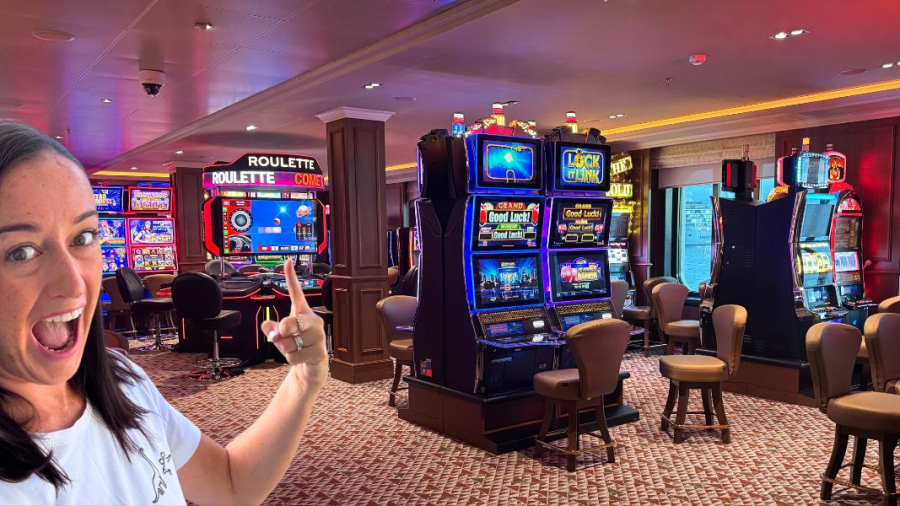
I was cruising on Holland America Line’s Nieuw Statendam. The casino on that ship is huge, with an endless array of brightly coloured slot machines. I had time to kill and money to lose invest.
Not all casino points schemes work the same, but on Holland America Line, 1 point is $2.
That means that every $2 you bet earns you one point.
It’s important to note that you don’t have to lose the $2 to get the point. And that’s key.
You’ll win some and lose some – so that $2 is recycled through the machine many times, earning you multiple points.
Here’s How I Did The Maths
According to my friend ChatGPT, cruise ship slot machines typically pay out at 85% to 92%. Let’s call it 90% for simplicity’s sake.
That means, that if you place 1,000 individual $1 bets, you should still have $900 in your account, on average.
That $1,000 spend will have earned you 500 points (at $2 per point), and you’ll be $100 down.
So in theory, getting to 5,000 points would involve putting $10,000 through the machines, but I should only lose $1,000 on average.
Even if I only get one free cruise in an interior cabin, that should be worth it, right? Those cruises cost more than $1,000 for two people.
Of course, I could be unlucky and lose way more than $1,000.
But then again, I could hit the jackpot and win a huge prize, plus unlimited free cruises for the next year!
For me, the gamble seemed worth it. I dove in.
What Actually Happened
I spent a two or three hours each day in the casino.
On Nieuw Statendam, the entertainment is mostly in the form of live music. That’s great, but it’s not something I usually attend much of when I’m cruising solo.
Plus, the weather en route to Iceland was pretty cold, so sunbathing on sea days wasn’t an option. So I didn’t feel that I was missing out on anything fun by spending time in the casino.
I started with the minimum bets, which were usually 60 to 80 cents per spin, depending on the machine.
But as I got bored of sitting there hitting the spin button like a caged rat trying to earn a treat, I realised that I could earn points faster by placing bigger bets. And sometimes I would bet up to $6 per spin.
You can bet more than that, but the thought of losing $6 every few seconds was just too scary for me!
By the end of the cruise, I had run $10,000 through the machines, achieved my goal of 5,000 points, and was $700 down.
The machines had paid me out 93% of what I put in, which is pretty good, as far as averages go.
At one point, things were not going at all well, and I was down by $1,200 with only 3,000 points to show for it.
But, I didn’t throw in the towel. I kept playing for a couple of hours each night and by the end of the cruise I was on 5,000 points and had reduced my losses to $700.
The charge to my room was $1,200. I transferred this from my room account to the machine in $100 chunks as I lost more and more money.
As casino ‘winnings’ are paid out in cash, I walked off the ship with $500. And, of course, a credit card bill for $1,200.
So even though I had lost $700, walking off the ship with $500 in my purse felt like I had won, in a strange way.
But still, no free cruise, yet…
Free Drinks Are A Dangerous Perk
Reaching 1,500 points was an important milestone as it meant I became entitled to free drinks in the casino.
The servers come round regularly and, as the casino wasn’t particularly busy, as soon as my glass became empty someone was there to ask if I’d like another.
There’s also a bar in the casino and the bartenders were really friendly and chatty. Sometimes, I’d go to the casino bar even when I wasn’t playing, just to get free drinks.
The casino was next to the theatre, so on my way to watch the show, I’d stop to pick up a free glass of wine to take into the theatre with me, which was a great perk.
I only knew about the free drinks perk because a fellow gambler told me. Nothing happened when my points ticked over to 1,500. But when I went to see the casino host, she put a special sticker on my card and explained that from now on, all my drinks in the casino were complimentary.
A tactic that I was told that some cruisers do is to gamble a lot on the first night, to quickly reach the free drinks threshold.
1,500 region should cost you in the region of $300.
The Signature Beverage Package costs $60 per person, per day.
So if you’re taking a two-week cruise, then you should definitely get your money’s worth on the drinks.
Of course the temptation is that each time you visit the casino to get your free drink, you’re then likely to then end up gambling even more.
Free Cruise Offers
Free cruise offers, also known as ‘casino comps’, are usually delivered in one of two ways.
Firstly, you may get a letter in your cabin on the last night of your cruise, inviting you back to sail again for free. The cruise isn’t 100% free, as you’ll still have to pay port fees and taxes. But it’s a pretty sweet deal.
Additionally, after the cruise you may get an email with a list of cruises that you can book for heavily discounted rates. Again, you’ll have to pay the port fees and taxes, but for many of the offers that’s all you’ll pay. You may get other perks too, such as free casino credit or free drinks.
Some cruise lines, such as Royal Caribbean, Princess Cruises and Carnival make it clear exactly how many points you need to get to earn yourself a free cruise.
For example, on Sun Princess, I saw this board, which said that you would need 2,000 points to get a cruise in an interior stateroom with $100 of free play (casino credits).
Holland America Line, however, is different in that they don’t publish how many points you need to get invited back for free.
Instead, cruisers like me are left to trawl forums like Reddit, to see how many points other people had, and what reward they got.
Why I Didn’t Get A Free Cruise
Sadly, despite my 5,000 points, I never did receive any casino offers from Holland America Line. It’s been 8 weeks since my cruise, and so I don’t think it will happen.
So what went wrong?
Well, I do have a theory…
While my cruise was a 7-night cruise, most guests onboard were actually doing a 14-night sailing. I just did the first 7-nights because it was a press trip.
The points threshold on a 14-night cruise will be higher than on a 7-night cruise. So perhaps, for this sailing, the threshold was actually double what I thought it was.
I can’t be sure, but that may be it.
TODAY’S BEST CRUISE DEALS!
Don’t miss these offers…
What Now?
I don’t regret my decision to test out the casino, even though I ended up out of pocket. I enjoyed stepping into the ‘other world’ that so many cruisers are obsessed with.
I do still think that getting into a casino rewards program is a good idea. Once you’re in, there are schemes you can join where you can then also get complimentary cruises on other lines you haven’t sailed with. Like a status match thing.
Also, UK-based cruisers have a couple of advantages when it comes to casino perks.
Firstly, we don’t have to pay tax on our winnings. In the USA, gamblers have to pay taxes on any winnings over $1,200. So us Brits are better off there.
And also, many Americans only get two weeks on annual leave per year. This makes it difficult cruise regularly, even if the cruises are free. For us Brits that usually get more paid time off work, cruising more often is more achievable.
I probably will have another go at getting enough casino points to cruise for free. It has to be with the right line though.
Usually, if I’m with other people, then I’m too busy having fun to spend hours in the casino.
And one things for sure, I’d want to know exactly how many points I need before I start next time!
Related Posts:
If you found this interesting, please share!
Jenni Fielding is the founder of Cruise Mummy. She has worked in the cruise industry since 2015 and has taken over 30 cruises. Now, she helps over 1 million people per month to plan their perfect cruise holidays.
Free casino cruises are real. They are cabins that cruise lines give to guests whose play in the onboard casino has been tracked and rated. They are not truly free, though. You still pay taxes, port fees and gratuities, and you earn the offer by putting thousands of dollars through slot machines or table games. If you would be playing in the casino anyway, a comped cabin is a good perk. It is a poor reason to start gambling.
This guide explains how casino comp cruises work, what each of the main US cruise lines offers, the 2026 rule changes worth knowing, and how to tell whether an offer is a good deal for you.
How Free Casino Cruises Actually Work
Every big-ship line runs a casino loyalty programme that works in much the same way. The cruise line wants to know how much you wager, and offers cabins to guests it expects will come back and play again. The basic cycle goes like this:
Get tracked. On most lines, putting your cruise card into a slot machine enrols you automatically. At table games you need to ask the pit supervisor to rate your play. Norwegian asks you to sign up at the casino desk.
Earn points. Points come from the amount you wager (your “coin-in”), not from what you lose. On Royal Caribbean and Norwegian, reel slots earn 1 point per $5 wagered. Table points depend on your average bet, the game and how long you play.
Collect offers. Your play leads to an instant certificate on board, a “bounceback” offer emailed after you sail, or both. Higher tiers also bring an annual comped cruise.
Book and pay the extras. You claim the cabin by the deadline and pay the taxes, fees, deposit and gratuities.
The important thing is that $1,000 in coin-in does not mean $1,000 lost. If you put $200 through a slot machine and keep replaying your winnings, you can easily generate $1,000 or more in coin-in. Your actual loss depends on luck and the machine’s house edge.
Casino Comp Cruise Programmes Compared
The table below sums up the published earning rates and annual cruise thresholds for the main programmes as of late 2026. Lines change these often, so check the official terms before you plan any play around them.
Cruise line
Programme
Slot earning rate
Lowest comped-cabin tier
Royal Caribbean
Club Royale
1 pt per $5 (video poker $15)
Prime, 2,500 pts: one interior cruise a year
Carnival
Carnival Players Club
Not published
Offers based on play history; FunMatch for newcomers
Norwegian
Casinos at Sea
1 pt per $5 (video poker $10)
Discounts from Pearl, 4,000 pts
Celebrity
Blue Chip Club
1 pt per $5
Amethyst, 5,000 pts: interior cabin
MSC
Signature Player Rewards
1 pt per $3
About 5,000 pts: short US sailing, interior
Virgin Voyages
Sea Roller Rewards
1 pt per $5
Cabin offers from Star, 5,000 pts
Princess (Players Advantage) and Holland America (Players Club) also send comped and discounted cruise offers, but they do not publish clear point thresholds. Points generally do not move between sister brands. The exception is Norwegian, Oceania and Regent Seven Seas, which share Casinos at Sea points and tier credit.
Royal Caribbean Club Royale free cruise
A Club Royale free cruise is the offer most people mean when they search for this topic. Royal Caribbean’s official Club Royale page lists four tiers: Choice (1 to 2,499 tier credits), Prime (2,500+), Signature (25,000+) and Masters (100,000+). Prime members get one annual interior cruise, Signature members a balcony and Masters a Grand Suite. The annual cruise applies to select sailings of up to seven nights, is based on double occupancy, and you pay the taxes and fees. Since September 2024, Royal Caribbean has asked for a $200 deposit on these casino bookings. If you sail, it comes back as onboard credit. You lose it if you cancel within seven days of departure or don’t turn up.
At Prime level that means $12,500 in slot coin-in over the casino year. At Signature it means $125,000.
Carnival Players Club and FunMatch
Carnival publishes no point table. Offers are based on your recorded play. The useful extra is the Carnival Players Club FunMatch programme. US residents aged 21 and over can upload up to three loyalty cards from other casinos, and Carnival may email a free or discounted cruise offer. There is no guarantee. Carnival says free deals still include required fees, taxes and a $100 per-person deposit.
Norwegian Casinos at Sea
Norwegian’s tiers run Pearl (4,000), Sapphire (15,000), Ruby (35,000) and Elite (100,000). The tier year runs from April 1 to March 31. Higher tiers add onboard credit, internet, and at the top end an open bar and waived service charges. Earned points stay valid for 18 months and can go towards your onboard bill.
Comped cabins range from interiors to suites depending on your casino tier. Photo: Engin Akyurt on Pexels
What “Free” Really Costs You
Before you call a comped cabin free, add up what you’ll still pay:
Taxes, fees and port charges. These are almost never covered. On a seven-night Caribbean sailing they often come to a few hundred dollars per person.
Gratuities. Daily service charges usually apply unless your tier waives them. Our guide to whether to prepay cruise gratuities explains how these add up.
Second guest or solo supplements. Most offers are priced for two people sharing. Some cover only the cardholder’s fare, and the second guest pays the cruise fare, which can be close to normal pricing. Solo travellers may get the full cabin or may pay a supplement. Read the occupancy line before you accept.
Deposits. Royal Caribbean and Carnival both ask for deposits, and you can lose them if you cancel late.
Flights and hotels. Offers often come with short notice or fixed dates, which can make travel to the port expensive.
Your gambling losses. This is the biggest cost, and the cruise line has already budgeted for it.
A useful check: compare the comped cabin with the cheapest fare you could book yourself. With good timing, an interior cabin on a short off-peak sailing is often very cheap anyway. Our insider guide to cheap cruises covers ways to get low fares with no casino play at all.
Bouncebacks, Email Offers and Status Matching
Instant certificates and bouncebacks
Royal Caribbean’s “Instant Cruise Reward” gives you a certificate on board once your play on that sailing reaches a set level. It is usually worth booking before you leave the ship, or within the stated window. A bounceback is a follow-up email offer, often a few weeks after you get home, based on how you played. A larger bet over a shorter time usually counts for more than the same coin-in spread out at tiny stakes.
Status matching from land-based casinos
If you already hold status with a big land-based casino group, such as Caesars Rewards or MGM Rewards, you may be able to skip the slow climb. Carnival’s FunMatch is the most open route. Royal Caribbean lists “special offers with partner casinos” as a Prime benefit, and offer-matching websites also link land casino status with cruise offers. Matches usually give you one trial offer. Keeping it going depends on how you play on that cruise.
Free cruise offers from casinos ashore
Some land-based casinos also send their regular players free cruise offers for specific charter or group sailings. These come from the casino’s own marketing budget and follow its own rules, so check the cabin type, fees and dates in the same way.
Slot play is where most cruise casino points are earned. Photo: Vanessa V. on Pexels
2025-26 Changes to Know About
Casino programmes have been getting stricter, and the 2026-27 casino year, which began on April 1, 2026, continued that:
Royal Caribbean video poker now earns 1 point per $15. That means three times the coin-in of reel slots for the same credit.
Signature members now get onboard credit of $25 to $75 depending on sailing length. Masters members get $50 to $100.
Players report smaller instant certificates. Frequent players have reported lower cabin categories and less free play per point since early 2026. This comes from players, not from an announced policy.
The $200 deposit on Royal Caribbean casino bookings remains in place.
Club Royale offers are moving into the Royal Caribbean app. Early users reported some display problems.
Expect more tweaks. Read your offer terms every time, and do not assume last year’s thresholds still apply.
Tips for Getting Free Cruise Offers from the Casino
Always use your card. Untracked play earns nothing, and that includes table play the pit has not rated.
Stick to one line. Points rarely move between brands, so spreading play across several lines slows your progress with each.
Know the earning rates. Some games and machines earn nothing at all, such as poker tournaments and coin pushers on Royal Caribbean.
Watch the casino year. Royal Caribbean and Norwegian both run tier years from April 1 to March 31. Points don’t carry over.
Use the loyalty perks you already have. Casino status sits on top of standard past-guest programmes. Those still apply on a comped sailing.
Choose ships with casinos you enjoy. If you will be playing anyway, pick a ship with a casino you like. Our guide to the best casino cruise ships for onboard gambling compares them.
Gamble Responsibly
Comped cruises are marketing. Casinos at sea, like casinos ashore, have a built-in house edge, and the offers exist because the average player loses more than the cabin is worth. Set a firm budget before you sail, treat it as entertainment money you can afford to lose, and never chase losses to reach a tier. If gambling stops being fun, help is available 24/7 in the US by calling or texting 1-800-GAMBLER.
Regular casino players on Celebrity should read our guide to the Celebrity Blue Chip Club, which explains tiers, points and free cruise offers.
FAQs
Are free casino cruises really free?
No. The cruise fare is covered, but you usually pay taxes, port fees, gratuities and sometimes a deposit. You also need significant tracked casino play to qualify.
How many points do you need for a Club Royale free cruise?
Prime tier starts at 2,500 tier credits. That gives one annual interior cruise of up to seven nights on select sailings, based on double occupancy. At 1 point per $5 on slots, 2,500 credits means about $12,500 in coin-in.
Can I get a casino cruise offer without gambling much?
Possibly, through status matching. Carnival’s FunMatch lets US residents submit cards from land-based casinos for a possible free or discounted offer, though nothing is guaranteed.
Does the second person sail free on a casino comp cruise?
It depends on the offer. Many cover two guests sharing, but some cover only the cardholder’s fare. Check the occupancy terms before booking.
Do casino points transfer between cruise lines?
Generally no. The main exception is Norwegian, Oceania and Regent Seven Seas, which share the Casinos at Sea programme.
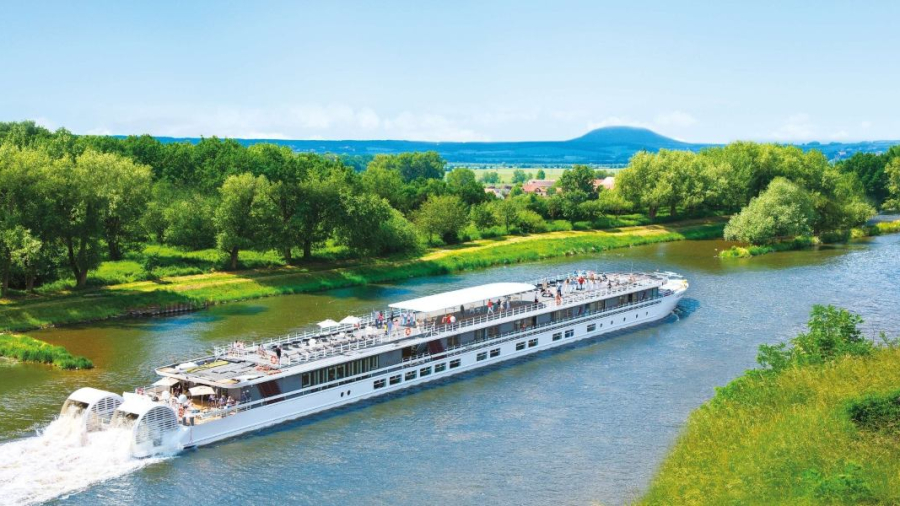
CroisiEurope, Europe’s largest river cruise operator, is introducing the first-ever paddlewheel cruises on the River Seine in 2026, unveiling two brand-new itineraries aboard its elegant paddlewheel ship, MS R.E. Waydelich L.J.
The new cruises will offer guests the chance to explore some of France’s most scenic and culturally rich regions, combining Parisian landmarks, royal palaces, and charming riverside villages with the distinctive experience of paddlewheel cruising.
Two New Seine Itineraries
The first sailing, Little Gems of the Seine, is a five-night roundtrip cruise from Paris calling at Melun, Saint-Mammes, Corbeil-Essonnes, and La Roche-Guyon.
Highlights include visits to the Château de Fontainebleau, once home to kings and emperors; Île de la Cité, the historic heart of Paris; Claude Monet’s gardens in Giverny; and La Roche-Guyon, ranked among the most beautiful villages in France with its stunning château nestled between the Seine and chalk cliffs.
The cruise is priced from $1,694 per person, including all meals, drinks, WiFi, port fees, and repatriation insurance.
Departures are available between March and November 2026.
The second itinerary, The History of France: From Paris to Normandy, is a seven-night roundtrip voyage from Paris, offering a blend of history, art, and natural beauty.
This longer itinerary visits Melun, Mantes-La-Jolie, Caudebec-en-Caux, Rouen, and La Roche-Guyon, with excursions to Versailles, Fontainebleau, Monet’s gardens, and the MuseoSeine, which explores the history of navigation on the river.
Fares start from $2,398 per person, including all meals, drinks, WiFi, port fees, and repatriation insurance, with departures between April and September 2026.
Modern Paddlewheel Comfort
Sailings take place aboard the MS R.E. Waydelich L.J., a modern paddlewheel vessel designed to navigate the shallow stretches of the Seine with minimal environmental impact.
The ship accommodates 81 guests across 42 cabins and features a restaurant, lounge bar with dancefloor, and a spacious sun deck – offering a relaxed, boutique cruising experience in quintessential CroisiEurope style.
CroisiEurope’s paddlewheel design has already proven successful on other European rivers, such as the Elbe and the Loire, where traditional propulsion systems are less suitable.
This innovative approach combines old-world charm with modern technology – offering smooth navigation and a distinctively nostalgic experience.
About CroisiEurope
Founded in 1976, CroisiEurope is a family-owned company based in Strasbourg, France, and is widely recognised as Europe’s leading river cruise line.
The brand operates more than 50 ships, including river vessels, canal barges, and coastal cruisers that sail across Europe and beyond -from the Rhine, Danube, and Douro to the Mekong and Africa’s Chobe River.
The company is known for its French heritage and hospitality, with cuisine inspired by regional traditions and menus created by top French chefs.
Onboard, guests enjoy an intimate, relaxed atmosphere with a distinctly European flair – smaller ships, friendly service, and itineraries that visit lesser-known ports and cultural landmarks.
CroisiEurope has also been a pioneer in sustainable cruising, introducing innovative propulsion systems, hybrid engines, and paddlewheel technology to reduce fuel consumption and minimise the environmental footprint of its vessels.
With the launch of the new Seine itineraries, the line continues its tradition of innovation – combining French elegance, historical exploration, and eco-conscious design in one unique offering.
Related Posts
If you found this interesting, please share!
Jenni Fielding is the founder of Cruise Mummy. She has worked in the cruise industry since 2015 and has taken over 30 cruises. Now, she helps over 1 million people per month to plan their perfect cruise holidays.
P&O Cruises will open its two adult-only ships, Arcadia and Aurora, to guests of all ages on select sailings from December 2026, allowing families to experience the smaller, more traditional…
Victoria Cruises Line (VCL), which promoted itself as the world’s first “affordable residential cruise,” is facing mounting criticism after years of delays, unfulfilled promises, and unrefunded deposits. The line advertised…
Royal Caribbean is preparing to make waves with its latest onboard innovation. When Legend of the Seas launches next summer, the ship will showcase an entertainment upgrade unlike anything in…
Princess Cruises has announced that Matthew McConaughey and his wife, Camila Alves McConaughey, will serve as godparents of the brand-new Star Princess, carrying on a maritime tradition that has included…
Royal Caribbean is promising its “most legendary vacation yet” with the upcoming Legend of the Seas, the third ship in the cruise line’s groundbreaking Icon class.
Although the ship won’t set sail until July 2026, the cruise line has lifted the curtain on a spectacular line-up of entertainment, dining, and adventure experiences designed to redefine family cruising.
“With Legend of the Seas, we are bringing to life our most legendary vacation yet as we continue to push the boundaries with more of what guests know and love,” said Michael Bayley, president and CEO of Royal Caribbean.
Legendary Entertainment at Sea
Headlining the ship’s entertainment programme will be a full-scale ocean-going production of Charlie and the Chocolate Factory, presented by special arrangement with Music Theatre International.
The Broadway hit, based on Roald Dahl’s beloved story, will blend whimsical storytelling with Royal Caribbean’s hallmark high-tech stage magic and elaborate set design.
Guests can also expect the return of Royal Caribbean’s signature AquaTheater spectaculars, featuring divers, dancers, acrobats, and robotics performing amid fountains and projection effects.
On ice, Legend of the Seas will host the fleet’s largest skating arena, Absolute Zero, where guests can even lace up their own skates for open sessions.
Adrenaline Meets Innovation
Adventure-seekers will have plenty to look forward to with the Category 6 waterpark, boasting six twisting slides, including free-fall drops and multi-rider raft slides.
The Crown’s Edge ropes course will suspend guests 154 feet above the ocean, while Adrenaline Peak rock climbing, the Lost Dunes mini-golf course (a re-design for this ship), and seven pools provide endless outdoor thrills.
Younger sailors will have their own fun at Splashaway Bay, while adults can unwind in any of the 10 whirlpools or take a peaceful stroll through Central Park, home to more than 30,000 living plants and live evening music.
New Dining Concepts
Legend of the Seas will debut several new dining venues.
The immersive Royal Railway: Legend Station will offer a multi-course tasting journey inspired by the ancient Silk Routes, featuring flavours from China, India, and Italy.
It’s not a brand-new concept, but it’s the first time a venue like this will appear on an Icon-class ship. The only prior Royal Railway venue is on Utopia of the Seas, the newest Oasis-class ship.
Another highlight is the Hollywoodland Supper Club, a glamorous dinner-and-show experience channelling 1930s elegance, complete with jazz, cocktails, and fine dining.
This is similar to the Empire Supper Club on Icon of the Seas, and Lincoln Park Supper Club on Star of the Seas.
The AquaDome Market will add a casual, food-hall-style experience with five diverse stalls and a juice and smoothie bar. Classic Royal Caribbean favourites – including Chops Grille, Izumi, Hooked Seafood, and Sorrento’s Pizza – will also return.
Legendary Accommodation
We already know that Legend of the Seas will feature a host of amazing cabin choices, from Insides through to Suites.
It’s now been confirmed that the Ultimate Family Townhouse is returning with a redesign, which includes several upgrades.
There are now two separate kids sleeping areas, while the parents’ bedroom has even more space and storage too.
This suite still comes with a hefty price tag – expect to pay £20,000+ per person for a typical cruise!
A Legendary Journey Awaits
Currently under construction at Finland’s Meyer Turku shipyard, Legend of the Seas is running ahead of schedule and will now debut three weeks early.
Her inaugural Mediterranean season will begin in July 2026, with sailings from Civitavecchia (Rome) and Barcelona visiting destinations including Naples, Palma de Mallorca, Marseille, and La Spezia.
Following her European season, the ship will cross the Atlantic on 25th October 2026 on a 13-night voyage to Fort Lauderdale, before offering a series of Caribbean itineraries.
Guests can choose from 6-night Western Caribbean and 8-night Southern Caribbean cruises, with all routes including stops at Royal Caribbean’s private island, Perfect Day at CocoCay.
“Those looking to get the most out of their vacation can have it all with Legend’s combination of adventure-packed experiences and incredible destinations in Europe and the Caribbean,” added Bayley.
With her mix of high-tech entertainment, immersive dining, and family-friendly design, Legend of the Seas looks set to live up to her name when she joins the fleet in summer 2026.
NEW DEALS JUST RELEASED!
Don’t miss the latest Royal Caribbean offers…
Related Posts
If you found this interesting, please share!
Jenni Fielding is the founder of Cruise Mummy. She has worked in the cruise industry since 2015 and has taken over 30 cruises. Now, she helps over 1 million people per month to plan their perfect cruise holidays.
CroisiEurope, Europe’s largest river cruise operator, is introducing the first-ever paddlewheel cruises on the River Seine in 2026, unveiling two brand-new itineraries aboard its elegant paddlewheel ship, MS R.E. Waydelich…
P&O Cruises will open its two adult-only ships, Arcadia and Aurora, to guests of all ages on select sailings from December 2026, allowing families to experience the smaller, more traditional…
Victoria Cruises Line (VCL), which promoted itself as the world’s first “affordable residential cruise,” is facing mounting criticism after years of delays, unfulfilled promises, and unrefunded deposits. The line advertised…
Royal Caribbean is preparing to make waves with its latest onboard innovation. When Legend of the Seas launches next summer, the ship will showcase an entertainment upgrade unlike anything in…
P&O Cruises will open its two adult-only ships, Arcadia and Aurora, to guests of all ages on select sailings from December 2026, allowing families to experience the smaller, more traditional vessels for the first time.
The change marks a significant shift for the line, which has long positioned both ships as exclusive to adults.
However, from late 2026, a selection of festive and school holiday sailings will welcome children onboard, expanding options for multi-generational travel.
More Cruise Choice for Families
A total of 20 cruises – 12 on Aurora and 8 on Arcadia – will be available to families between December 2026 and September 2027, with more holidays for winter 2027–28 set to go on sale from 14th October 2025.
Bookings for the new family-friendly voyages open on 7th October 2025, with the first sailing departing Aurora on 11th December 2026, and Arcadia following on 21st December 2026.
The move will add 23% more family cruise options from Southampton during the 2027 summer holidays and provide new opportunities for multi-generational groups to travel together.
Facilities and Activities for All Ages
Both ships will offer menus and facilities designed with younger guests in mind, including children’s dining, baby-changing areas, and bottle-warming stations.
Entertainment and activities suitable for all ages will be available, alongside the quieter spaces and more refined atmosphere for which Arcadia and Aurora are known.
Carnival UK and P&O Cruises president Paul Ludlow said the decision was based on guest demand and reflected changing travel trends.
“A recent study showed that multi-generational travel is a rising trend. Over 30% of families are now cruising with at least two generations onboard, and nearly a third travel with three to five generations,
“So, following guest feedback, we are inviting all ages to join Arcadia and Aurora on selected holidays so the whole family can come together to experience these elegant ships.”
While both ships will remain adult-only for the majority of the year, Ludlow said the change gives families “more ways to travel together during peak periods.”
Family-Friendly Itineraries
Among Aurora’s new all-ages cruises are a 14-night Christmas voyage to Scandinavia departing 15th December 2026, a series of short European breaks, and summer itineraries to Spain, Portugal, and the Western Mediterranean.
Arcadia’s all-ages sailings include a 16-night Christmas voyage to the Canary Islands, a 14-night Northern Europe itinerary in May 2027, and a 24-night Eastern Mediterranean cruise in August 2027.
One of Arcadia’s cruises, the Norway and Iceland itinerary (20th July 2027), will only be available to children aged 12 months and older.
Balancing Tradition with Family Appeal
The decision blends P&O Cruises’ heritage of elegant, traditional sailing with the growing demand for family holidays at sea.
While Iona and Arvia have long catered to families with their modern design and extensive children’s facilities, this marks the first time in years that Aurora and Arcadia will welcome younger guests.
For families looking for a quieter alternative to the larger family-focused ships, the move offers a unique opportunity to experience two of P&O Cruises’ most classic vessels – just in time for Christmas 2026.
NEW DEALS JUST RELEASED!
Don’t miss the latest P&O Cruises offers…
Related Posts
If you found this interesting, please share!
Jenni Fielding is the founder of Cruise Mummy. She has worked in the cruise industry since 2015 and has taken over 30 cruises. Now, she helps over 1 million people per month to plan their perfect cruise holidays.
Victoria Cruises Line (VCL), which promoted itself as the world’s first “affordable residential cruise,” is facing mounting criticism after years of delays, unfulfilled promises, and unrefunded deposits. The line advertised…
Royal Caribbean is preparing to make waves with its latest onboard innovation. When Legend of the Seas launches next summer, the ship will showcase an entertainment upgrade unlike anything in…
Princess Cruises has announced that Matthew McConaughey and his wife, Camila Alves McConaughey, will serve as godparents of the brand-new Star Princess, carrying on a maritime tradition that has included…
Cruise lines are constantly tweaking their schedules, even years after itineraries are first released. Ports can become overcrowded, new opportunities arise, and ships often get moved around to make the…