If you have young kids, you’ll know to never go anywhere without snacks. A hungry child can turn into the Tasmanian Devil far faster than you can find the nearest shop when you’re out and about. Ain’t that the truth?
And it’s not just kids who need snacks. Whether you’ve got a medical condition such as diabetes, you’re pregnant and suffering from morning sickness, or you just have a tendency to get ‘hangry’ without warning, you may be wondering if you can bring food off the cruise ship when you visit ports of call.
The answer to this question is not straightforward. It very much depends on the country you’re visiting and the type of food you plan to take off the ship.
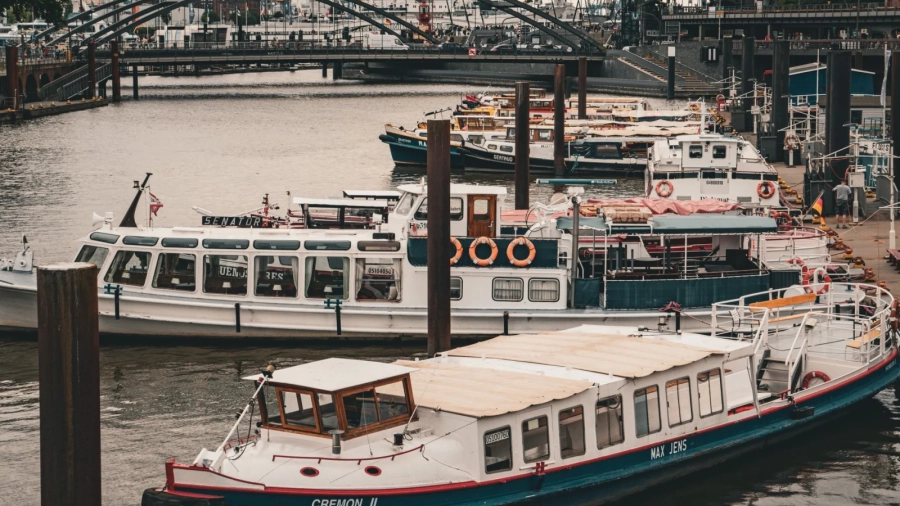
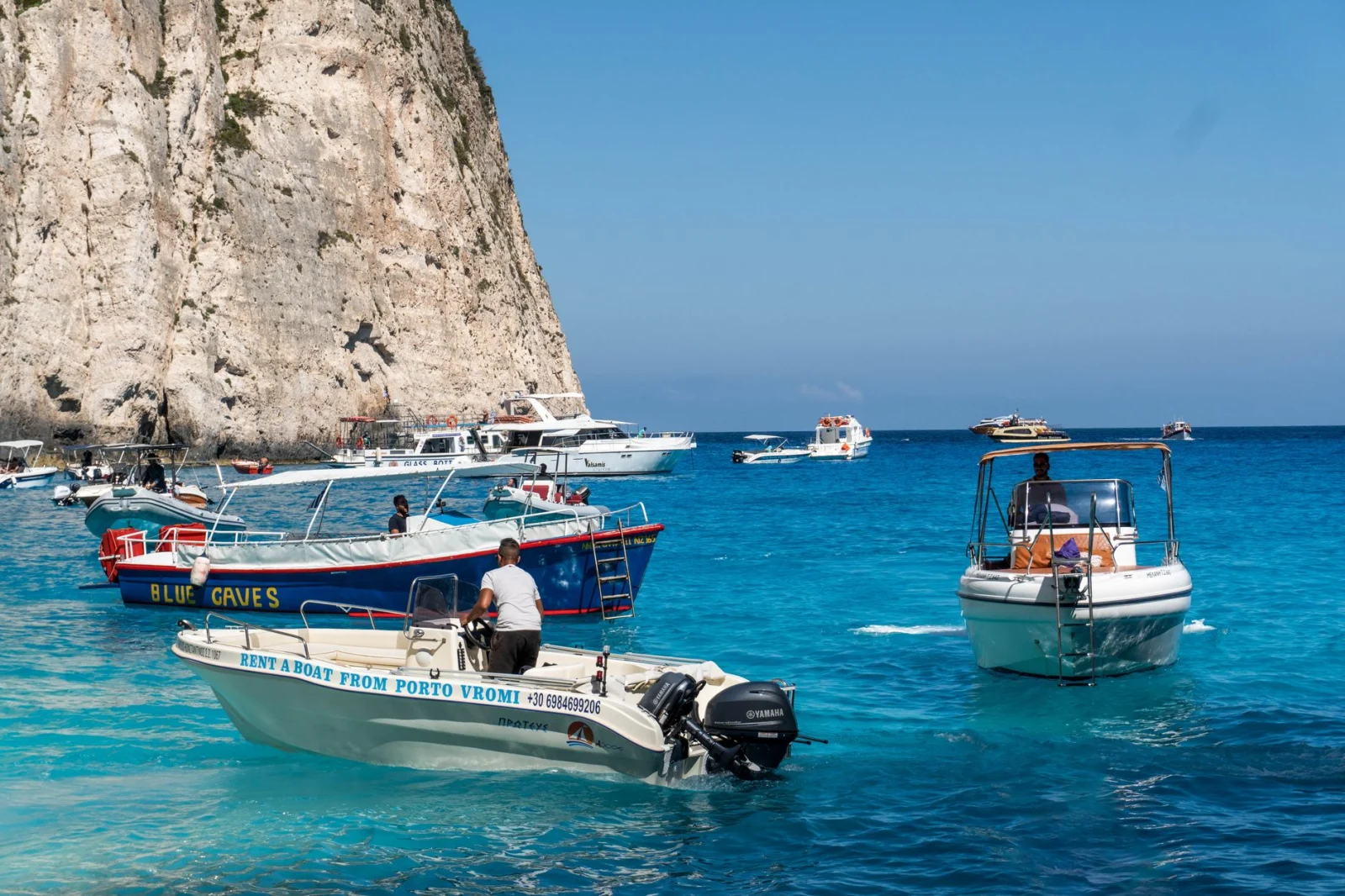
We took this food off the ship in Spain
Cruising in Europe
Europe is the most laid-back of all places when it comes to taking food off a cruise ship. In most European countries, you can feel free to make your kids a packed lunch from the ship’s breakfast buffet and bring it ashore with you.
My kids are super-fussy eaters, so if we didn’t take healthy food off the ship they would be limited to chips, bread and ice cream when eating out. When cruising in the Mediterranean, I like to take a small plastic container and fill it with fruit, raisins, dry cereal, bread, cheese and boiled eggs.
As an adult, it’s generally wise to sample the local cuisine of the places you visit if you have the chance. But some countries, such as Norway can be incredibly expensive.
If you’ve just about managed to afford a cruise and don’t have a lot of extra money to spend, then you could either make yourself a sandwich to take with you or head back to the ship for lunch.
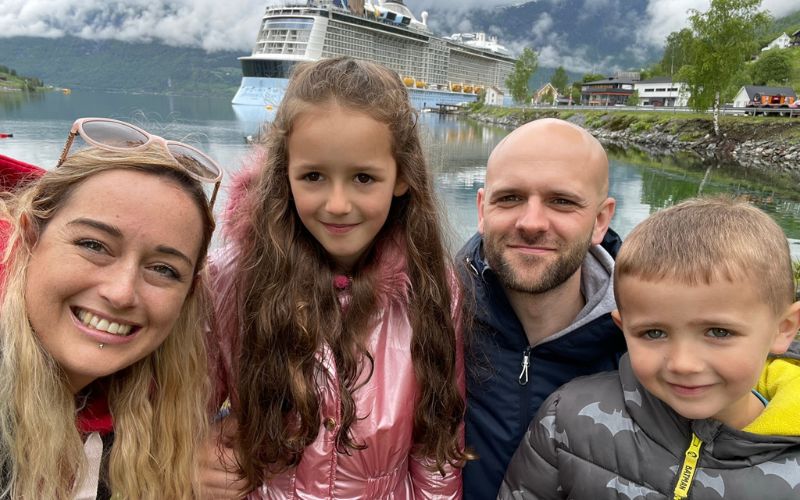
We took snacks for the kids in Norway
Cruising in the Caribbean
Bringing most types of food into the Caribbean is illegal. If you take fresh food off your cruise ship, it will be confiscated. Bags are often checked and there may even be sniffer dogs who are trained to check for food.
If you deny having fruit or vegetables and then you’re caught with them, you could face a hefty fine. This is because Caribbean islands have delicate ecosystems so you can’t risk bringing anything that could cause harm to the natural balance.
If you need to carry snacks in the Caribbean, then you should opt for pre-packaged food only. Depending on the ship, you may find mini boxes of cereal at the breakfast buffet, which are good for kids. If you need something like energy bars, you’re best to bring that from home.
When you get off the ship, keep any packaged food unopened and in your bag. If it’s in your hand, the staff could take it off you even if it’s technically allowed as their instructions could just be to confiscate any food that they see people with.
Cruising Elsewhere
Each country has different rules about whether you can take food off a cruise ship into the port. Australia and New Zealand are extremely strict in prohibiting food to enter the country. Chewing gum is illegal in Singapore. In Brunei, it’s illegal to import meat that isn’t halal.
You should check the rules for the countries that you’re visiting before your cruise. Once on board, take a look at your daily cruise programme. If there are any rules prohibiting bringing food ashore, they should be listed there.
Can You Bring Drinks Off a Cruise Ship?
Taking a bottle of water with you when you explore ashore is always a good idea and there are no rules to stop you from taking water off a cruise ship.
Many cruise ships have water dispensers where you can fill your bottle before you leave the ship and take it with you.
It should also be fine to take coffee or soft drinks with you. However, taking alcohol ashore is not a good idea.
Many port cities and towns ban drinking in public places, so if you want a drink you should find a nearby bar, or stay on the ship and drink there.
Can You Bring Food and Drinks on to a Cruise Ship?
There are some rules about exactly what kinds of food you’re allowed to bring on to a cruise ship when you embark and when you board in each port of call.
If you’re wondering about what drinks you can bring on the ship, then the rules are different for each cruise line. Some let you bring any kind of alcohol, some only a single bottle of wine and others don’t let you bring anything, even water.
Jenni Fielding is the founder of Cruise Mummy. She has worked in the cruise industry since 2015 and has taken over 30 cruises. Now, she helps over 1 million people per month to plan their perfect cruise holidays.
The easiest way to choose a cruise is to work in order: decide where you want to go and when, set a realistic total budget, then pick the cruise line whose style suits you, followed by the ship, the cabin and how you book. If you get the line and ship right, most other decisions fall into place. This guide on how to choose a cruise takes you through each step, with a quick table to match your travel style to a type of cruise line and a checklist of the extra costs that catch first-timers out.
Step 1: Decide where you want to cruise
Start with the destination, because it narrows your options more than anything else. Some regions are served by lots of lines all year round. Others only run in short seasons and on a smaller choice of ships.
Caribbean and Bahamas: These sail all year, mostly from Florida, Texas and Puerto Rico. There are lots of short three- to five-night trips, so they work well for a first cruise. From the UK you would usually fly out, although some lines also sail winter fly-cruises from Barbados.
Mediterranean: The main season runs from spring to autumn. Days are full of ports, so you get a lot of sightseeing but less time to relax on board. UK passengers can often sail round trip from Southampton, or fly to Barcelona, Rome (Civitavecchia) or Athens (Piraeus).
Northern Europe and the Norwegian fjords: These are summer sailings from Southampton, Dover, Copenhagen and other ports. A fjords trip with no flights is popular with UK cruisers.
Alaska: The season runs from roughly May to September, from Seattle, Vancouver or Seward. You go for the glaciers and wildlife, not the beaches.
River cruises: These sail the Rhine, Danube, Douro and other rivers on small boats. You often dock right in the town centre, and there are no sea days.
Expedition regions: These include Antarctica, the Arctic and the Galápagos. Seasons are short, ships are small and prices are high, and bad weather can change the plan.
Also decide how much you want sea days. Some people love them for the pools, spa and shows, while others get restless. Count the sea days on each itinerary before you commit.
Step 2: Choosing a cruise line that fits your style
Choosing a cruise line matters more than anything else on this list. Two ships in the same port can feel completely different. The usual way to sort the lines is into five broad styles. The table below is a quick decision tool. Lines change their products often, so treat the examples as typical rather than fixed.
If you are…
Look at
Typical examples
What to expect
A family with kids or teens, or a first-timer on a budget
Mainstream
Royal Caribbean, Carnival, Norwegian, MSC, P&O Cruises
Big ships, waterslides and kids’ clubs, lively nightlife, a low starting fare with lots of paid extras
A couple wanting better food and a calmer feel without paying luxury prices
Premium
Celebrity, Princess, Holland America, Cunard, Virgin Voyages (adults only)
Stronger dining, more space per guest and longer itineraries. Some fares bundle drinks or wifi
Travellers who want most things included and a small, quiet ship
Zodiac landings, onboard experts and a flexible route. The ship is comfortable but not a resort
Look past the brochure pictures and check the age range of guests and the dress code, and whether the line is known for families or for quiet adults. It is also worth checking which lines get the worst feedback. Our round-up of the worst cruise lines according to reviews shows the complaints that come up again and again, such as crowding, extra charges and service.
Step 3: Pick the right ship, big or small
Within one line, ships can differ a lot by age and size. The newest mega-ships carry well over 5,000 guests and have themed areas, big shows and many restaurants. Older or smaller ships in the same fleet can feel more traditional, and they often visit ports the giants can’t reach.
Choose a big ship if you want lots of things to do, dining options and entertainment, or you are travelling with children who need plenty to keep them busy.
Choose a smaller ship if you dislike queues and want a more personal feel. Small ships can also visit smaller ports, and you may find tendering and getting off the ship quicker.
Check the ship’s age and refit history. A recently updated older ship can be better value than paying top price for the newest one.
Ship size shapes everything from how busy the pool deck is to which ports you can visit. Photo: Hans-Jörg B. on Pexels
Step 4: Choose your dates and how far ahead to book
Your dates affect price, weather and how busy the ship is.
School holidays: Fares and crowds peak in US summer break, spring break, Thanksgiving and Christmas, and in UK school holidays (summer, Easter and the October and February half-terms). If you can travel outside these times, you will usually pay less and share the ship with fewer children.
Weather: The Atlantic hurricane season runs officially from 1 June to 30 November, and the peak risk is usually from late August to October. Ships reroute around storms, so you may miss a port, but the cruise is rarely cancelled. Mediterranean summers can be very hot, so May, June, September and October are often more comfortable.
Booking window: For peak dates, suites, family cabins or connecting cabins, booking 9 to 18 months ahead gives you the best choice. The busiest sales period, known as “wave season”, runs roughly from January to March, when many lines offer perks such as onboard credit or bundled extras. Last-minute deals do exist, but they suit flexible travellers who aren’t fussy about cabin location.
Most lines sell four main cabin types: inside, oceanview, balcony and suite. Within each type, the location of the cabin matters as much as the type.
Which cabins are best?
Prone to seasickness? Pick a cabin low down and in the middle of the ship, where you feel the least movement.
Light sleeper? Avoid cabins directly above or below the theatre, nightclub, pool deck, galley or a self-service laundry. Check the deck plan for the decks above and below you as well as your own.
Balcony worth it? A balcony is usually worth the extra on scenic routes such as Alaska, the fjords or a river. It matters less on a port-heavy Caribbean trip where you are ashore most days.
One cabin or two for a family?
A family of four squeezed into one standard cabin can feel cramped very quickly. Two connecting cabins, or an inside cabin for the children across the corridor from your balcony cabin, can cost about the same as one family suite and give you two bathrooms. Most lines ask that each cabin has at least one adult aged 21 or over (18 on some lines and in some regions), so check the rules before you book.
Choose your own cabin number or take a guarantee?
A “guarantee” fare means the line assigns your cabin. It is cheaper and you sometimes get a free upgrade, but you could end up under a noisy deck or with a restricted view. If location matters to you, pay to choose your exact cabin and check the deck plan first.
Step 6: Work out the real total cost
Many first cruise tips focus on the fare and stop there. Yet on a mainstream line the extras can add a third or more to your bill. Before you compare two cruises, put each one through this checklist. Prices change often, so treat these figures as rough guides and check them when you book.
Gratuities: Most US-style lines add a daily service charge per guest. At the time of writing, Carnival charges about $17 a day in standard cabins, Princess and Holland America about $18, Royal Caribbean about $18.50 and Norwegian about $20 (more in suites). For two people on a seven-night trip, that comes to roughly $240 to $280. Many luxury lines include tips in the fare. Our guide on whether you should prepay gratuities on a cruise covers the pros and cons.
Drinks: Unlimited alcohol packages on mainstream lines often cost somewhere around $60 to $110 per person per day, plus a service charge. Many lines also require both adults in a cabin to buy the package. If you drink little, paying per drink is usually cheaper.
Wifi: Internet is much faster than it used to be, but it is often charged per device, per day. Some fares, such as Celebrity’s All Included, bundle basic wifi.
Shore excursions: Ship-run tours often cost $80 to $200 or more per person at popular ports. Independent tours or simply exploring on foot can cost far less.
Speciality dining: Steakhouses, sushi bars and chef’s tables usually charge a cover price or charge for each dish.
Getting there: Flights, a hotel the night before (strongly recommended if you are flying in), port parking and transfers.
Travel insurance: Get a policy with cover for cruises, including medical evacuation. This matters especially for anyone travelling from the UK, as normal home health cover doesn’t apply at sea.
A luxury or “all included” fare that looks expensive can work out close to a mainstream fare once you add these costs. Always compare total cost, not the fare alone.
Shore excursions and port days are one of the biggest extra costs to budget for. Photo: Muffin Creatives on Pexels
Step 7: Decide who to book with
You can book direct with the cruise line, through an online travel agency or through a specialist cruise travel agent. The fare is often similar because lines control pricing, so the difference usually comes from perks and service.
Direct: Booking direct is easy to manage online, and you get the line’s own offers.
Specialist agent: An agent may add onboard credit, prepaid tips or a group rate. They can also help if something goes wrong, and many will watch for price drops for you.
Online agencies and package sites: These are handy for comparing sailings and, in the UK, for package deals that include flights. Check that the booking is financially protected, for example by ATOL in the UK for packages with flights.
Whichever you choose, read the deposit, cancellation and final payment terms, and check whether the fare is refundable.
How to pick a cruise: a quick recap
Choose the region and season.
Match your style to a type of cruise line using the table above.
Choose the ship by size, age and onboard features.
Avoid peak school holidays if you can, and book early for popular cabins.
Pick a cabin location that suits how you sleep and how easily you get seasick.
Compare total cost, including tips, drinks, wifi and excursions.
Book with someone who adds real value and offers clear protection.
FAQs
What is the best cruise line for a first-time cruiser?
No single line is best for everyone. Mainstream lines such as Royal Caribbean, Carnival or P&O Cruises suit families and first-timers who want lots to do. Premium lines such as Celebrity or Princess suit couples who want a calmer trip. A short three- to five-night sailing is a low-risk way to try cruising.
How far in advance should you book a cruise?
For school-holiday dates, suites or connecting cabins, book about 9 to 18 months ahead. If you are flexible on cabin and dates, you can find good last-minute fares, but the choice will be smaller.
Which cabin is best if you get seasick?
Choose a cabin on a lower deck in the middle of the ship. You feel the least movement there. A window or balcony also helps, because looking at the horizon can ease nausea.
How much extra should you budget on top of the cruise fare?
On mainstream lines, many passengers spend roughly 25% to 50% of the fare again on gratuities, drinks, wifi, excursions and speciality dining. On luxury lines that include most of these, the extra spend is usually much lower.
Is a big or small cruise ship better?
Big ships offer more activities, dining and entertainment, so they suit families and groups. Small ships feel more personal, have shorter queues and can reach smaller ports, so they suit travellers who care most about the places they visit.
On the vast majority of cruise lines, you are asked to pay gratuities to the crew that have been helping to make your trip special.
Well, I say you are asked to – the cruise line will add these gratuities to your account automatically, and you will be expected to pay them. In some cases, you may need to pay for them upfront if you want a particular type of dining service.
Yet what if you don’t want to pay the gratuities? Is it right that cruises try to enforce this on you, and is it possible to refuse to pay them? And also, instead of having a lump sum added to your cruise fare, can you not instead pay tips directly to the people who have served you best, using cash?
In this guide, I’ll explain why it’s possible to opt out of paying gratuities on your cruise – and also, why not paying cruise gratuities is a bad idea.
How Much Are Cruise Gratuities?
The cost of cruise gratuities varies by cruise line, but it is typically in the region of $6 to $20 per person, per day. That’s per person as in per passenger, not for every single member of the crew on the ship! Some cruise lines include gratuities in the fare.
Your gratuities are worked out based on how many people are staying in your room, and how long you are sailing for. In some cases, especially on cheaper cruise lines like Carnival, you might find that your gratuities cost as much as 50% of your overall cruise fare, or potentially even more if you’ve managed to get a great deal.
This can make the gratuities feel expensive. If you’re only paying $400 per person for your cruise, and then you get another $200 or so added on top for the crew tips, your ‘great deal’ suddenly feels a little less great.
I could understand some frustration at paying the gratuities – especially if you’re from a culture like that in the UK where tipping is not a big thing.
Here’s a quick look at the cost of gratuities on some of the bigger cruise lines:
There are also a number of cruise lines that don’t automatically add gratuities to your account, and instead include them in the cruise fare you pay.
Cruise lines that include gratuities in the fare:
Azamara
Celestyal Cruises
P&O Cruises
Marella
MSC (When booked in the UK)
Saga
Silversea
Regent Seven Seas
Virgin Voyages
Which Crew Members Get Gratuities? And Which Don’t Get a Share?
Most of the crew that man the ship you’re sailing on will be paid an hourly rate, which can be very low – just a few dollars an hour. The gratuities then top up this pay, and in some cases (such as that of the Royal Genies), it can represent as much as 95% of what the staff take home!
The crew that tend to get gratuities paid to them include your waiters, your room stewards, those working behind the scenes to do the laundry for your bedding or if you’ve paid for a laundry service, cleaners and so on.
There are some crew who won’t get a cut of the tips. Bartenders usually don’t, because they’re paid tips in a different way (more on that below). Crew who work in the stores on a ship, particularly if they are third-party stores that may be manned by someone working for the retailer, also wouldn’t qualify.
Typically, though, the more senior positions on a cruise ship are salaried and, therefore, don’t get included in the gratuity payments – so your officers, your doctors, and your hotel and cruise directors onboard.
But that still leaves the majority of the workers on the ship relying on gratuities to make up the majority of what they earn, and a large portion of those work behind the scenes.
“I will never take the gratuity off my bill. After a personal tour from Nelson the hotel director of the Gem, I saw first hand how the staff works behind the scenes. I also give my steward, wait staff and of course the best bartenders extra throughout the cruise. They Work hard!!!!!”
Anonymous cruiser
Are Gratuities Mandatory on a Cruise?
Gratuities are never mandatory on a cruise, unless they are included in your cruise fare. When they are, you can’t ask for them to be removed in order to get a discounted fare.
Where they are not included in your fare, they are still automatically applied to your account, but you can have them removed.
There may be some situations where gratuities become mandatory and can’t be removed – usually, this is when you select a certain dining plan for the main restaurants, and gratuities must be included to guarantee this level of service.
One such example is My Time Dining with Royal Caribbean. If you want to avoid having a traditional dining sitting, giving you the option of visiting the Main Dining Room at a time that suits you instead, you have to prepay your gratuities in full.
Can You Opt Out of Cruise Gratuities?
When a cruise line adds gratuities to your cruise fare, you can usually ask for them to be removed. You would just need to visit the Guest Services desk and explain your decision, and the cruise line will remove them for you.
You may be asked for your reasoning. This isn’t to apply pressure to you to retain them, but just so that it’s clear you understand the impact that removing the gratuities has on the crew.
So don’t be offended if you are asked – the team just want to make sure there’s nothing they can do to resolve any issues, and that you’re aware of what it means for all of the crew, including those behind the scenes.
There are some gratuities that you won’t be able to opt out of, and these work differently to the main gratuities added to your cruise account. Some gratuities are added on a per-payment basis, for things like drinks bought at the bars or reservations for speciality dining restaurants.
These are typically a percentage gratuity, so it might be in the region of 15-18% for every purchase you make. And you can’t have these removed.
If you don’t like the idea of paying a tip every time you order a drink, you might prefer to get a drinks package – you’ll still likely be charged a gratuity fee for the package, but at least it’s a one-off payment and then all of your drinks will be included.
What Happens If You Don’t Pay Gratuities on a Cruise?
If you choose to have your gratuities removed from your cruise account, your cruise won’t be impacted in any other way. The crew aren’t told which passengers have refused to pay gratuities, and so the level of service you receive won’t change.
However, what’s more important is that members of the crew will lose out on money they really need to top up their hourly salary. And yes, on a ship with thousands of passengers, the impact of one guest removing gratuities won’t be huge.
But as soon as it becomes commonplace for a guest to remove gratuities, it can become a domino effect and it can seriously impact the earnings of the people who have worked so hard to make your cruise go smoothly.
If You Are Looking to Remove Gratuities Because You Want to Tip in Cash…
It’s important to remember that the gratuities that are added to your account are split between a large number of the crew, including many who work behind the scenes.
Choosing to remove them from your account and pay in cash means that a lot of people will miss out – people who you just won’t see. And while some cruise lines might leave envelopes for you to leave cash tips, even those may not include all of the crew members who would otherwise receive your gratuities when paid on your account.
If you want to tip in cash then it’s best to do this as well as paying your main gratuities. Rewarding excellent service (or encouraging a little bit of special treatment) is best done above-and-beyond the typical gratuities you pay.
If You Want To Remove Gratuities Because You Feel Let down by Service…
It isn’t possible to remove gratuities for one member of the crew, or one particular group of workers. So if you remove gratuities, you’re punishing all of those other crew members just because you feel the service in one area wasn’t good enough.
The best thing to do in this case is to speak to Guest Services about the issues you’ve had.
Don’t complain, just raise the problems with the service and ask for ways in which they can be improved. That way, you should enjoy the service you feel you deserve and that can justify the gratuities, rather than removing them.
There are always people who disagree with automatic gratuities, though.
Can Cruise Lines Force You To Pay Gratuities?
Cruise lines generally can’t force you to pay gratuities unless you decide to leave it too late to have them removed. Cruise lines will add the gratuities to your cruise account at different times, but it is often only added to your account on the second-to-last day.
You then have the time to ask Guest Services to remove them, but once you have disembarked the ship you can’t challenge them and have the gratuities removed.
They will have likely been charged to your credit or debit card by this stage already – you generally get charged before you leave the ship – but in theory, you could get them refunded if you were still onboard.
However, once you leave the ship, the payment is considered final.
Before that, the only way cruise lines can force you to pay gratuities is by making them a mandatory part of your cruise fare. If they are charged separately, then you can’t be forced to pay them unless the cruise line’s terms state they can’t be altered – which is rare.
What Does Prepaid Gratuities on a Cruise Mean?
Most cruise lines will offer you the chance to prepay your gratuities. This means paying for them upfront, before you depart, instead of waiting for them to be added to your cruise account during your sailing.
There are a number of benefits to doing this – you lock in the gratuities at the lowest possible cost (because they typically do rise every year), and you can budget for your cruise more effectively since one more thing is ticked off in advance.
But it isn’t always the best option, especially if you plan on using any onboard credit you have for your sailing to contribute to your gratuity charges.
It is possible to remove gratuities on your cruise with NCL. According to their terms, the Guest Services team will ask to address any concerns you have prior to adjusting your gratuity payment – and “should your concerns not be met with satisfaction” you can change or remove them. There’s an NCL service charge opt out form you need to fill in to explain why.
Guests on a Royal Caribbean cruise are able to remove gratuities at any point up to the final morning of their cruise, as long as they have not chosen to prepay. Prepaid gratuities can’t be removed once they have been settled.
Cunard has previously suggested that tips for crew members are optional, but has since implemented a standard daily charge in line with other cruise lines. They can still be removed if you wish, by visiting the Guest Services team.
Celebrity Cruises’ policy states that gratuities may be adjusted at the guest’s discretion by visiting the Guest Relations team on the ship, so yes they can be lowered or removed if the guest wishes them to be.
You can’t remove gratuities from an MSC cruise as they are included as part of the cruise fare. MSC also actively recommends that guests do not tip crew any additional amounts using cash.
Costa is one of the only cruise lines that adds an automatic daily gratuity amount but that doesn’t allow guests to remove it. Their policy states “the service charge is an integral part of the cruise and therefore the amount cannot be altered.”
Holland America’s terms state that guests are able to adjust the amount of gratuities paid at any time on their cruise, up to the time when the account is settled prior to disembarkation. So gratuities can be removed as long as they are taken off the account before they are paid for.
It is possible for guests to remove gratuities from their Carnival account, provided they have not chosen to prepay. Passengers should attend the Guest Services desk to ask for them to be removed prior to disembarkation/settling the account.
Guests are able to remove gratuities during their Princess cruise by visiting the Guest Services desk, but only if they do so before making their final payment on disembarkation day. Once paid for, the gratuities cannot be refunded.
You can remove gratuities on a Disney cruise. Officially the cruise line terms state a “recommended” gratuity amount, although this will be added to your account automatically unless you ask for it to be removed or adjusted by visiting the Guest Services team.
So, do you have to pay gratuities on a cruise? Technically not, but I really can’t state this enough – you shouldn’t remove gratuities from your cruise, because it unfairly impacts many of the crew on the ship.
You may disagree with their salary structure relying on tips, again especially if you are from a country where tipping is not the norm. Yet this is how it works and so removing your tips will have a serious impact on how much the crew earn.
If you want to tip in cash, do that as an extra bonus. If you’re unhappy with any service levels, speak to the Guest Services team to rectify problems. But make sure to pay the gratuities so that all of the crew – including those you don’t see – get their fair reward.
Related Posts:
If you enjoyed this article please share!
Jenni Fielding is the founder of Cruise Mummy. She has worked in the cruise industry since 2015 and has taken over 30 cruises. Now, she helps over 1 million people per month to plan their perfect cruise holidays.
Should you prepay gratuities on a cruise? For most passengers, yes: prepaying costs exactly the same as paying onboard (and occasionally less), it locks in today’s rate before the next increase, and it keeps your end-of-cruise bill smaller. The main reasons to hold off are if you expect to cover the daily charge with onboard credit, or you want the flexibility to adjust tips once you are on the ship.
Below we explain how automatic cruise gratuities work, what they pay for, the real pros and cons of prepaid gratuities, and a 2026 table of daily rates for the major lines, including the increases introduced during 2026.
How automatic cruise gratuities work
Most mainstream cruise lines no longer expect you to hand out envelopes on the last night. Instead, a fixed amount per person, per day is added to your onboard account. Different lines call it different things: gratuities (Royal Caribbean, Carnival), a daily service charge (Norwegian), Crew Appreciation (Princess) or a hotel service charge (Cunard). It works the same way in each case.
It is charged per guest, per night, so a family of four pays four times the rate. Most lines charge children too, although some exempt infants (MSC exempts under-twos and Norwegian under-threes, for example).
Suites usually pay more, because the charge also covers butlers, concierge teams or suite lounges.
It is pooled and shared among the crew who look after you, such as stateroom attendants, waiters, assistant waiters and galley teams, plus many behind-the-scenes staff you never meet.
It is separate from the service charge on purchases. Drinks, speciality dining and spa treatments typically carry their own 18-20% charge, which you pay even if your daily gratuities are prepaid. Holland America and Princess both raised that charge from 18% to 20% in 2026.
You have two ways to pay: prepay before you sail (at booking, or later through the line’s online planner), or let the charge build up on your onboard account and settle it at the end of the cruise with everything else you have spent. For a wider look at settling your bill, see our guide to how to pay for extras on a cruise.
Cruise gratuities 2026: daily rates by cruise line
Gratuity rates have been rising almost every year, and 2026 has been busy. Carnival, Princess, Holland America, MSC, Celebrity and Margaritaville at Sea all raised their daily rates this year. The figures below are per person, per day in US dollars unless stated, and were correct at the time of writing (November 2026). Always check your booking, because rates can change at short notice and UK-market or European sailings may be charged in pounds or euros.
Cruise line
Standard cabins
Suites / top tier
2025-26 change
Prepay?
Royal Caribbean
$18.50
$21.00
Last raised November 2024
Yes, via Cruise Planner
Celebrity Cruises
$19.50
$20.50 Concierge/AquaClass; $24.50 The Retreat
Up $1.50 from 29 July 2026
Yes
Carnival
$17.00
$19.00
Up $1 from 2 April 2026
Yes
Norwegian (NCL)
$20.00
$25.00 (suites and The Haven)
No change announced in 2026
Yes
MSC Cruises (Caribbean and Alaska)
$17.00
$23.00 Yacht Club
Up from 11 May 2026 (from $16 and $20)
Yes
Princess Cruises
$18.00
$19 mini-suites; $20 suites
Up $1 from March 2026
Yes, or included in Princess Plus/Premier
Holland America Line
$18.00
$20.00
Up $1 from 1 June 2026
Yes
Disney Cruise Line
$16.00
$27.25 Concierge
Raised January 2025
Yes
Margaritaville at Sea
$22.00
$25.00
Up from 1 February 2026
Check at booking
Cunard
About $18 (Britannia)
About $19 (Grills)
Check your sailing’s onboard currency
Yes
Virgin Voyages
$22 onboard, or $20 prepaid
Same (on fares that don’t include it)
Daily charge introduced October 2025
Yes, prepaid rate is cheaper
P&O Cruises (UK)
Included in the fare, no daily charge
None
Not needed
Marella Cruises (UK)
Tips and service charges included
None
Not needed
Two changes stand out. First, Virgin Voyages is no longer automatically tip-free: since October 2025, fares without crew gratuities built in carry a daily charge of $22, falling to $20 if you prepay, so check which fare type you booked. Second, MSC’s 2026 increase applies to its North American Caribbean and Alaska programme; European sailings have their own rates, so check your booking. If you would rather not think about tips at all, look at the truly all-inclusive cruise lines, where gratuities are part of the fare.
Dining staff are among the crew who share your daily gratuities. Photo: Julia Volk on Pexels
Pros of prepaid gratuities
1. You lock in the current rate
This is the strongest argument. When a line announces an increase, guests who have already prepaid are almost always protected. Celebrity, Carnival and MSC all confirmed in 2026 that prepaid guests keep the old rate, and Carnival and MSC explicitly let existing bookings prepay before the change to lock it in. If you book a year or more ahead, you may well dodge at least one increase.
2. Easier budgeting and a smaller final bill
Gratuities are one of the biggest onboard costs. A family of four on a seven-night Royal Caribbean cruise at $18.50 each per day pays $518 in gratuities alone. Paying it months before you sail, often alongside your final balance, means that figure is not waiting for you on the last morning. UK passengers paying in pounds also avoid wondering what exchange rate a dollar-based onboard account will be converted at.
3. Sometimes it is cheaper or bundled
Virgin Voyages charges less for prepaid gratuities ($20 versus $22 a night). Princess includes Crew Appreciation in its Princess Plus and Premier packages. Lines also run “free prepaid gratuities” promotions from time to time, where the line pays your daily gratuities as part of a sale. These usually apply to selected cabin grades and dates, so read the terms.
4. One less thing to deal with on board
Prepaid gratuities simply do not appear as a daily charge, so there is nothing to check or argue about at Guest Services.
Cons of prepaying cruise gratuities
1. Onboard credit usually cannot be used
This is the big one. Onboard credit (OBC) from a promotion, travel agent or loyalty perk is normally applied once you are on the ship. On Royal Caribbean and many other lines, OBC can cover daily gratuities that are charged to your account onboard, but it cannot be put towards gratuities you have already prepaid. If you are getting enough OBC that you would struggle to spend it all, letting the daily gratuities fall onto your account is a neat way to use it up.
2. Less flexibility
Automatic gratuities charged onboard can be adjusted at Guest Services on most lines if something goes genuinely wrong. Prepaid amounts are harder to change, and on Virgin Voyages the prepaid amount is non-refundable. Removing gratuities is always possible on paper, but the crew rely on this money, so most guests treat it as part of the fare.
3. You pay earlier
Prepaying means handing over money sooner, often several hundred dollars a cabin. If cash flow matters, paying at the end of the cruise keeps it in your account longer.
4. Some guests prefer to tip directly
A few passengers like to tip individual crew members in cash for outstanding service. That is fine to do on top of automatic gratuities, but it is not a reason to skip them: the pooled charge also supports staff you never see.
Is it cheaper to prepay gratuities?
On most lines the prepaid rate is the same as the onboard rate on the day you pay, so prepaying is not a discount in itself. The saving comes from timing. Here is a worked example using Celebrity’s July 2026 increase:
A couple in a veranda cabin on a seven-night cruise, prepaying before 29 July 2026 at $18 a day: 2 x 7 x $18 = $252.
The same couple paying onboard at the new $19.50 rate: 2 x 7 x $19.50 = $273.
Saving from prepaying: $21. Small, but on a family booking or a longer voyage it adds up quickly.
The exceptions are Virgin Voyages, where prepaying is genuinely cheaper, and promotions that include free prepaid gratuities. Against that, if you have unused onboard credit, paying onboard can effectively cost you nothing out of pocket.
Prepaying online before you sail locks in the current gratuity rate. Photo: Pavel Danilyuk on Pexels
How to prepay gratuities on a cruise
At booking: ask your travel agent, or tick the option when booking online. The amount is added to your cruise balance.
Through the online planner: Royal Caribbean’s Cruise Planner, Carnival’s Manage My Booking and similar tools let you add prepaid gratuities any time before the cutoff, which is usually a few days before sailing.
As part of a package: Princess Plus and Premier include Crew Appreciation. Check what any bundle actually covers, as Celebrity, for example, removed gratuities from its “All Included” pricing in 2023.
Check the confirmation: make sure prepaid gratuities appear on your booking for every guest in the cabin. If they are missing, the daily charge will be added onboard as well.
Remember that buying a drinks package does not cover your daily gratuities. Packages carry their own 18-20% service charge, explained in our guide to cruise drink packages compared.
Should you prepay gratuities? A quick checklist
Prepay if:
You booked well in advance and want protection against the next increase.
A rate rise has been announced but not yet taken effect.
You are sailing Virgin Voyages, or a promotion includes free prepaid gratuities.
You like a fixed budget, or want fewer dollar charges if you are paying in pounds.
Pay onboard if:
You have generous onboard credit you may not otherwise use.
Cash flow before the cruise is tight.
You are on a line where gratuities are already included, such as P&O Cruises or Marella.
Sailing with Carnival? Our Carnival prepaid gratuities guide covers the current daily rates, the prepay deadline and a full cost breakdown.
On many lines, including Royal Caribbean, onboard credit can be applied to daily gratuities charged to your onboard account. It cannot normally be used for gratuities you prepaid before the cruise, so do not prepay if you are relying on OBC to cover them.
Do prepaid gratuities go up if the cruise line raises rates?
Generally no. Lines such as Celebrity, Carnival and MSC confirmed that guests who had already prepaid keep the old rate when rates rose in 2026. Guests who pay onboard pay whatever the rate is when they sail.
Can you get a refund on prepaid gratuities?
If you cancel your cruise, prepaid gratuities are normally refunded along with the eligible parts of your booking. Asking for a refund or reduction once onboard is harder and varies by line, and Virgin Voyages states its prepaid gratuities are non-refundable.
Do children pay cruise gratuities?
Usually yes, at the same daily rate as adults on lines like Royal Caribbean, Carnival and Disney. Some lines exempt the youngest guests, such as MSC for children under two and Norwegian for under-threes.
Which cruise lines include gratuities in the fare?
UK lines P&O Cruises and Marella include tips in the fare, as do most luxury lines. Some fare types on other lines bundle them too, but check carefully, as Virgin Voyages now charges a daily gratuity on fares that don’t include it.
NCL Free at Sea is worth it for most couples who drink two or more alcoholic drinks a day and plan to try at least one specialty restaurant. The perks aren’t actually free, though. You pay a daily drinks service charge (around $28.50 per adult per day on most sailings at the time of writing) and a gratuity on each included specialty meal. If you’re coming here because you searched for NCL More at Sea, note that Norwegian dropped that name for new bookings in November 2025. Free at Sea is the current offer.
This guide covers what Free at Sea includes now, what changed from More at Sea, what the add-ons really cost, when the Free at Sea Plus upgrade pays for itself, and when you should skip the package.
NCL More at Sea vs Free at Sea: what changed?
Norwegian Cruise Line introduced More at Sea in October 2024 to replace the long-running Free at Sea promotion. It lasted a little over a year. On 5 November 2025, NCL went back to the Free at Sea name for all new reservations, and it simplified several of the rules along the way.
Bookings made before 5 November 2025 keep their More at Sea perks at the original price, and the booking still shows the More at Sea name. If you reprice or upgrade your cabin after that date, the booking moves to Free at Sea terms. Check this before you chase a price drop.
Drinks pricing is now simpler. More at Sea charged a sliding daily fee based on cruise length (roughly $23 to $30 per person per day). Free at Sea uses a flat rate on most sailings. Since May 2026 there’s one exception: 2–5 night cruises cost more per day (see below).
Specialty dining no longer depends on cabin type. Every cabin gets the same number of meals, based only on cruise length.
Wi-Fi is standardised. Instead of a varying number of minutes per cabin, NCL’s offer page now lists 150 minutes of Starlink Wi-Fi per guest.
The premium upgrade is back. More at Sea had no higher tier. NCL has since brought back Free at Sea Plus for sailings from 1 February 2026 onward.
What NCL Free at Sea includes in 2026
These are the core perks on NCL’s US Free at Sea page at the time of writing. Exact details can vary by sailing and booking date, so check your own reservation.
Perk
What you get
What you pay
Unlimited Open Bar
Cocktails, spirits, wine by the glass, draft beer, soda and juice, on board and at Great Stirrup Cay where applicable
Around $28.50 per adult per day (6+ nights); around $32 per day on 2–5 night sailings since May 2026
150 minutes of Starlink Wi-Fi per guest, one device at a time
Included
Shore excursion credit
Listed on NCL’s US offer page as $50 per port for the first guest, on tours booked through NCL
Included, but confirm on your booking (terms have changed several times)
Third and fourth guests in the same cabin are covered by NCL’s separate Friends & Family offer, not Free at Sea itself. Guests under 21 in the first two berths get soda and juice in place of alcohol.
What the open bar covers, and what it doesn’t
The included open bar is broader than many people expect. NCL lists more than 100 cocktails and well-known brands such as Grey Goose, Casamigos and Woodford Reserve. NCL’s current offer page doesn’t describe a per-drink price cap. What sits outside the package is the Connoisseur Collection of rare and top-tier pours, which Free at Sea guests can buy at a discount. Bottled water, Starbucks coffee, energy drinks and fresh-squeezed juices also aren’t included. Those are the main extras in the Plus upgrade.
Specialty dining meals include an entrée plus appetizers and desserts (NCL’s page says up to three of each per guest). Without the package, cover charges range from about $40 to $60 per person depending on the restaurant, so the $20 gratuity is a real saving.
Cocktails are the easiest way to get value from an included drinks package. Photo: Lucian Pirvu on Pexels
The real cost of Free at Sea: a worked example
“Free” is mostly marketing. The perks come with mandatory charges once you accept them. Here’s a typical 7-night sailing for two adults, using the rates reported at the time of writing:
Open bar service charge: $28.50 × 7 nights × 2 adults = $399
Total for the Free at Sea perks: about $519 for the cabin
This is separate from NCL’s standard daily service charge, which applies whether or not you take Free at Sea. It’s currently about $20 per person per day in standard cabins and $25 in The Haven and most suites. Budget for both.
Many travellers don’t realise you can usually remove the perks at booking if you don’t want them. If you don’t drink, NCL’s own pricing makes the open bar a cost for you, not a saving.
Is NCL Free at Sea worth it? The break-even point
A standard cocktail on NCL is typically priced in the low-to-mid teens of dollars before the automatic 20% bar gratuity. Once you add that gratuity, a single cocktail often costs about $15 to $18. So the open bar’s daily charge is covered by roughly two alcoholic drinks a day. A glass of wine with dinner and one cocktail by the pool is usually enough.
The dining side adds even more. On a 7-night cruise, three specialty meals for two would normally cost somewhere between $240 and $360 in cover charges. With Free at Sea you pay $120 in gratuities.
Free at Sea is usually a good deal if you:
drink two or more alcoholic drinks most days, including port days (you pay the charge every day of the cruise, whether or not you drink)
would eat at Cagney’s, Le Bistro, Teppanyaki or similar venues anyway
are sailing 6+ nights, where the daily rate is lower than on short cruises
like knowing your onboard bill in advance
Free at Sea may not be worth it if you:
drink lightly or not at all. A soda-only package, or paying per drink, is likely cheaper
are on a busy port-intensive itinerary and plan to spend most days ashore
are taking a 2–5 night cruise, where the higher daily charge (around $32) raises the break-even point
are travelling with a partner who doesn’t drink but would still have to pay. Check how NCL applies the charge to both guests in your cabin before you book
Specialty coffee and streaming Wi-Fi are two of the main reasons to upgrade to Free at Sea Plus. Photo: Hannibal Photography on Pexels
Free at Sea Plus: is the upgrade worth paying for?
Free at Sea Plus is the premium tier, and it replaced the old idea of a “premium plus” drinks upgrade. At the time of writing it costs $49.99 per person per day, with $15 off if you’ve already prepaid your service charges. It’s available on 2+ night sailings departing from 1 February 2026 and must be added at least 72 hours before you sail. You can’t buy it on board.
Everything in Free at Sea is included, plus:
top-shelf spirits and 50+ premium wines and champagnes by the glass, with 40% off other bottles
unlimited Starbucks drinks (one per visit), energy drinks and fresh juices
bottled water at bars and premium bottled water in restaurants
unlimited streaming Wi-Fi
50% off cover charges for extra specialty dining nights
prepaid daily service charges
The last item is easy to miss, and it changes the maths. Because Plus includes your roughly $20 daily service charge, which you’d pay anyway, the real extra cost is closer to $30 per person per day. For comparison, NCL lists its Streaming Voyage Wi-Fi Pass at about $39.99 per cabin per day on its own. If you need to stay connected for work or streaming, and you drink a couple of coffees a day, Plus can pay for itself quickly. Note that the prepaid service charges don’t cover bar, beverage or specialty dining gratuities, so the Free at Sea charges above still apply.
US vs UK Free at Sea: key differences
NCL runs Free at Sea in several markets, and the way it’s priced depends on where you book.
US bookings show the perks as daily service charges and per-meal gratuities in dollars, added to your fare. The excursion credit and Free at Sea Plus terms above come from NCL’s US pages.
UK bookings through NCL’s UK site show the Free at Sea upgrade as a per-person price in pounds by cruise length. At the time of writing these start from about £249 per person for a 7–8 day sailing and £99 for a 2-day sailing. The UK page describes the same open bar, specialty dining and Wi-Fi perks, plus discounted wine and champagne bottles. It doesn’t mention the US-style excursion credit.
If you’re comparing prices across markets or travel agents, compare total cost per person for the whole cruise, not headline fares.
How to get the most from Free at Sea
Book specialty dining early. Popular restaurants fill on sea days, so reserve your included meals in your online account before you sail.
Bring a bottle of wine. NCL’s US page says Free at Sea guests don’t pay corkage on wine brought on board. Check your sailing’s current wine policy.
Watch for price drops, carefully. On a pre-November 2025 More at Sea booking, repricing moves you onto Free at Sea terms, which may or may not suit you.
Decide on Plus before the deadline. It can’t be added within 72 hours of departure or on board.
Not for new bookings. NCL replaced More at Sea with Free at Sea for reservations made on or after 5 November 2025. Earlier bookings keep their More at Sea perks unless the booking is repriced or upgraded.
What is the difference between NCL Free at Sea and Free at Sea Plus?
Free at Sea includes the open bar, specialty dining meals and 150 minutes of Wi-Fi. Free at Sea Plus (around $49.99 per person per day at the time of writing) adds top-shelf spirits, premium wines, Starbucks, bottled water, unlimited streaming Wi-Fi, 50% off extra specialty dining and prepaid service charges.
Do you have to pay gratuities with NCL Free at Sea?
Yes. The open bar carries a daily service charge (around $28.50 per adult on 6+ night sailings, more on short cruises), and each included specialty meal carries a gratuity of around $20 per person. NCL’s standard daily service charge is separate.
Can you decline NCL Free at Sea?
Generally yes. You can remove the perks at booking if you don’t want to pay the associated charges. That often makes sense for non-drinkers.
Is the NCL Free at Sea drink package worth it for light drinkers?
Usually not. With bar gratuities included, the open bar charge works out to roughly two alcoholic drinks a day. If you drink less than that, paying per drink is likely cheaper. You could still keep the specialty dining perk if your booking allows it.
Newcastle cruise terminal parking is provided by the Port of Tyne in a secure car park a few minutes’ walk from the International Passenger Terminal in North Shields (NE29 6EE). Cruise passengers book it through their cruise line rather than the port: Fred. Olsen currently charges £19.25 per night and requires pre-booking, while Ambassador guests arrange a parking permit through Ambassador. There is no free long-stay parking at the terminal, so book early because spaces are limited.
This guide covers how Port of Tyne cruise parking works on the day, what it costs, which lines use it, and the alternatives if you would rather not drive: the Metro, taxis, drop-offs and private parking spaces nearby.
Where Newcastle cruise ships dock
Despite the name, ships do not dock in Newcastle city centre. Ocean cruises sail from the Port of Tyne International Passenger Terminal at Coble Dene, North Shields, about eight miles east of the city and close to the mouth of the Tyne. The same terminal handles the DFDS overnight ferry to Amsterdam, which matters for parking because ferry and cruise passengers are treated differently (more on that below).
The terminal can handle ships up to around 300m long and has a lounge for up to 2,000 passengers, with check-in desks, a small shop and a café. For your satnav, use NE29 6EE. Ambassador also publishes what3words locations for the terminal (calls.bunks.toast) and the cruise car park (tunes.walks.sugar), which can help on a first visit.
Port of Tyne cruise parking: how it works
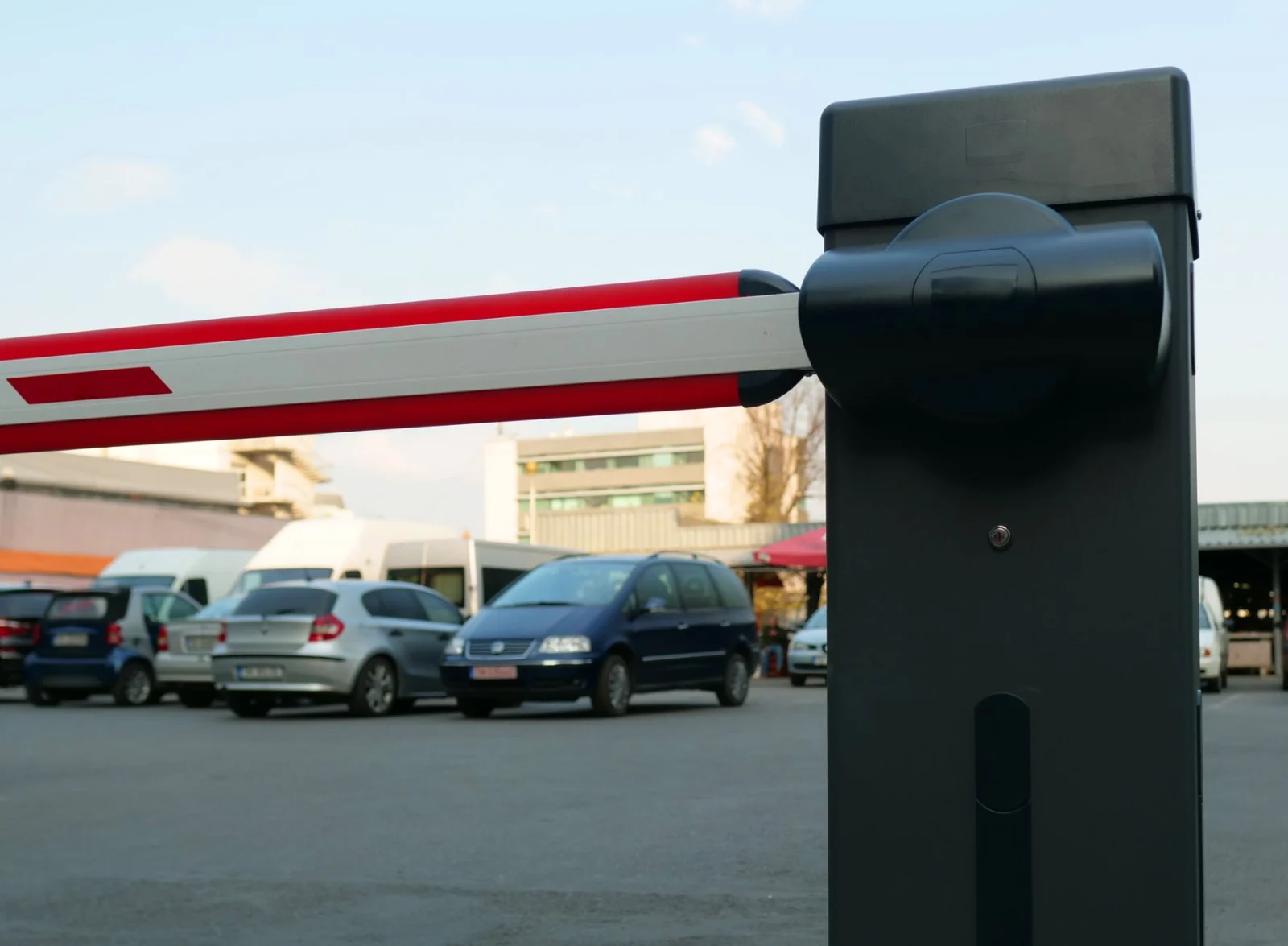
The official cruise car park sits within the port estate, a short walk from the terminal building. It is barrier-controlled and only for passengers. The key points to know before you drive up:
You book through your cruise line, not the port. The Port of Tyne says its parking cannot be prepaid or reserved directly and advises cruise passengers to check with their cruise line for rates.
Pre-booking is required and capacity is limited. Fred. Olsen asks guests to reserve at least three days before departure, and in busy months spaces can go much earlier.
Number-plate recognition. Fred. Olsen’s car park uses vehicle recognition, so when you book you give your registration, car make and whether you need a disabled space. There is no paper voucher to display if you have prepaid.
Luggage is handled in the car park. On arrival, staff direct you to a luggage drop area inside the car park, then to a space. You walk the short distance to the terminal or use the shuttle bus from the car park.
Bags come back to you. On disembarkation, Fred. Olsen delivers luggage for parking guests to a reclaim point in the car park, so you are not dragging cases far.
The car park is locked during the cruise. Ambassador notes that access is only on embarkation and disembarkation days. If you think you may need your car mid-cruise, speak to the line first.
Arriving by car, follow the signs for the International Passenger Terminal and the main entrance, then the cruise parking signs. Ambassador’s directions say to take the first left inside the entrance into the car park.
Fred. Olsen cruise parking at Newcastle
Fred. Olsen is the biggest user of the terminal and celebrated 20 years of sailing from the Tyne in August 2026. Its 2027 programme of 27 sailings from Newcastle is its largest ever, with ships such as Bolette and Balmoral heading to Arctic Norway, Scandinavia, the Baltic and southern Europe. Parking is booked through Fred. Olsen Guest Services on 0800 0355 145 and currently costs £19.25 per night. If you are still choosing a ship, our guide to the best Fred. Olsen cruise ships compares the fleet.
Ambassador cruise parking at Newcastle
Ambassador Cruise Line has made the Port of Tyne a regular summer base, with Ambition running its fourth no-fly season from the Tyne in late summer 2026 and further sailings on sale for 2027. Ambassador guests use a secure car park reserved for its passengers and arrange a parking permit through the line. Ambassador does not publish a price on its port page, so check the current rate with Guest Services or your travel agent when you book.
Newcastle cruise terminal parking rates compared
Prices change, and cruise lines set their own rates, so treat the table below as a guide and confirm the figure when you book.
Option
Typical cost
Booking
Best for
Fred. Olsen cruise car park
£19.25 per night
Pre-book via Fred. Olsen, at least 3 days ahead
Fred. Olsen guests wanting the simplest option
Ambassador cruise car park
Check with Ambassador
Parking permit via Ambassador
Ambassador guests
Port of Tyne pay-on-exit car park (DFDS ferry)
First 4 hours free, then £18 per 24 hours
No booking; pay on return
DFDS ferry and mini-cruise passengers
Private driveways and car parks nearby
Varies widely; check live prices
Online parking apps
Flexible budgets, short stays
Drop-off and taxi
Taxi fare only
Book a local firm
Anyone with someone to drive them
A quick worked example: a 10-night Fred. Olsen cruise at £19.25 per night comes to £192.50 for parking. Two people taking a taxi from elsewhere in Tyneside and back may well pay less, so it is worth adding up both before you commit.
Cruise parking at the Port of Tyne is barrier-controlled and pre-booked. Photo: Adrian Frentescu on Pexels
DFDS ferry parking is different
Much of what you read online about parking at the Port of Tyne actually refers to the DFDS ferry to Amsterdam. The port’s own parking page lists the ferry tariff: the first four hours are free, then it is £18 per 24 hours, paid on return by cash or card at pay stations in the terminal or at the car park entrance. A 44-hour mini-cruise therefore costs about £36. The car park is open 7am to 8pm daily, and a lost ticket is charged at £25 per day.
If you are on a cruise ship rather than the ferry, do not assume you can simply turn up and pay on exit. Cruise passengers are directed to their cruise line’s pre-booked parking, so always check your booking documents.
Is there free parking near the cruise terminal?
Not really. There is no free long-stay parking at the terminal, and leaving a car for a week or two on nearby residential streets is a gamble: restrictions can change, North Tyneside Council enforces its parking rules, and an unattended car for 14 nights is an easy target. Retail car parks at Royal Quays and the surrounding area have time limits, so they are not a safe place to leave a car for a cruise.
If you want to save money, the better options are:
Private spaces booked online. Parking apps list driveways and small car parks in the NE29 and NE30 postcodes near the port. Prices and distances vary a lot, so read the listing carefully, check that long stays are allowed and plan how you will get from the space to the terminal with luggage.
Park and ride by Metro. Some Tyne and Wear Metro stations have car parks. If you live near one, it can be cheaper to leave the car close to home and take the Metro to Percy Main, though you then have a walk or short bus ride with your bags.
A lift from family or friends. The drop-off point outside the terminal is free to use, but it is small, so arrive at your allocated embarkation time and arrange pick-up for your disembarkation time.
Getting to the Port of Tyne without a car
Metro
The nearest Metro station is Percy Main on the yellow line. From Newcastle Central Station, the Metro to Percy Main takes around 15 to 20 minutes, then it is roughly a 20 to 30 minute walk to the terminal. Fred. Olsen suggests the R19 bus towards Royal Quays as an alternative to the walk if you have heavy cases. Check current times with Nexus before you travel.
Taxi
Local firms that the cruise lines list include Blueline Taxis (0191 262 6666), Premier Taxis (0191 638 0638) and Five Star Taxis (0191 222 0555). Expect around 30 minutes from Newcastle Central Station and about 35 minutes from Newcastle Airport, which is roughly 14 miles away, depending on traffic.
Cruise line transfers
Fred. Olsen sometimes runs a paid shuttle from the terminal to Newcastle Central Station on disembarkation day, booked on board on a first come, first served basis. Some lines also offer coach packages from around the UK, which avoid the parking question altogether.
Most drivers reach North Shields via the A19 and the Tyne Tunnel. Photo: Mike Bird on Pexels
Driving to the cruise terminal: the Tyne Tunnel
Many drivers coming from the south reach North Shields via the A19 and the Tyne Tunnel. There are no toll booths: the tunnel uses a pay-later system, and the car toll is £2.60 from May 2026 (less with a pre-paid account). It is easy to forget on the morning of a cruise and then miss the payment deadline while you are at sea, which leads to a penalty notice. Pay online before you set off, or set up an account if you are a regular visitor.
From the A1 southbound, you can avoid the tunnel by leaving at junction 80 for the A19, then following signs for Royal Quays, the A193 and the A187 to Coble Dene. Follow the brown ferry and cruise terminal signs for the last stretch.
Parking at Newcastle Airport or a hotel
If you are flying into Newcastle before a cruise, airport parking is rarely the cheapest way to leave a car for a sailing from North Shields, because you still need a taxi of around 35 minutes each way. It mainly makes sense if you are combining a flight and a cruise.
A more popular choice is a stay-and-park deal: spend the night before your cruise at a hotel near the port and leave the car there. We cover the options in our separate guide to hotels near Newcastle cruise terminal with parking, and if you sail from other ports too, see our roundup of hotels near UK cruise ports.
Tips for a smooth arrival
Book parking as soon as you book the cruise, especially for popular Norwegian fjords sailings in summer.
Double-check the registration on your parking booking if you change car, since entry relies on number-plate recognition.
Arrive at your allocated check-in time, not hours early; the car park and drop-off areas are not large.
Keep medication, documents and anything valuable with you rather than in the car.
Take a photo of where you parked and the bay number.
Planning your next sailing from the Tyne? Our guide to Norwegian fjords cruises from the UK covers the most popular no-fly itineraries from Newcastle and other ports.
FAQs
Can you park at Newcastle cruise terminal?
Yes. The Port of Tyne has a secure car park a few minutes’ walk from the International Passenger Terminal. Cruise passengers book it through their cruise line, such as Fred. Olsen or Ambassador, and pre-booking is needed because spaces are limited.
How much is cruise parking at the Port of Tyne?
Fred. Olsen currently charges £19.25 per night. Ambassador arranges permits for its guests, so check its current rate. DFDS ferry passengers pay £18 per 24 hours after the first four free hours.
Is there free parking at Newcastle cruise terminal?
No. There is no free long-stay parking at the terminal. The cheapest alternatives are a lift to the free drop-off point, the Metro to Percy Main, or a private space booked online.
What is the nearest Metro station to the Port of Tyne?
Percy Main on the Tyne and Wear Metro yellow line. It is roughly a 20 to 30 minute walk to the terminal, or a short bus ride.
Can I get my car during the cruise?
Usually not. Ambassador says its car park is locked after sailing and is only accessible on embarkation and disembarkation days, so contact your line in advance if you might need your vehicle.
The best gay cruises for 2027 fall into three groups. First come full-ship charters, where everyone on board is part of the LGBTQ+ event: Atlantis for a big party, VACAYA for an all-LGBTQ+ crowd, Olivia for women, and Brand g for small luxury ships. Next are group cruises on regular ships, run by companies like Big Gay Cruise and BearCruise. Last are mainstream lines with a good record on inclusion, led by Virgin Voyages and Celebrity Cruises. Below are 15 options that are operating or have sailings on sale at the time of writing, plus tips on choosing one and staying safe in port.
Full-Ship LGBTQ+ Charters
On a charter, the company books the whole ship. It brings its own entertainers, DJs and themed parties, and the cruise line’s crew runs everything else. You get a ship where nobody has to think twice about holding hands at the pool.
1. Atlantis Events
Atlantis is the biggest name in gay cruising. Its sailings are mostly for gay men, though everyone is welcome. Expect huge deck parties, big-name performers and a lively, social crowd. Coming up: a San Diego to Mexico cruise on Holland America’s Koningsdam (November 7-14, 2026), a Thanksgiving Caribbean cruise on Virgin Voyages’ Resilient Lady (November 22-29, 2026) and a 7-night Caribbean cruise from Miami on Royal Caribbean’s Allure of the Seas (March 7-14, 2027). There’s also a Southern Caribbean cruise from San Juan on Valiant Lady (March 27-April 3, 2027). Its Baltic cruise on Oceania Marina in July 2027 is listed as sold out. Interior cabins on the Allure sailing have been advertised from around $1,500 per person.
2. RSVP (part of the Atlantis family)
RSVP began in 1985 and was one of the first gay cruise companies. It now sits under Atlantis and sails only now and then, and we found no confirmed 2027 RSVP sailing at the time of writing. If you liked RSVP’s smaller, more relaxed style, check Atlantis for any new RSVP-branded sailings.
3. VACAYA
VACAYA runs all-LGBTQ+ vacations for gay, lesbian, bi, trans and queer travellers and their friends. The mood is welcoming and mixed, and it isn’t only about partying. Its 10th-anniversary Caribbean cruise sails February 14-21, 2027. Later in 2027 there’s a “Total Eclipse” Mediterranean cruise timed for the August 2 solar eclipse, plus Antarctica and Christmas markets trips. VACAYA has also planned a small-ship “Arabian Nights” cruise for March 2027 that starts in Saudi Arabia. Travel writers have questioned that choice, so read the destination notes below before you book that one.
4. Olivia
Olivia has been running trips for lesbian and queer women for more than 50 years. Its 2027 line-up includes an “XOXO” Caribbean cruise on Holland America’s Eurodam in February and a small-ship Japan voyage with Windstar. There’s also a Barcelona to Lisbon sailing in June, a Greek Isles cruise in October that stops at Lesbos, and several river cruises in Europe.
5. Brand g Vacations
Brand g is the luxury choice. It uses small ships, from river boats to expedition yachts with about 40-200 guests, and its fares include most extras. A highlight is a Greek Isles and Turkey voyage on Atlas Ocean Voyages’ World Traveller (September 12-23, 2027), advertised from around $8,500 per person. River trips on the Rhine and Danube and a Mekong voyage are also planned.
6. The Cruise by La Demence
La Demence started as a well-known Brussels club night, and its yearly Mediterranean cruise has been running since 2011. It’s very much a party cruise for men, usually on an older mid-size ship, which keeps fares lower than the bigger US brands. 2027 dates weren’t confirmed when we checked, so contact the organisers directly.
Photo: Louis on Pexels
Small-Ship and Adventure Options
7. Out Adventures
Out Adventures runs small-group trips on yachts, river boats and expedition ships. In 2027 that includes Croatia yacht weeks, the Galápagos, a Mekong river cruise, an Iceland circumnavigation and Antarctica in December. It suits travellers who care more about scenery and guides than drag brunches.
8. Outbound and Source Journeys
Smaller organisers like Outbound and Source Journeys book small, upscale ships for LGBTQ+ groups. One example is Outbound’s British Isles cruise from Portsmouth (June 30-July 7, 2027), with interior cabins advertised from around $2,000. Source Journeys has trips such as Galápagos and Antarctica sailings.
9. GaySail and Pride Sailing Holidays
Want something really small? These companies run crewed catamaran and yacht weeks for roughly 10-28 guests in places like Greece, Croatia, the Balearics and the Caribbean. You’ll swim every day and visit quieter harbours, and the cabins are compact.
Group Cruises on Mainstream Ships
A group cruise means a block of cabins on a regular sailing. You get private parties, meet-ups and sometimes your own shore trips, and you share the ship with other passengers. Fares are often lower than a charter, and there are more dates and ports to choose from.
10. Big Gay Cruise
Big Gay Cruise brings groups of several hundred people onto big mainstream ships. Its January 28-February 6, 2027 Southern Caribbean cruise on Freedom of the Seas goes from Miami to Curaçao, Aruba and Perfect Day at CocoCay. Interiors have been advertised from around $1,500. It also has sailings on Virgin Voyages and Royal Caribbean from the US West Coast and Galveston.
11. BearCruise
BearCruise is a group program for bears, cubs, otters and their friends. It runs on mainstream ships, including Holland America and Virgin Voyages, in the Caribbean, Mexico, Alaska and Europe. It’s a friendly, social option at regular cruise prices.
Photo: Karina Badura on Pexels
LGBTQ+-Friendly Mainstream Cruise Lines
12. Virgin Voyages
Virgin’s ships are adults-only (18+) and casual, with no dress codes. Drag shows and Pride parties are part of the regular schedule, and its ships are popular for Atlantis and Big Gay Cruise charters. Cruise Critic readers named it Best for LGBTQ+ Travelers in 2025. Wi-Fi, basic drinks and tips are included in the fare. Our Virgin Voyages ships ranked by reviews can help you choose a ship.
13. Celebrity Cruises
Celebrity led the way on equal marriage at sea. Most of its fleet is registered in Malta, which made it possible in 2018 for its captains to legally marry same-sex couples on board, starting on Celebrity Equinox. Its ships are regularly used for LGBTQ+ charters too, and VACAYA’s February 2027 Caribbean cruise is reported to be on Celebrity Beyond (confirm with VACAYA). The mood is modern and relaxed, and onboard Pride events are common.
14. Royal Caribbean
Royal Caribbean’s mega-ships host the largest gay charter of 2027 (Atlantis on Allure of the Seas) and Big Gay Cruise groups too. On regular sailings the crowd is mixed and family-heavy, and onboard LGBTQ+ meet-ups are often listed in the daily programme, so check yours.
15. Holland America Line
Holland America’s mid-size ships come up again and again for LGBTQ+ charters, from Olivia on Eurodam to Atlantis on Koningsdam. Its calmer, music-focused style suits travellers who want comfort and good ports more than all-night parties.
Charter vs Group Cruise: Which Is Right for You?
Full-ship charter
Group on a regular ship
Who’s on board
Almost all LGBTQ+ guests
Your group plus regular passengers
Entertainment
Custom parties, performers, DJs
Ship’s own shows plus group events
Price
Often higher; cheaper cabins sell out early
Usually close to standard fares
Choice of dates
Limited; one sailing per event
Much wider
Charters often sell out months, sometimes a year, ahead. If you’re watching prices, our guide to cruise deals for 2027 covers when to book.
Safety and Legal Tips for LGBTQ+ Cruisers
Check the laws at each port. Same-sex relationships are still illegal in some places cruise ships visit, including Jamaica and parts of the Caribbean, the Middle East and Africa. Courts in several Caribbean countries, including Saint Lucia in 2025, have struck down these laws, but local attitudes can be slower to change. Your government’s travel advice is a good place to check.
Book excursions through the ship or a trusted LGBTQ+-friendly operator in less welcoming ports. Charter companies often arrange their own vetted tours.
Be careful with dating apps in port. Scams and entrapment have been reported in some countries.
Read the code of conduct. Charters set rules on public behaviour in port, and some destinations ask groups to keep a lower profile.
Staying on board is always an option. On a charter day in port, the ship is often at its quietest.
Pride sailings are just one kind of charter; our guide to the best themed cruises for 2027 covers music, fan and hobby cruises too.
Many of the same promoters also run genre-themed charters, so it is worth browsing the music cruises sailing in 2027 if you want a concert line-up at sea.
FAQs
What is the biggest gay cruise in 2027?
Atlantis’s March 7-14, 2027 Caribbean cruise on Royal Caribbean’s Allure of the Seas is set to be the largest. It’s a full-ship charter on a ship that holds around 5,000-plus guests.
Are there cruises for lesbians and queer women?
Yes. Olivia focuses on women and runs ocean, small-ship and river cruises. VACAYA and Brand g also welcome women and the wider LGBTQ+ community.
Do I have to be gay to go on a gay cruise?
No. Most charters welcome friends and allies, but expect the programme and atmosphere to centre on the LGBTQ+ community.
How much does a gay cruise cost?
At the time of writing, big-ship charters and groups usually start at around $1,400-$2,000 per person for an interior cabin. Small-ship luxury trips often run $7,000-$12,000 or more. Prices change often, so check with the operator.
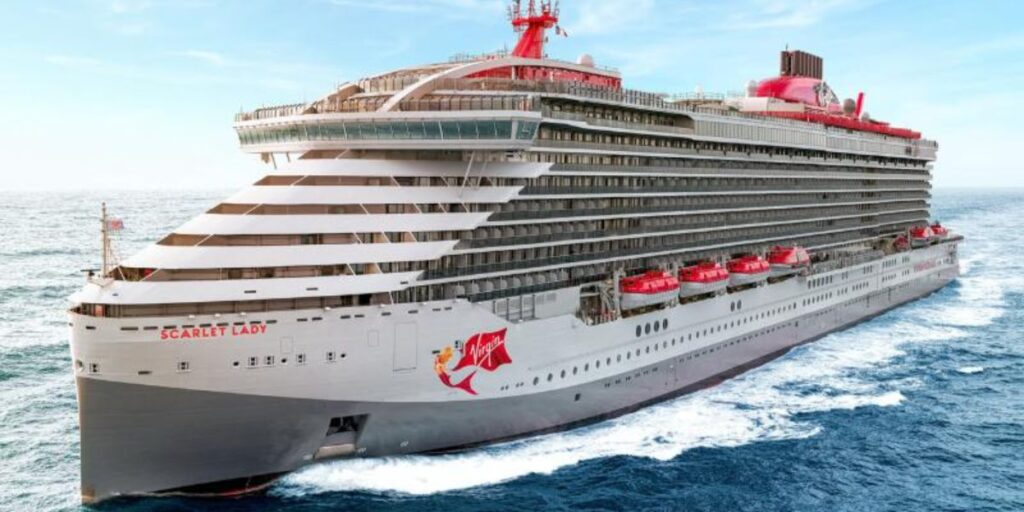
Virgin Voyages, one of the newest cruise lines in the world, has created a new Scarlet Summer Season Pass for anyone who wants to work from a cruise ship.
The pass is aimed at remote workers who are able to embark on a month-long cruise in the Mediterranean, so that they can still fulfill their work obligations but do so with all the luxury of a cruise around it.
The pass is available for June, July, August or September 2024 on the Scarlet Lady and includes a four-week cruise itinerary that will visit ports such as Palma de Mallorca, Cannes, and Civitavecchia for Rome.
Guests will have access to Premium WiFi with the package, which offers speeds of 1.5 Gbps, as well as a host of other extras such as a wash and fold laundry service, a daily coffee credit, and you’ll be given RockStar access, which includes an extra support team onboard and access to Richard’s Rooftop, a private lounge with Moet happy hours.
There’s also a dedicated concierge service available prior to sailing to help guests plan their month-long working adventure.
The pass, which is designed for two people sharing, costs $9,900 per person. This includes Central Sea Terrace accommodations, early booking access for restaurants and shore excursions, and a Champagne welcome onto the ship.
I’ve been fortunate enough to be able to do my work from anywhere. When I started Virgin, I was actually working out of a houseboat. I’ve never thought of work and play as two different things; it’s all just living.
We want to give sailors that same opportunity, so we came up with this idea to have them travel the world while working aboard our beautiful ships.
Richard Branson, Virgin Group founder
NEW DEALS JUST RELEASED!
Don’t miss the latest Virgin Voyages offers…
Related Posts
If you enjoyed this article please share!
Jenni Fielding is the founder of Cruise Mummy. She has worked in the cruise industry since 2015 and has taken over 30 cruises. Now, she helps over 1 million people per month to plan their perfect cruise holidays.
Cruise vs Center Parcs comes down to what kind of break your family wants. Center Parcs is the easier, cheaper option for a short, active stay in a forest with no passports and no packing rules. A family cruise from Southampton costs more for the same number of nights, but it covers much more: meals, entertainment, free kids clubs and a different country most mornings.
Below we compare the two side by side using 2026 and 2027 prices, then cost out a real example for a family of four and show which one suits which kind of family.
Cruise vs Center Parcs at a glance
Factor
Center Parcs (UK)
Family cruise from Southampton
Typical length
3-night weekend (Fri-Mon), 4-night midweek (Mon-Fri) or 7 nights
2-5 night short breaks; 7 nights is the most common family option
Accommodation
Self-catering lodge in the woods
Cabin (inside, sea view or balcony), cleaned daily
Food
Not included: you cook or pay for restaurants
Main restaurants and buffet included
Swimming
Subtropical Swimming Paradise included
Pools, and on some ships waterslides, included
Kids clubs
None in the cruise sense; paid activities by the session
Free supervised clubs, usually from age 6 months or 3 years up to 17
Evening entertainment
Limited; most families go back to the lodge
Theatre shows, live music, family events included
Passports
Not needed (UK villages)
Needed for every family member on European itineraries
Biggest hidden costs
Activities, bike hire, eating out
Drinks, excursions, Wi-Fi, gratuities on some lines
Where you stay: lodge vs cabin
There are five Center Parcs villages in England (Sherwood Forest, Elveden Forest, Longleat Forest, Whinfell Forest and Woburn Forest) and one in Ireland, Longford Forest. A new village near Hawick in the Scottish Borders was given planning approval in December 2025, but it is not open yet. Every village follows the same idea: car-free forest with lodges spread among the trees.
A lodge is the real strength. Even the standard two-bedroom Woodland Lodge gives a family of four a kitchen, a lounge, separate bedrooms and a terrace. Upgraded lodges add hot tubs, saunas or games rooms. Breaks start on a Monday or Friday, with early arrival from 10am.
A cruise cabin is far smaller. A standard inside cabin for four usually means two beds plus sofa beds or pull-down bunks, with one small shower room. Family-friendly ships offer bigger family cabins and connecting rooms, but they sell out early for school holidays. The trade-off is that you spend very little time in a cabin, and someone else makes the beds every day.
Activities and things for kids to do
At Center Parcs, the Subtropical Swimming Paradise, the forest trails, the lake, the beach and adventure playgrounds are all included, plus a free children’s disco. Almost everything else is booked and paid for by the session: archery starts at about £21 per person, kayaking, paddle boarding and craft sessions all cost extra, and bike hire for a four-night break is roughly £45 for an adult and £35 for a child. Families who book two or three activities a day can easily spend £500 or more on top of the lodge.
On a cruise, the kids clubs are the big difference. They are free, supervised and run for most of the day and evening, split by age. P&O Cruises runs The Reef for children from six months to 12 years, with a separate teen space for 13 to 17. MSC Virtuosa has LEGO-themed clubs for younger children plus teen clubs. Royal Caribbean’s Adventure Ocean is one of the strongest programmes at sea, and ships like Liberty of the Seas add a FlowRider surf simulator, waterslides, an ice rink and a climbing wall, all at no extra charge.
Both holidays are built around water play, but only one includes your meals. Photo: Vika Glitter on Pexels
Food and drink
This is where the two holidays are most different. Center Parcs is self-catering. Most families bring a food shop, cook a few meals in the lodge and eat out a couple of times. The on-site Parcmarket is handy but pricier than a supermarket, and village restaurants charge high-street prices. A rough planning figure for a family of four over four nights is £180 to £400, depending on how often you eat out.
On a cruise, breakfast, lunch and dinner in the main dining rooms and buffet are included, as are snacks, tea, filter coffee and water. Speciality restaurants, most soft drinks and all alcohol cost extra. P&O’s Refresh soft-drinks package costs £14 per person per day if bought before you sail (£16 on board), and children aged 17 and under get Refresh free when every adult in the cabin buys the alcoholic Classic (£49 a day) or Deluxe (£58 a day) package. MSC has offered drinks packages from around £28 per person per day in its pre-cruise deals.
Convenience and travel
Center Parcs wins on simplicity. You drive there, unload at the lodge and park for the rest of the stay. There is no need for passports, travel insurance for abroad, or packing limits, and short breaks are only three or four nights. That makes it easy to fit around a school inset day or a long weekend.
A cruise from Southampton is still a no-fly holiday, but there is more admin. Every family member needs a valid passport for European ports, you should have travel insurance, and children usually need to be at least six months old to sail (some lines and longer itineraries ask for older). Embarkation day takes a few hours, and you need to factor in parking at the port or a train to Southampton. Seasickness is possible in the Bay of Biscay or the North Sea, though big ships are very stable most of the time.
Which ships sail from Southampton matters too. P&O’s Iona and Arvia are its biggest family ships and sail mainly 7-night trips to Norway, Spain and Portugal. Ventura runs some 4 and 5-night short breaks. Note that P&O’s Aurora and Arcadia are adults-only, so their short breaks are not an option for families. MSC Virtuosa offers short breaks and longer no-fly trips, and Royal Caribbean based Liberty of the Seas in Southampton for 7-night sailings in 2026, with Freedom of the Seas due to replace her in summer 2027. To help choose between P&O’s ships, see our P&O Cruises ships compared guide.
How much is Center Parcs for a week vs a cruise?
Center Parcs prices are per lodge, not per person, which helps larger families. Cruise fares are quoted per person based on two sharing, with third and fourth guests in the cabin usually charged a lower fare.
Center Parcs prices UK: 2026 and 2027
Center Parcs’ published from-prices per lodge range from £399 for winter breaks to £979 for summer school holiday breaks, with October and May half-term from £829 and Easter from £959.
A two-bedroom Woodland Lodge for a four-night midweek break in term time can be around £500, but the same lodge in October half-term 2026 cost roughly £1,529 to £1,849 depending on the village.
A peak August week in 2026 was roughly £2,148 (Whinfell) to £2,648 (Longleat) for the lodge alone. Whinfell is usually the cheapest English village.
Prices can more than halve when you move a break a week either side of a school holiday.
Cruise fares from Southampton
P&O short breaks in 2027 start from about £359 to £486 per person for 4 to 5 nights in an inside cabin.
7-night Iona and Arvia sailings in 2027 start from about £564 to £779 per person for an inside cabin, with balconies from about £800 to £1,600 per person depending on date.
P&O and MSC (for UK guests) include gratuities in the fare. Royal Caribbean adds them on top, currently about $18.50 per person per day for standard cabins, including children.
Comparing the full cost, not just the headline price, gives the fairest answer. Photo: Puwadon Sang-ngern on Pexels
Cost example: family of four, school holidays
Here is a rough comparison for two adults and two children aged 8 and 11, using the price ranges above. These are planning estimates, not quotes, and your dates will change them.
Cost
Center Parcs, 4 nights midweek (half-term)
Center Parcs, 7 nights (August)
Cruise, 7 nights (P&O Iona or Arvia, inside cabin, August)
Accommodation or fare
£1,300-£1,850
£2,150-£2,650
£2,300-£3,200
Food
£180-£400
£350-£700
Included
Activities or kids clubs
£200-£500
£350-£800
Kids clubs included
Bikes or soft drinks
About £160 bike hire
About £200 bike hire
About £200-£400 (optional drinks)
Excursions
None
None
£0-£600 (you can explore ports on foot)
Travel and parking
Fuel only
Fuel only
Fuel plus about £100-£180 port parking
Rough total
£1,850-£2,900
£3,050-£4,350
£2,600-£4,400
The surprise for many families is that a week on a cruise can cost about the same as a week at Center Parcs once food and activities are added in. For a short break, though, Center Parcs is usually cheaper, especially in term time, when a four-night midweek can come in at around £1,000 all in. For cruises, booking early and watching for fare drops is the best way to save; our guide to cruise deals for 2027 covers when the best offers appear.
Is Center Parcs worth it, or is a cruise better?
Neither is better for everyone. Here is how it usually works out by family type.
Babies and toddlers: Center Parcs. You get your own kitchen, nap times are easy, there are free under-3 swimming sessions and you do not need passports. Cruise nurseries are limited and may charge.
Children aged 3 to 12: either works, but a cruise gives parents more of a break. Free kids clubs, included meals and evening shows are hard to match at Center Parcs.
Teenagers: usually a cruise. Teen clubs, waterslides, FlowRider and new ports every day hold their attention better than a fourth day in the forest.
Multi-generational groups: Center Parcs for a big shared lodge where everyone can be together; a cruise if grandparents want to be looked after and the group is happy to meet up at dinner.
Tight budget, short break: Center Parcs in term time or outside half-term weeks.
A week in the summer holidays: price both. A 7-night cruise can be similar in total cost and includes far more.
For a short break, usually not, since a term-time Center Parcs midweek can cost around £1,000 all in for four. For a full week in the school holidays, a 7-night cruise from Southampton can end up costing about the same once Center Parcs food and activities are added.
How much is Center Parcs for a week?
For a family of four in a two-bedroom lodge, a summer holiday week in 2026 was roughly £2,150 to £2,650 for the lodge alone, depending on the village. Term-time weeks can cost under half that.
What is included at Center Parcs?
Your lodge, unlimited use of the Subtropical Swimming Paradise, the forest, lake, beach, playgrounds, a children’s disco and Wi-Fi. Food, most activities, bike hire, pool towels and the spa cost extra.
Are kids clubs free on a cruise?
Yes, on P&O Cruises, MSC and Royal Caribbean the main kids and teen clubs are included in the fare. Nursery care for the youngest children and a few special sessions can carry a charge.
Is there anything better than Center Parcs in the UK?
It depends what you want. Bluestone in Wales and Forest Holidays are similar forest breaks, while a family cruise from Southampton is the main no-fly alternative if you want meals, entertainment and kids clubs included.
Just a week after Royal Caribbean announced that 2025’s new Icon-class ship would be delayed, the cruise line has now revealed that the inaugural sailing for 2024’s Utopia of the Seas is also changing – but in the opposite way.
The cruise line has announced that Utopia of the Seas will actually be ready to launch early, and so has announced a new 3-night cruise that will become the inaugural cruise, departing before the original inaugural.
This could still be disappointing news to loyal Royal Caribbean fans. Being on a ship’s inaugural sailing is seen as a big deal, so to have that inaugural cruise become the second sailing for a ship devalues it.
Royal Caribbean has announced that guests booked on the 4-night 22nd July 2024 cruise can now move their booking to the new 3-night 19th July cruise if they wish.
The cruise line has said that anyone who does transfer will retain their original stateroom and will be given a pro-rated refund for one day of cruise fare along with any extras they’ve already paid, such as drinks packages, WiFi internet, and gratuities.
And anyone who has booked their airfare through Royal Caribbean will have flights amended automatically if they do transfer. The cruise line is also offering to cover up to $200 of non-refundable fees for guests who cancel non-refundable hotels or flights domestically, or $400 for international travel.
Guests must make their decision before Tuesday 12th March, as the cruise line needs to get the new 3-night sailing on sale for the general public for anyone who does not transfer their booking, as well as then selling the staterooms on the 4-night cruise on 22nd July for guests who have transferred and now left them unsold.
Royal Caribbean has also said that the second cruise will still have special events, and is asking guests to consider both cruises as inaugural, so that anyone unable to change to the new dates does not feel like they’re missing out.
NEW DEALS JUST RELEASED!
Don’t miss the latest Royal Caribbean offers…
Related Posts
If you enjoyed this article please share!
Jenni Fielding is the founder of Cruise Mummy. She has worked in the cruise industry since 2015 and has taken over 30 cruises. Now, she helps over 1 million people per month to plan their perfect cruise holidays.