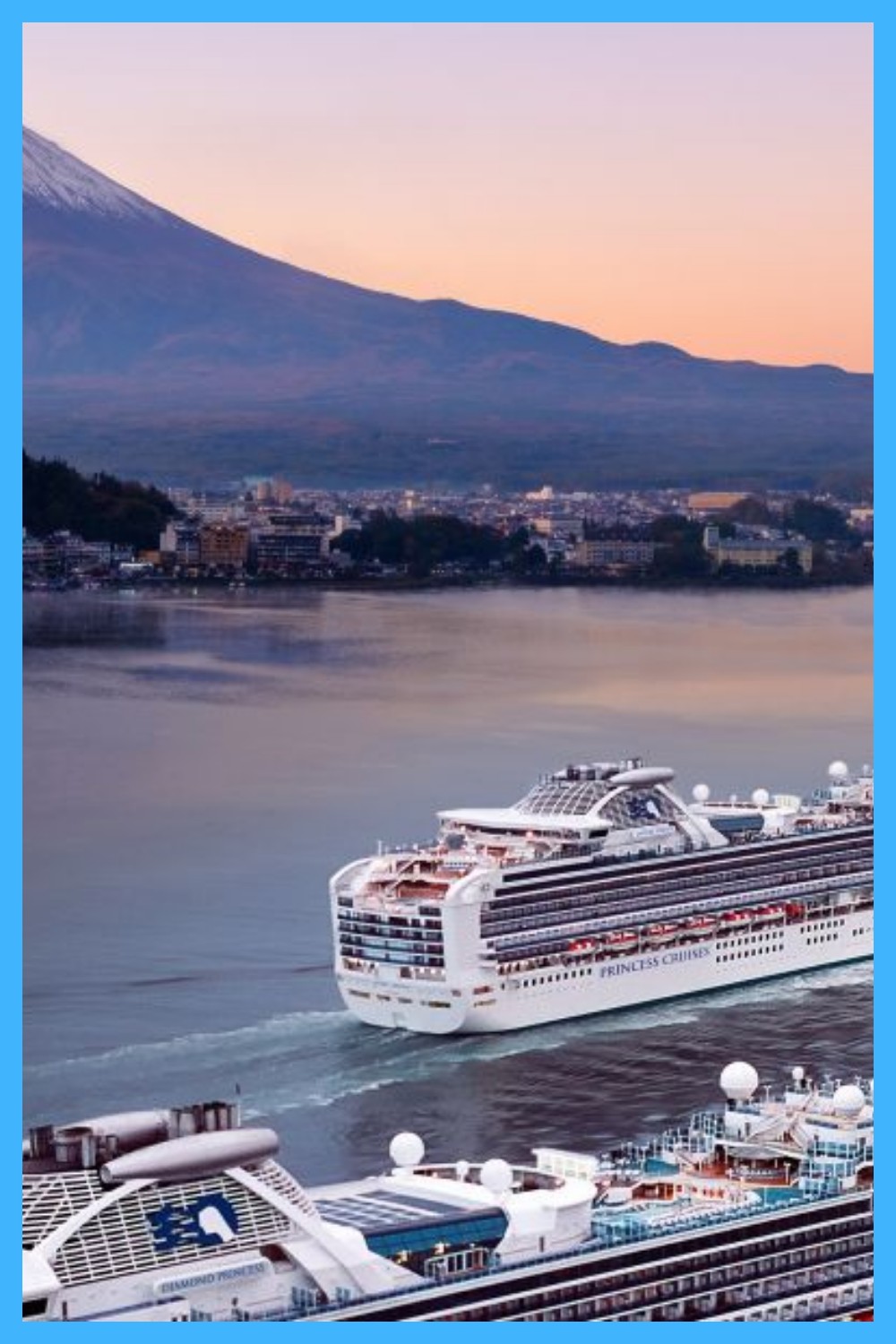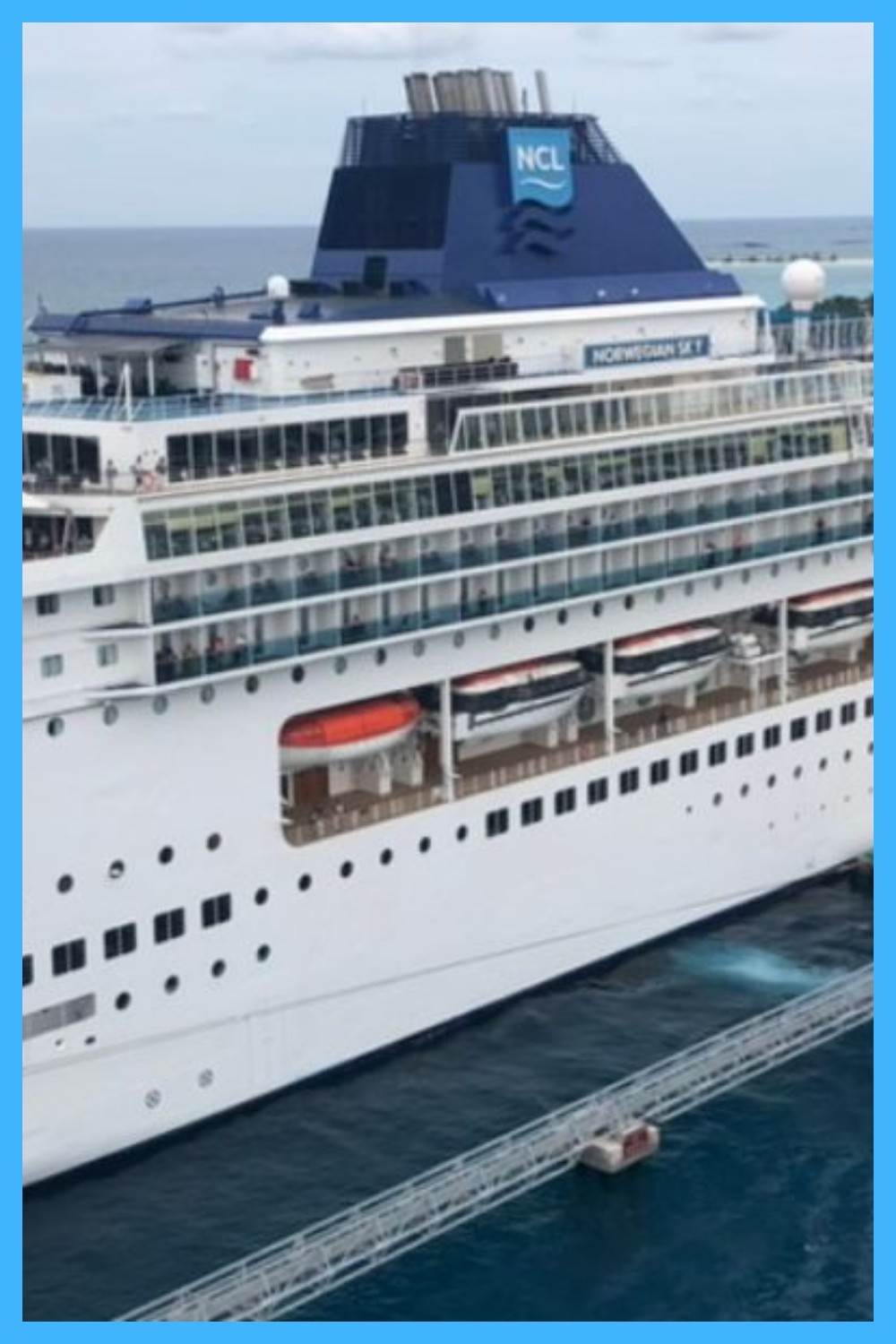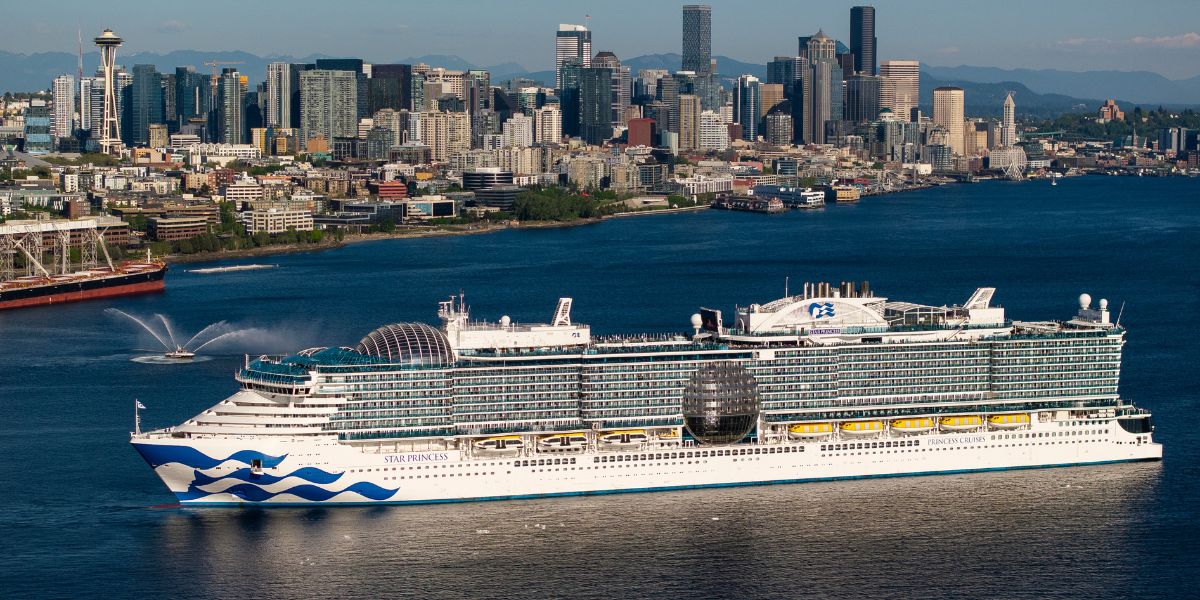
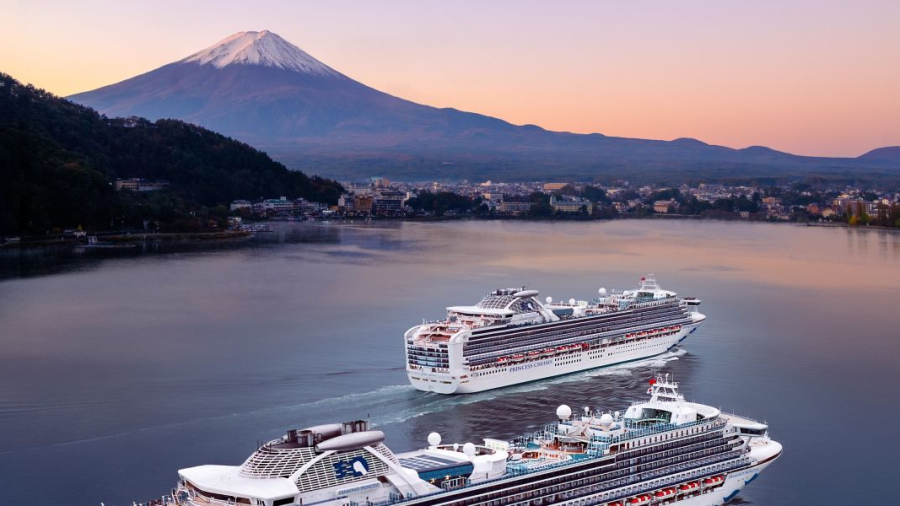
Princess-Cruises-ships-in-Asia.jpg

7 Things Asian Cruise Ships Have That Others Don’t


Step onboard a cruise ship that’s designed for Asia guests and you’ll notice something feels different almost immediately – and it’s not just the language on the daily programme.

From the way meals stretch late into the evening to the kinds of social spaces that stay busy long after sunset, these ships are designed around habits many western cruise lines barely consider.
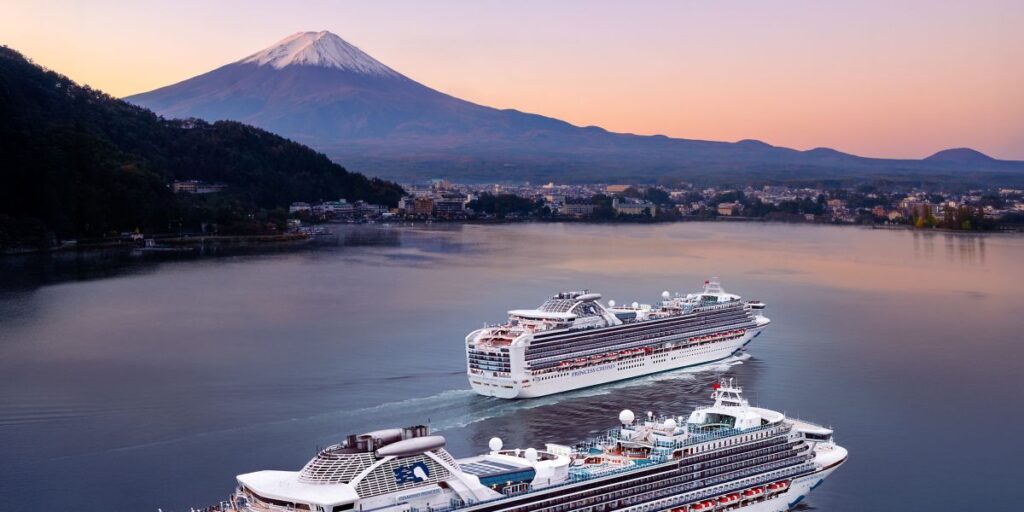
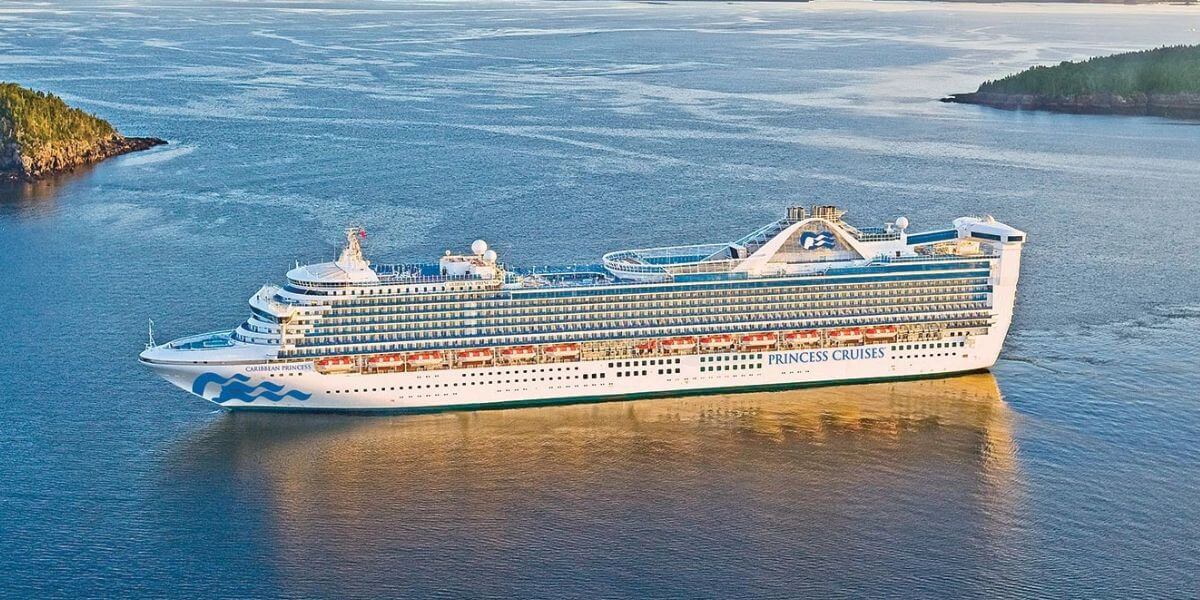
Princess Cruises ships in Asia

Most people assume cruise ships are built to one global template, with only minor tweaks for itinerary. In reality, ships designed for the Asian market often make very deliberate design and programming choices – some obvious, others quietly tucked into deck plans and cabin details.

Some of these features are instantly appealing, others take a bit of adjustment, and a few might genuinely change how you feel about a ship once you’re onboard. And there’s one small detail in particular that tells you more about a ship’s intended audience than almost anything else…

Ships Designed For the Asian Market

Not all cruise ships serving Asia are designed in the same way, and it’s definitely worth knowing which market a ship was originally built for.
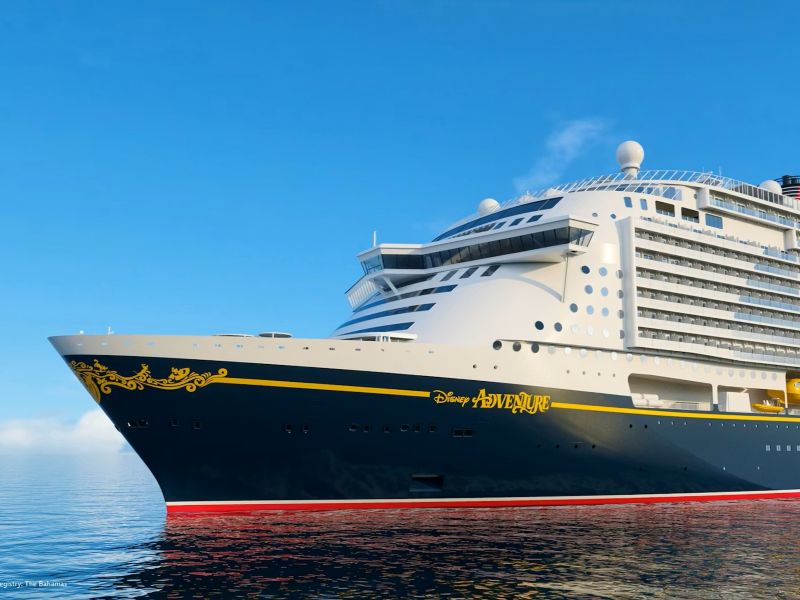
Disney Adventure Render

The most Asia-focused ships belong to the Dream Cruises brand, but main mainsteam American and European-owned cruise lines also have ships that are marketed almost exclusively for Asian guests.

Royal Caribbean’s Spectrum of the Seas was purpose-built for the Asian market from the outset, while Princess Cruises has taken a more tailored approach: Diamond Princess leans more heavily towards Japanese preferences, whereas Majestic Princess incorporates stronger Chinese influences.

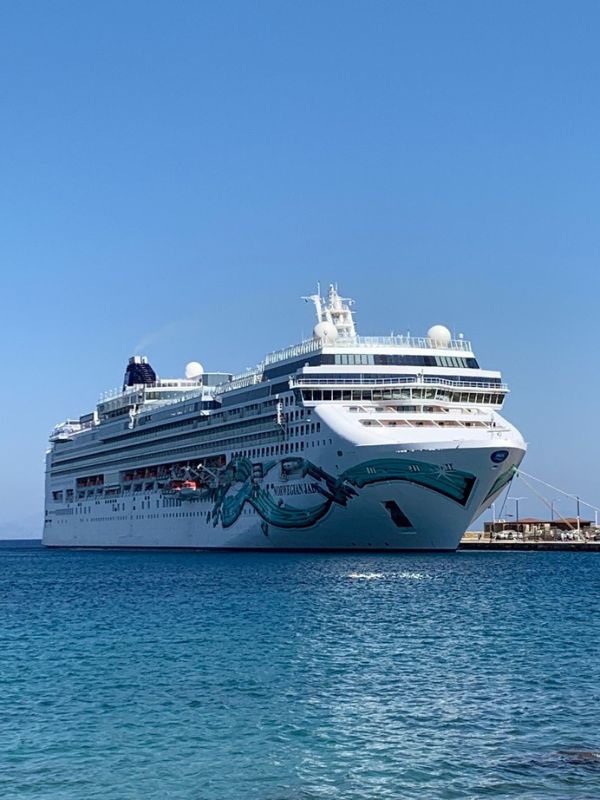
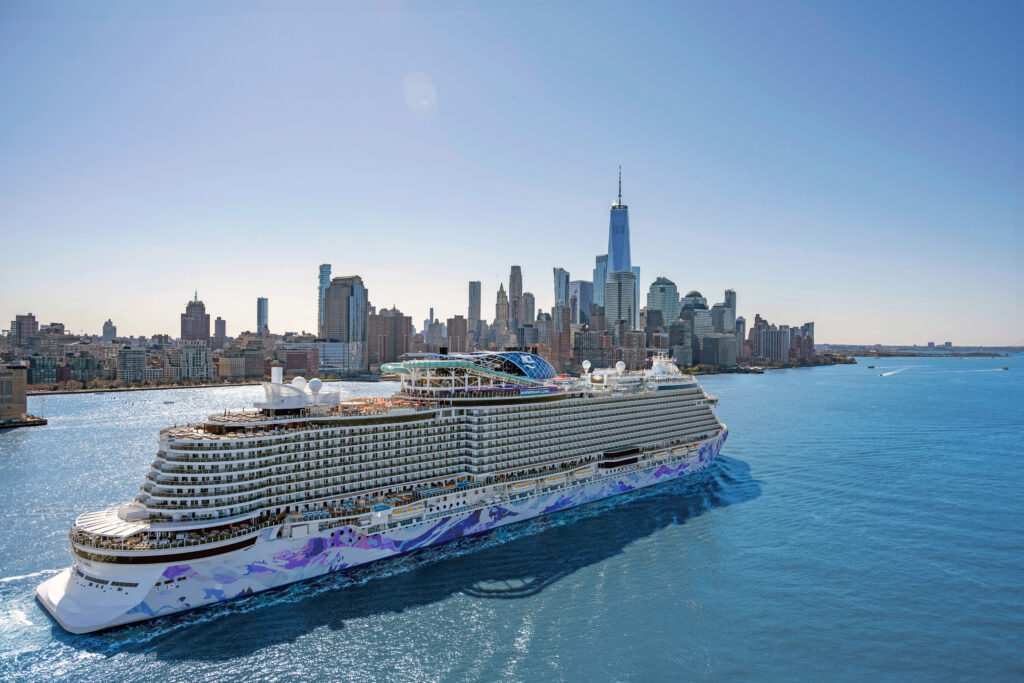
Norwegian Joy is a good reminder that these design choices aren’t fixed – it was originally launched as Norwegian Cruise Line’s Asia-focused ship before being extensively renovated for an American audience.

Cruise lines are still evolving in this space too, with Disney Cruise Line’s Disney Adventure set to become its first ship designed specifically for the Asian market, bringing Disney’s own take on regional cruising preferences.

1. Special Dining That Genuinely Reflects Asian Tastes

Cruise ships designed for the Asian market usually treat food as a headline feature, not an afterthought. Rather than adding one token Asian restaurant, these ships build whole dining ecosystems around regional cuisines and eating habits.
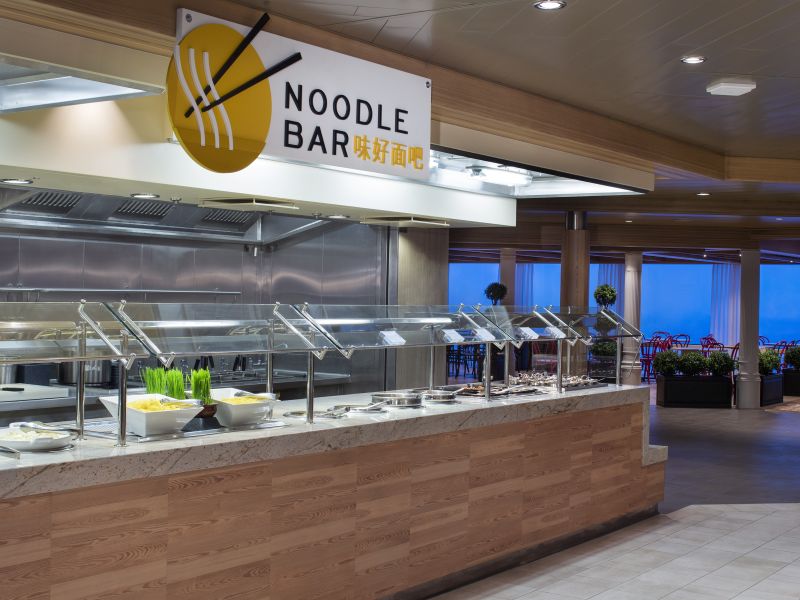
Noodle Bar on Spectrum of the Seas

Spectrum of the Seas, for example, was designed specifically for Asia and includes venues such as Sichuan Red and a dedicated Noodle Bar, alongside a buffet that places far more emphasis on Chinese dishes than Royal Caribbean’s Western-deployed ships – though still with a lean into world cuisine.

On Genting Dream, dining is similarly central to the onboard experience, with hot pot, Asian specialities and late-night options designed for group dining. These ships recognise that meals are social events, often shared by extended families or groups of friends, and they’re built to accommodate longer, more leisurely dining styles.
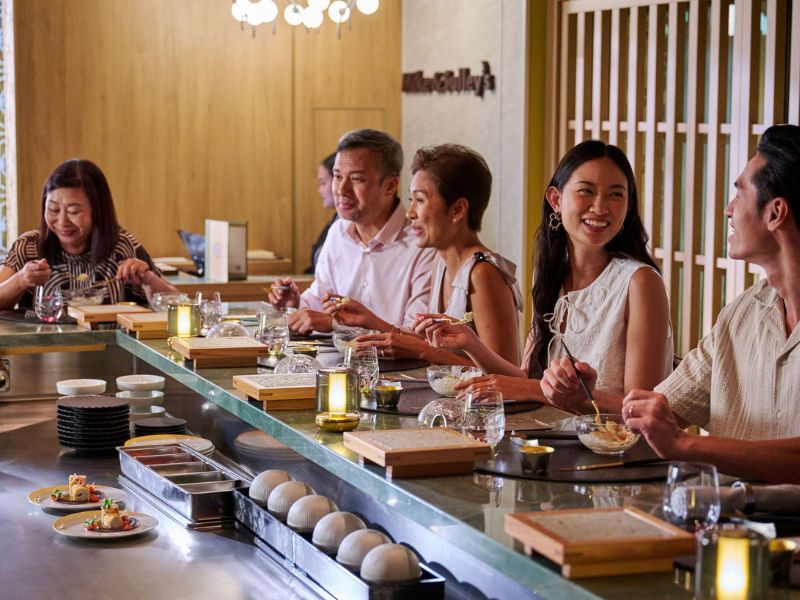
Disney adventure dining

For western cruisers, the key difference is that Asian food isn’t “alternative” dining on these ships – it’s mainstream, plentiful and woven into the rhythm of the day.

2. Larger, More Prominent Casinos

While most cruise ships have casinos, Asia-market ships often treat them as a core attraction – and they tend to have more of a focus on table games than slots. Casinos on these ships are noticeably larger and more central than you might expect, with layouts designed to handle high footfall and long playing sessions.

There is also a clear emphasis on VIP gambling areas, reflecting the importance of premium gaming to the Asian cruise market.
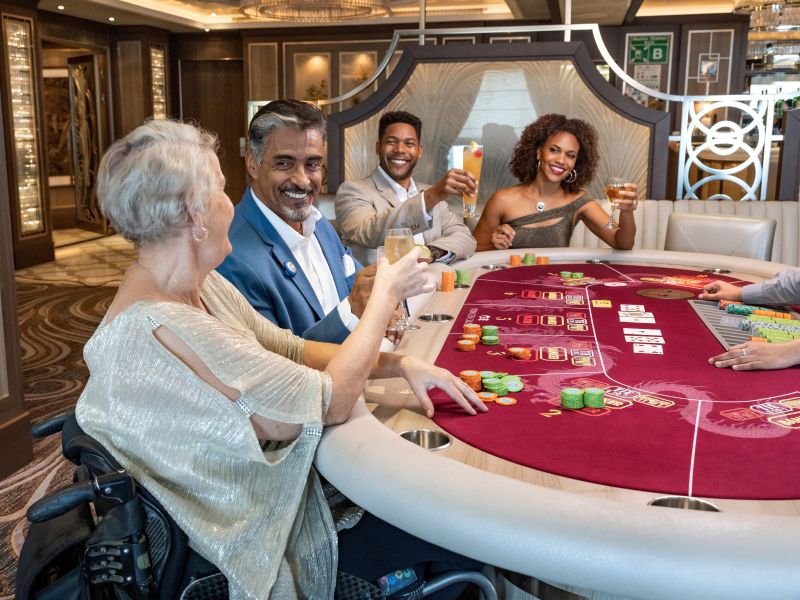
VIP Casino Table on Majestic Princess

Similarly, ships such as Genting Dream position their casinos as flagship venues, closely integrated with nearby bars and late-night dining. The result is an onboard flow that supports social gambling as an evening activity, rather than something you dip into briefly before a show.

Many American cruise ships are now doing similar things with casinos, particularly with a market of cruisers who gamble in order to get perks through casino loyalty programmes.

But there are still differences, especially with the slot-to-table game ratio on the ships.

3. Karaoke Rooms, Often in Private KTV Style

Karaoke is a huge cultural touchstone across much of Asia, and ships designed for this market take it seriously. Ships designed for the Asian market will often host a dedicated karaoke venue where guests can sing throughout the cruise, rather than just on one themed night. The experience is designed to be accessible and social, with constant turnover and a relaxed attitude to participation.

On Majestic Princess, karaoke goes a step further with private karaoke suites that can be booked by small groups.

Majestic Princess Karaoke

This mirrors the KTV model popular across East and Southeast Asia, where friends and families sing together in their own space rather than performing in front of strangers.

It’s a subtle but important design difference and can feel surprisingly liberating: no stage fright, no waiting list, just a room, a microphone and a group of people egging each other on. It’s one of the clearest signs that a ship has been designed with Asian social habits in mind.

4. Tea Rooms and a Stronger Tea Culture Onboard

On ships designed for the Asian market, tea is treated as a cultural pillar rather than a background beverage. Instead of tea simply being folded into cafés or afternoon tea service, these ships often feature dedicated tea rooms or lounges focused on high-quality loose-leaf teas and calm socialising.
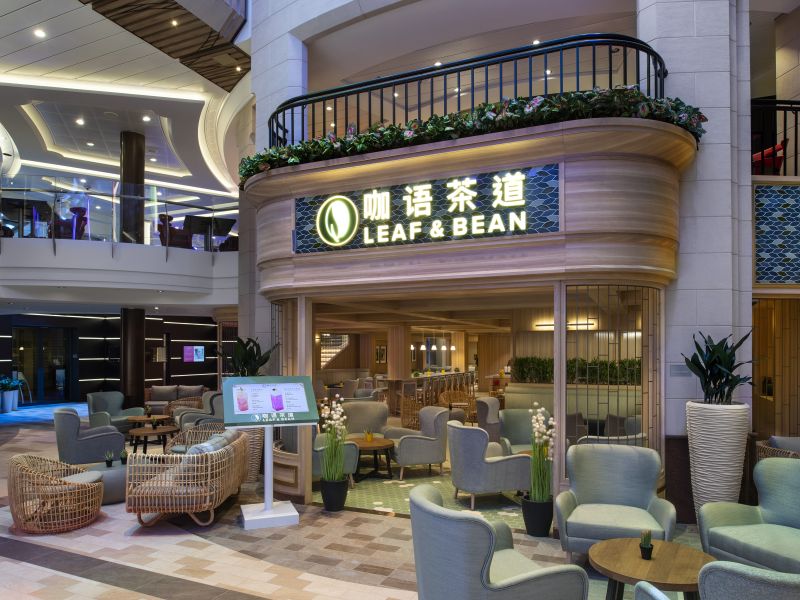
Tea Cafe on Spectrum of the Seas

On Royal Caribbean’s Asia-deployed ships, including Spectrum of the Seas, tea venues are positioned as daytime gathering spaces, appealing to multi-generational groups who may not gravitate towards bars or pool decks. The emphasis is on authenticity, ritual and choice, with menus that go well beyond basic black or green tea.

Disney Adventure, which sails on short cruises out of Singapore, features ‘Bewitching Boba and Brews’, a cafe focusing on fashionable bubble teas.

This approach reflects how tea is consumed across much of Asia: slowly, socially and with intention. It also broadens the onboard social landscape, offering a relaxed alternative to louder venues. For travellers more familiar with coffee-led cruise culture, these tea spaces can feel like a subtle but meaningful shift in how ships accommodate different rhythms of daily life.

5. Smaller Pool Areas and Less Emphasis on Sunbathing

Another noticeable difference on ships designed for Asian markets is the reduced emphasis on large, resort-style pool decks. While pools are still present, they are often smaller relative to the ship’s size, with less space devoted to all-day sunbathing and more allocated to indoor venues.
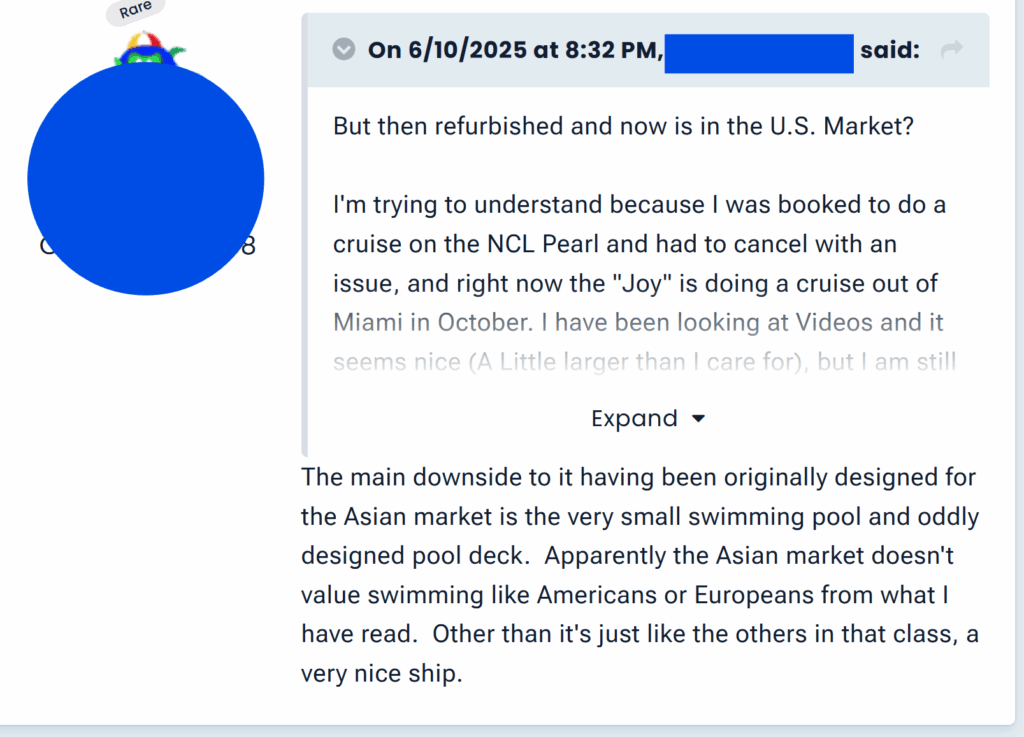
"The main downside to it having been originally designed for the Asian market is the very small swimming pool and oddly designed pool deck.  Apparently the Asian market doesn't value swimming like Americans or Europeans from what I have read.  Other than it's just like the others in that class, a very nice ship."

Some cruisers of Norwegian Joy, a ship originally built for the Asian market but renovated for US guests, have noticed it has a (slightly) smaller pool compared to sister ships.
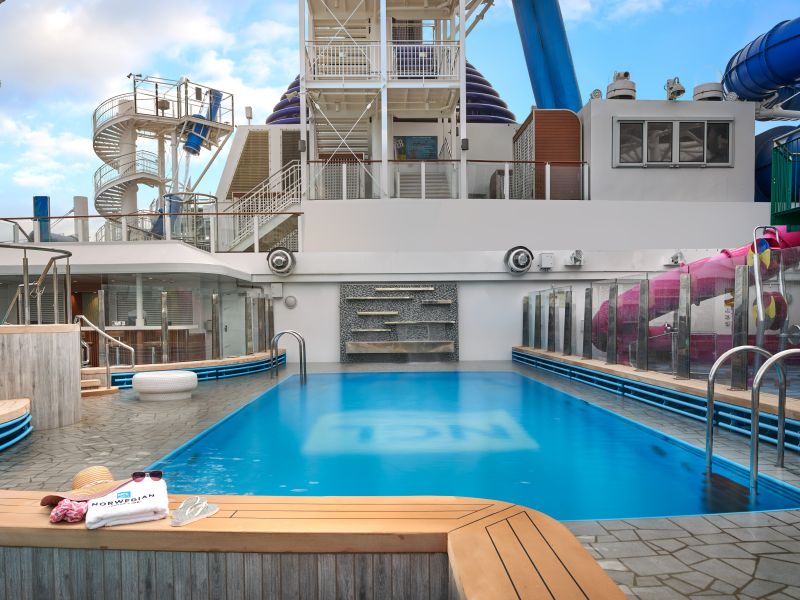
NCL Joy Main Pool

This reflects different travel habits and itinerary patterns. Many Asian cruises operate on shorter sailings, port-intensive routes, or during seasons when sunbathing isn’t the primary focus.

The weather in Asia is often too hot and humid to be outdoors for long and many people prefer to stay out of direct sunlight. As a result, designers prioritise indoor entertainment, dining and retail venues that remain busy regardless of weather.

Ships like Genting Dream illustrate this balance well, offering pools and outdoor areas without making them the defining feature of the ship. The trade-off is often a livelier indoor atmosphere, particularly in the evenings, with more places for groups to gather, eat and socialise long after sunset.

6. Mahjong Rooms and Dedicated Card Spaces

Mahjong is more than a casual pastime across much of Asia; it’s a deeply social activity that can anchor entire afternoons or evenings. Cruise ships built for this market often reflect that by including dedicated mahjong or card rooms, rather than relying on generic libraries or multi-purpose lounges.
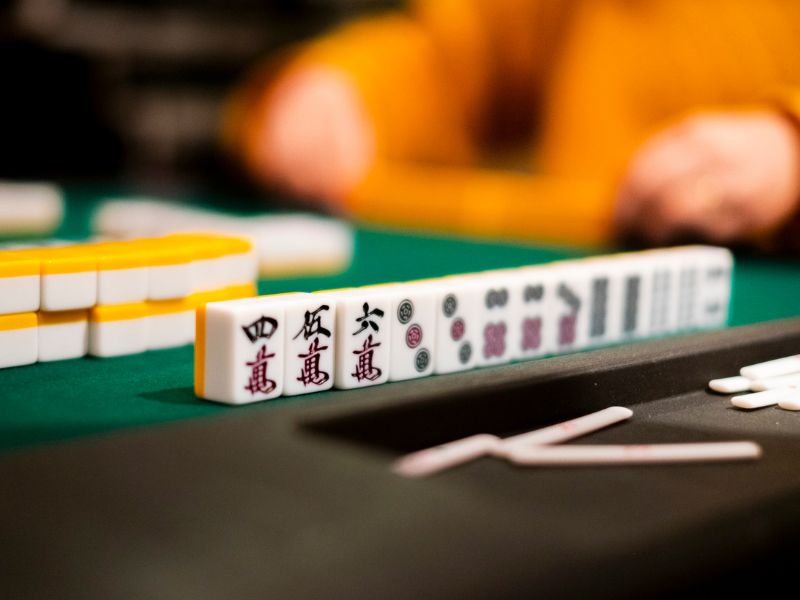
Mah-jong table

These spaces are designed with long sessions in mind: comfortable seating, appropriate table layouts and a tolerance for noise and animated conversation. On ships such as Genting Dream, mahjong rooms are clearly defined venues, signalling that this is an expected and valued part of the onboard experience.

The inclusion of a mahjong room is a strong indicator of who the ship is really built for. It acknowledges group travel, extended family cruising and social activities that don’t revolve around scheduled entertainment. Even for guests who don’t play, these rooms contribute to the ship’s overall character and sense of cultural specificity.

7. Bidets and Washlets in Cabins and Public Bathrooms

One of the most quietly telling features of Asia-focused deployment is the inclusion of bidets or washlets. On ships operating extensively in Japan and surrounding markets, these are often installed not only in higher-category cabins but also in public restrooms. Diamond Princess is a well-known example, having incorporated bidets as part of its Japan-facing design and refurbishment strategy.

In regions where washlets are standard at home, their absence would be noticeable, so their presence onboard signals a clear understanding of guest expectations. For cruise lines, this is less about luxury and more about normality.

For travellers from regions where bidets are less common, it can feel like an unexpected upgrade. More importantly, it highlights how ships designed for specific markets adapt at a very practical level, right down to the bathroom fixtures, rather than relying on a one-size-fits-all global template.

TODAY’S BEST CRUISE DEALS!

Don’t miss these offers…

Final Word

Cruise ships designed for the Asian market aren’t better or worse – they’re just built around different assumptions about how people actually spend their time onboard.

Food is social and central, evenings run late, group activities matter, and quiet comforts are designed in rather than added as upgrades. And maybe that sounds like how you cruise anyway? If so, maybe you’d love an Asian cruise ship even more!

For some travellers, these ships will feel instantly intuitive. For others, they can be a fascinating culture shift, where karaoke rooms replace piano bars and tea lounges rival cocktail venues for popularity. Even details like pool layouts or bathroom fittings start to make sense once you view the ship through that lens.

The key takeaway is that cruise ships aren’t as universal as they look in marketing photos. If you know what a ship was designed for – and who it was designed for – you’re far more likely to enjoy it. And you might even discover a few features you didn’t know you’d been missing.

Jenni with Disney Cruise ship at Castaway Cay

Related Posts

If you found this interesting, please share!


Jenni with Disney Cruise ship at Castaway Cay


Source link
Untitled-design-1-88.jpg

Cruisers’ Biggest Pet Peeves Revealed! Which Behaviours Bother You The Most?


Cruises are sold as the ultimate stress-free holiday, so why do so many people come home quietly seething about towels, elevators and hot tubs?

Pet peeves on cruises sunbed hogs

I started noticing the same complaints popping up again and again on my Facebook page, so I did what any curious cruiser would do and dug deeper. After reading through thousands of comments from real passengers, some clear patterns emerged and a few of them genuinely surprised me.

From the obvious annoyances everyone expects to the ones nobody warns you about, these are the cruise pet peeves people feel most strongly about.

"All those other people on my cruise ship."

And yes, there’s one that causes far more arguments than you’d ever imagine.

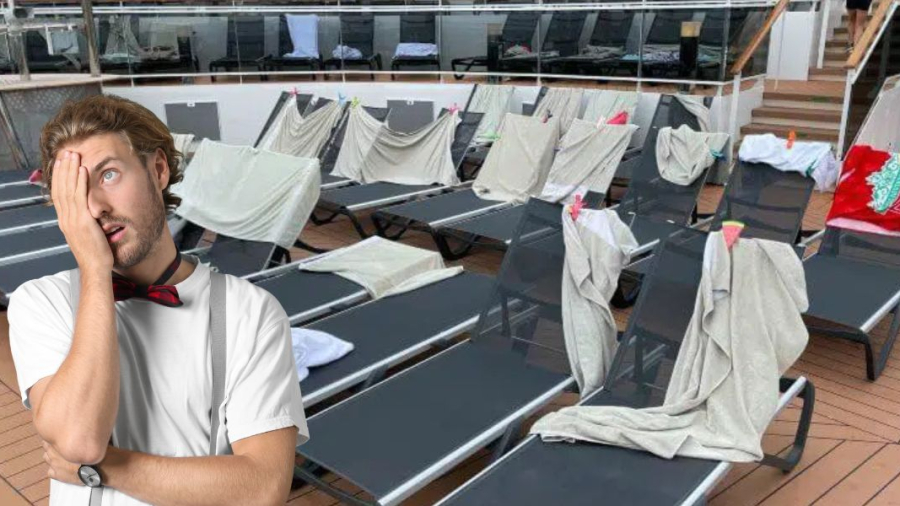
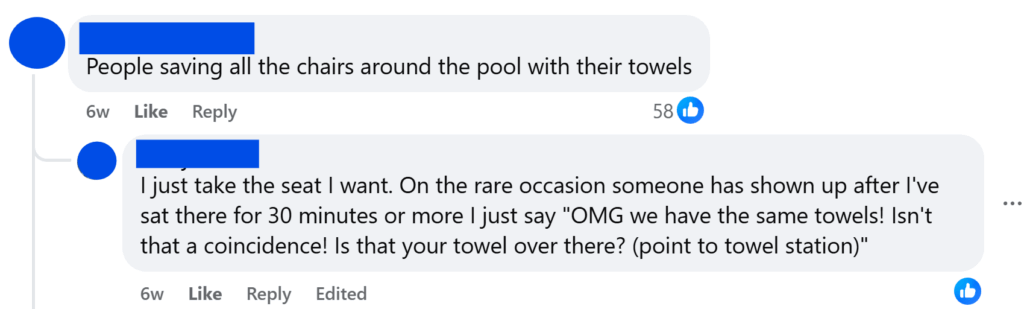
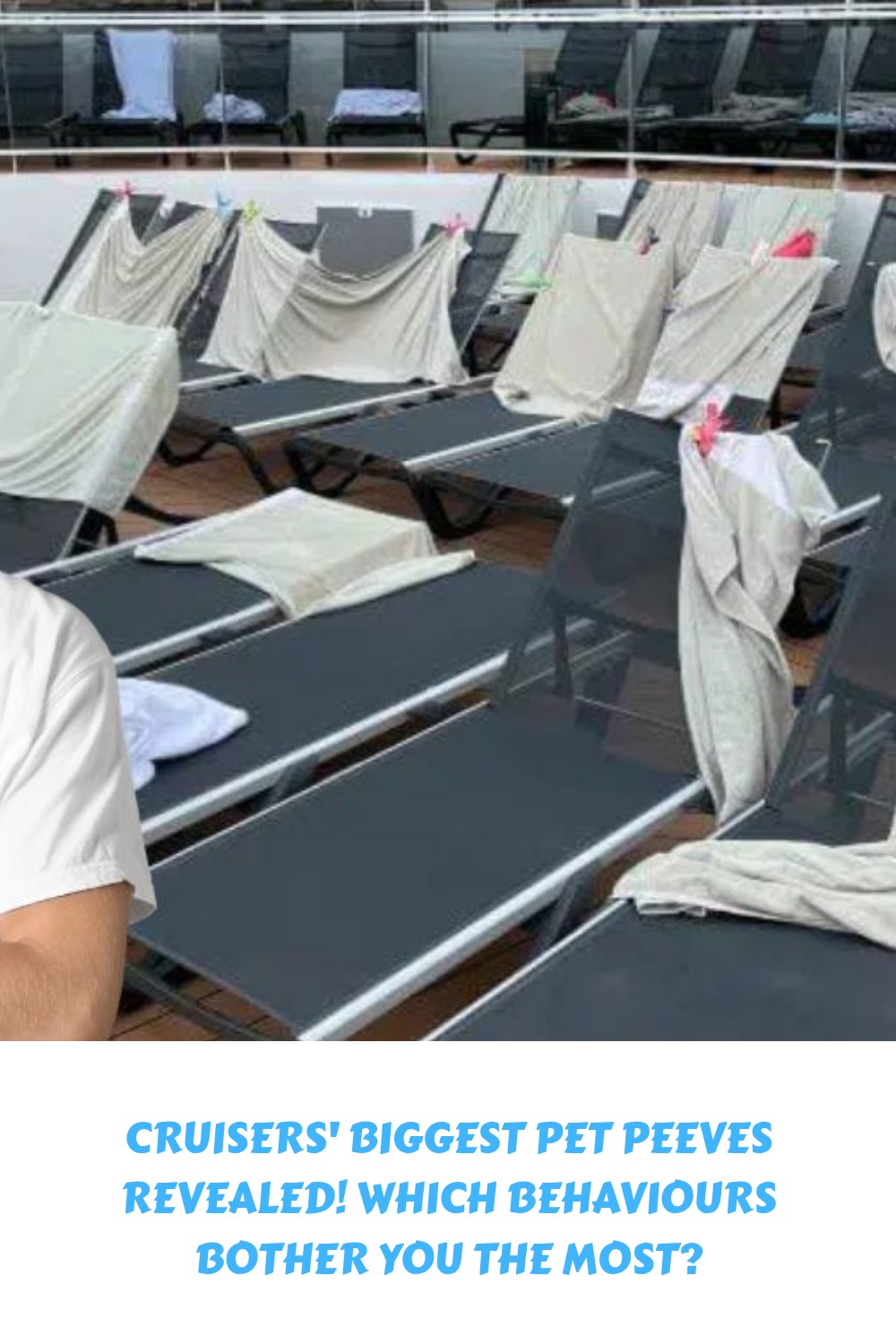
1. Pool chair hogging and towel reserving

If cruising had an unofficial sport, pool chair hogging would win gold every time.

towels on sun loungers

Towels appear at dawn like clockwork, sometimes draped across multiple loungers, yet the owners are nowhere to be seen for hours. People talk about families reserving prime spots then vanishing off to breakfast, the spa or even back to bed.

It’s not just about the chairs, it’s the entitlement that comes with them. Nobody wants to play towel police on holiday. It’s consistently the top pet peeve because it feels selfish, unnecessary and easily solved with a bit of basic consideration.

"People saving all the chairs around the pool with their towels""I just take the seat I want. On the rare occasion someone has shown up after I've sat there for 30 minutes or more I just say "OMG we have the same towels! Isn't that a coincidence! Is that your towel over there? (point to towel station)""

Cruise lines are trying to crack down on it – but I don’t think it’ll ever completely stop.

Suggested read: My Tried & Tested Tactics For Beating Chair Hogs On Cruises

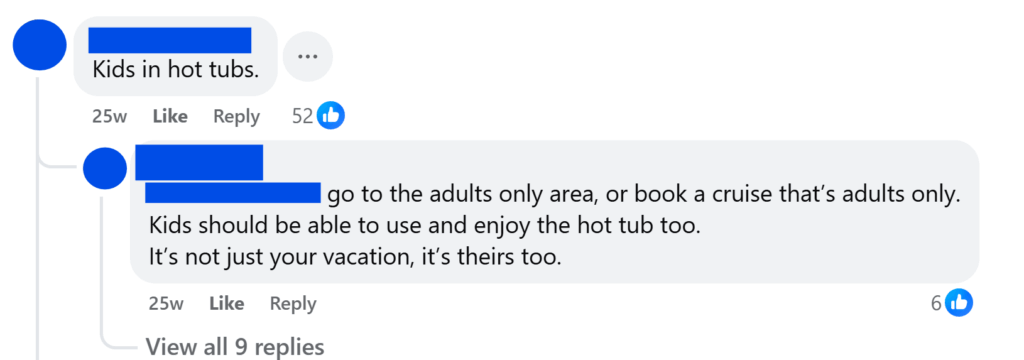
2. Kids in hot tubs

Hot tubs are meant for soaking and relaxing, not turning into splash zones.

Kids in the hot tub

A huge number of cruisers complain about kids using them like swimming pools, jumping, splashing and dominating the space while parents look the other way. Most people aren’t anti kids, they’re anti chaos.

Health and safety concerns come up a lot too, especially when rules are clearly posted and ignored. When a small hot tub gets taken over, it stops being enjoyable for anyone else. This one always sparks debate, but it’s easily one of the most passionately mentioned cruise annoyances.

"Kids in hot tubs.""go to the adults only area, or book a cruise that’s adults only.Kids should be able to use and enjoy the hot tub too.It’s not just your vacation, it’s theirs too."

I don’t mind kids in the hot tubs – I let mine use them but I know they’ll behave. What do you think?

Read more: Should Kids Be Allowed in Cruise Hot Tubs? Here’s What Passengers Think

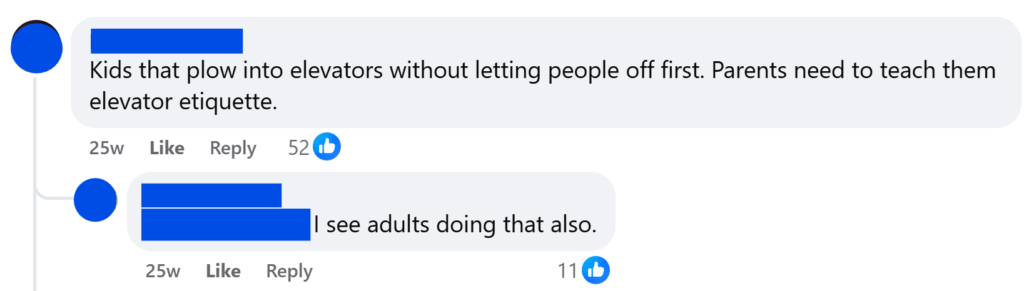
3. Bad elevator etiquette

Elevators seem to make otherwise polite people forget all social rules.

A man in a wheelchair, with a concerned expression, is at the forefront of an elevator on a cruise ship, surrounded by other passengers who appear to be ignoring him. The passengers include a woman carrying a bag, an older man in a suit, and several others in the background, all looking away or preoccupied. The scene conveys a sense of neglect and lack of awareness towards the needs of the disabled passenger.

Common grumbles include people barging in before others can get out, queue jumpers, cramming in when it’s clearly full and repeatedly hammering the close door button before people have the chance to get in.

Personally, I also can’t stand it when people say “let’s go up to go down, it will be faster” during busy periods. While it may be faster for them, it makes it slower for everyone else. That’s just selfish.

Those using wheelchairs or scooters often feel completely ignored, watching lift after lift fill up in front of them. The confined space only makes tempers flare faster, especially at busy times.

"Kids that plow into elevators without letting people off first. Parents need to teach them elevator etiquette.""I see adults doing that also."

For many cruisers, poor lift manners aren’t just annoying, they feel like a basic lack of courtesy that shouldn’t be hard to fix.

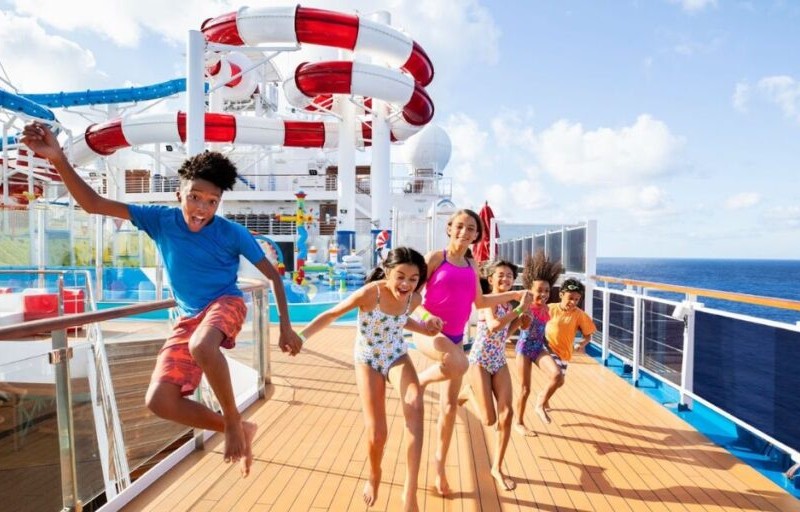
4. Unsupervised or unruly kids around the ship

Kids racing down corridors at midnight, shouting outside cabins and roaming the ship late at night without parents nearby comes up again and again.

Kids on Carnival Cruise ship's Waterworks - 1

Most passengers make it clear they don’t hate kids, they just want some peace. Late night noise is especially unpopular, particularly with people who’ve paid good money to relax.

"Unruly children left unsupervised, hot tub, running in halls""yes!!! Just got off a cruise and we had a bunch of young kids who would come knock on our door and take off running all hours of the night. I was so annoyed."

Several stories mention kids doing genuinely unsafe things while parents are nowhere to be seen. Cruise ships aren’t lawless playgrounds, yet some adults treat them that way. A bit of supervision would solve a lot of this frustration.

Read more: The Children’s Cruise Curfews You Need To Know About

5. Slamming cabin and balcony doors

There are few sounds more jarring on a ship than a cabin door being slammed shut.

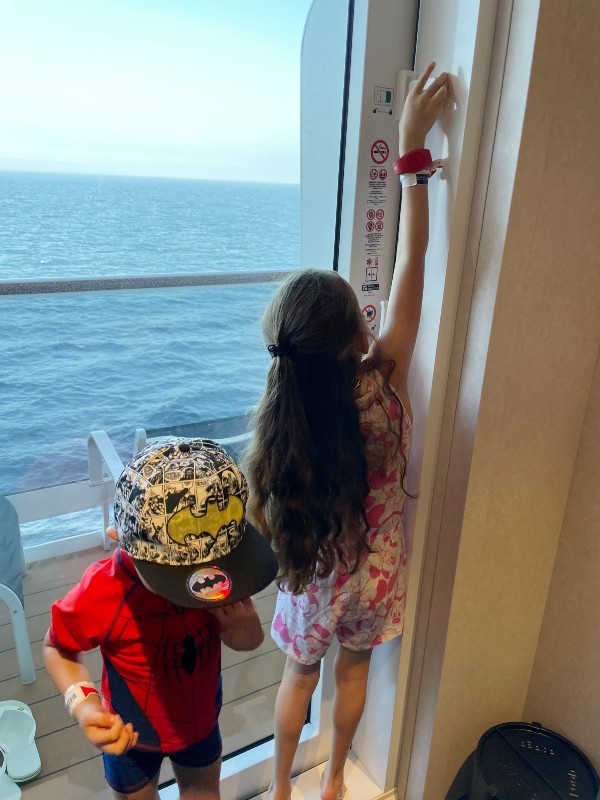
Balcony door lock

Because the doors are heavy, the noise echoes and can shake nearby cabins. Balcony doors are even worse, especially early in the morning or late at night.

Many cruisers point out how easy it is to hold the door and let it close gently.

"Slamming cabin doors and bratty kids playing in elevators"

When it happens repeatedly, it feels careless rather than accidental. For light sleepers, this can genuinely ruin nights of rest, making it one of the most commonly mentioned noise-related complaints.

6. Blocking walkways and entrances

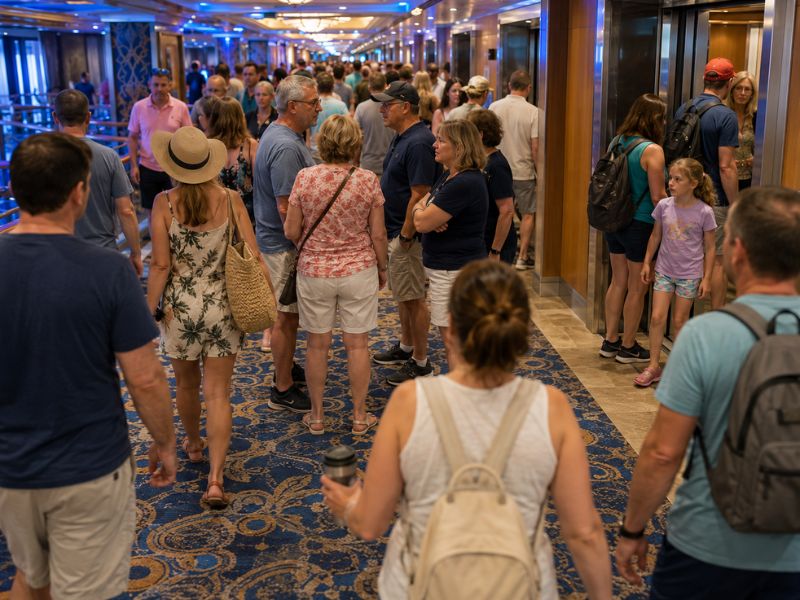
Stopping dead in the middle of a busy walkway seems to be a universal cruise habit. Groups gather for chats, families block corridors and people step out of elevators only to freeze while deciding where to go. The result is congestion, near collisions and rising irritation.

On ships where space is already tight, poor awareness stands out even more.

"People stopping in the middle of the walkway or doorway! Step to the side and THEN figure out where you want to go!!"

Most people don’t mind slow walkers or those needing breaks, but stopping without stepping aside drives others mad. It’s less about impatience and more about keeping things moving for everyone.

7. Buffet chaos and lack of flow

The buffet brings out strong feelings, especially at peak times. Complaints include line cutting, people walking the wrong way, hovering indecisively and general crowding that feels unnecessary.

Buffet grumpy man

Some describe it as more of a stampede than a dining area. Ignoring signs or basic flow rules only adds to the stress.

"People going in the wrong direction in buffet lines"

For somewhere meant to be convenient and relaxed, it can quickly become one of the most stressful spots on the ship.

Part of this is down to the design of the buffet. For example, if you just want to grab a boiled egg, you may be expected to join long queue past the bacon and sausages. Should you be able to just nip in for the egg? Nobody is sure.

8. Poor hygiene around food and bathrooms

Nothing puts people off quicker than watching someone skip handwashing and head straight to the buffet.

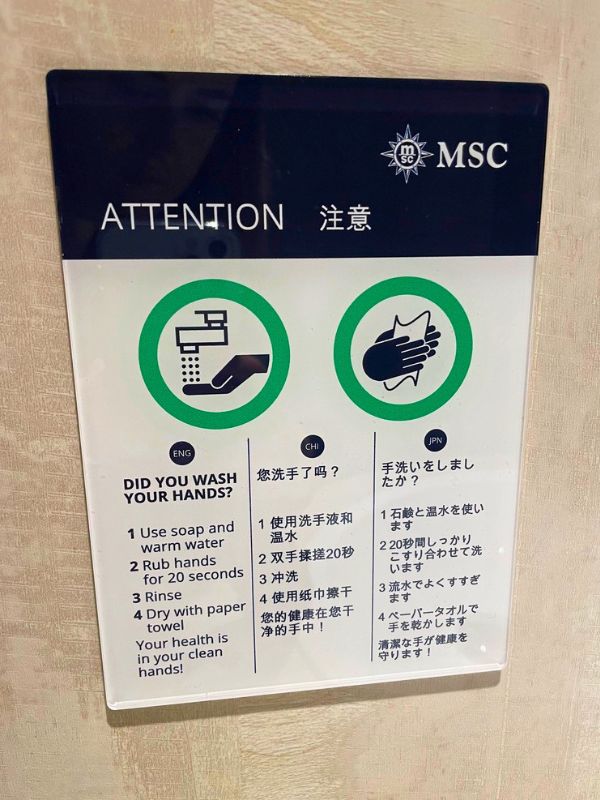
Many ships have ‘washy washy people’ who enforce handwashing. But on those ships that don’t, walking straight past the sinks is sadly becoming more common as people forget what it was like in stricter, more hygenic times.

An automated hand washing station on a Costa cruise ship, featuring motion-activated soap dispensers and sinks, encourages hygiene with a convenient and contactless method, set against a backdrop of warm wood paneling.

Lack of hygiene is a huge concern, with repeated mentions of people coughing, sneezing or touching food before putting it back.

On a ship where illnesses can spread fast, this feels especially risky. Some cruisers say they actively avoid buffets after seeing questionable behaviour.

"Sweaty man in tank top reaching over food in the buffet, then adding some drippings to the food below."

The frustration isn’t just about squeamishness, it’s about shared responsibility. Better habits and a bit of enforcement would make dining areas feel safer and far more pleasant.

Read more: Norovirus On Cruise Ships – Shocking Stats And How to Stay Healthy!

9. Smoking, vaping and lingering smells

Smoke has a way of travelling, especially at sea. Complaints include cigarette smoke drifting onto balconies, people vaping around pools and being forced to walk through smoky casino areas.

Smoking on a cruise

Even non smokers who accept designated areas get annoyed when rules aren’t followed. Lingering smells in corridors or cabins can ruin otherwise lovely spaces.

"People vaping inside thinking you can’t see them and that the maritime law doesn’t apply to them!!"

Many feel the issue is poor enforcement or bad ship design. People simply want to enjoy fresh air and shared spaces without inhaling someone else’s habit.

Read more: 5 Shocking Things I Overheard in the Cruise Ship Smoking Area

10. Loud phone use and speaker audio

Few things irritate cruisers faster than someone using speakerphone in a shared space.

Bluetooth speaker

FaceTime calls in dining areas, loud personal conversations by the pool and kids blasting videos without headphones all come up repeatedly. It feels intrusive, especially when you’re trying to relax.

People often mention feeling trapped, forced to move rather than confront it.

"My pet peeve on a cruise or anywhere in public for that matter is talking to someone on speakerphone.Nobody wants to hear your conversation, it’s disrupting to others.Same with little kids watching the phone and listening to their cartoons on speaker"

The annoyance comes from the assumption that everyone else wants to hear it. Headphones exist for a reason, and many cruisers feel using them should be the norm, not the exception.

11. Dirty dishes left around the ship

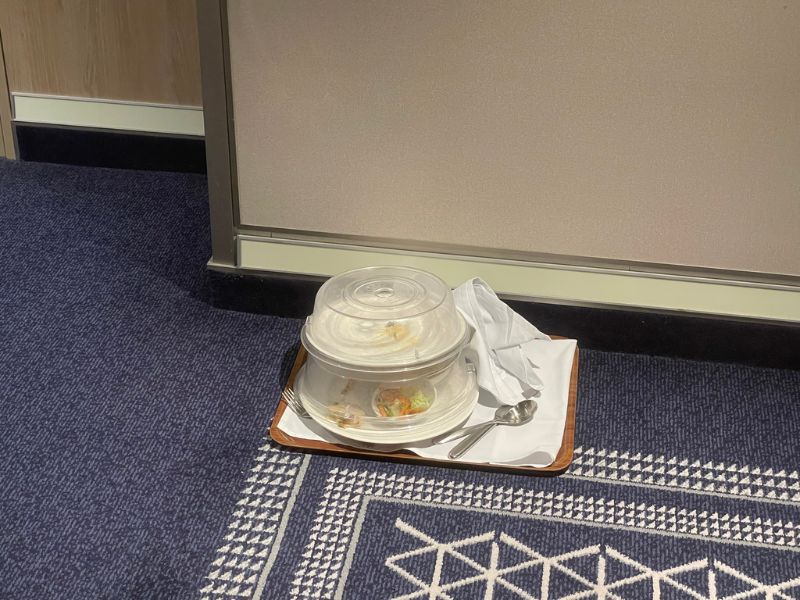
Plates, glasses and trays left in hallways, lifts and stairwells are another surprisingly common gripe.

room service tray on floor

Aside from looking messy, they can smell and create obstacles, particularly for anyone with mobility issues.

Some passengers aren’t sure what they’re meant to do, while others just assume staff will handle it. Fellow cruisers see it as disrespectful to both crew and other guests.

"When used dishes are left on the floor outside people’s rooms."

While rules vary by cruise line, the frustration comes from seeing mess pile up in shared spaces when it really doesn’t need to.

12. Scooters and mobility tensions

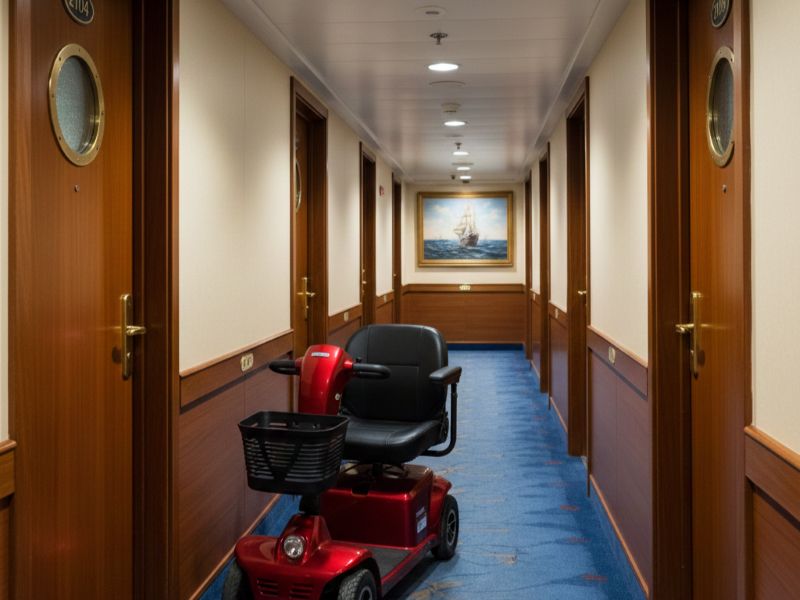
Mobility aids themselves aren’t the issue, behaviour is. Some cruisers feel cut off by scooters pushing ahead in queues or charging out of elevators.

Mobility scooter in cruise corridor

Others who actually need wheelchairs describe being completely ignored or blocked by standing passengers. There’s also debate around perceived misuse, which quickly gets heated.

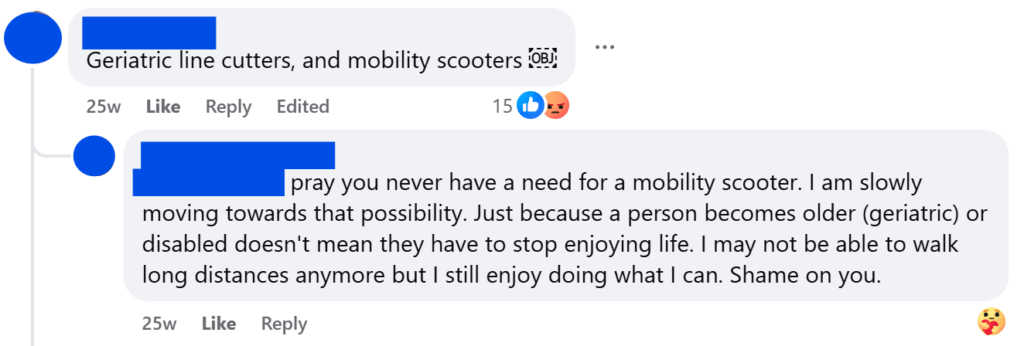
"Geriatric line cutters, and mobility scooters "" pray you never have a need for a mobility scooter. I am slowly moving towards that possibility. Just because a person becomes older (geriatric) or disabled doesn't mean they have to stop enjoying life. I may not be able to walk long distances anymore but I still enjoy doing what I can. Shame on you."

At heart, this is about patience and empathy on all sides. On crowded ships, small moments of courtesy make a big difference. When space is limited, awareness and kindness matter more than ever.

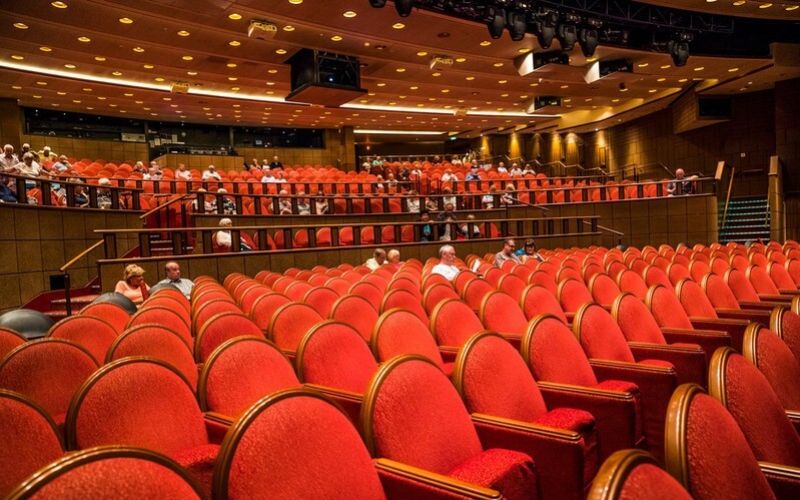
13. Seat and table saving beyond the pool

It’s not just sun loungers. Theatre seats blocked hours in advance, buffet tables held during peak times and one person reserving space for a whole group all annoy fellow passengers.

The image displays the interior of a modern theater, with rows of plush red seats facing a stage, not visible in the photo. The theater has multiple levels of seating, including a balcony, all under soft, ambient lighting. The audience is sparsely populated, suggesting either an event before it begins or a moment of calm before the performance resumes. The layout and design emphasize comfort and an immersive viewing experience for the attendees.

This often leaves others wandering with trays or missing out on shows altogether. Planning ahead is one thing, but excessive reserving feels unfair.

"Groups of 20 sending one person to block off a whole row of theater seats."

When space is limited, first come, first served feels like the fairest system. Many cruisers would happily wait their turn if they knew everyone else was playing by the same rules.

14. Overcrowded pools and hot tubs

Even without bad behaviour, pools and hot tubs can feel uncomfortably busy.

This image captures a lively scene at a cruise ship pool, with a large crowd of people gathered around and inside the pool. Many are sitting along the edge, dipping their feet in the water, while others are actively splashing and enjoying the sun. The atmosphere is festive and social, with people of all ages participating in the fun. The upper deck, visible in the background, is lined with additional passengers watching the action below, all under a bright, clear sky.

Sea days in particular see every splash of water filled to capacity. People mention feeling squeezed, overheated and unable to relax. Hot tubs packed shoulder to shoulder lose their appeal fast, especially when the same people stay in them all afternoon.

"Hot tub hogs...they never move, so you know for sure they're peeing in there!!"

Some cruisers simply stop trying and avoid these areas altogether. The frustration is less about people and more about poor capacity management in spaces designed for relaxation.

15. Late night noise in corridors and cabins

Ships never fully sleep, but passengers do. Loud conversations, shouting, arguments and door slamming after nights out are a frequent complaint.

Noise on a cruise

Noise travels easily through corridors and thin walls don’t help. Several people mention having to call guest services just to get some peace.

"People having conversations after 11pm outside my cabin door."

Most understand others are on holiday too, but there’s an expectation of quieter behaviour late at night. Broken sleep is one of the quickest ways to sour a cruise, especially when it feels avoidable.

16. Dress code frustrations

Dress codes divide opinion, but many cruisers feel standards have slipped too far.

Middle aged man on a cruise in swimwear in the buffet

Common complaints focus on beachwear, swimwear or ultra casual outfits in main dining rooms. Others miss the sense of occasion that evening meals used to have.

It’s rarely about wanting formality, more about atmosphere. Dining is a shared experience, and some feel dressing appropriately shows respect for the space and other guests.

"People that don't dress for dinner. I don't expect gowns and tuxes (anymore), but please wear something appropriate. 30 years ago, men were given jackets at the door or sent to the buffet.""agreed. If you don't feel like dressing, hit the buffet."

For those who enjoy making an effort, seeing guidelines ignored can be disappointing rather than inclusive.

17. Food waste and unpleasant dining habits

Food waste at the buffet bothers a lot of people, especially when plates are piled high and left half eaten. Others mention habits like blowing noses at tables or touching food directly.

Asian buffet food

These behaviours feel unnecessary and inconsiderate in shared dining spaces.

"Putting all that food on there plate and know they can’t eat it"

Sampling is part of buffet life, but excess feels wasteful. For some, watching it happen repeatedly takes the enjoyment out of meals. Dining should be relaxed and pleasant, not an exercise in tolerance.

18. Cabin announcements at awkward times

Being woken up by loud announcements while enjoying a lie in is a surprisingly common irritation.

Night owls and late sleepers often mention early morning messages broadcast straight into cabins. While announcements are sometimes necessary, many feel the timing could be better handled.

"Making unimportant announcements inside the cabin in the morning. Some of us are night owls."

Being jolted awake on holiday feels especially unwelcome. It’s not the information that annoys people, it’s when and how it’s delivered.

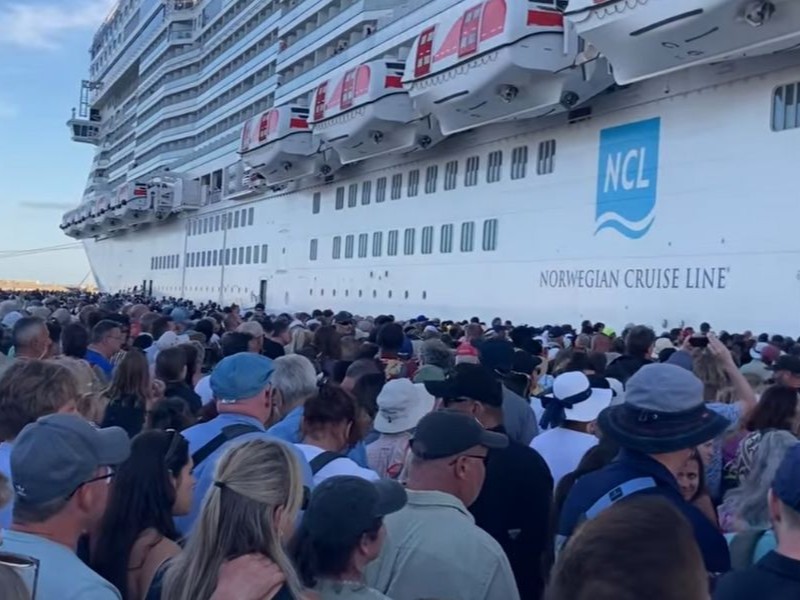
19. Embarkation and debarkation stress

Getting on and off the ship is rarely anyone’s favourite part of cruising.

Cruise crowd delays

Complaints focus on long waits, ignored time slots, crowding and lift chaos. Debarkation day in particular brings out impatience as everyone wants to leave quickly. When passengers ignore instructions, it creates delays for everyone else.

"The exit to the elevator for disembarkation it’s a lot of people not respecting the time they choose the night before makes it more pack"

While logistics play a big role, many cruisers feel a bit more cooperation would make the whole process far smoother and far less stressful.

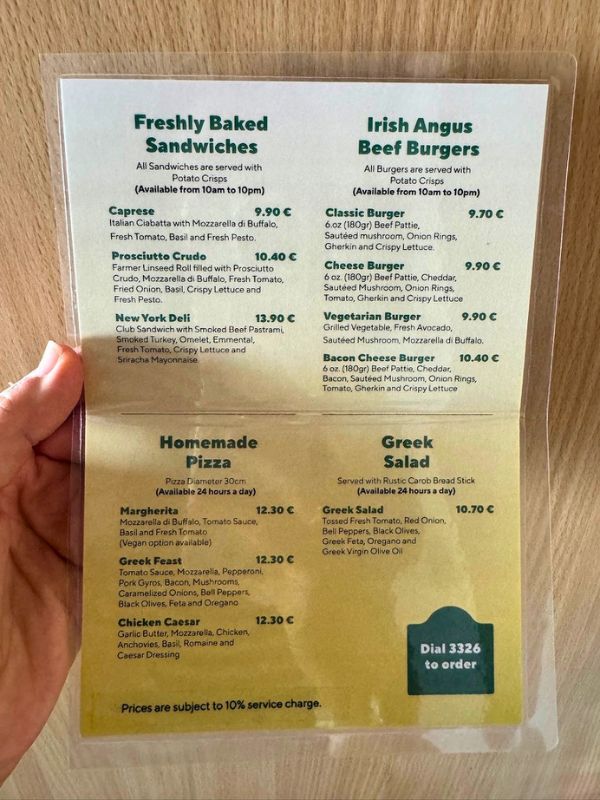
20. Nickel and diming onboard

Extra charges frustrate many cruisers, from drink limits to paid add-ons that appear everywhere onboard. Some feel constantly sold to once they’ve embarked.

Celestyal food menu

Others argue over what all inclusive really means. The irritation usually comes from mismatched expectations rather than the prices themselves.

"All the nickel and diming for extras."

When costs feel unclear or sneaky, enjoyment suffers. Most people accept cruising is a business, they just don’t want to feel like their holiday is being itemised at every turn.

21. Bar service issues

Slow bar service can test even the calmest cruiser. Long queues, being overlooked and not enough staff in busy areas come up repeatedly.

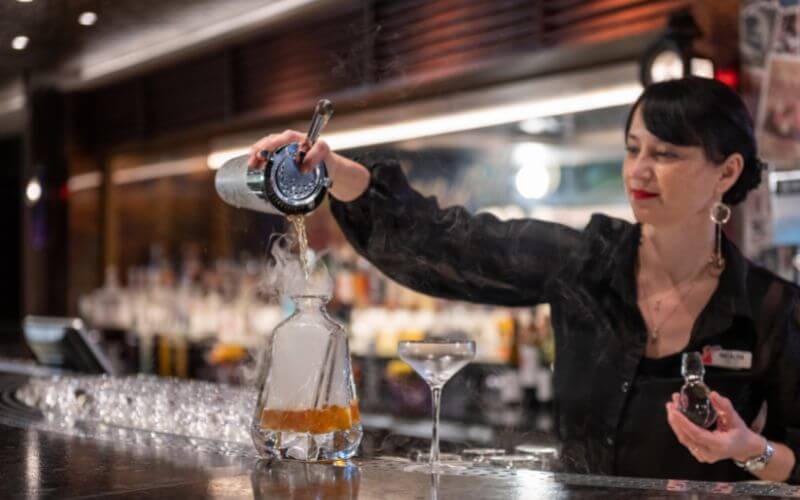
Carnival bartender

When drink packages are involved, frustration builds quickly if access feels restricted. Some mention staff chatting while guests wait, which never helps.

"Bartenders that treat me like I'm invisible."

On a holiday where drinks are part of the fun, delays feel magnified. A smooth bar experience can make or break the vibe of a sea day.

22. Cruise bragging and social one-upmanship

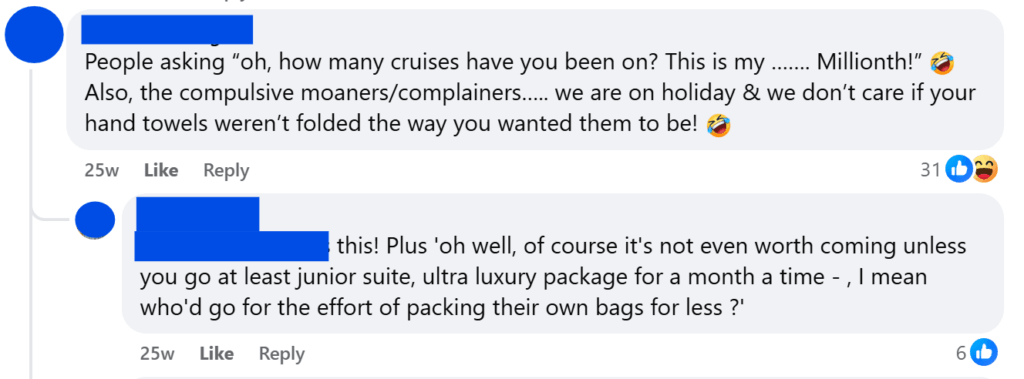
Cruise conversations sometimes turn competitive. Constant mentions of how many cruises someone’s done, how much they spent or what they’ve booked next can wear thin fast.

Many people just want to enjoy the moment, not compare statistics. The irritation comes from feeling trapped in boastful conversations rather than friendly ones.

"People asking “oh, how many cruises have you been on? This is my ……. Millionth!” 🤣Also, the compulsive moaners/complainers….. we are on holiday & we don’t care if your hand towels weren’t folded the way you wanted them to be! 🤣"

Sharing experiences is great, but constant one-upmanship quickly becomes exhausting, especially when nobody asked.

23. Complaining as a pet peeve itself

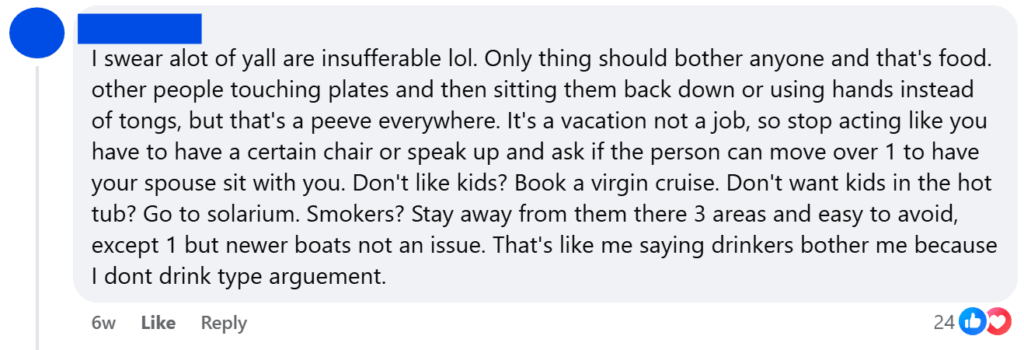
One of the more amusing themes is people saying their biggest pet peeve is… other people’s pet peeves. Some cruisers believe you can always find something wrong if you look hard enough.

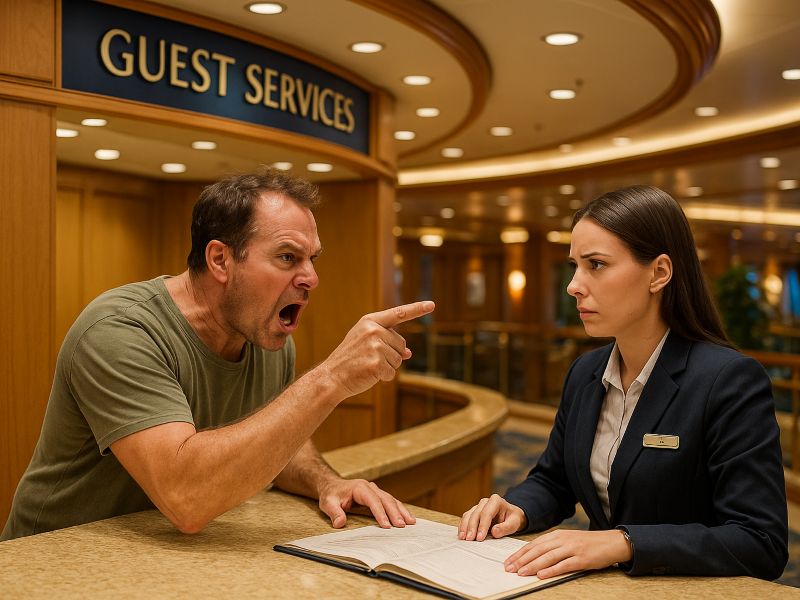
Guest Services Complaints

Their view is that you can usually walk away and enjoy your holiday anyway. Others push back, pointing out that basic courtesy still matters.

"I swear alot of yall are insufferable lol. Only thing should bother anyone and that's food. other people touching plates and then sitting them back down or using hands instead of tongs, but that's a peeve everywhere. It's a vacation not a job, so stop acting like you have to have a certain chair or speak up and ask if the person can move over 1 to have your spouse sit with you. Don't like kids? Book a virgin cruise. Don't want kids in the hot tub? Go to solarium. Smokers? Stay away from them there 3 areas and easy to avoid, except 1 but newer boats not an issue. That's like me saying drinkers bother me because I dont drink type arguement."

It adds an interesting layer to the discussion and highlights the balance between reasonable expectations and choosing what’s worth letting go.

24. Smaller recurring annoyances

Beyond the big issues, there’s a long list of smaller but familiar grumbles. Kids pressing every elevator button, strollers blocking hallways, balcony lights left on all night, photographers interrupting dinner and missing amenities all pop up repeatedly.

"People asking whats your biggest cruise pet peeve -  only joking"

On their own, they’re minor. Together, they paint a realistic picture of life on a busy ship. They’re the kind of annoyances that make people roll their eyes, laugh and say “classic cruise” rather than completely lose their patience.

Final Word

Wow. If you’d never cruised before, it would sound like a nightmare based on all of that, wouldn’t it?

The good thing is we know that these are, in the most part, minor gripes.

Reading through the comments, one thing is clear. Most cruise pet peeves come down to the same simple issue: courtesy. A little awareness, patience and consideration would wipe out a surprising number of these frustrations.

That said, part of cruising is sharing space with lots of other people, quirks and all. You can either let the small stuff ruin your holiday or laugh, move on and order another drink.

After all, you’re on a cruise.

Jenni with Disney Cruise ship at Castaway Cay

Related Posts

If you found this interesting, please share!


Jenni with Disney Cruise ship at Castaway Cay


Source link
Untitled-design-4-23.jpg

Cruise Crew Don’t Get Free WiFi, And The Real Cost Is Shocking


Cruise ships feel like a digital playground for guests – provided you’ve paid for the WiFi. You can FaceTime from the pool, WhatsApp your cabin mate from the buffet and livestream sailaway to jealous friends back home.

But life online looks very different below deck. For many crew members, the internet is not just entertainment. It is the only way they can be present in their family life while working thousands of miles away.

The trouble is, that connection still comes at a huge cost.

Most Cruise Crew Do Not Get Free WiFi

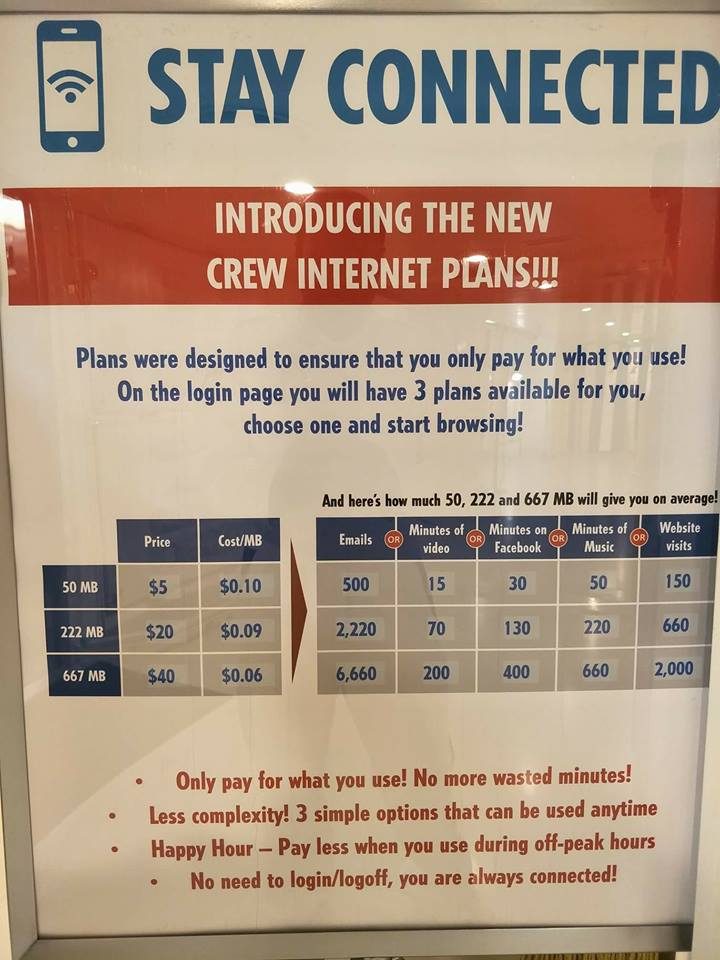
It surprises a lot of passengers to learn that in most cases, cruise crew must pay for their own internet access. Despite spending half the year onboard, they are not simply given unlimited WiFi as part of the job.

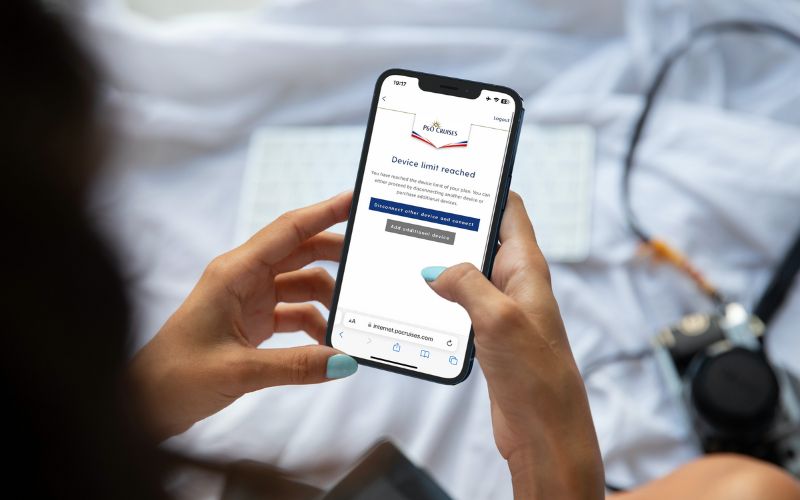
P&O WiFi

There are exceptions of course. Virgin Voyages, Viking Ocean and Ritz-Carlton Yacht Collection are some of the cruise lines offering complimentary crew WiFi as standard. These lines tend to position themselves as progressive employers with smaller ships, higher fares and more modern tech.

"I wish I was shocked by the number of people on here who are so callous about this. Of course they should get free wifi. They basically "work from home" and for 14 hours a day 7 days a week. For our comfort. Anything that can be done to make that bearable, like making it easy to be in touch with their families, should be."

Mainstream ocean lines, however, still largely charge crew for data. Some allow free access to internal company networks or essential training sites, but that does not help when you want to check if your child has learnt to walk yet. The reality for most crew is: to stay connected, they must pay up.

Personally, I think crew should get at least some free WiFi. It is not a luxury for them. It is a lifeline.

One of the biggest issues is that there is no standard across the industry. Prices vary by cruise line, by ship and sometimes even by itinerary. Cruise lines do not tend to publish crew rates publicly, so the clearest picture usually comes from crew members sharing what they actually pay onboard.

And when you line those figures up, it becomes clear why so many crew describe WiFi as their biggest expense at sea.

On Carnival, one crew-shared breakdown showed a $4 package for 24 hours of access to selected social platforms like Instagram, Facebook, WhatsApp and Messenger.

That sounds manageable until you stretch it across a month. Used daily, that comes to roughly $120 a month just for basic social and messaging access.

Carnival also reportedly offered $10 for 100 minutes, $40 for 450 minutes, $12 for 24 hours or 250MB, and around $4 for one hour of broader internet use.

Royal Caribbean’s crew packages are often time-based too. Crew have shared examples including $3.99 for 60 minutes over 24 hours, $29.99 for 300 minutes over seven days, $59.99 for 900 minutes over 30 days and $89.99 for 1,800 minutes over 60 days.

That top package sounds substantial until you do the maths – 1,800 minutes is just 30 hours of internet over two months.

MSC crew have shared data-based pricing instead, with examples such as $9 for 400MB, $30 for 1.6GB and $80 for 6GB.

Disney crew have reported packages of$10 for 250MB and $20 for 500MB.

On Norwegian Cruise Line, crew have described plans like $5 for 55 minutes, $10 for 110 minutes and $20 for 220 minutes.

There are cheaper examples. P&O Cruises has been described by crew as offering 65p for 24 hours of social access, £1.25 for 24 hours of broader surfing, £18 for 28 days of social access and £32 for 28 days of surf access.

Compared with some of the dollar-based packages elsewhere, that looks far more reasonable. But it is very much not the norm across the industry.

Even when free messaging is included, it is often limited. On some Royal Caribbean ships, for example, crew have described free WhatsApp messaging capped at tiny amounts of data, with no photos, no videos and no voice notes. Useful, yes. Generous, not really.

Here’s a rough snapshot of real crew-reported pricing across major cruise lines. These aren’t directly comparable (some are time-based, others data-based), but they give a clear sense of the scale.

Cruise LineExample Crew WiFi PricingNotes
Carnival$4 per 24h (social only)~$120/month if used daily
Carnival$10 for 100 minutesTime-based usage
Royal Caribbean$3.99 for 60 minutesEntry-level package
Royal Caribbean$89.99 for 1,800 minutes (60 days)~30 hours total
MSC Cruises$9 for 400MBData-based pricing
MSC Cruises$80 for 6GBLarger bundle
Disney Cruise Line$10 for 250MBData-based
Norwegian Cruise Line$20 for 220 minutesTime-based
P&O Cruises£0.65 per day (social)One of the cheapest reported
P&O Cruises£32 for 28 days (surf)Monthly-style access

Why Minutes Vs MB Makes Such a Difference

The pricing only tells half the story. The other problem is the way these plans are structured.

Some plans are sold by the minute. That means time starts running the moment you log in and keeps going until you log out. If a crew member checks messages, gets called back to work and forgets to disconnect, those paid minutes can disappear for nothing. Crew members often say this is one of the most frustrating parts of ship internet – not just the cost, but how easy it is to waste it.

Other plans are sold by data usage instead. That can sound fairer, until you remember how much background activity smartphones get through without you noticing. Apps refresh, photos download, updates run quietly in the background, and suddenly a small allowance is gone.

A single video call can eat through hundreds of megabytes. So can uploading photos or downloading voice notes. That is why a package that sounds reasonable on paper can vanish in one conversation.

This is also why crew often become extremely cautious online. They turn off auto-downloads, avoid video, keep calls short and rely heavily on text because it is the only way to make the money stretch.

crew member texting

How Fast Costs Add Up

This is where the “shocking” part of the headline really starts to earn its place.

A few dollars here and there does not look dramatic at first glance. But spread across weeks and months, the total can be huge.

Take that Carnival social package at $4 per day. Over 30 days, that is about $120 a month. Royal Caribbean’s $89.99 package works out to 30 hours across 60 days, so crew using more than around half an hour a day could burn through it quickly and need more time.

On smaller plans, one crew member described spending $20 for 220 minutes – less than four hours online.

Some crew estimate they can easily spend $50 in a week if they are trying to keep up with regular calls home. Over a six-month contract, that would be around $1,300. Even a more modest spend of $90 to $120 a month adds up fast over a long contract.

And that is before you factor in the quality. Crew are not paying for premium, home-speed internet. They are paying for access that is often slow, unreliable and heavily limited.

One active Royal Caribbean crew member even showed an onboard statement including an $89.99 WiFi purchase in a single week’s account summary. In that case, internet was one of the biggest personal expenses listed.

There are occasional ways around it. One Royal Caribbean crew member shared that by working an hour or two a week at the WiFi desk, she earned 300 free minutes per hour worked, giving her around five to ten free hours of internet a week. But that is hardly a standard benefit. It is a workaround.

For most crew, staying connected simply means paying.

Why Crew Need WiFi

Crew contracts are long. Anywhere from four to nine months is standard, and some roles stretch even longer. Imagine missing every school pick-up for half a year. Missing your sister’s wedding. Not being able to comfort a parent through illness except over a sometimes-glitchy call.

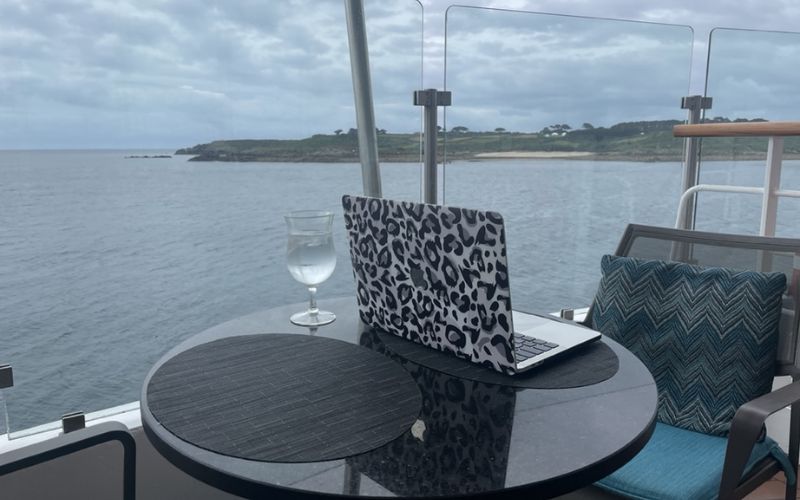
A laptop connected to the wifi onboard

Moments slip by quickly when you are at sea. Families grow and change while crew are busy serving thousands of guests.

So, they cling tightly to every chance to connect with home. A birthday video. A mischievous pet photo.

Crew also rely on the internet for life admin: banking, visa renewals, travel planning and helping relatives who cannot use the internet themselves. Without WiFi they are cut off not just emotionally, but practically too.

Slow Speeds and Little Privacy

Even when crew pay for WiFi, they do not necessarily get much use out of it. Speeds fluctuate hugely as satellites struggle to serve thousands of smartphones mid-ocean. Passenger networks often get priority, leaving the crew version sluggish or temporarily unusable during peak times.

Location matters too. Many crew cabins are deep inside the ship where thick steel competes with signal strength.

Crew tend to gather in corridors, stairwells or designated crew-only lounges in hopes of a stronger connection.

Privacy is another hurdle. Most crew share a cabin with one or even two colleagues. Video calling a spouse while someone else sleeps three feet away is awkward at best. Some crew say they time calls to the middle of the night or sit in uniform on the floor outside the laundry room… just to hear a loved one say hello.

What Crew Do Get Included

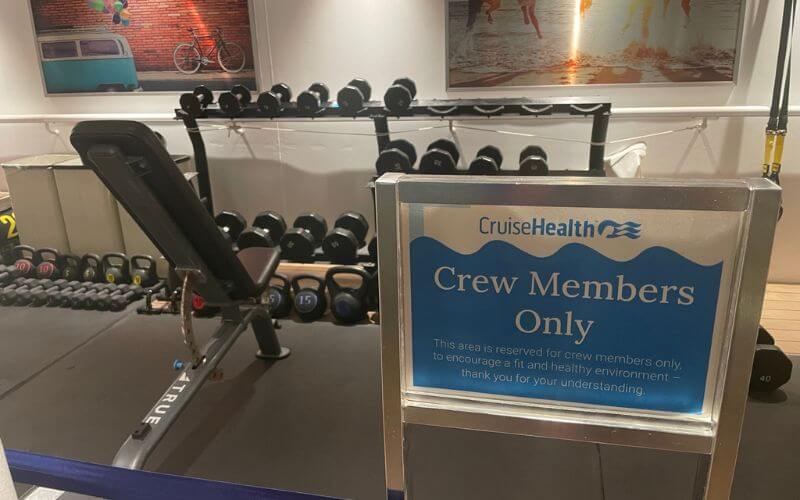
To be fair, cruise lines do provide a lot: accommodation, meals, uniforms, essential toiletries, some medical care, and laundry service for work clothes. Crew also have their own recreation room, bar and gym where they can unwind after long shifts.

crew only gym

But these benefits are designed to support work life at sea, not life back home. WiFi is the only direct connection to family, and right now that still sits outside the list of essentials.

"So? I’m sorry but this is ridiculous. They provide an income, room, and board which is normally covered.. Bills outside of that are the responsibility of the employee. My employer does not cover any of my bills aside from the ones I choose to pay for."

Guests often see the fancy parts of cruising. Behind the scenes, crew live a different reality, juggling limited downtime with the digital thread that keeps them tied to home.

With new technology making internet access cheaper and faster, many hope that basic connectivity will soon be considered a necessary welfare benefit rather than an add-on.

The Role of New Tech Like Starlink

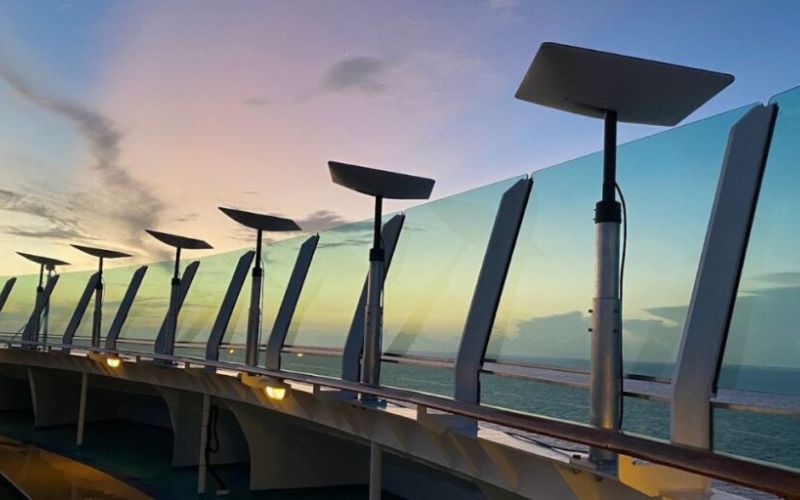
There is some good news. Starlink and other modern maritime systems are transforming guest WiFi, making it more affordable and substantially faster. On the bridge and in the offices, better connectivity is already a safety and operations upgrade.

Wifi receivers lined up on a cruise ship to provide internet on cruisers.

For crew, the improvement is less guaranteed. Some lines roll out new service tiers for guests first. Crew networks are improved later or not at all. Others are doing it more equitably, introducing unlimited texting and modestly priced plans tied to the new tech.

Many crew members are hopeful that in a few years the idea of crew paying to call home might feel outdated.

Free WiFi Ashore: The Great Connection Dash

If you have ever noticed crew dashing down the gangway on port days, this is why. Cafés, cruise terminals, fast-food chains and even the rocky walls near a harbour hotspot become gathering points. Phones light up with hundreds of missed messages, photos flood in and the real catch-ups begin.

Free WiFi hotspot

Crew rapidly download TV episodes to watch later when off-shift. They update parents on their health. They video call children without worrying the picture will freeze. Port days can be work days too, but even a short break ashore can restore a frayed connection to home.

You can always spot the crew WiFi corner: maximum focus, minimal small talk and chargers plugged into every available socket.

How Guests Can Be Supportive

There is no expectation that cruise passengers need to do anything to help out crew members who need WiFi. Having said that, a little bit of kindness goes a long way.

Some guests like to buy international calling cards or a small top-up voucher as a thank-you to someone who has made their cruise special.

Again, it’s by no means expected, but it can make a world of difference to someone far from home.

Of course, not everyone agrees that it’s needed…

"They are very lucky people. This world was much better off without any social media or Wi-Fi. It’s not a necessity. There are things called phones to contact their love ones. Funny how people can’t live without their social media! Actually, it’s quite sad!"

TODAY’S BEST CRUISE DEALS!

Don’t miss these offers…

Final Word

Cruise crew make holidays feel effortless. Every meal served, cabin cleaned, cocktail poured and show performed depends on people working hard while living far away from the people they love.

And in most cases, they still have to pay extra just to stay part of life back home.

When you look at the actual numbers – $4 a day here, $20 for a few hundred megabytes there, $89.99 for a limited block of time, or hundreds of dollars over a single contract – it stops sounding like a small onboard expense and starts looking like something much bigger.

Staying connected should not be a luxury for the people keeping the ship running.

It should be easier. It should be cheaper. And really, it should be free.i will not erase the distance, but it will make those long months feel that little bit closer to home.

Related Posts

If you found this interesting, please share!


Jenni with Disney Cruise ship at Castaway Cay


Source link

Caribbean-Princess-Cruise-Ship-1.jpg

More Than 100 Guests And Crew Fall Ill On Caribbean Cruise Ship


Norovirus has struck another cruise ship, with more than 100 passengers and crew members falling ill onboard Caribbean Princess during its current Caribbean sailing.

Caribbean Princess Cruise Ship

According to the US Centers for Disease Control and Prevention (CDC), 102 guests and 13 crew members have reported symptoms including vomiting and diarrhoea during the 13-night voyage, which departed from Fort Lauderdale on 28 April. That brings the total number of reported cases to 115.

The outbreak was officially confirmed by the CDC’s Vessel Sanitation Program on 7 May after the number of sick passengers exceeded the threshold required for public reporting.

At the time of reporting, around 3.3% of the ship’s 3,116 guests had become ill, alongside 1.2% of crew members.

Suggested read: Norovirus On Cruise Ships – Shocking Stats And How to Stay Healthy!

Despite the outbreak, the ship is continuing its planned itinerary, including calls to Amber Cove and Nassau, before ending the sailing in Port Canaveral on 11 May.

The cruise line has introduced enhanced cleaning and sanitation measures onboard, including extra disinfection of high-touch areas and isolation procedures for affected passengers and crew.

Cruise cleaner

Stool samples have also been collected to confirm norovirus as the cause.

Once the ship arrives in Port Canaveral, both the vessel and cruise terminal are expected to undergo a deep clean before the next cruise begins.

Passengers booked on the following sailing may be asked to arrive later than planned while cleaning takes place, although no itinerary changes have been announced.

This is now the fourth gastrointestinal outbreak reported on cruise ships under CDC monitoring in 2026, and the second involving a Princess Cruises ship this year.

Back in March, more than 150 people became ill during a norovirus outbreak onboard the new Star Princess.

Norovirus outbreaks often attract headlines because cruise ships provide the perfect conditions for viruses to spread quickly, with thousands of people sharing dining areas, handrails, lifts and public spaces.

However, while outbreaks can sound alarming, they remain relatively uncommon compared to the millions of people who cruise each year.

In fact, CDC figures show gastrointestinal outbreaks are currently trending significantly lower than last year. By mid-May 2025, there had already been 17 outbreaks reported under the Vessel Sanitation Program, compared with just four so far in 2026.

The latest outbreak also comes at a time when public concern around cruise ship illnesses is unusually high following the suspected hantavirus outbreak onboard expedition ship MV Hondius, which has been linked to three deaths.

Health officials continue to stress that the risk to the general public remains low, and most people recover from norovirus within one to three days without medical treatment.

Related Posts:

If you found this interesting, please share!


Jenni with Disney Cruise ship at Castaway Cay
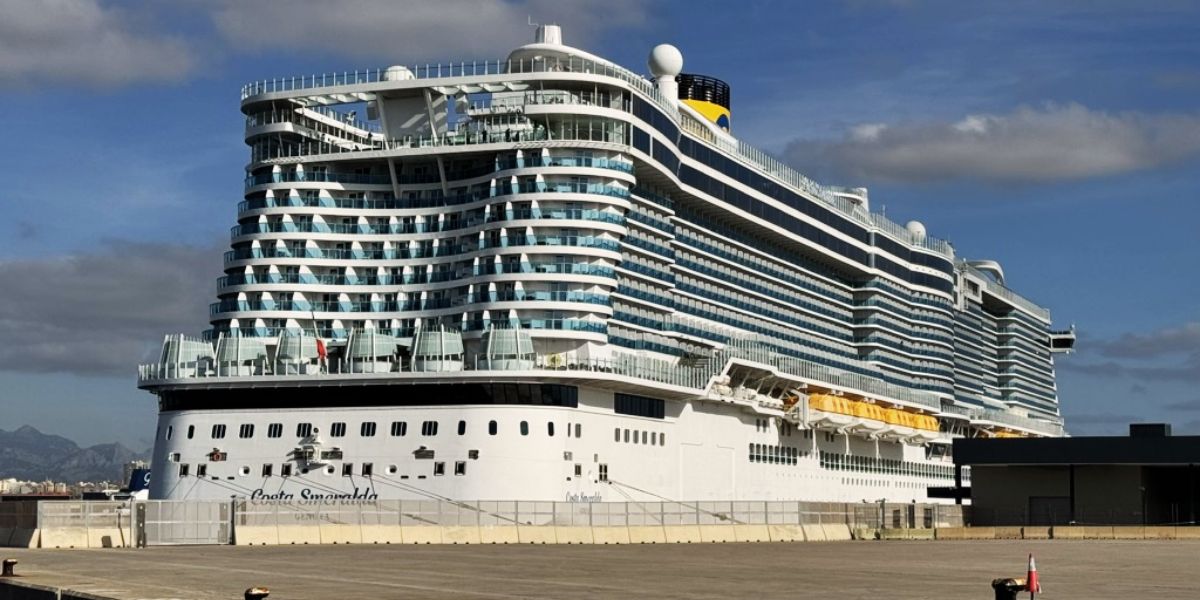
The Costa Smeralda cruise ship docked in a port on a clear day, its white and blue balconies visible against the backdrop of a blue sky with fluffy clouds and distant mountains.

A cruise director has been awarded around €130,000 after court ruled that the company unlawfully kept him on temporary contracts for 18 years despite using him as a long-term employee….

MSC Cruises is expanding its new AI-powered MSC Concierge across its entire fleet after a large-scale trial generated more than one million guest messages and achieved a 93 percent satisfaction…

NCL cruise ship

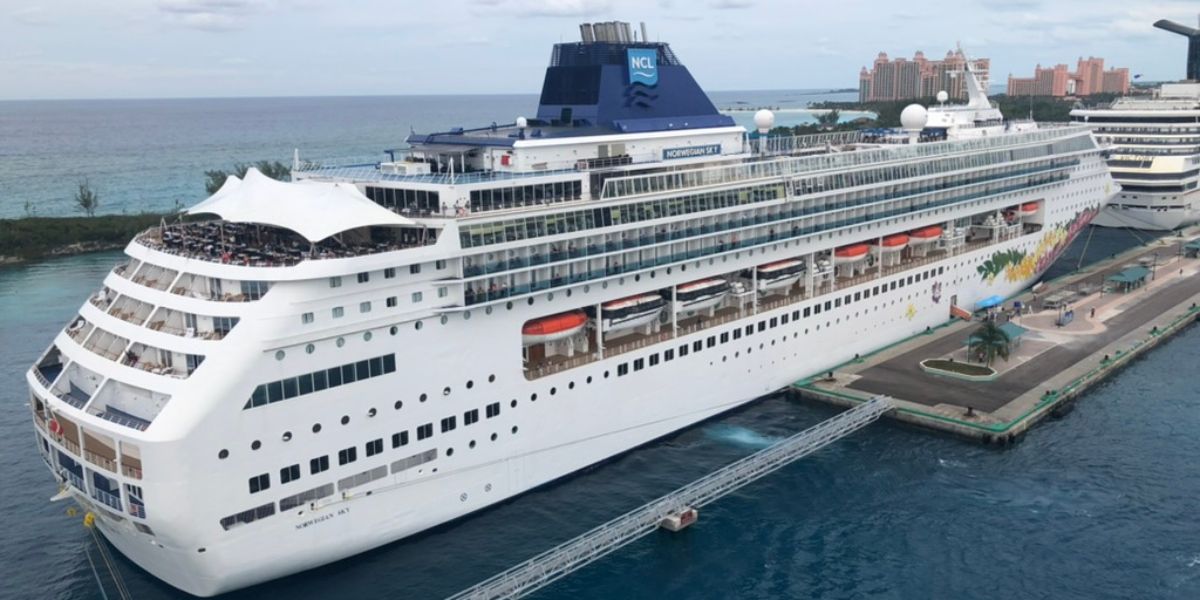
Norwegian Cruise Line Holdings has cut its 2026 profit forecast after warning that higher fuel costs, weaker demand and earlier booking problems are putting pressure on the business. The company,…

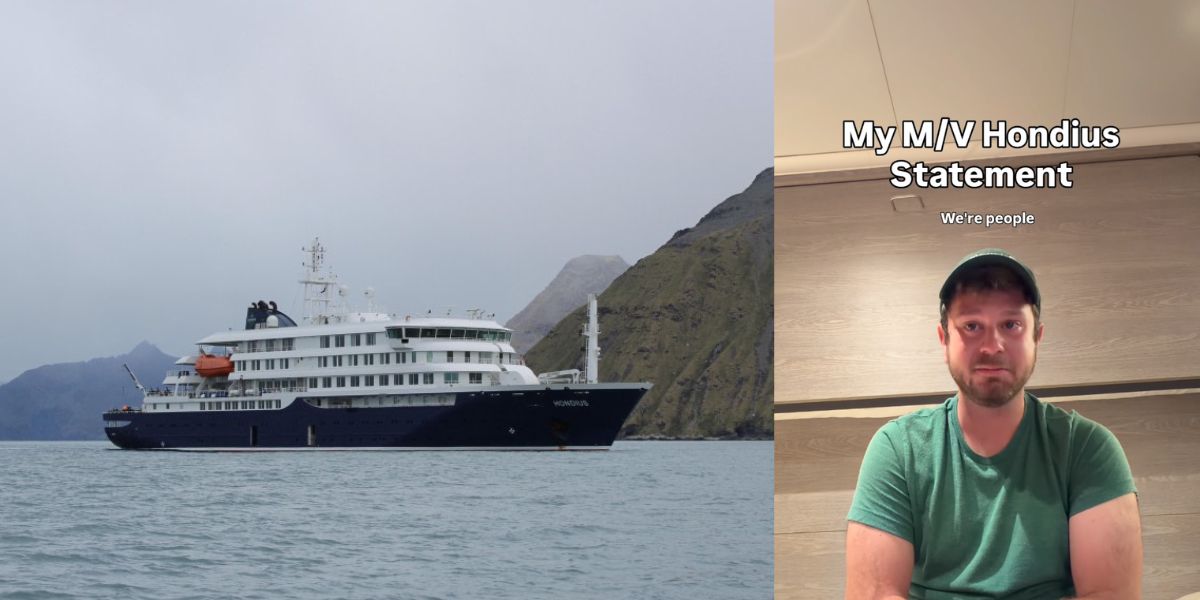
A US travel blogger stranded aboard MV Hondius has shared an emotional video plea as passengers remain confined on the expedition cruise ship following a suspected hantavirus outbreak that has…


Source link
MSC-AI-concierge.jpg

MSC Cruises Rolls Out AI Concierge After 1 Million Guest Messages


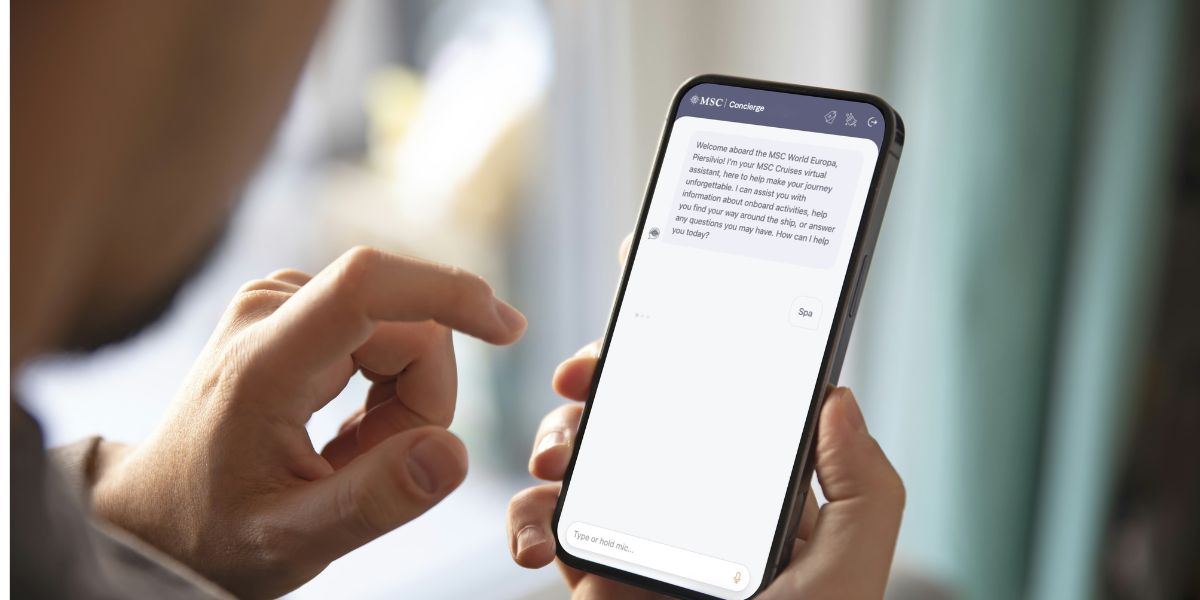
MSC Cruises is expanding its new AI-powered MSC Concierge across its entire fleet after a large-scale trial generated more than one million guest messages and achieved a 93 percent satisfaction rating.

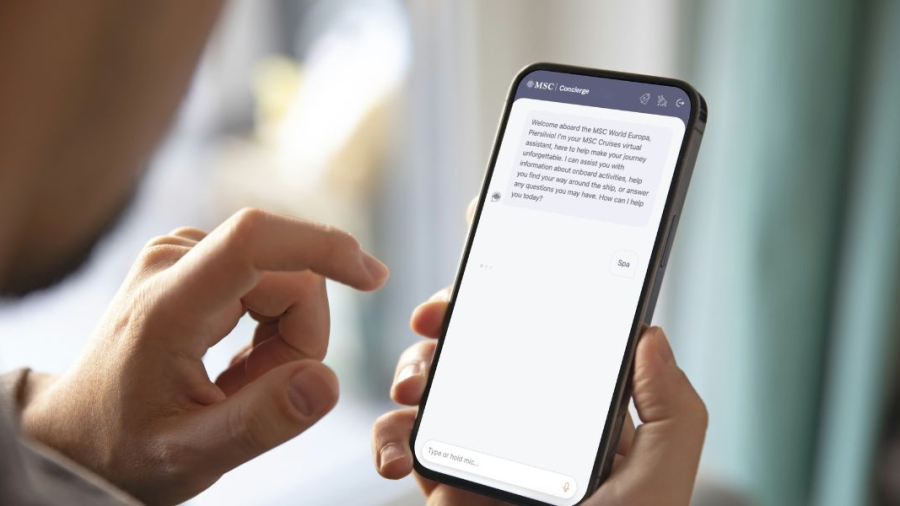
The virtual assistant, built into the MSC for Me app, is designed to help passengers access onboard services and information through a 24-hour chat feature available on their own phone or tablet.

More than 170,000 guests tested the system during the pilot phase before MSC Cruises decided to complete a fleetwide rollout by the end of May 2026.

The cruise line says the AI concierge can communicate in more than 90 languages and is capable of handling a wide range of requests. Guests can book specialty dining, reserve spa treatments, arrange shore excursions, check onboard spending, browse entertainment schedules and ask general questions without visiting guest services desks.

MSC Cruises CEO Gianni Onorato said the technology is intended to work alongside crew members rather than replace them.

“We are dedicated to offering our guests the ultimate holiday experience across every touchpoint of their cruise. Combining the latest technology with the warm hospitality of our crew, we are enabling guests to personalise their journey like never before, to create an experience which is truly theirs.”

One of the biggest advantages for passengers is that the service works through the ship’s internal Wi-Fi network without requiring the purchase of an internet package. Guests simply connect to the ship’s hotspot and use the MSC for Me app or scan onboard QR codes to start chatting with the assistant.

The system is also linked directly to each guest’s booking details, meaning it can tailor responses based on cabin category, drinks packages and other included services.

MSC Cruises said the service is already available on most ships, including MSC World Europa, MSC Virtuosa, MSC Euribia and MSC World America, with the remaining vessels expected to go live before the end of the month.

Could This Succeed Where Zoe Failed?

The launch of MSC Concierge is likely to draw comparisons with Zoe, MSC Cruises’ previous attempt at an onboard digital assistant.

MSC ZOE

Introduced several years ago on Meraviglia-class ships, Zoe was a voice-controlled device placed inside passenger cabins. Guests could ask simple questions, request information and control some cabin functions through spoken commands.

In practice, however, Zoe struggled with accuracy, speech recognition and limited functionality. Many passengers complained the assistant misunderstood requests or failed to answer basic questions, particularly when dealing with different accents or background noise.

Reviews were often negative, and many guests simply stopped using the devices altogether.

Unlike Zoe, the new MSC Concierge is entirely app-based and powered by modern conversational AI technology. Rather than relying on voice recognition inside cabins, guests communicate through text chat, which is generally far more reliable and easier for multilingual support.

The new system has also been trained using thousands of previous guest interactions, allowing it to provide more detailed and personalised responses.

MSC has not confirmed whether all Zoe devices have now been removed from cabins across the fleet. Some ships still appear to have the hardware installed, although the devices have largely disappeared from MSC marketing in recent years as the company shifted focus towards mobile-based services.

Growing Use Of AI On Cruise Ships

MSC Cruises is also expanding its use of AI beyond digital guest services. The cruise line recently revealed plans for a huge new family entertainment zone on its upcoming ships that will combine theme park-style attractions with interactive AI-powered experiences.

MSC World Asia, MSC Luna Park Arena

MSC says the new concepts will use artificial intelligence to create more personalised and immersive activities for families and younger guests, showing how the company is increasingly investing in AI technology across multiple areas of the onboard experience rather than limiting it to customer service alone.

MSC Cruises is not the only cruise line investing heavily in artificial intelligence and digital guest services.

Cruise operators are increasingly using AI tools to reduce waiting times, improve onboard communication and handle routine guest requests more efficiently.

For crew members, systems like MSC Concierge could help reduce the number of repetitive questions handled at guest services desks, allowing staff to spend more time assisting passengers with more complex issues.

NEW DEALS JUST RELEASED!

Don’t miss the latest MSC Cruises offers…

Related Posts:

If you found this interesting, please share!


Jenni with Disney Cruise ship at Castaway Cay
The Costa Smeralda cruise ship docked in a port on a clear day, its white and blue balconies visible against the backdrop of a blue sky with fluffy clouds and distant mountains.

A cruise director has been awarded around €130,000 after court ruled that the company unlawfully kept him on temporary contracts for 18 years despite using him as a long-term employee….

Caribbean Princess Cruise Ship

Norovirus has struck another cruise ship, with more than 100 passengers and crew members falling ill onboard Caribbean Princess during its current Caribbean sailing. According to the US Centers for…

NCL cruise ship

Norwegian Cruise Line Holdings has cut its 2026 profit forecast after warning that higher fuel costs, weaker demand and earlier booking problems are putting pressure on the business. The company,…

A US travel blogger stranded aboard MV Hondius has shared an emotional video plea as passengers remain confined on the expedition cruise ship following a suspected hantavirus outbreak that has…


Source link

Costa-Smeralda-3.jpg

Cruise Director Awarded €130,000 In Court After 18 Years On Temporary Contracts


A cruise director has been awarded around €130,000 after court ruled that the company unlawfully kept him on temporary contracts for 18 years despite using him as a long-term employee.

The Costa Smeralda cruise ship docked in a port on a clear day, its white and blue balconies visible against the backdrop of a blue sky with fluffy clouds and distant mountains.

The Bari Labour Court ruled that the former Costa Cruises cruise director, from Taranto, should be treated as a permanent employee after working on Costa Cruises ships from 2003 to 2021. During that time, he was reportedly employed under 51 separate contracts.

According to the Italian newspaper ANSA, the court found that the company had relied on his work for years while continuing to use fixed-term contracts, rather than recognising him as a permanent member of staff.

Judge Agnese Angiuli partially accepted the worker’s appeal, which was supported by lawyers Fabrizio Del Vecchio and Antonello Schinaia. The court ordered that he be rehired and paid around €130,000, plus interest. The sum was calculated using his final salary and years of service.

Why The Ruling Matters To Cruise Crew

Short-term contracts are standard across much of the cruise industry. Most crew members are hired for a set period at sea before taking leave and later returning under a new contract.

For many hotel, catering and housekeeping staff, contracts typically last between four and ten months, often followed by several weeks off before the next assignment. Senior positions such as captains, hotel directors and cruise directors usually work shorter rotations, often around three to four months at a time.

This rotating system is a normal part of cruise ship operations. Unlike land-based jobs, ships need crew to regularly rotate on and off throughout the year, meaning fixed-term contracts are widely used across the industry.

The issue in this case was not simply the use of temporary contracts. The court found that the cruise director’s employment had effectively become continuous after 51 contracts over 18 years. In practice, the role no longer appeared temporary, despite still being structured through repeated short-term agreements.

Are Cruise Directors Usually Permanent?

Cruise directors are not usually “permanent” employees in the same way as office workers on land. Even highly experienced cruise directors who stay with the same company for years normally work in scheduled rotations, with each period on board covered by a separate contract or assignment.

There are permanent-style jobs within the cruise industry, but these are more common ashore in areas such as management, sales, marketing, finance and port operations.

At sea, even senior officers and entertainment staff often work under rotational systems. Some may have long-term employment relationships with a cruise line, but still alternate between periods on board and leave at home.

That distinction is important because maritime employment works differently from most land-based industries. Courts may accept that rotating contracts are necessary for ship operations, but they can also examine whether repeated fixed-term agreements are being used fairly or simply to avoid granting the protections linked to permanent employment.

Why This Case Was Different

This ruling is unlikely to be easy for most crew members to copy.

Costa Cruises says its current fleet flies the Italian flag, and the company has long been closely linked to Italy. That gave this case a stronger connection to Italian and European labour rules.

Many other large cruise ships are registered in countries such as the Bahamas, Panama, Bermuda, Malta or Liberia. In maritime law, the ship’s flag state is very important because it helps decide which national rules apply on board.

Suggested read: Why Cruise Ships Register In The Bahamas

Bahamas flag on cruise ship

The Maritime Labour Convention sets minimum rights for seafarers, including written employment agreements, wages, rest hours, leave, repatriation and complaint procedures, but enforcement is largely tied to flag states and port state checks.

This is why crew on American-owned cruise lines are not automatically covered by US employment law. A cruise company may be listed, based or managed in the United States, but its ships are often registered elsewhere. That can make claims about unfair dismissal, permanent status or local labour protections much harder.

Will This Lead To More Permanent Cruise Jobs?

The ruling may encourage some long-serving crew to look more closely at their own contracts, especially in Europe. It may also push cruise lines and hiring agencies to be more careful when using repeated fixed-term agreements for the same worker over many years.

But it is unlikely to end temporary contracts at sea.

Short contracts remain the standard model for cruise ship work. Ships need crew to rotate because life on board is intense, with long working days and weeks away from home. The Maritime Labour Convention also treats seafaring as a special type of work, with its own employment agreements and protections.

The bigger risk for cruise lines is not the use of short contracts by itself. It is the repeated use of short contracts for the same person, in the same role, over many years, where the work appears to be permanent in all but name.

For cruise workers, the message is more limited but still important. This case shows that repeated temporary contracts can be challenged in the right legal setting. However, the result depends heavily on the worker’s nationality, the ship’s flag, the employer named in the contract, the country where the case is brought, and whether local labour law has a strong enough connection to the job.

Related Posts:

If you found this interesting, please share!


Jenni with Disney Cruise ship at Castaway Cay

MSC Cruises is expanding its new AI-powered MSC Concierge across its entire fleet after a large-scale trial generated more than one million guest messages and achieved a 93 percent satisfaction…

Caribbean Princess Cruise Ship

Norovirus has struck another cruise ship, with more than 100 passengers and crew members falling ill onboard Caribbean Princess during its current Caribbean sailing. According to the US Centers for…

NCL cruise ship

Norwegian Cruise Line Holdings has cut its 2026 profit forecast after warning that higher fuel costs, weaker demand and earlier booking problems are putting pressure on the business. The company,…

A US travel blogger stranded aboard MV Hondius has shared an emotional video plea as passengers remain confined on the expedition cruise ship following a suspected hantavirus outbreak that has…


Source link

big-ship-1-1.jpg

How Big Cruise Ships Really Are (2024)


Modern cruise ships are so enormous that your brain almost struggles to process their size properly. You can stand beside one in port and still not fully realise just how huge it is.

The first time I boarded a big cruise ship, I genuinely got lost for days. Finding my cabin was hard enough. Working out which side was port and which was starboard. Even harder.

And today’s newest ships make those older ships look tiny.

Some are taller than skyscrapers, longer than several football pitches and carry more people than many small towns. But the really surprising part isn’t just their size… it’s how they actually manage to float in the first place.

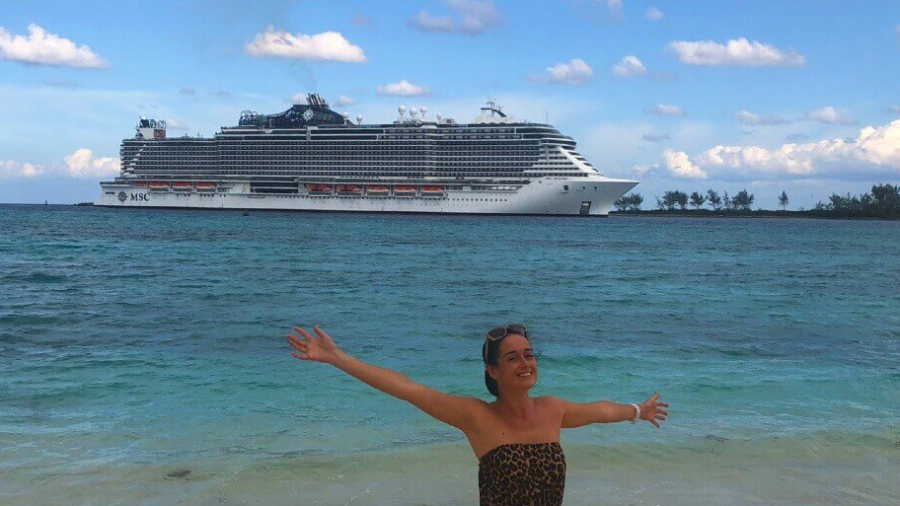
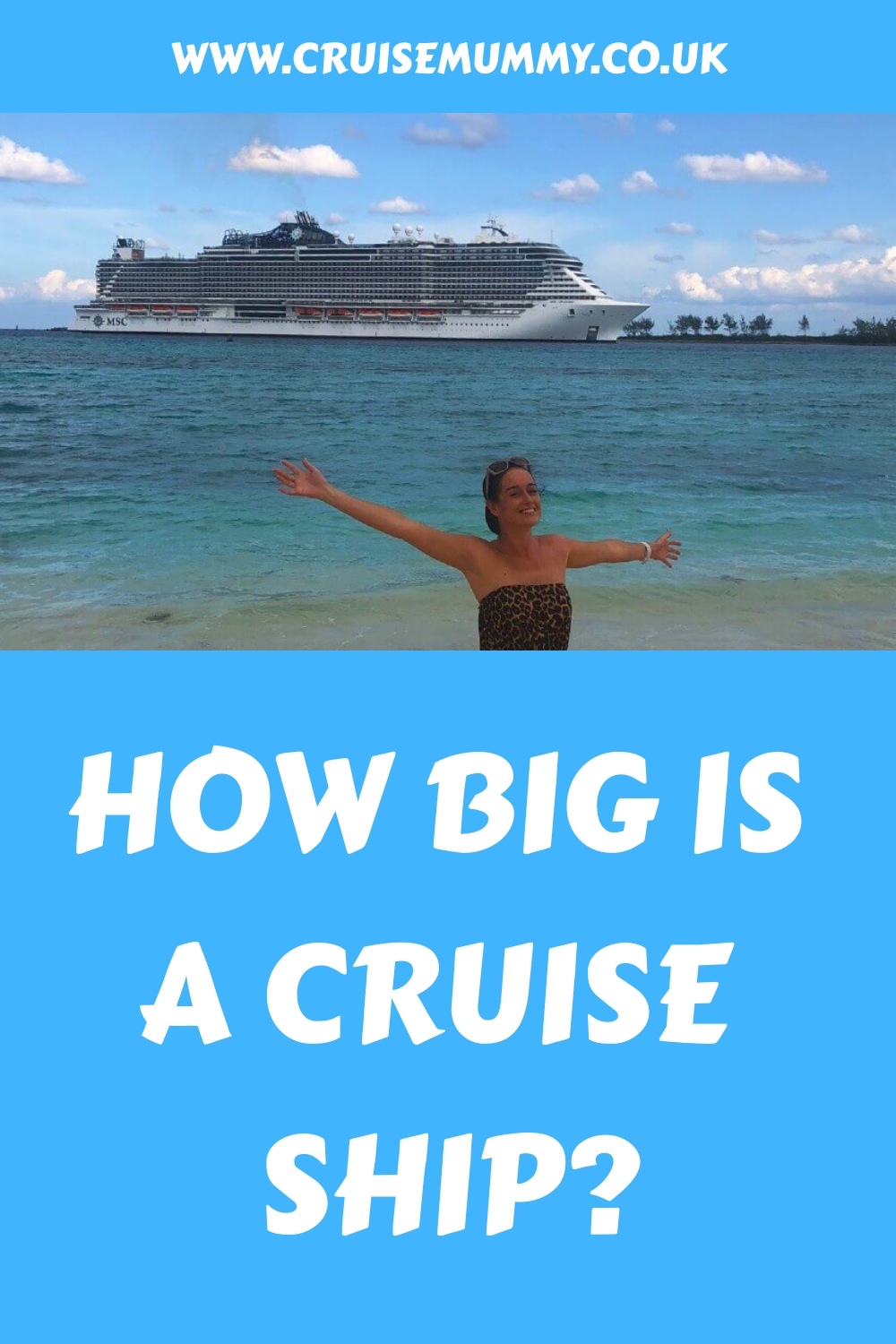
Cruise Mummy with MSC ship

The Size of an Average Cruise Ship

Cruise ships are measured in terms of gross tonnage (GT), which is a measurement of the internal volume of a ship. The average cruise ship has a gross tonnage of 120,000 GT.

But how long is a cruise ship? Well, an average-sized cruise ship is 1,000 feet long – the same length as three football fields or ten blue whales. The average cruise ship carries around 3,000 guests and has 15 decks.

Examples of average-sized cruise ships include Celebrity Apex, Disney Fantasy, Explorer of the Seas and MSC Preziosa.

MSC Preziosa is an average size cruise ship

However, cruise ships come in all different sizes, ranging from small yacht-style cruise ships carrying fewer than 100 guests, to huge mega-ships that can accommodate over 7,000 guests plus more than 2,000 crew members.

The World’s Biggest Cruise Ship

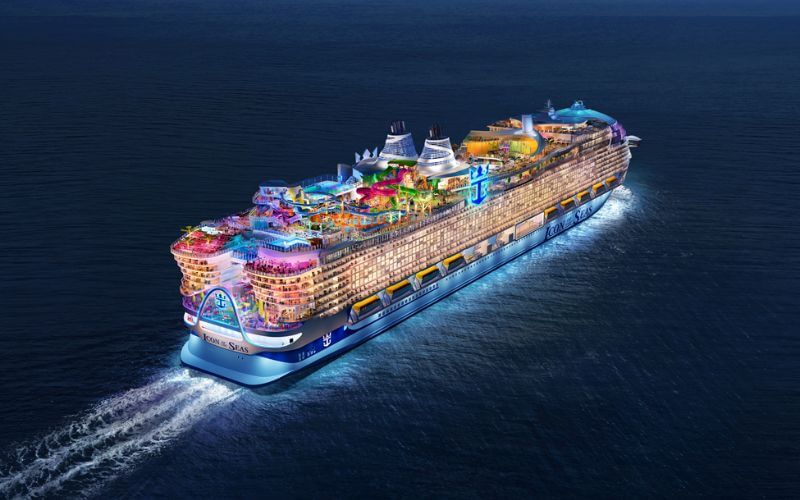
The biggest cruise ship in the world is Icon of the Seas, with a gross tonnage (internal volume) of 248,663 GT. The ship is 1,198 feet long and can carry 7,600 passengers and 2,350 crew members.

Icon of the Seas

Before Icon, Wonder of the Seas was the biggest in the fleet, with a gross tonnage of 236,857 GT. And prior to that, it was Symphony of the Seas. Launched in June 2017, this Oasis-class ship has a gross tonnage of 228,081 GT.

The longest cruise ship in the world is Icon of the Seas, but before Icon, it wasn’t Wonder – it was actually Harmony of the Seas. This ship is four inches longer than Wonder of the Seas, with a length of 1188.1 feet compared to 1187.8 feet.

Read more: Royal Caribbean ships by size

Wonder of the Seas

The Weight of a Cruise Ship

It’s really hard to find the weight of a cruise ship, because so many people think that the gross tonnage is the weight. It’s not – it’s a measure of volume only, and doesn’t tell you how much the ship actually weighs in deadweight tons.

Also, the ships tend to be a bit big to fit on a set of scales! I’ve seen estimates that put the Oasis-class ships for Royal Caribbean at around 600,000 tons or 600,000,000 kilograms, but these aren’t backed by evidence, so I don’t know how accurate they are.

The Height of a Cruise Ship

The average cruise ship tends to be around 200 feet tall, though there are some that are closer to 250 feet tall. The height of a cruise ship depends on the number of decks that it has – average ships have around 15 passenger decks, but some can have as many as 20.

How to Compare the Sizes of Cruise Ships

Cruise ships are usually measured in terms of length, internal volume (gross tonnage) and passenger capacity.

Most medium- and large-sized cruise ships are of a similar length. The difference between mega-ships and their medium-sized cousins comes in terms of width, height and internal volume.

The largest cruise ships are wider and have more decks than smaller-sized ships. This adds more weight, as does the addition of more swimming pools, hot tubs and other weighty facilities.

Passenger capacity is a good way to compare cruise ships. However, it’s important to consider that there are two different measures of passenger capacity for a ship: double occupancy and maximum occupancy. For a ship to sail at maximum occupancy, every bed would need to be filled in every stateroom. In reality, this very rarely happens as sofa beds and extra bunk beds, which come down from the ceiling, aren’t always used.

How Many People Fit on a Cruise Ship

The most people that can fit on a cruise ship is around 9,950 people. The largest cruise ship in the world in terms of maximum passenger capacity is Royal Caribbean’s Icon of the Seas.

This ship has a maximum passenger capacity of 7,600 as well as a crew capacity of 2,350. [Source]

P&O Cruises Britannia is a mid-size cruise ship

The Growing Size of Cruise Ships

Cruise ships have been getting larger all the time, with a demand for mega cruise ships coming from cruisers championing the notion that ‘bigger is better’.

Of course, cruise ships will always be limited in terms of size by the ports that they visit. Some ports can only handle ships of a certain size because the dock is only so big, the water is only so deep and the port itself only has the staff and facilities to handle so many passengers at one time.

Contracts are signed on the build of new cruise ships years in advance of their completion, so we can spot whether the trend is for cruise ships to get larger or smaller.

Suggested read: Royal Caribbean Ship Classes Comparison

Comparing Cruise Ships to Other Things

It can be tricky to understand exactly how big a cruise ship is without seeing it with your own eyes. How big is 1,000 feet in real life? To help you visualise the size of cruise ships, I’ve made comparisons between average cruise ships and other large things.

For these cruise ship size comparisons, I’ve used 1,000 feet as the average length of a large cruise ship.

The Size of a Whale Compared to a Cruise Ship

Cruise ships are at least ten times larger than whales. The average cruise ship is 1,000 feet long, whereas the largest blue whales are no more than 100 feet long. Some whales are very small, such as the dwarf sperm whale, which is just nine feet long.

blue whale at sea

The Size of an Aircraft Carrier Compared to a Cruise Ship

Aircraft carriers and cruise ships are roughly the same size. The largest aircraft carrier at sea, the Gerald R Ford Class aircraft carrier, has a length of 1,106 feet, only slightly smaller than the world’s largest cruise ship, Icon of the Seas, which is 1,198 feet long.

aircraft carrier

The Size of a Container Ship Compared to a Cruise Ship

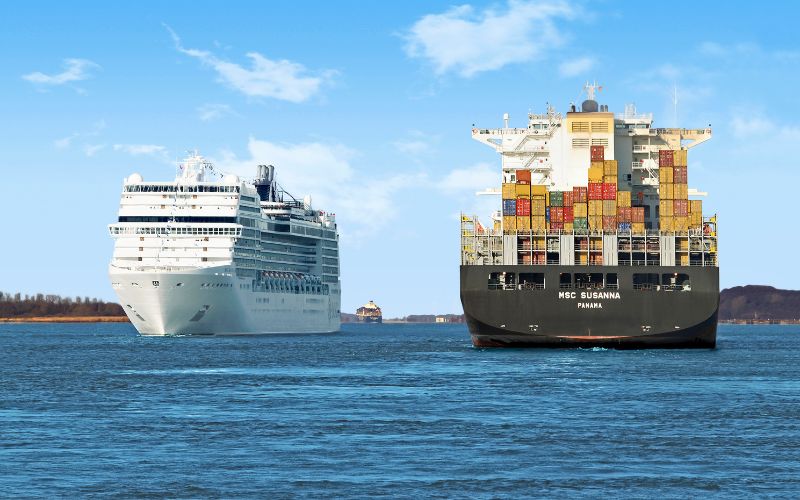
Most container ships are of a similar size to large cruise ships. However, the largest container ships in the world are longer than cruise ships. Container ships can be up to 400 meters in length – around 10% longer than the biggest cruise ships.

MSC Lirica and MSC Susanna

The gross tonnage (volume) of container ships versus cruise ships is roughly equivalent. However, the world’s biggest cruise ship, Icon of the Seas, has a gross tonnage of approximately 80,000 GT, greater than the largest container vessels. The largest cruise ships also have a greater beam (width).

Whereas the largest container ships operate with around 25 crew members, cruise ships like Icon of the Seas have up to 2,350 crew on board to look after the guests.

The photo below shows a 400-meter-long container ship, one of the biggest in the world. It was taken by my port pilot friend, John. You can read what it’s like to be a ship’s pilot here.

container ship

The biggest cruise ship in the world, Icon of the Seas, is three times longer than an American football field. Smaller expedition yachts or river cruise ships are more similar in size to a football field, with a length of around 300 feet.

Football (soccer) pitches, in comparison, vary in size from 100 yards to 130 yards.

The Size of Noah’s Ark Compared to a Cruise Ship

Noah’s Ark was much smaller than most modern cruise ships. It would have been similar in size to Silversea’s luxury expedition cruise Silver Cloud, which carries around 250 guests. The average cruise ship carries around 3,000 guests.

Suggested read: Silversea Cruise Ships By Size

According to the Bible (Genesis 6:15), the dimensions of Noah’s Ark were: 300 cubits in length, 50 cubits in width and 30 cubits in height.

A cubit is an ancient measurement of length that is based on the distance from the elbow to the tip of the longest finger. This makes the exact length of a cubit uncertain, but it is most likely to be around 20 inches.

Based on the information in the Bible, we can estimate that Noah’s Ark would have been about 510 feet long and 50 feet tall. This means that Noah’s Ark was around half the length and one-quarter of the height of the world’s largest cruise ship, Icon of the Seas, which is 1,198 feet long.

Silver Cloud is a small cruise ship

The Size of Titanic Compared to a Modern Cruise Ship

The average modern cruise ship is two and a half times bigger than the Titanic, which was 882 feet long with a gross tonnage of 46,428 GT and space for 2,435 guests. The average cruise ship is 1,000 feet long with a gross tonnage of 120,000 GT and space for 3,000 guests.

The largest cruise ship in the world, Icon of the Seas, is 34% longer, 36% higher, over twice as wide and has five times the internal volume of the Titanic. You can read more about how Icon of the Seas compares to the Titanic, as well as how the Titanic measures up against the average ship.

This video demonstrates visually how the Titanic compares to modern mega-ship, Symphony of the Seas:

https://www.youtube.com/watch?v=sQrLp4WmIvA

Suggested read: Wonder of the Seas Vs Titanic

By today’s standards, the Titanic would have been a medium-sized ship. Her dimensions and capacity are not dissimilar to some luxury cruise ships still sailing today.

The following table compares the size of Titanic to Regent Seven Seas’ ship Seven Seas Mariner:

TitanicSeven Seas Mariner
Year19112001
Length882 ft709 ft
Width92 ft93 ft
Decks1012
Gross Tonnage46,32848,075
Passengers2,435700
Crew892445

Read more: Titanic Vs Modern Cruise Ships (Size Comparison)

Cruise Ship Components

As we’ve learned, cruise ships are pretty massive. But what about the parts that make up the cruise ship? Let’s find out how big they are…

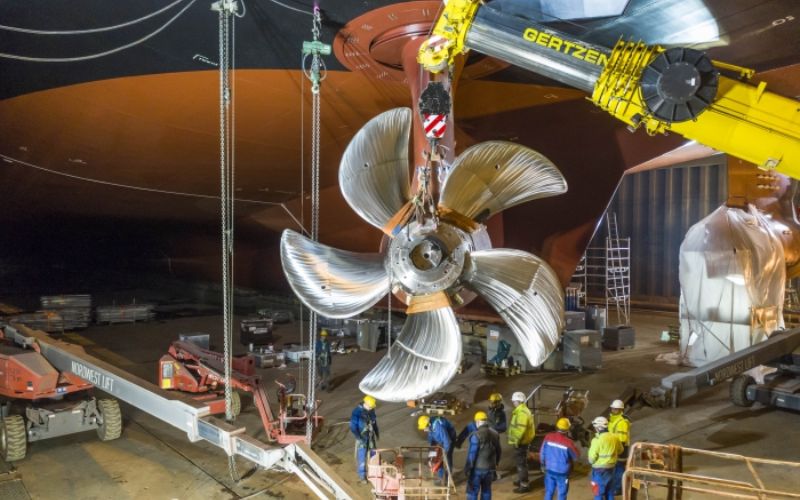
The Size of a Cruise Ship Propeller

The largest propellers on cruise ships are about 20 feet tall. Known as azipods, each ship has three of these huge propellers to propel the ship and manoeuvre it in port.

Get a close-up look at Royal Caribbean ships’ propellers in this video:

https://www.youtube.com/watch?v=pJvNhvCeFEk

I have a whole article with everything you could wish to know about cruise ship propellers, so be sure to check that out to learn more.

cruise ship propeller

The Size of a Cruise Ship Fuel Tank

A large cruise ship that’s between 900 and 1,100 feet in length can store 1-2 million gallons of fuel in its fuel tanks. Smaller cruise ships will carry significantly less, with yacht-style cruise ships carrying about 200,000 gallons. [Source]

The newest cruise ships use liquefied natural gas (LNG) rather than diesel. LNG is a relatively new fuel source for cruise ships and is used to power the latest ships, such as P&O Cruises’ Iona, Costa Smeralda and others.

LNG has a lower fuel density than diesel, so a vessel using LNG needs to have twice as much tank space available. LNG-powered cruise ships store fuel across three tanks. Two of the tanks are 115 feet long and 26 feet in diameter, the other is 91 feet long with a diameter of 16 feet.

Both diesel and LNG-powered cruise ships are able to sail for up to two weeks without refuelling.

The Size of the Engine on a Cruise Ship

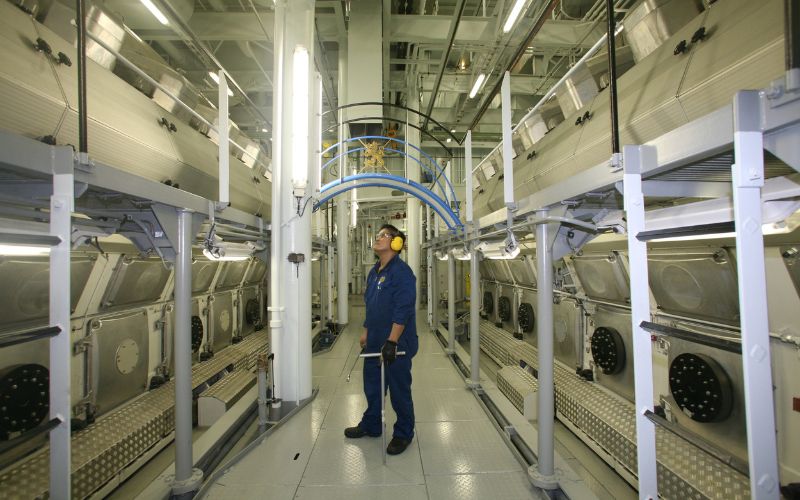
The engine room on a cruise ship is three to five decks high. Most cruise ships have four engines, each of which is around 25 meters long and around 17 meters high. The largest cruise ships have six of these engines.

Engine room on Allure of the Seas

The different parts of the engine are divided into separate water-tight compartments, one for the main engines and another for the heating and air-conditioning system. This is for safety reasons. If a penetration to the hull or fire happens, multiple compartments help contain the damage.

If you’d like to see what it looks like inside a cruise ship engine room, take a look at this fascinating video:

Suggested read: Where Are The Engines Located On A Cruise Ship?

The Size of a Cruise Ship Anchor

Cruiser ship anchors are usually 10 to 20 feet high and weigh around 30,000 pounds (13,600 KG). The anchor chain is around 1,400 feet long and each individual link weighs over 100 pounds.

Most cruise ships have two anchors. Anchor designs vary, as do the weights and dimensions, which are carefully calculated for each ship.

Queen Elizabeth 2 had two forward anchors, one of which is displayed as a landmark in the ship’s homeport of Southampton. The anchor is 4.3m (14ft) high, 2.7m (9ft) wide and weighs 13 tonnes.

This video shows Legend of the Seas dropping her anchor:

Read more about cruise ship anchors.

The Size of Cruise Ship Cabins

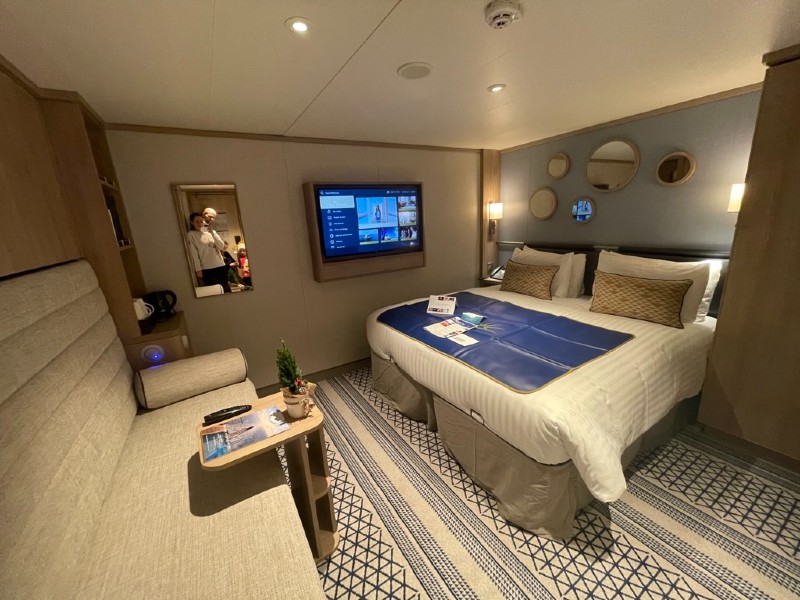
Most cruise ships have standard inside cabins that are between 150 and 185 square feet and standard balcony cabins that are between 170 and 220 square feet. Cruise ship cabins are generally the size of a small hotel room with enough room for a queen-size bed, wardrobe, bathroom and a small desk or vanity area.

Arvia inside cabin

Each ship will have many different cabin types, ranging from single inside cabins to huge suites.

Luxury cruise ships often have much larger suites than regular cruise ships. The Regent Suite on board Regent Seven Seas Splendour is the largest suite at sea and measures 4,443 square feet. This is over four times the size of the average UK home.

This video shows what an inside cabin is like on a cruise ship and how it can accommodate a family of four.

I hope that this article will help you understand how big a cruise ship is. I do believe, however, that until you step on board for yourself, the sheer scale of a cruise ship is quite a difficult thing to comprehend.

If you found this interesting, please share!


Jenni with Disney Cruise ship at Castaway Cay


Source link

Celebrity-Summit-1-1.jpg

Celebrity Cruise Ship Classes Explained (2025)


Celebrity Cruises has 15 stunning ships in its fleet, but they’re far from all the same. Some feel like floating luxury resorts packed with cutting-edge design. Others are smaller, quieter and much more traditional.

And while many cruisers focus on the destinations, choosing the wrong ship class can completely change your holiday experience.

Celebrity divides its fleet into four distinct classes:

  • Edge Series
  • Solstice Series
  • Millennium Series
  • Galapagos Series

From the game-changing Magic Carpet to smaller ships that can reach ports the mega-ships can’t, there’s a lot most people don’t realise until after they’ve booked.

Celebrity Summit

Celebrity Edge Class Ships

The Celebrity Edge Series was first launched in 2018 and consists of four ships – Celebrity Edge, Celebrity Apex, Celebrity Beyond and Celebrity Ascent.

These ships have a guest capacity of around 3,385 passengers. They are 1,073 ft long with a beam of 128 ft.

They have a gross tonnage of between 129,500 and 140,600 gross tonnes, with the two newest ships being slightly larger than the older ones.

Celebrity Edge

Celebrity Edge

The first Edge-class ship, Celebrity Edge, caused quite a stir when she made her debut in December 2018.

This revolutionary cruise ship can accommodate up to 3,385 guests. With a gross tonnage of 129,500 and a length of 1,073 ft, this ship is sure to leave a lasting impression. As Celebrity ships are refurbished at least every five years, Celebrity Edge underwent its first renovation in October 2023.

Celebrity Apex

Celebrity Apex

Celebrity Apex made history as the first-ever ship to have a virtual delivery on March 27th 2020. Due to the shutdown, this ship was handed over via a video conference call.

This ship boasts the same impressive guest capacity and gross tonnage as Celebrity Edge and has a similar length and beam.

Celebrity Beyond

Celebrity Beyond

Celebrity Beyond made its inaugural voyage in April 2022 and is sure to take your breath away.

With a guest capacity of 3,836 and a gross tonnage of 140,600, the third Edge-class ship features expanded open-air spaces and Starlink internet service.

Celebrity Beyond was captained by the infamous Captain Kate McCue, although she announced in February 2025 that she was leaving the cruise line.

Celebrity Ascent

Celebrity Ascent

The fourth ship in the Edge series, Celebrity Ascent, is similar to Celebrity Beyond.

One key difference, however, is that the ship is co-captained by twins! Twin brothers Dimitrios and Tasos Kafetzis take the helm as this ship sails the Caribbean.

Celebrity Ascent launched in late 2023.

Celebrity Xcel

Celebrity Xcel

The fifth ship in the Edge series, Celebrity Xcel, takes everything guests loved about Celebrity Beyond and Celebrity Ascent and adds even more immersive entertainment, dining and outdoor spaces.

One standout feature is The Bazaar, a brand-new multi-use venue designed to transform throughout the day with destination-inspired food, live music and interactive experiences linked to the regions the ship is visiting.

Celebrity Xcel launched in late 2025 and sails Caribbean itineraries from Florida. She has a capacity of 3,260 passengers and a gross tonnage of 140,600.

A New Ship for the Edge Class

The sixth ship in the Edge series, Celebrity Xcite, is set to launch in 2028. While full details haven’t been revealed yet, it’s expected to build on the design of Celebrity Xcel with even more immersive entertainment, dining and destination-inspired experiences.

Celebrity has described the ship as being “designed to excite every sense”, hinting that it could push the Edge Series concept even further.

Solstice Class Ships

Before the Edge Class ships came the Solstice Class; these five ships were launched between 2008 and 2012.

Ships in the Celebrity Solstice Series have guest capacities of between 3,148 and 3,480 passengers. So most of them are slightly smaller than the Edge series ships, but not by a lot.

The Solstice class ships each have a length of 1,041 ft, a beam of 121 ft, and a gross tonnage of 122,000 to 126,000.

Celebrity Solstice

Celebrity Solstice

Inaugurated in November 2008, this ship has a guest capacity of 3,148 and a gross tonnage of 122,000.

Celebrity Solstice underwent a major refurbishment in early 2026 as part of Celebrity’s new $250 million Solstice-class modernisation programme.

The 45-day dry dock added new venues including Sunset Park, Boulevard Lounge, Fine Cut Steakhouse and Trattoria Rossa, alongside upgraded cabins and refreshed public spaces.

Celebrity Equinox

Celebrity Equinox

Launched in August 2009, Celebrity Equinox is virtually identical, also having a guest capacity of 3,148 and a gross tonnage of 122,000.

She last underwent a renovation in April 2024.

Celebrity Eclipse

Celebrity Eclipse

Inaugurated in April 2010, this ship has a guest capacity of 3,148 and a gross tonnage of 122,000. She was last renovated in March 2021 as part of a fleetwide modernisation known as ‘The Celebrity Revolution’.

Celebrity Silhouette

Celebrity Silhouette

Celebrity Silhouette often sails from the UK, making her a popular choice for UK cruisers.

Cruising since July 2011, Celebrity Silhouette has a guest capacity of 3,324 and a gross tonnage of 122,400. It measures 1,041 feet in length and 121 feet in beam.

The ship underwent its last renovation in November 2024.

Celebrity Reflection

Celebrity Reflection

Inaugurated in October 2012, this ship has a guest capacity of 3,480 and a gross tonnage of 126,000. It was last renovated in October 2022.

Millennium Class Ships

The Celebrity Millennium Series is made up of four ships. These were all launched in 2000, 2001 and 2002. Each has a guest capacity of between 2,559 and 2,599 passengers.

The ships are 965 ft long and have a beam of 105 ft. They have a gross tonnage of 91,000 and have undergone various renovations to keep them looking fresh as part of ‘The Celebrity Revolution’ project.

Celebrity Millennium

Celebrity Millennium

Launched in July 2000, the aptly-named Celebrity Millennium was the first in its class and marked the start of something special for Celebrity Cruises.

The ship has a guest capacity of 2,593 and a gross tonnage of 91,000. She measures 965 feet in length and 105 feet in beam.

The ship underwent its last renovation in November 2024.

Celebrity Infinity

Celebrity Infinity

Inaugurated in May 2001, this ship has the same guest capacity and gross tonnage as Celebrity Millennium. It was last renovated in January 2024, before undergoing a further dry dock and refurbishment in early 2026 ahead of its return to service in Europe.

Celebrity Summit

Celebrity Summit

Inaugurated in October 2001, the Celebrity Summit ship has a gross tonnage of 91,000 and can accommodate 2,599 guests.

The ship was last renovated in March 2019 and is set to be renovated again in January 2025.

Celebrity Constellation

Celebrity Constellation

The final ship of the Millennium Series, Celebrity Constellation was launched in May 2002.

This ship has a guest capacity of 2,559 and a gross tonnage of 91,000. She was last renovated in April 2024.

Galapagos Ships

The Celebrity Galapagos Series previously included three ships – Celebrity Xpedition, Celebrity Xploration and Celebrity Flora.

However, Celebrity Xpedition and Celebrity Xploration sailed their final voyages with Celebrity Cruises in December 2024. Both ships were sold to Lindblad Expeditions and have since been renamed National Geographic Gemini and National Geographic Delfina, respectively.

Celebrity Flora

Celebrity Flora

Celebrity Flora was launched in 2019 with accommodation for 100 guests.

The Galapagos series was designed as a small, luxury expedition-style series to operate in the Galapagos Islands – one of the world’s most famous wildlife destinations.

While still being considered a small ship, Flora is much larger than the previous Galapagos ships were, with a gross tonnage of 5,749GT.

Celebrity Flora offers a unique way to explore the Galapagos, with itineraries that include visits to some of the islands’ most famous sites and activities such as snorkelling, kayaking, and wildlife viewing walks led by naturalist guides.

With a focus on sustainable tourism, Celebrity Cruises is committed to preserving the fragile ecosystem of the Galapagos and educating passengers about the importance of conservation efforts.

NEW DEALS JUST RELEASED!

Don’t miss the latest Celebrity Cruises offers…

Related Posts:

If you found this interesting, please share!


Jenni with Disney Cruise ship at Castaway Cay


Source link
NCL-cruise-ship-3.jpg

Norwegian Cruise Line Slashes Profit Forecast As Cutbacks Begin


Norwegian Cruise Line Holdings has cut its 2026 profit forecast after warning that higher fuel costs, weaker demand and earlier booking problems are putting pressure on the business.

NCL cruise ship

The company, which owns Norwegian Cruise Line, Oceania Cruises and Regent Seven Seas Cruises, now expects adjusted earnings of $1.45 to $1.79 per share for the year. Its previous forecast was $2.38 per share.

The downgrade is significant because Norwegian’s first quarter was not weak overall. Revenue rose 10% year on year to $2.33 billion, while GAAP net income reached $104.7 million. Adjusted EBITDA rose 18% to $533 million, which was ahead of the company’s guidance.

However, the cruise group said the outlook for the rest of 2026 has become more difficult because of disruption in the Middle East, higher fuel prices and softer demand, especially for Europe cruises during the summer season.

Reuters reported that Norwegian’s shares fell around 7% in morning trading after the announcement.

Why Norwegian Has Cut Its Forecast

Norwegian said it is facing several problems at the same time.

The first is fuel. Cruise ships use large amounts of fuel, so changes in oil prices can have a major impact on profits.

The company reported fuel expense of $169 million in the first quarter. It now expects fuel to cost $782 per metric ton for the full year, net of hedges, based on spot prices from 28th April 2026. Reuters reported that this was up from a previous expectation of $670 per metric ton.

Norwegian has protected itself from some fuel price rises. As of 31st March 2026, it had hedged around 51% of its expected 2026 fuel use. It had also hedged around 28% of its expected 2027 fuel use.

But that still leaves a large part of its fuel needs exposed to market prices. The company said a 10% change in fuel prices, net of hedges, would affect full-year adjusted earnings per share by around $0.08.

This matters because the Middle East conflict has pushed up oil prices and created uncertainty around global energy supply. Reuters reported that oil prices rose above $100 a barrel after US and Israeli strikes on Iran led to the closure of the Strait of Hormuz.

Norwegian Jade

Bookings Were Already Behind Target

Fuel is not the only issue.

Norwegian said it entered 2026 behind its targeted booking curve. In simple terms, that means the company did not have as many future bookings as it wanted at that point in the year.

The company also pointed to “execution missteps”. It said it remains below its “optimal booking range” and that softer demand linked to geopolitical uncertainty has made it harder to close the gap.

This is important because cruise lines rely heavily on advance bookings. Strong early bookings give a cruise company more control over pricing. Weak bookings can make it harder to hold fares, especially if demand later becomes uncertain.

Norwegian said recent events linked to the Middle East conflict have affected bookings across all three of its brands. The company said the impact was especially noticeable in Europe during the summer season.

That creates a particular challenge for Norwegian Cruise Line Holdings because Oceania Cruises and Regent Seven Seas Cruises are premium and luxury brands. Those brands often sell longer, higher-value itineraries, including Europe sailings.

Regent Seven Seas Cruises

What The Latest Figures Show

Norwegian’s first-quarter figures show a company that is growing, but not as strongly as investors expected.

Revenue rose to $2.33 billion, up from $2.13 billion a year earlier. But Reuters said this was slightly below what analysts expected.

The company carried 861,060 passengers during the quarter, compared with 669,099 in early 2025.

Ships also sailed fuller than last year, with occupancy reaching 103.8%, up from 101.5%. (Cruise occupancy can go above 100% because some cabins have more than two guests.)

Norwegian reported adjusted earnings of $0.23 per share for the quarter. That was better than analysts expected, helped by cost savings across the business. Even so, investors focused more on the weaker outlook for the rest of 2026.

Norwegian now expects full-year adjusted EBITDA of $2.48 billion to $2.64 billion, down from its earlier forecast of $2.95 billion.

The company also warned that the amount of money it makes from its cruises is expected to fall by around 3% to just 5% this year.

Norwegian Sun

Cost Savings Are Already Under Way

Norwegian has started a cost-saving programme worth around $125 million in expected annual run-rate savings.

These savings are focused on SG&A costs. That stands for selling, general and administrative expenses, which mainly cover corporate and shoreside business costs rather than direct ship operating costs.

Reuters reported that a Norwegian Cruise Line spokesperson said the company was making some role and position adjustments within its shoreside organisation.

The company recorded $12.2 million in restructuring costs in the first quarter. Its first-quarter filing said these costs included severance and other fees linked to certain employee terminations.

Executives also said on a post-earnings call that annual salary and benefits costs would reduce by 15% for 2026.

Suggested read: How Much Do Cruise Ship Workers Make?

Chief executive John Chidsey said: “During the quarter, we acted with urgency to simplify, optimize, and streamline the organization, including executing SG&A savings initiatives totaling $125 million in expected run rate savings.”

He added: “These are long-term structural actions that we believe will help offset near-term pressures and position the business for stronger performance over time.”

Chief financial officer Mark Kempa said: “During the quarter we delivered better-than-expected cost performance across the business.”

He also said the company now expects full-year adjusted net cruise cost excluding fuel to be approximately flat to last year.

Leadership Change Adds To The Reset

The forecast cut comes during a period of change at Norwegian Cruise Line Holdings.

Former chief executive Harry Sommer stepped down earlier this year and was replaced by John Chidsey, who previously led Subway, Burger King, Avis and Budget Rent A Car in the United States.

The company also appointed five new independent directors, effective 31st March 2026.

How Royal Caribbean And Carnival Compare

Norwegian is not the only cruise company facing higher fuel costs.

Royal Caribbean has also cut its 2026 profit forecast because of fuel costs. Reuters reported that Royal Caribbean lowered its adjusted profit forecast to $17.10 to $17.50 per share, down from $17.70 to $18.10.

Royal Caribbean said it was 59% hedged for the remainder of 2026 at below-market rates. Reuters also reported that Mediterranean bookings had recovered after about a month of disruption linked to the Iran war.

Carnival has also cut its annual profit forecast because of higher fuel costs. Reuters reported that Carnival expected more than $500 million in higher fuel expenses, partly offset by operational gains from higher yields and lower non-fuel costs.

There is an important difference between the three companies.

Carnival is especially exposed to sudden fuel price moves because it is the only major US cruise operator that does not usually hedge fuel. Royal Caribbean has been affected by fuel prices, but its booking position appears stronger.

Norwegian’s problem is more complex because it was already behind its targeted booking curve before the latest Middle East disruption made demand softer and fuel more expensive.

Debt Also Matters For Norwegian

Norwegian Cruise Line Holdings is also carrying a large debt burden.

As of 31st March 2026, the company had total debt of $15.2 billion.

That makes cost control more important because high debt means higher interest costs and less room for error.

Norwegian expects net interest expense of around $695 million for the full year 2026.

The company also has major investment commitments. It expects newbuild and growth capital expenditure of around $2.9 billion in 2026 and around $2.9 billion again in 2027, before falling to around $1.8 billion in 2028.

These figures include spending on new ships, private island developments and other growth projects.

Norwegian Is Still Growing

Despite the weaker profit forecast, Norwegian is not pulling back from long-term growth.

The company recently took delivery of Norwegian Luna, its latest new ship for Norwegian Cruise Line.

Norwegian Luna

Norwegian Luna includes family attractions such as the Aqua Slidecoaster, Moon Climber and mini-golf, as well as adult-focused entertainment including LunaTique.

Oceania Cruises has also announced a major transformation of Oceania Marina during a dry dock planned for October 2026. Every stateroom is due to be redesigned, with upgrades also planned for public spaces.

Oceania has also announced Oceania Aurelia, a refurbished and reimagined ship currently sailing as Oceania Nautica. It is expected to debut in late 2027 as a small-ship luxury product for extended global travel.

Oceania Aurelia

Across its three brands, Norwegian Cruise Line Holdings operates 35 ships and offers itineraries to around 700 destinations worldwide. The company says it expects to add 16 more ships through 2037.

What This Could Mean For Cruisers

Norwegian has not announced guest service cuts, cruise cancellations or onboard reductions as part of this financial update.

That is an important point.

The cutbacks announced so far are mainly corporate cost savings and shoreside role adjustments. They are not the same as cutting food, entertainment or service on ships.

However, passengers may still see the effects of Norwegian becoming more focused on efficiency.

The company is likely to pay close attention to which itineraries are performing well, how cruises are priced and how much passengers spend before and during their sailing.

Weak demand on some routes could lead to more promotions, while stronger routes may hold firmer pricing.

It is also possible that Norwegian will become more selective about future deployment, especially if Europe demand remains under pressure.

For now, ships are still sailing, occupancy remains above 100%, and the company is still taking delivery of new vessels.

The bigger message is that Norwegian is trying to reset expectations for 2026. Higher fuel prices, Middle East uncertainty, weaker Europe demand and earlier booking mistakes have combined to create a tougher year than the company originally expected.

For cruisers, the most likely near-term impact is not cancelled holidays or immediate service cuts. It is a cruise line becoming more careful about costs, pricing and where it places its ships.

NEW DEALS JUST RELEASED!

Don’t miss the latest NCL offers…

Related Posts:

If you found this interesting, please share!


Jenni with Disney Cruise ship at Castaway Cay

A US travel blogger stranded aboard MV Hondius has shared an emotional video plea as passengers remain confined on the expedition cruise ship following a suspected hantavirus outbreak that has…

Carnival Cruise Line has warned loyal passengers they must actively enrol in its upcoming Carnival Rewards programme or risk losing their existing VIFP Club status when the new system launches…

Star Princess has arrived in Seattle for the first time as Princess Cruises begins the ship’s inaugural Alaska season. The new Sphere Class ship will sail weekly roundtrip cruises from…

Three passengers have died and multiple others have been taken seriously ill following a suspected hantavirus outbreak aboard the expedition cruise ship MV Hondius, in what is being described as…


Source link
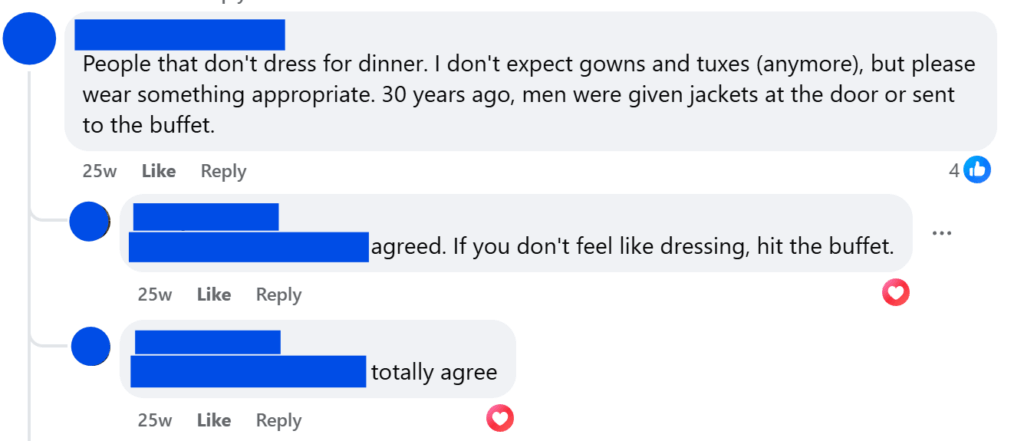
Royal-.jpg

Royal Caribbean Gold Status: What You Really Get


Loyalty status on cruise lines usually sounds more exciting than it really is.

Priority boarding. A free coffee. Maybe a discount in the gift shop if you’re lucky.

So when Royal Caribbean International calls its first loyalty tier “Gold”, you’d be forgiven for expecting something pretty impressive.

Royal Caribbean cruise card

But here’s the strange thing: Royal Caribbean Gold status is both underwhelming and surprisingly useful at the same time. Some of the perks feel pretty minor… while others can actually save you money or make your cruise noticeably easier.

How to Become a Royal Caribbean Gold Member

To become a Royal Caribbean Gold Member, you need to enrol in the Crown & Anchor Society programme and then take any Royal Caribbean cruise lasting three nights or more. The gold level is the lowest tier in the loyalty programme.

Unfortunately, you shouldn’t get too excited by being a Royal Caribbean Gold status. While “gold” might make it sound like a top tier, it’s actually the entry level for the Crown & Anchor Society.

This is what I mean when I say it’s not actually that good. Gold sounds top-tier but there’s no bronze or silver. Anyone who’s completed a Royal Caribbean cruise is a Gold member.

To become a member of the Crown & Anchor Society, you need to sign up to an account with Royal Caribbean and then, on the Account section of the website, click on the Crown & Anchor section and press the button to enrol.

You’ll then be assigned a membership number, and if you’ve already cruised with Royal Caribbean (and have those bookings linked to your online account), you’ll automatically jump to the correct tier, which could be Gold.

If you’ve cruised with Royal Caribbean before but didn’t have those bookings linked to your online account with Royal Caribbean, you can call the cruise line and ask them to add the points to your account.

When you first enrol, and before you’ve cruised, you’re not quite a member of the Gold tier. You need to reach the number of points to meet Gold status, but don’t worry – it’s really easy.

The Points Needed for Gold

To be a Gold Member with Royal Caribbean’s Crown & Anchor Society, you need three cruise points. To achieve these points, you can either cruise for three nights in a regular stateroom or two nights in a suite.

Royal Caribbean stateroom

It’s important to note that you only qualify for the next tier in the Crown & Anchor Society when you complete your cruise. So if you’re on a 7-night cruise, you won’t become Gold status after three nights – you’ll have to wait until the cruise is over, and then you’ll be at Gold level for your next cruise.

You earn one cruise point for every night you spend on a Royal Caribbean ship in a regular Interior, Ocean View, or Balcony Stateroom. You get double points for staying in a Suite.

Suggested read: Royal Caribbean Suite Perks

Royal Caribbean and it’s sister brand Celebrity Cruises offer reciprocal loyalty status matching through the Royal Caribbean Group loyalty programme.

That means your Gold status can unlock basic-level perks when sailing with Celebrity Cruises and vice versa.

Royal Caribbean Gold Benefits

So right at the start, I said Gold surprised me because it was good and not-so-good. The not-so-good is just because Gold sounds better than it is.

But the good is that, for an entry-level loyalty programme, you actually get quite a lot of perks!

Don’t get me wrong, none of these will blow you away, but if you took advantage of all of them then you would definitely feel like you’d got a lot of value from the programme.

Here’s a full list of all the benefits you get as a Royal Caribbean Crown & Anchor Society Gold member:

1. Drinks Discount Coupons

Whenever you cruise with Royal Caribbean as a Gold tier member, you’ll be given four coupons to use during the cruise. Two of these are for any glass of wine, beer or soda, while the other two can be used in Johnny Rockets towards a milkshake.

The coupons are all good for 50% off, so you can get a decent saving on those drinks (if you’ve not already bought a drinks package for your cruise).

Johnny Rockets on Royal Caribbean

2. More Drink Discounts

As well as the coupon discounts, which have limited uses, you also get a one-time 10% discount on any glass of wine, beer or soda that you purchase. The discount will be applied as the drink is charged to your account.

You also get 25% off any coffee drinks you buy, except for in Starbucks – those will always be full price, regardless of what level you are in the Crown & Anchor Society.

These are discounts you only get once per sailing.

3. Private Departure Lounge Access

At most embarkation ports, Crown & Anchor Society guests are invited into a private departure lounge where they can wait to board the ship and enjoy a complimentary continental breakfast of pastries, juices and coffee.

Remember though that this is open to all Gold level members and above, which is likely to be a majority of the people on the ship – only people on their first Royal Caribbean cruise can’t access the lounge. So while a free breakfast is a nice bonus, don’t expect the lounge to be particularly quiet.

It also isn’t available at every port – and the terms and conditions don’t state which ports it is available in. So you’ll need to wait until you get your boarding information sent to you to see if you get this perk.

Miami Cruise Port

4. WiFi Package Discounts

If you wait to buy your VOOM WiFi internet package onboard the ship, you’ll save 10% as a Gold-level member. This can’t be combined with any other VOOM offers though, and you might be able to grab other discounts before you sail.

Usually, the discounts you get before sailing are bigger than 10%, but keep an eye on the Cruise Planner app. The best time to buy might be before you board, though if you have a last-minute change of heart then getting 10% off during the cruise is something, at least.

Read more: Royal Caribbean Internet Packages: Cost & How to Buy

woman using Royal Caribbean

5. Casino and Bingo Perks

Every Crown & Anchor Society member gets a FreePlay credit for the casino on the ship. It’s never huge, and at Gold level it’s $2. Still, you never know what a $2 spin on a slot machine could win you.

Here’s how to claim your free credit:

  • Log into your casino account using the card machine in the casino and your SeaPass
  • Click on ‘PERSONAL BANKER’, then ‘TRANSFER TO GAME’ and then ‘PROMO$’

  • You’ll see the free credit there, so transfer it to your account and then use it on the slot machines included in the offer

Understandably, you can’t cash out the FreePlay credit, you need to use it. But you can cash out any winnings.

You’ll also get a bingo perk too – whenever you buy a bingo package, you’ll get one free jackpot card, slightly increasing your chances of winning.

Bingo cash prize card

6. Discounts on Royal Caribbean Products

There’s always a selection of stores on a Royal Caribbean ship selling various items, but one thing you’ll find will be a range of Royal Caribbean-branded products – when you really want to show off your loyalty to the cruise line.

And as a Gold member, you get 10% off any of these products, provided you spend at least $25.

Royal Caribbean Products

7. Spa Discounts

Gold-tier members get discounts on most spa services booked onboard their cruise – again, it’s 10% off. The only exceptions are medi-spa services, which aren’t discounted at all.

8. Member Newsletter

All Crown & Anchor Society members get an exclusive newsletter sent to them, which includes details of upcoming ships, sales that are starting soon and more.

9. Access to Exclusive Rates

Guests also get access to exclusive rates through the Crown and Anchor Society for future cruises. Don’t expect stunning discounts – again, remember that anybody who has cruised with Royal Caribbean before is eligible for gold-tier status, so it’s not like the cruises are discounted by 50% or anything ridiculous.

But you can still get some good offers, that the general public won’t have access to.

10. Loyalty Match

Ever since the Royal Caribbean Group updated its loyalty match scheme in June 2024, guests at the Gold tier of the Crown and Anchor Society can also enjoy benefits on Celebrity Cruises and Silversea, the sister brands of Royal Caribbean.

You’d still be at their basic levels – Classic on Celebrity Cruises, or with 1 VS Day on Silversea, but it does mean you can enjoy a few extra small perks when cruising on any of the three cruise lines in the same group.

Youth Member Benefits

Under-18s who cruise with Royal Caribbean can be enrolled in the Crown & Anchor Society. They then build up their own cruise points, but in the background – instead, they will be treated as the same membership tier as their parents until their 18th birthday.

So, if you’ve been cruising before you’ve had kids, your child will benefit from boosted perks until they hit 18, at which point they’ll revert back to the correct tier for them based on their own cruise points.

While you are in the Gold tier, these are the perks your children can enjoy:

1. Ice Cream Discount

Kids can get 50% off ice cream at the parlour on their Royal Caribbean ship. That’s a pretty good saving, and while free ice cream is available elsewhere, you can’t beat the flavours (and toppings) available in the parlour.

My son eating ice cream on a Royal Caribbean cruise

2. WiFi Package Discounts

Young members get the same WiFi discount as their parents, so at the Gold level that’s 10% off. You can get higher discounts as you climb the tiers of the C&A Society.

3. Buy-One-Get-One-Free Movie Rentals

If you want a cosy night in your stateroom, you have the option of renting a movie on the TV. Kids who are Gold members can get a second movie for half-price when they rent a movie, good for either a double feature night or keeping them busy for two nights of your cruise.

4. Arcade Cashback

Whenever kids in the Crown & Anchor Society play in the arcades, they can get cashback which is deducted from your onboard account at the end of your cruise.

You’ll get $5 back for every $15 spent in arcade credits, or $25 back for every $50 they spend in arcade credits – so really, if they get $50 to spend in the arcade, it’s only going to cost you $25.

Royal Caribbean Arcade

Gold Choice Explained

Gold Choice with Royal Caribbean is actually a combination of two different statuses. The ‘Gold’ refers to your status in the Crown & Anchor Society loyalty programme, while ‘Choice’ is your status in the Club Royale casino loyalty programme.

The Club Royale programme is completely separate, and you move up the tiers by playing casino games. Choice is the entry-level tier, so anyone who’s been on a single Royal Caribbean cruise tends to be ranked Gold Choice unless they spend a LOT in the casino on that first cruise.

The slot machines of Casino Royale

Pre-Gold Status on Royal Caribbean

If you have Pre-Gold status on Royal Caribbean, it just means that you’ve signed up to the Crown & Anchor Society but you haven’t yet got the 3 cruise points needed to reach Gold status. It basically means you’ve signed up but never taken a Royal Caribbean cruise.

As soon as you’ve got that first cruise in the books, you’ll move onto the proper Crown & Anchor Society tiers, starting at Gold.

When you’re Pre-Gold, you won’t get any perks on your cruise, but at least you’ll be earning the points you need to start climbing up the tiers.

No Extra Free Drinks with Gold Status Membership

Gold Crown & Anchor Society members don’t get any free drinks beyond the usual free drinks given to all guests (juices, teas and coffees at breakfast etc). Gold members do get 10% off glasses of wine, beer and soda on the ship, along with some single-use coupons for 50% off.

You only start getting free drinks when you reach Diamond status, which requires 80 points in the programme.

A diamond luggage label

What Comes After Gold on Royal Caribbean

The next tier above Gold with Royal Caribbean’s Crown & Anchor Society is Platinum, which needs 30 cruise points – the same as spending 30 nights on a Royal Caribbean ship, or 15 nights if you book suites.

After that, you’ll reach Emerald status at 55 points, then Diamond at 80 points, and then Diamond Plus at 175 points. There is one higher tier, which is Pinnacle Club, but that requires a massive 700 points.

Royal Caribbean Gold vs Platinum

When you upgrade to Platinum from Gold in the Crown & Anchor Society, you get a few additional benefits, along with some improvements on the existing benefits.

Here’s a look at the two status tiers compared:

BenefitGold LevelPlatinum Level
50% off coupons for wine, beer & soda2 per cruise2 per cruise
50% off coupons for Johnny Rockets milkshakes2 per cruise2 per cruise
Access to private departure loungeYESYES
Discount on wine, beer and soda10%10%
Discount on coffee beverages (excluding Starbucks)25%50%
Discount on VOOM internet10%15%
Exclusive Top Tier event on 5+ night sailings–YES
Casino Royale FreePlay$2$4
Free Jackpot cards with Bingo packages1 card3 cards
Robes to use on the cruise–YES
$5 off $25 dry-clean or pressing–YES
Discount on $34.99 laundry bags–$5
20% off a single photo, photo package or photobook–YES
Discount on Royal Caribbean branded products10%10%
Discount on spa treatments10%15%
Newsletter & exclusive ratesYESYES
Discount on Balcony & Suite Staterooms–YES
Loyalty Match with Celebrity Cruises’ Captain’s ClubYESYES
Youth BenefitsYESYES

Final Word

Royal Caribbean Gold status sounds far more exclusive than it really is.

But for an entry-level loyalty tier, the perks are actually pretty decent. A few drinks discounts, WiFi savings, casino freebies and loyalty-match benefits can add up surprisingly quickly.

And considering you only need one cruise to reach Gold, it’s an easy way to start unlocking extra perks on future sailings.

NEW DEALS JUST RELEASED!

Don’t miss the latest Royal Caribbean offers…

Related Posts:

If you found this interesting, please share!


Jenni with Disney Cruise ship at Castaway Cay


Source link