The best cruise cabin hacks are not gadgets: they come from knowing how a ship’s cabin actually works. Most cabins have steel walls that hold magnets, two kinds of plug socket, a vacuum toilet, and air conditioning that may cut out when the balcony door opens. Once you know these quirks, a small room feels far more comfortable.
Free: download our 2027 Luxury Cruise Calendar →
This guide is about the things most cruisers never find out about their cabin, from where the extra storage hides to what the tap water really is. If you want a step-by-step checklist for the moment you walk in, see our guide to things to do as soon as you get to your cruise cabin. Here we focus on how the room works, so you can make the most of it for the whole voyage.
Cruise Cabin Hacks at a Glance
| Cabin feature | What many cruisers assume | What is usually true |
|---|---|---|
| Walls | Painted plaster, nothing will stick | Steel panels that hold magnetic hooks |
| Plug sockets | One socket by the desk | US and European sockets, often more than you spot at first |
| Power strips | Fine to pack | Surge-protected strips are banned; some lines ban all multi-plug strips |
| Air conditioning | Works with the balcony door open | Often switches off while the door is open |
| Tap water | Not for drinking | Treated, tested and generally safe to drink |
| Beds | Fixed as booked | Usually convertible between twin and double |
Power and Plug Sockets: The Charging Secrets
Look for two types of socket
Many ships fit both a North American 110-volt socket and a European two-pin 220-volt socket, usually at the desk or vanity. British travellers may need an adapter for either one. Newer ships often add USB ports near the bed or desk, and some hide sockets behind the TV, under the vanity or beside the bedside lamps. Check every surface before you assume you only have one.
Know the rules on power strips
Surge-protected power strips are banned on virtually every major line because they can interfere with the ship’s electrical system. Rules on non-surge strips vary: Royal Caribbean lists power strips and multi-plug outlets as prohibited, while lines such as Carnival and Princess have allowed non-surge versions. Rules change, so read your line’s prohibited items list shortly before sailing. A compact multi-port USB charger is the item least likely to be taken away at security.
The key card slot may control the lights
On many ships you slot your key card into a holder by the door to switch the lights and sockets on. Take the card out and the power cuts after a short delay, so a phone left charging may stop. Not every ship works this way, and some cabins keep the sockets live, so test it on day one.
Temperature and Air: Why Your Cabin Feels Stuffy
Cabin thermostats usually let you make the room warmer or cooler only within a set range, because the air is supplied centrally. If the room never feels cold enough, ask your cabin attendant to have maintenance check the vent; it is a common and quick fix.
In balcony cabins, the air conditioning often switches off while the balcony door is open. Leave it ajar for the sea breeze and the room can turn warm and humid, especially in the Caribbean. Close the door fully when you leave the room.
The bathroom extractor fan usually runs all the time and cannot be switched off. It helps with steam and smells, but it is not powerful, so keep the bathroom door closed after a shower to stop moisture drifting into the cabin.
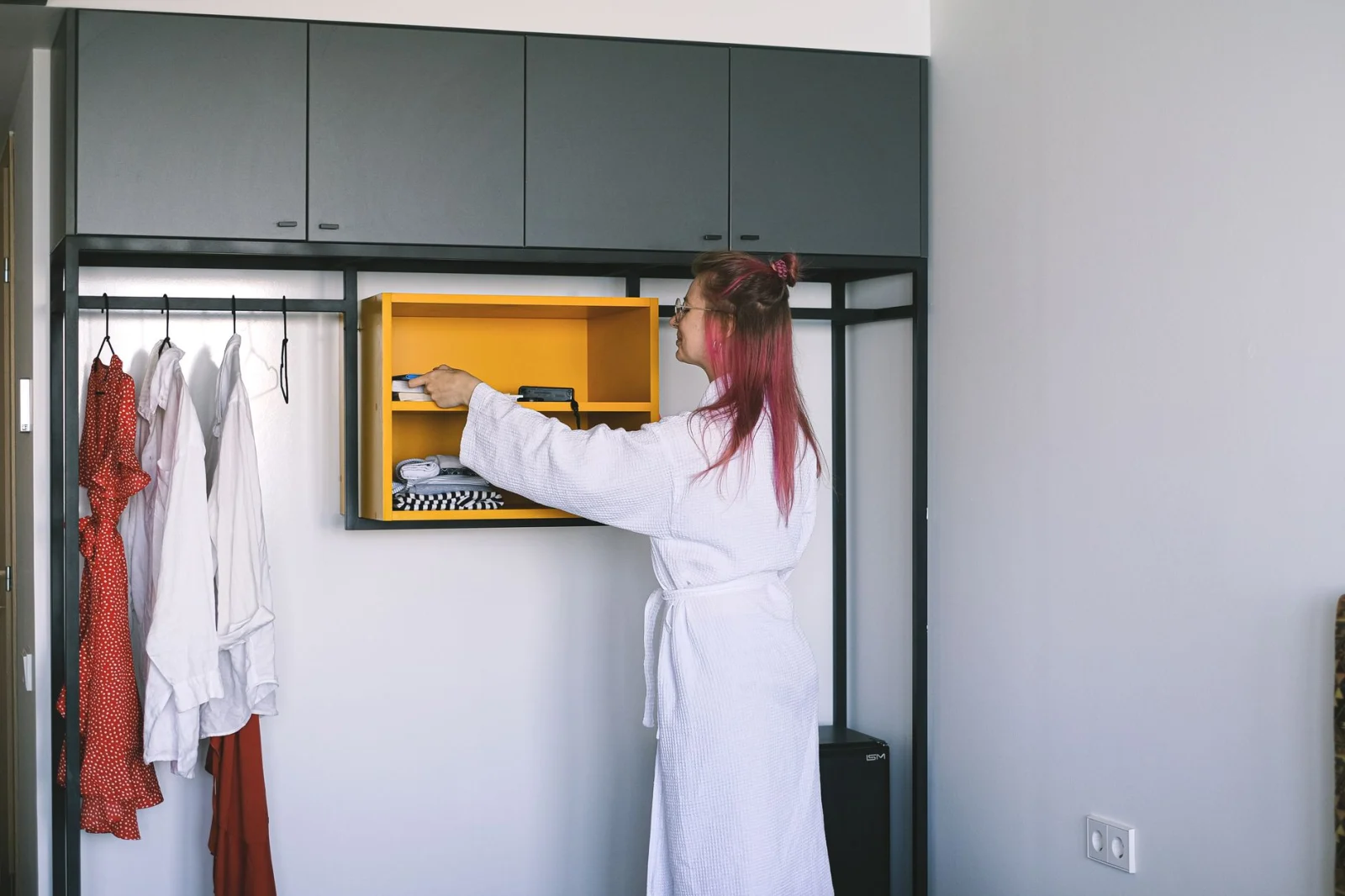
Hidden Storage Most Cruisers Miss
Use the walls: they are magnetic
Cabin walls, ceilings and doors on most ocean ships are steel, so strong magnetic hooks give you extra places to hang hats, lanyards, bags and the daily programme. Choose hooks rated for several kilograms, and pack a few magnetic clips for paperwork. Bathroom walls are often laminate, so magnets may not hold in there.
Under the bed and behind the mirror
Most cabin beds sit high enough for suitcases to slide underneath, freeing the floor. Vanity mirrors sometimes open to reveal shelves, and there are often extra drawers inside the desk or under the sofa. A hanging shoe organiser over the bathroom door adds pockets for toiletries and sunscreen.
The retractable washing line
Many cabin showers hide a pull-out clothesline on the wall. It is handy for swimwear, but do not hang wet clothes on the balcony, as most lines do not allow it.
The Bathroom: Vacuum Toilets and Tap Water
Why the toilet is so loud
Ship toilets use a vacuum system rather than a water cistern, which saves a lot of water. That is why the flush makes a loud whoosh. The pipes are narrow, so only toilet paper should ever go down; wipes, cotton pads and sanitary products can block the system, and a blockage can affect several cabins at once. Close the lid before flushing.
The tap water is safe
Most ocean ships make fresh water from seawater by evaporation or reverse osmosis, then add minerals, treat it with chlorine and test it regularly. Ships calling at US ports are also inspected under the CDC’s Vessel Sanitation Program. The bathroom tap carries the same treated supply, so filling a reusable bottle there is fine unless your line tells you otherwise. Some people notice a slight chlorine taste; chilling the water helps.
Beds, Location and Inside Cabins
Beds can usually be rearranged
In most standard cabins the two lower beds can be pushed together into a larger bed or split into twins. Your cabin attendant can change the setup, usually the same day. Extra pillows, a mattress topper or a feather-free duvet are often available too, so it is worth asking.
Location matters more than size
A cabin low down and in the middle of the ship feels the least movement. Cabins directly below the pool deck, buffet or theatre may hear scraping chairs or shows late at night, and those near lifts or launderettes see more foot traffic. Before you book, check the deck plan for what sits above and below your cabin. If you are deciding between categories, our comparison of balcony versus inside cabins explains the trade-offs.
Some inside cabins have a view after all
Royal Caribbean fits virtual balconies, floor-to-ceiling screens showing a live feed from outside, in some inside cabins on Symphony, Harmony, Spectrum, Anthem, Ovation, Quantum, Navigator, Explorer and Voyager of the Seas. Not every inside cabin on those ships has one, so check the cabin category before booking. Other ships offer inside cabins with windows facing an indoor promenade, which bring in some daylight.
Small Cabin Perks Most People Never Use
- Your cabin attendant can do more than tidy. Ask for extra hangers, more towels, an ice bucket or the minibar to be emptied so you can chill your own drinks.
- The TV is a tool. On most ships it shows your onboard account, the ship’s position, the daily programme and sometimes the bow camera, which is useful before you head out on deck.
- Room service breakfast. Many lines offer a continental breakfast in the cabin, often free, ordered by hanging a card on your door the night before. Charges vary by line.
- Your muster station is on the back of the door. The safety notice shows where to go in an emergency, along with the cabin’s fire exit route.
- The fridge may be a cooler. Many cabin fridges keep things cool rather than cold, so they are not reliable for medicines that must stay refrigerated. Ask guest services about medical storage.
Once you know these cruise cabin hacks, even a compact inside cabin can feel organised and calm. For more ideas on making a smaller room work, see our tips for inside cabins.
Once you know your cabin, read up on sea day mistakes to avoid.
Many cabin problems can be avoided before you book, and our guide on how to choose a cruise cabin shows what to check on the deck plan.
Where your room sits matters as much as what is in it, so see our guide to the best cabin location on a cruise ship.
FAQs
Are cruise cabin walls magnetic?
Yes, on most ocean ships the cabin walls, ceilings and doors are steel, so magnetic hooks and clips will hold. Bathroom walls are usually laminate panels, so use suction or over-door hooks in there instead.
Can I bring a power strip on a cruise?
It depends on the line. Surge-protected strips are banned almost everywhere, and Royal Caribbean also bans non-surge power strips and multi-plug outlets. A USB charging block is the safest choice; check your line’s prohibited items list before you pack.
Is the tap water in a cruise cabin safe to drink?
Generally yes. Ships make most of their drinking water by desalinating seawater, then treat and test it, and the bathroom tap carries the same supply as the rest of the ship unless your cruise line says otherwise.
Why does my cruise cabin get warm when the balcony door is open?
On many ships a sensor cuts the air conditioning while the balcony door is open, so the cabin heats up quickly. Close the door fully and give the system a few minutes to recover.
Can twin beds in a cruise cabin be pushed together?
In most standard cabins the two lower beds can be joined into one larger bed or split into twins. Ask your cabin attendant on embarkation day, or request your setup through your booking in advance.