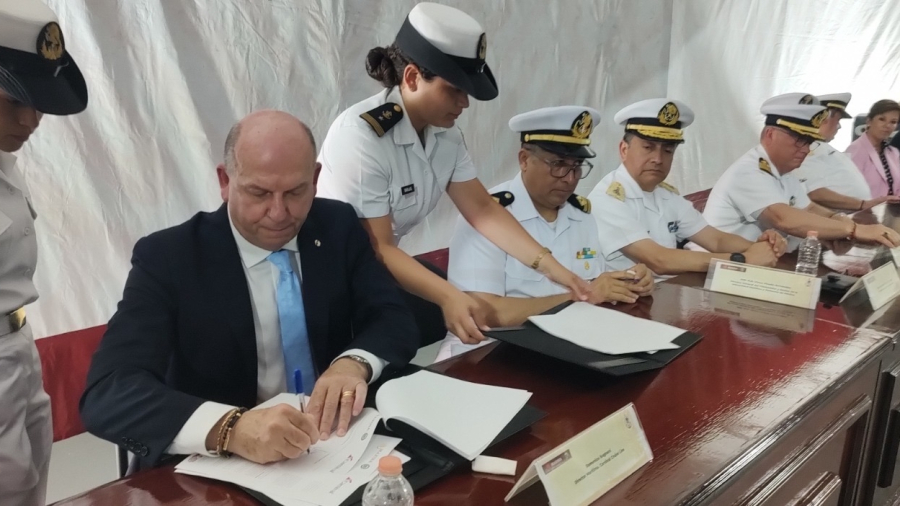
Strengthening its ties with Mexico, Carnival Cruise Line has announced its first partnership with a maritime university in Mexico. The new partnership with the distinguished Maritime and Port University of Mexico formalizes a cadet program aboard its fleet.
The partnership will provide cadets at the Maritime and Port University of Mexico, who are near the completion of their four-year program, the opportunity to complete a 180-day apprenticeship on a Carnival Cruise Line ship during the last year of their studies. The apprenticeship will consist of a hands-on training program that complements the cadets’ studies.
The view from the bridge wing of Carnival Celebration (Photo by John Shallo/Cruise Addicts)
“We are impressed with the caliber of the curriculum at the Maritime and Port University of Mexico and its culture fits perfectly with our core values at Carnival,” said Domenico Rognoni, chief marine officer of Carnival Cruise Line. “Carnival has been sailing to Mexican ports for more than 50 years, so by providing cadets from the Maritime and Port University of Mexico with the opportunity to work on board our ships, we are providing career opportunities and furthering strengthening our longstanding relationship.”
Founded in 1972, the Maritime and Port University of Mexico has a rich tradition in maritime and is currently responsible for all the country’s navy and merchant marine officers. Today, the university has approximately 900 students across three campuses in Mazatlán, Tampico and Veracruz.
Carnival Jubilee (Photo by Carnival Cruise Line)
“The signing of this agreement between the Maritime and Port University of Mexico and Carnival Cruise Line shows our shared understanding that education and tourism are two fundamental aspects for our respective advancement,” said Captain Alt. Manuel Gutierrez Gallardo, coordinator general of Mexican Ports and Merchant Marine.
Carnival has similar programs in partnership with universities and other organizations around the world as part of its commitment to support the professional development of students interested in the maritime industry.
For additional information on Carnival Cruise Line and to book a cruise vacation, call 1-800-CARNIVAL, visit www.carnival.com, or contact your favorite travel advisor or online travel site.
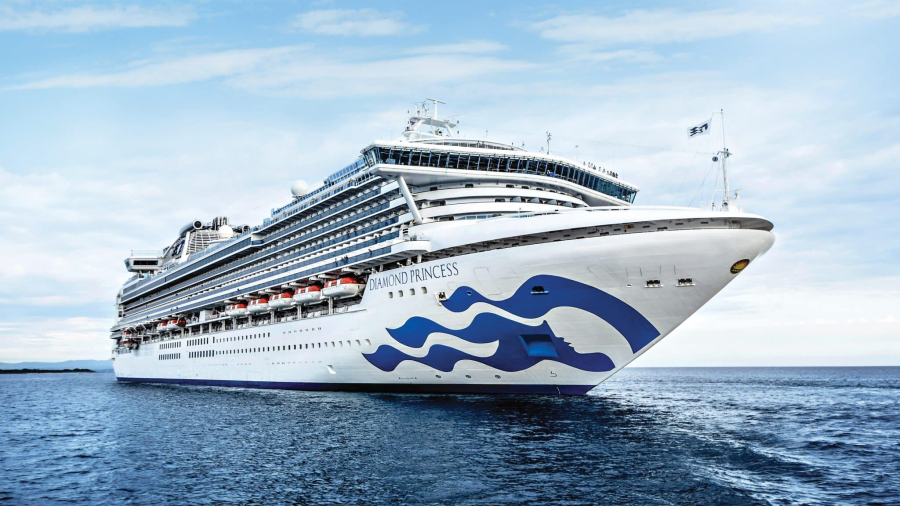
Princess Cruises has announced it will extend the number of itineraries in Japan during the 2025-26 season.
The 2025-26 cruise season to the must-see island nations of Japan and Southeast Asia onboard a Princess ship has just been announced. On sale now, Japan-built Diamond Princess returns featuring an expanded Japan season showcasing the region’s breathtaking fall foliage, Mt. Fuji, Kyoto and more.
2025-26 Japan & Southeast Asia Cruise Season
“We truly make it easy to travel to Japan and Southeast Asia on our Diamond Princess Love Boat to experience these amazing destinations,” said Terry Thornton, chief commercial officer for Princess Cruises. “For our fall 2025 through winter 2026 season, we’re thrilled to expand our Japan cruises from Tokyo (Yokohama) during the beautiful fall foliage season and continue to Singapore to highlight the best of Southeast Asia. Plus, our guests only need to unpack once to experience these storied countries while enjoying vibrant shore excursions and our regional culinary and entertainment offerings onboard.”
From ancient temples and castles, to bustling markets and breathtaking gardens, cruisers experience the best way to see Japan with Princess with a new fall 2025 season offering 11 new voyages ranging in length from nine to 22 days, visiting 25 destinations throughout the Land of the Rising Sun, as well as stops in Korea and Taiwan. Highlights of the season include:
13-day Circle Japan Fall Foliage sailing taking place during the beautiful autumn leaves season
9-day Circle Japan voyage a circumnavigation of the country with stops at Nagasaki, Akita and Sakaiminato
9-day Southern Islands departures to the southernmost part of Japan and the lush islands of Okinawa and Ishigaki
10-day Kyushu & Korea cruise, which sails these large islands of Japan including visits to Hiroshima, Osaka (for Kyoto) and Shimizu (for Mt. Fuji)
For the ultimate Japan exploration, guests can combine these 18- to 22- day itineraries for an unforgettable 40-day adventure
Following her extended Japan season, Diamond Princess will sail to Singapore on a 12-day Southeast Asia & Japan cruise featuring Taipei (Keelung) and Hong Kong to kick off three roundtrip Singapore sailings including:
14-day Malaysia, Thailand & Vietnam cruise, which also includes calls to Phuket, Kuala Lumpur (Port Kelang) and Ho Chi Minh City (Phu My)
16-day Malaysia, Thailand & Vietnam departure which also includes a call to Halong Bay, UNESCO World Heritage Site as well as a gateway to Hanoi
Closing the season will be a 14-day Southeast Asia & Japan sailing from Singapore back to Tokyo (Yokohama) with late night More Ashore stays in both Hong Kong and Shimizu (for Mt. Fuji)
Diamond Princess
Built in Japan, the 2,670-guest Diamond Princess offers a unique experience tailored to the region. Guests enjoy authentic cuisine at Kai Sushi, sip Japanese-inspired cocktails created by mixologist Rob Floyd, soak in the traditional Izumi bath and enjoy folkloric shows, regional entertainment and Japanese holiday celebrations.
Additionally, the all-new Churrascaria Brazilian Grill offers quality meats boasting bold South American flavors, cooked to perfection in the tasty tradition of grilling churrasco style. Servers present these flavorful cuts on vertical skewers, and hand-carve them right onto the plate.
No matter the cruise, Princess delivers a premium vacation with the line’s award-winning, signature Princess MedallionClass experience which offers unparalleled service and personalization. Guests booking can take advantage of inclusive packages like Princess Plus and Princess Premier which add popular amenities like WiFi, beverages, desserts, fitness classes, crew gratuities and more at an even greater savings of up 65% when the inclusive package amenities are purchased separately.
Additional information about Princess Cruises is available through a professional travel advisor, by calling 1-800-Princess (1-800-774-6237) or by visiting www.princess.com.
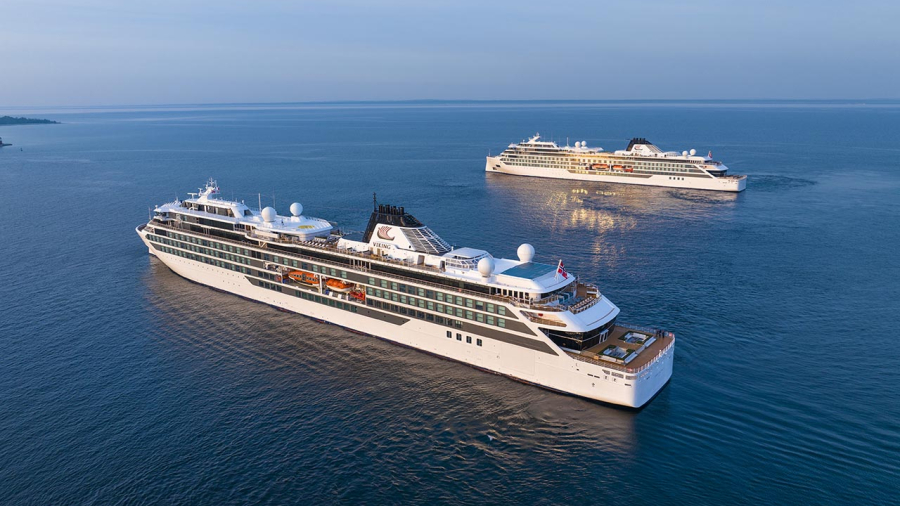
Viking® (www.viking.com) (NYSE: VIK) is celebrating the start of its third season in the Great Lakes, with both of its identical expedition ships, the Viking Octantis® and the Viking Polaris®, now deployed in the region. Voted #1 for Expeditions by Condé Nast Traveler in the most recent Readers’ Choice Awards, Viking offers a variety of itineraries that operate between Toronto and Duluth and explore all five Great Lakes. The 378-guest expeditions vessels, which were designed specifically to transit the historic Welland Canal, will remain in the lakes until early October before returning to Antarctica for the austral summer.
Viking Returns to the Great Lakes
Viking has also announced that two new itineraries in the Great Lakes for 2026 are now open for booking. The 10-day Great Lakes Treasuresvoyage will sail roundtrip from Milwaukee and will allow guests to explore new ports of call for Viking, including Chicago, as well as Canada’s Fathom Five National Marine Park and Benjamin Islands. The longer, 17-day Niagara & Great Lakes Treasuresvoyage sails between Toronto and Milwaukee and also includes Niagara Falls, Canada’s Point Pelee National Park and a transit of the Welland Canal.
“The Great Lakes region is a phenomenal place that is close to home for many of our guests, but one that few have yet to fully discover. With more than 10,000 miles of coastline, world-class cities and remote wilderness areas, it is truly a destination that is best explored by ship,” said Torstein Hagen, Chairman and CEO of Viking. “We would like to thank our local partners for the warm welcome once again, and we look forward to introducing more curious travelers to the Great Lakes this season and in future years.”
The return of Viking’s expedition ships to the Great Lakes coincides with the recent announcement of the company’s latest scientific advancement—for the first time ever, phytoplankton is being genetically sequenced at sea. With scientific support from UC San Diego’s Scripps Institution of Oceanography and J. Craig Venter Institute (JCVI), real-time environmental DNA (eDNA) sequencing of phytoplankton is being conducted in the PCR lab on board the Viking Octantis.
Visiting scientists contributing to the Genomics at Sea Program (GASP) are able to monitor the environmental impact on phytoplankton without the need to transport samples to a distant shoreside facility. Viking will regularly host Scripps scientists on board the ship this season in the Great Lakes.
Viking has also partnered with the National Oceanic and Atmospheric Administration (NOAA) Great Lakes Environmental Research Laboratory (GLERL), which conducts innovative research on the dynamic environments and ecosystems of the Great Lakes and coastal regions to provide information for resource use and management decisions that lead to safe and sustainable ecosystems, ecosystem services, and human communities. Additionally, Viking’s expedition ships have been designated official NOAA / U.S. National Weather Service weather balloon stations, from which regular launches are undertaken.
Highlighted 2024-2026 Great Lakes Voyages:
NEWGreat Lakes Treasures(10 days; roundtrip Milwaukee) – Visit the “Windy City” of Chicago and its wealth of world-class museums, including the Art Institute. Explore the picturesque islands of the Georgian Bay Biosphere Reserve and admire their bucolic landscapes. Venture out to Flowerpot Island in the Fathom Five National Marine Park and marvel at the stunning pink granite isles of the Benjamins Islands. Participate in lab studies as you explore coastal wetlands and delve into the Native cultures of the Great Lakes.
NEWNiagara & Great Lakes Treasures(17 days; between Toronto – Milwaukee) – Discover the mighty waterfalls of Niagara and immerse yourself in nature amid the freshwater marshes of Point Pelee’s peninsula. Witness the creativity of Detroit’s urban development as you admire the city’s postmodern and art deco skyscrapers. Behold the stunning isles of Georgian Bay from the water and marvel at their verdant landscapes during this extended voyage.
Great Lakes Collection (15 days; between Toronto – Duluth) – Join Viking for a unique voyage across the historic waterways of all five of the majestic Great Lakes. Experience culture-rich urban centers and admire the awesome power of thundering Niagara Falls. Explore the granite islands and sheltered inlets of Georgian Bay and traverse the famous Soo Locks. Study the aquatic ecosystems of the lakes as you journey and venture into the dense boreal forests that line the shores of Lake Superior and Lake Michigan.
Niagara & the Great Lakes (8 days; between Toronto – Milwaukee) – From urban skylines to uninhabited islands, discover North America’s wilderness alongside renowned cultural attractions while cruising the striking waterways of the Great Lakes. Immerse yourself in the lakes’ compelling shipping history, experience the power of the thundering Niagara Falls and keep watch for scores of migratory birds at Point Pelee. Led by a team of experts, explore sheltered bays and woodlands to uncover complex ecosystems and hidden treasures.
Undiscovered Great Lakes(8 days; Thunder Bay – Milwaukee) – Cross the width of Lake Superior between Duluth and the Soo Locks, exploring the lake’s North Shore Inside Passage as you sail. Hike along clifftop trails for sweeping views of the lake. Gain insight into the unique features and ecosystems of remote wilderness islands, and admire Kakabeka Falls, the “Niagara of the North.” Follow in the footsteps of fur traders in Duluth and step back in time as you stroll the quaint, car-free streets of Mackinac Island.
Canada & East Coast Explorer(15 days; between Toronto – Fort Lauderdale) – Sail the US’s Atlantic coastline and visit storied cities. Enjoy Charleston’s southern charm and colonial homes. Visit Norfolk, home to the world’s largest naval base. Trace Nova Scotia’s shores to explore its rugged landscapes and visit Quebec’s national parks. Traverse one of North America’s scenic waterways, the St. Lawrence River, and marvel at the locks and canals that comprise the St. Lawrence Seaway on an enriching journey to historic ports.
Viking is also offering a variety of Longitudinal World Cruises between the Great Lakes and Antarctica, offering guests the opportunity of a lifetime to sail from the world’s largest freshwater system to “the end of the world” or the reverse. Additionally, all of Viking’s Great Lakes voyages feature Mackinac Island, which was recently rated the #1 summer travel destination in the U.S. by USA Today 10Best.
Viking Expedition Ships
The Polar Class, Viking Octantis and Viking Polaris host 378 guests in 189 staterooms. These vessels are built for expeditions, at an ideal size for safety and comfort in remote destinations. With more indoor and outdoor viewing areas than other expedition vessels, guests are as close as possible to the most magnificent scenery on earth. Highlights include:
The Aula: A stunning panoramic auditorium inspired by the University of Oslo’s famed ceremonial hall, the former venue for the Nobel Peace Prize ceremony. Used for lectures, daily briefings, documentaries and films, this spectacular venue features a 4k laser-projected screen that retracts to expose floor-to-ceiling windows and 270° views.
Finse Terrace: An outdoor lounge area just above sea level with recessed seating, the Finse Terrace was designed to allow guests the comforts of the ship al fresco while enjoying the dramatic scenery. Named after the Finse Plateau in Norway, where some of the greatest polar explorers, including Nansen and Amundsen, did their expedition training in preparation for their North and South Pole expeditions.
The Hangar: A state-of-the-art, industry-first in-ship marina providing ease of embarkation and disembarkation of Special Operations Boats and other equipment while sheltered from the elements.
The Bow: An important forward-viewing platform. And in the case of inclement weather, The Shelter is a comfortable, partially enclosed space for guests to warm up with a hot drink before going back out into the elements.
The Science Lab: Developed in partnership with the University of Cambridge and Akvaplan-Niva, The Science Lab, at 380 sq. ft., is designed to support a broad range of research activities and is equipped with wet and dry laboratory facilities. Guests have supervised access to The Science Lab to learn from and participate with scientists in undertaking meaningful research.
Expedition Central: The hub for the expedition team to consult with guests on their expedition activities and share knowledge about the destinations on a one-on-one basis, with the aid of 3D printed maps, digital screens, and a state-of-the-art spatial data visualization chart table.
Dining Choices: The Restaurant offers fine dining featuring regional cuisine and always-available classics; the casual World Café offers an open kitchen, bakery, grill and premium seafood and sushi choices, as well as a wide range of international flavors; Mamsen’s, named for the Hagen family matriarch, serves Scandinavian-inspired fare; and Manfredi’s offers the best of Italian cuisine.
The Nordic Spa: Following a day of exploration, The Nordic Spa offers guests opportunities to experience the ultimate healthy Nordic traditions, with an indoor heated pool set against expansive windows and a badestamp (wood-sided hot tub) that is open to the outside.
Explorers’ Lounge: Located high on the ship with floor-to-ceiling windows, the Explorers’ Lounge provides guests an ideal space to take in the magnificent scenery, share discoveries with fellow travelers or to enjoy a drink.
The Living Room: On the Viking Octantis and the Viking Polaris, The Living Room is located to maximize views of the surroundings through floor-to-ceiling windows and a library that informs even the best-read explorers. The Library is curated by acclaimed London bookshop Heywood Hill, as on all Viking vessels, as well as Cambridge University’s Scott Polar Research Institute.
Nordic Balcony: A first for polar expedition vessels, all staterooms on board Viking’s expedition ships feature a Nordic Balcony, a sunroom that converts into an al fresco viewing platform with an observation shelf at elbow level to stabilize binoculars or a camera. Guests can choose from six stateroom categories that range from 222 sq. ft. to 1,223 sq. ft.—all with a Nordic Balcony, as well as a king-size bed and large bathroom with spacious glass-enclosed shower, heated bathroom floor and anti-fog mirror. Every stateroom is also equipped with a unique floor-to-ceiling drying closet that circulates warm air to dry and store clothing and expedition gear.
Expedition Ship Suites: Nordic Junior Suites (322 sq. ft.) and Explorer Suites (580 sq. ft.) on the Viking Octantis and the Viking Polaris are similar to those on Viking’s fleet of ocean ships, with wood detailing and amenities that include additional storage and seating, an expanded bathroom with extended shower and double sinks, welcome champagne, a fully-stocked mini-bar replenished daily, complimentary laundry, priority restaurant reservations and more. Explorer Suites feature two separate rooms, a Nordic Balcony and a full outdoor veranda. Additionally, each ship features one Owner’s Suite (1,223 sq. ft.) that has three rooms –a living room, a board/dining room and a bedroom—as well as a 792 sq. ft. private deck with a traditional Norwegian badestamp open to the invigorating outdoors.
Enrichment On Board and On Shore: Viking has created the world’s leading scientific enrichment environment in an expedition setting. Exclusive partnerships with the Scott Polar Research Institute at Cambridge University, The Cornell Lab of Ornithology and the National Oceanic and Atmospheric Administration (NOAA)—as well as other prestigious scientific institutions match leading researchers and educators with each expedition. Thirty-six experts accompany each journey as part of the Viking Expedition Team, including an Expedition Leader and support staff, photographer, field research scientists, general naturalists, mountain guides, kayak guides, submarine pilots and specialists (ornithology, geology, higher predator biology and history). On board, guests enjoy daily briefings and world-class lectures about their destination. On shore, they can assist in fieldwork or interact through experiential activities during landings—such as monitoring birds to help identify migratory patterns; accompanying scientists to collect samples; or taking their cameras ashore alongside a professional photographer to learn how best to capture scenic landscapes.
Environmentally Considerate: Viking believes that its responsibility extends beyond providing exceptional travel experiences. From the outset, the company has been deliberately concerned about the environment, making decisions that it believes are scientifically correct, rather than what is deemed as politically correct. Viking’s fleet boasts many environmentally friendly features, such as diesel-electric river ships and energy-efficient ocean vessels equipped with closed-loop exhaust scrubbers. Viking’s expedition ships have set a new standard for responsible travel by exceeding the current International Maritime Organization (IMO) Energy Efficiency Design Index (EEDI) requirements by nearly 38%. Additionally, Viking is working to make its next generation of ocean ships even more environmentally friendly, with a project for a partial hybrid propulsion system of liquid hydrogen and fuel cells, which could allow for operation with zero emissions while in port and while traveling at low speeds.
With a clear focus on creating experiences for The Thinking Person, Viking does not try to be all things to all people. This approach has resonated with guests, and in 2023, Viking was rated #1 for Expeditions, as well as #1 for Rivers and #1 for Oceans by Condé Nast Traveler in the most recent Readers’ Choice Awards.
For additional information, contact Viking at 1-800-2-VIKING (1-800-284-5464) or visit www.viking.com. For Viking’s award-winning enrichment channel, visit www.viking.tv.
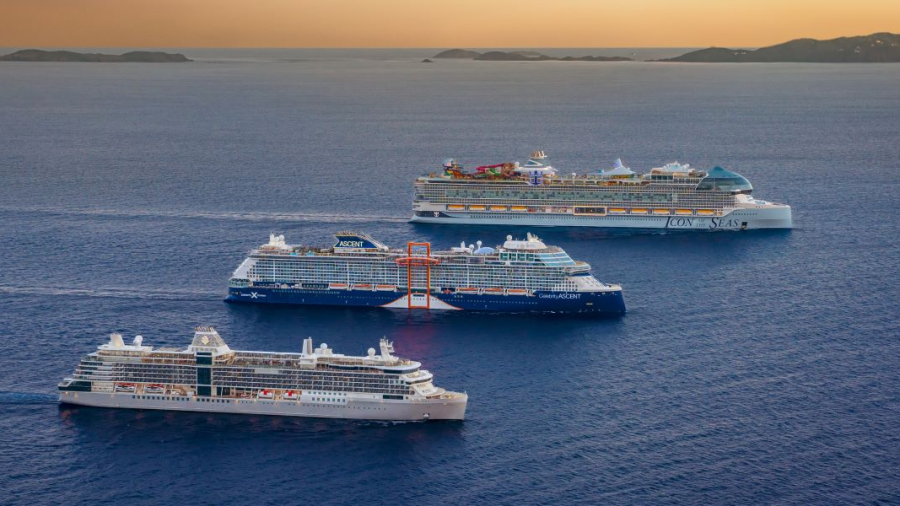
Royal Caribbean Group has announced an overhaul of its loyalty status match programme, significantly improving the benefits to guests.
The new programme, coming into effect on all sailings from 5th June 2024, allows guests to transfer their loyalty club levels across its three main cruise brands: Royal Caribbean International, Celebrity Cruises, and Silversea.
This means frequent travellers can enjoy the same benefits, no matter which Royal Caribbean brand they choose to sail with.
Previously, the loyalty match programme only applied to Royal Caribbean and Celebrity Cruises, and it was capped, meaning that those who had earned their way to the top tiers would not get the same treatment if cruising on a sister brand.
Here’s how the new match scheme will work:
Royal Caribbean – Crown & Anchor Society
Celebrity Cruises – Captain’s Club
Silversea – Venetian Society
Gold
Classic
1 VS Day
Platinum and Emerald
Select*
100 VS Days*
Diamond
Elite
250 VS Days
Diamond Plus
Elite Plus
350 VS Days
Pinnacle Club
Zenith
500 VS Days
*Anyone at the Select tier of the Captain’s Club, or with 100 VS Days, will enjoy Platinum-level benefits on a Royal Caribbean cruise.
It’s important to note that guests will not carry over their benefits, but will only enjoy the benefits of the tier on the cruise line they’re sailing with.
So, Royal Caribbean guests who decide to cruise with Celebrity won’t be given their daily drinks vouchers, but can enjoy the daily happy hour.
These loyalty programmes all work in similar ways – guests need to sign up (it costs nothing) and then start to earn points for each cruise they take, with bonus points often available if booking a higher tier of accommodation.
Typically it has meant that guests who want to maximise their benefits were tied to one cruise line, but now guests can enjoy sailings across the 50 or so ships across all three fleets, and still build their loyalty points to earn new perks.
Each of our differentiated brands have passionate fans who take pride in the status they’ve achieved through repeat sailings. In a first for the cruise industry, our new Loyalty Status Match program rewards guests traveling across our brands, and this is one more step in our journey of transforming a vacation of a lifetime into a lifetime of vacations.
Jason Liberty, President and CEO, Royal Caribbean Group
NEW DEALS JUST RELEASED!
Don’t miss these hot cruise offers…
Related posts
If you found this interesting, please share!
Jenni Fielding is the founder of Cruise Mummy. She has worked in the cruise industry since 2015 and has taken over 30 cruises. Now, she helps over 1 million people per month to plan their perfect cruise holidays.
The best cruise swimwear for UK passengers is a small, practical capsule: two or three swimsuits (a supportive one-piece plus a bikini or tankini), a rash vest or UPF top for snorkelling, swim shorts for men, and at least two cover-ups, such as a sarong and a kaftan, so you can walk through the ship and into the buffet politely. Add a pair of water shoes and you have eight pieces that cover pool days, beach excursions and port stops.
This guide explains what swimwear to take on a cruise, how many pieces to pack for different itinerary lengths, what cruise lines say about wearing swimwear and cover-ups indoors, and how to keep everything dry and sun-safe between ports.
8 swimsuits and cover-ups to pack for a cruise
You do not need a different outfit for every day. These eight types of cruise swimwear and cover-ups work together, so you can mix and match across a week or more at sea.
1. A supportive one-piece swimsuit
A well-fitting one-piece is the workhorse of any cruise wardrobe. It is comfortable on loungers, stays put on waterslides and in the surf, and doubles as a body under a skirt or sarong for a quick lunch on deck. Look for wider straps, a lined front and, if you need it, built-in cups or tummy-control panels. Darker colours and prints tend to hide sun cream marks and pool chlorine fading better than pale plain fabrics.
2. A bikini or tankini
A second style gives you something to change into while your first swimsuit dries. Tankinis are popular with UK cruisers because the separate top covers more than a bikini but you can still pop to the toilet easily, and mix-and-match separates let you swap tops and bottoms to create more combinations from fewer pieces.
3. A rash vest or UPF swim top
If your itinerary includes snorkelling, kayaking or long beach excursions, a long or short-sleeved rash vest is one of the most useful things you can pack. It protects your shoulders and back, which are the areas most likely to burn when you are face down in the water, and it means less sun cream washing off into the sea. Many are sold with a UPF (ultraviolet protection factor) rating, and UPF 50 is a common standard for swim tops.
4. Swim shorts for men
Two pairs of quick-dry swim shorts usually cover a week. Mid-length shorts with a mesh lining and a drawstring are the most versatile, and plain or subtly patterned pairs can pass as casual shorts for a deck lunch when worn with a T-shirt or polo shirt. Very short or very tight styles are fine at the pool, but you will still need to cover up elsewhere on board.
5. A sarong
A sarong is the lightest, most packable cover-up there is. Tied at the waist it becomes a skirt, knotted at the neck it becomes a dress, and spread out it works as a beach mat or a shade for your shoulders. Choose a cotton or viscose sarong that dries fast and folds down to almost nothing in a day bag.
6. A kaftan or beach dress
A loose kaftan or simple jersey beach dress is the easiest way to look put-together at the buffet or a poolside grill. Slip it over your swimsuit, add sandals, and you are dressed for most casual daytime venues. Longer, looser styles also give your skin a break from the sun in the middle of the day.
7. A lightweight cover-up for walking through the ship
Cruise ships are big, air-conditioned and busy, and you will often walk from your cabin through lifts, corridors and atriums to reach the pool deck. A lightweight shirt, long-line shirt dress, or men’s linen-style shirt and shorts covers you on the way there and back. It also helps on shore days, when you may go straight from a beach to a town centre where swimwear on its own is not acceptable.
8. Water shoes or pool sliders
Pool decks get hot and wet, and some beaches on Mediterranean and Caribbean itineraries are pebbly or rocky. Rubber-soled water shoes protect your feet in the sea, while sliders or flip-flops are easy to kick off at a sun lounger. Many cruise lines expect shoes indoors, so keep a pair handy whenever you leave the pool area.
Pool decks are where swimwear is welcome; cover up before heading inside. Photo: dansev on Pexels
How many swimsuits to take on a cruise
A good rule is one swimsuit per three or four sea or beach days, plus one spare, because swimwear rarely dries completely overnight in a cabin. Use this table as a starting point and adjust for how much time you plan to spend in the water.
Cruise length
Swimsuits or swim shorts
Cover-ups
Extras
2 to 4 nights (short break)
1 to 2
1 (sarong or shirt)
Sliders
7 nights (Mediterranean, Canaries)
2 to 3
2 (sarong plus kaftan or shirt)
Sliders, water shoes, rash vest if snorkelling
10 to 14 nights
3 to 4
2 to 3
Rash vest, water shoes, spare cover-up
Caribbean or long-haul fly-cruise
3 to 4
3
Rash vest, water shoes, wide-brimmed hat
Norway, Baltic or winter sailings
1 to 2 (for the hot tub, spa or indoor pool)
1 plus a robe
Sliders for the spa
If you are planning one of the popular Mediterranean cruises from Southampton, remember the first and last days crossing the Bay of Biscay can be cool and breezy, so your swimwear may only come out properly once you reach Spain, Portugal or Gibraltar. Pack accordingly rather than filling the case with beachwear for every day.
What to wear on a cruise: cruise line rules for swimwear and cover-ups
Every cruise line welcomes swimwear around the pools and lidos, but most draw a line when you move inside. The exact wording varies, so always check your own line’s dress code page before you sail.
Marella Cruises: Marella describes beachwear as a come-as-you-are affair where bikinis and trunks are fine, but it asks guests to wear something on their feet. Its casual dress code means tops and shorts or a sundress, while venues with a smart dress code ask guests not to wear sportswear, flip-flops or non-tailored shorts.
P&O Cruises: P&O sets a dress code for each dining venue, which you can check on each ship’s dining pages. UK cruise agents summarising its rules note that swimwear is fine on the pool decks, but guests are asked to cover up in restaurants, lounges and public areas, and to wear shoes rather than going barefoot indoors.
MSC Cruises: Daytime dress is relaxed, but swimwear, flip-flops and tank tops are not expected in its restaurants, and dress code signs are often displayed outside the buffet.
Royal Caribbean and Princess: Both keep swimwear out of their main dining rooms.
Cunard and Viking: These more traditional lines are stricter, with no swimwear in dining areas, and Viking asks for no swimwear or gym kit outside the pool and spa areas.
Norwegian Cruise Line: Swimwear is generally accepted in the buffet as long as you wear a cover-up over it.
The practical takeaway is simple: treat the pool deck as the only place where swimwear on its own is fine, and slip on a cover-up and shoes before you step indoors. If you are choosing between two of the big UK lines, our comparison of Marella vs P&O looks at how their overall atmospheres and dress codes differ.
Cruise cover-ups for port days
This is the point many packing lists miss. Rules ashore can be stricter than on board. Several Spanish cities and resorts that cruise ships visit have local bylaws against walking around in swimwear or shirtless away from the beach. Barcelona, Málaga and Palma de Mallorca have all been reported to issue fines, which in recent years have typically ranged from around €100 to several hundred euros depending on the town. Rules and amounts can change, so assume you need a cover-up and a T-shirt whenever you leave the beach.
Some destinations also ask for more modest swimwear on the beach itself. In 2026, for example, Carnival asked passengers calling at Lifou in New Caledonia to avoid thongs and other very revealing styles out of respect for local customs. Churches, mosques and markets in many Mediterranean and Middle Eastern ports also expect covered shoulders and knees, so a sarong in your day bag is worth its weight.
A light sarong in your day bag covers you for town visits after the beach. Photo: Amar Preciado on Pexels
Quick-dry and sun-safety tips for cruise swimwear
Keeping swimwear dry in a cabin
Rinse, roll, hang: Rinse chlorine or salt water out in the shower, roll the swimsuit in a towel to squeeze out most of the water, then hang it in the bathroom.
Pack a few clips or a travel washing line: Cabin bathrooms usually have a retractable line or hooks, but a couple of clips help. Do not hang wet items on balcony railings, as they can blow away and many lines ask guests not to.
Rotate: Wear one swimsuit while the other dries. This is the main reason two or three suits beat one.
Choose quick-dry fabrics: Thin polyester and nylon blends dry far faster than thick padded or crocheted swimwear.
Staying sun-safe at sea
The sea reflects sunlight and the breeze on deck can stop you noticing how strong it is. The NHS recommends a sunscreen of at least SPF 30 with a UVA rating of at least four stars, applied generously and topped up every two hours. It also advises reapplying straight after swimming, even if the product says it is water resistant, and covering up with a hat, sunglasses and clothing. Spending the hottest part of the day, roughly 11am to 3pm, in the shade is sensible in most cruise destinations.
This is where rash vests, kaftans and wide-brimmed hats earn their space in your suitcase. Check that any sun cream you bring is in containers that meet your airline’s liquid rules if you are flying to join the ship, and see our guide to the most commonly confiscated items at cruise ports and what to pack instead before you finalise your bag.
Where UK cruisers buy swimwear and cover-ups
You do not need specialist cruise swimwear. Most UK passengers pick up what they need on the high street or online:
Department stores and big high-street chains such as M&S, Next, John Lewis and New Look all carry swimsuits, tankinis, swim shorts and cover-ups, usually in the widest choice from spring to late summer.
Supermarket clothing ranges are a budget-friendly option for sarongs, sliders and kids’ swimwear.
Specialist lingerie and swimwear retailers are worth a look if you need bra-sized swimwear with proper support in larger cup sizes.
Outdoor and watersports shops are the best places for rash vests, UPF tops and sturdy water shoes.
Ranges and prices change by season, so if you are sailing in winter, shop early in the year or look at online cruise and resort-wear collections, which some retailers keep in stock all year round.
FAQs
How many swimsuits should I take on a 7-day cruise?
Two or three is usually enough. That lets you wear one while the others dry, which matters because swimwear often stays damp overnight in a cabin.
Can you wear swimwear in the buffet on a cruise?
It depends on the line. Some, such as Norwegian Cruise Line, accept swimwear in the buffet if you wear a cover-up, while others expect you to change. The safe approach is always to add a cover-up and shoes before going indoors.
Are thong bathing suits allowed on cruises?
Policies vary, and many lines simply ask guests to dress respectfully. Some ports with conservative customs ask passengers to avoid thongs and very revealing swimwear, so check your line’s dress code and any port guidance before you go.
Do I need swimwear on a Norway or winter cruise?
Yes, but only one or two pieces. Many ships have hot tubs, heated or indoor pools and spas, so a swimsuit and a pair of sliders are still worth packing.
What is the best cover-up for a cruise?
A sarong is the most versatile and packable, while a kaftan or beach dress looks more finished for the buffet. Most cruisers find taking one of each covers every situation.
Cruise ship WiFi can be super expensive. Luckily, there are several ways that you can access the internet for free on Royal Caribbean cruise ships!
So, put your wallet away and read on to find out how to get free wifi on your next Royal Caribbean cruise. No dodgy WiFi hacks needed! These are all legitimate methods that are available to you.
First off – it’s not free as standard
Royal Caribbean WiFi typically is not free. WiFi packages start at around $20 per day for a single device. However, you don’t necessarily have to pay for internet access on your cruise.
The exact cost of Royal Caribbean WiFi is not fixed. It varies depending on:
The ship
The sailing
The number of devices used
Whether you buy a daily pass or get WiFi for your whole cruise
How far in advance you purchase WiFi
Whether there’s a sale on
The cheapest Royal Caribbean WiFi packages are around $20 per day, but it could cost you as much as $26 per day for a single device. It’s generally cheapest to buy WiFi before you cruise, and to buy a package for the whole cruise rather than for a single day.
If the WiFi package you want looks expensive, you could wait to see if it goes down, or try some of these ways to get free WiFi on your cruise…
Here’s how to get free WiFi:
1: Get free credit when you book your cruise
Royal Caribbean often offers free perks and incentives to encourage you to book a cruise. Sometimes, these special offers include free WiFi packages and sometimes they include free onboard credit, which you can then use to buy a WiFi package.
Free onboard credit is a common incentive that’s often used to encourage people to upgrade from an inside to an outside cabin, or from an outside to a balcony stateroom.
If you happen to get free onboard credit when you book your cruise, it’s easy to use this to buy a WiFi package – just go to the Royal Caribbean Cruise Planner and purchase the WiFi with your onboard credit before your cruise.
It’s important to note that when free perks like free WiFi are included in a cruise holiday, it’s often the case that the cruise fare is higher than if you were to book it outside of this promotional period.
So, whilst it can seem that you’re getting free WiFi, you could actually be paying for it by paying more for your cruise overall.
NEW DEALS JUST RELEASED!
Don’t miss the latest Royal Caribbean offers…
2. Reach Diamond level in Royal Caribbean’s Crown & Anchor Society
Loyalty surely pays off when you’re a member of Royal Caribbean’s Crown & Anchor Society. This program, tailored to reward the most dedicated cruisers, not only showers guests with perks like free drinks and access to an exclusive lounge, but also ensures they remain connected to the online world during their voyages.
Being a Diamond, Diamond Plus, or Pinnacle Club member in the Crown & Anchor Society certainly has its internet privileges. Specifically:
Diamond Level
If you cruise enough to collect 80 to 174 points (that’s at least 80 nights at sea in a stateroom or 40 nights in a suite), you’ll reach Diamond status and get free WiFi for 24 hours on each cruise.
The 24-hour window starts ticking the moment you log in. So a good tip is to access the WiFi in the afternoon, then you’ll have it until the following afternoon. This technically gives you access on two different days.
If you’d rather buy the package for your whole cruise, you can instead get a discount of $25.99 off the package price.
Diamond Plus Level
Cruisers who fall in this category, with 175 to 699 points, get WiFi access for 48 hours during their cruise. Again, you should try to time this to cover three days, preferably including your sea days.
Pinnacle Club Level
Pinnacle Club members, the top status level for those with over 700 loyalty points, enjoy a complete Surf & Stream internet package for one of their devices. This generous gesture from Royal Caribbean can save these top-tier members a significant amount, potentially amounting to thousands over multiple cruises.
Crown & Anchor Society WiFi Discounts
For those who haven’t reached these lofty heights in the Crown & Anchor Society, there’s still good news. Royal Caribbean ensures that even its Gold, Platinum, and Emerald members aren’t left adrift. They benefit from discounts on internet packages: 10% off for Gold members, and an appealing 15% off for both Platinum and Emerald members.
3. Get free WiFi with Casino Points
Royal Caribbean’s casino rewards program, Club Royale, offers avid casino-goers a chance to reap the rewards of their gaming, and one of these enticing benefits is free WiFi.
Joining the Club Royale program is free of charge, and the system is based on Tier Credits earned while playing in the casino. The more you play, the higher you climb in the program’s hierarchy, unlocking an array of benefits along the way, including WiFi perks.
Choice Tier – 1 to 2,499 Tier Credits
Though this first tier doesn’t offer complimentary WiFi, it’s the stepping stone to greater rewards.
Prime Tier – 2,500 to 24,999 Tier Credits
At this level, members can get a 30% discount on Royal Caribbean’s VOOM Surf & Stream internet package. You usually get 1 point for every $5 spent, so you would need to spend $12,500 in the casino to reach this level.
Signature Tier – 25,000 to 99,999 Tier Credits
At the Signature level, you’ll receive free WiFi for one device, ensuring seamless online connectivity throughout your cruise.
Masters Tier – 100,000+ Tier Credits
Reserved for the highest of rollers, Masters members are graced with free internet access on not one, but two devices. An internet luxury, indeed! You’ll likely need to spend around half a million dollars in the casino to reach this level, so at this point, Royal Caribbean really does want to keep you happy!
Earning these coveted Tier Credits is simple: guests pocket 1 Tier Credit for every $5 coin-in at slot machines, and 1 Tier Credit for every $10 coin-in on video poker machines. For table games, the Tier Credits depend on the type of game, the average bet placed, and the duration of play.
While free WiFi is a tempting prospect, pursuing gambling solely for this perk isn’t the most economical decision. But for those who plan to spend considerable time in the casino anyway, the added benefit of free WiFi is a nice perk to have.
4. Stay in one of the top suites
If you’ve taken the plush route and have booked a suite for your upcoming cruise, you’re in for a delightful digital treat, especially if you’re onboard their Quantum, Oasis, or Icon Class ships.
For cruisers residing in the Grand Suites or higher categories on these ship classes, the digital world remains at their fingertips without any additional charge. Royal Caribbean generously offers a complimentary VOOM Surf & Stream WiFi package to these guests.
What’s even better? Every guest staying in the suite cabin gets this benefit, allowing each individual access to an internet package for one of their devices.
However, there are some exceptions to be aware of…
The free WiFi for suite guests applies only to those staying in Grand Suites and above. That means that anyone staying in Junior Suites will have to purchase their WiFi.
Additionally, those in Grand Suites and above on the older ships like Vision, Radiance, Voyager, and Freedom Class will also need to pay for their internet connectivity.
Free WiFi will be available in each of the ports that your cruise ship calls at, and it’s usually really easy to find.
If you’re happy to check your emails and update your social media only whilst your ship is in port, then this is the best way to get free WiFi on your cruise.
How to find the free WiFi ashore
There are three ways to find free WiFi whilst your cruise ship is in port:
Use an open deck to check for networks
If there’s free WiFi in the cruise terminal, you might not need to leave the ship to access it, so this is worth a shot.
Walk along the port side of an open deck, such as the top deck or the promenade deck (if your ship has one), and see if you can find any free WiFi in range.
In some ports, the WiFi signal from the cruise terminal will reach to your ship whilst it’s in port.
Ask the crew
You may be surprised to hear that crew members don’t get free WiFi on-board cruise ships. So, when they have a few hours off, one of their favourite things to do is to get off the ship and head straight for the nearest free WiFi hotspot. They’ll be happy to point you in the right direction.
Use a free WiFi-finder app
If you go to the app store on your mobile device and search for ‘WiFi finder’ or ‘WiFi map’, you’ll find a great selection of apps that show where your nearest free WiFi points are on a map.
I’d recommend getting a couple of apps before you cruise, just in case the crew member that you ask isn’t sure, or you want to find WiFi whilst you’re off on an excursion.
6. Use the Royal Caribbean Chat App
Okay so this final way isn’t free, but it is a lot cheaper than buying WiFi.
If your main reason for wanting WiFi is so that you can keep in touch with others on the ship, then Royal Caribbean’s chat app is ideal. For only $1.99 per day, you can text other guests without an internet package.
So whether you want to meet up with your husband after he’s finished watching sports and you’re done in the spa or if you want to keep in touch with some new friends that you met on board, you can do that.
To use the service, all participants must purchase the chat facility, and you must do so for your entire cruise.
NEW DEALS JUST RELEASED!
Don’t miss the latest Royal Caribbean offers…
Final word
There are several ways to get free WiFi during your cruise, but it might still be best to pay for it. Unfortunately, there’s no real Royal Caribbean WiFi hack to get free internet when you shouldn’t.
When I’ve cruised in Europe, I’ve found that my UK mobile phone contract includes 4G data abroad, so I’ve just used that when the ship’s in port. On sea days, I’ve actually enjoyed not having WiFi.
When I’ve cruised in the Caribbean I have, on occasion, purchased the Royal Caribbean Voom WiFi package and found it to work great in most areas of the ship. Royal Caribbean extends its onboard WiFi to its private island, Perfect Day at CocoCay, and so it was a great bonus to be able to use the WiFi there too.
The Royal Caribbean cruise WiFi cost can be expensive, so always consider carefully whether you really need it.
Jenni Fielding is the founder of Cruise Mummy. She has worked in the cruise industry since 2015 and has taken over 30 cruises. Now, she helps over 1 million people per month to plan their perfect cruise holidays.
The main Iona cabins to avoid are the Deck 8 Promenade Deck balconies and conservatory mini-suites, which passers-by can see into; cabins on Deck 15 aft and Deck 17 below the busy pool and buffet decks; Deck 9 aft above the late-night Club House; and Deck 8 forward above the Headliners Theatre. For a quiet, well-placed cabin, book midship on Decks 10, 11, 12 or 14, where there are cabins above and below you rather than bars, galleys or sun loungers.
Iona is a big ship. She weighs around 184,000 tonnes, carries about 5,200 guests and has roughly 2,600 cabins spread over 11 decks. With that many cabins, where you book matters more than it does on a smaller ship. Below we go through each cabin type, the areas to be careful with, and the best cabins on Iona for different kinds of traveller, all checked against P&O Cruises’ official deck plan.
P&O Iona cabins at a glance
P&O sells five main cabin types on Iona: Inside, Sea View, Balcony, Conservatory Mini-Suite and Suite. Within those there are deluxe balconies, smaller balconies, singles, family options and adapted cabins. Here is roughly how the cabins break down, using published deck-plan data:
Inside cabins: about 777 standard insides plus around 42 larger insides (grade OA), on most cabin decks.
Sea View cabins: about 174, all on Decks 4 and 5 (grades LB, LC and LF).
Balcony cabins: over 1,300 standard balconies, plus 120 deluxe balconies and a few dozen smaller balconies.
Conservatory Mini-Suites: 95, on Deck 8 (the Promenade Deck) and Deck 9.
Suites: about 24, on Decks 9, 10, 11, 12, 14 and 15, plus two Family Sea View Suites on Deck 8.
So nearly two-thirds of Iona’s cabins have a balcony. The rest of the ship’s layout matters for comfort. Decks 6 and 7 are almost entirely public rooms, with restaurants, the Limelight Club, the 710 Club, the casino and the Headliners Theatre. Deck 8 aft is another busy area. Decks 16 to 19 at the top hold the SkyDome, pools, the Horizon buffet, the kids’ clubs and the sun decks. The quietest cabins sit in the middle of the stack.
Iona cabins to avoid: a deck-by-deck table
This table sums up the areas most worth checking before you pay. “Avoid” doesn’t mean these cabins are bad. Many guests book them happily. It means you should know the trade-off first.
Area
Why people avoid it
Who it may still suit
Deck 8 Promenade balconies and conservatory mini-suites
The balconies open onto the outdoor promenade, so people walk past and can see in. You look over a walkway rather than straight out to sea, and some are near the promenade whirlpools.
Sociable guests who mostly use the cabin to sleep, and anyone who wants a conservatory mini-suite at a lower price than Deck 9
Deck 8 forward
Sits directly above Deck 7, home to the Headliners Theatre, casino and bars, so you may hear shows or music below you.
Late-nighters who are rarely in the cabin before the last show ends
Deck 9 aft
Sits above the Club House and the other aft venues on Deck 8, which stay open late.
Guests who like being close to the bars and the Sunset Bar
Deck 15 aft
Sits beneath the Horizon buffet and Lido pool area on Deck 16. Chairs, trolleys and early-morning cleaning can be heard.
Early risers and fans of the buffet
Deck 16 and Deck 17 cabins
Share decks with the SkyDome, Infinity Pool and The Reef kids’ clubs, and sit below the Deck 18 pools and sun decks. Expect footsteps and deck furniture overhead.
Families who want the pools and kids’ clubs a short walk away
Deck 5
Sits under the Aqua, Opal and Pearl restaurants and the Limelight Club on Deck 6. Forward cabins are beside the spa’s Thermal Suite and treatment rooms.
Guests prone to seasickness, as Deck 5 is low down
Far forward on any deck
You feel the ship pitch more at the bow, which matters in the Bay of Biscay or on winter sailings.
Calm-water itineraries such as the Norwegian fjords
Next to lifts, stairs and launderettes
More foot traffic and door noise. There is a launderette on most cabin decks.
Guests with limited mobility who want a short walk to the lifts
Steel-fronted and obstructed-view balconies
A solid steel panel, rather than glass, can block the view when you’re sitting down. Some balconies have partly obstructed views.
Budget-conscious guests who just want fresh air and outdoor space
Promenade walkways bring fresh air but less privacy for the balconies beside them. Photo: Joan Costa on Pexels
The Deck 8 Promenade problem, explained
Deck 8 is the most talked-about issue on Iona, and it’s the one most likely to catch first-time guests out. Unlike most balcony cabins, which hang over the sea, the balconies on Deck 8 back onto the Promenade Deck. That’s the outdoor walkway around the ship, with seating, whirlpools and, further aft, venues like the Keel and Cow and the Sunset Bar.
That has three effects:
Privacy: People walking along the promenade can see onto your balcony and, with the lights on at night, into the cabin or conservatory. P&O has fitted a mirrored film to the glass to help, but it works best in daylight.
View: You look out over the promenade, its glass screens and passing guests rather than straight down to the water.
Noise: Some cabins are close to the promenade whirlpools or seating, so you may hear voices into the evening. Towards the bow, the promenade also slopes up, so walkers can look down onto those balconies.
Deck 8 also has some cabin grades you’ll only find there: the Conservatory Mini-Suites in grade CZ, the deluxe balcony grade EF, some smaller balconies, and the two Family Sea View Suites (grade BA). If you want a Conservatory Mini-Suite but value privacy, look at the CV, CW and CY grades on Deck 9 instead. They have the same idea, a glassed-in seating area at the window, but with a normal sea-facing balcony.
Inside cabins on Deck 8 are not affected by the promenade at all. Some guests say the insides are the only Deck 8 cabins worth booking.
Noisy cabins on Iona: what’s above and below you
On any cruise ship, the best way to predict noise is to check the deck above and the deck below your cabin. On Iona the pattern is clear from the deck plan:
Decks 6 and 7 have no cabins. They’re the entertainment and dining heart of the ship. So Deck 5 has restaurants and the Limelight Club above it, and Deck 8 forward has the theatre, casino and bars below it.
Deck 8 aft is public space. The Club House, Keel and Cow, Sindhu, the Olive Grove, the Quays and the Sunset Bar sit here. Cabins on Deck 9 aft are above them.
Deck 16 is the Lido Deck. The SkyDome, Infinity Pool, Horizon buffet and several bars fill it from midship aft, and only the forward part of Deck 16 has cabins. That’s why Deck 15 aft is a common complaint: its ceiling is the buffet and pool deck.
Deck 17 and 18 are activity decks. Deck 17 has The Reef kids’ clubs, the Epicurean restaurant and Crow’s Nest bar. Deck 18 has the Beachcomber and Panorama pools, The Retreat and a jogging track. Cabins on Deck 17 have sun loungers and pool life above them.
Balconies on the higher decks can also be overhung by the deck above. That means less sun and a darker balcony, which is worth knowing if you’re booking a cheaper top-deck balcony for a sunny Mediterranean or Canaries cruise.
Best cabins on Iona to book
Iona’s “cabin sandwich” is the stretch of Decks 9 to 14, with Decks 10, 11, 12 and 14 the safest bets. (There is no Deck 13.) These are all-cabin decks with more cabins above and below, so you’re well away from the busy venues. Here are the best picks by traveller type:
Light sleepers: A standard or deluxe balcony midship on Deck 10, 11, 12 or 14, a few doors away from the lifts.
Seasickness-prone guests: Midship and as low as you can go. Deck 4 is the lowest cabin deck, with Sea View and inside cabins well away from the bars and pools. Deck 5 is also low and stable, but check what’s above you.
Conservatory lovers: A Conservatory Mini-Suite on Deck 9, avoiding the aft end above the Club House.
Suite guests: Suites on Decks 10 to 14 have the quietest neighbours. Suites on Deck 15 are worth a closer look depending on what’s above them.
Budget insides: Larger inside cabins (grade OA) on Decks 11 and 14 give you more space in the quietest part of the ship.
Family cabins and interconnecting rooms help groups stay together onboard. Photo: Lachlan Ross on Pexels
Single, family and accessible cabins on Iona
Single cabins
Iona has studio cabins for solo travellers. According to P&O’s deck plan, inside singles are on Decks 5, 8, 9 and 12, and balcony singles are on Decks 9, 11 and 14. Of these, the balcony singles on Decks 11 and 14 are in the quietest areas. Single cabins sell out fast, so it pays to book early or join a waitlist.
Family cabins
Most families on Iona book a standard balcony with a sofa bed, which sleeps up to four, or two cabins with an interconnecting door. Interconnecting cabins are marked on the deck plan. Deck 8 also has two Family Sea View Suites. If your children will use The Reef on Deck 17 and the pools, a cabin high up and forward is handy. Just be aware of the extra noise from above.
Accessible cabins
Iona has a few dozen adapted cabins across the inside, sea view, balcony and suite grades. They all have showers rather than baths. P&O labels the PB, PC and PF inside grades as only partially adapted, so if you use a wheelchair full-time, ask for a fully adapted cabin and check the details with P&O before you pay. Midship cabins near, but not right next to, a lift bank are usually the easiest to get around from.
A five-minute check before you book any Iona cabin
Most cabins-to-avoid lists stop at “check the deck plan”. Here’s how to do it quickly using P&O’s own Iona ship page and deck plans:
Find your cabin number. The first digits are the deck, so 11xxx is Deck 11 and 8xxx is the Promenade Deck.
Look one deck up and one deck down. If either has a restaurant, bar, theatre, pool, buffet or galley right above or below your number, think again.
Look for the legend symbols. P&O marks steel-fronted balconies, obstructed views and interconnecting doors on the plan. Check your exact cabin, not just the grade.
Check the corridor. Note how close you are to lifts, stairwells, launderettes and service doors.
Think about guarantee cabins. A guarantee (or “select”) fare is cheaper because P&O picks the cabin for you, and it could land you on Deck 8 or under the Lido Deck. If location matters to you, pay for a cabin you choose yourself.
Grade codes help too. If a grade’s letters only appear on Deck 8 (CZ, EF or BA), you know you’ll be on the Promenade Deck.
How Iona’s cabins compare with Arvia and Azura
Iona’s sister ship Arvia is built on the same Excel-class design. The Promenade Deck, the noise from the Lido Deck above and the “cabin sandwich” advice all apply to her too. Our guide to the best and worst cabins on P&O Arvia goes through her layout. If you’re weighing up an older, smaller ship, our Azura cabins to avoid guide covers a very different layout. And if you haven’t settled on a ship yet, see how the fleet stacks up in our guide to the best P&O Cruises ships compared.
Sailing on an older P&O ship instead? Our guide to P&O Ventura cabins to avoid covers the rooms to skip on Ventura.
If you are thinking of upgrading on Iona, see our guide to what P&O suites include and whether the perks are worth it.
FAQs
Which deck is best on P&O Iona?
Decks 10, 11, 12 and 14 midship are the best all-round choice on Iona. They have cabins above and below rather than public rooms, so they’re the quietest. For less motion, go midship on a low deck such as Deck 4 or 5.
Why do people avoid Deck 8 on Iona?
Deck 8 is the Promenade Deck. Its balconies and conservatory mini-suites open onto the outdoor walkway, so passers-by can see in, and the view is over the promenade rather than straight out to sea. Inside cabins on Deck 8 aren’t affected.
Are cabins under the pool deck on Iona noisy?
They can be. Deck 15 aft sits under the Horizon buffet and Lido pool area on Deck 16, and Deck 17 cabins sit below the Deck 18 pools and sun decks. Light sleepers may hear sun loungers being moved, trolleys and early-morning cleaning.
Is a Conservatory Mini-Suite on Iona worth it?
It can be, especially for three or four people, as the conservatory adds a separate seating area. Pick one on Deck 9 rather than Deck 8 if privacy matters, and avoid Deck 9 aft above the Club House.
Does Iona have single cabins?
Yes. Iona has inside single cabins on Decks 5, 8, 9 and 12, and balcony single cabins on Decks 9, 11 and 14, according to P&O’s deck plan.
A P&O drinks package costs from £16 per person per day for soft drinks up to £65 per day for the top Deluxe package, and is sold on cruises of five nights or more. Pre-booking through My P&O Cruises saves 10%, which brings the popular Classic package down to £49 a day. It is usually worth it if you would drink around six or more alcoholic drinks or speciality coffees a day. Lighter drinkers normally save money by paying as they go.
Below we cover all four packages and what each one includes, the 2026 prices and the rules that catch people out. There is also a simple break-even calculation so you can work out whether a P&O drinks package makes sense for your own cruise.
P&O drinks package prices for 2026
P&O Cruises currently sells four daily drinks packages. All prices are per person, per day, in pounds sterling, for cruises of five nights or more. These were the prices on the P&O Cruises website at the time of writing (October 2026). Prices change, so check before you book.
Package
Buy on board
Pre-booked (10% off)
Best for
Refresh
From £16
About 10% less
Soft drink and juice fans, children and teens
Alcohol-free
£29
£26
Non-drinkers who love coffee and mocktails
Classic (5–14 nights)
£55
£49
Regular drinkers happy with popular brands
Classic (15+ nights)
£50
£45
Long voyages and world cruise sectors
Deluxe (5–14 nights)
£65
£58
Premium spirits, wines and cocktail lovers
Deluxe (15+ nights)
£60
£54
Premium drinkers on longer cruises
The pre-booking discount applies when you add the package at the time of booking, or through My P&O Cruises up to three days before you sail. After that, you can still buy on board during the first two days of the cruise, but you pay the full price.
For a couple on a seven-night cruise, a pre-booked Classic package works out at 2 × £49 × 7 = £686. A pre-booked Deluxe package costs £812. Working out the whole-cabin total before you commit is the most useful thing you can do, because the daily figure can make it look cheaper than it is.
What each P&O drinks package includes
Refresh package
This is the entry-level package. It covers soft drinks such as Pepsi, lemonade on tap, fruit juices and mocktail-style drinks. It does not include Costa coffee, bottled water or anything alcoholic. Tea, filtered water and standard coffee in the buffet and main restaurants are free anyway, so you do not need a package for those.
Alcohol-free package
The Alcohol-free package includes everything in Refresh plus selected Costa Coffee drinks, hot chocolate, small bottles of still and sparkling water, alcohol-free beers such as Heineken 0.0 and non-alcoholic cocktails. If you drink three or four barista coffees a day, this package can pay for itself quickly.
Classic drinks package
The Classic package is the one most passengers choose. It includes everything above plus beers and ciders, wine by the glass, prosecco, popular branded spirits in single measures and a wide choice of cocktails such as Piña Coladas and Mai Tais. It also includes P&O’s own Marabelle Gin and Golden Tide Rum. Cocktails above the package’s price limit are not covered and are charged at the normal menu price.
Deluxe drinks package
Deluxe includes everything in Classic and adds premium brands such as Grey Goose vodka, Salcombe Gin and Tidal Rum. It also gives you an extended cocktail list (Aperol Spritz is included, for example), more premium beers and a wider choice of wines from The Glass House. If you mainly drink lager or house wine, the extra £9 a day is hard to justify. If you prefer premium gin and tonics or better wine, Deluxe makes more sense.
Cocktails are where a drinks package earns its money fastest. Photo: ahmad syahrir on Pexels
P&O drinks package rules to know before you buy
Minimum cruise length: drinks packages are only sold on cruises of five nights or more. On short breaks you pay as you go.
Whole cruise only: you buy the package for every day of the cruise. You cannot pick and choose sea days.
Everyone in the cabin: if one adult in a cabin buys an alcoholic package, all adults (18+) in that cabin must buy the same one. This stops packages being shared.
Children: under-18s get a complimentary Refresh package when the adults in their cabin buy Classic or Deluxe. Otherwise, children’s soft drinks are paid for separately.
Age limits: alcohol is served to guests aged 18 and over (21 in US waters). Sixteen and 17-year-olds with a parent can have beer, cider or wine with a meal in the restaurants.
Cancellation: pre-booked packages can be cancelled for a refund up to three days before departure. Packages bought on board are generally non-refundable.
Fair use: package drinks are for the package holder only, and bar staff can refuse service. Some guides mention a daily cap of around 15 alcoholic drinks. Check the current terms on the P&O site if this matters to you.
P&O all-inclusive packages: the alternative
For sailings from March 2026, P&O also sells All-Inclusive Classic and All-Inclusive Deluxe packages. These combine the matching drinks package with Wi-Fi (Essential with Classic, the faster Ultimate with Deluxe) and a speciality dining credit. The value of the dining credit depends on how long the cruise is. P&O says the bundles cost less than buying the same extras separately on board. The main catch is that they must be added when you book the cruise. If you already know you want both a drinks package and Wi-Fi, compare the all-inclusive price with buying them separately before you pay your deposit.
P&O cruises drinks prices if you pay as you go
P&O is a British line and its bar prices are in pounds sterling, broadly similar to a bar in a UK city. Guides published in 2025 and 2026 give these typical prices. Menus vary by ship and venue, so treat these as guide figures:
Pint of lager or beer: around £5 to £6
Glass of wine: roughly £6 to £9
Cocktail: from about £8.50 to £10
Barista coffee and canned soft drinks are charged unless you have a package. Tea, filtered water and standard coffee at meals are free.
Unlike many American lines, P&O does not add an automatic service charge to each drink you order, so the menu price is what you pay. This makes paying as you go a better deal on P&O than on lines that add 18–20% to every drink.
Paying by the glass can work out cheaper for lighter drinkers. Photo: Milada Vigerova on Pexels
Is the P&O drinks package worth it?
To decide whether a P&O drinks package is worth it, divide the daily price by what you would actually drink. Using the pre-booked Classic price of £49 for a 5–14 night cruise, here is an example day that roughly breaks even:
Two Costa coffees in the morning
A pint of lager by the pool at lunchtime
Two cocktails before dinner or at a show
Two glasses of wine with dinner
One nightcap
That is around six alcoholic drinks plus coffee. If your typical day looks like this or bigger, the Classic package is likely to save you money and makes budgeting easier. If you would have a glass of wine with dinner and the odd cocktail, you will usually spend much less than £49 by paying as you go.
Remember to count your actual days. Port days, especially long ones with an evening departure, usually mean less drinking on board, but you still pay the full daily rate. An itinerary with many ports favours paying as you go. A cruise with lots of sea days favours a package. Also remember the cabin rule. If one of you drinks heavily and the other barely drinks, you both still have to buy the package, which often makes it poor value for mixed couples.
The Alcohol-free package is often overlooked but can be good value. At £26 a day pre-booked, a non-drinker who has several barista coffees, bottled water and a couple of mocktails each day will usually come out ahead.
P&O lets each guest aged 18 or over bring one litre of wine or Champagne on board at embarkation, and soft drinks are not restricted. Spirits, beer and other alcohol are not allowed. If you drink your own wine in a restaurant or bar, a £20 corkage fee per bottle is charged to your onboard account. Drinking it in your cabin is free. Alcohol you buy in port is taken at the gangway, stored and returned at the end of the cruise.
For lighter drinkers, a bottle of wine for the balcony plus paying as you go for the odd cocktail is often the cheapest option. If you are choosing between British-market lines on overall value, our comparison of P&O Cruises vs Princess Cruises covers drinks along with dining and onboard costs.
Tips for getting the best value
Pre-book: the 10% discount is the easiest saving. You can still cancel up to three days before sailing.
Watch for offers: P&O sometimes includes discounted drinks packages or onboard spending money in its fare deals, so compare fare types when you book.
Look at the example menus: P&O publishes sample package menus on its website. Check that the drinks you like are on the tier you are buying.
Long voyages: on cruises of 15 nights or more, the daily price drops by £5 for Classic and Deluxe.
Families: if two adults buy Classic anyway, the free Refresh package for children can save a large family a useful amount over a week.
Yes, but only the basics. Tea, standard coffee and filtered water are free at the buffet and in the main restaurants. Soft drinks, barista coffee, bottled water and alcohol are charged unless you have a drinks package or an all-inclusive fare.
How much is the P&O drinks package per day?
At the time of writing, prices run from £16 a day for Refresh to £65 a day for Deluxe on board. The Classic package costs £55 a day on board, or £49 a day if pre-booked, for cruises of 5 to 14 nights.
Do both people in a cabin have to buy the P&O drinks package?
Yes. If one adult buys an alcoholic package, every adult aged 18 or over in the same cabin must buy the same package. Under-18s get a free Refresh package when the adults buy Classic or Deluxe.
Can you take alcohol on a P&O cruise?
Each guest aged 18 or over can bring one litre of wine or Champagne at embarkation. Other alcohol is not allowed. A £20 corkage fee applies if you drink your own wine in a bar or restaurant.
Have P&O changed their drinks packages?
Prices have risen over the past few years, and from March 2026 P&O added All-Inclusive Classic and Deluxe packages that bundle drinks, Wi-Fi and a dining credit. The four standard drinks packages are still sold.
Princess Cruises has 16 cruise ships in service in 2024 with more under construction. If you’re planning a Princess cruise and are wondering about the older and newer ships and which is the best, then you should find this article useful.
Here, I’ve listed all of the Princess Cruises ships in age order, from newest to oldest. Then below that, you’ll find some facts, statistics and photos for each ship.
This table shows Princess Cruises ships by agefrom newest to oldest:
Ship Name
Class
Built
Refurbished
Guests
Star Princess
Sphere Class
2025*
–
4,300
Sun Princess
Sphere Class
2024
–
4,300
Discovery Princess
Royal Class
2022
–
3,660
Enchanted Princess
Royal Class
2021
–
3,660
Sky Princess
Royal Class
2019
–
3,660
Majestic Princess
Royal Class
2017
–
3,560
Regal Princess
Royal Class
2014
2017
3,560
Royal Princess
Royal Class
2013
2018
3,560
Ruby Princess
Grand Class
2008
2018
3,080
Emerald Princess
Grand Class
2007
2019
3,080
Crown Princess
Grand Class
2006
2018
3,080
Caribbean Princess
Grand Class
2004
2019
3,140
Diamond Princess
Grand Class
2004
2019
2,670
Sapphire Princess
Grand Class
2004
2018
2,670
Island Princess
Coral Class
2003
2017
2,200
Coral Princess
Coral Class
2002
2019
2,000
Grand Princess
Grand Class
1998
2019
2,600
*Under construction
NEW DEALS JUST RELEASED!
See the latest Princess Cruises offers…
Sun Princess is the newest ship in the fleet (for now)
The newest Princess Cruises ship is Sun Princess, which launched in early 2024. She’s also the largest ship in the fleet. She has a sister ship under construction – Star Princess will launch in 2025.
As a new class of ship, the Sphere Class vessels (Sun Princess and Star Princess) have a gross tonnage of 175,500 tons and accommodation for 4,300 guests.
The largest ship in the Princess Cruises fleet before Sun Princess arrived was Discovery Princess. This 19-deck cruise ship has an internal volume of 145,000 gross tonnes and is 1,083 feet long and 217 feet high. She can accommodate 3,660 guests at double occupancy, more with extra beds in use, as well as 1,346 crew members.
Princess Cruises has six Royal-class cruise ships that are all similarly sized. Discovery Princess is the largest as she is 20cm taller than her sister ships.
The smallest cruise ship in the Princess Cruises fleet is Coral Princess. This ship has a gross tonnage of 91,627 and a length of 964 feet. She accommodates 2,000 passengers over 16 decks.
Unlike most Princess ships, Coral Princess is small enough to fit through the Panama Canal.
Until January 2021, Princess Cruises had one small ship – Pacific Princess. With a gross tonnage of 30,277 and a length of 592 feet, this 11-deck cruise ship was just a third of the size of Coral Princess. Pacific Princess accommodated just 670 guests.
Each of the ships – regardless of age – are now MedallionClass
On MedallionClass cruises, each guest receives a wearable device that is the size of a ten-pence piece in the UK or a quarter in the US. It functions in the same way as a traditional cruise card, but with some added benefits.
The Ocean Medallion allows you to:
Board the ship touch-free
Find your way on board
Order food and drinks
Locate your family and friends
See how busy onboard venues are
Unlock your stateroom door
Check-in for muster drills
Make purchases without cash
It used to be the case that only the newer ships had Medallion Class, but since 2022, every Princess Cruises ship has Ocean Medallion technology.
Newer Princess Cruises ships aren’t necessarily any better than the older ones. Each ship is refurbished every three to five years, so even the oldest ships will never have peeling paint or worn carpets.
Princess Cruises ships have an American-style decor and the older ships can look a little dated in terms of style. So you’ll probably see more dark wood, blue carpets and orange curtains than on the newer ships which have a more modern, neutral colour scheme.
The facilities are similar on the older and newer ships. Whereas with Royal Caribbean, the newer cruise ships have all the best things like skydiving simulators and robot bartenders, you won’t find these things on Princess Cruises ships which are much more elegant.
Christened by: Captain Kay Hire and Poppy Northcutt
Sky Princess
Majestic Princess
Launched: March 2017
Guests: 3,560
Crew: 1,346
Decks: 19
Tonnage: 143,700
Length: 1,083 feet
Height: 224 feet
Named by: Yao Ming and Ye Li
Chinese Name: 盛世公主号 (Shèng Shì Gōng Zhǔ Haò)
Majestic Princess Photo credit: Princess Cruises
Regal Princess
Regal Princess Photo credit: Princess Cruises
Royal Princess
Launched: June 2013
Refurbished: December 2018
Guests: 3,560
Crew: 1,346
Decks: 19
Tonnage: 142,229
Length: 1,083 feet
Height: 217 feet
Christened by: Her Royal Highness The Duchess of Cambridge
Royal Princess Photo credit: Princess Cruises
Ruby Princess
Launched: November 2008
Refurbished: October 2018
Guests: 3,080
Crew: 1,200
Decks: 19
Tonnage: 113,561
Length: 951 feet
Height: 195 feet
Christened by: Trista and Ryan Sutter from ‘The Bachelorette’
Ruby Princess Photo credit: Princess Cruises
Emerald Princess
Launched: April 2007
Refurbished: April 2019
Guests: 3,080
Crew: 1,200
Decks: 19
Tonnage: 113,561
Length: 951 feet
Height: 195 feet
Christened by: Florence Henderson and Susan Olsen (From The Brady Bunch), Erin Moran and Marion Ross (From Happy Days)
Emerald Princess Photo credit: Princess Cruises
Crown Princess
Launched: June 2006
Refurbished: April 2018
Guests: 3,080
Crew: 1,200
Decks: 19
Tonnage: 113,561
Length: 952 feet
Height: 195 feet
Christened by: Martha Stewart
Crown Princess Photo credit: Princess Cruises
Caribbean Princess
Launched: April 2004
Refurbished: May 2019
Guests: 3,140
Crew: 1,200
Decks: 19
Tonnage: 112,894
Length: 952 feet
Height: 193 feet
Christened by: Jill Whelan (‘Vicki’ from The Love Boat)
Caribbean Princess Photo credit: Princess Cruises
Diamond Princess
Launched: March 2004
Refurbished: February 2019
Guests: 2,670
Crew: 1,100
Decks: 18
Tonnage: 115,875
Length: 952 feet
Height: 205 feet
Christened by: Yoshiko Tsukuda (wife of the president of Mitsubishi Heavy Industries)
Diamond Princess Photo credit: Princess Cruises
Sapphire Princess
Launched: May 2004
Refurbished: March 2018
Guests: 2,670
Crew: 1,100
Decks: 18
Tonnage: 115,875
Length: 952 feet
Height: 205 feet
Christened by: Nancy Gore Murkowski, former First Lady of Alaska
Sapphire Princess Photo credit: Princess Cruises
Island Princess
Launched: July 2003
Refurbished: December 2017
Guests: 2,200
Crew: 900
Decks: 16
Tonnage: 92,822
Length: 964 feet
Height: 204 feet
Christened by: Jamie Salé and David Pelletier (Olympic Gold Medalists)
Island Princess
Coral Princess
Launched: January 20003
Refurbished: January 2019
Guests: 2,000
Crew: 895
Decks: 16
Tonnage: 91,627
Length: 965 feet
Height: 203 feet
Christened by: Mireya Moscoso, President of Panama
Coral Princess Photo credit: Princess Cruises
Grand Princess
Launched: May 1998
Refurbished: March 2019
Guests: 2,600
Crew: 1,150
Decks: 17
Tonnage: 107,517
Length: 949 feet
Height: 188 feet
Christened by: Olivia de Havilland
Grand Princess Photo credit: Princess Cruises
To conclude
Princess Cruises is a family-friendly cruise line with 16 ships that cruise to destinations across the globe. Each ship is regularly refurbished, so whether you choose an older ship like Grand Princess or a brand new ship like Enchanted Princess, you can be sure that you’ll be accommodated in luxurious surroundings.
NEW DEALS JUST RELEASED!
See the latest Princess Cruises offers…
Related posts:
If you found this interesting, please share!
Jenni Fielding is the founder of Cruise Mummy. She has worked in the cruise industry since 2015 and has taken over 30 cruises. Now, she helps over 1 million people per month to plan their perfect cruise holidays.
Southampton cruise parking comes down to four main choices: the official car parks inside the port (run by CPS or ABParking, depending on your cruise line), meet and greet valet services, park and ride or park and walk car parks just outside the docks, and cheaper city-centre multi-storeys or private driveways. Official parking is the most convenient but usually the most expensive, while off-site options can save a meaningful amount if you are happy with a short transfer or walk.
This guide explains which option suits which passenger, how the five Southampton cruise terminals fit in, and what to check before you book for 2026 and 2027 sailings.
Southampton cruise parking at a glance
Prices change with the length of your cruise, the time of year and how far ahead you book, so treat the figures below as a rough guide only and always get a live quote.
Option
Best for
Distance / transfer
Typical cost guide
Official port parking (CPS valet or ABParking)
Maximum convenience, limited mobility, peace of mind
Inside the port, next to or very close to your terminal
Usually the highest; can run well into three figures for a week in peak season
Meet and greet (e.g. Portside)
Dropping the car near the terminal without paying official rates
Car handed over near the terminal, then driven to an off-site compound
Mid-range; listed from around £15 a day on some January 2027 dates
Park and walk (e.g. Triangle)
Ocean Terminal passengers who are happy to wheel luggage a short way
A few minutes’ walk to Ocean Terminal; transfer available for other terminals
Mid-range; eight-day stays listed from around £70
Park and ride (e.g. Airlynx, Cruise Parking)
Saving money while keeping a door-to-terminal transfer
Secure compound a short minibus ride from the docks
Often cheaper than official; eight-day stays listed from around £60
Council multi-storeys
Budget travellers who travel light
City centre; taxi or a 20-30 minute walk
Around £39-£41 for seven days at current council rates
Private driveways (JustPark, YourParkingSpace)
Lowest cost on longer cruises
Varies by driveway; check the walk or taxi distance
Often among the cheapest; varies widely
Hotel stay and park
Arriving the night before
Usually a short taxi or shuttle
Room rate plus parking fee; packages vary
Which Southampton cruise terminal are you sailing from?
Before booking anything, check your ticket or cruise documents for your terminal. Southampton has five cruise terminals split between the Eastern and Western Docks, and they are far enough apart that the wrong one can cost you time. Allocations are decided by the port and can change at short notice, so the table below shows typical use only.
Terminal
Dock and access
Postcode
Cruise lines that typically use it
Queen Elizabeth II Cruise Terminal (berths 38/39)
Eastern Docks, Dock Gate 4
SO14 3GG
Cunard, P&O Cruises, Princess and occasional visits from other lines
Ocean Cruise Terminal (berth 46)
Eastern Docks, Dock Gate 4
SO14 3QN
P&O Cruises, Cunard, Princess
City Cruise Terminal (berth 101)
Western Docks, Dock Gate 8 or 10
SO15 1HJ
Royal Caribbean, Celebrity Cruises and other international lines
Horizon Cruise Terminal (berth 102)
Western Docks, Dock Gate 10
SO15 1AW
MSC Cruises, Norwegian Cruise Line and others
Mayflower Cruise Terminal (berth 106)
Western Docks, Dock Gate 10
SO15 1HJ
P&O Cruises, Cunard, Princess and others
Ships occasionally return to a different terminal from the one they left. The official operators can usually move your car if this happens, but it is worth knowing if you choose a park and walk option.
Official Southampton cruise terminal parking
Parking inside the port is split between two operators, and which one you use depends on your cruise line rather than your terminal.
CPS valet parking for P&O Cruises, Cunard and Princess
Cruise and Passenger Services (CPS) handles port parking for the Carnival UK brands. Cunard describes it as the sole authorised parking provision within the Southampton port estate for its guests. It is a valet service: you drive into a vehicle lane at the terminal, hand over your keys, receive a barcoded receipt and a CPS driver takes your car to a secure compound nearby. On your return you collect the keys and are taken to the car.
Key points for 2026-27:
Bookings open 72 hours after you book your cruise and must be made at least 35 days before departure (per P&O Cruises and Cunard).
Some fares include parking, such as P&O Cruises Select Price benefits and the Cunard Fare, but spaces are not guaranteed, so book early.
Towing or large vehicles may need two spaces and attract extra charges.
ABParking for most other cruise lines
ABParking is run by Associated British Ports (ABP), which owns the port. It serves lines such as Royal Caribbean, Celebrity, MSC, Norwegian, Fred. Olsen, Saga, Oceania, Disney and Marella, mainly from long-stay car parks in the Western Docks next to the City, Horizon and Mayflower terminals. This is self-park: staff usually direct you to a space, you keep your keys, and porters typically take your cases at the car. You book online by entering your departure date, cruise line and ship, which then shows the correct car park. Caravans and motorhomes are not accepted, and booking the wrong car park can mean being turned away.
Both official options are Park Mark accredited with 24-hour security, which is a large part of what you are paying for.
Off-site cruise car parks can cost noticeably less than parking inside the docks. Photo: Tom Fisk on Pexels
Meet and greet cruise parking in Southampton
Meet and greet sits between official and off-site parking. You drive to your terminal, unload luggage and passengers, then hand your car to a driver, who takes it to a compound away from the port. On your return the car is brought back to the meeting point.
Portside Meet and Greet is one of the longer-running operators and is widely listed on comparison sites such as Holiday Extras. Its listing says cars are taken to a secured compound about eight miles away with CCTV and an on-site caretaker, and quotes prices from around £15 a day on sample dates in January 2027. Comparison sites also list a version with electric vehicle charging, so EV drivers should look for that product specifically.
Before booking any meet and greet service, check reviews, the insurance cover, where the car is stored, the hand-over hours and what happens if your ship is delayed.
Park and ride and park and walk options
These car parks sit just outside the docks and are usually cheaper than official parking. You keep more control, and some let you keep your keys.
Triangle Parking: close to Ocean Terminal, with a short walk from there and transfers to other terminals. Comparison sites list a “keep your keys” option, with eight-day stays from around £69-£79 depending on the product.
Airlynx: a secure car park at Britannia Wharf, under five minutes’ drive from the terminals. Minibuses take you and your luggage to the terminal door, and you leave your keys at reception.
Cruise Parking park and ride: listed on comparison sites with a roughly 20-minute transfer and eight-day stays from around £62.
Comparison sites such as Holiday Extras, APH and Airparks list several of these side by side, which makes it easy to check live prices for your dates.
Cheap cruise parking in Southampton
If budget matters most, two options stand out.
Council multi-storey car parks
Southampton City Council runs barrier-controlled multi-storeys that accept cruise passengers without pre-booking. Current council rates are £9-£11 for the first 24 hours and £5 for each extra day, which works out at about £39-£41 for seven days. Car parks include Eastgate Street (SO14 3HH), Bedford Place (SO15 2TZ) and Grosvenor Square (SO15 2BE). Factor in a taxi each way, as the walk to the terminals is long with suitcases.
Private driveways and spaces
Apps such as JustPark and YourParkingSpace list private driveways and spaces around the port, some within walking distance of the Western Docks. Prices vary widely and can be among the lowest available. Check the exact location, whether the space is gated or overlooked, and the host’s cancellation terms.
A night in a hotel before sailing can include parking for the length of a cruise. Photo: Mikhail Nilov on Pexels
Hotels with cruise parking
Many Southampton hotels offer a stay, park and cruise package, which can make sense if you have a long drive or an early boarding slot. Parking is usually charged per night of the cruise on top of the room rate, and you normally take a taxi or shuttle to the terminal. For specific properties and how their packages compare, see this guide to the best Southampton hotels with cruise parking.
Blue Badge and accessible parking
There is no free Blue Badge parking at Southampton’s cruise terminals. Cunard notes that CPS does not offer complimentary parking for Blue Badge holders and that there are no accessibility bays inside the terminal buildings. Instead, passengers with accessibility needs use a dedicated mobility lane for check-in and help with luggage, and mobility assistance is available inside the terminal. ABParking customers can book a disabled bay when booking, which helps if you are taking a mobility scooter. Valet or official parking is generally the easiest choice for anyone who cannot walk far.
EV charging
EV charging is limited and not something to assume. Neither CPS nor ABParking clearly advertises charging for cruise passengers, so ask before booking. Some meet and greet operators sell an EV charging product on comparison sites, and some hotels have chargers. If your car will sit for two weeks, also check whether the operator is happy to leave it plugged in.
How to book Southampton cruise parking
Confirm your terminal and cruise line from your booking documents.
Check whether your fare includes parking (for example some P&O Cruises and Cunard fares).
Compare the official option (CPS or ABParking) with off-site quotes for your exact dates.
Book early, particularly for summer and Christmas sailings, as official car parks can sell out. CPS bookings close 35 days before departure.
Print or save your confirmation and note the operator’s phone number for the return day.
Terminal name, dock gate and postcode saved in your sat nav
Parking confirmation printed or on your phone
Vehicle registration matches the booking
Valuables and garage remotes removed from the car
Photo of the car’s condition and mileage before handover
Know whether you keep your keys or hand them over
Operator’s phone number for the return trip
Plan for a different return terminal or a late disembarkation
If you are planning a long weekend at sea, our guide to the best short cruises from Southampton compares lively two- to four-night sailings for 2026-27.
How much does it cost to park at Southampton cruise port?
It depends on the operator, the length of your cruise and the season. Council multi-storeys cost about £39-£41 for a week, off-site park and ride options are often listed from around £60-£80 for eight days, and official port parking is usually the most expensive. Always get a live quote.
Can you park at Southampton cruise terminal?
Yes. P&O Cruises, Cunard and Princess passengers use CPS valet parking, while most other lines use ABParking, run by Associated British Ports. You must pre-book with the operator that serves your cruise line.
Is meet and greet parking safe in Southampton?
Established operators use secure compounds with CCTV and fencing, and many are listed on major comparison sites. Check reviews, insurance and where the car is stored before booking.
What is the cheapest cruise parking in Southampton?
Private driveways booked through apps such as JustPark or YourParkingSpace, and the council multi-storeys at around £5 per extra day, are usually the cheapest. Remember to add taxi costs to reach the terminal.
When should I book Southampton cruise parking?
As early as possible. CPS bookings for P&O Cruises and Cunard open 72 hours after booking your cruise and close 35 days before departure, and peak sailings can sell out.