

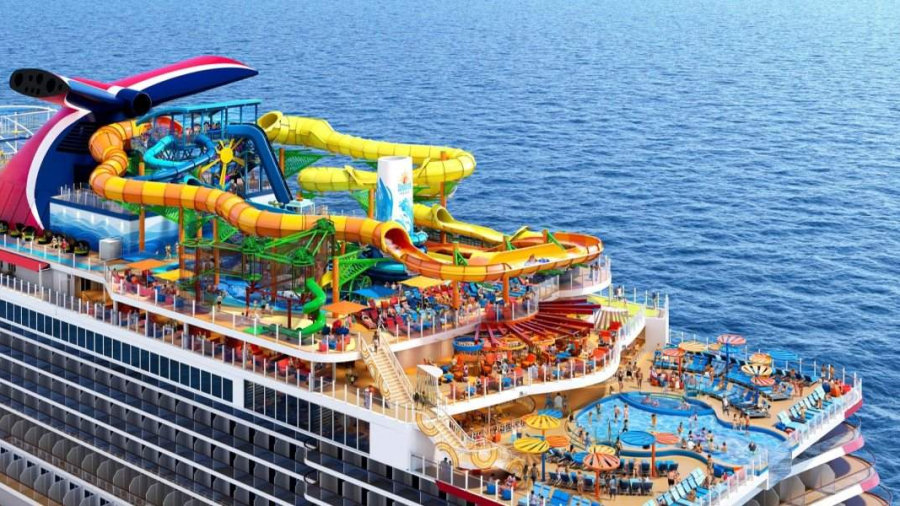
Carnival Cruise Line has officially unveiled the names of its two newest Excel-class cruise ships, set to debut in 2027 and 2028.

The announcement was made during a pre-Seatrade Cruise Global event aboard Carnival Celebration in Miami, Florida, on 6th April 2025.
Carnival President Christine Duffy, celebrating her 10th anniversary at the helm of the world’s most fun-focused cruise brand, shared the exciting news with an audience of cruise industry insiders and media.
“We are very excited today to announce that our fourth Excel ship is coming in 2027,” said Duffy. “We’re continuing with our naming convention, showing the respect that we have for those original Carnival Cruise Line ships. It’s being named Carnival Festivale.”
The fifth Excel-class ship, due to set sail in 2028, will be named Carnival Tropicale – another nostalgic nod to the early days of the brand.
Both names harken back to Carnival’s pioneering fleet, with MS Festivale and MS Tropicale being two of the original ships in the late 1970s and early 1980s.
Notably, MS Tropicale was the cruise line’s first-ever purpose-built ship, and the first to sport the now-iconic whale-tail funnel.
The upcoming 180,000-gross-ton sister ships will be constructed by renowned shipbuilder Meyer Werft in Papenburg, Germany.
Like their Excel-class predecessors, Mardi Gras, Carnival Celebration, and Carnival Jubilee, the two new builds will be powered by liquified natural gas (LNG) as part of Carnival’s ongoing sustainability commitment.
Carnival Cruise Line’s Excel-class ships represent a bold evolution of the fleet, blending high-capacity, next-generation technology with innovative guest experiences.
Duffy revealed that Carnival Festivale will have a distinct music theme, with musical tributes integrated throughout the ship’s design and entertainment offerings.
She also confirmed the vessel will homeport at Port Canaveral, Florida.
The repositioning of Mardi Gras, which currently sails from Port Canaveral, was also confirmed.
The ground-breaking ship will shift to shorter itineraries, offering cruises to the line’s private Bahamian destinations – Celebration Key and Half Moon Cay.
In a surprise announcement, Carnival Cruise Line also revealed that the famed BOLT: Ultimate Sea Coaster, the first rollercoaster at sea, will not feature on the new Excel-class ships.
Instead, it will be replaced with an expanded outdoor activity complex named Sunsation Point.
“Sunsation Point is going to be over-the-top with activities and fun for families and people of all ages,” Duffy explained.
Spanning three decks, Sunsation Point will integrate WaterWorks Ultra – the largest waterpark in Carnival’s fleet – boasting four new waterslides, a family raft ride, splash zones, and water dump buckets.
It will also include mini golf, a ropes course, and a new arcade and games zone.
The shift away from the BOLT rollercoaster comes as the line prioritises broader entertainment features and water attractions that cater to families and younger guests.
“We sail more families and more kids than any other cruise line,” Duffy emphasised, adding that Sunsation Point will also feature evening entertainment on select nights, making it a versatile space for both day and night activities.
Carnival Cruise Line continues to evolve and build on its 50-plus year legacy of “fun ships” with a blend of nostalgia and innovation.
The revival of historic names like Festivale and Tropicale offers a heartfelt tribute to the cruise line’s roots, while state-of-the-art design and entertainment ensure a modern and memorable guest experience.
With an expanding fleet, next-generation ships, and exciting destination developments such as Celebration Key, Carnival’s vision for the future remains focused on fun, family, and unforgettable memories at sea.

I’m ALWAYS looking for cruise bargains! These are the best deals I found this week…


Jenni Fielding is the founder of Cruise Mummy. She has worked in the cruise industry since 2015 and has taken over 30 cruises. Now, she helps over 1 million people per month to plan their perfect cruise holidays.

Cruising has long been popular among older travellers, but one of the world’s leading shipbuilders is taking things a step further – by designing a cruise ship specifically for passengers…
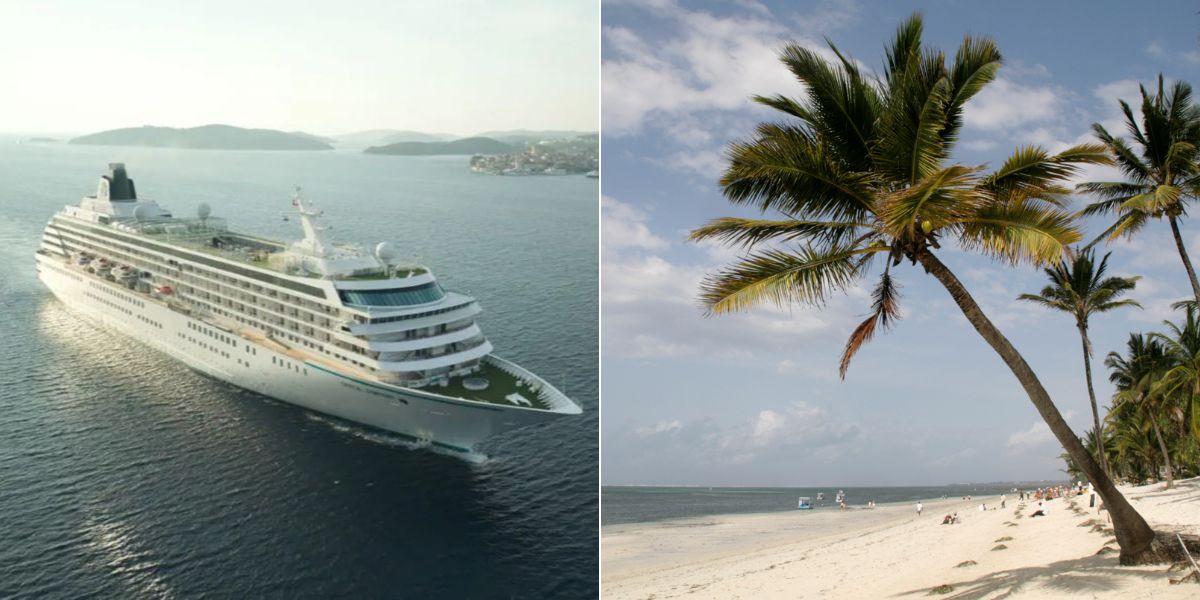
A worrying incident unfolded on a cruise around Africa this week, when a group of youths attacked cruise guests. The incident occurred when Crystal Symphony made a visit to Mombasa…

A travel blogger has gone viral after sharing jaw-dropping footage of her latest expedition cruise, as waves of 35 feet battered the windows. Lesley Anne Murphy stunned social media with…

Two cruise ships have experience unusual incidents with water this week in an odd coincidence. The issues are completely unrelated but highlight how water can cause headaches for cruise goers…
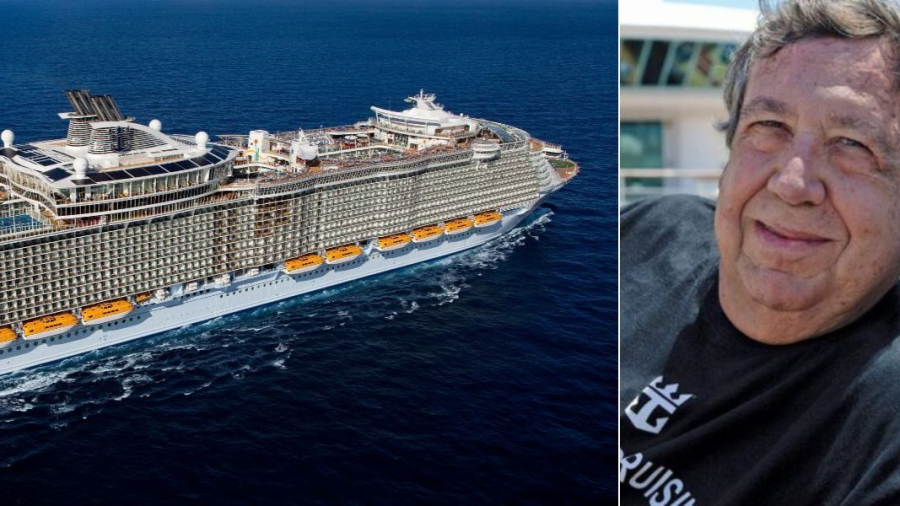
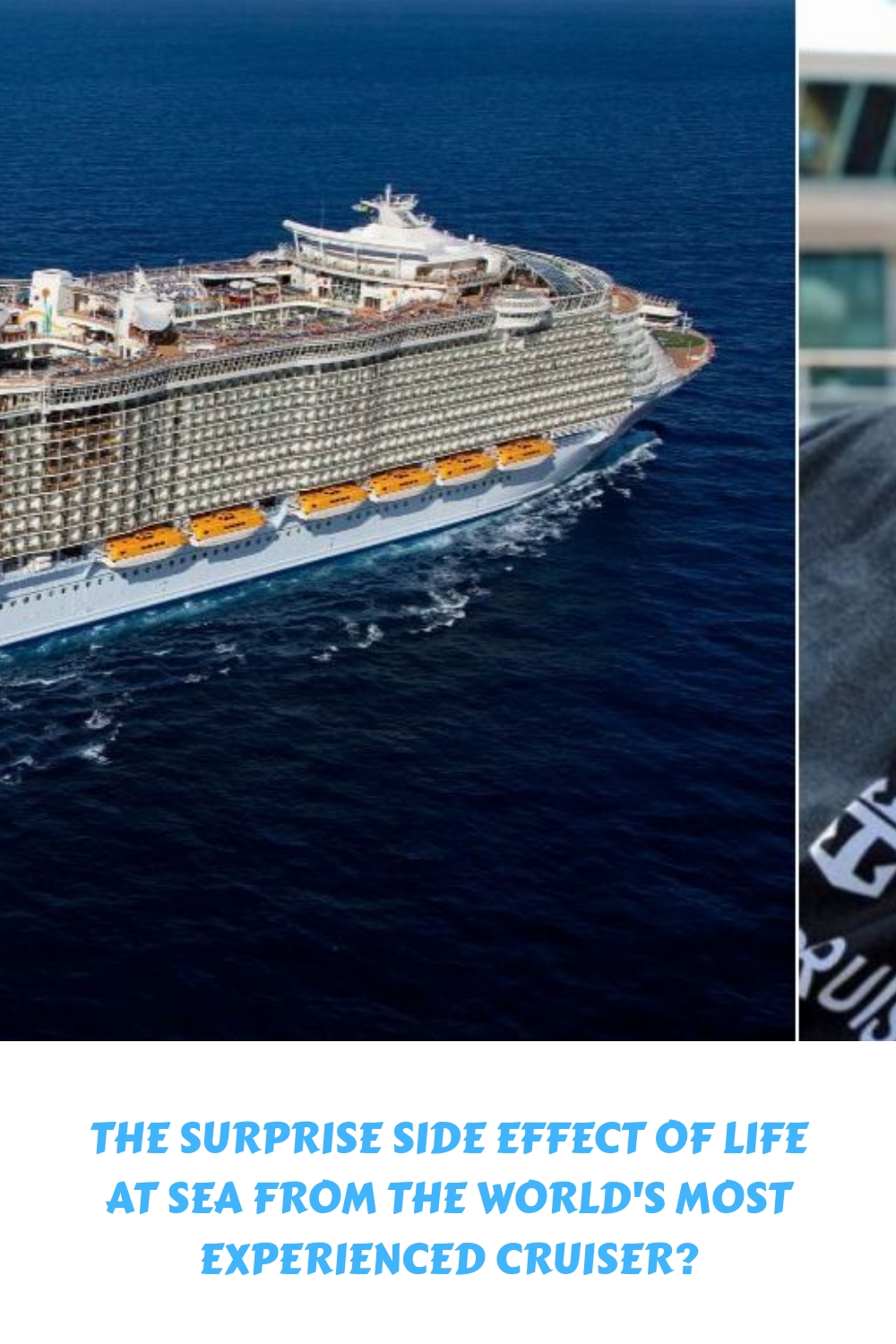
A man who is famous in the world of cruises for being one of the most experienced cruise passengers in the world has revealed fascinating details of his life in an interview.

Mario Salcedo is particularly well known by fans of Royal Caribbean cruises, as he has spend the past 25 years essentially living on the cruise line’s fleet.
Salcedo – affectionately known as ‘Super Mario’ – has opened up on his life spent aboard cruising, after recently reaching his 1,000th voyage with Royal Caribbean.
And unusually, he said that his most memorable cruise wasn’t a long itinerary or a super-relaxing voyage, but a rare cruise to nowhere caused by a hurricane.
Salcedo explained that he was onboard Enchantment of the Seas in 2017 when it was repurposed to evacuate Royal Caribbean’s shoreside employees and their families, embarking on a ‘four-day cruise to nowhere’ to ensure their safety away from the storm’s path.
“I believe the ship carried nearly 3,000 employees and families as she sailed out of Miami and out of harm’s way for a four-day cruise to nowhere. I may have been the only real guest onboard...
“That sailing gave me the unique opportunity to meet, chat, and socialise with many shoreside employees. It was a new and truly unforgettable experience,“
‘Super Mario’ also shared an odd side effect of his life at sea – he no longer has ‘land legs.’
I’ve lost my land legs. I’m swaying so much I can’t walk in a straight line. I’m so used to being on ships that it feels more comfortable to me than being on land.
The condition – formally known as mal de débarquement syndrome – is actually quite common among those who spend extended periods aboard ships.
Salcedo spends around $101,000 (roughly £81,000) annually on his cruises, preferring a balcony cabin.
His cruising lifestyle is funded by his investment management work. On occasion, the crew of certain ships have even gone as far as to set up a designated ‘Super Mario’s Office’ area on deck, complete with cordoned-off tables and chairs, marked with signs bearing his nickname.
Salcedo’s milestone 1,000th voyage was aboard the Explorer of the Seas, a ship capable of hosting 3,286 passengers.
It was a remarkable 11-night journey, departing from Miami to Panama and the southern Caribbean.
Despite reaching such an extraordinary milestone, Salcedo remains remarkably laid-back about his life at sea.
After years working in the business world and travelling for international clients, Salcedo found a more fulfilling lifestyle at sea. His first cruise in 1997 hooked him, and after trying a few different lines, he settled on Royal Caribbean for their preferred ships.
He has been living aboard their vessels almost continuously since 2000, only taking a few days ashore each year, with a brief break during the Covid-19 pandemic.
His daily routine consists of working for about five hours, followed by leisure time. “It’s zero stress,” Salcedo explained. “The best lifestyle I can find.”
Living on a cruise ship might sound like a dream come true, offering the chance to travel the world while enjoying all the perks of luxury living.
If it’s something you’d be interested in, there are a number of ways you can do it:
One of the more accessible ways to live at sea is by booking a series of short cruises with mainstream cruise lines, back-to-back.
While this gives you flexibility in choosing itineraries, it comes with logistical challenges. For example, it’s essential to book well in advance, as popular cabins can fill up quickly, and there’s no guarantee you’ll be able to keep the same room across multiple sailings.
You may also need to move cabins between voyages or, in some cases, switch ships entirely. This lifestyle requires a lot of planning, and it can be stressful ensuring you always have a spot reserved.

If you’re looking for a more immersive long-term experience, world cruises are an excellent choice.
These typically last several months, with some itineraries covering up to six months. However, they are not back-to-back, so once a world cruise concludes, you’d need to book another journey.
These cruises offer the convenience of staying aboard for extended periods and are often all-inclusive, but the costs can be high. While world cruises may suit those who prefer a structured schedule, the financial outlay may not be feasible for everyone.
Suggested read: 9 Tips For Planning A World Cruise

For those seeking a truly permanent solution, residential cruise ships are designed for long-term living.
Unlike traditional cruise lines, these ships offer cabins for purchase or long-term lease, allowing you to live at sea year-round without worrying about booking new cruises constantly.
The World and Villa Vie Odyssey are two options currently sailing. These ships are aimed primarily at retirees or those looking for a lifestyle change, and they operate much like a floating community. But anyone is welcome to purchase a cabin.
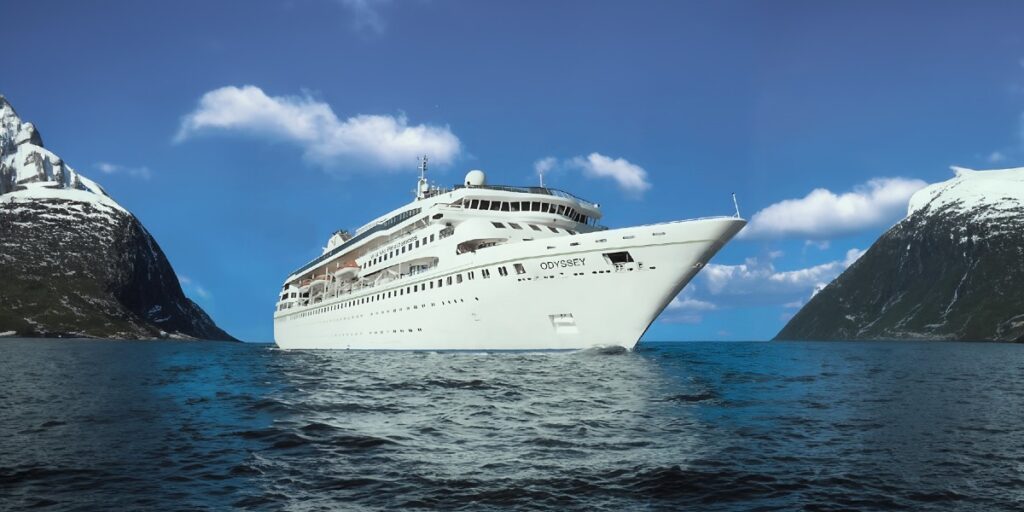
There are also other newer residential ships in the pipeline, although some of these are still in the development stage.
The cost of purchasing a residence can vary, and as well as the outright purchase price there will also be annual fees for maintenance and services on top.
Read more: You Can Live Permanently On A Cruise Ship! Here’s How Much It Costs
If you’re seeking to live on a cruise ship without the substantial costs of owning a cabin, working on board might be the most practical solution.
Crew members receive accommodation and meals as part of their employment package, making it a cost-effective way to experience life at sea.
However, working on a cruise ship comes with its own challenges, as you’ll need to work long hours with few days off. It’s far from the leisurely lifestyle most people envision when thinking about living on a cruise ship, but it could be a viable option for those willing to trade work for accommodation and meals.
Suggested read: Dream Jobs at Sea – The Top Roles Cruisers Would Love To Do!

While living on a cruise ship full-time is an exciting prospect for some, it requires careful planning and consideration of the costs, logistics, and lifestyle changes.
Whether opting for back-to-back cruises, booking a world cruise, or investing in a residential ship, the dream of life at sea is becoming increasingly attainable for those who are willing to embrace the unique challenges it brings. And Super Mario is living proof.
Don’t miss the latest Royal Caribbean offers…
Jenni Fielding is the founder of Cruise Mummy. She has worked in the cruise industry since 2015 and has taken over 30 cruises. Now, she helps over 1 million people per month to plan their perfect cruise holidays.
Star of the Seas vs Icon of the Seas comes down to small details rather than big ones. The two Royal Caribbean ships share the same hull, the same eight neighborhoods, the Category 6 waterpark and Crown’s Edge, and they carry the same 5,610 guests at double occupancy. What actually separates them is the shows, a few dining and deck changes, and above all where they sail from: Icon from Miami (moving to Galveston in August 2027), Star from Port Canaveral.
If you’re choosing between them, read on for a side-by-side table, every meaningful difference we could confirm, the 2026 and 2027 homeport picture, and some straightforward advice on which ship suits which kind of cruiser.
Icon of the Seas debuted in January 2024 as the first Icon-class ship. Star of the Seas followed in August 2025. Royal Caribbean built them as sisters, so most of the numbers match. Published gross tonnage figures vary slightly from source to source (around 248,700 to 250,800 GT), but the ships are effectively the same size.
| Feature | Icon of the Seas | Star of the Seas |
|---|---|---|
| First sailing | January 2024 | August 2025 |
| Gross tonnage | About 248,700–250,800 GT | About 248,700–250,800 GT |
| Length / decks | About 1,196 ft / 20 decks | About 1,196 ft / 20 decks |
| Guests (double / max) | 5,610 / 7,600 | 5,610 / 7,600 |
| Staterooms | About 2,805 | About 2,805 |
| Neighborhoods | 8 | 8 |
| Main theater show | The Wizard of Oz | Back to the Future: The Musical |
| AquaTheater show | Aqua Action! | Torque |
| Supper club | Empire Supper Club (New York theme) | Lincoln Park Supper Club (1930s Chicago theme) |
| Homeport (late 2026) | Miami | Port Canaveral (Orlando) |
| Homeport from August 2027 | Galveston, Texas | Port Canaveral |
| Chief Dog Officer | Rover | Sailor |
Before getting into the differences, it helps to know how much is identical. Both ships use the same eight-neighborhood layout:
Both run on liquefied natural gas, both have seven pools, and both keep the signature venues that made Icon famous, including The Pearl, Dueling Pianos, Rye & Bean and the Ultimate Family Townhouse at the top of the suite range. If you want a deeper look at how this design compares with the previous generation, our guide to Icon class vs Oasis class ships covers the bigger picture.

Royal Caribbean used Star as a chance to refresh the entertainment line-up and fine-tune a few things guests said about Icon. None of the changes reshape the ship, but some may matter to you.
This is the biggest difference. Every production show is different:
If one of those headline musicals is a must-see for your family, that alone may decide it.
Most dining is the same, but there are two notable swaps. First, the supper club: Icon’s New York-themed Empire Supper Club becomes the Lincoln Park Supper Club on Star, with a 1930s Chicago theme, live jazz, and dishes such as Wagyu prime rib and crab ravioli. Both are extra-cost dining experiences.
Second, the AquaDome Market food hall has new stalls. Star swaps Icon’s Mac’s (mac and cheese), GNGR (Chinese) and Toast & Garden for La Cocinita (South American), Pig Out BBQ and Mai Thai. Feta Mediterranean and Creme de la Crepes appear on both ships. These market stalls are included in your fare.
The bar line-up is very similar. The main change is Lincoln Park’s Prohibition-style cocktail menu, which leans into classic drinks such as brandy Alexanders. Swim & Tonic, The Lime and Coconut and the 1400 Lobby Bar are on both ships.
On Deck 15, Icon has bungee-style loungers, a rope swing and a small ropes course. Star replaces these with more traditional sun loungers and adds an extra hot tub near AquaDome Market. If finding a lounger on sea days is a sore point for you, Star’s change is a modest plus. Category 6 and Crown’s Edge are the same on both ships.
Cabin categories are essentially the same, from interior rooms to the three-deck Ultimate Family Townhouse. That means cabin research for one ship largely applies to the other. Location still matters, though, so check our guide to Star of the Seas cabins to avoid before you book. Rooms beneath the pool deck or near late-night venues are worth a second look on either ship.
Star refines Surfside and the Adventure Ocean kids’ club with more hands-on activities, especially for kids around 8 to 10. There are also fun visual differences: surfer statues instead of Icon’s divers, a skateboarding dog statue, and a Surfside flamingo in a lei rather than a tie.
For most US cruisers, this is the deciding factor, and it’s about to change.
Icon sails 7-night Eastern and Western Caribbean cruises from Miami through mid-2027, with a stop at Perfect Day at CocoCay on every trip. From August 2027, Royal Caribbean moves Icon to Galveston, Texas, for 6- to 8-night Caribbean cruises calling at CocoCay, Roatan and Cozumel (where the new Royal Beach Club Cozumel is planned). That makes Icon the obvious choice for Texans and the central US from late 2027. Miami won’t lose an Icon-class ship: the fourth sister, Hero of the Seas, is scheduled to debut there in August 2027.
Star sails 7-night Eastern and Western Caribbean itineraries from Port Canaveral, about an hour from Orlando, with CocoCay included. This makes it easy to pair a cruise with a few days at Orlando’s theme parks. Orlando International Airport also tends to have plenty of nonstop flights from across the US.
The third ship in the class, Legend of the Seas, was delivered in June 2026 and spent its first summer sailing the Western Mediterranean from Barcelona and Rome (Civitavecchia). It has now repositioned to Fort Lauderdale for 3- to 8-night Western and Southern Caribbean cruises. Legend adds new venues not on Icon or Star, including the Royal Railway dining experience and Hollywoodland Supper Club. Read our Legend of the Seas review for more.
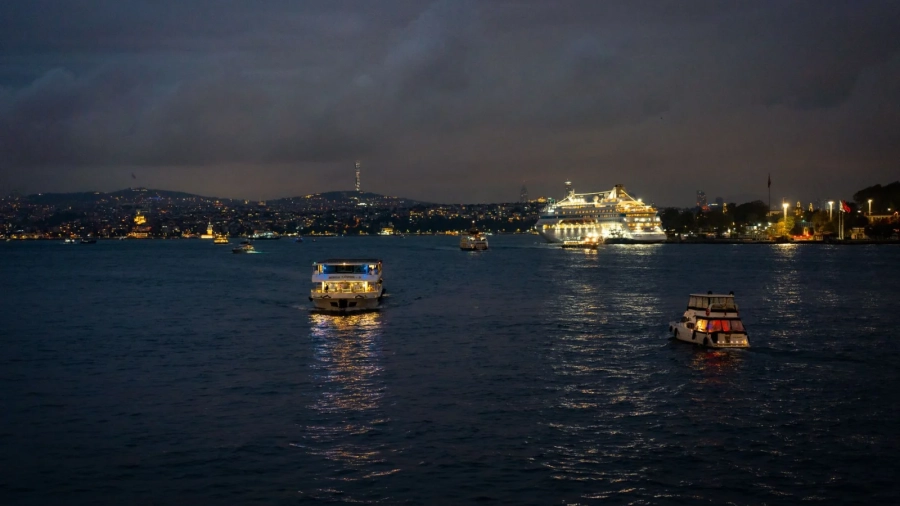
There is no fixed price gap between the two ships. Fares change with the sailing date, cabin type, school holidays and demand. A few patterns are worth knowing:
Always compare live fares on Royal Caribbean’s website or with a travel agent, and include gratuities and any specialty dining you plan to book.
Because the ships are so alike, let practical factors decide:
Both ships feature in our ranking of the best cruise ships of 2026, which lists the awards each ship has won.
Only marginally, if at all. Published gross tonnage figures vary slightly between sources, but the two ships share the same length, 20 decks, about 2,805 staterooms and 5,610 guests at double occupancy.
The entertainment and the homeport. Star has Back to the Future: The Musical, Torque and SOL instead of Icon’s Wizard of Oz and Aqua Action!, plus the Lincoln Park Supper Club and new AquaDome Market stalls. Icon sails from Miami, while Star sails from Port Canaveral.
Yes. Icon moves to Galveston, Texas, in August 2027 for 6- to 8-night Caribbean cruises. Hero of the Seas is due to take over Icon-class sailings from Miami that same month.
Yes. Both have Category 6, with six waterslides, plus Crown’s Edge and the same pools on Thrill Island and Chill Island.
It depends on the sailing. Neither is consistently cheaper, so compare the same week from Miami and Port Canaveral and include flights and hotels in the total cost.
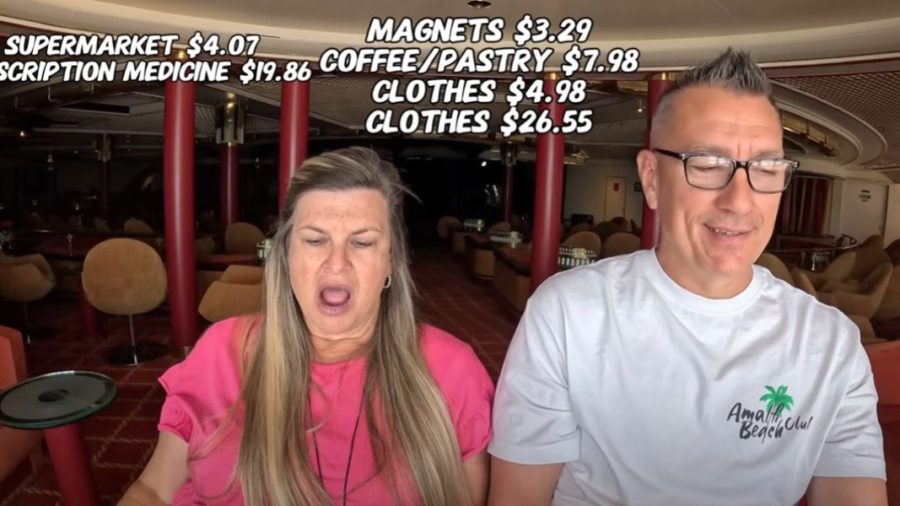
Two cruise influencers have revealed how much they spend on average while living on a residential cruise ship.
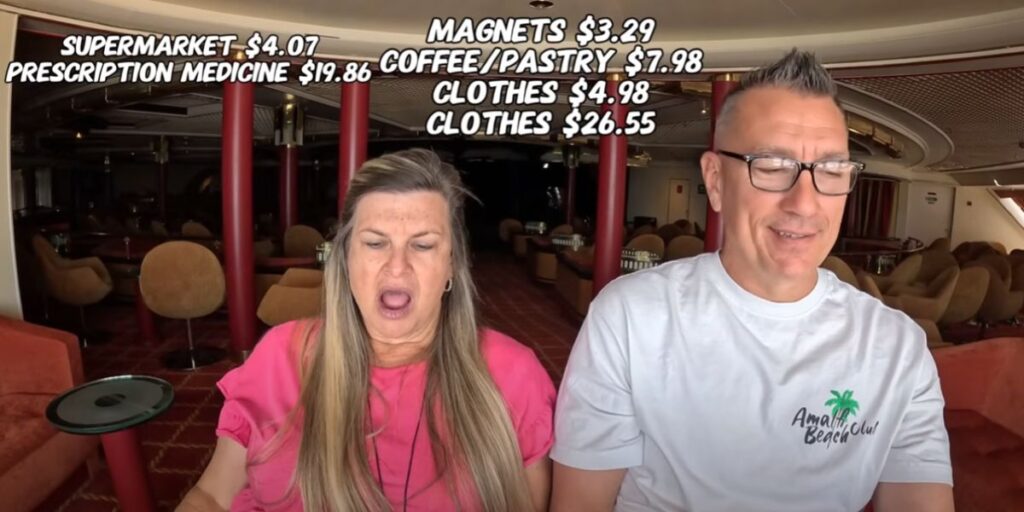
Angela and Steve are living onboard Villa Vie Odyssey and are documenting their cruise experiences on their YouTube channel, MidLife Cruising.
They’ve been discussing the costs of their unique lifestyle, from daily expenses in port to larger excursions, and breaking it all down for their followers.
Their January budget sheds light on the real costs of this lifestyle, offering valuable insight for anyone dreaming of sailing the world full-time.
Angela and Steve meticulously tracked their spending throughout January while cruising through South America, visiting ports in Argentina, Chile, and Peru.
Their total expenditure for the month, including excursions, meals, and daily essentials, came to $1,940.97.
However, once they excluded the cost of a major trip to Machu Picchu, their monthly spend on day-to-day living was $1,388.71.

This amount covered everything from food and shopping to excursions and souvenirs. Notably, they spent some days at sea without spending a penny, which helped keep costs down.
One of the biggest expenses for the couple was excursions. For instance, they took a boat tour in Peru for just $40, an incredibly budget-friendly way to see wildlife, including penguins and sea lions.
However, their largest excursion, a 20-hour tour of Torres del Paine National Park in Chile, set them back $360 for the two of them. While expensive, they deemed it well worth the money for the breathtaking scenery and unique experiences.
One of the fun aspects of cruising full-time is dining out in different countries. They often grabbed local pastries, coffee, and small meals while in port. In Ushuaia, Argentina, they visited a popular local bakery for $22.76, which included churros and alfajores.
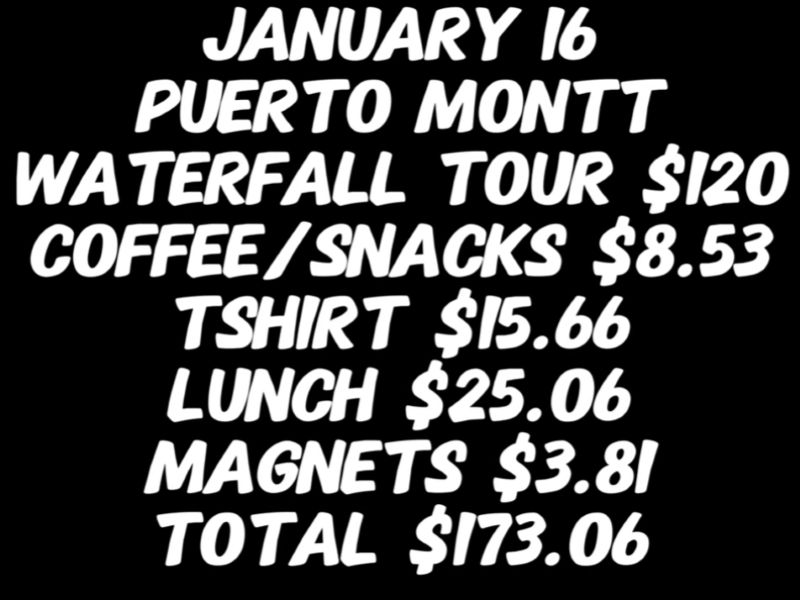
Their grocery shopping expenses were minimal since meals on the ship are included in their maintenance fees.
However, they did pick up snacks, toiletries, and other essentials, such as toothpaste (which they noted was surprisingly expensive in Argentina).
One category of expenses that some may not consider is cash withdrawals and transaction fees.
Fortunately, Angela and Steve use a Charles Schwab account, which refunds ATM fees at the end of each month. In January, they received $22.53 in refunded fees, helping to offset some of their costs.
Tipping is another consideration.
While gratuities are included in their monthly maintenance fee, the couple still provides additional tips to their favourite crew members, estimating that they spend $100 per month in discretionary gratuities.
In total, excluding all of the costs of their major trip to Machu Picchu, their cost of living on the ship for January was $1,388.71.
If they factor in their mobile phone plan, which costs $46.24 per month, their grand total rises to $1,462.40.
This means they spent roughly $47.60 per day living on a cruise ship, which, when compared to land-based living expenses, is quite reasonable.
Of course, this amount does not include their monthly maintenance fee, which varies depending on the type of cabin.
Prices on the Villa Vie Odyssey range from $2,500 per month for a single person in an inside cabin to $11,000 for a suite. And that’s after they have paid for the room itself.
As early investors, Angela and Steve secured a lower rate, though their exact figures remain undisclosed due to an NDA they signed.
Their journey is far from over! In the coming months, they have big trips planned, including a visit to the famous Iguazu Falls, spanning both Argentina and Brazil.
Additionally, they will be venturing into the Amazon before making a short trip back to Nicaragua to check on their home.
For those curious about what it’s like to live full-time on a cruise ship, Angela and Steve continue to document their experiences on their YouTube channel, MidLife Cruising.
They plan to track their expenses again in the coming months to give their viewers even more insight into the costs of this unique lifestyle.
Want to follow along on their adventure? Be sure to check out their channel for regular updates on life at sea, budgeting tips, and travel inspiration!
Jenni Fielding is the founder of Cruise Mummy. She has worked in the cruise industry since 2015 and has taken over 30 cruises. Now, she helps over 1 million people per month to plan their perfect cruise holidays.
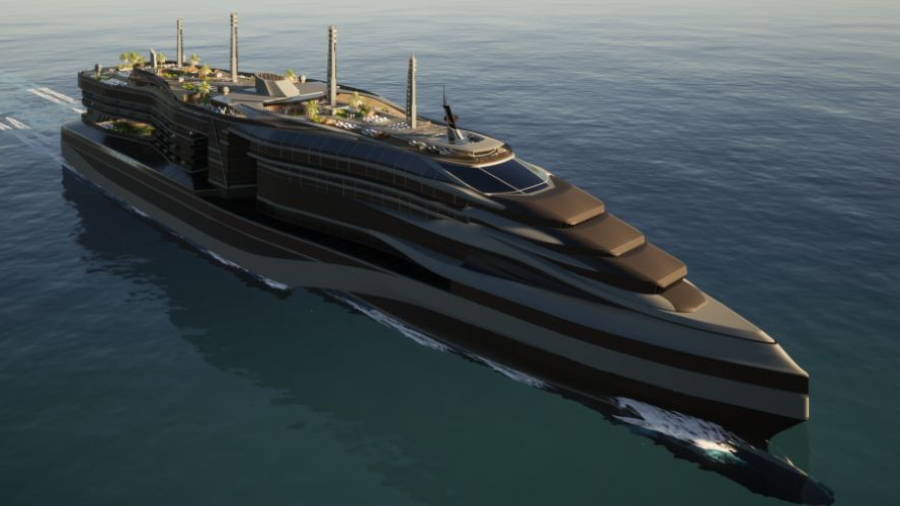
Cruising has long been popular among older travellers, but one of the world’s leading shipbuilders is taking things a step further – by designing a cruise ship specifically for passengers aged 80 and above.
Germany’s Meyer Werft Group has announced Serenity, a new ship concept tailored for the “80+” age group. T
he ship, still in the early stages of development, reflects growing demographic shifts in Europe and North America – with projections indicating that by 2100, the number of people aged 80 and over will equal the current number of people aged 65 and over.
Tim Krug, head of concept development at Meyer Werft, said, “Put simply, today there are ships for young, middle-aged and old, and in future there will be a need for a subdivided older target group.”
Krug is quick to clarify that Serenity will not resemble a nursing home at sea.
Rather, it will provide independent living with the convenience and accessibility of assisted living facilities.
This includes features such as widened corridors, thoughtfully designed walking routes, and enhanced opportunities for social interaction – all of which are intended to create an inclusive and comfortable experience for older passengers.
“It’s about providing the right amenities to promote wellbeing, movement, and connection,” Krug said.
Notably, Serenity will also be designed as a 100% climate-neutral ship i an impressive commitment as the maritime industry faces increasing pressure to reduce its carbon footprint.
The announcement aligns with Meyer Werft’s ongoing investment in green technologies.
The shipbuilder previously constructed AIDAnova, the first cruise ship powered entirely by liquefied natural gas (LNG), and Silver Nova, a hybrid vessel operated by Silversea Cruises that combines LNG with battery and fuel cell systems to cut energy consumption by 25%.
These innovations are part of wider efforts to meet the EU’s “Fit for 55” plan – aiming for a 55% reduction in greenhouse gas emissions by 2030 compared to 1990 levels, including the introduction of zero-emission vessels within the same timeframe.
Further details of the Serenity ship concept – including visuals and a physical model – will be revealed at Seatrade Cruise Global 2025, the world’s largest cruise industry event, taking place in Miami from 7th to 10th April.
Celebrating its 40th anniversary this year, Seatrade will see thousands of cruise executives, suppliers, shipbuilders and press gather to explore the future of cruising.
Meyer Werft is expected to showcase not only the Serenity design, but also provide updates on several high-profile builds currently underway – including Disney Destiny, the third ship in Disney Cruise Line’s Wish class, set for delivery in November 2025.
In addition to its ongoing work with Disney and Carnival Corporation, Meyer Werft’s Serenity concept hints at a shift in the industry toward more segmented cruise offerings – designed to reflect the diverse and evolving needs of travellers.
While traditional cruise lines cater to families, young adults, and multigenerational groups, Serenity could redefine premium cruising for a demographic often overlooked in ship design.
And as longevity increases and wellness remains a top priority, this thoughtful new direction could set the stage for an entirely new market in luxury cruising – one where serenity isn’t just the ship’s name, but a promise.
I’m ALWAYS looking for cruise bargains! These are the best deals I found this week…
Jenni Fielding is the founder of Cruise Mummy. She has worked in the cruise industry since 2015 and has taken over 30 cruises. Now, she helps over 1 million people per month to plan their perfect cruise holidays.
A worrying incident unfolded on a cruise around Africa this week, when a group of youths attacked cruise guests. The incident occurred when Crystal Symphony made a visit to Mombasa…
A travel blogger has gone viral after sharing jaw-dropping footage of her latest expedition cruise, as waves of 35 feet battered the windows. Lesley Anne Murphy stunned social media with…
Two cruise ships have experience unusual incidents with water this week in an odd coincidence. The issues are completely unrelated but highlight how water can cause headaches for cruise goers…
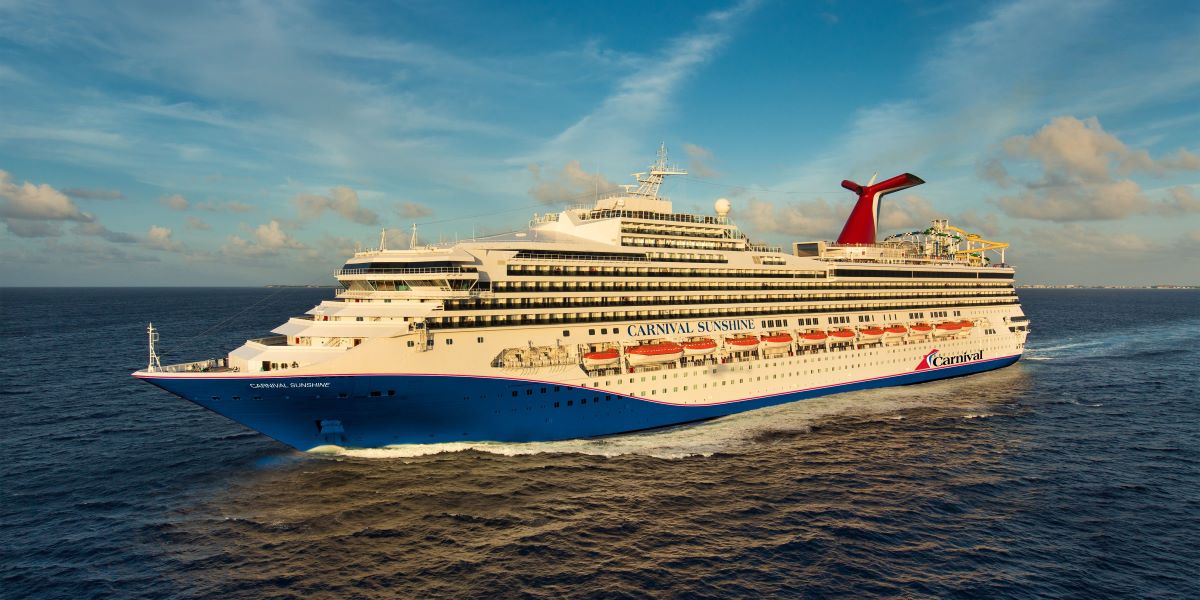
A popular Carnival ship has been hit with a less-than-stellar inspection health inspection score and, while the ship has passed, it must take immediate action to rectify some serious issues….
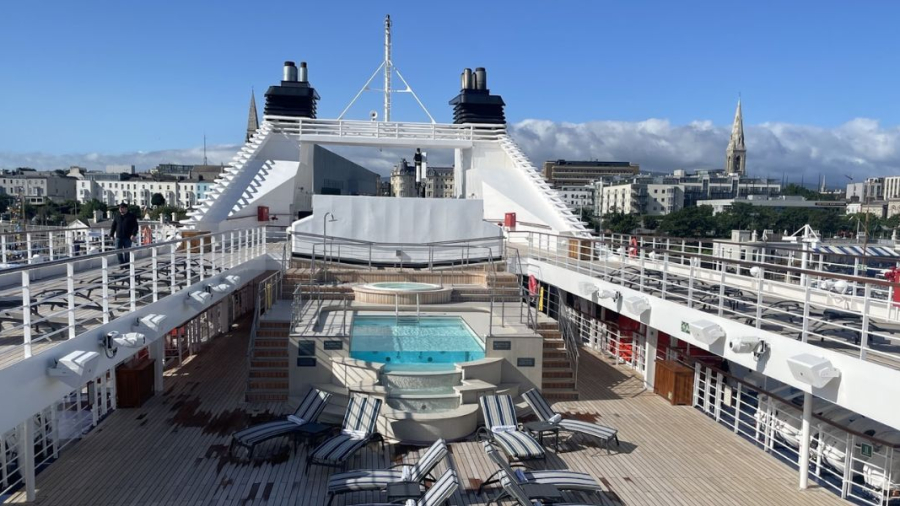
Windstar Cruises is one of the more unique cruise lines in the world, since it features (some) ships with actual sails. It’s also one of the smaller cruise lines, with just six ships in the fleet, offering a luxurious experience for those passengers onboard.

But who owns the company – are they part of a large cruise corporation? And what’s the cruise line’s history? Let’s take a look.
Windstar Cruises is based in the US – specifically in Miami, Florida. The headquarters is situated at 8400 NW 36th Street, Suite 520, Doral, FL 33166. Despite being based a short distance from the Miami cruise port, the ships don’t tend to offer cruises from Florida.

Windstar used to have a head office in Seattle, Washington. That has since closed, by many of the team still continue to work remotely from Washington.
Windstar was first formed as Windstar Sail Cruises in 1984 by Karl G. Andren, an entrepreneur in the shipping industry who sadly passed away in February 2023.

The first ship was the Wind Star, which joined the fleet in 1986. The following two years saw identical sister ships launch – firstly the Wind Song, followed by the Wind Spirit.

In 1987, Holland America Line purchased 50% of Windstar Cruises, and then bought the remainder of the company the following year in 1988. However, Holland America no longer owns Windstar Cruises.

Holland America Line took over before the Wind Surf and Wind Saga were completed, and the company decided to pass on the ships, no longer adding them to the fleet. Instead, Club Med bought the ships and christened them Club Med I and Club Med II.
Carnival Corporation & PLC did own Windstar Cruises from 1989, when the company bought Holland America Line and its subsidiaries.

Carnival owned Windstar until 2007, when it sold the cruise line to Ambassadors International. It was later sold again to Xanterra Travel Collection in 2011.
In 1998, Carnival planned to purchase the Club Med I and Club Med II ships to add to the Windstar fleet – the company had first refusal on the ships as part of the original deal to pass on them.
However, Windstar couldn’t afford both ships, and so decided to only buy one. So the Club Med I was bought and given her original name of Wind Surf.
In 2002, the cruise line lost a ship – Wind Song developed an engine room fire on 1st December, and she was scuttled and sank the following month. It had been decided that Carnival and Holland America didn’t want to pay the costs to the French Navy for towing the ship, and scrapping it would’ve been too expensive as well.
In 2007, Carnival sold Windstar Cruises to Ambassadors International, a company with a diverse portfolio of businesses. The price of the sale was $100 million. However, just four years later, the company would file for bankruptcy. Windstar Cruises was put up for auction and the Anschutz Corporation won the bidding with a price of $39 million.

Anschutz Corporation gave the cruise company to its subsidiary, Xanterra Travel Collection.
The current parent company of Windstar Cruises is Xanterra Travel Collection. The company owns a number of travel companies across the US, but Windstar Cruises is the only cruise line that the company owns.
The Xanterra Travel Collection is primarily involved in National Park resorts across the US, with resorts situated in Crater Lake, Death Valley, and the Grand Canyon. The company also owns and operates the Grand Canyon Railway.
Since Xanterra took over Windstar Cruises, the fleet has grown to its largest-ever size
In 2013, the cruise line purchased three ships from Seabourn Cruise Line – the Star Pride, Star Legend, and Star Breeze. After extensive renovation, the ships joined the active fleet across 2014 and 2015.
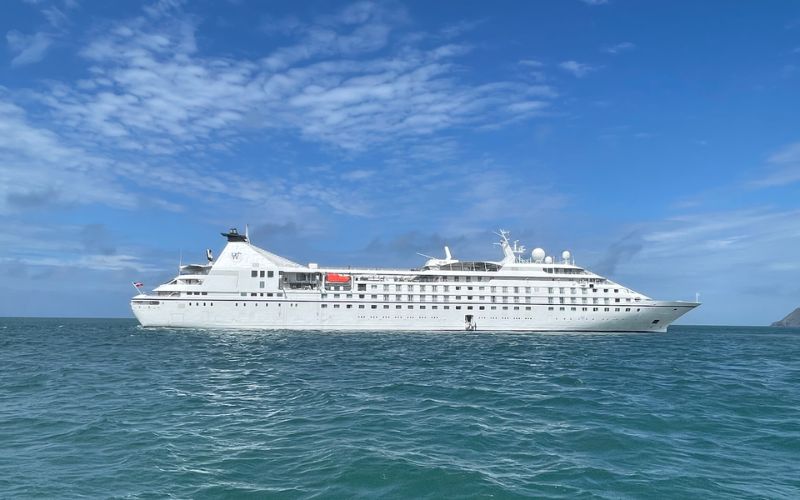
And since then, the cruise line has expanded its range of destinations, and now cruises to most regions around the world. Alaska was the latest addition to the portfolio of itineraries, in 2021.
Whilst Windstar Cruises currently only has six ships in their fleet, they have recently announced that they will be adding not one, but TWO new all-suite Star Class ships. Windstar announced the news by saying “Coming Dec. 2025, Star Seeker will be our first-ever Star Class new build, followed by Star Explorer in Dec. 2026. Serving 224 guests, each ship will feature 112 suites with full private verandas and infinity windows. They’ll also come with two new Owner’s suites with wrap-around balconies, perfect for evening cocktails or a private dinner.”

Windstar Cruises has revealed plans for a major expansion of its South Pacific itineraries, the only region besides the Mediterranean where the cruise line operates year-round.
Starting in 2026, Windstar will introduce new sailings to Fiji, Tonga, and the Cook Islands, alongside its established routes in Tahiti and the Society Islands, the Tuamotus, and the Marquesas.
These additions include shorter options, such as a seven-night Tuamotus cruise and an 11-night voyage to the Marquesas, opening up these remote locations to a wider range of travellers.
Suggested Read: Windstar Cruises Expands South Pacific Itineraries, Adding New Destinations and Experiences from 2026
So there you have it – a brief summary of the history of Windstar Cruises’ ownership and key milestones in the company’s history. For over 30 years, the cruise line has been offering a classical luxury yacht experience at sea, and it only continues to go from strength to strength.
Want expert help to plan your perfect cruise?
Want expert help to plan your perfect cruise?

Jenni Fielding is the founder of Cruise Mummy. She has worked in the cruise industry since 2015 and has taken over 30 cruises. Now, she helps over 1 million people per month to plan their perfect cruise holidays.
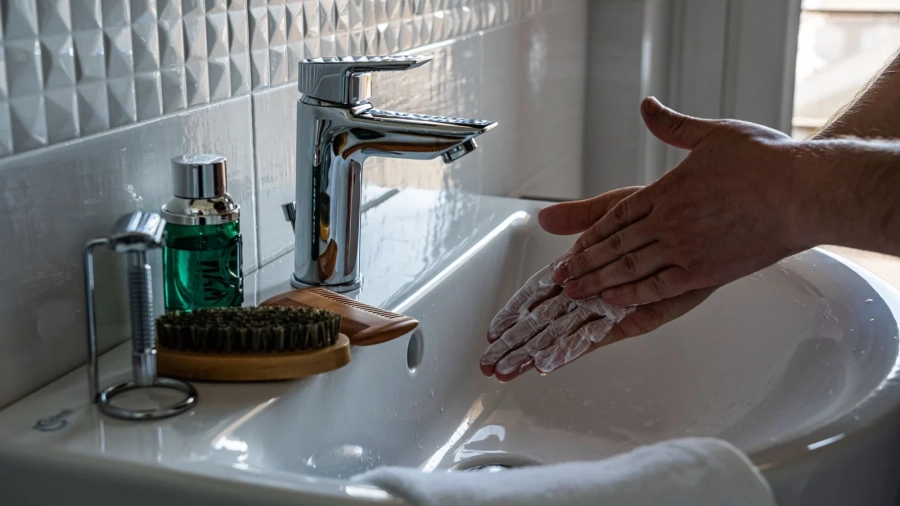
Norovirus on cruise ships is real but rare. The CDC logged 18 gastrointestinal outbreaks on ships under its Vessel Sanitation Program in 2024 and a record 23 in 2025 (18 of them norovirus), while 2026 has been much quieter so far. That is out of tens of thousands of sailings a year, and the single best way to protect yourself is simple: wash your hands with soap and water, because alcohol gel does not work well against norovirus.
This guide covers the real cruise ship norovirus statistics, why the virus spreads so easily at sea, what cruise lines do when it appears, and what to do if you feel unwell on board. It is general information, not medical advice. If you are worried about your health, speak to the ship’s medical centre or your own doctor.
Norovirus is a very contagious stomach virus and the most common cause of vomiting and diarrhea (acute gastroenteritis) in the US. Symptoms usually come on suddenly, typically 12 to 48 hours after exposure, and include nausea, vomiting, diarrhea and stomach cramps. Some people also get a mild fever, headache or body aches.
For most healthy adults it is unpleasant but short, usually lasting one to three days. The main risk is dehydration, especially for young children, older adults and anyone with other health conditions. There is no specific treatment or vaccine. Care is mostly rest and fluids.
It is worth knowing that norovirus is not a “cruise ship virus”. Most outbreaks happen on land, in places like care homes, schools, restaurants and hotels. Cruise ships simply get more attention because illness on board has to be tracked and reported.
The US Centers for Disease Control and Prevention (CDC) runs the Vessel Sanitation Program (VSP). It covers ships carrying 13 or more passengers on itineraries that include both US and foreign ports. Ships must report gastrointestinal illness cases to the CDC, and the CDC publishes an outbreak on its website when 3% or more of passengers or crew report symptoms to the ship’s medical staff on a single voyage.
That 3% threshold matters. A ship can have a handful of sick passengers without it counting as an outbreak, and an outbreak on a ship of 3,000 guests means roughly 90 or more people reporting symptoms.
| Year | GI outbreaks posted by CDC VSP | Caused by norovirus | Notes |
|---|---|---|---|
| 2024 | 18 | 15 | The highest total in more than a decade at the time |
| 2025 | 23 | 18 | The most reported in a single year since VSP tracking began |
| 2026 (to date) | 9 listed so far | At least 5 | Two were E. coli and two had an unknown cause; most recent listing was in July |
Figures for 2024 and 2025 come from the CDC’s published outbreak lists. The 2026 figure reflects the CDC’s list as of mid-November 2026, and it can change if outbreaks are added later. Notable 2026 norovirus outbreaks included three Princess Cruises ships: Star Princess in March, Caribbean Princess in May, and Ruby Princess on a June to July Alaska voyage from San Francisco, where 102 passengers and 23 crew reported illness (about 3.4% of passengers).
Put those numbers in context. The Cruise Lines International Association (CLIA) reported a record of around 37 million ocean cruise passengers worldwide in 2025, and US ports alone handle thousands of sailings a year. Even in the record year of 2025, 23 outbreaks represents a very small share of voyages.
The best long-term data comes from a CDC study of 2008 to 2014. Across more than 29,000 voyages carrying about 73.6 million passengers, just 133 voyages (0.5%) had an outbreak, and where samples were tested, 97% of those outbreaks were caused by norovirus. The rate of gastroenteritis among passengers also fell over that period. In other words, the overwhelming majority of cruises have no outbreak at all.
One caveat: the CDC only tracks ships in its jurisdiction. Sailings that never touch a US port, such as many European or Asian itineraries, are not included in these counts, so global numbers are not fully known.
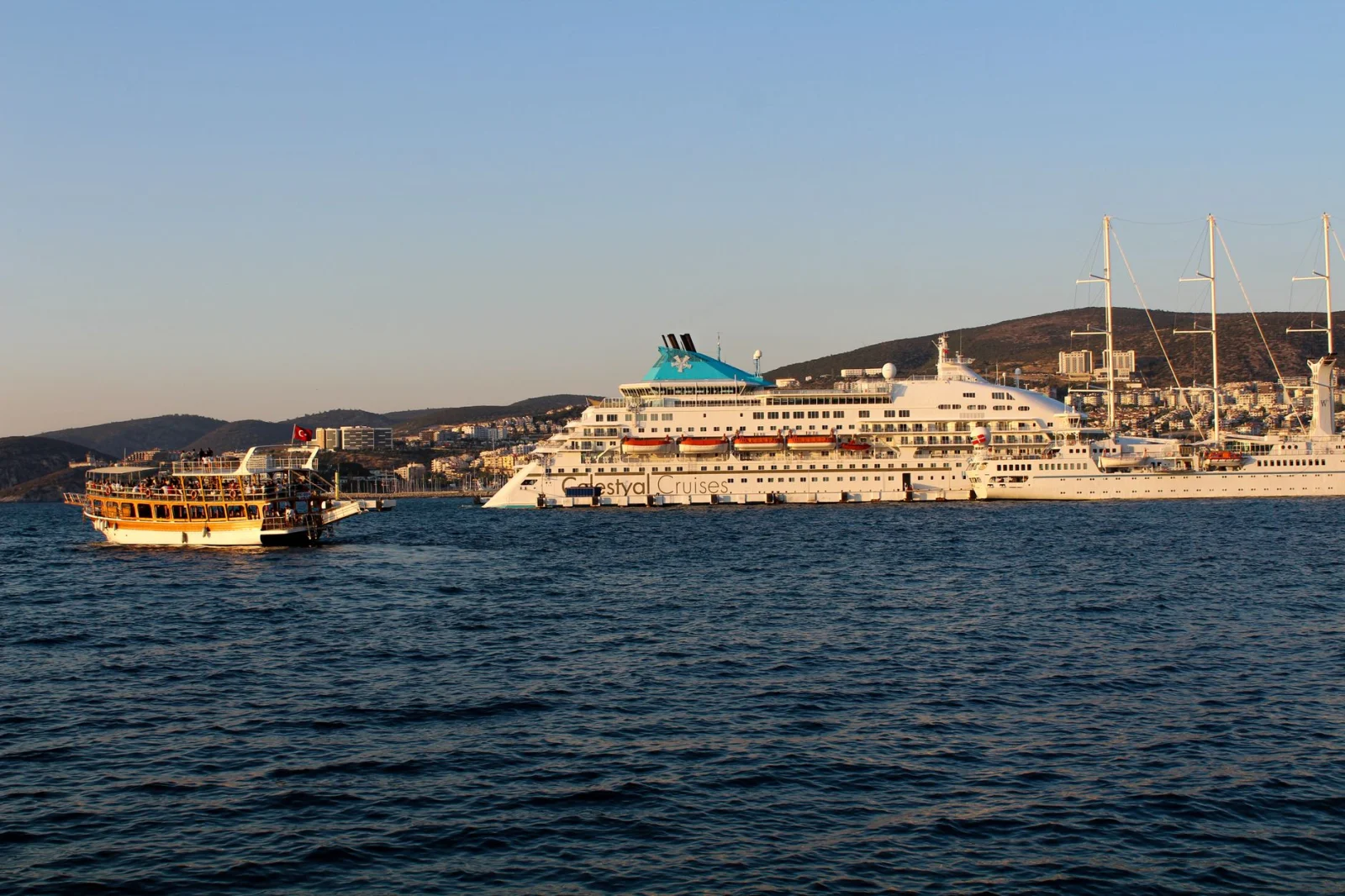
Norovirus is tough and extremely infectious. A very small number of virus particles is enough to make someone ill, and the virus can survive on hard surfaces for days. It spreads through:
A ship packs thousands of people into shared dining rooms, theaters, pools and lifts for days at a time. New passengers board every few days, sometimes bringing the virus with them from home. CDC guidance also notes that people can shed the virus before symptoms start and for two weeks or more after they feel better, which makes it hard to stop completely.
You cannot reduce the risk to zero, but these steps make a real difference:
It also helps to pack a small personal kit. A few travel-size liquid soaps, wet wipes and a basic supply of oral rehydration salts are easy to bring, but check what is allowed first with our guide to items commonly confiscated at cruise ports and what to pack instead. If you are new to cruising, our first-time cruise tips from past guests cover more of the basics.
Nausea at sea is not always a virus. Seasickness tends to come with dizziness and improves when the sea calms or you go ashore, and it usually does not cause diarrhea. Sudden vomiting together with diarrhea or stomach cramps is more likely to be a stomach bug. If you are prone to motion sickness, our guide on how to prevent seasickness on a cruise can help you tell the difference and stay comfortable. If in doubt, call the medical centre.

Every ship under VSP jurisdiction must have an outbreak prevention and response plan. When cases rise, the ship typically moves to an enhanced sanitation level. Some crews informally call this “code red”, although the exact name varies by cruise line. Common measures include:
This is something many passengers never think to do. The Vessel Sanitation Program carries out unannounced inspections of ships that call at US ports, checking galleys and dining areas, drinking water, pools and hot tubs, medical facilities, housekeeping, ventilation and children’s areas. Ships are scored out of 100, and 86 or above is a pass. A score of 85 or lower is unsatisfactory, and the ship must submit a corrective action report.
You can search any ship by name using the CDC’s online cruise ship inspection search tool. The full inspection reports are worth a look, because they show what inspectors actually found, not just the headline number. Remember that a score is a snapshot of one day. Most ships pass comfortably, and a strong score does not guarantee a virus will not come aboard with a passenger, but it is a useful sign of how seriously a ship takes hygiene.
If you are choosing when to sail, norovirus is more common in the US during the colder months, roughly November to April. That is not a reason to avoid a winter cruise, but it is a reason to be extra careful with handwashing. Weather and crowds matter too, which we cover in our guide to the worst months to cruise the Caribbean.
Not very common. The CDC posted 18 gastrointestinal outbreaks in 2024 and 23 in 2025 on ships in its program, out of many thousands of voyages. A CDC study of 2008 to 2014 found only 0.5% of voyages had an outbreak.
Not reliably. The CDC says alcohol-based hand sanitizer does not work well against norovirus. Washing with soap and water for at least 20 seconds is the best protection.
Symptoms usually start 12 to 48 hours after exposure and last one to three days. People can still spread the virus for two weeks or more after they feel better.
You should report to the medical centre, and you will usually be asked to stay in your cabin until the medical team clears you. Treatment focuses on rest and fluids. Medical fees vary by cruise line, so check costs and keep receipts for insurance.
Gastrointestinal illness, mostly caused by norovirus, is the most commonly reported illness outbreak on cruise ships. Respiratory illnesses such as colds and flu are also common.
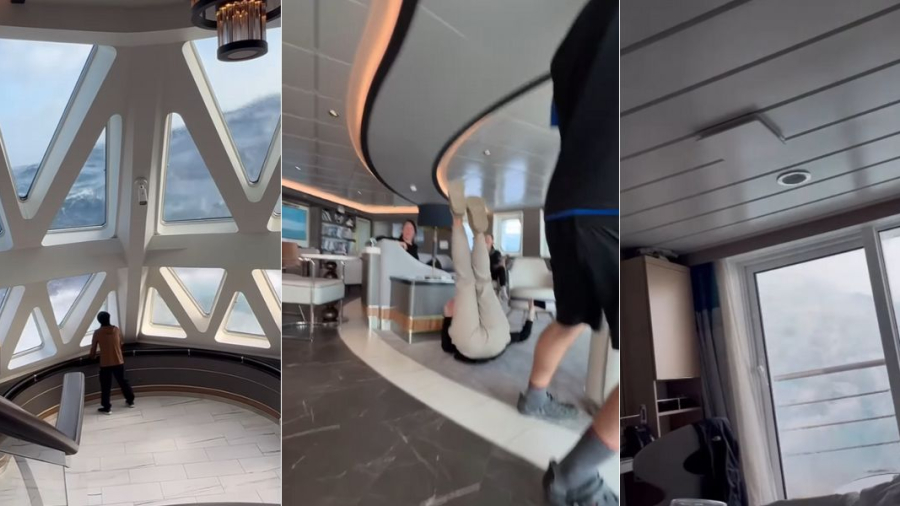
A travel blogger has gone viral after sharing jaw-dropping footage of her latest expedition cruise, as waves of 35 feet battered the windows.

Lesley Anne Murphy stunned social media with the footage of the so-called “Drake shake” – the notoriously rough sea conditions experienced while crossing the Drake Passage aboard Ocean Explorer, a polar-class expedition ship operated by Quark Expeditions.
The video she shared was so wild that it sparked arguments across social media from many who assumed it was fake – unfortunately the video gained traction just as April Fool’s Day pranks were circulating.
Murphy, a seasoned traveller and content creator, was en route to Antarctica on what she described as a “once-in-a-lifetime” voyage.
But the journey across the Drake Passage – the treacherous stretch of sea between South America and Antarctica – quickly turned from serene to savage.
Dubbed the “Drake shake” versus the rare “Drake lake” for calm crossings, Murphy’s viral video shows the ship being pummelled by waves estimated at 35 feet high.
Passengers can be seen gripping railings, sliding across floors, and bracing against walls as the vessel pitched and rolled violently for nearly 48 hours.
“Yes, we were safe and it was insane… and at times, even fun?” Murphy shared on social media. “1000% worth it for this trip of a lifetime!”
In one particularly intense moment, a flatscreen television is shown swinging back and forth in a stateroom – a stark reminder of how relentless the sea can be.
Murphy’s video has since garnered over 454,000 likes and more than 10,000 comments, with viewers expressing awe, terror, and admiration in equal measure.
The extreme footage has sparked curiosity and concern, prompting questions about ship safety, life jackets, and seasickness remedies.
While the Drake Passage is infamous for its turbulent conditions, Quark Expeditions reassures travellers that not all crossings are rough.
In fact, its official website notes, “Not all Drake Passage crossings are rough. Please do not be disappointed should you experience a smooth crossing.”
Still, it’s clear that this was not one of those occasions.
Despite the wild weather, guests were never in danger.
Ocean Explorer is specifically designed for polar expeditions, featuring an ice-strengthened hull and a unique inverted bow design to enhance stability and reduce wave impact.
The ship is rated for polar travel and accommodates just 138 guests in high comfort.
Its amenities include a two-storey library overlooking the bow (where the crashing waves made for a dramatic view), expansive observation decks, a sauna, a fitness centre, and tastefully appointed staterooms.
Onboard are also 15 zodiac boats used for up-close exploration in the Arctic and Antarctic, led by a team of expert expedition leaders.
Passengers were advised to remain in their cabins for an afternoon during the most intense part of the crossing – an understandable precaution when flatscreens are swaying and hallways resemble obstacle courses.
While the current Antarctic season is winding down, Ocean Explorer will resume expeditions in November. Its next scheduled sailing is an 11-night voyage departing Ushuaia, Argentina on 4th November 2025.
Pricing begins at $14,531 USD per person for a veranda stateroom, with solo cabins and suites starting around $18,084. Fares include expert-led expeditions and a complimentary Quark Expeditions parka.
For adventurous travellers like Murphy, the “Drake shake” was all part of the magic.
Though not for the faint of heart – or stomach – the reward of reaching the icy majesty of Antarctica made every lurch and crash worthwhile.
And for those with a taste for extreme cruising, it’s just another reason to add the White Continent to the bucket list.
I’m ALWAYS looking for cruise bargains! These are the best deals I found this week…

Jenni Fielding is the founder of Cruise Mummy. She has worked in the cruise industry since 2015 and has taken over 30 cruises. Now, she helps over 1 million people per month to plan their perfect cruise holidays.
A terrifying incident unfolded on a cruise around Africa this week, when a group of around 50 youths attacked cruise guests. The incident occurred when Crystal Symphony made a visit…
Two cruise ships have experience unusual incidents with water this week in an odd coincidence. The issues are completely unrelated but highlight how water can cause headaches for cruise goers…
A popular Carnival ship has been hit with a less-than-stellar inspection health inspection score and, while the ship has passed, it must take immediate action to rectify some serious issues….

Following news last week that a British cruise line was considering adding two new ships to its fleet, the news has now been confirmed by the cruise line and by…
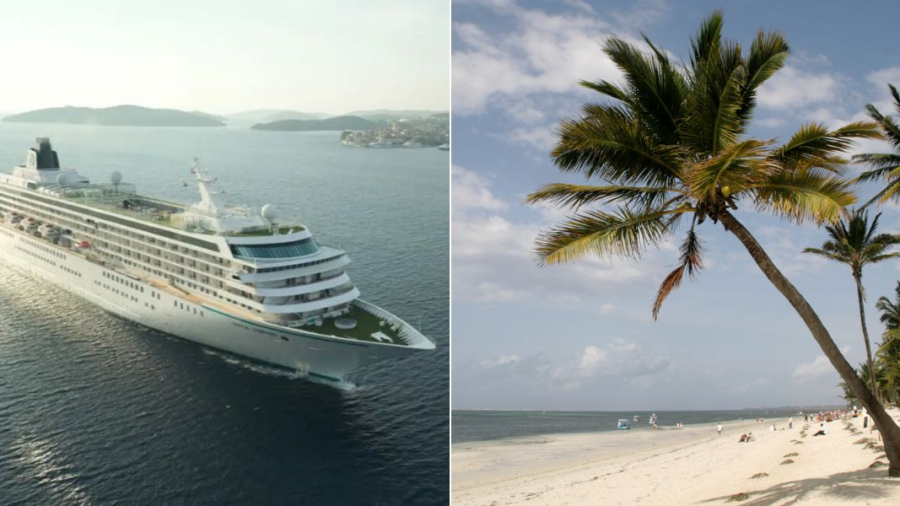
A terrifying incident unfolded on a cruise around Africa this week, when a group of around 50 youths attacked cruise guests.

The incident occurred when Crystal Symphony made a visit to Mombasa in Kenya on 31st March 2025.
As a result of the incident, the ship cancelled the remainder of its stay in the port and left early, to avoid further risk to guests.
The attack occurred at the Pembe za Ndovu monument on Moi Avenue, a well-known Mombasa landmark made up of four large aluminum elephant tusks forming the letter “M.”
The site is popular with tourists and cruise passengers looking for a cultural photo opportunity or brief excursion into the city.
According to The Standard, the group of young assailants swarmed the area and began snatching valuables including mobile phones, handbags, and jewellery.
Thankfully, no injuries were reported, but the psychological impact and disruption were enough to cause the ship to cancel the remainder of its visit.
In response, Kenyan officials boarded Crystal Symphony shortly after the incident to personally apologise to the passengers and crew, and to reassure the cruise line of their commitment to tourist safety.
Police presence was also increased in the area around the attack in case of further disturbances.
While Mombasa isn’t generally flagged as a high-risk area in travel advisories, the US Department of State currently lists Kenya at Level 2: Exercise Increased Caution, citing incidents of mugging, pickpocketing, and street theft, particularly involving motorcycles.
The advisory warns that local police response may be limited, especially in busy or tourist-heavy zones, and that travellers should take personal safety precautions, such as staying in groups and avoiding the public display of valuables.
Crystal Symphony is currently in the midst of a 25-night voyage from Mumbai, India to Cape Town, South Africa, which began on 18th March.
The ship had already visited India, Sri Lanka, the Maldives, and the Seychelles without issue prior to arriving in Kenya.
After the attack, the decision was made to skip the remainder of the Mombasa stop, with the ship sailing early toward its next port of call in Zanzibar, Tanzania.
The ship will also visit Durban, Port Elizabeth, and Cape Town, where the cruise ends on 12th April.
This incident adds to a string of port-related safety concerns that have cropped up in recent months. While isolated, these events can raise alarm among travellers.
In response to various threats over the past year, cruise lines have not hesitated to alter itineraries to avoid dangerous conditions. For example:
Still, experts and cruise lines emphasise that cruise travel remains one of the safest ways to see the world, thanks to active monitoring of geopolitical situations and emergency protocols.
Crystal Symphony is the only cruise ship scheduled to visit Mombasa for the remainder of 2025. Its next visit is set for January 2026, with an overnight stop on the itinerary – though that visit may now be under review.
Other lines with occasional calls in Kenya include Azamara, Viking, Oceania, and Regent Seven Seas, all of which cater to luxury or expedition-style cruising.
For cruise travellers, this serves as a reminder to stay alert in port, leave valuables onboard, and travel in groups when exploring unfamiliar destinations.
I’m ALWAYS looking for cruise bargains! These are the best deals I found this week…
Jenni Fielding is the founder of Cruise Mummy. She has worked in the cruise industry since 2015 and has taken over 30 cruises. Now, she helps over 1 million people per month to plan their perfect cruise holidays.
Two cruise ships have experience unusual incidents with water this week in an odd coincidence. The issues are completely unrelated but highlight how water can cause headaches for cruise goers…
A popular Carnival ship has been hit with a less-than-stellar inspection health inspection score and, while the ship has passed, it must take immediate action to rectify some serious issues….
Following news last week that a British cruise line was considering adding two new ships to its fleet, the news has now been confirmed by the cruise line and by…

As the cruise industry sets sail toward its busiest year yet, a surprising trend is emerging from the social media waves: more travellers are now seeking serenity over socialising, and…