
Should you sail to the Mediterranean from Southampton or fly to Barcelona or Rome? We compare length, sea days, cost and the lines sailing from Southampton in 2027.
Should you sail to the Mediterranean from Southampton or fly to Barcelona or Rome? We compare length, sea days, cost and the lines sailing from Southampton in 2027.
Several famous cruise stops are sold under the name of a city that is actually an hour or more away. Getting from Civitavecchia to Rome takes about 60 to 90 minutes each way, Le Havre to Paris is a two-hour train ride, and Warnemünde to Berlin is closer to three. None of these ports is a trick, but knowing the real distance before you book lets you choose between a ship excursion, a train or a quieter day closer to the pier.
Cruise lines usually show the port in brackets, for example “Rome (Civitavecchia)” or “Paris (Le Havre)”, and the city is the reason most people book. Below is a straightforward guide to which ports are far from the city they are sold as, how long the journey really takes, and how to plan the day so you are back on board with time to spare.
Distances are approximate road distances to the city centre. Travel times are typical each way in normal conditions and do not include getting from the ship to the station or coach park, queues, or traffic at peak times.
| Port | Sold as | Approx. distance | Typical time each way | Easiest option |
|---|---|---|---|---|
| Civitavecchia | Rome | 70-80 km (45-50 miles) | 1 hr by train, 1-1.5 hrs by road | Regional train to San Pietro or Termini |
| Le Havre | Paris | About 200 km (125 miles) | About 2-2.5 hrs by train, 3 hrs or more by coach | Ship excursion or early train to Saint-Lazare |
| Livorno | Florence / Pisa | About 100 km to Florence, 25 km to Pisa | About 1.25-1.75 hrs to Florence, 20-30 mins to Pisa | Train via Livorno Centrale |
| La Spezia | Florence / Pisa | About 150 km to Florence, 80 km to Pisa | About 1.75-2.5 hrs to Florence by train | Cinque Terre or Portovenere instead |
| Cádiz | Seville | About 120 km (75 miles) | About 1.5-2 hrs by train or road | Regional train from Cádiz station |
| Warnemünde | Berlin | About 240 km (150 miles) | About 2.5-3 hrs by train or coach | Ship excursion (often 12+ hrs long) |
| Tianjin | Beijing | About 180 km (110 miles) | About 1.5-2 hrs via taxi plus bullet train, 2.5-3 hrs by road | Pre-booked transfer or ship tour |
| Laem Chabang | Bangkok | About 120 km (75 miles) | About 2-2.5 hrs by road, more in traffic | Ship excursion or private car |
| Southampton | London | About 130 km (80 miles) | From about 1.25 hrs by train to Waterloo | Train or coach transfer |
| Dover | London | About 125 km (75 miles) | Around 1 hr by high-speed train to St Pancras | Train from Dover Priory |
| Piraeus (for contrast) | Athens | About 12 km (7.5 miles) | 25-30 mins by metro | Metro Line 1 to Monastiraki |
Civitavecchia is Rome’s cruise port, sitting on the coast roughly 70 to 80 km north-west of the city centre. Most ships dock at piers a fair way from the port gate, so you will normally take the free port shuttle bus to the exit first.
From there, Civitavecchia station is a short walk along the seafront. Regional trains on the FL5 line run to Rome roughly every 30 minutes on many days, stopping at Roma San Pietro (handy for the Vatican), Trastevere, Ostiense and Termini. The fastest trains take a little over 40 minutes, but an hour is a fair planning figure. Fares are low, typically under €10 each way. Check the timetable for the day of your call, because Sunday and holiday services can be thinner.
Other options for Civitavecchia to Rome include the SIT shuttle coach from the port to the Vatican area and Termini (around 75 minutes), private transfers, and the cruise line’s own coach tours. A taxi or private car usually takes 60 to 90 minutes depending on traffic and costs well over €100 for the vehicle. Realistically, you get five or six hours in Rome on a typical port day, so pick one area, such as the Vatican or the Colosseum and Forum, rather than trying to see everything.
Le Havre is on the Normandy coast and Paris is about 200 km inland. Direct trains from Le Havre to Paris Saint-Lazare take about 2 hours 5 minutes at their fastest, with many taking closer to 2 hours 20 minutes. Add the taxi or shuttle from the cruise terminal to Le Havre station, and you are looking at five hours or more of travel in a day, leaving perhaps four or five hours in Paris.
Ship excursions to Paris go by coach and can take three hours or longer each way, especially if there is traffic around the Paris ring road. If you have visited Paris before, the closer alternatives are well worth considering: the harbour town of Honfleur is around 30 minutes away, Étretat’s chalk cliffs are under an hour, and Rouen, with its cathedral and old town, is about an hour by train. Le Havre’s own rebuilt centre is a UNESCO World Heritage Site.
Ships sold as “Florence” or “Pisa” usually call at Livorno or La Spezia, and the difference matters.
Livorno is the closer of the two. Trains from Livorno Centrale to Florence take roughly 70 to 100 minutes, with direct and connecting services through the day. The catch is reaching the station: the cruise line shuttle often drops passengers in the town centre, not at the railway station, so you may need a city bus or a taxi of about 10 minutes. Allow around two hours door to door. Pisa is much easier, at about 20 to 30 minutes by train or road, which makes a Pisa-and-Lucca day a relaxed option.
From La Spezia, Florence is a bigger stretch. A regional train with a change at Pisa takes around 2.5 hours, and faster direct trains are about 1 hour 45 minutes when they run. The station is a 20 to 30 minute walk from the port. Many passengers find the Cinque Terre villages or Portovenere, both reachable by local train or boat, a better use of a La Spezia day. Our guide to the best shore excursions for Mediterranean cruises has more ideas for these Italian stops.
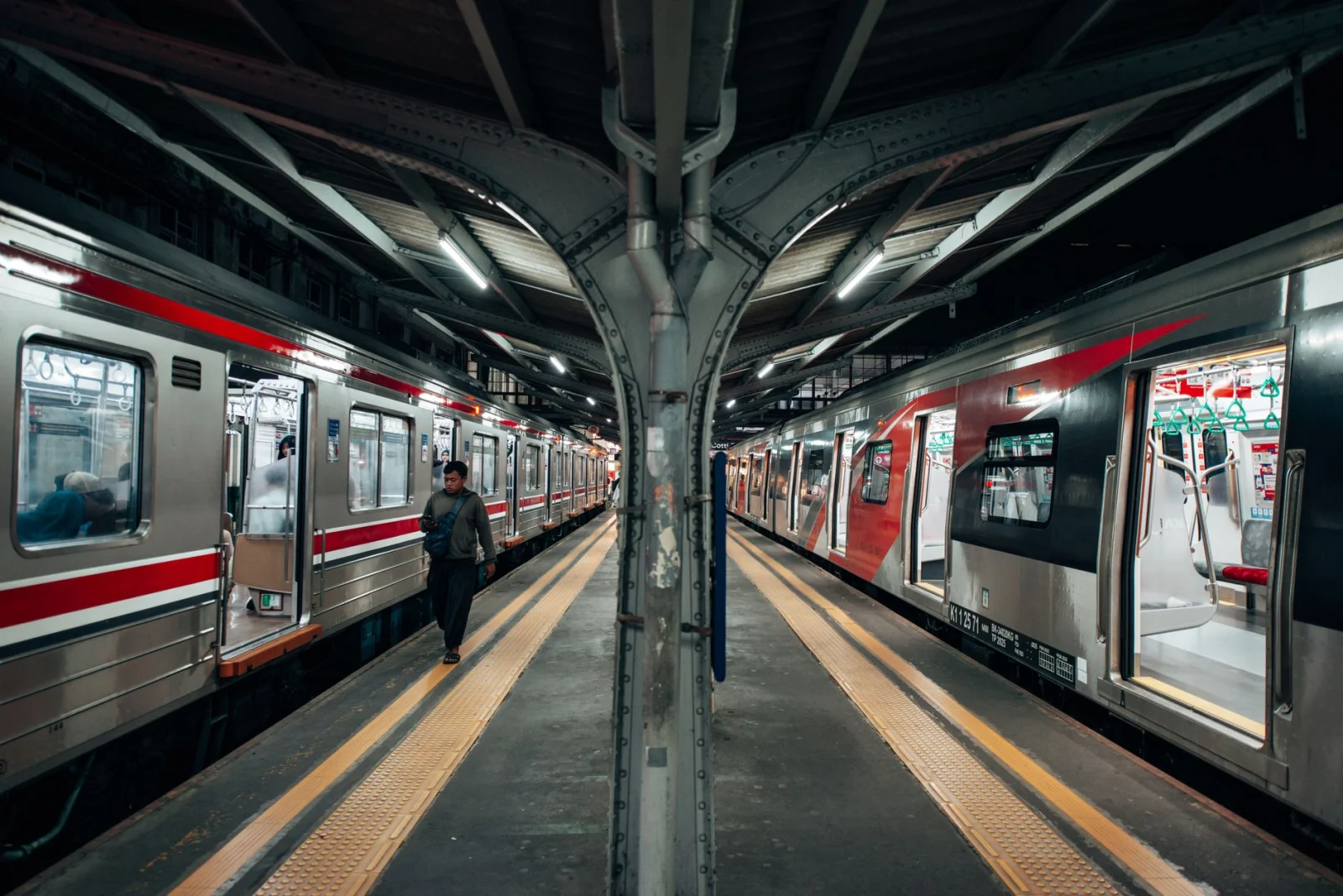
Cádiz is one of the easier long-distance ports. The ship docks right next to the old town, and the railway station is close to the harbour. Regional trains reach Seville in about 1.5 to 2 hours. Seville in summer is extremely hot, though, and Cádiz itself, with its cathedral, beaches and old quarter, is a pleasant day out on foot.
Warnemünde is a seaside resort on the Baltic coast, roughly 240 km from Berlin. Ship excursions to Berlin typically run around 12 hours in total, with 2.5 to 3 hours each way by train or coach and five or six hours in the city. Going independently by train is possible, but the timings are tight and delays on German rail are not unusual, so most passengers choose the ship’s tour for this one. Rostock and Warnemünde are an easy alternative if you would rather not spend six hours travelling.
Tianjin’s cruise terminal is in the port district, about 180 km from Beijing. The bullet train between Tianjin and Beijing is quick, but you first need a taxi to the station, which can be 40 to 70 minutes depending on which one you use. Overall, expect around 1.5 to 2 hours each way in good conditions, or longer by road. Tianjin is normally a turnaround port, so many passengers spend a night or two in Beijing before or after the cruise rather than visiting as a day trip.
Laem Chabang is Thailand’s main container and cruise port, about 120 km south-east of Bangkok. The drive is around two hours on a clear road, but Bangkok traffic can easily add an hour on the way back. Ship tours and pre-booked private cars are the usual choices. If your ship stays overnight, that is the best chance to see Bangkok properly. Pattaya is much closer if you only have one short day.
UK departure ports are often labelled “London”, which confuses some overseas passengers. Southampton is about 80 miles from central London, and the fastest trains to Waterloo take around 1 hour 15 minutes, though many services take longer. Dover is a similar distance, but Southeastern high-speed trains reach St Pancras in around an hour. For a London stay before or after a cruise, factor in luggage and the transfer to the terminal. If you are driving instead, see our guide to Southampton hotels with cruise parking.
A long transfer is not always the best value. If you have already seen the big city, or the time ashore is short, the port town itself or a nearby attraction can make for a more relaxed day. Good examples include Honfleur from Le Havre, Lucca or Pisa from Livorno, the Cinque Terre from La Spezia, Tarquinia’s Etruscan tombs from Civitavecchia, and the old town of Cádiz. Ports such as Piraeus, Barcelona, Lisbon and Kotor are the opposite case: the city is on the doorstep, so you can explore freely without long transport.
The best way to see a distant city is a cruise with an overnight stop or a turnaround there. Some itineraries stay overnight at Laem Chabang, Tianjin or Le Havre, and a few river-style or smaller-ship voyages sail up to Rouen or into central Bangkok. Another option is to begin or end your trip with a hotel stay in Rome, Paris or London. When comparing itineraries, check the hours in port as well as the price. Our roundup of cruise deals for 2027 is a good place to start.
Alaska has a few outlying docks too, such as Ketchikan Ward Cove, which our Alaska cruise ports guide covers port by port.
Long transfers are only part of the story, so see how to handle Europe's most frustrating cruise ports before you choose your excursions.
Before you plan a trip into the city from one of these distant piers, check how long cruise ships stay in port so you know how much time you really have ashore.
Rome’s city centre is roughly 70 to 80 km from Civitavecchia. By train it takes about an hour, and by road usually 60 to 90 minutes depending on traffic.
Regional trains are inexpensive, usually under €10 each way. Prices can change, so check Trenitalia for the current fare on your travel date.
Yes. Taxis and pre-booked private cars are available at the port. Expect 60 to 90 minutes each way and a fare well above €100 for the vehicle, so they make most sense for a small group.
Direct trains to Paris Saint-Lazare take about 2 hours 5 minutes to 2 hours 20 minutes. Coach excursions often take three hours or more each way.
Ships usually wait for their own delayed excursions, but not for passengers travelling independently. Leave a generous buffer before all-aboard time.
The best Mediterranean cruise excursions are the ones that fit the hours your ship is actually in port: Pompeii from Naples, the Vatican from Civitavecchia, the Acropolis from Piraeus, Ephesus from Kusadasi and Sagrada Família from Barcelona top almost every list. Before you choose, check two things: how long the transfer from the pier to the sight takes, and whether the sight now needs a timed or named ticket. Many of the big ones do.
This guide covers 16 Mediterranean shore excursions port by port. For each one you get a realistic transfer time, the booking rules in force for 2026 and 2027, and whether it works best as a ship tour, an independent tour or on your own.
Transfer times are typical one-way times from the cruise terminal in normal traffic. Summer traffic, tender queues and train delays can add a lot to them.
| Port | Excursion | Transfer (one way) | Best booked as |
|---|---|---|---|
| Naples | Pompeii | 35–45 min by train or road | DIY or independent |
| Naples | Amalfi Coast | 1 hr 30 min–2 hrs by road | Ship tour |
| Civitavecchia | Vatican Museums & St Peter’s | 50–60 min by train, about 90 min by coach | Ship tour or independent |
| Civitavecchia | Colosseum & ancient Rome | 75–90 min by train or coach | Ship tour or independent |
| Livorno | Florence | About 90 min by road | Ship tour or independent |
| Livorno | Pisa | About 30 min by road | DIY |
| La Spezia | Cinque Terre | Walk or bus to station, then 5–25 min by train | DIY |
| Messina | Taormina | 45–70 min by train or road | DIY or independent |
| Piraeus | Acropolis | 30–45 min by road or metro | Independent |
| Santorini | Oia village | Tender, cable car, then about 30 min by road | Ship tour |
| Mykonos | Delos | About 30–40 min by boat | Independent or ship tour |
| Kusadasi | Ephesus | About 20–25 min by road | Independent |
| Istanbul | Hagia Sophia, Blue Mosque, Topkapi | About 15–20 min by tram or taxi | DIY or independent |
| Barcelona | Sagrada Família & Park Güell | 20–30 min by taxi | DIY with pre-booked tickets |
| Barcelona | Montserrat | About 1 hr by road | Ship tour or independent |
| Dubrovnik | Old Town & city walls | 10–20 min by bus | DIY |

If your itinerary is still undecided, our comparison of western vs eastern Mediterranean cruises shows which of these ports each route usually includes.

None of these three options is always best. It depends on the transfer distance and how much margin your port call leaves.
Ships do not wait for independent passengers, and the all-aboard time is usually 30–60 minutes before departure. A simple rule is to plan to be back at the pier at least 90 minutes before all-aboard on long-transfer days. Allow at least 60 minutes on short ones. Keep your watch on ship time, since it can differ from local time in Greece and Turkey. Save the port agent’s number from the daily programme, carry a copy of your passport and enough cash for a taxi, and check the strike calendar for Italy and Greece the day before.
Still choosing a ship? See our guide to the best Mediterranean cruises, and our roundup of the best cruise ports in the world for more port ideas.
Before booking a big-city tour, check our guide to cruise ports that are far from the city, including how long it really takes to reach Rome, Florence and Paris.
If food is the highlight of your trip, see our pick of the best food shore excursions, from Naples pizza to Barcelona cava.
If you would rather swap sightseeing for something more active, see our roundup of bucket-list adventure shore excursions around the world.
Book through the ship for long transfers such as Rome, Florence, the Amalfi Coast and Santorini’s Oia, because the ship will wait if the tour runs late. Close sights such as Pompeii, Pisa, Dubrovnik and Barcelona are easy to do on your own or with a small independent tour.
Yes, but only partly. Rome is 50–90 minutes away each way, so an eight-hour call leaves roughly 2.5–3 hours in the city. Focus on either the Vatican or the Colosseum and Forum, and book timed tickets in advance.
It is strongly recommended. Pompeii caps daily visitors at 20,000, tickets carry your name, and from mid-March to mid-October you have to enter during the morning or afternoon window you booked.
Barcelona, Dubrovnik, Kusadasi (for a taxi to Ephesus), Istanbul, La Spezia (for Cinque Terre) and Naples (for Pompeii) are the most straightforward, because the transfers are short or the trains are simple.
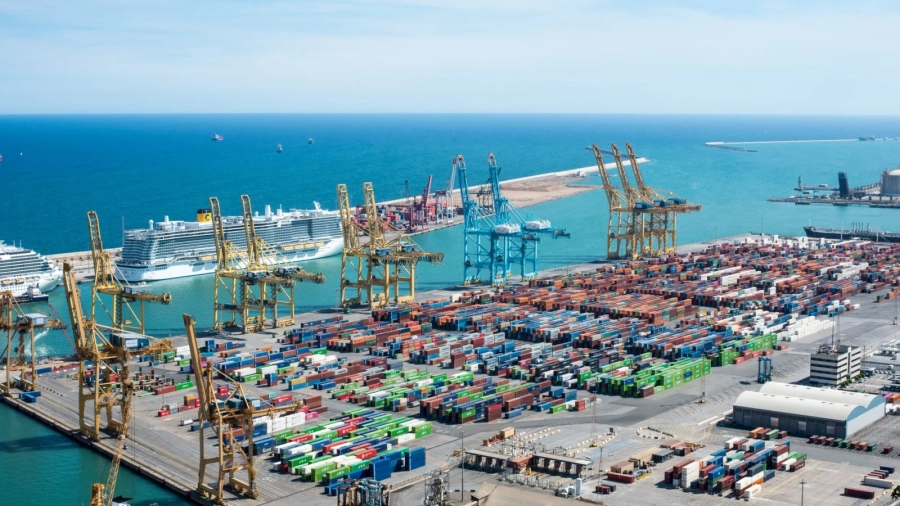
Getting from Barcelona airport to the cruise port is a short trip. El Prat (BCN) is roughly 15 to 20 km from the cruise terminals on the Moll Adossat pier, and a taxi usually takes 20 to 30 minutes. For most cruise passengers, the official fixed taxi fare of €46 per car (all supplements included) is the simplest choice. Budget travelers can combine the Aerobús or metro with the dedicated Cruise Bus for about €10 to €12 per person, but expect it to take an hour or more.
Below you’ll find every realistic option with 2026 prices, a comparison table, which terminal your ship is likely to use, and tips for the return trip from the cruise port to the airport.
Prices are per vehicle or per person as noted, based on published 2026 fares. Traffic, time of day and luggage can change both time and cost, so treat these as guides rather than guarantees.
| Option | Typical time | Approx. cost | Best for |
|---|---|---|---|
| Official taxi (fixed T-4 fare) | 20-30 min | €46 per car (up to 4 people) | Most cruisers, couples, families with luggage |
| Uber / Cabify / FreeNow | 20-30 min | Roughly €40-€60+, varies with demand | People who prefer app booking and a set quote |
| Private transfer (pre-booked) | 25-30 min | From about €50-€90 per car; more for minivans | Groups, late-night arrivals, extra peace of mind |
| Cruise line transfer | 30-60 min (includes waiting) | Often €25-€45+ per person | Solo travelers and anyone who wants the cruise line to handle delays |
| Aerobús + taxi | 50-70 min | About €7.50 per person + €15-€20 taxi | Travelers spending a night in the city first |
| Aerobús or metro + Cruise Bus | 60-90 min | About €10-€13 per person | Light packers on a tight budget |
| R2 Nord train + metro + Cruise Bus | 60-90 min | About €2.90 train + metro + Cruise Bus | Cheapest route from Terminal 2 if you travel light |
Barcelona’s official black-and-yellow taxis queue outside both airport terminals, T1 and T2. Since the metropolitan transport authority (AMB) introduced the T-4 fixed fare, the trip between the airport and the Moll Adossat cruise terminals costs a flat €46 per vehicle in either direction. That price already includes the airport and port supplements, so you shouldn’t be asked for extras.
Split between four people, the fixed fare works out at under €12 each, which is close to the price of public transport and far less hassle. One caveat: the fixed fare covers Moll Adossat. If your ship is berthed elsewhere, such as the World Trade Center area, the normal metered rate applies, which usually lands in a similar range.
Uber, Cabify and FreeNow all work in Barcelona, and many Uber rides are actually fulfilled by licensed taxis. You’ll see a quote before booking, which some travelers like, but prices rise at busy times and pickups at the airport use designated zones that can be a walk from arrivals. In practice, ride apps rarely beat the €46 fixed taxi fare by much for the airport-to-port run.
Pre-booked private transfers meet you in arrivals with a name sign, track your flight and wait if you’re delayed. They make most sense for groups of five or more, travelers with lots of luggage or mobility needs, and anyone landing late at night. Sedan prices start around the same level as a taxi; minivans and premium vehicles cost more.
Cruise line transfers are usually the most expensive per person, especially for couples, and you may wait for a full coach to fill. The big advantage is protection: if the coach is held up, the ship knows you’re coming. For first-time cruisers or anyone with a tight connection, that can be worth the premium. Book through your cruise line’s planner or app.
There is no metro or train station at the cruise port, and no free shuttle bus from Barcelona airport to the cruise port. Every public transport route ends near the Columbus monument at the bottom of Las Ramblas, where you switch to the dedicated Cruise Bus (formerly known as the Portbús or T3). It runs from the Portal de la Pau area near Drassanes metro station along the breakwater to the Moll Adossat terminals.
The Aerobús runs 24 hours a day from both terminals (A1 from T1, A2 from T2) to Plaça Espanya and Plaça Catalunya in about 30-35 minutes. A single ticket costs roughly €7.50 in 2026, with a discounted return. From either stop you can take a taxi to the port (about €15-€20 including the port supplement), or ride metro L3 (green line) to Drassanes and then the Cruise Bus. This route makes most sense if you’re staying in the city before your cruise.
Metro line L9 Sud serves both T1 and T2, but you need the special airport ticket (€5.90). The standard T-casual card is not valid at the airport stations. The route means a change at Zona Universitària onto L3 to Drassanes, then a short walk to the Cruise Bus. With three changes and stairs, it’s slow and awkward with big suitcases.
The Rodalies R2 Nord train leaves from Terminal 2 only, roughly every 30 minutes. A single one-zone ticket costs €2.90, and the T-casual is accepted. Ride to Sants (about 20 minutes) or Passeig de Gràcia (about 25 minutes), then take metro L3 to Drassanes and the Cruise Bus. Arriving at T1? A free 24-hour shuttle bus links the terminals, but add 15-20 minutes. It’s the cheapest option overall, but only realistic if you travel light.
Knowing your Barcelona cruise terminal matters because the main pier is long and the buildings are not within easy walking distance of each other. Your cruise documents or app should name it.
The Adossat terminals are about 2-3 km from the Columbus monument, and the farthest terminals are well over a kilometre from the nearest ones. The port and city have also agreed to reduce the number of cruise terminals over the next few years, so terminal assignments may change. Always check the latest information from your cruise line or the Port of Barcelona close to sailing. If you’re curious how Barcelona compares with ports where the “city” stop is miles away, see our guide to cruise ports that are really far from the city.
Many cruisers sensibly fly in a day early. From most central hotels, a taxi to the Adossat terminals takes 10-20 minutes and typically costs €12-€20 on the meter, including the €4.60 port supplement. If you’re near Las Ramblas, you can walk or take metro L3 to Drassanes and catch the Cruise Bus. If you haven’t booked a room yet, our guide to the best hotels near Barcelona cruise port covers options from the waterfront to the Gothic Quarter.
The return trip from the Barcelona cruise port to the airport works the same way in reverse. Taxis wait outside each Adossat terminal on disembarkation morning, and the €46 T-4 fixed fare applies. Lines can be long when several ships arrive together, so it’s worth considering:
About 20-30 minutes by taxi or private car in normal traffic. Public transport routes using the Aerobús, metro or train plus the Cruise Bus usually take 60-90 minutes.
There is an official fixed fare of €46 per vehicle between El Prat airport and the Moll Adossat cruise terminals, including all supplements. It applies in both directions.
No. There’s no free public shuttle. The paid Cruise Bus runs only between the Columbus monument area and the terminals, so you first need to reach the city by Aerobús, metro or train. Some cruise lines sell their own airport transfers.
Barcelona-El Prat (BCN) is by far the closest, at around 15-20 km. Girona and Reus airports are both more than an hour’s drive away.
Not really from the Moll Adossat terminals, which are 2-3 km out along a busy breakwater road. Most passengers take the Cruise Bus or a taxi to the Columbus monument, from where Las Ramblas and the Gothic Quarter are easily walkable.
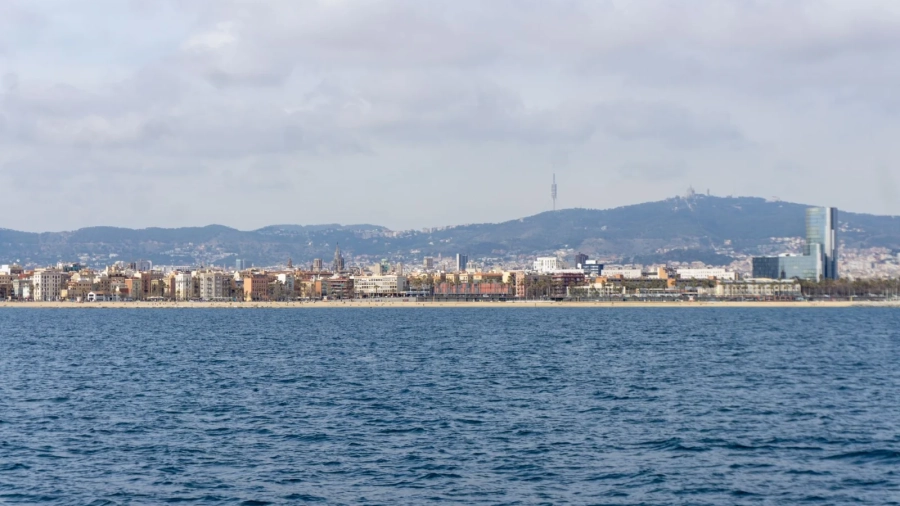
The best hotels near Barcelona cruise port are in Port Vell and around the foot of La Rambla, with Eurostars Grand Marina the closest full-service choice. Budget travelers usually do better in Poble-sec or the Raval, a short taxi ride away. Most ships dock on the long Moll Adossat breakwater, so no hotel is truly walkable to the ship, and a location near the Columbus Monument matters more than a hotel’s advertised distance.
Before comparing hotels near Barcelona cruise port, check the terminal on your cruise documents. Barcelona has two separate cruise areas, and the difference affects your transfer.
| Terminal | Who uses it | Approx. distance to city center |
|---|---|---|
| A and B | Open to various lines | 1.25 miles (2 km) |
| C | Stopped operating on November 1, 2026, for demolition and rebuilding | 1.5 miles (2.5 km) |
| D (Palacruceros) | Carnival Corporation brands first | 1.5 miles (2.5 km) |
| E (Helix) | Carnival Corporation brands first | 1.9 miles (3 km) |
| H | MSC Cruises | 2.4 miles (3.9 km) |
| G | Royal Caribbean Group, expected to open in 2027 | Not yet published |
| World Trade Center South | Small ships, closing at the end of 2026 | 0.25 miles (400 m) |
The port is in the middle of a rebuild. Terminals A and B are due to be demolished once the new Terminal C is in service, and the total will fall from seven terminals to five. If you are sailing in 2027 or later, confirm your terminal again shortly before you travel, as older guides are quickly going out of date.
Distances below are approximate road distances to the Moll Adossat terminals. The price tiers are a rough guide only: budget rooms have recently started at around $100 to $140 in quieter months, mid-range at around $130 to $180, and luxury well above that. Summer rates can be far higher.
| Hotel | Area | To Moll Adossat | Price tier | Best for |
|---|---|---|---|---|
| Eurostars Grand Marina | World Trade Center | About 2 miles | Mid-range to upscale | Closest full-service stay |
| The Serras | Passeig de Colom | About 2 miles | Luxury | Harbor-front style |
| H10 Port Vell | Port Vell / Born | About 2 miles | Mid-range | Reliable all-rounder |
| Duquesa de Cardona | Port Vell | About 2 miles | Mid-range | Historic character |
| Catalonia Port | Gothic Quarter | About 2 miles | Mid-range | Rooftop pool on a mid-range budget |
| Grums Hotel & Spa | Poble-sec | About 2 miles | Budget to mid-range | Value with a spa |
| Ikonik Ramblas | Lower La Rambla | About 2 miles | Budget | Low price, near the shuttle |
| Eco Boutique Hostal Grau | El Raval | About 2 miles | Budget | Simple one-night stays |
| W Barcelona | Barceloneta beach | About 10 to 15 minutes by taxi | Luxury | Beach resort feel |
| Hotel Miramar | Montjuïc | About 13 minutes by taxi | Luxury | Views and a quiet setting |
This five-star hotel is built into the World Trade Center complex, surrounded by the harbor. It is the nearest hotel to the terminals by a clear margin and only a few minutes’ walk from the shuttle stop area, with a seasonal rooftop pool. It is often priced well for its star rating, though some reviewers find the decor dated.
Set on Passeig de Colom overlooking the old harbor, The Serras is a smart, design-led option a short walk from the Columbus Monument. It suits travelers who want a special last night or a stylish start to the trip.
Both are comfortable four-star hotels in the Port Vell area, each with a small rooftop plunge pool. They are around 6 to 7 minutes on foot from the Cruise Bus stop and close to the restaurants of the Born and Barceloneta. They are a good middle ground if you want to be near the water without paying luxury rates.
You do not need to pay a premium to be close, as the taxi fare to the ship is similar from most central hotels.
Whichever you choose, budget for Barcelona’s tourist tax, which is charged per person, per night. Since April 2026, it has been around €8.40 at four-star hotels and €12 at five-star hotels, and it may not be included in the price shown when you book.
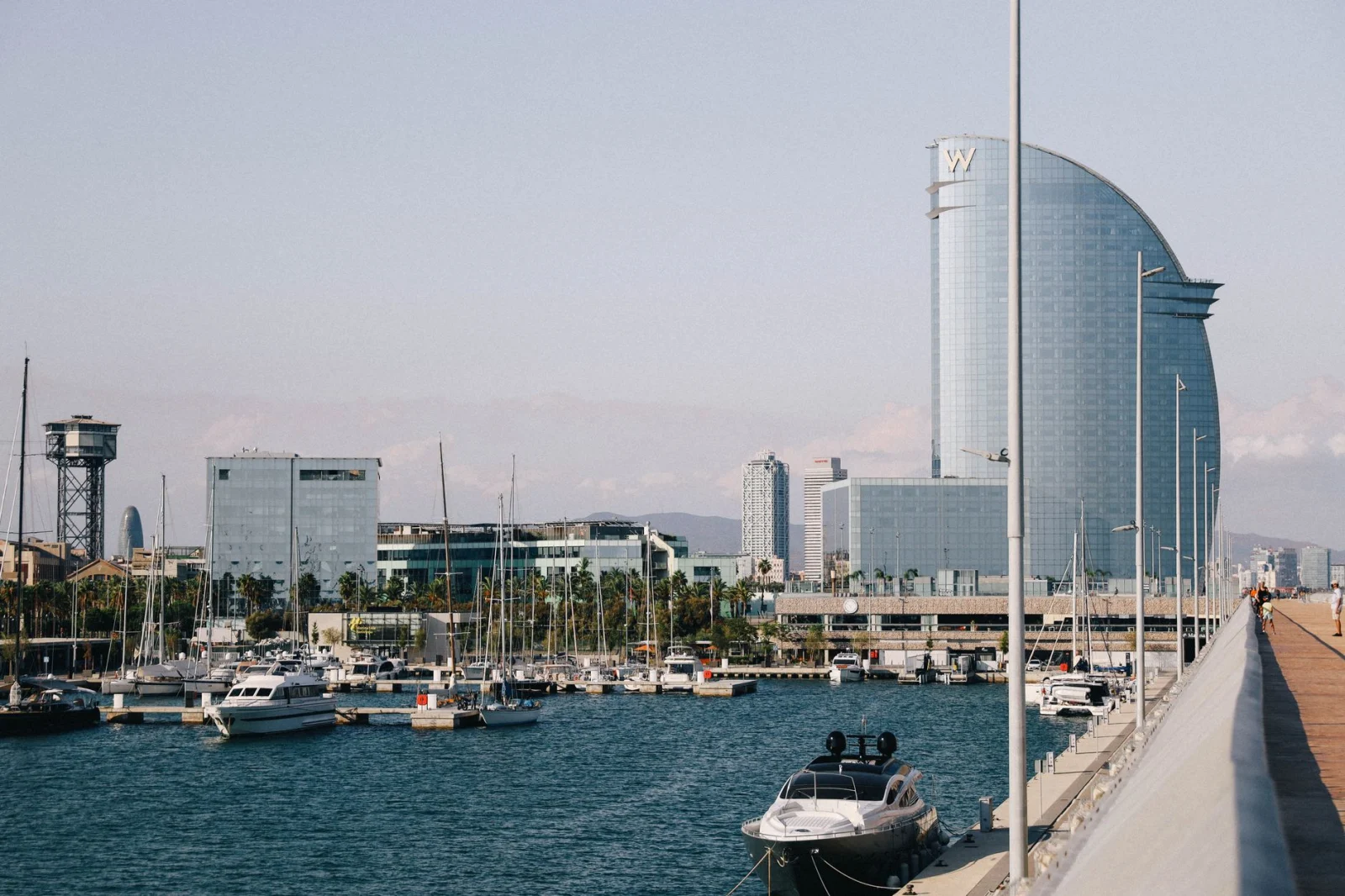
If the hotel is part of the holiday, a slightly longer transfer is a fair trade. The W Barcelona has a beachfront position at the far end of Barceloneta, with its well-known sail-shaped tower, while the Hotel Miramar sits on the side of Montjuïc with a seasonal outdoor pool and views over the port. Hotel 1898 on La Rambla is a further option if you want to be in the middle of the city. Upscale hotels can often arrange luggage transfers or a private car, so ask the concierge when you book.

Taxis are the easiest option on embarkation day. Expect roughly €15 to €25 from central areas, including a supplement of about €4.60 for trips to or from Moll Adossat. Every terminal has a taxi rank for the return journey. Allow extra time between about 10 a.m. and 1 p.m., when ships are busiest. Pre-booked private transfers cost more, typically around €35 to €55, but they fix the price and can suit larger groups.
The blue shuttle goes by several names, including Portbus, T3 and Blue Bus, but its official branding is Cruise Bus. It connects the Moll Adossat terminals with the Columbus Monument at the foot of La Rambla, near Drassanes metro station, and the ride takes about 10 minutes. The Cruise Bus website lists web tickets at €3.50 one way and €5 for a day ticket. Regular city transport tickets such as the T-casual are not valid. Departures are linked to ship activity, so check times before you rely on it, and be prepared for queues and limited space for large suitcases.
Searches for hotels near Barcelona cruise port with shuttle service are common, but we could not find a hotel that operates a regular free shuttle to the terminals. Listings that mention a “shuttle” usually refer to the public Cruise Bus or a paid transfer arranged through the hotel. If a shuttle is a deciding factor, get the details in writing from the hotel before you book.
The airport is about 12 miles from the port, and a taxi takes roughly 30 minutes without traffic. Fares are often around €46 to €56 including supplements. If you are flying in on the morning of your cruise, ask your cruise line about its transfer, and consider arriving the day before to leave some margin for delays.
Once your hotel is sorted, you can compare the best Mediterranean cruises for 2027 or browse popular Mediterranean shore excursions for the ports ahead. If you have not yet booked, our 2027 cruise deals are a useful place to start.
If you’re flying in on embarkation day instead, our guide to getting from Barcelona airport to the cruise port compares the fixed taxi fare, Aerobús, metro and Cruise Bus.
Eurostars Grand Marina is the closest full-service hotel, because it sits inside the World Trade Center complex on the harbor. It is still about 2 miles by road from the main Moll Adossat terminals, so most guests need a short taxi or shuttle ride.
Not from Moll Adossat. The walk into town is roughly 1 to 2.5 miles along a working port road, and it is not realistic with luggage. Take the Cruise Bus to the Columbus Monument and walk from there.
A taxi is the simplest choice, usually around €15 to €25 from central areas including the port supplement. With light bags, you can walk or take a short ride to the Columbus Monument and catch the Cruise Bus for about €3.50 one way.
Port Vell and the lower end of La Rambla are the most convenient areas for reaching the ship. The Gothic Quarter is better for sightseeing, and Poble-sec tends to offer better value, with only a slightly longer taxi ride.
We could not find a hotel that runs a regular free shuttle to the terminals. Some hotels can arrange a paid transfer, so ask at the time of booking. The Cruise Bus and taxis are the usual options.
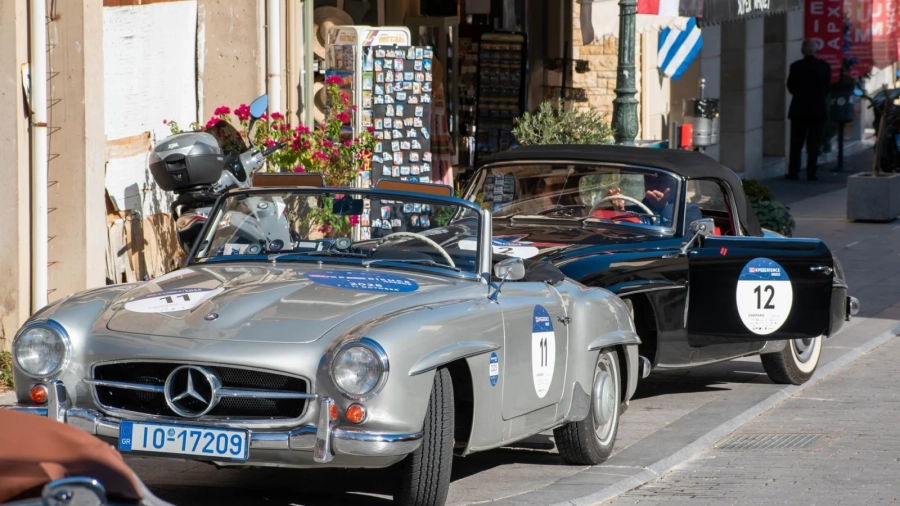
Car hire in Greece is easy to arrange and good value outside July and August. Independent Greek firms often include full insurance with zero excess and will deliver to the airport, port or your hotel. Book ahead, carry your photocard licence (plus an International Driving Permit if you hold a US licence or a paper UK licence), and check the ferry and insurance terms before you sign.
This guide covers well-established local car rental companies in Greece that we were able to verify, explains how they compare with the big international brands and online brokers, and answers a question most car hire guides skip: can you realistically rent a car on a cruise port day?
When you search for car rental in Greece you will see three types of company:
Local firms are not automatically better. Still, for a short island trip, a reputable local company with zero-excess cover is often the least stressful option.
The companies below are independent Greek firms with official websites and Google business listings. We checked each one in October 2026. We have not added star ratings, because review scores change all the time. Check recent Google reviews before you book.
| Company | Where | Known for |
|---|---|---|
| Kosmos Car Rental | Athens centre, Athens Airport, Piraeus | Clear tiered insurance, Piraeus port service |
| Escape Car Rentals | Athens, Athens Airport, Glyfada, Piraeus and Rafina ports | Delivery to ports and accommodation |
| Rental Center Crete | Heraklion and Chania airports, Heraklion port, resorts across Crete | No-excess all-risk cover, 24-hour port delivery |
| Rodos Cars | Rhodes airport, port, marina and hotels | Free delivery to the port, no credit card needed |
| Sunrise Car Rental | Corfu Airport, Corfu cruise port, Corfu Town | Zero excess, no deposit, office at the cruise port |
Kosmos is an Athens company with an office on Syngrou Avenue and service points at Athens International Airport and Piraeus port. It is one of the few local firms that sets out its insurance clearly. The standard price includes CDW with an excess (from €800 plus VAT on small cars). Optional Super CDW cuts the excess to €100, and Full CDW takes it to zero, at a few euros a day. Tyres, glass and the underside of the car are excluded. A credit card is normally required as a guarantee.
Escape Car Rentals is based in Athens. It lists pick-up points at Athens Airport, Glyfada, Koropi, Piraeus port and Rafina port, and it will also deliver to your accommodation. Delivery to other addresses in Athens costs a modest extra fee. You need the company’s written consent to take a car on a ferry. That is a useful reminder, because most Greek rental contracts include the same rule.
Rental Center Crete says it has been trading since 1975. It covers Heraklion and Chania airports, Heraklion port and resorts from Chania and Rethymno to Malia, Elounda and Agios Nikolaos. It advertises all-risk cover with no excess, unlimited mileage and 24/7 roadside assistance, plus 24-hour delivery and collection at Heraklion port. The minimum age is 21 with a licence held for at least a year. The website is inconsistent about deposits and extra drivers, so confirm both in writing when you book.
Rodos Cars is based in Kolymbia on the east coast of Rhodes. It delivers to Rhodes airport, Rhodes port, the marina and hotels around the island. Its port page says a representative will meet you on arrival at no extra cost. The company says no credit card is required. Its insurance details are on a separate page, so read them before you pay.
Sunrise has been renting cars in Corfu since 1980. Its head office is opposite Corfu Airport, and it has its own office at the Corfu cruise and domestic port. It advertises full insurance with zero excess, no deposit and payment on arrival, with pick-up and drop-off around Corfu Town, Gouvia and Kontokali.
On islands such as Naxos, Santorini, Mykonos, Kos and Zakynthos, most rental companies are small operators. To find a good one, check that the quote includes FDW with zero excess, a physical office or a confirmed meeting point, and an email confirmation of the full price.
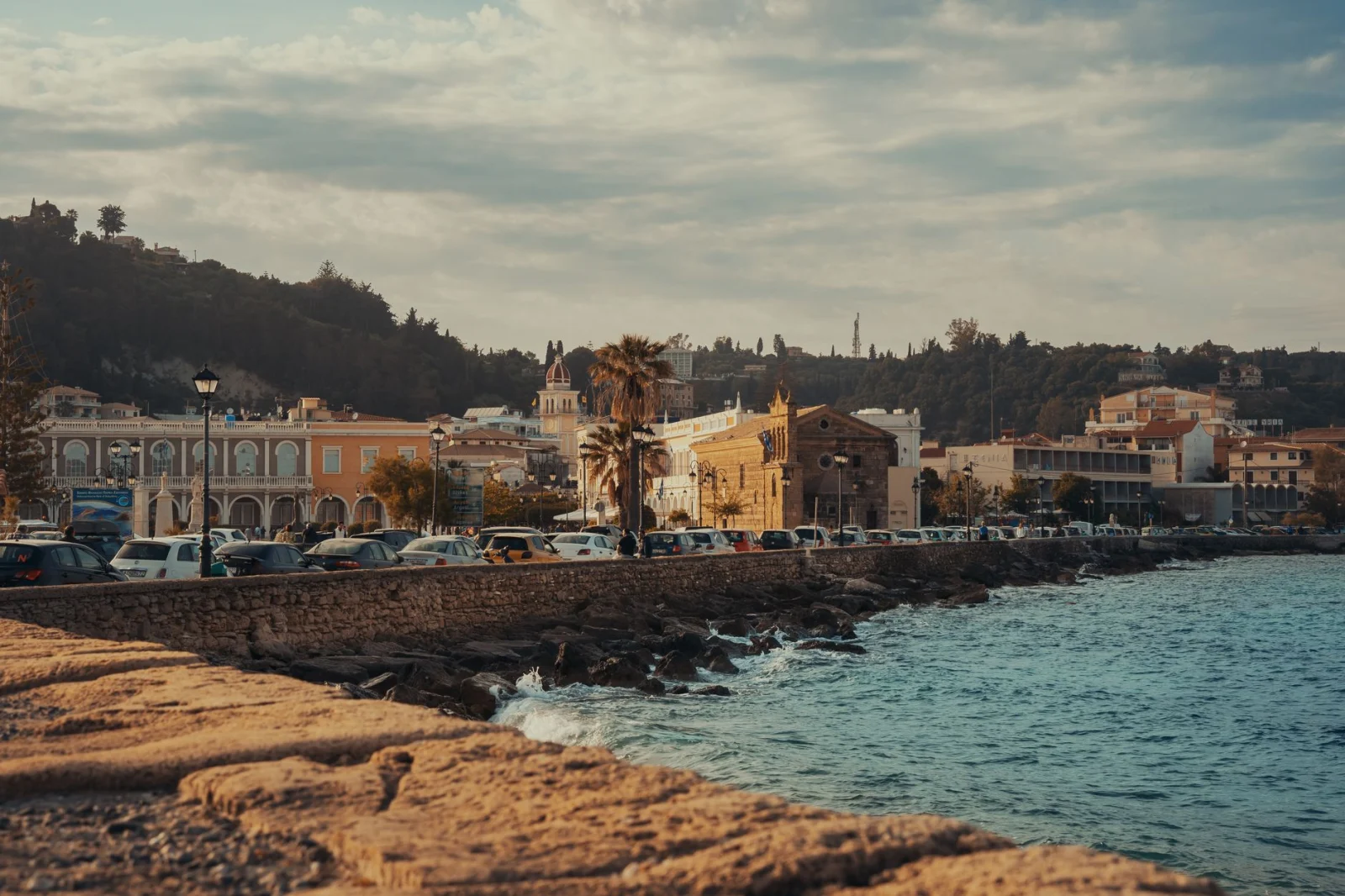
Insurance is where Greek car rental prices really differ. The terms you will see:
Compare prices on a like-for-like basis: the zero-excess price, with tyres and glass included. A broker’s “full protection” policy means paying the rental company first and claiming the money back later.
UK drivers: GOV.UK says you can drive in Greece on a UK photocard licence. If you still have an old paper licence, you may need a 1968-convention International Driving Permit (IDP), or you can swap the licence for a photocard before you travel. Hire companies can set stricter rules, so check your rental terms.
US drivers: Since 2023, Greece has recognised US licences for short visits. However, the US Embassy still advises carrying an IDP, and many rental desks ask for one. Get an IDP from AAA before you leave, because it cannot be issued in Greece. It is only valid alongside your original licence.
Age and documents: The usual minimum age is 21, with a licence held for at least a year. Many firms charge a young-driver fee under 25 and may restrict larger cars. Some add a fee or set limits for drivers over 70 to 75. Bring your passport and, with most companies, a credit card in the main driver’s name.
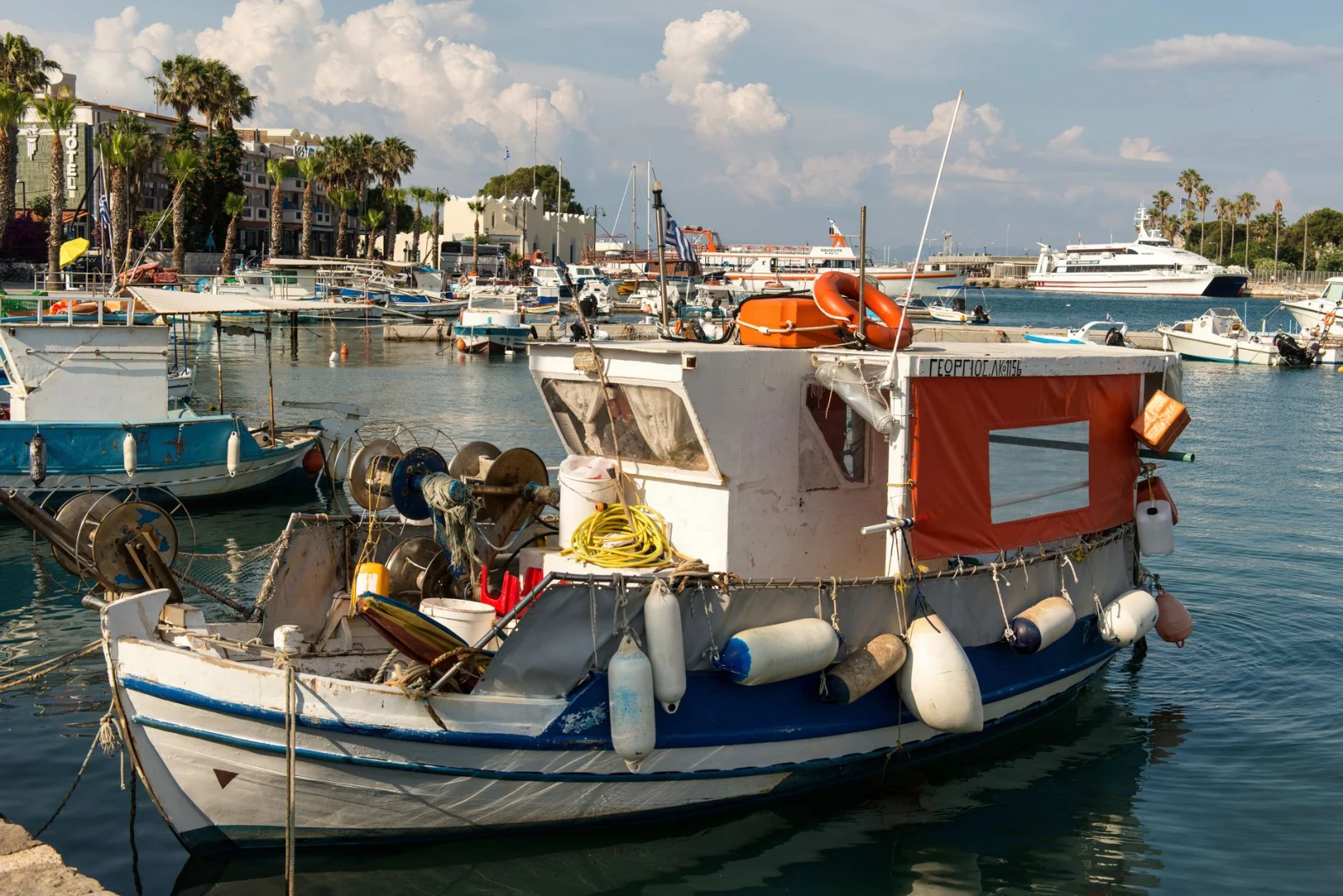
Yes, at the right ports. With six to nine hours ashore, a hire car can get you to places that excursions rush through or skip, often for less than two excursion tickets. A few rules make it work:
If you’re weighing up itineraries, the 19-night Greek Islands cruise on Cunard’s Queen Anne calls at several Greek ports where a hire car works well. The comparison of Marella’s Western and Eastern Med routes shows which itineraries include the most Greek calls. For ports where a car is the wrong choice, see our guide to the worst cruise ports and how to make the most of them.
Prices depend heavily on the season. In spring and October, a small manual car can cost from around €20 to €35 a day with full insurance from a local firm. In July and August, the same car can cost two or three times as much, and automatics sell out early, especially on the islands. Book automatics months ahead for summer.
If you would rather book a tour than drive, our guide to the best Mediterranean cruise excursions compares transfer times and ticket rules.
Not with a UK photocard licence, according to GOV.UK. You may need a 1968 IDP if you still have a paper licence, and some hire companies ask for one anyway, so check your rental terms.
Yes. Greece has recognised US licences for short stays since 2023, but the US Embassy recommends carrying an IDP and many rental desks ask for one. Get one from AAA before you travel.
Often, yes, for short island trips. Reputable local firms frequently include zero-excess insurance and deliver to the airport or port. Compare the fully insured price and recent reviews rather than the headline rate.
Usually 21, with a licence held for at least one year. Drivers under 25 often pay a young-driver fee, and some firms limit larger cars.
Only with the rental company’s written permission, and damage at sea is usually not covered. Most travellers rent a separate car on each island.