
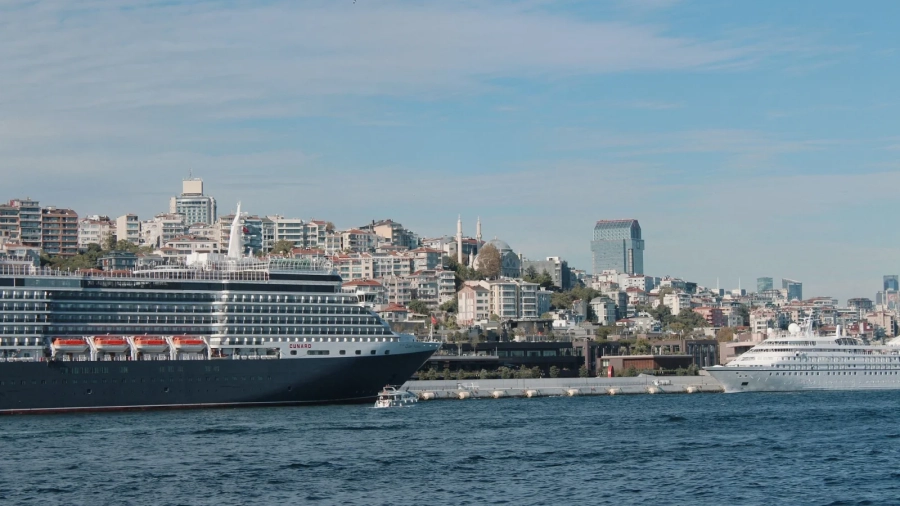
The worst cruise ports in Europe are rarely bad places. They are usually stops where the famous sight is hours from the pier, or where several ships arrive at once. Le Havre, Naples, Santorini, Marseille, Kusadasi and Civitavecchia all earn complaints, and all of them can be a good day with the right plan.
This guide covers Europe only and gives a concrete plan for each port: how to get around, how much time you need and what to do instead if the obvious option does not suit your schedule. For stops further afield, see our list of the worst ports of call worldwide.
Worst cruise ports in Europe at a glance
| Port | Main complaint | Best plan | Port time to feel comfortable |
|---|---|---|---|
| Le Havre | Paris is about 200 km away | Honfleur or the Perret city center | 5+ hours (10+ for Paris) |
| Naples | Busy, chaotic first impression | Historic center and museum, or Herculaneum | 5+ hours (8+ for Pompeii) |
| Santorini | Tender and cable car queues | Early tender, then straight to Oia or Akrotiri | 7+ hours |
| Marseille | Terminal is in an industrial port | Vieux-Port and Le Panier, or a Calanques boat | 5+ hours |
| Kusadasi | Shopping-heavy town, crowded Ephesus | Early Ephesus with the Terrace Houses | 5+ hours |
| Civitavecchia | Rome is about 70 km away | Train on a long call, tour on a short one | 9+ hours for independent Rome |
The time column is our planning guide, not an official figure. Your ship’s all-aboard time matters more than its published departure time.
Le Havre: stop trying to see Paris by default
Le Havre is sold as the “port for Paris”, but it is about 200 km from the capital. The terminal at Pointe de Floride sits around 2.5 km from the center, and that walk (about 25 minutes) runs through dockland. Most ships offer a paid shuttle to Place de l’Hôtel de Ville, and a taxi into the center costs roughly €8 to €10.
Three ways to spend the day
- Le Havre itself (3 to 5 hours). The center was rebuilt by Auguste Perret after World War II and has been UNESCO-listed since 2005. See the 107-meter tower of Église Saint-Joseph, with its 12,768 pieces of colored glass, the Perret show apartment, the MuMa art museum and the seafront. Check opening days, as some museums close on Mondays.
- Honfleur (5 hours). The pretty harbor town is 30 to 40 minutes away across the Pont de Normandie. Taxis run about €35 to €50 each way, and Nomad coaches link it with the Le Havre bus station, although regional buses do not stop at the cruise terminal. Étretat and its cliffs are about 45 minutes to an hour away and work well on a shared shuttle or tour.
- Paris (10+ hours). Direct trains to Saint-Lazare take about 2 hours 20 minutes, with around 14 to 16 a day. That leaves four to five hours in the city at best. Ship coach tours typically allow three to four hours in Paris, but the ship will wait if the tour runs late.
Rouen is an underrated compromise. Its cathedral and medieval center are about 45 minutes away by train, far less than the trip to Paris.
Naples: skip the port area, not the city
Naples can feel loud and hectic straight off the ship, yet the location is excellent. Most ships berth at Stazione Marittima beside Castel Nuovo, about 15 minutes on foot from Piazza del Plebiscito. The old city is around ten minutes further, and Municipio metro station is close to the pier. Your daily program will name the berth, as some ships dock further east.
- Half day in the city (about 5 hours). Walk Spaccanapoli, stop at San Lorenzo Maggiore’s underground Roman remains, have pizza on Via dei Tribunali and visit the National Archaeological Museum (around €15, closed Tuesdays), which holds many of Pompeii’s finest finds.
- Pompeii (8+ hours in port). Take Metro Line 1 to Garibaldi, then the Circumvesuviana toward Sorrento and get off at Pompei Scavi–Villa dei Misteri, not Pompei Santuario. The ride takes about 35 minutes and costs around €3 to €4. Pompeii has had a 20,000-a-day cap since November 2024. Tickets are named, so carry matching photo ID, and timed entry applies from mid-March to mid-October. Book through the official site and allow three to four hours on site.
- Herculaneum (5 to 6 hours). It is about 15 minutes by train from Garibaldi, smaller than Pompeii and better preserved, with upper floors and wooden beams still in place. It takes about two hours to see and suits shorter calls.
- Capri (full day). Hydrofoils from Molo Beverello take about 50 minutes and cost roughly €25 to €31 each way. Sailings can be canceled at short notice in bad weather, so a guided excursion is the safer option if you want to visit Capri.
Santorini: the most changed port for 2026
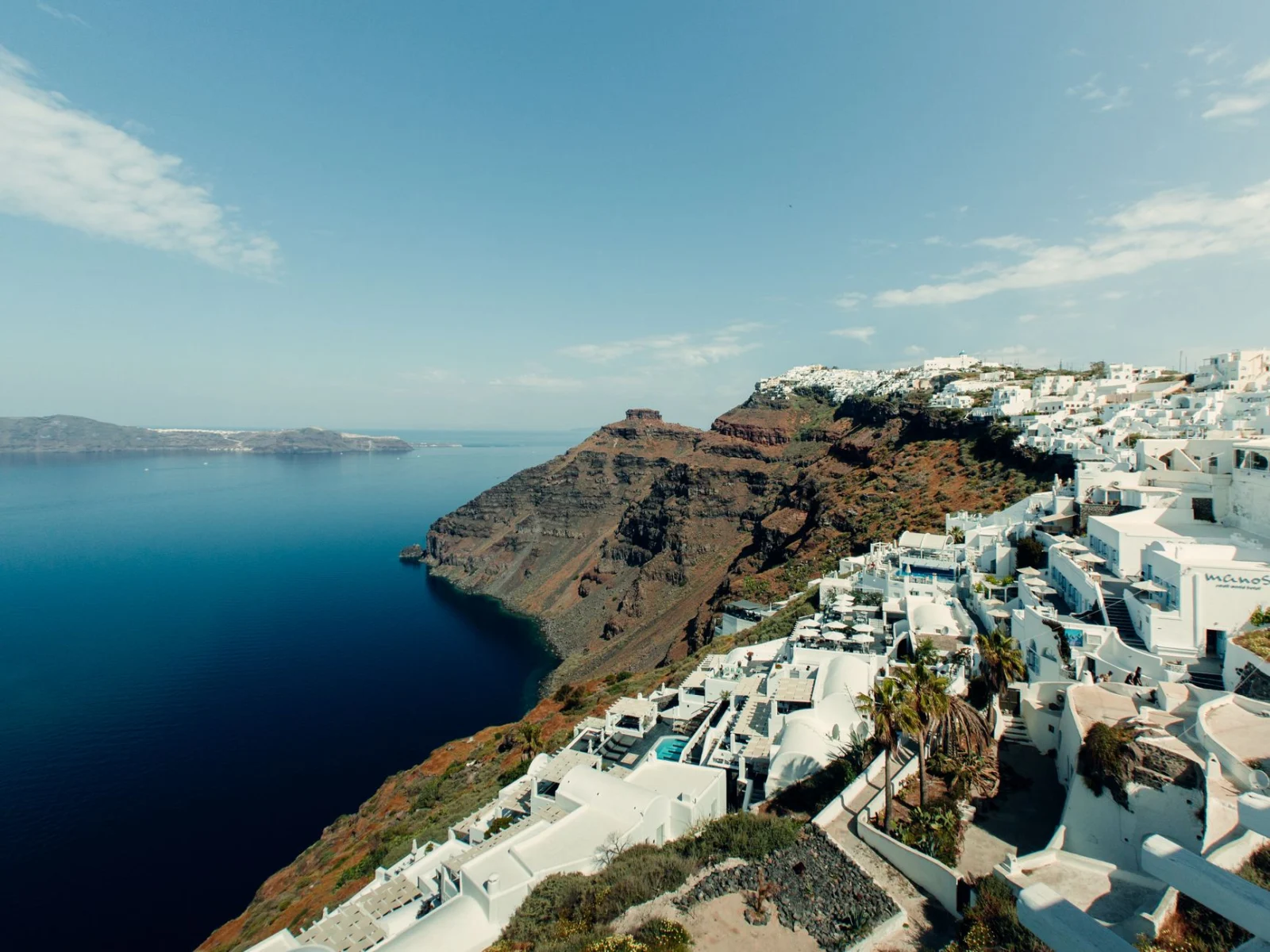
Santorini’s problem is arithmetic. Ships anchor in the caldera, tender passengers to the small Old Port at Skala, and then funnel them up to Fira by cable car. Queues can reach one to two hours when several ships call, and the alternative is about 588 steep steps shared with donkeys.
Santorini cruise levy and passenger limits
Two rules now affect visits. Santorini operates a daily cap of 8,000 cruise passengers, and for 2026 ships are counted at 100% occupancy rather than 80%. Reported scheduled calls fell to 595 in 2026 from 728 in 2025. Greece also charges a cruise passenger fee:
| Season | Santorini and Mykonos | Other Greek island ports |
|---|---|---|
| June to September | €20 | €5 |
| April, May, October | €12 | €3 |
| November to March | €4 | €1 |
The cap covers cruise passengers only, so Fira and Oia can still be busy with visitors arriving by air and ferry.
A plan that avoids the worst of it
- Take the earliest tender you can, or book a ship excursion if you want a guaranteed route ashore, as these may use Athinios port instead.
- Head straight to Oia by bus or taxi (about €30 to €40) before the crowds, then work back to Fira.
- For something different, visit the Bronze Age site at Akrotiri or the black-sand beaches at Kamari and Perissa.
- Be back at the cable car at least 90 minutes before all-aboard, and check the fare and hours locally, as published fares vary.
Marseille: the terminal is the worst part
Cruise passengers often judge Marseille by its vast industrial port. The Marseille tourist office says a free shuttle runs on ship days to Place de la Joliette, with a 5 to 12 minute walk along a green line to the Gate 4 stop. Check your port information, because some lines also sell their own shuttles, typically around €20 return, that go directly to the Vieux-Port area. Local bus 35T is the budget backup.
- City day (4 to 5 hours). From Joliette it is about 15 to 25 minutes on foot to the Vieux-Port. Explore Le Panier, then take bus 60 or the tourist train up to Notre-Dame de la Garde, the city’s best viewpoint.
- Water day (3 to 5 hours). Boat tours from the Vieux-Port run to the Calanques, and a roughly 20-minute crossing reaches the Château d’If and the Frioul Islands.
- Further afield (4 to 6 hours). Aix-en-Provence is about 30 minutes by road and Cassis is a common excursion. Both are simplest on an organized tour.
Our guide to the best shore excursions for Mediterranean cruises can help if you prefer to have the logistics arranged for you.
Kusadasi: go for Ephesus, and go early
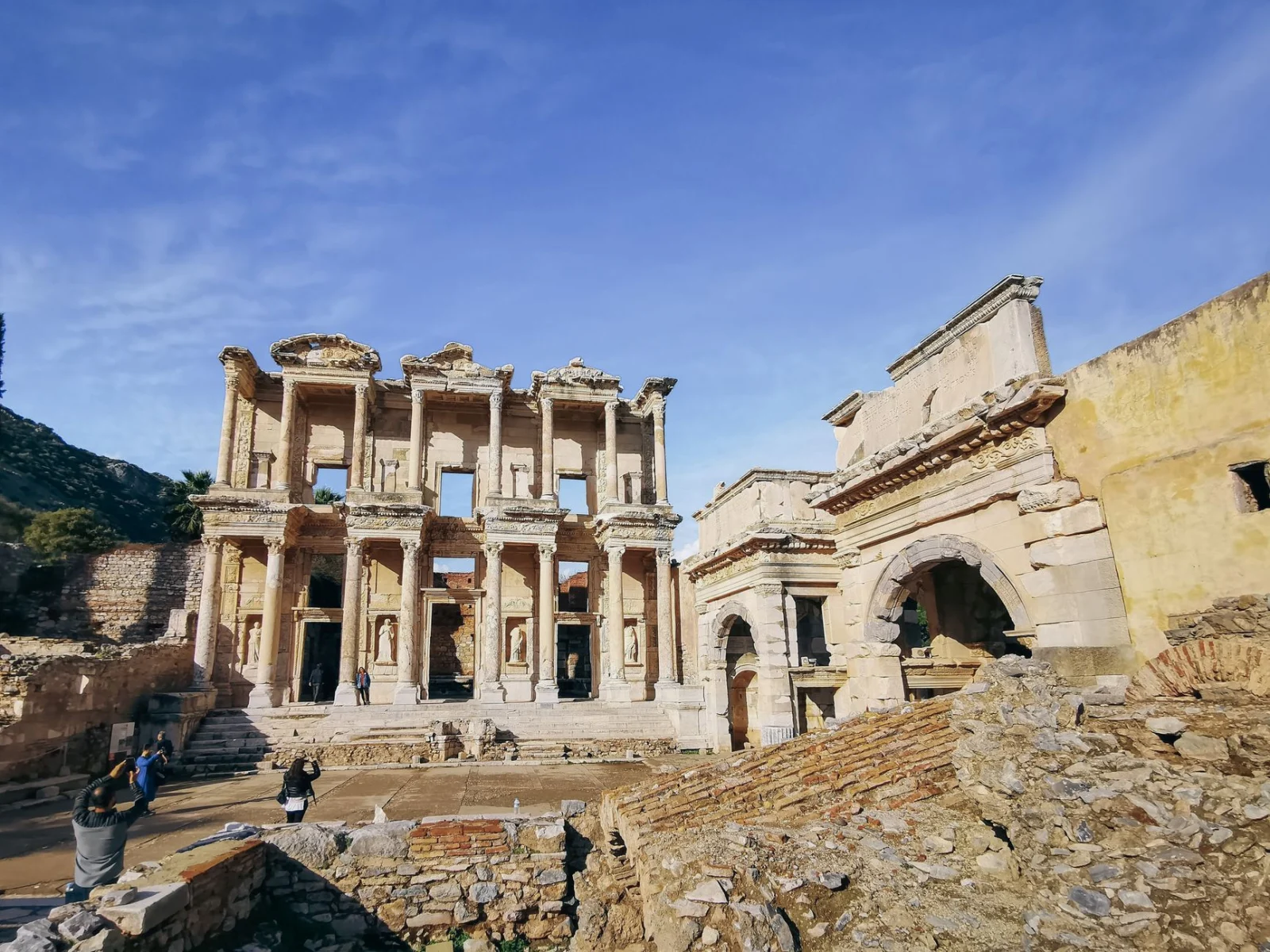
Kusadasi is convenient, with ships docking in the center of town, but the port area is built around shopping and persistent sales patter. The reason to come is Ephesus, about 19 km away and 25 to 30 minutes by road.
- Getting there. Taxis wait outside the port gate and usually quote a flat return fare including waiting time, so agree it before leaving. The dolmuş minibus to Selçuk is cheapest, but it needs a bigger time buffer.
- Tickets. Ephesus was listed at €40 and the Terrace Houses at €15 in November 2026, with increases scheduled for April 2027.
- Timing. Allow about 4 hours port to port, plus 45 minutes for the Terrace Houses, whose mosaics and frescoes are well worth the extra. Enter at the upper gate so the walk runs mostly downhill.
- Heat. There is very little shade, so bring water and a hat and go as early as you can.
If you have seen Ephesus before, walk the causeway to Pigeon Island, or take a longer excursion to Şirince village and the House of the Virgin Mary.
Civitavecchia: one of the worst Mediterranean cruise ports for transfers
Rome’s port is about 70 km from the capital, and it is a common example of cruise ports that are far from the city they advertise. Door to door, expect about 1 hour 45 minutes to 2 hours 15 minutes each way by public transport.
- Take the free port shuttle to Largo della Pace, which runs roughly every 20 to 25 minutes.
- Walk 15 to 20 minutes along the seafront to the station, or pay about €6 for the station shuttle.
- Take a regional train (flat fare around €4.60, not tied to a specific departure). Roma San Pietro, for the Vatican, takes about 50 to 60 minutes and Termini about 75 to 85 minutes.
- Leave central Rome at least four hours before sailing, and aim to reach Civitavecchia two hours before all-aboard.
Independent Rome only really works on a call of nine or ten hours. A private transfer starts at around €221 per vehicle and takes about 65 minutes, while a ship tour moves the timing risk to the cruise line. If you would rather stay close, Civitavecchia has a waterfront and Forte Michelangelo, and the Etruscan tombs at Tarquinia are a short rail trip north. Local connections there need checking in advance.
How to spot a problem port before you book
A few minutes with an itinerary can save a frustrating day. Compare these points before you commit:
- Hours in port, not just the port name. Subtract the transfer each way and a safety margin from the time alongside.
- Dock or tender. Tender ports add waiting at both ends, and bad weather can cancel the call.
- Other ships that day. Port schedule sites can show how many ships are due, which matters most in Santorini and Naples.
- The return plan. The ship will generally only wait for its own excursions. If a train or ferry is your only way back, leave a large margin.
FAQs
What is the worst cruise port in Europe?
There is no official ranking, but Le Havre and Civitavecchia draw frequent complaints because the headline destination is hours away. Santorini and Naples are criticized more for crowds and logistics than for a lack of things to see.
Can you visit Paris from Le Havre on a cruise?
Yes, but it is a long day. Direct trains to Paris Saint-Lazare take about 2 hours 20 minutes each way, which leaves roughly four to five hours in the city on a generous port call. A ship coach tour removes the risk of missing the ship.
How much is the Santorini cruise passenger fee?
The published rate is €20 per passenger from June to September, €12 in April, May and October, and €4 from November to March. How it is billed varies by cruise line, so check your fare breakdown or onboard account.
Is it worth getting off the ship at Civitavecchia?
Yes, if your call lasts about nine hours or more and you want Rome. On a shorter call, a guided excursion or a quieter day in Civitavecchia or nearby Tarquinia is a more relaxed choice.
Where is the best place to cruise in Europe?
It depends on what you want from port days. The Greek islands and Adriatic suit travelers who like to walk straight off the ship into historic towns, while the Western Mediterranean offers big-name cities that often need longer transfers.