Viking has taken delivery of Viking Sekhmet, its latest custom-built Nile River ship, expanding its growing Egypt fleet to ten vessels.
Viking has taken delivery of Viking Sekhmet, its latest custom-built Nile River ship, expanding its growing Egypt fleet to ten vessels.
River cruises can look surprisingly similar at first glance. They all sail sleek ships through beautiful scenery, stop in historic towns and promise great food, fascinating excursions and a relaxing week away.
So it’s easy to assume that choosing between them is simply a case of finding the itinerary you like at the best price. That’s exactly what I used to think.
But, after sailing on several river cruises, visiting over 20 ships and chatting to the people who know them inside out, I’ve realised there are some surprisingly big differences between the cruise lines.
Some include far more than others. Some are much more active. Some attract guests from all over the world, while others create a very different onboard atmosphere.
If you’re trying to decide which river cruise line is right for you, there are some things I’d always check before booking…
The first thing I’d check isn’t the ship or what’s included. It’s where the cruise line actually sails. Some people assume this isn’t really a concern with river cruising, but they’re wrong!

Most river cruise lines offer the classic European routes along the Rhine and Danube. If you fancy the Rhône, Seine, Douro, Dutch Waterways, Main or Moselle, you’ll have slightly fewer options.
Then, if you want to cruise on the Elbe, Po, Guadalquivir or some of the smaller rivers in France, you’ll have even fewer options.
But the biggest differences tend to appear once you start looking beyond Europe. If you’re dreaming of somewhere a little more adventurous, such as Vietnam and Cambodia, you’ll find far fewer cruise lines operating there.
It’s also worth thinking about how many itineraries a cruise line offers in the destinations you’re interested in. Some companies have just one or two routes, while others offer several variations, giving you more flexibility over things like cruise length, start and end points, and the places you’ll visit along the way.
This is probably the biggest mistake first-time river cruisers make.
It’s really easy to compare two prices and assume the cheaper cruise is better value. But until you know what’s included, you’re not really comparing like for like.
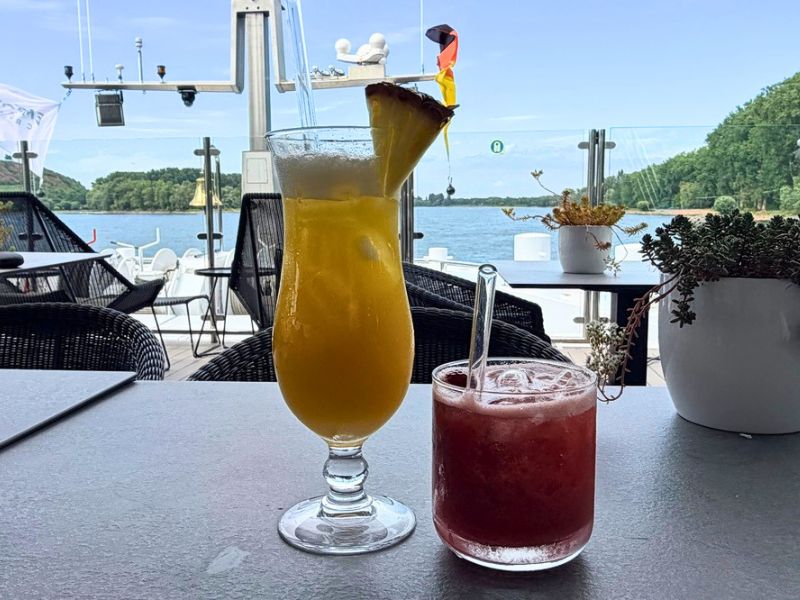
For example, some river cruise lines include excursions, while others charge extra. Drinks policies vary too, with some including wine, beer and soft drinks at mealtimes, while others offer drinks all day or not at all. Gratuities, WiFi and airport transfers are other things that can make a surprisingly big difference to the final cost of your holiday.
On my recent Emerald river cruise, I loved not having to constantly think about what was costing extra. Excursions, gratuities, WiFi and drinks with lunch and dinner were all covered.
And yes, you can leave the dining room with a full glass of wine and enjoy it on the sun deck!

That doesn’t mean every cruise line should include exactly the same things. Some travellers would rather pay a lower fare and choose which extras to add, paying for drinks and excursions individually, while others prefer to have as much as possible included from the start.
The important thing is to compare the whole package rather than just the number on the booking page. Sometimes the cruise that looks more expensive at first glance can actually work out to be better value in the end.
Suggested read: What You Actually Get on an Emerald River Cruise
This is something I’d never really thought about before I started river cruising, but it can make a surprisingly big difference to your holiday.
Some river cruise lines attract guests from all over the world, others from just one or two countries. That means announcements, port talks and excursions may be delivered in several different languages.
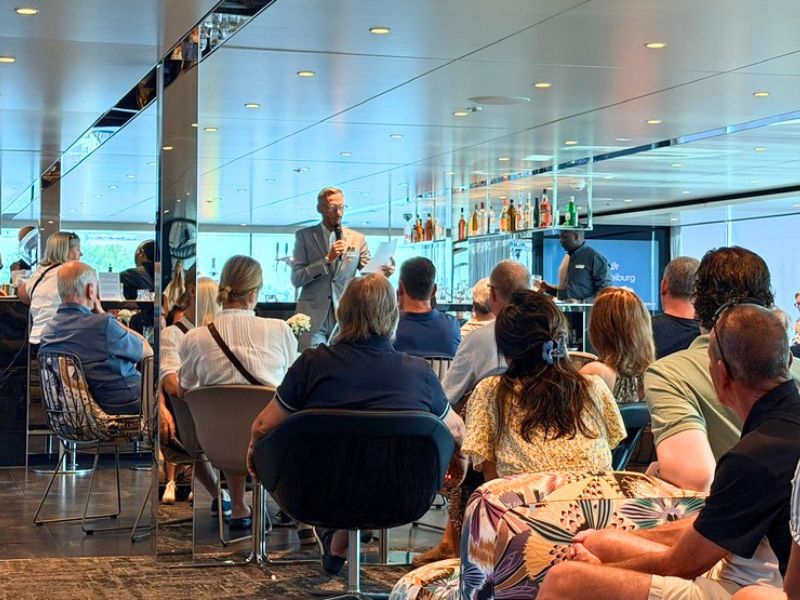
On my recent Emerald river cruise, everyone onboard spoke English, and there was a really nice mix of guests from the UK, Ireland, the USA, Canada, Australia and New Zealand. Other cruise lines, such as TUI river cruises, market to only British guests.
In contrast, when I cruised with Viva Cruises, almost all of the other guests were German speakers. Not only did that make socialising very difficult, but we had to sit through a port talk in German for 15 minutes every day, which got a little tiresome.
It’s also worth thinking about the sort of atmosphere you’re looking for. Some river cruise lines feel very traditional, while others have a more contemporary feel. Some attract mainly retired couples, while others appeal to a broader mix of ages, including younger couples and families on selected sailings.
None of these approaches is better than another. It simply comes down to the kind of holiday you enjoy. If you’re someone who loves meeting new people, for example, the guest mix onboard can have just as much impact on your cruise as the itinerary itself.
Get an additional £150pp saving on any departure year (2026 or 2027) when quoting the discount code JENNI.
(Valid on bookings made 01/08/26 to 31/10/26)
Shore excursions are a huge part of any river cruise, so I’d always look beyond the simple question of whether they’re included or not (although, that’s a pretty important question too).
Think about the types of excursions on offer too. Some cruise lines focus mainly on traditional guided walking tours, while others offer a wider choice, including cycling, hiking, food experiences and cultural events.
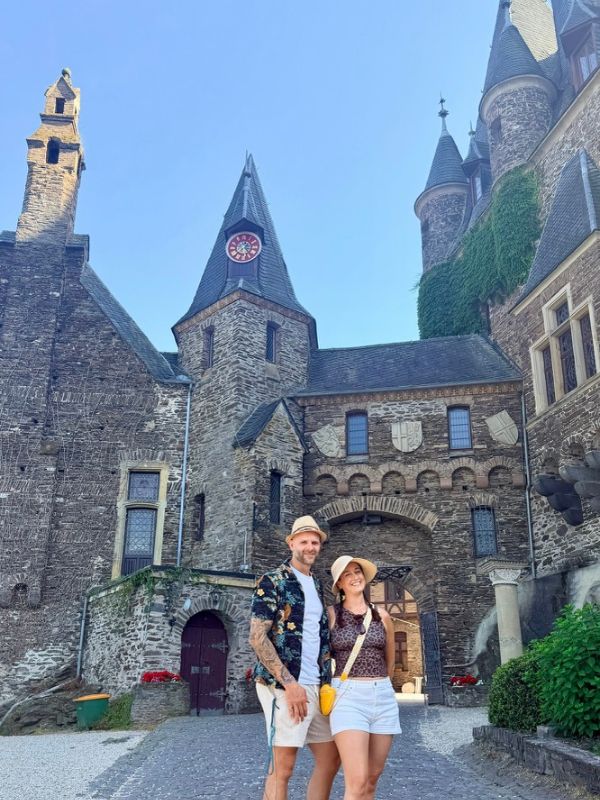
One thing I really liked about Emerald Cruises was that there was usually more than one way to explore each destination. If you wanted a classic guided tour, that was available. If you’d rather get out on an e-bike or join a guided hike, there were EmeraldACTIVE excursions too.
Then there were EmeraldPLUS experiences, which are designed to give you something a little different. On my Rhine cruise, that included a private classical concert which genuinely felt like it should have cost extra.

It’s also worth checking whether excursions cater for different mobility levels. During my cruise, Emerald Cruises offered both standard and gentle walking groups, which was a huge help while I was recovering from a broken toe. It meant I could still enjoy the destinations without worrying about holding everyone else up with my slower pace!
It’s easy to assume that all river cruise ships are pretty much the same. After all, they’re all built to fit through the same locks and sail under the same bridges.
But once you step onboard, the differences become much more obvious. These aren’t cookie-cutter vessels.

Some ships feel quite traditional in terms of the decor, while others are much more contemporary.
Cabin layouts vary too, with some offering French balconies, others step-out balconies and some using clever designs that maximise the space inside the room.

Public areas can be just as different, from cosy lounges designed for quiet evenings to ships with much more emphasis on wellness and onboard facilities.
It’s also worth looking beyond the cabin. If you’re planning to spend time onboard between ports, think about how you’ll actually use the ship. Is there somewhere comfortable to sit with a book? A sun deck with plenty of loungers? A fitness area? Bikes to borrow if you fancy exploring independently?

Most river cruise ships have a hot tub on the top deck. This isn’t always ideal in the summer. You would think they would have them set to be a cold plunge pool, but in my experience, they always seem to be hot!
I do prefer when a river ship has a proper pool. The family-friendly ship A-Rosa Sena has two pools – one for adults and one for kids (complete with water guns!).
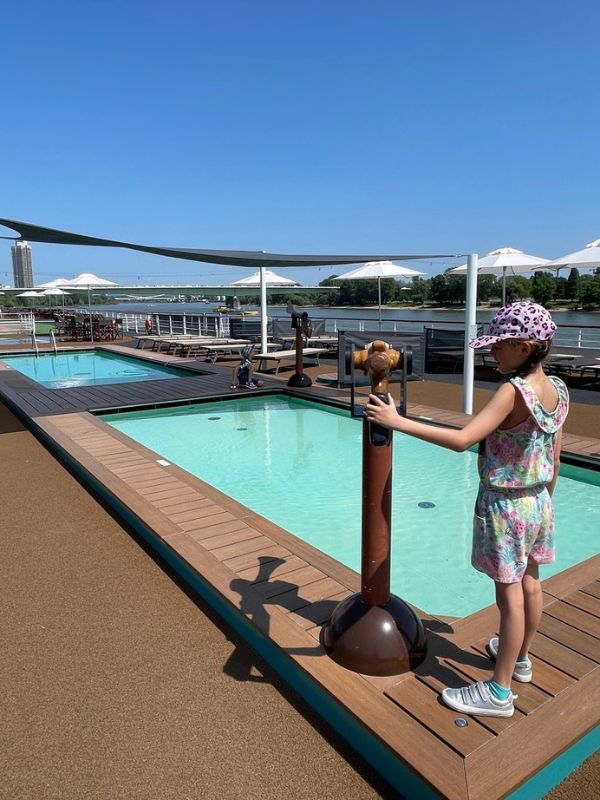
But my favourite type of pool on a river ship has to be the one on Emerald Cruises’ Star-Ships. These pools have a current you can swim against, a retractable roof, and thanks to the clever raising floor, they transform into a cinema in the evening and an exercise studio in the early morning!
Before you book, I’d spend as much time looking at the ship as you do looking at the itinerary. After all, it’s going to be your hotel for the week.
Not everyone wants the same kind of river cruise. For some people, the perfect day is a gentle stroll around a pretty town followed by a leisurely lunch and an afternoon watching the scenery drift by. Others would much rather get their walking boots on, head out on a bike or fit in a yoga class before breakfast.
That’s why it’s worth looking at what each cruise line offers beyond the standard sightseeing tours.
Some put a much bigger emphasis on wellness and active travel than others, with things like guided hikes, cycling excursions, fitness classes and onboard gyms. If that’s the sort of holiday you enjoy, those extras can make a much bigger difference than you might expect.

I hadn’t really thought much about this until I started river cruising. Now I’d always look to see what’s available, even if I don’t end up using everything. It’s nice to have the choice.
Emerald Cruises is a good example of this. Alongside traditional excursions, there are EmeraldACTIVE experiences for guests who’d rather explore on foot or by bike, and the ships also carry e-bikes that can often be borrowed independently.
It’s a nice option to have, particularly on European rivers where many of the cycle paths are flat and run alongside the water.
Food is a big part of any river cruise, but it’s worth looking beyond the menu photos in the brochure.
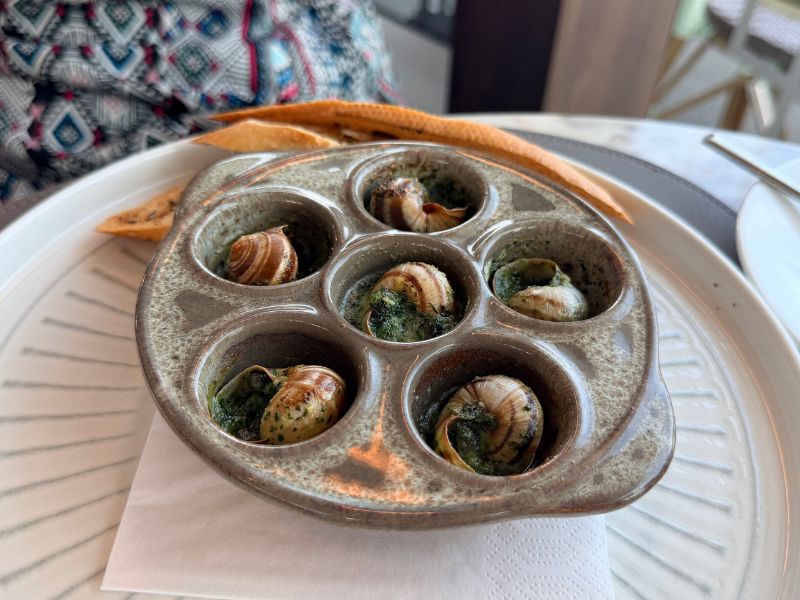
It’s also worth looking at the style of dining. Most river ships have a single main restaurant, but the menus, service and overall atmosphere can vary from one cruise line to another. Some put a big emphasis on regional dishes, while others stick to more familiar international favourites.
If you have dietary requirements, don’t be afraid to ask how they’re handled. On my recent river cruise, guests had the chance to speak to the head chef at the start of the sailing, and I received the following day’s menu each evening so I could request any changes in advance if I needed them. It’s one of the best systems I’ve come across, and it made the whole experience feel really relaxed.
Finally, don’t forget that food isn’t just about what’s on your plate. For me, some of the best conversations of the week happened over dinner, chatting with other guests about where we’d been that day and what we’d discovered ashore. However, some people prefer a table for two. Each river cruise line can be quite different in terms of seating arrangements.
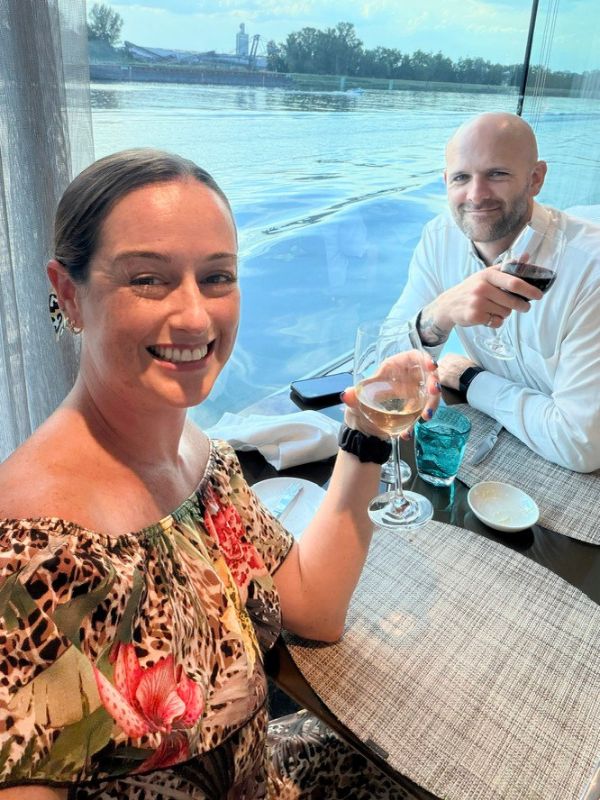
One of the biggest differences between cruise lines is what’s included to drink. Some include wine, beer and soft drinks only with lunch and dinner, while others include drinks throughout the day.
If you enjoy a cocktail before dinner or a glass of wine in the lounge each evening, it’s worth checking exactly what’s covered before you book.
If you’ve never been on a river cruise before, it’s easy to imagine everyone dressed up for dinner every evening. I get it – river cruises tend to be a little more expensive than ocean cruises, and people often assume that more expensive also means more formal.
The reality depends very much on the cruise line. Some have a more traditional feel, where guests tend to dress smartly in the evenings and the atmosphere is a little more formal. Others are much more relaxed, with smart-casual clothing being perfectly acceptable and no expectation that you’ll pack a suit or cocktail dress.
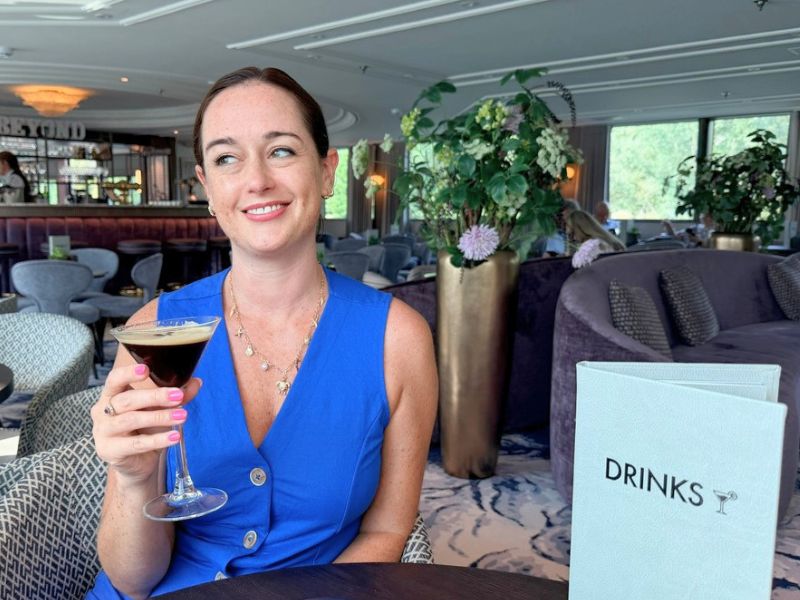
It’s also worth thinking about the overall atmosphere onboard. Some river cruises are very quiet, with guests heading to bed soon after dinner ready for the next day’s excursion. Others put more emphasis on evening entertainment, whether that’s live music, local performers or simply creating a lively place to enjoy a drink after a day ashore.
I liked Emerald Cruises’ approach because it felt relaxed without being too casual. People made an effort in the evenings, but nobody looked out of place in a polo shirt, shorts or a simple summer dress. There was usually some entertainment after dinner too, but it never felt like there was pressure to stay up late if you’d rather have an early night.
There’s no right or wrong here. It’s simply about finding a cruise line whose atmosphere matches the sort of holiday you want.
It’s tempting to choose a river cruise the same way many people choose a hotel – by finding the itinerary they like at the lowest price.
But after experiencing a few different river cruises, I don’t think that’s the best approach.
Take a few minutes to look at what’s included, the style of excursions, the facilities onboard, the atmosphere and the sort of guests the cruise line attracts. Those things can have just as much impact on your holiday as the destinations themselves.
For me, Emerald Cruises strikes a really nice balance. It feels modern without being flashy, includes the things that matter most and gives you plenty of choice, whether you’d rather spend your day exploring a historic city, cycling along the river or simply relaxing on deck with a drink.
Ultimately, there isn’t one river cruise line that’s right for everyone. But once you know what to look for, you’ll have a much better chance of finding the one that’s right for you.
Get an additional £150pp saving on any departure year (2026 or 2027) when quoting the discount code JENNI.
(Valid on bookings made 01/08/26 to 31/10/26)
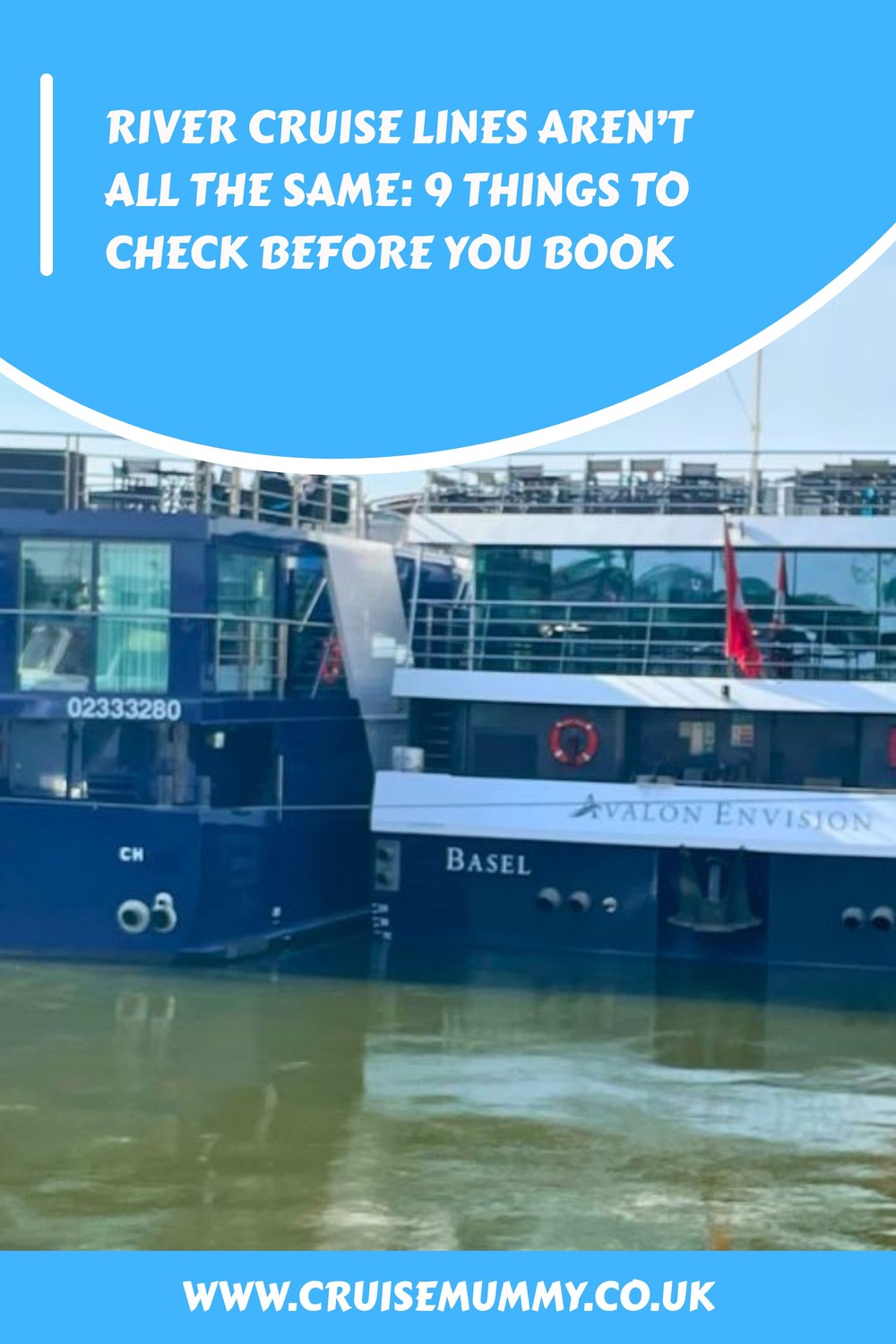


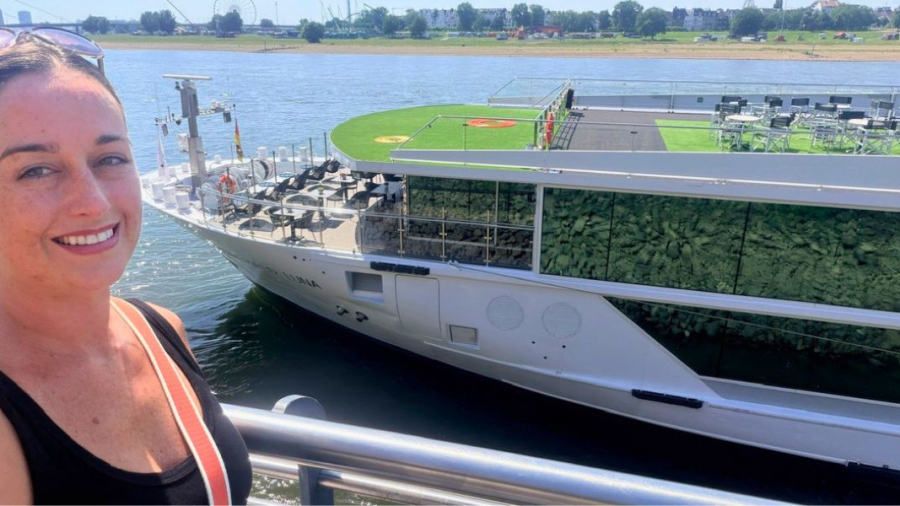
Booking a river cruise is never as simple as comparing prices. If only!
You might spot one sailing that’s £500 cheaper than another and assume you’ve found a bargain. Then you realise the cheaper fare doesn’t include the excursions, the drinks, the gratuities or even the transfers. Suddenly, it’s not looking quite so cheap after all…
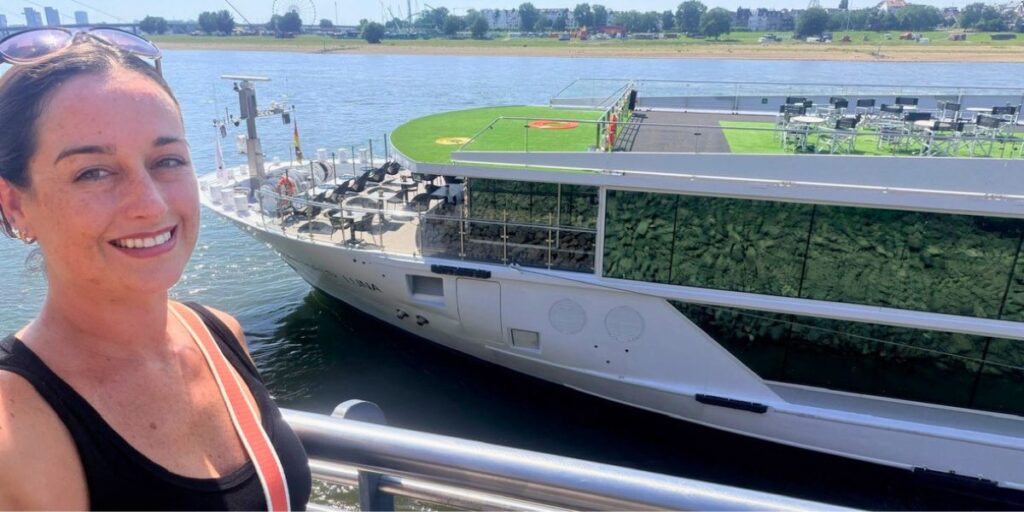
Before I was invited to sail on Emerald Luna, I knew a lot was included. What I didn’t expect was just how rarely I actually had to think about my budget. Once I’d stepped onboard, there wasn’t much left to pay for unless I actively wanted to.
That doesn’t mean everything’s included. There are a few optional extras if you want them. But there were also several things I hadn’t realised were covered until I experienced them for myself.
Some of them genuinely surprised me.
One thing that’s easy to overlook when comparing river cruise prices is what happens after you land.
Airport transfers between the airport and the ship are included, so there’s no need to figure out trains, taxis or public transport in an unfamiliar city. Instead, someone is there to meet you and take you straight to the ship, with the same service provided at the end of your cruise too. It’s so much easier than having to sort it yourself!

On my Rhine cruise, it made the whole journey feel incredibly straightforward. Rather than worrying about directions or dragging luggage across a city, I could just relax knowing everything had already been arranged.
It might seem like a small detail, but after a flight it’s one less thing to think about. And it’s exactly the kind of inclusion that’s easy to miss when you’re comparing cruise fares at first glance.
As for the flights themselves, they aren’t included in the fare prices you’ll typically see advertised, but Emerald Cruises can organise them for you, which does make things a lot simpler.
Hate flying? There are some river cruises that pair well with the Eurostar too, and again there will be transfers arranged to get you to the ship once you get off the train.
Get an additional £150pp saving on any departure year (2026 or 2027) when quoting the discount code JENNI.
(Valid on bookings made 01/08/26 to 31/10/26)
When you book an Emerald river cruise, you’re not just getting a place to sleep. The ship itself is a big part of the experience.

Emerald’s purpose-built Star-Ships are bright, contemporary and designed to make the scenery the star of the show. Huge windows fill the public spaces with natural light, while comfortable lounges and the Sun Deck give you plenty of places to sit back and watch Europe’s rivers roll by.
Most cabins feature Emerald’s signature Panorama Balcony. Instead of a traditional step-out balcony, the top half of the floor-to-ceiling window lowers electronically, creating an indoor balcony where you can enjoy the fresh air and the views without sacrificing valuable cabin space.
My Panorama Balcony Suite also included everything I’d expect from a comfortable hotel room, including a queen-size bed, WiFi, bottled water replenished daily, ESPA toiletries, a safe, bathrobes and slippers, a hairdryer and plenty of storage for a week’s holiday.
One of Emerald Luna’s standout features is the indoor swimming pool at the back of the ship. During the day, it’s a great place to cool off or even swim against the built-in current. In the evening, the pool floor rises, the water disappears underneath and the space transforms into a cinema complete with a giant screen and popcorn.


You’ll also find a fitness area, complimentary use of walking poles, inviting lounge spaces and a spacious Sun Deck with loungers, making it easy to relax onboard between ports. For me, it struck a really nice balance – there was plenty to enjoy on the ship, but it never distracted from the destinations themselves.
Food is included throughout your cruise, so once you’re onboard, there’s no need to think about paying for breakfast, lunch or dinner. It’s really good, too!
Breakfast and lunch combine generous buffets with freshly cooked dishes, while dinner is served at your table with a choice of starters, mains and desserts. The menus change every day, often taking inspiration from the countries you’re sailing through, so there’s always something new to try.


If you have any dietary requirements, Emerald makes things really easy. At the start of the cruise, guests can speak to the head chef about allergies or preferences, and each evening I received the following day’s menu in my cabin. It meant there was plenty of time to ask for any tweaks if I needed them.
Drinks are included too, although not quite all day. Beer, wine and soft drinks are served with lunch and dinner, while speciality teas, coffees and filtered water are available throughout the day.
Outside mealtimes, you can either pay as you go or buy a drinks package if you think you’ll make the most of it.

One inclusion I absolutely loved was the gratuities. They’re already covered for both the crew onboard and the guides and drivers on Emerald’s included excursions, so there were no awkward moments wondering who to tip or how much to leave.
It’s one of those things that’s easy to forget about when you’re booking, but it can make a real difference by the end of the cruise. When you consider most cruise lines charge this as an extra, it’s good to know it’s already covered. But even cruise lines that include gratuities don’t usually cover the tips for excursion guides – that’s properly above-and-beyond stuff!
For me, this is where Emerald really starts to shine.
On every touring day, there’s at least one included excursion, so you don’t arrive in a new destination and immediately have to decide whether to spend another £50 or £100 seeing the sights.

The included excursions vary depending on where you’re cruising, but they generally fall into three categories.
The classic guided tours are exactly what you’d expect, with knowledgeable local guides showing you around historic towns, famous landmarks and places that you’d probably struggle to appreciate on your own.
If you’d rather do something a bit more active, EmeraldACTIVE excursions include things like guided hikes and bike rides using the ship’s complimentary e-bikes. It’s a nice option if you’d rather explore under your own steam than follow a walking tour.

Then there are EmeraldPLUS experiences, which are designed to immerse you in the local culture. On my Rhine cruise, that meant a private classical concert, and I genuinely couldn’t believe it was included. It felt like exactly the sort of thing I’d have expected to pay extra for.
Of course, if you want to do even more, there are optional DiscoverMORE excursions available at an additional cost. But that’s exactly how they felt to me – optional. I never had the impression that I was missing out because I hadn’t paid extra.
One thing I also really liked was that Emerald caters for different walking speeds. During my cruise there was a gentle walking group as well as the standard-paced excursions, making it much easier for everyone to enjoy the destinations without feeling rushed. Considering I was cruising with a broken big toe after an injury at home, it was really handy to find excursions that suited me.
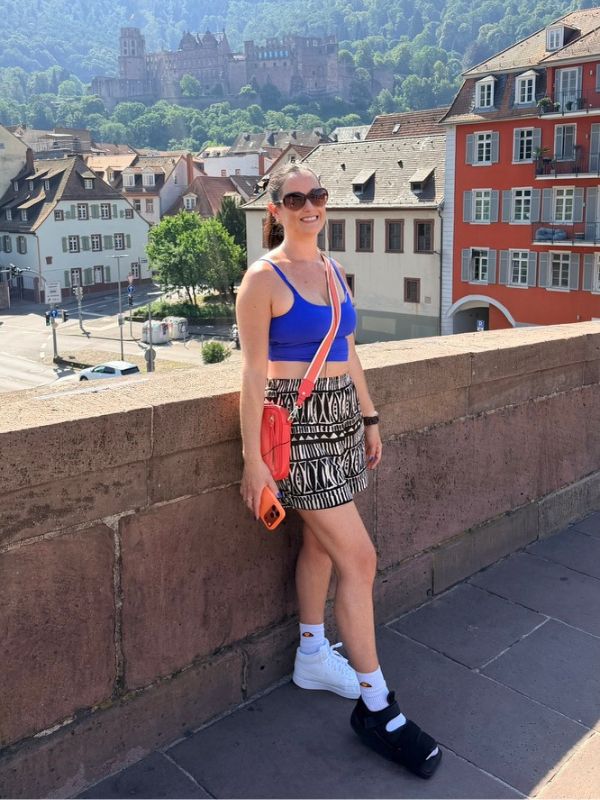
It’s often the smaller inclusions that make the biggest difference during a holiday.
WiFi is included throughout the ship, so you can easily keep in touch with family back home, share photos from your trip or look up information about the next destination without paying extra. I used it for a light bit of work too – there’s nothing better than relaxing on the Sun Deck while browsing cruise deals to share with my email subscribers!
You’ll also find complimentary tea, speciality coffee and filtered water available throughout the day. You also get Emerald Cruises water bottles, which are yours to keep. A lovely touch!
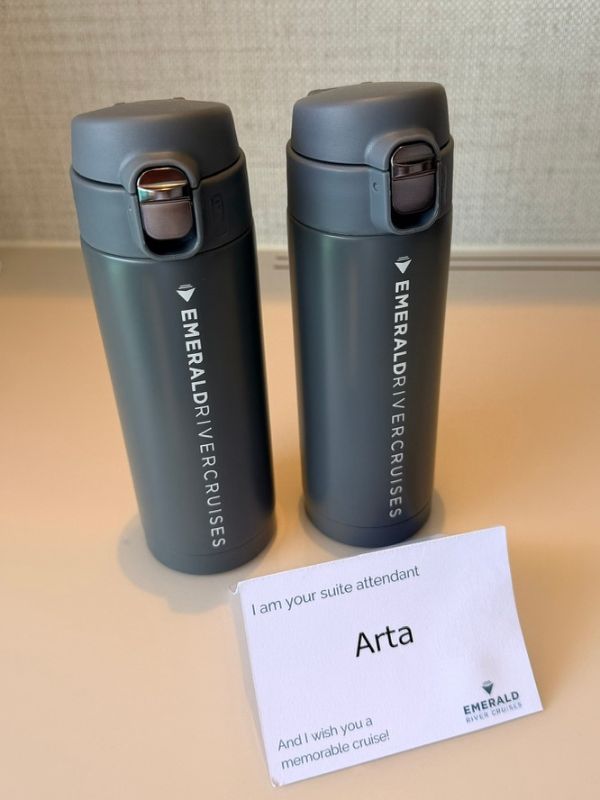
Bottled water is replenished in your cabin daily too, which is especially welcome after a long day exploring ashore.
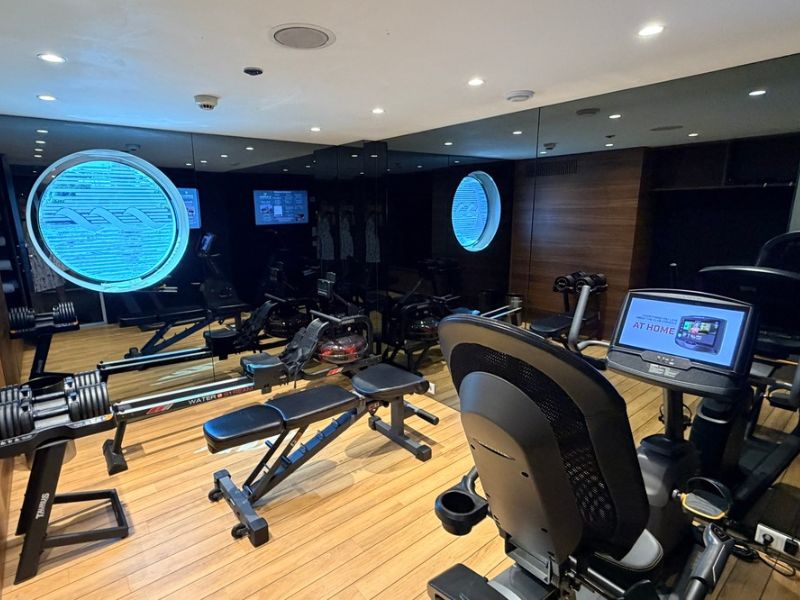
If you like to stay active, there’s a small fitness area onboard along with classes such as yoga and stretching on selected sailings. I also made use of the gym, which was very well equipped for such a small space.
The complimentary walking poles in your cabin are another thoughtful touch, particularly if you’re tackling cobbled streets or uneven paths on excursions.
The ship’s e-bikes are included too, whether you’re joining one of Emerald’s guided cycling excursions or borrowing one independently when they’re available. European river cruises are perfect for cycling, with long, flat paths running alongside many of the rivers, and having the bikes ready to go means you can explore in a completely different way without paying to hire one locally.
None of these inclusions would necessarily persuade me to book a cruise on their own. But together they make the whole holiday feel that bit easier, and they’re exactly the sort of things I’d miss if they weren’t there.
Emerald includes a lot, but not absolutely everything.
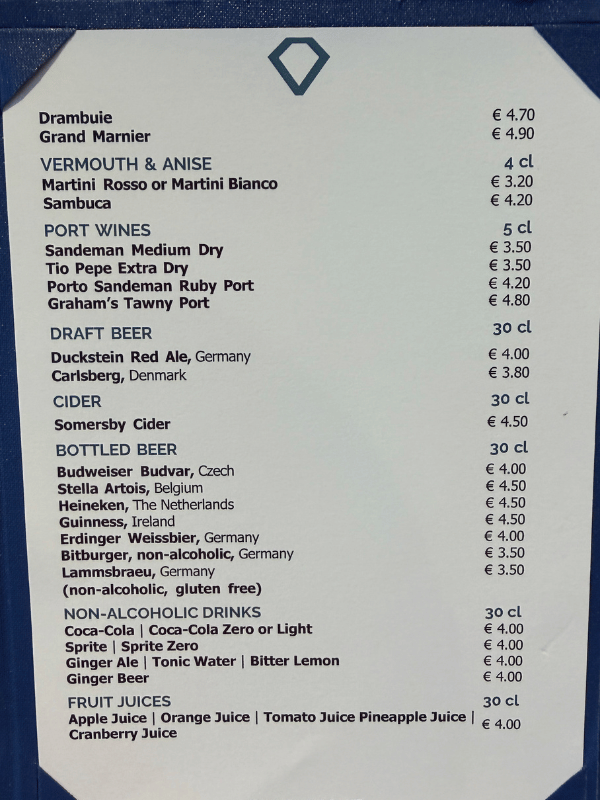
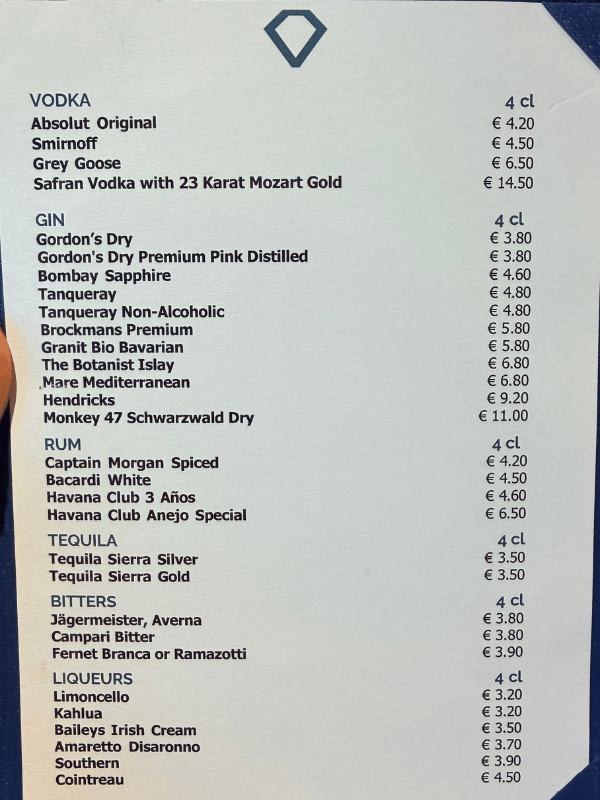
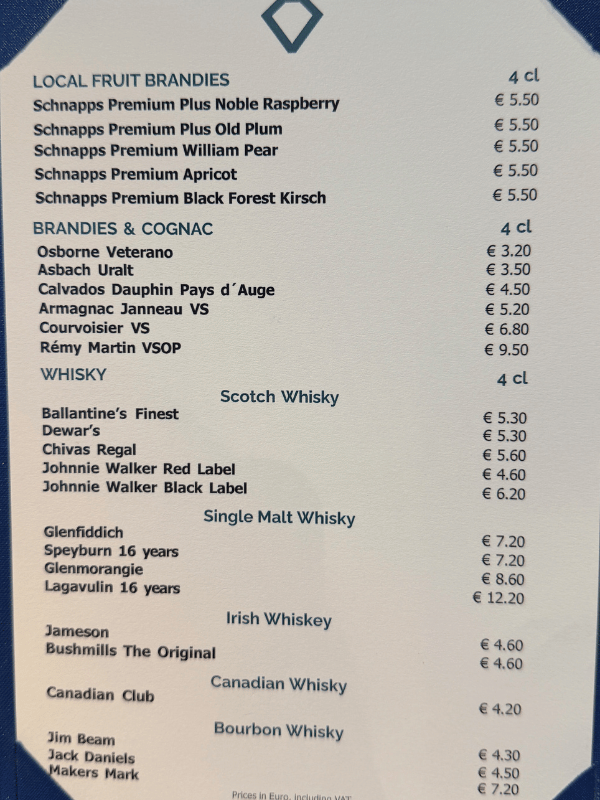
If you’d like a drink outside lunch or dinner, you’ll either need to pay as you go or buy one of the drinks packages. Personally, I found the bar prices to be pretty reasonable. Here are the drinks menus if you’d like to take a look for yourself…
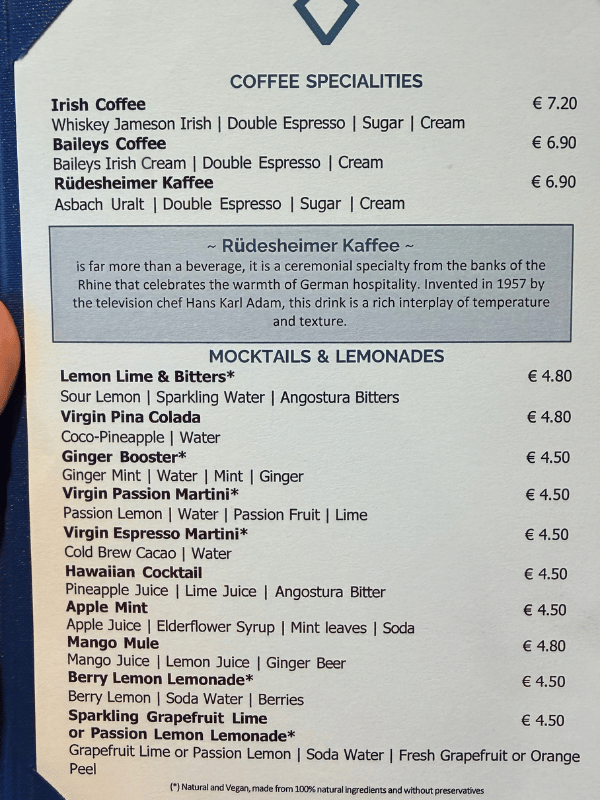
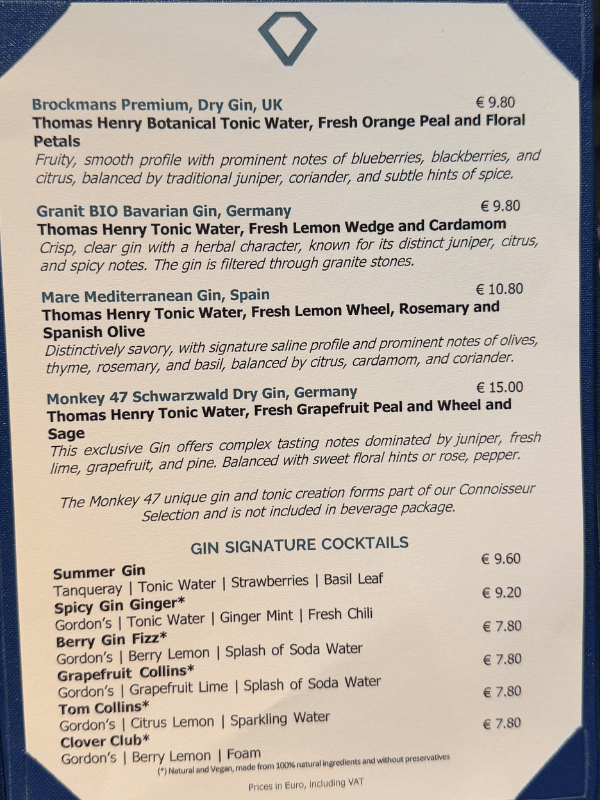
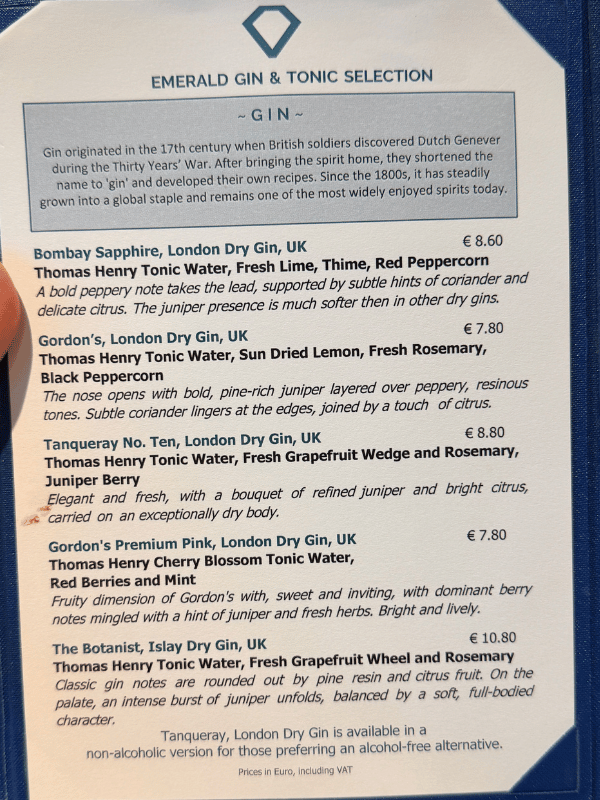
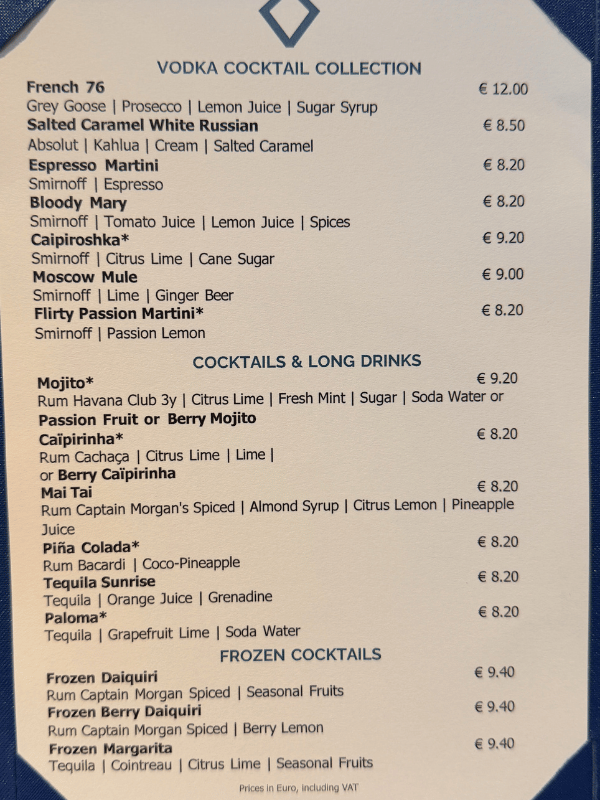
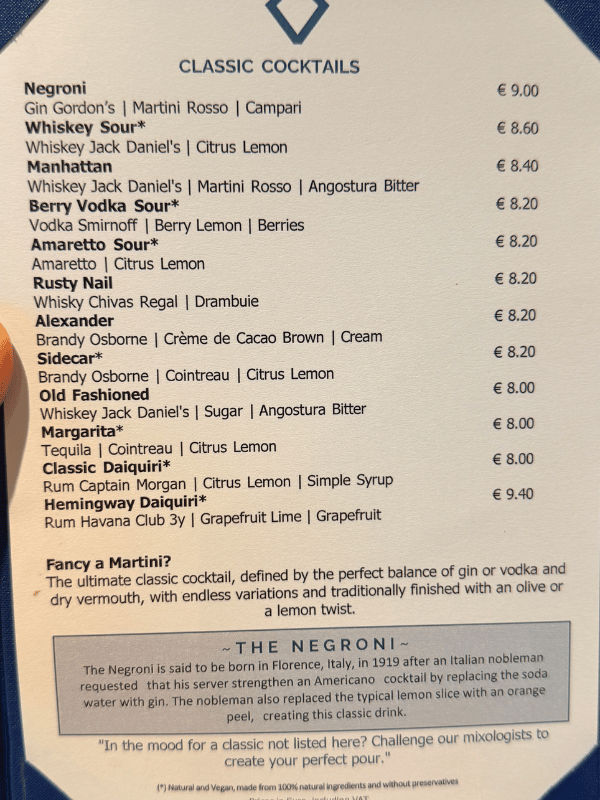
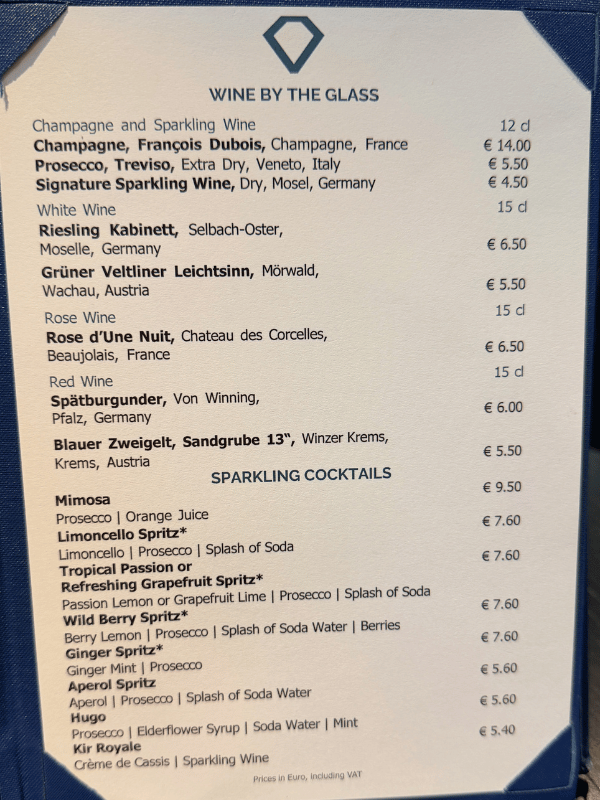
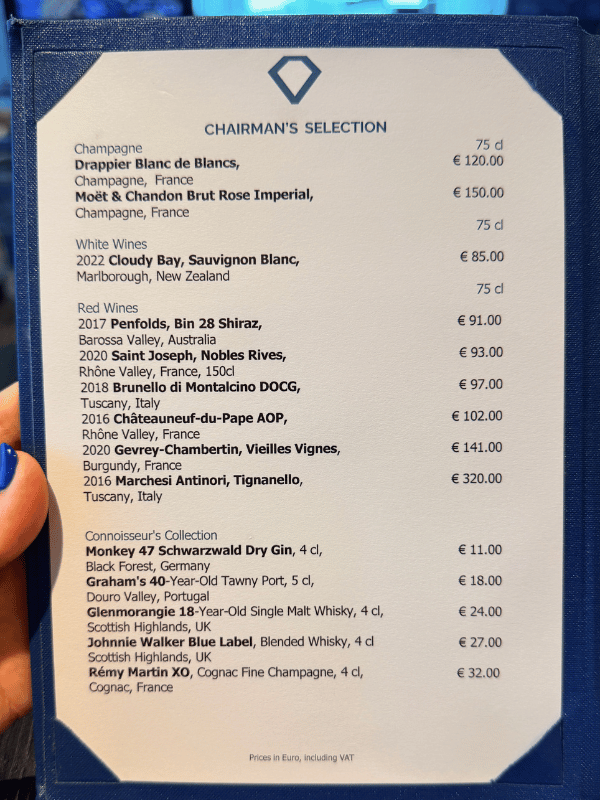
If you’d like to get a beverage package you have the choice of:
Premium Package: €14.50pp per day. Enjoy red and white house wines by the glass, draft beers, non-alcoholic beers, soft drinks, juices and mocktails.
Platinum Package: €28.50pp per day. Everything in the Premium Package as well as cocktails, house-brand spirits and mixers, bottled wines (priced below €27), sparkling wine, Prosecco and bottled beers.
Another optional extra you might want to consider is the DiscoverMORE excursions. These are designed to give you an even deeper look at the destinations you’re visiting.
They’re completely optional though, and I never felt like I was missing out by sticking to the included programme. Sometimes they would be offered as an alternative to an included excursion, and sometimes they would be in addition, such as in the evening.
Spa treatments, purchases from the onboard shop and drinks from the minibar in your cabin all cost extra too, which you’d expect. I do think that putting crisps and chocolate in your mini bar is a great idea though!
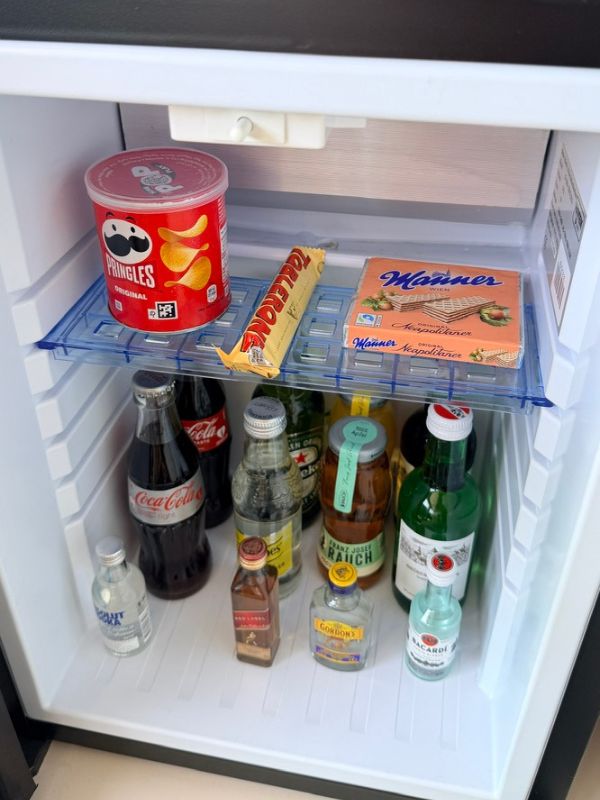
For me, that’s a pretty sensible list. The essentials are already covered, while the extras are exactly that – extras. It means you can keep your spending to a minimum if you want to, or treat yourself here and there without feeling like you’re constantly being upsold.
Before my cruise, I knew Emerald Cruises included quite a lot. I just hadn’t realised quite how much of the holiday would already be taken care of.
Once you add up the airport transfers, accommodation, meals, drinks with lunch and dinner, gratuities, excursions, WiFi and all of the other little touches, there’s surprisingly little left to pay for unless you choose to.
That’s why I’d always encourage people to look beyond the headline cruise fare. A cheaper price doesn’t necessarily mean a cheaper holiday if you’re paying extra for excursions, tips and everything else once you’re onboard.
Emerald isn’t an all-inclusive cruise line, and it doesn’t pretend to be. But I came away feeling that it includes the things that really matter, while leaving the genuinely optional extras up to you.
For me, that’s a really nice balance.
Get an additional £150pp saving on any departure year (2026 or 2027) when quoting the discount code JENNI.
(Valid on bookings made 01/08/26 to 31/10/26)
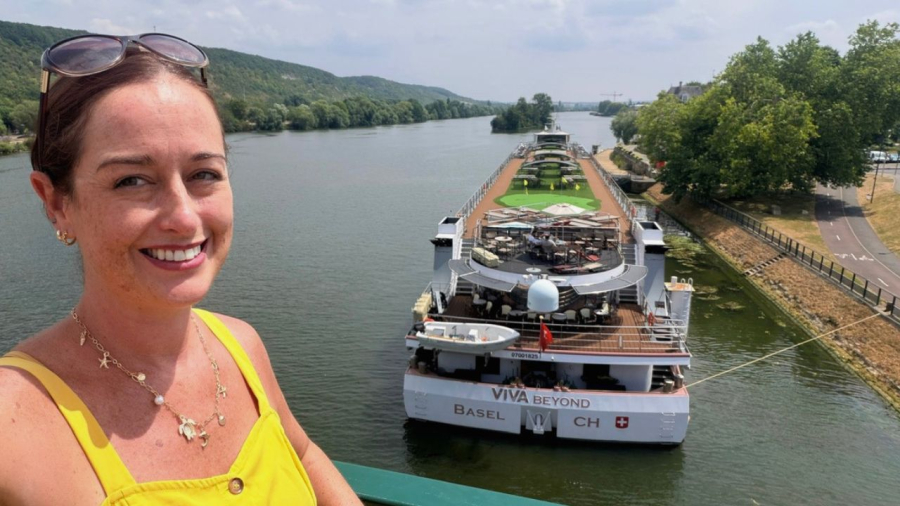
VIVA Beyond isn’t trying to be a traditional river cruise ship. The first ship in Viva Cruises’ new Viva Boutique brand, it’s smaller, more luxurious and much more focused on food, culture and personal service.
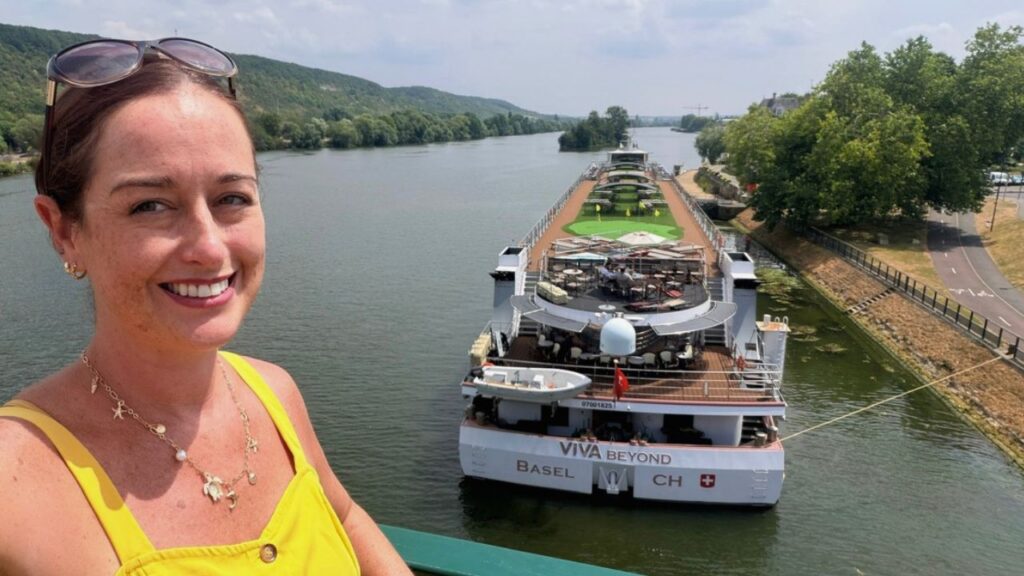
I sailed on the seven-night In the Footsteps of Impressionism itinerary from Paris with my friend, Katie. We usually cruise together on large ocean ships, so this was a completely different kind of holiday.
There were no huge theatres, packed pool decks or endless lists of activities. Instead, we had Michelin-level dining, Champagne whenever we fancied it, peaceful evenings and the constantly changing scenery of the Seine.
No cruise ship is perfect for everybody, and VIVA Beyond has a particularly clear audience. If you enjoy fine dining, all-inclusive drinks, quiet surroundings and travelling at a gentle pace, it could be exactly what you are looking for.
VIVA Cruises hosted our sailing. As always, the cruise line had no control over my opinions, and this review reflects my honest experience.
You can also watch my full VIVA Beyond video review here.
VIVA Beyond is the first ship in the premium VIVA Boutique collection. The newly renovated ship began sailing on the Seine in 2026 and combines a modern boutique-hotel feel with a distinctly French focus.
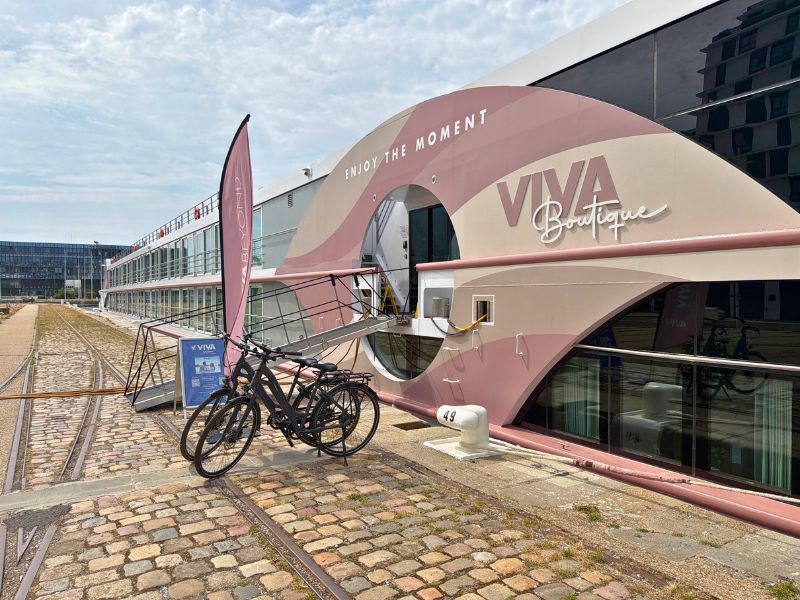
| VIVA Beyond Ship Detail | |
|---|---|
| Maximum guests | 112 |
| Cabins | 56 |
| Length | 110 metres |
| Width | 11 metres |
| Passenger decks | 3 |
| Crew | Approximately 30 |
| Restaurants | 3 |
| Main sailing region | The Seine, France |
Half of the cabins are suites, with the largest measuring up to 30 square metres. That is a generous amount of space for a river ship carrying only 112 passengers.
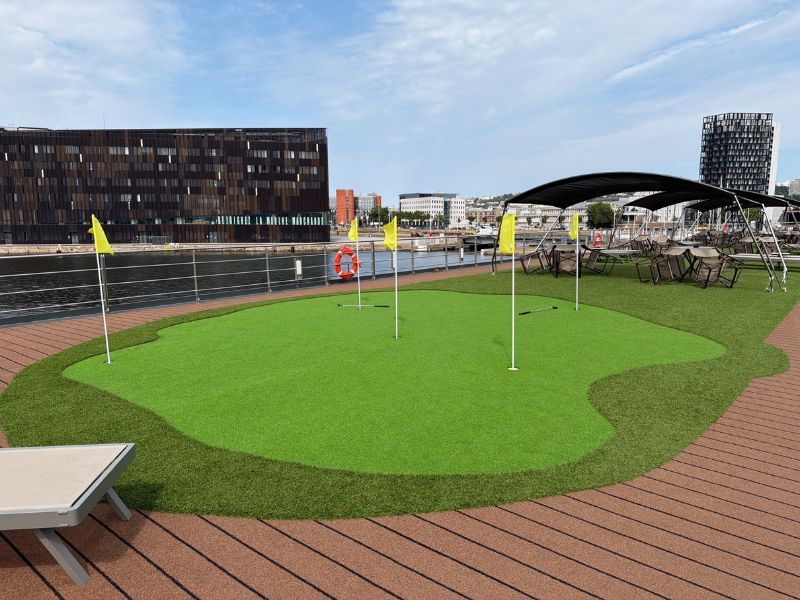
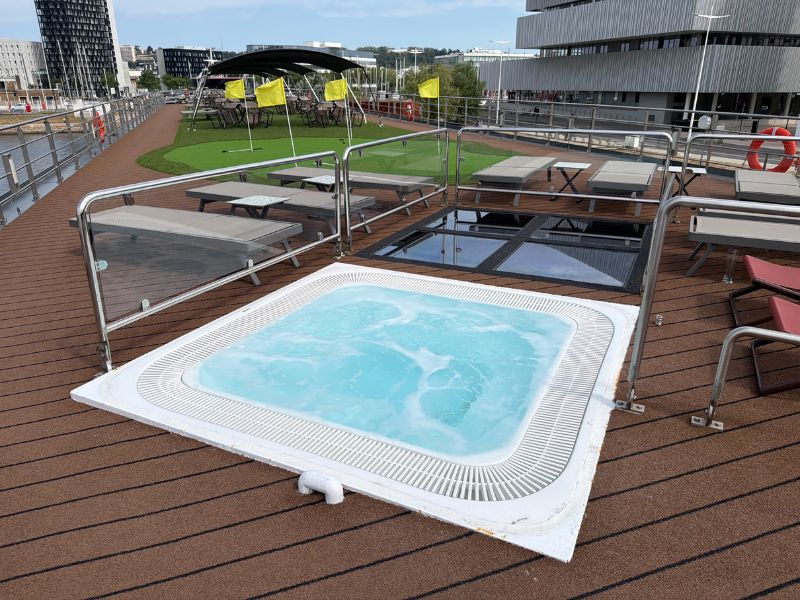
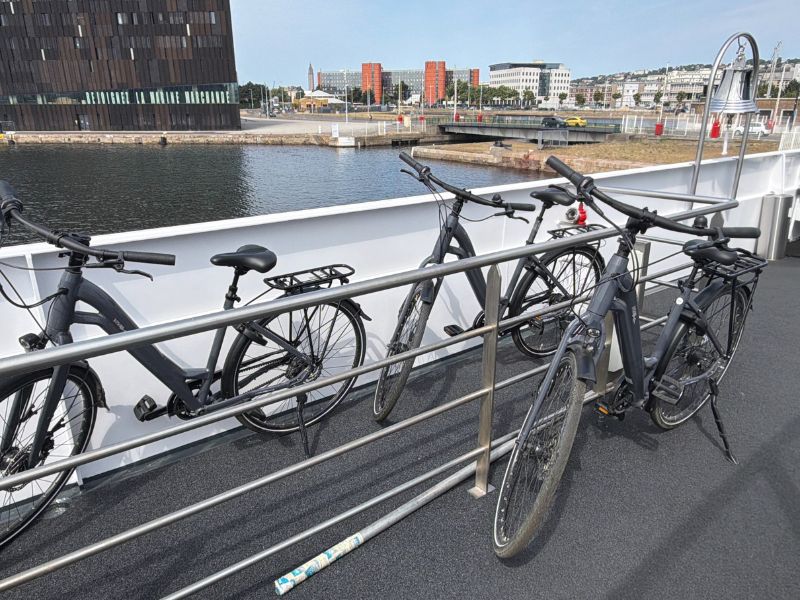
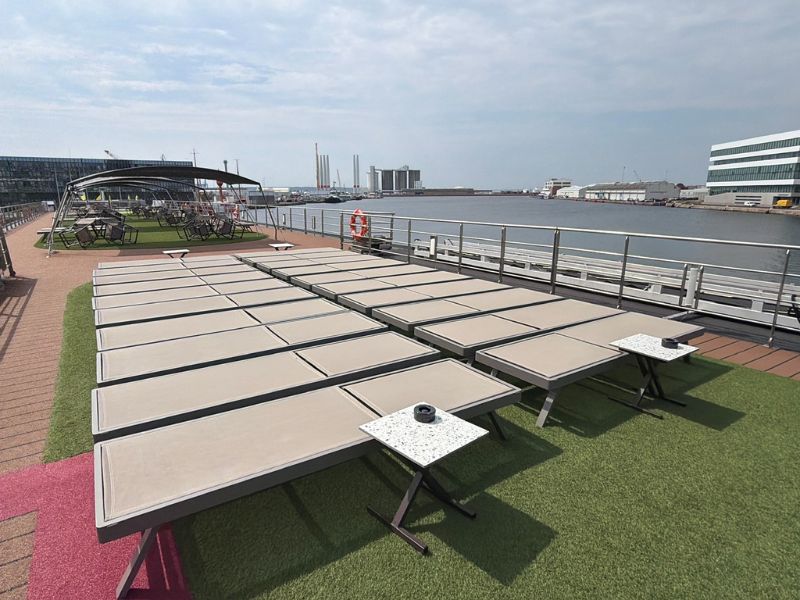
The ship also has a lounge and bar, a gym, massage room, bicycles, and a large sun deck with a small hot tub and putting green.
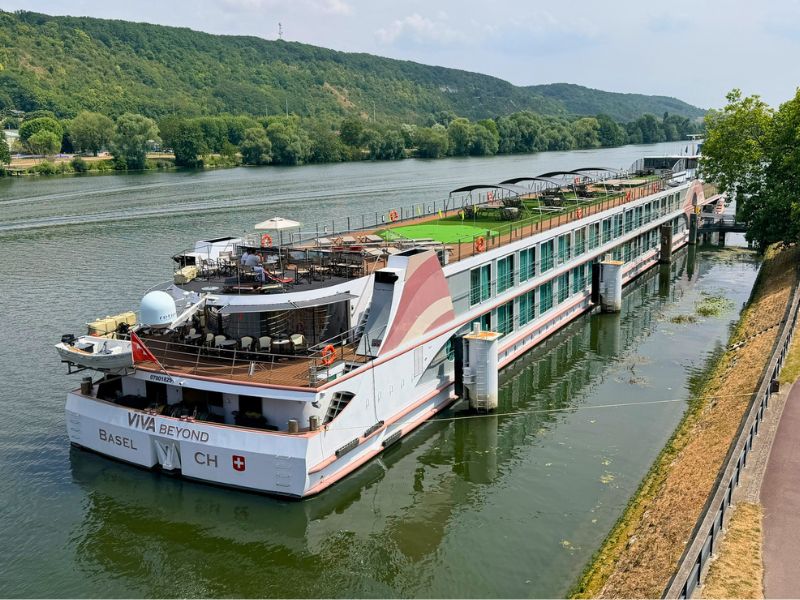
Once onboard, the first thing that struck me about the ship was how intimate it felt. With a maximum of 112 guests, it didn’t take us long to explore, but every area felt modern and carefully designed.
The ship has a calm, elegant atmosphere rather than the busy feeling you get on a large ocean cruise ship.
The most memorable part of our first evening came when VIVA Beyond sailed away from Paris at around 11pm. The timing meant that we passed the Eiffel Tower just as it began to sparkle.
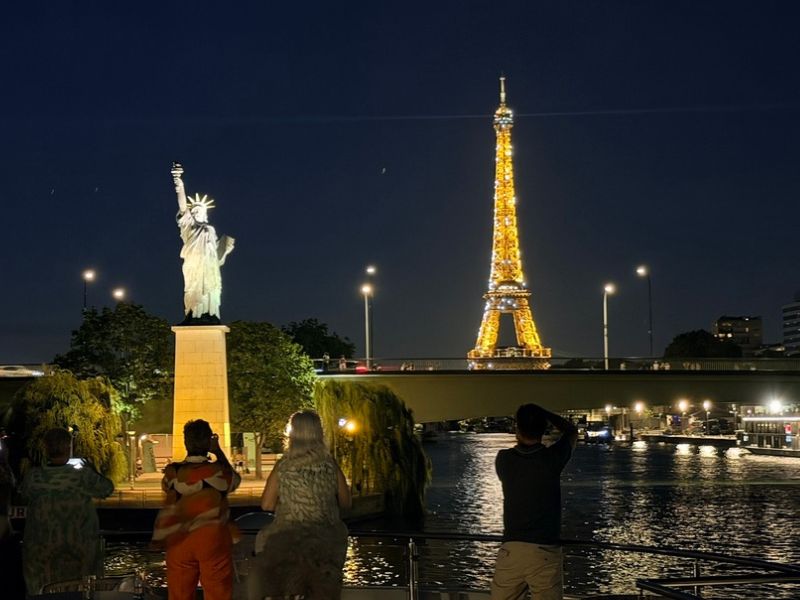
Watching it glitter as the ship turned on the river was one of those travel moments I will remember forever. It was a spectacular start to the cruise.
VIVA Beyond has 56 cabins, with around half of them falling into one of the suite categories. The largest suites measure up to 30 square metres, which is particularly spacious by river cruise standards.
We stayed in a Panorama Balcony Suite (Category A). The design felt contemporary and premium, with a large panoramic window that brought the river scenery into the room. The balcony area was integrated into the cabin rather than taking up a separate outdoor space, so we could enjoy the view in comfort whatever the weather.
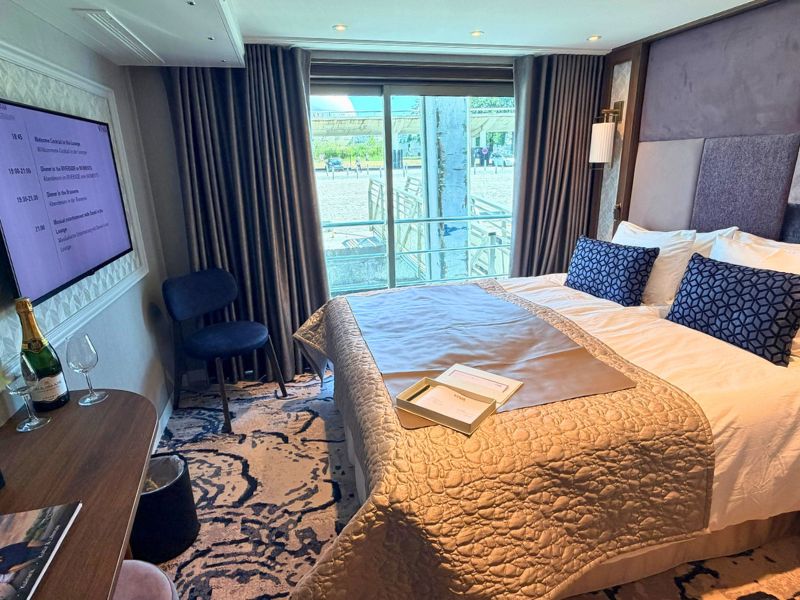
There was also a large selection of movies available through the television. That suited the peaceful style of the ship perfectly, and we enjoyed having a couple of relaxed movie nights after busy days ashore.
We were also thrilled to discover that the mini bar in our room was included! This is such a rare treat, as usually on a cruise, even when the drinks are included, you would be expected to pay extra for the mini bar.
While most river cruise ships have only one restaurant, VIVA Beyond had three! Fitting three restaurants onto a ship for only 112 guests is very impressive. And what’s even more impressive is that they’re all included in the cruise fare.
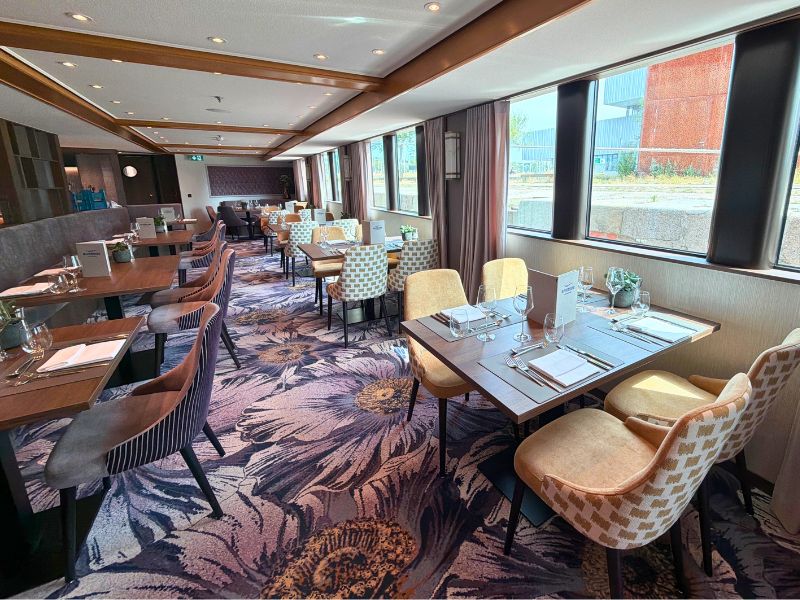
Riverside is the main restaurant and is open for breakfast, lunch and dinner.
Breakfast is served buffet-style, with additional dishes available to order from the menu. At lunch, starters and desserts are offered from the buffet, while the main course is ordered at the table. Dinner is a proper sit-down meal with multiple courses.
The menus have a strong French influence and the presentation is elegant. There was usually one meat, one fish and one vegetarian dish to choose from.
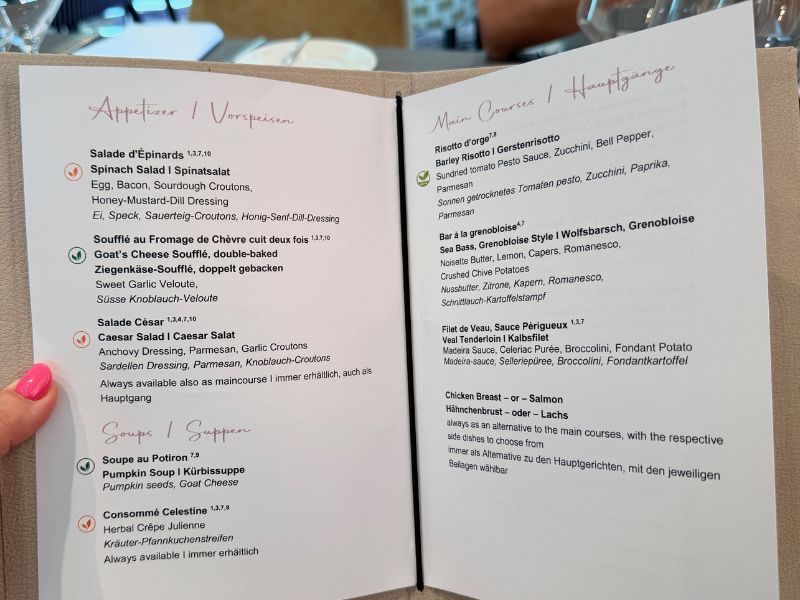
Dining times are more flexible than on some river cruises. We didn’t have to appear exactly at 7pm, and there was no fixed seating plan. Tables for two were readily available, which will appeal to couples and friends who prefer to dine privately.
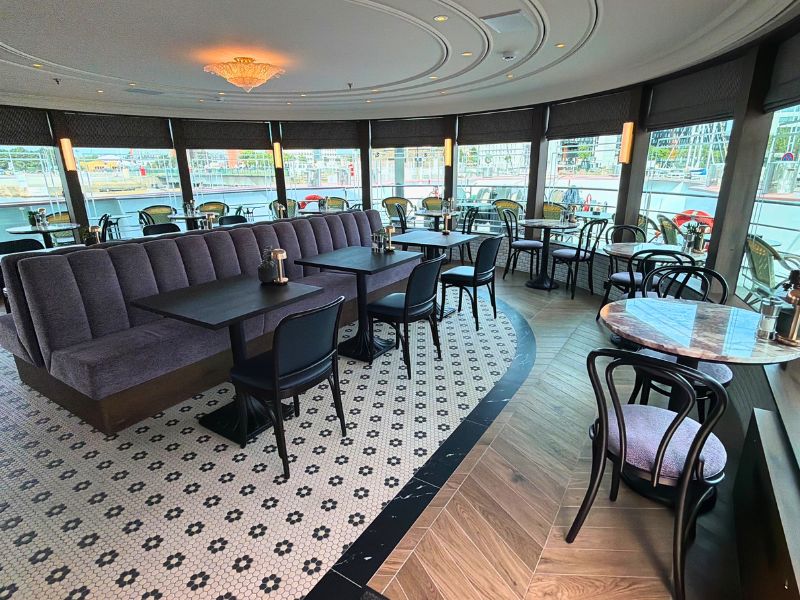
VIVA’s Brasserie is a smaller alternative restaurant, open for lunch and dinner. It has its own menu with a selection of classic French dishes such as snails, onion soup and croque monsieur.
The Brasserie menu remained the same during our cruise, but it provided useful alternatives to the main restaurant. Having a second choice of restaurant at lunch was great, but as the menu was quite small, didn’t change throughout the cruise and didn’t have any vegetarian options at dinner, we didn’t eat here very often.
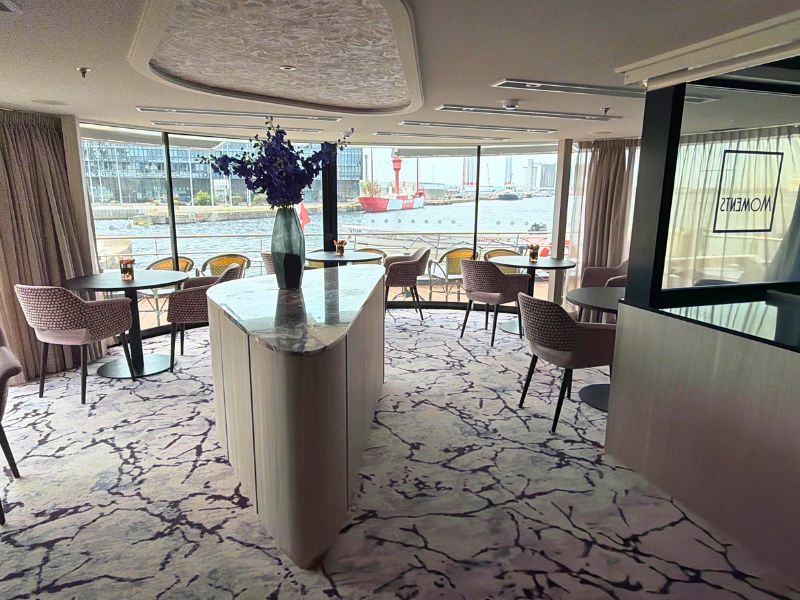
Moments is the culinary highlight of VIVA Beyond. The tasting menu was created by Michelin-starred chef David Goerne and takes guests through a long sequence of beautifully presented courses.
A vegetarian tasting menu was available, and the team could also cater for dietary requirements. Best of all, dining at Moments was included in the cruise fare rather than carrying an additional speciality restaurant charge.
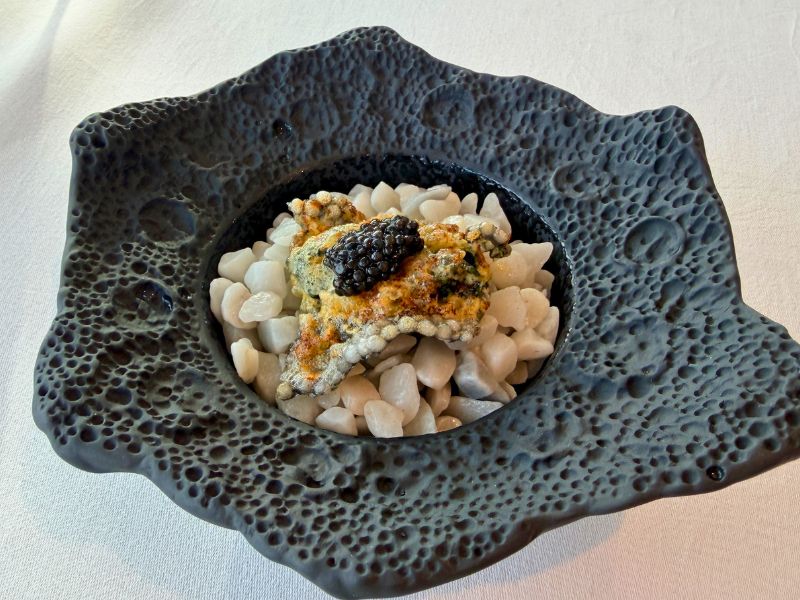
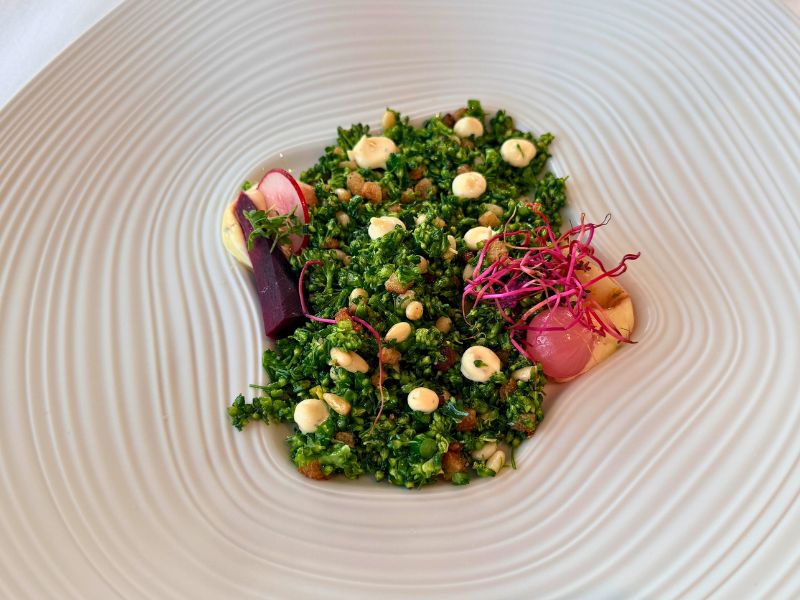
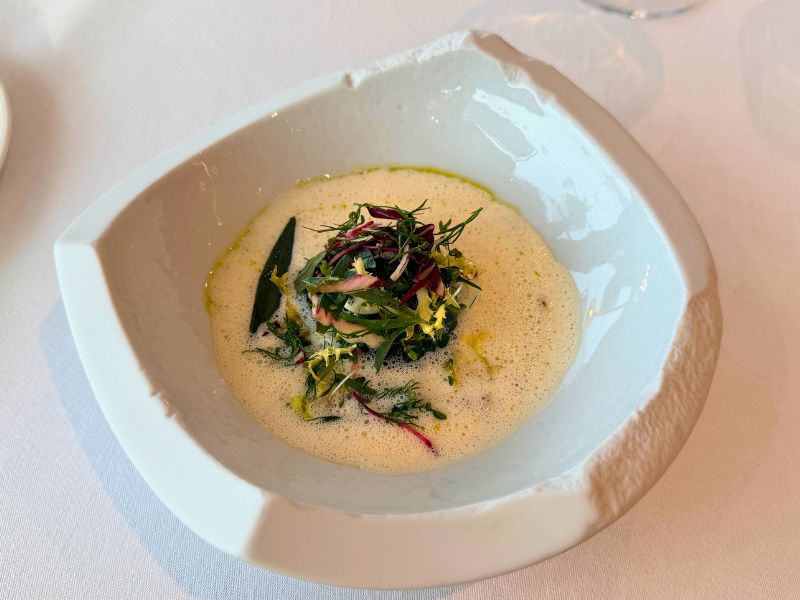
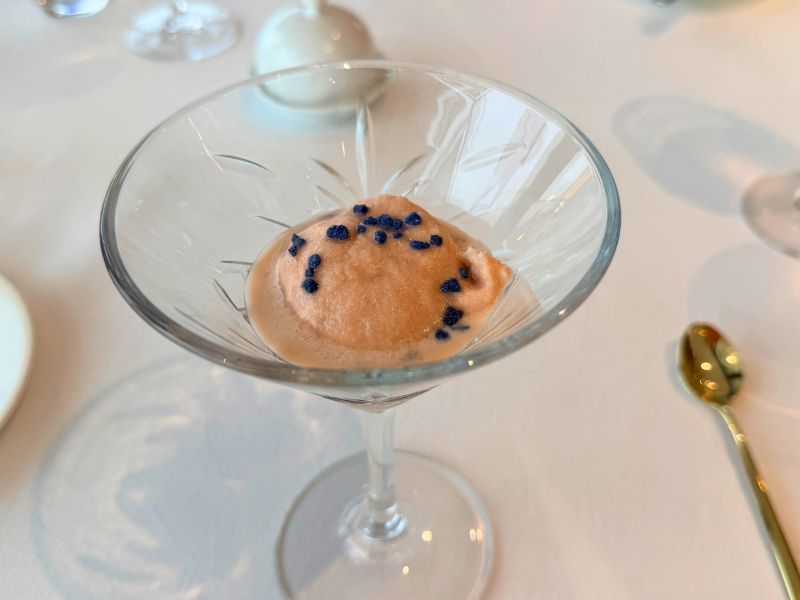
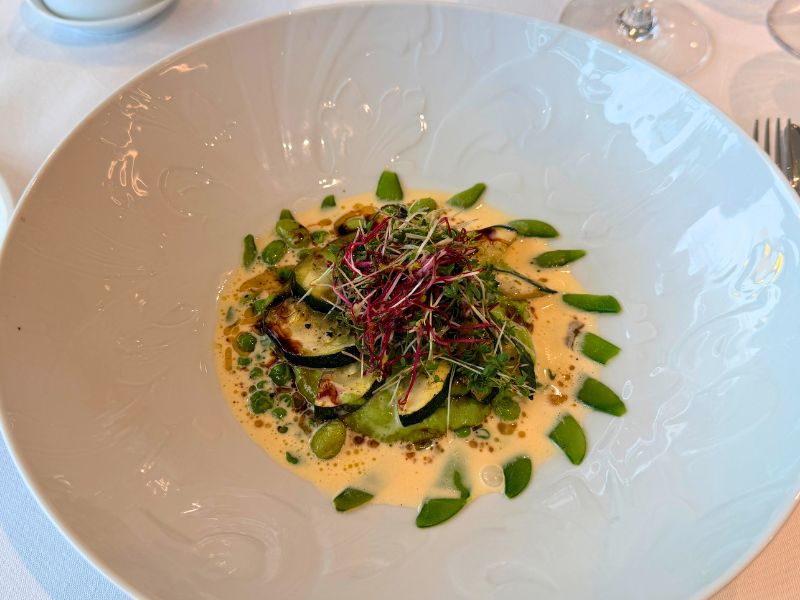
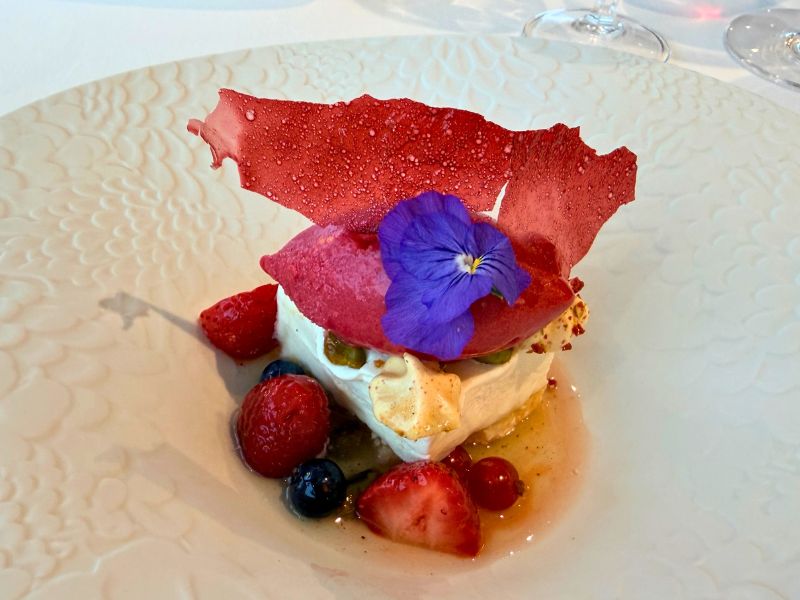
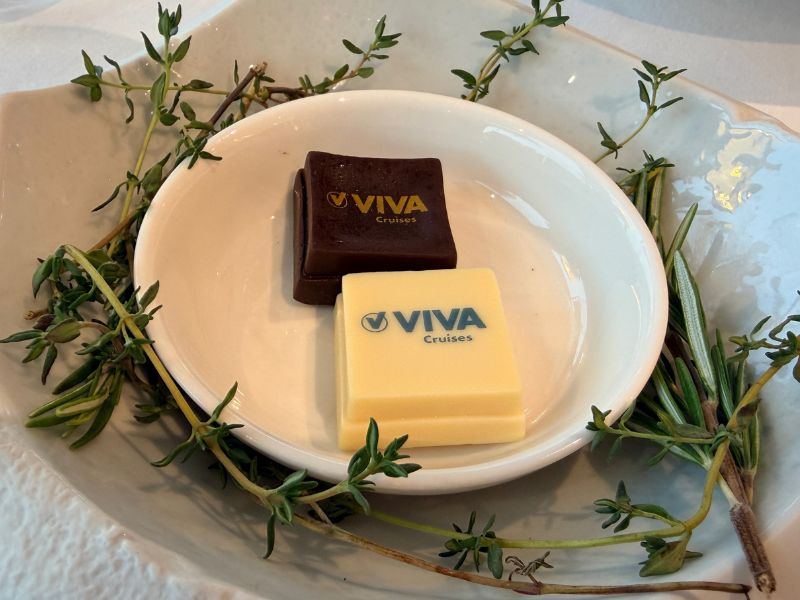
The food across VIVA Beyond is refined and distinctly French. Depending on the menu, you may see ingredients such as oysters, caviar, foie gras or beef tartare.
If you love fine dining and enjoy trying elaborate dishes, food could easily become the highlight of your cruise.
Although everything was prepared to a high standard, this isn’t the type of food that I personally enjoy and I did find myself craving simpler options such as a pizza, curry or a hearty jacket potato.
The meals were quite light and I found the lack of snacks between meals to be a struggle, especially if we had lunch at 12pm and then dinner wasn’t until 7pm. Sometimes, there was cake at 4pm, but not every day. Usually I just had to ask for some nuts at the bar.
Many river cruise lines include wine and beer only during lunch and dinner. VIVA Cruises takes a much more generous approach.
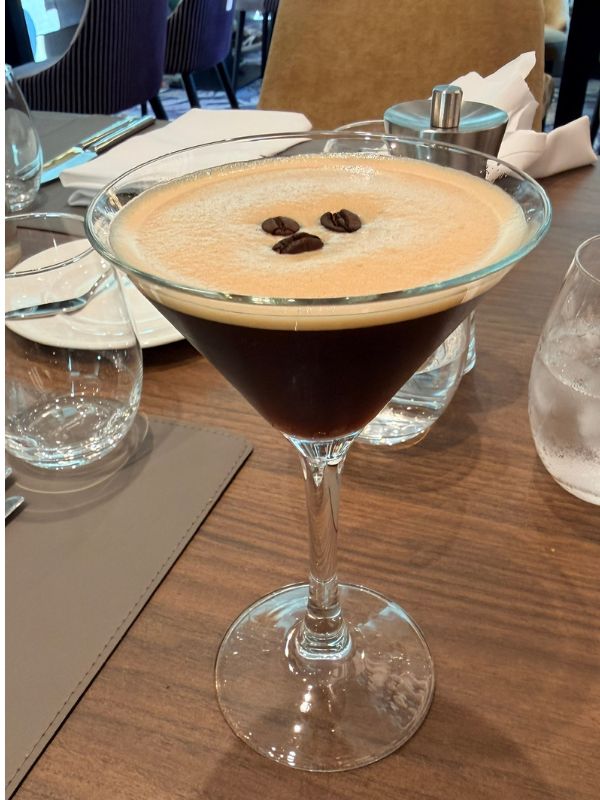
Wine, beer, spirits, cocktails, soft drinks and hot drinks are available throughout the day. We were offered Champagne as soon as we walked into the bar, and the crew happily brought cocktails to us while we sat on the sun deck.
It creates a very relaxed experience because you don’t have to think about drinks packages, keep signing receipts or wonder how much will be added to your final bill.
The included drinks were a major strength of the cruise. If you enjoy good wine, Champagne or a cocktail while watching the scenery, the all-inclusive package adds real value.
The atmosphere on VIVA Beyond is quiet, elegant and unhurried.
In the evenings, there was usually live piano music in the lounge. On one night, a French guest singer came onboard to perform. There were also board games and card games, plus the movies available in each cabin.
This is not a ship with large production shows, nightclubs or a packed programme stretching into the early hours. The focus is on quiet conversation, drinks, food and, of course, above all, the destinations.
Many guests were happy to enjoy dinner, listen to the pianist and then have an early night before the following morning’s excursion. That rhythm works particularly well on a river cruise, where days often begin earlier than they do on an ocean cruise with excursions scheduled for as early as 8am.
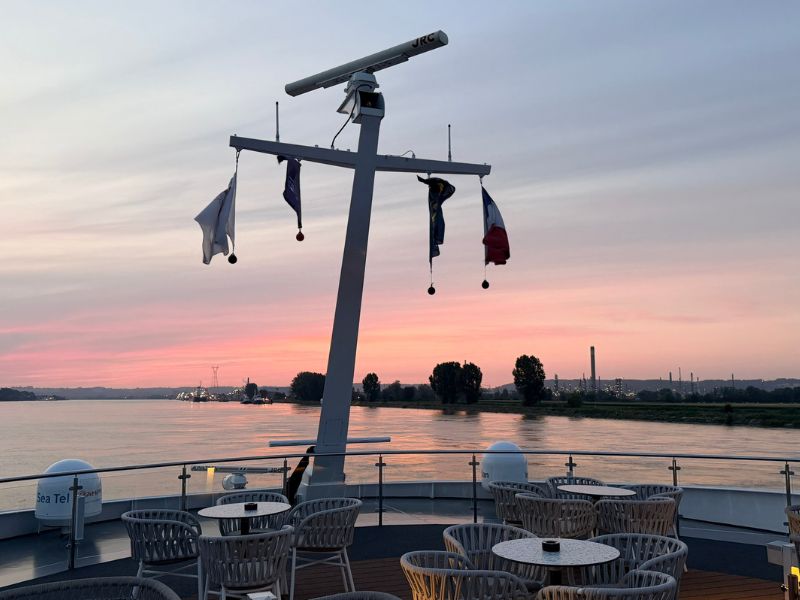
On our sailing, most of the other guests were German-speaking. We had no difficulty speaking English with the crew, and there were some other English-speaking passengers onboard, but the passenger mix did make the cruise feel very international.
This will vary between departures, but it is worth remembering that VIVA Cruises attracts guests from across Europe rather than sailing exclusively for the British market.
The sun deck is one of the best places to appreciate the Seine. There were plenty of loungers, chairs and tables, and the ship never felt remotely crowded. In fact, it often seemed as though there were way more seats than people!
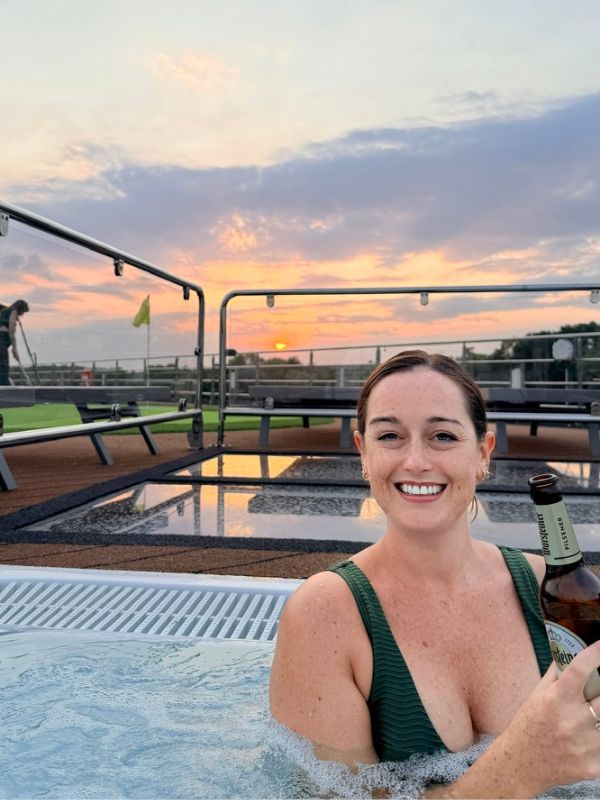
There is also a putting green and a small hot tub which was a lovely place to sit while the countryside passed by.
VIVA Beyond also has a fitness room with a treadmill, exercise bike, rowing machine and weights, as well as a massage area. Bicycles are available for guests who would like to explore ashore independently.
Our seven-night cruise was called In the Footsteps of Impressionism. It sailed from Paris to Le Havre and back again, calling at places associated with some of France’s most famous artists.
The itinerary was:
The theme connected the destinations with artists including Monet and Van Gogh. For anyone interested in art history, it gives the journey much more meaning than simply moving between a series of attractive French towns.
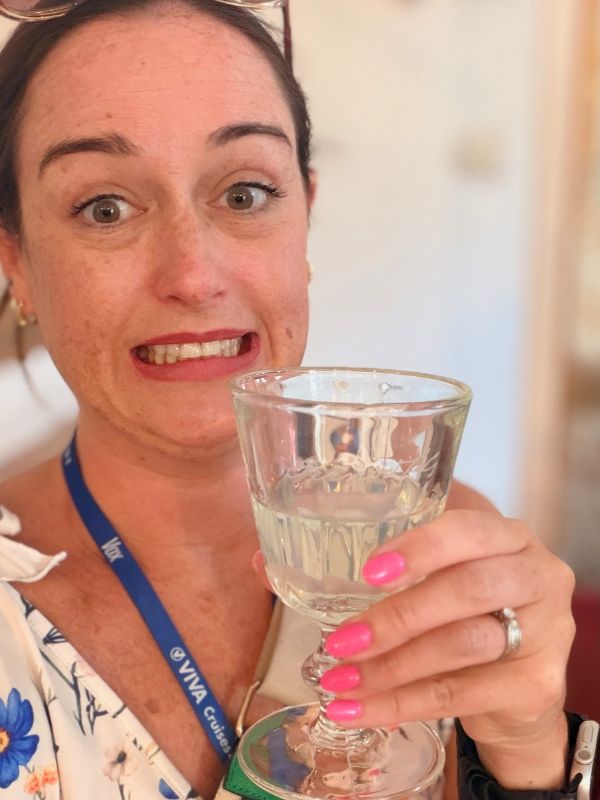
One VIVA Signature excursion was included on our departure. Ours visited Auvers-sur-Oise, with its connections to Van Gogh, and included the Absinthe Museum and a tasting.
The tour was on the first morning of the cruise and it started at 8am. It was fun, but nothing makes you regret last night’s cocktails quite as much as tasting the notoriously luminous green spirit that is absinthe at 9 o’clock in the morning!
Other excursions were available to purchase, but we chose to explore independently, as that was a little more cost-effective than the organised tours.
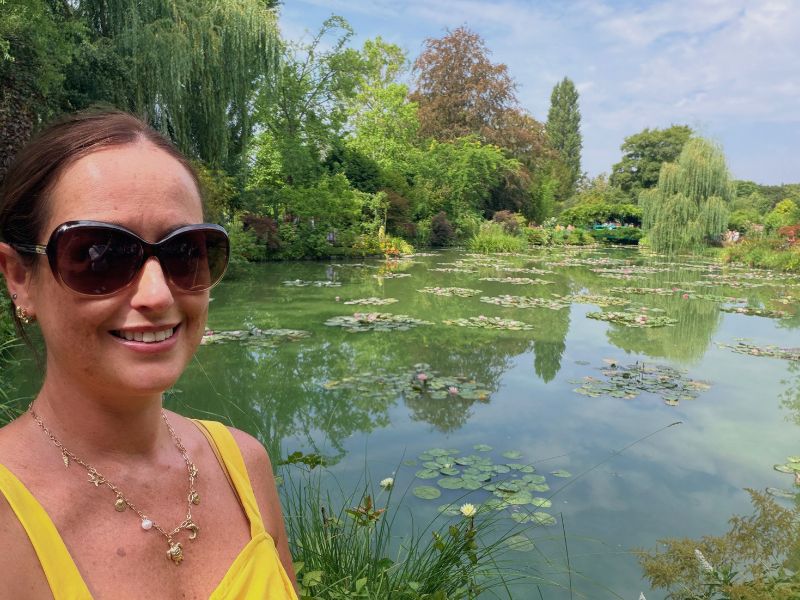
In Vernon, for example, we took an Uber to Monet’s house and gardens in Giverny, bought our own entrance tickets and returned to the ship when we were ready. That worked perfectly for us because we could move at our own pace rather than spending every day on an organised walking tour.
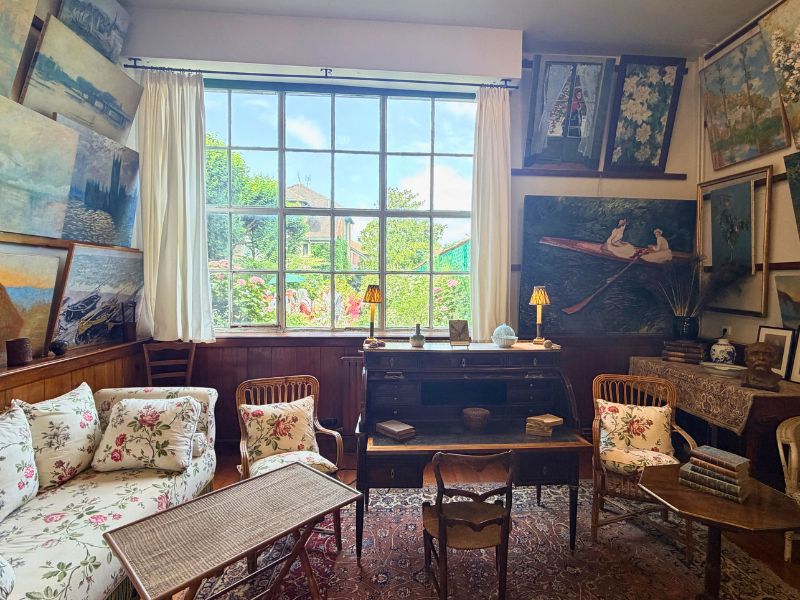
This balance is one of VIVA’s strengths. Those who want everything arranged can book excursions, while independent travellers don’t feel as though they are paying for a full package of tours they may not use.
On an ocean cruise, Le Havre is often treated as the port for a day trip to Paris. On this river cruise, travelling between Paris and Le Havre was the holiday itself, and it took a full week!
The pace is much slower and gentler. There’s time to admire the elegant houses, small beaches, villages, swans and countryside as they pass the windows. Near Le Havre, the scenery becomes more industrial, which I found interesting in a completely different way.
The view’s always changing, and that’s one area where river cruising can beat ocean cruising. Rather than looking out at an empty horizon, there’s almost always something new to see.
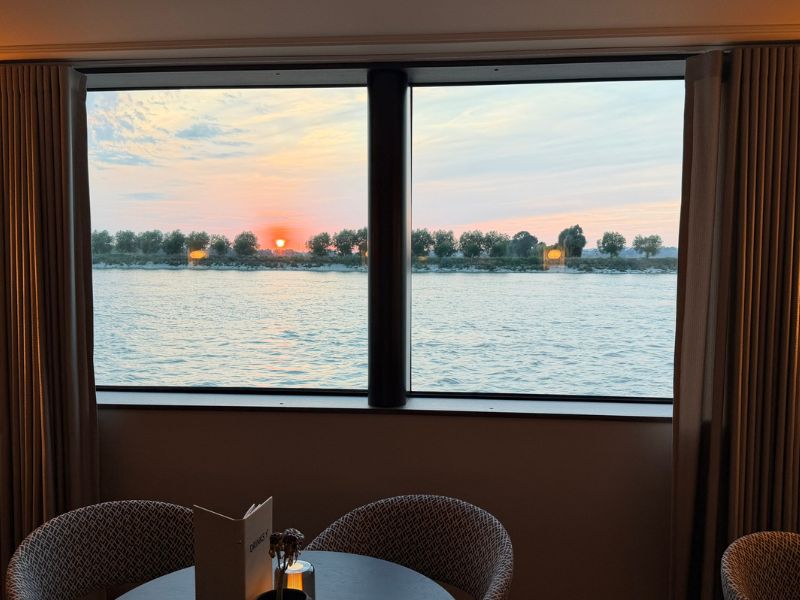
You do need to embrace a couple of river cruise quirks. Ships occasionally dock alongside each other, so your beautiful river view can suddenly become a close-up of another cabin. (Don’t open your curtains while naked!) At other times, you might open the curtains to find a wall beside you.
It is simply part of how river ports operate, and the view may be completely different again by the time you return to your cabin.
The crew were consistently warm, friendly and attentive. In fact, I’d go as far as to say that they were some of the most lovely crew members I’ve ever met. I expect that the low number of guests onboard meant that they had more time to chat to us.

On such a small ship, it doesn’t take long for the team to recognise every guest and remember what they like. Drinks appeared without fuss, questions were answered cheerfully and the service felt personal without becoming overly formal.
That combination suited VIVA Beyond very well. The ship felt luxurious, but it never felt stuffy.
The standout feature of VIVA Beyond was how spacious and peaceful it felt despite being a relatively small river ship.
There was always somewhere to sit, the cabin was beautiful and the three restaurants provided far more variety than I expected. The included drinks made everything feel effortless, while the crew created a genuinely welcoming atmosphere.
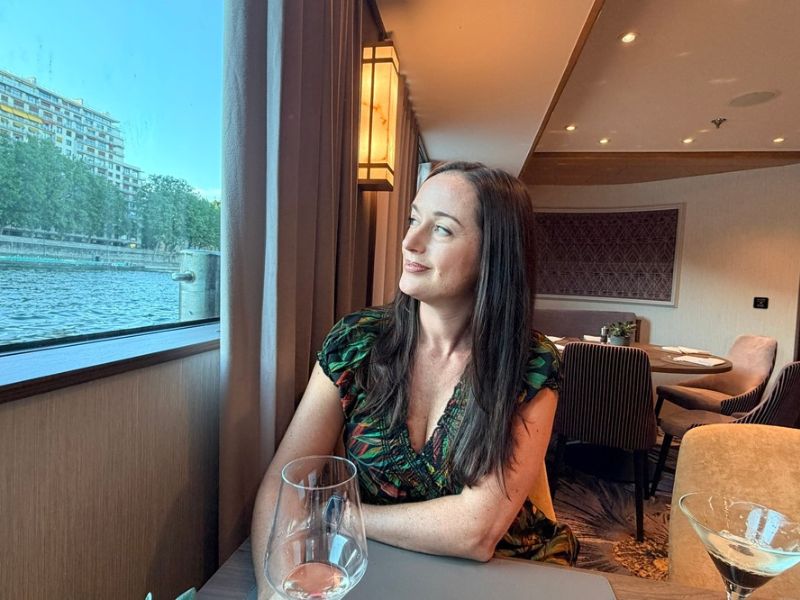
The Seine scenery was another highlight. Even when we were doing very little, we could sit outside with a drink and watch France move slowly past us.
And nothing topped that first-night sailaway beneath the sparkling Eiffel Tower.
VIVA Beyond could be an excellent choice if:
Choosing the right cruise is largely about matching the ship to the type of holiday you enjoy.
VIVA Beyond is deliberately calm. Evening entertainment is limited compared with an ocean cruise, and the food is more refined than casual. Breakfast and excursions can begin early, while sun deck access sometimes changes because of low bridges.
The passenger mix can also be international, so you may hear more German than English on some sailings.
None of these things is a problem for the right guest. In fact, they are part of what makes the ship so appealing to people who want peace, privacy and a more European style of river cruise.
If you arrive expecting late-night parties, large theatre shows and casual food around the clock, it may not be the best match. If you want to slow down, eat exceptionally well and immerse yourself in France, it makes much more sense.
VIVA Beyond is a beautiful, luxurious river ship with a very clear personality.
It combines the intimacy of a small ship with three excellent restaurants, genuinely inclusive drinks, stylish accommodation and exceptionally friendly service. The themed Seine itineraries add depth to the destinations, while the flexible approach to excursions gives passengers valuable freedom.
The experience was very different from the lively ocean cruises Katie and I usually take together, but that is not a criticism of the ship. VIVA Beyond does exactly what it is designed to do.
For travellers who appreciate fine dining, art, elegant surroundings and a slower pace, this could be a wonderful way to experience Paris and Normandy.
If you’d like to take a closer look at this itinerary or see what else VIVA Cruises has to offer, visit the VIVA Cruises website.
I also have a full review of this cruise on YouTube…
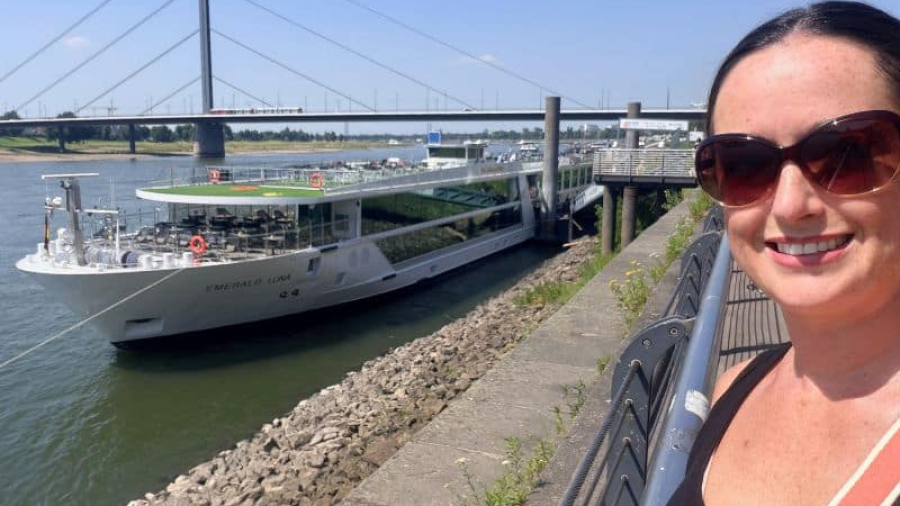
Before sailing on Emerald Luna, I wasn’t sure whether river cruising would feel relaxing or restrictive.
By the end of the week, I had found some features I absolutely loved, a few things I hadn’t expected and one of the most sociable cruise experiences I’ve ever had.

Here’s my honest review of the cabins, food, excursions, facilities and what it is really like to cruise the Rhine with Emerald.
Disclosure: I travelled as a guest of Emerald Cruises. As always, all opinions are my own.
I sailed on Emerald’s eight-night Jewels of the Rhine itinerary, travelling from Switzerland to the Netherlands with stops in Breisach, Strasbourg, Mannheim, Koblenz, Cologne, Dusseldorf and Amsterdam.
The trip began with a flight to Basel and an overnight hotel stay before we joined the ship in Breisach the following day. At the end of the cruise, Emerald Luna stayed overnight in Amsterdam, giving us more time to enjoy the city before flying home.
Flights, airport transfers and the pre-cruise hotel were all included, so the journey felt more like a complete holiday package than a cruise booked in isolation.
On paper, the itinerary offered exactly what I had pictured from a Rhine river cruise: historic cities, smaller riverside towns and plenty of scenic sailing.
In reality, some parts were exactly as beautiful as I’d hoped, while others were very different from what I had imagined. That contrast turned out to be one of the most interesting parts of the whole trip.
As we stepped onboard and were greeted with a refreshing cold towel and a glass of something nice, I was blown away by how modern and luxurious the ship looked.
Emerald Luna is one of Emerald Cruises’ purpose-built Star-Ships, and it feels far more like a boutique hotel than the traditional river cruise ship I had pictured.
Emerald owns and operates its river fleet rather than chartering ships from another company. That gives the cruise line more control over everything from the cabins and dining to the service and onboard facilities, and the whole experience felt polished and consistent.

Inside, the ship is bright, contemporary and filled with natural light. Huge windows wrap around the lounge and restaurant, so even when you are eating, having a drink or cooling off indoors, the Rhine is still very much part of the experience.
One of my favourite places was the outdoor seating area at the front of the ship. It was shaded, peaceful and gave you an uninterrupted view of whatever was appearing around the next bend.
I stayed in a Panorama Balcony Suite, which I absolutely loved. It was modern and comfortable with plenty of storage. Although it’s called a suite, I’d say that it’s a little smaller than the average balcony statetoom on an ocean cruise ship.
The standout feature was the floor-to-ceiling panoramic window. At the touch of a button, the upper section of the window lowered to create an indoor balcony-style space.
This is a clever design because you don’t lose any internal floor space to a separate outdoor balcony. You can sit beside the open window and enjoy the fresh air and views while remaining inside your cabin.
All suites on Emerald Luna have floor-to-ceiling windows, although the exact design varies depending on the accommodation category.
My suite included plenty of amenities…


The bed was very comfortable, the décor felt fresh and the panoramic window made the room feel light and spacious.
One thing to be aware of on river cruises is that ships sometimes dock side by side. This can temporarily block the view from your cabin and may mean that another guest’s window is directly opposite yours.
This is normal on busy rivers and isn’t unique to Emerald Cruises, but it is worth remembering before opening your curtains in the morning!
Emerald Cruises describes its approach as “A Better Way to Cruise”, with many of the main holiday expenses included in the fare.
Depending on your booking, inclusions can include:
I particularly appreciated that the included gratuities also covered the guides and drivers on Emerald’s excursions. There was no pressure to give additional tips every day, although guests could still give something extra if they wished.
(Exactly what’s included may depend on your itinerary and booking terms, so it is always worth checking the details before confirming.)
The food was one of the highlights of my cruise!
Emerald Luna has just one restaurant, where breakfast, lunch and dinner are served. The menus are naturally smaller than those on a large ocean ship, but everything I tried was fresh, well prepared and attractively presented.
Breakfast was buffet-style, with a wide selection of hot and cold options. There was also an egg station. The food was tailored well to the different nationalities onboard, with British-style baked beans, American-style bacon, bagels, pastries, fruit and cereals.
At lunchtime, starters, salads and desserts were served buffet-style, while the main courses could be ordered from a menu. The salad selection was particularly good. It changed regularly and included plenty of colourful, fresh and nutritious ingredients.

Dinner was served at the table, with several courses and a choice of dishes that always included a meat option, a fish option and a vegetarian option.

The food generally felt healthier than the food I often eat on ocean cruises. There wasn’t the temptation of pizza, burgers and ice cream being available all day. Instead, there were three substantial meals made with good-quality ingredients.
Emerald also arranged a dietary meeting, giving guests the opportunity to discuss allergies, preferences and special requirements with the head chef, which was excellent. Each day, anyone with dietary requirements would receive a copy of the menu for the following day under their door. That gave us the option to speak to the chef ahead of time, to request any adjustments, although I never actually needed to.

Beer, wine and soft drinks are included with lunch and dinner. Speciality teas, coffees and filtered water are also available throughout the day.
Guests who want drinks outside mealtimes can either pay as they go at the end of the cruise, or purchase one of Emerald’s additional drinks packages.

I thought the individual drinks prices were reasonable. During my sailing, beer cost around €4, wine was approximately €6 per glass and cocktails were generally around €8 or €9. There was no additional gratuity added to the advertised price.
This means that guests who only want the occasional drink in the evening may not necessarily need to purchase a drinks package.
There was a fantastic selection of cocktails to choose from, and the bartenders were happy to make things that weren’t on the menu too. I particularly loved the frozen cocktails. Emerald Cruises uses reusable glass straws, which is a great touch.
The wine waiters were very generous at mealtimes and our glasses never got empty! Officially, there was a choice of red or white, but I always asked for rose and was given it without question. Non-alcoholic wines and beers were also available.
One of the most unusual features on Emerald Luna is the indoor swimming pool at the back of the ship.
Many river cruise ships either have no pool at all or only offer a small hot tub. Emerald Luna has a proper pool with large windows overlooking the river, comfy padded sunloungers and egg chairs.
The water was cool enough to be refreshing during the exceptionally hot weather, and it was a lovely place to relax after returning from an excursion. If you press a button, a current activates which you can swim against.
In the evening, the pool floor rises, the water disappears underneath and the space transforms into a cinema. A large screen is lowered, chairs are arranged and popcorn is served.

The same area can also be used for activities such as yoga, Pilates and stretching classes in the morning.
This flexible space is a brilliant idea and one of the features that most clearly distinguishes Emerald Luna from many other river ships.
Emerald Luna carries a large selection of e-bikes which can be used on organised cycling excursions. When they are not required for a guided activity, guests may also be able to borrow them independently.
E-bikes are particularly well suited to river cruising because many European river routes have flat cycle paths running alongside the water. They also make it easier for people with different fitness levels to cycle together.
Unfortunately, I couldn’t use them because I had broken my big toe shortly before the cruise, but several other guests took advantage of them and they had a great time!
The excursions were one of the strongest parts of my Emerald cruise. At least one experience was included on each main touring day, so you could see the key sights without continually paying for extras.

Most tours were led by knowledgeable local guides and introduced us to the history, culture and main attractions of each destination. Depending on the port, there were usually different ways to explore.
Included guided tours – these are the classic sightseeing options, such as guided walks through historic centres and visits to the area’s main landmarks.
EmeraldACTIVE excursions are designed for guests who wanted something more energetic, such as guided hikes or cycling tours using the ship’s e-bikes.
EmeraldPLUS experiences go beyond a standard sightseeing tour and focus on something more distinctive or culturally immersive, such as a classical music concert.
The privated concert was fabulous and I couldn’t believe it was included it the cruise fare. It definitely felt like something that should have had an additional charge.
Emerald also offers optional DiscoverMORE excursions for an additional charge. These give guests the chance to add further experiences beyond the included programme, often with a deeper focus on local customs, food, culture or places farther from the ship.
You certainly don’t need to book them to enjoy the destinations, as the included programme is already substantial. However, they are useful for anyone who wants to fit more into the trip or has a particular interest in one of the optional experiences.
The gentle walking group was one of my favourite aspects of the cruise.
Because I had a broken toe, I was worried about keeping up with the excursions. Emerald divided the guests into a standard walking group and a gentler group for anyone who wanted or needed a slower pace.
The gentle walking group wasn’t only for guests with obvious mobility issues. It was also great for guests who simply preferred to stop more often and take photographs.

The guides looked for shaded places to pause and gave us time to sit down while listening to the commentary. This was particularly valuable during the heatwave we experienced.
This makes Emerald a good option for couples or groups whose members have different walking speeds. However, you should still bear in mind that European river cruises can involve cobbled streets, uneven ground and some walking from coach drop-off points, so they’re not suitable for everyone.
River cruising is generally much more structured than ocean cruising.
Breakfast, lunch and dinner are served within set periods, and included excursions leave at specific times. Some excursions started early, so on most days we needed to set an alarm to wake up.

Because the excursions are already included, most guests tend to follow the organised programme rather than exploring entirely independently. I enjoyed this structure, but it may not suit someone who wants to sleep late and decide what to do at the last minute.
There is only one main restaurant, so you won’t find the huge choice of dining venues available on a large cruise ship. However, guests can choose where and with whom they sit.
The cruise offered a good combination of active days ashore and relaxing periods onboard. I was never bored, but the itinerary was busy enough that I was usually ready for bed by the end of the evening.
Before the cruise, I pictured sailing continuously past vineyards, medieval villages and castles.
There are certainly some spectacular stretches, particularly around the Middle Rhine Gorge. However, I learned that the Rhine is also a busy working river.

At different times, we passed factories, warehouses, railway lines, cargo vessels, beaches and modern towns.
I actually found this variety interesting. You never knew whether the next thing to appear would be an ancient castle, a picturesque vineyard or an industrial ship carrying scrap metal.
There were plenty of beautiful sections, and the design of Emerald Luna made it easy to enjoy them. The restaurant, lounge and cabins all had large windows, while the sun deck offered uninterrupted views from above.

Entertainment on Emerald Luna was fairly limited, but that’s normal for a river ship.
There is no large theatre or permanent production cast. Most guests spend their days sightseeing, and evenings tend to be more relaxed.
During my cruise, Emerald brought local entertainers onboard. These included musicians performing with traditional cowbells and a violinist. There was also a farewell disco, where the music leaned heavily towards 1980s classics.

The cinema provided another evening option, and the main lounge was a sociable place to enjoy a drink.
This was the most sociable cruise I’ve ever taken!
The main restaurant had tables for four and six rather than lots of tables for two. We sat with different guests throughout the week and quickly got to know people through meals and excursions.

There was a good international mix of British, Irish, American, Canadian, Australian and New Zealand guests, with English used throughout the ship. This is different from other river cruises, where announcements and port talks may be delivered in several languages.
Most passengers were approximately between 50 and 70 years old, although there were also some younger adults travelling with their families.
By the end of the cruise, guests and crew members knew each other well. The ship felt friendly without being overly formal.

Solo travellers may also appreciate the sociable dining arrangements. It would be difficult to feel isolated onboard as the whole ship is arranged in a way that encourages people to socialise. That said, if you prefer your own company, you may find that to be overwhelming at times.
The service on Emerald Luna was a definite 10 out of 10. Because the ship is small, the crew quickly learn guests’ names, cabin numbers and drink preferences.
The cruise director and senior officers were visible around the ship and regularly stopped to speak with guests. The waiters and bartenders were warm, efficient and genuinely friendly.
The service felt personal without being overbearing, and the crew created a relaxed atmosphere. This is one of the biggest advantages of sailing on a ship with fewer than 180 guests.
Emerald Luna was much more casual than I had expected.
During my cruise, some guests wore shorts, T-shirts and sandals to dinner. Other guests dressed more smartly, but there was no need for formalwear.
I would recommend packing a mixture of casual daytime clothing and smart-casual evening outfits.

There are no formal nights, and you don’t need cocktail dresses, suits or ties, although of course you can wear them if you wish.
Comfortable footwear is essential because many excursions involve walking on cobbled streets or uneven paths.
Emerald Luna has a lift connecting the main internal passenger decks. However, the lift does not go all the way to the sun deck, which must be reached using stairs.
I found the lift very helpful while travelling with my broken toe, and the gentle walking groups made the excursions much more manageable.
However, river cruising is never fully accessible. Ships may dock alongside one another, requiring guests to walk through or across another vessel. Water levels and local docking arrangements can also affect access.

Anyone with significant mobility requirements should discuss them with Emerald Cruises before booking. As a mimumum, you’ll need to be able to manage a flight of stairs and to be able to walk for at least a few minutes at a time.
The highlights of my cruise were the people – both the crew members and the other guests who we got to know very well.
The food was incredible and the drinks were always flowing, which made mealtimes a very sociable affair. It was so lovely to meet up with people each evening and chat about what we had seen during the day.
I also love the design of Emerald Luna. I believe that Emerald has several other ships that are almost identical. The fresh, modern decor is beautiful and the pool is a real highlight.
I recently attended the CLIA RiverView conference in Amsterdam where I visited lots of different river cruise ships and learned about the different companies and what they offer.
Emerald Cruises stands out for me as the excursions are included. On a river cruise, I think excursions usually offer the best way to explore, and having them included means that you don’t need to worry about extra costs mounting up.
The other area in which Emerald stands out from the crowd is that all of the guests are English speakers. That means that everyone can socialise together easily, and also that you don’t have to sit through port talks and announcements in other languages!
The main weakness was the limited evening entertainment. This didn’t bother me because the itinerary was busy, and I was usually tired after dinner. However, guests who enjoy big shows and lots of nightlife may find the evenings quiet.
The structured schedule may also feel restrictive to travellers who prefer complete flexibility. There is only one main restaurant, meals are served at set times and excursions often begin early.
These are features of river cruising generally rather than specific faults with Emerald Cruises, but first-time river cruisers should know what to expect.
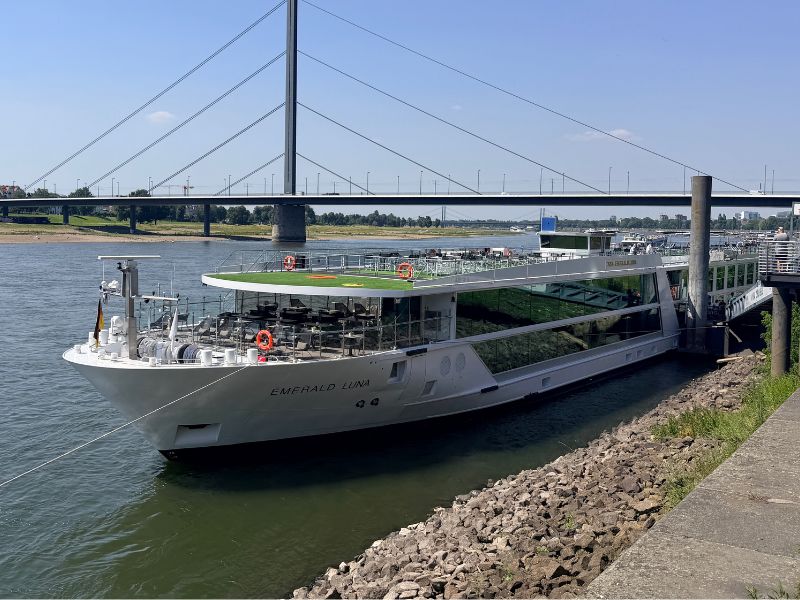
I think Emerald Cruises would particularly suit:
It may be less suitable for people who want late-night entertainment, complete freedom from schedules or a wide selection of restaurants. If that’s you, I think an ocean cruise would be a better choice.
Explore beautiful destinations, stylish ships and more included in every journey
I thoroughly enjoyed my cruise on Emerald Luna. The ship felt modern and comfortable, the food was excellent and the crew provided some of the best service I have experienced at sea.
I also loved how sociable the cruise was. With fewer than 180 guests, included group excursions and shared tables in the restaurant, everyone quickly got to know one another.
The entertainment was fairly limited and the daily schedule was more structured than on an ocean cruise. However, neither came as a surprise, and the balance of sightseeing and relaxation worked very well.
Emerald would be an excellent choice for anyone looking for a contemporary Rhine river cruise with plenty included and some genuinely unusual facilities.
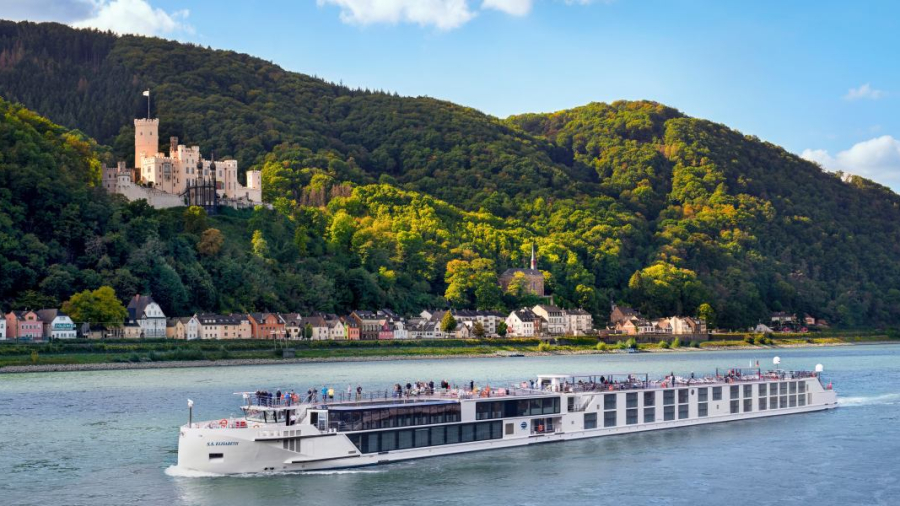
River cruises look effortless on the surface – unpack once, glide through Europe, wake up somewhere new each day – but choosing the right one is anything but simple.
Don’t assume they’re just smaller versions of ocean cruises. They’re not.
The river you pick can completely change the feel of the trip, and two cruises that look almost identical on paper can deliver very different experiences once you’re onboard.
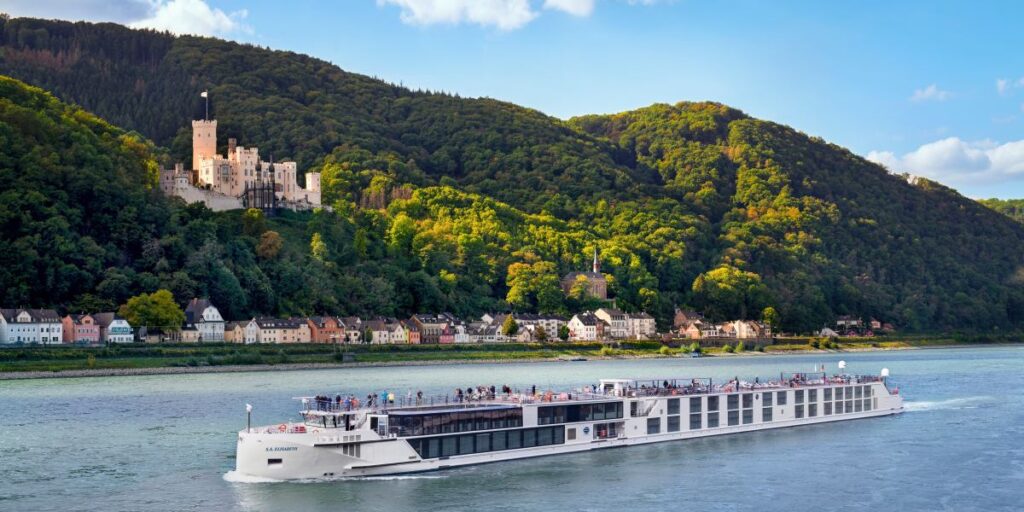
River cruising is brilliant – one of the easiest, most immersive ways to see Europe. But getting it right takes a bit more thought than just picking a date and pressing book.
Before you get too deep into cabin types, inclusions and cruise line comparisons, it helps to choose the river that actually suits the sort of trip you want. That’s the part many first-time river cruisers get backwards.
A European river cruise isn’t one single type of holiday. The Rhine feels very different from the Danube. The Douro doesn’t have the same rhythm as the Seine. Even if ships look broadly similar, the destinations, scenery and pace can vary a lot.
For most people, the right choice comes down to one question – what do you most want from the trip? Big cities? Castles? Vineyards? Food? Famous sights? Scenic sailing? Once you know that, it gets much easier to narrow things down.
If someone asks which river to choose for a first European river cruise, the Rhine is always near the top of the list. It has that instantly recognisable, storybook feel that a lot of people picture when they think of river cruising in Europe.

This is where you get hilltop castles, vineyard-covered slopes, half-timbered towns and some of the prettiest stretches of scenery on the continent. The Middle Rhine Gorge is the real showstopper – the bit with the castles, the Lorelei rock and those winding, dramatic views that make people fall in love with river cruising in the first place.
It’s also a very easy river to understand as a first-timer. Popular itineraries often run between Amsterdam and Basel, or the reverse, which means you can combine Dutch city breaks, German riverside towns, a touch of France and access to Switzerland in one trip. That’s a very strong mix if you want variety without overcomplicating things.
The Rhine is especially good if Germany and Switzerland are high on your wish list. You’ll often visit places like Cologne, Koblenz, Rüdesheim, Strasbourg and Basel, with some itineraries adding Heidelberg or extending into the Moselle or Main. There’s a nice balance here between scenic cruising and ports that are genuinely interesting to explore.
It’s also one of the best rivers for seasonal sailings. Spring brings tulip cruises in the Netherlands and Belgium, while late November and December are packed with Christmas market itineraries. That makes it very easy to tailor the same river to a completely different sort of holiday.
Read more: Highlights Of The Rhine With TUI River Cruises
If the Rhine is the fairytale river, the Danube is the one for travellers who want a bit more grandeur and a stronger run of headline cities.
This is often the top recommendation for first-time river cruisers who care as much about what they’ll see ashore as they do about the scenery between ports. A typical Danube itinerary can include Vienna, Budapest and Bratislava, with places like Passau, Linz, Melk and Dürnstein adding smaller-scale charm in between. That’s an impressive line-up for one trip.

The Danube works brilliantly because it mixes very different experiences. One day you’re in a major capital city with grand architecture, music history and elegant cafés, and the next you’re cruising through vineyard country or stopping at an abbey in a small riverside town. It never feels too repetitive.
It’s also one of the best rivers for people who want a stronger sense of European history. You’re travelling through the old Habsburg heartlands, and in some itineraries into parts of Eastern Europe that feel very different from the more familiar western routes. That gives the Danube a broad appeal – it can be classic and easy for beginners, but it can also feel more adventurous if you choose a longer sailing.
For a first cruise, the middle Danube is usually the easiest place to start. Sailings between Passau and Budapest are especially popular because they combine the biggest highlights without feeling rushed. You get the best-known cities, lovely scenic stretches such as the Wachau Valley, and enough contrast from port to port to keep things interesting.
Longer Danube itineraries can continue east through Serbia, Croatia, Bulgaria and Romania towards the Black Sea. These can be fantastic for returning river cruisers or travellers who want something less predictable than the standard western European routes.
The Rhône is one of the easiest rivers to fall for if you love the idea of France in all its richest, most indulgent forms. This is a cruise for people who hear Burgundy, Provence, Lyon and Avignon and immediately think yes, that sounds like my sort of holiday.
The scenery here is lovely, but the real pull is the atmosphere ashore. Rhône itineraries tend to be more about regional flavour than ticking off a long list of countries. You’re sailing through an area known for food, wine, Roman history and those golden-stone towns and villages that seem built for lingering over lunch.
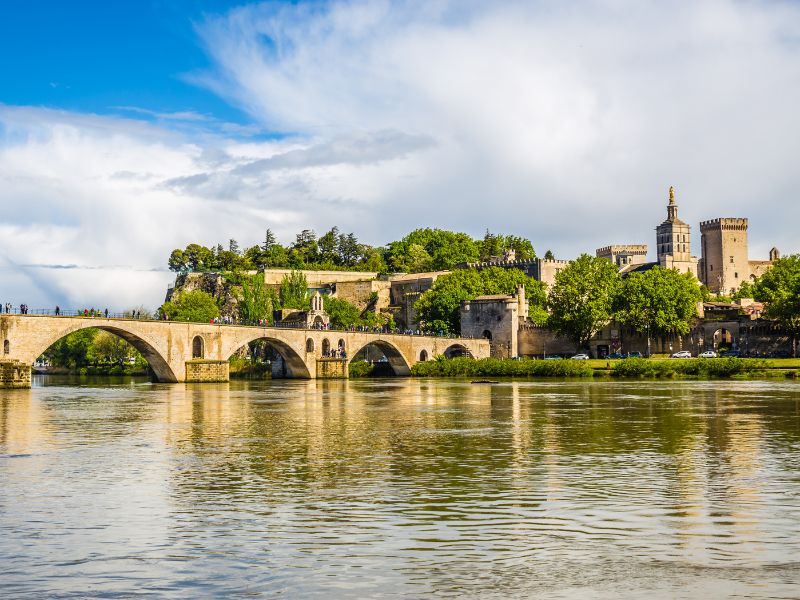
Lyon is usually either the start or end point, and that alone is a selling point. It’s one of France’s great food cities and well worth extra time before or after the cruise. From there, itineraries often head towards Avignon or Arles, with calls that can include Vienne, Tournon, Viviers and other small towns that many travellers wouldn’t otherwise visit.
This river suits people who like a slower, more immersive style of trip. You’re not trying to squeeze in as many countries as possible. Instead, you’re getting properly stuck into one region – its wines, its markets, its Roman ruins, its art and its cuisine. If the Rhine and Danube are the obvious first-timer choices, the Rhône is the one for travellers who already know that food and place matter more than headline landmarks.
It’s also a very appealing option for wine lovers. Burgundy and the Rhône Valley are not exactly bad places to base a holiday around tastings and vineyard excursions. Even for people who aren’t serious wine buffs, there’s something very easy to enjoy about cruising through this part of France.
The Seine has one huge advantage over just about every other European river – Paris. Starting or ending a cruise there gives it immediate appeal, especially for anyone who likes the idea of pairing a river sailing with time in one of Europe’s great cities.
But the Seine isn’t just about Paris. It also takes you through Normandy, which gives this river a really nice blend of countryside, history and culture. In one week, you can move from iconic city sights to half-timbered towns, Monet’s garden, coastal landscapes and excursions connected to the D-Day landings.
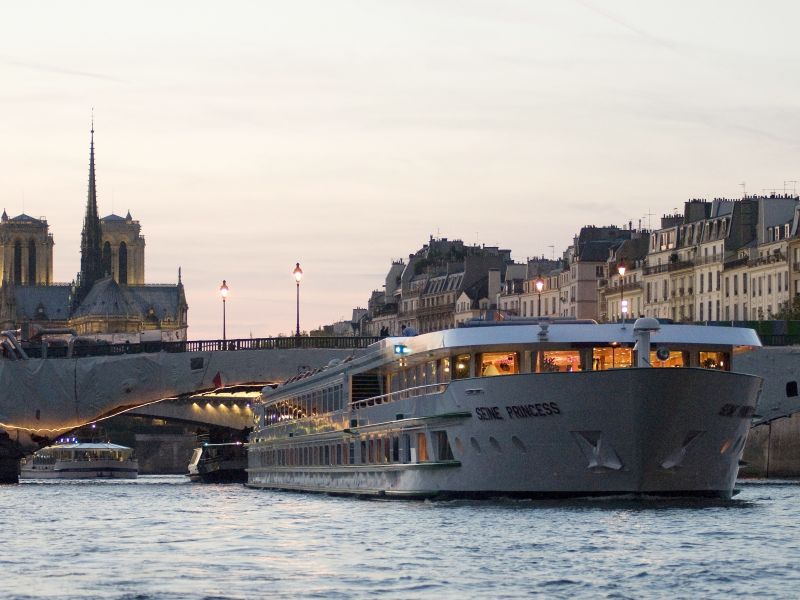
That mix makes the Seine feel a bit different from the more scenic-castle-heavy Rhine or the city-rich Danube. It’s less about a changing run of countries and more about exploring a single region in depth. For some travellers, that’s a real plus. You get a stronger sense of place rather than a more general sweep through central Europe.
Typical itineraries are round trips from Paris or sailings between Paris and the Normandy coast. Rouen and Honfleur are often among the standout stops. Rouen brings history and striking architecture, while Honfleur has the sort of harbourfront charm that makes you want to stay longer than the schedule allows.
The Seine is also a particularly good choice for art lovers and history lovers. Excursions to Giverny and the Normandy beaches add a lot of weight to the itinerary, and it’s a river that tends to appeal to travellers who enjoy the stories behind the places they visit.
The Douro is quite different from the classic Rhine-or-Danube first cruise, which is exactly why some people end up loving it. This is a river for scenery, wine country and a generally slower, more relaxed rhythm.
Sailings usually begin and end in Porto, which is a brilliant start. It’s one of Europe’s most characterful cities, full of steep streets, tiled buildings and riverfront views, and it sets the tone nicely for the rest of the trip. Once you leave Porto behind, the landscape becomes the star – terraced vineyards, quiet hillsides and a countryside feel that’s less about big cities and more about atmosphere.

The Douro tends to appeal to travellers who don’t mind that the ports themselves are often less famous than those on the Rhine or Danube. This is not the river for headline city after headline city. It’s about the valley, the wine estates, the scenery and the sense of being somewhere a bit more tucked away.
There’s also usually a Spanish element, with many itineraries including an excursion to Salamanca. That adds another layer to the trip and makes it feel slightly broader than a purely Portugal-focused holiday.
It’s worth noting that the Douro often involves more coach transfers for certain sights than some other rivers. That’s just part of how the region works. The reward is the landscape itself, which is one of the most distinctive in European river cruising.
These itineraries don’t always get as much attention as the Rhine or Danube, but they’re a brilliant option – especially if you’re after something shorter, more relaxed or very seasonal.
While parts of the journey may touch the Rhine, these cruises are really about the network of canals, rivers and waterways that connect the Netherlands and Belgium. It’s a completely different feel from the castle-lined valleys of Germany or the grand capitals of central Europe. Here, it’s all about low-lying landscapes, historic trading cities and picture-perfect canal towns.
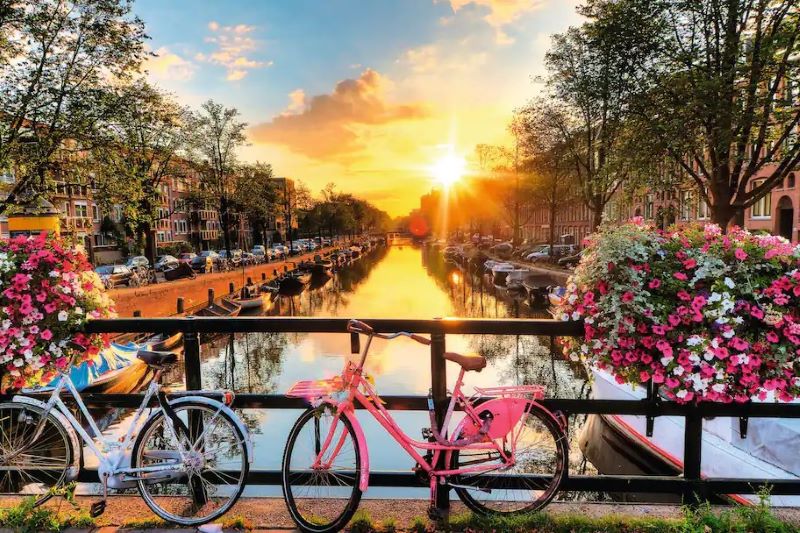
Spring is when this region really shines. Tulip season cruises are hugely popular for a reason, with visits to places like Keukenhof Gardens and fields bursting with colour across the Dutch countryside. It’s one of the most visually distinctive river cruise experiences you can have, and it only happens for a short window each year.
Beyond the flowers, you’re looking at a line-up of very walkable, easy-to-enjoy cities. Amsterdam is often the starting point, with its canals, museums and relaxed atmosphere. From there, itineraries might include Utrecht, Rotterdam, Antwerp, Bruges and Ghent – all places that are compact, characterful and ideal for exploring on foot or by bike.
That ease is a big part of the appeal. You’re rarely dealing with long transfers or sprawling ports. Ships often dock close to the centre, and the overall pace tends to feel gentler than some of the longer Rhine or Danube sailings. It’s a good fit if you want a more laid-back introduction to river cruising without trying to cover too much ground.
These cruises also tend to be shorter – often around five to seven nights – which makes them a smart choice if you’re testing the waters or don’t want to commit to a longer itinerary straight away.
The Main and Moselle are often not the headline rivers people mention first, but they can add a lot to a cruise if you want something slightly different from the standard Rhine route.
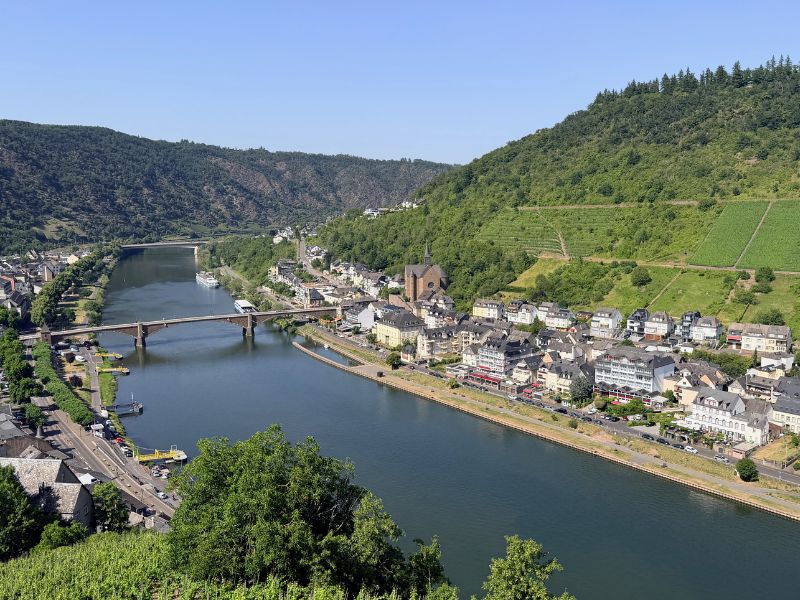
The Moselle is especially pretty – quieter, narrower and arguably more intimate in feel than the Rhine in places. It winds through wine country, with steep vineyard slopes and charming little towns such as Cochem that feel more tucked away and less busy than some of the larger Rhine stops. If you like the idea of a gentler, more romantic version of Germany, the Moselle has a lot going for it.

The Main tends to appear more often on longer itineraries, especially those linking the Rhine and Danube via the Main–Danube Canal. It’s less about one iconic scenic stretch and more about opening up a wider route through Germany. You may see places like Frankfurt, Würzburg, Bamberg or Nuremberg, depending on the sailing.
These rivers are often best thought of as additions rather than standalone first choices. If you’re looking at a longer cruise and wondering whether it’s worth picking one that includes the Moselle or Main, the answer is usually yes. They can make the itinerary feel more varied and a little less obvious.
For wine lovers in particular, the Moselle is a very attractive add-on, and for anyone interested in a longer journey through central Europe, the Main helps unlock that.
The Elbe is much less mainstream than the Rhine or Danube, which is exactly what makes it appealing. This is the river for travellers who’ve either already done one of the more classic itineraries or simply want something a bit different from the start.
One of the big draws here is the pairing of Berlin and Prague. Even if the cruise itself is shorter or more specialised, those bookend cities add huge value. In between, you get places like Dresden, Meissen and the landscapes of Saxon Switzerland, which give the route a strong historical and cultural identity.
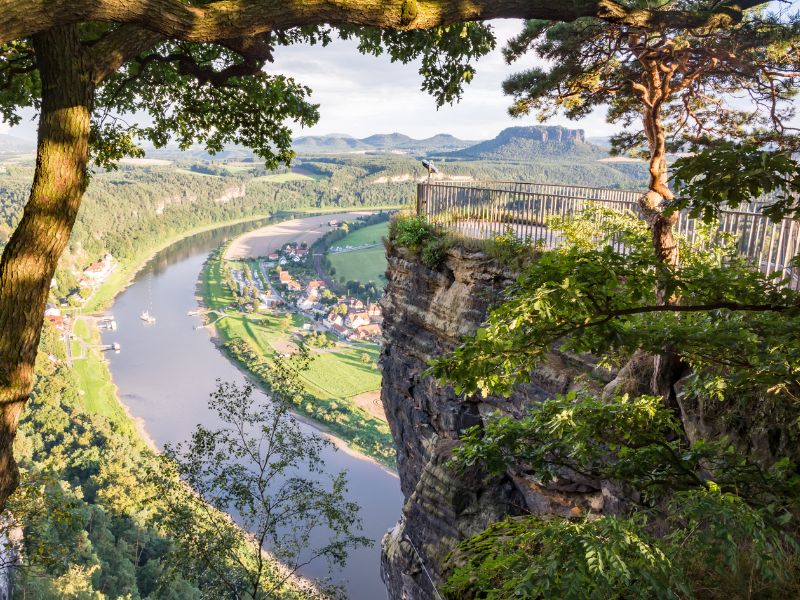
The Elbe is particularly good for travellers interested in German and central European history. There’s a lot here tied to war, reconstruction, religion and old trading routes. It feels more niche than the broader appeal of the Rhine, but in a good way.
It’s also a river that comes with practical caveats. Water levels can be more of a challenge here, and the choice of ships and itineraries is far more limited. So while it can be a brilliant cruise, it’s usually not the most straightforward first booking for someone who just wants an easy introduction to river cruising.
Italy doesn’t have the same huge range of river cruise options as Germany, France or Portugal, but what it does offer is very distinctive. Cruises in the Po Valley and Venetian Lagoon are less about classic river cruising in the Rhine sense and more about combining waterways, culture and iconic Italian cities.
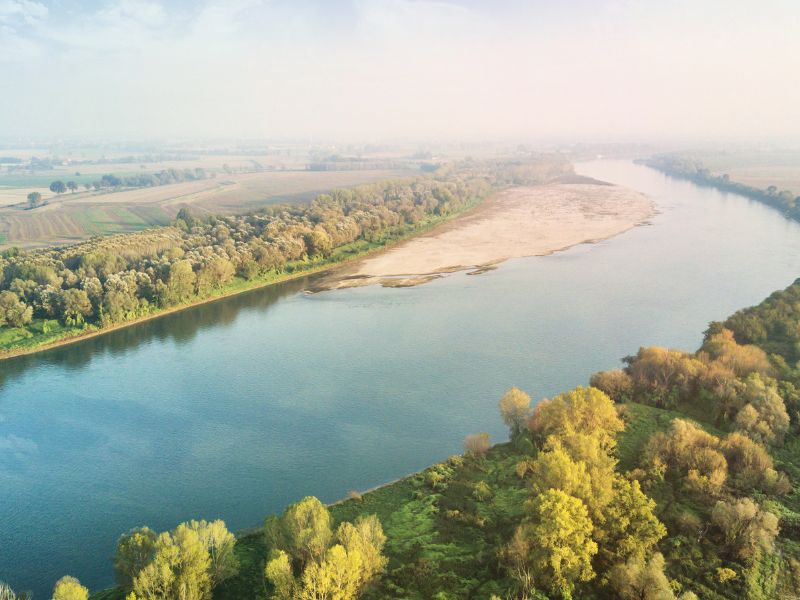
These itineraries are particularly appealing if you love Italy and want a small-ship holiday that feels more unusual. Venice is often the main draw, and rightly so, but the surrounding region has plenty to offer too – places like Padua, Verona, Ferrara and Bologna can appear on the right itinerary.
This type of cruise feels different from the others because the setting is different. You’re not sailing through endless vineyard valleys or moving from one riverside capital to the next. Instead, you’re exploring the waterways and cultural treasures of northern Italy, with a stronger focus on art, architecture and regional history.
If you’re still not sure, it helps to simplify things.
That’s usually the easiest way to start narrowing things down – not by asking which river is best overall, but by asking which one sounds most like your sort of holiday.
Once you’ve picked your river, now’s the time to check out your cruise line.
Firstly, you need to find a cruise line that sails to the destination you want to visit – not all cruise lines cover all rivers!
Let’s break that down first, and then we’ll dig into what each cruise line offers, and what’s included with their fares.
| Cruise Line | The Rhine | The Danube | The Rhône | The Seine | The Douro | Dutch & Belgian Waterways | The Main & Moselle | The Elbe | The Po |
|---|---|---|---|---|---|---|---|---|---|
| A-ROSA | ✅ | ✅ | ✅ | ✅ | ✅ | ❌ | ✅ | ❌ | ❌ |
| AMAWaterways | ✅ | ✅ | ✅ | ✅ | ✅ | ✅ | ✅ | ❌ | ❌ |
| APT Touring | ✅ | ✅ | ❌ | ❌ | ✅ | ❌ | ✅ | ❌ | ❌ |
| Avalon Waterways | ✅ | ✅ | ✅ | ✅ | ✅ | ❌ | ✅ | ❌ | ❌ |
| Celebrity River Cruises | ✅ | ✅ | ❌ | ❌ | ❌ | ✅ | ❌ | ❌ | ❌ |
| CroisiEurope | ✅ | ✅ | ✅ | ✅ | ✅ | ✅ | ✅ | ✅ | ✅ |
| Emerald Cruises | ✅ | ✅ | ✅ | ✅ | ✅ | ✅ | ✅ | ❌ | ❌ |
| Riviera Travel | ✅ | ✅ | ✅ | ✅ | ✅ | ✅ | ❌ | ❌ | ❌ |
| Scenic River | ✅ | ✅ | ✅ | ✅ | ✅ | ✅ | ✅ | ❌ | ❌ |
| Tauck | ✅ | ✅ | ✅ | ✅ | ✅ | ✅ | ✅ | ❌ | ❌ |
| TUI River Cruises | ✅ | ✅ | ❌ | ❌ | ✅ | ✅ | ✅ | ❌ | ❌ |
| Uniworld | ✅ | ✅ | ✅ | ✅ | ✅ | ✅ | ✅ | ❌ | ✅ |
| Viking River Cruises | ✅ | ✅ | ✅ | ✅ | ✅ | ✅ | ✅ | ✅ | ❌ |
| VIVA Cruises | ✅ | ✅ | ✅ | ✅ | ✅ | ✅ | ✅ | ✅ | ✅ |
So, you’ve picked a river, you now know which cruise lines offer itineraries in that destination – how do you pick between them?
This will help:
| Cruise Line | Lowest Price 7-Night Rhine Cruise | Flights Included | Excursions Included | Drinks Included | Tips Included | WiFi Included |
|---|---|---|---|---|---|---|
| A-ROSA | £864pp | No | No | No | No | No |
| AMAWaterways | £2,079pp | Yes | Yes* | During Meals | No | Yes |
| APT Touring | £1,995pp | Yes | No | During Meals | Yes | Yes |
| Avalon Waterways | £1,700pp | Yes | Yes | During Meals | No | Yes |
| Celebrity River Cruises | £2,448pp | No | Yes | Yes | No | Yes |
| CroisiEurope | £1,211pp | No | No | Yes | No | Yes |
| Emerald Cruises | £1,885pp | No | Yes | During Meals | Yes | Yes |
| Riviera Travel | £1,999pp | Yes | Yes | Yes | No | Yes |
| Scenic River | £2,569pp | No | Yes | Yes | Yes | Yes |
| Tauck | £3,290pp | No | Yes | Yes | Yes | Yes |
| TUI River Cruises | £1,199pp | Yes | No | During Meals | Yes | Yes |
| Uniworld | £2,199pp | No | Yes | Yes | Yes | Yes |
| Viking River Cruises | £1,695pp | Yes | Yes | During Meals | Yes | Yes |
| VIVA Cruises | £1350pp | No | Yes | Yes | Yes | Yes |
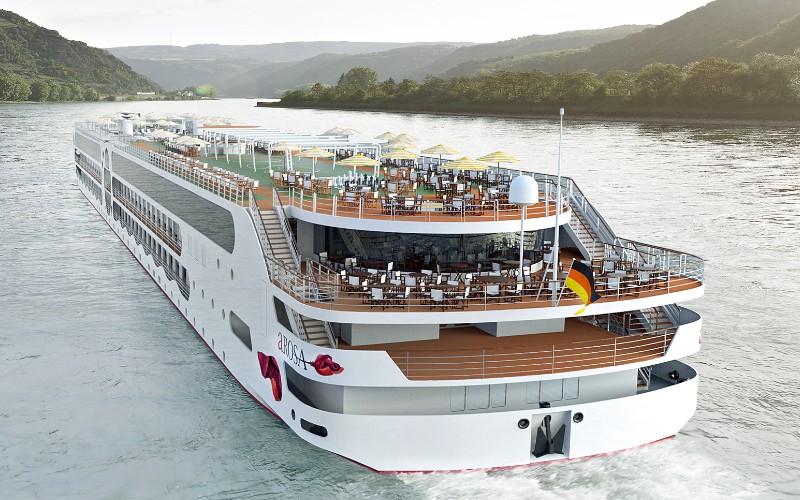
A-ROSA offers a more relaxed, flexible style of river cruising, often with fewer structured excursions and a more casual onboard feel. It’s usually good value and popular with European travellers, but feels less traditional than most river cruise lines.
They’re also one of the few river cruise lines that are genuinely good for families. Most are adults only, but A-ROSA has some great child-friendly cruise options, particularly on A-ROSA Sena.
Read more: 10 Reasons To Love A-ROSA Family Cruises
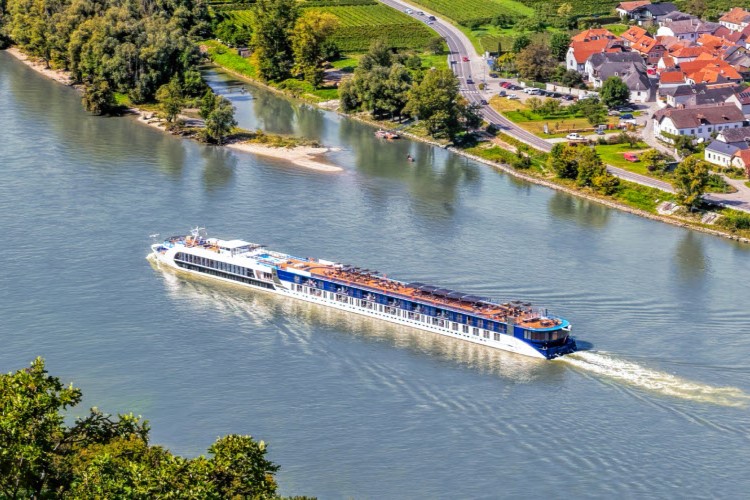
AmaWaterways is a favourite for active travellers, with multiple excursion options in each port including hikes and bike rides. It strikes a strong balance between inclusions, quality and a slightly more energetic onboard atmosphere.
Read more: AmaWaterways vs Viking River Cruises: Which Should You Choose?
APT leans towards the premium and luxury end, with a focus on high inclusions, unique experiences and a polished onboard feel. It’s especially appealing if you like the idea of a more all-inclusive trip with fewer extra costs to think about.
Avalon is known for its spacious, modern cabins and excellent overall value, making it a popular choice for first-time river cruisers. It delivers a comfortable, easy-going experience without pushing into ultra-luxury pricing.
Read more: Avalon Waterways vs Viking River Cruises: Which Is Better for Your River Cruise?
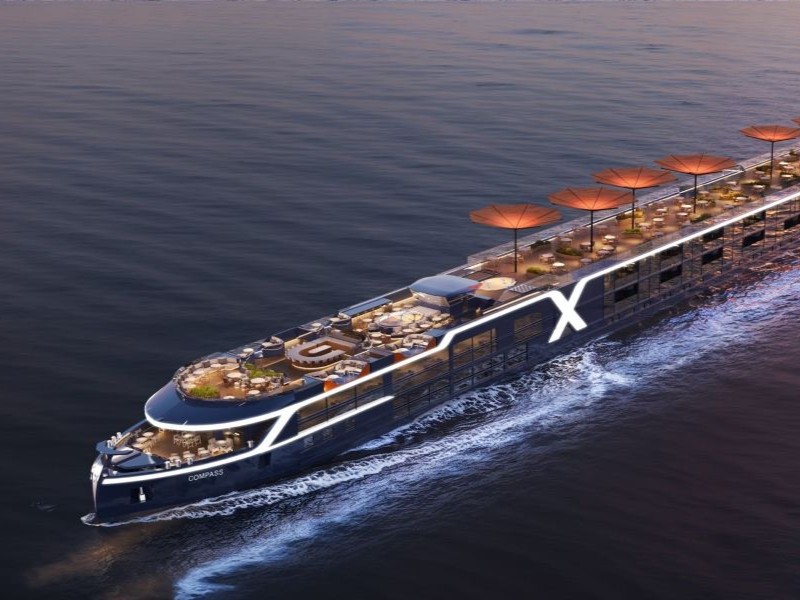
Celebrity River Cruises brings a more contemporary, design-led approach to river cruising, with a focus on style, dining and a slightly more modern onboard vibe. It’s one to watch if you like the feel of newer ocean cruise brands but want a smaller ship experience.
Suggested read: Celebrity Cruises to Enter the River Cruise Market with Premium Fleet Launching in 2027
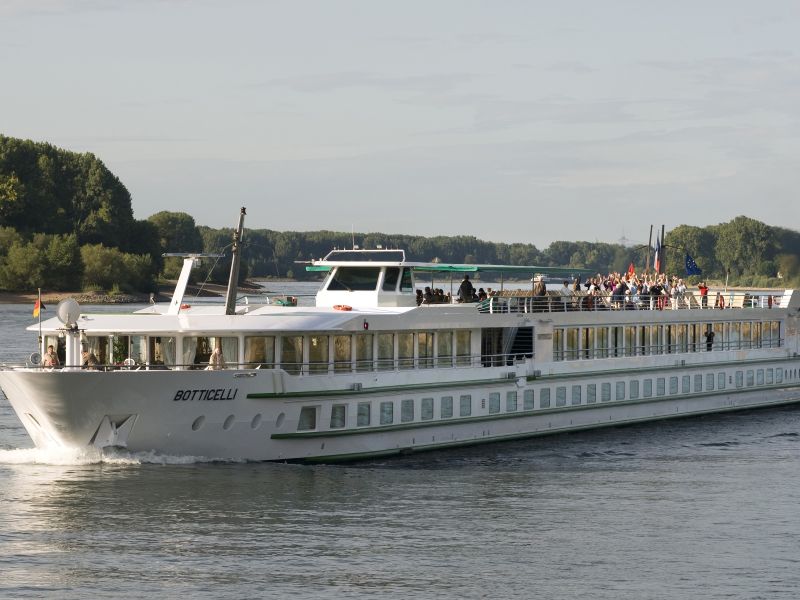
CroisiEurope is often one of the most affordable ways into river cruising, with a simple, no-frills approach that still covers the essentials well. It also offers some more unusual itineraries that other lines don’t operate.
Read more: Kids Sail Free With (Some) CroisiEurope River Cruises – What You Need To Know

Emerald Cruises sits firmly in the “value with extras” category, often including things like gratuities and a decent range of excursions. Ships feel modern and the overall experience is polished without the higher price tag of luxury lines.

Riviera is a go-to for value-conscious travellers, offering stylish ships and well-organised itineraries at competitive prices. It’s a more classic river cruise experience, with a focus on good service and solid inclusions rather than luxury extras.
Read more: Riviera Travel Drinks Package Guide
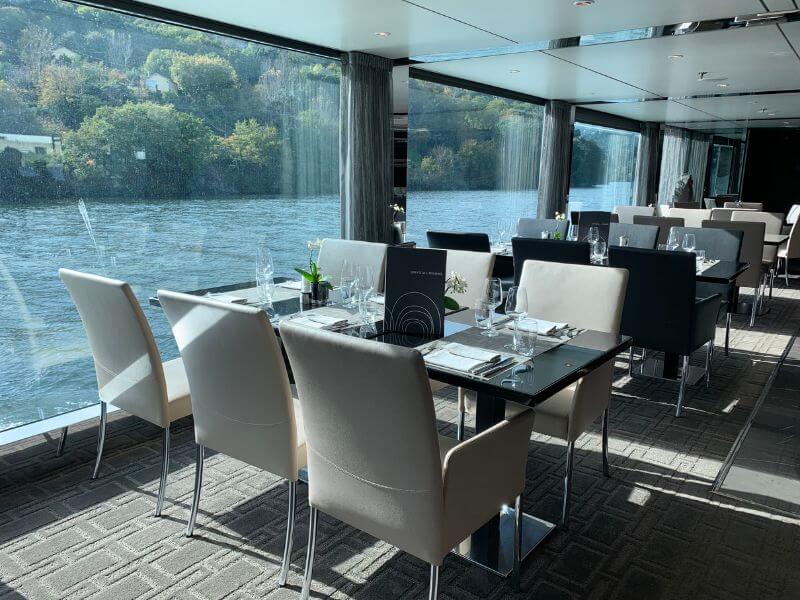
Scenic is firmly in the ultra-all-inclusive luxury category, with drinks, excursions, gratuities and even extras like e-bikes and butler service bundled in. It’s a seamless experience, but you’ll pay more upfront for that level of inclusion.
Suggested read: Scenic vs Emerald River Cruises
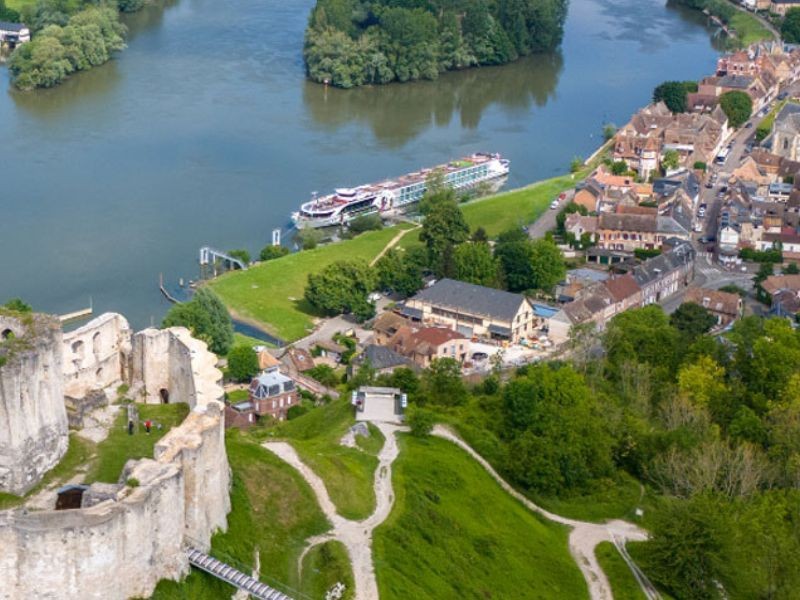
Tauck is all about curated experiences and high-end, fully inclusive travel, often with unique excursions you won’t find elsewhere. It feels more like a guided journey than a standard cruise, with a strong focus on service and detail.

TUI offers a very accessible, UK-friendly river cruise experience with straightforward pricing and familiar touches. It’s a good entry point if you want something simple, sociable and easy to book without overthinking the details.
Read more: TUI River Cruise Ships Compared: What Each One Offers
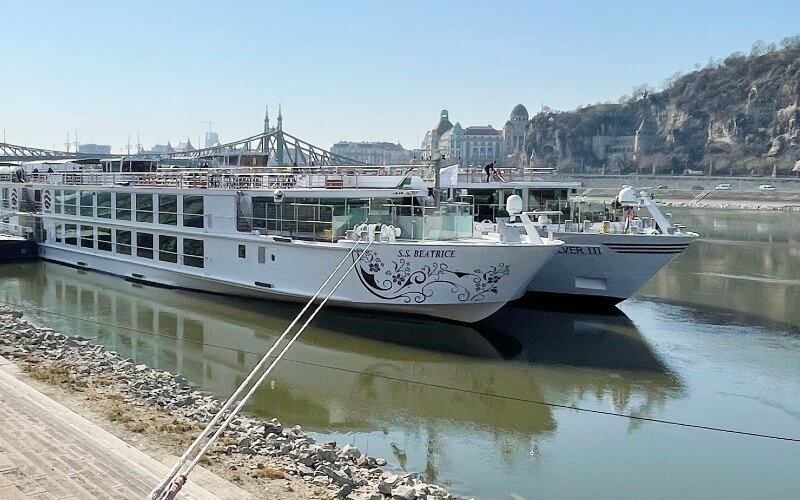
Uniworld delivers a more boutique, luxury feel, with highly styled ships and a very all-inclusive approach. It’s ideal if you want something that feels a bit more distinctive and indulgent than the standard river cruise offering.
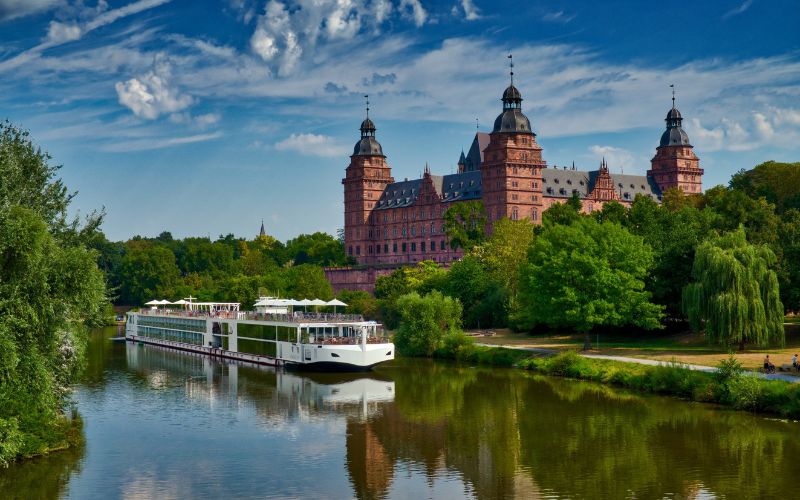
Viking is one of the biggest names in river cruising, known for its consistent, well-run experience and wide choice of itineraries. It’s a safe, reliable option that gets the basics right, even if it’s not the most all-inclusive.
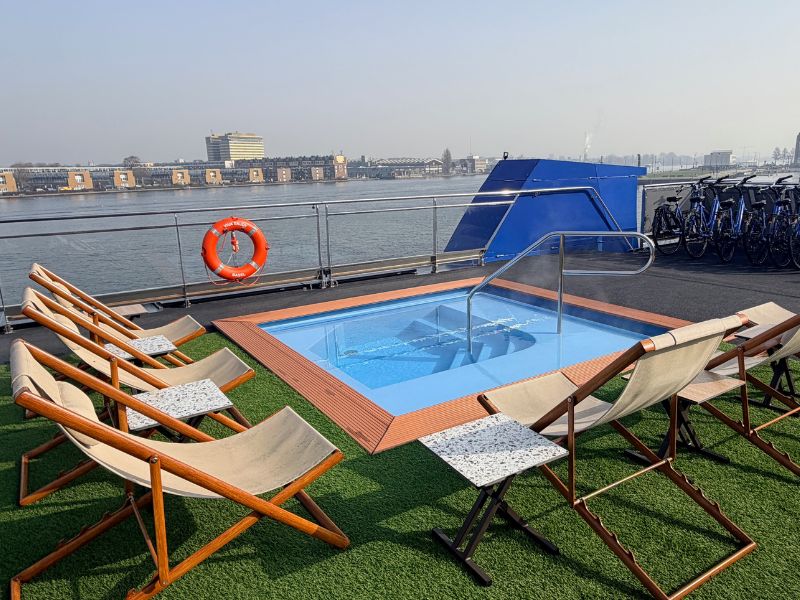
VIVA Cruises is a relatively new European river cruise line that focuses on modern ships, all-inclusive fares and a more relaxed, contemporary atmosphere than some of the traditional luxury river cruise brands.
VIVA Cruises is particularly known for its stylish newer ships, flexible dining and good-value pricing, making it a popular choice for younger retirees and travellers who want a premium river cruise experience without the ultra-luxury price tag.
Excursions are a huge part of river cruising. In fact, they shape the whole trip more than many first-timers expect.
On an ocean cruise, shore days can feel optional. On a river cruise, the ports are the point. That means you need to look beyond the ship and ask what’s actually included each day.

Are there guided walks in every port? Are there choices, or just one standard coach tour? Is there anything active, like hiking or cycling? Are special events and evening outings included or extra?
If you already know you enjoy getting off the ship and making the most of each stop, this can be the difference between a good holiday and a great one.
Some lines offer multiple touring styles, which can be really useful. A gentle group, a regular-paced walk and a faster active option can make the day much more enjoyable than being stuck in one big mixed group. That’s especially true if you don’t want every port to feel like the same guided wander followed by souvenir shopping.
Anyone moving from big-ship cruising needs to reset expectations a bit here.
River cruises generally aren’t built around drinks packages, late-night entertainment or lively pool decks. That doesn’t mean they’re dull – it just means the social life is different.
Think pre-dinner drinks, a quiet cocktail in the lounge, regional wines with dinner and maybe some music in the bar later on. It’s more relaxed than high-energy. Not always – some cruise lines put on big parties – but those are the exception.
That actually suits a lot of people very well. If you enjoy an occasional evening drink but you’re not the kind of cruiser who wants unlimited cocktails all day, river cruising can feel like a much better fit than ocean lines that push packages heavily.
A lot of lines include wine and beer at lunch and dinner, and some add a happy hour or more generous drinks policy. A few luxury operators include pretty much everything. It’s worth checking because drink inclusions vary more than many people assume.
Timing matters on a river cruise, and not just for weather.
Spring is lovely for a first trip. You get fresh scenery, generally comfortable temperatures and special seasonal sailings like tulip cruises in the Netherlands and Belgium. Early summer is popular too, with long daylight hours and lively cities, but it can also be busier and hotter.

Autumn is another strong choice, especially if you like wine regions, harvest season and slightly softer temperatures. Late November and December bring Christmas market cruises, which are hugely popular and feel completely different from standard sailings.
For the Rhine and Danube in particular, many seasoned travellers try to avoid the hottest part of late summer, partly because of crowds and partly because of water level concerns. There are no guarantees either way, but shoulder season often feels like the nicest balance.
This is one of the biggest practical differences between river cruising and ocean cruising, and it’s something every first-timer should know before booking.
River ships are vulnerable to both high water and low water. Too much water and they may not fit under bridges. Too little and they may not be able to sail certain stretches at all. When that happens, the cruise line may switch ships, coach passengers between sections, or alter the itinerary.
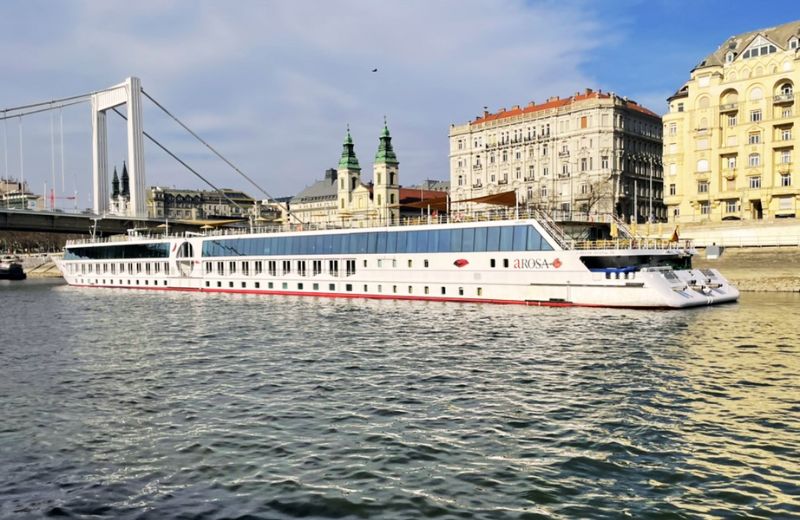
That doesn’t mean you should avoid river cruising. It just means you should go in with realistic expectations. This is part of the deal, especially on some rivers and at some times of year.
If this risk worries you, it’s worth looking at cruise lines with bigger fleets, because they may have more flexibility when disruption happens. You should also read the terms carefully so you know exactly what happens if the itinerary changes. It’s not the most glamorous part of trip planning, but it’s important.
For many travellers, especially those used to planning their own trips, booking airfare separately sometimes makes the most sense. You get more control over airline, route, seat choice and timing. That can be especially useful if you live near a major gateway and are comfortable arranging things yourself.
Cruise-line air can still be worth pricing up, though, since it’s reasonably priced in many cases and can make things a lot more seamless. Sometimes there are promotions, and in some cases transfers are included. For travellers who want everything kept simple in one booking, that can be appealing.
Whichever route you choose, arriving at least a day or two early is one of the smartest things you can do. It gives you breathing room if there are flight delays, and it means you actually get to enjoy your embarkation city instead of seeing it through jet lag. The same goes for the end of the trip. A post-cruise stay can turn a good holiday into a much better one.
With river cruises starting or ending in cities like Amsterdam, Budapest, Basel or Vienna, there’s usually a very good case for adding hotel time on either side.
I would advise getting a good travel agent who can package your river cruise along with flights and hotel stays so you will benefit from ATOL protection.
River ships are small, but they’re not all identical in feel.
Some have more spacious cabins, almost all have French balconies rather than step-out balconies (but there are a few exceptions), and some feel noticeably more contemporary than others. A few ships include things like small fitness rooms, bikes for guests or multiple dining venues, while others are more straightforward.

Because you’ll spend a fair amount of time in your cabin and on the public decks watching the scenery go by, layout matters. On a first river cruise, it’s worth paying attention to what sort of balcony you’re actually getting and how much indoor space the cabin has.
This is one reason some travellers end up preferring one line over another even if the itinerary is very similar. On river ships, little design differences are more noticeable because the ships are so compact.
It helps to be clear about this before you book.
River cruising isn’t a floating resort. It isn’t packed with big production shows, waterslides, casinos or endless speciality restaurants. You probably won’t be sailing all day with nothing to do. And you may occasionally be docked beside another ship or beside a less-than-pretty stretch of town.

But that’s not really what this kind of holiday is for.
River cruising is about the route, the ease of unpacking once, the smaller number of guests, the included touring and the simple pleasure of gliding into one interesting place after another. For a lot of ocean cruisers, that ends up being the surprise – not that it’s smaller, but that it feels more immersive and far less hectic.
The easiest way to choose a European river cruise is to narrow it down in this order – river first, then cruise line.
If you’re brand new to river cruising and want a safe first pick, the Rhine is hard to beat for Germany, Switzerland and classic scenery. The Danube is just as tempting if you’d rather focus on big cities and central Europe. From there, compare what’s actually included rather than just staring at the fare.
For many first-timers who like excursions, enjoy a drink now and then but don’t need an all-inclusive bar setup, and want a good balance of quality and value, lines such as Avalon, AmaWaterways, Viking, Emerald and Riviera are all worth close attention.
Above all, book with the right expectations. River cruising is different from ocean cruising – and for plenty of people, that’s exactly why they end up loving it.
If you’re looking for a family river cruise, then CroisiEurope has some great deals with free places for children aged 16 and under.
Europe’s largest river cruise operator, CroisiEurope, has a summer Family Club programme with free child places that will make a river cruise an affordable option for your summer holiday this year.

These cruises also featured exciting and child-friendly excursions on the Douro, Guadalquivir and Rhine.
The summer Family Club programme is available on the following itineraries:
These Douro cruises call at Regua, Pinhao, Vega de Terron, Barca D’Alva, Senhora Da Ribeira and Ferradosa. Child-friendly excursions include a tour of Porto by tram, plus a visit to the Tramway Museum and a splash around in the swimming pool in Salamanca.
Five-night cruises for Summer 2025 cost from £1,301 per adult, with kids cruising free.
Seven-night cruises for Summer 2025 cost from £1,249 per adult, with kids cruising free.
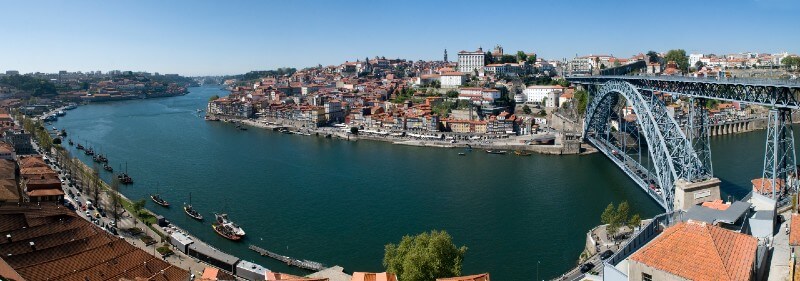
Rhine river cruises from Strasbourg will include calls at Rüdesheim, Koblenz, Mainz and the Black Forest. Child-friendly excursions include a boat tour of Strasbourg by night, a tour of local vineyards on a tourist train, visits to Siegfried’s Mechanical Music Cabinet Museum in Rüdesheim, the Gutenberg Museum in Mainz and a Treetop walk in the Black Forest.
These CroisiEurope cruises cost from £1,154 per person, and kids cruise free.
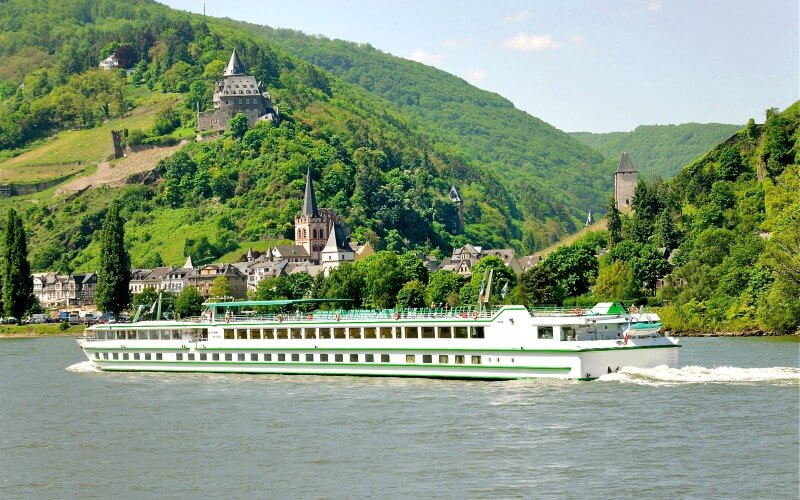
If you want something a little different from the typical CroisiEurope cruise deals, then why not choose this more coastal option, which includes visits to Mljet, Korcula, Sibenik, Trogir, Split, Vis, Hvar, and Kotor. The scenery here is absolutely stunning.
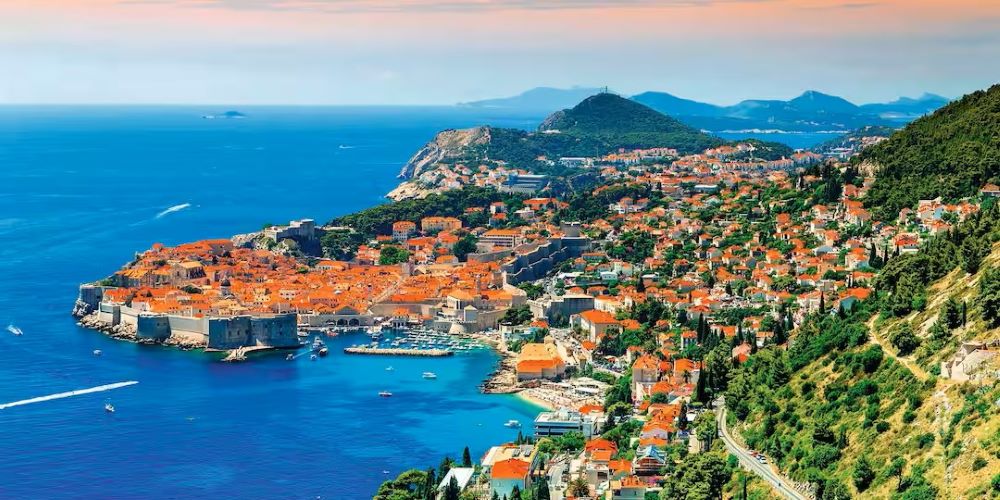
These cruises cost from £1876 per person, and, yes, kids cruise free.
The free child places offer doesn’t include excursions, you’ll have to pay for these separately. You’re also limited to two children per fare-paying adult.
CroisiEurope is the only river cruise line in Europe with no minimum age to sail, so kids of all ages are welcome on board, even babies.

Regarding accommodation, one child can share a room with two adults. Otherwise, kids aged five and over can stay in the cabin next door. Of course, if you take this option, then a room with windows, rather than a French balcony, is recommended.
CroisiEurope is a great choice for single parents too, as the single supplement is waived when travelling with children.
For more information, visit www.croisieurope.co.uk
Want expert help to plan your perfect cruise?
Want expert help to plan your perfect cruise?

Jenni Fielding is the founder of Cruise Mummy. She has worked in the cruise industry since 2015 and has taken over 30 cruises. Now, she helps over 1 million people per month to plan their perfect cruise holidays.
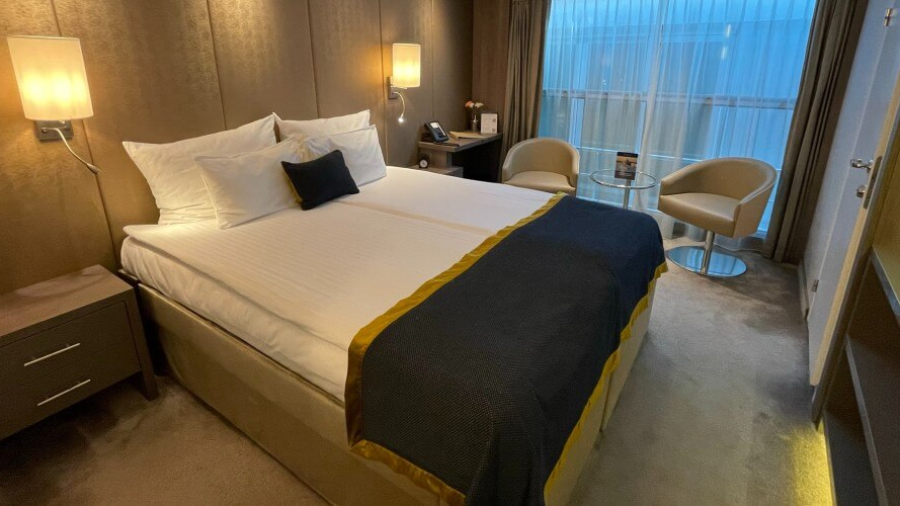
How amazing is it when you stay on a ship or in a luxury hotel and they’ve thought of everything?
I’ve been on a couple of river cruises, along with spending time exploring nine river cruise ships over two days, and was blown away by how many thoughtful little touches I came across on board. Some of these cost barely anything to the cruise line but go a long way to show guests how much they’re thought of.
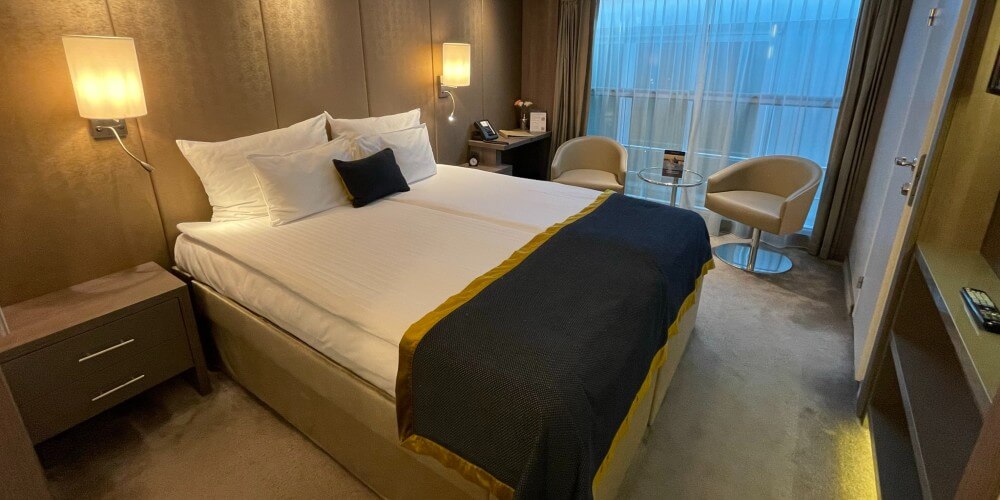
Many cruise lines and hoteliers could learn a lot from this, so read on to see what small delights I discovered during my river cruise experiences…

If you wear glasses only for reading, you’ll be familiar with the feeling of being handed a menu, only to realise that you’ve forgotten your reading glasses. Well, it’s not a problem on an Avalon Waterways ship as you can choose from a selection of freshly sanitised glasses to borrow.
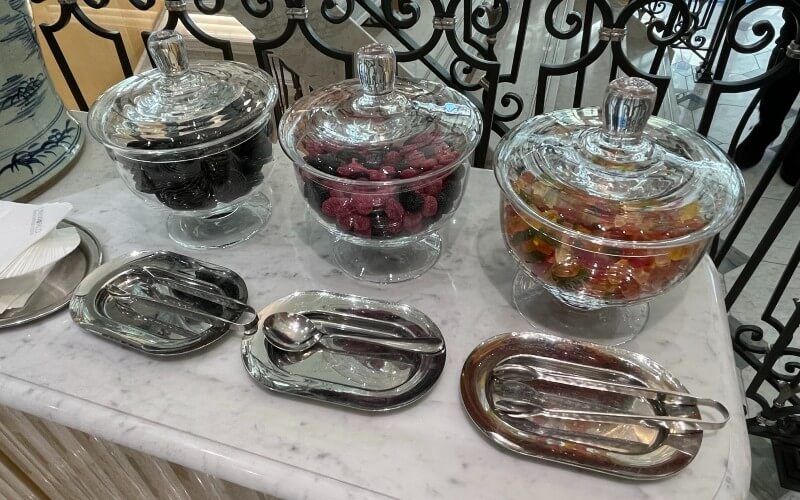
On a Uniworld river cruise, you’ll struggle to walk through the lobby without being tempted by this display of gummy sweets and liquorice. There are even little paper bags so that you can take some with you as you head off on your excursions.
I’m always amazed by the beautiful fresh flowers on river cruise ships – in the restaurants, in the lounge and even in your cabin. They always look so perfect that I think that they must be artificial, but on closer inspection, they’re real!
On a river cruise, whenever you visit a public bathroom you’ll find individually-folded towels to dry your hands on. This just feels so luxurious! This system would never work on a large ocean cruise ship with the number of people on board, but on a river cruise, it does.
We all know that the weather in Europe can be unpredictable. But that’s not so much of a problem when there’s an umbrella ready for you to borrow as you leave the ship.
Another thoughtful solution to the inclement weather of Europe is these gorgeous fluffy blankets that are placed on the outdoor chairs so that you can still enjoy sitting outside as the temperature drops. They’re so soft!
On a cruise, your cruise card really is your key to happiness. I just think it’s cute that on Avalon Waterways, it says that on the card.
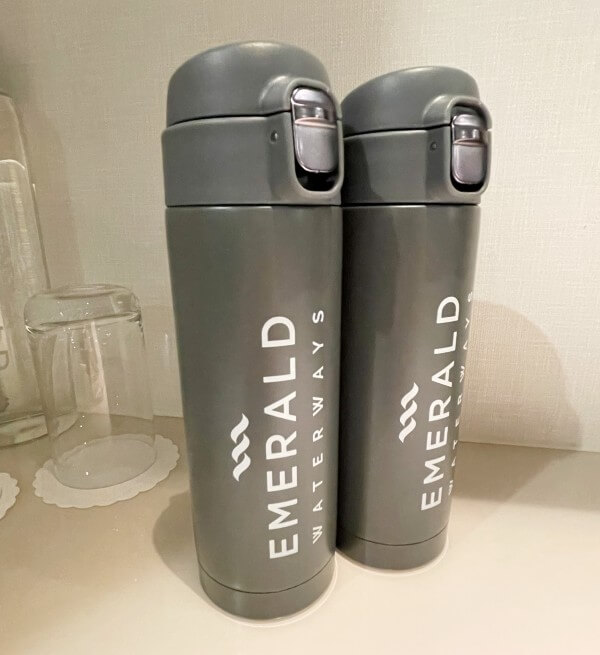
Sustainability is a major focus for the river cruise lines right now. To reduce plastic waste, Emerald Waterways provides every guest with a reusable water bottle that also makes a great souvenir to take home.
Suggested read: Scenic vs Emerald River Cruises: What’s the difference?
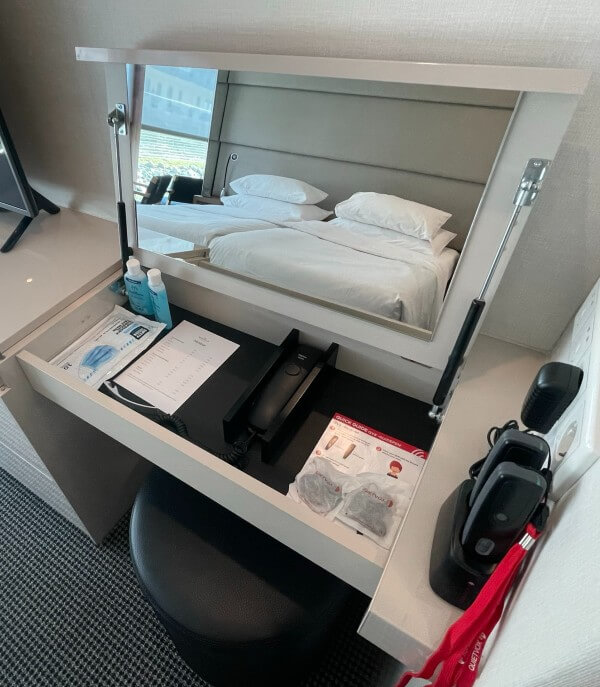
River cruise cabins are carefully designed to maximise the space. This room on a Scenic River Cruises ship has a clever lift-top desk that conceals your room phone and other useful bits and pieces like masks and hand sanitiser. With the added mirror, you can also do your hair and makeup here.
Most river cruises include guided walking tours. To make it easy to hear your guide when you’re in a group, you’ll be provided with audio guides. Simply plug in your headphones and you can listen to the commentary as you explore.
On an Ama Waterways river cruise, it was nice to see that there was an umbrella in the wardrobe in case I needed it. The shoehorn was also a thoughtful addition that takes up no space at all, yet some people would find it to be handy.

Also in the wardrobe were slippers, a sewing kit and shoe polish. Even if these things aren’t in your room, you can always request them from the guest services desk (or your butler if you have one!) But I do prefer when things like this are just there, so you don’t have to ask.
River cruises always come with toiletries, oh how my heart sings when there’s separate shampoo, conditioner and body wash. Nobody likes that three-in-one stuff that you get on most ocean cruise ships! Scenic river cruise ships have L’Occitane toiletries, and lots of them too.
Nail files, cotton wool pads, cotton buds… I’m always in awe of how many thoughtful touches you’ll find in your room on a river cruise ship.
As us Brits appreciate a good cup of tea first thing in the morning or a hot chocolate before bed, you’ll find that most river cruises that cater for British guests have kettles in the cabins.
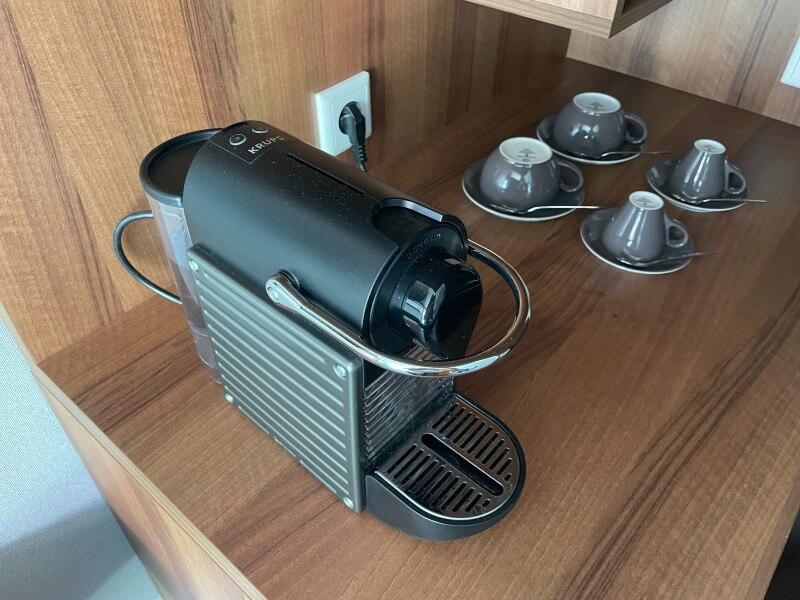
In my opinion, there’s only one thing that could be better than a kettle in your room – a coffee machine in your room! Especially when it comes with lots of different pods to choose from. If you need special milk like soy, oat or almond, the staff will be happy to bring this for you too.
Imagine returning to your room after a day of exploring ashore to find a glass cloche filled with chocolate-covered strawberries. The delight! Mini pastries, cakes, cookies and canapes are also popular treats for those lucky enough to stay in a suite on a Scenic river ship.
Each night when I returned to my room on A-ROSA Donna my bed had been turned down and there was a single Lindor chocolate on my pillow. Such a nice touch!

Oftentimes, you only realise that you need earplugs when it’s the middle of the night – and that’s not the best time to go and source some! That’s why Scenic river cruise ships have them in your cabin, just in case.
A little card from your cabin assistant allows you to call them by name whenever you need anything. On the back, you may find some suggestions for the different things you can request, such as different pillows.
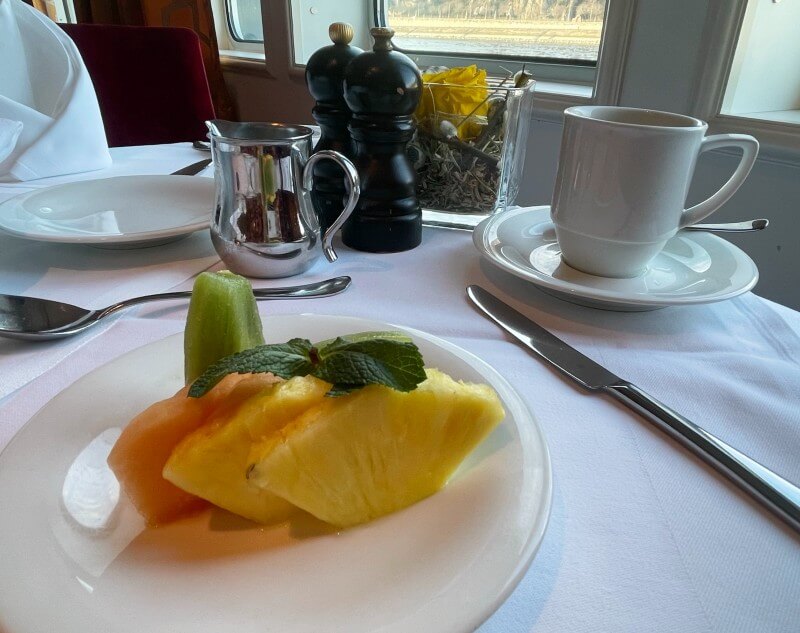
On a recent Ama Waterways cruise, as I perused the breakfast menu the waiter brought me a plate of fruit. ‘Some vitamins, while you browse?’, he offered. What a lovely way to start the day right!
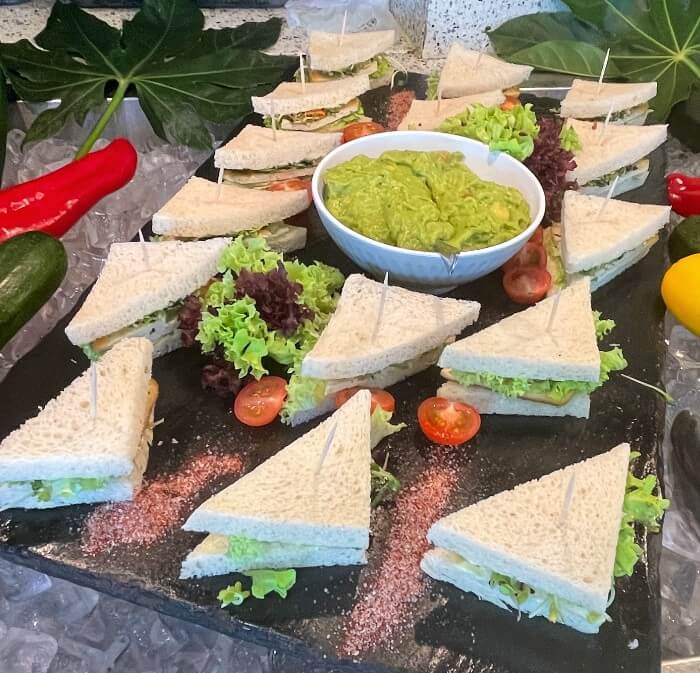
It would have been easy for the A-ROSA chefs to put the smashed avocado and tomatoes inside the tofu sandwiches. But not everyone likes avocados and tomatoes. How thoughtful to have this separate so that you can add it if you wish.
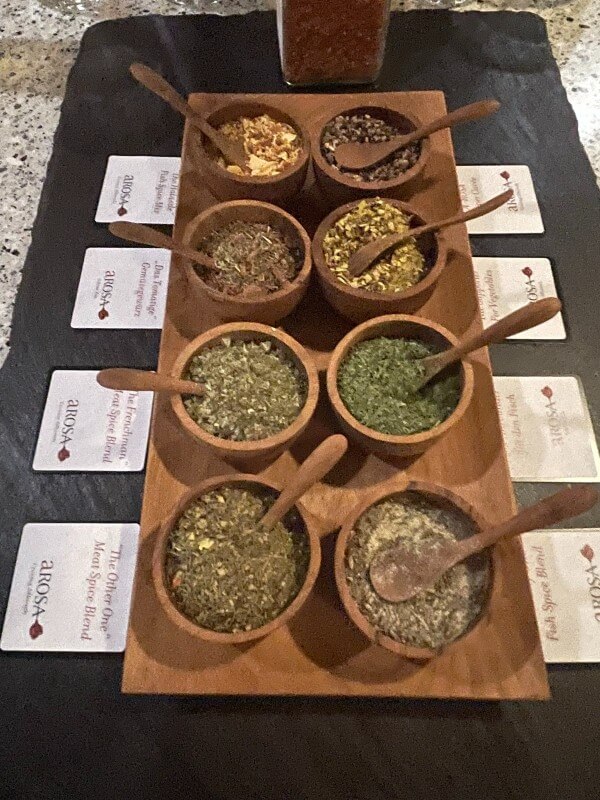
On an A-ROSA cruise, your food will never be bland with this selection of spices that you can help yourself to. You can add these to soups, stews and salads to give your meals a unique flavour to suit your own preferences.
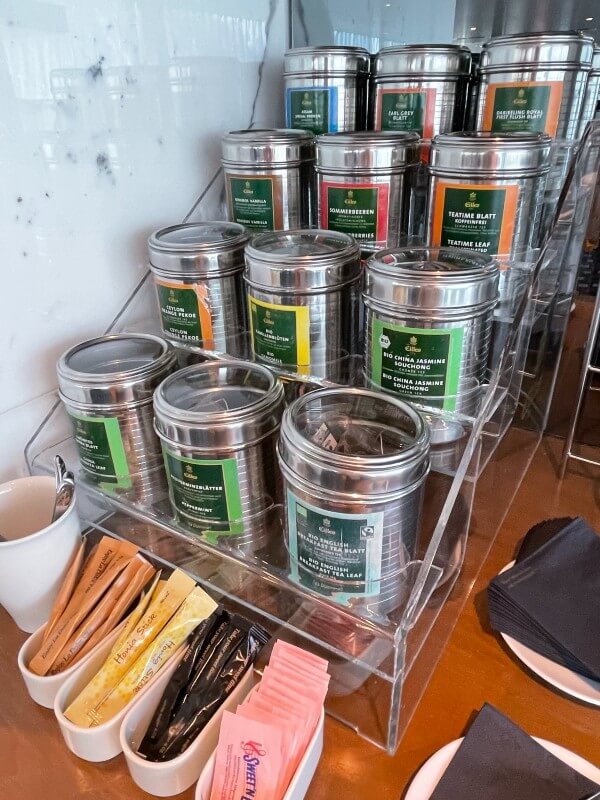
On river cruise ships, there’s always an area where you can help yourself to tea and coffee throughout the day. With so many different teas to choose from, as well as a coffee machine that makes many options, you may have a problem deciding which to go for!
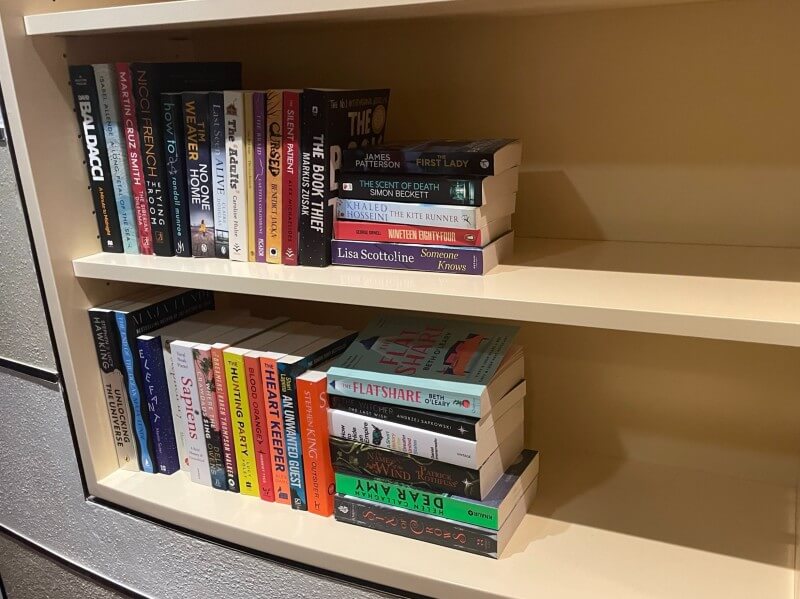
Most river cruise ships have a library on board with books you can borrow. However, I particularly like this mini-library on board A-ROSA Donna. You can donate your own books when you’ve finished them or swap them for one on the shelf.
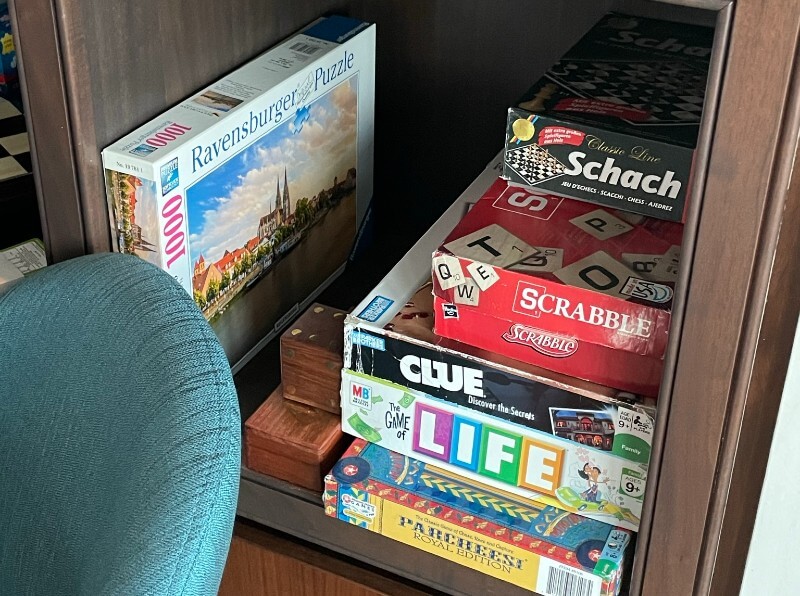
You probably won’t have time to play games on your river cruise, but if you do, you’ll be sure to find a stack of games that you can borrow should you wish to.
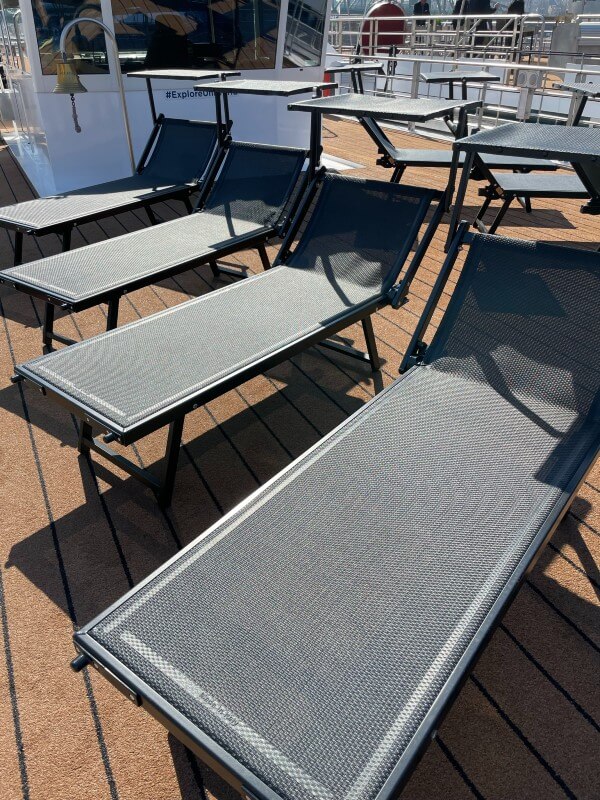
Want your body in the sun but your face in the shade? No problem! Honestly, I wish that all sunloungers came with this extra part that shields your eyes from the sun so you can read your book more easily!
If you’re used to taking ocean cruises, then I have no doubt that you’ll be pleasantly surprised with some of the thoughtful little touches that you’ll find on river cruise ships. With fewer than 200 guests on board and a higher staff-to-guest ratio, the crew members have the time to make sure that everyone is really well looked after.
Now, if you’re wondering how much a river cruise costs to make all of this possible, then you may be pleasantly surprised by the answer.
I have that information for you here: How Much Are River Cruises, And Why Are They (Usually) More Expensive Than Ocean Cruises?
Want expert help to plan your perfect cruise?
Jenni Fielding is the founder of Cruise Mummy. She has worked in the cruise industry since 2015 and has taken over 30 cruises. Now, she helps over 1 million people per month to plan their perfect cruise holidays.
Ever wondered who owns the biggest cruise lines in the world? They must be worth a lot of money, right?
In terms of the number of ships owned, Viking is absolutely up there among the top players in cruising. Thanks to its extensive river cruise division, as well as its ever-expanding ocean cruise and expedition branches, it is one of the biggest travel companies in the world operating under a single brand name.
Let’s take a look at who owns Viking, how much they are worth and whether you’re able to buy stocks and shares in the company.
The three brands of cruise line – Viking River Cruises, Viking Ocean Cruises, and Viking Expeditions – are owned by the single company Viking, which is majority-owned by the Norwegian billionaire Torstein Hagen.
Many of the biggest cruise lines in the world are part of groups alongside other brands, but everything in the Viking group has the same Viking brand – there are just three different branches of cruising.
The company Viking was privately owned for many years, which was the exception in the world of cruising. In 2024 the company underwent an initial public offering, although Hagen retained majority control.
Torstein Hagen is the Viking cruise owner, and it is believed he has a net worth of $9.6 billion. His worth dropped significantly in the immediate years after the global shutdown of 2020 from around $6.2 billion to $1.5 billion, but the latest estimates have his value much higher again (source).
Obviously, the value of all cruise companies – whether privately owned or publicly traded – took a huge hit when cruising was essentially suspended for an unexpected and lengthy period of time. The companies didn’t have alternative ways to generate anywhere near the same kind of revenue and had to refund a lot of customers as well.
Hagen has certainly rebounded though with his latest net worth figures.

Viking is not a company owned by Russia. It is owned by Torstein Hagen, who is Norwegian, while the company has its corporate headquarters in Basel, Switzerland and its marketing headquarters in LA, California. The company was first set up in St Petersburg but is not affiliated with Russia.
That’s where the confusion comes from – because the company was established in Russia, and then the first river cruise itineraries were on the waterways of Russia, including the Volga River, people assume that the company would be based there.
But it was just the starting point, and now the river cruise line is based in both Switzerland and the US, and runs most of its river cruises in western Europe, as well as ocean cruises and expedition cruises around the world.
Viking is not a US company, although it does have a major presence in the country, with its marketing headquarters and some of its senior management team based there. The main corporate office is in Switzerland, though.
The reason that the marketing headquarters is based in Los Angeles is that the primary demographic of Viking’s river cruise arm, which forms the basis of the business, is retired Americans who want to see Europe and other parts of the world.
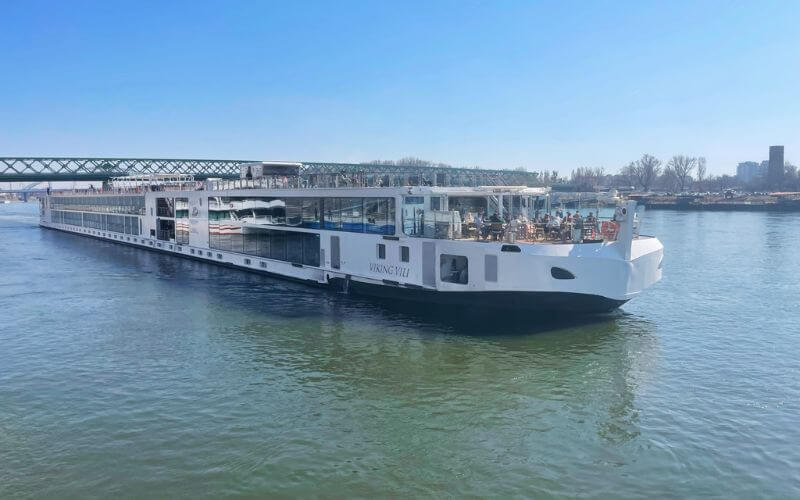
Here’s a quick look at the history of the company:
Hagen’s first time working with cruise lines came back in 1973, when he was a consultant for McKinsey and Co. and helped Holland America Line survive as a business through the oil crisis.
After this, he became CEO of Royal Viking Line from 1980 until 1984, and then almost bankrupted himself after buying a controlling stake in a Dutch shipping company which ultimately failed.
However, in 1997, he was able to help some Russian oligarchs buy a shipping company in a consultant role, and in exchange, they sold him four river cruise ships at a discounted price so he could form his own river cruise company.
After starting in 1997 in Russia, Hagen looked to quickly expand. Just three years later, he was able to purchase KD River Cruises of Europe, which massively expanded his fleet to 26 ships – the largest in Europe.
The ships were all revamped, with the US market as his target – he hired a marketing firm specifically to target retirees in North America. And in 2004 they started offering Yangtze River cruises in China for the first time.
While the Viking fleet was large, it needed modernising and redeveloping. Viking created the new longship design in 2011 and announced plans to add 40 ships to the fleet over the next five years.
This didn’t just massively expand the fleet’s capacity, but it also brought a ton of positive PR, including a Guinness World Record for most ships christened over two days in 2014 (16).
By the end of 2023, the cruise line owns over 70 river cruise ships, most of which have a passenger capacity of around 190.
The river cruise company continued to develop and grow, and so in May 2013, the company rebranded to Viking Cruises, and at the same time, announced its new Viking Ocean Cruises brand, with the first ship launching in 2015. There are now 14 ships in the ocean cruise fleet.
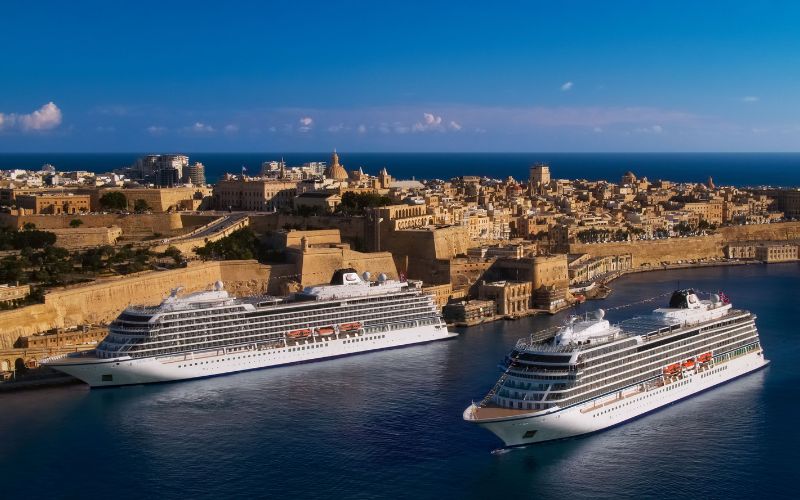
By January 2020, the company wanted to expand its focus on destinations, so it rebranded again, dropping the ‘Cruises’ from the name to become ‘Viking’.
They also announced the formation of a Viking Expeditions cruise division that would focus on exploration cruising, with the first ship launching on schedule in early 2022.
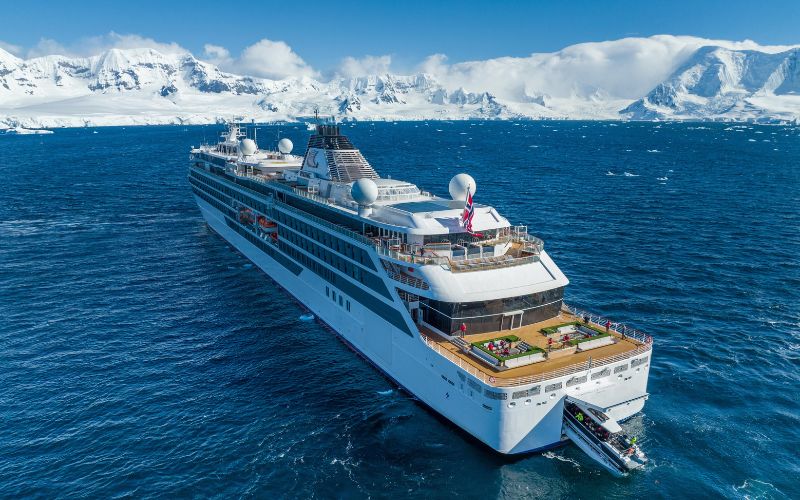
In 2024, Viking Holdings (“Viking”) went public, the first time that anyone could buy shares in the company. For so long, Viking had been one of the few private companies, but the IPO changed that.
Hagen retains a majority shareholding and control of the company.
Torstein Hagen has certainly done well for himself with his Viking company, creating a dominant brand in the world of river cruising thanks to innovative ship design and rapid growth. And with the emerging ocean and expedition cruise divisions, the company is now going from strength to strength.
If you were hoping to invest in Viking as a shareholder, then now you can – since going public, the company has shares that you can invest in.
So you can be a part-owner alongside Hagen!
To buy shares in any company, you’ll typically need to use a stockbroker. This can be either a human being or an online platform. There are various fees involved with this, but an online platform is usually the cheapest and easiest way.
I can’t advise you which is the best, but I personally chose to buy my Carnival shares through an investing platform called etoro. I chose this one because it is one of the most popular platforms with 20 million registered users and has great reviews and low fees.
I’ve been very happy with my share-buying experience and found it really easy to do.
(eToro is a multi-asset investment platform. The value of your investments may go up or down. Your capital is at risk.)
Want expert help to plan your perfect cruise?
Jenni Fielding is the founder of Cruise Mummy. She has worked in the cruise industry since 2015 and has taken over 30 cruises. Now, she helps over 1 million people per month to plan their perfect cruise holidays.
Are you wondering whether to choose Scenic or Emerald for your next river cruise? I’ve enlisted the help of river cruise expert Jenny Cookman from River Cruising with Jen to explain how these two brands differ and help you decide which to choose…
Jenny writes…
Scenic Luxury River Cruises and Emerald River Cruises are sister brands owned by the Scenic Group. Both offer exceptional experiences.
I’ve been lucky enough to sail with both and the ship designs and attention to detail are outstanding. A common factor, with both brands, is the fantastic staff who work hard to create an unforgettable experience for guests.
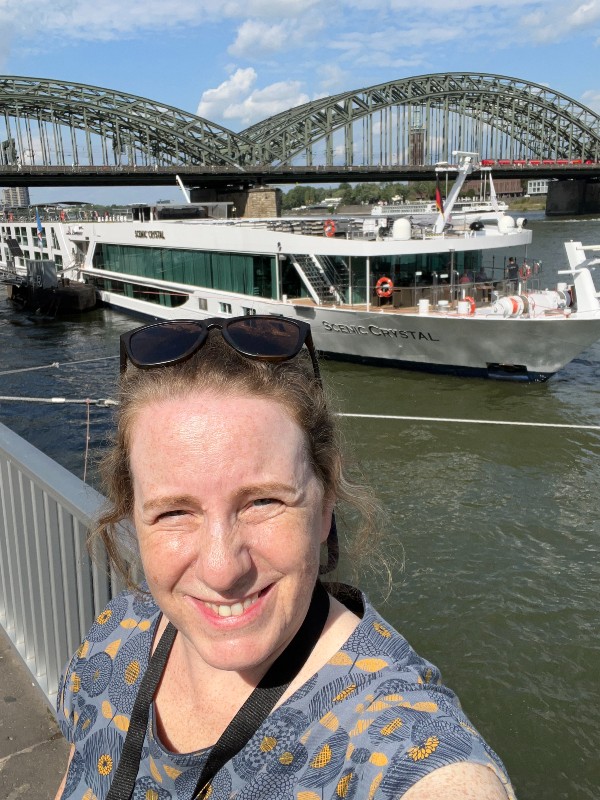
So, what is the difference between Scenic and Emerald? In this blog, we’ll delve deeper into the similarities and differences between the two brands to help you make an informed choice for your next river adventure.
Scenic and Emerald both offer beautiful five-star ships. Scenic offers an ultra-luxury, all-inclusive option while Emerald offers a luxury experience with an eye for greater value and with slightly less included. Emerald offers the best of both worlds; with a lower price tag, you’ll still be onboard some of the most luxurious ships on the rivers.
Glen Moroney, the owner of Scenic, told River Cruise Advisor that Emerald is a “four-star product operating on five-star hardware.” Scenic sits in the ultra-luxury space while sailing with Emerald is a luxury experience.
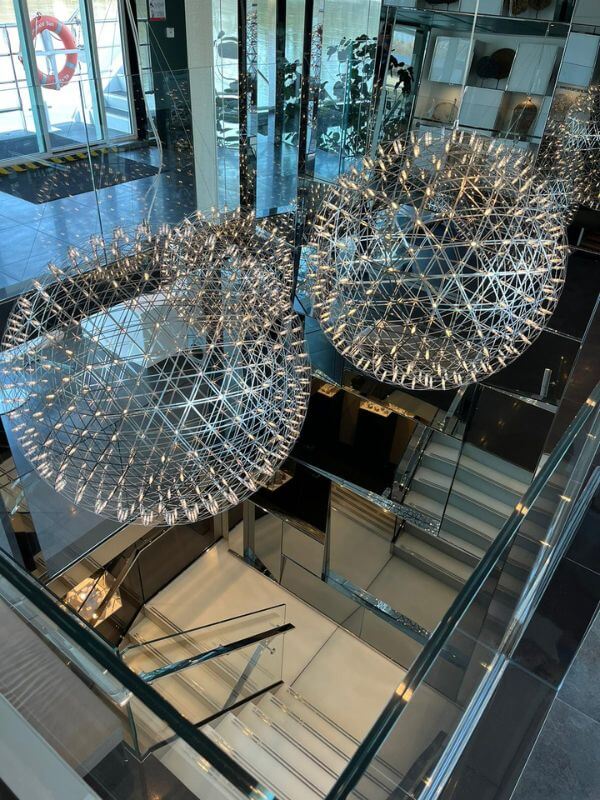
Providing a high standard of luxury tours for many years, a natural next step for Scenic Tours was to join the world of river cruising. In 2006 they began to charter ships along Europe’s rivers. These itineraries proved very popular with guests and quickly sold out.
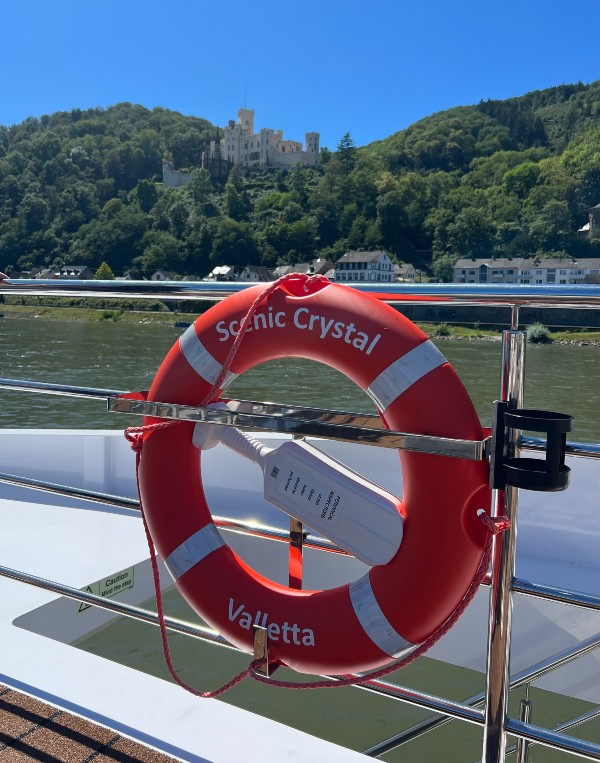
With a desire to create ships tailored to the Scenic guests’ needs and expectations, they designed and commissioned the Scenic Space-Ships. In 2008, the first in the new fleet were Scenic Sapphire and Scenic Emerald. Flooded with natural light at every turn, it’s easy to see why the name Space-Ships was chosen.
Emerald, the sister brand of Scenic, was introduced in 2014. The intention was to combine innovative design with the promise of exceptional value for money. Emerald Star-Ships were born. The pioneering swimming pool that converts into a cinema at night is the most impressive pool that I have seen onboard a river ship.
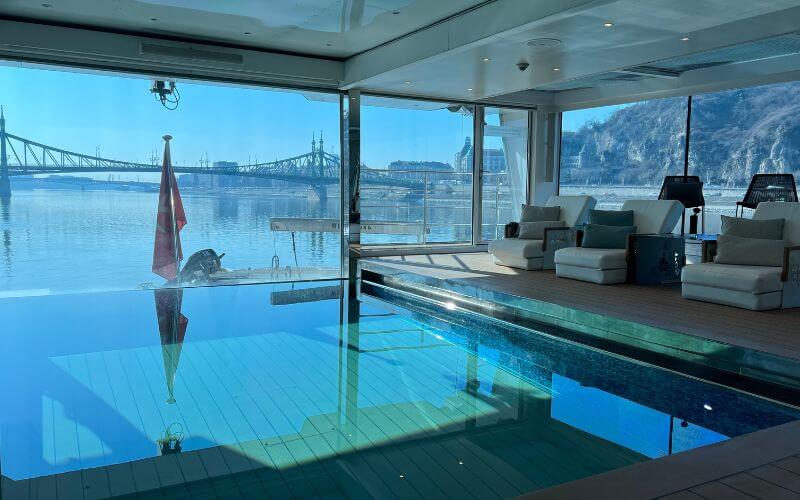
Emerald was the first river cruise line to introduce Activity Managers on board their European Star-Ships. These dedicated team members facilitate the Emerald Active programme, giving guests the opportunity to stay active while on board with fitness classes, including yoga and aqua aerobics.
In 2017, Scenic became the first and only river cruise operator to feature Salt Therapy Lounges on Scenic Diamond and Scenic Sapphire in France. In 2019, due to popular demand, these were added to the ships on the Rhine, Main and Danube rivers.
It has been a privilege to sail on the Scenic Azure on the Douro, the Scenic Crystal on the Rhine, and the Emerald Sun on the Danube.
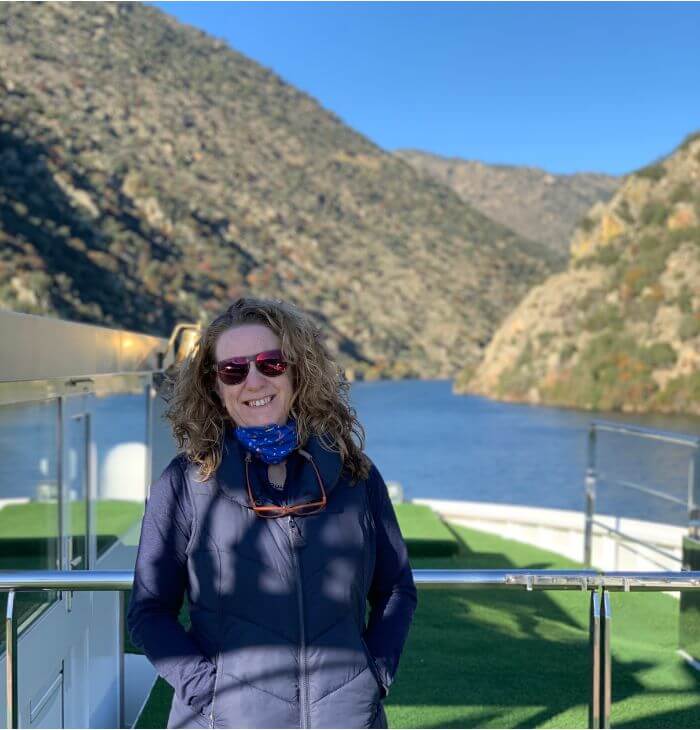
You can read my review of the Scenic Crystal here.
All three ships are beautiful with elegant, contemporary decor and fantastic use of natural light.
I love the innovative Scenic Sun Lounge – a balcony area with a floor-to-ceiling retractable window, opening to allow uninterrupted river views and fresh air.
Dining is an important feature on a river cruise and there is an emphasis on exceptional food, often with a local theme. I can personally confirm that the food was delicious on all three ships. I enjoyed the option of room service from our personal Butler on the Scenic ships, allowing for a relaxed lunch in my room.
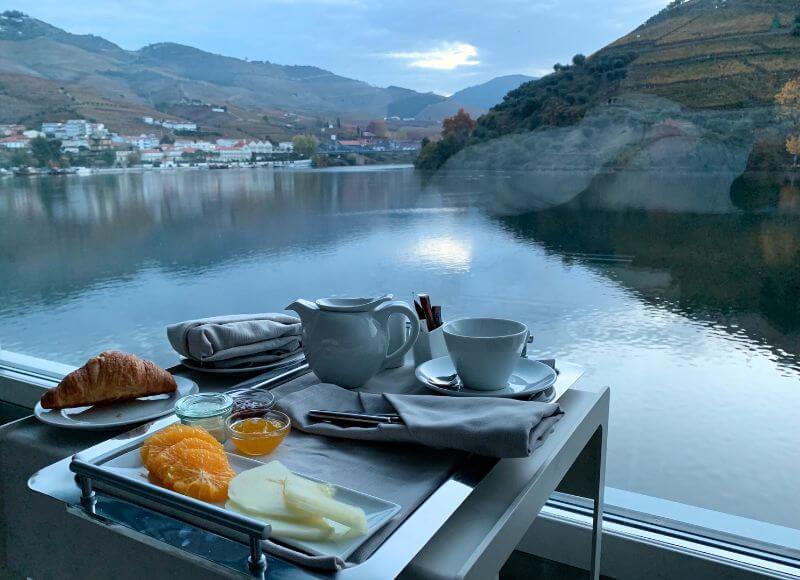
A highlight of Scenic Crystal was the speciality Italian restaurant, Portobellos, with all guests invited to dine at no additional cost. We also enjoyed quiet lunches here, with a beautiful river view.
Scenic also provide a mini bar that can be customised with your favourite drinks and is restocked each day.
You’ll see below that Emerald has a range of more active excursions which is a consideration if you like the idea of more physically challenging options. I found all the tours on each itinerary to be of a very high standard with exceptional local guides. It’s a pleasure to hear their stories and learn about local life.
Scenic includes all the excursion options and curates incredible, exclusive experiences as part of their Enrich programmes. During the Danube itineraries, guests are treated to a unique private concert in Vienna. With Emerald, the culturally enriching Emerald More excursions are an optional extra at additional cost.
This table shows some of the similarities and differences between the brands:
| Scenic | Emerald | |
|---|---|---|
| Ships | Sapphire, Diamond, Gem, Ruby, Pearl, Crystal, Jewel, Jade, Opal, Jasper, Amber, Azure and Spirit | Sky, Star, Dawn, Sun, Luna, Destiny, Liberté, Radiance, Harmony |
| Itineraries | Rhine, Main, Danube, Moselle, Douro, and MekongFrance: Rhône, Saône, Gironde, Dordogne and Garonne and Seine | Rhine, Main, Danube, Moselle, Douro, and Mekong France: Rhône, Saône, |
| Butler service | Butler service for every suite (including room – service) | |
| In room drinks | Mini bar restocked daily Fresh water daily |
Fresh water daily |
| Meals | All onboard meals included | All on board meals included |
| Drinks | Complimentary beverages all day (a few premium options are not included) Complimentary tea and coffee |
Wine, beer and soft drinks with lunch and dinner on board (drinks package available) Complimentary tea and coffee |
| Excursions | Expert local guides to lead excursions
Included: |
Expert local guides to lead excursions
Included: Additional charge: |
| Fitness and wellness | Innovative Salt Therapy Lounge Fitness and wellness area Onboard wellness coach |
Innovative indoor pool with retractable roof which transforms into an evening cinema. Fitness and wellness area Activity Managers |
| Bicycles onboard | Complimentary e-bikes | Bicycles on board |
| Gratuities | All gratuities included | All gratuities included |
| Wi-Fi | Wi-Fi on board | Wi-Fi on board |
| Notes: Emerald Radiance and Emerald Harmony do not have bicycles onboard or an indoor pool, they feature pools on the Sun Deck / Pool DeckEmerald ACTIVE excursions not available on Southeast Asia itineraries.
Flights and Transfers: Any flights included are up to a set credit amount, when paying in full only. If credit is exceeded, charges will apply. Airport transfers are only available on the first and last day of your journey and at times designated. Transfers outside these times will be at your own expense and must be secured by your own arrangements. Full terms and conditions apply. All the information is correct to the best of my knowledge (October 2023). |
||
In summary, Scenic Luxury River Cruises and Emerald River Cruises each have their unique strengths and cater to different traveller preferences and budgets. If you seek a truly all-inclusive luxury experience and are willing to invest, Scenic may be your choice.
On the other hand, if you prioritise affordability and flexibility, while still enjoying luxurious comfort, Emerald could be the perfect fit.
Jenny can help you book the perfect river cruise. Please get in touch with her here: www.rivercruising.blog or by email: [email protected]
Want expert help to plan your perfect cruise?