Cruise Tails, the team behind the world’s first dog-friendly cruise, has launched a crowdfunding campaign as it looks to turn its bold idea into a reality.
The campaign, now live on Indiegogo, aims to raise $500,000 to help fund the development of the first-ever cruise designed specifically with dogs in mind – from pet-friendly amenities to dedicated events for canine companions.
The sailing, originally planned for this year, has already been pushed back to 2026, highlighting the scale and complexity of creating a cruise that caters not just to people, but to their pets too.
The new fundraising push is now a key step in keeping the project moving forward.
Cruise Tails is offering a range of reward tiers for supporters, including branded merchandise, the chance to name parts of the ship or themed cruise days, and opportunities to host events.
It’s all part of a wider move to involve the community in shaping what promises to be a unique experience for dog lovers.
The fact that the cruise has been delayed until 2026, and now a crowd-funding campaign has been launched, may raise some eyebrows.
But Cruise Tails is working to overcome obstacles that no other cruise charter has faced before, and not just put on a fantastic experience for guests, but also laying the groundwork for future pet-friendly cruises.
It’s not an understatement to suggest that the dog-friendly cruise could be the first stepping stone onto a complete revolution of how travel companies, cruise lines and other organisations treat guests who have pets in the family.
“Witnessing the growth of the pet-friendly community since our inception has been so rewarding, and I can’t wait to see how these new engagements in action will continue to foster this momentum among our members.”
Cruise Tails Captain Steve Matzke
Alongside the crowdfunding launch, Cruise Tails has also unveiled a new online platform – CruiseTales.com – which will host live and virtual events, updates on the cruise’s progress, and opportunities to support dog rescue charities.
While there’s no denying that raising half a million dollars is a big ask, the Cruise Tails team say they’re more determined than ever to make cruising with dogs a normal part of holiday life.
And if the passion shown by the pet-loving community so far is anything to go by, they have a great chance to pull it off.
NEW DEALS JUST RELEASED!
I’m ALWAYS looking for cruise bargains! These are the best deals I found this week…
Related posts
If you found this interesting, please share!
Jenni Fielding is the founder of Cruise Mummy. She has worked in the cruise industry since 2015 and has taken over 30 cruises. Now, she helps over 1 million people per month to plan their perfect cruise holidays.
With the 2025 cruise season in full swing, a new survey reveals which items cruise passengers are most at risk of losing. According to recent research by Confused.com, over one…
In a significant fleet shake-up, Norwegian Cruise Line Holdings Ltd. has announced that four cruise ships across its three brands will soon leave their respective fleets under long-term charter agreements….
Carnival Cruise Line has officially unveiled the names of its two newest Excel-class cruise ships, set to debut in 2027 and 2028. The announcement was made during a pre-Seatrade Cruise…
Cruising has long been popular among older travellers, but one of the world’s leading shipbuilders is taking things a step further – by designing a cruise ship specifically for passengers…
Families planning Hawaiian cruises could soon face higher costs, as the state considers new taxes on cruise ship passengers. The proposed measures, which include a per-passenger fee or an 11% tax, similar to taxes paid by hotel guests, have triggered a strong threat of legal action from the cruise industry.
Some lawmakers in Hawaii are arguing that the fee increase will ensure cruise visitors contribute their “fair share” to the state, making them equal with other tourists who pay the Transient Accommodations Tax (TAT).
“All we’re asking is for them is to pay their fair share,” State Rep. Adrian Tam, House Tourism Committee Chair, stated. “They are benefiting from Hawaii’s natural beauty.”
However, cruise lines are opposing the tax hike and threatening a lawsuit. Attorneys representing the cruise industry have sent a letter to Hawaii’s Attorney General and lawmakers, claiming the taxes are unconstitutional under long-standing maritime law.
They argue that federal regulations limit taxes on vessels to the cost of providing port services. The letter warns of “costly and time-consuming litigation” if the state proceeds.
Danial Farkas, Executive Vice President and General Counsel of Norwegian Cruise Line Holdings Ltd., spoke to reporters about the financial impact on passengers. He noted that guests on Norwegian Cruise Line’s inter-island Pride of America cruise already pay around $100 in existing fees and excise taxes per person for a five-day voyage.
The proposed new taxes could double this amount.
“And what that means is that for a family of five, such as myself, that’s an extra $500 to the price of a ticket,” Farkas warned. “And it is going to make very, very quickly the cost of a cruise simply unaffordable.”
Farkas also suggested that if the costs become too high, cruise lines could simply pack up and leave. “It picks up and moves, it’s got propellers, it’s got rudders, and we can move it wherever we want,” Farkas stated.
With both the House and Senate in Hawaii having passed their own versions of the cruise passenger tax bills, the final decision on how much more tourists will be taxed will be made in negotiations between the House and Senate in a conference committee.
Until then, future cruise passengers to Hawaii will have to wait to see if their vacation is about to get more expensive to the 50th state.
Our free cruise newsletter offers the latest news and deals: Sign Up
With over 651 million followers on Instagram, soccer super star Cristiano Ronaldo has the largest audience on the platform. And when he sends out a message, it gets a lot of attention.
A recent Instagram post has just revealed that Ronaldo and his partner Georgina Rodríguez are teaming up with a cruise line as part of a new publicity campaign. The couple are promoting Aroya Cruises, a Saudi Arabian cruise line that currently has one 5,000 passenger ship.
In the shared video, Ronaldo and Rodríguez are seen in a casual setting at home, seemingly deciding on their next vacation. With Rodríguez scrolling through her phone, they land on Aroya Cruises as their vacation choice.
What follows is a bit of digital creativity, as the living space is transformed into a scene aboard the Aroya, complete with a balcony showing ocean views. In the video the couple says “Yalla,” the Arabic word for “let’s go,” which also serves as Aroya Cruises’ catchy tagline.
Ronaldo stated his enjoyment of the “Saudi lifestyle” and the Arabian nature of Aroya Cruises. Georgina Rodríguez also participated in the campaign, leveraging her own 65 million Instagram followers.
“Georgina and I are happy to feature in this campaign together and can’t wait to take our family on a cruise. We enjoy the Saudi lifestyle, and Aroya Cruises is intrinsically Arabian, from its design to its cuisine. Yalla Aroya Cruises,” Ronaldo stated.
Aroya Cruises was created by Cruise Saudi in 2023 to develop the cruise industry in Saudi Arabia. Their ship, Aroya, can accommodate 5,000 guests and 1,925 crew and was acquired in 2023 after previously being built for other cruise lines.
Initially offering 3- and 4-night cruises from Jeddah, Saudi Arabia, starting in December 2024, Aroya Cruises is primarily targeting the Saudi market and nearby regions.
However, the cruise line has plans to expand, with 6- and 7-night cruises in the Mediterranean departing from Istanbul starting in June 2025, visiting destinations in Greece and Turkey.
AROYA Cruises.
Aroya features a wide range of amenities. It also includes dedicated facilities and times for female guests and separate prayer rooms for women, catering to the local culture.
Aroya Cruises is making a smart move by tapping into Cristiano Ronaldo’s huge social media presence to get the word out about their new Saudi Arabian cruise line. It’s a quick way to instantly grab attention as they set their sights on both the local Saudi market and their ambitions to sail the Mediterranean.
Our free cruise newsletter offers the latest news and deals: Sign Up
No one wants to think about plumbing while taking a cruise. But what every cruise passenger needs to realize is that the toilet on a ship operates very differently than a toilet back home.
Carnival Cruise Line is once again reminding guests not to flush certain items down the toilet, as it wreaks havoc on cruise ship plumbing. In fact, a total of 10 cruise cabins were left with inoperable toilets after one guest committed the cardinal sin of flushing the “unflushable”.
Carnival Cruise Line’s Brand Ambassador, John Heald, once again took to social media this morning to address a frustratingly familiar issue: passengers flushing wet wipes down cabin toilets.
This time, the seemingly innocent act by one guest resulted in a domino effect, not only blocking their own toilet but also causing nine other toilets to stop working. That’s not a great way to start a vacation.
“It not only had this person very upset that their toilet was blocked, but it also blocked and stopped the flushing of nine other toilets—nine!” Heald stated.
As many seasoned cruisers and Carnival followers may remember, this isn’t the first time Heald has had to deliver this particular message. In fact, as we previously reported, Heald has creatively addressed the problem of flushing wet wipes in the past, even highlighting the unpleasant task faced by the ship’s plumbers, affectionately known as “Luigi.”
Despite clear warnings displayed in bathrooms and on stateroom televisions, some passengers continue this habit, leading to blockages.
While household toilets can typically handle wet wipes and standard toilet paper, cruise ship plumbing is designed for rapid processing—you know that powerful vacuum sound that sounds like an airplane is taking off–and relies on a specific type of paper that breaks down easily.
Yes, wet wipes, even those marketed as “flushable,” often don’t disintegrate sufficiently in cruise ship toilets. Don’t use them on a ship.
This latest incident, not only affected the passenger that flushed the wet wipes, but it also interrupted the cruise vacations of nine other cabins as well.
Heald admitted that cruise ship toilet paper isn’t the comfiest stuff in the world, saying the following:
“Listen, I’m not going to stand here, or sit here, and proclaim that our laboratory paper is the best toilet paper in the world. It’s not. But it is designed to accommodate the suction toilet system. Please don’t flush anything, anything, anything down the toilet – any other toilet paper and wet wipes and all that kind of stuff. Please don’t do it because it does not just affect you, but it affects others as well.”
As we outlined in a previous article, beyond wet wipes, other items that should never be flushed down a cruise ship toilet include feminine hygiene products, diapers, cotton swabs, hair, bandaids, food scraps, cigarette butts, coffee grounds, dental floss, contact lenses, and essentially anything that isn’t toilet paper or human waste.
While cruise ship toilet paper might seem thin, it’s important for the comfort and convenience of everyone on board.
Our free cruise newsletter offers the latest news and deals: Sign Up
Many people in the United States choose to own and carry guns for their own protection. With adequate training and safety knowledge, people may feel comfortable in the knowledge that they can effectively defend themselves wherever they go.
But can you take your gun on a cruise ship?
Just as gun laws vary by state across the United States, the same applies when you’re on a cruise ship. If you’re concerned about safety while at sea or would like to know the specific rules for crew or guests carrying a gun on a cruise, read on for all of the details.
Gun Rules On Cruise Ships
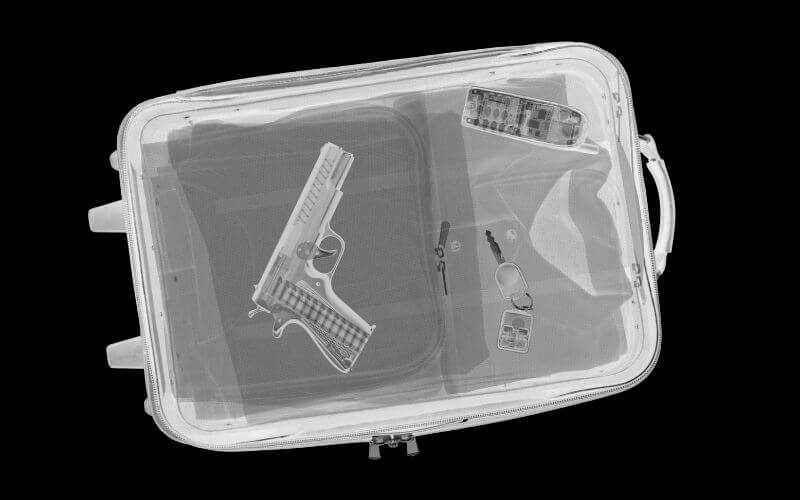
Most cruise lines do not allow guests to take guns on board. Firearms are prohibited as a safety measure and taking one aboard your ship could violate several laws. This includes maritime law which your cruise line abides by as well as the laws of the ports and countries you visit.
For the people who regularly carry a firearm when at home, the thought of not being able to take their gun on a cruise may make them feel unsafe, particularly when worried about pirates or terrorists. You may feel as though you can’t defend yourself.
Thankfully, cruise lines are aware of the need to protect their guests and crew and – despite guns being prohibited on most ships – there are necessary measures and protocols in place to ensure everyone remains safe in every situation that may arise.
Cruise Ship Security
While cruise ships do not have police on board, they do have highly-trained security personnel on board. Cruise ship security teams are headed by former federal, state or military law enforcement. Each team member is trained to a high level and there will be someone on-call 24/7.
Every cruise ship sailing to or from the United States also has at least one crew member on board trained in crime prevention, detection, and reporting.
Cruise ship captains do not carry guns. However, the captain and the staff captain can give permission to the security team to arm themselves if necessary in order to protect the guests and crew members from an immediate threat.
Cruise Ship Officers And Guns
Cruise ship security officers do not carry guns and you will never see a gun on a cruise ship. That doesn’t mean that there isn’t a hidden cache of firearms locked away for emergencies.
Cruise lines do not release details of their security operations for obvious reasons. So there is no publicly available information about the types of firearms on cruise ships, where they are stored or under what circumstances they may be used.
Until the early 1990s, some cruise ships offered skeet shooting as an onboard activity. Guests were handed shotguns and allowed to shoot clay pigeons that were launched into the ocean. As you might expect, this is no longer allowed.
Protection Against Pirates
If a cruise ship comes into contact with pirates or is under threat of being hijacked, a special security team may board the ship to assist. This may include armed guards who are specially trained.
Security teams are trained in what protocols to undertake should this situation arise including using defensive equipment such as sonic boom weapons and high-pressure water jets.
Preventative measures are also in place including the use of night-vision binoculars and water cannons as a deterrent, as reported as best practice for the shipping industry.
US Laws
Cruise lines abide by maritime law in most instances, as once a ship sails more than 12 miles from the coast of any country, it is classed as being in international waters.
Crime at sea typically involves international relations between the US government, foreign port authorities and officials from the registered country of the ship. If the ship is in port, the jurisdiction falls to the local authorities, whereas beyond the mile limit, this will go to the laws of the ship’s registered country.
Cruise ships that embark and disembark in the United States are required to report all crimes that occur at sea, according to the Cruise Vessel Security and Safety Act – in place since 2010.
The cruise industry follows strict and comprehensive security rules which apply to both guests and crew. Within these rules, weapons are listed as prohibited items including guns.
Possession of any prohibited items is not permissible without a valid reason such as a requirement of ship operations; part of a crew member’s official duties; or with the consent of an authorised ship representative.
Along with guns, cruise ships have a number of other items that are completely banned from being brought on board. These include:
The ruling on bringing prohibited items relates to all people on board – including guests and crew. Bringing a gun on a cruise ship is a serious offence and, if found guilty, can come with a punishment.
These punishments vary as bringing a firearm on a cruise violates several laws and policies, including cruise line guidance, maritime law and local port laws.
Final Thoughts
In summary, while you may feel reassured by having your gun on your person, you cannot take it on a cruise ship as it is against cruise line rules as well as local, national and maritime laws.
Expertly trained security professionals are on-call at all hours of the day on a cruise ship and they know the exact response required should there be a risk.
It’s always worth familiarising yourself with prohibited items on your sailing to ensure you know the rules and can be confident to know what to expect.
Related posts:
If you found this interesting, please share!
Jenni Fielding is the founder of Cruise Mummy. She has worked in the cruise industry since 2015 and has taken over 30 cruises. Now, she helps over 1 million people per month to plan their perfect cruise holidays.
Carnival Breeze vs Freedom comes down to size, age and where you want to sail from. Carnival Breeze is a larger, newer Dream-class ship (130,000 tons, 3,690 guests, launched 2012) with more restaurants, a bigger spa and the SportSquare ropes course, and she sails from Galveston. Carnival Freedom is a smaller Conquest-class ship (110,000 tons, 2,980 guests, launched 2007) that has just come out of a 2026 dry dock and sails from Port Canaveral before moving to Norfolk in 2027. Pick Breeze for variety, and Freedom for lower fares and a ship that’s easier to get around.
Both ships carry the Carnival signatures most cruisers look for: Guy’s Burger Joint, BlueIguana Cantina, the RedFrog and Alchemy bars, WaterWorks and Playlist Productions shows. The differences are in the extras, and in which port is easiest for you. Below we compare them side by side, using fleet and deployment information current as of November 2026.
Carnival Breeze vs Freedom at a glance
Feature
Carnival Breeze
Carnival Freedom
Ship class
Dream class
Conquest class
Entered service
2012
2007
Gross tonnage
130,000
110,000
Length
1,004 ft
952 ft
Guests (double occupancy)
3,690
2,980
Crew
About 1,386
About 1,150
Recent dry dock
2022; further maintenance planned for early 2027
September to October 2026 (Marseille)
Homeport (late 2026)
Galveston, Texas
Port Canaveral, Florida
Homeport (from mid-2027)
Galveston (7-day cruises)
Norfolk, Virginia
Specialty dining
Fahrenheit 555, Cucina del Capitano, Bonsai Sushi
Steakhouse, Seafood Shack, Bonsai Sushi Express
Ropes course
Yes (SportSquare)
No
Spa thermal suite
Yes
No
Size, age and refurbishments
The Carnival Breeze was the third and final Dream-class ship, after Carnival Dream and Carnival Magic. At 130,000 gross tons and just over 1,000 feet long, she’s about 20,000 tons bigger than Freedom and carries roughly 700 more guests at double occupancy. If you’ve already sailed the Dream, the Breeze will feel familiar, though there are differences in dining and bars. Our Carnival Dream vs Carnival Breeze comparison covers those.
The Carnival Freedom is a Conquest-class ship, the same design as Carnival Glory, Valor and Liberty. She’s five years older than Breeze, but she has been updated many times. Fun Ship 2.0 brought Guy’s Burger Joint, BlueIguana Cantina and the RedFrog and Alchemy bars. A 2019 dry dock at Grand Bahama Shipyard added the WaterWorks aqua park, Bonsai Sushi Express, a refreshed deli and mini-golf.
The biggest recent news is Freedom’s 35-day dry dock in Marseille, France, which ran from early September to October 2026. She came out with a new whale-tail funnel. The original was damaged when lightning struck it in March 2024, and Carnival says the new design will let the ship visit more ports. The work also brought a redesigned casino with more than 100 extra gaming machines, a refreshed arcade, updated shops, accessibility improvements and a new bow livery marking the USA’s 250th anniversary.
Breeze’s last major dry dock was in 2022. Carnival cancelled five Galveston sailings in January and March 2027 to fit in more planned dry dock maintenance, so if you’re booking around those dates, check your sailing carefully. For context on how both ships compare with the rest of the fleet, see our guide to Carnival ships ranked by age.
Homeports and itineraries for 2026-27
Where each ship sails from is often what decides it for most people, and both ships are changing homeports over the next two years.
Carnival Breeze: Galveston, then Port Canaveral
Now to spring 2027: Short 4- and 5-night Western Caribbean cruises from Galveston, with ports such as Cozumel.
From May 2027: A new 7-day schedule from Galveston that alternates Western and Eastern Caribbean routes. Ports include Celebration Key, Key West, Nassau, Montego Bay, Grand Cayman, Belize and Isla Tropicale. Special sailings include a 14-day Carnival Journeys voyage on October 16, 2027, an 8-day Christmas cruise and a 14-day Southern Caribbean Journeys cruise in January 2028.
2028-29: Carnival has scheduled Breeze for Port Canaveral, with 7-day Eastern and Western Caribbean cruises and four 14-day Southern Caribbean Journeys sailings.
Carnival Freedom: Port Canaveral, then Norfolk
Now to May 2027: 4- and 5-night Bahamas cruises from Port Canaveral (Orlando). She arrived there on October 30, 2026, after a Mediterranean cruise and a transatlantic crossing.
From May 2027: Freedom repositions to Norfolk, Virginia, arriving May 23, 2027, after a 15-day Southern Caribbean Journeys voyage. From Norfolk she’ll offer 6-day Bahamas cruises (Celebration Key, Nassau, Bimini), 6-day Bermuda cruises with two days on the island, 8-day Eastern Caribbean trips (Amber Cove, RelaxAway, Half Moon Cay, Grand Turk) and 8-day Canada cruises.
2028-29: Carnival has already opened Norfolk sailings that run through April 2029.
In practice, if you’re within driving distance of Texas, Breeze is the easy choice for now. If you live in the Mid-Atlantic, Freedom from Norfolk saves you a flight from 2027. For a short Florida getaway this winter, it’s Freedom.
Both ships serve free burgers and burritos on the Lido Deck. Photo: Vidal Balielo Jr. on Pexels
Dining: included and specialty restaurants
The included food is very similar on both ships. Each has a main dining room, the Lido Marketplace buffet, Seaday Brunch, Pizza Pirate, Guy’s Burger Joint and BlueIguana Cantina, so you’ll get the same free burgers and burritos on either ship.
Carnival Breeze extras:
Guy’s Pig & Anchor Bar-B-Que Smokehouse (included, usually on sea days)
Mongolian Wok (included)
Carnival Deli
Fahrenheit 555 Steakhouse (extra charge)
Cucina del Capitano Italian (extra charge)
Bonsai Sushi (extra charge)
Carnival Freedom extras:
A deli, updated in the 2019 refit (included)
Steakhouse (extra charge)
Seafood Shack (extra charge)
Bonsai Sushi Express (extra charge)
Cherry On Top sweets shop and JavaBlue Café
On a 4- or 5-night cruise, the difference won’t matter much. On a week-long sailing, Breeze’s included smokehouse and stir-fry, plus a sit-down Italian restaurant, give you more variety without paying extra.
Bars and nightlife
Both ships have the RedFrog Rum Bar, RedFrog Pub, Alchemy Bar and BlueIguana Tequila Bar. After that, they have quite different feels:
Breeze has Liquid Nightclub and the outdoor Lanai promenade typical of the Dream class, which gives you more space for drinks with sea views.
Freedom has Scott’s Piano Bar, a 70’s-themed nightclub and the Heroes Tribute Bar & Lounge, which honors military service members. That suits her new Norfolk homeport, a big Navy town.
If a piano-bar sing-along matters to you, Freedom has one and Breeze’s current venue list doesn’t.
WaterWorks and onboard activities
Both ships have Carnival WaterWorks. Breeze’s includes the 300-plus-foot Twister waterslide. Freedom’s aqua park dates from the 2019 refit and sits alongside a mini-golf course.
The bigger difference is SportSquare on Breeze, an outdoor recreation area with the SkyCourse ropes course and other games. Freedom doesn’t have a ropes course. Both ships have the adults-only Serenity retreat, which is free and a good escape from the pool deck on a busy sea day.
Entertainment
The shows will be much the same on either ship: Playlist Productions shows in the main theater, the Punchliner Comedy Club, Seuss at Sea family events, live music and the casino. Freedom’s casino is now one of her strong points, after the 2026 redesign added more than 100 machines. Breeze is bigger, so she spreads the evening crowds across more venues, while on Freedom the main lounges can feel busier on full sailings.
Both ships have water slides and three age-based kids clubs. Photo: Quang Nguyen Vinh on Pexels
Kids and families
Kids’ clubs are the same on both ships: Camp Ocean for ages 2 to 11, Circle “C” for 12 to 14, and Club O2 for 15 to 17, plus Seuss at Sea. Camp Ocean is included. Night Owls late-night babysitting costs extra on Carnival ships.
For active older kids and teens, the ropes course and larger outdoor sports area make Breeze the better pick. For toddlers and younger children, a smaller ship like Freedom can be easier for parents, with shorter walks between the cabin, the buffet and the kids’ club.
Spa and fitness
Both ships have a Cloud 9 Spa with treatments, a salon and a gym. Breeze’s is bigger and includes a Thermal Suite with heated loungers and steam rooms, plus a hydrotherapy pool for guests in eligible spa staterooms (others can usually buy a pass). Freedom’s spa covers the basics but has no thermal suite. If spa time is a big part of your holiday, choose Breeze.
Cabins and staterooms
Both ships offer interior, ocean view, balcony and suite cabins. Breeze, like the rest of the Dream class, also has cove balconies, low-deck balconies close to the water, and Cloud 9 Spa staterooms, which come with spa perks. Freedom has the more traditional Conquest-class mix.
Standard cabins are broadly similar in size across the two ships. Freedom often has lower starting fares, partly because she’s older and smaller. If you’re on a budget, an inside cabin on either ship is fine. Our guide to interior rooms on Carnival cruises shows what to expect.
Something most comparisons miss: timing your booking
Because both ships are changing homeports, the same ship can mean a very different holiday depending on your sailing date. A Freedom cruise in early 2027 is a short Bahamas trip from Florida. The same ship in summer 2027 is a week-long Bermuda or Canada cruise from Virginia. Breeze’s planned early-2027 maintenance and her switch to 7-day cruises in May 2027 also change which dates are available. Before comparing prices, check that the sailing you’re looking at matches the ship’s current schedule on Carnival’s official site.
Verdict: which ship should you choose?
Choose Carnival Breeze if you want more included dining, the SportSquare ropes course, a spa with a thermal suite and a full week in the Caribbean from Galveston (or Port Canaveral from 2028).
Choose Carnival Freedom if you want a lower fare, a freshly refurbished ship, a short Bahamas break from Florida this winter or a drive-to cruise from Norfolk from 2027.
There’s no clear winner in the Carnival Breeze vs Freedom debate. Breeze offers more on board, while Freedom is often cheaper and, after her 2026 refit, in good shape for her age.
FAQs
Is Carnival Breeze bigger than Carnival Freedom?
Yes. Carnival Breeze is about 130,000 gross tons and 1,004 feet long, and carries 3,690 guests at double occupancy. Carnival Freedom is about 110,000 gross tons and 952 feet long, with 2,980 guests.
When was Carnival Breeze refurbished?
Carnival Breeze had her last major dry dock in 2022. Carnival has also planned dry dock maintenance for early 2027, which led to five Galveston sailings in January and March 2027 being cancelled.
Where does Carnival Freedom sail from?
Carnival Freedom sails 4- and 5-night Bahamas cruises from Port Canaveral until May 2027. She then moves to Norfolk, Virginia, for Bahamas, Bermuda, Eastern Caribbean and Canada cruises.
Which is the best Carnival ship to sail on?
It depends on your budget and port. Newer Excel-class ships such as Mardi Gras have the most features, but Breeze ranks well for a mid-size ship with plenty of dining. Freedom is a good-value option, especially after her 2026 refit.
Is Carnival Freedom cheaper than Carnival Breeze?
Often, yes. Freedom’s starting fares are usually lower because she’s older and smaller, though prices vary by date, cruise length and cabin type.
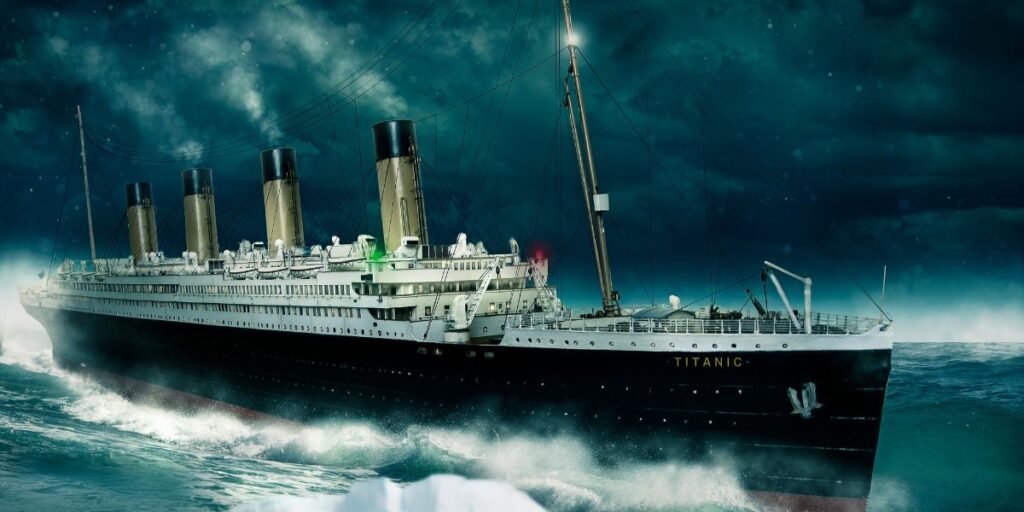
We all know the story of the Titanic, and how she wasn’t able to complete her maiden voyage.
Or at least – we know the bare bones. We know she was ‘unsinkable’, and that she didn’t have enough lifeboats. But there’s so much more context to add, including the route that she was sailing.
What was the scheduled route for the Titanic, and how far into it did she get before tragedy struck? Let’s take a look.
Titanic’s Original Route
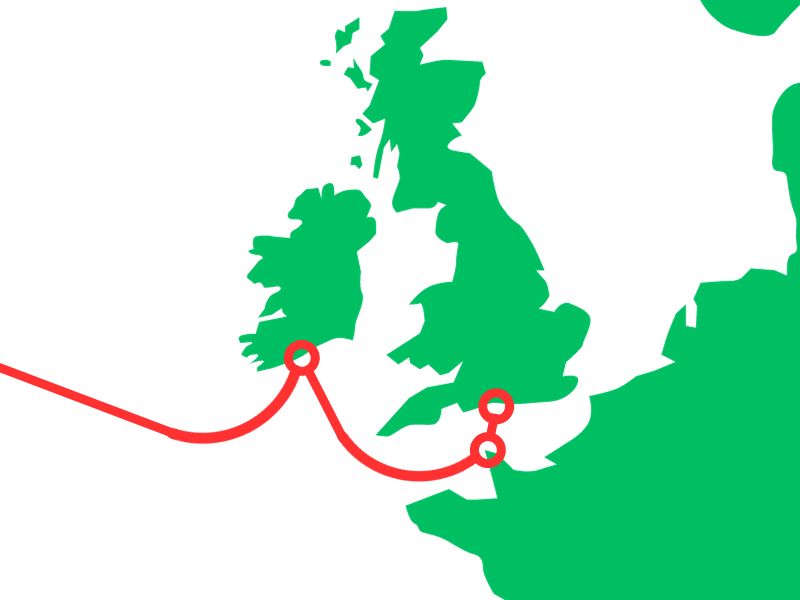
The original route of the Titanic on her maiden voyage saw her sail from Southampton to Cherbourg in France and then to Cobh in Ireland, before departing for New York. The total journey across the Atlantic would have been 2,893 miles, and the total journey overall around 3,284 miles.
The ship’s first sailing was from Belfast but that was just to relocate to Southampton, where the official maiden voyage would depart. After calling at Cherbourg and Cobh, the ship undertook a four-leg journey to get across the Atlantic.
The Titanic’s Journey Across The Atlantic
Sailing 55 miles from the Queenstown waters of Ireland to Fastnet, an island in the Atlantic that’s home to the Fastnet Lighthouse
Sailing a circle path from Fastnet to ‘The Corner’, a point in the Atlantic Ocean situated at 42°N, 47°W. This was the longest leg of the journey, with the Titanic sailing 1,622 miles
A straight line course from The Corner to Nantucket Shoals, which would have been around 1,023 miles
A final straight line to the Ambrose Channel, which marks the entrance to New York harbour – around 193 miles
The majority of Titanic’s paying passengers for the sailing boarded in Southampton, but the calls in Cherbourg and Cobh did see some passengers board and disembark.
22 passengers got off the ship in Cherbourg, only boarding the Titanic to cross the English Channel. 274 passengers came on board the ship here.
In Cobh, just 7 passengers disembarked – most were on the ship for the full sailing. 123 passengers boarded the ship there.
The calls to Cherbourg and Queenstown (Cobh) were both tender visits – the ship was anchored off the shore, and tender boats (PS Ireland and PS America) ferried passengers to and from the shore.
Titanic’s Departure
The Titanic departed from Southampton on her maiden voyage, but she called at two ports before setting off on the last leg of her final sailing. Her final departure port was Queenstown (Cobh), from which she was sailing across the Atlantic Ocean.
The ship’s very first sailing was from Belfast where she had been built. She departed Belfast on 2nd April 1912 and sailed to Southampton, arriving on the 3rd April. She then stayed here for six days, including some time where the ship was opened for viewings (for a fee).
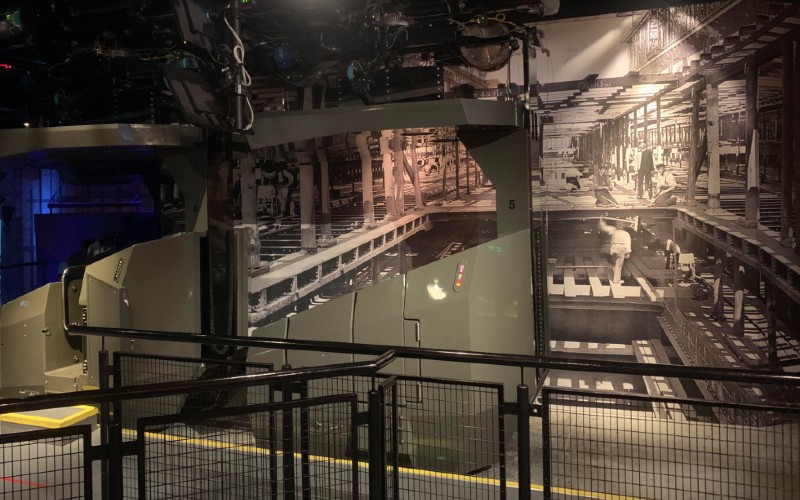
The Shipyard Ride at Titanic Belfast
Titanic’s Destination
The Titanic was headed to New York City on her maiden voyage when she sank. She was due to sail Transatlantic voyages between Southampton and New York on a regular timetable, but never completed her first journey.
In 1912, New York was the world’s busiest port. That was due to visitors from across the Atlantic, and also the huge number of immigrants that were moving to America to begin a new life. As a result, it was typically the destination port for most ships sailing across the Atlantic.
Map Of Titanic’s Route
Here’s a map of the route that the Titanic took, showing the ports of call and the intended path of the ship towards New York:
Titanic Ports Of Call
Here’s a look at the ports of call for the Titanic’s maiden voyage, including dates and times:
Southampton – embarked on 10th April 1912 at around 12pm.
Cherbourg – arrived on 10th April 1912 at around 6.30pm. Departed at around 8pm.
Queenstown (Cobh) – arrived 11th April 1912 at around 11.30am. Departed at 1.30pm.
The ship was due to arrive in New York on 17th April 1912 but sank on 15th April.
The ports of call for the return journey were different – the ship was scheduled to sail from New York to Plymouth in Devon, before sailing down to Cherbourg in France and then returning to Southampton to complete the return leg.
How Long The Titanic’s Route Was Meant To Take
The total cruise duration for the Titanic’s maiden sailing, from Southampton to New York, was scheduled to take 7 days. The first two days were sailing between the UK and France and then back to Ireland, with a 5-day Atlantic crossing completing the sailing.
The Titanic was not designed to be the fastest ship on the ocean. Indeed, the Mauretania and Lusitania that were sailing for rival cruise line Cunard were both much faster; and could complete the journey in under five days.
There is a myth that one of the reasons Titanic sank was because the Captain was ignoring iceberg warnings to try and break the record for crossing the Atlantic but that’s simply not the case – the ship was never designed to break speed records.
She was instead designed to be a more luxurious option, even if that meant adding a day onto the schedule for the journey – speed was not the priority.
It was on the fifth day of the sailing overall – and the fourth day of the actual crossing of the Atlantic – that the ship sank. She departed Cobh on the 11th of April, began to sink on the night of the 14th of April, and fully sank in the early hours of the 15th of April.
How Far The Titanic Was From Its Final Destination
The Titanic was around 1,250 miles from its final destination of New York when it sank. The closest land at this point was Newfoundland in Canada, which was still 400 miles away.
The Titanic started to sink on the evening of 14th April 1912 and completely sank by around 2 am the following day – still around two and a half days from finishing her maiden voyage.
The fact that the ship was so remote at the time of her sinking was one of the major reasons there were so many casualties – the RMS Carpathia did manage to reach the site of the sinking and rescue those in lifeboats, but only by 4 am and even then that was with sailing at high speeds through risky waters.
Ships Still Take The Same Route As The Titanic
Some ships still take the same route as the Titanic. Many cruise ships sail Transatlantic voyages from Southampton to New York, with some calling at France and Ireland en route. The actual route across the Atlantic still remains popular too as it is relatively direct.
A lot of modern Transatlantic sailings are more direct between Southampton and New York too, while others may call at the Azores – the Portuguese archipelago in the Atlantic. This is generally done just to break up the sailing so that guests aren’t having too many sea days in a row.
Modern ships are better equipped to handle icebergs – so a repeat of the Titanic disaster is extremely unlikely. Modern tech allows for icebergs to be spotted from a much further distance, and modern shipbuilding techniques make them less of a risk too.
I attended a talk about how cruise ships navigate while I was onboard Fred. Olsen’s Bolette. The officer explained how cruise ships usually have six lookouts, who work in eight-hour shifts, two at a time. This is in addition to the modern computer technology that can detect icebergs.
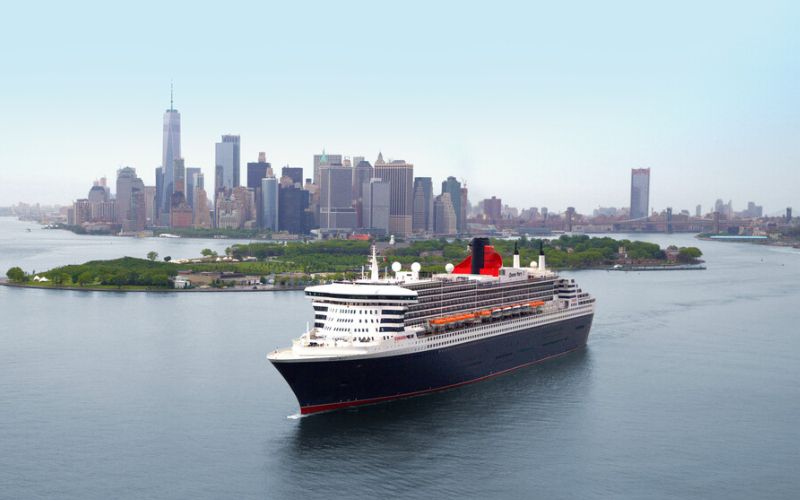
Transatlantic cruises are very safe and many thousands of passengers sail on these cruises each year, whether as part of a repositioning cruise (where a cruise ship relocates for a season, often between the Caribbean in winter and Europe in the summer), or just as part of a regular Transatlantic cruise, often with Cunard.
Cunard’s Queen Mary 2
Final Word
The Transatlantic route sailed by the Titanic is still used today by ships – although not always exactly the same in terms of ports of call. Passengers of modern Transatlantic cruises don’t need to worry about succumbing to the same fate as the Titanic though.
Modern technology and navigation techniques make it much easier to spot icebergs and avoid them, and crew are much more careful now than they were on the Titanic. Plus, even if there was an incident in the middle of the ocean, modern cruise ships are better equipped to deal with them, including having sufficient lifeboats.
So if you like the idea of a modern Transatlantic cruise, don’t be put off.
Related Topics
If you found this interesting, please share!
Jenni Fielding is the founder of Cruise Mummy. She has worked in the cruise industry since 2015 and has taken over 30 cruises. Now, she helps over 1 million people per month to plan their perfect cruise holidays.
Everyone loves a good cruise hack. And social media is brimming with all kinds of clever tips and tricks for making a cruise vacation even better. But Carnival is warning against a not-so-clever hack that will get you banned from the cruise line forever.
If you’re going to do something that is completely against the terms and policies of a cruise line, it’s probably not a good idea to brag about it online, just for some engagement farming and a couple likes.
Carnival Cruise Line is now reminding passengers not to attempt to smuggle alcohol onboard, while also reminding them how foolish it is to boast about it on social media accounts.
Brand Ambassador John Heald addressed the issue directly in a Facebook Live video this morning, emphasizing that such behavior could lead to a lifetime ban from Carnival.
Heald revealed that he had been alerted to numerous social media posts where individuals proudly displayed their concealed alcohol.
“Somebody – actually, I think it was at least a dozen people – wrote to me sending me a link to a social media video… where this – this is crazy, right?” Heald exclaimed, referencing the common, although prohibited, practice of hiding alcohol in items like hairbrushes and umbrellas.
While acknowledging that these methods are not new – “We have known for years that you can go on Mrs. Amazon, and you can get used to smuggle booze in, right?” – Heald expressed particular frustration with the public boasting that often follows.
“But what absolutely drives me crazy – it makes me laugh, to be very honest – is when people get on the ship, and they go, ‘Ohh, look what we smuggled on board, a tube full of vodka. Ha Ha Ha! We’re so clever.’ And they put it out….”
Heald made it clear that Carnival is actively monitoring social media. This is a practice of any public company to get a pulse of their brand and how people are interacting or engaging with it.
And in this case, it can be used to find guests who are violating the rules.
“Of course, of course, we have people monitoring social media pages, of course, we do. And then you monitor it, people watching it, and you send it to me, and you say, ‘Look, look!’”
The consequences for these “clever” smugglers are severe. “And then we go to their cabin, and then we find it, and then we tell them they can’t cruise with us anymore,” Heald stated plainly.
He acknowledged the motivations behind the smuggling – “I know, I know why people do it. I get that” – but firmly condemned the act of publicizing it.
“But don’t do it. Don’t do it,” Heald urged.
“And to put it on social media is absolutely ridiculous, bonkers. It makes me sad when we have to do this all for the sake of a tiny tube full of rum or whatever it is.”
John Heald’s warning to Carnival cruisers is simple: don’t try to sneak booze onboard and then show off on social media. If you do, you’ll probably be banned for life. Carnival is using social media to keep an eye out and make sure everyone plays by the rules.
Some people think that if they see it on a large social media account then the person got away with it, but we don’t always see the end result of these “hacks”. After all, while it’s easy to brag about “beating the system” with a clever hack, no one likes to brag about not being able to cruise any more.
Carnival Cruise Line has rules about bringing your own alcohol. You cannot bring hard liquor or beer onto the ship. However, if you’re 21 or older, you can bring one sealed bottle of wine or champagne (the standard 750ml size) per person when you first get on the ship.
If you want to drink that bottle in the main dining room or a bar, there’s a $15 fee.
You can always buy a variety of drinks at the ship’s bars, and they often have drink packages you can purchase. You can also bring a small amount of sealed non-alcoholic drinks like soda or juice when you board.
Our free cruise newsletter offers the latest news and deals: Sign Up
Years ago, people liked to use shotguns to shoot flying targets known as clay pigeons from the back of a cruise ship. Yes, really.
Back then, people seemed to care a lot less about the environment and the implications of dumping clay targets and lead shotgun pellets into the ocean. Not to mention the safety of handing shotguns to people who may or may not have been drinking!
Skeet shooting first became popular in the 1920s and had been a frequent feature on cruise ships ever since.
But is skeet shooting on cruise ships illegal now? Or do some cruise lines still offer skeet shooting as an activity? Read on for all the details…
Skeet Shooting On Modern Cruise Ships
Skeet shooting on cruise ships has not been available since the early 1990s. It began declining in popularity in the 1980s due to concerns over safety and marine conservation.
When people first started to realise that skeet shooting on cruise ships might not be a good idea, some efforts were made to replace lead pellets with non-toxic steel shots and to replace clay targets with targets made from compacted fish food. But in the end, it was decided that skeet shooting on cruise ships just couldn’t be justified at all.
Cruise lines have now completely dropped skeet shooting in all of its forms. In fact, there are no longer any kind of shooting games with any real firearms on board cruise ships today.
You can take part in a laser tag type of virtual skeet shooting game on some cruise ships, but anyone who has any experience with firearms will be the first to tell you, it’s not the same thing.
While there’s no official explanation as to why skeet shooting is no longer an offered activity by cruise lines, the reasons are not limited to environmental concerns. There are also the safety implications of having weapons on board a ship, as well as the noise nuisance it creates for other passengers.
How Skeet Shooting Worked On Cruise Ships
Skeet shooting was a prevalent activity on cruise lines for decades and it usually took place on the aft deck. A ship officer would be present as a loaded shotgun was provided to paying guests and clay targets were launched over the ocean.
This video shows skeet shooting on a Caribbean cruise in 1985…
The aft section of a ship could be considered the perfect spot for skeet shooting because it’s already a half-circle, which is the exact shape you need for targets to be launched from the left and right sides.
In a typical skeet shooting game, eight shooting stations are arranged – equally distant from each other – in an arch. There are two ‘trap houses’, one at the end of each arch. Twenty-five clay pigeons are released in total as you move from station to station, firing at the clay targets, until you reach the end.
However, on cruise ships, skeet shooting was much more simple. It usually involved the clays being launched from a single location and the shooter staying in one spot too.
Other Activities That Are No Longer Offered On Cruise Ships
There are several activities that cruise lines have dropped due to environmental concerns over the years. Skeet shooting is one, hitting golf balls into the sea is another, along with midnight buffets and messages in a bottle.
1. Skeet Shooting
While there is no precise date – possibly because no one decided to record one or no one cared – cruise lines largely dropped skeet shooting over the last decade or two.
Norwegian Cruise Lines was reported to be offering skeet shooting on the Song of Norway as late as 1996. [Source]
If you read about skeet shoot offerings on cruise ships while you’re browsing the web, it’s important to check the date and credibility of the publication. It’s most likely a very dated article or just factually incorrect.
2. Midnight Buffet
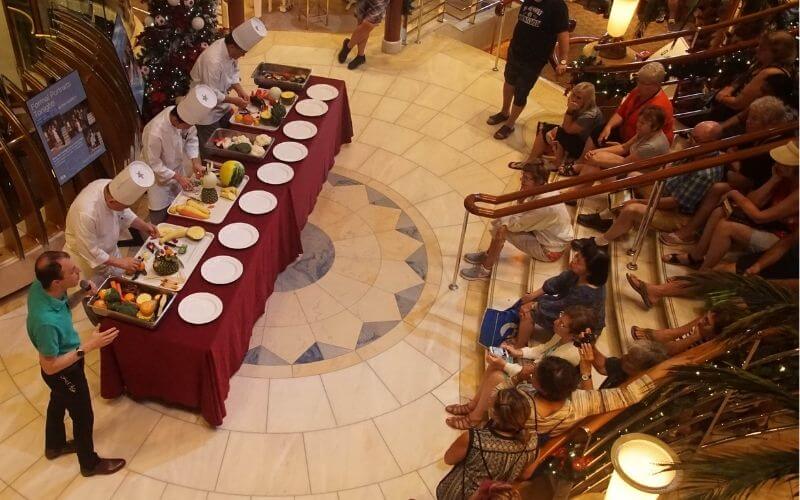
The abundance of food is one of the highlights of many cruise guests’ experiences. In the past, huge buffets would be served at midnight for guests to enjoy a midnight feast after completing their evening activities. These often included elaborate ice sculptures and fruit carvings.
As cruise ships became larger, accommodating 5,000-plus guests rather than 1,000 or so, it became a lot more work to put on the buffets and the amount of food waste increased. As more speciality restaurants were added and flexible dining times became popular, the midnight buffets fell out of favour.
Chefs still carve fruit on criuse ships, just not for the midnight buffet
While the midnight buffet isn’t completely gone, it’s a rare offering nowadays. If it is offered, it will likely only occur on a single night over the course of the cruise – it’s largely obsolete.
On many cruise ships, the buffet restaurant will remain open until the early hours of the morning. But, you’ll be limited to a few dishes such as sandwiches, soup, cakes and fruit, rather than a full buffet experience.
3. Hitting Golf Balls Off Of The Ship
Until the 1990s, people were allowed to hit golf balls off of cruise ships. This was halted when the International Maritime Organization passed a law outlawing the dumping of plastic waste into the sea.
It’s kind of shocking to think that it took so long for anyone to consider that it was against the best interests of the fish and mammals in the ocean to share their territory with a lot of plastic golf balls.
Like skeet shooting, you can now hit golf balls virtually in an arcade room on your cruise or hit them into a net on the top deck. Mini-golf is also a popular option for families with many ships having 9-hole mini-golf courses on board.
Golf net on P&O Cruises’ Britannia
4. Messages In Bottles
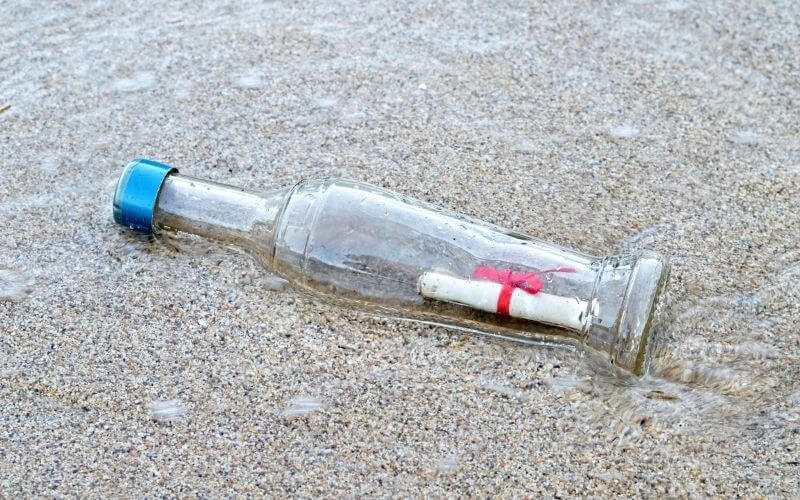
Cruise lines once offered passengers the ability to write messages, cap them in a bottle, and toss them overboard. Just like golf balls, these bottles eventually made their way onto the ‘absolutely not’ list for environmental reasons.
You can see why getting rid of this practice just made sense. If every cruise line routinely practised this, there would be a veritable sea of bottles floating around out there today.
Since there’s already a continent-sized area of floating trash in the Pacific, no one is eager to add to it.
Skeet Shooting Excursions
While you can’t do any cruise ship shooting games onboard, some cruise lines do offer skeet shooting on land as part of organised excursions in ports of call.You can also play virtual skeet shooting simulator games on some ships.
There’s no telling how long skeet shooting excursions will last, as they’re not that popular. You can go just about anywhere in the United States and skeet shoot. So, not many people want to disembark in paradise locations like Cozumel, disregard everything that this major tourist attraction has to offer and go skeet shooting.
If skeet shooting is just your thing while on vacation to tropical islands and resorts, then take a look at the excursions offered by your cruise line. If you can’t find skeet shooting as an option, you may be able to organise your own trip independently.
Since excursions are not often included in cruise packages, you’ll probably have to pay a pretty exorbitant amount to add this excursion activity to your onshore schedule. It’s a far cry from the few bucks it once cost to skeet shoot on the ship, but in the grand scheme of things, it’s better for everyone.
Another option on some ships is to play a skeet shooting simulator game if one is available. This video shows an example of such a game on board the Regal Princess cruise ship…
Final Thoughts
Some people may be a little disappointed that skeet shooting is no longer an option on cruise ships. They may feel that each succeeding generation slowly saps the fun out of everything that the preceding generation enjoyed.
However, there’s no way that adding any kind of waste to the ocean can be justified given the current environmental crisis that the world is facing.
Skeet shooting still exists as an onshore activity. So if it’s a must-do pastime for you, then take a look at the excursions that are offered or see if you can plan your own shooting day out during your cruise. Otherwise, there are other activities that you can enjoy on board such as mini-golf, archery or laser tag.
Related Posts:
If you found this interesting, please share!
Jenni Fielding is the founder of Cruise Mummy. She has worked in the cruise industry since 2015 and has taken over 30 cruises. Now, she helps over 1 million people per month to plan their perfect cruise holidays.
Cruise age requirements depend on the cruise line and where the ship sails from. Babies usually need to be at least 6 months old (12 months on longer or ocean-crossing voyages). You normally need to be 21 to book and sail without an older adult on North American departures, or 18 from most UK and European ports. The drinking age at sea is 21 on US-based sailings and usually 18 on British lines and in Europe.
After that, a string of other age limits shapes your holiday: kids’ club bands, potty-training rules, teen clubs, casino and spa ages, adults-only ships and even a minimum age of 50 on Saga. This guide works through every milestone, then puts the main lines side by side in one table so you can check the rules before you book.
Babies: the minimum age to cruise
The most common minimum age to cruise is 6 months on the first day of the voyage. Royal Caribbean, Celebrity, Norwegian, Carnival, Disney, Princess, P&O Cruises, Cunard and Fred. Olsen all start from 6 months on most itineraries. That rises to 12 months for transatlantic and transpacific crossings, Hawaii, many South American and South Pacific voyages, and, for several lines, any cruise with three or more consecutive days at sea. Princess applies 6 months only to Alaska, Canada/New England, Caribbean, Europe, Mexico and Panama Canal trips, and 12 months to everything else.
The rule is strictly enforced. An infant who is a day too young can be refused boarding with no refund, so check the date carefully against your child’s birthday. For line-by-line detail on cots, baby food and nurseries, see our guide to taking babies on a cruise and infant age limits.
Nursery ages
Supervised nurseries are less common than kids’ clubs and often carry a fee. Royal Caribbean’s Royal Babies and Tots Nursery takes 6 to 36 months on most of its larger ships, for an hourly charge. Disney’s It’s a Small World Nursery covers children under 3. P&O Cruises runs a free Night Nursery for children from 6 months to under 4, while under-2s can use the daytime nursery area with a parent. Carnival’s Night Owls group babysitting takes children from 6 months to 11 years for a fee.
Cruise age limits for kids’ clubs and potty training
Most kids’ clubs start at 3, but a few take younger children, and the nappy rules vary more than many parents expect.
Carnival Camp Ocean: Penguins 2 to 5, Stingrays 6 to 8, Sharks 9 to 11. Children do not need to be potty trained, but you must hand over nappies at each drop-off.
Royal Caribbean Adventure Ocean: Aquanauts 3 to 5, Explorers 6 to 8, Voyagers 9 to 11. Children must be fully potty trained. Nappies and pull-ups are not allowed.
Disney: Oceaneer Club and Lab for ages 3 to 10.
Princess: The Treehouse 3 to 7 and The Lodge 8 to 12 (Sun and Star Princess use Firefly Park, which covers 6 months to 7 years).
P&O Cruises: The Reef for Splashers 2 to 4, Surfers 5 to 8 and Scubas 9 to 12.
One rule applies almost everywhere: babies in nappies cannot use the main pools. Swim nappies are usually only allowed in dedicated splash areas.
Teen club ages
Teen programmes generally run from 12 or 13 to 17. Royal Caribbean’s Teen Club covers 12 to 17, split into 12 to 14 and 15 to 17. Carnival has Circle C for 12 to 14 and Club O2 for 15 to 17. Disney uses Edge for 11 to 14 and Vibe for 14 to 17. P&O runs Scene or H2O for 13 to 17, and Princess The Beach House for 13 to 17. Teens can usually sign themselves in and out, which younger children cannot.
Rules for 18 to 20-year-olds vary more than any other cruise age limit. Photo: Jeremy Angerson on Pexels
Minimum age to book or go on a cruise alone
This is where cruise age requirements vary most. The age to go on a cruise alone usually depends on the departure port, not your nationality.
Royal Caribbean and Celebrity: 21 from North America; 18 from Europe, South America, Asia, Australia and New Zealand. Underage married couples and active-duty US or Canadian military can be exempt with proof.
Norwegian: on cruises that call at a US, Canadian or Chinese port, under-21s must share (or connect to) a cabin with someone 21+. On other itineraries the line uses 18.
Carnival: under-21s must travel with a relative or guardian aged 25 or over, linked on the same booking. For bookings made from 1 October 2026, children 14 and under must share or connect to that adult’s cabin, and 15 to 20-year-olds must be no more than three cabins away. Married couples and qualifying military aged 18 to 20 are exempt.
Princess: under-21s must share a cabin with someone 21+, with some leeway for family bookings across several cabins.
Disney and Virgin Voyages: 18. Virgin is adults-only, so 18 is also its minimum age to sail at all.
UK lines (P&O Cruises, Cunard, Marella, Fred. Olsen): generally 18 on UK and European sailings. Cunard lets under-16s share with anyone aged 16+ in the same cabin.
Children travelling with only one parent, or with grandparents or another adult, may need a signed consent letter from the absent parent or parents. Norwegian, for example, asks for a Parent/Guardian Release Form for under-18s travelling with a non-parent and may refuse boarding without it. Carry it even if the line does not ask in advance.
Drinking age at sea
There is no single drinking age on cruise ships. Each line sets its own policy by departure region.
US-based sailings (Caribbean, Alaska, Mexico, Hawaii): 21 on Royal Caribbean, Carnival, Princess, Celebrity, Disney and MSC.
Europe, South America, Asia, Australia and New Zealand: 18 on Royal Caribbean and MSC. On Disney, guests aged 12 to 20 can drink with a parent present and a signed consent form on certain European and Australian round trips.
Norwegian: 21 in Alaska and Hawaii. Elsewhere, 18 to 20-year-olds may drink beer and wine in international waters if a parent on board gives written consent.
British lines: P&O Cruises, Marella and Fred. Olsen generally serve from 18. Cunard uses 18 on most sailings, but check its North American departures.
Private islands follow their own rules. Royal Caribbean applies 21 at Perfect Day at CocoCay and Labadee. Turning legal age mid-cruise? Royal Caribbean and MSC will update your record at Guest Services if you show ID.
Casino, spa, gym and adults-only area ages
Casino: 18 is standard on Royal Caribbean, Norwegian, Princess, Carnival and most UK lines. Royal Caribbean raises it to 21 on Alaska sailings.
Spa: treatments are typically 18+. Princess and others offer teen treatments for 13 to 17-year-olds with parental consent. Norwegian’s Thermal Suite is 18+.
Gym: Norwegian bars under-16s from the fitness centre. Other lines let younger teens in with an adult or at set times.
Adults-only areas: Carnival’s Serenity is 21+. Princess’s Sanctuary and Disney’s Quiet Cove pool, Palo and Remy restaurants are 18+. Royal Caribbean’s Solarium is 16+ on most ships.
Many ships set aside quiet adults-only decks, usually for guests 18 and over. Photo: Lisa Fotios on Pexels
Adults-only cruise lines and ships
If you’d rather not share the ship with children, several options set a fixed minimum age for every guest:
Virgin Voyages: 18+ fleetwide.
Viking ocean ships: 18+.
Oceania: new bookings made from 7 January 2026 are for guests aged 18 and over only.
P&O Cruises Arcadia and Aurora: adults-only for most of the year, but a limited number of family sailings, mostly around Christmas and school holidays, run from December 2026 to September 2027. Check the specific date.
Marella Explorer 2: adults-only, joined by Marella Discovery for summer 2026.
Ambassador: every no-fly itinerary in the 2027-28 season is child-free.
Over-50s and older travellers: is there an upper age limit?
Saga is the one major line with a minimum age at the top end. Saga cruises are for anyone aged 50 or over, and a travelling companion can be 40 or over. Nobody else sets a lower limit for older guests, and no mainstream line has a maximum age. Instead, older travellers should expect to declare medical conditions or mobility needs when booking. Lines can ask for evidence of fitness to travel or require a companion for guests who need help. Travel insurance, not the cruise line, is usually where age makes the biggest difference to cost. If you’re planning a trip in later life, see our pick of the best cruises for over-50s.
Pregnancy limit
It isn’t an age rule, but it catches people out. Most lines, including Princess, Royal Caribbean and Disney, refuse passengers who will be 24 weeks pregnant or more at any point during the cruise.
Cruise age requirements by line: comparison table
Cruise line
Minimum infant age
Sail without parent/older adult
Drinking age
Kids’ club starts
Carnival
6 months (12 on transatlantic, Hawaii, South America)
21, or under-21s with a 25+ relative
21 (US sailings)
2 (nappies OK)
Royal Caribbean
6 months (12 on long/ocean voyages)
21 North America / 18 elsewhere
21 North America / 18 elsewhere
3 (potty trained)
Norwegian
6 months (12 with 3+ sea days)
21 if US/Canada/China port / 18 otherwise
21 Alaska/Hawaii; 18-20 with parental consent elsewhere
3
Princess
6 months (12 on most long voyages)
Under-21s with a 21+ cabin mate
21 (US-based ships)
3 (6 months on Sun/Star Princess)
Disney
6 months (12 on some routes)
18
21 (12-20 with consent on some Europe/Australia trips)
3
MSC
Under 1 allowed on shorter cruises; stricter on 11+ nights
18 (21 on US port cruises)
21 North America / 18 Europe
Varies by club
P&O Cruises
6 months (12 on some long or remote trips)
18
18
2
Cunard
6 months (12 on world voyages and transatlantics)
Under-16s with a 16+ cabin mate
18 on most sailings
Varies by ship
Virgin Voyages
Adults only
18
21 US / 18 Europe
None
Saga
Adults only
50 (companion 40+)
18
None
Policies change, and Carnival tightened its rules for young adults twice between 2025 and 2026, so confirm the current terms on the line’s website before you pay a deposit.
Tips for checking cruise age requirements
Use age on embarkation day. Most lines judge every limit by your age on day one. A birthday during the cruise usually won’t count unless Guest Services updates your record.
Check the itinerary, not just the line. The same ship can switch between 21 and 18 rules when it moves from the Caribbean to Europe.
Book cabins together. If teens or young adults will be in a separate cabin, book connecting or neighbouring cabins on the same reservation to satisfy the rules.
FAQs
Do you have to be 18 or 21 to go on a cruise by yourself?
It depends on the line and the departure port. Most US lines require 21 on North American sailings, while Royal Caribbean, Celebrity and most UK lines accept 18 on European departures. Disney and Virgin Voyages use 18.
Can I go on a Carnival cruise at 18?
Yes, but only alongside a relative or guardian aged 25 or over on the same booking, unless you are legally married or qualifying military. From 1 October 2026 bookings, 18 to 20-year-olds must also be within three cabins of that adult.
What is the minimum age to cruise for a baby?
Usually 6 months on embarkation day. That rises to 12 months for transatlantic, Hawaii, South Pacific and other voyages with three or more consecutive sea days.
Is there an upper age limit for cruises?
No major cruise line has a maximum age. Saga has a minimum age of 50 (companions 40+). Every line may ask older passengers to declare medical conditions and prove they are fit to travel.
What is the drinking age on a cruise ship?
Usually 21 on sailings from the US and 18 on British lines and on most European, Australian and South American sailings. Norwegian and Disney allow some 18 to 20-year-olds to drink with parental consent on certain itineraries.