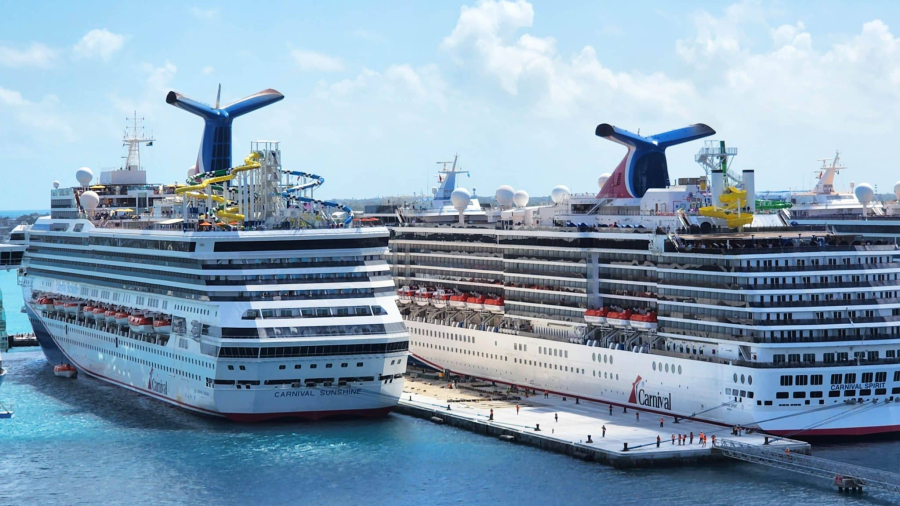
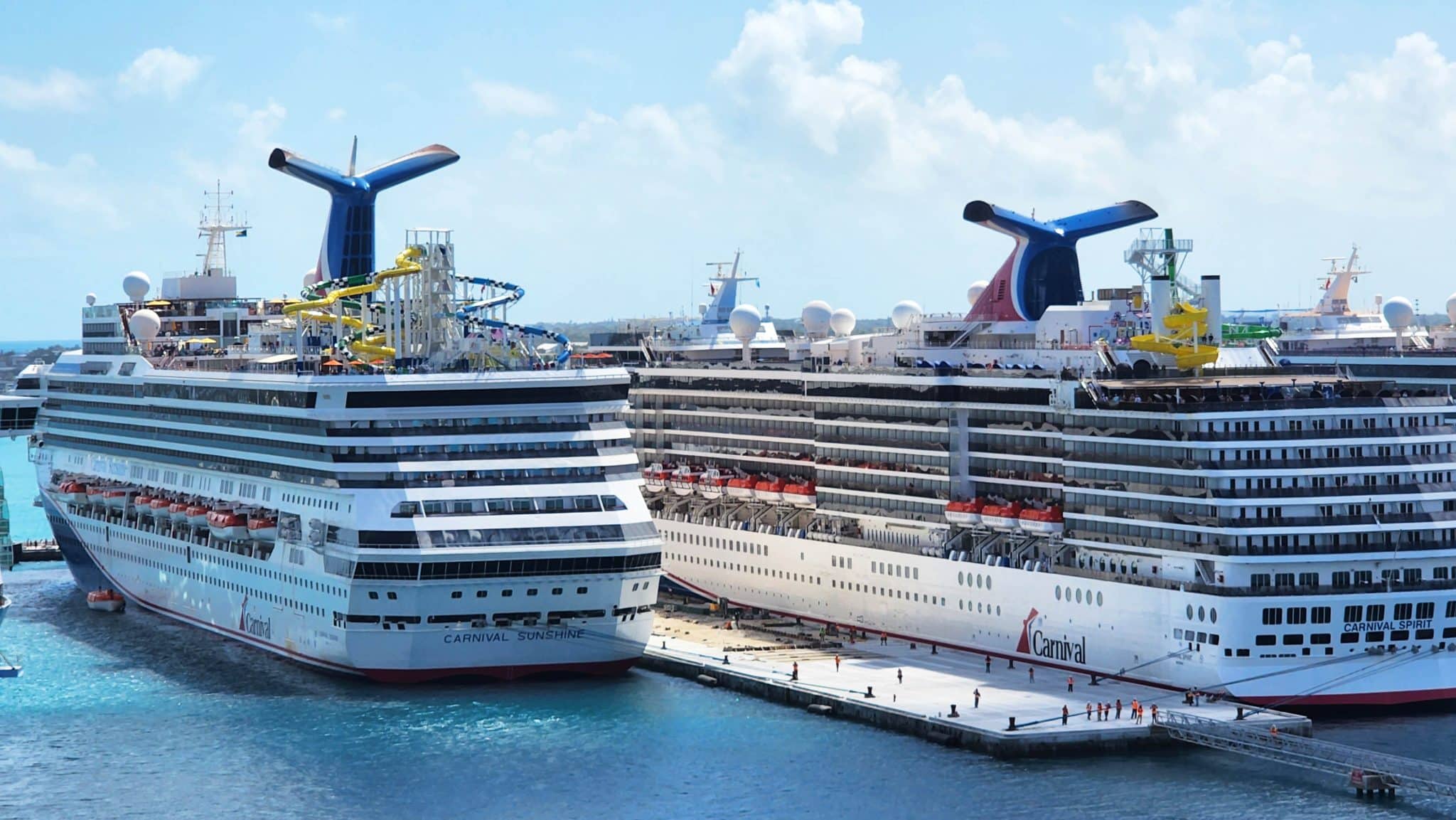
A recent Reddit post shared a heartbreaking story of a passenger whose appendix ruptured on just the second day of the honeymoon getaway.
Our free cruise newsletter offers the latest news and deals: Sign Up
After seeing the medical bill, the couple realized a valuable lesson that was shared on the social media platform.
No one plans to have a medical emergency while on a cruise. After all, it’s a time of rest and relaxation. The medical facility on a cruise ship is the last place a person expects to be.
But a Reddit user found themselves in this exact situation after severe stomach pain flared up just two days into the sailing.
“Currently sailing to the Bahamas when I got severe and sudden stomach pain. The medical center was closed and they had an “emergencies only” line. I waited 4 hours before calling it because I couldn’t tell if it was an emergency,” Redditor jellocore posted.
“Not only did I have appendicitis, my appendix ruptured. This is very serious and I will be in the hospital for at least a week. The ship doctors and nurses are phenomenal, and I feel very cared for.”
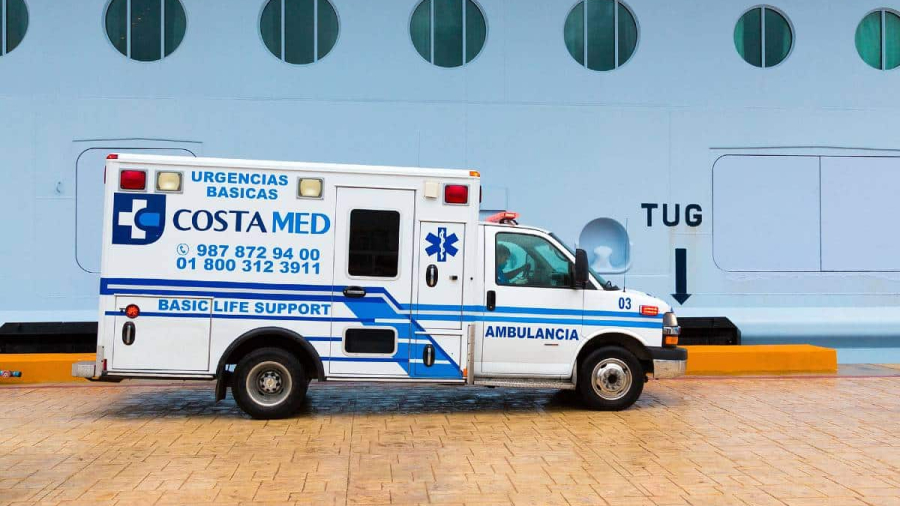
The couple ended up having to get off the ship in order to get the care that was needed, and the cruise passenger had surgery right away.
“I learned a very valuable lesson this trip: always buy travel insurance,” the user stated. “Not only are we out our entire honeymoon budget, our savings have been wiped clean as the doctors bill was over $10k.”
Comments flooded into the post as well wishes were sent to the couple.
The poster replied to one of the comments stating they were glad to be alive and hoped to build the savings back up over time.
Other advice was given in the aftermath of the medical bills with one comment stating, “Did you check with your private insurance if they cover you while traveling? Some don’t and some do so it’s worth a look to see if you have coverage.”
One user recommended checking credit card coverage as well, stating “If you used a premium or travel credit card to pay for the cruise, check to see whether they offer complementary travel medical insurance or at least some related coverage.”
To this comment the OP replied that a debit card was used to pay for the cruise but that they would definitely pay with a credit for the next trip.
I always recommend getting cruise travel insurance. Even if you can find a great deal online, it’s the medical emergency situations that can really break the bank.
Some don’t buy insurance if they buy a cruise for under $500, thinking that if they can’t make the cruise it’s not a huge loss. But if a medical situation arises and you have to be airlifted from a cruise ship, you’re looking at a bill of $50,000 and up to $100,000 just for that service alone.
Since a vacation is all about getting some peace and quiet away from home, trip insurance makes sure the financial side can give you some peace of mind.
This travel insurance is the kind of thing you hope you never have to use, but if you do, you sure are glad you have it.
Are you looking for the perfect gift for someone going on a cruise? Well, this list of the best gifts for cruise lovers should certainly give you some ideas.
If you’re looking for cruise gifts for friends, mum and dad or the kids, I’ve done all the research for you to put together a list of interesting cruise-themed gifts.
Whether you want practical birthday gifts for someone going on a cruise or a funny cruise ship-themed gift for a cruise addict, you’ll find some great cruise gift ideas here…
Cruise gifts for her
Looking for a gift for your mother, sister, daughter, wife, girlfriend, friend or female colleague? Be inspired by this list of the best nautical-themed gifts for ladies.
Anchor Tote Bag
This anchor shopping bag is of great quality and will last for years to come. It’s perfect to take on a cruise to use as a beach bag or a shopping bag to carry your haul of souvenirs back to the ship.
Silver Anchor Bracelet
Anchor jewellery has become a really popular trend. More than just symbolising a love of the ocean, it’s also a sign of strength and stability. This sterling silver bracelet is beautiful and would make a welcome addition to any Christmas stocking.
Nautical Passport Holder
This stylish passport holder is a really practical gift to take on a cruise. It has a slim, lightweight design and slots for all of your cards as well as your passport.
Nautical Cushion Covers
These gorgeous cushion covers will transform any room into a nautical haven and remind you of the place you most like to be – at sea.
Cruise gifts for him
If you’re looking for a present for your husband, brother, dad, son, boyfriend, friend or colleague, be inspired by this cool selection of the best nautical-themed gifts for gentlemen.
Anchor Tie
He’s sure to be the star of the show on formal nights with this anchor stitched tie which adds a classy look yet is sure to be a talking point with fellow cruisers.
Eat, Sleep, Cruise, Repeat T-Shirt
The perfect t-shirt for people who like to cruise, this shirt is available in men’s, women’s and kids’ sizes and a choice of different colours. You could have matching ones for the whole family!
Port and Starboard Socks
Can you remember which is port and which is starboard? These socks should help. These men’s nautical socks are a fun stocking filler for any dads or grandads who like to cruise.
Cruise Fund Money Box
This handcrafted, ceramic coin bank will make it easy to save for your next cruise. A fun gift for cruise lovers, it’s so pretty, they’ll be excited to pop their pounds in there.
Men’s Nautical Bracelet
Made of the highest quality materials, this handmade bracelet is comfortable enough that he never needs to take it off. It comes in many different colours and sizes.
Nautical Cufflinks
These shirt cufflinks are the perfect gift to take on a cruise. They come packaged in a lovely gift box.
Cruise gifts for kids
Boys and girls of all ages will love these thoughtful nautical gifts, whether for Christmas, a birthday or to give before going on a cruise.
Top Trumps – World Famous Ships
I received this card game from Secret Santa for Christmas last year and I absolutely love it – we played it for hours! This entertaining Top Trumps card game is great for kids and ship geek adults alike. It features all kinds of ships as well as cruise ships, but Allure of the Seas is the overall best card, beating the others in almost every category.
P&O Cruises Colouring Book
This is another gift that I’ve put in the list of cruise gifts for kids, but actually, many adults would love too. This beautiful colouring book celebrates the history of P&O Cruises with interiors and exteriors of ships past and present to colour in. There’s also a Cunard version.
Cruise Ship Jigsaw Puzzle
As a kid, I used to love doing jigsaws in the Christmas holidays. I’d always get one for Christmas and it would keep me busy until January. This 1000-piece puzzle is fun for kids and adults alike. I wouldn’t fancy being on that ship much though!
Polly Pocket Cruise Ship
My daughter has this Polly Pocket and she loves it! Polly Pocket compacts are so much fun for kids aged four and up and this cruise ship version comes with two Polly dolls and a jet ski. Polly Pockets are even better now than they were the first time around in the 90s as Polly now sticks to the surfaces.
Playmobil Cruise Ship
Playmobil is a classic favourite toy and the figurines from this cruise ship set can be used with other Playmobil sets. Children can have hours of fun using their imagination with this brilliant cruise ship toy.
Cruise accessories
If you’re wondering ‘What is a good gift to give someone going on a cruise?’, then you should think about the practical things that will make their cruise less stressful and more fun.
Here are some ideas…
There are lots of cruise gadgets and gizmos which are really practical to have. Even the most regular cruisers might not have seen some of these, but they’re all really useful gifts. Take a look at these cruise essential gifts.
SailPak Cruise Hamper
The ultimate cruise gift, I was thrilled to receive this bumper hamper of cruise accessories from SailPak. It has everything you need to enjoy your cruise including a tote bag, magnetic hooks, towel bands, seasickness patches and so much more!
Cruise Lanyards
These lanyards have a waterproof cruise card holder as well as a retractable reel for making it easy to swipe or scan your card as needed. They come with a nice gift box too, so they make an excellent gift.
Hanging Toiletry Bag
Space can be limited in a cruise ship cabin, so this wash bag is perfect to take on a cruise thanks to the hook and space-saving design. It has loads of compartments which are all easy to access with the bag hanging from the towel rail or coat hook in your cabin bathroom.
The Cruise Planner
This planner is jam-packed full of info to help you plan your cruise to a tee. It has space for you to add all your own details so that you can take it with you when you travel. I have a copy of this and I’d definitely recommend it to anyone going on a cruise.
Sunrise Alarm Clock
This sunrise alarm clock is a fantastic gift for anyone who likes to cruise in an interior stateroom. It’ll gradually fill the room with a gentle sunrise glow at the time you set, so you don’t end up waking up in the morning wondering if it’s 3 am or 8 am. A fantastic option if you want cruise ship gifts for someone going on their first cruise, too.
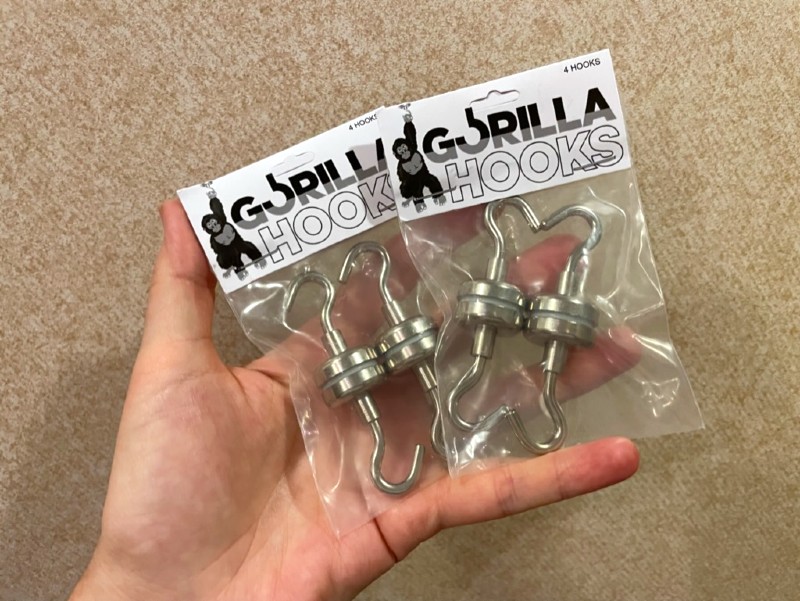
Gorilla Hooks
These magnetic hooks are super strong. They stick to your cabin walls (which are always metal) and hold your handbags, hats, coats, swimming goggles and everything else! Since I started parking these, I wouldn’t cruise without them.
Full-Face Snorkel Mask
If you’re buying a present for someone going on a Caribbean cruise then this is ideal. For the price of hiring a mask and snorkel, you can get them this full face snorkel mask which is not only more comfortable than a traditional snorkel set, it also gives 180-degree views. There’s even a mount to attach an underwater camera, should you desire.
Cruise Holiday Countdown Chalkboard
If you know someone who has a cruise booked, buy them this lovely hanger so that they can mark the days remaining. They’ll get more and more excited as the number gets smaller, and think fondly of you for reminding them of the exciting times ahead – one of the more simple gifts for cruisers and yet oh so effective.
Towel Clips
Sometimes, it can be really windy at sea so towel clips are a must for any cruiser. There are some really cool novelty ones available, which also makes finding your sunbed much easier when everyone has the same cruise ship towel.
And if you already know what they mean and you’re pranking a friend…this is definitely a good option for funny cruise gifts.
Waterproof Phone Pouch
This is a brilliant invention. Not only does this waterproof case protect your phone from water and sand, but you can also use your phone while it’s in the case. Safe for depths of up to 30 metres, you can turn your phone into an underwater camera. It comes with a handy lanyard so you can’t lose it in deep water.
Mini Binoculars
A pair of binoculars are great to take on a cruise so that you can admire the distant scenery from your balcony. Or, when you spot another ship in the distance and want to know which it is. These binoculars are small enough that you can take them everywhere easily and cheap enough that you won’t mind letting the kids have a go.
GoPro HERO9 Action Camera
I love my GoPro and take it on every cruise. It’s pocket-sized, tough and waterproof. The photo and video quality are both amazing. I use mine for filming cruise ship tours, as even if you have a shaky hand, the image looks smooth thanks to revolutionary self-stabilising technology. There are newer models available if you prefer, but the HERO9 is great value and does everything you need for a cruise.
Cruise Luggage Tag Holders
If you’ve ever faffed around trying to fold a cruise luggage tag into the right shape and staple it to your luggage with only two hands, you’ll know what a challenge it can be. These cruise luggage tags are a game-changer. Not only do they make affixing the labels so much easier; they’re also more secure and weatherproof.
Tip: Different cruise lines have different sized luggage labels, so be sure to get the right one for your cruise.
Travel Alarm Clock
Cruise cabins have no clocks in them, and the time zone can often change overnight as you sail into different time zones. Relying on your phone can be problematic as sometimes they update the time themselves and sometimes they don’t, so you can never be sure. That’s why I recommend taking a travel alarm clock.
This small travel alarm clock also tells you the temperature and what day it is, as that’s another thing that’s easy to forget on a cruise!
Packing Cubes
Anyone who’s tried packing cubes swears by them and would never go back to packing everything together. These cubes are thicker than most packing cubes that you’ll find and are waterproof. Say hello to being organised when you pack for your cruise.
Cruise gift cards
If you want to get a really special gift, you could gift someone a cruise. Cruise gift cards are available to buy, so that they can choose their own dates and itinerary for their trip.
Carnival Cruise Gift Cards
Carnival gift cards are available to buy. US residents can purchase physical gift cards, and international customers can purchase online gift cards with a value of $100 to $1000.
Princess Cruises gift cards come as traditional plastic gift cards or e-gift cards which are sent by email. You can choose any value between $25 and $2000.
Whilst giving the gift of a cruise can seem like a nice idea, cruise gift cards and vouchers can have pitfalls that come with being tied to a particular cruise line and its terms and conditions.
If you want to gift a cruise, you could instead opt for a handmade card or gift certificate detailing your promise. Or instead of on-board credit, you could gift dollars or Euros in cash which could be used to pay a balance on board or be used to spend in ports of call.
To wrap up…
Once you’ve chosen your perfect cruise gift, continue with the theme with some nautical gift wrap or a cute cruise ship greetings card.
Nautical Gift Wrap
This cute ocean-themed gift wrapping paper has various designs including anchors, whales, ships, ships wheels, stars and waves. It’s of premium quality so it’s not easy to rip.
Pop-Up Cruise Ship Greeting Card
If you’re looking for a greeting card with the wow factor, then this one is guaranteed to cause a splash. Perfect for birthdays, Christmas, anniversaries or any other special occasion, this handmade card has an intricate pop-up cruise ship.
Related posts:
If you found this interesting, please share!
Jenni Fielding is the founder of Cruise Mummy. She has worked in the cruise industry since 2015 and has taken over 30 cruises. Now, she helps over 1 million people per month to plan their perfect cruise holidays.
If you’ve been trying to book a Carnival cruise this morning and can’t, you’re not alone.
Our free cruise newsletter offers the latest news and deals: Sign Up
Carnival Cruise Line is currently having website issues that don’t allow you to log into the site or book cruises.
Carnival Cruise Line was originally hoping to have their website back up and running at 6 a.m. this morning.
However, as of 1:30 p.m. EST, you still can not log into your account and you receive the following message when you click on cruises to book one:
Carnival’s Brand Ambassador John Heald posted the following message on his Facebook page a few hours ago about the issue:
“Many of you have written to me with a dollop of frustration that our website is still down despite the banner headline saying it would be back by 6 AM Miami time.
“I’ve spoken to the beards who sincerely apologies and they are working furiously to get this back up as soon as they can. My sincere apologies and I will let everybody know as soon as it’s working again.”
Some guests on Carnival cruise ships are also saying how they are having some issues with the app and not all features are working.
Carnival Cruise Line’s travel agent site, GoCCL.com, is also down.
A French balcony on a cruise ship is a cabin with floor-to-ceiling sliding glass doors that open onto a railing, with no outdoor floor space to step onto. You get fresh air, river or sea sounds and a big view from inside the room, but you can’t put a chair outside. The French balcony is most common on European river ships, where narrow hulls leave little room for full verandas.
If you’re comparing cabins for a Rhine, Danube or Seine sailing, it helps to know what each line means when it says “balcony”. The term covers several different designs, and the price gap between them can be large. This guide explains how a French balcony works, how it compares with a full veranda and a Juliet balcony, which cruise lines use which design, and when it’s worth paying extra.
What is a French balcony on a cruise ship?
The name comes from the classic French townhouse window: tall double doors that open inward or slide aside, with a decorative rail across the opening. On a ship, the idea is the same. Behind the glass there’s a safety railing, usually a few inches from the doors, so the doorway is fully open to the outside but there’s nowhere to stand.
In practice, a French balcony cabin gives you:
A full-height window rather than the half-height or high-set windows of a standard river cabin.
Doors that open, so you can let in the breeze, hear the river and take photos without a pane of glass in the way.
No outdoor seating. The “balcony” is the doorway itself, and your seating stays inside the cabin.
Because the French balcony doesn’t take up any space outside the hull, the cabin inside is often about the same size as one with a full veranda. On some ships it is actually smaller, because the veranda cabins are built wider.
French balcony vs veranda vs Juliet balcony
These three terms are often mixed up, and cruise lines don’t always use them the same way. Here is the general difference.
Full veranda (step-out balcony)
A veranda is a real outdoor space beyond the sliding door, with a floor, a railing and usually two chairs and a small table. On river ships these are fairly narrow, often only big enough for two chairs side by side. On Viking longships, for example, the veranda in a 205 sq ft Veranda Stateroom is only about 27 sq ft, or roughly the size of a small bistro table and two chairs.
French balcony
Sliding doors and a rail, with nothing to step out onto. Some lines also call this a “French-style balcony”, and Avalon markets its version as an “Open-Air Balcony”.
Juliet balcony
In everyday building terms, a Juliet balcony is very close to a French balcony: a railing across a door or window with a tiny ledge or none at all. On cruise ships the two names are used almost interchangeably. If a line lists a “Juliet balcony”, read the cabin description or deck plan to check whether there’s any floor space at all. Most of the time there isn’t.
On river ships, French balconies usually sit on the upper decks, above the waterline windows of standard cabins. Photo: Rafael Rodrigues on Pexels
Cabin types compared: which balcony gets you what
The table below compares the common cabin types on a typical European river ship. Sizes vary by line and ship, so use these as a guide and check the deck plan for your sailing.
Cabin type
Window or door
Outdoor seating
Typical river-ship size
Best for
Standard / river view
Fixed window, often high on the wall near the waterline
No
About 150-160 sq ft
Travelers on a budget who spend most of their time ashore or in the lounge
French balcony
Floor-to-ceiling sliding doors with a rail
No
About 135-170 sq ft
Fresh air and big views without paying for a veranda
Drop-down window or sun lounge (Emerald, Scenic, Avalon style)
Large glass wall, part of which lowers or slides open
Seating inside, by the open window
Varies by ship
People who want an open-air feel that also works in cool weather
Twin balcony (AmaWaterways)
French balcony plus a separate step-out balcony
Yes, two chairs and a small table
About 210-235 sq ft
Couples who want both options in one room
Full veranda
Sliding door onto an outdoor deck
Yes
About 205 sq ft including the veranda (Viking)
People who love sitting outside to watch the scenery
Suite with veranda
Sliding doors, often a separate living area
Yes, sometimes wraparound
About 275-445 sq ft (Viking)
Longer trips, special occasions and anyone who wants space
Which cruise lines have French balconies?
Almost every European river line uses French balconies somewhere, but each one has its own design and naming. Here’s how the main lines handle it.
Viking River Cruises
Viking’s longships use an off-center corridor design: one side of the ship has cabins with full verandas and the other side has French balcony cabins. On the standard longship layout, French Balcony Staterooms (categories C and D) are about 135 sq ft, while Veranda Staterooms are about 205 sq ft. Interestingly, Viking’s Standard Staterooms on the lowest deck are about 150 sq ft, so the French balcony cabin is slightly smaller than the entry-level room. You pay for the view and the opening doors, not for extra floor space.
AmaWaterways
AmaWaterways is known for its “twin balcony” design. On many of its ships, most upper-deck cabins have a French balcony and a separate outside balcony side by side. On AmaKristina, for example, the twin balcony cabins are around 210-235 sq ft, with two padded chairs and a small table outside. AmaWaterways also sells some French balcony-only cabins, at about 155-170 sq ft, which are a cheaper way to get opening doors.
Avalon Waterways
Avalon’s Suite Ships replace small step-out balconies with what the line calls an Open-Air Balcony. In the Panorama Suites, which Avalon puts at about 200 sq ft, the wall-to-wall window slides open, and the bed faces the river rather than a wall. In effect, the whole room becomes the balcony.
Emerald Cruises and Scenic
Both lines use variations of an indoor balcony. Emerald’s Panorama Balcony Suites have a floor-to-ceiling window whose upper section lowers at the touch of a button. Scenic’s Sun Lounge works in a similar way, with a glass-enclosed seating area that opens at the push of a button. These designs give you more usable space in cool weather than a French balcony, and you can sit right by the open window. If you’re thinking about Emerald, our honest Emerald river cruise review covers what the ships are like overall.
Uniworld and Tauck
Uniworld’s layouts vary by ship. Many have French balconies on one deck and opening or outside balconies higher up. Tauck has mostly used French balconies, sliding glass doors with no outdoor deck, across its river fleet.
What about ocean ships?
True French balconies are much less common on big ocean ships, where cabins usually come as inside, ocean view, or step-out balcony. The nearest well-known equivalent is Celebrity’s Infinite Veranda, found on Celebrity Edge, Apex, Beyond, Ascent and Xcel. The top half of a floor-to-ceiling window lowers at the press of a button, and the “veranda” is a seating area inside the cabin that bifold doors can close off. One thing to know is that opening the window switches off the cabin’s air conditioning. If you see “French balcony” on an ocean ship’s cabin list, look at the deck plan and photos for that exact cabin, since the description can vary.
Sliding doors with a rail give you fresh air and views from inside the cabin. Photo: Lisa Anna on Pexels
Pros and cons of a French balcony cruise cabin
Pros
Fresh air and sound. Opening the doors as you pass vineyards, castles or riverside villages is the main appeal.
Bigger view than a standard cabin. On river ships, standard cabins often sit near the waterline with high windows. French balcony cabins are higher up, with full-height glass.
Lower price than a veranda. You get much of the experience for a smaller premium.
Useful in shoulder seasons. On spring and fall sailings it’s often too cool to sit outside anyway, so a veranda you can’t use may not be worth extra money.
Cons
No outdoor seating. If you picture morning coffee outside, a French balcony won’t give you that.
Sometimes less floor space. As on Viking, the French balcony cabin can be smaller than the standard cabin below it.
Docking can block the view. In busy river ports, ships often tie up side by side (“rafting”). If yours is the inside ship, you may open your doors to a view of another ship’s cabin. This affects verandas too, but it matters more when the view is the main thing you paid for.
Privacy and noise. With the doors open you’ll hear the deck, passing boats or the quay. You may also need to close the curtains in port.
Is a French balcony worth it?
Whether a French balcony is worth paying for depends on how you travel. Most river cruise days are spent ashore on tours, and evenings are often spent in the lounge or on the sun deck, which on most river ships has plenty of seating. If that sounds like you, a French balcony is often the best value: you get full-height views and fresh air without paying veranda prices.
A full veranda or twin balcony makes more sense if you’re on a summer sailing, love quiet time outside or are booking a route with long scenic cruising stretches, such as the Rhine Gorge or the Wachau Valley on the Danube. An indoor-balcony design such as Emerald’s or Scenic’s is a good middle ground if you want space by the window that you can still use on a chilly day.
A few practical tips before you book:
Compare square footage, not just names. “Balcony” means different things on different lines, and some French balcony cabins are smaller than standard ones.
Look at the price per night difference. On an eight-day river cruise, a small per-night premium can add up to a lot. Decide what the view is worth to you.
Check the deck. Higher decks usually cost more but sit further from the waterline, and they may be closer to sun-deck noise.
Watch for promotions. Upgrades and reduced fares on balcony categories come up regularly. Our roundup of cruise deals for 2027 is a good place to start.
If you’re still deciding between cabin types more generally, our guide to booking a balcony vs an inside cabin goes through the trade-offs in more detail.
No. A French balcony has no outdoor floor, just sliding doors and a railing. You can put a chair just inside the open doors, but you can’t sit outside.
What is the difference between a French balcony and a veranda?
A veranda is an outdoor space you can step onto, usually with two chairs and a small table. A French balcony is a full-height door that opens to a railing, with no space outside the cabin.
Is a French balcony the same as a Juliet balcony?
Mostly, yes. Both describe a door or window that opens to a railing with little or no floor space. On cruise ships the names are used almost interchangeably, so check the cabin description for your specific ship.
Do ocean cruise ships have French balconies?
Not many. Most ocean ships offer inside, ocean view and step-out balcony cabins. Celebrity’s Infinite Veranda, on its Edge-class ships, is a similar idea: a window that lowers to open up a seating area inside the cabin.
Is a French balcony worth it on a river cruise?
For many passengers, yes. It gives you full-height views and fresh air for less than a veranda, and you spend much of the trip ashore or in public areas anyway. If sitting outside in your own space matters to you, choose a veranda or a twin balcony.
CLEAR airport security is a paid, private biometric membership (CLEAR+) that lets you confirm your identity with a face scan at a CLEAR pod instead of queuing to show your ID to a TSA officer. A CLEAR ambassador then walks you to the front of the physical screening line. When comparing CLEAR vs TSA PreCheck, the key point is that they speed up different steps: CLEAR handles the ID check, while PreCheck makes the bag and body screening easier.
For cruise passengers flying into Florida, Texas or California ports, the right choice depends on how often you fly, which airports you use and whether a credit card or airline status pays for it. This guide explains how CLEAR works, what it costs in 2026, how it stacks up against PreCheck and whether it is worth it for a cruise trip.
What Is CLEAR Airport Security and How Does It Work?
CLEAR is run by a private company, Clear Secure, not by the government. Its airport product is called CLEAR+ (often written CLEAR Plus). After you enroll, your identity is linked to your biometrics, so at the airport you:
Head to the dedicated CLEAR+ lane at the security checkpoint.
Step up to a CLEAR pod and verify your identity, usually with a quick face scan (fingerprints are a backup at some pods).
Scan your boarding pass or let the system pull it up.
Get escorted by a CLEAR ambassador to the front of the TSA screening line, either the standard lane or the PreCheck lane if your boarding pass shows PreCheck.
At some airports CLEAR is adding automated eGates that match your face to your ID and boarding pass, replacing the walk with an ambassador. Tampa International Airport, for example, announced CLEAR+ lanes with eGates rolling out from fall 2026.
Enrollment is quick compared with government programs. You can start online and finish at any CLEAR airport location without an appointment, using a government-issued ID. There is no interview or background check like there is for PreCheck.
CLEAR vs TSA PreCheck: The Key Differences
People often treat these as rival options, but they solve different bottlenecks. TSA PreCheck is a government Trusted Traveler program run by the Transportation Security Administration. Approved members use a separate lane where they can usually keep shoes, belts, light jackets, laptops and 3-1-1 liquids in place. TSA says around 99% of PreCheck passengers wait less than 10 minutes.
Feature
CLEAR+
TSA PreCheck
Who runs it
Private company (CLEAR)
U.S. government (TSA)
What it speeds up
Identity and document check
Physical screening of you and your bags
Typical cost (2026)
$219 per year
About $78 to $85 for five years, depending on enrollment provider
Renewal
Every year (auto-renews)
Every five years, about $69 to $78
Airports
Around 60 U.S. airports
More than 200 U.S. airports
Shoes, laptops, liquids
Must come out unless you also have PreCheck
Can usually stay in
Background check
No
Yes, plus fingerprints at enrollment
Children
17 and under go free with a member
17 and under can join a parent if PreCheck shows on their boarding pass
Prices are as published by CLEAR and TSA at the time of writing and change regularly, so check before you pay.
Using CLEAR and TSA PreCheck together
The fastest combination is to have both. CLEAR skips the ID queue, then the ambassador drops you at the front of the PreCheck screening lane, where you keep your shoes on and your laptop in your bag. If you only have CLEAR, you still go through standard screening. If you only have PreCheck, you queue for the PreCheck ID check, which at most airports is short anyway.
A newer wrinkle is TSA PreCheck Touchless ID. At a growing list of airports (TSA announced an expansion to about 65 in 2026), PreCheck members flying with participating airlines can opt in to have their face matched to their passport photo, which removes the ID check without paying CLEAR. Where Touchless ID is available, CLEAR’s time saving can shrink to almost nothing.
Long ID-check queues are where CLEAR saves the most time. Photo: 海风 张 on Pexels
How Much Does CLEAR Plus Cost in 2026?
CLEAR has raised its price several times. As of mid-2026, the standard CLEAR+ membership costs $219 per year. Other details worth knowing:
Family add-ons: up to three adults can be added for $125 each per year.
Kids: children 17 and under can use the CLEAR lane with a member at no charge.
PreCheck bundle: CLEAR also enrolls people in TSA PreCheck and has offered discounted first-year CLEAR+ pricing to those who sign up for both together.
Extras: membership includes faster entry at some stadiums and venues and a set of partner discounts.
For a couple, that is $344 a year at full price, which is why most people who keep CLEAR long term get it discounted or reimbursed.
CLEAR discounts through Delta, United and credit cards
Linking a frequent flyer account can cut the price. According to CLEAR and recent reporting, approximate 2026 rates are:
Delta SkyMiles: $209 for general members; $179 for Silver, Gold and Platinum Medallion members and eligible Delta SkyMiles Amex cardholders; $129 for Diamond Medallion, who lost the free benefit from June 1, 2026. Invitation-only Delta 360 members still get it free.
United MileagePlus: $209 for general members; $179 for Premier Silver to Platinum and eligible United cardholders; $129 for Premier 1K. Global Services members get it free.
Credit cards: American Express raised its CLEAR+ statement credit to up to $219 per calendar year on eligible cards such as The Platinum Card in July 2026, which can cover the full fee. Other premium travel cards offer credits that cover TSA PreCheck or Global Entry instead.
Discount levels and card benefits change often, so confirm the current rate on clearme.com or with your card issuer before renewing.
Is CLEAR Worth It for Cruise Passengers?
CLEAR is not used at cruise terminals. It only helps with the flights before and after your sailing, and mainly on the way home, because you depart through airport security in your embarkation city. That makes the answer to “is CLEAR worth it” depend on a few practical questions.
Which Florida cruise airports have CLEAR?
Florida is where many U.S. cruisers fly to, and CLEAR covers the busiest airports serving the big ports:
Orlando International (MCO) for Port Canaveral: CLEAR lanes at the East and West checkpoints and Terminal C. If you are still choosing a flight, our guide to the closest airports to Port Canaveral compares the options.
Miami International (MIA) for PortMiami.
Fort Lauderdale-Hollywood (FLL) for Port Everglades.
Tampa International (TPA) for Port Tampa Bay, with CLEAR+ lanes announced for fall 2026.
Smaller airports such as Sanford (SFB) or Palm Beach (PBI) may not have CLEAR, so check CLEAR’s location list against both your home airport and your port airport before signing up.
CLEAR helps on the flight to your cruise, not at the cruise terminal itself. Photo: Janez Temlin on Pexels
When CLEAR Makes Sense and When It Doesn’t
For most people who cruise once or twice a year, TSA PreCheck alone gives the best value: it costs less than $20 a year averaged over five years, works at far more airports and makes the screening itself easier. CLEAR becomes worth considering when:
You fly often, especially for work, from a large hub where the ID line is the main delay.
A card credit or airline status pays for all or most of the fee.
You often fly at peak times, such as Saturday and Sunday turnaround days when Orlando, Miami and Fort Lauderdale fill with cruisers heading home.
You don’t qualify for PreCheck yet or are waiting for approval and want some speed in the meantime.
It is less useful if your home airport has no CLEAR lane, your airports already have Touchless ID, or you only fly a couple of times a year. A sensible approach is to get PreCheck first, then add CLEAR only if it is free or cheap through a card or status.
Whatever you choose, saving money on the flights themselves often matters more than shaving minutes off security. Our Google Flights guide to finding cheap flights walks through tracking fares to your departure port.
REAL ID and Other 2026 Changes to Know
REAL ID enforcement began at U.S. airport checkpoints in May 2025. CLEAR does not replace it: you still need a REAL ID-compliant license, a passport or another TSA-accepted ID. Since February 1, 2026, travelers who arrive without acceptable ID can pay a $45 TSA ConfirmID fee for identity verification, which covers a 10-day travel window but can take 10 to 30 minutes or more and isn’t guaranteed. Cruisers sailing internationally will usually carry a passport anyway, which avoids the problem.
Also allow plenty of time on disembarkation day. Many ships finish disembarking in the morning, and port-city airports get very busy late morning and early afternoon. CLEAR or PreCheck can help, but booking a flight with a comfortable buffer matters more. If you are still planning your trip, see our comparison of the cheapest 7-day cruises out of Florida.
Only if your home airport has CLEAR and its PreCheck line regularly backs up at the ID check, or if a credit card or airline status covers most of the fee. For one or two flights a year, PreCheck alone is usually enough.
How much does CLEAR Plus cost in 2026?
The standard CLEAR+ price is $219 a year at the time of writing, with up to three adult add-ons at $125 each and children 17 and under free in the lane with a member. Delta, United and card discounts can lower or cover it, and prices change, so check clearme.com.
What is the downside to using CLEAR?
It only speeds up the ID check, not the physical screening, so without PreCheck you still remove shoes, laptops and liquids. It is also expensive each year, operates at roughly 60 airports rather than all of them, and sometimes the PreCheck line is just as quick.
Does CLEAR work at cruise terminals?
No. CLEAR is used at airport security checkpoints (plus some stadiums and venues), not at cruise port check-in. It only helps on the flight legs of your trip, mainly the flight home from your departure port city.
Does CLEAR replace a REAL ID?
No. CLEAR verifies your identity at its pods, but you still need acceptable ID such as a REAL ID-compliant license or passport. Since February 2026, TSA charges a $45 ConfirmID fee to travelers who show up without acceptable ID.
The sinking of the Titanic remains one of the most tragic and iconic maritime disasters in history. On the evening of April 14, 1912, the luxurious passenger ship struck an iceberg in the North Atlantic Ocean. Despite being hailed as an unsinkable ship, the Titanic succumbed to the frigid waters in the early morning hours of April 15, resulting in the loss of over 1,500 lives.
Where did the Titanic sink?
The exact location of the ship’s final resting place was unknown for many years until a joint US-French expedition led by Dr. Robert Ballard finally located it in 1985.
The exact coordinates where the Titanic struck the iceberg and sank are 41.726931° N, 49.948253° W.
You can look at the map below to see where the Titanic sank. (You may need to zoom out).
When did the Titanic Sink?
On April 15th, 1912, at approximately 2:20 a.m. on April 15, 1912, Titanic sank into the North Atlantic Ocean about 400 miles south of Newfoundland. Over 1,500 passengers and crew members perished in the icy waters.
Scientific research on the Titanic wreckage has shed light on the events leading up to the ship’s demise. The ship’s hull was discovered to contain weak rivets and slits, compromising its structural integrity. These findings have been corroborated by news reports from the time, revealing the significance of these factors in the ship’s sinking.
The weak rivets and slits in the Titanic’s hull were instrumental in allowing the frigid seawater to infiltrate the ship’s compartments rapidly. As the Titanic began to take on water, the hull became increasingly compromised, ultimately causing the ship to sink. This realization has prompted further investigation into the ship’s construction and maintenance, serving as a cautionary tale for future maritime endeavors.
In conclusion, the sinking of the Titanic serves as a poignant reminder of the devastating consequences that can arise from structural flaws and the immense power of nature. As highlighted by scientific research and historical news reports, the weak rivets and slits in the hull played a significant role in the ship’s demise. This tragic event continues to capture the imagination of people worldwide and remains a pivotal moment in maritime history.
Timeline of the Sinking
The sinking of the Titanic took place on the evening of April 14, 1912. As the ship sailed through the North Atlantic Ocean, it collided with an iceberg, triggering a series of events leading to its tragic demise. The impact of the iceberg caused significant damage to the Titanic’s hull, compromising its structural integrity.
The ship began to take on water rapidly over several hours, starting in the late evening. Despite efforts to evacuate and save as many passengers as possible, the Titanic sank in the early morning of April 15, 1912. The loss of over 1,500 lives marked a devastating chapter in maritime history. The sinking of the Titanic continues to serve as a reminder of the need for safety and precautionary measures in oceanic travel.
Preparations for Departure
The preparations for the departure of the Titanic were meticulous and extensive. On April 10, 1912, the luxurious passenger ship set sail on its maiden voyage from Southampton, England. The port of departure was bustling with activity as the crew made final arrangements before departure.
Before embarking on the historic journey, the Titanic underwent numerous checks to ensure its seaworthiness. The ship’s hull compartments were sealed to make it virtually unsinkable, a claim that would tragically be proven false. The crew also conducted safety drills and lifeboat exercises to prepare for emergencies.
The departure preparations included loading essential supplies such as food, water, and coal for propulsion. The stowing of cargo and luggage was meticulously organized, ensuring the comfort of both first-class and third-class passengers.
As the departure date approached, last-minute checks were carried out on the ship’s systems, including the radio operator maintaining a 24-hour watch for incoming messages. Despite several warnings of icebergs along the route, the Titanic’s crew remained confident in the ship’s ability to navigate through any danger.
Little did they know the Titanic’s departure marked the beginning of one of the most tragic sinkings in maritime history. The ship’s collision with an iceberg in the North Atlantic Ocean on April 14, 1912, shattered the confidence in its supposedly unsinkable nature and claimed the lives of more than 1,500 passengers and crew.
It wasn’t until 1985 that the wreckage of the Titanic was discovered on the ocean floor, over 70 years after its sinking. The sinking’s massive scale and tragic nature have made it a significant event in modern history, attracting the attention of maritime historians, conspiracy theorists, and the general public alike.
As the sister ship of the Olympic-class ships and the shining symbol of luxury and opulence, the Titanic’s preparations for departure marked the beginning of a journey that would forever be etched in our collective memory.
Titanic on its Maiden Voyage
The Titanic’s maiden voyage commenced on April 10, 1912, from the port of Southampton, England. This grand and historic journey was destined for New York City, with planned stops in Cherbourg, France, and Queenstown (now known as Cobh), Ireland. The ship’s departure marked the beginning of what would tragically become one of the most infamous events in maritime history.
The Titanic, often called the “Millionaire’s Special,” was a luxurious passenger ship designed to cater to the wealthy elite. On board were notable passengers such as John Jacob Astor, Benjamin Guggenheim, and Molly Brown, all adding to the ship’s glamorous reputation.
The first stop on the voyage was Cherbourg, where passengers embarked and disembarked amidst much fanfare. After a brief stay, the Titanic continued its journey to Queenstown, where additional passengers joined the ship before venturing into the vast Atlantic Ocean.
High expectations and excitement surrounded the maiden voyage of the Titanic, as this brand-new ship was hailed as a marvel of engineering and opulence. Unfortunately, the tragic events that unfolded on April 14, 1912, forever changed the course of maritime history, leaving a profound and lasting impact on the world’s collective memory.
Disaster Strikes: The Tragic Sinking of the Titanic
As the Titanic made its way through the Atlantic Ocean, iceberg warnings were received throughout April 14, 1912. These warnings, primarily from nearby ships, alerted the crew to icebergs in the “Iceberg Alley.”
Despite these warnings, the Titanic continued to sail at full speed, confident in its reputation as an unsinkable ship. However, tragedy struck later that evening. At 11:40 PM, the ship collided with a massive iceberg, tearing open several of its hull compartments.
Immediately upon impact, the ship’s crew sounded the alarm and started to take immediate action. Captain Edward Smith ordered the ship’s wireless telegraph operator to send distress signals to nearby vessels. However, some of these signals were not received due to various factors, such as radio operator workload and super refraction.
As the seriousness of the situation became apparent, lifeboats were prepared for evacuation. However, there were not enough lifeboats to accommodate all the passengers and crew on board. This, along with a lack of proper emergency drills, contributed to a chaotic and tragic sinking.
Ultimately, the Titanic sank in the early hours of April 15, 1912, taking the lives of over 1,500 people. The disaster has since become one of the most infamous and tragic sinkings in maritime history, prompting significant changes in maritime regulations for the safety of all future ocean liners.
Final Minutes and Impact of the Sinking
In the final minutes of April 14, 1912, the Titanic’s fate was sealed. After receiving several iceberg warnings, the luxury passenger ship sailed at full speed through the treacherous waters of Iceberg Alley. At 11:40 PM, disaster struck as the Titanic collided with a massive iceberg.
The impact immediately tore open multiple hull compartments, rapidly causing the ship to take in water. Panic and chaos ensued as the crew sounded the alarm and initiated evacuation protocols. However, the shortage of lifeboats became painfully evident.
With only enough lifeboats to accommodate a fraction of the passengers and crew onboard, a devastating loss of life was inevitable. The lack of proper emergency drills further compounded the tragic situation. Amid the chaos, acts of heroism and selflessness were witnessed, but ultimately, the sinking of the Titanic claimed the lives of more than 1,500 people.
The immediate aftermath of the sinking brought shock and grief to the world. News of the tragic event spread rapidly, captivating public attention and prompting an outpouring of sympathy. The sinking of the Titanic forever altered maritime history, a stark reminder of the consequences of complacency and the importance of safety measures at sea.
Causes of the Titanic Sinking
The sinking of the Titanic is one of the most infamous tragedies in maritime history. On the evening of April 14, 1912, the luxurious passenger ship collided with an iceberg in the North Atlantic Ocean. Despite being hailed as the “unsinkable ship,” the Titanic’s fate was sealed when the impact tore open multiple hull compartments, causing the ship to take in water rapidly. The shortage of lifeboats and the lack of proper emergency drills further compounded the tragic situation, resulting in the loss of over 1,500 lives. This article explores the causes and factors that led to the sinking of the Titanic.
Design Flaws in the Ship
The sinking of the RMS Titanic, the luxurious passenger ship famously known as the “unsinkable ship,” was a tragedy that shocked the world. This disaster was primarily caused by several design flaws that significantly impacted the ship’s ability to withstand the collision with the iceberg.
One of the main design flaws was the inadequate hull compartments. The Titanic was divided into 16 compartments, each separated by walls that were supposed to prevent flooding. However, these compartments were partially sealed at the top, allowing water to spill over from one compartment to another. When the iceberg punctured multiple compartments, the water quickly overwhelmed the ship’s ability to stay afloat.
Furthermore, the materials used in the construction of the Titanic needed to be better. Despite being a massive ship, the hull was made of relatively thin 2.5cm double-plank steel. This was not enough to withstand the impact of the collision, leading to extensive damage and flooding.
Additionally, the ship was equipped with insufficient lifeboats, only enough to accommodate about half of the passengers and crew. This lack of adequate lifeboats significantly compromised the chances of survival for those on board.
Lastly, the safety features on the Titanic were different from the standards required for a ship of its size. The 24-hour radio watch needed to be adequately enforced, and iceberg warnings from nearby ships were not heeded. These shortcomings further contributed to the chaotic sinking.
In conclusion, the tragic sinking of the Titanic resulted from design flaws that manifested in the inadequate hull compartments, the use of subpar materials, the lack of sufficient lifeboats, and the inadequate safety features. These flaws ultimately hampered the ship’s ability to withstand the collision with the iceberg, leading to one of the most notorious sinkings in modern history.
Inadequate Lookout and Safety Procedures
The inadequate lookout and safety procedures on the Titanic played a significant role in the ship’s tragic sinking. This safety feature needed to be adequately enforced despite being equipped with a 24-hour radio watch. As a result, iceberg warnings from nearby ships were not heeded, depriving the crew of crucial information that could have prevented the collision.
Additionally, the lookouts on the Titanic needed to be more vigilant in maintaining a proper watch. On the fateful night of the sinking, the crew failed to spot the iceberg until it was too late. This lack of attention and awareness significantly contributed to the disaster.
Furthermore, safety protocols should have been addressed throughout the voyage. For instance, the Titanic was designed to conduct regular iceberg patrols, but this practice should have been addressed. Had these patrols been carried out diligently, the crew may have been able to identify the iceberg field known as “Iceberg Alley” and take preventive measures.
Overall, the inadequate lookout and failure to implement proper safety procedures on board the Titanic resulted in one of the most tragic sinkings in modern history. The consequences of these shortcomings were profound, leading to the loss of numerous lives and forever shaping the way maritime safety is approached.
Poor Weather Conditions
Poor weather conditions greatly influenced the sinking of the Titanic during its ill-fated journey. The ship encountered rough seas, making navigation more challenging and increasing the risk of accidents. Additionally, icebergs in the Atlantic Ocean posed a significant threat to the massive ship.
Despite receiving iceberg warnings from nearby ships, the Titanic maintained a high speed. This decision worsened the situation by reducing the time for the ship to change course or take necessary precautions. The crew may have underestimated the danger posed by the icebergs, leading to a lack of urgency in responding to the warnings.
These poor weather conditions, combined with the decision to maintain high speed despite iceberg warnings, ultimately contributed to the tragic sinking of the Titanic. The collision with an iceberg caused irreparable damage to the ship’s hull compartments, leading to its eventual demise on the ocean floor. The sinking of the Titanic remains one of the most tragic and significant events in maritime history.
The Devastating Aftermath
The sinking of the Titanic on the fateful night of April 15, 1912, profoundly impacted the world. The tragedy captured global attention and resulted in a devastating loss of life. The luxurious passenger ship, deemed unsinkable, struck an iceberg in the North Atlantic Ocean, leading to its untimely demise. Despite its massive size and advanced technology, the Titanic ultimately succumbed to the forces of nature, sinking to the ocean floor and becoming one of history’s most tragic sinkings. The aftermath of this disaster raised numerous questions and controversies, fueling conspiracy theories and maritime investigations. The loss of the Titanic continues to serve as a reminder of the fragility of human endeavors and the importance of learning from past mistakes.
Loss of Life
The sinking of the Titanic on April 15, 1912, resulted in a devastating loss of life. The casualty count was tragically high, with approximately 1,500 passengers and crew members perishing in the icy waters of the Atlantic Ocean.
Among the victims were individuals from various demographics. Most casualties were third-class passengers, comprising around 75% of the total deaths. This group consisted of immigrants seeking a new life in America. The first-class passengers included a smaller portion of the casualties, roughly 40% losing their lives aboard the luxurious passenger ship.
Notable victims included prominent individuals such as American multimillionaire John Jacob Astor IV, British journalist William Thomas Stead, and American entrepreneur Benjamin Guggenheim. Their deaths, along with the numerous others, added to the tragic scale of the sinking.
The loss of life due to the Titanic sinking remains one of maritime history’s most mourned and remembered events. To this day, the sinking serves as a reminder of the risks and dangers associated with ocean travel, and a testament to the bravery and sacrifice of those on board the ill-fated ship.
Investigation into the Tragedy
Immediately after the tragic sinking of the Titanic, two large-scale official inquiries were conducted to investigate the events leading up to the disaster. These inquiries aimed to shed light on the causes of the sinking, address any potential accountability, and provide recommendations for future maritime safety.
The British Board of Trade led the first official inquiry, led by Lord Mersey. This inquiry focused on gathering testimonies from survivors, crew members, and other witnesses to organize the sequence of events. It also examined the ship’s construction, equipment, and safety procedures. The second official inquiry was conducted by the United States Senate, led by Senator William Alden Smith. This inquiry aimed to determine whether any legal action needed to be taken and examined the activities of the White Star Line, the company that owned the Titanic.
While these inquiries provided some public disclosure of information, they also concealed specific details. Both investigations revealed that the Titanic had received multiple iceberg warnings. Still, crucial information regarding the ship’s limited number of lifeboats and the failure to conduct sufficient lifeboat drills was not fully disclosed. Additionally, the inquiries did not delve deeply into the potential responsibility of wealthy individuals and influential figures, such as J.P. Morgan, who had financial and political ties to the Titanic’s owners.
Overall, these official inquiries provided some insight into the tragedy of the Titanic sinking. However, they also served to protect specific interests and concealed vital information. Through subsequent investigations and the tireless efforts of maritime historians, the full extent of the tragedy and its causes has been brought to light.
Searching for the Wreckage
Searching for the Wreckage of the Titanic has been a lengthy and challenging process, marked by multiple search expeditions and the utilization of advanced underwater technologies. The quest to locate the famous ship began in the years following its tragic sinking on April 15, 1912, in the North Atlantic Ocean.
One of the earliest attempts to find the Titanic wreck occurred in 1912, just months after the disaster. However, this initial effort proved unsuccessful due to limited technology and knowledge about the ocean floor. It wasn’t until 1985 that the wreckage was eventually discovered by a joint US-French expedition led by Dr. Robert Ballard.
The subsequent search expeditions, including those in 1996 and 2000, further explored and documented the site using advanced submersibles, remotely operated vehicles (ROVs), and high-resolution sonar systems. These underwater technologies allowed researchers to capture detailed images and video footage of the sunken ship.
Locating and exploring the Titanic wreck presented numerous challenges, from the extreme depth of approximately 12,500 feet to the harsh environmental conditions of the North Atlantic. The hull compartments of the ship have also deteriorated significantly over the years, making it challenging to map the wreckage accurately.
Despite these obstacles, the search efforts have yielded important discoveries and findings. The expeditions have revealed the severe damage to the Titanic’s bow and stern, providing insights into the ship’s chaotic sinking. They have also uncovered artifacts and personal belongings, shedding light on the lives and experiences of those aboard the luxurious passenger ship.
Searching for the wreckage of the Titanic has not only brought closure to the historical mystery but also deepened our understanding of the tragic event. As advancements in underwater technologies continue, there may be even more significant findings to uncover.
A tribute to Ida and Isidor Straus, victims of the Titanic.
Titanic Sinking FAQs
How Did Titanic Sink?
The Titanic was considered to be unsinkable, yet it tragically sank on April 15th, 1912. The ship collided with an iceberg in the North Atlantic and suffered extensive damage to its hull compartments, causing it to sink into the freezing waters below.
How long did Titanic take to sink?
The Titanic took approximately two hours and forty minutes to sink after colliding with an iceberg in the North Atlantic Ocean on April 15th, 1912.
How many died in Titanic?
Over 1,500 people died in the disaster, making it one of the deadliest maritime tragedies in history.
Are there any Titanic survivors still alive?
No, there are no survivors of the Titanic still alive. The sinking of the Titanic is one of the most infamous tragedies in history and resulted in the death of over 1,500 people. All known survivors of the Titanic have since passed away.
How many people survived the Titanic?
Out of the 2,223 passengers onboard the Titanic, only 706 people survived.
One of the most famous families to have perished in the Titanic disaster was the Strauses. Isidor and Ida Straus, the proprietors of Macy’s department store, were both prominent members of New York society at the time.
When offered a seat on a lifeboat, Isidor declined so he could remain with his wife. They stayed together until the very end, as the ship eventually sank not wanting to be seperated in anyway.
Ida reportedly said, “‘Isidor we have been together for all these years. Where you go, I go.’”
To use Google Flights to find cheap flights, enter your departure and arrival airports (you can add several of each), open the Date grid or Price graph to see which days are cheapest, then switch to the Cheapest tab and set the bag filter so the fares shown are the ones you would really pay. If you aren’t ready to book, turn on Track prices so Google emails you when the fare changes. When you are ready, book directly with the airline from the booking options list.
This guide covers each of those tools as they work in late 2026. It also covers something most Google Flights guides skip: using the same tools to get to a cruise port, which comes with its own rules about timing, airports and one-way tickets.
How to use Google Flights: the basic search
Google Flights is a search engine, not a travel agent. It compares fares from more than 300 airlines and online travel agencies, then sends you to one of them to buy the ticket. A standard search takes five steps:
Choose the trip type. Round trip, one-way or multi-city, from the drop-down at the top left.
Set passengers and cabin. Economy, premium economy, business or first. Prices change a lot between cabins, so set this before you compare anything.
Enter where you’re flying from and to. You can type a city name (such as “Miami”) to cover every airport there, or add several specific airports to a single search.
Pick your dates. The calendar shows the lowest price for each day. Cheaper days are shown in green. Google says these calendar prices refresh about once every 24 hours, so check the live price before you rely on one.
Review the results. Use the filters and the Best and Cheapest tabs (covered below), then choose your outbound flight and your return.
Find the cheapest days with the Date grid and Price graph
Run a search, then look just above the results for the Date grid and Price graph buttons. On the mobile app, they sit behind the dates bar.
Date grid shows a table of fares for different combinations of departure and return dates. Moving the trip one or two days earlier or later often costs much less. Tuesday, Wednesday and Saturday departures are often cheapest on domestic routes, but the grid shows the real pattern for your route.
Price graph shows the fare over several weeks or months. It’s most useful when your trip length is fixed but the start date isn’t, for example a 7-night cruise with several sailing dates.
Below the results, Google may also add notes such as “Prices are less than usual”, “Prices unlikely to drop” or “Prices likely to increase”. These predictions are based on past fares for similar trips. They are useful as a guide, but Google itself says they are not guaranteed.
Search several airports at once
Searching from more than one airport is among the most effective ways to save money with Google Flights, and many travellers never use it. Click the departure or destination field and add extra airports separated by commas, for example EWR, JFK, LGA, or MIA, FLL, PBI. Results from every airport then appear in one list. Google also has an Airports insight that flags when a nearby airport is cheaper.
Always add the cost of getting from the airport to where you are going. A fare that’s $60 cheaper but lands 70 miles away can cost more once you pay for the ride.
Comparing nearby airports in one search often finds a cheaper fare. Photo: Oscar Chan on Pexels
Best vs Cheapest tab: which one to use
Since late 2024, Google Flights results are split into two tabs, and as of 2026 both are still there:
Tab
What it shows
When to use it
Best
Flights with the best balance of price, length, number of stops and ease of booking
Most trips, and especially any flight with a fixed deadline, such as a cruise departure
Cheapest
The lowest fares, including online travel agency prices and itineraries built from separate tickets
Flexible trips where you can accept extra hassle to save money
The Cheapest tab can be useful, but look at what it includes before you book. Google says these fares may mean collecting and re-checking your bags between flights, or landing at a different airport in the same city. If you are on separate tickets (also called “self-transfer”) and the first flight is late, the second airline doesn’t have to rebook you. That’s a risk worth thinking about whenever you have something you can’t miss at the end of the trip.
Use filters for bags, stops and airlines
The filter bar above the results lets you narrow the list before you compare prices:
Stops: nonstop only, one stop or fewer, or any.
Airlines: include or exclude specific carriers or alliances, which is useful if you collect miles with one of them.
Bags: add a carry-on or a checked bag, and Google adds the airline’s bag fees to the fares shown. This matters a lot when comparing a basic economy or low-cost fare with a standard fare that includes a bag.
Times, duration and connecting airports: set limits on departure and arrival times, total travel time, or the airports you’re willing to connect through.
Fares still leave out some fees, such as seat selection and credit card charges, so check the final total on the airline’s checkout page.
Explore the map when you’re flexible
If you know when you want to travel but not where, open Explore from the menu, or leave the destination blank. You will see a map of fares from your home airport. You can set a rough time frame (for example “a week in February”), limit the results to nonstop flights, and zoom into a region such as the Caribbean or Europe.
Google has also added an AI tool called Flight Deals. You describe a trip in plain language, such as “a week somewhere warm in March with nonstop flights”, and it suggests matching fares. It launched in the US, Canada and India in 2025 and was later expanded to many more countries. It is useful for ideas, but for an exact route, a normal search with the Date grid gives you more control.
Track prices and get alerts
When you’re signed in to a Google account, every search shows a Track prices switch. Turn it on and Google emails you when the fare changes noticeably. You have two options:
Specific dates: watches your exact route and dates. If you pick a particular flight first, you can track that flight alone.
Any dates: watches the route as a whole and tells you about low fares on dates near the ones you searched.
Your tracked flights appear on the Google Flights home page, each with a price history chart. A good habit is to keep tracking after you have booked. Most major US airlines no longer charge change fees on standard economy fares and above, so if the price drops you may be able to rebook and get the difference back as a travel credit. Basic economy fares usually don’t allow this.
Is the Google Flights price guarantee still offered?
Yes, but only on a limited scale. As of late 2026, Google’s terms say some flights carry a “Price guarantee” badge. If you buy one of these flights through Book on Google and the price of the same itinerary later drops, Google pays you the difference through Google Pay after you fly. The conditions are strict:
You must be in the US, and the trip must be a one-way or round trip departing from the US. Multi-city trips don’t qualify.
The fare must drop by at least $5. Each itinerary gets one payout, and total payouts are capped at $500 per calendar year.
Any change or cancellation, by you or the airline, makes the booking ineligible.
Google says it can change or end the programme at any time, so check the badge and the current terms before you count on it.
Most searches won’t show the badge at all, so don’t choose a flight just because it has one.
Flying in a day early takes the stress out of embarkation day. Photo: Tanhauser Vázquez R. on Pexels
Using Google Flights to fly to a cruise
This is where the usual cheap-flight advice needs adjusting. Your ship won’t wait for a delayed plane. If you book your own flights rather than the cruise line’s air package, the cruise line has no duty to help you catch up with the ship. These habits help:
Fly in the day before
Search for a flight that lands the day before embarkation, and use the Price graph to compare that day with the day before it. A spare day costs a hotel night but protects a cruise worth thousands. For winter sailings from Northeast or Midwest cities, where snow delays are common, some cruisers allow two days. Our fly-cruise checks most people forget before they book cover the rest of the planning.
Use the Best tab, not the Cheapest
For the flight to the ship, use nonstop or protected single-ticket connections. A self-transfer itinerary from the Cheapest tab can save $40, but it is a bad trade if one late flight means missing the ship.
Search every airport that serves your port
Add all the realistic airports in one search, then add the transfer time and cost. Some ports are much further from the main airport than people expect. Our guide to cruise ports that are really far from the city explains why that matters.
Cruise port
Airports to add in Google Flights
Approximate distance to the port
PortMiami
MIA, FLL
MIA about 9 miles; FLL about 30 miles
Port Everglades (Fort Lauderdale)
FLL, MIA, PBI
FLL only a few miles; MIA about 25 miles; PBI about 45 miles
Port Canaveral
MCO, MLB, SFB
MCO about 45 miles; MLB about 28 miles; SFB about 60 miles
Galveston
HOU, IAH
Hobby about 41 miles; Bush Intercontinental about 70 miles
Seattle
SEA
About 14 to 20 miles depending on the pier
Barcelona
BCN
Roughly 10 to 12 miles to the cruise terminals
Southampton
LHR, LGW, SOU
Heathrow about 70 miles; Gatwick about 80 miles; Southampton Airport just a few miles, but with few international routes
Two patterns are worth knowing. For Port Canaveral, Orlando (MCO) usually has the most flights and the lowest fares, but Melbourne (MLB) can be closer and quieter. For Galveston, Hobby is closer and mostly served by Southwest, while Bush Intercontinental has far more airlines. Allow extra time for Houston traffic.
One-way and open-jaw tickets for repositioning cruises
Repositioning cruises (Fort Lauderdale to Barcelona, Seattle to Vancouver, or Miami to Southampton, for example) start and end in different places. In Google Flights, choose Multi-city and enter the outbound flight to the start port and the return from the end port. Then compare that price with two separate one-way tickets. On many transatlantic routes a multi-city booking with one airline or alliance is cheaper, and it keeps both flights in one booking. Domestic one-way fares in the US are often reasonable on their own. Use the Date grid on the return flight too, since you can usually choose to fly home on the day you disembark or a day later.
Watch the fare after you book the cruise
Set up price tracking as soon as your cruise is booked, even if the sailing is a year away. You will learn the normal fare for your route, which makes it easy to spot a genuinely good price. If you are still choosing a sailing, browse our cruise deals for 2027 and check flight prices for each option in Explore before you commit.
Book directly with the airline
When you select a flight, Google Flights shows a list of booking options: the airline itself and often several online travel agencies. Agencies are sometimes a few dollars cheaper, but booking direct usually makes changes, refunds and disruption handling simpler, because you deal with the airline instead of a middleman. This matters most on a trip to a cruise, where a schedule change needs fixing quickly. Choose an agency only when the saving is large enough to justify the extra hassle.
Once your flights are booked, our guide to CLEAR airport security explains whether it is worth paying to speed through the checkpoint.
If you still need to fly to your embarkation port, our guide to the best time to book flights for cheap tickets explains when fares are usually lowest and why flying in the day before is worth it.
One-way and multi-city searches are especially useful if you are planning a cruise that ends in a different country, and these repositioning cruise tips cover the flight logistics in more detail.
FAQs
How do I search Google Flights for flights to anywhere?
Leave the destination blank or open Explore. Google Flights shows a map of fares from your airport, which you can filter by travel dates, trip length and nonstop flights.
How do I set a flight tracker on Google Flights?
Sign in to your Google account, search your route and dates, and turn on the Track prices switch. You can track specific dates, a single flight or any dates. Alerts arrive by email.
Do all airlines show up on Google Flights?
No. Google Flights compares more than 300 airlines and travel agencies, but some carriers and some fares are missing. If a budget airline you know about doesn’t appear, check its own website too.
Can you book a flight directly on Google Flights?
Usually not. Google Flights sends you to the airline or a travel agency to complete the booking. The exception is Book on Google, which is offered on some fares and is required for the price guarantee.
Is the Google Flights Cheapest tab worth using?
It is worth checking, but read the details. Its lowest fares may use separate tickets or different airports. For anything with a fixed deadline, such as a cruise departure, the Best tab is usually the safer choice.
Virgin Voyages, an adults only cruise line, is making seven new changes in 2025 to make their cruises even better.
Our free cruise newsletter offers the latest news and deals: Sign Up
Virgin Voyages’ CEO, Nirmal Saverimuttu, sent a letter to First Mates (travel agents) about different ways the cruise line will make their cruises even better in 2025.
Here are the seven changes being made by Virgin going into next year.
Pricing
Virgin Voyages is ditching dynamic pricing on cruises so prices will be more steady and stable. Core pricing will be set to match similar sailings so you can trust that booking early is the best price.
New App
The cruise line is also rolling out a new onboard app. This Phase 1 Beta version will soon be available and will make booking dining easier than ever before.
As Saverimuttu said in the email, booking dining will no longer be like the “Hunger Games”.
Longer Open Windows for Bookings
Virgin is opening new cruises for bookings earlier than ever. The cruise line will open sailings in the spring of 2027 before the end of the year.
Cruises will be available to book at least two years or more in advance.
More Itineraries
Virgin is also adding new itineraries that range from four- to 16-nights in length. They added more than 30 new itineraries that visit 25 new ports.
The cruise line will sail from New York, through the Panama Canal, along the West Coast and in Alaska for the first time.
New Dining Options
Virgin is giving menus in the restaurants and Galley on their cruise ships an update.
This includes a new concept that will debut in Razzle Dazzle on Scarlet Lady called Lucky Lotus.
More Entertainment Variety
Virgin said that they are adding more comedy shows, more live music, and updated shows across their fleet.
Groups
This last change is just for First Mates. Virgin is giving a 10% discount on all Groups and Circles with no minimum number of cabins to lock in the savings.
10 booked cabins in a group will earn a travel conductor cabin or agents can choose a 2% bonus commission starting in early 2025.
Royal Caribbean has announced that its highly anticipated Royal Beach Club Paradise Island will officially open in December 2025, bringing an exclusive new experience to guests cruising to Nassau, Bahamas.
This first-of-its-kind beach retreat will offer a mix of relaxation, adventure, and family-friendly activities in a stunning 17-acre venue just 10 minutes from the Port of Nassau.
Guests sailing on Royal Caribbean itineraries that call at the island will be able to purchase day passes to access the Royal Beach Club starting in spring 2025, though the exact cost of the passes has not yet been disclosed.
The beach retreat will be divided into three distinct zones – Chill Beach, Party Cove, and Family Beach – with each area offering a unique experience to suit different types of travellers.
From laid-back beachfront lounges to family-friendly fun and high-energy parties, the Royal Beach Club promises to deliver a memorable day ashore.
Chill Beach is designed for guests seeking a more peaceful and tranquil escape.
Visitors can relax in sun loungers on the sand, cool off in The Deep End pool, or browse locally made crafts at the beach’s artisan huts. This area will also offer an array of dining options where guests can savour fresh, local cuisine.
Party Cove will bring a vibrant, high-energy atmosphere, complete with a live DJ spinning music and the main attraction -The Floating Flamingo, which Royal Caribbean says will be the world’s largest swim-up bar.
Guests can also choose to access the Party Cove VIP area, where poolside service is available.
Family Beach caters to travellers with children. Young cruisers can join in on fun games like paddle ball and tug-of-war, while parents can relax as their kids splash around in The Shallow End, a zero-entry pool designed with little ones in mind.
The area will also be home to the resort’s most exclusive offering, the Ultimate Family Cabana.
The Ultimate Family Cabana is a two-story luxury retreat available for private rental. The cabana, which accommodates up to 12 guests, comes with its own private whirlpool, water slide, bathroom, frozen drink machine, and a dedicated attendant.
Only one Ultimate Family Cabana will be available at the entire resort, making it one of the most coveted options for families seeking a private, upscale experience. Pricing for this unique cabana has yet to be revealed.
Private cabanas and amenities
In addition to the Ultimate Family Cabana, the Royal Beach Club will feature 40 other private cabanas that guests can rent for the day.
These private spaces are expected to offer elevated comfort, shade, and VIP service, making them a popular option for travellers seeking privacy and luxury.
The 17-acre site will include multiple pools, beach bars, and eateries. Day passes will cover access to all of these amenities, as well as a short water taxi ride from the cruise pier in Nassau to the Royal Beach Club.
Cabanas and day passes will be available for pre-booking starting in spring 2025, and passengers are encouraged to reserve early, especially for the one-of-a-kind Ultimate Family Cabana, which is expected to be in high demand.
A sustainable and eco-friendly destination
Royal Caribbean is placing a strong emphasis on environmental sustainability at Royal Beach Club Paradise Island.
The development is being managed in partnership with the Bahamian government, with a commitment to preserve the island’s natural beauty and protect its marine environment.
The cruise line has partnered with SEV Consulting Group, a Bahamian environmental firm, to ensure the resort adheres to the highest environmental standards. Measures include:
Turtle nesting protection to ensure that the local wildlife is not disturbed.
Removal of invasive species to preserve the island’s natural biodiversity.
Installation of an advanced wastewater treatment facility to ensure that waste is managed properly and safely.
Implementation of a zero-waste-to-landfill policy to minimise the environmental impact of daily operations.
The initiative is part of Royal Caribbean’s broader commitment to sustainability and eco-friendly tourism. These measures are designed to ensure that guests can enjoy the natural beauty of Paradise Island while knowing their experience is eco-friendly.
The Royal Beach Club Paradise Island is the latest in Royal Caribbean’s lineup of private destinations, offering a new spin on the traditional private island experience.
The concept aims to cater to all types of travellers, offering everything from adrenaline-pumping activities to peaceful beach escapes.
Royal Caribbean is also offering guests a sneak peek at what’s to come with the development of two additional private destinations:
Royal Beach Club Cozumel (opening in 2026)
Perfect Day Mexico (opening in 2027)
These two new resorts will join Perfect Day at CocoCay (Bahamas) and Labadee (Haiti) as Royal Caribbean’s most iconic and sought-after private destinations.
Itineraries that include the Royal Beach Club
Guests on itineraries from several major homeports, including Miami, Port Canaveral, Port Everglades, Galveston, Baltimore, and New York, will have the opportunity to visit the Royal Beach Club on their cruise.
Royal Caribbean ships sailing from these ports are expected to offer calls to the Royal Beach Club, which will become a key highlight for Bahamas-bound cruises. The location is just 10 minutes by water taxi from Nassau Cruise Port, making it an easy and convenient shore excursion for guests.
For many travellers, the opportunity to visit two private destinations in a single cruise will be a major draw.
For instance, itineraries could potentially include stops at Perfect Day at CocoCay and the Royal Beach Club Paradise Island, offering guests two completely different private island experiences on the same trip.
While Perfect Day at CocoCay is known for its thrill-packed water park and record-setting water slides, Royal Beach Club Paradise Island is being positioned as a more serene, upscale beach escape with opportunities for family fun, laid-back relaxation, and high-energy parties.
Royal Caribbean’s Royal Beach Club Paradise Island is set to become one of the most exciting new additions to the cruise line’s growing portfolio of private destinations.
With the ability to cater to different types of holidaymakers – from party-seekers to families and relaxation enthusiasts – the club offers a tailored experience that goes beyond the traditional beach day.
With the opening date set for December 2025, guests will have to wait just a little longer to enjoy the serene shores, bustling party zones, and family-friendly activities of this 17-acre retreat.
Passengers sailing from Miami, Port Canaveral, and Galveston can look forward to including this unique experience as part of their Bahamas itinerary.
As pre-booking for day passes and cabana rentals opens in spring 2025, it’s expected that high-demand options like the Ultimate Family Cabana will be reserved quickly.
If you’re planning to cruise with Royal Caribbean in late 2025 or beyond, this new addition might be one of the most exciting parts of your itinerary.
NEW DEALS JUST RELEASED!
Don’t miss the latest Royal Caribbean offers…
Related posts
If you found this interesting, please share!
Jenni Fielding is the founder of Cruise Mummy. She has worked in the cruise industry since 2015 and has taken over 30 cruises. Now, she helps over 1 million people per month to plan their perfect cruise holidays.
The Ritz-Carlton Yacht Collection has officially christened its second luxury yacht, Ilma, during a celebratory ceremony at Port Everglades, Ft. Lauderdale, on 11th December, 2024. The event followed maritime tradition…
MSC Cruises is introducing a 15-drink-per-day limit on its all-inclusive alcoholic beverage packages. The change will apply to package purchases made from 18th December 2024, and will take effect for…
Elite members of Royal Caribbean’s Crown & Anchor loyalty program have expressed frustration after a new policy was introduced regarding the way free daily drinks are served on board. As…
Guests aboard Royal Caribbean’s Allure of the Seas had an unexpected encounter on Wednesday, 11th December 2024, when a yacht collided with the massive cruise ship while it was docked…
Yes, the MSC drink package limit still applies: every MSC package that includes alcohol caps you at 15 alcoholic drinks per person per day, with the “day” running from 6am to 6am. Non-alcoholic drinks such as sodas, juices, water and coffee stay unlimited, and anything alcoholic beyond the 15th drink is charged at the full menu price.
The cap arrived in December 2024 and, as of November 2026, MSC’s own US and UK websites still show it. This guide covers which packages it applies to, what each MSC drink package includes, current price guidance, the cabin and age rules, and how MSC compares with other cruise lines.
How the MSC drink package limit works
MSC announced the change in December 2024. Packages bought from 18 December 2024 onwards come with a daily allowance of 15 alcoholic drinks. Guests who had already bought an older package before that date could keep it for that sailing. Nearly two years on, the rule is now simply part of the standard package terms.
Here is how it works in practice:
15 alcoholic drinks per person, per day. Beer, wine by the glass, spirits and cocktails all count towards the 15.
The day resets at 6am. MSC counts a 24-hour period from 06:00 to 06:00, so drinks ordered after midnight still count towards the previous day.
Drink 16 onwards is paid. Once you reach 15, further alcoholic drinks are charged at the normal bar price. The package doesn’t stop working for anything else.
Non-alcoholic drinks are unlimited. Soft drinks, juices, AQUA by MSC water, specialty coffees and alcohol-free beers, wines and cocktails don’t count towards the cap.
Bar staff can still refuse service. As on any cruise line, crew can refuse to serve anyone who seems intoxicated, even if they are well under 15.
For most people the limit makes no difference. Fifteen drinks between breakfast and the small hours is far more than a typical guest drinks. The cap is really aimed at package sharing and excessive drinking, and it brings MSC into line with Carnival, which has run a 15-drink rule for years.
Which MSC drink packages are available?
What you can buy depends on where your cruise departs from. MSC streamlined its lineup for the US market at the same time as it brought in the cap, and the two markets now look different.
US, Caribbean and Alaska sailings
MSC’s US website lists three packages for North American sailings, and independent guides confirm that the Easy and Easy Plus packages are no longer sold on US-market cruises:
Premium Extra Package: the only alcoholic option. It covers premium spirits and liqueurs, cocktails made with premium brands, draught and bottled beers, premium wine and sparkling wine by the glass, plus specialty coffee, soft and energy drinks, juices, smoothies, protein shakes, water and non-alcoholic beer, wine and cocktails. It works in bars, buffets, main restaurants and specialty restaurants, and at Ocean Cay MSC Marine Reserve (the island menu can be smaller).
Alcohol-Free Package: specialty coffee, soft and energy drinks, juices, smoothies, water and alcohol-free beer, wine and cocktails. It isn’t valid in specialty restaurants or on the private island.
Minors Package: soft drinks, juices, hot drinks, water and mocktails for under-age guests sailing with adults who hold a package.
UK and European sailings: the MSC Easy Plus package and more
On European itineraries, MSC’s UK website still lists a wider choice:
Easy Package: house spirits in classic cocktails, selected draught and bottled beers, house wine and sparkling by the glass, soft drinks, juices, water and hot drinks. On the UK site it is sold onboard only.
Easy Plus Package: a step up from Easy, with classic cocktails and mixed drinks, wine by the glass, a Drink of the Day, draught and craft beers, mocktails, soft drinks, specialty coffees and water. It also gives 10% off bottles of wine. The UK site sells it online before you sail.
Premium Extra, Alcohol-Free and Minors: broadly the same as the US versions.
The 15-drink daily limit is listed for the Easy and Premium Extra packages. MSC’s UK page doesn’t spell out a separate cap for Easy Plus, so if this matters to you, check the terms in your MyMSC account before you buy.
Every alcoholic drink you order on a package counts toward the 15-a-day allowance. Photo: Skills Media on Pexels
MSC drink package prices in 2026
MSC no longer prints a fixed price list on its public websites. Prices appear in your MyMSC account once you have booked, and they change with the length of the cruise, the ship and how far ahead you buy. MSC regularly runs sales on pre-paid packages. In November 2026, for example, its US site was advertising up to 40% off onboard prices, and its UK site up to 70% off selected packages, during its Black Friday promotions.
As a rough guide to what you might pay:
Package
Typical US onboard price (per person, per day)
Notes
Premium Extra
About $85 (4+ nights) to $95 (3 nights)
Covers drinks up to $16 each; you pay the difference above that
Alcohol-Free
About $33 to $35
Open to adults and teens
Minors
About $22 to $25
Required for children when adults in the cabin buy a package
These are reported onboard figures. Buying before you sail is usually cheaper, often by 15-20% and sometimes much more during sales. Gratuities are already included in MSC package prices. For UK passengers, MSC sellers have advertised Premium Extra from around £26 per person per day when booked in advance on European sailings, though that is a promotional “from” price and most sailings cost more.
Two price details are easy to miss. Packages are priced per day, but you buy them for the whole cruise, and disembarkation day isn’t charged. Premium Extra also has a per-drink value cap of $16 on North American sailings (€14 in Europe). Order something pricier and you only pay the difference.
MSC drink package rules you need to know
The daily limit is only one of the rules. These are the ones that catch people out most often:
Everyone in the cabin buys the same package. MSC requires all guests sharing a stateroom to have the same package type. Children take the Minors Package instead. One person can’t buy Premium Extra while their cabin mate drinks à la carte.
Drinking age depends on the sailing. On cruises from US ports the minimum drinking age is 21. On most European sailings it is 18. MSC defines who counts as a “minor” for package purposes by region, so teenagers on a Caribbean cruise may need the Alcohol-Free Package instead of an alcoholic one.
No refunds once it is active. After a package has been activated onboard, it can’t be cancelled or refunded.
One drink at a time and no sharing. Packages are personal. Ordering rounds for friends on your card breaks the terms.
Some venues and items are excluded. Minibar, room service, souvenir glasses, retail items and certain themed bars or branded cafés aren’t covered.
Specialty dining tables must match. On US sailings, MSC asks that guests dining together in a specialty restaurant all hold the same package type.
Yacht Club is different. MSC Yacht Club fares include the Premium Extra package. Reports suggest drinks in the Yacht Club’s private areas aren’t counted towards the 15, but the standard limit applies elsewhere on the ship.
Daily drink caps differ from one cruise line to the next. Photo: energepic.com on Pexels
How MSC’s limit compares with other cruise lines
MSC isn’t alone in capping drinks, but the major lines handle it differently. Here is a snapshot based on each line’s current published terms:
Cruise line
Main alcoholic package
Daily alcoholic drink limit
Per-drink value cap
MSC Cruises
Premium Extra (Easy / Easy Plus in Europe)
15 per day (6am to 6am)
$16 / €14 on Premium Extra
Carnival
CHEERS!
15 per 24 hours
$20
Royal Caribbean
Deluxe Beverage Package
No published limit
$14
Norwegian Cruise Line
More at Sea / Unlimited Open Bar
No limit, but must drink responsibly
Varies by package
Princess
Plus / Premier
Not stated on package pages
$15 (Plus) / $20 (Premier)
Holland America
Signature / Elite
Not stated for alcoholic packages
$12 / $16
Carnival is the closest comparison. It also allows 15 alcoholic drinks a day, requires every adult in the cabin to buy the package and has recently stretched the gap between drink orders to 10 minutes. Royal Caribbean and Norwegian don’t set a number, though crew everywhere can stop serving anyone who has had too much.
Is an MSC drink package worth it with the 15-drink cap?
The cap matters far less than the break-even point. At around $85 a day with gratuities already included, you need roughly five or six cocktails, glasses of wine or beers a day before Premium Extra beats paying as you go (bar prices plus the 18% service charge usually come to about $14 to $17 a drink). Count fewer if you also drink specialty coffees and soft drinks. If you are a two-glasses-of-wine-at-dinner person, à la carte or the Alcohol-Free Package is usually cheaper.
A few practical tips:
Count your coffees and sodas too. Specialty coffees, energy drinks and smoothies add up quickly and are all covered.
Watch for sales. MSC’s pre-cruise discounts are frequent and can be steep, so it is worth checking MyMSC more than once before you sail.
Think about port days. On a port-heavy itinerary you will spend many hours ashore and drink less onboard, which weakens the case for a package.
Check what your fare includes. Some MSC fares bundle drinks in, so compare before buying a package separately. If you are booking a bargain sailing, our look at how cheap MSC cruise fares work explains what the low headline price leaves out.
Does MSC still have a 15-drink limit on drink packages?
Yes. As of November 2026, MSC’s US and UK websites both state that alcoholic packages allow up to 15 alcoholic drinks per person per day, counted from 6am to 6am. Further alcoholic drinks are charged at menu price.
Can one person in a cabin buy the MSC drink package?
No. MSC requires everyone sharing a stateroom to buy the same package type, with children taking the Minors Package instead.
Can you still buy the MSC Easy or Easy Plus package?
Not on US-market sailings, where Premium Extra is the only alcoholic package. On European itineraries, MSC’s UK site still lists Easy (bought onboard) and Easy Plus (bought online before you sail).
Do non-alcoholic drinks count towards the MSC limit?
No. Sodas, juices, water, specialty coffees and alcohol-free beers, wines and cocktails are unlimited and don’t count towards the 15.
What is the drinking age on MSC Cruises?
It is 21 on sailings from US ports and generally 18 on European cruises. Younger guests need the Alcohol-Free or Minors Package.