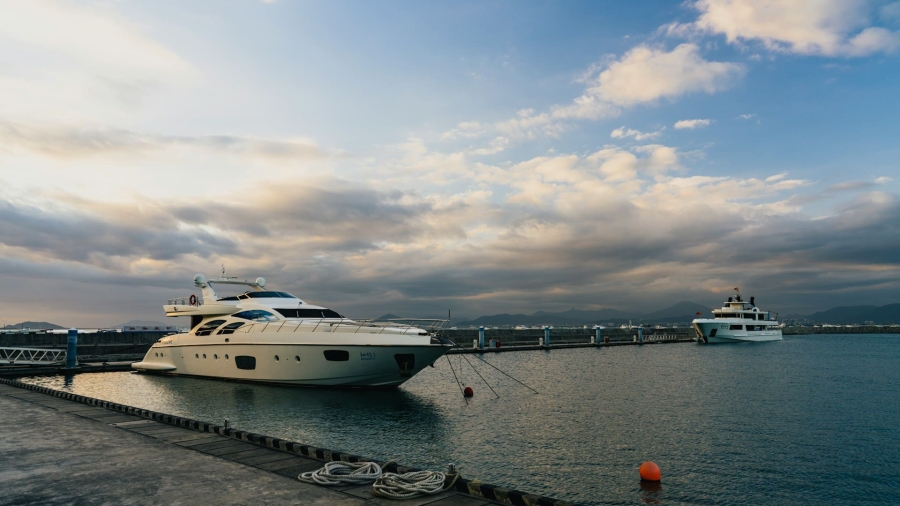
There’s a first time for everything. And your first time buying a superyacht should be an exhilarating experience, not a series of confusing choices or frustrating challenges. This comprehensive guide will give you a peek at the complex world of superyacht purchasing, empowering you to navigate it with confidence.
Understanding The Market
The superyacht market is a diverse and complex landscape. There’s a seemingly endless list of factors to consider: the yacht’s size, features, the manufacturer, and the current market trends. Therefore, immersing yourself in this world is crucial. Attend boat shows and yacht club meetings, and cultivate a network of yacht enthusiasts who can help you understand the market.
Superyacht brokers are typically divided into two main types: sales brokers and charter brokers. Sales brokers focus on facilitating the purchase and sale of superyachts, handling various responsibilities such as identifying potential buyers, negotiating the best prices, arranging surveys and sea trials to assess the yacht’s condition, overseeing contract agreements, and managing the necessary documentation for a smooth transaction. Simpson Superyachts’ guide for buying your first superyacht offers essential insights to help you navigate these options and make a well-informed decision tailored to your needs and preferences.
Hiring A Yacht Broker
Buying a superyacht is no small feat, and many first-time buyers find it helpful to hire a yacht broker, a professional who will serve as your guide and advocate throughout the purchasing process. Your broker can help you understand the market, advise on suitable yachts based on your preferences, and negotiate the best price.
Always choose a broker who is a member of a recognized yacht brokering organization. This membership indicates that the broker adheres to ethical standards and professional guidelines. And don’t just hire the first broker you meet. Instead, interview a few potential candidates and seek someone who understands your requirements and communicates well.
Financing and Insurance
Superyachts certainly cost a pretty penny, and while you might have the funds to purchase outright, you might also consider yacht financing options. These options can allow you to free up money that could be put to use in other investments. Like any financial decision, various pros and cons come with yacht finance, but a financial advisor well-versed in this area can provide invaluable insights.
Superyacht insurance is another critical component. The right insurance protects you from damages, liability, and other unexpected costs associated with yacht ownership. An insurance broker catering to marine insurance will be able to explain your potential coverage options.
Survey and Sea Trial
Essential Tips for First-Time Superyacht Buyers 2
Two important steps when buying a yacht are the survey and sea trial. The survey involves hiring a marine expert to thoroughly inspect the yacht, checking for any damage or mechanical issues that could affect your decision. They examine everything from the hull to the engine and electrical systems to ensure everything is in good condition.
After the survey, the sea trial takes place. You, the broker, and the surveyor will take the yacht out on the water to test its performance in real conditions. This allows you to see how the yacht handles, how its systems work, and if any issues arise during use. The survey and sea trial are critical in spotting potential problems and can help you negotiate repairs or a better price before finalizing the purchase.
Legal and Documentation
Finalizing the purchase of a yacht entails navigating several critical legal and administrative steps. First, the execution of the sales agreement must be completed, a binding contract that outlines the terms of the sale, including price, conditions, and warranties. Following this, the yacht must be registered appropriately under a flag state, which involves selecting the appropriate jurisdiction for registration based on factors like tax advantages, privacy, and legal protections. Additionally, applicable taxes, duties, or import fees must be paid, which can vary significantly depending on the yacht’s purchase location and future cruising destinations. Given the complexity of maritime law and the high financial stakes, it is strongly advised to enlist a lawyer specializing in maritime law.
The Journey Beyond
Once you’ve purchased the yacht, the journey isn’t over. Owning a superyacht comes with responsibilities like maintenance, crewing, and dockage. Regular servicing of the yacht ensures maximum safety and longevity of your unit, whilst employing a capable and trustworthy crew will help you operate and manage your vessel more efficiently.
As a first-time superyacht buyer, the process may appear daunting initially. But with the right advice, professional assistance, and a calm, deliberate approach, buying a superyacht can be just as exciting as owning one. Remember, this is only the beginning of a grand adventure at sea. Let these essential tips guide you as you embark on this journey.
One of the cruising traditions that typically hasn’t survived to the modern day is the classic Captain’s Dinner. It’s still available sometimes, but now the event tends to be different – to the disappointment of some passengers who’ve been cruising for a long time.
But on some cruises, you may still get the chance to enjoy this special occasion. I was lucky enough to share a table with Captain Michael Macleod on a recent cruise with SeaDream Yacht Club and I thoroughly enjoyed his company!
In this guide, I’ll explain what a Captain’s Dinner is on modern ships, what it used to mean, and what to do if you are lucky enough to get an invitation to such an event on your own cruise.
What is the Captain’s Dinner on a cruise?
The Captain’s Dinner can refer to several different events on a cruise ship. On most modern ships, it is one of the formal dining nights on the ship, but potentially with a party beforehand where guests may meet the ship’s captain. Traditionally, it would refer to dining at the captain’s table and on some cruises it remains that way.
The idea of a Captain’s Dinner – sometimes referred to as the Captain’s Table – has existed for a long time on cruises. And it would always mean one thing – the opportunity for guests to join the ship’s captain at the best table in the restaurant for dinner.
It’s an exciting and exclusive opportunity – but one which has faded over the last 10-20 years. Now, the Captain’s Dinner will often refer to just the first elegant night at sea, and will be something open to either a larger group or to everyone onboard.
Indeed, when I received my invitation to dine with the Captain, I wasn’t sure whether it actually meant dining at his table, or just that he would be in the same restaurant and do a speech!
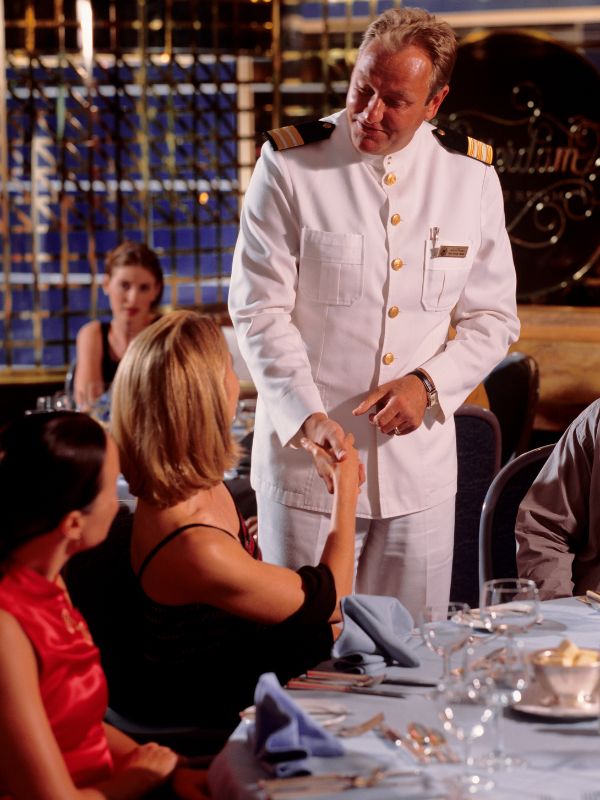
As it happens, it was both! The Captian made his pre-dinner speech and then I was invited to his table. I sat next to him and he told me lots of fascinating stories about his time at sea and how he spends his time off, living on a remote Scottish island.
What exactly the captain’s dinner entails can vary. It may be as simple as the ship’s captain giving a speech at the start of dinner, and then the rest of the night playing out as normal. On some other cruises, there may be a cocktail party held before dinner where the captain is present, and guests can meet them and maybe get a photo with them.
Many Cruises Have Stopped Doing A Captain’s Dinner
Some cruise lines still host a Captain’s Dinner in the traditional style, but not as often as they used to. Captain’s Dinners used to be a mainstay of cruising but many modern ships have moved away from traditional dining altogether and so the event doesn’t fit.
That being said, there are modern versions of the dinner where the first formal night includes the chance to meet the captain at a pre-dinner event.
For example, on our recent cruise with Fred. Olsen Cruise Lines, there was a Captain’s reception on the first night. We enjoyed canapes as the captain told us all about himself, his crew and the ship.
There are some cruise lines that do still host a Captain’s Dinner or Captain’s Table – although, it may not always be with the captain. Sometimes it’s with another senior officer on the ship.
But many modern ships have moved on from traditional dining times and are actively encouraging guests to try speciality restaurants, rather than the main dining room. Whereas cruising used to be all about sharing large tables with other parties, now it’s much more common to have your own table for your family or group
These Cruise Lines Have A Captain’s Dinner…
Most of the modern American cruise lines have done away with the idea of a Captain’s Dinner where there’s a sit-down meal with the captain.
Carnival Cruise Line doesn’t offer a captain’s dinner. But the cruise line does sometimes offer a Captain’s Gala night or Captain’s Welcome Evening, which is a cocktail party before dinner. Officers may attend but even this is becoming more rare these days.
Disney Cruise Line and P&O Cruises both offer something similar – a formal night where the captain and other officers may be mingling with guests beforehand.
I had a chat with the Staff Captain on Azura over a glass of sparkling wine at such an event it was very interesting.
NCL has hosted Captain’s Dinners in the past but it’s not something that is common these days, and it isn’t really a thing on Royal Caribbean anymore either, although it used to be.
Some more traditional cruise lines may offer the experience but it’s not guaranteed. Marella Cruises sometimes do, as does Cunard. They’re the only cruise line to make a real mention of a Captain’s Table on their own website.
There’s no guaranteed way of getting an invite to the Captain’s dinner, but the best advice is to cruise with a line regularly, make sure you’re well dressed (but not overdressed) for the cruise, and try networking with the ship’s host, without being too obvious.
It’s impossible to give a definitive list of ways for you to get invited to a Captain’s Dinner event because every cruise line that still hosts them is different.
As a guide, the captain wants to dine with people who will make for good conversation. It’s not really an event to suit the shy and timid. So a good first step to securing yourself an invite is to make sure you’re being social, without being so obvious that you’re trying to make a good impression.
This means chatting with the restaurant’s host, building up a rapport, and potentially dropping some hints as to why you’d be interesting company – but try not to come across as a try-hard.
You should also make sure you’re appropriately dressed. Cruise lines have a dress code even on non-formal nights and while it isn’t strict, the people who are dressed more smartly will be more likely to be invited. Don’t turn up in a tuxedo or cocktail dress to a casual night, but avoid t-shirts and shorts too.
Otherwise, most cruise lines reward loyalty, so if you’re cruising on the same cruise line more frequently and you know they host a Captain’s Dinner, then you probably increase your odds of being invited.
That being said, there are thousands if not millions of people who remain loyal to a cruise line and never get an invite – so regular cruises are not a guaranteed way of being invited.
In some cases, first-time cruisers may be invited to a Captain’s Dinner – it all depends on the policy of the captain or the organising officer at the time.
The Captain’s Dinner Is Usually A Formal Night
The Captain’s Table events that are still held on modern cruise ships will normally be on the first formal night of the cruise, which is often either the second night of the itinerary or the first full sea day, depending on the cruise line.
In older times, when dining at the captain’s own table was more common, invites could be extended for multiple nights on a cruise. Now it just tends to be for one night, and usually towards the start of an itinerary.
Make Sure You Dress To Impress
When dining at the captain’s table, guests should dress formally – suits or tuxedos for men, and either a suit or an evening gown for women. Captain’s Dinner events tend to happen on a cruise’s formal night anyway, so guests should expect to dress as such.
Gala events or cocktail parties will also normally be held on a cruise itinerary’s formal night, but depending on the cruise line the dress code may be slightly more relaxed. Men may be fine with a shirt without a tie, but not jeans. Women could wear a blouse and trousers, or a cocktail dress.
Basically, for any kind of event held with the ship’s officers, it’s best to stick to the dress code for a formal night on the ship.
The captain can eat wherever he or she wants to on the ship. You may see them dining in the buffet or one of the speciality restaurants, or they may eat in the crew mess or order room service to their quarters.
The captain might choose to eat with their senior officers or with their family if their family happens to be on board.
On our recent Fred. Olsen cruise, we often saw the captain and senior officers eating together in the buffet. The children made autograph books in the kids’ club, so once they had finished their meal, my daughter went over to ask for an autograph, and they happily obliged.
Final word
The tradition of dining at the cruise ship captain’s own table hasn’t been completely lost, but it’s a lot less common now. And even when it was done more regularly, getting an invite was still very exclusive. So if you’re invited to the captain’s table on a modern cruise, snap up that opportunity!
And if not, look out for any Captain’s Gala or cocktail parties on your ship. While you won’t get the attention of your captain for a full dinner service, you can still say hello and get to know them briefly.
Related Posts:
If you found this interesting, please share!
Jenni Fielding is the founder of Cruise Mummy. She has worked in the cruise industry since 2015 and has taken over 30 cruises. Now, she helps over 1 million people per month to plan their perfect cruise holidays.
Royal Caribbean suite perks depend on which ship you sail. On the 14 Icon, Oasis and Quantum class ships, suites fall into Royal Suite Class, a three-tier system (Sea, Sky and Star Class) where Star Class adds a Royal Genie, a drinks package, Wi-Fi, gratuities and most specialty dining. On the older Freedom, Voyager, Radiance and Vision class ships, the traditional Suites program still applies, with a lighter set of perks for junior suites and lounge access from Grand Suites up.
This guide, updated for November 2026, breaks down exactly what each tier includes, which ships use which system, the recent changes that affect bookings this year, and how to judge whether a suite is worth the extra money for your trip.
Two systems: Royal Suite Class vs the Suites program
Royal Caribbean has not unified its suite benefits across the whole fleet. Instead, it runs two parallel programs:
Royal Suite Class on the newest and largest ships. Benefits are grouped by tier (Sea, Sky, Star), and the tier is set by the suite category you book, not just the word “suite” in its name.
The Suites program on the remaining ships. Benefits are grouped by suite type: junior suites, Grand Suites and Owner’s Suites, and Royal and Villa Suites.
The practical upshot is that a “Grand Suite” on Liberty of the Seas and a “Grand Suite” on Wonder of the Seas do not come with identical perks, so always check which program your ship uses before comparing prices.
Which ships have Royal Suite Class?
Ship class
Ships
Suite system
Icon class
Icon, Star and Legend of the Seas
Royal Suite Class
Oasis class
Oasis, Allure, Harmony, Symphony, Wonder and Utopia of the Seas
Royal Suite Class
Quantum class
Quantum, Anthem, Ovation, Odyssey and Spectrum of the Seas
Royal Suite Class
Freedom, Voyager, Radiance and Vision class
For example Freedom, Liberty, Independence, Navigator, Mariner, Radiance and Enchantment of the Seas
Suites program
Legend of the Seas, the third Icon class ship, joined the fleet in July 2026 with a Mediterranean season before moving to Fort Lauderdale. Freedom class ships such as Independence of the Seas are not part of Royal Suite Class, so their suite guests follow the Suites program described further down.
Royal Suite Class tiers explained
Royal Suite Class is where the headline Royal Caribbean suite perks live. Here is what each tier offers, based on Royal Caribbean’s own benefits list.
Sea Class (junior suites)
Sea Class covers most junior suites and, from May 2026, Surfside Family Suites on Icon class ships. It is the entry tier and the least changed from a standard balcony cabin:
Dedicated check-in line and priority boarding
Dinner at Coastal Kitchen when available (reservation required, drinks extra)
Bathrobes, a pillow-top mattress and upgraded linens, luxury bathroom amenities and a Lavazza espresso machine
Sea Class does not include suite lounge access, concierge service, Wi-Fi or prepaid gratuities. Note that daily gratuities for suite guests are charged at a higher rate than standard cabins ($21 per person per day versus $18.50, as of the latest increase).
Sky Class (Grand Suites, Owner’s Suites, AquaTheater and Crown Loft suites)
Sky Class is the middle tier and the point where a suite starts to feel like a different cruise:
Suite concierge service
All-day Coastal Kitchen access for breakfast, lunch and dinner (dinner reservations required)
Suite lounge access with evening hors d’oeuvres and cocktails
Suite sun deck access, such as The Grove on Icon class ships
Flexible boarding, priority departure and priority dining reservations
Reserved seating at select entertainment venues
VOOM internet for one device per guest (not for Sky Junior or Sunset Junior Suites)
Star Class (Royal Loft, Ultimate Family, Owner’s Loft, Villa and larger suites)
Royal Caribbean Star Class perks turn the cruise into something close to all-inclusive. On top of everything in Sky Class, Star Class guests get:
A dedicated Royal Genie who handles reservations, requests and surprises throughout the voyage
The Deluxe Beverage Package for guests 21 and over (Refreshment Package for younger guests)
Complimentary dining at most specialty restaurants, with discounted cover charges at some experiential venues
Prepaid gratuities for dining, stateroom and housekeeping staff (Genie and concierge can be tipped separately)
VOOM Wi-Fi powered by Starlink for one device per guest
Expedited boarding, the best seats in select shows and priority entry to many activities
Complimentary minibar with soft drinks and water, plus complimentary laundry and pressing
A few items stay extra even in Star Class, including Signature Cuts at Chops Grille, the Celebration Table and Starbucks food.
Larger suites unlock lounge access, concierge help and, at the top tier, a personal Genie. Photo: Mike Kw on Pexels
Royal Caribbean suite perks comparison table
This table compares the three Royal Suite Class tiers with the highest tier of the older Suites program, so you can see the gaps at a glance.
Perk
Sea Class
Sky Class
Star Class
Suites program (Grand and up)
Priority boarding
Yes
Yes (flexible arrival)
Yes (expedited)
Yes
Coastal Kitchen
Dinner only
All day
All day
Only on ships that have one
Suite lounge
No
Yes
Yes
Yes
Concierge
No
Yes
Yes, plus Royal Genie
Yes
Wi-Fi
No
Yes (most suites)
Yes
No
Drinks package
No
No
Deluxe Beverage Package
No
Specialty dining
No
No
Most venues included
No
Gratuities included
No
No
Yes
No
Reserved show seating
No
Select venues
Best seats
Reserved theater section
Royal Caribbean junior suite perks on older ships
If you are sailing a Freedom, Voyager, Radiance or Vision class ship, the Suites program decides your benefits. Royal Caribbean junior suite perks here are modest: a bathrobe for onboard use, luxury bathroom amenities, a Lavazza espresso machine and priority boarding. There is no lounge or concierge access at this level.
Grand Suites, Owner’s Suites and Ocean View or Panoramic suites without balconies step up considerably:
Concierge service and concierge club or suite lounge access with evening hors d’oeuvres and cocktails
Priority departure, plus priority dining, spa and shore excursion bookings
Private breakfast seating on ships without Coastal Kitchen, plus a departure breakfast
Reserved theater seating, VIP pool deck seating (Voyager class and above) and priority tendering
Complimentary 24-hour room service with main dining menu options in-suite
A welcome water and fruit amenity and pressing on the first formal night
Royal Suites and Villa Suites add an officer escort from the terminal and a welcome bottle of Champagne. Royal Caribbean notes that benefits can vary by ship and sailing. For a broader look at how a junior suite compares with smaller cabin types, see our explainer on the difference between a suite, mini-suite and balcony cabin.
What changed in 2025 and 2026
Several updates matter if you booked a while ago or are comparing older reviews:
Surfside Family Suites downgraded (May 2026). On Icon class ships, these family suites moved from Sky Class to Sea Class for sailings from May 2, 2026. They lost lounge access, concierge, complimentary internet and breakfast and lunch at Coastal Kitchen.
Sunset Junior Suites upgraded. These aft-facing junior suites moved up to Sky Class, gaining all-day Coastal Kitchen and concierge access, though not free Wi-Fi.
Sky Junior Suites lost Wi-Fi. On Icon, Spectrum and Utopia of the Seas, complimentary internet was removed to bring these suites in line with the rest of the fleet.
Coastal Kitchen guest passes (2026). Sky Class guests can now bring up to two non-suite guests per meal and Star Class guests up to four, for a per-person fee (reported as $15 for breakfast, $20 for lunch and $25 for dinner, plus gratuity).
Drinks package rule tightened (August 2025). Royal Caribbean stopped making exceptions to the rule that all adults in a cabin must buy the Deluxe Beverage Package if one does. Star Class guests are unaffected because the package is included.
The takeaway: check the current tier for your exact suite category and sail date rather than relying on what a friend received a year or two ago.
Evening lounge access starts at Sky Class on the newer ships. Photo: Skills Media on Pexels
Royal Suite Class vs The Key
If what you really want is shorter lines and a quieter lunch, Royal Caribbean’s paid add-on The Key offers priority boarding, a reserved lunch on embarkation day, Wi-Fi and line-skipping on some activities, without the cost of a suite. It does not give you a lounge, concierge or a bigger cabin. We compare the two in detail in The Key vs suite perks, and you can weigh the add-on on its own in our guide to whether The Key is worth it. As a rough rule, The Key can make sense in place of a Sea Class junior suite, but it is no substitute for Sky or Star Class.
Is a Royal Caribbean suite worth it?
It depends heavily on the tier. A simple way to decide:
Sea Class or older-ship junior suite: mostly about space. You get a bigger cabin and balcony, a better bed and priority boarding. Worth it if the room itself matters to you; otherwise a balcony plus The Key may be better value.
Sky Class or Grand Suite and up: the lounge, concierge and all-day Coastal Kitchen change the daily rhythm of the cruise. Worth it for travelers who value calm spaces on busy mega-ships.
Star Class: do the maths. Add up what you would otherwise pay for a Deluxe Beverage Package, Wi-Fi, gratuities and two or three specialty dinners per person. On a seven-night sailing, those extras alone can cost a couple in the region of $2,000 or more, which narrows the price gap noticeably.
One point many guides miss: the tier is tied to the category code, not the marketing name, so two similar-sounding suites on the same ship can sit in different tiers. Before paying a deposit, ask your travel advisor or check the category on Royal Caribbean’s site to confirm whether it is Sea, Sky or Star Class. It is also worth watching for suite promotions in upcoming cruise deals, since suite fares often swing by thousands of dollars between booking windows.
If you are narrowing down a specific ship, our Icon of the Seas suites guide walks through each category on the line’s flagship class.
If you are thinking of upgrading, our guide to Oasis of the Seas suites compares every suite category, size and perk tier on the ship.
What are the perks of booking a suite on Royal Caribbean?
It depends on the ship and tier. Junior suites mainly add space, priority boarding and nicer amenities. Grand Suites and Sky Class add lounge, concierge and (on newer ships) all-day Coastal Kitchen. Star Class adds a Royal Genie, drinks package, Wi-Fi, gratuities and most specialty dining.
What are the perks of a junior suite on Royal Caribbean?
On Royal Suite Class ships, junior suites are usually Sea Class: priority boarding, dinner at Coastal Kitchen, upgraded bedding, bathrobes and an espresso machine. On older ships, they get a bathrobe, luxury amenities, an espresso machine and priority boarding. Sunset Junior Suites are an exception and sit in Sky Class.
Does Royal Caribbean Star Class include drinks and gratuities?
Yes. Star Class includes the Deluxe Beverage Package for guests 21 and over, prepaid gratuities for dining and stateroom staff, VOOM Wi-Fi and most specialty dining. Your Royal Genie and concierge can be tipped separately at your discretion.
What are the suite perks on Independence of the Seas?
Independence of the Seas is a Freedom class ship, so it uses the Suites program rather than Royal Suite Class. Junior suites get priority boarding and in-room extras, while Grand Suites and above add concierge lounge access, priority bookings, reserved theater seating and more.
Aviator is an extraordinary online game that has gained great popularity among gamers and betting fans because it includes a hint of chance and strategy. The mechanic is so simple, yet engaging. The player sees a flying virtual plane taking off, and it rises higher. Before starting the fun, you should get acquainted with how it goes and work out effective strategies to bring maximum gains.
Basic Description of Aviator
Aviator, if simplified, is a game of multipliers. Players place their bets ahead of time as the virtual plane takes off. A multiplier starts growing immediately as the plane gains altitude. The goal is to withdraw in time and not let an airplane disappear into the distance with your prospective wins. The more you wait, the bigger the multiplier is, but it’s also riskier. There is a possibility that you get an incredible return on your stake if you cash out at the right time, but if you stay in too long, you could walk away with nothing.
Getting Started on Aviator
Among the great places to play Aviator, one may mention Jackpot City as it has a friendly interface and hot promotions. First of all, one needs to log in to the website or app of Jackpot City and register. Further, it will be necessary to deposit funds into the account and go to the section of Aviation games. The interface is very intuitive; even for beginners, it will be easy to make a bet and understand how to play.
Playing jackpot city aviator, when you get the chance, involves using welcome bonuses or other promotions that can give you more money to familiarize yourself with the game without using your own. Knowing features such as auto cash-out options can be particularly helpful in helping one to manage his bets while trying to get used to a new game.
Understanding Game Dynamics
The mechanics behind Aviator might be quite simple, but a lot of dynamics may come into play to alter your approach. This is all about multipliers and payouts, with each rise of the plane increasing the former. Therefore, timing your cash-out becomes the most critical step in securing your win. You can definitely hold on a bit longer for higher potential payouts, but you increase the chances of losing everything.
Most sites, including Jackpot City, have a part for game history where you can see previous rounds. You could look at patterns and trends from that data, but you should consider that each round is completely independent due to the RNG for this game.
Consider introducing some kind of budgeting strategy into your game-either cash out more conservatively early or be more aggressive, waiting for higher multipliers. In any case, you would want to stick with your chosen strategy. This auto cash-out feature comes in very handy for those who might get carried away in the heat of the action.
The Exclusive Atmosphere of Aviator Gaming on a Cruise Ship
Now, put yourself on a cruiseship, lying in the sun, having the waves of the sea smoothly rock the ship. What could be bigger for such a feeling of holiday than playing Aviator, sitting comfortably with your mobile device? Many cruise lines offer Wi-Fi onboard for their guests to access all their favorite online games.
The Aviator can offer this unique atmosphere while gaming on a cruise liner. Heaving waves and the general vibrancy in the air serve as a very exciting backdrop to place your bets. This is your chance at great entertainment, with breathtaking ocean views all around you.
However, it is very important during your holiday to gamble responsibly. Set limits on gameplay and the amount spent, making sure gaming remains fun for you and not taking away from your vacation enjoyment.
The Social Aspect of Playing Aviator
Apart from that, another positive aspect of the Aviator game, both online and even on a cruise ship is the social factor. In case you go on holiday with friends or family members, you can make the experience more group-oriented. You can discuss strategies, share your wins, and give words of encouragement if one loses. Most online games also feature a chat feature that enables you to interact with people from all walks of life.
Final Tips for New Players
Smaller bets as a new player are advised so you get a feel without much finances at risk. Practice being patient and don’t rush to cash out. Take some time to appreciate how the plane ascends and take calculated moves.
Knowing all the updates, improvements in the game, and insights from the community will be an added advantage to you on the Jackpot City platform. Last but not least, remember that it is more important to have fun. Emotionally, the experience of playing Aviator-let alone on a cruise ship-can easily outweigh any cash prize.
In the end, understanding how Aviator works and elaborating strategies will surely pay off when gaming. Whether at Jackpot City or on the vivid cruise ship, be excited yet responsible, and you will surely enjoy the ride!
If you’ve never taken a cruise before, the whole culture around tipping can be a little confusing. Especially if you’re from the UK where tipping regularly is not a part of our culture.
There are two different types of tips on a cruise ship – that which you’re expected to pay, which are referred to as the gratuities, and then extra tips that you may want to give to the people helping you to enjoy your cruise.
If you’re a novice with tipping, don’t worry. I’ve spent hours browsing the best cruise forums to find out what other experienced cruisers tip above and beyond the standard gratuities.
I’ve collected a ton of data that will help you to compare yourself to others and find a level that feels right for you. Because at the end of the day, it’s totally up to you how much extra to tip, and whether to tip at all.
So, let’s take a look at how much to tip cruise staff, as a guide.
About Cruise Gratuities
Cruise gratuities are the tips that you are expected to pay during your cruise. They apply to all guests and are divided up between different members of the crew, including housekeeping, your room attendant, and those that work behind the scenes that you otherwise wouldn’t see, and therefore wouldn’t have the chance to tip.
Note that I say you are ‘expected’ to pay these. They’ll be added to your cruise account automatically, and you’ll need to pay them to clear your account, although on most cruise lines you can ask for them to be removed.
But you should be aware that for many cruise lines, including Royal Caribbean, NCL and Carnival, the crewmembers rely on the tips that passengers are expected to pay. People only tend to remove them if they’ve had terrible service, and even on those rare occasions, most passengers still pay them.
Sometimes, your gratuities are already included in your fare. That’s the case with:
MSC Cruises (when booked in the UK)
P&O Cruises
Virgin Voyages
Marella Cruises
Celestyal Cruises
Regent Seven Seas Cruises
Silversea
Many other cruise lines let you prepay your gratuities, too. It’s still a separate charge, but this means you can get it paid for upfront, and then you don’t have to worry about it later.
These include:
MSC Cruises (when booked in the US)
Disney Cruise Line
Royal Caribbean
Princess Cruises
NCL
Holland America Line
Carnival
There may be some times when you’re asked to pay them upfront. One example is Royal Caribbean’s MyTime Dining plan – if you want the flexibility to eat dinner at a time that suits you, you have to prepay your gratuities.
Otherwise, you’ll have the gratuities added to your account, and you’ll be expected to pay them off at the end, along with any other charges that you’ve accrued during your cruise.
As a rough guide, most cruise lines tend to charge around $15 per person per day for gratuities. It may be slightly more or slightly less. If you book a suite, expect the cost to be closer to $20 per person per day.
Drinks Gratuities
While your normal gratuities cover most staff on the ship, there may be times when you are asked to pay additional gratuities.
One of these is when you order a drinks package, which usually gives you unlimited drinks during the cruise.
While you’ll see an advertised price for your drinks package, some cruise lines – including Royal Caribbean and Princess Cruises – will add on a fixed gratuity fee when you pay, which is usually 18%.
Sometimes, a gratuity is added on to every drink, whether you have a package or not. This really depends on the cruise line and which country your ship departs from. The rules vary a lot, so you’ll need to check the terms and conditions of your booking to be sure.
Spa Gratuities
It’s similar with spa treatments. You’ll see an advertised price for your spa treatment, but many cruise lines will add on an additional gratuity to the price you pay – somewhere between 15% and 20%.
With your regular gratuities, and these additional gratuities for drinks packages and spa treatments, you aren’t expected to tip any extra.
Indeed, some cruise lines are very clear that tipping is not expected – especially P&O Cruises, since it’s a British cruise line where tipping culture is not the norm.
Some even discourage it. MSC’s official line from their UK website is: “MSC Cruises does not recommend tipping individual members of staff.”
But on most cruise lines, many passengers do – especially American passengers where tipping is part of the culture. And so if you want to do the same, let’s take a look at average tipping amounts for different crew members…
There is no set amount for how much to tip on a cruise, and once you have paid your gratuities, there’s no need to tip more if you don’t want to. Average extra tips vary, with most cruisers averaging $1-2 for drinks or room service, and $10-20 per day for cabin stewards.
It’s up to you if you decide to tip extra, but your automatic gratuity charge covers all the essentials. Anything extra is just to say thank you to crewmembers for looking after you, or a way to get a slight ‘edge’ in the service they provide.
They can’t go too far above and beyond but if you tip well then crewmembers might be able to offer a few small touches to make your cruise more special, such as serving you quicker at the bar or spending a little more time to create you a special towel animal in your room.
How Much to Tip Your Room Steward
The typical amounts tipped to room stewards varies between around $2 and $20 per day, although it will depend on the length of the cruise. Many people prefer to tip extra at the start of their cruise, to ensure they get the best service for the duration of their sailing.
One of the lower amounts I’ve seen, for those who want to tip extra, is $20 extra at the start of the cruise and then maybe a little more each night. CruisingNewb on the Royal Caribbean Blog forum suggests this was plenty to ensure proactive service.
Many people tip cabin attendants $10 per day, or $50 to 100 as a lump sum either at the start or end of the cruise.
Of course, some people choose not to tip any extra, and are still happy with the service they receive.
How Much to Tip Your Waiter
Main Dining Room waiting staff tend to be covered in daily gratuities, but for people who like to tip extra, an average is usually $100 per week. Some people prefer to tip on a per-meal basis, and tend to weight the tips more for dinner – $20 per dinner, $10 for lunch and $5 for breakfast.
Depending on your cruise line and your choice of dining plan, you might get the same waiter every night. You’ll then really notice just how good their service is – they will usually remember you and your preferences, and be able to make dinner feel like a really special occasion each night. That may be something you want to reward.
But then, there are plenty of others who view the Main Dining Room staff as already having been tipped as part of the gratuities, and, therefore, won’t tip any more than they need to.
Nowadays, more and more cruises offer flexible dining, so you will have a different team of waiters every night. When this is the case, people are less likely to tip waiters in cash as they probably won’t see them again during the cruise.
How Much to Tip Your Bartender
Many cruise passengers will tip their bartender on a per-drink basis, usually $1-2 per drink ordered. Some passengers prefer to tip their bartender a larger one-off amount if they intend to stay at a bar for a little while – up to $20 is seen as normal.
Some cruise ships like Disney and Royal Caribbean will give you a receipt to sign for every drink. Here, you have the option to write on an additional tip amount, which will be charged to your onboard account. This way, you can use any onboard credit that you have accrued to pay for tips.
Alternatively, you can tip in cash with $1 or $2 bills if you prefer. Of course, pounds sterling, Euros or any other currency will also be welcomed by crew members as they often travel the world and can always change it ashore if needed. Just try not to tip with coins.
Some passengers believe that tipping bartenders extra is a nice thank-you for the busy staff who may be making you complex cocktails. Others see tipping as a way of ensuring they get served first, where possible – hence tipping a $20 bill upfront.
If you’ve paid for a drinks package, you’ll already likely have paid an additional gratuity, and so many people don’t then like to tip again.
Passengers tend to tip cruise butlers more than other crewmembers because they tend to offer more services and are more hands-on in making your cruise special. $200 to 300 per cruise is average, although some may prefer to tip more.
Butlers tend to be offered on luxury cruise lines, and many of those – including Regent Seven Seas and Silversea – have tips already included, which are designed to cover the butler. But that doesn’t stop people from tipping extra.
Butlers are also used in suites on some other cruise lines, including Celebrity Cruises and P&O Cruises. Royal Caribbean has ‘Royal Genies’ instead of butlers, and there is specific advice given that they are not included in typical cruise gratuities, so any tipping needs to be offered separately.
Most people tend to tip $1-2 per item ordered from the room service menu, or a $5 total for a meal or a larger order. Many people only order small items for room service, and so don’t tend to tip large sums because the cost of what they are ordering is already low.
Again though, this is a personal decision and can vary. You might feel that room service is more effort for the crew, since they aren’t just pouring you a drink at a bar where they’re working, but they’re delivering it all the way to your stateroom.
Or you might take the view that you’ve paid your daily gratuities, and this service is included as part of that.
How Much to Tip Your Porter at the Cruise Terminal
Most people offer a small tip to the baggage handlers at the cruise terminal, to ensure their bags are looked after as they are taken onto the ship. It normally varies between $2 and $5 per bag, although a total tip of $10 for a family’s luggage would be sufficient.
Again, there’s no need to tip your porter, but bear in mind how much luggage they are carrying onto the ship. It’s a nice way to thank them for not having to drag your suitcases around with you all day.
When on a cruise excursion, it’s normal to tip the guide to thank them for their efforts in showing you around – this can vary from $5 per person up to $30 per person for longer tours. If your excursion has a coach or taxi, a tip of $1 per person is more in line with the average.
Tipping your guide or driver won’t tend to get you better service, and so it’s normally done at the end of the day more as a thank-you.
Shore excursion in Monaco
What Currency To Use for Tips
Most people tend to tip in the same currency used on the ship, but generally, it doesn’t matter. You can tip in your own currency if you prefer – crew tend to be grateful for all their tips, and they can bank them all regardless.
The only difference would be on an excursion, where it’s best to either tip in the local currency, or in US dollars, which are accepted more widely.
The Bottom Line
If you’re travelling from the UK, you’ll know that tipping isn’t always something that we’re used to. And you might feel awkward tipping on a cruise when you’ve already paid your gratuities. That’s absolutely fine – there is no obligation at all, and you’ll still get great service.
But you might feel equally awkward travelling on a cruise where you know that tipping a little extra is the done thing, and so you might want to take some extra money with you for tips. Don’t tip more than you’re comfortable doing though – you don’t want to stress yourself out budgeting for tips when you have covered the gratuities already.
Related Posts
If you found this interesting, please share!
Jenni Fielding is the founder of Cruise Mummy. She has worked in the cruise industry since 2015 and has taken over 30 cruises. Now, she helps over 1 million people per month to plan their perfect cruise holidays.
Royal Caribbean is increasing gratuity prices from 1st November, adding $0.50 per guest per day to each category.
This means that guests in a regular stateroom will pay $18.50 per person, per day, up from $18.
And anyone staying in a Suite will now pay $21 per person, per day, up from $20.50.
While this may seem like a small increase, it comes just a year after the last increase of $2 across all categories, which followed another $1.50 increase in 2022.
This means that guests are now paying around 25% more than they were two years ago for gratuities.
However, anyone who books their cruise before 1st November 2024 and pre-pays their gratuities before the end of 31st October 2024 will secure them at the current rates, not the increased prices, regardless of the sailing date.
Automatic gratuities – right or wrong?
Automatic gratuities remain a controversial topic. Some guests understand that they help to reward the hard-working crew, including those behind the scenes who might not normally receive tips from guests.
Other guests prefer to give tips manually, where they feel they have received good service. And of course, tipping culture varies around the world too.
Automatic gratuities, including these with Royal Caribbean, are not mandatory. They are added to guests’ accounts, but guests can remove them if they really want to.
It’s not recommended, because unfortunately a lot of crew rely on the tips for their pay. Even if a guest receives bad service, it’s not fair to punish the rest of the crew.
The increased charges don’t impact the gratuity automatically added to drinks purchases (18%) and spa and salon treatments (20%).
The main Majestic Princess cabins to avoid are Deck 15 cabins below the Lido Deck pools and buffet, starboard midship cabins that sit just below the glass-floored SeaWalk, and the handful of balconies with obstructed views on Decks 8, 15 and 16. Far-forward cabins are also best skipped if you get seasick. For most passengers the best value is a midship balcony or mini-suite on Decks 9 to 12, while the aft-corner Owner’s Suites are the top choice for space.
Majestic Princess is a 143,700-ton Royal-class ship that launched in 2017. She carries 3,560 guests in 1,780 staterooms, and more than 1,400 of them are outside cabins, almost all with a balcony. She is still in the Princess fleet. For winter 2026-27 she moves from Galveston to South America and Antarctica, sailing from Buenos Aires and San Antonio (Chile), and she is named in Princess’s 2027 Northern Europe programme. Whichever itinerary you book, the cabin layout is the same. This guide covers every stateroom type, where the problems are, and how to check a cabin number before you pay.
Majestic Princess cabins at a glance
The ship has no standard oceanview category to speak of. Nearly every outside cabin has a balcony, and cabins run from Deck 8 (Emerald) up to Deck 16 (Lido). There are no cabins on Decks 4 to 7, which hold the public rooms. The sizes below are approximate and include the balcony where there is one. Figures differ slightly between sources, so check the exact cabin on the Princess deck plan.
Cabin type
Number
Approx. size
Where / notes
Best for
Inside
342
166-175 sq ft
Decks 8-16; many connecting insides on Deck 10
Budget, dark-room sleepers
Balcony
715
About 222 sq ft (41 sq ft balcony)
Decks 8-16
Most couples
Deluxe Balcony
313
About 249-333 sq ft
Decks 8-16; adds a small sofa, some aft balconies deeper
Couples wanting more room or a third guest
Mini-Suite
374
About 299-329 sq ft
Decks 10-16; bathtub, separate sitting area
Best mid-price upgrade
Premium Suite
Part of 36 suites
About 554 sq ft
Forward, Decks 9-12
Space without the top price
Penthouse Suite
Part of 36 suites
About 440 sq ft
Midship, Deck 14
Suite perks in a central spot
Owner’s Suite
Part of 36 suites
About 587-682 sq ft
Aft corners, wraparound balcony
The biggest cabins and wake views
The ship also has 38 wheelchair-accessible staterooms and around 200 connecting staterooms. A note on names: Princess has rebranded what used to be called Club Class as the Reserve Collection. On Majestic Princess this covers all the suites and selected, well-placed mini-suites. Guests get a private section of the main dining room with no wait, wine on arrival, canapés on request and other extras. Suite guests also get the Concierge Lounge, breakfast in a private venue and free laundry. Older reviews that mention “Club Class mini-suites” are talking about the same cabins.
Majestic Princess cabins to avoid
Every one of these Majestic Princess cabins to avoid suits someone. What matters is whether the particular downside will bother you.
1. Deck 15 cabins below the Lido Deck
Deck 16 (Lido) holds the main Fountain Pool area, the plunge pool, the grills and the World Fresh Marketplace buffet. Cruise Critic singles out Deck 15 cabins as ones to avoid because they sit under this busy area. The usual complaint is loungers being dragged and stacked early in the morning and late at night, plus foot traffic overhead. If you want Deck 15, check that what’s directly above your cabin is more cabins rather than pool deck or buffet.
2. Starboard midship cabins under the SeaWalk
The SeaWalk is a glass-bottomed walkway that juts out from the starboard side of the top decks. It’s fun to visit but less fun to sleep under. One Cruise Critic member staying in a mini-suite two decks below it reported that passers-by could look straight down onto the balcony. They also said its blue lighting glowed all night and part of the view was blocked, including while cruising the New Zealand fjords. If balcony privacy matters, choose port side or a cabin forward or aft of the SeaWalk.
3. Obstructed-view balconies
A few standard balconies on Deck 8, and a handful of Deluxe Balconies on Decks 8, 15 and 16, have views partly blocked by lifeboats, solid steel railings or structure. Princess sells these in their own obstructed categories, so the price is usually lower. If you’ll mostly use the balcony for fresh air rather than scenery, they can be good value. For Antarctic or fjord itineraries, where the view is the whole point, avoid them.
4. Forward cabins if you’re prone to seasickness
The bow pitches the most in a swell. That matters more than usual on South America and Antarctica voyages, which cross open water around Cape Horn and the Drake Passage area. Seasick-prone travellers should book low and midship.
5. Cabins where extra berths block the balcony
In some balcony and deluxe balcony cabins, using the pull-down upper berth or sofa bed for a third or fourth guest blocks the balcony door. Cruise Deck Plans flags this on its category notes. A family of four squeezed into one balcony cabin may find two connecting cabins work far better.
6. Interconnecting cabins (if you aren’t using the connection)
With around 200 connecting staterooms on board, there’s a fair chance of booking one by accident. The connecting door lets more sound through than a solid wall. If you’re not travelling with the people next door, choose a cabin without the connecting-door symbol on the deck plan.
7. Cabins near service areas, lifts and the Deck 16 cabins by the pool
Cabins next to crew doors, laundry rooms or lift lobbies get more door noise. A small number of cabins sit on the Lido Deck itself, and those closest to the pool and buffet zones will hear more of the daytime activity.
A midship balcony on a middle deck avoids most of the common noise and motion problems. Photo: Ankit Gupta on Pexels
Majestic Princess best cabins
Midship balconies on Decks 9 to 12
These decks have cabins above and below, are close to the lifts and move the least. A standard or deluxe balcony here is the safest all-round choice and is usually the sweet spot for price.
Midship mini-suites with angled balconies
Mini-suites are the upgrade most often recommended on Royal-class ships, thanks to the bathtub, sitting area and extra room. The midship mini-suites with angled balconies have more outdoor space than standard ones. If yours is in the Reserve Collection, the dining perks add real value too.
Aft cabins and Owner’s Suites
Some aft deluxe balconies have slightly deeper balconies. The Owner’s Suites wrap around the aft corners with large balconies and are the biggest cabins on the ship. On any ship, aft cabins give wake views but can feel more vibration, particularly when manoeuvring in port.
Penthouse and Premium Suites
The Penthouse Suites are midship on Deck 14, close to the Concierge Lounge, which makes them convenient as well as roomy. The Premium Suites are larger but sit forward on Decks 9 to 12, so they suit good sailors best.
Accessible and connecting cabins
The 38 accessible staterooms come in several categories. Book them early, as they go fast. Families often do best with two connecting balcony cabins rather than four people in one room.
Avoid this, book that instead
If you were going to book…
The risk
Consider instead
Deck 15 under the pool or buffet
Early and late noise overhead
Deck 14 or lower, same category
Starboard midship below the SeaWalk
Overlooked balcony, night-time glow
Port side midship
Obstructed balcony (Antarctica or fjord cruise)
Blocked scenery
Standard balcony on Decks 9-12
Forward cabin (seasick traveller)
Most pitching
Low midship balcony
Four people in one balcony cabin
Berths block the balcony door
Two connecting cabins
Where your cabin sits on the ship shapes how much motion and noise you notice. Photo: enes çimen on Pexels
Quick checklist before booking a Majestic Princess cabin
Most Majestic Princess cabins to avoid can be spotted in a few minutes on the deck plan:
Open the official Princess deck plan and check the deck above your cabin for pools, the buffet, galleys or the SeaWalk.
Check the deck below. Deck 8 cabins sit over public rooms on Deck 7.
Look for connecting-door, accessible and obstructed-view symbols on your cabin.
Note whether you’re starboard midship near the SeaWalk.
If you need a third or fourth berth, confirm whether it blocks the balcony.
Think twice about guarantee fares if you’re a light sleeper or get seasick. Princess picks the cabin for you, and it could be any of the spots above.
Majestic Princess is a Royal-class ship, alongside Royal, Regal, Sky, Enchanted and Discovery Princess. She is 143,700 tons, carries 3,560 guests and entered service in 2017.
Which deck is best on Majestic Princess?
For most people, Decks 9 to 12 midship. They have cabins above and below, easy lift access and the least motion. Deck 14 is also good, except for cabins at the starboard midship SeaWalk location and anything beneath busy areas.
Are Deck 15 cabins on Majestic Princess noisy?
Some can be. Cabins directly below the Deck 16 pools and buffet can hear loungers being moved and foot traffic early and late. Deck 15 cabins with more cabins above them are fine. Check the deck plan for your specific number.
Is Majestic Princess still sailing with Princess in 2026-27?
Yes. For winter 2026-27 she sails South America and Antarctica voyages from Buenos Aires and San Antonio (Chile), replacing her planned Galveston season. Princess has also named her for its 2027 Northern Europe season.
Yes, you can upgrade your cruise cabin after booking. The most reliable route is to call the cruise line or your travel agent and pay the fare difference for a better cabin before final payment. Closer to sailing, most big lines also run bid programs (RoyalUp, Celebrity MoveUp, NCL Upgrade Advantage, MSC UpGrade, Princess Upgrade, Cunard Upgrade) where you offer what you’re willing to pay. Free upgrades do happen, but they’re rare, so don’t count on one.
This guide covers every realistic cruise cabin upgrade route: what each one costs, when it happens, what you give up (usually your choice of cabin number), and how the major lines compare in 2026.
Can You Upgrade a Cruise Cabin After Booking?
Almost always, yes. A cruise booking isn’t locked to one cabin category. Moving up a category is the easiest change to make, because the line gets more money and frees up a cheaper cabin to sell again. Moving down is harder and often isn’t allowed on non-refundable deposit fares.
There are five main ways to upgrade your cruise cabin after booking:
Pay the difference through the cruise line or your travel agent.
Bid through the line’s upgrade auction program.
Book a guarantee cabin and hope the line assigns you something better.
Use loyalty status to get upgrade offers or better odds.
This is the only route where you choose the exact cabin. Call the line or your agent (or use “Manage Booking” online, where some lines allow it), pick the new category and cabin number, and pay the difference between your current fare and today’s price for the new cabin. The cost depends on current pricing, not the price when you booked, so an upgrade can be cheap on a sailing that isn’t selling well and expensive on one that’s nearly full.
Watch for price drops
If the fare for your sailing falls before final payment, many lines and agents will reprice your booking. Some guests take that saving and put it toward a higher category instead, so they end up in a balcony for roughly what they first paid for an ocean view. Policies differ by line and by fare type, and promotions can change when you reprice, so ask your agent to compare the whole package (fare, onboard credit, drinks or Wi-Fi perks) before switching.
Know your fare rules
Non-refundable deposit fares usually let you move up a category but not down, and change fees may apply.
After final payment, changes are still possible, but any cancellation penalties tied to the original booking may carry over.
Promotional perks such as included drinks or onboard credit can change when you switch category. Check before you confirm.
Gratuities are often higher in suites, so factor that in.
A suite upgrade usually brings more space and extra perks, but also higher gratuities. Photo: Abdou HILALI STUDIO on Pexels
Cruise Upgrade Bid Programs: How They Work
Upgrade bidding is now standard on most big-ship lines. The process is broadly the same everywhere:
After you’ve booked (and usually paid in full), the line emails an invitation, or you check eligibility on its upgrade page or app. You normally need to be opted in to marketing emails.
You choose one or more higher categories and enter a per-person offer above the minimum shown.
You give a credit card, but it isn’t charged unless the line accepts your offer.
If your bid wins, you’re moved automatically and charged. Accepted upgrades are almost always non-refundable.
If it loses, you keep your original cabin and pay nothing.
The important catch: you can’t choose your cabin number. The line puts you in whatever cabin is left in the new category. That could be a lower deck, a cabin under a noisy venue, a partly obstructed balcony, or one far from the rest of your group. Connecting cabins and adjoining rooms for families are usually not kept together.
Cruise upgrade bid programs compared (2026)
Cruise line
Program
When bids are decided
Payment
Choose cabin number?
Royal Caribbean
RoyalUp
Can be accepted up to about 2 days before sailing
Card charged only if you win; non-refundable
No
Celebrity Cruises
MoveUp
Eligible within 90 days of departure; accepted up to 2 days before
Charged on acceptance; non-refundable
No
Norwegian Cruise Line
Upgrade Advantage
By invitation; can be accepted up to sailing day
Charged on acceptance (or to onboard account on sailing day)
No
MSC Cruises
MSC UpGrade
Any time up to departure
Charged automatically if accepted; higher service charge billed onboard
No
Princess Cruises
Princess Upgrade
Opens 85 days out (115 days for 25+ night voyages)
You pay after acceptance via Manage Booking or your agent
No
Cunard
Cunard Upgrade
Opens 80 days out; final offers 7 days before
Charged on acceptance; payment due within 72 hours
No
Virgin Voyages
Level Upgrade
Most responses around 48 hours before sailing
Check current terms
No
Carnival
No bid program
Occasional paid upgrade offers; ask your agent or guest services
Fare difference
Yes, if you pay the difference
Terms above are based on each line’s published rules at the time of writing. They change, so read the terms on your invitation before you bid.
Tips for winning a cruise upgrade bid
Bid a little above the minimum. Lines generally take the highest offers first, and minimum bids often lose on busy sailings.
Compare with the fare difference. Look up the current price of the cabin you’re bidding on. If paying the difference costs about the same as a strong bid, pay it and choose your cabin.
Bid on more than one category where allowed. You’ll only be charged for one upgrade.
Think about quieter sailings. Shoulder season and repositioning cruises have more empty upper cabins, so bids are more likely to win.
Check what’s included. On some lines a suite upgrade brings lounge and restaurant access; on others the perks are limited. Celebrity, for example, awards Captain’s Club points on your originally booked category, and RoyalUp suite upgrades don’t earn the double Crown & Anchor points you’d get by booking a suite.
A guarantee (GTY) booking means you pay for a category, or “at least” a category, and the line assigns your cabin number later, often in the final weeks before sailing. Guarantee fares are usually a little cheaper than picking your own cabin.
Because the line can place you anywhere in that category or higher, guarantee cabins are where most genuinely free upgrades happen. When a lower category is overbooked, the line moves some guests up to free space. You can’t ask for this, and many guarantee guests simply get an ordinary cabin in the category they paid for, sometimes in a less desirable spot.
Guarantee cabins suit flexible travelers who don’t mind where they sleep. Skip them if you need a specific location, such as midship for seasickness, an accessible cabin, or cabins close to family.
Guest services is the place to ask about last-minute cabin upgrades once you're onboard. Photo: AS Photography on Pexels
Loyalty Perks and Cabin Upgrades
Loyalty status rarely gives you a guaranteed free upgrade, but it can help in other ways:
Some lines give top-tier members first look at upgrade offers or better pricing.
When lines do hand out complimentary upgrades to fill a ship, frequent guests and those who booked higher fares tend to be considered first.
Higher tiers may include suite-style perks (priority boarding, lounge access, laundry) without changing your cabin.
The most useful tiers sit at the top of each program, such as Royal Caribbean’s Diamond Plus and Pinnacle Club, Celebrity’s Elite and Elite Plus, and Princess Captain’s Circle Platinum and Elite. Compare them in our guide to cruise line loyalty programs compared.
Upgrading Onboard at Guest Services
If cabins are still empty after embarkation, the line would rather sell them than sail with them empty. Head to guest services (or check the app) on embarkation day and ask whether any upgrades are available and at what price. You’ll normally pay a pro-rated amount for the nights left, charged to your onboard account.
Onboard upgrades aren’t advertised on most ships, availability is unpredictable, and the busiest sailings rarely have spare cabins. Ask early on the first day, be polite, and be ready to move your luggage yourself or wait for your cabin steward to help.
What Happens to Your Cabin Number When You Upgrade?
Paying the difference: you pick the new cabin, so you control the location.
Winning a bid: the line assigns the cabin. You lose your original cabin, and you usually can’t switch back once the upgrade is accepted.
Guarantee bookings: the cabin number appears in your booking once assigned. Check your app or documents in the final few weeks.
Onboard upgrades: you’ll be offered whatever is free, sometimes with a choice of two or three cabins.
Your new key card or medallion is reissued for the new cabin, and your dining time, drinks package and other add-ons normally stay with your booking. Check with the line if you’re moving into a suite category with its own restaurant or lounge.
Is a Cruise Cabin Upgrade Worth It?
An upgrade is usually worth it when:
You’re on a scenic itinerary (Alaska, Norway, the Mediterranean) where a balcony gets heavy use.
The cruise is long. An extra $40 per person per night matters less across 14 nights than it does on a weekend sailing.
The suite category includes real extras, such as a private restaurant, lounge, or included drinks.
It may not be worth it on short, port-heavy cruises where you’ll barely be in your cabin. In that case, the money often goes further on excursions, specialty dining, or a future cruise.
FAQs
Can you get upgraded on a cruise for free?
Yes, but it’s uncommon. Free upgrades mostly go to guarantee-cabin guests when a lower category is overbooked, and sometimes to loyal or higher-fare guests. Carnival has said publicly that the chances of a free move from inside to balcony are slim.
How do I upgrade my cabin on Princess Cruises?
You can pay the fare difference through Princess or your travel advisor, or bid through Princess Upgrade. Bidding opens 85 days before sailing (115 days for voyages of 25 nights or more), and your booking must be paid in full.
Do you get charged if your cruise upgrade bid isn’t accepted?
No. On RoyalUp, MoveUp, Upgrade Advantage, MSC UpGrade and similar programs, your card is only charged if the line accepts your offer. If it’s declined, you keep your original cabin at no cost.
Can you choose your cabin number when you bid for an upgrade?
No. Bid programs only upgrade the category, and the line assigns the cabin. If location matters, pay the fare difference and choose the cabin yourself.
When is the best time to upgrade a cruise cabin?
Before final payment is often best, because you can reprice if fares drop and choose your cabin. Bid programs open roughly 2 to 3 months before sailing and are usually decided in the last few days.
It seems that most people expect to gain weight when they cruise. Around 68% of people who responded to the question on Facebook said they normally gained weight.
Around 12.5% said that they actually lost weight when they cruised. This was either because they were so active when walking around the ship or the ports they visited, or because they used the onboard gyms and tried to be reasonable with their dining and drinking.
The rest of the people who responded said that they would usually stay around the same weight, balancing out activity with eating and drinking on the ship.
Still, that’s the majority of people who will gain weight. And not an insignificant amount either, with an average of around 6 lb (2.7 kg) put on during a typical cruise.
Some people even said that they worked hard before their cruise to lose weight so that, by the end, it all balanced out:
I also think that some people might be in denial…
Not everyone gains weight on a cruise…
There were still plenty of people who said that they didn’t gain weight on a cruise, and either stayed roughly the same or even lost weight.
A lot of people explained how they try to keep similar routines to what they do at home, or they just didn’t go overboard (pun not intended) when they cruised. But for some, it’s just a metabolism thing. Lucky people!
If you’ve never cruised before, then based on the vast majority of responses you should probably expect to gain some weight, and maybe as much as 6 to 7 lb.
The main reasons people gain weight on a cruise
If you want to try and cruise without putting on any extra timber, then some responses highlighted the main reasons people put on weight:
1. Free ice cream
A lot of cruise lines will offer free ice cream by the pool deck, and there’s no limit on how many cones you enjoy. It can be very tempting to just grab another one every hour or so, especially when you’re cruising in a hot destination.
However, while each cone might feel small, they soon add up in terms of calories, sugars and fats. So they can be a key reason why people put on weight.
2. All those amazing desserts
The food on cruises is amazing, and it’s not just the starters/appetisers and the main courses/entrees. Desserts are often spectacular, and the waiters are always happy to get you more than one…
If you don’t tend to eat many sweet things at home, you’ll soon find that the dessert menu will expand that waistline for you.
3. Just all that food and alcohol!
Ultimately, the reason people tend to gain weight on a cruise is because food and drink is freely available, especially if you’ve booked a drinks package.
It’s often booze that’s the problem. People don’t think as much about the calories they’re drinking compared to those they’re eating.
A couple of beers, wines or cocktails can go down so easily, and yet you’re consuming a lot more energy than you need, meaning you’re going to gain weight.
4. Water retention
The other consideration with drinks on a ship is water retention. If you’re drinking more than you normally would (whether alcohol or soft drinks such as coffees), then you’re more likely to retain water, especially in hotter weather.
The good news about this type of weight gain is that it usually corrects itself within a week or two of getting home, with minimal effort.
Top tips to stay in shape on a cruise
Here are some tips from the cruise guests who managed to either maintain their weight or even lose some while on a ship.
1. Use the stairs
One of the top tips from so many people – and something I try to do as well – is to take the stairs when you’re moving between floors on a cruise ship.
It’s not always possible. You might have mobility issues, or you’re right at the bottom of the ship and just don’t want to be flustered when heading for the top deck.
But if you’re able to, and you’re only moving between a few floors, then the stairs can be your ticket to keeping the weight under control as you sail.
As a family, we usually pick a number for how many floors we will do without using the list and then stick to that. So if we decide that four floors or fewer is walkable, then we’ll only use the lift for five or more.
2. Eat when you’re hungry
Food is pretty much available 24/7 on most cruise ships, typically in vast quantities and without anything extra to pay. It’s generally very good quality too, which means it can be tempting to go back for more again, and again, and again…
Remember that you have plenty of days on your cruise to try everything, so don’t overindulge too early. Try to limit your eating to when you’re actually hungry. Make sure your eyes aren’t bigger than your belly, as the saying goes.
Eat what you like, but don’t go so far that you end up feeling bloated and uncomfortable when you should be relaxing.
3. Don’t overdo the booze
Alcohol can be the sneaky issue for anyone who doesn’t want to put on weight during a cruise. It won’t necessarily make you feel full in the same way food will, but the calories will add up.
Cocktails can be particularly bad as they usually have a lot of sugary fruit juice and some even have milk, cream or chocolate sauce in them.
If you don’t drink alcohol, you’ve got a serious advantage. Try to stick to water or sugar-free drinks if you can, and limit the mocktails, coffees and sugar-rich drinks.
But if you like alcoholic drinks, and you’re conscious of weight gain, try to stick to spirits with zero-sugar mixers.
4. Get your exercise in
Cruise ships offer plenty of ways to stay fit and healthy during your cruise if you want to. There’s almost always a gym that’s free for guests to use. There may be exercise classes too, although these may come with an additional charge.
Personally, I just enjoy using the running/walking track around the ship. You get to enjoy amazing views and the fresh sea air as you complete your laps, making it a much more enjoyable experience.
Of course, on port-heavy itineraries you might do a lot of walking ashore too, so bear that in mind. The more sea days, and the more time spent relaxing by the pool, the more you might want to force yourself to get up and walk, jog or swim onboard.
Do what makes you happy!
Assuming you have no health issues, it doesn’t matter if you gain or lose weight on a cruise. There’s a lot of great food and drink to enjoy, so if you want to, then go for it.
The important thing is that you enjoy yourself, and that you’re happy by the end of it. If that means moderation so that you stay in shape, that’s fine. If it means completely letting go and not caring what the scales say, then that’s fine too!
Your cruise holiday is yours to enjoy as you see fit and as long as you’re respectful of other people, and how they choose to cruise, then that’s all that matters.
Don’t be like this, whatever you do:
Oh, and one more key bit of advice from me and other cruisers: pack some stretchy or bigger clothes to wear on the second half of your cruise, especially if it’s a longer one!
The best cruise lines for families in 2026-27 are Royal Caribbean for the most activities across all ages, Disney Cruise Line for young children and character-led entertainment, and Carnival or MSC Cruises for the lowest cost per family. Norwegian suits families who want flexible dining, while P&O Cruises is the easiest choice for British families who want to sail from Southampton without flying.
The right line depends on three things: how old your children are, what you can spend, and where you want to sail from. Below we rank eight family cruise lines, compare their kids clubs and “kids sail free” deals in one table, and explain the catches that are easy to miss when booking.
Best Cruise Lines for Families: Comparison Table
Kids club ages are for the main supervised programmes. Nurseries and baby areas vary by ship, and some charge an hourly fee.
Cruise line
Kids club ages
Kids sail free?
Standout family feature
Best age range
Sails from UK?
Royal Caribbean
3-17 (Adventure Ocean and teen zones); nursery 6-36 months on select ships
Occasional promotions
Icon-class water parks and Perfect Day at CocoCay
All ages, especially 6-17
Yes: Liberty of the Seas (2026), Freedom of the Seas (summer 2027)
Disney Cruise Line
3-17 (Oceaneer Club, Edge, Vibe); nursery from 6 months
Rarely
Characters, Broadway-style shows, Castaway Cay and Lookout Cay
2-10
Yes: Disney Wish from Southampton, summer 2027
Carnival
2-17 (Camp Ocean, Circle C, Club O2); Turtles under 2
Occasional promotions
Low fares, WaterWorks, Celebration Key
5-14
No regular UK departures
MSC Cruises
Baby to 17 in five age groups
Often: under-18s free as third/fourth guest (taxes and fees payable)
1. Royal Caribbean: best all-round cruise line for kids
Royal Caribbean has more to keep children busy than any other line, and it also suits teenagers better than most. Its Adventure Ocean programme is free for ages 3-17 and is split by age, so younger children are not grouped with teens. The newest Icon-class ships (Icon of the Seas, Star of the Seas and Legend of the Seas) each have a dedicated Surfside area for young families and a large water park.
What’s new for 2026-27: Legend of the Seas launched in July 2026 with Mediterranean sailings from Rome and Barcelona. It moves to Fort Lauderdale in late October 2026 for Caribbean cruises that call at Perfect Day at CocoCay. Its family features include the three-storey Ultimate Family Townhouse and a stage version of Charlie and the Chocolate Factory.
Watch out for: The nursery for babies aged 6-36 months is only on some ships and costs about $9-12 an hour. Many of the headline activities also have extra fees. Our guide to the best Royal Caribbean ships for kids of each age explains which ships suit toddlers, tweens and teens.
From the UK: Liberty of the Seas sails from Southampton in 2026, and Freedom of the Seas takes over for summer 2027.
2. Disney Cruise Line: best for young children
For families with children aged roughly 2 to 10, Disney is very hard to beat. Character meet-and-greets, themed rotational dining, Broadway-style shows and deck parties are all part of the fare. The Oceaneer Club (ages 3-12) is designed like a set from the films, and Edge (11-14) and Vibe (14-17) give older kids their own space. The It’s a Small World Nursery takes babies from 6 months, for an hourly fee.
What’s new: Disney Destiny, a Wish-class ship with a heroes and villains theme, entered service from Fort Lauderdale in November 2025. Disney Adventure, the line’s largest ship and first based in Asia, began three- and four-night cruises from Singapore in March 2026. In the Bahamas, families can visit Castaway Cay and the newer Disney Lookout Cay at Lighthouse Point.
Watch out for: Disney usually costs much more per night than the other big family lines, and its kids-sail-free offers are rare. Even so, for children under 10 it is one of the best cruise lines for kids you can book.
From the UK: Disney Wish will run its first UK season in summer 2027, with 3- to 7-night cruises from Southampton to the Norwegian fjords, Northern Europe, Spain and the British Isles.
Water parks are now standard on most big family cruise ships. Photo: Stephan Leuzinger on Pexels
3. Carnival Cruise Line: best budget family cruise line
Carnival is often the cheapest way to take a family on a Caribbean cruise. The atmosphere is relaxed and fun, and the youth programme covers almost every age: Turtles for under-2s, Camp Ocean for ages 2-11 (in three groups), Circle C for 12-14 and Club O2 for 15-17. Family Harbor cabins on select ships include a families-only lounge.
What’s new: Celebration Key, Carnival’s private destination on Grand Bahama, opened in July 2025. It has lagoons and splash areas aimed at families. Carnival Festivale arrives at Port Canaveral in 2027 with the line’s biggest WaterWorks water park and about 1,000 interconnecting cabins, which makes it easier for larger groups to stay together.
From the UK: Carnival has no regular UK departures, so British families need to fly to Florida, Texas or another US port.
4. MSC Cruises: best value and kids-sail-free deals
MSC often lets children under 18 sail free as the third or fourth guest in a cabin with two paying adults. You still pay taxes, port fees and service charges for each child, but this can make MSC the cheapest option for a family of four. Its kids clubs cover babies to teenagers in five age groups. The newest ships, such as MSC World America from Miami, have large water parks and family areas. Families heading to the Bahamas also get Ocean Cay, MSC’s private island.
Watch out for: MSC sells cruises in many countries, so menus, announcements and fellow passengers are very international.
From the UK: MSC Preziosa sails week-long cruises from Southampton from October 2026 to April 2027. MSC Meraviglia then takes over for summer 2027, with cruises to Northern Europe and the Norwegian fjords.
5. Norwegian Cruise Line: best for flexible families and tweens
NCL’s “Freestyle” style means there are no fixed dinner times, which helps when children are tired or hungry at odd hours. Splash Academy takes children aged 3-12 who are fully potty trained, Entourage covers 13-17, and the Guppies play sessions are for parents with babies and toddlers aged 6 months to 3 years. Newer ships such as Norwegian Aqua and Norwegian Luna add go-kart tracks, slides and the Aqua Slidecoaster, which tweens and teens enjoy.
From the UK: NCL has only a small number of Southampton sailings, and many are longer or one-way cruises. Most families fly to join an NCL ship.
6. P&O Cruises: best family cruise line for UK no-fly holidays
For British families, P&O is often the easiest choice. You drive to Southampton, board Iona or Arvia, and the money, plugs, food and entertainment all feel familiar. The Reef kids club is free and grouped by age: Splashers (2-4), Surfers (5-8) and Scubas (9-12), plus teen spaces for 13-17. One feature most lines don’t offer is a free Night Nursery for children aged 6 months to 4 years, so parents of toddlers can have dinner on their own.
Watch out for: Arcadia and Aurora are adults-only, so check the ship before you book.
Private islands and calm beaches are a big draw for families with small children. Photo: Vishe Artiztry on Pexels
7. Princess Cruises: best for multigenerational trips
Princess is quieter than the mega-ship lines, which suits groups where grandparents are travelling with children. Camp Discovery covers ages 3-17 in separate age groups, and Princess runs Kids Sail Free promotions from time to time. Princess also sails from Southampton, with Regal Princess based there in 2027.
8. Celebrity Cruises: best for food-loving families with older kids
Celebrity is a premium line with better dining and a more grown-up atmosphere than the big family brands. Camp at Sea covers ages 3-17. It is a good fit for families with sensible older children or teens who would choose a good restaurant over a water slide.
How to Choose the Best Cruise Line for Kids of Each Age
Babies and toddlers (under 3): Look for a nursery and check whether it charges. P&O’s free Night Nursery, Disney’s nursery and Carnival’s Turtles programme are all strong choices. Most cruise lines require babies to be at least 6 months old, and 12 months on some long sailings.
Ages 3-10: Disney is best for characters and theming. Royal Caribbean and Carnival have the biggest water parks.
Tweens and teens: Royal Caribbean and NCL have the most thrill rides, and both have separate teen spaces so older kids are not grouped with little ones.
Families of five or more: Few standard cabins sleep five, so look at connecting cabins or family suites early. Our guide to the cheapest cabins that sleep five compares options by cruise line.
What “Kids Sail Free” Really Means
A kids-sail-free deal rarely means the child pays nothing. In almost every case:
The child must be the third or fourth guest in a cabin with two full-fare adults.
Taxes, port fees and government charges still apply to each child. On a week-long cruise these can easily add a few hundred dollars per person.
Daily service charges or gratuities are usually still payable for children too.
Deals often apply only to certain sailings and cabin grades, and the adult fare may be higher than on a sale without the offer.
Before you book, compare the total price including all taxes and fees for the whole family across two or three lines. A “free” child on one line can still cost more than a heavily discounted family fare on another.
Family Cruise Lines to Skip
Some lines are simply not designed for children. Virgin Voyages is adults-only (18+), and P&O’s Arcadia and Aurora don’t take under-18s. Most river cruise lines and small luxury lines have no kids clubs, and some set minimum ages.
To keep costs down once you have picked a line, read our guide to inside cabins on a family cruise, including family interior rooms that sleep four or more.
What is the best cruise line for families with young kids?
Disney Cruise Line is generally the best for children under 10 because of its characters, themed dining and nursery. Royal Caribbean is the best alternative if you want more activities for the money.
Which cruise line is best for families with teens?
Royal Caribbean and Norwegian are the strongest choices for teens. They have dedicated teen lounges, thrill rides, water slides and, on newer NCL ships, go-kart tracks.
Which cruise lines let kids sail free?
MSC Cruises most often lets children under 18 sail free as the third or fourth guest in a cabin. Royal Caribbean, Norwegian and Princess run kids-sail-free promotions from time to time. Taxes, port fees and service charges are still payable.
What is the cheapest cruise line for families?
Carnival and MSC usually offer the lowest prices for families, especially for a family of four sharing one cabin. Always compare the full price including taxes and fees.
Can you go on a family cruise from the UK without flying?
Yes. P&O Cruises, MSC, Royal Caribbean and Princess all sail from Southampton. Disney Wish will also sail from Southampton in summer 2027.