Can you bring formula on a cruise? Yes. Every major cruise line lets you carry on powdered or ready-to-feed infant formula, usually sealed in its original container, along with pre-packaged baby food. Most lines don’t sell formula on board, so plan to pack enough for the whole trip plus a few days’ spare. Breastfeeding is welcome anywhere on the ship.
Free: download our 2027 Luxury Cruise Calendar →
Below are the rules, the water and sterilising questions, and which lines help with baby food once you’re on board. Policies change, so check your line’s own FAQ before you sail, and talk any medical or specialist feeding plan through with your pediatrician or health visitor.
Can you bring formula on a cruise? The rules in brief
Cruise lines generally ban passengers from bringing their own drinks and opened food, but infant feeding is the standard exception. The usual rules look like this:
- Formula: powdered or liquid formula is allowed, normally in its original, factory-sealed container. Carnival, for example, lists “powdered or liquid formula in original container” on its permitted items.
- Baby food: sealed, pre-packaged jars and pouches are allowed. Lines won’t usually let you bring homemade or opened food, and galleys won’t prepare food you bring.
- Water for formula: some lines allow sealed nursery or distilled water in your carry-on. Norwegian Cruise Line makes an exception to its drinks rule for factory-sealed purified or distilled water used to make up infant formula, but asks families to contact its access desk in advance for approval.
- Cow’s milk: usually not allowed. Royal Caribbean, for one, treats regular milk as a perishable food you can’t bring on, but you can order it on board.
- Breast milk: allowed. Royal Caribbean says you can bring enough for the first day, and lines will help you store it (more on this below).
Pack formula and a day or two of baby food in your carry-on, as checked bags can take hours to reach your cabin.
Which cruise lines provide baby food and formula?
This is where cruise lines differ most. Some sell formula in the onboard shops or will purée food for you, while others expect you to bring everything. Here’s what the main lines say as of late 2026:
| Cruise line | Formula on board? | Baby food on board? | Useful extras |
|---|---|---|---|
| Royal Caribbean | No, bring your own | Bring sealed jars and pouches | Milk, hot water and distilled water through room service; medical fridge for breast milk if requested before sailing |
| Disney Cruise Line | Ready-to-feed formula sold in shops (subject to availability) | Sold in shops; fresh puréed vegetables on request in main dining rooms and through room service | Free bottle warmers and sterilisers from your stateroom host; high chairs in all restaurants |
| Carnival | No, bring your own | No, bring sealed food | Distilled water can be bought on board or pre-ordered; breast milk can go in the Guest Services fridge |
| MSC Cruises | Bring your own | Bring favourites; simple dishes such as pasta, chicken and cheese are available daily | Crew will warm milk and baby food; limited Chicco bottle warmers; Chicco baby products in shops |
| Norwegian (NCL) | Bring your own | Bring sealed food | Sealed water for formula allowed with advance approval |
| P&O Cruises | Has long offered powdered baby milk on request; confirm before sailing | Jarred baby food has traditionally been available on request | Sterilising kit and baby equipment can be requested; check the P&O Help Hub |
Royal Caribbean’s current FAQ says formula isn’t available and diapers aren’t sold on board, and it no longer mentions its old baby-supply pre-order service, so bring the whole supply. Disney’s shop stock is “subject to availability” and ready-to-feed only, so treat it as a backup rather than a plan. Carnival can’t prepare or refrigerate food you bring. With P&O, ask when you book and note any requests on your booking.
If onboard support for little ones matters a lot to you, our guide to the best cruise lines for families with kids compares the wider facilities, from nurseries to splash areas.
Powder vs ready-to-feed formula on a cruise
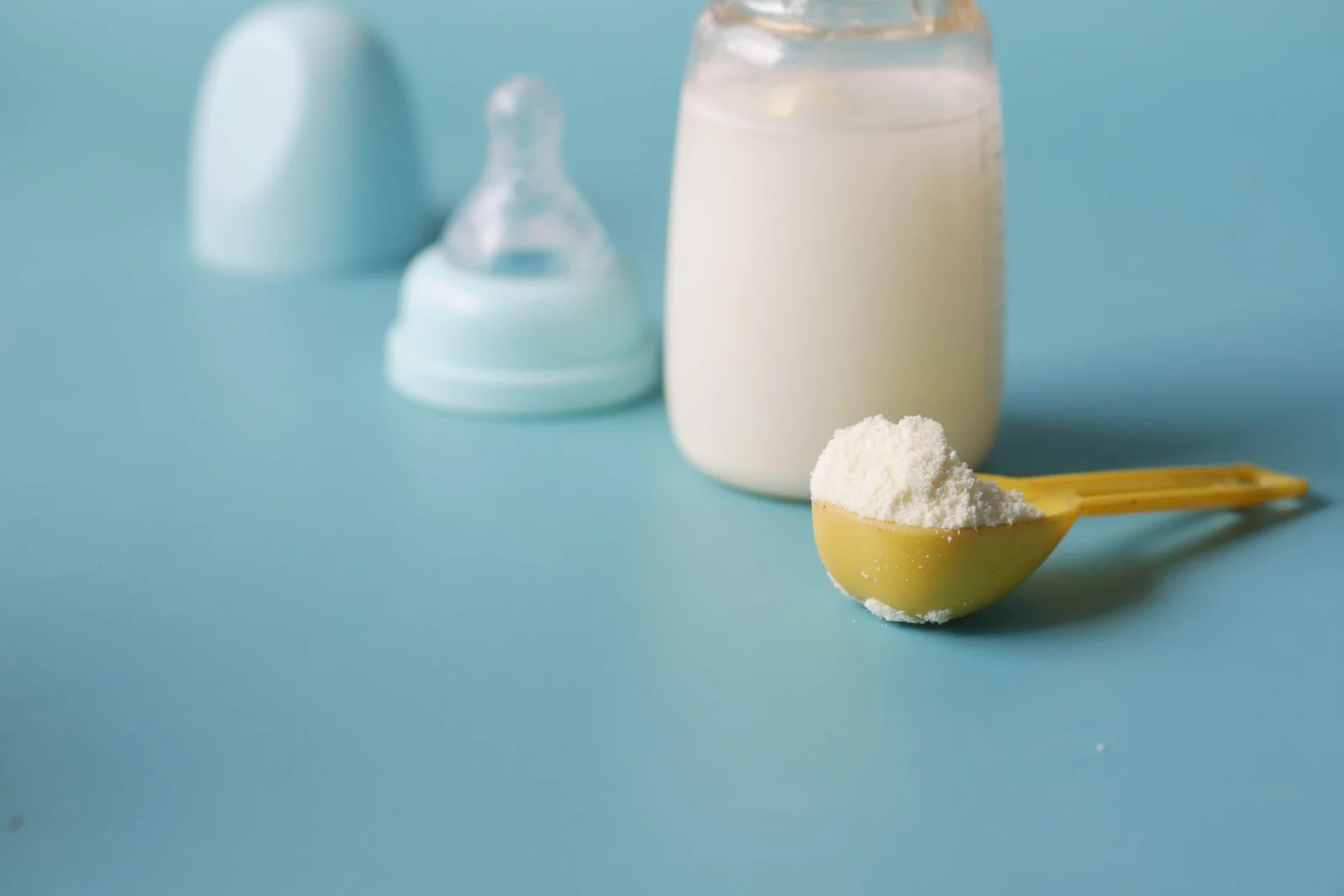
- Powdered formula is lighter and takes far less space per feed. The trade-off is that you need safe water and a way to cool feeds, which takes more effort in a cabin.
- Ready-to-feed cartons or bottles need no water and no mixing, which makes them ideal for embarkation day, shore excursions, night feeds and travel days. They’re heavy and bulky, and opened cartons usually need refrigerating and using within a set time, so check the label.
A practical mix: powder for most feeds, and ready-to-feed for embarkation day, port days and some night feeds. Pre-measured dispensers or sachets make 3am feeds easier.
How much formula to pack
Work it out from what your baby drinks now, then add a margin, because itineraries can change:
- Count your baby’s feeds in a typical day (for example, 5).
- Multiply by the number of nights, plus one for embarkation day.
- Add at least two days of extra feeds for delays, spills and growth spurts.
- Check the tin for scoops per feed and scoops per tin, and turn your total into tins or sachets.
For a seven-night cruise with five feeds a day, that’s roughly 50 feeds including the buffer. Round up. If you run out on a line that doesn’t sell formula, you’ll be hunting for your brand in port.
Water for formula: what’s safe on a ship?
Ship drinking water is treated and tested, and generally safe for adults. Guidance on making up infant formula differs by country, so follow the advice you’ve been given at home.
- Ask for hot water. Royal Caribbean will deliver hot water and distilled water through room service, and most ships have hot water at the buffet drinks stations. Ask the crew whether it’s freshly boiled or just hot from a dispenser, because there is a difference.
- Bring or buy sealed water if your baby is used to bottled nursery water, and check your line’s rules first (see Carnival and NCL above).
- Kettles are usually banned. Most cruise lines list kettles and other heating appliances as prohibited for fire-safety reasons, so don’t plan to boil water in your cabin.
- Cooling feeds: a cabin fridge or a jug of ice from your steward will cool a bottle more quickly. Cabin fridges often run warmer than a home fridge, so don’t rely on them to store made-up feeds for long.
If your baby is very young, premature or has a health condition, ask your pediatrician or health visitor whether ready-to-feed formula would be the simpler and safer choice for the trip.
Bottle warmers, sterilising and washing up in a cabin
Getting bottles clean in a small cabin bathroom takes some planning:
- Check what the line lends. Disney’s stateroom hosts will bring a complimentary bottle warmer and steriliser on request. MSC has a limited number of Chicco bottle warmers, and its restaurants and cabin service will warm milk and baby food for you.
- Don’t assume plug-in kit is allowed. Plug-in electric sterilisers and bottle warmers can fall foul of rules on heating appliances. Check your line’s prohibited items list before packing one.
- Cold-water sterilising tablets are a lightweight backup that needs no power or microwave (cabins don’t have microwaves). A collapsible tub that fits in the bathroom sink is useful with them.
- Pack a small bottle brush and travel-size washing-up liquid. The cabin sink is where you’ll wash bottles, and hand soap isn’t designed for the job.
- Warm a bottle without kit by standing it in a cup of hot water from room service or the buffet.
For everything else to bring, from portable high-chair covers to blackout blinds, use our baby and toddler cruise packing list.

Breastfeeding on a cruise
Breastfeeding on a cruise is usually the most straightforward option, as there’s nothing to pack, mix or sterilise. You can feed wherever you’re comfortable on board. Quieter spots include the library, observation lounges outside show times, and your cabin or balcony.
If you pump, plan how you’ll store milk:
- Royal Caribbean will put a small medical fridge in your cabin for breast milk if you request it before sailing.
- Carnival suggests a cooler up to 12 x 12 x 12 inches, topped up with ice from your stateroom attendant, or storage in the Guest Services fridge. Tell Guest Services if you want to take milk home after the cruise.
- Bring your pump, spare parts, storage bags and a small cooler bag. Check whether your pump needs a particular plug, as cabins may have both US and European sockets.
Baby food on a cruise: weaning in the buffet and dining room
For babies who have started solids, the ship’s restaurants can be a surprisingly good place to keep going, especially if you’re following baby-led weaning or mashing family food.
- The buffet is the easiest place to find suitable finger foods: steamed vegetables, plain pasta, rice, potatoes, fruit, eggs, fish and plain chicken. You can choose exactly what goes on the plate and how much.
- The main dining room will often adapt dishes on request: plain, unsalted, unsauced or cut small. Disney goes further and will prepare fresh puréed vegetables. Lines such as Carnival say they can’t purée or prepare food, so a fork and a small bowl are your friends there.
- Watch the salt and sauces. Ship kitchens cook for adults, so stock, gravy and seasoning can be heavy. Ask for items without sauce or added salt, and check ingredients with your waiter if your baby has allergies.
- Bring sealed pouches for port days and embarkation afternoon.
- High chairs: Disney has complimentary high chairs in all its restaurants. Royal Caribbean and MSC both say supply is limited, so ask for one when you’re seated, or bring a fabric seat harness as a backup at busy times.
Toddler milk and snacks
Once your child moves onto cow’s milk, feeding gets simpler. Whole milk is usually available at the buffet and in the dining rooms, and Royal Caribbean will send milk to your cabin through room service. Because most lines don’t allow you to bring cartons of fresh milk, check that the ship stocks the type your toddler drinks (whole, oat, soy or lactose-free) and bring sealed long-life cartons only if your line permits them.
Treat follow-on or growing-up milk like formula and bring a sealed supply, plus a lidded sippy cup for the buffet.
Still deciding whether your little one is old enough to sail? Our guide to age limits for babies on cruises sets out each line’s minimum age, which is often 6 months, rising to 12 months on longer itineraries.
FAQs
Can you bring formula on a cruise if it’s already open?
Most lines ask for formula in its original container, and some specify sealed. In practice, an opened tin of powder for the first few feeds is often accepted at security, but bring unopened tins for the bulk of your supply and check your line’s rules.
Can I bring water for my baby’s formula on a cruise?
Often, yes, if it’s sealed nursery or distilled water. Carnival allows it in carry-on luggage, and NCL allows it with advance approval from its access desk. Royal Caribbean will also deliver distilled water through room service.
Do cruise ships sell baby formula?
Most don’t. Disney Cruise Line sells ready-to-feed formula in its shops, subject to availability. Royal Caribbean and Carnival say they don’t sell formula, so bring enough for the whole cruise plus spare.
Can cruise ships make baby food?
Some can. Disney will prepare fresh puréed vegetables in its main dining rooms and through room service, while Carnival says it can’t prepare food for babies. On any line, you can mash soft buffet foods yourself.
Are babies under 2 free on cruises?
Not usually. Babies normally pay a fare when they take a berth, though it’s often heavily reduced as a third or fourth guest, and you’ll still pay taxes and port fees. Look out for kids-sail-free offers when you compare cruise deals for 2027.