Very few people have ever been to the North Pole, and for good reason. For centuries, reaching this extremely remote point on Earth was a life-or-death struggle against ridiculous cold and shifting ice.
Today, this incredible destination is accessible to travelers who want to explore something different. New cruise offerings from Ponant Explorations have just opened up, and it won’t require a month off of work to take the trip.
Ponant Explorations recently announced a new series of 12-night voyages to the Geographic North Pole for 2027. This shorter itinerary is a direct response to a growing demand for a polar experience without the longer time commitment that’s typically needed.
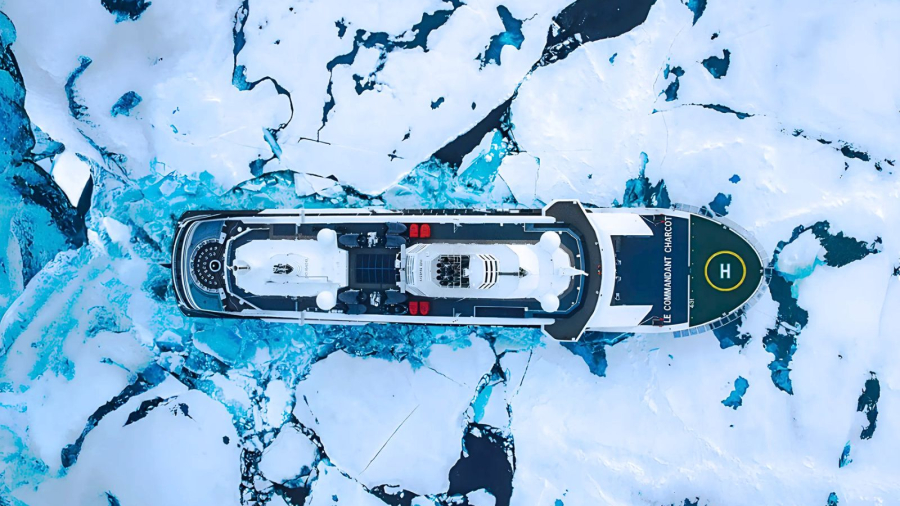
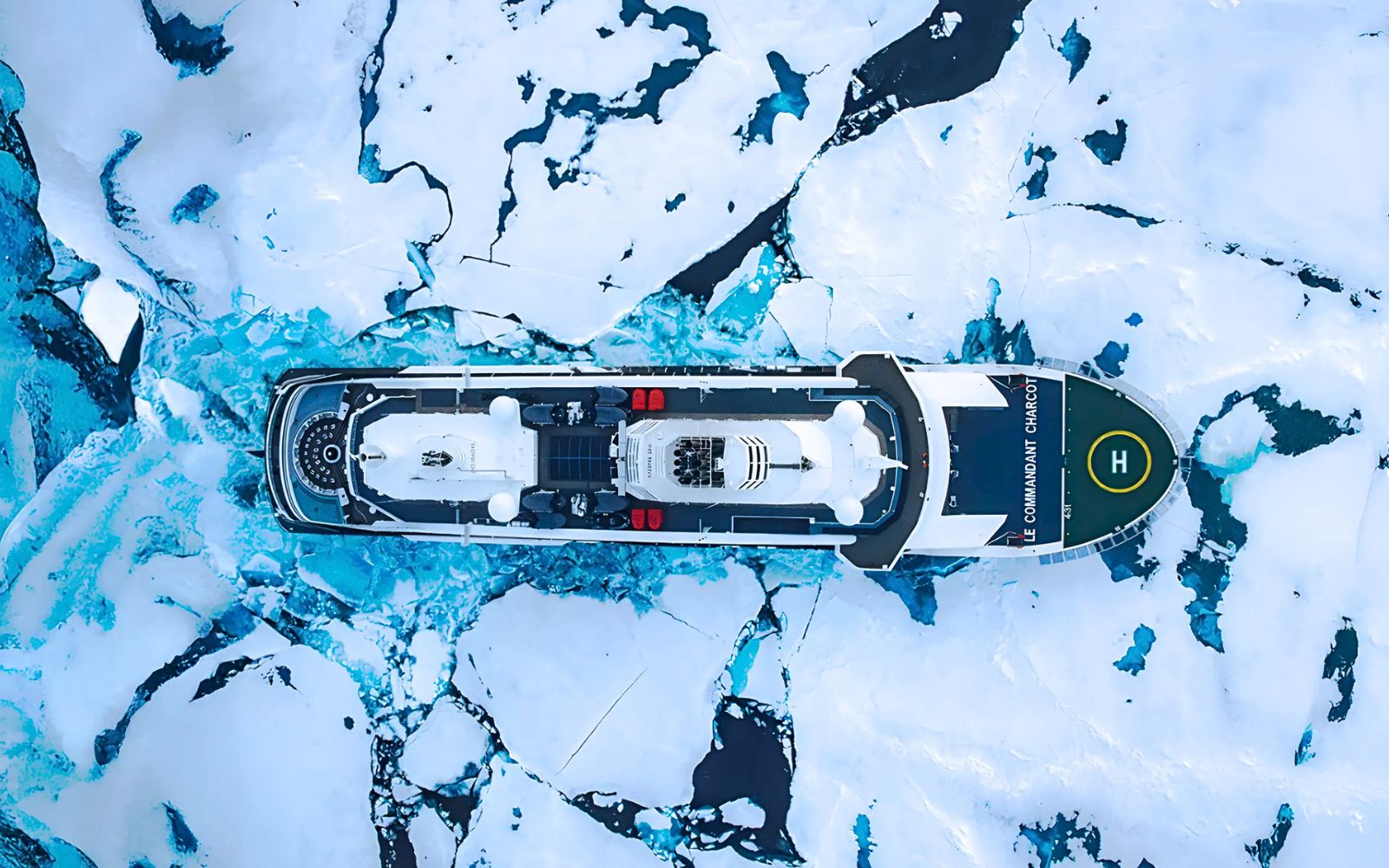
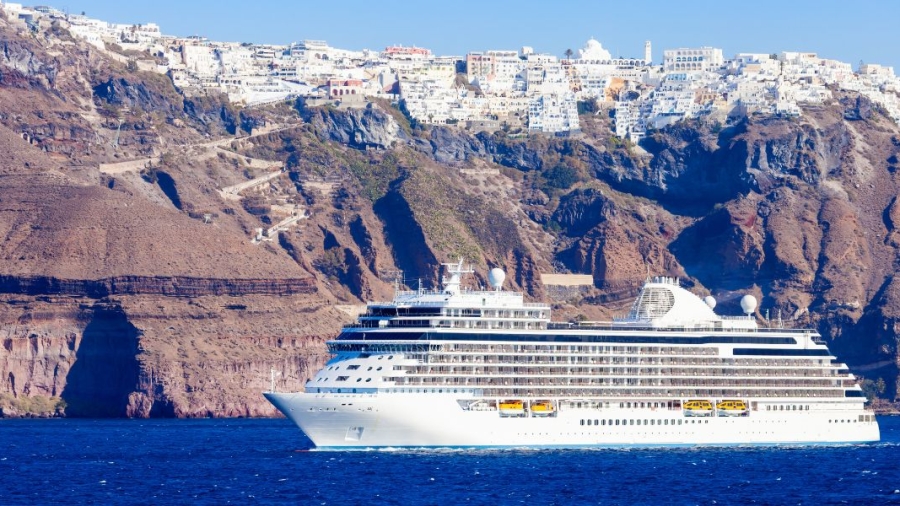
The expeditions will take place aboard the luxury icebreaker Le Commandant Charcot. This vessel is uniquely built for this kind of journey, as it made history in 2022 by becoming the first passenger ship to reach the Geographic North Pole.
The Itinerary: From Svalbard to 90° North
The sailings are scheduled for July 27, August 8, August 20, and September 1, 2027. The ship will sail round-trip from Longyearbyen, the main settlement on Norway’s Svalbard archipelago.
From there, it will navigate the “ever-shifting” sea ice of the Arctic Ocean on its voyage to reach the northernmost point on the planet.
Along the way, cruisers will have the chance to witness towering glaciers and ice formations, as well as encounter rare Arctic wildlife, including polar bears, seals, whales, and Arctic foxes.
Activities like Zodiac outings, kayaking, and even a “polar plunge” are included. The journey will also feature a visit to Ny-Ålesund, a remote research outpost with ties to early polar explorers.
About the Ship: Le Commandant Charcot
So, how about the ship itself? Le Commandant Charcot holds a Polar Class 2 (PC-2) classification, giving it the ability to navigate through uncharted ice floes and glaciers. It’s also powered by a hybrid electric propulsion system with liquefied natural gas (LNG).
Onboard, the experience is designed for comfort and luxury, something that’s convenient to have in such an otherwise harsh climate.
All staterooms and suites have private balconies. Passengers can enjoy fine dining at Nuna, the only Alain Ducasse restaurant at sea, and take advantage of amenities like a spa and an indoor pool. All expeditions include round-trip airfare from Paris to Longyearbyen and transfers, ensuring a seamless journey from start to finish.
Get the latest cruise news, tips, and deals sent straight to your inbox with our free newsletter: Sign Up Now
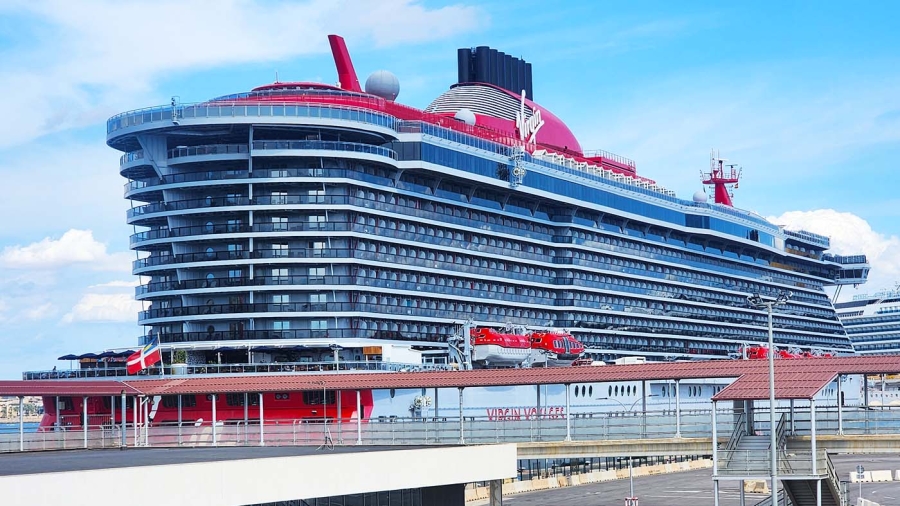
Next week, Virgin Voyages’ newest adults only cruise ship, Brilliant Lady, will finally make her long awaited debut.
Brilliant Lady is the fourth ship in Virgin’s fleet and will be a sister ship to Scarlet Lady, Valiant Lady and Resilient Lady.
Even though they are sister ships, Virgin has made four key changes to the vessel to improve the experience for guests on board. Here is a look at those changes and what guests can expect on Virgin’s new cruise ship.
Two Hammocks
Virgin has reimagined Sea Terrace Smaller Balconies that will feature two red hammock chairs instead of one.
The hammocks found on the balconies of all Virgin cruise ships. Photo: Cruise Fever
Athletic Club
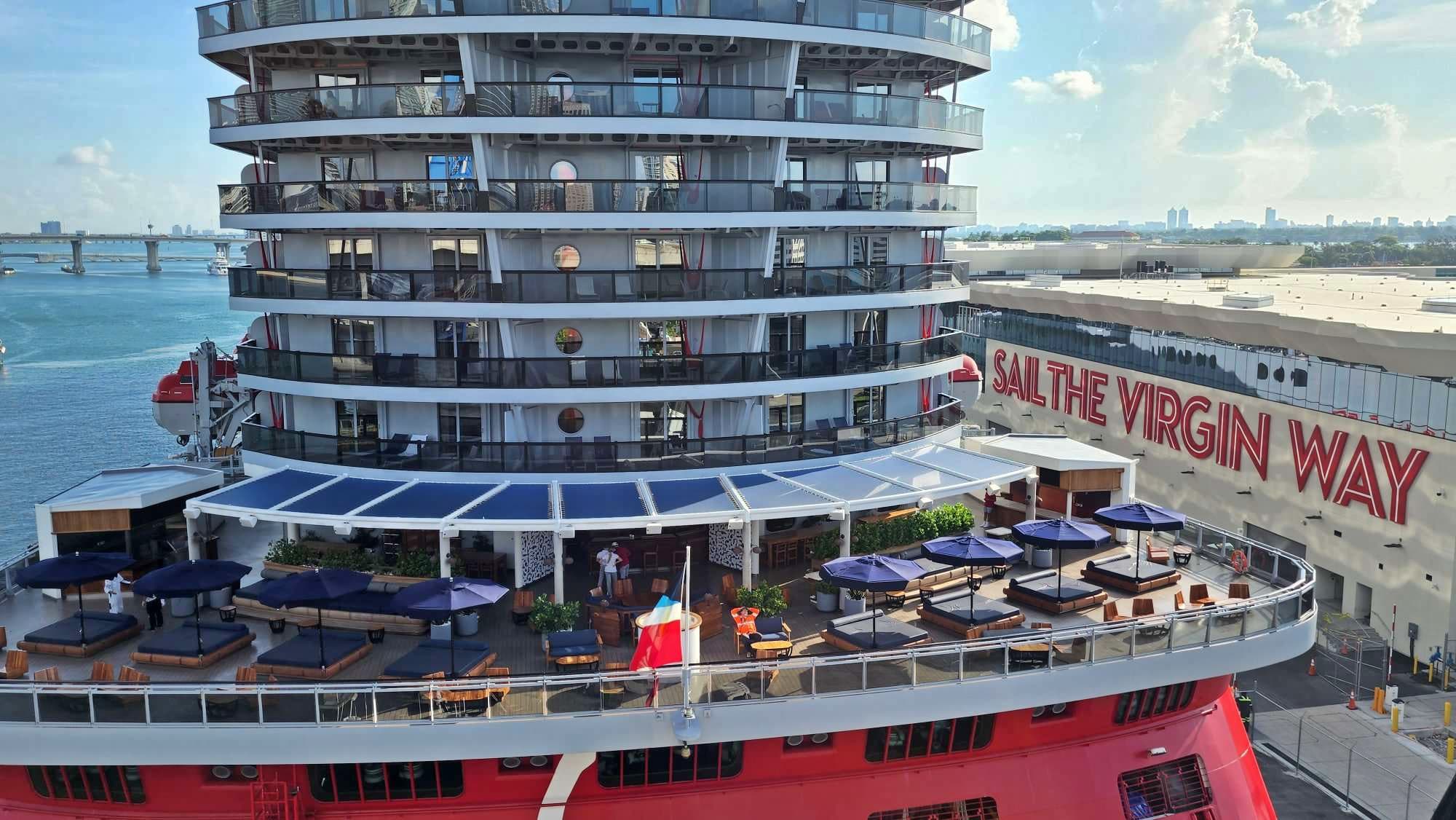
Virgin is opening up the Athletic Club for better views. They have removed an entire wall to create an uninterrupted glass canvas facing the ship’s stern.
Circular beds will face outward giving guests better views as they sail to Alaska and other picturesque destinations.
New mesh canopies (Virgin red of course) will provide extra shade.
Draught Haus
The Draught Haus has been reimagined to be more than a spot to get a craft beer. Guests will now be able to get barista-made coffees and it will have a full bar.
Cocktails will be on tap so this area will be an all-day hub for connection.
Rojo Razzle Dazzle
The evolution to Rojo celebrates Spain’s convivial culture and the beautiful tradition of turning meals into conversations and conversations into connections. Terracotta and crimson hues create warmth, while custom line artwork tells stories across the walls.
The dedicated lounge area perfectly captures the Spanish art of lingering: tapas-style sharing plates, intimate seating clusters and that unhurried pace that transforms strangers into storytellers.
Itineraries
Brilliant Lady will sail her maiden voyage on September 5, 2025. This five-day cruise from New York City will spend two days in Bermuda.
After a short season of offering cruises to Bermuda and Canada, Brilliant Lady will move to Miami for six- to 12-night cruises to the Caribbean.
After the winter season in Miami, the ship will reposition to Seattle for cruises to Alaska in the summer of 2026.
All cruise fares include the following:
All dining
WiFi
Daily gratuities
Basic beverages (soda)
Get the latest cruise news, tips, and deals sent straight to your inbox with our free newsletter: Sign Up Now
Cruising, as an industry, has evolved a lot over the last 20 years or so. And while there are a ton of newer cruise fans, there are probably just as many who’ve cruised for a long time – and they aren’t always happy with the changes that have been made.
Royal Caribbean has long been one of the biggest cruise lines in the world, but it’s a very different proposition to the cruise line that won over previous generations of fans.
So I did some digging, and put together a comprehensive list of the things that Royal Caribbean used to offer, that they no longer do.
And yeah – it’s not a short list. I can’t believe there are over 50 things on it!
First though, check out this commercial from the 1980s!
Cabin Service & Amenities Changes
1. Twice-a-day housekeeping no longer offered
2. Turndown service with chocolates is long-gone
3. Towel animals are not necessarily provided
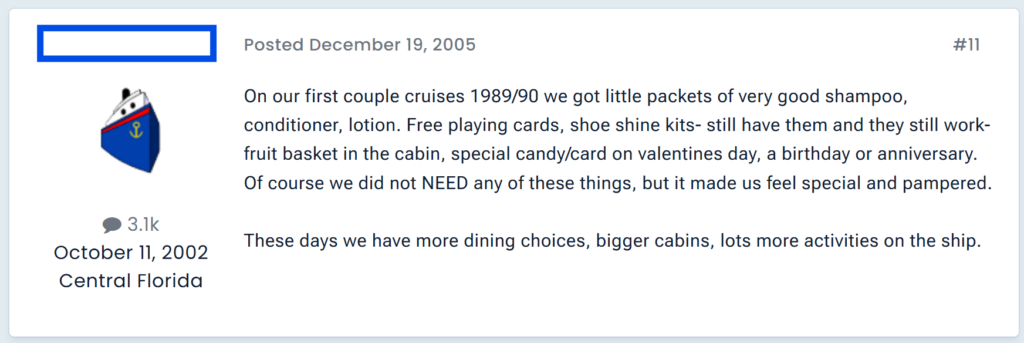
4. Fruit baskets no longer given to all staterooms
5. The Cruise Compass is now fully digital – no more printed options
6. No stationery provided in your cabin
7. Toiletries have gone from branded items you could take home to generic dispensers
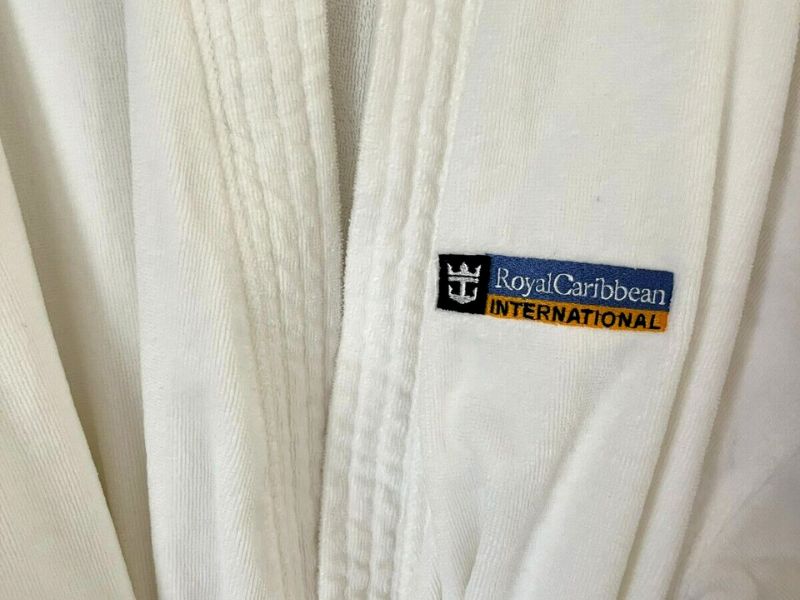
8. Bathrobes are no longer automatically provided
9. Mini-bar restocking isn’t consistent
There was a time when staying in a Royal Caribbean cabin felt like a treat in itself. But over the years, many of the small touches that added charm and comfort have quietly disappeared.
For example, twice-a-day housekeeping is no longer the norm. These days, guests are asked to choose whether they’d like their cabin cleaned in the morning or evening – not both.
Along with this, the classic turndown service with chocolates on your pillow is now a thing of the past.
Towel animals, once a nightly delight, are now hit-or-miss. Some guests still get them, but many don’t.
Fruit baskets, once a welcome gift in all cabins, are gone too unless you’re in a suite. You’ll also notice that printed Cruise Compasses – the daily schedule – are no longer automatically delivered. You’ll need to use the app, or ask at Guest Services if you prefer a paper version.
Other niceties have faded as well. Cabin stationery, like note paper and postcards, is no longer provided. Toiletries have changed too – branded mini bottles have been replaced with wall-mounted dispensers.
Bathrobes are no longer automatically provided in most cabins, and even mini-bars may not be restocked unless you specifically ask.
While none of these changes are deal-breakers on their own, together they reflect a shift away from the pampering experience many cruisers remember. These little touches made your cabin feel special – now, things are simpler, and a bit more stripped-back.
Buffet Changes
10. The Midnight Buffet has been discontinued…
11. As has the Chocolate Buffet (typically)
12. You don’t get ice sculptures and special décor in the buffet anymore
13. Speciality sushi offerings in the buffet are not common
Royal Caribbean’s buffets used to be events in their own right – something passengers genuinely looked forward to. But over time, many of the stand-out features have quietly disappeared.
Most noticeably, the midnight buffet, once a nightly highlight with elaborate spreads and creative displays, is no longer offered. This was more than just a late-night snack – it was a bit of theatre, complete with ice sculptures and decorative themes. Today, it’s been replaced by more basic grab-and-go options.
Also missing is the chocolate buffet, which used to delight guests with everything from chocolate fountains to themed desserts. While chocolate treats can still be found onboard, the dedicated buffet has largely been phased out.
Likewise, speciality items like sushi, once included in the Windjammer buffet under the Jade brand, are now more likely to be found in extra-charge venues like Izumi.
Gone too is the sense of occasion. Buffets now tend to favour function over flair, with fewer themed decorations or standout dishes.
It’s all still clean and efficient, and there’s certainly plenty to eat, but the wow factor has been scaled back. Many guests miss the fun and excitement these buffets used to bring – it wasn’t just about filling your plate, but enjoying a spectacle.
These changes may be part of Royal Caribbean’s effort to reduce food waste and streamline service, but for long-time cruisers, it feels like something joyful has quietly slipped away.
16. The popular cold soup dishes (e.g. chilled fruit soups) are gone
17. Lobster tails are now more limited
18. Fewer courses – you used to see appetizers, soups and salads as distinct courses
19. No more dessert cart to show off the various options
20. Special chateaubriand nights are no more
21. Themed nights with décor have stopped
Dining in the main restaurant used to be a highlight of the cruise – something many guests dressed up for and genuinely looked forward to each evening.
But over the years, several long-standing traditions and favourites have quietly disappeared from the experience.
Perhaps the most iconic loss is the Baked Alaska parade. Once a flamboyant end to the cruise, waiters would march through the dining room with flaming desserts held high, often to cheers and applause.
Today, it’s gone (and it’s gone from most other cruise lines, too) along with other tableside flambé dishes, like Cherries Jubilee or Bananas Foster, which were once a real treat to watch and enjoy.
Cold soups, like fruit-based chilled options, have mostly disappeared from menus. These unique starters were a refreshing change and a fan favourite for many.
Similarly, lobster tails, once a regular highlight of formal nights, are now usually limited to one complimentary portion – with extra tails coming at a cost.
There’s also been a clear simplification in how meals are served. Guests used to receive separate courses for appetisers, soups, and salads, making meals feel more elegant.
Today, these are often merged or reduced. The dessert cart, where staff would show off your choices in person, has also vanished – now you simply order from the menu.
Other traditions, like themed dining room décor on special nights and Chateaubriand nights, have been quietly dropped.
While dining is still enjoyable, many guests miss the flair, variety, and sense of occasion that the main dining room used to offer every evening.
Dress Changes
The formal night dress code is no longer strictly enforced
22. You can’t rent a tuxedo onboard anymore
23. Formal nights used to be a big part of the cruise experience, especially on Royal Caribbean
Guests would don their finest eveningwear – tuxedos, cocktail dresses, even floor-length gowns – and the whole ship would take on a more glamorous feel. These nights felt special, like stepping into a black-tie event at sea.
While you’re still welcome to dress up, it’s no longer expected. You’ll now see a mix of outfits in the dining room on formal night, including people in polo shirts, casual dresses, or even shorts.
For some, this makes things more convenient, especially when packing, but others feel it takes away from the sense of occasion.
Another tradition that’s disappeared is the onboard tuxedo rental service. For those who didn’t want to pack formalwear, renting a tuxedo used to be an easy option.
It was especially helpful for first-time cruisers who wanted to take part in the tradition without committing to buying a full outfit. Now, with rentals gone and dress codes more relaxed, many cruisers simply skip the formality altogether.
While the more casual approach appeals to some, especially families or those on shorter cruises, others miss the elegance and shared experience of a ship-wide formal evening. It’s one of several examples of Royal Caribbean shifting towards a more laid-back, flexible cruise style – at the expense of old-school cruise charm.
Bar & Beverage Changes
24. You can’t enjoy free sodas in the Main Dining Room anymore
25. Souvenir glasses aren’t typically made of glass
26. You can’t drink any duty-free that you buy onboard
27. More restrictions on the alcohol you can bring onboard
28. You used to get free champagne at farewell dinners – but no more
There was a time when drinks on a Royal Caribbean cruise felt like a bit more of a treat – both in terms of price and experience. But over the years, several changes have reshaped how drinks are served, what’s included, and how much you’ll pay for them.
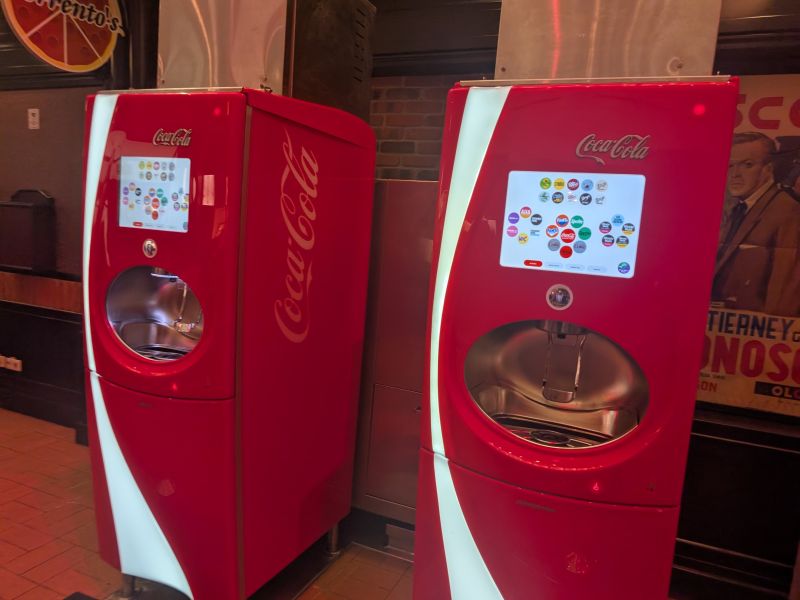
Did you know that sodas used to be included at no extra charge when you were in the Main Dining Room? Where soft drinks were once included as part of your meal, they’re now only available through a paid soda package or individually at extra cost. This change alone has surprised many returning cruisers.
Souvenir glasses – especially those tied to cocktails of the day – used to be made of actual glass and often felt like a keepsake worth bringing home. Today, they’re more likely to be plastic (if offered at all), and many guests feel the quality has dropped.
There are also stricter rules around alcohol. You can no longer drink any duty-free liquor bought onboard during your cruise – it’s held until the end.
Similarly, bringing your own alcohol onboard is now far more restricted than it once was.
And finally, one charming touch that’s gone is the farewell dinner champagne toast.
Where once two bottles of bubbly might be placed on each table as a celebratory send-off, this gesture has disappeared. These little moments added a sense of occasion – now they’re just fond memories for longtime cruisers.
Entertainment & Activity Changes
29. The DreamWorks character experiences have been discontinued
30. Horse racing games have been taken away
31. Skeet shooting and golf ball driving activities have been removed
32. Rarely see overnight stays at islands
33. No more live bands by the poolside
34. Passenger talent shows have been phased out for generic karaoke
35. Crew entertainment during dinner has been mostly removed
Entertainment used to be one of the most memorable parts of a Royal Caribbean cruise – and while there’s still plenty to do, some beloved traditions and unique activities have quietly disappeared over time.
One big loss is the DreamWorks Experience, which brought characters like Shrek and the Madagascar crew onboard for meet-and-greets, themed events, and kids’ activities.
It was a highlight for many families and a big reason some guests chose Royal Caribbean over other lines. Today, it’s gone, replaced with more generalised youth programming.
Horse racing games, once a fun and interactive pastime, have also disappeared from most ships. So too have more unusual activities like skeet shooting and golf ball driving off the back of the ship, which were once part of the “only at sea” charm.
While safety and environmental concerns played a part, these offerings were unique and helped set cruising apart from a land-based holiday.
Island overnights, where you could stay docked overnight and explore more deeply, are now extremely rare with the cruise line.
And the vibe around the pool deck has shifted too – live bands have become less frequent, replaced by DJs or, more commonly, pre-recorded music playlists. It’s a change not all guests appreciate.
Other touches – like passenger talent shows, crew performances during dinner, and a general sense of ship-wide celebration – have been phased out.
Many of these were small, informal traditions, but together they helped make cruising feel fun, social, and a little bit magical. Their absence leaves some regulars feeling like the spark just isn’t quite the same.
Venue Changes
26. The Sky Pad virtual reality trampoline is gone
37. Cigar Lounges have been mostly eliminated
38. You don’t get a proper chapel on newer ships
39. Libraries have been downsized or removed
40. The Viking Crown Lounge has been repurposed
41. Onboard flower shop services have been removed
As Royal Caribbean updates and modernises its ships, a number of familiar venues have been quietly removed, repurposed, or scaled back – sometimes without much fanfare.
For long-time cruisers, this has meant the disappearance of some favourite spaces that once added personality and variety to the onboard experience.
One of the most noticeable changes is the removal of the Sky Pad on the Freedom Class ships, a virtual reality trampoline attraction that was popular with both kids and adults.
While the structure may still be visible, the activity itself has been discontinued.
Similarly, cigar lounges like the Connoisseur Club have been phased out, leaving smokers with fewer – and less comfortable – places to unwind.
More subtle, but just as disappointing for some, is the loss of dedicated chapel spaces. These quiet venues were used for weddings or vow renewals, but also for regular religious services, and their absence on newer ships removes an option many guests valued.
Libraries, too, are either gone or drastically downsized, as the cruise line leans into digital entertainment.
The Viking Crown Lounge, once a signature space with sweeping views and a relaxed vibe, has been repurposed on newer ships – often for suite guests or speciality venues. While replacements may offer modern flair, many feel they lack the charm and accessibility of the original.
And finally, even the onboard flower shop, which allowed guests to buy fresh arrangements for celebrations or surprises, has disappeared.
It’s one of those little touches that, while not essential, added warmth and a little bit of a romantic vibe to the cruising experience.
Loyalty & Perk Changes
42. Concierge Lounge Access for Diamond Plus members is typically gone
43. Printed keepsakes including passenger lists have been taken away
Royal Caribbean’s Crown & Anchor Society has long been a key part of the cruise experience for repeat guests, rewarding loyalty with special perks, access, and little surprises.
But over the years, some of those benefits have been reduced, restructured, or removed.
One of the most noticeable changes is the removal of Concierge Lounge access for Diamond Plus members.
This used to be a popular perk that gave high-tier guests access to a quiet, exclusive space for drinks, snacks, and service. Now, it’s the Suite Lounge, and generally reserved for suite guests only.
Printed keepsakes, like passenger lists or commemorative cruise documents, were once a charming way to remember your trip. These have been phased out, likely in the name of cost and efficiency.
While the Royal Caribbean app offers a digital experience, it doesn’t replace the feeling of holding a thoughtful souvenir in your hand.
Having said that, a printed passenger sounds a bit sus… I think GDPR might have an issue with it today!
Guests have also noted that small gifts, priority boarding, and exclusive discounts have been quietly downgraded or removed altogether for lower-tier members. Even some mid-tier perks don’t feel as generous as they once did.
In general, the loyalty programme has shifted away from adding value for repeat cruisers and towards upselling more premium options, like suite bookings and paid experiences.
While the points still add up, many seasoned travellers feel the returns aren’t quite what they used to be – and that the line is more focused on new bookings than rewarding those who keep coming back.
General Service Changes
44. You aren’t greeted by crew as you board and shown where your cabin is
45. Galley tours are now more limited
46. Bridge tours have generally been discontinued for security reasons
50. The cruise line is moving away from that small-ship atmosphere
51. More limited towel service poolside
52. Free popcorn at movie nights is no more
53. Room service is now charged
54. Exercise classes cost extra
55. Birthday and anniversary cakes are an extra charge
56. No more streamers launched off the ship at sail away
Beyond specific venues or perks, some of the most noticeable changes on Royal Caribbean cruises have been to the overall service and onboard experience.
In the past, it was common to be greeted by crew as you boarded, with someone even escorting you to your cabin.
That personal touch has disappeared, which you can understand for the modern megaships – that’s a lot of crew needed to greet 6,000+ people!
The once-standard streamers tossed off the ship at sail away are gone – a celebratory tradition many fondly recall. It probably wasn’t the best for the environment, though.
Bridge visits have largely been phased out, and galley tours are more limited, often due to security or health regulations, but it’s still a noticeable loss for those who enjoyed seeing behind the scenes.
You also can’t invite non-cruising guests onboard before sailing, which was once a fun way to share the experience. Even the tender ticket system has gone, replaced by a less structured, first-come-first-served approach that can cause confusion.
Paper has also been pushed aside. Cruise documents, passenger lists, and even daily planners like the Cruise Compass are now largely digital, which isn’t always a smooth transition – especially for older passengers.
Elsewhere, once-standard touches like poolside towel service, free popcorn at movie nights, and celebration cakes for birthdays or anniversaries now often come with a charge.
You can still swap towels near the pool, but it might be a more hidden away space. The popcorn is more likely to be a charged extra now. And the cakes? Also available to buy if you want.
As one guest put it though, that’s not necessarily a bad thing…
But add in things like paid room service, extra charges for fitness classes, and a shift towards larger ships that feel less personal, and it’s easy to see why some loyal cruisers say the magic has faded just a bit.
The core of the cruise is still there – but many of the extras that made it feel special have quietly sailed away.
NEW DEALS JUST RELEASED!
Don’t miss the latest Royal Caribbean offers…
Final Word
Cruising with Royal Caribbean is still a great way to relax, explore, and enjoy life at sea – but it’s hard to ignore how much the experience has changed over the years. Many of the little extras that once made a cruise feel luxurious, charming, or just plain fun have slowly disappeared.
From the loss of turndown chocolates and midnight buffets to the scaling back of loyalty perks and onboard traditions, these changes may seem minor individually, but together they signal a shift in what cruising looks and feels like today.
But hey, it’s not all doom and gloom. Far from it. Ships are bigger, more high-tech, and packed with new activities.
It’s important to remember what’s been added as well as what’s been taken away!
Whether it’s cost-cutting, modernisation, or changing passenger expectations, one thing is clear: the Royal Caribbean experience is evolving. It’s not quite what it used to be – but that’s not necessarily a bad thing. I’d rather have a zipline than skeet shooting anyway!
Related Posts
If you found this interesting, please share!
Jenni Fielding is the founder of Cruise Mummy. She has worked in the cruise industry since 2015 and has taken over 30 cruises. Now, she helps over 1 million people per month to plan their perfect cruise holidays.
Where possible, everyone loves to save money on their cruise holiday. Cruises don’t have to be expensive, but at the same time – and every pound or dollar you save is money you can put towards your next cruise.
Who doesn’t love saving money on a cruise? While cruises can offer incredible value, they’re rarely cheap – and every pound or dollar you save is more you can put towards your next adventure at sea.
And trust me… once you’ve been on one cruise, you’ll definitely want another!
If you’re on the hunt for a bargain, you’re probably wondering when is the cheapest time to book a cruise. There isn’t one magic answer, but in this guide, I’ll break down the best months to sail — and how to get the lowest prices possible.
The Cheapest Months for Cruises: Revealed!
The cheapest month to go on a cruise depends on where you’re sailing. In the Caribbean, it’s typically May or late September/early October, known as the shoulder season. In Europe, winter cruises are cheaper, although Christmas can be expensive.
There are a number of different factors to consider when booking a cheap cruise, all of which can have an impact on the price. Unsurprisingly, the summer break tends to be the most expensive time.
Remember that you’ll need to check school holiday times for countries relevant to your departure too – Caribbean cruises are more expensive during US school holidays, while European cruises are impacted by typical UK and European holidays.
It’s not just about avoiding school holidays, though – especially as many cruises aren’t necessarily aimed at families. Other factors include the weather and just general demand levels.
For European cruises and some Asian cruises, that might mean booking a cruise when the weather isn’t too warm. But this might also encourage you to save money by not booking a balcony stateroom, since it might be too chilly to fully enjoy it.
For a Caribbean cruise, it’s not so much the temperature, but ‘bad weather’ tends to refer to hurricane season.
It’s not a risk – cruise ships are equipped with cutting-edge tech to make sure they can avoid hurricanes. But it might mean the seas are a bit more choppy, and it can also mean last-minute changes to your itinerary.
A Caribbean cruise during hurricane season isn’t a definitive list of where you’ll sail – call it ‘Plan A’ instead.
And it’s not something you can pinpoint to whole months. European cruises are often cheapest in early December, when the weather can be quite cold and rainy, and demand is low because people are gearing up for the holiday season, rather than booking an actual holiday.
But if you were to look towards the end of December, demand can be a lot higher – and therefore so can prices – because people like to often get away and cruise at Christmas.
One other option is to look at Transatlantic cruises in the typical shoulder months of April and September/October when ships are relocated from the Caribbean to Europe or vice versa. If you aren’t too bothered about your destination and just want a cheap cruise, you can often get great deals on these sailings.
So in summary, there’s no single month that is the cheapest, but instead, if you want to be flexible with your sailing date and you want to save money, look for:
When school holidays are for the region you wish to sail from
What the weather is like, and how that might impact your cruise
Any other reasons demand may be low in that part of the world
These will help you find the cheapest times of the year to cruise.
When Caribbean Cruises Are Cheapest
The peak season for the Caribbean is December to April, when it is driest – cheaper months tend to experience more rainfall and the risk of hurricanes causing changes to itineraries.
With a cheap Caribbean cruise, you need to expect that your itinerary may change while you are at sea, and there can even be some rare occasions where you may be delayed getting back into port. It’s important that you have robust travel insurance to cover any lost money for missed connections or flight changes.
My Recommendation
My recommendation for cruise insurance depends on where you live.
These are trusted price comparison sites that will quickly get you lots of quotes to match your exact needs.
The Caribbean is a good choice for cheap cruises because it’s also where you’ll find a lot of the older cruise ships still sailing, which will have cheaper fares.
When Alaska Cruises Are Cheapest
The cheapest times to cruise to Alaska are right at the start of the season and at the end. In spring and autumn, schools are still in session, and the weather is a little bit colder and can be more unpredictable than during the summer months.
Of course, in Alaska, this is less of an issue – it’s not like a cruise from May to September is going to be the warmest anyway, and you can still get rainy days quite frequently. So the ‘disadvantages’ that come with booking a cheaper month aren’t that much of a downside.
Alaskan shore excursions are often quite expensive, due to the nature of the tours you’ll likely be taking, so saving money by booking during the shoulder season is advisable if you can.
The cheapest months to cruise to Hawaii are from November to early December. This is when the weather is a little cooler, there’s a little more rainfall, and the crowds are at their lowest.
Hawaii is dry and hot during the summer months, and in April, May, September and October it tends to balance the heat with some more refreshing showers. So the cheapest months to cruise to Hawaii are outside of these during the winter, November to March, but not during the holiday season.
However, because fares are lower, a lot of Americans will book from mid-December through to March to escape their own winter chill, and that can bump prices up a little with increased demand. That’s why November and early December are the best choices.
When booking a cruise to Hawaii, you should consider whether you’ll fly to Hawaii or start your cruise from another US Coast or Canada. As Hawaii is so remote, cruises to Hawaii can be quite long, so this can make them expensive.
When European Cruises Are Cheapest
While your sailing options may be very limited, as many ships have crossed the Atlantic to sail in warmer winter waters, the cheapest months to cruise in Europe are November, early December, January and February. For a wider choice of ships, choose April or September.
Many cruise lines will relocate their ships from Europe to the Caribbean over the winter months, because there’s a much bigger market over there to make the most of the warm weather.
There are some limited options in Europe for the winter, but expect chilly weather and choppy seas, especially if you cruise through the Bay of Biscay at this time. This is not the time to cruise in this area if you suffer from seasickness.
When Australia Cruises Are Cheapest
The cheapest month to cruise around Australia tends to be May. This is the winter season for the southern hemisphere, and it’s also when Australian schools tend to be in session, along with most UK and US schools at this time too. June and August are other good choices.
Expect the weather to be a little colder – it’d be the same as booking a US or European cruise in around September/October time. But the crowds should be much lower too, as the peak cruise season for Australia tends to run from December to April.
Definitely avoid the Christmas season, as that’s usually the most expensive – schools are on holiday and the weather is at its best.
When Disney Cruises Are Cheapest
While it will depend on the ship and location, the cheapest month to book a Disney cruise tends to be February, when most schools are back in session. It’s the best time if you have kids younger than school age, or you’re willing to take them out of school for their cruise.
As a guide, Disney (including cruises and land holidays) tends to bump up their fares for special occasions. And so booking a cruise in November and December tends to mean you’ll get a special Christmas-themed sailing. And it’s the same with late September and October, which are fun-packed Halloween cruises.
A February cruise is out of season and doesn’t have a special theme to make the cruise cost more. But bear in mind that if you’re travelling from Europe, it may be more expensive as ships are more likely to be in the Caribbean at this time, so you’ll need flights too.
NEW DEALS JUST RELEASED!
Don’t miss the latest Disney Cruise Line offers…
When Carnival Cruises Are Cheapest
The cheapest month for a Carnival cruise depends on your destination. Most ships are based around the Caribbean, Bahamas and Mexico, especially in winter, and the cheapest cruises are in low-demand February or late April as the shoulder season.
For Carnival cruises in Europe, early September tends to be the cheapest time to sail, as you’ll benefit from the school holidays having ended. But you’ll pay a lot more than you would in the Caribbean – around $850 for an Inside stateroom for 9 days compared to $350 for an off-season Inside stateroom in the Caribbean.
The best value cruises are often transatlantic cruises. While not the cheapest, they tend to cost around $750-850 per person for a two-week cruise in an Inside stateroom.
When Royal Caribbean Cruises Are Cheapest
The cheapest month to take a Royal Caribbean cruise in the Caribbean is October, when hurricane season will cause increased rainfall and potential itinerary changes. The cheapest Royal Caribbean cruises in Europe tend to occur in May, outside of school holidays.
With Royal Caribbean, and similarly with Carnival, the ship matters more than the destination. There are many older, smaller ships in their respective fleets which have nowhere near the number of features or dining options, and these will be much cheaper than the newest ships.
So if you’re happy on an older ship and you find a sailing during one of these cheaper months, you could get a cruise at a fantastic price.
Deal-hunting is always a good idea when trying to book a cruise, but don’t let it compromise your holiday. If you love the idea of a balcony stateroom, don’t try to book a cruise when it’ll be cold and rainy, or you won’t make the most of it.
But if you’re someone who doesn’t mind the cold or the rain and you just want the cheapest cruises possible, and you’re able to be flexible on your chosen dates, then these tips will hopefully help you save and afford even more cruises in future.
TODAY’S BEST CRUISE DEALS!
Don’t miss these offers…
Related Posts:
If you found this interesting, please share!
Jenni Fielding is the founder of Cruise Mummy. She has worked in the cruise industry since 2015 and has taken over 30 cruises. Now, she helps over 1 million people per month to plan their perfect cruise holidays.
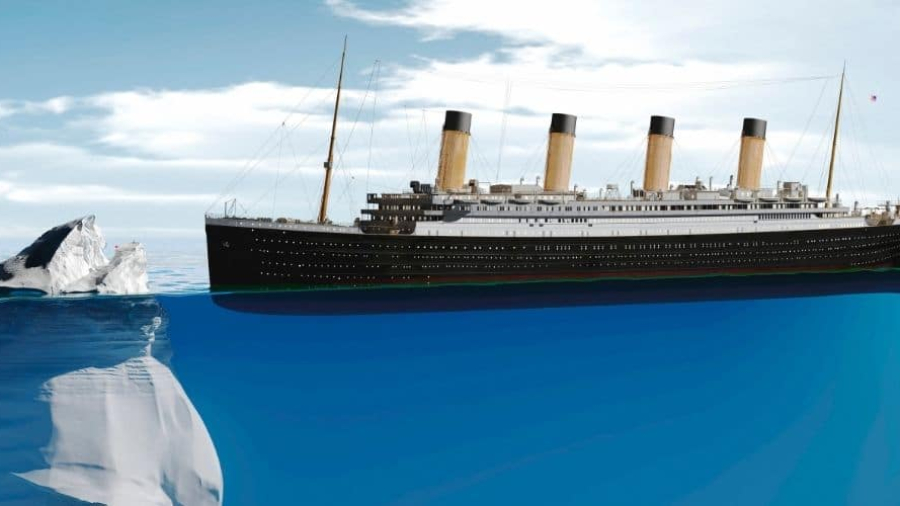
The sinking of the Titanic has fascinated the world for over a century – even before the 1997 movie brought the tragedy to the big screen. With more than 1,500 lives lost, it remains one of the deadliest peacetime maritime disasters in history.
One of the biggest factors behind the high death toll was the icy water temperatures. But just how cold was the water when the Titanic sank — and what did it mean for those on board?
In this article, I’ll break down the key details, including the chilling facts about the freezing Atlantic that night. And because it’s one of the most debated questions from the film, I’ll also explain what really happened with Jack and Rose – and whether Jack could have survived.
The Water Temperature
The water temperature when the Titanic sank was 28°F or -2°C. This is below freezing and is considered a lethal temperature. It is believed that most of the people in the water died as a result of the very low temperature.
Obviously, the waters were cold enough to sustain ice, as it was an iceberg that struck the ship and caused her to sink. The reason the ocean wasn’t frozen is because of the high salt content.
Passengers who were rescued by RMS Carpathia reported seeing huge sheets of ice with many icebergs once the sun had risen on the following day. The captain of that ship, Arthur Rostron, said that there were 20 large icebergs at least 200 feet tall in the waters.
Why It Was So Cold
Part of the reason the air and water were so cold when the Titanic sank was due to a high-pressure cold front from eastern Canada. The ship also sank in the middle of the night, striking the iceberg at 11.40 pm, contributing to the cold temperatures of just 39°F (4°C) in the air and 28°F (-2°C) in the water.
This wasn’t unusual – the average temperature for the North Atlantic Ocean in the region where the Titanic sank varies between around -2 and 2 degrees centigrade during April.
Most of the Titanic victims died within 30 minutes of being in the water. Although there is some debate over the cause of death, it’s generally accepted now that hypothermia wasn’t a cause; instead, most deaths were caused by cardiac arrest or other cold water shock-related issues.
According to Professor Michael Tipton of Portsmouth University, most people would have died due to the shock of the cold water, causing them to hyperventilate, and therefore take on too much water, or simply because their heart couldn’t cope with the extra work and would have gone into cardiac arrest.
Survivors
It is believed that of the hundreds of people who fell into the water when the Titanic sank, between 44 and 48 people survived. Most of these were pulled into lifeboats quickly – many of the lifeboats were launched without being at full capacity, a contributing factor to the huge loss of life. [Source]
One famous survivor story is that of Charles Joughin, the head baker on the ship. He was heavily involved in the lifeboat operation – firstly arranging his baking crew to send large quantities of bread to stock the lifeboats, and then helping women and children into the lifeboats – sometimes forcibly, when women believed they were safer on the Titanic.
He was assigned the role of captain of Lifeboat 10 but declined to board, seeing that there were already two sailors and a steward on the boat. Instead, he went below deck and had a drink before returning to the deck and eventually going down with the ship, holding onto it as it sank and gently riding it into the water.
Unlike most of the others who fell into the water, Joughin survived for around two hours. Once day broke, he was able to swim to one of the lifeboats, and while there was no space for him to board, he was able to hold the hand of a cook on the boat until he spotted another that he could swim to.
It’s theorised that one of the main reasons Joughin survived for so long was because he was under the influence of alcohol. While alcohol does increase the risk of hypothermia, it also has a calming effect, which could have helped Joughin avoid panicking from the cold water shock and allow him to tread water for as long as he did.
It may have also helped that this wasn’t Joughin’s first sinking – he had apparently been on board the SS Oregon when she sank in 1886. So he may have been less panicked than he would have been experiencing a sinking ship for the first time.
If the Titanic sank in warm water, most of its passengers would have survived. Almost all had life jackets on, and the lifeboat passengers were rescued only a couple of hours after the ship sank.
Passengers of sunken cruise ships can’t survive indefinitely, though, unless the water is tropical. While the people wouldn’t have suffered from cold water shock and would have lasted much longer if the Titanic had sunk in warmer water, the effects of hypothermia can still set in relatively quickly.
Hypothermia is when the body loses heat faster than it can generate it, which causes the body to begin to shut down and eventually die. The human body has a normal temperature of 98.6°F (37°C), and if it falls below 95°F (35°C), then hypothermia will set in.
Even in a water temperature of up to 70°F (21°C), people can die within just two hours. As a guide, the water temperature in the Caribbean is normally between 75 and 85 degrees. So maybe if the Titanic had sunk somewhere off the coast of Jamaica, there would have been many more survivors.
However, it’s a strange hypothetical question to even ask since the Titanic only sank after striking an iceberg. Had the water been warmer, the ship wouldn’t have even sunk in the first place, as there wouldn’t have been an iceberg for the ship to hit.
Now, let’s get on to the all-important question that everyone asks at the end of the movie…
Jack and Rose
Yes, it’s annoying that Jack could have fit on the door with Rose!
Ever since the 1997 Titanic movie was released, fans (and non-fans, to be fair) have questioned whether Jack needed to die, since it looked like there was plenty of space for him on the broken door that Rose is floating on.
In the film, Jack manages to lift Rose onto the door and stays with her, both of them succumbing to the shock of the cold and passing out. When Rose is woken, she tries to wake Jack but sees that he has died.
Fans have argued that there was clearly space on the debris. Check out this recreation with possible ways they could both have had enough room to survive…
In response, though, the movie’s director, James Cameron, has argued that it was never about space, but buoyancy, saying that Jack’s extra weight would have caused the makeshift raft to sink. And that argument makes sense.
People couldn’t leave it alone, though, and the show Mythbusters went one further by recreating the scene, testing whether tying Rose’s life jacket to the underside of the raft would have been sufficient to keep it afloat with both Jack and Rose’s weight.
They found that yes, the extra uplift created by the life jacket was enough.
James Cameron has seen this clip on Mythbusters, and had quite a short response – “I think you guys are missing the point here. The script says Jack dies. He has to die. So maybe we screwed up and the board should have been a little tiny bit smaller, but the dude’s going down.”
So, could Jack and Rose both have fit on the door? Technically, maybe, but ultimately no, because the script says Jack dies.
Also, you could argue that while it’s possible the lifejacket would have created enough uplift, how would Jack and Rose have known that? And they likely wouldn’t have been thinking rationally due to the effects of the cold-water shock.
If Jack and Rose had taken turns using the broken door as a makeshift raft, both would probably have died. The repeated exposure to freezing water and air, and the strenuous energy to climb onto the raft, would have exhausted both and caused them to drown or go into cardiac arrest.
There’s a lot less debate around this one despite it still being a popular question. While people have tried to argue that both could have fit on the raft, it’s quite simple that even trying to swap places back and forth would have been disastrous for the pair.
Scientifically, even Rose was lucky to survive having fallen into the water – the shock alone could have caused her to die in the low air temperatures.
And again, we can turn to James Cameron’s final argument on everything that happens in the movie – it happened the way it was scripted.
Despite Jack having a huge fanbase, he had to die for the movie to have the same emotional impact that it did.
To Conclude
In recent years, there have been advertising campaigns designed to help people who swim in the ocean to survive if caught in a riptide by telling them not to panic, as most of those who drowned did so because they tried to fight instead of float or tread water.
Now imagine how much worse it would have been for people who were already panicking after knowing the ship they were on was sinking, and then hitting freezing cold water. It’s an awful way for anyone to die, never mind around 1,500 people at the same time. The Titanic’s water temperature was lethal.
As for the popular movie, there’s no reasonable way that Jack could have survived. Even if he had been able to climb onto the raft, his weight would’ve sunk it, and both Jack and Rose would’ve perished. Expecting Jack and Rose, in their shocked states, to understand how to tie a life jacket to the door is a little too much.
The real tragedy will always be the actual sinking of the ship back in 1912, but the one good thing that came from it was a revolution in regulations around lifeboat capacity and organisation, which would help ensure all future ship sailings were a lot safer.
TODAY’S BEST CRUISE DEALS!
Don’t miss these offers…
Related Posts:
If you found this interesting, please share!
Jenni Fielding is the founder of Cruise Mummy. She has worked in the cruise industry since 2015 and has taken over 30 cruises. Now, she helps over 1 million people per month to plan their perfect cruise holidays.
It’s fair to say that the new Carnival Rewards program, replacing the VIFP loyalty program, has gone down like a lead balloon.Many hoped that Carnival would backtrack quickly, but as yet, the changes stand.
The vast majority of reactions online have been negative. And of course it’s absolutely fine that people are unhappy with it, and want to express that opinion to the cruise line in the hope of getting it changed.
But there have also been some serious overreactions from a small number of Carnival fans. Some of them are pretty funny.
So let’s take a look…
1. Threats Against John Heald’s Family
John Heald’s official job title is “Brand Ambassador” for Carnival, but that title really doesn’t do him justice for the amount of work he does.
He is the public face of the cruise line on social media, and so he was always going to bear the brunt of the Carnival Rewards backlash.
He has admitted that he had sleepless nights from replying to upset Carnival cruisers on the subject, and that he was willing to listen and pass on the feedback to the “beards”.
But making threats to his family? Over a change to a loyalty program?
It’s ridiculous. No matter what you think about Carnival Rewards or indeed any decision that any business takes, you don’t wish ill on someone’s wife, daughter or anyone else in their family.
John has spoken before about the weird comments he’s received about his family, in particular his daughter Kye, and so he shares only limited updates on them.
And yet, apparently the removal of VIFP means that a small handful of people feel justified in lashing out at people not even employed by the cruise line.
This was a particularly cold one – a cruiser called Tony who suggested that perhaps John’s parents would be ashamed considering what Carnival was doing.
That’s a really low blow, and a horrid comment to make to anyone. But it’s made even worse by the fact that John has been quite open about the loss of his parents, especially the more recent loss of his mum in 2023.
He didn’t overshare, but he did tell his loyal Facebook fans about his mum’s passing, and the difficulties he had, which helped a lot of cruisers to share their own stories of parental loss.
So it was definitely awful for Tony to make such a crass comment, even if done rashly.
3. The Petition to Fire Christine Duffy
From the sickening to the slightly funny now, because one Carnival passenger was so furious over the changes and the introduction to Carnival Rewards that they started a petition.
This petition was to pressure the Carnival board to remove Christine Duffy from her position as president of the cruise line, and instead “consider the well-being of their passengers”. Implying that Duffy’s continued leadership would almost cause health problems for cruisers.
So surely, with the immense backlash on social media, this petition racked up thousands upon thousands of signatures and gave the cruise line pause for thought, yes?
It’s fine to be annoyed, but calling for the sacking of Christine Duffy is a bit much.
4. Accusations of Trying to Tank the Company
There’s being angry at a company, and then there’s accusing it of corporate sabotage because you didn’t like the loyalty perks changing.
While I totally get the frustration – especially for people who were finally reaching a milestone status after decades of sailing – suggesting that Carnival’s senior management is purposefully trying to destroy the company is, frankly, a stretch.
Carnival may have missed the mark with this new rewards program, sure. But even the most cynical take shouldn’t lead to the idea that there’s a grand internal conspiracy to obliterate shareholder value just to take away a fruit basket or priority boarding.
This particular comment mixes reasonable disappointment with total economic paranoia – going so far as to hope the stock price crashes so people lose their jobs. That’s not just overreaction. That’s rooting for a full-blown corporate implosion because you’re annoyed you didn’t get a pin.
5. They’re “Literally” What?
Hyperbole is nothing new on the internet, especially when someone feels personally wronged by a corporate decision.
But using “literal” here adds an unexpected – if unintentional – comedic flair. Unless Carnival has installed some truly wild new amenities in the Platinum and Diamond Lounges, I think we’re safe to assume this was meant figuratively.
It’s OK to be upset. Just maybe… think before you imply something pretty digusting.
6. Is it Really a Demotion?
This one gets points for dramatic flair, if nothing else.
There’s been a lot of talk about how Carnival Rewards feels like a “downgrade,” especially for those who had just earned status or were close to it under VIFP. And sure, if you were eyeing Diamond after years of cruising and now the goalposts have moved, that’s frustrating.
But comparing it to being demoted from president to dishwasher? That’s not just apples to oranges – it’s apples to washing up liquid (or “dish soap” to the largely American audience of Carnival cruisers).
Yes, some of the perks have changed and the way you earn rewards is very different, but you’re not exactly being asked to don rubber gloves and scrub plates. You are still paying for a cruise, and ultimately getting some (small) extras depending on how much you spend.
You’re still cruising. Yes, you might feel like your loyalty is one-sided. But you still get to have fun when you sail.
7. Threats to Remove Gratuities
After a couple of fun ones, I wanted to end with this because I think it’s a really important overreaction to be aware of.
I’ve seen a few posts circulating online of people trying to encourage other guests to cancel their automatic gratuities as a way of getting Carnival’s attention. And it’s the complete wrong tactic.
Removing gratuities doesn’t punish the executives or the marketing team who designed Carnival Rewards.
It punishes the crew – the people cleaning your cabin, serving your meals, entertaining your kids, and working incredibly long hours far from home.
These aren’t the folks who decided to restructure the loyalty program. They’re the ones who make your cruise experience feel special regardless of what your VIFP status or new Carnival Rewards tier might be.
John Heald addressed this directly, noting that while he knows 99.9% of cruisers wouldn’t stoop to that level, the fact that it’s even being floated as an idea is worrying.
Because even a small number of people pulling gratuities out of spite could have a very real impact on staff who rely on those tips.
It’s completely fair to voice your dissatisfaction with the new program. Send feedback. Post your opinions. Sign petitions, if you must.
But don’t take it out on the people who’ve done nothing but try to make your vacation memorable.
Emotions are high on Carnival Rewards, even once the dust has started to settle. And some people will never be happy about the changes.
I wrote an article highlighting the reasons why it might not be such a bad thing, and I was accused several times on social media of being a corporate shill. Trust me, my opinion’s not for sale, and Carnival’s never paid me a dime.
I do understand the very valid reasons people don’t like it and the backlash has mostly been reasonable. But some of these overreactions are way too far.
Some are funny. Others really aren’t. And so it’s important to remember to voice your dissatisfaction in the right way.
Jenni Fielding is the founder of Cruise Mummy. She has worked in the cruise industry since 2015 and has taken over 30 cruises. Now, she helps over 1 million people per month to plan their perfect cruise holidays.
Royal Caribbean’s ambitious new private destination, Perfect Day Mexico, has run into controversy as residents and activists raise concerns about the development’s potential impact on Costa Maya.
A Change.org petition calling for the project to be cancelled has already attracted more than 278,000 signatures.
Organisers argue that the development, set to open in 2027, threatens the small fishing community of Mahahual, located just two miles from the cruise port.
Environmental and Cultural Concerns
Critics fear that the massive complex could block local beach access, harm mangroves and coral reefs, and create new levels of pollution in a region already under water stress.
The petition warns that welcoming as many as 20,000 tourists a day will bring an influx of plastic waste, chemical sunscreens, and heavy freshwater use.
Organisers stress that they are not opposed to tourism outright, but believe the project should be halted until a full, independent environmental assessment is carried out and a broader debate held on the future of Mexican tourism.
Royal Caribbean’s Response
Royal Caribbean has pledged to conduct a full Environmental Impact Statement and will hold a community meeting to address concerns.
The line maintains that Perfect Day Mexico will deliver a positive long-term impact on both the environment and local economy.
Plans include conserving more than 100 acres of mangroves, protecting turtle nesting areas, restoring natural waterflows, and installing both a wastewater treatment facility and a reverse osmosis plant.
The company has also committed to using 100% green energy across the site no later than 2040.
What’s Planned at Perfect Day Mexico
The 200-acre project will feature more than 30 waterslides, the world’s longest lazy river, a cliff-diving attraction, and a 100,000-square-foot pool.
Adults-only spaces, beach clubs, bars, and two miles of white-sand beaches are also part of the design.
First announced in October 2024, the park will join Royal Caribbean’s Perfect Day lineup, which already includes Perfect Day at CocoCay in the Bahamas.
Whether the protest movement will influence the timeline or design of the Costa Maya destination remains uncertain.
NEW DEALS JUST RELEASED!
Don’t miss the latest Royal Caribbean offers…
Related Posts
If you found this interesting, please share!
Jenni Fielding is the founder of Cruise Mummy. She has worked in the cruise industry since 2015 and has taken over 30 cruises. Now, she helps over 1 million people per month to plan their perfect cruise holidays.
Guests aboard Carnival Panorama endured a frightening moment on Wednesday evening when the ship unexpectedly listed after running into a severe storm in the Gulf of California. The 4,008-passenger ship…
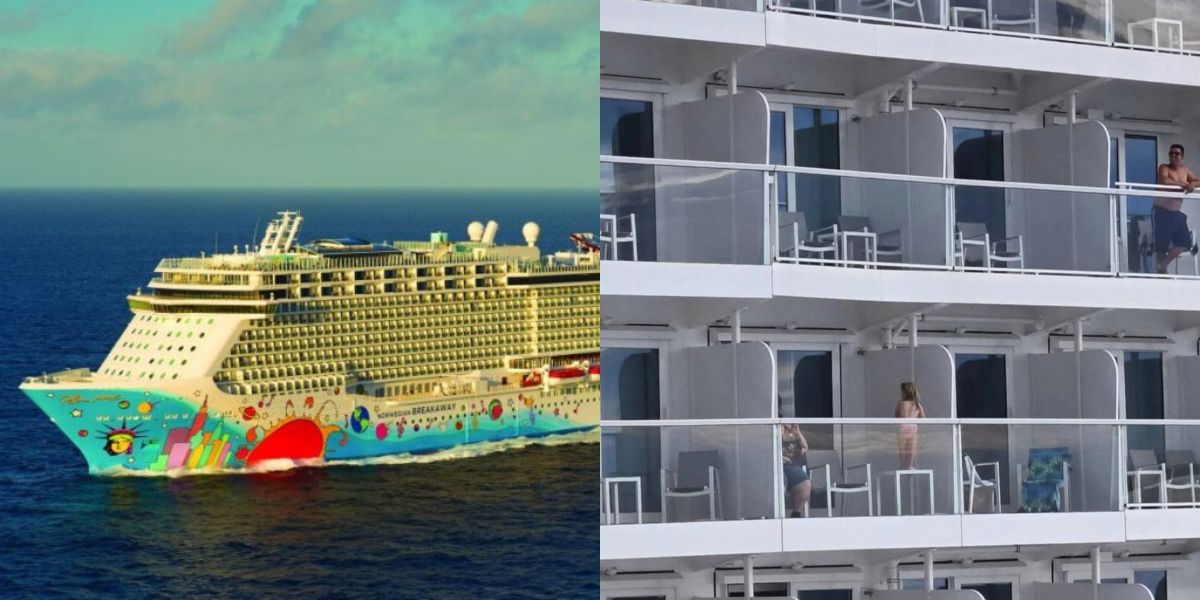
A family’s recent cruise could have ended in tragedy after a young child was photographed standing on a table dangerously close to the edge of their private balcony. The image…
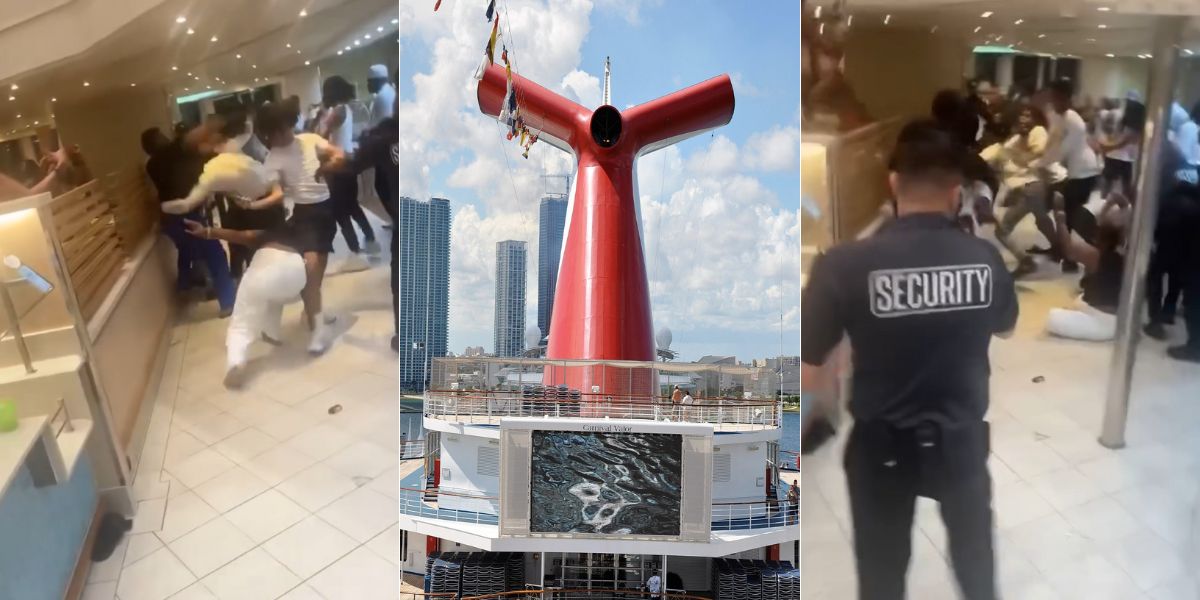
A late-night snack run turned violent aboard a Carnival cruise when a group of passengers began fighting in the ship’s buffet, reportedly over chicken tenders. The incident happened around 2…
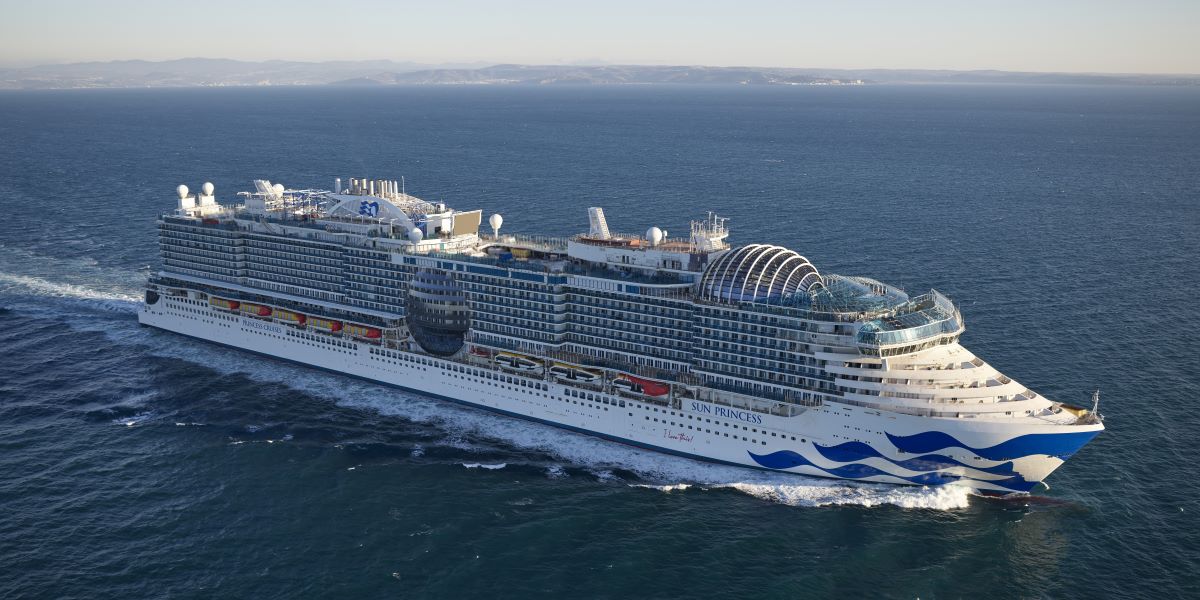
A tragic incident has taken place onboard Sun Princess, Princess Cruises’ newest and largest vessel, after a crew member went overboard while the ship was sailing through the Dardanelles Strait…
A family holiday aboard Norwegian Getaway turned into tragedy when a father drowned at Bermuda’s Horseshoe Bay – and now his relatives are taking Norwegian Cruise Line to court.
The family of Hyon Duk Shin allege that the line failed to warn them about dangerous sea conditions during their March 2024 cruise, despite promoting the excursion as “easy” and suitable for all.
What Happened at Horseshoe Bay
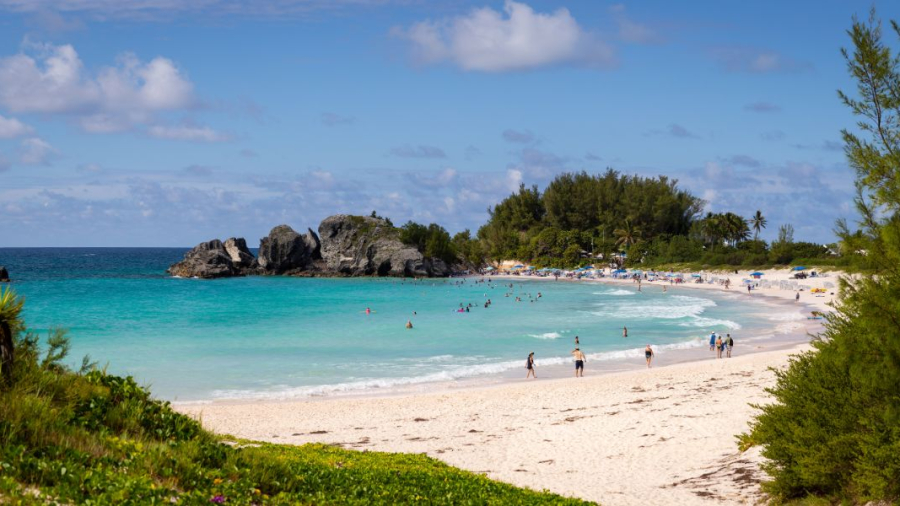
Shin, his wife Yanli Gong, their two sons aged seven and nine, and Shin’s mother were enjoying the popular pink-sand beach on 27th March 2024.
While snorkelling, Shin noticed a girl being pulled out by rip currents. He successfully helped her but was then overcome by the strong undertow himself.
Without lifeguards present – as the visit was outside the island’s peak tourist season – bystanders attempted a rescue but were unable to revive him.
His wife, mother, and children witnessed the devastating incident.
Allegations in the Lawsuit
The family filed their case against Norwegian Cruise Line this year, citing several points of negligence:
The excursion was advertised as “easy,” with no warnings about rip currents.
The cruise was scheduled during a period when lifeguards were not stationed at the beach.
NCL allegedly knew of previous drowning incidents and government warnings but did not disclose them.
Court documents argue that had the family been properly informed, they would not have joined the excursion.
Excursion Still on Sale
Despite the tragedy, Norwegian Cruise Line continues to market Horseshoe Bay transfers on its website.
The beach trip is still listed as a Level 1 “easy” tour, described as a chance to swim or relax on the sand, with no mention of currents or potential hazards.
Shin’s death is not the only water-related tragedy linked to cruise holidays.
This month alone, two guests drowned in separate incidents at Carnival’s new Celebration Key in the Bahamas.
Earlier in August, a Vietnamese couple visiting Milos in Greece also died after being swept into the sea by strong winds.
While drownings remain rare, they highlight the risks of underestimating conditions in unfamiliar environments.
This lawsuit could prompt cruise lines to rethink how they label and describe their shore tours, giving guests clearer information to make safer choices.
NEW DEALS JUST RELEASED!
Don’t miss the latest NCL offers…
Related Posts
If you found this interesting, please share!
Jenni Fielding is the founder of Cruise Mummy. She has worked in the cruise industry since 2015 and has taken over 30 cruises. Now, she helps over 1 million people per month to plan their perfect cruise holidays.
Royal Caribbean’s ambitious new private destination, Perfect Day Mexico, has run into controversy as residents and activists raise concerns about the development’s potential impact on Costa Maya. A Change.org petition…
Guests aboard Carnival Panorama endured a frightening moment on Wednesday evening when the ship unexpectedly listed after running into a severe storm in the Gulf of California. The 4,008-passenger ship…
A family’s recent cruise could have ended in tragedy after a young child was photographed standing on a table dangerously close to the edge of their private balcony. The image…
A late-night snack run turned violent aboard a Carnival cruise when a group of passengers began fighting in the ship’s buffet, reportedly over chicken tenders. The incident happened around 2…