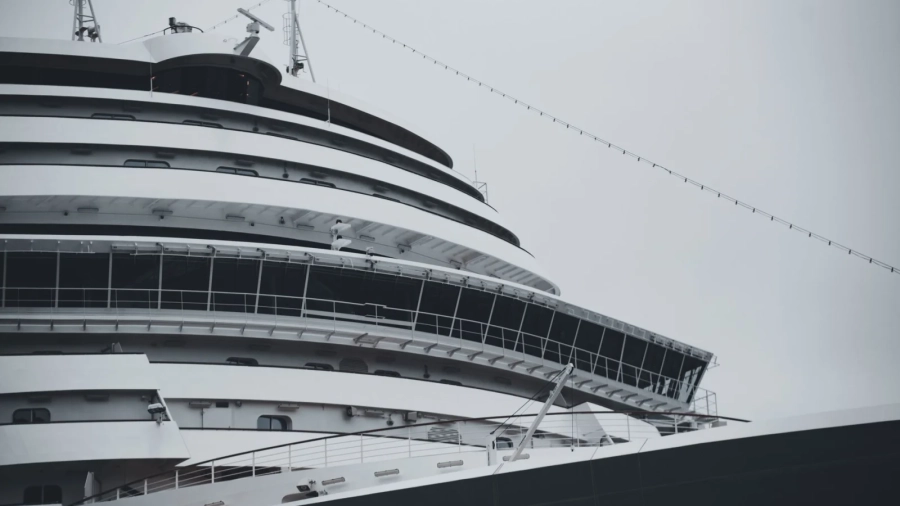
Large passenger ship at sea, illustrating a cruise checklist from booking to disembarkation

The Ultimate Cruise Checklist: A Printable Timeline from Booking to Disembarkation

A good cruise checklist works on a timeline rather than as one long list. Sort out passports, insurance and budget before you book; lock in cabin, flights and add-ons once you have; then work through documents, online check-in and packing in the final 90 days. Below is that cruise checklist, broken into stages with short tick-box lists. Print the page straight from your browser and cross things off as you go.

It is written for both US and UK cruisers. Where rules differ, such as closed-loop sailings, the UK ETA or Europe’s new border systems, each one gets its own note. Entry rules change, so check anything document-related against official sources before you sail.

Your Cruise Checklist at a Glance

Here is the whole cruise planning checklist on one screen. Each stage is explained further down.

When Main jobs
Before booking Check passport validity, set a budget, choose a cruise line and itinerary
At booking Pick a cabin, note payment deadlines, buy travel insurance
Straight after booking Create your cruise line account, download the app, book flights and a pre-cruise hotel
90 days out Pay the final balance, renew documents, apply for visas or travel authorisations
60 days out Book specialty dining, shore excursions, spa and drinks or Wi-Fi packages
30 days out Complete online check-in, choose an arrival time, plan transfers and parking
Final week Print luggage tags and boarding pass, refill prescriptions, pack
Embarkation day Keep documents and a day bag with you, do the safety drill, check your cabin
Disembarkation Settle your account, pack the night before, choose a walk-off or tagged departure

To print, use your browser’s Print option (Ctrl+P or Cmd+P). Most browsers can also save the page as a PDF, so you can keep a copy on your phone.

Before You Book

A little homework at this stage saves the most money and stress. Most expensive problems start here: an expired passport, the wrong cruise line for your group, or an itinerary that needs a visa you didn’t expect.

  • Check every traveller’s passport expiry date. Many cruise lines and countries want at least six months of validity after the cruise ends.
  • UK passport holders heading to the EU: your passport must have been issued less than 10 years before the day you enter, and be valid for at least three months after the day you plan to leave.
  • Set a realistic total budget: fare, taxes and port fees, gratuities, flights, hotel, insurance, excursions and onboard spending.
  • Decide what kind of trip you want: a big resort ship, a smaller premium ship, or an all-inclusive luxury line. Our guide on how to pick a cruise line helps you narrow it down.
  • Compare itineraries for time in port, sea days, and how far the ship docks from town.
  • Check whether any port of call needs a visa or electronic travel authorisation for your nationality.
  • Look at the weather and hurricane seasons for your dates. In the Caribbean, hurricane season runs from June to November.
  • Tell the cruise line now about any mobility, dietary or medical needs, especially pregnancy or travel with infants, which have age and gestation limits.

Closed-loop cruises for US citizens

A closed-loop cruise starts and ends at the same US port. US citizens on these sailings can usually board with an original or certified birth certificate plus a government-issued photo ID instead of a passport. A standard REAL ID driving licence proves identity but not citizenship, so it does not replace the birth certificate. An Enhanced Driver’s License, which does show citizenship, is generally accepted. Cruise lines still strongly recommend a passport. If you miss the ship in a foreign port or need to fly home in an emergency, a birth certificate will not get you on a plane.

When You Book

  • Choose your cabin type and location. Midship and lower decks feel the least motion if you are prone to seasickness.
  • Note the deposit amount, the final payment date, and the cancellation penalty schedule.
  • Check what the fare includes: drinks, Wi-Fi, gratuities, specialty dining and excursions vary widely by line and fare type.
  • Make sure every name on the booking matches the passport exactly.
  • Buy travel insurance as soon as you have paid a deposit, so cancellation cover starts straight away.
  • Check the policy covers cruise-specific risks: medical evacuation from the ship, missed port departures, and itinerary changes.

Insurance matters on a cruise because the ship’s medical centre charges separately, and an evacuation at sea can be extremely expensive. US travellers should know that Original Medicare generally does not cover care outside the United States. UK travellers should know that a GHIC or EHIC only covers state healthcare in eligible countries. It does not cover treatment on board the ship or repatriation.

Right After Booking

  • Create an account on the cruise line’s website and link your booking with the reservation number.
  • Download the cruise line’s app. Most major lines now use it for check-in, boarding passes, daily schedules, dining reservations and onboard chat, and some sailings are close to paperless.
  • Add loyalty numbers so past-guest perks are applied.
  • Book flights that arrive the day before embarkation, not the morning of. This is especially important for international or winter travel.
  • Book a pre-cruise hotel near the port and check whether it offers a cruise shuttle or parking package.
  • Put all payment and check-in deadlines into your phone calendar.
  • Watch for price drops. Some lines and travel agents will reprice or add onboard credit before final payment.
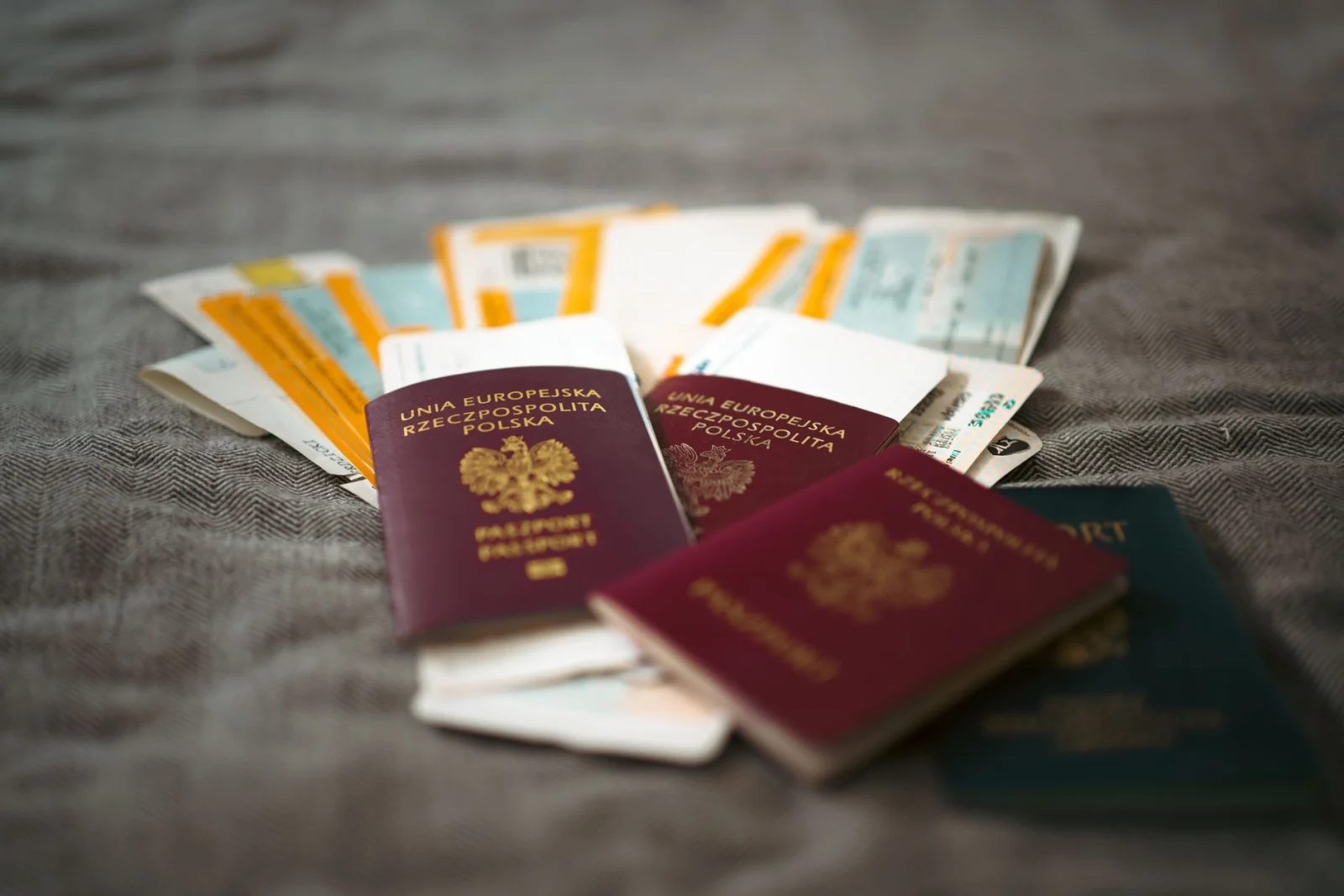
Passports and travel documents laid out on a table while planning a cruise
Sort passports, visas and travel authorisations well before the final payment date. Photo: Jakub Zerdzicki on Pexels

90 Days Before Your Cruise

For many mainstream lines the final balance falls due around now. For longer voyages and luxury lines it can come earlier. Use this stage to deal with documents, which take the longest to fix.

  • Pay the final balance on time. Missing the deadline can cancel the booking.
  • Renew any passport that is running short. Allow extra time for processing in busy seasons.
  • Apply for any visas your itinerary needs, and check the official government site for each country you will visit.
  • Get a notarised consent letter if a child is travelling with only one parent or with grandparents.
  • Book any vaccinations or travel health appointments for exotic itineraries.
  • Arrange pet care, house-sitting and time off work.

UK ETA: needed for many visitors, including cruise passengers

The UK’s Electronic Travel Authorisation (ETA) now applies to visitors who do not need a visa, including US and EU citizens. That covers cruise passengers whose itinerary includes UK ports, and passengers flying into the UK to board a ship there. It costs £20, lasts two years or until the passport expires, whichever comes first, and allows multiple visits. Every passenger, including children, needs their own ETA. Apply through the official UK ETA app or GOV.UK, never through an agency that charges extra. Cruise lines warn that guests without a required ETA may be refused boarding. British and Irish citizens, including dual nationals, do not need one and should travel on their British or Irish passport.

Europe: EES is live, ETIAS is not yet

The EU’s Entry/Exit System (EES) began in October 2025 and replaced passport stamping during 2026. Non-EU visitors, including US and UK citizens, have their fingerprints and a facial image recorded the first time they cross a Schengen external border. Cruise terminals in ports such as Barcelona have installed equipment for this. There is no fee and nothing to apply for in advance, but allow extra time at your first European port or airport. ETIAS, the separate EU travel authorisation, had not launched as of late October 2026, and recent reports point to 2027. Do not pay any website claiming to sell an ETIAS now. Check the official EU ETIAS site before you travel.

60 Days Before: Book the Extras

Popular add-ons sell out, and many lines run pre-cruise sales in the months before sailing. Work out what you actually want rather than buying everything.

  • Shore excursions. Book the ones you care about most first, especially small-group or limited-capacity tours.
  • Specialty restaurants and set dining times, if your line uses them.
  • Spa treatments. Port days are usually cheaper and quieter than sea days.
  • Drinks package or Wi-Fi package. Compare the daily price with what you would realistically spend à la carte.
  • Shows or activities that need reservations on bigger ships.
  • Check the dress code for formal or themed nights so you can plan outfits.
  • Decide how you will handle gratuities: prepaid, added daily to your account, or included in the fare.

30 Days Before: Online Check-In and Logistics

  • Complete online check-in as soon as it opens. When it opens varies by line, from around two weeks to two or three months before sailing, and many lines close it one to three days before departure.
  • Upload a passport photo or security photo and your passport details, and add a credit card for onboard spending.
  • Choose your embarkation arrival time. Earlier slots fill quickly.
  • Book airport-to-port transfers or cruise port parking.
  • Tell your bank and card issuer where you are travelling, and check foreign transaction fees.
  • Check your mobile phone plan for at-sea roaming. Ship networks are charged separately from normal roaming, and the costs can be steep.
  • Make digital copies of passports, insurance documents and booking confirmations.

The Final Week

  • Download or print your boarding pass and luggage tags once they are available, and attach the tags at home.
  • Refill prescriptions. Bring enough for the whole trip plus a few extra days, in original containers.
  • Check the weather forecast for embarkation and each port.
  • Check the cruise line’s prohibited items list. Irons, surge-protector power strips and candles are common no-gos.
  • Pack (see the essentials list below), weigh your bags against your airline’s limits, and leave space for souvenirs.
  • Get some small notes in the local currency, or US dollars for most Caribbean ports, for tips and taxis.
  • Download the cruise app’s offline features, and sign in before you lose home Wi-Fi.

Open suitcase with folded clothes, sunglasses and sandals being packed for a cruise holiday
Keep the packing list short and put day-one essentials in your carry-on. Photo: Ketut Subiyanto on Pexels

Printable Cruise Checklist: Packing Essentials

This is deliberately a short list of things you must not forget. For space-saving ideas, outfit planning and clever cabin hacks, see our cruise packing tips from experienced cruisers.

Carry-on bag (keep with you on embarkation day)

  • Passport, or birth certificate plus photo ID for closed-loop US sailings
  • Visas, UK ETA or other travel authorisations, printed or on your phone
  • Boarding pass and booking confirmation
  • Travel insurance policy number and emergency phone line
  • Credit card and some cash
  • All medication, plus copies of prescriptions
  • Phone, charger and power bank
  • Swimwear, sunscreen, sunglasses and a change of clothes in case your checked bags arrive late

Main suitcase

  • Daywear and evening wear for the dress code
  • Comfortable walking shoes for ports
  • A light jacket or layer for windy decks and chilly theatres
  • Toiletries, seasickness remedies and a small first-aid kit
  • Non-surge-protected USB charger or adapter for your ship’s sockets
  • Reusable water bottle and a small day bag for shore excursions

Embarkation Day Checklist

  • Arrive within your chosen check-in window, not hours early.
  • Hand checked bags to the porters with tags attached. They may not reach your cabin until the evening.
  • Keep documents, medication and valuables in your carry-on.
  • Complete the mandatory safety drill, usually now done through the app and a visit to your muster station.
  • Check your cabin works: safe, air conditioning, lights, toilet. Report problems early.
  • Confirm dining times and reservations, and book anything still available.
  • Put your phone in airplane mode or switch off roaming before the ship leaves port, unless you have chosen a ship or roaming plan.

For more on making the most of day one, read our list of first-day cruise mistakes to avoid.

Disembarkation Checklist

  • Review your onboard account in the app the day before you leave, and query any charges before the last night.
  • Choose either self-assist walk-off, carrying your own bags, or a tagged luggage departure time.
  • Pack the night before and leave out what you need in the morning, including documents and medication.
  • If your line collects luggage overnight, put bags outside your door by the stated time.
  • Check the safe, drawers and the back of the wardrobe before you leave the cabin.
  • Complete any customs declaration. US returning residents may be able to use CBP’s Mobile Passport Control app at some cruise ports.
  • Book an afternoon flight, not a morning one. Disembarkation can run late.

A Step Most Checklists Miss: The Document Wallet Test

About a week before sailing, collect every original document for each traveller in one place, then check it against your booking. Passport, ETA or visa confirmation, insurance, boarding pass, children’s consent letters. Check names, dates and passport numbers. Many boarding problems come from mismatches rather than missing documents. A passport renewed after booking, a typo in a name, or an ETA linked to an old passport number can all hold you up at the terminal. Fixing them at home is easy. Fixing them at the pier often isn’t possible.

When you reach your stateroom on embarkation day, run through our list of first things to do in your cruise cabin.

If you want to make the most of your sea days, take a look at our guide to the best books to read on a cruise, from mysteries at sea to books about your destination.

Before embarkation day, check our guide to what to pack in your cruise carry-on bag, since you may not see your checked luggage until the evening.

FAQs

What should be on a cruise checklist?

A complete cruise checklist covers documents (passport, visas, travel authorisations), travel insurance, final payment, online check-in, add-on bookings, transport to the port, packing essentials, and what to do on embarkation and disembarkation days. Organising it by timeline makes it easier to follow.

Do I need a passport for a cruise?

For international sailings, yes. US citizens on closed-loop cruises from a US port can usually use a birth certificate plus government photo ID, but a passport is still recommended in case you need to fly home from a foreign port.

How far in advance should I start planning a cruise?

Many people book six to twelve months ahead for the best cabin choice. The busiest planning period is the 90 days before sailing, when final payment, documents, check-in and add-ons all come due.

Do Americans need a UK ETA for a cruise?

Yes, if the cruise visits a UK port or you fly into the UK to board. US citizens need an ETA, which costs £20 and lasts two years or until the passport expires. Each passenger, including children, needs their own.

Do I need ETIAS to cruise to Europe?

Not yet. As of late October 2026 ETIAS had not launched, and reports point to 2027. The Entry/Exit System is running, so expect fingerprints and a photo at your first Schengen border crossing.

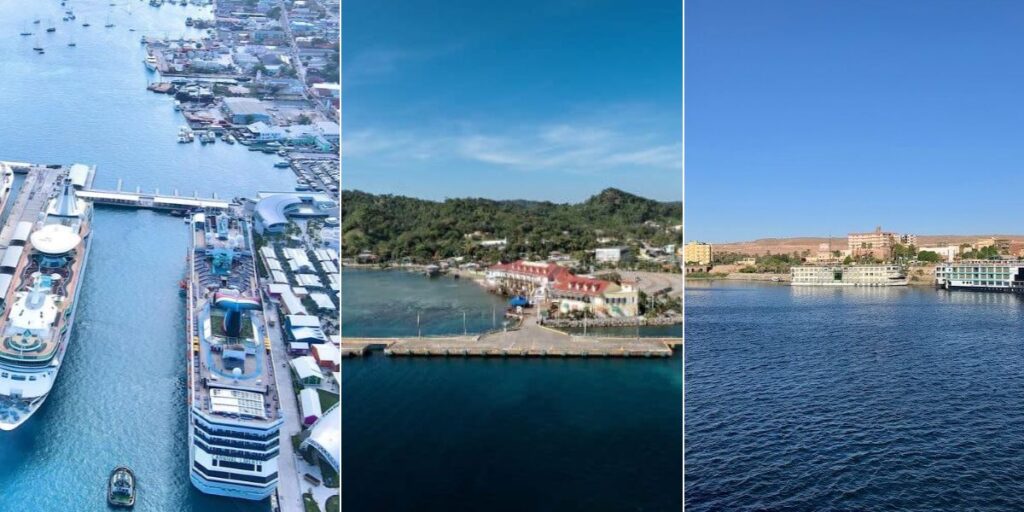
Untitled-design-7-7.jpg

The World’s Most Dangerous Cruise Ports: Revealed

Ever wondered which cruise ports around the world are considered risky?

This image is a collage of three cruise ports, featuring Nassau, Roatan, and a location in Egypt. The left panel shows a bustling port with large cruise ships docked in Nassau, surrounded by urban structures. The middle panel highlights Roatan's scenic coastline with small piers and lush greenery. The right panel captures a serene view of Egypt's waterfront, with cruise ships docked against a backdrop of desert and historic architecture.

Cruising is a fantastic way to see the world, offering relaxation, adventure and the chance to experience diverse cultures. However, like any form of travel, it’s essential to be aware of potential risks at certain destinations.

Some cruise ports around the globe come with unique safety challenges, which travellers should know about in advance.

Although cruise lines do their best to minimise risks, being an informed traveller is the best way to ensure a safe and enjoyable journey.

So, I’ve taken a look at the ports that seasoned travellers consider to be the most dangerous. Not so you can avoid them, but so you can be aware and plan accordingly.

Understanding Cruise Port Safety

What makes a cruise port dangerous? Safety concerns at ports aren’t just about the logistics of docking. They often relate to external factors like local crime, political stability, environmental risks and the availability of emergency services.

Ports that are deemed risky may be located in areas with any of the following:

  • High crime rates, especially where tourists are targeted.
  • Political unrest and civil disturbances.
  • Natural disasters and environmental risks.
  • Insufficient local police or emergency services.

Cruise lines work closely with security experts to monitor conditions and adjust itineraries when necessary. But as Salvatore Grasso, a security expert, notes: “Don’t assume cruise lines will always avoid dangerous ports – profits are part of the equation too.”

With that in mind, here’s a closer look at some ports that are known for being less secure.

1. Nassau, Bahamas

This image features Nassau Cruise Port bustling with activity, showing seven cruise ships docked side by side along the pier. The turquoise waters contrast with the urban backdrop, and the port area includes various buildings, infrastructure, and recreational areas, illustrating a vibrant hub for cruise travelers.

Although it’s a favourite stop for many, Nassau does have a dark side. The US government has issued warnings about crime here, including nurders, armed robberies and assaults.

These incidents tend to happen outside the main tourist areas, so it’s important to stick to well-travelled paths.

The area around the port itself is pretty safe, as are the resorts that cruise lines will take you to. They aren’t perfect, so you should still keep your wits about you. It’s best to always leave your valuables in the safe in your stateroom, just to be sure.

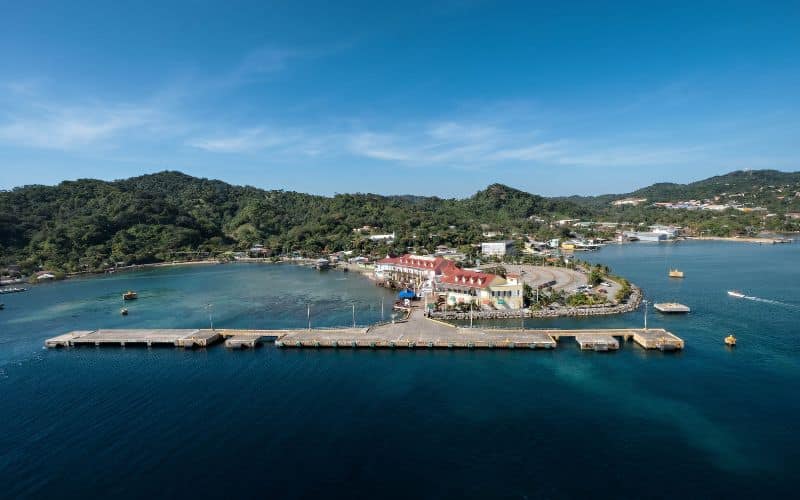
2. Roatán, Honduras

This image shows the Roatan cruise port in Honduras, surrounded by lush greenery and clear blue waters. The port features a small pier extending into the sea, with colorful colonial-style buildings lining the waterfront, nestled against a backdrop of rolling hills. It portrays a tranquil and scenic tropical destination for cruise passengers.

Roatán is famous for its coral reefs and beaches, but also has a more negative reputation with reports of robberies and assaults.

Local police are often under-resourced, which limits their effectiveness in protecting tourists. If you are the victim of crime, you shouldn’t expect any kind of speedy resolution!

Staying with fellow travellers and avoiding isolated spots, especially at night, can help reduce risks.

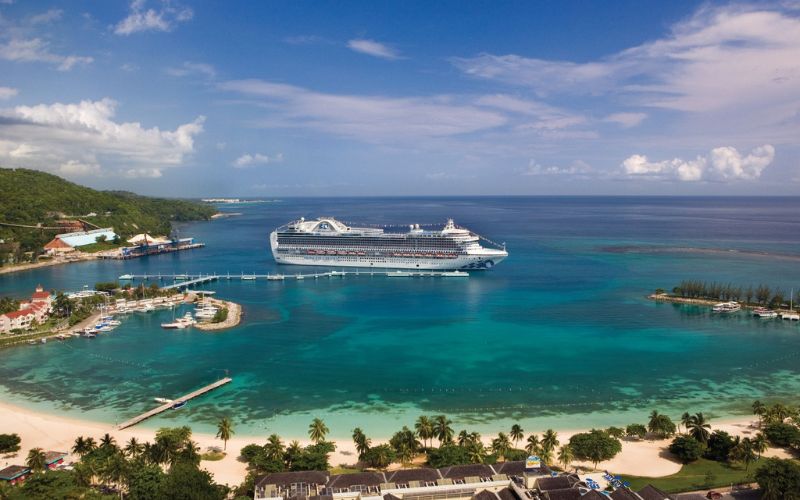
3. Falmouth and Ocho Rios, Jamaica

This image features the Crown Princess cruise ship docked in Ocho Rios, Jamaica. The ship is surrounded by stunning turquoise waters, white sandy beaches, and lush green landscapes, creating a picturesque tropical scene. The vibrant waterfront and idyllic coastline emphasize the destination's appeal to cruise travelers.

Jamaica is famous for its stunning scenery and vibrant culture, but some areas near the ports of Falmouth and Ocho Rios can feel less secure.

Visitors often report feeling uneasy when leaving the more protected areas of the port. The aggressive nature of some local vendors can make the experience uncomfortable.

If you’re feeling harassed, just say a stern ‘no’ and walk away, making sure you stick to a crowded area. Don’t be afraid to be louder if you need to be – drawing attention can help you to be left alone.

As with most of the ports on this list, using organised tours with the cruise ship is often your best bet.

Read more: The Best & Worst Cruise Ports In Jamaica

4. Colon, Panama

This image showcases the Coral Princess cruise ship navigating through the Panama Canal. The ship is surrounded by lush greenery, rolling hills, and the iconic canal locks, highlighting the engineering marvel of this passageway. The scene captures the grandeur of the cruise experience against a backdrop of natural beauty and impressive infrastructure.

Colon is frequently mentioned as one of Panama’s more dangerous cities, with crime rates that are higher than in other popular tourist areas. Some cruise lines have even cancelled tours due to safety concerns.

If you stop here on a cruise visit, it’s best to stick with organised tours and avoid venturing off on your own. If you do want to go exploring, do so in a group. Don’t venture too far away from the main tourist areas.

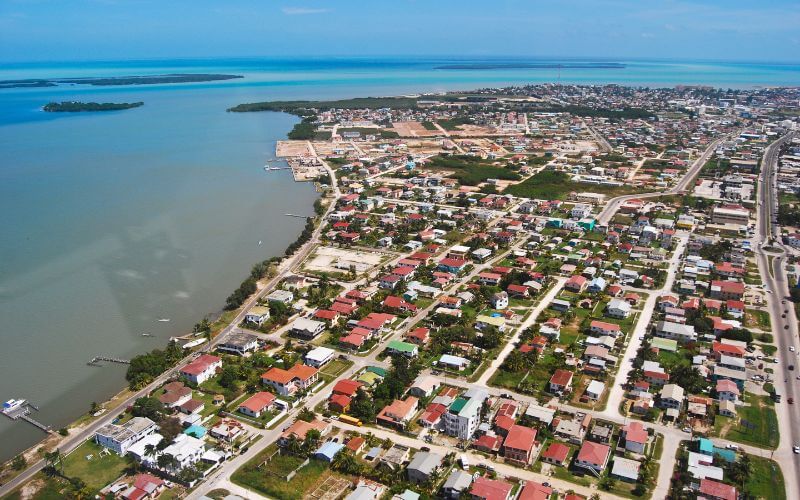
5. Belize City, Belize

This image captures an aerial view of Belize City, showcasing its colorful residential rooftops and grid-like streets stretching along the coastline. The turquoise waters of the Caribbean Sea and surrounding lagoons add to the city's scenic coastal charm. The image highlights the blend of urban development and natural beauty characteristic of this Central American destination.

Belize itself offers breathtaking scenery and exciting excursions, but Belize City can be a risky place to explore solo.

Tourists are often advised to stick to organised activities, as venturing out independently can lead to encounters with crime. These may include theft, scams and even violent attacks in rare cases.

6. St. Lucia

This image captures the lush, tropical beauty of St. Lucia, featuring vibrant green hills dotted with charming homes along the coastline. The clear, tranquil waters of the Caribbean Sea frame the foreground, with rocky outcroppings adding depth to the scenic view. The landscape highlights the island's blend of natural beauty and cozy, picturesque living spaces.

Although it looks like a picture-postcard destination, St. Lucia has had a few notable safety incidents involving tourists.

In one extreme case, a group of 55 cruise passengers were robbed at gunpoint during an excursion. Although such events are rare, it’s worth taking precautions and staying aware of your surroundings. And it’s another reason to leave valuables on the ship when you explore a port.

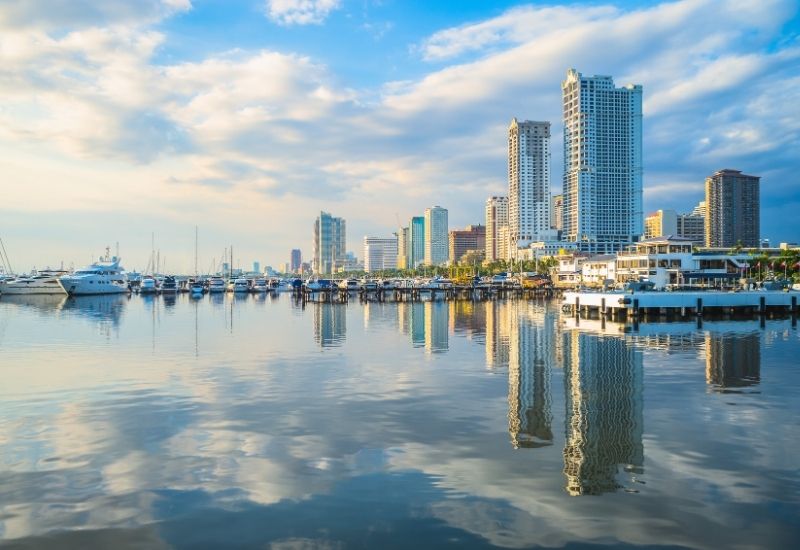
7. Manila, Philippines

This image depicts the Port of Manila Bay in the Philippines, featuring sleek modern skyscrapers and a marina filled with yachts and boats. The calm waters of the bay beautifully reflect the cityscape and cloudy blue sky, creating a serene and urban coastal ambiance. The view highlights the vibrancy and sophistication of this bustling waterfront hub.

Manila is a bustling, vibrant city but is also known for its high crime rate, including theft and assault.

It’s particularly noted for pickpocketing, especially around the port area, where local criminals love to target unsuspecting tourists.

If you plan to explore the city, it’s best to stay with a group, stick to organised tours and be cautious with personal belongings. Don’t wear any jewellery that attracts attention, or flash the cash while you’re shopping.

8. Egypt (various ports)

This image depicts the Port of Manila Bay in the Philippines, featuring sleek modern skyscrapers and a marina filled with yachts and boats. The calm waters of the bay beautifully reflect the cityscape and cloudy blue sky, creating a serene and urban coastal ambiance. The view highlights the vibrancy and sophistication of this bustling waterfront hub.

Egypt’s ports offer access to incredible historical sites, yet ongoing political unrest has created some security concerns for tourists.

Some Nile ports, particularly on river cruises, and other popular areas may have limited medical facilities, which can be an added risk.

When visiting Egypt, it’s recommended to join well-organised, cruise-led excursions to stay in secure zones.

Staying safe in high-risk ports

Just because a cruise port is considered to be more dangerous, that doesn’t mean you must stay onboard the ship when your cruise calls there.

None of the ports featured here are guaranteed to cause you problems. Cruise lines want to be profitable, but they won’t be if they keep taking guests to places that are iconsistently unsafe!

Still, here are a few essential tips to help keep you safe when visiting high-risk cruise ports:

  • Do your research: Before heading ashore, look into the port’s safety record and review any travel advisories. Do this for all ports you will visit, whether they are highlighted on this list or not.
  • Stick to tourist areas: It’s usually safer to stay within well-trafficked zones, and avoid venturing into more secluded areas. Most areas close to the actual ports are relatively friendly. If you need to travel farther inland to reach the main ‘attractions’, don’t wander off once you get there.
  • Book organised excursions: Tours offered through your cruise line are often the safest option, as they’re vetted for security and reliability. Third-party excursions are similar, but they come with other risks. You need to verify that the excursion provider is reputable, since you don’t want to risk missing the ship on your return!
  • Be aware of your belongings: Keep valuables like jewellery and electronics out of sight. Carry minimal cash. Split your money and important documents between different locations. Your stateroom will have a safe – don’t be afraid to use it!
  • Use official transport: Avoid unlicensed taxis or buses. Stick to transport recommended by the cruise line or reputable providers.
  • Trust your instincts: If something feels off, don’t hesitate to remove yourself from the situation.

The importance of travel insurance

When visiting high-risk destinations, having comprehensive travel insurance is essential. Standard insurance provided by your cruise line may not cover all contingencies. It’s worth considering an additional policy that includes:

  • Trip cancellations or interruptions due to safety concerns.
  • Medical evacuations in case of serious illness or injury.
  • Theft protection for your personal belongings.
  • Legal assistance if you encounter trouble with local authorities.
A brochure for 'Your complete Travel Insurance Policy' on a table with travel essentials, including a map, calculator, and smartphone, emphasizing the importance of comprehensive travel insurance for cruises.

Make sure to review your policy carefully to ensure you’re covered for high-risk situations. If you don’t buy proper cruise insurance, then your policy might not be valid when you make a claim.

Cruise insurance covers you in a range of destinations. It may include other perks too, such as missed port cover for destinations that your cruise has to skip.

My Recommendation

My recommendation for cruise insurance depends on where you live.

These are trusted price comparison sites that will quickly get you lots of quotes to match your exact needs.

Misconceptions about cruise port safety

There are a few common myths about safety on cruises that should be debunked.

Myth: All cruise ports are safe because cruise lines wouldn’t stop there otherwise.

Reality: Cruise lines balance safety with profit. They may visit destinations with known risks if they are profitable enough. However, they’ll wash their hands of responsibility if something happens to you, especially if you ignored any advice they gave.

Myth: You’re always safe in tourist areas.

Reality: Tourist areas often have more security, but can still be targeted by criminals looking to exploit visitors who are unfamiliar with the area. It’s best to be vigilant, even when you think you’re in a safe space.

Myth: Crime only happens at night.

Reality: Criminals often target tourists during the day when they’re out and about exploring. Most cruise guests will only visit destinations during daytime hours, and crime does still happen!

Myth: Local police prioritise tourists.

Reality: In many risky destinations, law enforcement can be under-resourced and less focused on tourist-related crime. They can be more dismissive, especially of cruise guests who won’t be a ‘problem’ come 3pm or 4pm, when you have to board your ship again.

Cruise lines do have some obligations!

Cruise lines have a responsibility to provide passengers with a reasonable level of safety. This includes:

  • Warning passengers about known dangers in specific destinations.
  • Monitoring shore excursion providers to ensure they meet safety standards.
  • Maintaining security on board and in port areas.

However, it’s important to understand that cruise lines are not legally responsible for every incident that occurs, especially if you’re exploring independently.

So you can’t rely on a cruise line ‘making things right’ if you are a victim of a crime. That safety net does not exist.

If you are a victim while you’re ashore, you should still report it to the onboard security team. They’ll help you in whatever way they can.

But don’t expect them to be liable to replace any stolen goods, or pay for your medical treatment if you’re injured.

Private resorts – a shift in itinerary planning

As concerns over safety grow, cruise lines are increasingly investing in private islands and exclusive resorts, designed with traveller security in mind.

These private destinations provide a controlled environment, often staffed by personnel directly employed by the cruise line (although still hired locally, to support residents). This allows for a more secure and comfortable experience.

Private islands, like those operated by major cruise lines in the Bahamas and Caribbean, allow passengers to enjoy a day ashore without the potential safety issues associated with public ports.

Access is restricted to passengers and authorised personnel. Therefore, they are far less susceptible to the crime risks present in some high-traffic tourist areas.

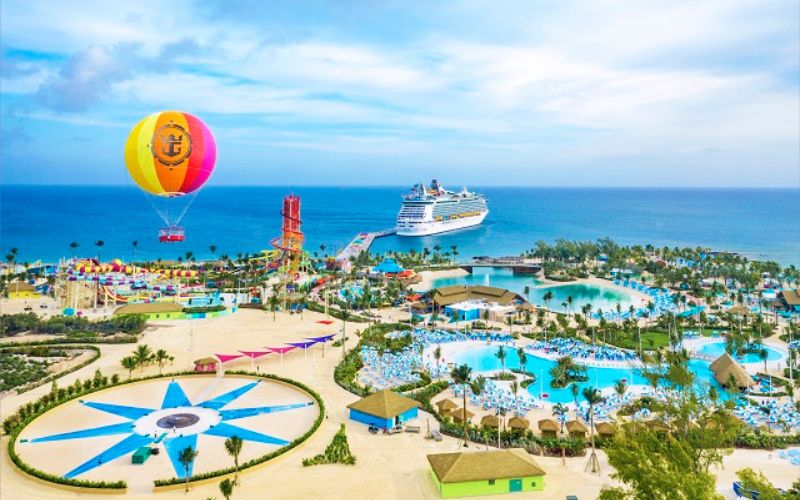
This image offers a vibrant aerial view of Perfect Day at CocoCay, a private island resort in the Bahamas operated by Royal Caribbean. The picture shows a colorful water park featuring a large swimming pool, water slides, and ample lounging areas. A hot air balloon offers rides above the island, providing panoramic views, while a cruise ship is moored nearby, emphasizing the island's role as a cruise destination. The entire scene is set against a backdrop of the turquoise Caribbean Sea and a blue sky, creating a lively and inviting vacation atmosphere.
Perfect Day at CocoCay

Private islands and resorts also offer a range of amenities such as pristine beaches, dining options and unique excursions.

Examples include Royal Caribbean’s Perfect Day at CocoCay and Norwegian Cruise Line’s Harvest Caye. These provide an idyllic setting for swimming, dining and watersports.

Find out more about the best cruise line private islands.

This image features an aerial view of Norwegian Cruise Line's Harvest Caye, showcasing its tropical resort-style setting. The scene includes a large pool surrounded by palm trees, colorful buildings, and a white lighthouse overlooking pristine beaches and turquoise waters. The vibrant and tranquil atmosphere highlights this private island destination's appeal to cruise visitors.
Harvest Caye

Private resorts within popular cruise destinations are also growing in popularity. In some areas, cruise lines have partnered with local businesses to create exclusive beach clubs and adventure parks, which only their passengers can visit during port days.

Of course, they aren’t guaranteed to be safe. Royal Caribbean halted calls at Labadee, the private resort on Haiti, for several months due to unrest in the country. Those port visits have since resumed, but it shows that cruise lines still need to be careful even when a destination is considered ‘private’.

Final word

You know what the most dangerous ports are? The ones that cruise lines don’t visit, and likely never will.

So don’t panic if you’re on a cruise that visits one of the ports I’ve highlighted in this guide. These are the most dangerous ports among all those that cruise lines are comfortable visiting. They are NOT the most dangerous places in the world!

Use this information to plan your trip, and make sure you understand the safety guidelines for exploring the ports. Being informed and vigilant will help you to have a great time during your cruise.

NEW DEALS JUST RELEASED!

Don’t miss these hot cruise offers…

Related posts

If you found this interesting, please share!

Cruise Mummy

Jenni Fielding is the founder of Cruise Mummy. She has worked in the cruise industry since 2015 and has taken over 30 cruises. Now, she helps over 1 million people per month to plan their perfect cruise holidays.

Read more about me


Source link

World-Cruise-Packing.jpg

9 Tips For Planning A World Cruise

Most cruises that people book last for 1-2 weeks on average, but then there are still lots of people who prefer longer getaways too.

World Cruise Tips

World cruises offer an amazing way to see the various cultures of the planet, and just enjoy the most relaxing sailing.

While it might be a pipe dream for now for many of us, it might be something you’re considering for your retirement (or if you get a nice lottery win!)

And there are some excellent tips from past world cruises on how to handle longer itineraries, that even experienced cruisers who only sail shorter itineraries might not have thought of!

1. Pack for different seasons

A cruise ship passenger packing her luggage,

One of the biggest tips for longer cruises is to remember to pack clothes for different seasons.

Even if your itinerary mainly sticks to places that are supposed to be warm, over the course of a couple of months anything can happen with the weather.

And conversely, you never know when a colder destination might have a heat wave.

You don’t want to be stuck indoors on your cruise ship on a port day because you’ve forgotten a suitable outfit for the weather, so make sure you’ve got a range of options to suit most conditions.

Suggested read: 9 Things You Should Never Wear On A Cruise

2. Pack for different sizes!

A smiling woman showing how elastic her leggings  are

A recurring joke (that’s semi-serious, really) is that cruise guests should always pack clothes with an elasticated waist, or at least make sure you save your looser clothes until the latter part of your cruise.

On a world cruise that’s really no joke at all, because the amount of food and drink you can enjoy can definitely make your wardrobe fit a little tighter – and if you’re onboard for a couple of months, that’s a long time to be uncomfortable in your clothes.

Pack baggy items or make sure you’ve at least got a few options in a size up, just in case.

Remember that you don’t need to pack 70 outfits for a 70-night cruise. There are laundry facilities onboard that you will absolutely make use of during a world cruise.

So you can pack relatively light – use the extra suitcase space to make sure there are some comfier items to wear if you are likely to indulge.

Suggested read: 43 Best Cruise Packing Tips & Hacks

3. Consider your dining options

Cruise mummy and her family strikes a pose during a wonderful dinner

I’ve always said that there’s a cruise ship for everyone, but it does mean doing your research to find which one is the best for you. And part of that is your dining options – which matters even more on a longer cruise.

If you’re on a 7-night sailing, you’ll be fine with a couple of different restaurants that you like, since between those and the buffet, you’ll probably get plenty of variety.

But on world cruises, menu rotations can get pretty repetitive.

We went on Oceania Insignia for a month last year. Around 60-70% onboard were doing RTW and were in their 6th month when we started. They seemed to be having a great time and really bonded as a group. But with only several dining options to choose from - with the steakhouse and Italian menus never changing aside from a few daily specials - the limitations of a smaller ship begin to show. You need to bring elastic waist bottoms because the ice cream offered and the daily afternoon teas are irresistible. But it therefore becomes increasingly difficult to get into the tiny showers (concierge balcony cabin).Personally, the trip was good because we learned that our sweet spot is probably a 2-3 week cruise but to each their own.

That might not matter to you, but for those who want to avoid eating the same things every 2-3 weeks, try to choose a ship with more restaurants, so that you can mix things up throughout the voyage.

4. Find a bar you like

Royal caribbean bartender prepares a cool cocktail onboard

Cruise ships will have several bars onboard, with different themes and sometimes different menus.

Unlike restaurants, where you’re probably going to want to enjoy variety, with a bar it’s better to find one you like and then stick with it.

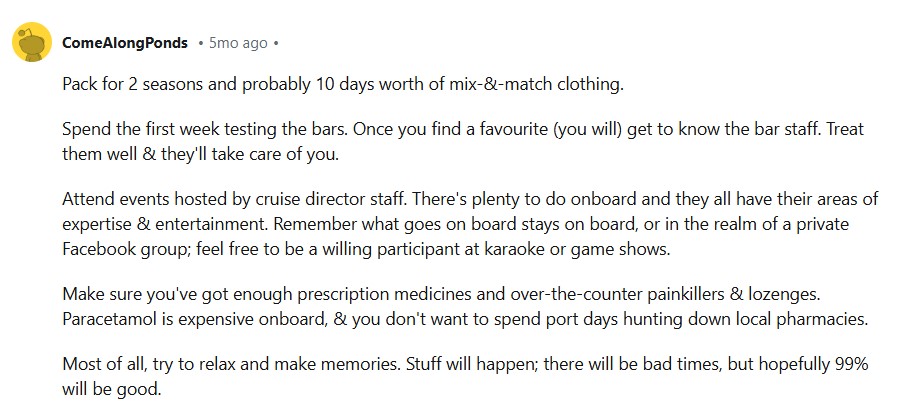
Pack for 2 seasons and probably 10 days worth of mix-&-match clothing. Spend the first week testing the bars. Once you find a favourite (you will) get to know the bar staff. Treat them well & they'll take care of you. Attend events hosted by cruise director staff. There's plenty to do onboard and they all have their areas of expertise & entertainment. Remember what goes on board stays on board, or in the realm of a private Facebook group; feel free to be a willing participant at karaoke or game shows. Make sure you've got enough prescription medicines and over-the-counter painkillers & lozenges. Paracetamol is expensive onboard, & you don't want to spend port days hunting down local pharmacies. Most of all, try to relax and make memories. Stuff will happen; there will be bad times, but hopefully 99% will be good.

Try a few out and see which one has the best vibe, and then that can be your go-to. Sticking to a bar means that you’ll get to know the bar staff better, and you’ll likely have an easier time making friends with the other regulars.

Plus you’ll know that your favourite drink is always available there – a useful advantage!

5. Build up to longer itineraries

A paper appearing to be a list of the trip itinerary slipped on a passport

A top tip from world cruise passengers is to build up to longer itineraries. Don’t jump straight from 7-night cruises to a really long itinerary.

Start with a two-week itinerary and then look for a 3-4 week one.

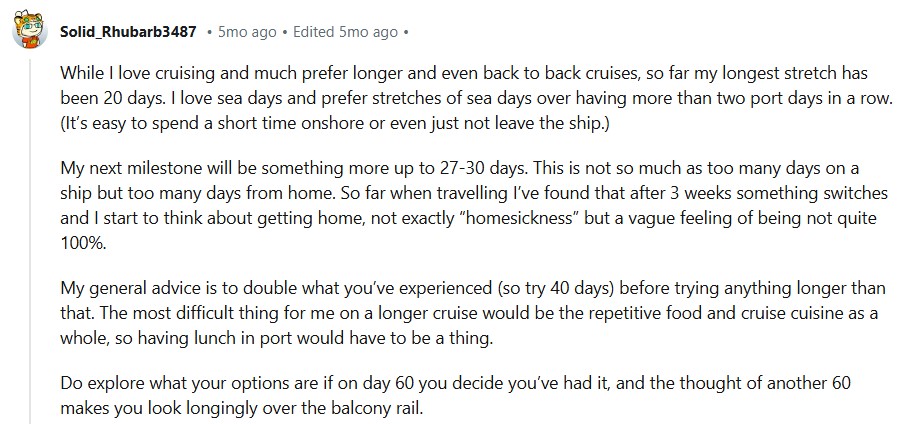
While I love cruising and much prefer longer and even back to back cruises, so far my longest stretch has been 20 days. I love sea days and prefer stretches of sea days over having more than two port days in a row. (It’s easy to spend a short time onshore or even just not leave the ship.)My next milestone will be something more up to 27-30 days. This is not so much as too many days on a ship but too many days from home. So far when travelling I’ve found that after 3 weeks something switches and I start to think about getting home, not exactly “homesickness” but a vague feeling of being not quite 100%.My general advice is to double what you’ve experienced (so try 40 days) before trying anything longer than that. The most difficult thing for me on a longer cruise would be the repetitive food and cruise cuisine as a whole, so having lunch in port would have to be a thing.Do explore what your options are if on day 60 you decide you’ve had it, and the thought of another 60 makes you look longingly over the balcony rail.

As you get used to longer sailings, you’ll know whether you’re comfortable on long itineraries away from home, or if actually it’s not for you.

And it’s so much better to find this out on a 3 or 4-week cruise than it is when you spent tens of thousands on a world cruise that you’re stuck on.

Suggested read: The Perfect Cruise Length: Revealed

6. Mingle with others

A smiling woman with short silver hair, joyfully toasting with a colorful cocktail on the deck of a ship, sharing a relaxed moment with companions against a clear blue sky. She is casually dressed, indicative of a leisurely cruise atmosphere.

Often world cruises will be sold in segments, so not everyone onboard is going to be sailing the entire journey with you.

But there will usually be some people who are on the ship for the full duration, and it’s worth getting to know them if you’re sharing a ship with them for a long time.

Even if you’re not someone who tends to mingle and chat with others on holiday, a world cruise is different.

Getting to know the other guests will help keep your evenings varied, as you can chat to people outside your travelling party swap stories of your adventures in port, or your lives back home.

If you’re someone who’s typically shy, it’s a good idea to overcome that on a world cruise because it’s a long time to spend with people and not say hi!

7. Make the most of onboard events

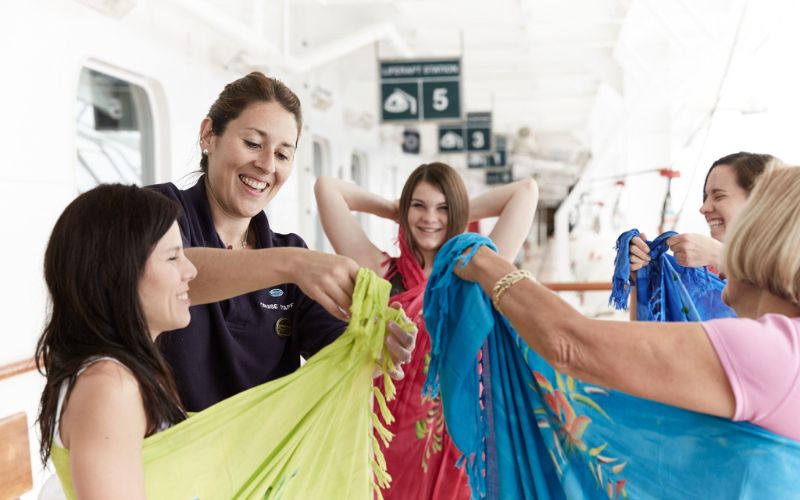
Women cruise passengers partake on the sarong tying, a part of Hawaii regional activities onboard

Every day on your cruise, there’ll be a range of events and activities held, and on a world cruise it’s a great idea to try as many as possible.

On a shorter cruise, it might be that you aren’t too fussed – you’d rather spend the time relaxing by the pool, or you’ll be too busy off the ship exploring the ports.

With longer itineraries, the scheduled events will help to make each day nice and varied, and you might be surprised by the types of event you end up enjoying, even if it’s something you’d never normally be interested in.

Use the events to fill your free time, and you can always ditch them if you find they’re not to your liking.

8. Pack plenty of medication

The image captures a young man on a boat, gazing thoughtfully at the ocean. He is wearing a white t-shirt and is holding onto a rope, with the expansive blue sea in the background, suggesting a moment of introspection or seasickness.

Balancing everything in your suitcase is important on a world cruise, but one thing that you will want to over-pack on is any medication you might need.

Not just prescription stuff, but even things like allergy tablets or painkillers that you might use. Paracetamol costs a lot more at sea than it does down the supermarket!

Some friends of mine did a world cruise. They said they brought way too many clothes. You will be able to do laundry on board, so you don’t need tons of clothing. I would definitely bring lots of over-the-counter meds because they will be expensive or unavailable in certain parts of the world. Think of any type of meds you would use at home in half a year, and bring enough to last you. Bring extra chargers for your devices if possible, and download a bunch of books you want to read.

It’s not like it’ll take up much space in your luggage either, so being prepared for longer itineraries and having everything you ‘might’ need in advance, even if you end up taking it all back home with you at the end of your cruise, is the better option.

9. Pack your own entertainment

A family enjoying a relaxed time on a yacht, with a smiling woman showing a tablet to a young boy while a teenager uses a tablet on the side. They are surrounded by a luxurious setting with snacks and drinks on the table, indicating a leisurely day on the water.

While cruise lines will put on varied entertainment for you, you might get a little bored of it in the latter stages of a world cruise.

Or there might be those nights where you just want to take it easy in your cabin, or in a quiet corner of a bar.

While many cruise ships do have libraries onboard, the quality and quantity of books available might leave a lot to be desired.

Take a couple of good, longer books with you, and if you’re an avid reader, pack a Kindle or other e-reader and load it up in advance.

Suggested read: The Best Books to Read on a Cruise

E-reader, with the ability to download books as you need them. Good quality headphones, and enough downloaded songs you won’t get bored. Extra charger for your electronics. Personal business cards to share with the people you meet. Copies of your prescriptions if you happen to run out. I had friends who went on a world cruise with 10 suitcases!!! They admitted they didn’t wear most of the stuff.

Portable games consoles such as a Nintendo Switch could also be a good idea if you’re into that kind of thing at all, though it’s certainly not the typical accessory for your average world cruiser!

Have a think about what you can take that doesn’t fill your suitcase, but will ensure you don’t have to worry too much about downtime during the cruise.

Suggested read: The Best Games to Bring on a Cruise

Final word

I’m sure nobody books a world cruise and then turns up expecting the same kind of holiday as a shorter itinerary. You’ll no doubt plan a little differently, and think about what you need to take with you for the longer trip.

Spend some time researching more tips like these from experienced world cruise guests, and get online on cruise forums or social media pages to ask others about their own experiences.

The more prepared you can be, the better a cruise you’ll have! And even if a world cruise feels like something you’re a long way from achieving, due to work or budget constraints, then you can at least enjoy the stories that guests are sharing about their own experiences.

NEW DEALS JUST RELEASED!

Don’t miss these hot cruise offers…

Related posts

If you found this interesting, please share!

Cruise Mummy

Jenni Fielding is the founder of Cruise Mummy. She has worked in the cruise industry since 2015 and has taken over 30 cruises. Now, she helps over 1 million people per month to plan their perfect cruise holidays.

Read more about me


Source link

Woman reading a book on a sun lounger by a pool, showing one of the best books to read on a cruise in action

The Best Books to Read on a Cruise: Mysteries, Memoirs and Destination Reads

The best books to read on a cruise are the ones that suit the rhythm of a voyage: page-turners you can finish on a sea day, stories set on ships or by the water, and books about the places you will visit. Our picks include classic and modern mysteries at sea such as Agatha Christie’s Death on the Nile and Ruth Ware’s The Woman in Cabin 10, entertaining non-fiction about the cruise industry, and a reading list for each region, from the Caribbean and Alaska to the Mediterranean and Norway.

Below you will find each title with its author and first publication year, a short note on why it works on board, and practical tips on getting books onto your ship without relying on onboard Wi-Fi.

Best Books to Read on a Cruise at a Glance

Book Author First published Best for
Death on the Nile Agatha Christie 1937 River cruises and classic whodunnit fans
The Woman in Cabin 10 Ruth Ware 2016 Readers who like a tense modern thriller
Shipped Angie Hockman 2021 Light romance on an expedition cruise
A Supposedly Fun Thing I’ll Never Do Again David Foster Wallace 1997 Witty essays about a week on a Caribbean cruise
Devils on the Deep Blue Sea Kristoffer A. Garin 2005 Curious minds who want the history of the cruise business
How to Read Water Tristan Gooley 2016 Dipping into on deck between ports

Mystery Novels Set on Cruise Ships and Riverboats

A closed setting full of strangers is perfect territory for crime fiction, which is why mystery novels set on cruise ships are a long-standing favorite with passengers. Most are gripping without being gruesome.

Death on the Nile by Agatha Christie (1937)

Hercule Poirot is on holiday aboard a Nile paddle steamer when a newly married heiress is murdered and almost every passenger turns out to have a motive. It is a compact, cleverly plotted classic, and especially fun to read if you are heading to Egypt or on any river cruise. Kenneth Branagh’s 2022 film adaptation makes a good double bill once you have finished the book.

The Woman in Cabin 10 by Ruth Ware (2016)

A travel journalist on the maiden voyage of a small luxury ship in the North Sea believes she witnessed a passenger going overboard, yet everyone on board is accounted for. The story is twisty and fast-moving, which makes it a natural one-sitting read on a long sea day. A Netflix film version starring Keira Knightley was released in October 2025.

Passenger 23 by Sebastian Fitzek

Originally published in German in 2014 and later translated into English, this thriller from one of Germany’s best-selling crime writers follows a police psychologist investigating disappearances on a transatlantic liner. It is darker in tone than Christie, so it suits readers who enjoy a properly suspenseful plot.

Cozy cruise mysteries

If you want something gentle, there is a large sub-genre of cozy mysteries set on cruise ships, often in long series with recurring crew characters. These are usually short, inexpensive as ebooks and easy to pick up and put down between activities, which makes them ideal for loading onto an e-reader in bulk before you sail.

Romance and Feel-Good Books Set on Cruise Ships

For pool-deck reading that will not keep you up at night, romance books set on cruise ships and lighthearted family comedies are hard to beat.

  • Shipped by Angie Hockman (2021): two rival colleagues at a cruise company end up on the same Galápagos expedition cruise. It is a rom-com, but the wildlife and island setting will appeal to anyone considering an expedition voyage.
  • The Floating Feldmans by Elyssa Friedland (2019): a family reunion on a Caribbean cruise brings long-buried secrets to the surface. Warm, funny and recognizable to anyone who has cruised with three generations.
  • Sail Away by Celia Imrie (2017): a light comic novel by the British actress about two women whose escape on a cruise does not go quite to plan.
A person reading a paperback on a sunny beach, the kind of relaxed port day that suits a light novel
A beach day in port is a perfect chance to make progress on your holiday reading. Photo: Martin Péchy on Pexels

Non-Fiction Books About Cruise Ships and the Sea

Books about cruise ships and ocean travel add a new layer to your trip, because you start noticing things on board that you would otherwise walk straight past.

A Supposedly Fun Thing I’ll Never Do Again by David Foster Wallace (1997)

The title essay in this collection began as a magazine assignment covering a seven-night Caribbean cruise. Wallace’s observations about the pampering, the daily schedule and his fellow passengers are very funny and surprisingly thoughtful. It is a smart read for seasoned cruisers who can laugh at themselves.

Devils on the Deep Blue Sea by Kristoffer A. Garin (2005)

This is a readable history of how the modern cruise industry grew out of Miami in the 1960s and 1970s, built by a handful of ambitious entrepreneurs. It explains a lot about why mainstream cruises look the way they do today.

Cruise Confidential by Brian David Bruns (2008)

A memoir of working below decks on a large cruise ship, with plenty of humor about long hours and crew life. It tends to make readers more appreciative of the crew who look after them.

Ocean and expedition classics

  • The Sea Around Us by Rachel Carson (1951): a lyrical, accessible introduction to the science of the oceans, ideal for slow reading on deck.
  • How to Read Water by Tristan Gooley (2016): practical tips on reading waves, color and weather. You can test what you learn from your balcony.
  • Endurance by Alfred Lansing (1959): the story of Shackleton’s Antarctic expedition, essential before a polar voyage.

Books to Read on a Cruise by Destination

Reading about the region you are sailing through is one of the most rewarding ways to choose books to read on a cruise. Here are some well-known options for popular itineraries.

Caribbean cruise books

  • Treasure Island by Robert Louis Stevenson (1883): the pirate adventure that shaped how many of us imagine the Caribbean.
  • The Old Man and the Sea by Ernest Hemingway (1952): a short novella about a Cuban fisherman, easily read in an afternoon.
  • Wide Sargasso Sea by Jean Rhys (1966): a literary novel set in Jamaica and Dominica in the 1830s.
  • A Small Place by Jamaica Kincaid (1988): a short, sharp essay about Antigua and tourism that will make you think about how you visit islands.

Alaska cruise books

  • Travels in Alaska by John Muir (1915): the naturalist’s accounts of glaciers and the Inside Passage, many of which you will sail past.
  • Coming into the Country by John McPhee (1977): classic reportage on Alaskan wilderness and the people who live there.
  • The Call of the Wild by Jack London (1903): the Klondike Gold Rush story that pairs well with a stop in Skagway.
  • The Snow Child by Eowyn Ivey (2012) and The Great Alone by Kristin Hannah (2018): two popular novels with vivid Alaskan settings.

Mediterranean cruise books

  • The Odyssey by Homer: the original Mediterranean voyage, best in a modern translation such as Emily Wilson’s (2017).
  • My Family and Other Animals by Gerald Durrell (1956): a gently comic memoir of a childhood on Corfu.
  • Captain Corelli’s Mandolin by Louis de Bernières (1994): love and war on the Greek island of Cephalonia.
  • The Talented Mr Ripley by Patricia Highsmith (1955): a stylish thriller along the Italian coast.
  • The Island by Victoria Hislop (2005): a family saga linked to the former leper colony of Spinalonga, off Crete.

Norway and Northern Europe cruise books

  • The Mercies by Kiran Millwood Hargrave (2020): historical fiction set in Vardø in the far north of Norway, a stop on some coastal voyages.
  • Out Stealing Horses by Per Petterson (English edition 2005): a quiet, beautifully written Norwegian novel about memory and landscape.
  • The Snowman by Jo Nesbø (Norwegian edition 2007): for fans of Nordic noir, featuring Oslo detective Harry Hole.
Empty lounge chairs on a cruise ship deck facing the open sea, a quiet place to read with a downloaded ebook
A quiet corner of the deck on a sea day is ideal for reading. Photo: Jean-Paul Wettstein on Pexels

How to Get Books on Board: Ship Libraries, E-Readers and Apps

Choosing the books is only half the job. Here is how to make sure you actually have them to hand at sea.

Use the ship library

Many cruise ships still have a proper library. Cunard is the best-known example: its website notes that Queen Mary 2’s library was the largest at sea when the ship was built, and Cruise Critic reports it holds more than 10,000 books in several languages. Oceania, Regent Seven Seas, Celebrity and Holland America ships also feature dedicated reading rooms. Collections and borrowing rules vary by ship, so check the daily program once you are on board, and remember that many ships also have informal book swap shelves.

Download ebooks and audiobooks before you leave home

Onboard internet has improved a lot, but packages usually cost extra and connections can still drop at sea. Download everything while you are on home Wi-Fi:

  1. Kindle and other e-readers: open each book once before you leave so it is fully stored on the device, rather than sitting in the cloud. A waterproof model is worth considering if you like reading by the pool.
  2. Libby (free with a library card): OverDrive’s Libby app lets you download library ebooks and audiobooks for offline reading or listening. Borrow early, as popular titles often have waiting lists, and check your loan period so books do not expire midway through a long voyage.
  3. Audiobooks: download them in advance too. They are handy on long tender rides, airport transfers and coach excursions.
  4. Charge cables: pack your charger and a spare cable. Our cruise packing tips from experienced cruisers cover plenty of other small items that are easy to forget.

Join or start a book club at sea

Some ships list informal book club meetups in the daily program, particularly on longer voyages and world cruises. If yours does not, the roll call boards on cruise forums are a good place to suggest a group read with fellow passengers before you sail.

Tips for Choosing Your Cruise Reading List

A little planning helps you pick books that genuinely fit your trip, which is something most cruise reading lists overlook.

  • Match length to sea days. Port-heavy itineraries leave little reading time, so a couple of shorter books may serve you better than one long saga. Transatlantic crossings and repositioning cruises are the time for a big novel.
  • Think about nervous travelers. Some people would rather not read about shipwrecks or disasters at sea while on a ship. If that is you, skip Titanic histories or survival stories and save them for home.
  • Read your destination before and during the trip. A book set in your next port makes arrival far more meaningful.
  • Mix formats. A paperback for the pool, an e-reader for the cabin at night and an audiobook for excursions covers most situations.
  • Add it to your list. Pop your reading plans onto our free printable cruise checklist so downloads and chargers are sorted before departure day.

FAQs

What is a good book to read on a cruise?

Fast-paced novels that suit short reading sessions work best. Popular choices include Agatha Christie’s Death on the Nile, Ruth Ware’s The Woman in Cabin 10 and light romances such as Shipped by Angie Hockman, plus a book set in your destination.

Do cruise ships have libraries?

Many do. Cunard’s Queen Mary 2 has one of the largest libraries at sea, and lines such as Oceania, Regent Seven Seas, Celebrity and Holland America also offer reading rooms. Collections and borrowing rules vary, so check on board.

Can I use Kindle or Libby on a cruise without Wi-Fi?

Yes, as long as you download your ebooks and audiobooks before you leave home. Downloaded titles can be read or listened to offline, so you do not need an onboard internet package.

What books are set on cruise ships?

Well-known examples include The Woman in Cabin 10 by Ruth Ware, Passenger 23 by Sebastian Fitzek, The Floating Feldmans by Elyssa Friedland and Shipped by Angie Hockman. Death on the Nile is set on a river steamer.

img_8737.jpeg

Your Questions Answered – CruiseMiss.com

Discover River Cruising: Your Questions Answered

My guest writer, Jenny, brings some valuable insights into the world of river cruising.

If you’re thinking about booking a river cruise and are looking for some expert guidance, Jenny can help. Alongside her team, she also books cruises and other adventures to destinations worldwide.

Discover River Cruising: Some Frequently Asked Questions

Welcome to the fascinating world of river cruising. If you’re considering this serene and scenic mode of travel, you probably have a lot of questions. I have toured or stayed on board 40 river ships, and I’ll share insights and tips to help you set off on your ideal river cruise journey.

You can also find out more and get in touch with me at www.rivercruising.blog.

A river cruise is a journey along historic, inland waterways, stopping at various ports of call along the way. Unlike ocean cruises, river cruises feature smaller ships that can navigate narrow rivers and dock in the heart of cities and towns. This allows for more intimate and immersive experiences at each destination.

What are the main differences between river and ocean cruises?

River cruises differ significantly from ocean cruises in several ways:

  • Ship size: river cruise ships are much smaller, often accommodating around 100-200 passengers, most ocean ships are much larger.
  • Port access: river cruises dock in city, town or village centres, offering easy access to local attractions and culture.
  • Scenic views: on a river cruise, there’s always something to see, from picturesque villages to historic landmarks, as you sail along the river.
  • Excursions: included shore excursions are often more frequent and immersive, focusing on local culture, history, and cuisine.
  • Entertainment and facilities: ocean cruises offer a wide range of entertainment and facilities, including multiple dining venues, theatres, shops, pools, and sports facilities. They might have activities like rock climbing, basketball, and water slides. River cruise ships, on the other hand, offer more low-key entertainment such as musical performances, quiz nights, and themed evenings. Facilities may include a small pool, gym, and spa.

Which rivers are popular for cruising?

Some of the most popular rivers for cruising offer travellers a wealth of experiences and sights:

  • The Rhine: The Rhine River is renowned for its fairy-tale castles, lush vineyards, and historic towns. Travellers can expect to see the picturesque Lorelei Rock, charming medieval villages, and grand castles perched on hillsides. Key highlights include exploring the Gothic architecture of Cologne’s cathedral and the romantic old town of Heidelberg.
  • The Danube: Flowing through ten countries, the Danube River is a cultural and historical treasure trove. Travelers can visit grand cities like Vienna, with its imperial palaces and classical music heritage, and Budapest, known for its stunning architecture and thermal baths. The river also passes through scenic landscapes like the Wachau Valley, famous for its wine production and picturesque villages.
  • The Rhône: The Rhône River flows through the heart of Provence, offering travellers a taste of French culture, cuisine, and wine. Highlights include the ancient Roman city of Arles, the beautiful landscapes of the Camargue, and the historic city of Lyon, renowned for its culinary excellence.
  • The Douro: The Douro River in Portugal is celebrated for its stunning scenery and port wine production. Visitors can expect breathtaking views of terraced vineyards, charming riverside villages, and historic cities like Porto. The Douro Valley is a UNESCO World Heritage site, known for its unique landscape and cultural significance.
  • The Mekong: The Mekong River offers an exotic and culturally rich experience, flowing through Vietnam and Cambodia. Travelers can explore bustling markets, ancient temples, and rural villages. Highlights include the floating markets of the Mekong Delta, the historic temples of Angkor Wat, and the colonial architecture of Phnom Penh.

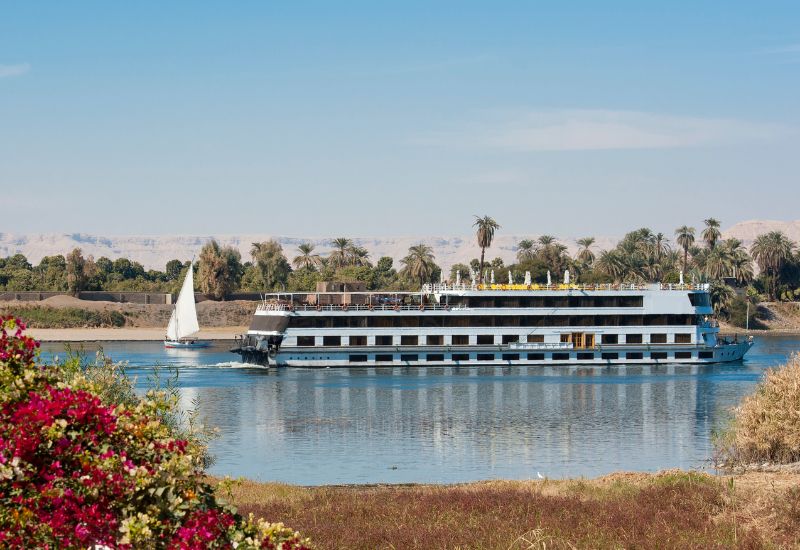
There are many other navigable rivers that can be explored by river ship including the Nile the Ganges and the Mississippi.

What should I expect in terms of accommodation?

River cruise ships offer a range of accommodations from fixed window cabins to luxurious suites. There are no inside cabins onboard. The Scenic Crystal, for instance, features balcony suites with all-weather balcony systems, sumptuous linens, and modern amenities like flat-screen TVs and mini-bars. The Uniworld SS Catherine is known for its opulent décor and beautifully designed cabins, providing a comfortable and stylish home away from home.

Choosing the right cabin can change your river cruise experience. Depending on your preferences, you can opt for suites with private balconies, larger rooms with additional facilities, or more budget-friendly options that still offer comfort and style. For more detailed guidance, see my blog on choosing the right cabin on a river cruise.

Are meals included on a river cruise?

Yes, all meals are included and are a highlight of the river cruising experience. Dining on river cruises is often a gourmet affair, with a focus on local ingredients and regional specialties. Scenic Crystal offers exceptional dining experiences with multiple dining venues and a wide selection of wines and spirits. The Uniworld SS Catherine also excels with its culinary offerings, often incorporating fresh, local produce.

What kind of excursions can I expect?

Excursions are a key part of the river cruise experience. Most cruises include daily shore excursions led by knowledgeable local guides. These can range from walking tours of historic cities to wine tastings in renowned vineyards, such as those along the Rhine and Rhône rivers. For example, on a Rhône River cruise, you might visit the Hospices of Beaune and enjoy wine tastings in Tournon and Tain-l’Hermitage.

Is river cruising suitable for solo travellers?

Absolutely. Some river cruise lines offer dedicated sailings for solo travellers and others offer reduced solo supplements. The smaller, more intimate setting of river cruises makes it easy to meet fellow passengers and participate in group activities and excursions.

Can children travel on a river cruise?

Yes, sometimes. There are some river cruise lines who cater specifically for families and A-Rosa are particularly good at this. Some companies allow children above a certain age but don’t provide extra facilities. I can advise on the best options for families.

Are river cruises all-inclusive?

The inclusions very between river cruise lines. Some river cruises are all-inclusive, covering accommodations, meals, drinks, and excursions. For instance, Scenic Cruises offers a truly all-inclusive experience with everything from fine dining to shore excursions and gratuities included in the fare. Others only include drinks with meals. There are also some options where excursions are not included to allow for maximum flexibility.

What are some of the highlights of river cruising?

Some personal highlights from my river cruising experiences include:

  • Wine Tasting in the Douro Valley: sampling delicious port wines while cruising through one of Portugal’s most beautiful regions.
  • Sailing on the Scenic Crystal: enjoying the panoramic views from the Sun Deck, and dining at the specialty restaurant Table La Rive.
  • Exploring with Uniworld SS Catherine: visiting charming towns like Viviers and the vibrant city of Avignon along the Rhône River.

River cruising offers a unique and enriching way to travel, providing unforgettable experiences along some of the world’s most beautiful waterways. One of the things that I enjoy the most is sitting on deck, watching the world go by. Exploring new places each day while having one room to stay in is something I also appreciate.

How to Find the Right River Cruise  

As a river cruise expert, I can help you find the ideal river cruise tailored to your preferences and interests. Whether you’re drawn to Europe’s historic cities or lush wine regions, I can offer personalised recommendations that fit your budget and travel style.

My goal is to help you navigate the many options available and find a cruise that perfectly matches your requirements.

For more information and to start planning your next adventure, visit www.rivercruising.blog or www.travelcounsellors.co.uk/jenny.cookman.

Source link

icebergs-8430043_1280.jpg

Unforgettable Cruise Destinations – CruiseMiss.com

From Alaska’s Glaciers to Norwegian Fjords: Unforgettable Cruise Destinations

From Alaska’s Glaciers to Norwegian Fjords: Unforgettable Cruise Destinations

Traveling by sea is an incomparable experience. It’s the epitome of relaxation and enjoyment, filled with captivating sights, tranquil atmospheres, and luxury services; it is a gateway to the extraordinary. Its magic lies in the gentle rocking of the waves, the charm of living at sea, and the exposure to Earth’s marvelous wonders. Among the diverse cruise options, voyages to Alaska’s glaciers and Norwegian fjords are ultimate bucket list items. These destinations stun visitors with their beauty, leaving an indelible print on their memory.

Experience Alaska’s Glaciers

Alaska is often described as the ‘Last Frontier’. Its remote, untouched terrain is both tranquil and visually stunning. Cruising through its majestic glaciers provides a striking sight to behold. Visitors can absorb the power and beauty of these icy giants while listening to the thunderous echo of ‘calving’ – the moment when chunks of ice break off and crash into the sea. Remember to pack warm clothes and binoculars and don’t forget to secure your trip with UHC SafeTrip insurance, which will provide invaluable support in case of any unforeseen incidents. 

Alaska’s wildlife, visible from the ship, is another highlight. Sightings of bears, bald eagles, harbor seals, and humpback whales are quite common. The landscapes you see while on board will be unlike any other; snow-capped mountains, vast forests and waterfront villages. For adventure seekers, there are land tours to Denali National Park and trips to sled-dog kennels.

Voyage to Norwegian Fjords

Norway, reminiscent of a fairytale setting, is known for its fjords — narrow deep inlets of sea between high cliffs, shaped by glacial activity. A cruise through its fjords will expose you to skies decorated with the dancing hues of the Northern Lights and an unparalleled view of Scandinavia’s raw wilderness. 

Visitors will marvel at this idyllic landscape filled with deep blue waters framed by towering snow-blanketed mountains. Each fjord houses its own unique scenery of quaint villages, cascading waterfalls, and vibrant wildlife. In Flam, for instance, tourists can take a train ride on what’s often called the ‘world’s most beautiful train journey’, and in Bergen, the authentic fish market and the scenic views from Mount Floyen are must-sees.

The unforgettable fjord cruise can further be paired with a journey to the truly unique stops like the Viking-age stave churches found in rural Norway or a brisk hike to Pulpit Rock, an unmatched viewing platform towering 604 meters above Lysefjord.

Travel Tips for a Secure Voyage 

Thorough planning and preparation are integral to any trip, especially for cruises where one spends several days or even weeks at sea. Packing should be done with the type of cruise and weather in mind. Travel insurance like UHC SafeTrip insurance, is a prudent step in ensuring protection against potential health scares or unexpected disruptions during your trip.

Integrating elements like guided tours on land further enriches your voyage. They allow you to explore prime attractions of port cities and soak in the local culture. There’s a certain allure to befriending locals and tasting regional cuisines. 

Conclusion

A sea voyage through Alaska’s glaciers and Norway’s fjords offers a transcendental experience. The sweeping panoramas, rare wildlife, and captivating cultures encountered on these exquisite cruises provide enough memories to last a lifetime. Embrace the tranquil ambiances, relish the enriching excursions, and make unforgettable memories!

Every day, every shore, every adventure holds something new. It is this constant sense of discovery that transforms a simple journey into an extraordinary experience. From the astounding glaciers of Alaska to the ethereal fjords of Norway, cruising goes beyond visiting; it is about absorbing the mesmerising essence of our beautiful planet.

Source link

Dog-friendly-cruise.jpg

15 Things You Need To Know About The New Dog-Friendly Cruises

The dream of taking your dog on a cruise is finally becoming a reality as the fun American cruise line, Margaritaville At Sea, is partnering with new company, Cruise Tails, to offer pet-friendly cruises.

Dog-Friendly Cruise

With 250 lucky dogs (and their humans!) invited aboard, this is your chance to create memories that’ll have tails wagging long after you disembark.

But, there are some caveats. Here’s everything you need to know before you and your furry friend set sail…

1. Your chance of getting a place is limited

With around 90 million pet dogs in the United States, and only space for 250 dogs on board, demand for the cruises is set to be huge.

You can’t just book a cabin for yourself and your dog. Instead, you’ll need to fill in an application form and hope that you’re chosen to be one of the lucky families that gets to set sail.
2. Group applications get priority

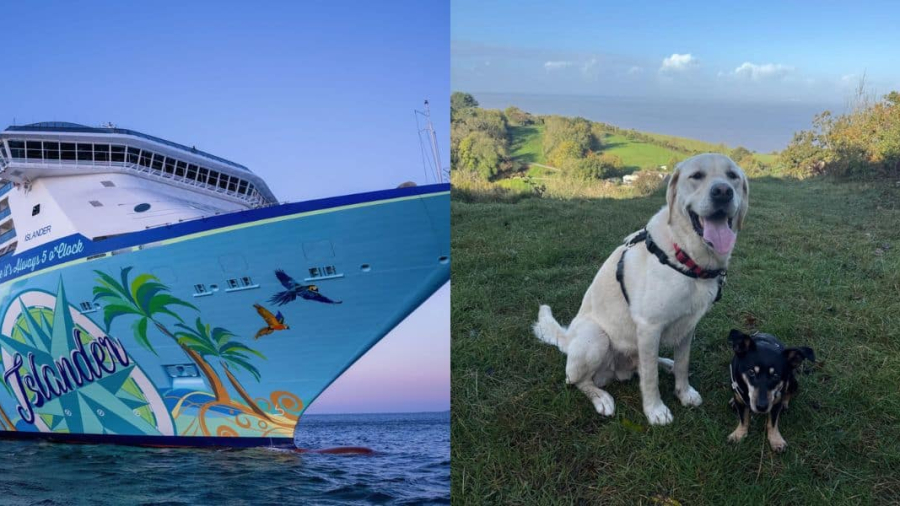
Margaritaville At Sea’s ship, Islander, has 1,100 staterooms. The hard limit of 250 dogs means that most staterooms won’t actaully have dogs inside.

To deal with this, Cruise Tails is giving priority to groups who book two or more cabins with only one dog. So if you want to bring a single dog and four or more humans, you’re much more likley to get a place on board.

3. Every dog gets a private bathroom

Each pet-friendly cabin is thoughtfully designed with your dog’s comfort in mind. One standout feature is the private relief station conveniently located on every balcony.

Balcony stateroom on Islander

These stations are equipped with materials that make cleanup a breeze, ensuring a clean and hassle-free experience. You can relax knowing that in the early morning or late at night, your furry friend can take care of business without the need to trek across the ship.

4. Dogs won’t be allowed in dining rooms

It’s expected that health regulations require that dogs won’t be allowed in any of the places where humans eat meals. What that also means is that dogs will probably be required to be left in cabins for at least some part of the day. Of course, room service is also available.

Islander dining room

5. Cruisers will be featured on social media

If you’re camera shy or in a witness protection program, this isn’t the cruise for you! All guests will be asked to sign a waiver which allows any photos of them and their dogs to be used on social media and other marketing channels.

You may also be expected to share your own photos. According to the Cruise Tails website, Guests may also be asked to try out pet products and post about them online as part of the deal.

A small, fluffy dog with a wind-swept cream coat and a blue bone-shaped tag enjoys a river cruise, with its fur tousled by the breeze and a serene water backdrop under a clear sky. The dog’s bright expression and the gentle waves suggest a delightful day out on the water.

6. There’s a packed schedule of activities

This cruise is packed with activities designed to keep tails wagging and spirits high!

From dazzling costume contests where your pup can strut their stuff in style to entertaining dog shows that highlight the unique talents of canine cruisers, there’s something for everyone to enjoy.

For those looking to learn, expert-led dog training seminars will offer valuable tips and tricks, making this not just a vacation but a bonding and learning experience for you and your pooch.

There are even rumours of an 80s night and a formal night, for both humans and dogs. So you’d better start shopping for outfits.

evening dresses

7. Not all dog breeds will be allowed

Cruise Tails hasn’t yet released information about which dogs specifically will be banned from the ship, but it’s expected that not all breeds will be welcomed.

Margaritaville already allows dogs at several of its land-based resorts in the United States. However, depending on the resort their are weight limites for dogs which vary between 30lbs and 100lbs.

It’s not yet known if Margaritaville At Sea will have size or weight limits for dogs. But 30lb is only the size of a French Bulldog, so this could limit a lot of dogs from applying.

A curious Labrador retriever leans over a wooden railing on the deck of a cruise ship, gazing directly at the camera with a gentle and attentive expression. The ocean stretches out to the horizon behind the dog, suggesting a serene maritime setting.

It’s expected that breeds such as Boxers, Staffordshire Terriers, Rottweilers, Akitas, German Shepherds, Doberman Pinschers, Mastiffs, Malamutes, Great Danes, Cane Corso, Chow Chows, Huskies and Wolf Hybrids may also not be allowed.

8. Dogs must remain on a leash

For everyone’s safety and comfort, all dogs must remain leashed while exploring the ship. This ensures that all canine guests can enjoy the cruise without any unexpected encounters or mishaps.

Of course, you can let your dog off the leash inside your cabin, but when strolling on the deck, visiting designated play areas, or heading to one of the many fun activities, a leash will ensures that your pet stays under control and everyone aboard has a stress-free experience.

9. Vaccinations are mandatory

You may be surprised to learn that most dog owners don’t keep up to date with their pets vaccinations. However, vaccinations will be required for dogs to board. These will likely include the core vaccines such as rabies, distemper, adenovirus and parvovirus. However, others may be required too.

There could also be a requirement for dogs to be up to date with worming and flea-prevention treatments. Fleas can be notiriously tricky to eradicate from carpets and furniture so the cruise line will almost certainly want protocols in place to keep them off the ship.

10. Dogs can’t go anywhere near the pool

While the idea of swimming with your dog may sound fun, it just wouldn’t be practical. The fur would likely clog the filter, and it wouldn’t take long for the pool to change colour from blue to something less enticing!

The pool on Margaritaville At Sea Islander

For hygiene reasons, dogs won’t be allowed on the pool deck at all. And they certainly won’t be allowed down the waterslide! If you want to enjoy a swim, you’ll be expected to leave your dog in the cabin or with a family member elsewhere on the ship.

However, there will be dog-friendly splash sessions that will allow your dog to cool off when they need to.

11. Two dates are planned for the cruise

The first cruise is set to depart in November 2025. If that is successful, then Cruise Tails hopes to organise a second dog-friendly cruise around March to May 2026.

There’s also a chance that the second cruise may be open to more than 250 dogs. So if your application isn’t successful the first time around, it’s definitely worth trying again.

Islander

12. The cruise will sail from Tampa, Florida

It’s not yet been announced where the cruise will set sail to or how long it will be. Looking at the itineraries for November 2025, we can see that Islander is sceduled to make 4- to 7-night round-trips from Tampa, Florida.

Restrictions may prevent dogs from disembarking the ship outside of the USA. However, the ship could potentially call at Key West, offering families the chance to visit one of the many dog-friendly beaches together.

Key West

13. There will be a vet onboard

The Islander will have a vet onboard as well as a doctor, so whether you or your dog needs medical attention, you don’t need to worry.

14. Service dogs are not allowed

Registered service dogs are already allowed on most cruise ships and so this cruise is only open to pet dogs, giving them a chance to have an experience that they wouldn’t usually be allowed to have.

service dog

15. Jobs are available for dog lovers

Do you love dogs? Perhaps you could work on the ship. Cruise Tails has said that they’re recruiting for dog walkers, groomers and even doggy butlers! You can join the mailing list to keep updated about any opportunities.

Cunard dog butler

Are you excited for this cruise?

I love the idea of a dog-friendly cruise and would love nothing more than to cruise with my two dogs, Ernie and JoJo. However, as I live in the UK, the logistics of getting the dogs to Florida may prove a little too tricky for me.

But if you apply for a place then I’m crossing my fingers for you! Plenty of people hate the idea of a cruise with dogs. But as I always say, there’s a cruise for everyone. If this one isn’t for you, then there are plenty more that will be.

I’ll keep this article updated as more info is released, but if you have any comments or questions, please let us know below.

NEW DEALS JUST RELEASED!

Don’t miss these hot cruise offers…

Related Posts:

If you found this interesting, please share!

Cruise Mummy

Jenni Fielding is the founder of Cruise Mummy. She has worked in the cruise industry since 2015 and has taken over 30 cruises. Now, she helps over 1 million people per month to plan their perfect cruise holidays.

Read more about me


Source link

Untitled-design-45.jpg

American Cruise Line To Launch Dog-Friendly Cruise In November 2025

Margaritaville at Sea has announced plans a dog-friendly voyage, scheduled for November 2025.

Cruise Tails cruise for dogs

The unique sailing is being organised in partnership with Cruise Tails and Expedia Cruises of West Orlando and will welcome up to 250 canine passengers.

The cruise will depart from Port Tampa Bay aboard the Margaritaville at Sea’s flagship vessel, Islander. While the exact date and itinerary have not been disclosed, a waitlist for dog owners interested in the voyage will open in early December 2024.

The cruise aims to provide a memorable experience for both pets and their owners.

“I consider my Yorkie, Louis, to be part of my family, and for years I missed out on the ‘family reunion’ cruise because I will not travel without him…

“I want to change that for myself and other dog lovers.”

Steve Matzke, Cruise Tails Captain

Activities planned for the voyage include costume contests, dog shows, parades, guest speakers, and training advice sessions. There will also be puppy massages, grooming services, and splash stations for the dogs.

Travelling with pets will involve a special application process. Dogs must be fully vaccinated, accompanied by a health certificate signed by a licensed veterinarian, and remain in designated pet-friendly areas on the ship.

A “Pet Butler” will be assigned to each dog-owning family to maintain cleanliness and comfort during the trip.

Pet-friendly staterooms will include private relief areas on balconies, and additional relief areas may be set up in other parts of the ship.

However, dogs will not be allowed in restaurants, the casino, pool decks, or the spa due to health regulations. And dogs must be on a leash when in any public area.

Islander, formerly known as Costa Atlantica, is an 85,619-gross-ton vessel that can host 2,114 passengers at double occupancy. The ship currently operates 4- and 5-night itineraries to destinations like Cozumel, Mexico, and Key West.

In 2025, it will begin offering 6- and 7-night sailings to destinations including Belize, Roatan, and Ocho Rios.

While the exact itinerary for the dog-friendly cruise is yet to be revealed, it will align with the ship’s November 2025 schedule.

Only 250 dogs will be allowed on this inaugural sailing, and some restrictions on breeds, size, or the number of dogs per cabin may apply, though these details are still being finalised.

Interestingly, service dogs will not be permitted on this voyage, as they already have access to standard cruises.

“This cruise originated with the dream that pet owners would finally be able to travel with ALL their family and friends on the cruises they’ve been missing…

“As service dogs are not considered pets, they can already go on cruises; and we know they would not want to deprive their pet buddies of the chance to finally cruise with their family.”

Cruise Tails FAQs

Usually, service dogs are permitted on cruise ships provided they have the right certification. Cruise lines are strict on this, to avoid anyone claiming their dog is an emotional support dog just to get their pet onboard.

Read more: How To Take Your Emotional Support Dog On A Cruise

If the November 2025 sailing proves successful, plans for a second dog-friendly voyage are being considered for early 2026.

Technically, dogs are currently permitted on some Cunard transatlantic cruises. However, they must remain in kennels onboard the ship at all times.

This will be the first ocean cruise that is clearly aimed at dog owners, allowing the dogs in the staterooms themselves.

A couple of river cruise ships in Germany, run by 1AVista Reisen, offer dog-friendly cruises and dogs are permitted on some ferry trips too, such as with Stenna and Brittany.

There will definitely be some practical hurdles to cross, such as controlling dogs in outdoor spaces such as pool areas and making sure the ship stays hygienic.

However I’d love to go on this cruise! But opinion on Facebook has definitely been split whenever I’ve asked…

NEW DEALS JUST RELEASED!

Don’t miss these hot cruise offers…

Related posts

If you found this interesting, please share!

Cruise Mummy

Jenni Fielding is the founder of Cruise Mummy. She has worked in the cruise industry since 2015 and has taken over 30 cruises. Now, she helps over 1 million people per month to plan their perfect cruise holidays.

Read more about me

Adventure of the Seas

Days after Royal Caribbean’s Voyager of the Seas had a cruise delayed and shortened due to drydock problems, a second ship has suffered a similar fate. Adventure of the Seas…

A cruise guest has gone viral on TikTok after sharing a video of his cabin when he had left the balcony door open. On returning to the cabin, the guest…

P&O Cruises, and its parent company Carnival Corporation, is being sued by over 100 passengers who previously sailed on Ventura. The lawsuit has been submitted by Hudgell Solicitors on behalf…

Royal Caribbean’s Voyager of the Seas performed a dramatic rescue during its transatlantic voyage, saving a stranded family and their dog off the coast of Marrakesh, Morocco. The incident occurred…


Source link

Cruise-Mummy-Princess-Cruises.jpg

Here’s Everything That Princess Cruises Does Better Than Other Cruise Lines

Princess Cruises has a reputation for being a more premium cruise option than many of the more ‘mainstream’ cruise lines.

It’s not quite a luxury cruise line, but it definitely feels like one compared to lines such as Carnival or Costa, with many cruise fans finding that Princess is their favourite line.

To look at why, I’ve asked my Facebook fans what they think Princess Cruises does better than anyone else. I’ve supplemented that with research elsewhere on the web too.

Here’s a look at what real cruise fans think Princess does better than anyone else.

1. Medallion Technology

Four hands with Princess cruises medallion wristbands

By some distance, the most-mentioned feature of Princess Cruises that people love is the Medallion technology.

This is a small metal medallion that all guests are given when they book with Princess Cruises. Your Medallion is a wearable device that offers a ton of functionality. It streamlines the boarding process, acts as your room key and lets you pay for items on board.

It acts as a homing beacon for you and your party too. You can check the Medallion app to find your family on the ship, and order drinks or food for delivery and it’ll be brought right to you – because the crew can see your location via your Medallion as well.

Medallion Technology, brilliant for groups, families and solos. Us solos use it to create internal groups for chatting (like whatsapp) and the GPS locator is great for finding whether other members of the group are. The locator is tyrnable on or off so you can have complete privacy if wanted. Also great for ordering drinks to be delivered wherever you are without having to go to the bar

It even lets younger guests play games in different interactive areas of the ship!

The Medallion was first introduced by Princess Cruises in 2017 and has been a huge success, but no other cruise line has really picked up on it or offered similar tech.

There’s also a huge market for Medallion accessories, so you can more easily carry the Medallion around if you don’t like the standard lanyard options.

For something so small, the Medallion really makes a huge difference to the cruise experience, and Princess fans love it.

Read more: What You Need To Know About Princess Cruises’ Medallion

2. Friendly and Attentive Staff

Princess Cruises crew members

Another huge highlight for Princess cruisers is the friendliness and attentiveness of the staff on board. Across the fleet, Princess crew members are known for their welcoming attitude and genuine interest.

One of the things passengers love most is that staff members take the time to stop, chat and make you feel at home – no rush, no hurry.

Medallion is great especially the tracker. Food is really tasty. Staff are friendly and will stand and talk to you and not make you feel rushed.

Whether it’s a server in the dining room remembering your favourite drink, or a room steward greeting you by name, the service feels both personal and sincere.

Many guests commented that they never felt like ‘just another cruiser’ with Princess, suggesting that some other cruise lines are losing that personal touch.

The friendly atmosphere extends beyond just the service team. Entertainment staff, cruise directors and activity organisers are often praised for being engaging but not pushy. They strike a perfect balance that makes everyone feel included without being overwhelmed.

For many regulars, it’s these approachable crew members who make each cruise feel special. It’s why so many guests find themselves booking with Princess again and again.

3. International Café and Piazza Entertainment

The image shows the Piazza on Princess Cruises' Sun Princess. This central atrium area features a stunning, large digital display that stretches from floor to ceiling, creating a focal point with vibrant, changing visuals. Surrounding the Piazza are several tiers of seating and viewing areas, arranged in a circular layout that gives the space an open, grand feel. The marble flooring and elegant furnishings, including curved seating and modern decor, enhance the luxurious atmosphere. Overhead, a striking chandelier adds to the opulence of the space, making the Piazza a key social and entertainment hub on the ship.

Princess Cruises’ International Café and Piazza entertainment are big crowd-pleasers among guests.

The International Café is a 24-hour spot where passengers can grab snacks, pastries and coffee at any time of day or night. It’s the ideal place to enjoy a leisurely breakfast or pick up a late-night treat, without ever needing to head to the buffet.

Princess Cruises coffee in the International Cafe overlooking the piazza

The Piazza itself is a hub of activity, and people love the vibe here. Located at the heart of the ship, it’s a lively space where entertainment often appears out of nowhere.

Guests love the ‘pop-up’ performances – from musicians to dancers – that suddenly kick off in the middle of the day. Many compare the atmosphere to an Italian square, where people gather to enjoy food and music.

Fabulous entertainment in the piazza (complete musical presentations that you’d see in the theater - but they just pop up and start in the piazza) - and puppies in the piazza on Alaskan cruises! Add in the International Cafe & you can spend hours in the piazza people watching!

For those who enjoy people-watching, the Piazza is a favourite spot. Between the International Café’s cosy seating and the variety of entertainment, you could easily spend hours relaxing there, enjoying a coffee or cocktail while soaking up the lively atmosphere.

It’s an experience that’s distinctively Princess – and one that keeps guests coming back.

4. Princess Plus and Premier Packages

Flyer for Princess Plus and Premier

The Princess Plus and Premier packages are hugely popular with those looking for an all-inclusive experience.

The Plus package bundles together drinks, Wi-Fi and gratuities, along with a few other benefits. This makes it a straightforward option for those who want fewer expenses to think about while on board.

Many guests appreciate the value here, especially when you consider that buying the Plus drinks package alone costs roughly the same as buying the Plus fare with loads more included! (I’ve never understood this!)

Also princess plus and premium packages …. The bundle of gratuity, WiFi, speciality dining and drinks is excellent

The Premier package goes a step further. It adds extras like speciality dining and a wider selection of drinks, including top-shelf spirits and wines. Premium is ideal for guests who want a touch of luxury, with more choice and convenience wrapped into a single package.

A cocktail on a Princess cruise

Compared to other cruise lines, Princess Cruises’ bundled options offer significant value. Guests love not having to worry about unexpected charges piling up, letting them enjoy their cruise with peace of mind.

This smart option has made Princess a favourite for those who appreciate flexibility and a seamless, all-in-one experience.

Read more: Princess Premier Vs Princess Plus

5. Quality Food and Dining Options

Princess Cruises is known for its impressive variety and quality when it comes to dining options.

Guests often highlight the main dining rooms for offering consistently excellent meals, with menus that change daily and cater to a range of tastes. From classic favourites to more adventurous options, there’s something to suit everyone.

Alfredo’s Pizzeria is another particular standout. Many guests rave about the fresh, hand-tossed pizzas cooked in a brick oven. For pizza lovers, it’s an unexpected treat to find such quality at sea. I absolutely adored the vegan pizza and went back again a few days later!

Sun Princess vegan pizza at Alfredos

Alfredo’s Pizzeria used to be free but now does have a charge, which is a shame. You do get some meals included with the Plus package, and it’s free with Premium.

Princess also offers speciality restaurants that allow guests to enjoy a more elevated experience. Options like Sabatini’s Italian Trattoria and Crown Grill provide the chance to indulge in fine dining, with attentive service and carefully crafted menus.

A table at the Love By Britto restaurant on Sun Princess

Here are four back-to-back comments from people when I asked what they loved about Princess:

Four separate Facebook comments all talking about the food being the best thing on Princess

Overall, Princess’s approach to dining is all about variety and quality, keeping even the most seasoned cruisers satisfied throughout their trip.

6. Entertainment and Activities

Interior view of the Princess Theatre on a Princess cruise ship, showcasing a sea of purple seats facing a large stage with a red curtain and a screen displaying 'Princess Theatre'. The ceiling is dotted with lights, enhancing the venue's vibrant atmosphere.

Princess Cruises shines when it comes to entertainment and activities, offering a great mix that keeps guests engaged without feeling overwhelming.

The theatre shows are a huge highlight, with many guests comparing them to West End or Broadway productions. From musicals to comedy acts, the performances are designed to appeal to a wide range of tastes. What’s more, they’re all included in the cruise fare.

The Dome on Sun Princess

Poolside entertainment is another favourite, with live music, themed parties and film screenings under the stars. Princess’ signature ‘Movies Under the Stars’ lets guests enjoy a cinema experience right on the deck, complete with blankets and popcorn for a cosy, open-air movie night.

I’ve only sailed twice with princess, but have sailed most of the other major lines, and have achieved diamond with RCCL/Celebrity equivalent so feel I can give an accurate enough comparison. The main thing that stood out for me on both Princess Cruises was the poolside entertainment and the entertainment/activities in general. Great cruise directors and entertainment staff on both. Engaging without being cheesy, good variety but not too “in your face”.

Beyond the shows, Princess offers a variety of activities like dance classes, trivia contests and art auctions. For those who prefer a quieter pace, the enrichment programmes provide expert talks and workshops on topics ranging from history to photography.

Don’t expect to find really ‘active’ features on Princess ships, like rock climbing or surf simulators. That’s not the Princess vibe.

The entertainment team are engaging enough for those who want to join in, but they’re never too pushy, allowing guests to enjoy activities at their own pace.

7. Private and Exclusive Beach Experiences

A couple sits on a sandy beach at Princess Cays, gazing out towards a Princess Cruises ship anchored in the distance. The rocky shoreline and tranquil sea create a serene backdrop, while the ship adds a sense of adventure to the peaceful scene.

Princess Cruises offers private and exclusive beach experiences, which are a huge hit with passengers seeking a special day ashore.

A standout is Princess Cays, a private resort on the island of Eleuthera in the Bahamas, which is reserved exclusively for Princess guests. This private getaway offers beautiful sandy beaches, crystal-clear waters and plenty of loungers for relaxing in the sun. Guests can explore the island with activities like snorkelling, kayaking and paddleboarding, or they can simply unwind in a shaded cabana.

And Princess Cays on the island of Eleuthera! A perfect island getaway for a day. I always book one of their bungalows & have the incredible lunch delivered to us!! Such a nice private area - and a/c in the bungalow for when I want to cool off!! Great service from the wait staff and the bar crew on the island too!

In Roatan, Princess has access to another exclusive beach just for its passengers, creating a safe and secluded experience away from the crowds. Guests appreciate the comfort of knowing these beaches are maintained with care, providing excellent facilities and attentive service from the onboard staff.

Whether it’s soaking up the sun, enjoying beachside service or having a tropical lunch brought right to their private bungalow, these exclusive beach options are a highlight of many cruises. It’s a premium perk that lets Princess guests experience some of the most beautiful Caribbean destinations in a more personal way.

8. Efficient Check-In Process

Checking in for a Princess Cruise

Princess Cruises is praised for its smooth and efficient check-in process. Thanks to the Medallion technology, check-in is faster and more streamlined than on many other cruise lines.

Guests can complete most of the check-in steps ahead of time through the MedallionClass app, including uploading documents and completing health questionnaires. When they arrive at the port, it’s often a quick scan and go, with little waiting or queuing involved.

Check in fast and efficient

Many guests appreciate how this efficient process allows them to get on board and start their holiday sooner. With the Medallion in hand, passengers can head straight to their staterooms without needing to pick up a separate cruise card.

Suggested read: How Early Can You Board A Princess Cruise?

It’s all designed to reduce hassle and create a smooth start to the journey, something frequent cruisers notice and love about Princess.

9. Loyalty Programme Benefits

Princess Cruises Captain's Circle card

Princess Cruises’ loyalty programme, the Captain’s Circle, is a favourite among frequent cruisers and offers some impressive perks that keep guests coming back.

Many cruise lines have loyalty programmes that reward repeat passengers, but Princess fans often find that the Captain’s Circle offers meaningful benefits as you reach higher tiers.

The perks you get when you become Platimum and Elite. I get a bigger discount from my Loyalty Status, than I could ever get with any other cruise line. I have priced it out, and because of my status, Princess is always the least expensive cruise option.

Early access to special events, exclusive onboard receptions, priority boarding and discounted fares are all perks that make a noticeable difference.

Platinum and Elite members enjoy special benefits like complimentary internet minutes, laundry services and extra discounts on future bookings. Many passengers mention that these perks help them feel recognised and valued for their loyalty to Princess.

10. Iconic Ship Horn and Sail-Away Music

A large Princess Cruises ship, the Island Princess, is docked at a port. The ship is white with multiple decks and lifeboats visible along the side, with industrial buildings and the ocean in the background under a clear blue sky.

One of the charming traditions that sets Princess Cruises apart is its iconic ship horn, and the memorable sail-away music that accompanies departures.

Princess ships feature a unique horn that plays a medley of tunes, with the most beloved being the ‘Love Boat’ theme song. The TV show was set on a Princess ship, after all!

Their Horn! Gives me goosebumps

For many passengers, this evokes feelings of nostalgia and excitement as they prepare to embark on their adventure. The joyful sound of the horn has become a signature of the Princess experience, marking the start of a wonderful holiday.

It’s a small touch, but you’d be surprised how many people mention it when they list their reasons for booking Princess!

Suggested read: Why Cruise Ships Blow Their Horns

11. Destination Experts and Shore Excursion Advice

A couple choosing shore excursions on a Princess cruise

All cruise lines offer shore excursions, with experts on hand to help you with advice. But it often feels like they’re nudging you towards paying for a tour rather than being genuine.

Not so with Princess Cruises. A lot of cruisers said that the cruise line’s destination experts genuinely feel helpful. The consultations they offer include plenty of advice on how to explore independently in ports where it’s suitable, if that’s what you’d prefer.

Destination experts. Great advice for seeing European ports on our own.

You can still take your pick from a wide range of curated excursions. But the fact that the cruise line doesn’t push the ‘hard sell’ makes it feel more like authentic advice, so you can decide on the best approach for exploring ashore.

Princess Cruise Love

Final word

Remember that these aren’t just good things about Princess Cruises, but more what makes the cruise line stand out.

It’s subjective, absolutely, but these are the reasons that many people prefer to cruise with Princess. There are plenty of other exciting things that the cruise line does really well, and that’s why so many love their time on a Princess sailing.

It’s not the perfect option for everyone – no cruise line could be – but if Princess sounds like the kind of cruise you’re looking for, it’s definitely one to check out.

NEW DEALS JUST RELEASED!

See the latest Princess Cruises offers…

Related posts

If you found this interesting, please share!

Cruise Mummy

Jenni Fielding is the founder of Cruise Mummy. She has worked in the cruise industry since 2015 and has taken over 30 cruises. Now, she helps over 1 million people per month to plan their perfect cruise holidays.

Read more about me


Source link

Anti-Tourism-Protests.jpg

How Anti-Tourism Protests May Affect Cruises

A new wave of concern is rising among travellers. This growing trend of local pushback against mass tourism has sparked debates about the future of travel, especially in beloved cruise destinations.

Anti-tourism protests have been making headlines, leaving many cruisers to wonder: should we be worried?

This is an image showing a group of people protesting, with their backs turned toward the camera and holding blank signs in front of a building with large columns. The black-and-white composition emphasizes the collective action, likely related to a social or political cause. If you'd like a specific focus for the alt text (e.g., "anti-tourism protests"), let me know!

The Rise of Anti-Tourism Sentiment

Cruise passengers dreaming of sun-soaked beaches and charming coastal towns might be surprised to be greeted by protest signs instead of welcome banners. From the canals of Venice to the streets of Barcelona, residents are voicing their concerns about the impact of tourism on their daily lives.

Global Hotspots for Protests

Barcelona has become a focal point for anti-tourism demonstrations. In a recent protest, thousands of residents took to the streets, with some even using water pistols to spray tourists.

Venice, another cruise favourite, has introduced a controversial entry fee for day-trippers in an attempt to manage visitor numbers.

This image shows a large white cruise ship passing through a waterway in Venice, Italy, juxtaposed with traditional Venetian gondolas docked in the foreground. The gondolas, covered with blue tarps, contrast sharply with the imposing size of the modern ship, highlighting the tension between traditional culture and modern tourism in Venice.

Amsterdam has seen climate protesters delay cruise ships, highlighting the environmental concerns surrounding the industry.

These incidents aren’t isolated. The Canary Islands, Mallorca, and even far-flung destinations like Juneau in Alaska have all experienced some form of protest or proposed restrictions on cruise tourism.

The message from locals is clear: they feel overwhelmed by the sheer number of visitors flooding their cities.

A striking view of Juneau, the capital city of Alaska, set against a dramatic natural backdrop. Nestled at the water's edge, the city's buildings are modest in height, reflecting the small-scale urban development typical of this remote area. Behind the city, a lush, green mountain rises steeply, shrouded partially by low-hanging clouds that add a mystic quality to the landscape. The calm, greenish waters in the foreground reflect the tranquility of this picturesque setting, emphasizing Juneau's unique blend of urban life and wild, natural beauty. This view highlights the city's isolated and scenic location, surrounded by the vast wilderness that is characteristic of Alaska.

Reasons Behind the Backlash

So, why are locals so upset? It’s not just about crowded streets and long queues. The reasons run deeper, touching on issues of housing, environment and quality of life.

In many popular cruise destinations, locals are being priced out of their own neighbourhoods. Short-term rentals and second homes for tourists have caused housing prices to skyrocket. This makes it difficult for residents to afford to live in their own cities.

Environmental concerns are also at the forefront. A study by Transport & Environment found that Europe’s luxury cruise ships emit as much toxic sulphur as one billion cars.

This statistic has fuelled protests by environmental groups, who argue that cruise tourism is unsustainable in its current form.

The Impact of Anti-Tourism on the Cruise Industry

With protests making headlines, cruise lines are starting to feel the heat. The industry now finds itself navigating the choppy waters of public opinion.

Current and Potential Disruptions

Some cruise itineraries have already been affected by these protests. In Amsterdam, a cruise ship was delayed for hours when protesters chained themselves to a lock gate.

Barcelona has implemented a new tax specifically targeting short-term visitors, primarily cruise passengers.

Barcelona in Christmas season

Venice’s ban on large cruise ships in the city centre has forced companies to rethink their Italian itineraries.

Looking ahead, more disruptions seem likely. Marie-Caroline Laurent, European director of the Cruise Lines International Association (CLIA), has warned that cruise lines might need to “adapt itineraries” if they feel passengers won’t be well-treated in certain destinations. This could mean fewer stops at some of Europe’s most iconic ports.

Industry Response

Many cruise lines are investing in more environmentally friendly technologies, such as cleaner fuels and advanced waste management systems. They’re also working with local communities to address concerns about overcrowding and economic impact.

CLIA and other industry bodies are actively engaging with local governments to find solutions. They’re highlighting the economic benefits of cruise tourism, while acknowledging the need for sustainable practices.

Some cruise lines are even exploring the idea of smaller ships that can access alternative ports, spreading out the impact of tourism.

Government and Local Authority Actions to Manage Tourism

As tensions rise, local governments are stepping in with new rules and regulations aimed at managing tourism flows, especially from cruise ships.

New Regulations and Restrictions

Venice’s entry fee for day-trippers is just one example of how cities are trying to control visitor numbers. Barcelona has capped the number of cruise passengers allowed in the city.

Amsterdam plans to reduce cruise stops by nearly half by 2026, and ban them entirely by 2035.

Greece, another popular cruise destination, has also announced new measures to combat overtourism. These include limits on daily cruise ship arrivals, increased docking fees for popular islands like Mykonos and Santorini, and a new passenger fee of up to €20 for visited islands.

The enchanting evening ambiance of Santorini, Greece, showcasing the iconic whitewashed houses with blue accents perched along the rugged cliffside. As the sun sets, it casts a warm golden hue over the landscape, highlighting the smooth, rounded rooftops and traditional windmills that add to the distinctive aesthetic of the island. The serene Aegean Sea stretches into the horizon, enhancing the tranquil and picturesque setting.

Balancing Tourism and Local Interests

Finding the right balance between tourism revenue and residents’ quality of life is a tricky task for local authorities. Many destinations are exploring sustainable tourism initiatives.

For example, some Greek islands are considering caps on visitor numbers to protect their infrastructure and environment.

Governments are also looking at ways to spread tourism benefits more evenly. This might include promoting less-visited areas, or encouraging longer stays rather than day trips. The goal is to maintain the economic benefits of tourism while reducing its negative impacts on local communities.

Should Cruisers Be Worried About Anti-Tourism Protests?

With all this talk of protests and restrictions, it’s natural for cruise enthusiasts to feel concerned. But how worried should you really be?

Safety Concerns

The good news is that personal safety is rarely an issue in these protests. Most demonstrations are peaceful, and aimed at raising awareness rather than harming tourists. The water pistol incident in Barcelona, while attention grabbing, was more symbolic than threatening.

However, some destinations have seen an increase in petty criminals targeting tourists. Barcelona, for instance, has reported a rise in theft and pickpocketing. Although not directly related to anti-tourism sentiment, it’s something travellers should be aware of.

This image captures a bustling street scene in Barcelona, Spain, with iconic yellow-and-black taxis and pedestrians walking along a sunlit avenue. The street is lined with ornate historic buildings, and a prominent architectural landmark with a rounded tower is visible in the distance under a partly cloudy blue sky. The image conveys the vibrant urban atmosphere and charm of the city.

Potential for Disrupted Holidays

The bigger concern for cruisers is the potential for disrupted itineraries. As more cities implement restrictions or outright bans on cruise ships, your dream Mediterranean holiday might look different than expected. You may find some iconic ports replaced with lesser-known destinations.

There’s also the possibility of limited access to attractions or longer queues, as cities try to manage tourist numbers. This could mean less time to explore or the need for more advance planning.

Tips for Acting Responsibly When Cruising to Other Cities

While the situation might seem daunting, there’s plenty you can do to be a responsible cruiser and minimise your impact on local communities.

  • Respect local customs and regulations. If a city has implemented a tourist tax or entry fee, understand that it’s part of their efforts to manage tourism sustainably. 
  • Be mindful of noise levels, especially in residential areas. 
  • Try to learn a few words of the local language, which goes a long way in showing respect.
  • Support local businesses rather than just sticking to tourist traps. This helps spread the economic benefits of your visit. 
  • Consider spending a night or two in the city, rather than just dropping in for a few hours. This allows for a deeper engagement with the destination and its people.
  • Look for cruise lines that prioritise sustainability. Many companies are investing in cleaner technologies and more responsible practices. 
  • Smaller ships often have less environmental impact, and can access ports that are off-limits to larger vessels.
  • Consider cruises that visit lesser-known destinations. This not only provides unique experiences, but also helps to more evenly distribute the impact of tourism. 
  • Off-season cruises can also help reduce overcrowding in popular destinations.

The Future of Cruise Tourism

The cruise industry is at a crossroads, facing pressure to evolve and address the concerns raised by anti-tourism movements.

Industry Adaptations

Cruise lines are investing heavily in new technologies to reduce their environmental footprint. This includes more efficient engines, advanced waste management systems, and even experiments with alternative fuels. Some companies are looking at ways to better integrate with local economies, ensuring that more tourism income stays in the communities they visit.

There’s also a trend towards more immersive, culturally sensitive experiences. Rather than simply dropping passengers off for a few hours of sightseeing, cruise lines are partnering with local organisations to offer more meaningful interactions.

Emerging Destinations

As traditional cruise hotspots become more restrictive, the industry is exploring new horizons. This could mean more cruises to less-visited parts of the Mediterranean, increased focus on Northern European destinations, or even the development of new ports in areas eager for tourism development.

Some cruise lines are also looking at slower-paced itineraries that spend more time in each port. This allows for a deeper exploration of destinations, and can help reduce the feeling of tourist ‘invasions’ that many cities complain about.

The bustling atmosphere at Port Zante in St. Kitts, with two large cruise ships moored at the terminal. The perspective shows passengers walking along the dock, enjoying the sunny Caribbean weather as they possibly prepare to explore the island or return to the ships after a day out. The ships are impressive in scale, dominating the background, while the foreground features people of various ages in casual vacation attire, emphasizing the tourist-friendly environment. The inclusion of vibrant greenery in a large circular planter adds a touch of the island’s lush natural beauty, contrasting nicely with the industrial elements of the port. This scene effectively portrays Port Zante as a key entry point for visitors to St. Kitts, serving as a gateway to the island's rich culture and scenic landscapes.

The future of cruise tourism will likely involve a more balanced approach, with greater consideration for local communities and environments. Although this might mean some changes to the traditional cruise experience, it also opens up exciting new possibilities for travellers.

In conclusion, while anti-tourism protests are a concern, they shouldn’t necessarily deter you from cruising. By staying informed, choosing responsible options and being mindful of your impact, you can still enjoy the many pleasures of a cruise holiday. The key is to have respect for local communities and an openness to new experiences. 

As the industry evolves, cruising has the potential to become a more sustainable and enriching form of travel, benefiting both passengers and destinations alike.

Related Posts:

If you found this interesting, please share!

Cruise Mummy

Jenni Fielding is the founder of Cruise Mummy. She has worked in the cruise industry since 2015 and has taken over 30 cruises. Now, she helps over 1 million people per month to plan their perfect cruise holidays.

Read more about me


Source link