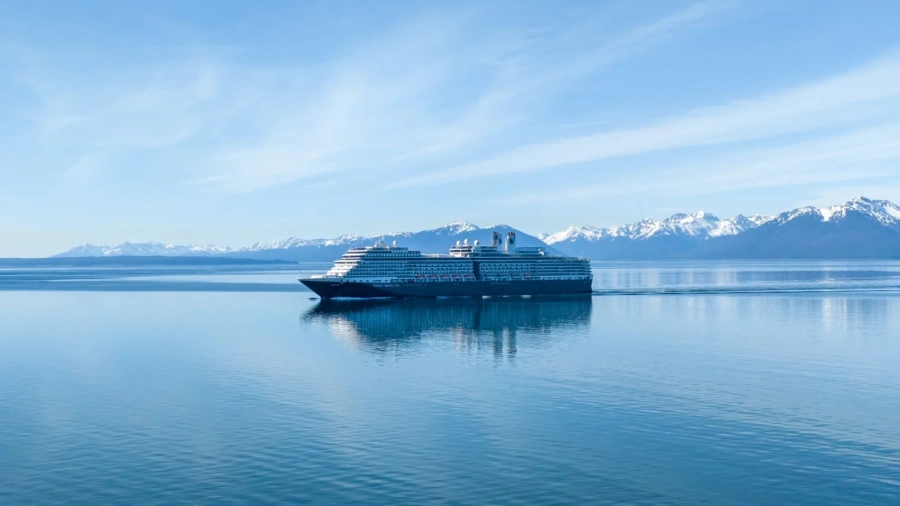
Cruise ship sailing past forested mountains in Alaska, illustrating the small ship vs large ship Alaska cruise choice

Small Ship vs Large Ship Alaska Cruise: Big Ship, Luxury or Expedition?

Deciding on a small ship vs large ship Alaska cruise comes down to what you want from your days. Big ships from lines like Princess, Holland America and Royal Caribbean give you the lowest price per day and plenty to do on board. Luxury ships add space, service and inclusions. Small expedition ships with 22 to around 150 guests get you closest to wildlife, glaciers and remote coves, at the highest price per day.

Most people are not really choosing a cruise line first. They are choosing a style of trip. This guide compares the three main styles of Alaska cruise side by side, explains how routes and seasons change the picture, and helps you work out which one fits your budget and travel style. If you already know your style and want to pick a specific line, our guide to the best cruise line to Alaska for you goes line by line.

The Three Styles of Alaska Cruise at a Glance

Here is how the three styles compare on the things that matter most. Prices are rough per person, per night guides based on two people sharing, and they move a lot by month, cabin and how early you book.

Big ship Luxury Small ship / expedition
Typical lines Princess, Holland America, Royal Caribbean, Celebrity, Norwegian, Carnival Regent Seven Seas, Silversea, Seabourn, Crystal, Oceania, Viking UnCruise, Lindblad Expeditions, American Cruise Lines
Guests on board About 2,000 to 5,000+ About 250 to 1,250 About 22 to 175
Rough price per night About $85 to $250 (inside to balcony) About $600 to $1,200+ About $700 to $1,600+
Ports Juneau, Ketchikan, Skagway, plus Victoria BC on Seattle round trips Main ports plus some smaller towns such as Sitka, Wrangell or Haines Small towns, remote inlets, wilderness landings
Wildlife access From the deck, or on paid excursions From the deck, or on paid excursions Close up from kayaks, skiffs and the bow, often with naturalists
What is included Meals in main venues; drinks, Wi-Fi, tips and excursions usually extra Most drinks, tips and Wi-Fi; some lines include excursions Often all activities and guiding; some lines include drinks and transfers
Best for Families, first-timers, value seekers Couples wanting comfort and fine dining Active travelers and nature lovers

One point the table cannot show: a cheap big-ship fare and an expensive expedition fare are not always as far apart as they look once you add excursions. In Alaska, a whale-watching trip, floatplane flight or glacier landing can easily cost several hundred dollars per person each, and those are already built into many expedition fares.

Big Ship Alaska Cruises: Best Value and Most Choice

Large ships carry most of Alaska’s cruise visitors, and they do some things very well. You get the widest choice of dates, cabins and departure ports, plus pools, shows, kids clubs and a long list of restaurants. For a family or a first trip to Alaska, that mix is hard to beat on price.

Recent snapshot fares for 2027 seven-night sailings started at roughly $600 to $820 per person for an inside cabin on Princess, Celebrity, Royal Caribbean, Carnival and Holland America, with balconies from about $900 to $1,700. Taxes are often included in quotes; gratuities, drinks and excursions usually are not.

Glacier Bay and scenic cruising on a big ship

Glacier Bay National Park allows only two cruise ships a day, with seasonal caps on top of that, so permits are limited. Holland America and Princess are the lines most often associated with Glacier Bay itineraries, and a National Park Service ranger comes on board for the day. If Glacier Bay is high on your list, check the itinerary before you book rather than assuming it is included. Some big ships visit Hubbard Glacier or Endicott Arm instead, which are spectacular in their own right.

Who a big ship suits

  • Families with children who want activities on sea days
  • Travelers who want to keep costs down and choose excursions one by one
  • Anyone planning a cruisetour with land days in Denali

The trade-off is crowds. On busy days in Juneau or Skagway several large ships can be in port at once, and popular excursions sell out. Torn between the two biggest Alaska specialists? See our comparison of Holland America vs Princess.

Tidewater glacier and snowy mountains seen from the water on an Alaska cruise
Glacier viewing is a highlight on every style of Alaska cruise. Photo: Timon Cornelissen on Pexels

Luxury Alaska Cruise: Space, Service and Inclusions

A luxury Alaska cruise sits between the two extremes. Ships are mid-sized, so you still sail the classic routes and dock at the main ports, but with far fewer people, more space per guest and a higher level of service. Recent Alaska deployments have included Regent’s Seven Seas Explorer (746 guests), Silversea’s Silver Moon (596) and Silver Whisper (392), Crystal Symphony (606), the Ritz-Carlton Yacht Collection’s Luminara (452) and Oceania’s Riviera (1,250), with Viking also offering longer Alaska voyages. Deployments change year to year, so check the current season with each line.

What you pay for is mostly comfort: all-suite or all-balcony ships on many lines, included drinks and gratuities, better dining and smaller crowds when you board tenders or join tours. Some lines, such as Regent, include many shore excursions in the fare, while others charge for them, so compare carefully. Expect roughly $600 to $1,200 or more per person per night, and promotions can bring that down on shoulder-season dates.

Who a luxury cruise suits

  • Couples and older travelers who value calm, space and service
  • Food lovers who want fine dining after a day ashore
  • People who want the classic Alaska ports without big-ship crowds on board

Keep in mind that a luxury ship still goes where large ships go. You will share Juneau and Skagway with the same crowds once you step off, and the ship cannot slip into the narrow inlets that small vessels reach.

Alaska Expedition Cruise: Closest to the Wilderness

An Alaska expedition cruise on a small ship is the most immersive way to see Southeast Alaska. With a few dozen guests on board, ships can change course for a pod of humpback whales, anchor in a quiet cove overnight and put you in a kayak or skiff the same afternoon. Many trips spend little or no time in the big cruise ports.

The main players today are:

  • UnCruise Adventures, with seven Alaska ships carrying 22 to 88 guests. Fares include activities such as kayaking, paddle boarding and guided hikes, gear, meals and drinks including alcohol. A seven-night Glacier Bay itinerary between Juneau and Sitka has been advertised from about $4,900 per person.
  • Lindblad Expeditions (with National Geographic), with naturalist-led expeditions. Lindblad has announced that its 62-guest Sea Lion and Sea Bird will be replaced by the larger Greg Mortimer (about 150 guests) for 2027, with a new Vancouver to Sitka Inside Passage route from May 2027. It is usually the priciest of the three per night.
  • American Cruise Lines, with coastal ships of around 170 guests sailing round trips from Juneau and longer trips from the Pacific Northwest. It is more comfort-focused than adventure-focused, and recent eight-night Juneau round trips were listed from about $6,725 per person.

Note that Alaskan Dream Cruises, a long-running Sitka-based small-ship line, stopped operating in early 2026 and canceled its remaining sailings, so you will no longer find it on 2027 itineraries.

Small ship Alaska cruise trade-offs

A small ship Alaska cruise has fewer facilities: no casino, few or no evening shows, simpler cabins on some ships and limited medical services. Motion can be more noticeable in open water. Many itineraries are one way between Alaska towns such as Juneau, Sitka or Ketchikan, so you will usually fly in and out rather than sail from Seattle or Vancouver. That adds flight costs, but it also means more days actually in Alaska.

Kayakers paddling on calm water beneath forested mountains in Southeast Alaska
Kayaking straight from the ship is a big draw of expedition cruising. Photo: Martine Sunde on Pexels

Inside Passage vs Gulf of Alaska and Cruisetours

Whichever style you choose, the route shapes your trip as much as the ship.

  • Inside Passage round trips from Seattle or Vancouver are usually seven nights and call at Juneau, Ketchikan and Skagway, with a day of glacier viewing. Foreign-flagged ships sailing round trip from Seattle must stop at a foreign port, which is why Victoria, British Columbia often appears on the last night.
  • Gulf of Alaska one-way cruises run between Vancouver and Seward or Whittier, near Anchorage. They usually add Hubbard Glacier or College Fjord and pair well with a land tour.
  • Cruisetours combine a one-way cruise with several nights on land in places like Denali National Park and Fairbanks. Princess and Holland America have the deepest land networks here.
  • Small-ship routes mostly stay within Southeast Alaska, weaving through narrow channels between islands that big ships cannot use.

When to Go on an Alaska Cruise

The Alaska cruise season runs from roughly late April or May to late September.

  • May and early June: lower prices, fewer crowds, snow on the peaks and often drier weather. A good time for value on any style of ship.
  • Late June to August: peak season, with the warmest weather, long days, whales well established and salmon runs in July and August. Prices and crowds are highest.
  • September: cheaper fares, autumn colors and a chance of northern lights on dark nights, but more rain and shorter days.

Small ships have far fewer cabins, so popular summer dates can sell out a year or more ahead. Big-ship fares tend to be more flexible, and you can often find promotions; our roundup of cruise deals for 2027 is a good place to start.

How to Choose Your Alaska Cruise Style

  1. Start with your budget per night, not per trip. Then add what is not included, especially excursions, drinks and tips, so you compare like with like.
  2. Decide how active you want to be. If you want to kayak, hike and get off the ship in wild places most days, a small ship is worth the cost. If you prefer watching from a balcony, a big or luxury ship fits.
  3. Think about who is traveling. Young children usually do better on big ships. Couples looking for quiet often prefer luxury or small ships.
  4. Check the scenic day. Glacier Bay, Hubbard Glacier, Tracy Arm or Endicott Arm: know which one your ship visits.
  5. Consider a hybrid. A big-ship cruise plus a small-boat whale watch or a few days in Denali can give you a taste of both worlds for less than a full expedition.

FAQs

Is a small ship or large ship better for an Alaska cruise?

Neither is better for everyone. Small ships get you closer to wildlife and remote places with fewer people around, while large ships offer more facilities, more departure dates and much lower prices per day.

Which is the best cruise ship to Alaska?

It depends on your style. For value and families, a big ship from Princess or Holland America is a strong choice; for comfort, a luxury line like Regent or Silversea; for wildlife and adventure, an expedition ship from UnCruise or Lindblad.

How much does a luxury Alaska cruise cost?

As a rough guide, luxury lines run about $600 to $1,200 or more per person per night, with expedition ships often higher. Big-ship cruises can start under $100 per person per night for an inside cabin.

Can small ships go into Glacier Bay?

Yes, some can. Glacier Bay limits large cruise ships to two a day and smaller tour vessels to three a day, and some small-ship lines such as UnCruise include Glacier Bay on selected itineraries.

When should you not go on an Alaska cruise?

Outside the May to September season there are essentially no cruises. Within the season, late September brings more rain and shorter days, and peak July dates are the most crowded and expensive.

image-59.jpeg

What’s Included in MSC Cruises (And How Much is Everything Else?)

MSC Cruises can be some of the cheapest that you can book – but you need to understand exactly what that cruise fare then gets you. It’s no good assuming that you’re getting a bargain if it then turns out that you’ve got loads more that you need to fork out for.

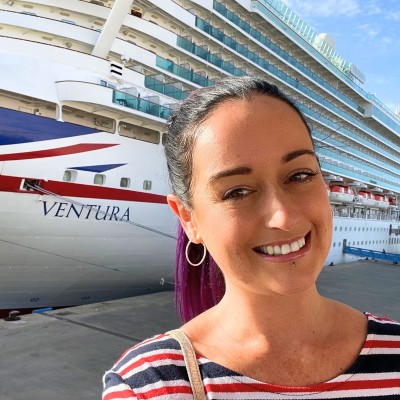
Cruise Mummy smiling for a selfie with a large cruise ship MSC Euribia docked in the background. The ship is white with multiple decks, and various construction equipment is visible in the foreground under a cloudy sky.

What complicates matters even more is the fact that MSC offers three different ‘experiences’, all of which comes with different costs and different inclusions.

It can get a little confusing, but with this guide, I’ll make it clear what you get, and what you need to pay for, for each cruise fare you can choose.

And then you’ll know what counts as a real bargain cruise with MSC, and what actually isn’t as good a deal as you thought.

What’s Included in an MSC Cruise and What Costs Extra..?

1. Accommodation

As with any cruise line, your cruise fare covers your accommodation costs. It’s one of the main things that you’re actually paying for.

A cosy cabin on MSC Euribia cruise ship features two single beds with white linens and blue throws, separated by a nightstand. The room is decorated with framed marine-themed artwork and includes a vanity desk with a mirror and various amenities. Soft lighting creates a warm and inviting atmosphere.

And as you’d expect, you have the typical range of cabin options available:

  • Inside cabins with no view
  • Ocean View cabins that have a window
  • Balcony cabins with a private balcony space
  • Suites, offering the most space and a range of extra perks.

However, as I’ve already said, there are different cruise fares you can book with MSC, called ‘Experiences’. And the experience that you choose will determine which cabin types you’re able to book.

Experience Cabins You Can Book Choose Your Specific Cabin?
Bella Inside, Ocean View, Balcony No
Fantastica Inside, Ocean View, Balcony Yes
Aurea Suites Yes

If you book the Bella experience, you only get a Guarantee cabin – one where the cruise line will pick your room for you, and you’ll only find out where you’re staying a few days before you sail.

Close-up of MSC cruise ship highlighting Bella Balcony and Fantastica Balcony cabins, marked by red arrows, showcasing the ship's multi-tiered accommodation options.

You’ll also get the worst locations on the ship – the ones that are furthest from the restaurants or leisure amenities or those with an obstructed view.

Also, if you book a cabin for 3 or 4 people, there’s a chance that you could be split between two cabins instead, if there isn’t a larger room available. 

MSC Virtuosa balcony cabin with bunk beds

This might be a good thing, but if you’re travelling with kids it could make things difficult, especially since there’s no guarantee the cabins will be next to each other. They will be on the same deck and same side, but there could be several cabins between them.

If you choose Fantastica, you’ll get to pick where on the ship your cabin will be, and if you choose Aurea you can book one of the suites.

This includes a range of normal suites, and the option of booking in the MSC Yacht Club, an exclusive part of your MSC ship that features on most newer MSC ships. These come with a range of additional perks such as a pillow menu, access to exclusive lounge and sun deck areas, and a welcome package with Prosecco and chocolates.

Regardless of whether you choose the cheapest Bella Inside cabin or the fanciest Aurea suite, you’ll always get a minibar, a TV, a safe, a hairdryer, air-con and a telephone. But you won’t always get a bed!

One cruise ship has solo rooms with sofa beds instead of a proper bed – so be warned!

Read more: MSC Bella Vs Fantastica Vs Aurea

2. Food

As with other cruise lines, MSC offers a wide range of food at no extra cost for your cruise fare.

You can enjoy the Main Dining Room or the buffet, along with a small range of other casual venues for items like burgers or pizza, and you won’t have to pay anything.

A plate of food featuring a sesame seed bun burger with a vegetable patty and sundried tomatoes, accompanied by a generous portion of golden French fries. The meal is set on a white tablecloth with silverware and a glass of sparkling water visible in the background.

But each MSC ship also has a range of speciality restaurants. These include steakhouses such as Butcher’s Cut, a variety of Asian restaurants such as the Kaito Sushi Bar or Oriental Plaza, and various other international venues including the Hola Tapas Bar, or the Indochine Restaurant. The specific venues will depend on which ship you choose.

For these restaurants, you’ll either need to pay a fixed price to dine there, or they will offer an a la carte menu, with the costs added to your account that you’ll need to settle at the end of the cruise.

A promotional banner for MSC Cruises advertises "Speciality Dining Packages" with options including Duo (two speciality dining experiences for €75), Trilogy (three speciality dining experiences for €95), The Finest Four (four speciality dining experiences for €125), L'Atelier Grill Chef's Table (€85), and Dinner and Bubbles (€115). The banner features images of gourmet food and happy diners.

MSC also offers the option of paying for a dining package. You can choose between one to five meals, and by paying in advance you can save up to 40% of the cost of paying for each meal individually when you’re on the ship.

So, that’s another way you can budget in advance and still enjoy all the experiences of your cruise ship.

3. Drinks

On an MSC cruise, there are a small selection of drinks that you’ll be able to enjoy at no extra charge – tap water, basic coffee and tea, ice tea, and juices at breakfast. But for everything else – sodas, bottled water, and alcoholic drinks, you’ll need to pay.

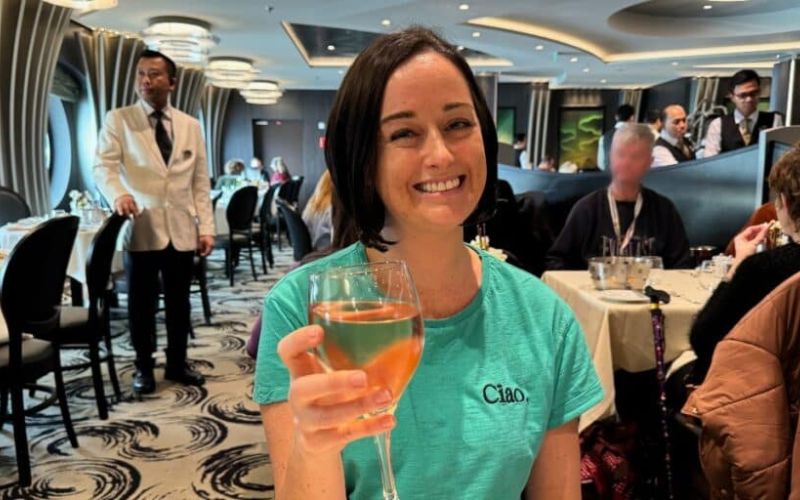
Cruise Mummy raises a glass of amber-colored beverage in the Main Dining Room on an MSC cruise ship, with elegant décor and attentive staff in the background, capturing a moment of joy and fine dining on a luxury voyage.

You can pay for drinks individually, if you want. A glass of soda costs around $2.25, a beer will cost around $6, and a cocktail can vary between $7 and $16 depending on how fancy a drink you’re looking for.

Read more: MSC Cruises Drinks Menus with Prices

If you’re someone who likes to drink a lot (not just booze, but soft drinks too) then it’s worth considering a drinks package. With these, you’ll pay in advance for the duration of the cruise and then be able to enjoy unlimited drinks within your package.

There are three packages that include alcohol – Premium, Easy Plus, and Easy. There’s also an alcohol-free package that covers sodas, bottled water, speciality coffees and even soft-serve ice cream, and there’s a Minors package for younger guests.

A promotional banner for MSC Cruises highlights various drink packages with pricing. The options include the Easy Package (€47 per adult/day), Easy Plus Package (€63 per adult/day), Premium Extra Package (€87 per adult/day), Dine & Drink Package (€15 per meal or €9 per meal/day), Alcohol-Free Package (€29 per adult/day), and Minors Package (€20 per child/day). The banner features images of beverages and encourages guests to upgrade their drink packages.

The cost for the packages will vary depending on where you’re sailing and how long you’re cruising – British guests will pay between £64 and £77.05 per day for the Premium Extra package, for example.

Never jump into buying a drinks package without doing some basic budgeting first, as you might overpay if you don’t drink much each day. My drinks package calculator can help you work it out.

One thing to be mindful of is that the mini bar costs extra, even if you have a drink package. The only way you get to enjoy your mini bar for free is if you stay in the Yacht Club.

A minibar price list from MSC Cruises displays various items and their prices. Spirits include gin, vodka, and whisky at £9 each. Soft drinks like fruit juice, sodas, and ice tea are priced at £3.5 each. Mineral water ranges from £2.5 to £3.5, and beers such as Heineken and Beck's cost £8 each. Snacks, including peanuts, chocolate-covered peanuts, mixed nuts, and chips, are priced between £3.5 and £4.5. The form includes spaces for cabin number, quantity consumed, and total cost.

4. Room Service

On every MSC cruise, guests are welcome to enjoy room service on those occasions where they would rather dine in their room, or they just want a snack. 

A breakfast menu card from MSC Cruises allows guests to indicate their desired quantity for each item.

If you’ve booked the Fantastica or Aurea experiences, then room service is available 24-hours a day and there’s no charge at all for delivery. Some free items are available on the menu, but there are some that have a charge – you just won’t pay for the delivery.

If you’ve booked the cheaper Bella experience, then there will be a $4.99 delivery fee. This is per order, not per person, so you’ll only pay the single fee even if you’re ordering food for everyone in your cabin. You might also want to add a tip on for your budget, so bear that in mind.

5. Entertainment

MSC cruise ships offer a range of entertainment every evening, in the main theatre but also in some other venues around the ship. This can include singers, dancers, acted performances and more. Comedy isn’t too common, just because of the multi-lingual nature of the ships.

A vibrant stage performance on a cruise ship features a group of performers dressed in futuristic costumes under dynamic lighting. The background is illuminated with striking red and orange patterns, creating an energetic atmosphere. The audience is seated, watching the engaging and lively show.

None of this entertainment costs anything to enjoy – it’s all covered by the cost of the cruise fare.

It’s a nice way to pass the evening but make sure you head to the venue as early as you can if you want the best seats. The venues aren’t always designed very well and it’s not uncommon to be stuck behind a pillar, or for a venue to become very crowded.

6. Activities

MSC’s ships are packed with fun things to do during the day, but not all of them are covered by the cost of your cruise fare.

An arcade on a cruise ship features various games, including motorcycle racing simulators, air hockey, and other interactive attractions. The area is brightly lit with colorful neon lights, creating an exciting and playful atmosphere. Large windows offer a view of the sea, adding to the unique experience of gaming at sea.

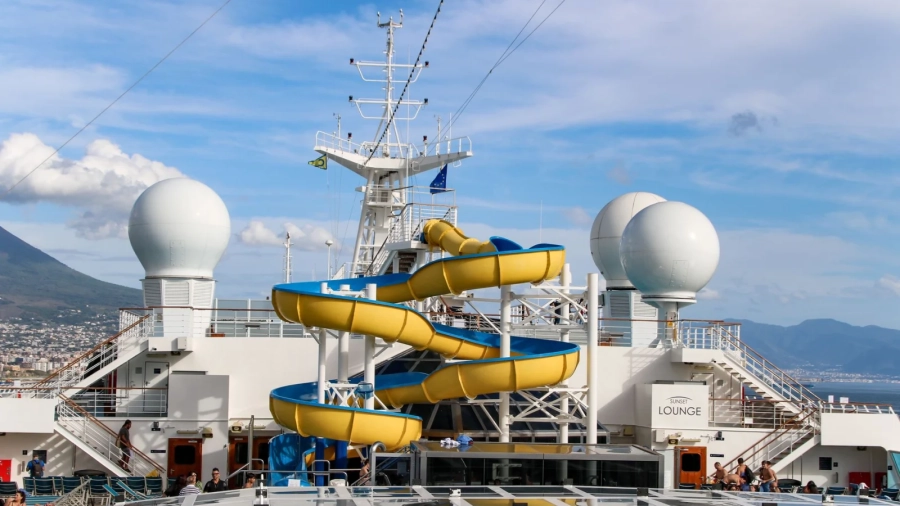
The waterparks are free, so you can swim or ride the slides as much as you want, but pretty much everything else will have a fee that you’ll need to pay. Some examples include:

  • Bowling – typically £25 for 30 minutes
  • Flight Simulator – £15 per go
  • Formula 1 Simulator – £12 per go
  • Arcade games – between £1.50 and £5
  • 4D Cinema – £8

Those prices can quickly add up. But there is a way you can save – you can buy a Fun Pass.

A sign about the MSC fun pass that is on display for people to see

The Fun Pass works differently depending on which ship you’re cruising on – for some, it offers all-inclusive activities, while on others, it gives you a set amount of bonus credit. So if you paid £100, you’d get £40 extra free to spend on the activities on the ship.

Paying for a Fun Pass doesn’t just save you money, it also makes it easier to budget for the activities. You can set a rule where, once the Fun Pass is spent, that’s the activities budget done.

Read more: Is the MSC Fun Pass Worth It?

7. Kids’ Clubs

MSC Cruises has some excellent kids clubs onboard, and is one of the few cruise lines to properly cater for babies. So it’s an even bigger relief to know that the kids’ clubs on the ship are available at no extra charge.

Two children pose happily with certificates in front of a large LEGO sailor statue at an MSC Cruise Kids' Club. The boy on the left holds colorful streamers and a "Congratulations" certificate, while the girl on the right, wearing a Minnie Mouse hoodie and a face mask, holds a similar certificate and streamers. The background features bright colors and playful decorations, enhancing the fun atmosphere.

You can even enjoy free babysitting for babies and toddlers during the day in one-hour slots, so that you can enjoy your lunch and dinner in peace if you want to. You just need to make sure you’ve booked using the registration form.

Group babysitting is also available for children late at night, if you want to enjoy the nightlife on your ship. It’s available for children aged 3 and up, provided they are potty trained, and it costs $6 per child for the first hour, or $10 per child for the full three hours. The service is offered between 11 pm and 2 am.

8. Service Charges

As if the different experience fares you can book with MSC weren’t confusing enough, there’s one more quirk of MSC that can make budgeting a little tricker – daily gratuities. And that’s because sometimes they’re included, and sometimes they aren’t.

A crew member wearing a mask and uniform serves a guest seated on the deck of a cruise ship. The guest, a bald man with tattoos, is receiving a drink from a cart filled with various beverages. The scene takes place under a bright, sunny sky, with the ship's sleek exterior and other passengers in the background.

If you’re cruising from the UK, then the tips will be included. If you’re cruising from the US, then they won’t be, and you should expect to pay up to $14 per person, per day on your cruise.

For cruises in Europe it can vary but the cost will be similar if they aren’t included – make sure you check.

You’ll also want to remember other tips that you might want to pay – such as the luggage porters at port. It’s custom to give them a small tip and it helps to make sure they look after your bags for you.

9. WiFi

Kids using the internet

WiFi internet access is almost never included as standard with a cruise fare, and with MSC that’s no different – if you want to get online, you’ll need to pay extra.

The good news is that MSC’s packages are very well priced, with some of the lowest WiFi charges of any cruise line.

And, you aren’t forced to pay for the full duration of your cruise if you don’t want to – you can pay by the day, though it does work out a lot cheaper to pay for a full week.

There are three packages you can pick from:

  • Social – grants access to popular social media apps such as Facebook, X (Twitter), Instagram, LinkedIn, WhatsApp and Pinterest, but you won’t be able to use them for video calls
  • Surfer – everything in the Social package, but access to the web/emails
  • Streamer – full access to the internet including video and audio streaming.
WiFi Package Cost Per Day Cost For A 7-Night Cruise
Social From €3.90 From €14.90
Surfer From €9.90 From €29.90
Streamer From €19.90 From €59.90

If you don’t want to pay for the WiFi, you can usually find free WiFi while you’re in port – chain restaurants, some bars and hotels are good places to try. Just make sure your phone is on airplane mode at other times, as roaming charges (especially at sea) can be astronomical.

10. Laundry

If you’re on a shorter MSC cruise, you’ll probably never need to use the laundry services, but for longer cruises, it can be more cost-effective to have some clothes washed instead of buying a whole holiday wardrobe.

MSC doesn’t offer self-service laundry unlike some other cruise lines, which means you have to use the laundry service. You can pay per item, or you can pay for a laundry package.

This image is a pricing list for laundry services on an MSC cruise. It details the costs in pounds and euros for various types of clothing items for both gentlemen and ladies, such as shirts, trousers, dresses, and skirts, along with the cost for other items like pillowcases and blankets. The list is presented in multiple languages, including English, German, French, Spanish, Italian, and Russian.

On a per-item basis, expect to pay around €3 per t-shirt or €9 for a dress. Packages start at €15 which gets you 10 items – so you can save a lot buying a package instead of paying for everything individually.

11. Flights and Transfers

One thing that isn’t included with an MSC cruise fare as standard is your flights. It’s possible to book a package through the cruise line, but most of the fares you see advertised will be cruise only.

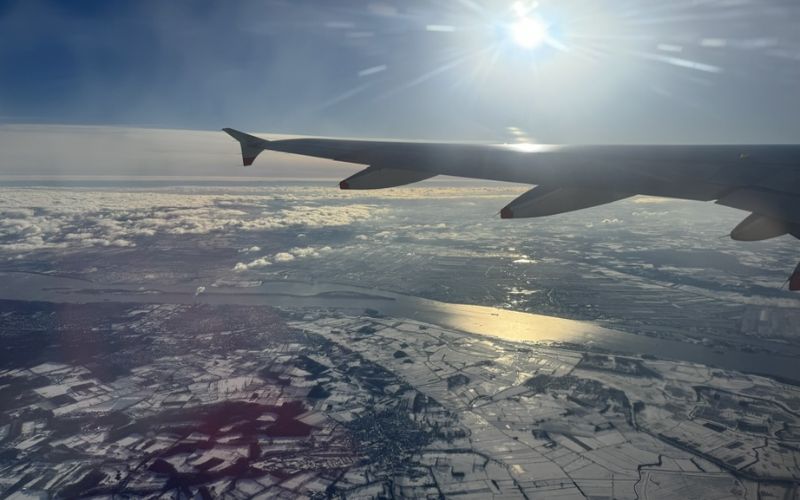
A view from an airplane window shows the wing of the aircraft against a backdrop of a clear blue sky and the sun shining brightly. Below, a landscape of fields and rivers is partially covered in snow, with clouds scattered across the horizon, creating a serene and picturesque aerial scene.

Often you can save by booking your flights separately, either yourself or by using a travel agent to put together a package for you. You just need to be aware that, if something happens to your flight, the cruise ship won’t wait for you. 

Give yourself plenty of time to get to your embarkation port, and make sure you have insurance. If you can, it’s best to fly the day before and book an overnight hotel so that you’re guaranteed to make the ship in time.

Don’t forget transfers, too – you need to get from the airport to the cruise port after all, and that’s another cost to factor in.

And if you’re sailing from Southampton (or from a port that’s in your own country) then you’ll need to still think about how you’re getting there. If you’re using public transport, budget for those costs, and if you’re driving, you’ll need to think about parking.

Suggested read: How To Get To Southampton Cruise Terminal by Train

12. Shore Excursions

Shore excursions aren’t included in your cruise fare, and depending on the type of excursion, they can be pretty expensive if you book through the cruise line.

My son on an MSC shore excursion. He smiles with his arms outstretched, standing in front of the iconic Stonehenge monument. He is wearing a black hoodie with a "Love Our Planet" design and blue shorts featuring a Mickey Mouse patch. The grassy field and ancient stones create a historic and picturesque backdrop under a cloudy sky.

You have alternative options – in some ports, you might not need an excursion, and you can just wander off on your own to explore.

In others, look for local bus services or book excursions with a third party. You can often save a lot doing this, but the downside is that there’s a risk the ship will leave you behind if your excursion delays you in any way.

You could, of course, just stay on the ship – nobody’s forcing you to get off an explore, and this is a great way of keeping costs down.

NEW DEALS JUST RELEASED!

Don’t miss the latest MSC Cruises offers…

To Conclude

MSC Cruises can be very cheap, though for the lowest fares, you might end up with a cabin in a less-than-ideal location. You also need to think about drinks prices, and the activities you want to enjoy around the ship.

Look into the extra packages that are available. You can make your MSC cruise all-inclusive (or as good as) if you pay for a drinks package and a Fun Pass, but only if you’ll definitely make use of them.

With a bit of planning, and working out how much you’re likely to spend on extras, you can make sure you’ve budgeted for a great cruise with MSC.

Related Posts

If you found this interesting, please share!

Cruise Mummy

Jenni Fielding is the founder of Cruise Mummy. She has worked in the cruise industry since 2015 and has taken over 30 cruises. Now, she helps over 1 million people per month to plan their perfect cruise holidays.

Read more about me

Source link

Family relaxing on the pool deck of a large cruise ship

The Best Royal Caribbean Ships for Kids of Each Age (2026)

The best Royal Caribbean ship for kids depends on how old they are. For babies and toddlers, the Icon-class ships (Icon, Star and the new Legend of the Seas) are the strongest pick, thanks to the Surfside neighbourhood built around young families and its shallow splash zones. For children aged 3 to 11, any Icon- or Oasis-class ship gives you the biggest kids’ club, waterparks and the most to do. For teens, Icon, Oasis and Quantum ships offer the best thrills and dedicated teen spaces, while Freedom and amplified Voyager-class ships are good-value alternatives.

Below we break it down by age group, explain what changes from ship to ship, and finish with a quick comparison table. Features and prices are as published by Royal Caribbean at the time of writing (October 2026), but the line notes that activities and pricing vary by ship and sailing, so always check your specific cruise in the Royal app or your booking.

How to pick the right Royal Caribbean ship for your family

Royal Caribbean groups its fleet into classes, and ships in the same class share most of their layout and features. As a rough guide, from largest to smallest:

  • Icon class: Icon of the Seas (2024), Star of the Seas (2025) and Legend of the Seas (delivered June 2026, sailing the Mediterranean in summer 2026 before moving to Fort Lauderdale for the Caribbean).
  • Oasis class: Oasis, Allure, Harmony, Symphony, Wonder and Utopia of the Seas.
  • Quantum class: Quantum, Anthem, Ovation, Spectrum and Odyssey of the Seas.
  • Freedom class: Freedom, Liberty and Independence of the Seas.
  • Voyager class: Voyager, Explorer, Adventure, Navigator and Mariner of the Seas.
  • Smaller ships: the Radiance class (Radiance, Brilliance, Serenade, Jewel) and Vision class (Grandeur, Enchantment, Rhapsody, Vision).

Every ship has the free Adventure Ocean kids’ club and a teen space, but the size of those areas and the extras around them (waterslides, FlowRider surf simulators, splash pads, arcades) grow with the ship. If you want a deeper look at how the classes differ, see our Royal Caribbean ship classes comparison.

Three things matter most for families:

  • Nursery availability if you have a child under three.
  • Water play suited to your children’s ages: splash pads for little ones, big slides for older kids.
  • Itinerary and port. A short sailing from Florida with a stop at Perfect Day at CocoCay can matter as much as the ship itself.
Toddler playing in a shallow splash pool with a parent nearby
Photo: Franco Monsalvo on Pexels

Best ships for babies and toddlers (6 to 36 months)

Royal Caribbean’s nursery, Royal Babies & Tots (branded AO Babies on some newer ships), takes children from 6 to 36 months. Babies must be at least 6 months old on most sailings, and at least 12 months on transatlantic crossings and some longer voyages. The nursery costs extra: Royal Caribbean currently lists it at around $9 to $12 per hour, with evening hours usually at the higher rate. Hours vary by ship and day, and on some sailings it’s only open in the evening, so book early once onboard.

The nursery is offered on most of the fleet, including all Icon, Oasis and Quantum class ships, the Freedom class, Navigator and Mariner of the Seas, and the Radiance and Vision class ships. According to Cruise Critic’s current list, Jewel, Adventure and Explorer of the Seas do not offer nursery drop-off, so avoid these if you’re relying on childcare for an under-three.

Top pick: Icon class. Surfside, the family neighbourhood on Icon, Star and Legend of the Seas, puts Splashaway Bay, a dedicated Baby Bay splash area, a family pool, a carousel and casual eateries all in one place, near the Adventure Ocean area. It means less walking with a pushchair and fewer meltdowns between activities. Note that babies still in swim nappies are only allowed in designated splash zones (not the main pools), which is exactly why Baby Bay is so useful.

Runner-up: Oasis class. These ships have Splashaway Bay, the Boardwalk carousel and plenty of open space, and the nursery is available on all six. Utopia of the Seas, sailing short Bahamas trips from Port Canaveral, is a good fit for a first cruise with a toddler.

Best ships for young kids (3 to 5)

From age three, potty-trained children can join Adventure Ocean for free. The standard group for this age is Aquanauts (3 to 5); on Freedom, Odyssey, Wonder, Icon and Utopia of the Seas the groups are branded AO Juniors instead. Children must be fully toilet-trained, so pull-ups aren’t allowed.

Top pick: Icon class again. Surfside keeps the splash areas and Adventure Ocean close together, and the Category 6 waterpark has family raft slides suitable for smaller riders who meet the height limits.

Also great: Oasis class. Splashaway Bay, the carousel, the Adventure Ocean Theater (on selected larger ships) and family shows keep this age group busy. Quantum ships suit them too, especially in cooler regions, because there’s more indoor space (including the SeaPlex sports and activity area).

Adventure Ocean also runs the Late Night Party Zone, usually from around 10pm until 2am, for an hourly fee per child aged 3 to 11. It’s handy if you want a late dinner or show.

Children riding a waterslide on a sunny day
Photo: Pixabay on Pexels

Best ships for kids aged 6 to 11

This is the age where the big ships really pay off. Kids join Explorers (6 to 8) and Voyagers (9 to 12), or AO Kids (6 to 12) on the newer branded ships, with science activities, games and themed nights.

Top pick: Icon class. Category 6 is described by Royal Caribbean as the largest waterpark at sea, with six slides, plus a FlowRider surf simulator, mini golf and climbing on Thrill Island. Kids who are tall enough can try Crown’s Edge, a part skywalk, part ropes course high above the ocean.

Also great: Oasis class. Waterslides (including the Perfect Storm slides on most of these ships), the Ultimate Abyss dry slide, FlowRider, zip line and rock climbing walls give a huge amount to do. Wonder and Utopia of the Seas have some of the newest kids’ features in this class.

Good value: Freedom class and amplified Voyager ships. Freedom-class ships have the FlowRider and waterslides and are often cheaper than Icon or Oasis sailings. Navigator and Mariner of the Seas, which were refurbished, add waterslides and other extras and do a lot of short Caribbean trips.

Best ships for teens

Teens get their own free space that adults and younger kids can’t use. Royal Caribbean currently describes its teen programme as being for ages 13 to 17, though on some ships the age split starts at 12, so check your sailing. Venue names vary by ship: Social100, Social020, the Living Room or Fuel.

Top pick: Icon class. Thrill Island’s slides, Crown’s Edge and the FlowRider, plus lots of venues to roam, suit independent older kids. Teens tend to like that there’s always something new to try.

Also great: Quantum class. RipCord by iFLY (a skydiving simulator), the North Star observation capsule and SeaPlex bumper cars appeal to older children. Fees apply to some of these, so check before you go.

Also great: Oasis class. Wonder of the Seas has Social100, an indoor teen hangout, and The Patio, an outdoor teen area. Oasis ships also have zip lines, FlowRiders and big waterslides.

Which is the best Royal Caribbean ship for kids overall?

If your budget allows, an Icon-class ship is the most complete family choice in October 2026, because it serves every age from babies to teens in one place. Icon of the Seas sails from Miami, Star of the Seas from Port Canaveral, and Legend of the Seas is due to sail from Fort Lauderdale from November 2026 after its first Mediterranean season. If Icon prices are too high, an Oasis-class ship gives you most of the same experience, and a Freedom-class or amplified Voyager ship is a solid budget option. For deal timing, see our guide to cruise deals for 2027.

Comparison by age group

Age group Best class Also consider Why
6 to 36 months Icon Oasis Surfside, Baby Bay, paid nursery onboard
3 to 5 Icon Oasis, Quantum Free Adventure Ocean, splash areas, family slides
6 to 11 Icon Oasis, Freedom Waterparks, FlowRider, climbing and mini golf
12 to 17 Icon Quantum, Oasis Teen lounges, thrill rides, RipCord by iFLY
Budget families Freedom Navigator, Mariner Lower fares, waterslides, short sailings

Smaller Radiance and Vision class ships still have Adventure Ocean and (except Jewel) a nursery, but far fewer water and thrill features. They work well for families who care more about the itinerary, such as Alaska or longer voyages, than about onboard attractions.

Families with older kids can check the Icon of the Seas waterslides and height requirements before choosing a ship.

If your kids are too young for phones, our guide to the best walkie-talkies for cruise ships explains which radios your cruise line allows and how well they work on board.

UK families deciding between a sailing and a forest break can compare costs and inclusions in our cruise vs Center Parcs guide.

FAQs

How much does the Royal Caribbean nursery cost?

Royal Caribbean currently lists Royal Babies & Tots at about $9 to $12 per hour, with evening hours usually costing more. Prices and opening hours can vary by ship and sailing.

What age can kids join Adventure Ocean?

Children can join the free Adventure Ocean programme from age 3, as long as they are fully potty-trained. Younger children can use the paid nursery from 6 months.

Which Royal Caribbean ships don’t have a nursery?

At the time of writing, Jewel, Adventure and Explorer of the Seas don’t offer nursery drop-off. Check with Royal Caribbean before booking, as ship refits can change what’s offered.

Is Legend of the Seas good for families?

Yes. As the third Icon-class ship, Legend of the Seas has the Surfside family neighbourhood and the Category 6 waterpark. It sails Western Mediterranean cruises from Barcelona and Rome in summer 2026, then Caribbean cruises from Fort Lauderdale.

20160420_130730.jpg

7 Steps To A Hassle-Free Embarkation Day

Your cruise vacation begins as soon as you set foot on the ship and receive that welcome glass of sparkling wine from the smiling crew members. 

Carnival Cruise Line Guy's Pig and AnchorCarnival Cruise Line Guy's Pig and Anchor
Alternative venues, such as Guy’s Pig and Anchor Bar-B-Que on some Carnival Cruise Line ship, may be open for lunch on embarkation day. These often make a better alternative than the crowded buffet areas.

To make the most of your valuable time and to get your cruise off to a great start, you’re going to want to have a smooth embarkation day. The process of getting on a big ship is notoriously one of the most stressful parts of the cruise experience. This is because so many others are arriving onboard at the exact same time, often leading to a crush of passengers in the same spaces until you all get spread out and settled in.

You can avoid some of the hassles and frustrations that keep you from finding your vacation groove by following our best tips and tricks to enjoy a hassle-free embarkation day. 

Before You Head Out 

Cruise lines allow you to check in for your cruise online. You can print out your ship’s “boarding passes” and create a file of your paperwork that is easy to access so you are ready to show the agents who greet you at the cruise port. This saves you from hold-ups that can result when you have to fill out forms and go through extra checks at the cruise terminal. 

Arrive Early, But Not Too Early 

Most large cruise lines “clear” their ships by 10 a.m. This is the process of getting all the passengers who are finishing their cruise just before yours off of the ship. If you arrive at the cruise pier before the ship is cleared, you will wait (and wait and wait). It makes sense that you want to get onboard as early as you can so that you can maximize the time on the ship and start enjoying the amenities and food.  

But after about 11 a.m. is probably the safest time to arrive and not expect too long of a wait. Some cruise lines offer a program like Carnival’s “Faster to the Fun” (for a fee) that gives you priority boarding for your cruise. If you book a suite, you also typically receive priority boarding perks. Consider these options if you want to be among the first passengers onto the ship.  

Drop the Bags 

7 Steps to a Hassle-Free Embarkation Day | 197 Steps to a Hassle-Free Embarkation Day | 19
7 Steps to a Hassle-Free Embarkation Day 7

Your staterooms are being turned over typically until about 2 p.m. when they will be all cleaned, prepared and ready for your stay. Until then, you need to do something with your luggage so that you don’t have to lug it around for a couple hours on the ship. 

You can lighten your load by dropping your bags curbside with the cruise terminal porters. They will load them onto big carts and ensure that they get onto the ship and eventually to your stateroom. Make sure you have affixed a baggage tag indicating your name and cabin number. You also should tip your porter a buck or two per bag. 

We generally like to carry on our own luggage on because we pack light and want to have it as soon as the cabins are available (bags left with the porter service can sometimes arrive hours after your staterooms are made available, which is frustrating). So, we go straight to our cabins to drop off our bags. Here is the trick: The corridors are usually closed to passengers while the cleaning is in progress. But you can open the doors, go to your stateroom and let your steward know that you simply want to slide the bags under the bed or somewhere else out of the way while they clean. Be polite and leave quickly, so he or she can get on with turning over the cabins. It’s a tough day for them, too, so don’t dawdle in the room and be sure to show appreciation for allowing you to drop off your bags. 

Cruise CompeteCruise Compete

Avoid the Buffet 

Cruisers naturally arrive hungry and ready for lunch when they board their ship. The buffet is a hot spot, of course, and you will find crowds of people all in the same place as they quickly grab up tables and form lines at the buffet.  

This scene is perhaps the biggest source of frustration on embarkation day. Make your way to the main dining room or any of the smaller venues onboard that will be open for lunch, such as a poolside grill serving burgers and other sandwiches or the ship’s pizza eatery or café with lighter fare. 

You will be able to get something tasty and find a table without any problems. In the main dining room, you order from a menu and enjoy a much more relaxing experience as you are served by staff at your table. 

In the Bag 

Prepare a day bag or backpack to bring on that you can easily carry around with some items that you will want while you wait to get to your stateroom. Place essentials in it, such as a swim suit, book, Kindle, magazines, sunscreen, phone charger and any needed medications.  

This means you can use a restroom to change into your swim suit and start enjoying the pool and other amenities in comfort. 

Have a Look Around 

This is also a good time to give yourself a tour of the ship, going deck by deck to learn the layout and where everything is located. If you take an hour to learn all the spots on the ship, you’ll quickly pick out your favorite spots to enjoy during your cruise – and be less likely to get lost. 

Get Your Goodies Booked 

While touring, stop by the spa for a tour and book any treatments you might want. If you have your eye on a massage or facial or other treatment, getting there early ensures that you get your preferred time and day for your appointment. Do this for any specialty restaurants, too, that you want to dine at. (Note: many cruise lines allow you to book dining online ahead of the cruise, and they even offer dining packages that include discounts.) 

Start Enjoying Your Cruise 

If you’ve followed all our tips, that means you have avoided the crowds, satisfied your appetite with a good meal, set up all your appointments for the cruise and learned your way around the ship. There is nothing left now except to order up your favorite fruity drink or cold beer and start enjoying your cruise vacation with all your new friends.


Brought to you by Cruise Compete.  allows you to easily compare multiple offers from Cruise Experts


Source link

Colourful cocktail glasses on sand in the sun, illustrating what a Princess drink package covers

Princess Drink Package 2026: Prices, Rules and Is It Worth It?

A Princess drink package costs about $78 per person per day for the standalone Plus Beverage Package ($64.99 plus the 20% service charge) or about $102 per day for the Premier Beverage Package ($84.99 plus 20%). Most travelers get better value from the Princess Plus fare add-on at $70 a day booked in advance, which bundles the same drinks with Wi-Fi and crew gratuities. On average you need to drink about four to six drinks a day for a drink package to pay for itself.

Below you will find current 2026 prices, what each package covers, the rules that catch people out, and a simple way to work out whether a Princess Cruises drink package is worth it for your trip. Prices change often, so check princess.com or your booking before you pay.

Princess drink package prices for 2026 at a glance

Princess sells two kinds of drink deal. First, there are standalone beverage packages that cover drinks only. Second, there are the Princess Plus and Princess Premier fare packages, which include a drink package plus other extras. The table shows US dollar prices per person per day at the time of writing.

Package Price per day What’s included
Classic Soda Package $14.99 + 20% (about $18) Fountain sodas, fruit juices, mocktails and smoothies
Zero-Alcohol Package $29.99 + 20% (about $36) Specialty coffees and teas, sodas, hot chocolate, mocktails, bottled water, San Pellegrino, Evian, Red Bull
Plus Beverage Package $64.99 + 20% (about $78) Cocktails, beer, wine by the glass and spirits up to $15 each, soft drinks, specialty coffee, bottled water
Premier Beverage Package $84.99 + 20% (about $102) Everything in Plus, with drinks up to $20 each, top-shelf spirits and reserve wines by the glass
Princess Plus (fare add-on) $70 pre-cruise, $75 onboard Plus Beverage Package, Wi-Fi for one device, crew appreciation, four casual dining meals, free OceanNow delivery
Princess Premier (fare add-on) $105 pre-cruise, $110 onboard Premier Beverage Package, Wi-Fi for four devices, crew appreciation, unlimited specialty dining, photos, reserved theater seats, shore excursion credit

On Sun Princess and Star Princess, the newest ships, Princess Plus and Princess Premier cost $5 more per day: $75 and $110 booked in advance. Industry reports say Princess raised the Plus and Premier prices by $5 in October 2026, and that people who had already bought were kept at the old price. If you booked earlier, check what your confirmation shows.

In March 2026 Princess raised its onboard service charge on food and drink from 18% to 20%. Some of Princess’s package terms still show the old 18% totals, such as $76.70 a day for Plus, so expect the final figure at checkout to be a little higher than older guides show.

UK prices in pounds

If you book through Princess UK, the fare add-ons are priced in sterling. Princess Plus costs £53 per person per day and Princess Premier costs £78 when bought at least four days before you sail. On Sun Princess and Star Princess they cost £58 and £83. The legal drinking age on UK sailings is 18. On North American sailings it is 21.

The Plus Beverage Package explained

The Plus Beverage Package is Princess’s main alcoholic drink package. It covers any drink that costs up to $15 on the menu, including most cocktails, beers, wines by the glass and spirits. It also includes fountain sodas, mocktails, fresh juices and smoothies, specialty coffees and teas, and bottled water. Princess says the selection includes around 50 spirits, 25 wines by the glass and 25 beers.

For sailings from 14 January 2026, the rules changed in a way that matters:

  • 15 drinks per day in total. The limit now covers alcoholic and non-alcoholic drinks together, so sodas, mocktails and Red Bull count toward your 15. Specialty coffees and teas do not count.
  • Water is limited separately. You can have up to 12 bottles of water (500 ml or smaller) a day, and these do not count toward the 15.
  • The day runs from 6 a.m. to 6 a.m., not midnight to midnight.
  • One drink per order. You cannot order two drinks at once or order for a friend.
  • Pay the difference. If a drink costs more than $15, you pay only the amount above $15.

Plus also gives you 25% off bottles of wine, large bottles of water and canned soda.

The Premier Beverage Package explained

Premier raises the price cap to $20 a drink. That opens up top-shelf spirits, reserve and premier wines by the glass, and over 20 crafted cocktails. Princess lists more than 75 spirits and 40 wines by the glass, including a private-label Woodford Reserve and a Jack Daniel’s Single Barrel Select.

Premier’s terms still limit you to 15 alcoholic drinks per 24 hours, but non-alcoholic drinks do not count toward that limit. If you drink lots of sodas, juices or mocktails between cocktails, that difference alone can make Premier the easier package to live with.

Bartender preparing a cocktail with a jigger and mixing glass at an elegant bar
Cocktails up to the package price cap are included, and you pay the difference on anything above it. Photo: Gustavo Fring on Pexels

Princess Plus drink package vs Princess Premier fares

For most people searching for a Princess Plus drink package, the fare add-on is the better deal. At $70 a day, Princess Plus costs less than the standalone Plus Beverage Package (about $78 with the service charge), and it also includes:

  • Crew appreciation (daily gratuities), currently $18 a day in most cabins, $19 in mini-suites and $20 in suites
  • MedallionNet Wi-Fi for one device
  • Four casual dining meals, plus free delivery from OceanNow and room service

Princess Premier adds unlimited specialty dining, Wi-Fi for four devices, unlimited digital photos with three prints, reserved theater seating and up to $300 in shore excursion credit per guest. If you would pay for specialty restaurants and photos anyway, Premier often costs less than it looks. If you are booking a suite, it is worth reading up on the Princess suite and mini-suite perks first, because some benefits overlap.

Three booking points to know:

  1. The advance price applies only if you buy at least 96 hours (four days) before departure. After that, or onboard, it costs $5 more per day.
  2. The first and second guests in a cabin must choose the same package level. Third and fourth guests are not required to match.
  3. Crew gratuities are already included, so you do not need to prepay them separately. Our guide to whether to prepay cruise gratuities explains how this works on other lines.

Do both people in a cabin have to buy a package?

For the Princess Plus and Premier fares, yes: guests one and two on the booking must choose the same level. For the standalone beverage packages, Princess’s published terms do not clearly require every adult in the cabin to buy. Some passengers report buying for only one person. Whatever you buy, you cannot share it, and staff can cancel a package if they think you are sharing. If one of you drinks a lot and the other hardly drinks, ask Princess or your travel agent how your booking is set up before you buy.

Rules, deadlines and what’s not included

  • Whole cruise only. You must buy the package for every day of the voyage. Princess does not sell packages for part of a cruise or by the day.
  • When to buy. You can buy online up to four days before sailing. Onboard, standalone packages are sold only on embarkation day (some terms also allow the day after).
  • Refunds. Packages are non-refundable within a few days of sailing and once you are onboard.
  • Not included: drinks above your price cap (you pay the difference), full bottles of wine (25% off instead), canned soda, minibar items, and drinks in some premium venues.
  • Under-age guests cannot buy the alcoholic packages. In the Plus and Premier fares, they get the Zero-Alcohol package instead.
  • Staff discretion. Bar staff can refuse service to anyone who appears intoxicated, even if they are under the limit.

If you want ways to stretch your drinks budget within the rules, see our roundup of cruise drink package loopholes that still work in 2026.

Row of wine glasses on a table in a cosy setting with warm lighting
Princess allows each adult to bring one bottle of wine aboard at embarkation. Photo: Vladimir Srajber on Pexels

Princess drink prices and the bring-your-own wine policy

If you skip a package, you pay as you go, plus the 20% service charge. Approximate menu prices at the time of writing are:

  • Beer: about $6 to $9
  • Wine by the glass: about $9 to $15
  • Cocktails: about $10 to $18

Some drinks are free without a package: water, tea, regular coffee, iced tea, lemonade and juice at breakfast.

Each adult of legal drinking age may bring one bottle of wine or Champagne, up to 750 ml, in their carry-on bag at embarkation. There is no corkage fee if you drink it in your cabin. Extra bottles, or a bottle opened in a restaurant, incur a corkage fee. This has been reported at around $20 a bottle, so check the current fee when you board. Princess does not allow you to bring beer or spirits aboard for your own use.

Is a Princess drink package worth it? The break-even maths

Most guides say “it depends on how much you drink” without showing the numbers. Here is a simple way to work it out. Take the daily price, then divide it by what an average drink costs you including the 20% service charge.

Option Daily cost Value to earn back from drinks Drinks per day to break even (at $14.40 a drink)
Plus Beverage Package about $78 $78 about 5.4
Premier Beverage Package about $102 $102 about 7.1 (fewer if you choose premium drinks)
Princess Plus fare $70 $52 after $18 gratuities about 3.6

The $14.40 figure assumes a $12 average menu price plus 20%. For example, two glasses of wine at dinner, a cocktail by the pool, a beer in the afternoon and a soda already comes to five or six drinks. On a sea day that is easy to reach. On a busy port day, when you are ashore from morning until late afternoon, you may drink much less. Count your realistic sea days and port days, because the package must cover every day of the cruise.

Two quick rules of thumb:

  • If you would pay the $18 daily gratuity and buy Wi-Fi anyway, Princess Plus pays for itself at roughly three to four drinks a day.
  • If you drink one or two glasses of wine with dinner and little else, paying as you go, or bringing your one free bottle, is usually cheaper.

Comparing lines? Our MSC drink packages guide shows how a different pricing model works.

FAQs

How much is the Princess drink package per day?

The standalone Plus Beverage Package is $64.99 plus a 20% service charge (about $78), and Premier is $84.99 plus 20% (about $102). The Princess Plus fare, which includes drinks, Wi-Fi and gratuities, is $70 a day when booked at least four days ahead.

Is gratuity included in the Princess drink package?

The standalone packages add a service charge on top of the price, now 20% on most itineraries. Princess Plus and Premier fares already include the service charge on covered drinks and the daily crew appreciation.

How many drinks can you have with Princess Plus?

Up to 15 drinks per day (6 a.m. to 6 a.m.), including sodas and mocktails, plus unlimited specialty coffee and tea and up to 12 small bottles of water. You can order only one drink at a time.

Can you share a Princess drink package?

No. Packages are for the named guest only, and Princess can cancel a package if it finds you are sharing drinks or ordering for others.

Can you bring wine on a Princess cruise?

Yes. Each adult of legal drinking age can bring one 750 ml bottle of wine or Champagne at embarkation. There is no fee if you drink it in your cabin. A corkage fee applies to extra bottles and to bottles opened in restaurants.

Carnival-drink-package-1-1.jpg

Carnival Cruise Drink Packages 2024: The Ultimate Guide

When you book your Carnival cruise, you must decide whether to buy the drink package or pay for your drinks individually. In this thorough guide, I’ll give you the facts you need to make that decision.

Carnival Cruise Drink Packages

If you’re short on time, just use my Carnival drink package calculator. Choose which drink you’d like and it will work out how much you’ll spend with and without the package.

Carnival Cruise Lines offers two drink packages. The Cheers package includes virtually all drinks up to the value of $20. The Bottomless Bubbles package includes only sodas and juices.

Let’s take a closer look at exactly what’s included in Carnival’s drink packages…

Cheers Package – From $59.95 per day

Includes:

  • Cocktails
  • Spirits
  • Beer by the glass
  • Wine by the glass
  • Sodas
  • Zero-proof frozen cocktails
  • Energy drinks
  • Milkshakes
  • Smoothies
  • Juices
  • Specialty coffees
  • Hot tea
  • Bottled water (500ml)
  • Other non-alcoholic bottled drinks

The Cheers Package also gives a 25% discount on drinks priced above $20, bottles of wine and champagne and drinks classes and seminars.

Carnival’s Cheers drink package limits guests to 15 alcoholic drinks per day. A day is considered to be 6 am – 6 am. There is no limit for non-alcoholic drinks.

What’s not included?

The Cheers package does not include:

  • Drinks in souvenir glasses
  • Bottles of liquor
  • Drinks offered at the gangway
  • Room service or mini bar
  • Sharing cocktails, pitchers, floaters, tubes and buckets
  • Self-service wine machines
  • Freshly squeezed orange juice in the Havana Bar
  • Drinks purchased off the ship including Princess Cays and Half Moon Cay
Cheers Package Terms and Conditions

Bottomless Bubbles – From $9.50 per day ($6.95 for kids)

Includes:

  • Fountain soda by the glass (16 oz)
  • Juice by the glass (10 oz)

Soda flavours may vary but generally include Pepsi, Diet Pepsi, Pepsi Zero Sugar, Caffeine Free Pepsi, Diet Pepsi Caffeine Free, Sierra Mist, Sierra Mist Zero Sugar, Mug Root Beer, Mountain Dew, Diet Mountain Dew, Bubly Lime Sparkling Water, Bubly Grapefruit Sparkling Water, Bubly Orange Sparkling Water

Juices include orange, cranberry, tomato, pineapple and grapefruit.

The Bottomless Bubbles package does not include:

  • Non-alcoholic beverages other than soda and juices
  • Drinks in souvenir glasses
  • Bottled water
  • Hot drinks
  • Drinks offered at the gangway
  • Room service or mini bar
Bottomless Bubbles Package Terms and Conditions

More info on package prices

Cheers Package

Buy on website Buy on ship
6 days or more $59.95 $64.95
5 days or less $69.95 $74.95

Carnival’s alcohol drink package costs $59.95 per person, per day, if you buy it before your cruise or $64.95 per person per day if you buy it on board the ship.

For cruises of 5 days or less departing after December 1st 2023, the prices are $69.95 per person per day for advance purchases or $74.95 per person per day if you buy in on the ship.

You will also have to pay an 18% gratuity on top. When the ship is within US waters (docked in port) you will also have to pay an extra 10% sales tax on each drink.

For a 7-day cruise, if you pre-purchase your drink package, you can expect to pay $495 per person for drinks on your Carnival cruise including gratuities.

If your cruise departs from Texas or New York, state laws mean that you cannot use a drink package on the first day of your cruise. In this case, you will charge drinks to your account on the first day, and the Cheers package will start from 6 am the following day. You will not be charged for the first day.

Carnival drink package prices

Bottomless Bubbles Package

Carnival Cruise Line’s unlimited soda package costs $9.50 per day for adults and $6.95 per day for kids. There’s an 18% gratuity on top, plus a 10% sales tax on any drinks purchased while the ship is in US waters.

For a 7-day cruise, if you pre-purchase a soda package, you can expect to pay $ 78.47 per adult or $57.41 per child for unlimited sodas and juices, including gratuity.

They never go on sale – so don’t delay hoping for a discount

The Carnival drink packages never go on sale. The only way to get discounts on Carnival drink packages is to book it before you cruise. This will give you a $5 per day saving on the Cheers package compared to the price you will pay if you wait until you’re on the ship to buy it.

Carnival's Alchemy bar

Technically you can use onboard credit, but…

You can buy a Carnival drink package with onboard credit, but it’s not recommended. You can only use your onboard credit once you get on board the ship, meaning that your drink package will cost an extra $5 per day than if you pre-purchased it.

If you want to use your onboard credit to buy the soda package, that’s okay, as the price is the same whenever you buy it. But if you want the alcohol package, you would be better to pre-purchase it before your cruise and save your onboard credit for something else.

Suggested read: 12 Ways to Use Your Carnival Onboard Credit Like a Pro

Drinks prices – is it better to buy individually?

To work out whether a drink package is worth it for you, or whether you would be better off buying your drinks individually, you’ll want to look into the price of each drink, as well as which drinks are always free.

The drinks on Carnival cruises are reasonably priced and tend to be a little cheaper than other cruise lines such as Royal Caribbean and MSC Cruises.

The average cost of drinks on a Carnival cruise ship in 2024:

  • Cocktails: $10.50 -$12.50
  • Beer (16oz): $7.00 to $8.50
  • Wine by the glass: $9.50 to $14.00
  • Spirit and mixer: $7.50 to $15.00
  • Soft Drinks: $2.75 
  • Specialty Coffee: $2.50 – $4.95
  • Energy Drinks: $4.95
  • Smoothies: $6.50
  • Bottled Water: $1.50 – $3.95

NEW DEALS JUST RELEASED!

See the latest Carnival cruise offers…

A good selection of free drinks is available

Carnival Cruise Line is pretty generous with the free drinks on offer in the main dining room, buffet and room service. The free drinks include water, lemonade, fruit juice, coffee, hot tea, iced tea, hot chocolate, milk and chocolate milk.

These drinks are free of charge in the main dining room and the Lido restaurant:

  • Non-bottled water
  • Lemonade
  • Iced tea
  • Hot chocolate
  • Hot tea
  • Regular and decaf coffee
  • Milk (regular or skim)
Free lemonade and iced tea

These drinks are available free of charge through room service:

  • Juices (orange, tomato, apple or grapefruit)
  • Coffee (regular or decaffeinated)
  • Hot tea
  • Iced tea
  • Hot chocolate
  • Chocolate Milk
  • Milk (regular or skim)
Coffee

Carnival Cruise Lines does not offer a coffee package. Speciality coffees are included in the Cheers drink package or can be purchased individually. Regular coffee is available for free in the dining room, buffet or via room service.

When you play in the casino on a Carnival cruise ship you’ll earn casino points. Once you have enough points you will get a ‘Drinks On Us’ card which gives you free drinks while you play.

You get one point for every $2.50 you play through the slot machines and you need 1500 points to get a Drinks On Us card. So, you’ll need to spend around $3750 in the Carnival casino before you start to get free drinks.

If you accumulate 5,000 points, you will get a Drinks On Us card to use on your next cruise.

As the drinks are only free while you’re actively gambling, in the time it takes between ordering a drink and being served it, you’ll likely spend more than the cost of the drink.

Water prices

On a Carnival cruise, you can order water to be delivered to your room. The prices are:

  • 12-pack of 500ml bottles: $14.95 (+18% delivery fee)
  • 1.5-litre bottle: $4.50 (+18% delivery fee)
  • 8-pack of 1.5-litre bottles: $24.95(+18% delivery fee)

The best value option is definitely the 12-pack of small bottles. You can purchase these before your cruise here: www.carnival.com/funshops

Don’t forget to bring your own

On a Carnival cruise, each adult can bring one 750ml bottle of wine or champagne in their carry-on luggage. Each person can also bring 12 cans or cartons of non-alcoholic beverages such as water, soda, energy drinks, juice or milk.

You can drink your own wine in your stateroom. If you wish to drink it in a bar or restaurant, you will be charged a corkage fee of $15 per bottle.

If you’d like to take a closer look at the Carnival drink menus from each of the bars and restaurants, you can see those here: Carnival Cruise Drink Menus 2024.

Carnival drinks menu

So, drinks packages – worth it?

Generally speaking, a Carnival drink package is worth it if you drink five or more alcoholic drinks per day. The unlimited soda package is worth it if you drink four or more sodas or juices per day. The exact number of drinks depends on what it is that you drink.

For example, if you drink mixer drinks costing $20 each, you will break even with your third drink. But with $1.50 bottles of water, it would take at least 40 to break even!

If you’re trying to make the decision of drink package vs no drink package, the easiest way to do this is with a drink package calculator. This will show you how much you can expect to spend with and without a package, based on the drinks you would have.

Carnival Drink Package Calculator

Just enter your email address and the free calculator tool will be sent straight to you.

Alternatively, if you mostly drink the same drink, then this chart will help you to work out how many drinks you would need to break even. The prices are based on a pre-purchase of the Cheers package.

As gratuities are added on to individual drinks or onto the package price (but not both), I’ve not included them in this calculation.

Carnival Cruise Drink Package chart – how to break even

Drink Price Drinks to Break Even
Cocktails $10.50 6
Beers $7.50 8
Wines $12.00 5
Sodas $2.75 22
Coffees $3.50 18
Energy Drinks $5.00 12
Smoothies $6.50 9
Water $1.50 40

With the Bottomless Bubbles soda package, it would take four sodas per day for an adult to break even and three sodas per day for a child to break even.

NEW DEALS JUST RELEASED!

See the latest Carnival cruise offers…

Good to know

Carnival’s Cheers package doesn’t include any drinks on private islands like Princess Cays and Half Moon Cay. However, if you cruise to Princess Cays on a Princess cruise ship, the Princess Cruises drink package will work!

And if you purchase the Cheers package before your cruise and then change your mind, you can get a refund up to 9.00 pm ET on the evening before departure. After that time it is not refundable.

Before you cruise, be sure to check out my 19 Best Carnival Drink Package Tips for some handy hints that will help you make the most of your drink package and avoid any hidden charges.

Related Posts

If you found this interesting, please share!

Cruise Mummy

Jenni Fielding is the founder of Cruise Mummy. She has worked in the cruise industry since 2015 and has taken over 30 cruises. Now, she helps over 1 million people per month to plan their perfect cruise holidays.

Read more about me

Source link

Large cruise liner moored in a harbour, illustrating MSC Cruises cabins to avoid

MSC Cruises Cabins to Avoid in 2026-27 (and Better Picks)

The MSC cabins to avoid are mostly predictable: cheap Bella guarantee cabins that can come with an obstructed or metal-fronted balcony, interior cabins where the “bed” for extra guests is a sofa bed or pull-down bunk, and any cabin directly under the pool deck or buffet, above the theatre or nightclub, or next to crew doors and lift lobbies. Aft cabins low down can also pick up vibration. Most of these are easy to spot on a deck plan before you pay.

Below is a fleet-wide guide to the cabins worth skipping on MSC Cruises in 2026-27, why each one causes problems, and which cabins usually make better picks. If you’re sailing on one particular ship, check its own deck plan as well, because layouts differ a lot between the older Lirica-class ships and the huge World-class vessels.

MSC Cruises cabins to avoid at a glance

Cabin type or location The likely problem Who should worry most
Bella guarantee cabins MSC picks the cabin, so it could be obstructed, in a noisy spot, or split across two cabins for groups of 3-4 Light sleepers, families, anyone who cares about the view
Obstructed and metal-fronted balconies Lifeboats or solid metal panels block the sea view, especially when you’re sitting down Anyone paying extra for a balcony to enjoy the view
Interior cabins for 3-4 guests The 3rd and 4th berths may be a sofa bed or pull-down bunk, with very little floor space Families with teens or adults sharing
Under the pool deck or buffet Sun loungers dragged early in the morning, late-night cleaning, music Light sleepers, late risers
Above or below the theatre, clubs and bars Bass and applause late into the evening Early sleepers
Near crew doors, stairwells and lift lobbies Foot traffic, trolleys and door slams at all hours Light sleepers
Low aft and far forward cabins Vibration from engines or thrusters, more motion in rough seas Anyone prone to seasickness
Promenade-view and inward-facing balconies Less privacy and more noise than a sea-facing balcony Couples wanting peace and quiet
Connecting cabins (when you’re not with the group next door) Sound travels through the connecting door Anyone not travelling with the neighbours

How MSC’s experiences affect which cabin you get

Before thinking about decks and locations, it helps to understand MSC’s fare levels, because they decide whether you can choose your cabin at all. MSC sells most cabins under three “experiences”, plus the separate MSC Yacht Club.

  • Bella: the cheapest fare. You can’t pick your cabin number. MSC assigns it, usually only a few days before departure, and its own terms say the cabin may have an obstructed or partially obstructed view or, on some ships, a promenade view. Groups of three or four can even be split into two cabins on the same deck.
  • Fantastica: you choose your own cabin and location, and get free delivery of continental breakfast to the cabin, plus one free cruise change.
  • Aurea: you can choose from the best-placed balcony cabins and suites, with extras such as spa thermal-area access and a welcome package.
  • MSC Yacht Club: MSC’s ship-within-a-ship suite complex near the top of the ship, with butler service and private restaurant, lounge and pool areas.

The single biggest way to avoid a disappointing MSC cabin is to book at least Fantastica, so you control the location. Bella can be great value if you’re flexible, but you are accepting whatever cabin is left over, and the leftover cabins are often the ones on this list. Perks change from time to time, so check the current list on MSC’s experiences page before booking.

Obstructed and metal-fronted balcony cabins

On most MSC ships, the lowest balcony decks sit just above or beside the lifeboats. Some of these cabins have their view partly blocked by the boats, davits or other equipment, and some have balconies with solid metal panels instead of glass at the front. When you’re standing, you may see the sea fine. When you’re sitting on the balcony chair, you could be looking at a white wall.

MSC’s deck plans use a symbol for obstructed-view cabins, so look at the key before you choose. Ask your travel agent or MSC directly if you can’t tell whether a balcony is glass-fronted. Not every obstructed cabin is bad, either: some lower-deck balconies over the lifeboats are larger than standard ones, and passengers on cruise forums often say a small obstruction didn’t bother them. If you mostly use the balcony for fresh air rather than the view, an obstructed cabin at a lower price can be a fair trade.

Shaded balconies on the top balcony decks

The opposite problem shows up near the top of the ship. Balcony cabins directly under an overhanging deck get less sun, which some passengers like in the Caribbean heat and others dislike in a cooler northern-Europe summer. These same decks can be right under the pool area, so you may hear sun loungers being moved early in the morning.

Interior cabins with sofa beds or bunks

This is where MSC catches out a lot of families. Many MSC interior and ocean-view cabins can take three or four people, but the extra berths aren’t always proper beds. Depending on the ship and cabin, the third and fourth guests may sleep on a sofa bed or on a Pullman bunk that folds down from the wall or ceiling. On several newer ships, including Seaside-class and Meraviglia-class vessels, some cabins have a bunk-style sofa that converts into two stacked beds.

With four people, an interior cabin also has very little floor space once the sofa bed is pulled out, and only one small bathroom. That works for young children, but it can be a squeeze for teenagers or four adults.

  • Check the deck plan legend for symbols showing sofa beds, Pullman beds and cabins for up to four or five guests.
  • If you need two proper beds for the extra guests, look at MSC’s family cabins, two connecting cabins, or a balcony cabin with more space.
  • Remember that a Bella booking for three or four people can be split into two cabins if MSC can’t fit you in one.

If you’re still weighing up a cheap inside cabin against paying more for outside space, our guide to the pros and cons of a balcony vs an inside cabin walks through the trade-offs.

Rows of sun loungers beside an outdoor pool, the busy deck area that can make cabins below noisy
Cabins directly under the pool deck can hear loungers being moved early in the morning. Photo: Le Barbu La Conciergerie du Barbu on Pexels

Noisy cabin locations on MSC ships

MSC ships are lively. The newer ones have big theatres, nightclubs, bars that stay open late and water parks on the top decks. That’s part of the appeal, but it also means a few cabin locations are reliably noisy.

Under the pool deck, buffet or sports area

Cabins on the highest cabin deck sit directly under the pool deck and buffet on many MSC ships. Crew set out and stack sun loungers early in the morning and clean late at night, and on some ships there’s a sports court or kids’ area overhead. A deck plan won’t show the noise, so always check what sits on the deck above your cabin.

Above or below the theatre, clubs and bars

The lowest passenger cabin decks are often just above or below public areas such as the theatre, casino, nightclub or late-opening bars. Shows, applause and bass can carry into cabins late in the evening. Check the decks above and below your cabin, not just your own deck.

Near crew stairwells, service doors and lift lobbies

Look for unmarked doors and service areas on the deck plan near your cabin. These usually lead to crew stairwells or service areas where trolleys, room-service carts and housekeeping traffic go through day and night. Cabins right next to the main lift lobbies or launderettes also get more foot traffic and door noise. A few doors further along the corridor usually makes a real difference.

Promenade-view and inward-facing balconies

Some MSC ships sell balcony cabins that look onto an open-air promenade instead of the sea. On the World-class ships these face inward over the World Promenade, so you look across at other cabins and down at the bars and shops below. They suit people who enjoy a lively atmosphere, but they’re less private and noisier than sea-facing balconies. On a Bella fare, a promenade-view cabin is one of the cabins MSC can assign.

Cabins to avoid if you get seasick

Modern MSC ships are large and well stabilised, but motion is still felt most at the front, the back and the higher decks. If you’re prone to seasickness:

  1. Choose a cabin midship and on a lower or middle passenger deck, where the ship moves least.
  2. Avoid far-forward cabins, which rise and fall the most in a head sea and can also hear the anchor when the ship arrives in port.
  3. Think twice about low aft cabins, which can pick up vibration from the propulsion system and the thrusters during docking.
  4. Choose a cabin with an outside view if you can. Being able to see the horizon helps many people, which is a point in favour of an ocean-view or balcony cabin over an interior one.

Aft-facing balcony cabins are a special case. They’re popular for their wake views and often have bigger balconies, but they can feel more motion and vibration. They’re a great pick for good sailors and a risky one for anyone who feels queasy easily.

Bright bedroom with two single beds, similar to a cruise cabin set up with twin beds
Check the bed layout before booking, especially in cabins for three or four. Photo: Quang Nguyen Vinh on Pexels

Connecting cabins and other small annoyances

Connecting cabins are ideal when your family or friends are next door, but if you’re not travelling with the people on the other side, the connecting door usually lets more sound through than a solid wall. The deck plan marks connecting cabins, so they’re easy to avoid.

A few other details are worth checking:

  • Cabins opposite each other on promenade-view sections can see straight into each other’s balconies, so keep your curtains in mind.
  • Accessible cabins are often bigger, but they’re meant for guests who need them, and the bathroom layout is different.
  • Older ships in the Lirica class (MSC Armonia, Sinfonia, Lirica and Opera) have fewer balconies and smaller cabins than the newer ships, so it’s worth checking the size listed for your category.

Better MSC cabin picks

Avoiding the bad locations is half the job. These choices tend to work well across the MSC fleet:

Choose this Why it works
Midship cabin on a middle balcony deck Less motion, short walk to most venues, usually quiet above and below
A cabin with cabins above and below it The simplest way to avoid noise from public areas and the pool deck
Fantastica or Aurea fare You pick the exact cabin rather than taking a guarantee
Family cabin or two connecting cabins for 4+ Real beds and two bathrooms instead of a sofa bed and bunk
Larger lower-deck balcony with a slight obstruction More outdoor space for less money, if the view isn’t your priority
MSC Yacht Club Quiet, top-of-ship location with its own facilities, if the budget allows

One tip many cabin guides skip: look at the deck plan for the deck above and the deck below at the same time, and line up your cabin number vertically. On MSC’s large ships, cabins on the outside edge of a deck can sit under a quiet corridor while the cabin next door is under a bar. Ten minutes with the official deck plan PDF from MSC’s ship page is the best protection you have against a noisy cabin.

Your choice of ship matters too. The newer World-class and Meraviglia-class ships have far more balcony and family cabin options than the older classes, and MSC’s newest ships, listed in order, include MSC World Asia, which is due to begin sailing in the Mediterranean from December 2026. If you’re booking MSC Virtuosa, see our ship-specific guide to MSC Virtuosa cabins to avoid for deck-by-deck detail.

If you are tempted by the lowest fare, read about how cheap MSC fares and Bella cabins work before you let MSC choose your cabin.

Ship-by-ship MSC cabin guides

For deck-by-deck advice on a specific ship, see our guides to MSC Seashore, MSC Seascape, MSC Seaside and MSC Virtuosa cabins to avoid.

FAQs

What are the worst cabins on MSC cruise ships?

The worst MSC cabins are usually Bella guarantee cabins with obstructed or metal-fronted balconies, interior cabins where extra guests sleep on a sofa bed or bunk, and cabins directly under the pool deck or buffet, above or below the theatre or clubs, or next to crew service doors.

Can you choose your cabin on MSC’s Bella fare?

No. On Bella, MSC assigns your cabin, often only a few days before sailing. It may have an obstructed or promenade view. To pick your exact cabin number, book Fantastica, Aurea or the MSC Yacht Club.

What is the best cabin location on an MSC ship?

For most people, a midship cabin on a middle deck with cabins above and below it is the best location. It has the least motion, is close to lifts, and stays away from noisy public areas.

Do MSC interior cabins for four have real beds?

Not always. The main bed is usually a double that can be split into twins, but the third and fourth berths are often a sofa bed or a pull-down Pullman bunk. Check the deck plan symbols or ask MSC before booking.

Which MSC cabins are best for seasickness?

Choose a midship cabin on a lower or middle passenger deck, ideally with a window or balcony so you can see the horizon. Avoid far-forward cabins and high or aft cabins, which move the most.

Bright cruise ship suite with large windows looking out to sea

Best & Worst Cabins on P&O Cruises’ Arvia

The best cabins on Arvia for most people are balcony cabins and Conservatory Mini-suites on Decks 9 to 15, midship, where you get a private, unobstructed view, a quiet deck above and below you, and the least motion. The cabins to think twice about are balconies on Deck 8 (they face the open Promenade Deck), cabins directly under the pool and sports decks or over the theatre and restaurants, and the far forward cabins if you are prone to seasickness. Below is a deck-by-deck guide to help you choose with confidence.

Arvia at a glance

Arvia is P&O Cruises’ newest ship, built by Meyer Werft and in service since December 2022. At around 184,700 gross tonnes she is one of the largest ships sailing from the UK, with roughly 2,650 cabins, up to about 5,200 guests at full occupancy and 16 guest decks. She is LNG-powered and a sister to Iona. In Europe she sails from Southampton, and in winter she is based in the Caribbean.

That size is a good thing for choice, but it also means the difference between a great cabin and an ordinary one can come down to a single deck. It pays to look at the official Arvia deck plans before you book.

Arvia cabin types explained

Inside cabins

Arvia has more inside cabins than any other P&O ship, so they are the easiest category to find and usually the cheapest. Standard insides are compact at around 13 square metres, while the Larger Inside grade gives a little more room. Every cabin has a double bed that can be split into twins, a sofa, a fridge, an interactive TV and tea and coffee facilities. If you mainly use your cabin to sleep and change, an inside on a quiet mid-ship corridor is excellent value.

Sea view cabins

Sea view (outside) cabins are found low down on Decks 4 and 5. They are surprisingly roomy, at around 20 square metres, and offer natural light through a window rather than a balcony. Being close to the waterline, they also tend to feel the ship’s movement less than higher cabins.

Balcony cabins

Balconies make up the bulk of Arvia’s accommodation. Standard balconies are about 16 square metres including a small balcony, while a handful of “smaller balcony” grades are slightly tighter. Deluxe Balconies add noticeable floor space (around 19 square metres) and are a popular step up for longer sailings.

Conservatory Mini-suites

These are a P&O signature and one of the strongest picks on the ship. They sit on Decks 8 and 9 and add a glass-fronted conservatory area between the bedroom and a deeper balcony, giving you a bright extra space to sit in whatever the weather. Curtains can close off the conservatory, which is handy for families with young children who go to bed early. Mini-suite guests get upgraded toiletries and some extra touches. Some Conservatory Mini-suites can now take five guests (see the family section below).

Suites

Arvia has 24 two-room Sky Suites, at around 37 square metres plus a larger balcony, located at the forward and aft ends of Decks 9 to 15. Perks include butler service, a whirlpool bath, complimentary room service, and breakfast in the Epicurean restaurant. There are also two Family Sea View Suites on Deck 8, which sleep four but have no balcony.

Single cabins

Solo travellers can choose from a small number of dedicated single cabins, both inside and balcony versions, spread across several decks. According to deck plan listings, the balcony singles are towards the aft of Decks 9, 11 and 14. They sell out early, so book well ahead and check how the fare is priced for one guest.

Family and connecting cabins

Many inside and balcony cabins sleep three or four using pull-down beds or sofa beds, and plenty have interconnecting doors so a larger family can take two adjoining cabins. From the summer 2026 season P&O also offers five-berth Conservatory Mini-suites on Arvia (15 of them, according to P&O), with a fixed double, a pull-down single and a double sofa bed. These have to be booked by phone or through an agent, not online.

Private cruise ship balcony with two chairs overlooking a calm blue sea
Photo: Emilio Sánchez Hernández on Pexels

Which cabins to avoid on Arvia

No cabin on Arvia is truly “bad”, but some locations come with trade-offs you should know about before paying for them.

Deck 8 balcony cabins

Deck 8 is the Promenade Deck. Its balcony cabins, including some Conservatory Mini-suites, look out over the walkway where other passengers stroll, so privacy is limited and the sea view can be partly blocked, particularly at the front. If you want a quiet, private balcony, start your search on Deck 9 or higher.

Cabins above the entertainment decks

Decks 6 and 7 hold Arvia’s main public spaces: the Headliners Theatre forward, the Limelight Club, bars around the atrium, the casino and pub area, and several aft restaurants. Cabins on Deck 5 (below) and on parts of Deck 8 (above) can pick up music, late-night noise or the clatter of furniture being moved. Light sleepers should check what is directly above and below their chosen cabin on the deck plan.

Cabins under the pool and sports decks

Deck 16 has the SkyDome, the Lido buffet and the pools, Deck 18 has more pools and sun areas, and Deck 19 has sports and golf. Cabins on Decks 15 and 17 that sit directly beneath these areas may hear sun loungers being dragged early in the morning, footsteps and evening entertainment. Cabins on Deck 16 itself are close to the busiest part of the ship.

Far forward and far aft

Forward cabins feel the most pitching in rough seas, which matters on Bay of Biscay crossings and transatlantic repositioning voyages. Some forward-facing balconies on the higher decks can also be overlooked from the bridge area. Aft cabins tend to feel more vibration from the engines and propulsion, though many people happily accept this for the wake views from aft-facing balconies.

Next to lifts, service areas and launderettes

Being near a lift is convenient on a ship this long, but cabins right beside lift lobbies, crew doors or launderettes get more corridor traffic. A few doors away is usually the sweet spot.

Best cabins on Arvia by traveller type

Traveller Best pick Why
Couples Midship balcony or Deluxe Balcony, Decks 9-12 Private view, quiet neighbours above and below, little motion
Families Conservatory Mini-suite (Deck 9) or connecting balconies Extra space and the conservatory curtain for early bedtimes
Budget Mid-ship inside cabin on a cabin-only deck Lowest fare; spend the savings on dining or excursions
Prone to seasickness Low, midship cabin on Decks 4-5 or 9-10 The centre of the ship moves least
Solo travellers Single balcony cabin Your own outdoor space without paying for two
Special occasions Sky Suite Butler service, larger balcony and extra perks

If you are torn between a standard balcony and a Conservatory Mini-suite, the mini-suite usually earns its price on cooler itineraries such as the Norwegian fjords or the Baltic, where the glass conservatory lets you enjoy the view when it is too chilly to sit outside. In the warm Caribbean or Mediterranean, a well-placed standard balcony may be all you need.

Traveller studying a ship deck plan and booking details on a laptop
Photo: Carlos Basstos on Pexels

Booking tips: choosing your Arvia cabin

Understand P&O’s fare types

P&O sells three main fares, and they control whether you get to pick your cabin:

  • Select Price lets you choose your exact cabin number, has a 15% deposit and gives first priority for upgrades and dining.
  • Early Saver is cheaper, but P&O allocates your cabin within the grade you book.
  • Saver is cheaper still, but full payment is taken at booking, it is non-refundable, and your cabin can be allocated as late as the day before departure.

If location really matters to you (a light sleeper, a family needing connecting cabins, or someone who gets seasick), Select Price is worth the extra. If you are relaxed about where you end up, a Saver or Early Saver fare can be good value, but accept that you could land on Deck 8 or under the pool deck. Check the current terms on P&O’s prices explained page, as they can change.

More practical tips

  • Check above and below. Look at the decks directly above and below any cabin you are considering, not just the cabin itself.
  • Book early for the best spots. Single cabins, Sky Suites, five-berth mini-suites and accessible cabins (Arvia has 55 accessible cabins) go first.
  • Watch for offers. Fares and upgrade promotions change frequently. Our guide to cruise deals for 2027 explains when to book.
  • Ask an agent. A cruise specialist can check cabin locations for you and hold a preferred cabin while you decide.

Comparing lines? Our guide to the best cabins on Marella cruise ships takes a similar approach for another UK favourite.

If you are comparing ships, our Enchanted Princess cabin guide covers the best and worst rooms on another big modern ship.

Sailing on an older P&O ship instead? See the best and worst cabins on Azura.

Sailing on Arvia’s sister instead? See our guide to P&O Iona cabins to avoid and the best cabins to book.

FAQs

What is the best deck for a balcony on Arvia?

Decks 9 to 12 midship are generally the best all-round choice. They are above the Promenade Deck, well below the pools and sports areas, and in the most stable part of the ship.

Are Conservatory Mini-suites worth it on Arvia?

For many guests, yes. The conservatory adds a bright, usable extra space, which is especially welcome on cooler itineraries and for families. Choose one on Deck 9 rather than Deck 8 if privacy matters to you.

Does Arvia have single cabins?

Yes. Arvia has a small number of dedicated single cabins, with both inside and balcony versions. They are popular, so book early and check the solo pricing at the time of booking.

Can I choose my cabin number on a P&O Saver fare?

No. On Saver and Early Saver fares P&O allocates your cabin. Only the Select Price fare lets you pick a specific cabin number.

royal-caribbean-tips.jpg

Everything you need to know

When you take a Royal Caribbean cruise, as well as your cruise fare, you’ll be expected to pay a little extra to the crew members. To make tipping simpler and fairer, Royal Caribbean’s tips policy is to collect this money from all the guests and automatically share it between the crew members.

Royal Caribbean gratuities

Guests still have some decisions to make about whether to pay the gratuities before or after the cruise, and whether to tip any extra on top.

So if you’re planning a cruise with Royal Caribbean, read on for everything you need to know about Royal Caribbean gratuities.

This guide has been updated with the latest price increase from November 2023.

Royal Caribbean gratuity costs

Royal Caribbean charges a gratuity of $18.00 per person, per day. For guests staying in Grand Suites and above, the fee is $20.50 per person, per day. In addition to this, an 18% gratuity is automatically added to all drinks, and 20% is added to spa and salon services.

These prices increased in late 2023 and the prices do usually go up every 12-18 months. If prices go up you’ll usually get a few weeks’ notice, and you can pre-pay at the existing rate, even if your cruise is after the date that the prices increase.

Read more: Royal Caribbean Raises Gratuity Prices

Gratuities for children and infants – they still need to pay!

Royal Caribbean’s standard gratuity rate of $18.00 per day ($20.50 for suites) applies to guests of all ages, including children and infants.

This may seem high, but when you think about it, the crew members do a lot of work for each baby, perhaps even more than for an adult. They will set up the travel cot (pack n play) each night, puree food as requested, clean up at mealtimes and much more.

Royal Caribbean gratuities breakdown

Royal Caribbean shares the gratuities between various crew members including stateroom attendants, waiters, bar staff, culinary staff and other hotel services team members.

This slip of paper below, shows how the gratuities are broken down between the various crew members. It’s using old figures from a couple of years ago, but it explains the typical breakdown still.

Royal Caribbean gratuities breakdown.

However, it’s not exact because, for example, there will be several people serving you in the dining room such as your main waiter, the wine waiter and the dining room receptionist. There are also waiters in speciality dining venues and crew members who work in the buffet.

What about the Royal Genie?

Royal Genies are Royal Caribbean’s version of butlers. They serve guests in the top suites onboard some of the ships. And their tips aren’t included in the regular gratuities, so you should tip them extra.

I’ve got a whole guide on tipping the Royal Genie, so it’s best to read that.

Are gratuities mandatory? Your options explained

Royal Caribbean’s ‘Free Gratuities’ deals

Royal Caribbean regularly has promotions to encourage people to book cruises. You may get reduced kids’ prices, included drinks, or free gratuities.

If you book a cruise with free gratuities, it means that Royal Caribbean will pay the gratuities to the staff members for you, so you don’t need to worry about paying them.

Alternatively, you may get some free onboard credit to spend. You can use this to cover the gratuities, or any of the things mentioned in this list: 15 Ways To Use Your Royal Caribbean Onboard Credit

NEW DEALS JUST RELEASED!

Don’t miss the latest Royal Caribbean offers…

Opting out

If you don’t receive good service during your cruise, you can ask for the gratuities to be removed or reduced. To do this, you would need to go to the Guest Services desk on the morning of your departure and explain your reason.

The service on Royal Caribbean cruises is generally exceptional. So, if you do have any issues, you should head to Guest Services as early in your cruise as you can, so that things can be put right for you before it affects the rest of your cruise.

Suggested read: 56 amazing examples of Royal Caribbean customer service

Photo credit: Royal Caribbean

Tipping individually

Some people like to remove the gratuities and tip staff members individually. Whilst you are free to do this, it isn’t recommended.

The breakdown of gratuities is carefully worked out to be fair for all crew members. If you tip individuals instead, you may be doing a disservice to staff members who you haven’t met personally, such as the kitchen staff or cleaners.

Overpayment of gratuities is allowed but is not expected. If you wish to reward one or two crew members in particular, you could pay the standard gratuity fee and also hand cash to any crew members who you feel are particularly deserving.

Suggested read: Where To Get $2 Bills

At the end of your cruise, you’ll receive an envelope that you can use to give extra cash tips if you wish. Extra envelopes are available at guest services.

Tip envelope

Some people like to give gifts such as chocolates or wine to the crew members. However, the feedback from them is that they always prefer cash.

Another way to pay extra gratuities is when you buy a drink. You can add an additional tip on to your receipt if you wish. Doing this is a good way to ensure that you’re served first next time!

You may also wish to give some cash to porters who help with your luggage outside of the ship, particularly if you start your cruise in the United States where this is customary.

Other ways you can recognise great service

If you want to recognise outstanding service by a particular crew member, then head to the Guest Services desk and fill out a ‘WOW card’. Your positive feedback will go on their permanent file, which can help them to get promotions and pay rises.

Ways to pay gratuities

You can usually pay your gratuities in advance of your cruise, or choose to receive a bill on the last day of your cruise. It’s up to you. However, if you want to choose the flexible ‘My Time‘ dining, rather than having a set dining time, you must pre-pay your gratuities.

Prepaying gratuities

There are several ways to prepay your gratuities:

  • Add them on to the total cost of your cruise when you book
  • Call Royal Caribbean before your cruise
  • Log on to the Royal Caribbean Cruise Planner before your cruise
  • Ask your travel agent to arrange to take a payment from you

Paying at the end of the cruise

When you check in for your cruise, your onboard account will be set up. This is also known as a SeaPass account. Cash isn’t used on cruise ships, so all your purchases and gratuities (if not prepaid) will be added to your onboard account.

When you check in, you’ll be asked if you wish to set up the account with a credit card or debit card. If you do, Royal Caribbean will automatically charge your card at the end of your cruise. If you don’t, then you’ll need to settle the account with a credit, debit card or with cash before you disembark at the end of your cruise.

It’s usually a good idea to prepay, but not always…

There are pros and cons to paying your gratuities before your cruise, and it’s very much a personal choice. There are some circumstances in which it would be better to prepay and some in which it would be better to pay at the end of your cruise

Prepay if: Free gratuities are on offer

If you get free gratuities thrown in as an incentive for booking a cruise, then these will be automatically prepaid. The best kind of Royal Caribbean prepaid gratuities!

Prepay if: You want MyTime dining

MyTime dining is when you don’t have a set dining time and instead, you can arrive at the main restaurant whenever you like. With MyTime dining you will sit at a different table each night and be served by different crew members.

On most cruises, Royal Caribbean tips need to be prepaid to request MyTime dining.

Prepay if: You book far in advance

Royal Caribbean’s daily gratuity rate increases every one to two years. The latest increase was in 2018 when gratuities went up by $1 per person, per day. If you prepay your gratuities, you’ll only ever have to pay the lower rate.

Prepay if: You like to pay in instalments

If you like to pay for your cruise monthly, then you can add the gratuities to your monthly payment. This makes paying for your cruise more manageable.

Suggested read: How to pay for a cruise in instalments

Prepay if: You don’t have a credit card

If you don’t have a credit card, then you’ll need to link a debit card to your onboard account, or deposit cash.

It’s not a great idea to link a debit card to your cruise account because Royal Caribbean will place a ‘hold’ on some of the money. This will reduce the overall balance you have available to spend. Likewise, carrying large amounts of cash isn’t recommended for safety reasons.

So, if you don’t have a credit card, then you should prepay your gratuities to avoid running out of money in your bank account or having to carry a lot of cash.

Pay later if: You have onboard credit to spend

If you get some free onboard credit as an incentive when you book your cruise, then you can use this to pay your gratuities. So, don’t pay the gratuities in advance and wait for the onboard credit to be applied.

If you don’t have a lot of money available when you come to pay for your cruise, then don’t worry about paying the gratuities right away. Waiting until the end of your cruise will give you a few more paydays to save up the money.

NEW DEALS JUST RELEASED!

Don’t miss the latest Royal Caribbean offers…

To conclude

You don’t need a fancy Royal Caribbean gratuity calculator to work out the tips you need to pay – all you need to do is multiply the daily gratuity charge by the number of nights and the number of passengers in your party.

Whether you pay your Royal Caribbean daily gratuities before or after your cruise is your choice, but it’s never recommended to remove them.

If you found this interesting, please share!

Cruise Mummy

Jenni Fielding is the founder of Cruise Mummy. She has worked in the cruise industry since 2015 and has taken over 30 cruises. Now, she helps over 1 million people per month to plan their perfect cruise holidays.

Read more about me

Source link

Tropical cocktails on a sunny cruise ship deck, the kind of drinks covered by a Royal Caribbean drink package

Royal Caribbean Drink Package Guide 2026: Prices, Rules and Is It Worth It?

The Royal Caribbean drink package you will hear about most is the Deluxe Beverage Package. It covers alcohol, coffee, juices, soda and bottled water, and at the time of writing it typically costs about $55 to $120 per person per day, plus an 18% gratuity. There are cheaper non-alcoholic options too: the Refreshment Package, roughly $29 to $42 a day, and the Classic Soda Package, roughly $10 to $18 a day. Whether a package pays off depends on how much you drink every day of the cruise. For most people, the Deluxe package starts to make sense at around five or six cocktails a day.

This guide covers every package Royal Caribbean sells in 2026, what each one includes and leaves out, and how to find the exact price for your sailing. It also explains the 2026 rule changes, including the Coca-Cola Freestyle cup change and the return of the medical exemption, and gives a simple break-even calculation you can run before you buy.

Royal Caribbean drink package options at a glance

Royal Caribbean has three main beverage packages, plus a few smaller add-ons. Prices are dynamic. They change with the ship, the sail date, how far ahead you buy and whether a sale is running. The ranges below are typical pre-cruise prices reported in 2026 and don’t include the 18% gratuity.

Package Typical price per person, per day (2026) Best for
Deluxe Beverage Package About $55 to $120 Adults who drink cocktails, beer or wine every day
Refreshment Package About $29 to $42 Non-drinkers who want specialty coffee, mocktails, smoothies and juice
Classic Soda Package About $10 to $18 Kids and soda fans
Water package Around $39 for 12 one-liter bottles, around $69 for 24 Cabins that want bottled water delivered
Café Select coffee card Around $31 for 15 coffee drinks Light coffee drinkers; the card can be shared

In 2026 Royal Caribbean also started selling combo packages. These bundle a drink package with a day pass for Perfect Day at CocoCay attractions or Royal Beach Club Paradise Island. They make sense mainly if you were going to buy both anyway.

What the Deluxe Beverage Package includes (and excludes)

The Deluxe Beverage Package covers any single drink with a menu price of up to $14. That includes:

  • Cocktails, spirits, liqueurs and beer
  • Wine by the glass
  • Mocktails, premium coffees and teas
  • Fountain soda, fresh-squeezed juices, smoothies and milkshakes, where available
  • Bottled still and sparkling water
  • 40% off bottles of wine priced up to $100, and 20% off bottles over $100

If a drink costs more than $14, you pay the difference plus gratuity on that difference. The package doesn’t cover:

  • Room service and the in-cabin minibar
  • Standalone Starbucks outlets (specialty coffee at Royal Caribbean’s own cafés is covered)
  • Drinks served in souvenir glassware
  • Coca-Cola Freestyle machine access (since March 15, 2026, more on that below)
  • Drinks in ordinary ports of call

Refreshment Package

The Refreshment Package is the alcohol-free version. It covers mocktails, premium coffee and tea, fresh and bottled juices, smoothies, bottled water, fountain soda and non-alcoholic beer and wine. It is a good fit for non-drinkers who would otherwise buy a couple of lattes and a smoothie every day.

Classic Soda Package

The Classic Soda Package covers unlimited fountain soda at bars, lounges, the Windjammer, the Main Dining Room and Royal Caribbean’s private destinations. It still comes with a Coca-Cola Freestyle cup, and a lost cup costs $4.99 to replace.

Colorful cocktails lined up on a poolside bar counter, the kind of drinks a cruise beverage package covers
Cocktails up to the $14 menu price are covered by the Deluxe package. Photo: Ahmet ÇÖTÜR on Pexels

Royal Caribbean drink package rules to know before you buy

  1. Everyone of drinking age in the cabin must buy the Deluxe package if one person does. This is the rule that catches most couples out. The legal drinking age onboard is 21 on sailings from North America, and can be 18 elsewhere. The Refreshment and Classic Soda packages can be bought for one person on their own.
  2. No sharing. Packages are tied to your SeaPass card and are for one guest only. You can generally order one drink at a time.
  3. It covers the whole cruise. You pay for every day, including port days when you may be ashore most of the time. Packages bought onboard are usually only offered when at least four days remain, and the price is prorated.
  4. An 18% gratuity is added to the package price.
  5. Private islands: Your package works at Perfect Day at CocoCay and Labadee during normal bar hours. Royal Beach Club Paradise Island is different. It needs its own paid day pass, either non-alcoholic drinks only or with an open bar. A Deluxe package bought on its own doesn’t get you a discount on that pass, which is where the new combo bundles come in.
  6. No daily limit, although bartenders can refuse service to anyone who has had too much.

2026 changes: the Freestyle cup and the exemption U-turn

Two changes in 2026 matter for anyone pricing a package:

  • Freestyle cup removed from Deluxe and Refreshment (March 15, 2026). These two packages no longer include a Coca-Cola Freestyle cup or access to the touchscreen soda machines. If you want one, the cup costs $4.99 onboard. You can still get fountain soda from any bar. Royal Caribbean said bookings made on or before March 15 keep the old benefit.
  • Exemption from the all-adults rule is back (September 2026). In August 2025 Royal Caribbean stopped letting cabin-mates opt out of the Deluxe package. In September 2026 it brought back a narrower exemption. A guest who cannot drink because of pregnancy, a disability or a medical condition can submit a request form. Approved guests buy a non-alcoholic package instead. Royal Caribbean reviews each request individually, has said to allow up to 10 business days for a reply, and warns that false information can lead to a full package charge or a sailing ban. Choosing not to drink for personal reasons does not appear to qualify.

How to check your exact Royal Caribbean drink package price

Royal Caribbean no longer publishes one fleetwide price, so the only reliable figure is the one in your booking. To find it:

  1. Log in to the Cruise Planner on the Royal Caribbean website or app (My Royal Cruise) and select your booking.
  2. Open the Beverage category to see the current price for each package on your sailing.
  3. Check again every week or two. Prices move often, and flash sales of 30% to 40% off are common.
  4. If the price drops after you buy, cancel online at least a couple of days before sailing and rebook at the lower price. Pre-cruise purchases can normally be refunded in full before the cutoff.

Buying before the cruise is almost always cheaper than buying onboard. Black Friday and Cyber Monday tend to bring the year’s lowest prices. Holiday and peak-season sailings, and short cruises that call at CocoCay, usually sit at the top of the range. For wider timing tips, see our guide to cruise deals and the best times to book.

Royal Caribbean drink prices onboard (without a package)

To decide whether a package is worth it, you need the à la carte prices. These are typical 2026 menu prices, and an 18% gratuity is added to every drink:

Drink Typical menu price With 18% gratuity
Cocktail $10 to $14 $11.80 to $16.52
Beer $7 to $9 $8.26 to $10.62
Wine by the glass $9 and up $10.62 and up
Mocktail About $7 About $8.26
Specialty coffee (non-Starbucks) About $5 About $5.90
Fountain soda About $3.50 About $4.13
Bottled water About $3.25 About $3.84

Plenty of drinks are free without any package. Water, lemonade, iced tea, drip coffee, regular tea and some juices at breakfast are all included at the Windjammer and in the dining rooms. Our guide to free places to eat on Icon of the Seas shows where those complimentary drinks are poured.

A latte with foam art on a cafe table, showing the specialty coffee included in non-alcoholic drink packages
Specialty coffee is one of the main draws of the Refreshment package. Photo: Olivier Morneau on Pexels

Is the Royal Caribbean drink package worth it? A break-even calculation

Here is the basic test. Take the daily package price, add 18%, then divide by the average price of the drinks you actually order, also with gratuity. For example, on a Deluxe package at $75 a day:

  • $75 plus 18% gratuity = $88.50 per day
  • Cocktails only ($16.52 each with tip): you need about 5.4 cocktails a day
  • Beer only ($9.44 each with tip): you need about 9.4 beers a day

Most people drink a mix, so this sample day is closer to real life:

Drink Quantity Cost with gratuity
Specialty coffee 2 $11.80
Bottled water 1 $3.84
Cocktails ($14) 3 $49.56
Beer ($8) 2 $18.88
Glass of wine at dinner ($12) 1 $14.16
Total 9 drinks $98.24

That day comes in about $10 above the $88.50 package cost, so the package wins. Drop two of the cocktails and the same person would save money paying as they go. The non-alcoholic packages work the same way. A Refreshment Package at $35 a day costs about $41.30 with tip, which equals roughly five mocktails or seven specialty coffees.

The cabin-wide math most guides skip

Because every adult in the cabin must buy the Deluxe package, compare the cost per cabin, not per person. A couple on a 7-night cruise at $75 a day pays $75 x 7 x 2 = $1,050, plus 18% = about $1,239. If one of you drinks heavily and the other has two glasses of wine a night, add up both people’s likely drinks before you decide. A package can pay off for one person and still lose money for the cabin.

When the package is usually worth it

  • Sailings with lots of sea days, or a CocoCay day, when you are onboard and drinking all day
  • When you buy during a sale, which makes the break-even point much lower
  • Guests who also want unlimited bottled water, smoothies and specialty coffee

When to skip it

  • Port-heavy itineraries where you will be ashore most days
  • Crown & Anchor Diamond members and above, who already get four to six free drinks a day
  • Light drinkers. A few pay-as-you-go cocktails cost less, and the Café Select card covers coffee

Which ship you choose also changes the value. Larger ships have more bars and more sea days to use them. Our Royal Caribbean ships ranked guide can help you pick one that fits your style.

If a package does not suit you, try these legit ways to save money on cruise drinks instead.

FAQs

How much is the drink package on Royal Caribbean?

At the time of writing, the Deluxe Beverage Package typically costs about $55 to $120 per person per day before the 18% gratuity. The Refreshment Package costs about $29 to $42, and the Classic Soda Package about $10 to $18. Check the Cruise Planner for the exact price on your sailing.

Is it worth getting a drinks package on Royal Caribbean?

It is usually worth it if you would otherwise have about five or six cocktails, or nine or more beers, every day of the cruise. It is especially good value when bought on sale. Light drinkers, and people on port-heavy itineraries, generally save money by paying per drink.

Is the Royal Caribbean drink package really unlimited?

There is no daily cap on the number of drinks, but each drink must be $14 or less on the menu (you pay the difference above that). You can order one drink at a time, and bartenders can refuse service to anyone who is visibly intoxicated.

Does Royal Caribbean do 50% off drink packages?

Royal Caribbean runs frequent drink package sales, most often in the 30% to 40% off range, with some of the deepest discounts around Black Friday. The discount is shown in the Cruise Planner, and you can cancel and rebook if the price drops before you sail.

Do all adults in a cabin have to buy the Deluxe package?

Yes. If one guest of legal drinking age buys the Deluxe Beverage Package, all others of drinking age in the same cabin must too. Since September 2026 there is a limited exemption, by request, for guests who cannot drink because of pregnancy, a disability or a medical condition.