Fancy yourself as the next captain of the cruise ships of the future? Sailing the high seas, commanding a magnificent ship, and raking in the fantastic salary that comes with it?
Although, what’s that salary actually like? Maybe cruise lines don’t pay as much as you’d expect, because of the travel experience a captain enjoys…
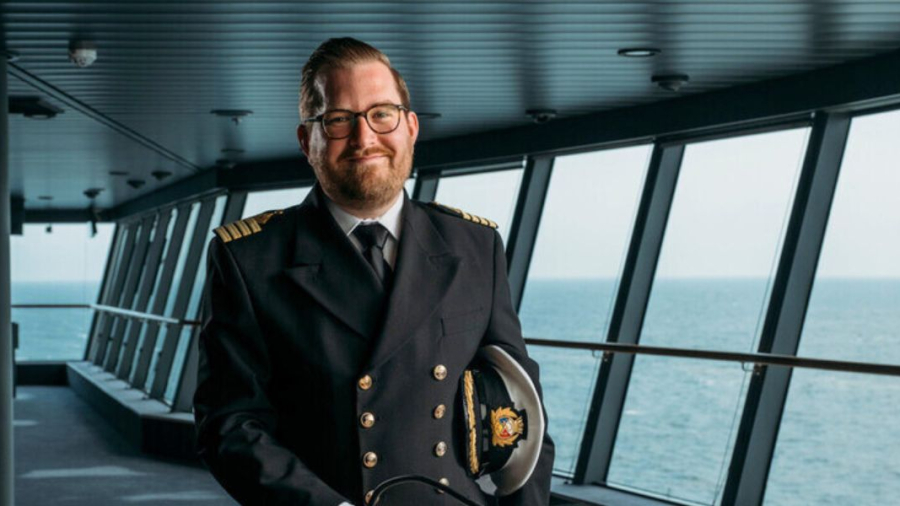
Captain Chris Kennedy
Nah – of course they’re well paid. But is it enough, considering the responsibility they bear?
Typical Captain’s Salary
Cruise ship captains make on average around $108,000 per year. Depending on the experience of the captain and other factors, a new captain may make around $50,000 per year while the most experienced captains for the biggest cruise lines can make up to $400,000 per year once you factor in bonuses.
There’s no denying that being a cruise ship captain is a good-paying job, but it’s not spectacular, especially when you consider the responsibility on their shoulders. They are in charge of the safety of thousands of lives, and they don’t get days off from that responsibility while on board.
$50,000 per year is a good salary but there are plenty of jobs where you can earn more. $400,000 is an excellent salary, but the amount of work needed to get to that level means that you won’t enjoy that salary for 30+ years.
As Captain Mickael Degerlund explained when I went to see his talk onboard Bolette, it takes a very long time to become a cruise ship captain. His seafaring career started as a deck boy at the age of 16, yet despite continuous education, he didn’t earn his Master’s licence (captain’s qualification) until the age of 30.
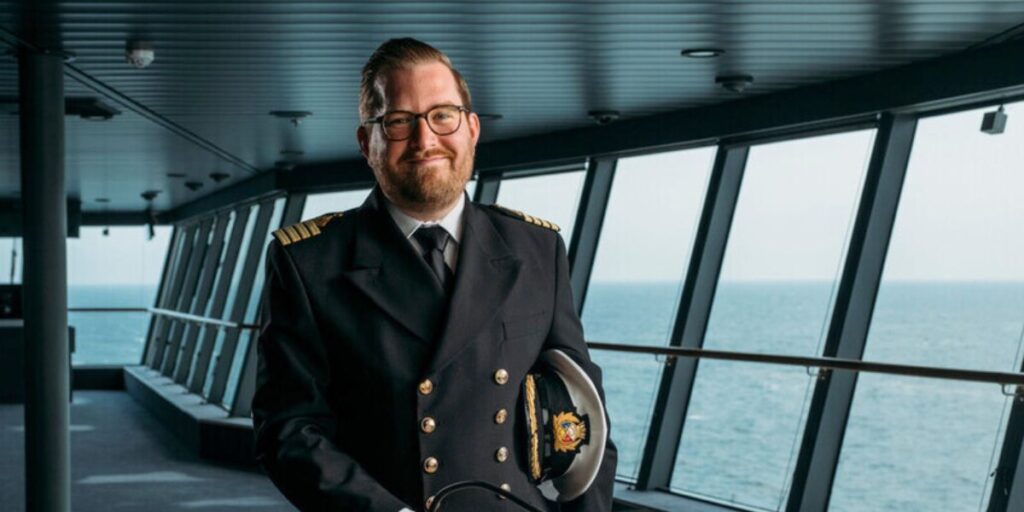
Captain Mikael Degerlund
The average cruise ship captain’s salary depends on your source, but it’s always in the region of around $92,000 to $96,000 per year.
Interestingly, Indeed seems to think that the average has shrunk a little. Perhaps because there are more and more new ships, and therefore more and more captains on entry-level captain salaries?
Here’s a breakdown of those salaries in more detail.
Cruise ship captain’s salary
Daily
Weekly
Monthly
Yearly
New starter
$137
$962
$4,167
$50,000
Average
$295
$2,076
$9,000
$108,000
Experienced captain
$521
$3,654
$15,833
$190,000
Factors Affecting The Salary of a Cruise Ship Captain
Here’s a look at the factors that can impact the salary of a cruise ship captain:
Experience
The most important factor in determining a cruise ship captain’s salary is his or her experience in the role, and their experience in other related roles as they climbed the ladder.
Cruise ship captains are under a lot of pressure to handle their ship safely – if they’ve been doing it for years already, then the cruise line knows they won’t be phased and can act calm under pressure, increasing their value.
Less experienced captains are still a safe pair of hands – you can’t be promoted to a captain role if you’re not ready for it – but the longer you’re in the job, the higher a salary you justify. And of course, with more and more cruise ships being built, the best captains need to be retained by cruise lines to prevent them ‘jumping ship’ (sorry).
Prestige of the Ship
The prestige of a cruise ship will determine the salary for a cruise captain. Some ships have a reputation which makes them special, and therefore the captain (and the other officers onboard) can demand a higher salary for taking good care of the ship and the lives onboard.
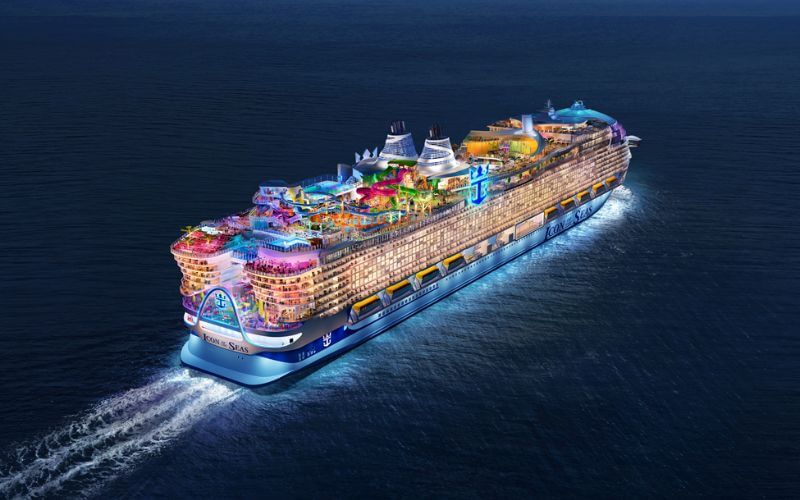
A ship like Icon of the Seas – the biggest in the world – is a famous ship and therefore worthy of having a captain onboard who doesn’t feel the pressure of looking after something so valuable to the cruise line. Hence, a bigger salary.
Icon of the Seas
Size of the Ship
The bigger the ship, the more responsibility a captain has. It means they are looking after more lives, and they have a much larger team of crew to manage.
While they have officers and crew to help man the ship, the captain is ultimately responsible for making sure this giant, floating piece of metal gets from port to port safely. And the bigger the ship, the more challenges that presents.
This of course is tied into the experience of the captain as well. No brand-new captain is going to be trusted with the very biggest ships in the world unless they have many years of experience in related roles. But because the experienced captains are the ones given the biggest ships, that means they are paid more.
Size of the Company
It’s not just the size of the cruise ship that determines a salary for a captain, but also the size (and success) of a cruise ship company. The biggest companies will pay more because they can – and because they want the best captains to work for them.
The only way for a large cruise company like Royal Caribbean or Carnival to successfully look after the millions of passengers they whisk away each year is to make sure they have the finest people at the top of the ships’ hierarchies, looking after everything onboard. And so they pay well, to make sure they’re attracting the top talent.
Cruise ship captains are sourced from all over the world, but the home base of the captain may determine their salary, even if they live on the ship for months on end. Captains from Europe and North America will be paid more, typically, because they have a higher cost of living.
This is just based on the job market, and it’s why cruise lines cast a wide net to find crew for their ships, including those who only demand a lower salary to work.
But when it comes to captains, there aren’t a huge number of qualified people around the globe, and so those from the US, Canada or Europe can get the work and be paid handsomely for it.
Captain Mikael Degerlund
Gender
You may be surprised to learn that cruise ship captains may be paid differently depending on whether they identify as male or female.
I received an email from the captain of a well-known luxury cruise ship, who wishes to remain anonymous for obvious reasons. He said that women sometimes make more than men for ‘PR reasons’.
Here is his email…
Captain Inger Olsen
Highest Paid Roles on Cruise Ships
In most cases the cruise ship’s captain will be the highest paid person on the ship, but not always.
A cruise will have a number of senior officers, including a Chief Engineer and a Hotel Director, and if they’re more experienced than the captain, their salaries may be higher. Cruise ship doctors often have very high salaries as well.
There’s even a chance that some members of the crew, who are paid on commission (such as the art auctioneer), could have a higher salary.
Obviously, it depends on the ship, but auctioneers working on a luxury cruise and selling high-value art could make huge figures, and dwarf even the captain’s salary.
Generally though, once a captain has a number of years’ experience under their belt, they will be the highest-paid crew member on a ship.
Qualifications Needed to Become a Cruise Ship Captain
The exact qualifications needed to become a cruise ship captain vary depending on where you are from, but as a guide, you should expect to need at least a Bachelor’s Degree in Nautical Science or Maritime Science, plus several years of training and relevant licenses for working as a ship’s officer.
Becoming a cruise ship captain is not something you can do in a few short years. Most captains undergo at least four years of university education before progressing onto specific training courses for maritime work, eventually qualifying to work as an officer on a ship.
They’ll then work their way up the ranks, often having to take more qualifications, as they move into senior roles on ships, working under a captain. Expect it to take an average of 15-20 years to become a cruise ship captain from the start of working in the industry – and even then that will likely be at the lower end of the pay scale.
Captain Robert Camby
Expect Long Hours!
The working hours of a cruise ship captain vary, but they would normally be expected to work for around 12 to 16 hours per day. They do this every day for between 10 and 12 weeks, before having a break of a similar period to avoid burnout.
There’s no getting around it – the hours on a cruise ship are long for a captain. They’re long for everyone on a ship too, but a captain is the one who has the most responsibility. And even when they aren’t working, they’re on call – if there’s an emergency, you can bet that the captain is being woken up so that they can attend to it.
And there aren’t any days off during their time on the ship – they’ll work for up to three months in a solid stint. They’ll then be taken off the ship for a three-month break, as captains rotate on ships. It’d be impossible to work those hours year-round, after all!
Captain Derek Gray
Cruise Captain Perks
As well as the salaries, there are some other perks that cruise ship captains enjoy.
The Best Crew Accommodation
Cruise ship captains enjoy good quality accommodation close to the bridge – often directly adjoining. They won’t rival the best suites for passengers, but they’re far superior to crew dorms – multiple rooms, big-screen TVs, a kitchen area to prepare food, and high quality furnishings.
Cruise ship captains are usually welcome to have their partner or family stay on the ship with them for no additional fee.
Of course, the captain will be working at all hours, so families don’t usually stay on the ship for the duration of the contract, but they can come and go for a few days at a time when the opportunity suits, meaning the captain doesn’t have to miss their family for too long.
Meals
Just like the rest of the crew, captains will get all of their food included. However, they’ll usually get their pick of the restaurant menus, and can even dine in the restaurants themselves if they wish, instead of eating at a crew mess hall.
Laundry services and housekeeping are included for captains, taking off some of the pressure of everyday chores while they’re working.
Final Word
Cruise ship captains are paid well, although there’s a lot of work to reach that level of salary.
Remember though that their room and board are included, so they may have much lower expenses too – depending on whether they’re married and have a family on land relying on them. If a captain is single, they’ll be able to put most of their salary into savings.
Plus, depending on the tax laws in their country, they may be exempt from paying some tax as they are out of the country for half the year.
So suddenly those good salaries start to look even better, right? But if you want to become a cruise ship captain, you need to get started on your training and education right away – you’ve a long road ahead.
Related Posts:
If you found this interesting, please share!
Jenni Fielding is the founder of Cruise Mummy. She has worked in the cruise industry since 2015 and has taken over 30 cruises. Now, she helps over 1 million people per month to plan their perfect cruise holidays.
The main Quantum of the Seas cabins to avoid are deck 6 balconies where lifeboats sit right below the railing, cabins directly under the busy deck 14 pool and buffet area, and rooms sitting over late-night venues such as the Royal Theater and Two70. Pick a mid-ship balcony on decks 8 to 11, well away from lift lobbies and galleys, and you avoid nearly all the usual complaints. Below we go deck by deck, then cover the best cabins for families, solo travellers and anyone prone to seasickness.
Where Quantum of the Seas is sailing in 2026-27
The ship’s itinerary affects which cabin makes sense, so start here. After a season from Los Angeles, Quantum of the Seas moved to Brisbane for the Australian summer, running short 3 to 8-night cruises to Queensland and the South Pacific from about October 2026 to April 2027. Royal Caribbean has also announced seven-night roundtrip Alaska cruises from Seattle for summer 2027, followed by a Singapore season from roughly October 2027 to March 2028. Schedules do change, so check the current deployment on Royal Caribbean’s official site before you book.
Why does this matter? Short Brisbane getaways tend to attract a lively crowd, so cabins near bars and venues get more late-night foot traffic. Open-water crossings to New Caledonia and Vanuatu can be choppier than a Mexican Riviera run, so a mid-ship, lower-deck cabin is more useful. In Alaska the scenery shows up on both sides on a Seattle roundtrip, so a clear view from your balcony matters more than which side you are on.
Quantum of the Seas cabins to avoid, deck by deck
The ship has around 2,090 staterooms, and roughly three-quarters of them have balconies. That makes it a balcony-heavy ship, and most of the trouble spots involve view or noise rather than size. Here are the areas worth thinking twice about.
Deck 6: obstructed view balconies
This is the best-known problem on the Quantum of the Seas deck plan. The lifeboats and their launching cranes sit on deck 5, and along the stretch where the hull narrows their tops reach up to about railing height on deck 6. In the worst cabins you look out over the roof of a lifeboat and the davit arms, and most of your downward view of the sea is gone. You still get fresh air and a view of the horizon, but it is not the classic balcony picture.
Royal Caribbean sells many of these as “obstructed view” balcony categories at a lower fare, so read the category name carefully. A few deck 7 cabins are also marked as obstructed on the deck plans because the lifeboat equipment is still visible. Some deck 6 cabins are not affected; the most forward balconies on both sides have larger verandas and clear views, according to published deck plans.
Above the Royal Theater and the galleys
The forward cabins on deck 6 sit above the Royal Theater. Rehearsals happen during the day and shows run into the evening, so light sleepers and anyone who naps in the afternoon may hear bass and stage noise. Further aft, cruise forum posts have flagged a cluster of deck 6 cabins (often quoted as around 6290 to 6300) above a restaurant galley, with reports of kitchen equipment running overnight. We can’t confirm the exact numbers from the official plans, so if your assigned cabin is in that range, ask Royal Caribbean or your travel agent what is directly below it.
Near Two70 at the stern
Two70 is the big aft venue with the panoramic windows and robot-screen shows. It covers several decks at the back of the ship, and its upper level sits on deck 6. Deck plans show aft interior cabins on deck 7 directly above part of the venue, so evening performances can carry through. Balcony cabins at the very back of decks 6 and 7 are less likely to be affected, but it is worth checking.
Deck 13: under the pool deck and Windjammer
Deck 14 holds the main pool, the Solarium and the Windjammer buffet. That means many deck 13 cabins have a pool deck above them, which means sun loungers dragged around early in the morning, deck cleaning and, on the aft end, buffet carts and service traffic. If you are an early riser it may not bother you, but light sleepers should choose decks 8 to 12 instead. The Music Hall, casino and lower-deck venues are low in the ship, so they matter mainly for the few cabins on the lower levels near them.
Next to lifts, stairwells and connecting doors
This applies on every deck. Cabins right beside the lift lobbies pick up chimes, chatter and late-night groups heading back from the bars. Cabins with a connecting door share a thinner wall with the room next door, so you are more likely to hear your neighbours. These rooms are great if you book both sides yourself, and less so if you don’t.
Far forward or far aft if you get seasick
Quantum is a big ship with stabilisers, but the bow and stern still move more than the middle. Forward cabins can also feel the thud of waves in rough water, and aft cabins can feel vibration when the ship is docking or manoeuvring. If you are prone to motion sickness, choose a mid-ship cabin on a lower to middle deck. Bear in mind that Quantum is long, so cabins at either end mean a walk of several minutes to the lifts.
Location matters as much as cabin category when choosing where to sleep on board. Photo: Natthanon Chinnasri on Pexels
Quick reference: problem areas and better choices
Area
Possible issue
Better alternative
Deck 6 balconies where the hull narrows
Lifeboat tops and cranes block the view down to the sea
Mid-ship balconies on decks 8 to 11
Forward deck 6
Theatre rehearsal and show noise
Forward cabins two or more decks higher
Aft deck 6 and 7 interiors
Sound from Two70 performances
Mid-ship virtual balcony interiors on decks 8 to 11
Deck 13 under the pool and buffet
Early-morning chair scraping and service noise
Decks 9 to 12
Cabins by the lift lobbies
Chimes and hallway traffic
Rooms a few doors along the corridor
Extreme bow or stern
More motion, long walks
Mid-ship, lower to middle decks
The best cabins on Quantum of the Seas
Now the good news. For most people, the best cabins on Quantum of the Seas are standard balconies mid-ship on decks 8 to 11. They are close to the lifts, there are cabin decks above and below for insulation, and they sit high enough above the lifeboats to give a clear view. Standard balcony rooms come in at about 198 square feet with a 55 square foot balcony.
Large and “hump” balconies
Quantum’s hull has a slight hump mid-ship, plus smaller steps forward and aft. Cabins at these points often have deeper or oddly shaped balconies, sometimes with an extra side window, for little or no extra cost. Royal Caribbean sells them as “large balcony” categories, with outdoor space of 65 square feet or more. They are worth looking for on the deck plan if you spend a lot of time outside.
Virtual balcony interior cabins
Most interior cabins on Quantum have a “virtual balcony”: a floor-to-ceiling screen that shows a live camera feed from outside, matched to your side of the ship. It is a clever way to make an inside cabin feel less boxed in, and many cruisers like seeing the weather and the time of day when they wake up. If you need total darkness to sleep, you can still switch it off. Our guide to whether a balcony or an inside cabin is better value goes through that decision in more detail.
Studio cabins for solo travellers
Quantum has 28 studio cabins designed for one person, which means no full double-occupancy pricing. Close to half of them have balconies; studio balconies are about 119 square feet with a 55 square foot balcony, and some of those on decks 6 and 7 sit at the hull steps with bigger outdoor space. The rest are interior studios, many with virtual balconies. Studios sell out early, so book well ahead.
Families should check how many berths a room really has before booking. Photo: Mochi Mochi on Pexels
Family cabins and suites
Families have a few good options. Many balcony and interior cabins sleep four with a sofa bed or pull-down bunks, but space gets tight, so check the berth count in each category before you pay. Connecting cabins, such as an interior across from or next to a balcony, give parents and older children their own space and a second bathroom. Quantum also has a Family Suite category on the upper cabin decks, which is sized for larger groups. Remember that Adventure Ocean, the kids’ club, is on deck 11, so a cabin on decks 9 to 12 keeps the walks short.
The suites are split into Royal Suite Class tiers. Junior Suites start at around 267 square feet with an 81 square foot balcony, and include perks such as priority boarding. Grand Suites and Sky Loft Suites add concierge services, and the top Star Class suites, up to the two-level Royal Loft at about 1,640 square feet, include a Royal Genie. Suites still follow the same location rules, so a Junior Suite on deck 13 can be noisy under the pool deck. To see how Quantum’s suites and public areas compare with other ships, see our Royal Caribbean ship classes comparison.
How to check a cabin before you book
Look one deck up and one deck down. Open the official deck plan and check what is directly above and below your cabin. If you see a venue, galley, pool or crew area, think again.
Read the category name. “Obstructed view” is in the category description for good reason. If it is much cheaper than the cabin next to it, assume the view is affected.
Be careful with guarantee fares. A guarantee (cabin chosen by the cruise line) can be cheaper, but you could end up in any cabin in that category, including the less desirable deck 6 or deck 13 rooms. Pick your cabin yourself if location matters to you.
Count the doors to the lifts. A few doors along the corridor is the sweet spot: short walk, little noise.
Ask about refits. Venues and restaurants are sometimes renamed or moved during dry docks, so ask your agent to confirm what is currently next to your cabin.
Many of these tips apply across the fleet. Our general guide to Royal Caribbean cabins to avoid covers the patterns that repeat from ship to ship.
Which deck is best for a balcony on Quantum of the Seas?
Decks 8 to 11 mid-ship are usually the safest choice. They sit well above the lifeboats, have cabins above and below for insulation, and are close to the lifts.
Are all deck 6 balconies on Quantum of the Seas obstructed?
No, but many are. Balconies where the hull narrows look down onto the lifeboats, while some forward cabins have larger, clearer balconies. Check whether the category is labelled obstructed view.
Is deck 13 noisy on Quantum of the Seas?
It can be. Deck 13 sits under the deck 14 pool, Solarium and Windjammer, so cabins there may hear early-morning loungers and service carts. Light sleepers should pick a lower deck.
Are virtual balcony cabins worth it?
For many cruisers, yes. The screen shows a live view outside, which makes an interior cabin feel brighter and helps you keep track of the time of day, at an inside-cabin price.
Where is Quantum of the Seas sailing in 2026-27?
From Brisbane, Australia, from around October 2026 to April 2027, followed by Alaska from Seattle in summer 2027 and Singapore from late 2027, according to Royal Caribbean announcements. Check the cruise line’s site for the latest schedule.
The main Coral Princess cabins to avoid are the Aloha deck (deck 12) rooms that sit directly below the Lido deck pool, buffet and spa, the Emerald deck (deck 8) oceanview rooms whose windows look onto lifeboats, cabins next to the self-service launderettes and service doors, and forward cabins if you get seasick. The best picks are midship balcony cabins on Dolphin, Caribe and Baja decks (9 to 11), aft-facing balconies if you like a wake view, and the mini-suites, which give you a lot more room for a modest step up in price.
Coral Princess is a fairly easy ship to choose a cabin on, because she is smaller and simpler than the newer Princess ships. Her decks are a little different from those ships, so the usual rules about which cabins to avoid don’t always apply. This guide goes through the problem spots deck by deck, explains the cabin grades and gives a short list of rooms worth booking.
Coral Princess at a glance
Coral Princess entered service in 2002 and is the lead ship of the Coral class. Her sister ship is Island Princess. At about 92,000 gross tons, 965 feet long and only 106 feet wide, she was built to fit the original Panama Canal locks. She carries around 2,000 guests in 1,000 staterooms. Her last drydock was in October 2024, and an earlier refit (2019) put the Princess Luxury Bed in every stateroom.
She spends a lot of time on long voyages. In summer 2026 she sailed 7-night Voyage of the Glaciers cruises between Vancouver and Whittier in Alaska. In January 2027 she leaves Fort Lauderdale on a 129-night Grand Circle Pacific voyage, which goes through the Panama Canal and on to Hawaii, the South Pacific, Australia, New Zealand, Asia and Alaska. Shorter segments, including a 114-night roundtrip from Los Angeles, are also sold. On voyages that long, your cabin matters even more than usual. Itineraries change, so check the current schedule on the Princess Cruises website.
About 80% of the outside cabins on Coral Princess have a balcony, which is a high share for a ship of her age. The figures below are approximate and come from published deck plans.
Cabin type
Category codes
Approx. number
Approx. size
Where on the ship
Interior
IA to IF
112
156 to 166 sq ft
Decks 5, 8, 9, 11, 12
Oceanview
OB to OE, O5, O6; obstructed OV, OW, OY, OZ
153
about 162 sq ft (larger O5/O6 about 215 sq ft)
Decks 5, 8, 9, 11
Balcony
B1, B2, BA to BF; obstructed BY, BZ
527
about 173 sq ft plus balcony
Decks 8 to 12
Mini-suite
M1, MB, MD, ME; MY (window, no balcony)
192
about 240 sq ft plus balcony
Decks 9 to 12
Suite
S5, S6
16
up to about 470 sq ft
Decks 9 and 10
Cabin numbers begin with a letter for the deck: P for Plaza (5), E for Emerald (8), D for Dolphin (9), C for Caribe (10), B for Baja (11) and A for Aloha (12). For example, a cabin numbered B7xx is on Baja deck. There is no deck 13, so Aloha deck sits directly beneath the Lido deck (14).
Coral Princess was built to fit the Panama Canal locks. Photo: Moo Lens on Pexels
Coral Princess cabins to avoid
No cabin on Coral Princess is truly bad. The rooms below have a known drawback, so it’s worth knowing about them before you choose one.
1. Aloha deck cabins under the Lido deck
Because there is no deck 13, Aloha deck (12) is directly beneath the busiest deck on the ship. The Lido deck has the Horizon Court buffet forward, the Lido and Lotus pools, bars, the pizzeria, and the spa and fitness center. Crew set out and stack loungers early in the morning and late at night, buffet carts roll across the floor, and people use the gym from dawn. Light sleepers should look at the deck plan and pick a cabin that isn’t under the pool, buffet or gym. Other cabins on Aloha deck can be fine, and the deck also has popular mini-suites.
2. Obstructed-view oceanview cabins on Emerald deck
The lifeboats hang beside the Promenade deck. Many oceanview rooms on Emerald deck (8) look straight onto them, and some have equipment in front of the window. These obstructed rooms are sold as OV, OW, OY and OZ and cost less. Some have only a partial blockage and others mostly see a lifeboat. If you need daylight but don’t care about the view, they can be good value. If you want to watch glaciers or the Panama Canal from your room, pay a little more for a clear view.
3. Obstructed-view balcony cabins (BY and BZ)
A small number of balcony cabins are sold as obstructed (categories BY and BZ). The obstruction can be part of the ship’s structure or equipment. Read the category description on the booking page before you buy, and ask your travel agent exactly what the cabin looks onto.
4. Cabins next to the launderettes and service areas
Coral Princess has self-service launderettes on the cabin decks. Published deck plans show them on Dolphin deck (9), for example. The rooms beside them get people coming and going late into the evening, doors closing and dryers running. Some passengers on forums have also reported plumbing smells in places. These reports are occasional and not tied to one specific room. The same applies to cabins beside crew doors and pantries, where carts move around early in the morning. Look for these areas on the deck plan and choose a cabin at least a few doors away.
5. Cabins near elevators and stairwells
Being near a stairwell is handy, but the cabins right beside the lift lobbies hear more corridor chatter and passing traffic. A cabin about 4 to 8 doors away is still a short walk and much quieter.
6. Forward cabins if you get seasick
The front of the ship moves the most in a swell. This matters on Coral Princess because of her routes: open-ocean days in the Gulf of Alaska, long Pacific crossings, and the Tasman Sea between Australia and New Zealand. If you get seasick, avoid the forward cabins on the higher decks. Choose a cabin midship on a lower deck, ideally Emerald or Dolphin, where you feel the least movement.
7. Lower-deck aft cabins if you are sensitive to vibration
The cabins at the back of the ship, nearest the propellers, can feel some vibration when the ship is maneuvering in and out of port. This is more noticeable on the lower decks. Most passengers barely notice it, but it’s worth knowing if you are a very light sleeper.
Balcony privacy on Coral Princess: a common mix-up
On the larger Grand-class Princess ships, the balconies on some decks step out in tiers, so people on the deck above can see down onto your balcony. Advice about this is often repeated for Coral Princess, but it mostly doesn’t apply to her. Her side balconies are largely stacked straight on top of each other, so privacy is generally good. If being overlooked worries you, check the deck plan for your cabin. In particular, look at the balconies around the aft corners and on the lowest balcony deck before you book.
Does Coral Princess have connecting cabins?
Coral Princess has relatively few connecting staterooms compared with newer ships, and they sell out quickly on school-holiday sailings. Connecting doors also let through a little more sound from next door, so couples who want quiet may want to avoid them. If you’re traveling as a group, an alternative is to book neighboring balcony cabins. On many Princess ships the crew can open the partitions between adjoining balconies on request, making one long shared balcony. Confirm that with Princess for your specific cabins before you rely on it. Also confirm any connecting rooms directly with Princess, because the deck plans on third-party sites aren’t always up to date.
A midship balcony gives a steady ride and an open view of the sea. Photo: IslandHopper X on Pexels
Best cabins on Coral Princess
Midship balconies on Dolphin, Caribe or Baja deck (9 to 11). These have the least motion and clear views, with cabins above and below them rather than public rooms. For most people they are the best overall choice.
Mini-suites. At about 240 square feet, a mini-suite is much larger than a standard balcony cabin. You also get a sitting area, a bathtub and a few extra perks. On a 30-night or longer voyage, the extra space is often worth the cost.
Aft-facing balconies. The rooms at the very back of Dolphin, Caribe, Baja and Aloha decks look out over the wake and are very popular. Book early, and accept that you may feel a little more vibration or motion in rough seas.
Suites (S5/S6) on decks 9 and 10. There are only 16 suites. They are the most spacious rooms on board and come with the most perks, including complimentary laundry, so they suit long voyages well.
Interior cabins in a quiet location. The best interior rooms are midship on Emerald, Dolphin or Baja deck, with cabins above and below and away from service doors. They are a sensible budget choice if you spend most of the day out of the cabin.
Which side of the ship is best?
For an Alaska cruise in one direction, the general rule is starboard (right) going northbound and port (left) going southbound, so the coast is on your side. In Glacier Bay and College Fjord, the ship usually turns so that both sides get a view. For the Panama Canal and the long Pacific voyages, it doesn’t matter much which side you are on. Choose by where the cabin is and how quiet it is, not by which side it’s on.
Tips for choosing a Coral Princess cabin
Look one deck up and one deck down. Open the Coral Princess deck plan and check what is directly above and below your cabin. The quietest rooms have cabins on both sides.
Read the category code. The OV, OW, OY, OZ, BY and BZ codes tell you a room is obstructed, even when the booking page doesn’t mention it.
Weigh guarantee fares carefully. A guarantee fare is cheaper, but you could end up in one of the rooms described above.
Book early for long voyages. Mini-suites and aft balconies go first on the Grand Circle Pacific voyage and its segments.
Avoid Aloha deck (12) cabins directly under the Lido pool, buffet or gym, obstructed-view rooms on Emerald deck (8), and cabins next to launderettes, service doors or elevators. If you get seasick, avoid forward cabins as well.
What is the best deck on Coral Princess?
For most people, the best decks are Dolphin, Caribe and Baja (9 to 11), choosing a cabin midship. These decks have cabins above and below, the ride is steady, and the views are clear.
Are Coral Princess balconies private?
Mostly, yes. Unlike some larger Princess ships, Coral Princess has her side balconies stacked straight on top of each other rather than stepped out in tiers, so few are overlooked from above.
Which Coral Princess cabins have obstructed views?
Mainly the oceanview categories OV, OW, OY and OZ, many of them on Emerald deck facing the lifeboats, plus a small number of balcony cabins sold as BY and BZ.
Is a mini-suite on Coral Princess worth it?
On longer cruises it often is. A mini-suite is about 240 square feet, which is roughly 40% larger than a standard balcony cabin, and it has a sitting area and a bathtub.
The best cruise ships for families in 2026-27 are Royal Caribbean’s Icon-class ships (Icon, Star and Legend of the Seas) for kids of every age, Disney’s newest ships (Disney Destiny, Treasure and Wish) for under-10s, and Carnival’s Excel-class ships for value. MSC World America and Norwegian Aqua and Luna are strong all-rounders. For UK families who don’t want to fly, P&O Cruises’ Arvia and Iona from Southampton are the easiest pick.
The best ship for your family depends mostly on how old your children are and where you can easily sail from. Below you’ll find a quick comparison table, a ship-by-ship rundown of the best cruise ships for kids at the time of writing (October 2026), and some practical advice on choosing between them.
Best cruise ships for families at a glance
Kids’ club age bands vary by line and are sometimes adjusted, so check the cruise planner for your sailing before you book.
Surfside toddler neighbourhood plus Category 6 water park
All ages
Disney Destiny, Treasure and Wish
Disney Cruise Line
Nursery 6 months-3; Oceaneer Club 3-10; Edge 11-14; Vibe 14-17
Character meet-and-greets and the AquaMouse water ride
Toddlers to 10
Disney Adventure
Disney Cruise Line
Nursery, Oceaneer Club, plus tween and teen spaces
Marvel Landing and the Ironcycle Test Run coaster
4-14
Carnival Celebration, Mardi Gras and Jubilee
Carnival
Turtles under 2; Camp Ocean 2-11; Circle C 12-14; Club O2 15-17
BOLT roller coaster (Celebration, Mardi Gras) and WaterWorks
5-17, budget-minded families
MSC World America
MSC Cruises
Clubs from 0 to 17 in Doremiland
Kids’ clubs open 9am to midnight; The Harbour outdoor play area
3-14
Norwegian Aqua and Luna
Norwegian Cruise Line
Guppies 6 months-4; Splash Academy 3-12; Entourage 13-17
Aqua Slidecoaster, part water slide and part roller coaster
8-17
Arvia and Iona
P&O Cruises
The Reef 2-12 in bands; teen club 13-17; night nursery for under-4s
Sailing from Southampton with a British-style programme
2-12, UK families
1. Icon-class ships: the best cruise ships for kids of all ages
Royal Caribbean’s Icon of the Seas, Star of the Seas and the brand-new Legend of the Seas are the closest thing to a floating theme park, and they work across a wider age range than any other ships at sea. Each one is organised into “neighbourhoods”, which makes a very big ship surprisingly manageable with children.
Toddlers and young kids: Surfside is a whole family neighbourhood with a carousel, splash areas (including a Baby Bay for little ones not yet out of nappies), a family pool and casual places to eat a few steps from the play areas.
Tweens and teens: Thrill Island has the Category 6 water park with six slides, plus the Crown’s Edge ropes walk and climbing wall. Teens get their own dedicated space.
Parents: Adventure Ocean for 3-12s is complimentary, and there’s a paid nursery for babies and toddlers.
Icon sails from Miami and Star from Port Canaveral on seven-night Caribbean routes, both with a day at Perfect Day at CocoCay. Legend of the Seas started sailing in the Mediterranean in July 2026 and repositioned to Fort Lauderdale on 25 October 2026 for a Caribbean winter season, with CocoCay on every sailing. It also has the three-storey Ultimate Family Townhouse if your budget stretches that far. You can see how the slides compare in our guide to Icon of the Seas’ Category 6 water slides.
If you’re set on Royal Caribbean but want a cheaper or shorter option, older Oasis-class and Quantum-class ships can be very good value. We break those down in the best Royal Caribbean ships for kids of each age.
2. Disney Destiny, Treasure and Wish: best for younger children
If your children are under about 10, no other line comes close to Disney for the “magic” factor. The three Wish-class ships share the same layout. Disney Wish and Disney Treasure sail from Port Canaveral, and Disney Destiny has sailed four- and five-night Bahamas and Western Caribbean trips from Fort Lauderdale since its maiden voyage in November 2025.
Kids’ clubs: The “it’s a small world” nursery (6 months to 3 years, fees apply), Disney’s Oceaneer Club for 3-10s, Edge for 11-14s and Vibe for 14-17s. The Oceaneer Club is included in the fare and has open-door sessions, so kids can drop in and out.
Water fun: The AquaMouse water ride runs above the top deck, and the Toy Story Splash Zone gives toddlers a safe, shallow area.
Dining: Rotational dining means your waiting staff move with you to a different themed restaurant each night, which children tend to love.
The trade-off is price: Disney is usually the most expensive mainstream family line per night. Destiny’s heroes and villains theme suits slightly older children, while Treasure’s adventure theme and Wish’s fairytale theming suit younger fans. Plant-based eaters can find out what to order in our Disney cruise vegan guide.
Disney Adventure: the new option in Asia
Disney Adventure began sailing from Singapore in March 2026. At around 208,000 gross tons it is Disney’s largest ship, with up to about 6,700 guests at full capacity. It runs three- and four-night round trips with no port calls, so the ship itself is the destination. Highlights include Marvel Landing with the Ironcycle Test Run roller coaster and a Big Hero 6-inspired San Fransokyo Street. It’s a realistic choice for families in Australia, India and South-East Asia, and an interesting add-on for anyone combining a cruise with a Singapore stopover. Our Disney Adventure staterooms and suites guide covers which cabins sleep larger families.
Water parks are now standard on the biggest family ships. Photo: Anna Klinkosz on Pexels
3. Carnival Celebration, Mardi Gras and Jubilee: best value for families
Carnival’s Excel-class ships give you a big-ship experience at a lower price than Royal Caribbean or Disney. Mardi Gras sails from Port Canaveral, Celebration from Miami and Jubilee from Galveston. Celebration and Mardi Gras have BOLT, a roller coaster on the top deck. All three have WaterWorks slides, Family Harbor cabins with access to a family lounge, and free Camp Ocean for 2-11s.
Carnival’s casual, fun atmosphere suits families with lively school-age kids, and the bars and comedy keep parents happy too. Miami and Port Canaveral sailings can include Celebration Key, Carnival’s own beach destination on Grand Bahama, which opened in 2025. Keep an eye on Carnival Festivale, due in 2027 from Port Canaveral. Carnival says it will have the line’s largest water park and roughly 1,000 interconnecting cabins, which is a big draw for multi-generational groups.
4. MSC World America: best for long kids’ club hours
MSC World America sails seven-night Caribbean cruises from Miami and is one of the most family-focused ships MSC has built. Its Doremiland kids’ area is the largest in the MSC fleet, at more than 10,000 square feet, with clubs for babies right up to teens. The kids’ clubs run from 9am until midnight on every voyage, which is longer than on most ships.
The Family Aventura district includes The Harbour, an outdoor play area with a ropes course, the Cliffhanger swing ride and a lighthouse-themed playground. There’s also an 11-deck dry slide. MSC often runs offers where children sail free or at a reduced fare in their parents’ cabin, which makes it one of the cheaper ways to take a big family on a new ship. Some families do find MSC ships very busy in school holidays, so it’s worth booking dining and shows early.
5. Norwegian Aqua and Luna: best for tweens and teens
Norwegian’s Prima Plus-class ships are a great choice if your children are past the toddler stage and want thrills. Both ships have the Aqua Slidecoaster, a hybrid water slide and roller coaster, and Luna adds Luna Midway carnival games, the Moon Climber obstacle course and Horizon Park lawn games. Norwegian Luna debuted in Miami in March 2026 and is sailing a Caribbean season from there, before moving to New York in April 2027.
The kids’ clubs are Guppies (6 months to 4, with a parent), Splash Academy (3-12) and Entourage (13-17). Freestyle dining with no fixed times suits families who don’t want a set evening routine. If you’re looking at Aqua, our guide to Norwegian Aqua cabins to avoid will help you choose a quiet cabin.
Pools and splash zones are a big part of what makes a ship family-friendly. Photo: Juan Salamanca on Pexels
Best family cruise ships from the UK
Many British families would rather not fly to Florida with children. These are the strongest options from UK ports.
P&O Cruises Arvia and Iona
P&O’s two biggest ships are designed for British families. The Reef kids’ club splits children into Splashers (2-4), Surfers (5-8) and Scubas (9-12), and teens aged 13-17 have their own space, called The Scene. A big plus for parents of little ones is the free night nursery for children from 6 months to under 4, so you can have dinner while your child sleeps. Iona sails mainly from Southampton, and Arvia mixes Southampton sailings with Caribbean fly-cruise seasons in recent winters. Age bands and nursery hours are occasionally adjusted, so check P&O’s current details for your sailing. Since 2025, P&O has charged a small fee to pre-book Reef sessions on Iona before you sail, though you can still book free onboard if spaces remain.
MSC from Southampton
MSC Virtuosa spent summer 2026 sailing Northern Europe and Iberia from Southampton before leaving for Brazil in November 2026. MSC Preziosa is due to sail from Southampton in winter 2026-27, and MSC Meraviglia is due to start its first UK season from Southampton in May 2027. Both offer MSC’s full kids’ club programme. We compare the two lines in detail in P&O vs MSC Cruises.
Disney from Southampton
Disney Dream sailed three- and four-night trips from Southampton in summer 2026, including a short trip to Zeebrugge. These short cruises are a good way to try a Disney cruise without long-haul flights. Disney hasn’t always returned to the UK every year, so check its website for 2027 dates before you plan around it.
If you’re still deciding whether a cruise is right for your family at all, our comparison of a cruise vs Center Parcs for UK families sets out the costs and practicalities side by side.
How to choose the right family cruise ship by age
Babies (under 2): Check the minimum sailing age (usually 6 months, and 12 months for some longer trips). Then look for a nursery: Disney, Royal Caribbean and Norwegian charge for theirs, while P&O’s night nursery is free. Shorter sailings are easier. Our baby and toddler cruise packing list covers swim nappies, travel cots and what the ship provides.
Toddlers (2-4): Many kids’ clubs require children to be toilet-trained, so check before you go. Ships with a dedicated toddler splash area, such as the Icon class’s Baby Bay or Disney’s Toy Story Splash Zone, make sea days much easier.
Young kids (5-10): This is Disney’s sweet spot. Royal Caribbean’s Surfside and Carnival’s Camp Ocean are also excellent.
Tweens and teens: Prioritise thrills and freedom: Icon-class ships, Norwegian Aqua and Luna, or Carnival’s BOLT ships. A good teen club gives them a social base for the week.
Multi-generational groups: Look for interconnecting cabins and a calmer adults-only area for grandparents. Legend of the Seas, MSC World America and Disney’s Wish class all do this well.
Ways to keep a family cruise affordable
Family cruises can add up quickly, but a few tactics help. Book the third and fourth berths in one cabin rather than two cabins, as extra guests in a cabin usually pay much less. Watch for “kids sail free” or reduced-fare offers from MSC, Royal Caribbean and P&O. Avoid peak school-holiday weeks if your children are under school age. Budget for extras such as nursery fees, speciality dining, Wi-Fi and drinks packages, which can cost more than you expect. Our guide to cruise deals for 2027 explains when the best offers usually appear.
Travelling with a baby? Our guide to cruising with an infant compares minimum ages, nurseries and pool rules by cruise line.
FAQs
What is the best cruise line for families with young kids?
Disney Cruise Line is generally the best for children under about 10, thanks to its characters, themed dining and well-run Oceaneer Club. Royal Caribbean’s Icon-class ships are a close second and suit a wider age range.
What is the best age to take a kid on a cruise?
Most lines accept babies from 6 months, but many families find that around age 3 to 4 is the turning point, when children can join the kids’ club and enjoy water parks. Ages 5 to 12 get the most out of family-focused ships.
Which cruise ship has the best kids’ club?
Disney’s Oceaneer Club and Royal Caribbean’s Adventure Ocean are the most consistently praised. MSC World America’s Doremiland stands out for its size and for opening hours that run until midnight.
What is the best family cruise from the UK?
P&O Cruises’ Iona and Arvia are the most popular no-fly family choices from Southampton, with British-style kids’ clubs and a free night nursery. MSC’s Southampton ships are a good value alternative.
Are kids’ clubs on cruise ships free?
Mainstream lines include kids’ clubs for children aged about 3 to 17 in the fare. Nurseries for babies and toddlers usually cost extra on Disney, Royal Caribbean and Norwegian. P&O’s night nursery is free.
When you search for cruise deals online and order the results by price from lowest to highest, MSC Cruises usually appear at the top of the list. They’re one of the cheapest cruise lines.
But why are MSC Cruises so cheap? Are MSC Cruises bad? Or just great value for money?
My Experience
I’ve cruised with MSC Cruises four times. On our first cruise with MSC back in 2018, we paid just £798 for two adults, a toddler and a baby for a week on MSC Preziosa.
That works out at just £28.50 (around $40) per person, per night. Unbelievable, right?
As well as taking cruises with MSC, I’ve worked in the cruise industry since 2015. During this time, I’ve become very familiar with what MSC Cruises offers compared to other cruise lines, what people like about MSC Cruises, and what they often complain about.
So why are MSC Cruises so cheap? Let me explain…
How MSC Compares With Other Cruise Lines
MSC Cruises are very glamorous with Swarovski crystal staircases, elegant Italian-styled decor and lots of fun facilities for the whole family to enjoy.
MSC Cruises has copied many of the popular features from Royal Caribbean ships, so on the newer ships you might see robot bartenders, huge slides and the newest ships like MSC World Europa even have hollow middles like Royal Caribbean’s Oasis-class ships.
Royal Caribbean’s Ultimate Abyss slide and MSC Cruises’ Venom Drop slide
I think that what MSC Cruises does is pretty clever – they take the most popular features from other ships, any apply them to their own. First-timer cruisers would never notice.
Don’t Expect a High Space-to-Guest Ratio
One of ways MSC Cruises can offer cheaper cruises is by packing more passengers into the available space on each ship.
The table below shows how many cubic feet of space each guest has on board some of the world’s most popular cruise ships…
Ship
Cubic feet per passenger
MSC Virtuosa
29
Carnival Mardi Gras
29
P&O Cruises’ Iona
29
Sky Princess
32
Norwegian Encore
32
Icon of the Seas
32
Disney Magic
34
Cunard Queen Elizabeth
36
Marella Discovery
36
Celebrity Edge
37
Scarlet Lady
39
Azamara Quest
39
Cubic feet per passenger is worked out by dividing the gross tonnage (internal volume) of a ship by the maximum number of guests. For example, MSC Virtuosa has a gross tonnage of 181,541GT and can accommodate up to 6,334 guests (181,541 / 6,334 = 28.7)
MSC Virtuosa
The cruise ships towards the bottom of this table are much more expensive than MSC Cruises.
You may wish to note that Virgin Voyages’ Scarlet Lady and Azamara’s Azamara Quest are adult-only ships, so there will naturally be more space per guest with a maximum of two people in each cabin, rather than families of four.
On cruises in the school holidays, MSC Cruises ships can feel very, very busy. But, outside of this time, if the ship isn’t full and there aren’t many kids on board, then this isn’t an issue at all.
So, the cheapest MSC Cruises are actually the best, because a low price last minute means that it’s not sold out.
MSC Cruises Offers Cheap Deals on Their Older Ships
MSC Cruises has 23 cruise ships in the fleet. The newest is the 6,000+ passenger MSC World America, while the oldest is the twenty-year-old MSC Armonia which accommodates 2,500 guests.
As with any cruise line, cruises on the smaller, older ships are usually the cheapest. You’ll often find that MSC’s Lirica-class ships (MSC Armonia, MSC Sinfonia, MSC Lirica and MSC Opera) offer the cheapest deals.
MSC Armonia and MSC World America
The difference between the oldest and newest ships in any fleet can be quite stark. Not only are the newer ships bigger and more modern, they also have a lot of facilities.
The older MSC ships don’t have much to do besides swimming, the casino and the gym. This makes them better suited to port-intensive itineraries where you’ll be off the ship each day exploring new destinations.
Cruise ships are generally refurbished every two to three years, although that is sometimes stretched a little longer with MSC Cruises. In MSC’s Mistral Class, some ships underwent a significant upgrade in 2014-2015 but haven’t been touched since.
On the whole, the MSC Cruises ships are comparable to most other cruise lines in terms of the size of the ships and the facilities you can expect on board.
However, it’s important to know that many things that are included in the cruise fare with other cruises have an extra fee on MSC Cruises. More on that further in this guide.
MSC Cabins
MSC Cruises offer a choice of budget and luxury accommodation with a choice of inside cabins, sea view cabins, balcony rooms and suites. Some ships even feature duplex suites with private whirlpool baths on the balcony.
On the newest MSC Cruises ships like MSC World Europa and MSC World America, the cabins are fresh, modern, and very spacious.
Our standard balcony cabin on MSC Virtuosa was the largest cruise cabin I’ve ever stayed in at 205 square feet. This is 20% larger than standard balcony cabins on P&O Cruises’ Iona.
Balcony cabin on MSC Virtuosa
Even the inside cabins are much larger than you would expect. Look how much floor space there is in this inside cabin on MSC Euribia…
Not every cabin is this nice though! Be sure to check out my guide to MSC Cruises Cabins to Avoid before you book because some of the cabins are super weird. Some don’t even have proper beds!
MSC Cruises Cabin Upgrades
On MSC Cruises, the cabins and suites are also grouped into something the cruise lines calls ‘experiences’. These are Bella, Fantastica and Aurea.
The Bella experience is the standard cruise package. You can choose from inside, outside or balcony cabins, although these will be located in less-desirable areas of the ship, such as right at the front or above the nightclub. Bella balcony cabins may have obstructed views or be very windy.
If you choose to upgrade to the Fantastica package, you can choose from the more desirable cabin locations like midship. You’ll also get a few extras the first choice of dinner sittings and a free photo. Of course, this comes with an extra cost.
The Aurea package comes with yet more perks, like priority boarding and access to exclusive areas of the ship so you’ll be able to find an empty sun lounger more easily.
The price that you see listed for MSC Cruises is almost always based on a Bella Inside cabin. When you proceed to book, you’ll see how much extra it costs to upgrade.
As most people upgrade to a different cabin type and/or a different experience, it’s rare to pay the price that you actually see advertised. Although being a budget cruiser, I usually do!
MSC Cruises offers a variety of cuisine from Italy, the Mediterranean and around the world. You can dine in the main dining room or buffet for free, or pay extra to eat in a speciality restaurant.
A question that I get asked a lot is what is the food like on MSC Cruises. The food is often mentioned in negative reviews, but that doesn’t mean that it’s necessarily bad. It can be hit-and-miss though. It’s really hard to please everyone when it comes to food!
I’ve enjoyed some delicious food on MSC Cruises and I’ve also had some food that I couldn’t bring myself to eat.
In the main dining room, the portions of food are very sometimes small. I don’t actually mind this as it means that less is wasted. Just be sure to order side dishes like vegetables, potatoes or fries because these don’t come unless you ask for them.
A main course on MSC Cruises (it didn’t come with anything else)
If you have a large appetite, don’t hesitate to order more than one dish for each course or to choose another main for your starter. The staff don’t mind at all.
One great thing about the food on MSC Cruises is that it’s tailored to the nationalities of the guests.
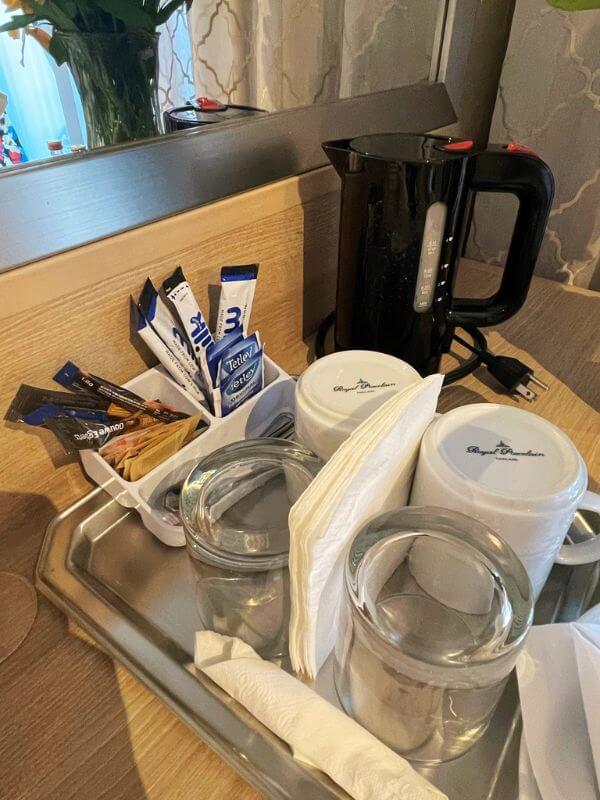
On my recent cruises on MSC Virtuosa, everyone on board was British. The buffet featured real English bacon and sausages, baked beans, roast beef and Yorkshire puddings. There was even a kettle in each room with Yorkshire Tea.
Tea and coffee-making facilities are popular with British cruisers
If you take a cruise where most of the other guests are European or American, you can expect cuisine that’s more tailored to what they enjoy. So don’t expect English bacon in the Caribbean!
MSC Cruises has recently introduced a vegan menu, and there are usually vegan items on the regular menu too, so there’s always plenty for vegans to eat.
All the food on MSC Cruises ships is really fresh and the pizza, pasta and bread are made on board. On some ships you can even watch as the crew make their own Mozzarella cheese!
The Mozzarella factory is visible from the Marketplace Buffet on MSC Virtuosa and MSC Euribia
Just like other cruise lines, MSC Cruises offers speciality dining restaurants for an extra charge. So if you want a special treat or get bored of the main dining room and the buffet, you have more options.
Included Drinks with MSC
Most MSC Cruises do not include drinks, although you may sometimes get a drink package included as part of your cruise fare, depending on the deal that you booked.
Even if your cruise does not include drinks, you’ll always be able to get free water, coffee, tea, iced tea, lemonade, milk and chocolate milk as well as fruit juice at breakfast time.
The free drinks aren’t available in the bars though, usually only in the main dining room or buffet at set times. This is similar to the offering on most other cruise lines.
Just like other cruise lines, MSC Cruises offer a selection of drink packages that you can purchase to transform your cruise from full-board to all-inclusive. The prices vary depending on what drinks you’d like to be included and also where in the world your cruise takes place.
My favourite cocktail on MSC Cruises is Jamaican Paradise
The drinks on MSC Cruises are priced similarly to other cruise lines – which means that they’re a little more expensive than you may expect in bars and restaurants on land. Take a look at these MSC drinks menus with prices to get an idea of how much you might pay for drinks.
Drinks Package – Worth It?
If you need help deciding whether a drink package is worth it for your cruise, feel free to use my drink package calculator which will work it out for you…
I did accidentally bring a bottle of Dr Pepper that was in my backpack, which gives me the impression that they don’t always check.
One thing to consider when buying a drink package is that if your cruise is very busy, you may get tired of lining up to order drinks, so this can limit how much you actually drink.
On very busy cruises, waits of 30 minutes or more for a drink were common. By the time you have your drink, you’d basically have to rejoin the back of the queue at the bar for another. And that’s not a fun way to spend your cruise! I didn’t drink as much as I would if a waiter were to come around regularly offering drinks.
I can understand why MSC Cruises don’t have many bar staff or waiters on cruises where everyone has a free drink package. The more staff they have, the more drinks they would make which would mean less revenue for them. But it’s not the best experience for guests, in my opinion.
One great thing about MSC Cruises drink packages is that you can get one even for a two-night weekend cruise, whereas many other cruise lines only let you buy one for a longer trip.
MSC’s Entertainment
Each MSC Cruises ship has a theatre where you can enjoy shows on most evenings. You’ll often find live music in other venues around the ship as well as trivia and quizzes and street artists.
I’ve found the entertainment on MSC Cruises to be pretty good. If you take a cruise in Europe, you’ll probably find that the shows aren’t in English – rather a mix of lots of different languages so that everyone can enjoy them.
MSC Cruises does charge extra for some of the shows. That’s something that you’ll rarely find on other cruises.
On our MSC Virtuosa cruise, the extra shows cost £15 each and included a free cocktail. This can be a good deal for some, as the cocktails cost around £10 anyway.
As we already had a drink package and the price was the same for kids and adults, we felt that £60 for a 30-minute show was over our budget. However, other cruisers reported that the paid shows were well worth the money.
If you want to see the shows, I recommend that you book them online before you go, as the prices will be cheaper.
Comedy show on MSC Virtuosa
Things to Do Onboard
I’ve always found that the daytime entertainment to be lacking on MSC Cruises. With no free activities on offer, people are encouraged to visit the boutiques, casino and spa – all of which provide extra revenue to supplement the low fares.
At first glance, the daily planner looks like it has a lot of activities, but on closer inspection, many of these are things like ‘David Beckham Sunglasses’ (that’s just shopping), ‘The Modern Assessment of Health’ (that’s a sales pitch) or paid activities like yoga.
If you’d rather not spend more money on board, I recommend bringing a few card games on board. Our favourite is Monopoly Deal.
My family
The newer MSC Cruises ships are packed with exciting activities that kids and adults will love. However, while similar activities are included in the cruise fare on other cruise lines like Royal Caribbean, MSC Cruises charge extra for these things.
Here’s a rough guide to what you can expect to pay to use the facilities on MSC Cruises ships:
The cost may vary depending on the currency of the ship and the prices may vary slightly for kids or if two people do the activity at once.
To save money on these activities you can buy an MSC Fun Pass before your cruise. If you pay a certain amount for the pass, you get extra credit which you can use to pay for the activities. The pass can be used by everyone in your family.
You can also buy the Fun Pass on the ship, but you’ll usually get a better deal by buying it in advance.
Things like swimming pools, waterslides and the high ropes course are free of charge. But as these are so popular it can be very tricky to get a place. Depending on your sailing, you may have to queue for a very long time to get a ticket.
In my experience, one area where MSC Cruises falls a little short of other cruise lines is the service. It just doesn’t have the wow factor that you may be used to if you’re a regular cruiser with cruise lines such as Disney.
But remember, MSC Cruises are cheap and you get what you pay for. If the service were better, you would expect to pay more!
The guest-to-crew ratio on MSC Cruises is pretty high, with an average of 3.4 guests for each crew member. The actual number varies depending on the ship and how full it is.
MSC Cruises’ newest ships, MSC World Europa and MSC World America, accommodate up to 6,774 guests with a crew of 1,413, giving a ratio of 4.8 to 1.
By contrast, some ultra-luxury cruise ships actually have more crew than guests, meaning that a higher level of service can be offered.
The following table shows the guest to crew ratio on some popular cruise ships:
Ship
Guest-to-Crew Ratio
MSC Virtuosa
3.70
Carnival Mardi Gras
3.63
P&O Cruises Iona
3.63
Sky Princess
3.26
Norwegian Encore
3.01
Cunard Queen Elizabeth
2.78
Marella Discovery
2.73
Symphony of the Seas
2.66
Disney Magic
2.59
Celebrity Edge
2.56
Scarlet Lady
2.47
Azamara Quest
1.91
Because there are fewer crew members in relation to the number of guests, the MSC Cruises crew really have to work their butts off. They do so with a smile, but they don’t usually have time to chat as their next guest is waiting.
I noticed that one bartender was wearing a jacket on a very hot day when I went to the bar in just a bikini. “Aren’t you hot?”, I asked?
“Yes”, he replied, “But I don’t have time to remove my jacket.”
Because the crew are so busy, there’s not always time for them to collect glasses, so you may see areas like this appear where guests dump their stuff and it’s not moved straight away…
The lower number of crew members means that you may also have to wait a little longer for things than you might be used to. Lunch in the main restaurant could take up to two hours.
In my experience, MSC Cruises crew members rarely enforce the cruise line’s rules. So you may see babies in nappies in the swimming pools, even though this isn’t allowed for hygiene reasons.
The cruise line’s rules state that sun loungers should not be reserved for more than 30 minutes when not in use. But, as the crew members never remove towels, this can create a chain reaction of no sun loungers being available, which in turn encourages people to get up before 7 am to lay down their towels the moment the loungers are laid out!
Scenes like this are common in summer (this was 11am)
Gratuities – It Depends
MSC Cruises include gratuities for some people, but others will pay up to $14 per person, per day. Whether you have to pay gratuities on your cruise depends on where in the world you live.
As British people aren’t generally used to paying tips, MSC Cruises include the gratuities in the cruise fare. This means that if you compare the price of an MSC cruise with an American cruise line that adds gratuities, the MSC cruise will come out even cheaper once you factor that in.
For more information on how much MSC gratuities cost in each country, check out this guide to MSC gratuities by Emma Cruises.
Of course, you’re welcome to tip individual crew members for great service if you wish, but the cruise line doesn’t do anything to encourage this.
So, Are MSC Cruises Good?
In my opinion, MSC Cruises offer great value. At the end of the day, you get what you pay for, so if you want the very best service, food and entertainment, you may wish to go for a slightly more expensive cruise with a cruise line such as Royal Caribbean or NCL.
If you’re on a budget, MSC Cruises is a great option. Although a lot of the activities cost extra, they’re all optional so you don’t have to spend a penny more than the advertised price if you don’t want to.
I usually leave with a zero balance at the end.
That said, I think that some people forget just how little they paid for their cruise when they write reviews online. And this has led to MSC Cruises being named among the worst cruise lines online.
Don’t Expect Luxury
MSC Cruises is not a luxury cruise line, it is very much mainstream. However, the MSC Group does also have a luxury brand called Explora Journeys. This luxury cruise line sailed for the first time in 2023.
Explora Journeys
When it comes to cruising, it’s important to consider the definition of luxury. Even budget cruise lines like MSC Cruises offer something akin to a luxury five-star hotel.
Across the cruise industry, standards are generally very high. Even on the cheapest cruises, you can expect everything to be perfectly clean, in good working order and the service to be very good. You shouldn’t ever experience tired furnishings or outdated facilities as you may do in accommodation on land.
When it comes to cruising, the word luxury is usually reserved for ships offering a ‘six-star’ experience, with private butlers, free-flowing champagne, lobster dinners and caviar canapes.
If you like the sound of MSC Cruises want a more luxurious experience, then I recommend that you look into the MSC Yacht Club.
The MSC Yacht Club is like a ship within a ship. It offers exclusive areas where you can enjoy fine dining, panoramic views from the top of the ship, luxurious suites and dedicated concierge service.
Of course, the Yacht Club costs a lot more than your standard MSC cruise, but it’s certainly an option to consider if you like the sound of MSC Cruises but want a more luxurious experience.
NEW DEALS JUST RELEASED!
Don’t miss the latest MSC Cruises offers…
To Conclude
In my opinion, MSC Cruises offer good value cruise holidays for a relatively low price. Of course, there are things that could be done better, but fixing these issues would push up the price.
If don’t have a lot of money to spend and are wondering if you should try MSC Cruises, I would say yes. However, if you can afford to spend a little more, you may find that you have a better experience by cruising with a slightly more expensive cruise line such as Royal Caribbean, Princess Cruises or Norwegian Cruise Line.
If you want to cruise as cheaply as possible, taking an MSC cruise in the off-season and choosing an inside cabin is the ultimate way to do it.
Related Posts:
If you found this interesting, please share!
Jenni Fielding is the founder of Cruise Mummy. She has worked in the cruise industry since 2015 and has taken over 30 cruises. Now, she helps over 1 million people per month to plan their perfect cruise holidays.
Yes, MSC Cruises vegan options are good, but you need to plan ahead a little. MSC builds vegetarian and vegan-friendly dishes into its main dining room and buffet menus on every ship. Recent guest reports say the main restaurant usually has at least one vegan starter, main and dessert each night. Tell MSC before you sail and confirm with the maître d’ on day one, and the rest of the cruise usually goes smoothly.
This guide is only about MSC. It covers how to make the request, what to expect in each type of venue, drinks and desserts, kids, and the hidden ingredients to watch for. If you are still comparing lines, see our roundup of the best cruise lines for vegans.
MSC Cruises Vegan Options: Is MSC Good for Vegans?
MSC is a European, Italian-run line, so a lot of the food is already vegetable-based: tomato pasta, grilled vegetables, bean soups, salads, and bread made with olive oil instead of butter. The line says vegetarian and vegan-friendly dishes are part of its standard menus. Guest feedback from 2025 and 2026 is broadly positive, with two common complaints. Vegan main dining room dishes can get repetitive, often leaning on Indian curries and dal. Vegan desserts at the buffet can also be limited.
The experience varies more by ship than by country. MSC sails worldwide, with ships based in the Mediterranean, Northern Europe, the Caribbean, the Middle East and beyond. Whether you book through MSC’s US site or a European one, the menus and the special-diet process are broadly the same. Newer, bigger ships such as the World class and the Seaside and Meraviglia families tend to have more choice than the older Lirica and Musica class ships.
How to Request Vegan Meals on MSC Cruises
Add it to your booking. Tell your travel agent or MSC when you book, and fill in MSC’s Special Needs form (listed as Accessibility and Medical Requests on some country sites). MSC requires this form for allergies and intolerances. Using it for a strict vegan diet puts the request on record. Aim for at least 30 days before departure.
Confirm on embarkation day. Stop by the main dining room or Guest Services and ask to speak to the maître d’. Say that you are fully vegan: no meat, fish, dairy, eggs or honey. Ask how vegan dishes are flagged on the menu.
Pre-order for the next night. On many sailings, the head waiter will show you the next day’s menu so the galley can adapt dishes or make something extra. If you have the same waiter each night, this quickly becomes routine.
Repeat for specialty restaurants. Mention it when you book any paid venue, and again when you sit down.
A clear script helps with a multinational crew: “I am vegan, so no animal products at all, including butter, cheese, cream, eggs, honey and meat or fish stock.” Saying “plant-based” as well as “vegan” usually removes any confusion.
Indian-style curries and dal are a staple vegan option on MSC ships. Photo: Muhammad Khawar Nazir on Pexels
Vegan Options on MSC: Venue by Venue
Venue
What vegans can usually expect
Tip
Main dining room
A nightly vegan starter, main and dessert; dishes can be adapted on request
Pre-order the next night’s meal with your head waiter
Buffet
Salad bar, fruit, Indian and Asian dishes, pasta and pizza stations, grilled vegetables; newer ships may have a labelled plant-based area
Ask the crew at each station; cross-contamination can’t be ruled out
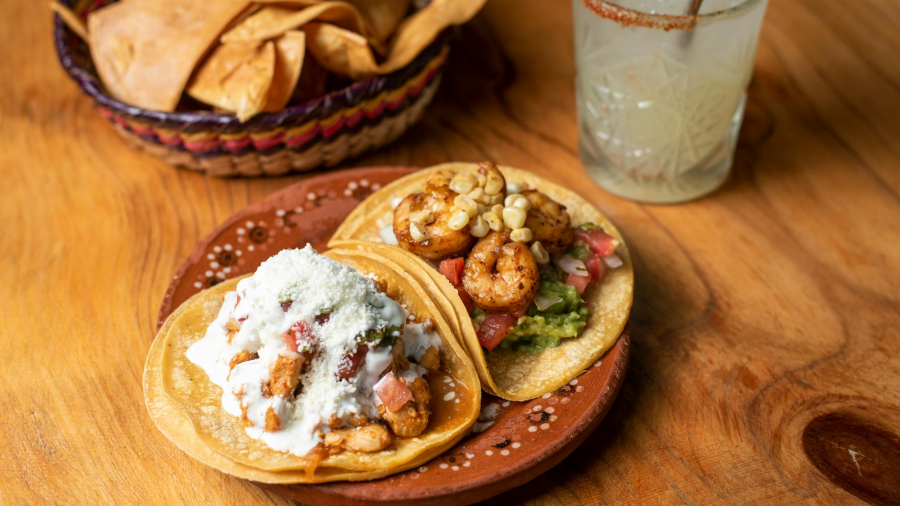
Hola! Tacos and Cantina (selected ships)
Bean, rice, guacamole and vegetable tacos
Ask for no cheese or sour cream
Kaito and Asian venues (selected ships)
Vegetable sushi rolls, rice, noodles and grilled vegetables
Check sauces for fish or egg
Butcher’s Cut steakhouse
Mostly sides and salads
Usually the weakest choice for vegans
MSC Yacht Club restaurant
More personal service and easier changes to dishes
Tell your butler or the restaurant manager early
Main Dining Room
The main dining rooms are where MSC can best control a special meal. The galley makes these dishes to order instead of keeping them in a buffet tray. Expect starters like soups, bruschetta and salads, and mains like vegetable curries, chickpea or lentil stews, risotto made without butter or cheese, and tomato-based pastas. Vegan desserts are often sorbet, fruit or a dairy-free cake. Ask your waiter what the pastry team can make, because vegan options sometimes go beyond what’s printed.
Buffet
The buffet offers the most variety and needs the most checking. Good choices include the salad bar (dress it with oil and balsamic instead of creamy dressings), roasted vegetables, rice, Indian dal and curries, and fresh fruit. At the pizza station, ask for a base with tomato sauce and vegetables and no cheese. At the pasta station, dried pasta is usually egg-free, but fresh pasta usually contains egg. Ask before you choose. MSC itself says it can’t guarantee no cross-contamination at the buffet, so anyone with a milk or egg allergy should eat in the main restaurant.
Specialty Restaurants
Which specialty venues you get depends on the ship. Read the menus before you buy a dining package, since some carry vegan symbols and others don’t. Mexican and Asian venues usually work best for vegans. Steakhouses and seafood restaurants work least well. If a specialty dinner is part of a package, ask the restaurant ahead of time whether they can make a dedicated vegan menu. Many do with notice.
Soy and other plant milks are usually available at MSC coffee bars. Photo: Dasha Klimova on Pexels
MSC Plant-Based Drinks, Coffee and Desserts
Plant milks: Soy milk is the most common, and oat or almond milk is sometimes available at coffee bars and the buffet. Supply varies by ship and sailing, so ask early. If you rely on one type, bring a few shelf-stable cartons for your cabin if the line’s rules allow it.
Cocktails and wine: Some cocktails, such as sours, use egg white, and some wines are fined with animal products. Ask the bartender for egg-free versions. Spirits and most beers are generally fine.
Gelato and sweets: Fruit sorbets are usually the safest frozen treat. Check whether paid gelato and chocolate shops on board offer dairy-free flavours on your ship.
Breakfast: Look for oatmeal made with water or plant milk, fruit, toast with jam, baked beans, potatoes and grilled tomatoes. Many pastries contain butter.
Vegan Kids on MSC Cruises
MSC is popular with families, and its children’s menus focus on simple dishes like pasta with tomato sauce, rice, vegetables and fruit. Many of these are easy to make vegan. Note your child’s diet on the Special Needs form too. Also tell the kids’ club staff, because snacks and activities there sometimes involve food. In the main dining room, ask the head waiter to treat your child’s order the same way as yours.
Tips for Eating Vegan on MSC Cruises
Know the hidden ingredients. Butter, cream, cheese, egg in fresh pasta, chicken or fish stock in soups and risottos, honey in dressings and glazes, and gelatine in desserts.
Use the same waiter. A fixed dinner time and table makes it easier for the crew to remember your needs. If you have flexible dining, ask to sit in the same section each night.
Expect some repeats and mix things up. If the vegan main starts to repeat, ask for pasta with fresh tomato and basil, or a plate of vegetable sides.
Pack snacks for port days. Ashore, especially in smaller ports, vegan food can be hard to find. Our cruise packing tips include ideas for cabin snacks.
At Ocean Cay MSC Marine Reserve, MSC’s Bahamas island, expect veggie burgers and salads. MSC says it can’t cater for specific allergies there.
If you are still choosing a ship, cabin location matters as much as food on a long cruise. Our MSC Virtuosa cabins to avoid guide covers one of MSC’s newer, food-rich ships.
FAQs
Does MSC Cruises have vegan food?
Yes. MSC builds vegetarian and vegan-friendly dishes into its main dining room and buffet menus, and the main restaurants usually have a vegan starter, main and dessert each night.
How do I request vegan meals on MSC?
Add it to your booking and fill in MSC’s Special Needs form, ideally at least 30 days before sailing. Then confirm with the maître d’ on embarkation day.
Is the MSC buffet vegan-friendly?
Mostly. There are salads, fruit, curries, vegetables, rice and cheese-free pizza, and newer ships may label plant-based dishes. MSC can’t guarantee no cross-contamination at the buffet.
Does MSC have plant milk?
Usually. Soy milk is the most common, and oat or almond milk is sometimes offered at coffee bars. Availability varies by ship, so ask early.
Are MSC specialty restaurants good for vegans?
Mexican and Asian venues work best. Steakhouses offer little beyond sides. Check menus before you buy a package and give the restaurant notice.
Exploring coastal towns on a cruise often leads to a common question once you step off the ship: Where can you get good seafood that doesn’t feel like a tourist trap? Picking the right seafood bar during a shore excursion is about finding quality, atmosphere, service, and price (all while you’re on the clock). Here’s how to make that decision count.
Know What Locals Recommend
Start with what the locals actually eat and not just what they recommend to tourists. If you see a place filled with crew members or dockworkers grabbing seafood for lunch, you’re probably on the right track. These are the people who work in the area day in and day out. They’ve tried most of the nearby options, and they tend to stick with the places that consistently get things right.
Look for local message boards, recent reviews, or social media posts, especially those not tied to tourist accounts. Some places like Captain Curt’s Siesta Key tend to pop up in casual recommendations because they keep things simple, fresh, and consistent. That’s a good sign.
Observe Before You Commit
Once you’ve got a few names in mind, do a quick visual scan when you arrive. Look at the oyster bar. If it’s clean and stocked with fresh oysters on ice, that’s a solid indicator of overall quality. Pay attention to how staff handle food. Are they using gloves? Does the space feel organized?
Check the menu board for daily specials. A rotating menu signals that the kitchen is working with seasonal or just-arrived seafood. It also shows that the chef isn’t relying on frozen, pre-prepped dishes. Don’t be afraid to ask what was delivered that morning.
If the location offers ocean views, the seating area might look attractive at first glance, but stay focused. Pretty views can’t fix a bland meal. Get a quick glance at other diners’ plates. Are portions fair? Does the food look fresh?
Avoid Anything Overly Branded or Themed
If the place is covered wall-to-wall in fishnet decor, neon signs, and photo booths, it’s probably more about selfies than seafood. Bars like this are built for foot traffic, not flavor. They tend to stretch their menus across a wide variety of options to please crowds, which often leads to mediocre dishes across the board.
Instead, focus on the bars that limit their menu to seafood items they do well. A short, focused menu is a good sign. If you find that they’re offering ten kinds of steak and sushi rolls next to clam chowder, you might want to keep walking.
Understand What Makes It ‘Fresh’
Everyone says they serve fresher-than-fresh seafood. But freshness is about how it is stored, transported, and prepared. Good seafood bars are transparent. Ask a staff member where the shrimp came from. See how they respond. A confident, informed answer tells you they’re connected to their suppliers and pay attention to sourcing.
A chalkboard listing the boat name or catch source is another sign that you’re dealing with people who care about what they serve. If the restaurant is part of a working marina or next to a fish market, that’s even better.
Pay Attention to Service
You’re likely on a short time frame, so efficiency matters. The staff should be attentive but not overbearing. If the bar is understaffed or disorganized, that’s going to affect your entire experience. You’ll spend more time waiting, which cuts into your schedule. Watch how quickly other tables get their orders and how staff interact with guests. A good seafood bar operates like a tuned-up kitchen: fast, coordinated, and focused.
Know the Difference Between Bars and Hotel Restaurants
Some hotel restaurants near cruise docks may have seafood on the menu, but that doesn’t automatically make them seafood bars. These spots often cater to broad tastes and room service requirements. Their seafood may be decent, but it often lacks the specialty and focus of a proper bar.
Look for beach getaway places that identify as seafood bars specifically, where the main concept is built around the seafood experience, not added to fit a broader menu.
Pair Your Meal Smartly
If you’re sitting down for oysters or grilled snapper, look at their drinks list. A good seafood bar usually offers a glass selection tailored to its menu. You might see crisp whites, dry rosés, or light beers designed to pair with seafood. One-time visitors often skip this part, but it can round out your experience.
Some spots pride themselves on having an extensive wine offering, especially if they cater to a sailing or yachting lifestyle crowd. That can be a sign they’re used to serving high-quality seafood in thoughtful ways.
Don’t Ignore the Basics
Stick with grilled, broiled, or raw seafood when possible. Fried items can mask freshness issues. Ask simple questions. What are the most popular items? What’s been going fast today? Good staff will tell you what’s moving and what they’re excited about.
Avoid overcomplicating your order. The goal is to taste the seafood, not bury it under layers of sauce or breading.
Final Tips Before You Head Back to the Ship
Ask for the check early if you’re short on time. And if you enjoyed your meal, make a note of it, either for your return or to pass along to fellow travelers. These recommendations often travel farther than you’d expect.
Good seafood bars rely on product, skill, and consistency. If you walk away thinking about the shrimp rather than the setting, you probably picked the right place.
Ever heard the phrase, “Don’t ask, don’t get”? As long as you aren’t rude or too demanding, it’s absolutely something you can take advantage of on a cruise.
There are a whole host of freebies, little perks or just useful touches that you can get if you speak to the Guest Services team, and most cruisers don’t know about most of them!
But if you’re fully prepared with this list, you’ll know all the little tricks and bonuses that you can use to just make your cruise that extra bit smoother, or even more special.
1. Sea Sickness Medication
Feeling a bit green around the gills? Guest Services often provides free seasickness tablets. They’re usually basic over-the-counter options, but they can save your cruise if you’re feeling queasy.
If you know that you’re likely to suffer from sickness during the cruise, I wouldn’t rely on the freebies from Guest Services. They aren’t guaranteed, and even if they have them, they could run out.
Whether you’re charged or not really depends as well. Sometimes I’ve been charged, and sometimes not. And that’s all on the same ship!
However if you’re caught off-guard by those sickness feelings, definitely check in with Guest Services before heading to the pharmacy ashore.
Lost your key card somewhere between the pool and the buffet? No problem. Just pop down to Guest Services, and they’ll print you a fresh one – no charge, no judgment.
There might be a little judgement if it keeps happening though – so you might want to consider some accessories such as a lanyard to help keep your card safe.
I have lost many cruise cards over the years. I just try not to do it more than once per cruise!
3. Daily News Digests
Missing your daily news fix? Some cruise lines offer complimentary news sheets summarising major world events – a great way to stay informed while you’re off the grid.
Not everyone does this and it’s a little more of a traditional thing – modern cruise lines probably want to push you towards buying a WiFi package.
Still, worth asking if you like to stay up to date.
4. Stationery
Planning to leave a little thank-you note for your cabin steward? Need an envelope to store your onboard receipts? Guest Services can sort you out with free pens, paper and envelopes.
Don’t expect reams and reams of the stuff, but you should have no problem getting a little that you need.
5. Maps of the Ship
Getting lost on a massive floating city is easy, especially on your first few days. Grab a free paper map from Guest Services, and you’ll be navigating like a pro in no time.
Again, though, many cruise lines are moving away from printed materials, and so you might be directed to download the cruise line’s app instead which may give you access to maps.
6. Phone Chargers
Forgot your phone charger at home? Or is your charging cable doing that annoying thing where it’s only working when your phone is balanced at an impossible angle?
Don’t panic. Some ships have spare phone chargers you can borrow from Guest Services.
You won’t be surprised to learn that charging cables are one of the more forgotten items onboard, so it’s easy for cruise lines to build up a stockpile.
Just remember to return it once you get your own. It’s not fair to keep it, and you’re helping the next person who forgets theirs.
7. Plug Adaptors
I recently took a cruise on National Geograhic Endurance – a small ship with only 71 cabins. As it was a press trip, all of the guests were UK journalists and travel agents.
The ship had no UK sockets at all, but luckily they had a stock of 30 international adaptors to lend out. That wasn’t enough though, the stockpile quickly ran out as over half the guests forgot to bring any sort of adaptor with them!
So if you forget your adaptors, don’t worry. Most ships have a mix of US, European and British sockets, as well as USB and USBC ports on the more modern ships. But if that’s not enough, just head to guest services and they will lend you one.
7. Help Setting Up Internet
Struggling to get your device connected to the ship’s WiFi? While there’s usually a dedicated internet desk, Guest Services can often help troubleshoot basic connection issues.
The apps are pretty straightforward and I’ve never found it to be too confusing. Still, good to know that the service is there if you need it.
While your cabin steward is usually the go-to, Guest Services can also arrange for extra blankets, towels, or pillows if you’re feeling chilly or just want to be extra cosy.
This is extra helpful on larger ships where you may barely even see your cabin steward, so Guest Services could become your main point of contact for these requests.
10. Special Occasion Decorations
Got a birthday or anniversary? Let Guest Services know, and you might score a free card, a small gift, or even a surprise decoration in your cabin.
I would say this is less likely than many others on this list though, as most of the major cruise lines now offer celebration packages that you can buy.
This are often quite expensive – but Guest Services will still want to push you towards buying one rather than giving you something for free.
11. Mailing Postcards
Want to send a postcard straight from the ship? Drop it off at Guest Services, and they’ll make sure it’s sent out for you. Handy!
You will need to make sure it already as a stamp, though. They’re helpful but they aren’t going to pay for things they don’t need to.
12. Borrowing a Fan
Some cabins can get a bit warm, and if you’re someone who needs a bit of airflow to sleep, you can sometimes borrow a fan from Guest Services – if they have them available.
I’d ask quickly because if they do have them, they won’t have many. First come, first served.
13. Emergency Laundry Help
Got a serious stain or a wardrobe malfunction just before formal night? Guest Services can sometimes help with emergency laundry or even basic repairs (like giving you a safety pin).
Don’t turn up at the desk with a bag of laundry though. That’s what the onboard laundry services are for. This is purely for emergencies.
Busted zipper? Broken wheel? Believe it or not, some ships can even help you get your luggage repaired, thanks to their onboard maintenance teams.
You’ll need to drop it off and wait because you won’t be their top priority – they’ll be fixing ship-wide issues first. However, a free fix that takes a couple of days is better than no fix at all.
15. Hypoallergenic Pillows
If you’ve got allergies, you don’t have to suffer.
Guest Services can help you swap out your pillow for a hypoallergenic option – just ask.
Some suites on cruise ships come with full pillow menus to choose from, but if you’ve an allergy then you should be able to get swapped regardless of your cabin choice.
16. Printing Important Documents
Need to print out an excursion ticket, a boarding pass, or some other important document? Guest Services can often print a few pages for you, no charge.
As with everything on this list, don’t push your luck. A few pages is fine – an essay, probably not.
17. A Bible
You’ll find a Bible in the drawer of the bedside table in most hotels, but the same can’t be said for cruise ships.
Cruise ships are often cautious about anything that could be interpreted as controversial or sensitive, especially since they dock in various countries with different laws and cultures.
However, if you want to read the Bible and haven’t brought your own, just head to guest services. Even if the ship doesn’t have a library, they should have a spare copy of the Bible that they can lend you.
18. Sports Equipment
Most cruise ships have facilities like sports courts for basketball, football, tennis or pickleball. But what if you get there and there’s no equipment?
That’s actually pretty common, and all you have to do is go to guest services and ask.
While there will be organised sports at certain times, the rest of the time you’re free to start your own games. Just ask at the guest services desk and they will give all the balls or bats you need.
18. A Dramatic Show!
A bit of a cheeky one to end on, but if you’re the kind of person who likes to people watch, and you find entitled cruisers to be entertaining, then the Guest Services desk is a great spot to catch some drama!
I don’t see entitled people on every cruise, but I’ve definitely seen a few people get demand-y and shouty before, and it’s quite embarrassing for them.
I would obviously rather that the Guest Services team didn’t have to handle those people, but they’re very good at taking it in their stride.
So yes, if you like a bit of gossip and find rude people getting flustered to be a bit entertaining, grab a drink and a seat near Guest Services. It won’t be long before you’re front row to some drama.
Guest Services is more than just the place to complain about your noisy neighbour or check your bill.
It’s a treasure trove of useful (and free) goodies that can make your cruise even better. Don’t be afraid to swing by and ask – you never know what you might get for free.
The golden rule though is to not expect anything. These are all freebies you might be able to get.
The worst cruisers are those who think they are entitled to a load of extras, and then demand them.
Don’t be one of those.
TODAY’S BEST CRUISE DEALS!
Don’t miss these offers…
Related Posts
If you found this interesting, please share!
Jenni Fielding is the founder of Cruise Mummy. She has worked in the cruise industry since 2015 and has taken over 30 cruises. Now, she helps over 1 million people per month to plan their perfect cruise holidays.
The rules at sea aren’t always the same as they are on land, and lots of people have managed to get themselves in trouble before when on a cruise.
If you don’t want to be placed under ‘cabin arrest’ (yes, that’s a thing) or even kicked off the ship, you need to make sure you don’t break the laws at sea, even if it’s something you’d normally be allowed to do on land.
So you need to make sure you’re aware of what’s permitted and what isn’t – or face the consequences…
1. Bringing Your Own Alcohol
Picture this: you’ve packed your favourite bottle of gin, dreaming of enjoying a cheeky G&T on your balcony while the sun sets over the open ocean.
P&O Cruises used to let you bring a bottle of spirits onboard, but changed their policy in 2024.
But as you board, security swoops in and snatches it away faster than you can say “cheers.” Most cruise lines have strict policies against bringing alcohol onboard. Some might let you bring a single bottle of wine or champagne, but hard liquor? It’s a no-go.
And if you try sneaking it in? Confiscated. Some lines may even kick you off the ship for breaking the rules!
At least, that’s what they say. It doesn’t tend to happen, though if you filled an entire suitcase full of spirits then I imagine they’d be looking at your real intent.
Save yourself the embarrassment – and the booze – by checking the cruise’s alcohol policy in advance. Make the most of your allowance but don’t push it.
2. Drinking If You’re Under 21 (Depending on Where You’re From)
If you’re used to legally drinking at 18 in the UK or other parts of the world, heading onto a cruise where the drinking age is 21 can feel like being grounded.
Most major cruise lines follow US regulations when sailing from the US, where the drinking age is 21. Some might allow 18-20 year-olds to drink with parental permission, and others may permit 18-year-olds to drink if you’re sailing around Europe, but this varies by line and itinerary.
Thinking of trying your luck at the bar? Think again. When the bartender scans your cruise card it will flag on the system that you’re underage so you have no chance.
CBD products are becoming more common and legal in many places on land, but that doesn’t mean you can freely bring them on a cruise ship.
Cruise lines have strict rules about CBD, including medicinal CBD products, due to the varying laws of the countries they visit. So yes, even if you have a prescription, it may be confiscated at embarkation.
Worse, you can even be banned. A Carnival passenger once tried to sneak CBD gummies onboard to help with their sleep, but they were caught, and subsequently banned for life from Carnival.
Check your cruise line’s policy carefully, and if in doubt, leave it at home. If you need it for medicinal reasons, the official advice is that you should consult your doctor to ask about alternatives for your cruise.
Ultimately, if your need is that great, you might have to think about whether the cruise is worth it…
There’s nothing quite like a cup of your own perfect brew, but that beloved travel kettle or coffee maker of yours? It’s a major fire hazard onboard.
Cruise ships have strict safety protocols, and personal electrical appliances are a big no.
If you pack one, expect it to be confiscated at embarkation.
Stick to the ship’s coffee stations instead. If you’re a real coffee connoisseur then there’s usually a posh café or barista onboard where you can get your fix.
And the good news is that if your cruise departs from the UK, or you’re sailing with a British cruise line, there’s a good chance you’ll find a kettle in your cabin anyway. After all, everyone knows how much us Brits value a cuppa in the morning!
You wouldn’t toss your rubbish out of a car window (I hope), so why would you chuck anything into the sea?
But you’d be amazed at how many passengers are tempted to toss everything from food scraps to plastic cups overboard.
Not only is it bad for the environment, but it’s also illegal. And I know – littering isn’t exactly legal on land, but even biodegradable stuff can get you a telling off when you’re at sea, which normally you might be OK with on land.
Guests have found themselves in big trouble for throwing cigarette butts into the sea. Something that they aregued was harmless, when in fact it’s a fire hazard.
The big one is ashes – generally you can scatter them freely on land, but on cruise ships you need special permission.
Modern ships are closely monitored, and getting caught could see you fined or even put off the ship. Want to watch something sink? Head to the pool’s diving competition.
7. Having Animals
Your furry friend might be your best travel buddy on land, but unless they’re a certified service animal, pets are strictly prohibited on most cruise ships.
That means no dogs, cats, parrots, or emotional support llamas. The exception? Cunard’s Queen Mary 2, which has special kennels for transatlantic crossings.
On land, especially in the United States, you may be legally allowed to carry a weapon if you have the right permits or licences. But on a cruise ship, those rights stop at the gangway.
Most cruise lines have strict zero-tolerance policies for weapons of any kind – firearms, tasers, pepper spray, and even certain knives.
Even if you have a licence to carry, you won’t be allowed to bring these items on board. Cruise lines prioritise safety, and security checks are thorough – any prohibited items will be confiscated, and you could even be denied boarding.
In 2024 a Carnival guest (why is it always Carnival?) shared videos of the handgun they managed to sneak onboard which, unsurprisingly, got them fast-tracked to a ban.
It used to be the case that guests were allowed to do skeet shooting off the top deck of cruise ships. But that’s not allowed any more. Of course! Weird that it was even a thing, but it was!
And One Thing Legal At Sea But Often Banned Ashore – Gambling
In some parts of the United States, gambling is heavily restricted or outright illegal. But take a short sail into international waters, and the casino doors swing open.
Cruise ships can legally operate casinos once they’re in international waters, and some cruise lines even offer short “casino cruises” that sail just far enough offshore for you to legally try your luck at the slots and tables.
If you’re craving a spin on the roulette wheel but live in a state where gambling is banned, cruising might be your answer.
Cruise ships have their own set of rules that might seem strict compared to what you’re used to on land.
Understanding these regulations before you set sail can save you from some pretty embarrassing – and potentially costly – mistakes.
After all, the last thing you want is to be the one arguing with security while everyone else is relaxing by the pool.
TODAY’S BEST CRUISE DEALS!
Don’t miss these offers…
Related Posts
If you found this interesting, please share!
Jenni Fielding is the founder of Cruise Mummy. She has worked in the cruise industry since 2015 and has taken over 30 cruises. Now, she helps over 1 million people per month to plan their perfect cruise holidays.
Most mainstream cruise lines charge about $16 to $20 per person, per day in automatic gratuities, rising to as much as $27.25 in suites, so how much to tip on a cruise is largely decided for you. On top of that, plan on $2 to $5 per bag for porters and $5 to $20 per person for tour guides, with extra cash on board entirely optional. The most common tipping mistakes come from not knowing what the daily charge already covers.
Several lines raised their rates in 2026, so older guides are often out of date. The table below shows what each major line charges as of November 2026, followed by the 13 mistakes worth avoiding.
How much to tip on a cruise: daily gratuities by line (November 2026)
These are per-person rates for sailings priced in US dollars. Disney’s are per night and described as suggested. Rates can change at short notice and can differ by booking market, so your booking confirmation is the final word.
Cruise line
Standard cabin
Suites
Added to drinks
Carnival
$17
$19
20%
Royal Caribbean
$18.50
$21
18%
Norwegian (NCL)
$20
$25 (The Haven and suites)
20%
MSC (Caribbean, Alaska, US, Canada)
$17
$23 (Yacht Club)
18%
Princess
$18 ($19 mini suites)
$20
20%
Celebrity
$19.50 ($20.50 Concierge and AquaClass)
$24.50 (The Retreat)
20%
Holland America
$18
$20
20%
Disney
$16
$27.25 (Concierge)
18%
Cunard
About $18 (Britannia)
About $19 (Grills)
Reported as 15% to 18%
P&O Cruises (UK)
Included in fare
Included in fare
None reported
MSC’s rates vary most by region. Its North American increase took effect on May 11, 2026, while European sailings have been reported at around €12 per night (€16 in Yacht Club), and UK bookings are generally sold with gratuities included. Cunard’s figures vary between published sources, so check yours before you sail. Luxury lines such as Regent, Silversea and Seabourn don’t add a daily charge at all.
How much to tip in cash, beyond the daily charge
None of these is compulsory, and the amounts below are commonly quoted guidelines rather than cruise line rules.
Who
Typical cash tip
Terminal porter
$2 to $5 per bag
Half-day tour guide
$5 to $10 per person
Full-day tour guide
$10 to $20 per person
Tour driver (if separate)
$2 to $5
Bartender, for standout service
$1 to $2 per drink
Cabin steward, for extra effort
Around $20 to $40 over a week
Suite butler, where not already covered
Around $5 to $10 per day
Cruise tipping etiquette: the 13 mistakes to avoid
Good cruise tipping etiquette is mostly about knowing what you’ve already paid for. These mistakes fall into three groups: the daily charge, the extras on board, and cash.
Room service often carries its own service charge, so check the bill before adding more. Photo: cottonbro studio on Pexels
Mistakes with the daily gratuity
1. Assuming gratuities are included in your fare
On most big-ship lines they aren’t. The charge appears on your onboard account each day unless you paid it in advance, and it can come as a surprise on the final night. Some fares do bundle gratuities, including certain Princess and Celebrity packages, so look at exactly what you booked rather than assuming either way.
2. Budgeting from last year’s rate
Carnival raised its rate on April 2, 2026, Princess on March 8, MSC on May 11 in North America, Holland America on June 1, and Celebrity by $1.50 on July 29. For two adults on a seven-night cruise, that makes a total of $238 on Carnival, $259 on Royal Caribbean, $273 on Celebrity and $280 on NCL in standard cabins. Whether locking in today’s rate is worthwhile depends on your line, and our guide to whether to prepay gratuities on a cruise covers the pros and cons.
3. Forgetting that children are charged too
Families are often caught out here. Carnival and MSC charge from age 2, NCL from age 3, and Disney’s suggested amount includes children and infants. A family of four on a seven-night Carnival cruise would pay $476 in standard-cabin gratuities.
4. Removing auto-gratuities without knowing the rules
Royal Caribbean, Celebrity, Carnival, Princess, Holland America and Disney allow you to adjust the charge through Guest Services, usually before the morning you disembark. NCL is much stricter: gratuities have been reported as non-adjustable on board, with refunds requested in writing after the cruise. MSC has been reported as adjusting only for unsatisfactory service.
Removing the charge also reduces pay for crew you may never meet, including galley and housekeeping staff. If something went wrong, raising it with Guest Services while you’re still on board gives the line a chance to fix it.
Mistakes with bars, dining and cabin service
5. Over-tipping on bar bills that already include 18% to 20%
Drinks receipts already include a service charge on nearly every mainstream line, yet many still show a line for an additional tip. Carnival, for example, adds 20% and then offers an optional extra. Filling that in is your choice, but it isn’t expected. Many passengers simply leave it blank, or hand over a dollar or two for a bartender who remembers their order.
6. Forgetting the percentage on packages, specialty dining and spas
The service charge usually applies to drinks packages, specialty restaurants and spa treatments as well, and it’s often added on top of the advertised price. Royal Caribbean adds 18% to packages and specialty dining and 20% to spa services. Holland America reverses that, with 20% on drinks and dining and 18% at the spa. A package advertised at $70 a day costs closer to $84 with a 20% charge. Our guide on how to pay for extras on a cruise explains how these charges reach your account.
One detail is often missed: Carnival says crew paid through this service charge don’t receive a share of its daily gratuity. That percentage is a real part of how those crew are paid, separate from the daily charge.
7. Assuming room service is always free of charges
Some lines add a percentage to room service orders. Royal Caribbean applies 18% and Celebrity 20%. Delivery fees and paid menus vary by line and by time of day, so read the menu and check the slip. Where a charge has been added, an extra couple of dollars for the person at your door is a kind gesture rather than an obligation.
8. Thinking your cabin steward needs a separate tip
The daily gratuity is pooled and shared across the crew, including cabin attendants, so you’ve already contributed. Extra cash is best kept for real extra effort, such as helping with mobility needs or a child’s cot. If you’re planning to ask for something unusual, see what you can ask your cabin steward for. Naming a crew member in your post-cruise survey is a free way to say thank you as well.
Shore excursion guides are not covered by your daily gratuity on board. Photo: Lorna Pauli on Pexels
Cash tipping mistakes
9. Not carrying small bills
Guest Services can often break larger notes once you’re on board, but that doesn’t help at the terminal, and handing a porter a $20 bill puts everyone in an awkward spot. Bring a stack of $1, $5 and $10 bills before you leave home. Around $50 to $100 in small notes covers most week-long cruises.
10. Forgetting the porters
Terminal porters generally aren’t ship crew, so your gratuities don’t reach them. Have $2 to $5 per bag ready on embarkation and disembarkation day, because this is the moment passengers are most likely to be caught without cash.
11. Skipping tips for excursion guides
Your onboard gratuity doesn’t extend to tour guides and drivers, whether the excursion was booked through the ship or independently. Allow $5 to $10 per person for a half-day and $10 to $20 for a full day, and tip the driver separately if there is one.
12. Tipping in the wrong currency
US dollars work well in the Caribbean and Alaska, but a guide in Italy or Greece will usually prefer euros, and coins are hard for anyone to exchange. A small amount of local currency, in notes, saves your guide a trip to a bureau de change. On board, use the currency of the ship’s account.
13. Tipping people who shouldn’t be tipped
The captain and senior officers aren’t tipped, and offering cash can be awkward. Gratuities also aren’t needed on lines that build them in: P&O Cruises says tipping isn’t needed on its ships, and MSC says it doesn’t recommend tipping individual staff members. A cash tip on these lines is a personal thank you, never an expectation.
If you’re trying to keep the whole holiday on budget, these ways to save money on a cruise are worth reading alongside this guide.
FAQs
Do you have to tip on a cruise?
Not in the legal sense, but most mainstream lines add a daily gratuity to your account automatically, and it forms part of how crew are paid. On lines such as P&O Cruises, Regent and Silversea, gratuities are already included, so nothing further is expected.
Do you still tip if you prepay gratuities?
You don’t need to. Prepaying covers the same daily charge that would otherwise be billed on board. Extra cash is optional and is usually kept for someone who went out of their way for you.
What happens if you don’t prepay gratuities on a cruise?
The daily amount is normally added to your onboard account during the sailing, so you still pay it, just at the end. The main risk of waiting is a rate rise before you sail.
What is Royal Caribbean’s gratuity policy?
Royal Caribbean adds $18.50 per guest per day, or $21 in suites, unless you prepay. It also adds 18% to drinks, specialty dining, room service and minibar purchases, and 20% to spa and salon services. Adjustments are made at Guest Relations before the morning of disembarkation.
How much should you tip a cabin steward on a cruise?
If you pay the daily gratuity, no extra tip is required. For exceptional service or special requests, passengers commonly give around $20 to $40 in cash over a week.