Cruising is a dream holiday for many seniors – but there are some hidden dangers can turn a relaxing trip into a nightmare.
Whether you’re a seasoned cruiser or planning your first voyage after 70, here are the risks you should be mindful of before you set sail…
1. Travel Insurance That Doesn’t Actually Cover You
Think your regular health insurance or Medicare (if you’re from the US) will cover you at sea? Think again.
Shipboard medical centres are private and not included in most policies. There are so many horror stories of people who didn’t have the right travel insurance and were left with bills of thousands of dollars.
Always buy a comprehensive travel insurance policy that covers:
Cruise travel specifically
Emergency evacuation from the ship
Medical treatment
Any pre-existing conditions
My Recommendation
My recommendation for cruise insurance depends on where you live.
These are trusted price comparison sites that will quickly get you lots of quotes to match your exact needs.
2. Slipping on Wet Decks
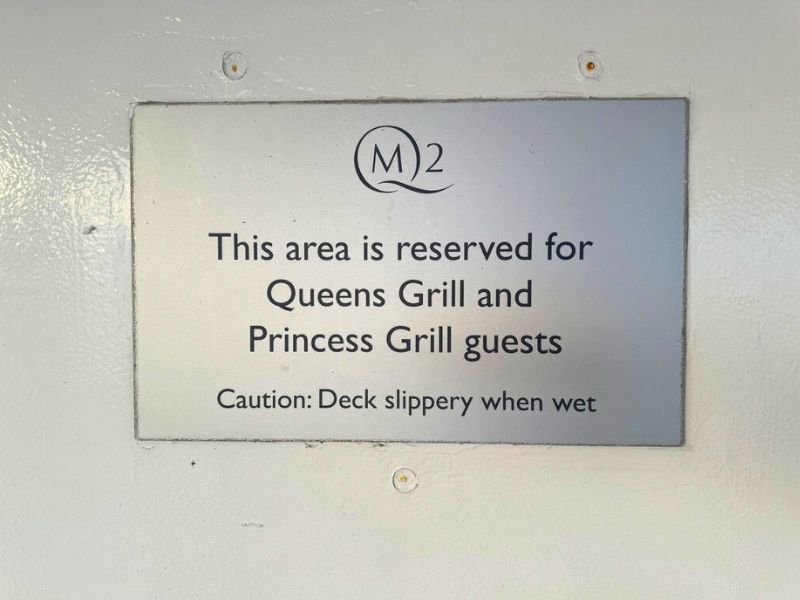
Cruise ships are stable, but they still move, and that can make it harder to keep your balance. Add a bit of water on deck or slippery soles and you’ve got a recipe for a tumble.
I once saw an elderly gentleman slip on the steps when leaving a hot tub. He didn’t get up again until the medical team arrived with a wheelchair a few minutes later. Hopefully he’s made a recovery, but I’m sure the rest of his holiday would gave been ruined.
Tip: Pack proper non-slip shoes, always hold handrails, and watch your step – especially near the pool or on gangways.
3. Dehydration Creeping Up on You
Warm-weather cruises are lovely – but many seniors underestimate how fast dehydration can hit. Our thirst reflex fades with age, and alcohol in the sun doesn’t help.
Cruise ships are notorious for having salty food, which can make you more dehydrated and cause painful swelling in the limbs for some older cruisers.
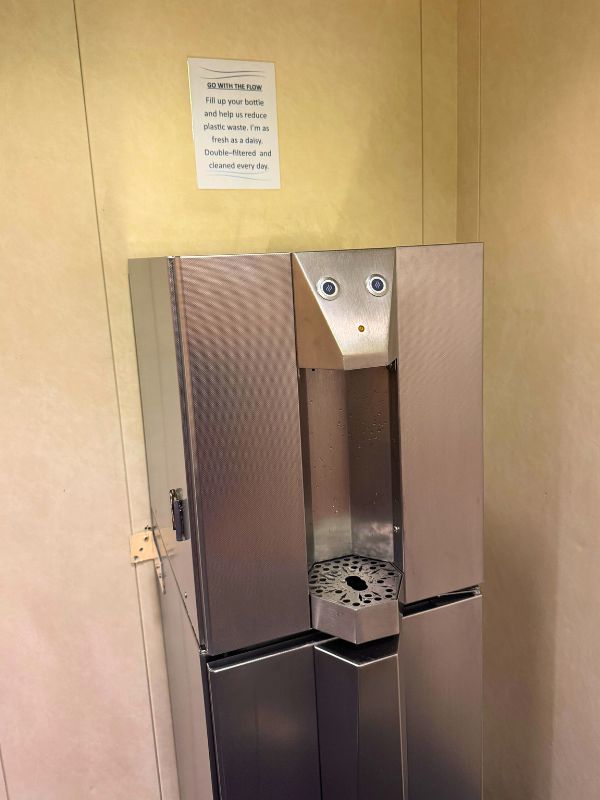
I recommend always carrying a refillable water bottle. Most newer ships have water refilling stations where you can fill it up.
You’re not allowed fill your personal water bottle from the water machines that are designed to fill glasses. That’s because the rim may touch the machine, and that would be unsanitary. However, you can fill a glass and decant several of those into your water bottle. Or ask a crew member to help.
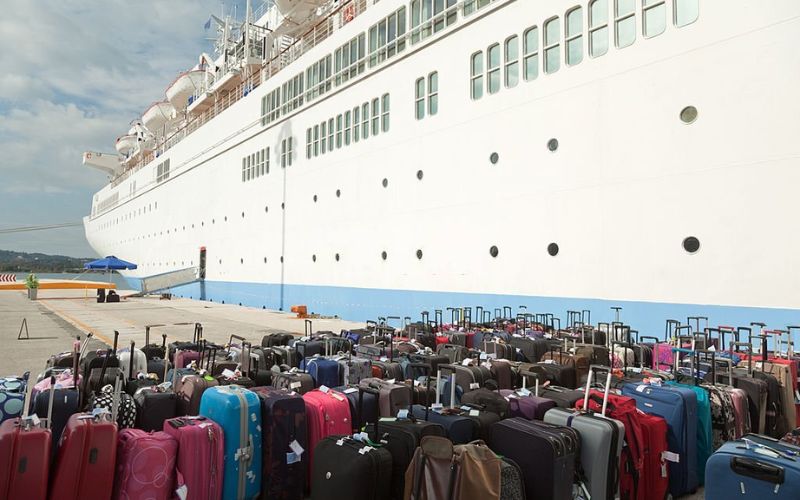
Medication should always be packed in your carry on bag, not in your checked luggage. That’s because your bags could be delayed, or there’s a chance they may not arrive at all.
Cruise ship medical centres do carry a variety of medications, but there’s no guarantee that they’ll have what you need. And even if they do, it’ll probably cost you a small fortune.
If your medication needs to be refrigerated, then you must call the cruise line in advance to let them know of your needs. Most cabins do have a fridge, but there’s no guarantee that it will be cold enough to kepe your medicine at the correct temperature. You may need to store it in a special fridge elsewhere on the ship to be sure.
I recommend packing more medication than you need. There have been instances of itineraries being changed due to weather, and so there’s a chance your cruise could become longer than you anticipate.
5. Doing Too Much
Cruise schedules can be jam-packed with shows, excursions and activities. But trying to do it all can leave you shattered.
If you’re used to spending your days pottering around at a leisurely pace and relaxing in front of the TV, then early-morning alarms and days spent sightseeing around busy cities can quickly take its toll.
Be sure to schedule in some downtime to relax and recover. Sit on your balcony. Have a nap. Watch a movie in bed. Pacing yourself is important, even if you worry about missing out.
6. Getting Lost On A Big Ship
Most people get lost on cruise ships, it’s very normal. I once dropped my bags at my room and headed straight out to the bar. After several hours and several drinks, I realised that I had no idea what my room number was – and it wasn’t written on my cruise card!
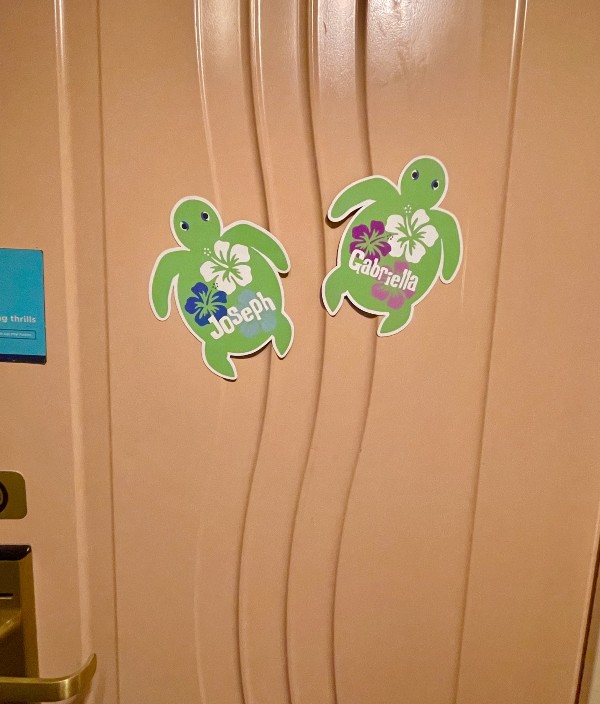
Many cruisers opt to stick decorations on thier doors using magnets – it’s an easy way to find your room when they all look the same.
You might not remember that your room is numbered 10365, but if you know you’re on deck 10, midship, port side, then you’ll be able to spot it by your decoration!
Many ships give out a paper ship map at the start of your cruise – this is very handy to keep in your bag. Others have an app which you can use on your phone to find your way around.
Look out for the screens that are by the elevators too on modern ships – you may be able to use these to get directions to where you want to go.
7. Not Being Able To Board The Tender Boat
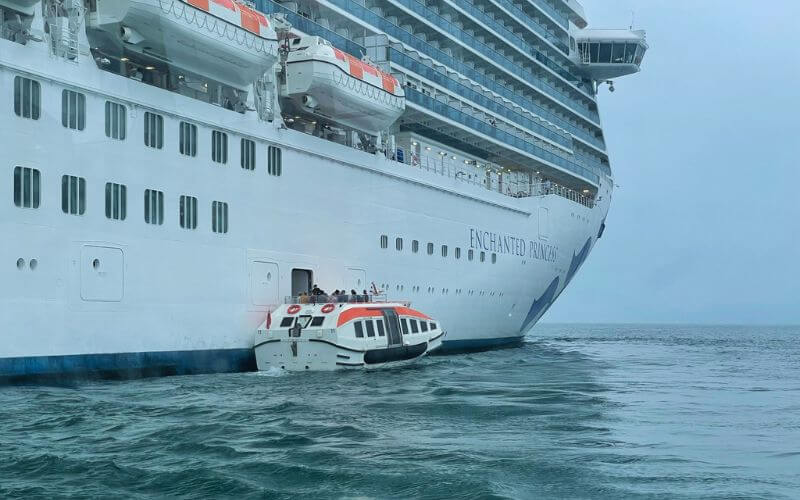
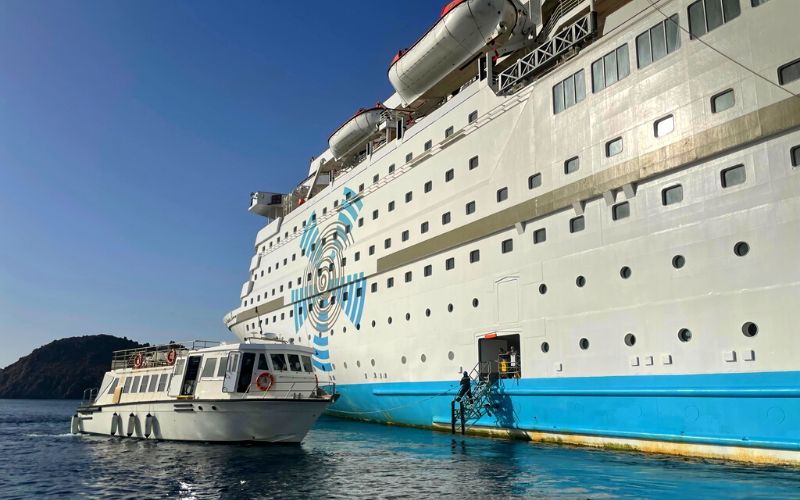
Some ports use tender boats to get you to shore – and they’re not always easy to board, especially if you have mobility issues.
If the sea is choppy, the boat will be moving up down, and you’ll likely have a gap of up to 12 inches to step across between the ship and the boat.
There will be crew members available to help, but if they think you’re not up to it, they simply won’t allow you to board the tender.
Each cruise line has different policies. On some ships I’ve seen people in wheelchairs be allowed to board the tender. But on others, they’ve placed lines on the floor that are one metre apart and asked people to prove that they can step over the line.
If you’re worried about being able to access a tender boat, then I recommend that you look at a list of tender ports to see if any of the ports on your upcoming cruise require using a tender boat.
8. Over-Indulging In Rich Food
Cruise food is amazing. But if you dive in headfirst, especially with rich or unfamiliar dishes, you might spend more time in your cabin than at the shows.
It’s important to pace yourself. Stick to familiar foods if your stomach is sensitive and don’t feel pressured to have three courses at every single meal if you don’t want to.
Unfortunately, a lot of scams happen in tourist areas, and older people can be seen as easy targets.
On a recent cruise, I spoke to an elderly solo traveller from South Korea who’s trip had been ruined as he fell foul to a scam before he even reached the ship in Barcelona. A seeingly kind stranger had offered to help him with the ticket machine in the station, which enabled them to watch as he entered his PIN number.
This person took the same train and chatted to him during the journey. Just as the train reached a station, the person distracted him while an accomplice swiped the gentlemans wallet.
They headed to the nearest ATM and withdrew 6,000 Euros. The worst part? Because they had the PIN, the bank wouldn’t return any of the money.
Take a look at this list of Scams Cruise Passengers Keep Falling For so that you can make sure you’re aware of the ways that fraudsters might try to steal your money.
Final Thoughts
Cruising in your 70s (and beyond!) can be absolutely brilliant – as long as you’re prepared. With a few smart moves, you can avoid the most common pitfalls and make the most of your well-earned holiday.
Have you experienced any of these issues on a cruise? Drop your tips in the comments!
Want to cruise smarter?Sign up for my email full of insider tips, ship reviews and cruise deals
Relaated Posts:
If you found this interesting, please share!
Jenni Fielding is the founder of Cruise Mummy. She has worked in the cruise industry since 2015 and has taken over 30 cruises. Now, she helps over 1 million people per month to plan their perfect cruise holidays.
Cruise bar prices can be steep, so it’s no surprise many passengers consider bringing their own booze onboard. Whether it’s a bottle of wine for dinner or a few beers to enjoy in your cabin, the savings can add up.
But how closely do cruise lines check? With bag scanners, manual inspections and strict policies, sneaking alcohol onboard isn’t as simple as it sounds. Before you try to outsmart security, here’s what you need to know about how cruise ships detect alcohol – and what happens if they catch it.
What Cruise Scanners Can Actually Detect
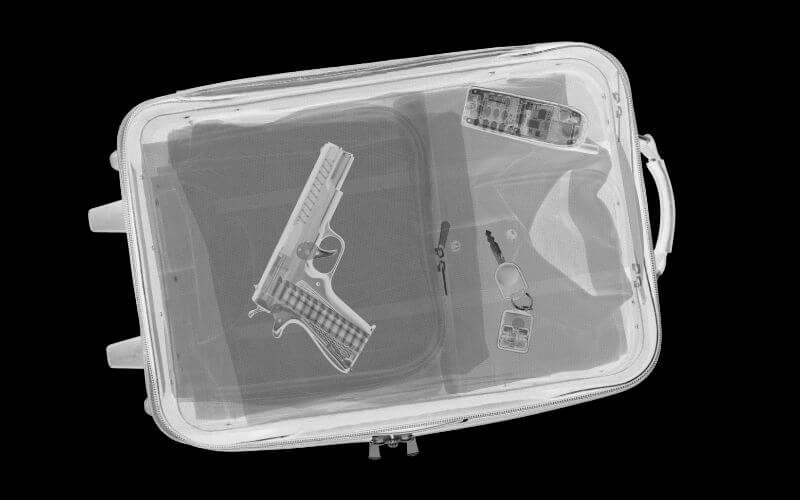
Cruise ship scanners can’t outright detect alcohol, but they can detect liquids. The security team will check every bag scanned, and if they see a liquid container, they are likely to open it up and check what’s inside.
The scanners are the same as those you’d find at the airport, and both your checked bags and your carry-on bags will be put through them. They use x-rays which can penetrate into your bags and show an outline of everything inside.
However, they also cause liquids to appear as a dark colour, so they can quite easily spot any bottles of liquid. Once they see liquid, they will normally open it up to check what the liquid is.
So in short, no, they can’t detect alcohol, but they can detect any liquid – and they’re pretty vigilant about checking what that liquid is. Whether it’s alcohol or something more sinister that could be used to create an explosive, they’ll want to know!
What Else Cruise Scanners Can Detect
Cruise scanners will detect all kinds of objects – because they use X-rays, they’ll show a clear outline of everything inside your suitcase or bags. The security team are also highly trained to look for items disguised as other things, so they can easily spot contraband.
The security teams, both portside and on the cruise ship, are experts in their jobs – this isn’t something they do for an hour before picking up their ‘main’ responsibilities elsewhere.
Think about how many thousands of bags they have scanned in their career – they know the kinds of things to look out for. So if you were thinking of taking any banned items onto your cruise ship, you should expect a high likelihood of it being found.
Depending on the severity of the item found, the cruise line may treat you differently. If you’re caught trying to sneak an extra bottle of wine onto the ship, you’re likely to just have it confiscated.
But try to bring something like drugs or a weapon onboard and you’ll not only be refused the chance to board, but you’ll be handed over to the local authorities as well. So don’t try to sneak drugs onto your cruise ship!
After all, cruise lines are businesses and they need to make money. They want you to either pay for their drinks packages or buy your drinks individually.
Letting you bring as much booze onto the ship as you want would undermine that and cause a bit of a hit in their profit margins.
Here’s a look at which cruise lines permit you to bring alcohol onto your cruise, as well as guidelines on limits for non-alcoholic drinks too:
Cruise Line
Alcohol allowance (per person)
Non-alcoholic drinks allowance (per person)
Carnival
One bottle of wine
12 x 330ml cans or cartons
Celebrity
One bottle of wine (two per stateroom)
No limit
Costa
Not allowed
Water only permitted for medical needs
Cunard
One bottle of wine
No limit
Disney
Two bottles of wine or six beers
No limit
MSC Cruises
Not allowed
Water only permitted for medical needs
NCL
Unlimited wine – $15 fee per bottle
Water only permitted for medical needs
P&O Cruises
One litre of wine or Champagne
No limit
Princess Cruises
One bottle of wine for free. $15 per additional bottle
No limit
Royal Caribbean
One bottle of wine
12 x 500ml bottles, cans or cartons (per stateroom)
If you try to bring more than you’re allowed onto the ship, and you’re caught, you’ll still be allowed to keep the permitted amount of alcohol, but the rest will be confiscated.
Cruise lines’ official policies vary on guests who try to sneak alcohol onboard – some say they will confiscate the alcohol, while others reserve the right to refuse guests boarding. In reality, the alcohol is usually confiscated and sometimes returned at the end of the cruise.
However, let me be clear – I am not saying that it will be fine if you do try to sneak alcohol onto a cruise ship. Especially with cruise lines like Royal Caribbean, which do say they may refuse boarding, there is a chance it could happen.
I can’t find any stories of someone being refused onto the ship, but all it takes is one security guard deciding to take a harder line and you might end up missing out on your cruise.
And because you had willingly broken the terms of your cruise contract, you wouldn’t be able to ask for a refund either.
So, in most cases, what tends to happen?
If you have alcohol in your carry-on luggage or it’s found on your person, then security will ask you about it, and if they find out that it is alcohol, they will take it from you.
If this happens port-side, it’s likely that you won’t see the alcohol again, because they don’t tend to have storage facilities for your contraband.
However, if your extra alcohol was in your checked luggage, things vary.
On some cruise ships, you might have your suitcase delivered to your room as normal, but with the alcohol missing.
On others, you may be asked to go and collect your luggage yourself, where you’ll be asked about the banned alcohol.
This video shows what happens. Bear in mind it has an explicit language warning:
That video also shows the alcohol being logged with tickets, so that the passengers could collect the bottles at the end of the cruise.
If your alcohol is taken from your suitcase, you’ll receive a letter explaining what happened. And again, sometimes you may be able to collect it at the end of the cruise, but at other times you won’t.
In that video, the passenger receives a letter which states:
“With the exception of all liquor, beer, and other forms of alcoholic beverages canned or bottled, your items will be stored in a secure location and returned to you on debarkation morning in the…
…All liquor, beer, and other forms of alcoholic and non-alcoholic beverages canned, bottled, or in cartons, will be discarded and no compensation will be provided.”
So you need to be aware that, if you take the risk, you might end up having your alcohol removed permanently and you won’t be reimbursed.
How Cruise Ship Security Checks for Alcohol
There are a couple of ways that security on your cruise ship will check for alcohol. Obviously, they will use the scanners to look for liquids, but then how do they know whether something is alcoholic?
If the liquid is in an opaque container, or it’s not a clear liquid, usually the security team will open it up and smell it. Even if the bottle is sealed, their priority is making sure you aren’t sneaking alcohol onboard, so they’ll break the seal and smell what’s inside.
But if the water is clear, and there’s a chance it’s just water, there’s a really simple trick that they will use.
When water is disturbed – tapped or shaken – the bubbles that form inside are quite large and will rise to the top quickly.
With alcohol, the bubbles are smaller and much slower.
Body Scanners on a Cruise
You will go through a body scanner when you board a cruise ship, but this is typically a metal detector instead of a more complex scanner, so it won’t be able to detect alcohol if hidden on you.
This means that, if you did want to sneak alcohol onto a cruise ship, a wearable might be a better option – there are bras and fake bellies that you can use!
However, the security staff are pretty savvy. If they suspect anything about you when you come onto the cruise ship, you may be patted down. And if they find you trying to sneak alcohol onto the ship using a wearable, the consequences are likely to be more severe than if you’d tried to sneak it through in your bags.
That’s because it shows a real dedication to breaking the rules to try and use a wearable like this, and so the security team will be concerned about what other dangers you might pose to the ship.
Rum-runners
Rum-runners are flasks for alcohol that are not bottle-shaped – they tend to be flat, which can make it harder for cruise ship security to spot them on the scanners. However, it is not impossible, as the X-ray images still show the darker liquids, and security staff are trained to look for rum-runners.
Remember, these people know what they’re doing, and so while there’s a chance you might get lucky on a larger ship where thousands of bags are being scanned, the security teams know what rum-runners look like.
Just like how they’re wise to people using mouthwash bottles for liquor.
I can’t tell you how likely you are to succeed using a rum-runner – cruise lines are hardly going to post those statistics, are they? But while there are plenty of success stories:
There are also plenty of failures:
Final Word
While the consequences of smuggling alcohol onto your cruise ship don’t tend to be too drastic, it’s a risk you’re taking since some cruise lines could decide to stop you from boarding.
If you do try to sneak alcohol on cruise ships, and you do get caught, don’t argue or cause a fuss. That’s going to massively amplify your risk of being kicked off the ship!
I’d recommend sticking to the guidelines and avoiding smuggling altogether – that’s the best way to make sure you’re not stressed on check-in day and you don’t need to have any awkward conversations with security staff.
Jenni Fielding is the founder of Cruise Mummy. She has worked in the cruise industry since 2015 and has taken over 30 cruises. Now, she helps over 1 million people per month to plan their perfect cruise holidays.
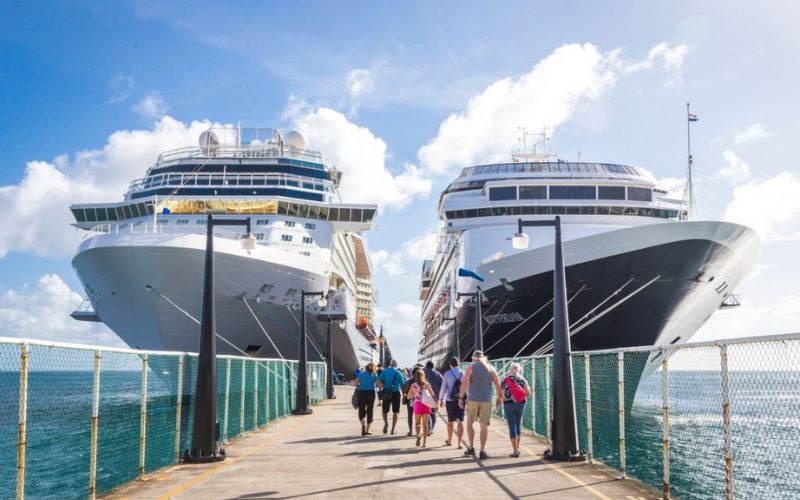
Cruise ports are often bursting with things to see and do – from historic landmarks to local markets and once-in-a-lifetime excursions. But with limited time ashore, it’s important to know how long you’ve got to explore.
Whether you’re planning a jam-packed day or just want to avoid being the person sprinting back to the ship, understanding typical port times will help you make the most of every stop. Here’s what you need to know.
How Long Cruise Ships Stay in Each Port
The time you spend in a port varies. The least amount of time is typically four hours, while the longest may be up to 36 hours for overnight stays. The average visit to a port lasts around 8 hours.
There are a lot of factors that determine how long a ship stays in port. Typically, shorter port visits are where you have a busy itinerary, or your next port of call is a long distance away, and you need to ensure you depart to reach it.
It can also depend on just how interesting the port is. If it’s a beach port, you’ll tend to stay longer as relaxing on the beach can be done all day, but for urban ports, it depends on how much there is to see or do.
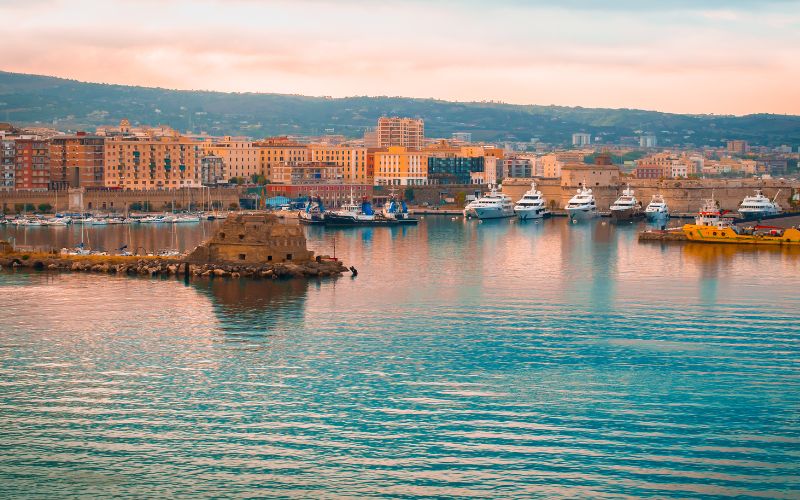
Plus, not every port is situated right next to the main attractions. The port for Rome – Civitavecchia – is actually about 80 miles from the capital city, so you need a longer port visit to give you time to get there and back, as well as see the sights.
Itinerary planners for cruise lines take all of this into account and will try to give passengers the most amount of time to explore a destination without compromising the rest of the itinerary.
Overnight Stays
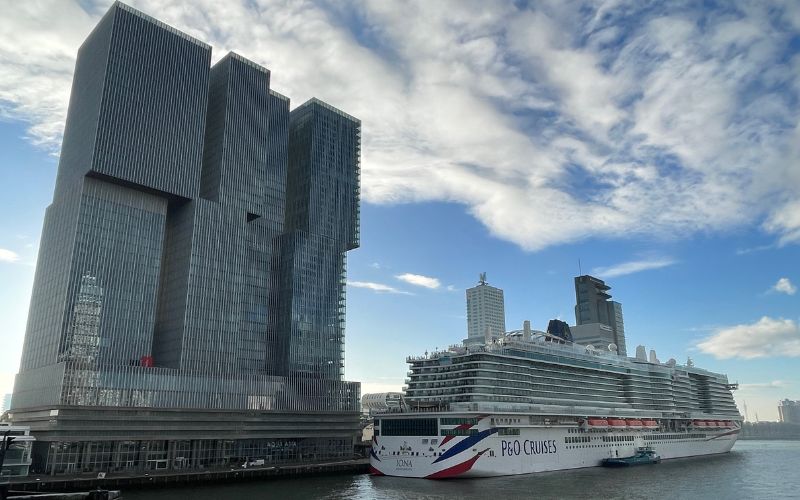
There are some ports that tend to be favoured more for overnight stays. Mediterranean cities like Florence or Ravenna, the beautiful city of Porto, and northern European destinations like Amsterdam and Rotterdam are some examples.
This gives passengers the opportunity to see both sides of the city, during the day and at night, where the atmosphere is often very different and the nightlife is considered a key attraction.
Other times, it may be beach destinations or cruise line private islands that host overnight stays for cruise ships, giving the cruise line the chance to arrange beach parties and unique experiences while the sun sets on the horizon.
Azamara and Celebrity Cruises are two of the primary cruise lines for arranging overnight stays in ports. Otherwise, it tends to be left to the ultra-luxury cruise lines such as Silversea and Regent Seven Seas.
Two Ports Per Day
Rarely, cruise lines will visit two ports in a single day – one in the morning, and one in the afternoon.
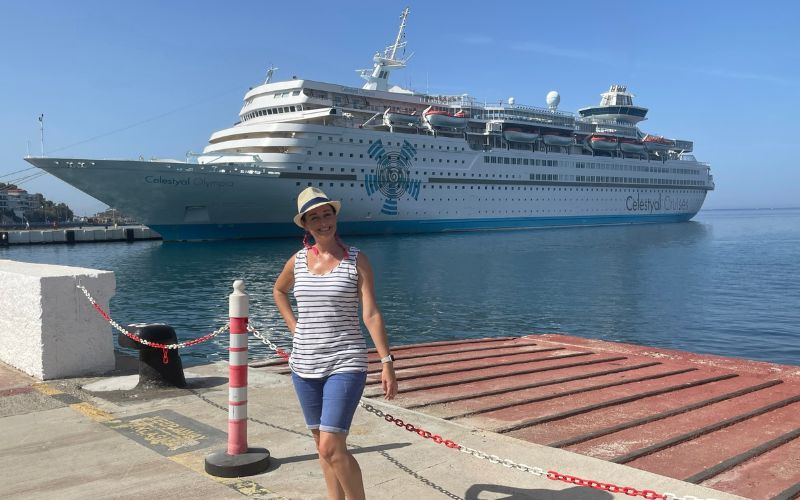
Celestyal Cruises does this often. This Greek-owned cruise line offers cruises around the Greek Islands, and since they’re so close together you can enjoy a packed itinerary.
Overnight cruise ports work just like a hotel would. You are free to come and go from the ship as much as you want, with no set time that you need to return. You can explore during the day, come back to the ship to get changed, and then head out into the early hours.
When you return to your ship, you’ll just walk on as normal through security and then head to your room. In the morning, if your ship isn’t departing yet, you’re able to disembark again for more exploration.
Typical Times You Can Get Off the Ship in Port
Most of the time, cruise ships arrive at each port in the early hours, as early as 4 am, but there will be a wait until passengers can disembark.
The earliest disembarkation may start at 6 am, but it is usually between 7 am and 9 am. Your ship can arrive later, too, and 10 am or even 11 am disembarkation is not a total rarity.
You will find that with late morning disembarkation, there can be a large queue to get off. I’ve had to wait in line for almost an hour to disembark, with a queue that looped around two decks of the ship!
However, when disembarkation is permitted earlier in the morning, you can usually just walk straight off as people naturally choose different times to get off the ship after breakfast.
When you book a cruise, you’ll be given the details of your itinerary, including the expected arrival times and departure times, so keep those handy and you’ll know when you’re able to leave the ship.
How Long It Takes to Get Off a Cruise Ship at a Port of Call
How long it takes to get off a ship at a port of call depends on whether you’re docked or anchored offshore.
If you are docked, you can usually walk straight off, though sometimes there may be a queue of 10-15 minutes. If you need to tender, it can take longer, as long as 90 minutes in very busy situations.
Usually, if there’s a long wait for tender boats, you will be given a ticket number. You can then go and relax on the ship until your group is called. In this situation, it can be worth getting a ticket before you’re ready to leave, as you know that there will be a wait.
Most of the time, it will take you between 30-45 minutes to get ashore once you head to the tender departure point on your cruise ship. Also, remember that if you do need to tender, then the last tender back will be around 30 minutes earlier than the ship’s departure time, so make sure you get back for it.
If you miss the last tender but the ship hasn’t left, call the ship – they might be able to arrange to get you onboard before the ship departs.
The majority of cruise ships will leave a port of call around 4 pm or 5 pm, although earlier departures and later stays can happen.
On one of my cruises, on Anthem of the Seas in Norway, the ship left at 3 pm. Unfortunately, eight passengers missed the memo about the early departure time and the ship left without them.
On another cruise in Northern Europe on Iona, the ship often didn’t leave until as late as 10 pm. It’s important to check, as the time will vary depending on the individual port, and you don’t want to be late.
There is a chance that, if your itinerary is busy, you may be asked to return to the ship by the early afternoon, so always carry around your daily programme so you know when to get back.
And please, make sure that your watch is set to the local time!
Cruise Line Policies on Late Passengers
Cruise ships will typically wait around 30 minutes beyond their scheduled departure time if passengers have not returned to the ship, but otherwise, they will leave people behind. If you are late, you can call the ship to ask them to wait, but it isn’t guaranteed that they will.
If the ship knows that you are on your way in a taxi, they’re much more likely to wait than if they haven’t heard from you.
When you’re on a cruise, you’ll know if guests are late back, because you will hear their names being called over the public address system. This is to check if they have somehow boarded without scanning their cruise cards.
Cruise lines have a strict schedule to adhere to – they need to make sure they leave with enough time to reach the next port. And it’s not fair to other passengers if the cruise is delayed because someone is late back.
How often do cruise ships leave passengers behind? It’s rare, but like I say, I’ve seen it happen!
Pier Runners
Once a cruise ship has made the decision to pull away from the dock, it won’t reverse. So, even if you are standing on the pier shouting and waving, within touching distance of the ship, you won’t be allowed to board.
People who just miss their cruise ships are known as pier runners. Take a look at some of the funniest, saddest, and most embarrassing pier runner moments in this video:
What to Expext if You Miss the Ship
You should always take the daily programme of the ship with you on excursions because it’ll have the ship’s phone number. Call them if you are running late, and they might be able to wait.
If you do miss the ship, you’ll need to try and find the cruise line’s port agent, and failing that, call the cruise line for help. You’ll have to arrange to meet the ship in the next port, or just fly home. If you fly home, the cruise ship will arrange for your belongings to be delivered to you.
Just so you know, you’ll have to pay for everything if you’re late – your own travel to meet the ship or return home, the cost of shipping your belongings, the cost of replacement documents, etc. – and those costs aren’t cheap. So don’t be late!
The Bottom Line
You should always have enough time to tick off most of the things you want to see in a port of call, but due to time pressures, you may need to prioritise sights.
Cruise lines will always aim to give you as much time as possible, but if you can’t see everything in one day, you’ll just have to book another cruise!
Don’t push your luck with timing – always aim to get back to the ship early, so you don’t risk missing the deadline and being left stranded. That’ll be an expensive mistake you won’t repeat.
Jenni Fielding is the founder of Cruise Mummy. She has worked in the cruise industry since 2015 and has taken over 30 cruises. Now, she helps over 1 million people per month to plan their perfect cruise holidays.
So, you’ve found a great cruise deal – but before you start dreaming of cocktails at sunset, make sure your wallet’s ready for what’s not included.
Cruise fares often look like a bargain at first glance, but hidden costs can quickly add up if you’re not prepared. From sneaky service charges to surprise transport fees, these extras can catch you off guard and eat into your holiday budget fast.
In this guide, I’ll walk you through all the extra costs you might face on a cruise, especially if it’s your first one. And while seasoned cruisers may know a few of these already, plenty are easy to overlook unless you know what to watch for.
The good news? Many of them are totally avoidable – if you plan ahead.
1. Taxes and Port Fees
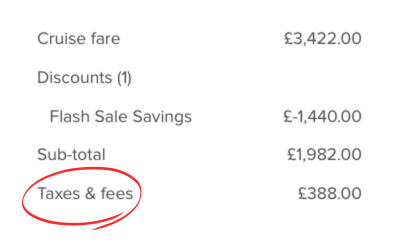
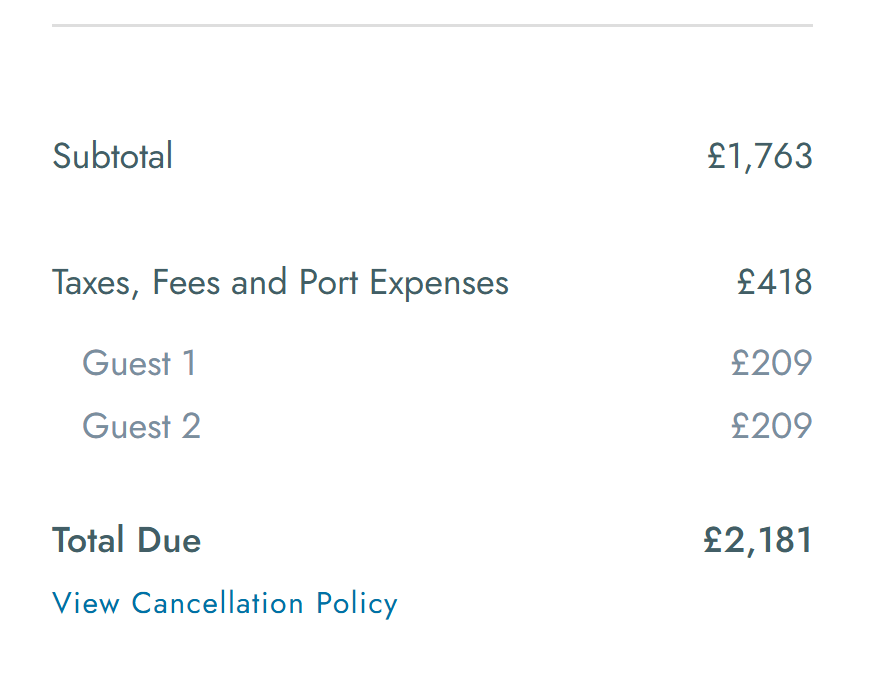
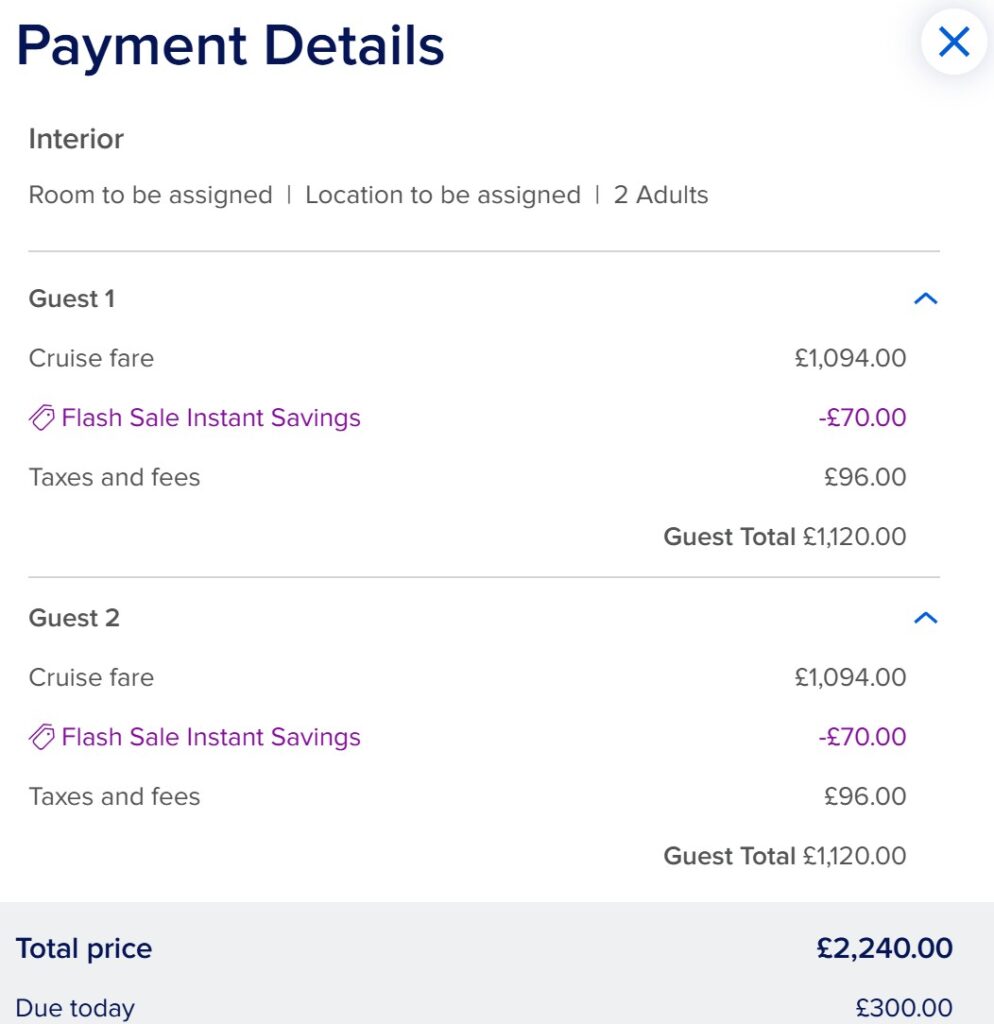
On every cruise, you’ll be paying taxes and fees. These are extra charges that are applied to the cruise ship when it travels to different ports and countries, which are passed onto guests.
On most cruise lines, especially British cruise lines, the fees and taxes are just incorporated into the advertised fare. But on others, like Carnival and Royal Caribbean, the taxes and fees are only added on when you see the final total – the cruise fare advertised is without those extra charges.
You have to pay these – there’s no way around it. But make sure you budget for your cruise based on the final quote, and not on what you see when you first start browsing, as that price may be without the taxes included.
Want to get online during your cruise, either to keep tabs on your emails or to say hello to friends and family back home? Free WiFi is a rarity on cruise ships, and normally you’ll have to pay.
And on most cruise lines, you have to buy a package that lasts the duration of the cruise, rather than just paying for what you use.
It might be better to just switch off for a week, or to try and find free WiFi when you’re in port. Just be careful to only use your mobile data if you have a plan that covers roaming charges.
3. Room Service Delivery Fees
Some cruise lines offer room service items for an à la carte price, while others will give you room service food for free. However, there might be a one-off delivery charge instead, and if you’re not aware of it, then it can sting a little, especially if you only order one small plate.
Royal Caribbean’s a good example, where continental breakfast is free, but if you order cooked items – even just two sausages – you’ll pay $7.95.
4. Drink Costs
If you’re completely new to cruising, you might not be aware that drinks aren’t included in your cruise fare, and you’ll need to pay for these separately.
Cruise lines will typically have a small selection of free drinks – tap water, and maybe juices, teas and coffees at breakfast – otherwise, you’ll be asked to pay for each drink.
You can usually get a drinks package, though some are quite expensive (often as costly as the cruise itself) so you need to decide whether they’re worth it for how much you will drink.
5. Beverage Gratuities
It’s not just the cost of drinks that can sting you on a cruise – many also charge a mandatory gratuity for the drink, which is typically between 15% and 18%. This will be advertised on the menus, but sometimes in small print, and it won’t be included in the listed price for a drink.
So be careful, as those $15 cocktails might actually be costing over $17.50, and that extra $2.50 each time can quickly add up to a hefty sum by the end of your cruise.
If you get a drinks package, the gratuity is typically covered too.
6. Corkage Fees
Looking to bring your own alcohol onto your cruise, to save a bit of money? It’s a good idea, and most cruise lines will at least let you bring one bottle of wine with you.
However, if you want to drink it in a public area of the ship, such as with dinner, then you’ll be charged a corkage fee, which is usually around $15. It’ll still be cheaper than buying a bottle of wine outright on the ship, but you might want to stick to drinking your wines in your stateroom or cabin to keep costs down.
Or, just pour yourself a glass of wine in your stateroom and then walk out the door with it. They’ll never know…
One last point on drinks – some cruise lines will advertise included teas and coffees, either as part of your regular cruise fare or with a drinks package. But depending on your package, speciality coffees may not be covered.
It’s important to always check what’s covered. Luxury coffees may be charged separately, and any branded coffee stores (Starbucks on Royal Caribbean, or Costa on P&O Cruises) will also incur additional costs.
8. Adult-Only Area Access
Some cruise ships have adults-only areas that have upgraded amenities, designed to offer a little bit of respite away from the bustling crowds where the kids are being louder.
Sometimes these are included, but sometimes they require a pass to allow you to enter with day passes costing anywhere between $50-$100, and some that only allow you to pay for the duration of the cruise.
If you really don’t like the crowds, just search the ship – there are usually quieter spots to enjoy. And then, on port days when most guests head ashore, you can explore the parts of the ship that are usually busier.
On a cruise, you’ll always get a selection of included dining options with no extra charge – the main dining room, the buffet, and usually some snack bars or other specialist restaurants.
But there will be speciality dining restaurants that incur a charge – either a fixed fee, or that will have a la carte pricing.
You also need to be careful with the menu in the main dining room, as while most items will be free, some cruise lines have premium options that cost an extra fee.
Plus, it used to be that you could order as many main courses/entrees as you want, but several cruise lines are introducing charges for second or third meals at the same sitting, so make sure you ask your waiter if you aren’t sure.
10. Spa Passes
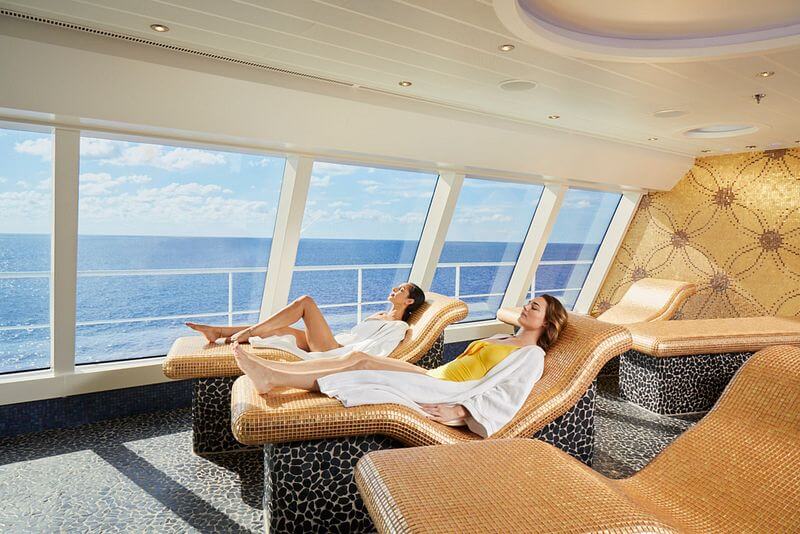
Most cruise ships have a spa, where you can enjoy a range of massage and beauty treatments, and these will all have individual prices. But the spas will sometimes have other facilities that guests can use, like a thermal spa, and the charges for these vary.
Sometimes they’re free, or you might need to pay for a day pass. You might also get access depending on the type of stateroom you book, such as Celebrity’s AquaClass staterooms, but don’t assume you can use the spa facilities without a charge otherwise.
11. Attraction Fees
Typically, the onboard entertainment and facilities on a cruise ship are free to use. Things like the FlowRider on Royal Caribbean, or the waterslides on any ship that has them, won’t cost a penny extra.
But some attractions will cost extra. Arcades, for example, work in the same way as arcades on land, while bigger attractions like NCL’s go-karting tracks or the Bolt roller coaster at sea on Carnival ships have a one-off cost. Both of those are $15, but prices for other attractions will vary.
12. Fitness Classes
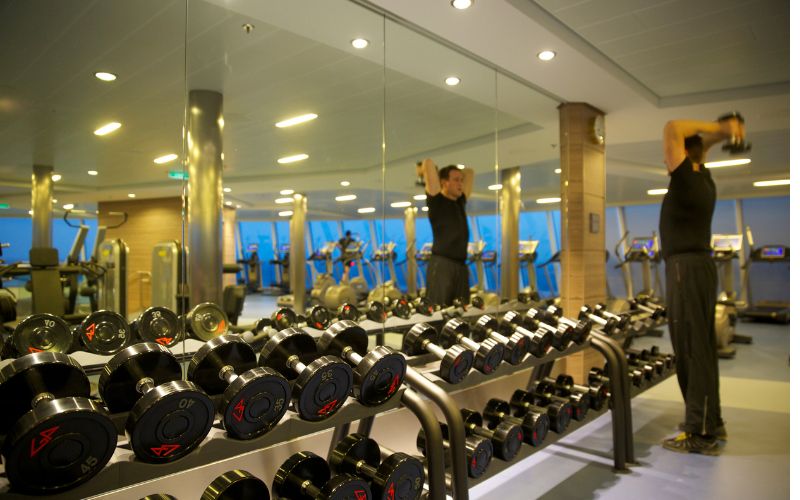
Attending the gym on a cruise is free, but if you want to take part in organised classes with an instructor, there may be a cost involved. It’s usually low – expect to pay around $12 for a half-hour or hour-long class, but it’s something else to bear in mind.
13. Bingo
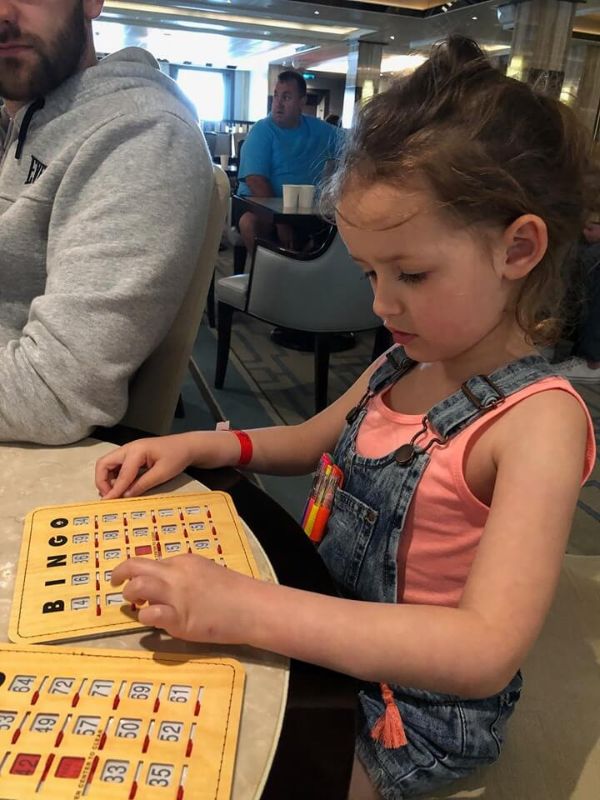
Bingo is a really popular pastime on cruises during the day and as part of some evening entertainment, depending on the cruise line. Some games may be free, with basic prizes, but most of the time you’ll pay to play and you’ll win the pot of money collected.
If you want to play bingo, look out for special offers where buying multiple cards gets you additional free ones.
14. Casino Gambling
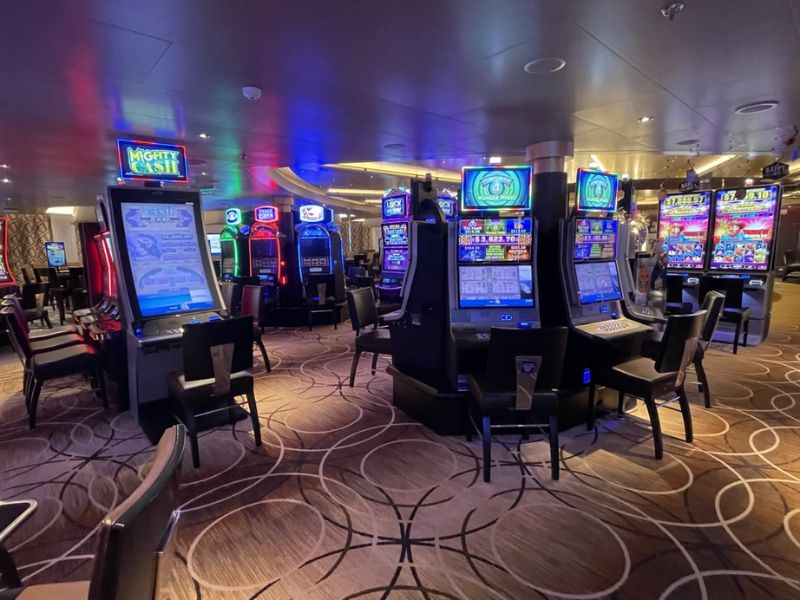
I’m sure it’s no surprise to you that gambling in the casino isn’t free on a cruise ship, but it’s still worth mentioning as a ‘hidden’ cost because, if you don’t budget for it properly, it can be very easy to rack up a large bill that you have to pay at the end of your cruise.
With various table games and jackpot slots, many passengers spend thousands on a cruise gambling. And while those passengers will likely get rewarded with free drinks and potentially even free cruises, that doesn’t mean you should just spend what you like.
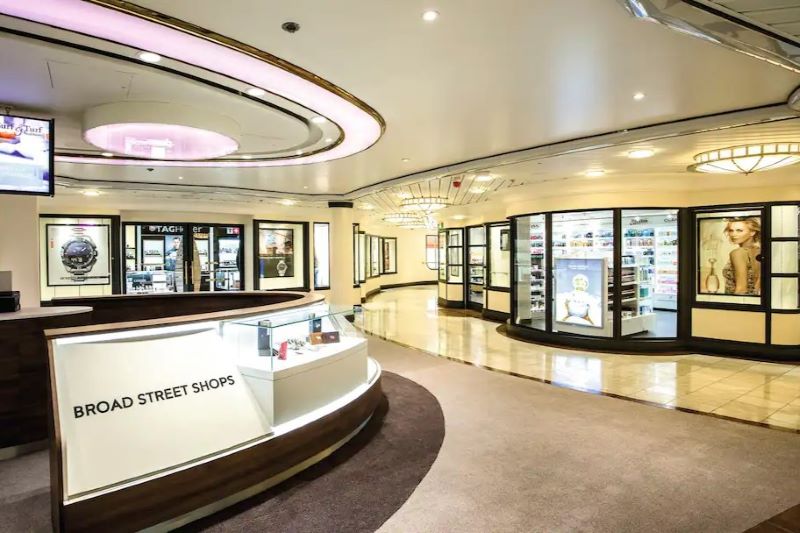
Just like with any holiday, you need to make sure you budget for souvenirs when you travel on a cruise, and the onboard shops often charge high prices for the items they sell.
Some of them are luxury jewellers or clothing retailers, but even the stores selling branded cruise merch aren’t exactly cheap. So, if you are likely to do some shopping onboard, set aside a limit you’re happy with.
16. Babysitting Charges
Cruises are more family-friendly than ever, with many ships now catering to guests of all ages. But you might still want some time to relax without the kids in the evening, so look out for cruise lines that offer a babysitting service.
Expect to pay between $6 and $10 per hour for group babysitting in the onboard kids’ clubs with cruise lines like Celebrity, Carnival, Disney, MSC and Royal Caribbean, with some also offering in-cabin babysitting if you’d prefer, though expect to pay a much higher hourly rate.
On the majority of cruise lines, you need to pay daily gratuities for the crew on top of the fare you’ve paid. Only a handful of cruise lines, including the British ones like P&O Cruises and Marella Cruises, don’t ask guests to pay these tips.
They’re added to your account automatically, and you can either prepay before you cruise or pay them off when you clear your account on the last day. You can technically ask for them to be removed, but it’s not a good idea, since it takes away money that the crew have worked hard for.
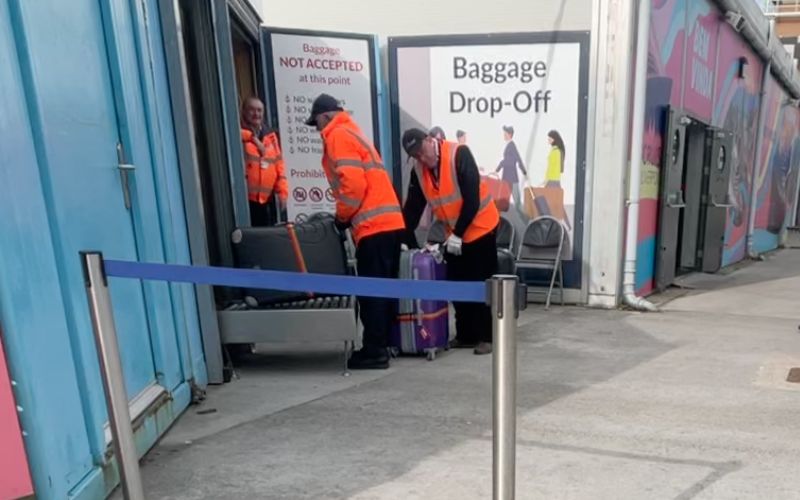
When you arrive at a cruise port, your bags will be taken away by porters or baggage handlers, and you won’t see them again until they’re left outside your cabin door later that day.
If you’re cruising from the US, it’s customary (and usually a good idea) to tip these baggage handlers. As a guide, aim for $2 to $5 per bag, or a round figure of $10 for the family’s luggage.
Another cost that isn’t really ‘hidden’ but that you might not expect if you’ve never cruised before – shore excursions in each port typically have an associated cost. Booking through the cruise line tends to mean you’ll pay more, too, though you get the guarantee that the ship will wait for you if anything happens to delay you while you’re ashore.
It’s cheaper to book your excursions through a third party or to avoid booking them altogether and just hop off the ship to explore, although check your itinerary as you may dock far away from the main town/attractions.
20. Food and Drink Portside
One thing that people often forget to budget for is their food and drink when they’re on a port day and exploring. You may be able to carry drinks off the ship with you, but you can’t take food.
You could return to the ship for lunch, but if you plan on eating out, factor that into your spending budget before you travel.
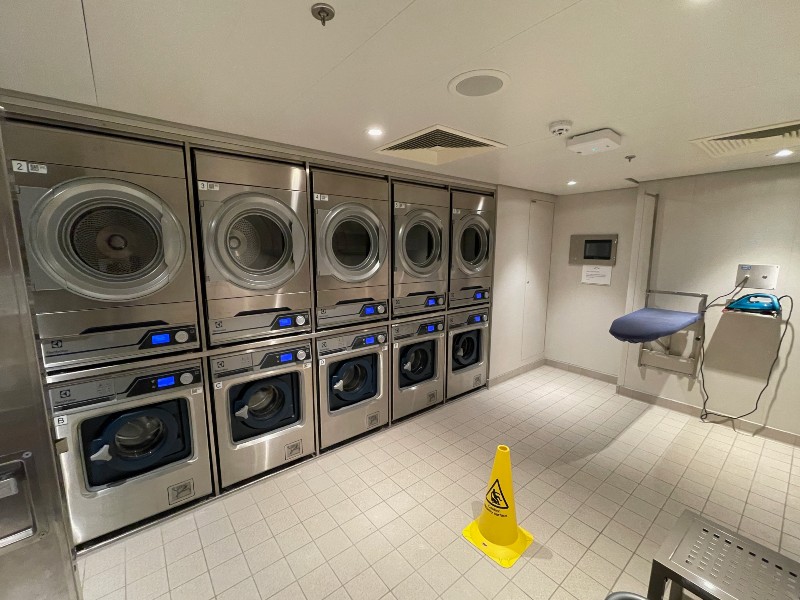
21. Laundry Services
You might want to make use of the laundry services on a ship if you prefer to pack light, or if you’re on a particularly long sailing. Prices vary by cruise line and whether the machines are self-service or if you need to use a managed laundry service instead.
It’s cheaper to just pack as many outfits as you need, though this will also depend on any airline luggage allowances if you’re flying out to meet your ship.
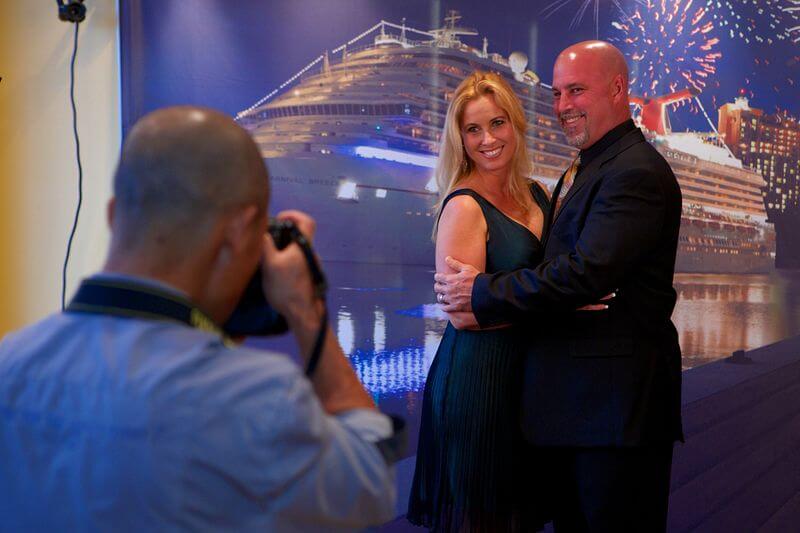
Cruise ships tend to have one or two photographers onboard, who will capture moments around the ship and offer a formal photoshoot service on formal nights.
If you want to take these precious memories home with you, be prepared for fairly high prices, even if you buy a package deal on the ship. It may be better to just work on your own photography skills instead, and ask other guests to snap a quick pic of your family when you’re all dressed up.
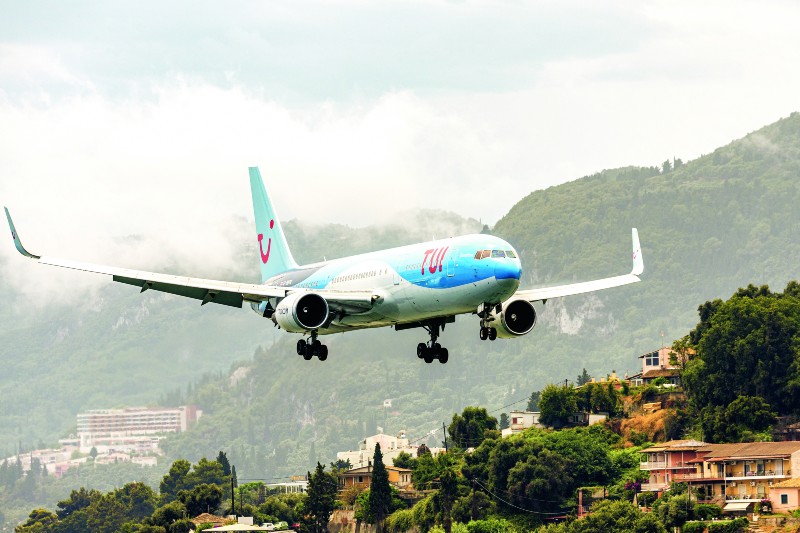
Not cruising from your home country? Then you’ll need to factor the cost of flights into your cruise. If you book with a travel agent, then they’ll arrange it for you and include the cost in what you pay them; otherwise, you’ll need to source your own flights.
You can also book fly-cruise deals directly with cruise lines, but these may be more expensive. Some of the more expensive ultra-luxury cruise lines, such as Regent Seven Seas and Silversea, will include your flights as standard.
24. Transfers
When putting together your own cruise package, don’t forget that it’s not enough to fly to your embarkation port – you also need to get from the airport to the cruise port.
You can book transfers, or private taxis, or try public transport if you’re confident, but you will need to budget for it regardless.
25. Hotel Stays
A top tip when cruising, especially when travelling from a foreign embarkation port, is to book a hotel the night before you sail. You don’t want to risk delays on your departure day, because if you’re late, then the ship will leave without you.
A hotel stay might add a larger amount to your budget, but it’s worth it to avoid the stress of rushing on your first cruise day.
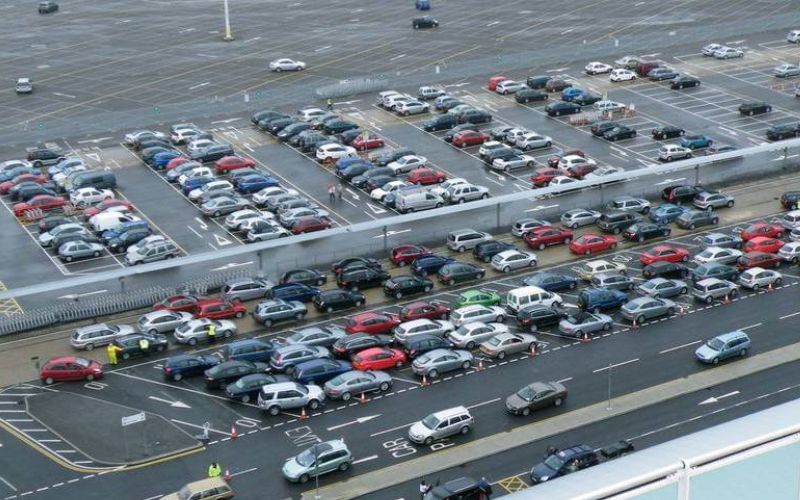
26. Cruise Parking
If you’re driving to the cruise port, you’ll need somewhere to leave your car. Cruise terminals will have parking services, but they can be pricey – sometimes £15 ($20) or more per day.
It’s possible to find free street parking in some instances, but that’s quite the risk – better to research cheaper parking alternatives that are secure, especially if they include free transfers to the port afterwards. Hotels with cruise parking are a great combination if you want to stay the night before as well.
If you are travelling to your port city the day before, or if your return flight after your cruise is late at night, you might want to look into activities to entertain you before or after you sail.
Especially in larger cities like Miami, where the airport is easily accessible and late-night flights back to the UK are common – there are so many things to see and do so that you aren’t stuck bored in the airport for 12 hours, but most have a cost – make sure you’ve factored that in.
Travel insurance really is a must for cruising. You don’t want to risk something going wrong and losing your entire fare if it’s not the cruise line at fault.
The cost of travel insurance will vary depending on your age and medical history, but I really would recommend always buying it, especially since medical costs on cruise ships can be so expensive.
My recommendation for cruise insurance depends on where you live.
These are trusted price comparison sites that will quickly get you lots of quotes to match your exact needs.
Final Word
There are a lot of extras that you might have to pay for on a cruise, but most of these are optional. Cruising on the bare-bones fare is still great fun, though you might feel a little restricted.
If you’re on a tight budget, just work out everything before you travel and set sensible limits to stick to, and you can have an amazing time without worrying about the bill on the final day.
TODAY’S BEST CRUISE DEALS!
Don’t miss these offers…
Related Topics
If you found this interesting, please share!
Jenni Fielding is the founder of Cruise Mummy. She has worked in the cruise industry since 2015 and has taken over 30 cruises. Now, she helps over 1 million people per month to plan their perfect cruise holidays.
When it comes to cruise ships, what you don’t see below the waterline is just as important as what’s above it. One of the most critical – and often overlooked – measurements is the draft.
Understanding a ship’s draft can reveal where it can safely sail – and where disaster could strike. But what exactly is it, how is it measured, and why should cruise passengers care?
To get the real story, I spoke to a cruise ship pilot who broke it all down in plain English. Here’s what I discovered.
What Draft Actually Means
The draft measurement for a ship refers to the distance from the waterline to the very bottom of the ship – in other words, a measurement of how much of the ship is underwater at any time. The draft can vary depending on the weight of the ship at the time, due to increased displacement.
As such, if you see any advertised draft figures of a cruise ship (like those I’ve included below), these will be the maximum draft – the largest distance possible for that ship from the waterline to the bottom of the ship when at maximum weight capacity.
Don’t confuse it with a ship draught, which is just where you’ve left your balcony door open!
Ships don’t sit on top of the water. If they did, they would tip over! Instead, they float on the waves with a significant portion of the boat constantly below the waterline – and it’s the depth of this which is measured as the draft.
On a cruise ship, the factor which impacts the draft of the ship the most is the fuel weight. Even on the largest ships, the passenger capacity doesn’t have as much of a difference on the draft as the fuel weight.
As a guide, the average American weighs 80kg. So on a cruise ship like the Wonder of the Seas, which might carry 8,000 people, including guests and crew, that’s a weight of 640,000kg or 640 tonnes.
A cruise ship will use between 150 and 250 tonnes of fuel per day and will have a carrying capacity of between 2,500 and 5,000 tonnes of fuel. So, the fuel definitely has more of an impact on the draft of a ship.
The Average Draft of a Cruise Ship
The average draft of a cruise ship is around 21 feet or 6.4 metres. Larger ships do tend to have a bigger draft, but it’s not directly proportional to the length or the gross tonnage – the biggest cruise ships don’t have the largest draft.
I’ve looked at almost 400 cruise ships sailing the ocean, so this average cruise ship draft depth is pretty solid – in fact, around 55% had a larger draft than 21 feet, and 45% had a smaller draft, so it’s close to the median value as well.
It’s a little skewed because some of the smallest ships have a tiny draft, including the National Geographic Sea Bird, which has the smallest draft of all cruise ships – just 1 foot, or 0.3 metres.
This, of course, makes it an excellent choice for exploring parts of the world where the water isn’t very deep.
The Deepest Cruise Ship Draft
The deepest cruise ship draft is 32.81 feet, or 10 metres, and it belongs to the Queen Mary 2 – one of the classic ocean liners of the Cunard fleet of ships. The Oasis-class ships for Royal Caribbean also have a large draft measuring 30.58 feet or 9.3 metres.
Again, though, it isn’t just the largest ships that have the biggest drafts. Indeed, some smaller Royal Caribbean ships (Voyager of the Seas, Navigator of the Seas) have bigger drafts than some of their more recent and larger sisters, such as Freedom of the Seas or Anthem of the Seas. The Icon of the Seas draft hasn’t been announced, but it’s likely to be pretty big – as soon as it’s confirmed, I’ll add it to this guide.
How Draft Is Measured
Draft is typically measured in feet and is tracked using markers on the ship. You can see them a little above the waterline normally – they’re a series of small lines that will be repeated at the bow, the middle of the ship and the aft.
They’re also repeated on both the port and starboard sides, so whenever you get off the ship, you should be able to see the markers – just look towards the waterline.
Depending on the stage of your cruise, you might notice a couple of different colours towards the waterline. Typically, the part of the ship below the water is painted a different colour to the rest of the ship, but there’s usually a mark left by the water, too, especially on older ships.
So when you’re in the latter stages of your cruise and fuel is running less, and people have left the ship for a port day, you might spot the typical draft on the ship from the dock, in the form of a mark left by the water when she is cruising with her normal weight.
Why Draft Matters
All very interesting so far, if you’re really into the measurements of ships at least. But why is the draft important?
You can probably guess – the draft of a ship determines which ports of call it is able to visit. It’s not the only factor – length and width do come into consideration too.
But the draft is the most important. The draft of the ship will prevent it from reaching some ports that stand in shallower water, and that’s when a ship might need to anchor further out to sea and offer tender boats to the port.
How Shallow a Cruise Ship Can Go
A cruise ship can go into any water that is deeper than its maximum draft. So, for the average cruise ship, with a draft of around 21 feet of water, it can go into waters that are 21 feet deep or more. With cruise ships having varying drafts, some ships can go into shallow waters that others can’t.
There isn’t any need for water to be additionally deep – the draught of the ship is the measurement of how deep the ship can go. But the depth of waters around ports is accessible information, and so cruise itineraries are planned with this in mind – ships will only safely sail into ports that are deep enough.
There may be times when a ship has to take a certain route into port – there may be land masses below the water that are inconsistent or rocks, and ships may need to navigate around them.
Reassuringly, every time a cruise ship arrives in port it is joined by a pilot – an expert in the port itself, who will board the cruise ship from their pilot boat and help the crew to navigate the waters safely.
And, of course, the cruise ships have all the best equipment and technology for detecting water depth, too.
Here’s a look at some cruise ship drafts. I’ve included some of the most popular cruise ships in the world, as well as a handful of smaller ships that might be of interest based on their draft size.
I’ve not included every ship in this table – it’d be giant if I did – so I’ve instead picked out examples of ships within different classes for each cruise line, to help demonstrate the example draft and show how larger ships aren’t always those with a larger draft.
Ship name
Cruise line
Size (GT Tonnage)
Draft (Feet)
National Geographic Sea Bird
Lindblad Expeditions
630
1
Celebrity Xploration
Celebrity Cruises (Celebrity Expeditions), Lindblad Expeditions from January 2025
319
4.59
MSC Virtuosa
MSC Cruises
177,100
9.51
Norwegian Encore
NCL
167,800
9.51
Iona
P&O
184,700
9.51
Scenic Eclipse 2
Scenic Ocean Cruises
16,500
9.51
Silver Moon
Silversea Cruises
40,700
9.51
SeaDream I
SeaDream Yacht Club
4,333
13.12
Silver Galapagos
Silversea Cruises
4,077
13.12
Wind Star
Windstar Cruises
5,397
13.48
Braemar
Fred. Olsen
24,344
17.75
Azamara Journey
Azamara Cruises
30,277
19.52
Oceania Regatta
Oceania Cruises
30,277
19.52
Seabourn Odyssey
Seabourn
32,346
19.69
Viking Sky
Viking Ocean Cruises
47,800
20.67
Seabourn Encore
Seabourn
40,350
22.31
Seven Seas Explorer
Regent Seven Seas Cruises
56,000
23.62
Britannia
P&O
143,730
24.61
Carnival Pride
Carnival
85,920
26.25
Celebrity Infinity
Celebrity Cruises
90,940
26.25
MS Eurodam
Holland America Line
86,273
26.25
Oceania Marina
Oceania Cruises
66,084
26.25
Costa Luminosa
Costa Cruises
92,720
26.56
Disney Fantasy
Disney Cruise Line
129,750
27.3
Sky Princess
Princess Cruises
143,700
28
Norwegian Breakaway
NCL
145,655
28.22
MSC Seaside
MSC Cruises
152,050
28.87
Anthem of the Seas
Royal Caribbean
167,800
28.87
Crown Princess
Princess Cruises
113,561
29.53
Navigator Of The Seas
Royal Caribbean
139,570
30
Harmony Of The Seas
Royal Caribbean
227,000
30.58
Queen Mary 2
Cunard Line
148,528
32.81
Final Word
It’s pretty easy to see why some cruise ships can’t access certain ports, but now you know the answer in a little more detail.
Especially when you look at that table above and see how some tiny ships have quite large drafts, and some larger ships don’t extend too far into the water. You might now realise that there are some bigger ships which can access ports which might be surprising – and you’ll know why.
At the very least, I bet you’ll be looking for the draft markings on your ship the next time you cruise!
TODAY’S BEST CRUISE DEALS!
Don’t miss these offers…
Related Posts
If you found this interesting, please share!
Jenni Fielding is the founder of Cruise Mummy. She has worked in the cruise industry since 2015 and has taken over 30 cruises. Now, she helps over 1 million people per month to plan their perfect cruise holidays.
Look at the price of a cruise on any website – whether that’s a cruise line or a travel agent – and you’re not really getting the full picture.
It does vary, but most of the time there are plenty of extras you need to take into account – and it’s always best to be prepared with your budget…
How Much It Costs To Go on a Cruise
A cruise can cost anywhere from $50 (£40) per person, per day, with a budget cruise line like Costa Cruises to well over $1,000 (£800) per person, per day, with an ultra-luxury cruise line like Regent Seven Seas Cruises. The average cost of a cruise is $193 (£141) per person, per day. This equates to $1,351pp (£989pp) for a 7-night cruise.
Of course, cruise ticket prices vary for all kinds of reasons – the ship, the destination, the demand etc. Asking how much are cruises doesn’t give a clear answer because some ships are so much more expensive than others.
Cruise tickets generally include accommodation, meals, some drinks and entertainment. You’ll pay extra for speciality dining, alcoholic drinks, gratuities, spa services, casino, WiFi, flights, transfers and excursions.
What’s included in your cruise varies for each cruise line. Some cruise lines include gratuities in the ticket price. You may also get a drink package included at no extra cost. Sometimes, cruises come with free onboard credit, which you can spend on the ship.
If you plan your cruise carefully, it’s perfectly possible not to spend anything extra on top of the price of your cruise ticket.
The Average Cruise Cost
The average cruise ticket costs $1,457 (£1,068) per person. On top of that, guests spend an average of $697 (£510) on extras such as drinks, casino, spa services and shore excursions. This does not include the cost of any flights or transportation to the port.
One of the biggest factors affecting the price of your cruise is your choice of the cruise line.
The table below shows the average price for a 7-night Caribbean cruise (excluding flights) in a balcony cabin (per person, based on two people sharing).
Cruise line
Cruise fare
Gratuities
Drinks package
Total
Costa Cruises
$1032 (£759)
$88 (£65)
$285 (£210)
$1405 (£1034)
MSC Cruises
$1114 (£819)
included
$333 (£245)
$1447 (£1064)
P&O Cruises
$1236 (£909)
included
$380 (£280)
$1616 (£1189)
Princess Cruises
$1181 (£869)
included with Princess Plus (drinks & more)
$475 (£350)
$1656 (£1219)
Royal Caribbean
$1049 (£771)
$129.50 (£95)
$490 (£360)
$1669 (£1407)
Celebrity Cruises
$1069 (£786)
$126 (£92)
$623 (£458)
$1818(£1336)
Carnival
$1234 (£907)
$112 (£82)
$578 (£424)
$1924 (£1413)
Marella
$1966 (£1445)
included
included
$1966 (£1445)
Norwegian Cruise Line
$1620 (£1191)
$140 (£103)
$248 (£209)
$2008 (£1503)
Disney Cruise Line
$2755 (£2024)
$112 (£82)
not available
$2867 (£2106)
The aim of this data is to give you a rough idea of the average cruise prices for each cruise line. I sourced the prices from the cruise lines’ websites.
Marella and P&O Cruises are priced with flights included on the cruise line websites. I took off the flights to standardise the pricing.
Some cruises come with special offers, such as free onboard spend, which aren’t included in this table.
You can only use this as a rough guideline, though. Some of the cruise lines that are more expensive for the Caribbean might be cheaper for the Mediterranean or Canary Islands.
And then ship plays a huge part too. The smallest Royal Caribbean ships are typically a lot less expensive than something like Icon of the Seas.
The price of a cruise for a family of four depends very much on what discounts are available for children. The price for a family could be double the price for a couple, or it could be very little extra.
Many cruise lines don’t offer any discounts for children. This is usually the case on ships which have a lot of activities made for children like kids’ clubs, water slides and splash parks.
However, it is possible to get cheap kids’ prices, by either choosing a cruise line that doesn’t charge full price for children or by looking out for special offers and booking at the right time.
Kids Fares By Cruise Line
This is how much each cruise line charges for kids:
Carnival – Full adult price
Celebrity Cruises – Full adult price
Costa Cruises – Children under 18 pay only port fees and service fees (approx £150 per week)
Cunard – Full adult price
Disney Cruise Line – Child rate for ages 3 to 12
MSC Cruises – Children under 18 cruise FREE when booking in the USA and from £99 when booking in the UK
Norwegian Cruise Line – Full adult price but there are promotions on occasion
P&O Cruises – Full adult price in the school holidays and from £49 in term-time
Princess Cruises – Full adult price, though £99 kids’ places promotions are sometimes offered
Royal Caribbean – Full adult price but there are promotions, including a Kids Sail Free deal
The price for children under two years old also varies and can be anywhere from free to the full adult fare.
Cruise Family are the only UK specialists in cruises for families of 5+ (and smaller ones too!)
Let them find your perfect trip…
Drink Costs
The price of drinks on a cruise varies quite a lot, depending on the cruise line. Drinks on British- and European-owned cruise lines (e.g. P&O Cruises, MSC Cruises, Costa Cruises) are generally cheaper than on American-owned cruise lines (e.g. Royal Caribbean, Norwegian Cruise Line, Carnival).
Also, the general rule is that the more luxurious the cruise, the more the drinks will cost.
Here’s the price range for drinks on cruise ships:
The cheapest world cruise fares start at around $15,000 per person for a 99-night cruise in an inside cabin on board a P&O Cruises ship, to around $1.7 million in the most luxurious Regent Seven Seas suites for cruises lasting 140 nights. The average cost of a world cruise is $32,000 (£25,000) per person.
Alaska Cruise Costs
An Alaska cruise can cost anywhere from $500 (£383) per person for a 4-night cruise in an inside cabin with Princess Cruises to $75,000 per person for a 15-night cruise in an expedition suite with Crystal Cruises. The average cost of an Alaska cruise is $1500 (£1148) per person.
Bahamas Cruise Costs
A Bahamas cruise costs from as little as $99 (£75) per person for a 3-night cruise in an inside cabin on the oldest MSC Cruises ships, up to $52,000 (£40,000) for a 7-night cruise in a Royal Loft Suite on the biggest Royal Caribbean ships. The average cost of a Bahamas cruise is $1300 (£995) per person.
Cheap Cruise Lines
Cruise lines such as Costa Cruises and MSC Cruises are cheaper than others because they have a lower space-to-guest ratio and a lower crew-to-guest ratio. Plus, they’ll charge extra for things that other cruise lines include for free.
Jenni Fielding is the founder of Cruise Mummy. She has worked in the cruise industry since 2015 and has taken over 30 cruises. Now, she helps over 1 million people per month to plan their perfect cruise holidays.
Cruise ships are floating cities – so how on earth do they glide through the water with such precision? And what about those massive propellers underneath… are they dangerous?
If you’ve ever wondered how cruise ships stay on course (or you’re worried about getting too close to a propeller), this guide is for you. We’ll uncover the fascinating engineering behind cruise ship propulsion, reveal just how big those propellers really are, and clear up any myths about getting pulled under.
How Big A Cruise Ship Propeller Is
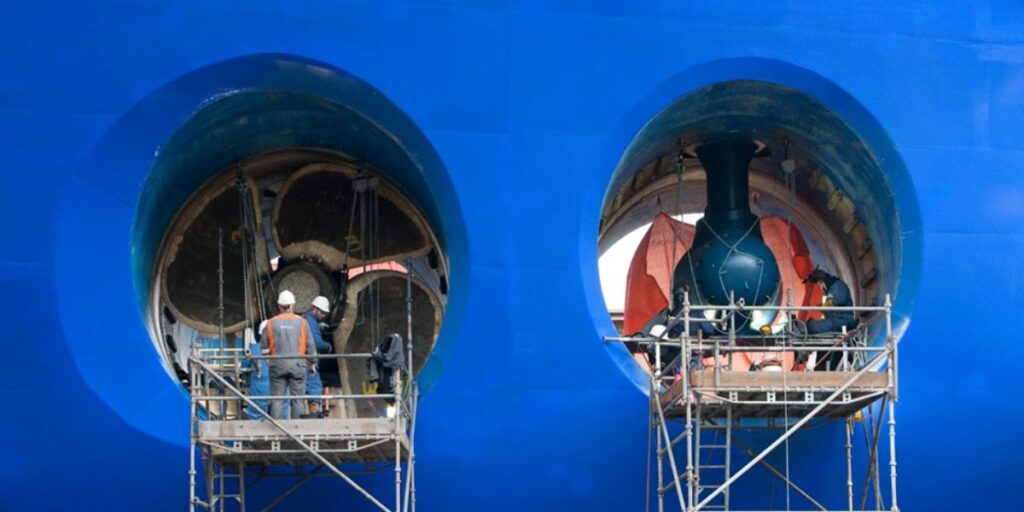
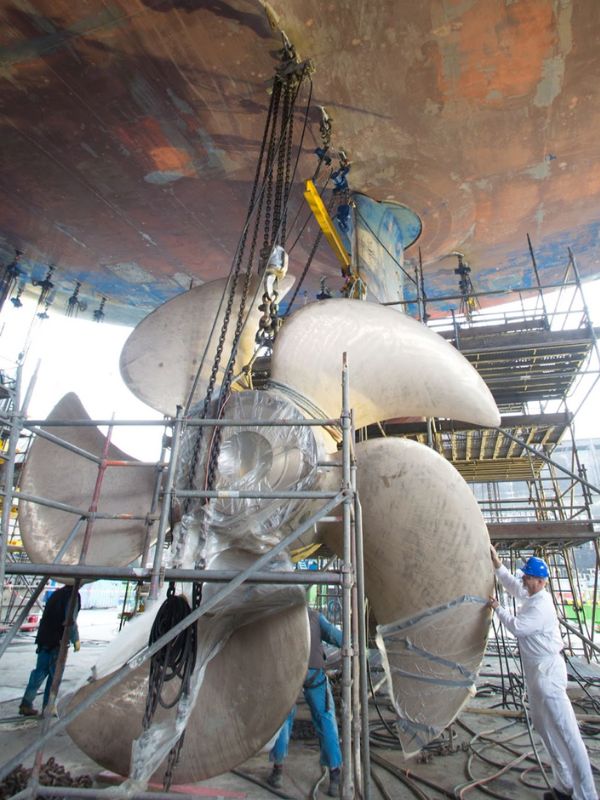
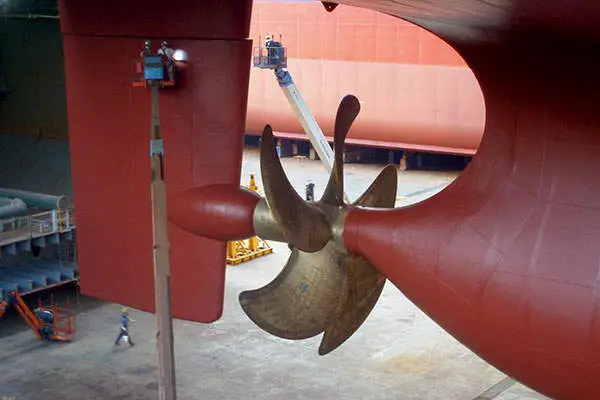
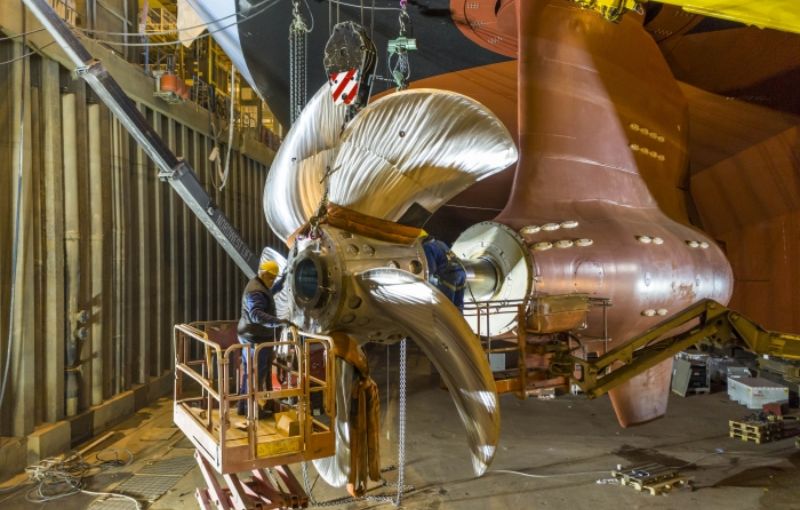
Cruise ship propeller sizes can vary, but the biggest are approximately 20 feet (6 metres) in height. Due to the size of the propellers, the bottom of a ship tends to lift up towards the rear so that the propellers don’t sit below the bottom of the ship.
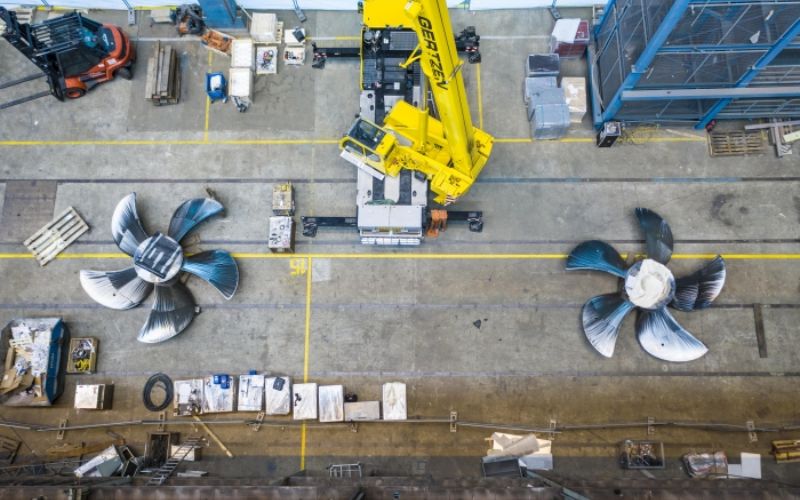
Here’s what one of the biggest cruise ship propellers looks like…
The shape of the bottom of a cruise ship with the raised rear helps to propel the ship forward. It also ensures that the propeller doesn’t have a huge impact on the ship’s draft. If the propellers protruded from the very bottom of the ship, then it would struggle to get to most ports due to the lack of depth of the water.
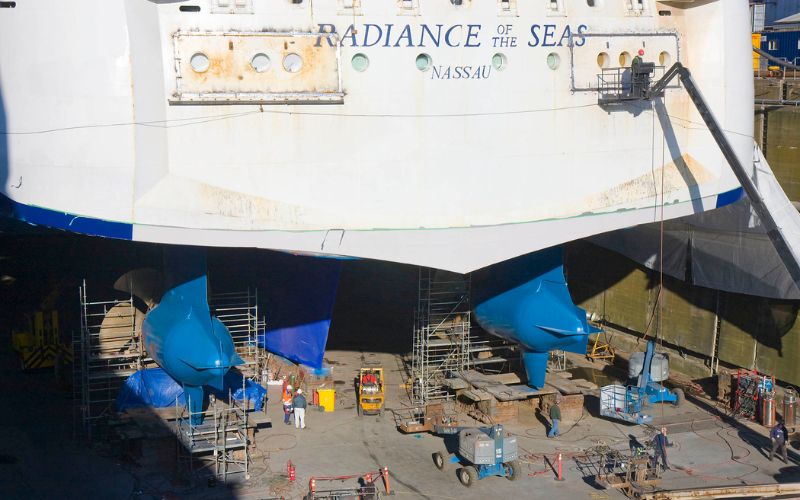
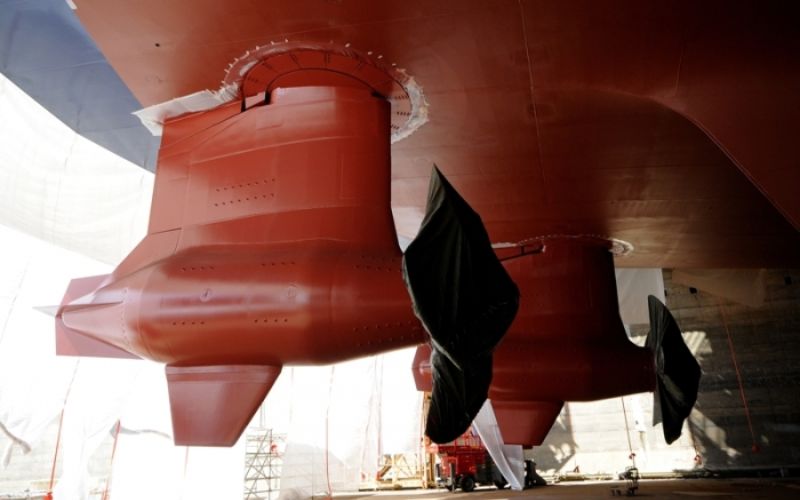
Most modern cruise ships use azimuthing pods (azipods). They work by having the propeller at the front of the pod, rather than the back, so they actually pull the ship rather than pushing it. They have a reverse function and can spin 360 degrees to help with steering.
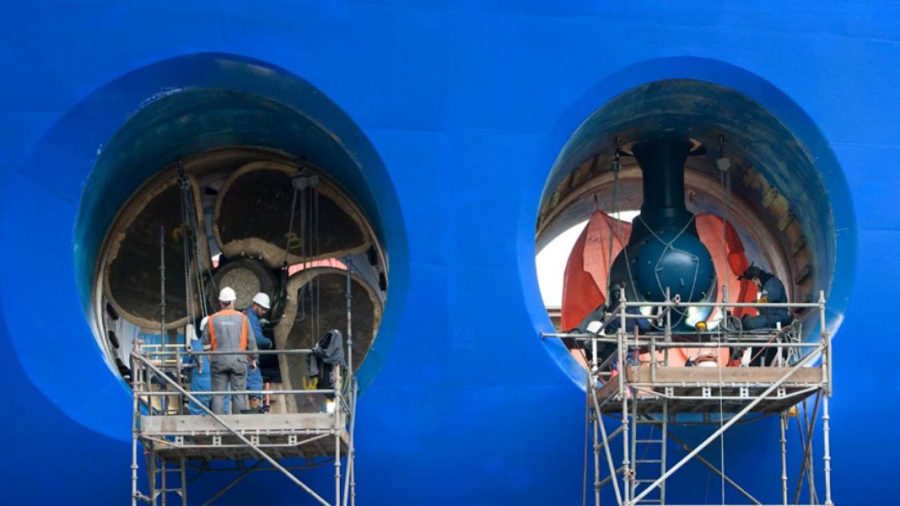
This photo shows the azipods on Radiance of the Seas during drydock.
An azipod is like a propeller and a rudder all in one. If you’re wondering whether cruise ships still have rudders, read this article for the answer from a ship’s pilot.
We know that the biggest propellers are 20 feet in height, but that can be quite hard to picture. But if it helps, a typical two-storey house is around 19 feet tall, while a giraffe will average at around 18 feet tall (but can sometimes grow to 20 feet tall).
That should make it a little easier to understand just how large these propellers are!
They’re not the biggest in the world, though. Those tend to belong to container ships – just imagine how much power is needed to push a giant ship full of heavy containers. The MSC Oscar has propellers that are 10.5 metres or approximately 35 feet in diameter.
That’s almost 43% bigger than those on the Oasis-class ships for Royal Caribbean, despite the ship only being 9% longer.
How Many Propellers Cruise Ships Have
Most cruise ships have three propellers, while generally, ships will have between one and four. Cruise ships use three propellers due to the balance they offer between fuel consumption, thrust, and manoeuvrability.
The number of propellers a ship has will determine how fast the ship is, how much fuel it needs to use to move, and how easy it is for the ship to turn.
The largest freighter ships in the world may only have one propeller. They tend to take long journeys in a relatively simple direction, they are built to withstand storms, so don’t necessarily need to move around them, and there isn’t a massive rush to get to the destination.
Cruise ships need more manoeuvrability. It’s not good to power through a storm when you have guests onboard who are trying to enjoy a relaxing cruise, and ships tend to weave in and out of the coastline as they visit different ports, so it’s important that the ships can steer effectively.
They also need to move relatively quickly. Not super-fast speeds, but fast enough to be able to reach a selection of ports within an itinerary. Otherwise, most cruises would have two sea days in between every port you visited!
Three azipod propellers are generally the accepted number for most modern cruise ships. Four isn’t really necessary, and three helps to keep the fuel consumption in check while providing plenty of power and steering to make cruises comfortable.
Also, they typically have four blades – propellers typically have between three and five, but the azipods used on most cruise ships have four. More propellers can improve performance, but for a cruise ship, it’s not necessary.
Lower manufacturing costs than a five-blade propeller
Good performance at low speeds
Best fuel economy compared to three-blade and five-blade propellers
Better durability than five-blade propellers
How Fast A Cruise Ship Propeller Spins
Cruise ship propellers typically spin at a speed of 250 revolutions per minute (RPM). This isn’t extremely fast when compared to some other propellers – there is more of a focus on torque and power in order to push a massive ship through the water.
Remember that these propellers are in the ocean, not in the open air. That means there is a lot more resistance. If you put the same propellers, with the same engine power, in an open-air space, they would be capable of spinning a lot faster.
Again, it’s hard to visualise how fast 250 revolutions per minute is. But if you can picture it, it means that the fan blades of the propeller are completing a full revolution around four times every second.
Still need help? Well, a ceiling fan will typically have an RPM of between 200 and 350. So, if you live somewhere that has ceiling fans, try putting it on the slowest setting, and you’ll be able to get an idea of how fast a cruise ship propeller spins.
Or you can use this cool tool just to visualise it – just enter 250 in the box to see how it looks in action.
What Cruise Ship Propellers Are Made Of
Cruise ship propellers, just like any propeller used on a modern ship, are made from an alloy of stainless steel and aluminium. This provides the necessary strength to be able to move through the water, and it is resistant to rust, too. It’s also light enough not to increase the drag on the ship.
The propellers of a cruise ship spend their life in the water – unless they go into a dry dock for cruise ship repairs or renovations. So it’s vital they can stand up to corrosion and the other forms of degradation that water can impose.
An alloy of stainless steel and aluminium won’t rust, and will be durable enough to withstand the constant demands of a giant cruise ship at cruising speed.
Myth Or Fact: Cruise Ship Propellers Can Pull You Under
It is possible for a cruise ship propeller to pull you under, but the odds are very low. You would have to be swimming directly alongside the ship, towards the aft where the propellers are located, or directly behind it, and even then, the depth is usually enough to protect you.
You have to remember that cruise ship propellers don’t sit on the waterline – they are submerged, and are typically at least 10 feet under the water. Therefore, the drag at the water level is lessened, but not completely removed.
If you were to jump off a cruise ship and dive a few feet under the water due to your momentum, you could get caught in the slipstream. But remember how unlikely that is.
And if you stay at the surface, treading water, you would need to be almost touching the ship to be at risk of being pulled under.
While people do go missing on cruise ships, the odds of falling overboard on a cruise ship are around one in a million, based on the number of incidents and the number of cruise passengers (source). And many of the incidents recorded are due to people jumping rather than falling.
These facts about cruise ship propeller drag don’t mean it’s safe to swim over to a cruise ship if you see one in a dock, though. You never know when the engines could kick in and cause a sudden current shift, and that would increase your risk.
In summary, if you are sensible on or near a cruise ship, you shouldn’t have anything to worry about. But don’t take risks if you see a cruise ship in port and fancy getting a closer, water-level view.
Final Word
Cruise ship propellers are absolutely massive, but they, of course, have to be in order to propel these mammoth cruise ships through the water.
They’re incredible pieces of engineering, with the latest Azipods being much more efficient too, which contributes to the way that ships are being designed to be better for the planet, with changes to cruise ship engines and fuel types too.
Don’t panic about going overboard either – the odds of that happening are extremely low, and even then, the odds of being sucked under by the propellers are minuscule. Cruises are very, very safe!
TODAY’S BEST CRUISE DEALS!
Don’t miss these offers…
Related Posts:
If you found this interesting, please share!
Jenni Fielding is the founder of Cruise Mummy. She has worked in the cruise industry since 2015 and has taken over 30 cruises. Now, she helps over 1 million people per month to plan their perfect cruise holidays.
Want insider tips, honest reviews, and a place to chat with other cruise lovers? These cruise forums are where it’s all happening!
Unlike Facebook groups (where good info disappears fast), these forums are super organised, so you can actually find what you’re looking for.
From planning your next trip to meeting people on the same sailing, here are 7 forums that every savvy cruiser should check out.
Here Are the Best Cruise Forums to Join:
The main Cruise Critic website offers reviews and cruise tips on various ships, but the site is much more famous for its forum – it is absolutely massive.
Cruise Critic claims to be the originator of the roll call thread. At the time of writing, they have around 21 million posts just for roll calls alone, which is frankly staggering. They have another 25 million posts with questions about cruise lines in general.
There are other sub-forums too, including those where new cruisers can have their questions answered, and those about particular destinations or special cruises.
The Cruise Critic forum is popular internationally, so while most users will be from the US, there are plenty from the UK and elsewhere.
The only real downside to Cruise Critic is the scale of it, which could be a little overwhelming since there’s so much information. But, it’s well organised, and you should have no trouble finding people to chat to, though don’t expect a tight-knit community – it’s just too busy.
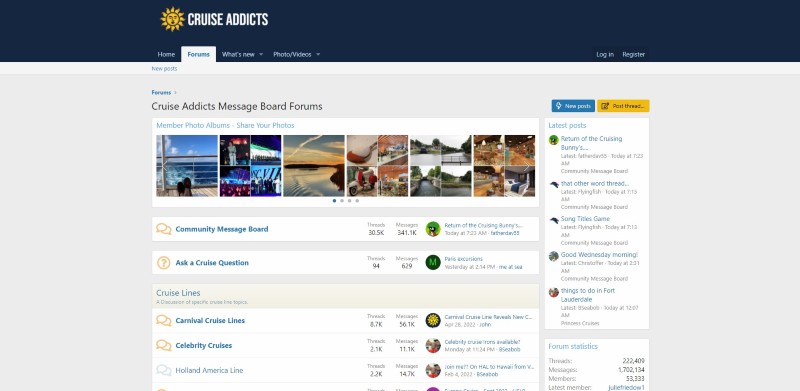
Cruise Addicts is a forum that’s popular in the US. While it’s a lot smaller in scale than Cruise Critic, you might find that you prefer the closer-knit community. In total, there are over 1.7 million posts on the site, so there’s still a lot of information.
You can ask a general cruise question, or visit the sub-forums for cruise lines or destinations. But these are quite limited. The destination sub-forums only cover Europe, Alaska & the Pacific Northwest, and the Caribbean. While these are the more popular cruise destinations for US travellers, there’s no mention of Asia or Australasia.
The Cruise Lines sub-forums are also quite narrow in focus, only covering 8 of the bigger cruise lines. Notable absentees include any of the six-star luxury cruise lines, P&O Cruises, Virgin Voyages and any smaller cruise lines.
I’d say this is a site that’s better for anyone in the US who wants to chat, rather than find information.
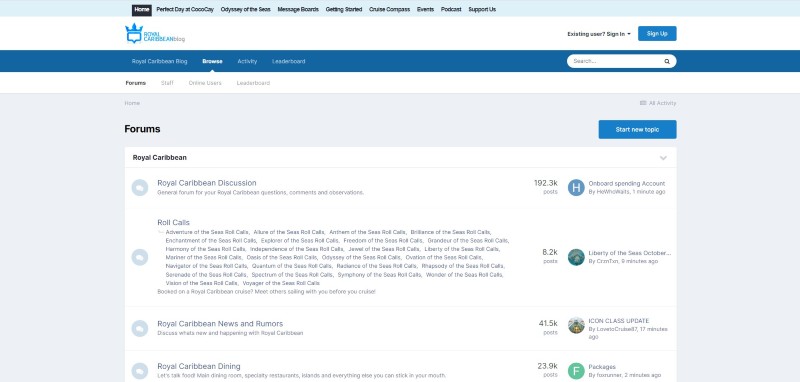
The Royal Caribbean Blog is an unofficial site dedicated to all things Royal Caribbean, and their forum, while not huge, is a great place to meet other people who love the cruise line.
There are sub-forums dedicated to general Royal Caribbean discussion, roll calls, news and rumours, dining and shore excursions as well as a sub-forum dedicated to sister cruise lines Celebrity and Silversea, although this is small with just over 3,000 posts.
But, if you want tips on Royal Caribbean, then there are a quarter of a million posts to run through, and you can use the Roll Calls to find passengers on your upcoming Royal Caribbean cruise.
It’s a forum that’s best for the specifics, though – not many places will have over 50,000 posts just on news and rumours about Royal Caribbean, or almost 35,000 just on dining. If you want to get into the finer details of Royal Caribbean, this is the place to do it.
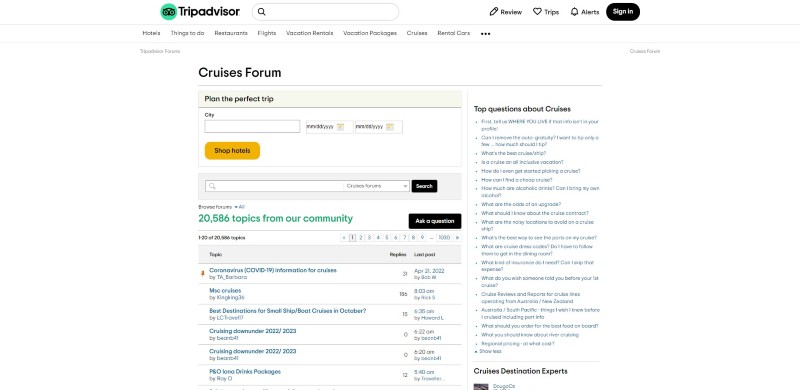
The Tripadvisor site in general is a great place to find reviews of all kinds of attractions, accommodations and cruise lines, but they also have forums. The cruises forum is pretty active and has over 20,000 topics of discussion on all kinds of topics from cruising to travel agents and more.
The biggest drawback to Tripadvisor’s forum is that there’s very little organisation. With no sub-forums, you just have a long list of topics to browse through. There is a search bar, but that’s a little hit-and-miss when you want specific information about a subject.
However, it’s not one to disregard completely. There’s a list of the top questions about cruising that people from the forum have answered, so you can browse those to see if the information you’re looking for is covered. And there’s also a section highlighting the top cruise experts from the forum, so you can browse their replies to other people.
It does seem to have a little more of that Tripadvisor vibe of negativity, though – a quick glance shows that there are more topics related to complaints than on other forums. That’s Tripadvisor for you, though.
I wanted to include a UK-specific cruise forum on this list, and previously, I had the Cruise.co.uk forum listed here, but in 2024, that closed down. The travel agency still exists, but the forum has gone, which is a shame as it was the biggest UK forum for cruises with over 125,000 members.
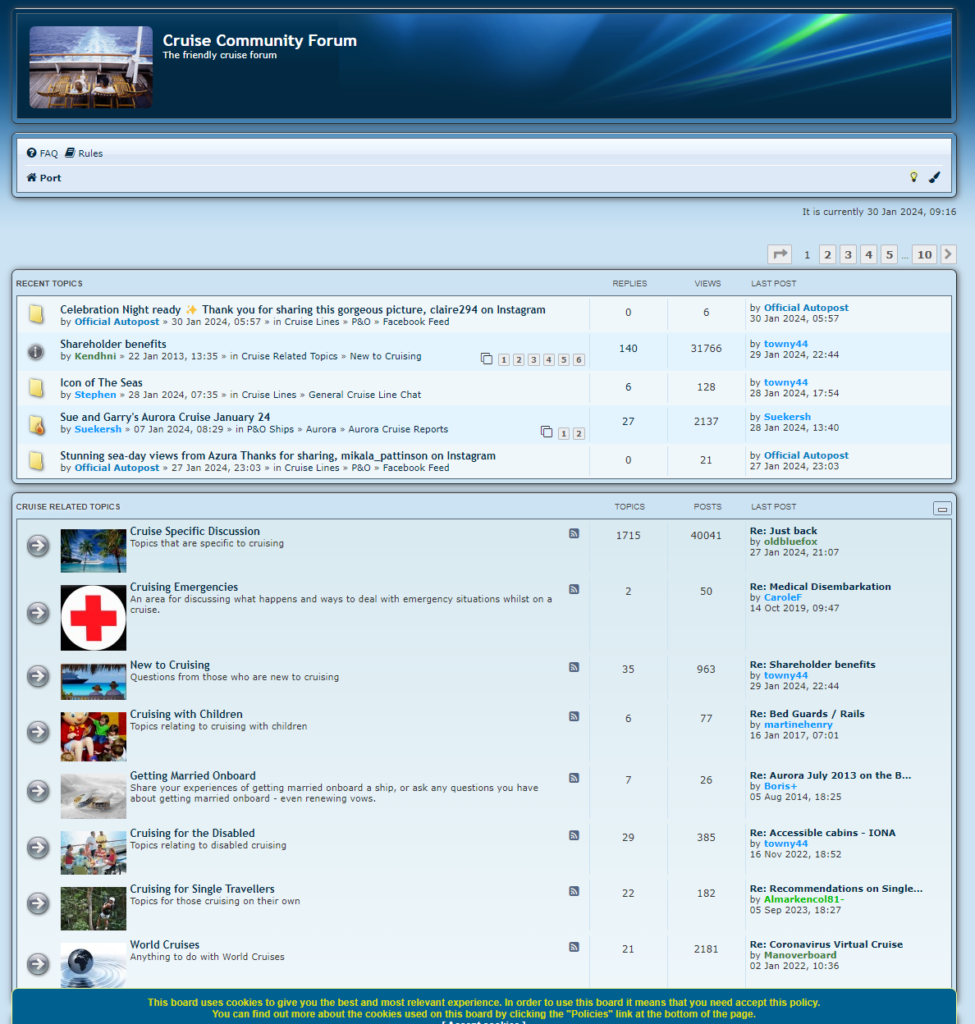
In its place, I’ve found the Cruise Community Forum, which is primarily aimed at Brits but does offer information on cruises and cruise lines all over the world. It has a more retro design, but it is current, though there aren’t a huge number of active posters. Some of the sub-forums haven’t been touched in a little while.
Still, I’d recommend taking a look, as even the historic posts have valuable info. And maybe with the Cruise.co.uk forum gone, this one will explode in popularity?
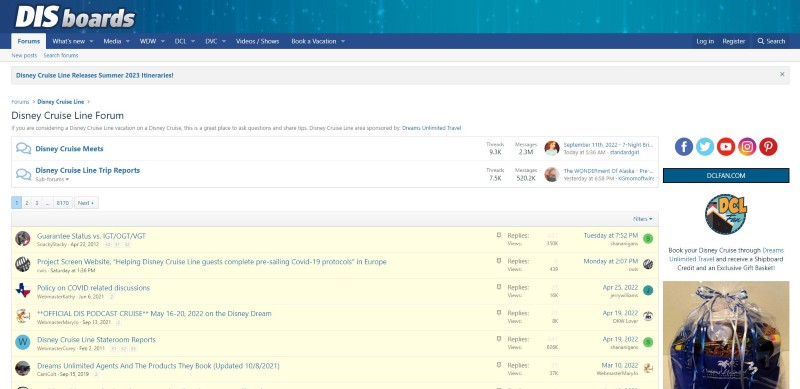
DIS boards is a massive community of Disney fans, with millions of posts to do with everything Disney, including resorts, theme park tips, news and more.
One of the sub-forums is dedicated to Disney Cruise Line, and it’s also massive. It has over 5.8 million posts for you to browse already and a thriving community that you can engage with.
The biggest drawback is that there aren’t many sub-forums within this area to help make it easier to navigate. There’s a general forum for the cruise line, one for roll calls (called Meets) and one for trip reports, but that’s it. If you want to learn about a particular ship or restaurant, then you’ll need to search.
The benefit of DIS boards is that they’re a great place to get tips if you’re planning a cruise and stay holiday. You can get all the info about the cruise line and about your chosen Disney hotel, and there’s a lot of useful information on getting the most out of your time at the parks.
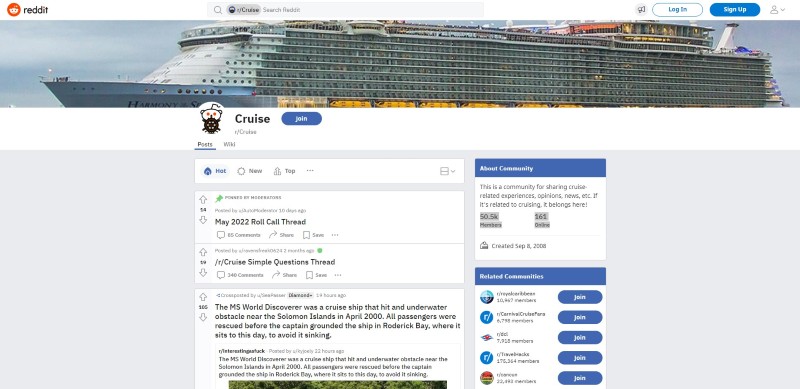
If you know about Reddit already, you’ll know that it’s a massive site that has separate boards (called subreddits) about all kinds of topics. The subreddit for general cruising has exploded in popularity recently, going from 50,000 users at the start of 2023 to over 400,000 users by the start of 2024, and 1.2 million users by the start of 2025, with a lot of new topics posted daily.
One of the benefits of r/Cruise is that it’s one of the easiest to follow from your phone. Most other forums don’t have an app, but Reddit’s app is one of the easiest to use, so you can monitor the latest posts and interact with cruisers on the go.
There are other subreddits you could explore too, including r/RoyalCaribbean or r/CarnivalCruiseFans. If there’s a particular topic you want to know more about, just try searching Reddit, and you might find an entire subreddit dedicated to the answer.
My Recommendation
There are a lot of different options for cruise forums, and depending on what you’re looking for, I would say that there’s not a single one I would recommend above all others.
If you want pure information or you want to use a roll call to find other passengers, then the Cruise Critic boards are pretty much unrivalled in terms of size. Dedicated forums for cruise lines can also help if your question is specific, or if you’re someone who’s just really passionate and loyal to one cruise line.
But other people use forums to make online friends and enjoy a thriving community discussion. On the Cruise Critic message boards, that’s hard because there are so many users – you’ll get drowned out.
For UK cruisers, your best bet is the Cruise Community Forum, and I’d recommend a smaller site like Cruise Addicts for US-based cruise fans. These are great if you like the idea of getting involved regularly and chatting with others who share your love of cruising.
TODAY’S BEST CRUISE DEALS!
Don’t miss these offers…
Related Posts:
If you found this interesting, please share!
Jenni Fielding is the founder of Cruise Mummy. She has worked in the cruise industry since 2015 and has taken over 30 cruises. Now, she helps over 1 million people per month to plan their perfect cruise holidays.
There’s nothing quite like that feeling of excitement when you arrive at the port, suitcase in hand, ready to set sail. But for some unfortunate travellers, the dream ends right there at the terminal.
Every year, hundreds (if not thousands) are denied boarding a cruise – and not always for reasons you’d expect.
You need to check whether you’re at risk of being denied because, if you are, you’re usually out of pocket too…
1. Missing or Incorrect Travel Documents
The number one reason people are turned away is not having the right documents.
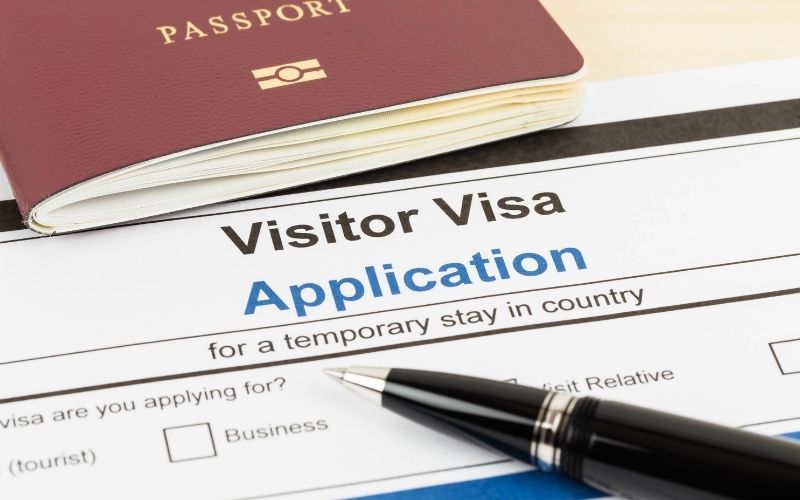
That could mean a passport that’s expired (or too close to expiry – most cruise lines require six months’ validity beyond the cruise end date), not having the right visas for ports on your itinerary, or bringing photocopies instead of originals.
Some cruises from the US allow US citizens to travel with a birth certificate and photo ID, but it must be an original, state-issued certificate – no hospital versions or copies.
And if your cruise visits a country that requires a visa and you haven’t got it? Sorry, no boarding.
Also, some countries are very strict on damage to passports, as this couple found out. You want to make sure your passport is in good condition before you travel!
2. Arriving Too Late
Cruise ships have strict cut-off times for check-in and boarding, often at least an hour before departure.
And no, they don’t make exceptions for traffic, delayed flights, or a quick stop for coffee.
If you miss the cut-off, you’ll be watching your ship sail off into the sunset without you – and you won’t get a refund.
The only exception to this is where you’ve booked travel through the cruise line, and then there’s traffic problems or flight delays. In that case, the ship will try to hold off departure where possible.
Otherwise they may try to get you connecting flights or other transport to the next port, so you can board there instead.
3. Outstanding Balances or Unpaid Charges
Believe it or not, passengers have been turned away at the terminal because of an unpaid balance – sometimes from the current trip, sometimes leftover from a previous one.
Even if your booking looks confirmed, if your account shows any unpaid charges, that can halt check-in.
Double check your payment status and ensure any onboard credits or vouchers are properly applied before you arrive.
I recently forgot to pay the balance for my Disney cruise and they cancelled my cruise! Luckily, I spotted the email and was able to rebook it. But if I hadn’t, I could have arrived at the terminal and been turned away.
4. Incorrect Names or Mismatched Booking Info
If your name on your booking doesn’t exactly match your passport or ID, you could run into issues.
Married recently? Changed your name? Bring legal documents to prove the change – like a marriage certificate or name change deed.
Also, if you’re travelling with a child who isn’t your own, or who has a different surname from everyone in your travel party, you’ll need notarised permission from their parents or guardians. No letter? No cruise.
5. Missing or Incorrect Visas
Some cruisers are caught off guard by visa requirements – especially when itineraries involve multiple countries.
For example, if your cruise starts in the US and ends in Canada (or vice versa), you may need both a US ESTA and a Canadian eTA.
Don’t assume your cruise line will warn you – they might send an email or two, but otherwise they expect you to check.
If you’ve packed banned items like weapons, illegal drugs, CBD products, irons, kettles, or booze that exceeds the allowed limit, you might be denied boarding.
In some cases, especially where the infractions are minor – a sneaky extra bottle of wine, or a kettle where you can claim ignorance – the items will just be confiscated.
But with more serious contraband, expect to be turned away (and possibly meet port security).
If you’ll be 24 weeks pregnant (or more) at any point during the cruise, you won’t be allowed to sail.
If you look pregnant at all, you should bring letter from your doctor stating your due date and confirming that you’re fit to travel.
I cruised at 13 weeks pregnant and so I didn’t need to show anything, but if you have a bump, you can expect to be asked to prove how far along your pregnancy is.
Cruising with a baby? Most lines require infants to be at least 6 months old (12 months for long or exotic cruises). If your little one is too young, you’ll be denied boarding, no matter how cute they are.
Incidents where people are denied boarding at port with an infant are rare because it should’ve been flagged when you booked the cruise. But pregnancy is a big one – a lot of people book far in advance, subsequently fall pregnant, and then are told they can’t board.
Some cruise lines – especially those sailing from or to the UK, or visiting remote destinations – require you to show proof of valid travel insurance before boarding.
This typically includes coverage for medical treatment and repatriation. They do this because they want to make sure you’re covered and there’s no liability on them to financially dig you out of a hole if something goes wrong.
No proof? No cruise.
My Recommendation
My recommendation for cruise insurance depends on where you live.
These are trusted price comparison sites that will quickly get you lots of quotes to match your exact needs.
9. Health Concerns or Illness at Check-In
If you arrive at the terminal coughing, feverish, or looking visibly unwell, you may be flagged for additional screening – and potentially denied boarding.
Most lines also ask you to fill out a health declaration. Lying on that form can lead to big problems if they find out.
Cruise lines won’t risk an outbreak onboard. If you’re not well, it’s better to be upfront – they may let you rebook instead.
10. Disruptive or Drunk Behaviour
Arriving at the terminal drunk or acting aggressively toward staff can result in instant denial of boarding.
Cruise lines have a strict zero-tolerance policy for disruptive behaviour – both onboard and at the port.
Whether it’s pre-cruise partying gone too far or a heated argument with staff, poor behaviour can ruin your holiday before it starts.
11. Criminal Records
Certain destinations (like Canada) have strict entry rules regarding past criminal convictions.
If your cruise itinerary includes one of these ports and you don’t meet the entry requirements, the cruise line may deny boarding – even if you planned to stay on the ship.
Even if you’ve cruised before with a conviction, new rules or routes can change your eligibility. Do your research.
Everyone must go through security screening. Refuse to have your bag searched, your photo taken, or your ID checked? You won’t be getting on board. Simple as that.
The security check is easy – just like at an airport. So don’t worry about it, and let it happen. It’s not worth throwing away your cruise. And if you’re panicking because you’ve packed banned items, then I already told you not to.
Some itineraries – especially those visiting South America or Africa – require proof of specific vaccinations like yellow fever.
If you don’t have the required jabs or can’t show proof, you might not be allowed to board.
Even cruises closer to home may require you to complete a health form depending on current protocols. Here’s hoping we don’t see another 2020 again, but you never know…
14. Negative Behaviour Before You Cruise
Cruise lines have started denying boarding based on pre-cruise communications – including aggressive phone calls, threats on social media or even stirring up controversy in reviews.
If you’ve been flagged before you even arrive, you may be stopped at check-in. You should be able to exercise free speech but if you look like you’re going to cause problems, you might be refused boarding.
Also, posting “jokes” about sneaking drugs on board or causing trouble can have very real consequences. Cruise lines do monitor public posts.
15. Overbooked Cruises
Rare, but it happens. Some cruise lines overbook – and if nobody cancels, someone gets bumped.
If you’re one of the unlucky few, the line will usually compensate you (sometimes generously), but it doesn’t soften the blow of a missed holiday.
This one is a real kicker, because you’ve not done anything wrong beyond book a Guarantee cabin, and even then you should’ve been ‘guaranteed’ a cabin. Clue’s in the name.
Some cruise lines require passengers to declare mobility aids like scooters or electric wheelchairs in advance – and failure to do so could see you turned away.
One passenger booked with P&O Cruises was denied boarding when staff discovered he hadn’t declared his electric wheelchair ahead of time, even though he had a wheelchair-accessible room.
Cruise lines need to plan ahead to ensure mobility equipment meets safety and space requirements, and that there’s sufficient crew trained to assist in emergencies.
If you’re bringing a mobility aid, always check your cruise line’s policy and make the necessary declarations through their online portal well before embarkation day.
A Warning on Insurance
The vast majority of the problems on this list are considered the fault of the passenger, not the cruise line. Even where you feel it’s out of your hands. A delayed flight? You should’ve travelled the day before, etc.
And so, if a cruise line denies you boarding, the odds are that they’re also going to keep your money. It’s in the contract you signed, after all.
Don’t assume that travel insurance has you covered, either. It might cover you for some things that the cruise line won’t reimburse for, where it isn’t fully your fault.
But turning up with contraband, or drunk? Your insurance will give you a pretty blunt “no” and you’ll be the one left to regret your decisions and the hole in your bank account with no holiday to show for it.
Final Word
Being denied boarding is a nightmare – and often one that could’ve been avoided with a little extra preparation.
Cruise lines rarely offer refunds in these situations, and travel insurance may not cover you either. So, take the time to triple-check your documents, your luggage, your health, and the rules.
Because no one wants their cruise to end before it even begins.
My Recommendation
My recommendation for cruise insurance depends on where you live.
These are trusted price comparison sites that will quickly get you lots of quotes to match your exact needs.
Related Posts
If you found this interesting, please share!
Jenni Fielding is the founder of Cruise Mummy. She has worked in the cruise industry since 2015 and has taken over 30 cruises. Now, she helps over 1 million people per month to plan their perfect cruise holidays.
There’s nothing worse than looking at a cruise price, planning your budget, then going through the booking process and seeing a lump sum added on the end for fees and taxes. Ugh.
It doesn’t always happen, but if it does, don’t be alarmed. These are perfectly normal, but they do sometimes sting you a little as they’re often not included in the per-person rate as you’re choosing your date and stateroom type.
It’s just a bit annoying to see that price jump on certain cruise lines…
Port Fees and Taxes Explained
Port fees and taxes on a cruise are extra charges levied against the cruise ship by the port, which the cruise line then passes onto the passengers. These fees and taxes cover a wide range of services at the port, and include fees from the ship’s home port too.
All cruise ships are charged port fees, and all cruise lines then pass these fees onto the passengers. Fees vary but can be quite expensive, so cruise lines have to pass them onto the guests of the ship or they may stand to make no money.
This means they’re mandatory for guests too – you have to pay them. Cruise lines won’t hide them from you completely, but they might not advertise them as part of the fare you see when browsing their website to find a cruise.
Here’s what the port fees can look like on a cruise website…
Some cruise lines will show the fees upfront, and others add it onto the final total once you’ve selected your date, ship and stateroom. Sometimes it’s included in the fare already, so while you’re still paying the fees, you don’t have it separated out and everything looks included.
UK-based cruise lines and travel agents usually include port fees in the advertised price. But US-based cruise lines and agents often do not. So the price may appear higher than what you initially thought.
So, if you’re deciding between cruises with different cruise lines, be sure that what you’re comparing is actually like-for-like.
Different Types of Port Charges
Port charges cover many different fees, and will vary depending on the ship, port, and point of the itinerary.
Port fees can include:
Docking tolls
Costs for ship inspections
Payment for harbour pilots
Security services
Baggage handling costs
The primary port charge is a port of call fee, and this is the fee charged to allow ships to dock at any port of call. This fee covers a range of costs associated with the ship docking, and will vary from port to port. Some ports are much more expensive than others!
Port Miami is one of the busiest, and also most expensive ports for a ship to call at, with a docking toll of $12.74 per guest. Great Lakes cruises are very expensive and the high port fees are one of the reasons why.
Port of Miami
Then there’s the pilot fee. Every time a cruise ship docks, it’ll be boarded by a local harbour pilot to help direct it to the right place – even if the cruise ship’s captain is super-experienced and has sailed to this port thousands of times. That pilot needs paying.
The pilot fee depends on the size of the ship and some other factors, but it usually costs several thousand dollars.
Cruise lines will also pay a head tax, which is a per-person tax to cover the costs associated with passengers heading to shore. So they might cover the costs of security shoreside, or maintaining the dock, that sort of thing.
The cruise line is charged for every passenger on the ship, even those that don’t head ashore. The costs will be higher for embarkation and disembarkation ports, to cover baggage handling and extra security.
Inspection charges are a feed charged by some ports when your ship undergoes, well, an inspection. Any ships that dock in the US need an inspection by the Centre for Disease Control (CDC) twice a year. If your cruise is scheduled when there’s an inspection, expect those charges to be added to your cruise too.
Port Fee Costs
Port fees and taxes vary depending on the destination of your cruise and the size of the ship. They typically start at around £10 per person, per night ($13) and go up to £35 per person, per night ($41) for the more expensive destinations and larger ships.
The cruise line isn’t much of a factor when it comes to port fees and taxes, it tends to be more about the size of the ship (both in terms of gross tonnage and passenger capacity), and the destination.
Alaska is renowned as one of the more expensive destinations, while Europe tends to be cheaper. Caribbean ports will vary, as will those in the rest of the world.
As a rule of thumb, the larger a ship you’re on, the more you can expect to pay. While some fees are split between the passengers on board, that doesn’t mean you have to pay less of a share – because those fees will be higher since there are more people on board and the ship is larger anyway.
Here’s a look at some example cruises and the costs you’ll be asked to pay as taxes:
Cruise line
Destination
Ship
Duration
Port fees & taxes (per person)
Port fees & taxes (per person per night)
Royal Caribbean
Norwegian Fjords
Liberty of the Seas
7 nights
£110 / $149
£15 / $21
Royal Caribbean
Caribbean
Icon of the Seas
7 nights
£142 / $192
£20 / $27
Carnival
Alaska
Carnival Luminosa
7 nights
£225 / $305
£32 / $43
Carnival
Caribbean
Carnival Magic
6 nights
£132 / $180
£22 / $30
Princess
Mediterranean
Enchanted Princess
7 nights
£102 / $123
£15 / $18
Princess
Asia
Diamond Princess
10 nights
£87 / $117
£9 / $12
Again, this shouldn’t be seen as a direct comparison of the cruise lines. The actual ports in question, and the ship sizes, are what matters more.
But this clearly illustrates just how much more expensive a cruise calling at ports in Alaska is. In fact, the Carnival Alaska cruise has fees that are almost 50% of your actual cruise fare.
One good thing is that, if there is ever a time when your cruise ship is unable to dock at a port, typically because of bad weather, the cruise line won’t be charged for those port fees and so they will normally refund you to your cruise account.
Don’t expect a lot though, because some fees may still apply, so you may not get the full “per night” amount back. It’ll likely be a few pounds/dollars at most. At least you can buy a drink to commiserate the missed port.
Per Person or Per Room – Fees Broken Down
Port fees are charged to the cruise ship based on a number of factors, including the per-person occupancy (not per room) and the gross tonnage of the ship. Cruise lines will pass this on as a per-person charge to passengers.
Here’s an example of how Royal Caribbean displays port fees…
It’s an important distinction to make, between how the cruise lines are charged, and then how they pass that charge onto you – the person sailing with them. Because there are some taxes that the cruise line is charged by occupancy, and those are easy for the cruise line to pass on.
But other charges are by gross tonnage, and so the cruise line will take that and divide it up by the occupancy of the ship.
They likely don’t divide it by the maximum occupancy, since that means the cruise line is losing out every time they don’t fill the ship, so instead, they probably divide it by their expected occupancy for that cruise, based on past sailing data.
Passengers are charged on a per-person basis. If you’re sailing alone, you’ll likely know about single supplements – where you pay for the full cost of a stateroom on many cruises, meaning your per-person rate is double that of a couple in the same room.
But that’s not the case with port fees and taxes – there aren’t single supplements on those, generally. You’ll pay the same fees and taxes as one person sharing a double room would be.
Fees – Included or Separate?
Some cruise lines include port fees in their cruise fares, while others add it as a separate charge. You’ll always be told about the fees and taxes at the point of booking if you are being charged separately, but at different stages of the booking journey.
Here’s a look at some of the major cruise lines and their position on port fees – whether they include them in the fare or add them separately, and when you’re told about them.
Cruise Line
Port fees/taxes
Azamara
Charged separately – made clear upfront
Carnival
Charged separately – made clear upfront
Celebrity Cruises
Charged separately – made clear during booking in small print
Cunard Line
Included in the fare
Disney Cruise Line
Included in the fare
Fred. Olsen
Included in the fare
Holland America Line
Included in the fare
MSC Cruises
Charged separately – added at last stage of booking
NCL
Charged separately – made clear upfront
Oceania
Included in the fare
P&O
Included in the fare
Princess
Included in the fare
Regent Seven Seas
Included in the fare
Royal Caribbean
Charged separately – added at last stage of booking
Scenic Ocean
Included in the fare
Seabourn
Included in the fare
Silversea
Included in the fare
Virgin Voyages
Included in the fare
How To Calculate Port Charges
There’s no simple way to calculate port charges, because they vary by each port, the ship, and then by how the cruise line decides to break that down across each passenger.
You don’t need to though, because your port charges will always either be included in your fare, or it’ll be calculated for you.
If you want to know a detailed breakdown of what your port fees and taxes are paying for, you could ask the cruise line but don’t expect the standard customer service rep to be able to give you an answer. If the cruise line is happy to break it down, they may take some time to provide an itemised list.
They’ll all be legitimate fees that need to be paid though, and you can’t decline some of them (say you didn’t plan on leaving the ship in certain ports), so if you want to book the cruise you’ll just have to pay up.
The Bottom Line
Anyone who is new to cruising might be a little confused or saddened to see extra fees added on when you go to book your holiday, but they’re not a new thing and they aren’t going away – it’s just part of cruising.
It’s even more disappointing when you see that your fees are a high percentage of your overall fare, but in those cases, you’ll be paying for a really cheap cruise anyway. Taxes rarely go above £35/$40 a night, and are usually much lower.
Just make sure you factor all of these costs in when you budget before planning your cruise, and you won’t be disappointed or surprised when it’s time to book.
Related Posts:
If you found this interesting, please share!
Jenni Fielding is the founder of Cruise Mummy. She has worked in the cruise industry since 2015 and has taken over 30 cruises. Now, she helps over 1 million people per month to plan their perfect cruise holidays.