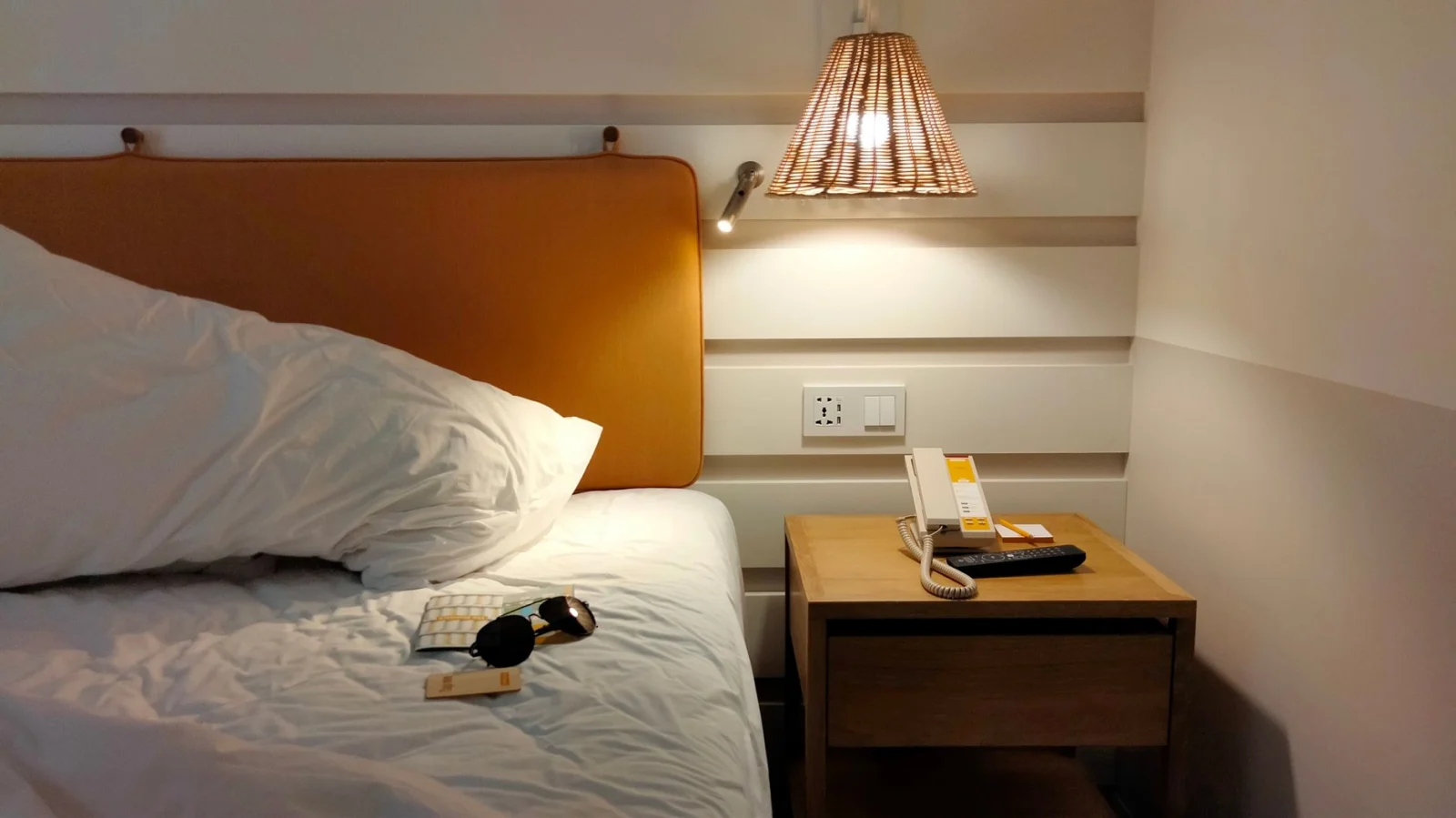
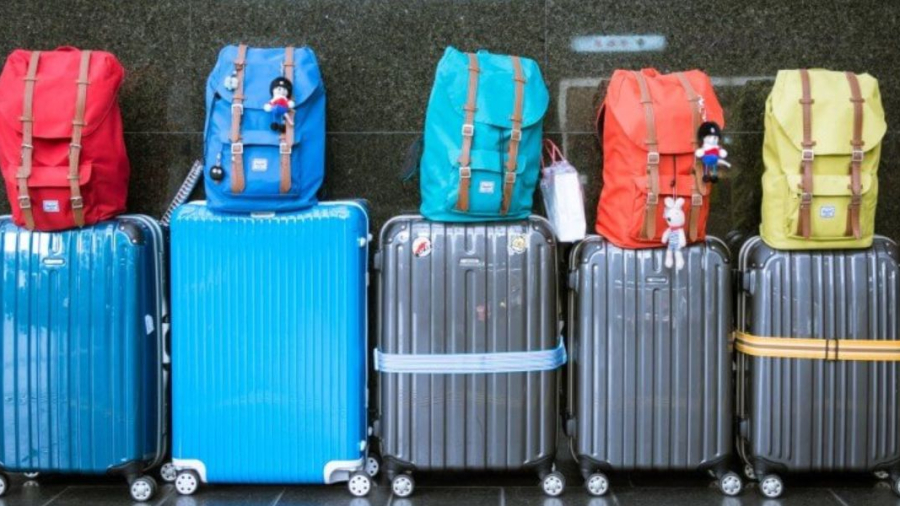
Luggage-storage.jpg

What You Need to Know

I hate that feeling when I’m packing for a holiday where there’s a flight involved, and I have to make sacrifices on what makes it into the suitcase.

It’s a fine art, and I’ve refined it over the years – but I still resent it just a little bit.

Luggage storage

With a Princess cruise, things a little different.

But you haven’t got complete freedom…

Princess Cruises does not have a limit on the amount of luggage you take on board. There are no weight or size limits for the number of suitcases, and you can take as many cases as you want onto the ship.

However, it’s not quite as simple as that. It’s great that the Princess cruise luggage policy doesn’t have a cap, but you need to think about the practicalities. How much luggage can you take on a cruise before it becomes difficult for you, and what about flights?

Departure Port Location

While it’s great that Princess lets you pack as many suitcases as you want, without a care in the world about weight, how are you going to get your luggage to the departure port?

If you’re sailing from a port in another country, you’re going to have to fly there, and if you do that then you need to abide by the airline’s luggage restrictions. You can’t turn up and tell them you’re on a Princess cruise and therefore it’s fine if your bag is 5kg too heavy.

So for cruises departing from other countries, you’re limited by the airline. What about cruises from your home country?

There’s no need to worry about the Princess Cruises luggage allowance from Southampton, since there’s no limit. You do have the chance to take as many cases as you want onto the ship. But think about how you’re actually going to get them to the port.

Are you driving? If so, and your car has space, then that’s fine. A taxi might also be OK but they may have limited boot space, and the driver may not be comfortable with you holding suitcases on your lap.

Taking the train? You’re taking a risk by carrying lots of bags since there might not be space in the luggage racks. Plus you don’t want to have to spend a long time loading and unloading cases at your station.

Coaches are normally a little easier, but they won’t get you all the way to the port still, so you need to bear in mind how you’ll get from Southampton coach station to the ship with all those bags.

National Express coach at Southampton coach station

Storage Space in Your Stateroom

Once you’ve got all your luggage to the port, you can wave goodbye to it as it is loaded onto the ship. Later that day, it’ll be waiting for you outside your room, and you can get to unpacking.

But then, if you’ve taken a load of extra bags, where do you put them once they’re unloaded?

Typically, a stateroom can hold two large suitcases, either under the bed or in the back of the wardrobe. But that’s about it. Any more, and they’re going to have to be placed on the floor somewhere.
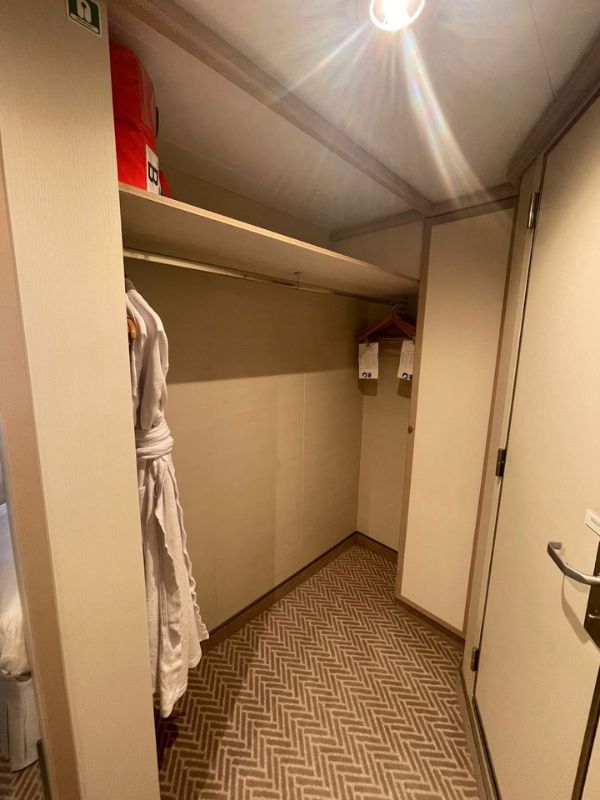
Wardrobe space on Enchanted Princess

This isn’t so much of an issue if you’ve booked a suite, although it will spoil the look of the room. But if you’ve booked an Interior Stateroom, your space is already at a premium.

Do you really want to have to climb over the case or the bed each day, just because you wanted a few spare outfits? It’s less a case of how many suitcases can you take on a cruise, and instead how many do you want to have to find space for in your room?

Leaving the Ship

You also need to consider your journey home. If it’s a round-trip from a port in your home country, then again you don’t need to worry about airline restrictions. But you do need to think about actually getting off the ship.

Princess Cruises disembarkation luggage tags

When you’re leaving a ship, you’ve got two options. You can either check your luggage, which means putting new tags on it and leaving it outside your room the night before, or you can carry it off with you.

If you’ve brought too much that you can’t carry it in one trip, then you’ll need to check it. It’s not the end of the world but it will slow you down a lot, since you’ll then need to go find your bag at the port.

When everyone is trying to leave at once, either driving off the car park or snapping up all the cabs, then delays like this can become a little frustrating. So it’s something else to bear in mind.

Here are some tips for packing your luggage for your Princess cruise.

1. Know the Dress Codes

Princess has two dress codes – one for regular dining and one for formal nights. 

Regular dining is smart casual, so avoid pool and beach clothing, shorts, fraying/holed jeans and sandals, though feel free to bring these to wear during the day. 

Formal nights include tuxedos, dark suites, elegant pantsuits, cocktail dresses or ball gowns.

Here’s an example of a casual dress that I wore on a Princess cruise in the summer…

Cruise Mummy wearing a casual dress on Princess cruise ship

If you’d like to see some examples of dresses for formal nights, then you can take a look at pictures here.

Here’s what we wore on a recent Sun Princess cruise for formal night:

Princess Cruises formal night

2. Use the Laundry Facilities

You don’t need to pack an outfit for every day of your cruise. Each Princess cruise ship has a self-service launderette that’s equipped with washing machines, dryers and ironing equipment.

Self-service laundrette on a cruise ship

If you don’t like the idea of spending time doing laundry on your cruise, there’s also a laundry service that allows you to send your clothes off to be washed or dry cleaned and pressed.

You can see the latest prices for the self-service and professional laundry service in my Cruise Laundry Guide.

3. Know What To Pack

There are also some items, like pool and beach towels, that are provided so you don’t need to waste space in your case by bringing your own.

While many cruise ships only provide bath robes for suite guests, Princess Cruises make them available for everyone, for free. If there isn’t one already hanging in your closet, just ask your stateroom attendant and they will bring you one.

Princess Cruises bathrobe

Princess Cruises has a number of prohibited items you shouldn’t bring on board. They’ll be confiscated if you try to bring them onto the ship – all luggage is scanned. Familiarise yourself with the list of Princess cruise prohibited items before you pack.

4. Bringing Your Own Drinks

Every passenger of drinking age is allowed to bring one 750ml or smaller bottle of wine or Champagne onto the ship, but no beers or spirits. This can be drunk in the cabin or brought to a restaurant, but in the restaurant, there will be a corkage fee.

You’ll want to consider this when deciding whether the Princess Cruises drink package is worth it.

5. Valuables and Medicines

The cruise line asks you to always pack your essential medicines or any valuables into your hand luggage, rather than your suitcase. That way, if something happens to your case, you have the important things with you.

Enchanted Princess embarkation

Final Word

It’s exciting to be able to take as much luggage as you want on your cruise, but in reality, most people stick to a suitcase or two at most. Otherwise, it can still be a bit of a logistical nightmare.

The good news is that if you are sailing from a port in your home country, you don’t have to break out the scales to check the weight of your cases – just make sure you can close them, ideally without sitting on them, and you’ll be good.

Check out my list of The Best Cruise Packing Tips & Hacks to learn how to pack like a pro for your Princess cruise.

Related Posts:

If you found this interesting, please share!
Cruise Mummy

Jenni Fielding is the founder of Cruise Mummy. She has worked in the cruise industry since 2015 and has taken over 30 cruises. Now, she helps over 1 million people per month to plan their perfect cruise holidays.
Read more about me


Source link

PO-Captain-Chris-Kennedy-.jpg

Here’s How Much Cruise Captains Really Make

Fancy yourself as the next captain of the cruise ships of the future? Sailing the high seas, commanding a magnificent ship, and raking in the fantastic salary that comes with it?

Although, what’s that salary actually like? Maybe cruise lines don’t pay as much as you’d expect, because of the travel experience a captain enjoys…

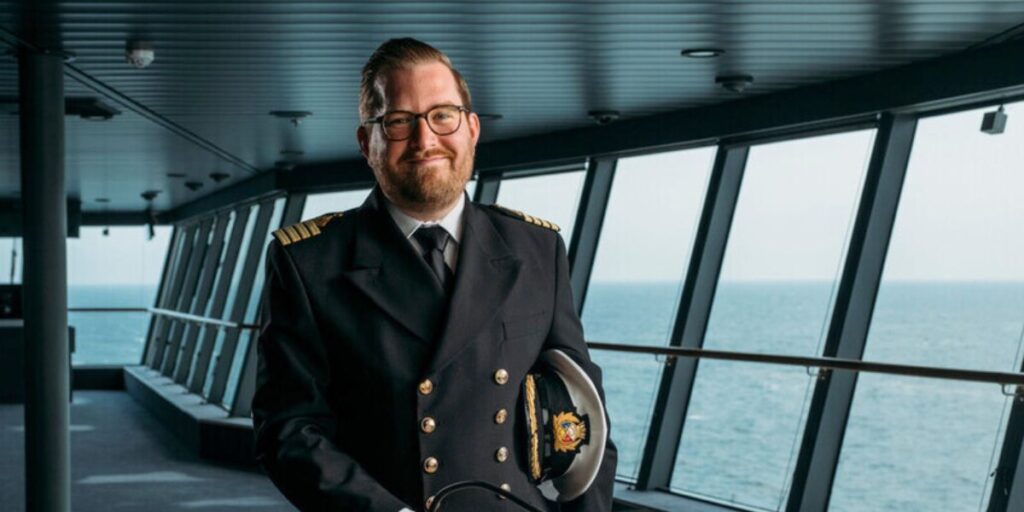
P&O Captain Chris Kennedy
Captain Chris Kennedy

Nah – of course they’re well paid. But is it enough, considering the responsibility they bear?

Typical Captain’s Salary

Cruise ship captains make on average around $108,000 per year. Depending on the experience of the captain and other factors, a new captain may make around $50,000 per year while the most experienced captains for the biggest cruise lines can make up to $400,000 per year once you factor in bonuses.

There’s no denying that being a cruise ship captain is a good-paying job, but it’s not spectacular, especially when you consider the responsibility on their shoulders. They are in charge of the safety of thousands of lives, and they don’t get days off from that responsibility while on board.

$50,000 per year is a good salary but there are plenty of jobs where you can earn more. $400,000 is an excellent salary, but the amount of work needed to get to that level means that you won’t enjoy that salary for 30+ years.

As Captain Mickael Degerlund explained when I went to see his talk onboard Bolette, it takes a very long time to become a cruise ship captain. His seafaring career started as a deck boy at the age of 16, yet despite continuous education, he didn’t earn his Master’s licence (captain’s qualification) until the age of 30.

Captain Mikael Degerlund explaining what it takes to be a captain
Captain Mikael Degerlund

The average cruise ship captain’s salary depends on your source, but it’s always in the region of around $92,000 to $96,000 per year.

American pay reference website Payscale lists the average at $107,893 per year in 2025 while one of the UK’s largest job websites Indeed lists the average salary at $88,730 per year.

Interestingly, Indeed seems to think that the average has shrunk a little. Perhaps because there are more and more new ships, and therefore more and more captains on entry-level captain salaries?

Here’s a breakdown of those salaries in more detail.

Cruise ship captain’s salary Daily Weekly Monthly Yearly
New starter $137 $962 $4,167 $50,000
Average $295 $2,076 $9,000 $108,000
Experienced captain $521 $3,654 $15,833 $190,000

Factors Affecting The Salary of a Cruise Ship Captain

Here’s a look at the factors that can impact the salary of a cruise ship captain:

Experience

The most important factor in determining a cruise ship captain’s salary is his or her experience in the role, and their experience in other related roles as they climbed the ladder. 

Suggested read: 15 Best Cruise Ship Jobs For Women

Cruise ship captains are under a lot of pressure to handle their ship safely – if they’ve been doing it for years already, then the cruise line knows they won’t be phased and can act calm under pressure, increasing their value.

Less experienced captains are still a safe pair of hands – you can’t be promoted to a captain role if you’re not ready for it – but the longer you’re in the job, the higher a salary you justify. And of course, with more and more cruise ships being built, the best captains need to be retained by cruise lines to prevent them ‘jumping ship’ (sorry).

Prestige of the Ship

The prestige of a cruise ship will determine the salary for a cruise captain. Some ships have a reputation which makes them special, and therefore the captain (and the other officers onboard) can demand a higher salary for taking good care of the ship and the lives onboard.

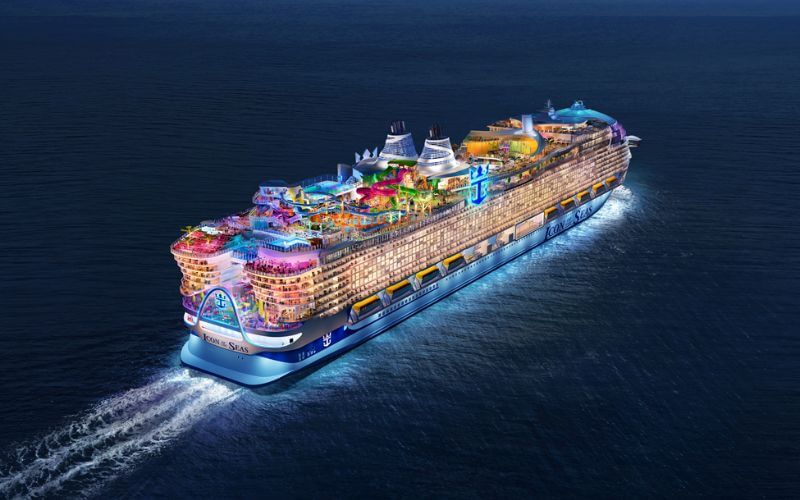
A ship like Icon of the Seas – the biggest in the world – is a famous ship and therefore worthy of having a captain onboard who doesn’t feel the pressure of looking after something so valuable to the cruise line. Hence, a bigger salary.

Icon of the Seas
Icon of the Seas

Size of the Ship

The bigger the ship, the more responsibility a captain has. It means they are looking after more lives, and they have a much larger team of crew to manage. 

While they have officers and crew to help man the ship, the captain is ultimately responsible for making sure this giant, floating piece of metal gets from port to port safely. And the bigger the ship, the more challenges that presents.

This of course is tied into the experience of the captain as well. No brand-new captain is going to be trusted with the very biggest ships in the world unless they have many years of experience in related roles. But because the experienced captains are the ones given the biggest ships, that means they are paid more.

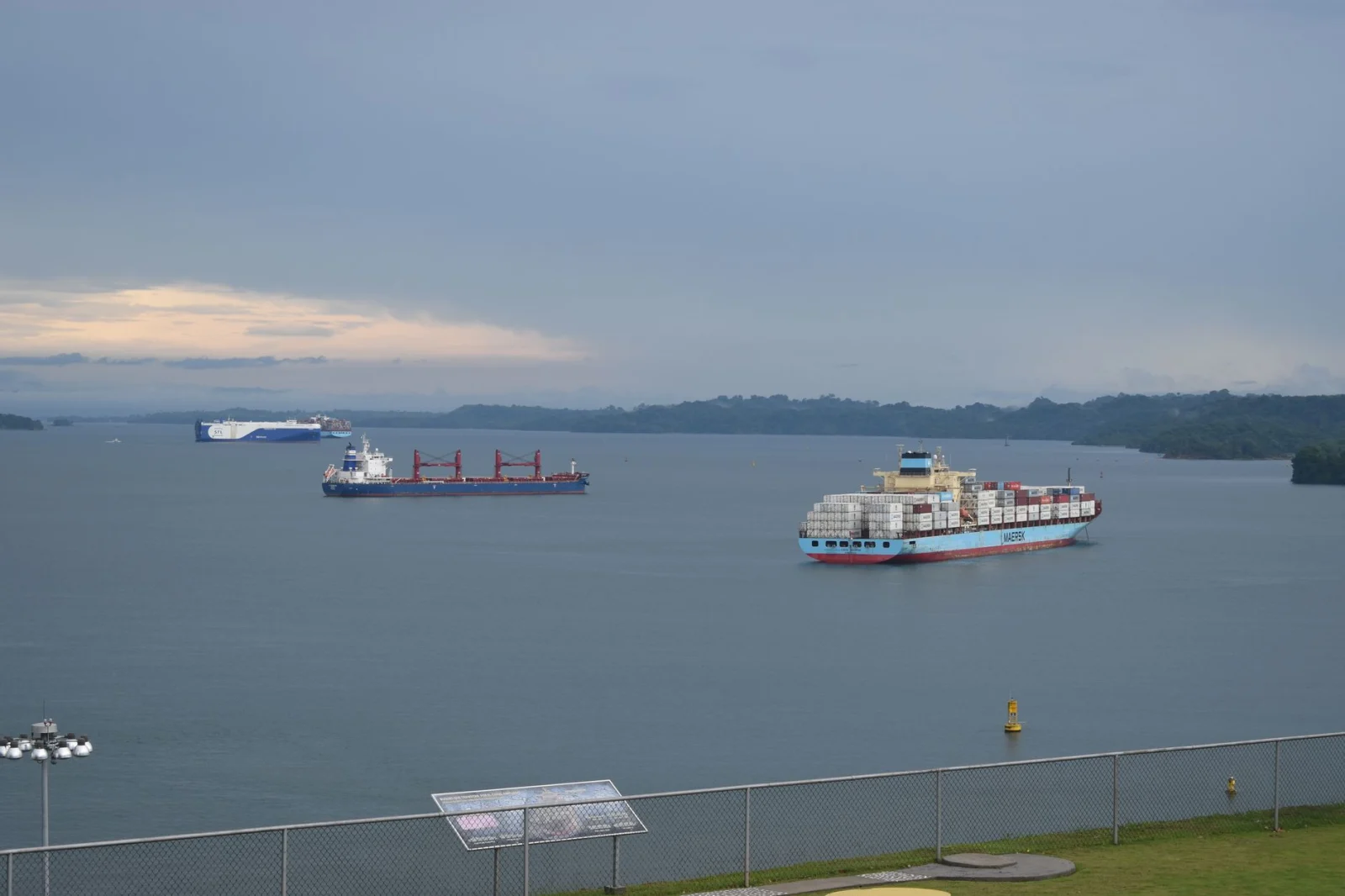
Captain on a ship in the Panama Canal

Size of the Company

It’s not just the size of the cruise ship that determines a salary for a captain, but also the size (and success) of a cruise ship company. The biggest companies will pay more because they can – and because they want the best captains to work for them.

The only way for a large cruise company like Royal Caribbean or Carnival to successfully look after the millions of passengers they whisk away each year is to make sure they have the finest people at the top of the ships’ hierarchies, looking after everything onboard. And so they pay well, to make sure they’re attracting the top talent.

Read more: Best Cruise Lines to Work For

Captain Nicholas Nash - Royal Princess
Captain Nicholas Nash

Location

Cruise ship captains are sourced from all over the world, but the home base of the captain may determine their salary, even if they live on the ship for months on end. Captains from Europe and North America will be paid more, typically, because they have a higher cost of living.

This is just based on the job market, and it’s why cruise lines cast a wide net to find crew for their ships, including those who only demand a lower salary to work.

But when it comes to captains, there aren’t a huge number of qualified people around the globe, and so those from the US, Canada or Europe can get the work and be paid handsomely for it.

Captain Mikael Degerlund

Gender

You may be surprised to learn that cruise ship captains may be paid differently depending on whether they identify as male or female.

I received an email from the captain of a well-known luxury cruise ship, who wishes to remain anonymous for obvious reasons. He said that women sometimes make more than men for ‘PR reasons’.

Here is his email…

You need to add that captains,   in some companies can make up to 350 000  even 400 000 usd, including bonuses , retirement plans and annual share bonus( to make sure that we do not leave the companies).And funny fact ,  now some women are making more than man for PR reasons and due to  the very few woman in the buissness in higher position Please do not mention my name as I want to stay anonymous Best regards
Captain Inger Olsen

Highest Paid Roles on Cruise Ships

In most cases the cruise ship’s captain will be the highest paid person on the ship, but not always.

A cruise will have a number of senior officers, including a Chief Engineer and a Hotel Director, and if they’re more experienced than the captain, their salaries may be higher. Cruise ship doctors often have very high salaries as well.

There’s even a chance that some members of the crew, who are paid on commission (such as the art auctioneer), could have a higher salary.

Obviously, it depends on the ship, but auctioneers working on a luxury cruise and selling high-value art could make huge figures, and dwarf even the captain’s salary.

Art auctioneer on cruise

Read more: How Much Do Cruise Ship Workers Make?

Generally though, once a captain has a number of years’ experience under their belt, they will be the highest-paid crew member on a ship.

Qualifications Needed to Become a Cruise Ship Captain

The exact qualifications needed to become a cruise ship captain vary depending on where you are from, but as a guide, you should expect to need at least a Bachelor’s Degree in Nautical Science or Maritime Science, plus several years of training and relevant licenses for working as a ship’s officer.

Becoming a cruise ship captain is not something you can do in a few short years. Most captains undergo at least four years of university education before progressing onto specific training courses for maritime work, eventually qualifying to work as an officer on a ship.

They’ll then work their way up the ranks, often having to take more qualifications, as they move into senior roles on ships, working under a captain. Expect it to take an average of 15-20 years to become a cruise ship captain from the start of working in the industry – and even then that will likely be at the lower end of the pay scale.

Captain Robert Camby

Expect Long Hours!

The working hours of a cruise ship captain vary, but they would normally be expected to work for around 12 to 16 hours per day. They do this every day for between 10 and 12 weeks, before having a break of a similar period to avoid burnout.

There’s no getting around it – the hours on a cruise ship are long for a captain. They’re long for everyone on a ship too, but a captain is the one who has the most responsibility. And even when they aren’t working, they’re on call – if there’s an emergency, you can bet that the captain is being woken up so that they can attend to it.

And there aren’t any days off during their time on the ship – they’ll work for up to three months in a solid stint. They’ll then be taken off the ship for a three-month break, as captains rotate on ships. It’d be impossible to work those hours year-round, after all!

P&O Captain Derek Gray
Captain Derek Gray

Cruise Captain Perks

As well as the salaries, there are some other perks that cruise ship captains enjoy.

The Best Crew Accommodation

Cruise ship captains enjoy good quality accommodation close to the bridge – often directly adjoining. They won’t rival the best suites for passengers, but they’re far superior to crew dorms – multiple rooms, big-screen TVs, a kitchen area to prepare food, and high quality furnishings.

Click here to see inside the captain’s quarters.

Family Welcomed Aboard

Cruise ship captains are usually welcome to have their partner or family stay on the ship with them for no additional fee.

Of course, the captain will be working at all hours, so families don’t usually stay on the ship for the duration of the contract, but they can come and go for a few days at a time when the opportunity suits, meaning the captain doesn’t have to miss their family for too long.

Meals

Just like the rest of the crew, captains will get all of their food included. However, they’ll usually get their pick of the restaurant menus, and can even dine in the restaurants themselves if they wish, instead of eating at a crew mess hall.

The Captain and his officers dining in the buffet

Suggested read: What is the Captain’s Dinner on a Cruise?

Laundry and Housekeeping

Laundry services and housekeeping are included for captains, taking off some of the pressure of everyday chores while they’re working.

Final Word

Cruise ship captains are paid well, although there’s a lot of work to reach that level of salary.

Remember though that their room and board are included, so they may have much lower expenses too – depending on whether they’re married and have a family on land relying on them. If a captain is single, they’ll be able to put most of their salary into savings.

Plus, depending on the tax laws in their country, they may be exempt from paying some tax as they are out of the country for half the year.

So suddenly those good salaries start to look even better, right? But if you want to become a cruise ship captain, you need to get started on your training and education right away – you’ve a long road ahead.

Related Posts:

If you found this interesting, please share!

Cruise Mummy

Jenni Fielding is the founder of Cruise Mummy. She has worked in the cruise industry since 2015 and has taken over 30 cruises. Now, she helps over 1 million people per month to plan their perfect cruise holidays.

Read more about me


Source link

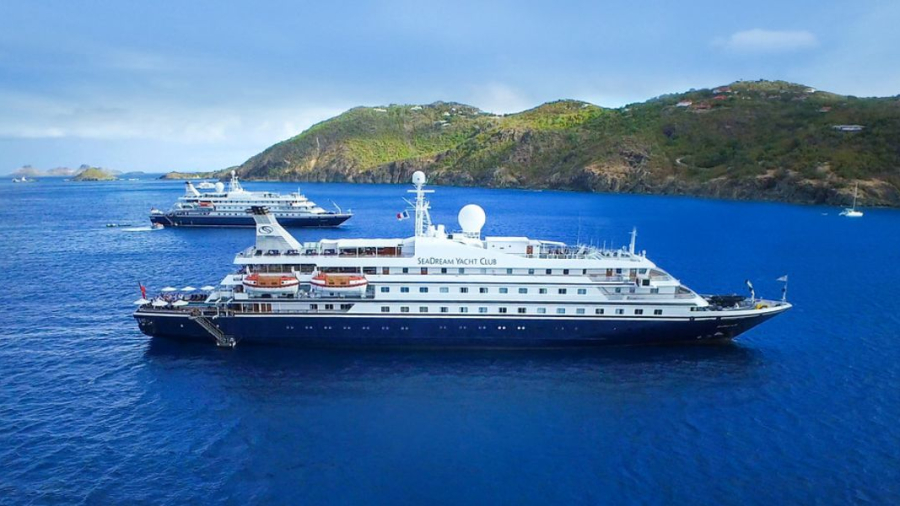
SeaDream-Yacht-Club.jpg

What To Know Before You Cruise (2024)

Ask me whether I prefer a gigantic cruise ship packed with exciting features, and a luxurious small ship, and I’ll have a hard time deciding. I love both – but they’re very different.

There are several cruise lines that specialise in the more luxurious small-ship experiences – one of the key players being SeaDream Yacht Club.

SeaDream Yacht Club

And if you’re only used to the idea of cruising as being those bigger ships, you might be quite surprised by what a cruise line like SeaDream can offer…

SeaDream Yacht Club’s Owners

SeaDream Yacht Club is a private cruise line owned by Atle Brynestad, who founded the cruise line in 2001. Brynestad had previously formed Signet Cruise Line in 1986, which very quickly transitioned to become Seabourn, another luxury cruise line.

SeaDream has remained under Brynestad’s ownership since it was first formed, and unlike most major cruise lines it continues to be privately owned with no announced plans to go public. Smaller cruise lines often remain private as they are more manageable without the need for rapid funding to boost the fleet.

It’s always styled as SeaDream too – the capitalisation sometimes gets people thinking it’s Sea Dream Yacht Club but it’s one word, and always has been.

The company is headquartered in Oslo, Norway.

Norway flag on SeaDream

There are just two ships in the SeaDream Yacht Club fleet – SeaDream I and SeaDream II. They are identical twins and so offer an almost identical experience on-board, with the only differences being in any food or cultural activities which will be related to the destination of the ship at that time.

SeaDream 1 & 2

There were plans for a third ship to join the fleet in 2021, which would have been named SeaDream Innovation. It was planned to be twice the size of SeaDream I and SeaDream II. However, the ship was cancelled only a few months after it was first announced in 2019.

Yacht Size

Each SeaDream yacht is 355 feet long and has a gross tonnage of 4,253 GT. They are 47 feet wide at the beam with three passenger decks, and have a maximum guest capacity of 112 passengers and 95 crew.

Gross tonnage is the best measurement of the size of a cruise ship. Despite the name it has nothing to do with weight – it’s a measurement of the internal volume of the ship – so it takes into account the length, width, height and number of decks.

As a comparison, the biggest cruise ship in the world is Icon of the Seas and she has a gross tonnage of 250,800 GT. This means that the SeaDream yachts are more than 58x smaller than Icon of the Seas in terms of the space on board – quite the difference.

They aren’t the smallest cruise ships in the world – nor are they even on the list of the smallest 10 – but they are certainly much smaller than many of the major ocean cruise ships you can book today.

SeaDream aerial shot

One Sacrifice – Balcony Staterooms

None of the staterooms and suites on SeaDream I or SeaDream II have balconies, but they do all have an ocean view. The staterooms have a single large window, while the suites all have a window for both the living area and the bedroom.

There are three types of suites on each SeaDream ship. 

The Owner’s Suite is the largest, measuring 447 square feet. It has a master bathroom and a second guest bathroom, with a spacious living area. It is close to the pool on Deck 3.

Owner's Suite on SeaDream
Owner’s Suite

The Admiral’s Suite is a little smaller at 375 square feet but it again has a master bathroom and a second guest bathroom. It is situated close to the library.

Admiral's Suite on SeaDream
Admiral’s Suite

The Commodore Suite is actually a combination of two Yacht Club Staterooms, with the bed removed from one and converted into a living area. There are 8 possible Commodore Suites on each ship, depending on guest bookings, with a maximum floor space of 390 square feet.

Commodore Suite on SeaDream
Commodore Suite

Everything Included with SeaDream

SeaDream cruises include a lot of services and extras that you would normally have to pay extra for. All of your food on the ship is included, along with a selection of drinks from an open bar (including paired wines for dinner). Complimentary shore excursions are also available.

SeaDream promises a “gastronomical experience” on both ships, with a fine-dining multi-course menu served every evening. Not a fan of the options? There’s an ever-present a la carte menu you can also select from.

Other food options include breakfast, your welcome aboard hors d’oeuvres, lunch served topside, poolside sandwiches, cookies and pastries, and more. There’s an open bar throughout the day that serves drinks to you anywhere on the ship, while the onboard sommelier carefully selects inclusive wines to pair with each dinner course.

Shore excursions, including guided tours, are included in your fare as well, as are your gratuities.

SeaDream excursions

Are SeaDream Cruises All-Inclusive? Not Quite…

SeaDream cruises are not all-inclusive – there are some elements you will have to pay for. Premium drinks are charged at an additional cost, while the spa on-board is not included and must be paid for.

It would be fair to describe SeaDream’s cruises as more-inclusive, and you could certainly enjoy a cruise with SeaDream without paying a penny extra on top of your cruise fare.

Life on a SeaDream cruise is designed to be extremely relaxing – this isn’t about rushing between different activities on board, but enjoying life at a more sedate pace, whilst being treated like a VIP.

It has an upmarket feel, but don’t expect an uptight atmosphere – this isn’t posh, but it is luxury.

SeaDream life on-board

Things To Do on a SeaDream Cruise

Despite the small size of a SeaDream ship, there is still quite a lot you can do during your cruise when you aren’t in port.

Each ship has a small pool where you can swim and sunbathe, while there are a number of Balinese Dream Beds which are the signature lounger beds of the cruise line – perfect for napping or soaking up the sun’s rays.

Anyone feeling sporty can try the golf simulator on Deck 6, which has a range of clubs you can borrow and the chance to try 30 of the world’s most renowned courses – virtually, of course.

Golf on SeaDream

Or if you’d prefer something more relaxing, then the complimentary yoga sessions are a good option. Held on deck, they help you feel relaxed and rejuvenated. Plus there is the on-board spa and salon, and a gym if you want to keep fit.

At night, the pool deck hosts open-air movies and concert screenings, or you can head indoors to the casino. If you aren’t feeling lucky then there’s a piano bar for a quiet drink, or a library that has a selection of board games.

SeaDream movie screening

One of the best features of the SeaDream yachts is the marina platform.

On certain days your ship will temporarily halt in the waters to allow guests to enjoy a selection of watersport activities, including personal sailboats, catamarans, kayaks, wakeboards, waterskis, paddleboards, banana boats and a floating island with trampoline. Quite the list!

SeaDream water sports

For a closer look at what life is like onboard a SeaDream yacht, take a look at my video, which is a deck-by-deck walkthrough of the SeaDream II…

SeaDream Service

The service on SeaDream ships is exceptional. These aren’t just called yachts for the sake of it – the service really will make you feel like this is your own personal yacht, even if you are sharing it with 100 or so other guests.

The crew-to-guest ratio of 1:1.2 is one of the best in the world of cruising. Again, going back to the comparison with Icon of the Seas, which hosts up to 7,600 guests and has a crew of 2,350 for a crew-to-guest ratio of 1:3.2 and you can see how stark the difference is.

SeaDream personalised service

SeaDream’s Dress Code

SeaDream does not have a formal dress code. Instead, consider it as “yacht casual”. By day, that includes shorts, t-shirts and activewear. By night, it generally means polo or collared shirts and trousers, casual dresses, or fashionable tops with slacks or capris.

There are only a few requests, and that is that guests refrain from wearing denim, shorts, t-shirts, tattered clothing or bathing suits to dinner or around the public areas of the ship in the evening. But ties are never generally worn, and most people don’t bother with a jacket either.

Couples on SeaDream at night

While SeaDream ships can offer varying destinations, both ships primarily spend their summer in the Mediterranean and the winter in the Caribbean.

Caribbean cruises are ideal for enjoying the yachting lifestyle. You’ll sail between small islands, enjoying the beautiful weather from the top deck with a host of exciting activities, including plenty of marina days.

As well as the more popular destinations in the region, such as Bridgetown and Gustavia, you’ll also get to experience smaller ports that big cruise ships can’t get to, including Low Bay in Barbuda, or South Friar’s Bay on St Kitts.

SeaDream in Caribbean

Mediterranean cruises are similar – guests will benefit from the small ship sizes as they explore some of the more visited Med destinations alongside smaller ports not normally accessible to cruise ships. So alongside major ports like Barcelona and St Tropez, your itinerary may call at smaller Greek Islands, or picturesque coastal Italian towns like Chioggia, just south of Venice.

SeaDream in Mediterranean

Of course, because the ships sail in both the Caribbean and the Mediterranean, that also means you have the opportunity to enjoy a transatlantic cruise.

The shared experiences on board your ship are ramped up during these, giving guests the chance to really get to know each other and bond over relaxing, luxurious activities as you sail from Europe to the Caribbean or in the opposite direction.

Finally, there are also a select few itineraries that are designated as wine cruises. These special sailings focus on visits to local vineyards, with tours (and tasting sessions!) helping you to understand more about the wines you drink and the work that goes into them. Then during dinner, enjoy the same wines you’ve just seen being made, paired with fine dining menus.

SeaDream wine voyages

SeaDream Cruise Costs

SeaDream yacht cruises are not cheap, but considering how much is included that doesn’t mean they are unreasonably expensive either. Depending on the time of year, a cruise will typically cost from £3,000 ($3,600) to £5,000 ($6,100) per person for 7 nights.

Those SeaDream Yacht Club prices are not inclusive of your port fees, which may add an additional £250-350 ($300-430) to your per-person rate.

And those rates are for a standard stateroom – if you want a suite, they tend to cost a lot more, typically around 270% more. So for a stateroom costing £5,500 per person per week, expect the Owner’s Suite to cost around £14,000 per person.

Whether those prices are worth it depends on your own personal budget and the type of experience you want on board. Mass cruise lines would typically be much cheaper, but wouldn’t include the same amount of drinks or shore excursions and would ask you to pay extra.

Still, a SeaDream cruise will typically cost more than an equivalent cruise on a cruise line like Royal Caribbean or P&O even when you’ve paid extra for a drinks package and excursions. But remember that you’re paying for the premium experience, the peace and quiet, and the ultra-attentive service.

If you enjoy fine dining, prefer a tranquil ship and appreciate being treated like a truly special guest, then SeaDream’s higher fares are probably justified for you.

Final Thoughts

SeaDream Yacht Cruises is a cruise line unlike any other. They are a world apart from the massive cruise ships that host thousands of passengers, but they’re also quite dissimilar to other luxury small-ship sailings, thanks to the yacht-casual atmosphere on board.

This isn’t ultra-luxury, although you’ll be treated as if it was. SeaDream is all about relaxation, fun and exploration with fine food and drink and quality entertainment, but without any real formality. If you want to feel like you own a yacht, then SeaDream’s cruises can make that happen.

The best way to book a SeaDream voyage

Want expert help to plan your perfect trip?

Related Posts

If you found this interesting, please share!

Cruise Mummy

Jenni Fielding is the founder of Cruise Mummy. She has worked in the cruise industry since 2015 and has taken over 30 cruises. Now, she helps over 1 million people per month to plan their perfect cruise holidays.
Read more about me


Source link

Untitled-design-103.jpg

Cruise Guest’s Fury After Being Charged Over Their Minor Water Mistake

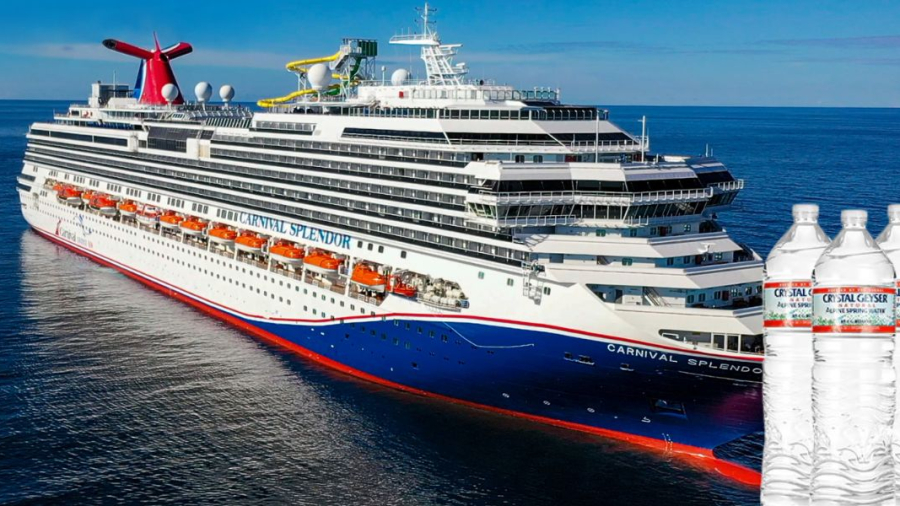
A misunderstanding over a complimentary bottle of water has led to a heated exchange between a Carnival Cruise Line Platinum guest and the cruise line’s Brand Ambassador, John Heald.

Carnival Bottled Water Complaint

The incident unfolded after the guest was charged for a 1.5-litre bottle of water that had been left in their stateroom.

The guest, who had achieved Platinum status in Carnival’s loyalty programme, was entitled to one complimentary bottle as part of their VIFP Club perks.

Upset at the unexpected charge, the cruiser contacted Heald via social media – with what he described as a “scathing” message. Most notably, the passenger threatened to withhold their gratuities, a move Heald called “despicable.”

Carnival recommends $16 per person, per day in gratuities for standard staterooms and $18 for suites, which are shared among the onboard service team, including stewards, waitstaff and other behind-the-scenes crew members.

The Water Perk That Caused the Fuss

Guests with Red, Gold, Platinum or Diamond status in the Very Important Fun Person (VIFP) loyalty programme receive a free 1.5-litre bottle of water per sailing.

However, it appears confusion over how to claim that water was at the heart of the incident.

Unlike past cruises, where the complimentary water may have been placed in the stateroom, guests now typically need to collect it themselves from any onboard bar or restaurant – after showing their loyalty pin.

“This is how we are currently doing it,” Heald clarified, acknowledging that while not ideal for everyone, the current process is standard fleetwide.

Bottled water left in cabins is not automatically free and is often chargeable unless specified otherwise. A single 1.5-litre bottle costs $5.31 for those without an included beverage package or complimentary status.

Refund Issued, But Frustration Remains

In this case, Heald immediately reached out to shipboard staff and arranged for the charge to be reversed – “for the sake of the crew, so that they would receive their gratuities.”

But for some passengers, the damage was already done. Multiple former Carnival cruisers responded to Heald’s post, sharing similar experiences and voicing disappointment at what they felt was a downgrade in loyalty recognition.

One mentioned that the policy change caught them off guard during a March sailing, saying they were “disappointed” not to find the water in their room and only learned after the cruise that they had to ask for it.

Others have said that the website seems to suggest that the free bottle can be taken from the water provided in the stateroom.

To avoid confusion, Carnival guests can also purchase water in advance of their cruise. Options include a 12-pack of 500ml bottles for $17.64, or an 8-pack of 1.5-litre bottles for $29.44, which can be delivered directly to the cabin.

Cruisers with the Cheers! drinks package – which includes bottled water – can claim their perk at any time.

But for those without, small misunderstandings over amenities can sometimes escalate into bigger guest relations issues.

For now, Heald has confirmed that the cruise line is looking at how they can improve the situation, especially since there are some mixed messages with the cruise line’s website on where the water can be taken from.

Hopefully the affected guest has calmed down!

NEW DEALS JUST RELEASED!

See the latest Carnival cruise offers…

Related Posts

If you found this interesting, please share!

Cruise Mummy

Jenni Fielding is the founder of Cruise Mummy. She has worked in the cruise industry since 2015 and has taken over 30 cruises. Now, she helps over 1 million people per month to plan their perfect cruise holidays.

Read more about me

Carnival Sunrise Chair Brawl

What began as a laid-back afternoon on the lido deck quickly descended into chaos aboard Carnival Sunrise over the weekend, when a physical altercation broke out between multiple guests. The…

Carnival Vista Horizon Dining

Carnival Cruise Line is piloting a new express dining experience aboard Carnival Vista, designed to offer guests a quicker mealtime option after a full day exploring ashore. The trial is…

Symphony of the Seas Broken Glass Coastal Kitchen

Passengers aboard Royal Caribbean’s Symphony of the Seas experienced a tense moment on 8th June 2025 when a large window at the Coastal Kitchen restaurant unexpectedly shattered as the ship…

Costa Deliziosa

A crew member aboard Costa Cruises’ Costa Deliziosa was successfully rescued after falling overboard in Souda-Chania, Crete, Greece, on 3rd June, 2025. The incident occurred in the afternoon while the…


Source link

Restaurant dining room on a large cruise ship, similar to the Arvia restaurants for P&O passengers

P&O Arvia Restaurants Guide 2026: Included vs Speciality Dining

Arvia restaurants fall into two groups: venues included in your P&O Cruises fare (the Meridian and Zenith main dining rooms, the Horizon buffet, The Quays food hall, 6th Street Diner, Taste 360 and The Olive Grove) and speciality venues that cost extra (Epicurean, Sindhu, The Beach House, Green & Co featuring Mizuhana, The Keel & Cow, The Glass House, The Limelight Club and Ripples). You could eat well all week without paying a penny more, but booking one or two speciality meals is where many passengers find the real highlights.

This guide covers every dining venue on Arvia, what each one costs, how Freedom dining works, when to book, and what to know if you have dietary requirements or are travelling with children.

All Arvia Restaurants at a Glance

Prices below are approximate, based on recently reported cover charges and menus. P&O Cruises reviews its speciality pricing regularly and refreshed several menus in 2026, so always check the current figure in My P&O Cruises before you sail.

Venue Type Included or extra? Approx. price
Meridian (Deck 6) and Zenith (Deck 7) Main dining rooms, Freedom dining Included Included
Horizon Buffet, early until late Included Included
The Quays Food hall with street food counters Included Included
6th Street Diner American diner and soul food Included Included (jukebox extra)
Taste 360 Street food by the SkyDome Included Included
The Olive Grove Mediterranean, sit-down Mostly included Small supplement on a few dishes
Epicurean Fine dining and afternoon tea Extra Cover charge, roughly £35 to £45 for dinner
Sindhu Modern Indian Extra Cover charge, around £25 plus some supplements
The Beach House Latin American, Caribbean and grill Extra Modest cover charge, among the cheapest
Green & Co featuring Mizuhana Plant-based and sushi Extra Priced per dish
The Keel & Cow Gastropub Extra Priced per dish
The Glass House Wine bar with tapas plates Extra Priced per plate and glass
The Limelight Club Adults-only supper club with live show Extra Cover charge for dinner and show
Chef’s Table Hosted dinner on selected Celebration Nights Varies Check when booking; wine pairings cost extra
Ripples and Sundaes Gelato and desserts Extra A few pounds per serving

Included Arvia Restaurants

Meridian and Zenith main dining rooms

Arvia’s two main dining rooms are Meridian on Deck 6 and Zenith on Deck 7. They serve waiter-service breakfast and dinner, with lunch usually in Meridian on sea days. Menus change nightly and include a mix of British classics and international dishes, plus special menus on Celebration Nights. Both rooms operate Freedom dining, explained below.

Horizon buffet

Horizon on Deck 16 is the ship’s main self-service restaurant and the easiest place to eat on a busy day. It typically opens early for breakfast and runs through lunch, afternoon tea, dinner and late-night snacks. It is also where the children’s early tea is served.

The Quays

The Quays on Deck 8 is a food hall with several counters, including fish and chips, burgers and hot dogs, and Asian-style dishes such as katsu curry and noodles. It suits families and anyone who wants a quick, casual meal without committing to a full sit-down dinner.

6th Street Diner

Exclusive to Arvia, 6th Street Diner serves American comfort food, all-day breakfast items, pancakes, burgers and soul food in a retro setting. It is included in your fare, although queues can build at lunchtime on sea days.

Taste 360

Taste 360 sits beside the SkyDome pool and serves street-food style dishes, with menus that often reflect the region the ship is sailing in, such as Spanish flavours in the Canaries and Caribbean dishes in the Caribbean. It is ideal for a light lunch between swims.

The Olive Grove

The Olive Grove is a sit-down Mediterranean restaurant with antipasti, pasta, paella and pizza. Most of the menu is included, but a few premium items carry a small supplement, and reservations are recommended for dinner.

Elegant restaurant table set with wine glasses and plated dishes for an evening meal at sea
Speciality restaurants are where Arvia's dining really stands out. Photo: leonardomartin pagano on Pexels

Arvia Speciality Restaurants and Cover Charges

Epicurean

Epicurean is Arvia’s fine-dining venue, serving modern British and international dishes with some tableside theatre. It also hosts a premium afternoon tea. P&O updated the Epicurean menu in summer 2026. Reported dinner cover charges have ranged from about £35 to £45 per person in recent seasons, with afternoon tea cheaper. Evening dress codes are smarter here than elsewhere on board.

Sindhu

Sindhu is P&O’s modern Indian restaurant and one of the most popular speciality venues on the ship. In 2026 P&O refreshed the menu, adding new dishes including a thali plate and more vegetarian and vegan options. It is reported to operate a cover charge of around £25 per person, with supplements on a handful of premium dishes, so check your bill.

The Beach House

The Beach House on Deck 16 serves relaxed Latin American, Caribbean and grill dishes, including steaks and sharing plates. It has historically been one of P&O’s lowest-priced speciality venues and is a good choice for a casual night out with family.

Green & Co featuring Mizuhana

This Arvia exclusive combines a plant-based menu (Green & Co) with a sushi and sashimi counter (Mizuhana). Dishes are priced individually, which makes it easy to try a few plates without paying a full cover charge.

The Keel & Cow

The Keel & Cow is a gastropub-style venue known for burgers, pub classics and craft beer. It is also priced per dish rather than with a fixed cover charge.

The Glass House

The Glass House is a wine bar with a list curated by wine expert Olly Smith and small tapas-style plates to pair with it. Food and wine are charged separately, by plate and by glass or bottle.

The Limelight Club

The Limelight Club is an adults-only supper club where a set dinner comes with live music or a headline act. A cover charge applies for dinner and the show. If you just want to watch, you can often buy drinks in the later session without a dinner booking.

Chef’s Table and Ripples

The Chef’s Table is a small hosted dinner on selected Celebration Nights with menus linked to P&O’s Food Heroes. Sources differ on whether the food carries a charge on current sailings, and wine pairings cost extra, so confirm when you book. Ripples and Sundaes sell gelato and desserts for a few pounds a serving.

How Freedom Dining Works on Arvia

Arvia uses Freedom dining in its main dining rooms rather than fixed sittings for most guests. You turn up when you like during dinner service (roughly 5.30pm to 9.30pm) and are seated when a table is free. At busy times you can join a virtual queue through the My Holiday app, which tells you when your table is ready. If you prefer certainty, you can reserve a table in advance, particularly for earlier times.

A few practical tips:

  • Peak demand is around 7pm, especially on sea days and Celebration Nights. Eating early or late usually means shorter waits.
  • Ask the restaurant manager if you would like the same table or waiter each night. They can often arrange it.
  • If you are sharing a table with other guests, say so when you arrive, as this can speed up seating.
Family with young children sharing a relaxed dinner together at a restaurant table
Planning ahead makes family dining on board much easier. Photo: Atlantic Ambience on Pexels

Booking Arvia Restaurants in Advance

Speciality restaurants and some included venues can be booked before you sail through My P&O Cruises, usually once your cruise is fully paid. Once on board, you can book through the My Holiday app or at the venue. Booking ahead matters most for:

  1. Epicurean and Sindhu, which fill quickly on sea days and Celebration Nights.
  2. The Limelight Club, especially when a well-known act is on.
  3. The Chef’s Table, which has very limited places.
  4. The Olive Grove for dinner at popular times.

A useful tip that many guides miss: book speciality meals on port days rather than sea days. Many passengers eat ashore or come back tired on port days, so tables are easier to get, and you leave sea days free for the busier included venues. Your cabin position can also make a difference to how far you walk to dinner each night, so it is worth reading our guide to the best and worst cabins on P&O Arvia before you book.

If you are still choosing a cruise line, our comparison of P&O Cruises vs Princess Cruises looks at how dining and value stack up.

Special Diets and Allergies on Arvia

P&O Cruises asks guests with allergies or medical dietary needs to tell them when booking or well before departure, so the galley can prepare. On board, speak to the restaurant manager on your first evening. Main dining room menus mark common allergens and include vegetarian dishes, and vegan options are widely available, with Green & Co offering a fully plant-based menu. Gluten-free requests are usually handled well in the main dining rooms. In buffets and self-service areas the risk of cross-contamination is higher, so ask staff for help.

Kids’ Dining on Arvia

Families have plenty of included choices. Horizon hosts a children’s early tea, typically around 5pm, with child-friendly dishes and ice cream. There is a children’s menu in the main dining rooms, and casual venues such as The Quays, 6th Street Diner and Taste 360 make quick meals easy. Children are welcome in most speciality restaurants, but The Limelight Club is adults only. Ripples is a popular treat, though it does cost extra.

Looking for your next sailing? See our round-up of cruise deals for 2027.

FAQs

How many restaurants are on Arvia?

Arvia has more than a dozen dining venues and over 30 bars and restaurants in total. Around six are included in the fare, and roughly eight speciality venues charge extra.

Which Arvia restaurants are free?

Meridian and Zenith main dining rooms, Horizon buffet, The Quays, 6th Street Diner, Taste 360 and most of The Olive Grove menu are included in your fare.

Is Sindhu included on Arvia?

No. Sindhu is a speciality restaurant with a cover charge, reported at around £25 per person in 2026, plus supplements on some dishes.

Do you need to book restaurants on Arvia?

You do not have to book the main dining rooms, as Freedom dining lets you turn up or join a virtual queue. Booking ahead is strongly recommended for speciality restaurants, especially Epicurean, Sindhu and The Limelight Club.

Can you pre-book Arvia speciality restaurants before sailing?

Yes. You can usually reserve speciality dining through My P&O Cruises once your cruise is paid in full, and you can also book on board through the My Holiday app.

Large cruise ship berthed at a harbor pier, where cruise port fees and taxes are charged per passenger

Cruise Port Fees and Taxes: What They Are and How Much You’ll Pay

Cruise port fees are mandatory per-person charges that cover what it costs to bring a ship and its guests into port, along with government taxes on passengers. As a rough guide, expect about $130 to $200 per person on a 7-night Caribbean cruise and $250 to $350 on a 7-night Alaska cruise. Most US cruise lines now include these charges in the fare they advertise.

The amount is set by where the ship goes, and several destinations have changed their charges recently. This guide explains what you are paying for, what typical cruise port fees and taxes look like (figures checked November 2026), and how to work out the real cost of a sailing.

What are port fees on a cruise?

“Port fees” is shorthand for a group of separate charges. Cruise lines usually bundle them into one line on your booking, labeled something like “taxes, fees and port expenses.” That line can include:

  • Passenger head taxes: a flat amount per guest charged by a country, state or city.
  • Docking and berthing fees: what the port charges for the ship’s place at the pier.
  • Pilot and tug services: local specialists who help guide the ship in and out of the harbor.
  • Security, customs and immigration costs: screening and border processing at the terminal.
  • Baggage handling and terminal costs: mainly at your embarkation and disembarkation ports.
  • Environmental and sustainability levies: a growing category, often linked to waste, shore power or managing visitor numbers.

Some of these are true government taxes. Others are operating costs passed on to guests. You will rarely see the split, because lines generally show a single combined figure.

Port fees are also different from gratuities. Gratuities are a daily service charge, commonly around $16 to $25 per person per day, and most lines allow them to be adjusted. Port fees cannot be reduced or opted out of, even if you never leave the ship.

How much are port fees on a cruise?

Most sailings fall somewhere between $100 and $350 per person, and long or port-heavy voyages can cost more. UK cruise agency Iglu puts taxes and port charges at about 10% to 20% of the base fare, although that share rises quickly on very cheap sailings. These itinerary examples are a guide only:

Itinerary Typical total per person Notes
3 to 4-night Bahamas About $85 to $150 Few ports, but Bahamas taxes are a large share
7-night Caribbean About $130 to $200 One 2025 Carnival Western Caribbean sailing was about $130
7-night Alaska About $250 to $350 One 2025 Carnival sailing from Seattle was about $320
Europe and long voyages Varies widely Depends heavily on the number of ports and the season

Four things move the total: how many ports you visit, which countries they are in, the length of the cruise, and the size of the ship. Sea days generally add little, which is why a port-packed week usually costs more than a voyage of the same length with several days at sea.

Cruise ship berthed at a sunny tropical port beside clear blue water
Each port on your itinerary can add its own per-passenger charges. Photo: William ZALI on Pexels

Cruise port fees and taxes by destination

The table below shows published or widely reported government charges. These are only part of your total, since docking and other port costs sit on top. Rates change often, so treat them as correct at the time of writing rather than permanent.

Destination Example charge per person Status (November 2026)
Mexico $10 per passenger In force since August 1, 2026; scheduled to rise
Bahamas $23 at regular ports, $25 at private destinations, plus $5 and $2 levies Listed by Bahamas Customs
Alaska (state) $34.50 excise tax In force
Juneau $5 marine passenger fee plus $3 port development fee In force for 2026
Greece €1 to €5 at most ports; €4 to €20 at Santorini and Mykonos In force since July 2025; varies by season
Barcelona €11 per day on calls under 12 hours Rise to €30 agreed, timing to be confirmed
Hawaii 11% of prorated fare, plus up to 3% county surcharge Blocked by the courts, not being collected

Mexico’s phased cruise passenger tax

Mexico initially planned a $42 charge, then agreed to phase in a lower fee after pushback from the industry. It applies to ships calling at Mexican ports, including Cozumel, and the schedule reported is:

  • $5 from July 2025 to July 31, 2026
  • $10 from August 1, 2026 to June 30, 2027
  • $15 from July 1, 2027 to July 31, 2028
  • $21 from August 1, 2028

Separate local fees for Cozumel and other Quintana Roo ports have been proposed in the past, but the charge confirmed in current reports is this federal one. Because the fee rises in steps, a 2028 Mexico cruise may carry a noticeably higher charge than the same route today.

Bahamas passenger taxes

Bahamas Customs lists $23 per cruise passenger departing any Bahamian harbor, or $25 from a private destination where the ship visits no other Bahamian port. A $5 Tourism Sustainability Levy and a $2 Tourism Enhancement Levy are listed as well, so a private island call can reach about $32 in government charges alone.

Alaska and Juneau fees

Alaska is expensive because state and local charges stack up. The state’s excise tax is $34.50 per passenger, and Juneau adds a $5 marine passenger fee and a $3 port development fee. Juneau also approved higher dockage charges at city docks for 2026, which are billed to the ships and may filter through to fares.

The Greek cruise levy

Greece introduced its per-passenger, per-port levy in July 2025. Santorini and Mykonos cost €20 from June through September, €12 in April, May and October, and €4 from November through March. Other Greek ports cost €5, €3 and €1 over the same periods. Two peak-season stops at those islands add €40 per person.

Barcelona, Norway and Hawaii

Barcelona’s charge for passengers on calls under 12 hours has been €11 per day, made up of €5 for the city and €6 for the region. In summer 2026, politicians agreed to raise it to as much as €30, with the city’s part rising to €24. At last report it still had to be written into the city’s tax rules. Passengers starting or ending their cruise in Barcelona are exempt from the higher rate.

Norway has allowed municipalities to charge a 3% visitor levy that also covers cruise guests from 2026. Adoption is optional, so it will not apply at every port.

Hawaii’s “green fee” law, Act 96, would apply the transient accommodations tax to cruises at 11% of the fare, prorated for days spent in Hawaii, with counties able to add up to 3%. A federal appeals court blocked the cruise portion on December 31, 2025, just before it was due to start. Reports as of September 2026 showed the tax still on hold, so check for a ruling if you are booking a Hawaii cruise.

Person at a table comparing travel prices on a laptop screen
Compare the final total for the whole cabin before you book. Photo: Letícia Alvares on Pexels

Are port fees included in cruise prices?

On most US cruise line websites, yes. The big change came from California’s Honest Pricing Law, SB 478, which took effect on July 1, 2024. Royal Caribbean, Celebrity, Carnival, Princess, Holland America, Cunard, Norwegian and MSC all moved to fares that include taxes, fees and port expenses, and most applied the change across the US.

The federal rule is often credited with this, but its role is narrower. The FTC’s Rule on Unfair or Deceptive Fees took effect on May 12, 2025, and the FTC’s guidance describes it as covering live-event tickets and short-term lodging. That guidance does not mention cruises. It also lets businesses leave government charges out of the upfront price, provided they are disclosed before payment. So the all-in prices you see on cruise sites owe more to California’s law than to the FTC.

All-in does not mean everything is covered. Gratuities, drinks, Wi-Fi, specialty dining and excursions are usually extra. If you see an unusually low fare on a third-party site or in an older ad, check whether it says “plus taxes and fees.” Some luxury lines bundle far more into the fare, but even then it is worth reading what the price actually includes.

Are cruise port fees per person or per cabin?

They are charged per person, and this catches out plenty of first-time bookers. A cabin of two pays double the quoted figure. Third and fourth guests normally pay their own share as well, so a low “kids sail free” style offer can still leave you with port fees to pay for each child.

Solo travelers are treated more fairly here than on the fare itself. A single supplement can push the cabin price up sharply, but you still pay only one guest’s share of port fees and taxes.

How to calculate your cruise port fees

You do not need to add up individual ports, and in practice you cannot, because lines do not publish a full breakdown. Instead:

  1. Price the exact sailing. Go as far as the final price summary on the cruise line’s site, using your real number of guests.
  2. Find the taxes line. Look for “taxes, fees and port expenses” in the summary. If it is not shown separately, the total price is what matters.
  3. Multiply by your party size, if the figure is quoted per person.
  4. Add the known charges still to come. Mexico’s next step, for example, may apply to a sailing more than a year away.
  5. Compare totals, not fares. Check two itineraries side by side using the final cabin price.

As an illustration, a couple on a Western Caribbean sailing showing $180 per person in taxes and fees would pay $360 for the cabin. If the route includes Mexico and a Bahamian private island, roughly $42 of each guest’s $180 could be those two government charges at today’s rates. When you are hunting for a cheap cruise, that is why a low fare on a port-heavy route can end up costing more than it first appears.

Can port fees change after you book?

Yes. Most cruise contracts allow lines to pass on new or increased government taxes, sometimes even after you have booked. Mexico’s rising charge is the obvious current example, and lines can add it to your final balance or your onboard account. Royal Caribbean also states that fares, fees and surcharges can change without notice.

Refunds work differently from what many guests assume. If a port is missed and not replaced, Cruise Critic reports these approaches:

  • Carnival and MSC (North American bookings): refund unused charges, typically as onboard credit.
  • Norwegian: says it refunds passengers when an itinerary changes without a substitute port.
  • Royal Caribbean and Celebrity: decide case by case.
  • Holland America and Princess: do not refund taxes and fees for skipped ports.

Since all-in pricing arrived, working out what each guest paid for one port has become harder, so a small credit is the most likely result. Travel insurance often does not cover weather-related itinerary changes either.

Can you reduce what you pay in port fees?

You cannot avoid the charges on a sailing you have chosen, but your choice of sailing makes a difference. Itineraries with more sea days and fewer ports generally cost less, and shoulder or winter Greek sailings attract lower levies. Beyond that, the savings are usually in the rest of your budget, so these ways to save money on board are likely to do more than chasing a lower port charge. Newcomers may also find these tips for first-time cruisers useful when planning a realistic budget.

FAQs

Do you pay port fees on a cruise?

Yes. Port fees and taxes are mandatory for every guest, and they apply even if you stay on the ship in port. On most US bookings they are already built into the price you see, so you pay them as part of your fare.

Are port fees included in cruise prices?

On most US cruise line websites, yes. Since July 2024, most major lines have shown fares that include taxes, fees and port expenses. Check third-party sites and older ads carefully, because a low headline price may still exclude them. Gratuities are normally separate.

How much are port fees on a cruise per person?

As a rough guide, expect around $85 to $150 on a short Bahamas sailing, $130 to $200 on a 7-night Caribbean cruise, and $250 to $350 on a 7-night Alaska cruise. The exact figure depends on the ports and the ship.

Are port fees charged per person or per cabin?

Per person. A cabin of two pays twice the quoted figure, and third or fourth guests in the cabin normally pay their own share too. A solo traveler pays one share of port fees, even when a single supplement applies to the fare.

Do you get port fees back if the ship misses a port?

Sometimes. Carnival and MSC have said they refund the unused charges, usually as onboard credit, while Holland America and Princess have said they do not refund them for skipped ports. Royal Caribbean and Celebrity decide case by case.

Cruise ship balcony overlooking the ocean, illustrating Quantum of the Seas cabins to avoid and the best rooms

Quantum of the Seas Cabins to Avoid (and the Best Rooms to Book) 2026-27

The main Quantum of the Seas cabins to avoid are deck 6 balconies where lifeboats sit right below the railing, cabins directly under the busy deck 14 pool and buffet area, and rooms sitting over late-night venues such as the Royal Theater and Two70. Pick a mid-ship balcony on decks 8 to 11, well away from lift lobbies and galleys, and you avoid nearly all the usual complaints. Below we go deck by deck, then cover the best cabins for families, solo travellers and anyone prone to seasickness.

Where Quantum of the Seas is sailing in 2026-27

The ship’s itinerary affects which cabin makes sense, so start here. After a season from Los Angeles, Quantum of the Seas moved to Brisbane for the Australian summer, running short 3 to 8-night cruises to Queensland and the South Pacific from about October 2026 to April 2027. Royal Caribbean has also announced seven-night roundtrip Alaska cruises from Seattle for summer 2027, followed by a Singapore season from roughly October 2027 to March 2028. Schedules do change, so check the current deployment on Royal Caribbean’s official site before you book.

Why does this matter? Short Brisbane getaways tend to attract a lively crowd, so cabins near bars and venues get more late-night foot traffic. Open-water crossings to New Caledonia and Vanuatu can be choppier than a Mexican Riviera run, so a mid-ship, lower-deck cabin is more useful. In Alaska the scenery shows up on both sides on a Seattle roundtrip, so a clear view from your balcony matters more than which side you are on.

Quantum of the Seas cabins to avoid, deck by deck

The ship has around 2,090 staterooms, and roughly three-quarters of them have balconies. That makes it a balcony-heavy ship, and most of the trouble spots involve view or noise rather than size. Here are the areas worth thinking twice about.

Deck 6: obstructed view balconies

This is the best-known problem on the Quantum of the Seas deck plan. The lifeboats and their launching cranes sit on deck 5, and along the stretch where the hull narrows their tops reach up to about railing height on deck 6. In the worst cabins you look out over the roof of a lifeboat and the davit arms, and most of your downward view of the sea is gone. You still get fresh air and a view of the horizon, but it is not the classic balcony picture.

Royal Caribbean sells many of these as “obstructed view” balcony categories at a lower fare, so read the category name carefully. A few deck 7 cabins are also marked as obstructed on the deck plans because the lifeboat equipment is still visible. Some deck 6 cabins are not affected; the most forward balconies on both sides have larger verandas and clear views, according to published deck plans.

Above the Royal Theater and the galleys

The forward cabins on deck 6 sit above the Royal Theater. Rehearsals happen during the day and shows run into the evening, so light sleepers and anyone who naps in the afternoon may hear bass and stage noise. Further aft, cruise forum posts have flagged a cluster of deck 6 cabins (often quoted as around 6290 to 6300) above a restaurant galley, with reports of kitchen equipment running overnight. We can’t confirm the exact numbers from the official plans, so if your assigned cabin is in that range, ask Royal Caribbean or your travel agent what is directly below it.

Near Two70 at the stern

Two70 is the big aft venue with the panoramic windows and robot-screen shows. It covers several decks at the back of the ship, and its upper level sits on deck 6. Deck plans show aft interior cabins on deck 7 directly above part of the venue, so evening performances can carry through. Balcony cabins at the very back of decks 6 and 7 are less likely to be affected, but it is worth checking.

Deck 13: under the pool deck and Windjammer

Deck 14 holds the main pool, the Solarium and the Windjammer buffet. That means many deck 13 cabins have a pool deck above them, which means sun loungers dragged around early in the morning, deck cleaning and, on the aft end, buffet carts and service traffic. If you are an early riser it may not bother you, but light sleepers should choose decks 8 to 12 instead. The Music Hall, casino and lower-deck venues are low in the ship, so they matter mainly for the few cabins on the lower levels near them.

Next to lifts, stairwells and connecting doors

This applies on every deck. Cabins right beside the lift lobbies pick up chimes, chatter and late-night groups heading back from the bars. Cabins with a connecting door share a thinner wall with the room next door, so you are more likely to hear your neighbours. These rooms are great if you book both sides yourself, and less so if you don’t.

Far forward or far aft if you get seasick

Quantum is a big ship with stabilisers, but the bow and stern still move more than the middle. Forward cabins can also feel the thud of waves in rough water, and aft cabins can feel vibration when the ship is docking or manoeuvring. If you are prone to motion sickness, choose a mid-ship cabin on a lower to middle deck. Bear in mind that Quantum is long, so cabins at either end mean a walk of several minutes to the lifts.

Comfortable cabin with a made-up bed, the kind of room to compare when avoiding the wrong Quantum of the Seas cabins
Location matters as much as cabin category when choosing where to sleep on board. Photo: Natthanon Chinnasri on Pexels

Quick reference: problem areas and better choices

Area Possible issue Better alternative
Deck 6 balconies where the hull narrows Lifeboat tops and cranes block the view down to the sea Mid-ship balconies on decks 8 to 11
Forward deck 6 Theatre rehearsal and show noise Forward cabins two or more decks higher
Aft deck 6 and 7 interiors Sound from Two70 performances Mid-ship virtual balcony interiors on decks 8 to 11
Deck 13 under the pool and buffet Early-morning chair scraping and service noise Decks 9 to 12
Cabins by the lift lobbies Chimes and hallway traffic Rooms a few doors along the corridor
Extreme bow or stern More motion, long walks Mid-ship, lower to middle decks

The best cabins on Quantum of the Seas

Now the good news. For most people, the best cabins on Quantum of the Seas are standard balconies mid-ship on decks 8 to 11. They are close to the lifts, there are cabin decks above and below for insulation, and they sit high enough above the lifeboats to give a clear view. Standard balcony rooms come in at about 198 square feet with a 55 square foot balcony.

Large and “hump” balconies

Quantum’s hull has a slight hump mid-ship, plus smaller steps forward and aft. Cabins at these points often have deeper or oddly shaped balconies, sometimes with an extra side window, for little or no extra cost. Royal Caribbean sells them as “large balcony” categories, with outdoor space of 65 square feet or more. They are worth looking for on the deck plan if you spend a lot of time outside.

Virtual balcony interior cabins

Most interior cabins on Quantum have a “virtual balcony”: a floor-to-ceiling screen that shows a live camera feed from outside, matched to your side of the ship. It is a clever way to make an inside cabin feel less boxed in, and many cruisers like seeing the weather and the time of day when they wake up. If you need total darkness to sleep, you can still switch it off. Our guide to whether a balcony or an inside cabin is better value goes through that decision in more detail.

Studio cabins for solo travellers

Quantum has 28 studio cabins designed for one person, which means no full double-occupancy pricing. Close to half of them have balconies; studio balconies are about 119 square feet with a 55 square foot balcony, and some of those on decks 6 and 7 sit at the hull steps with bigger outdoor space. The rest are interior studios, many with virtual balconies. Studios sell out early, so book well ahead.

Bright cruise cabin with a double bed and a sofa bed, the kind of layout families look for when booking a room for four
Families should check how many berths a room really has before booking. Photo: Mochi Mochi on Pexels

Family cabins and suites

Families have a few good options. Many balcony and interior cabins sleep four with a sofa bed or pull-down bunks, but space gets tight, so check the berth count in each category before you pay. Connecting cabins, such as an interior across from or next to a balcony, give parents and older children their own space and a second bathroom. Quantum also has a Family Suite category on the upper cabin decks, which is sized for larger groups. Remember that Adventure Ocean, the kids’ club, is on deck 11, so a cabin on decks 9 to 12 keeps the walks short.

The suites are split into Royal Suite Class tiers. Junior Suites start at around 267 square feet with an 81 square foot balcony, and include perks such as priority boarding. Grand Suites and Sky Loft Suites add concierge services, and the top Star Class suites, up to the two-level Royal Loft at about 1,640 square feet, include a Royal Genie. Suites still follow the same location rules, so a Junior Suite on deck 13 can be noisy under the pool deck. To see how Quantum’s suites and public areas compare with other ships, see our Royal Caribbean ship classes comparison.

How to check a cabin before you book

  1. Look one deck up and one deck down. Open the official deck plan and check what is directly above and below your cabin. If you see a venue, galley, pool or crew area, think again.
  2. Read the category name. “Obstructed view” is in the category description for good reason. If it is much cheaper than the cabin next to it, assume the view is affected.
  3. Be careful with guarantee fares. A guarantee (cabin chosen by the cruise line) can be cheaper, but you could end up in any cabin in that category, including the less desirable deck 6 or deck 13 rooms. Pick your cabin yourself if location matters to you.
  4. Count the doors to the lifts. A few doors along the corridor is the sweet spot: short walk, little noise.
  5. Ask about refits. Venues and restaurants are sometimes renamed or moved during dry docks, so ask your agent to confirm what is currently next to your cabin.

Many of these tips apply across the fleet. Our general guide to Royal Caribbean cabins to avoid covers the patterns that repeat from ship to ship.

Sailing her Quantum Ultra sister in Asia instead? Our guide to Spectrum of the Seas cabins to avoid covers the same deck-by-deck checks.

For an older Royal Caribbean ship with a very different layout, see our guide to Voyager of the Seas cabins to avoid.

Booking the newer Quantum Ultra sister instead? See our guide to Odyssey of the Seas cabins to avoid and the best rooms on that ship.

FAQs

Which deck is best for a balcony on Quantum of the Seas?

Decks 8 to 11 mid-ship are usually the safest choice. They sit well above the lifeboats, have cabins above and below for insulation, and are close to the lifts.

Are all deck 6 balconies on Quantum of the Seas obstructed?

No, but many are. Balconies where the hull narrows look down onto the lifeboats, while some forward cabins have larger, clearer balconies. Check whether the category is labelled obstructed view.

Is deck 13 noisy on Quantum of the Seas?

It can be. Deck 13 sits under the deck 14 pool, Solarium and Windjammer, so cabins there may hear early-morning loungers and service carts. Light sleepers should pick a lower deck.

Are virtual balcony cabins worth it?

For many cruisers, yes. The screen shows a live view outside, which makes an interior cabin feel brighter and helps you keep track of the time of day, at an inside-cabin price.

Where is Quantum of the Seas sailing in 2026-27?

From Brisbane, Australia, from around October 2026 to April 2027, followed by Alaska from Seattle in summer 2027 and Singapore from late 2027, according to Royal Caribbean announcements. Check the cruise line’s site for the latest schedule.

Balcony cabin on a cruise ship with a bed facing glass doors and the open sea, like Coral Princess balcony rooms

Coral Princess Cabins to Avoid (and the Best Cabins to Book)

The main Coral Princess cabins to avoid are the Aloha deck (deck 12) rooms that sit directly below the Lido deck pool, buffet and spa, the Emerald deck (deck 8) oceanview rooms whose windows look onto lifeboats, cabins next to the self-service launderettes and service doors, and forward cabins if you get seasick. The best picks are midship balcony cabins on Dolphin, Caribe and Baja decks (9 to 11), aft-facing balconies if you like a wake view, and the mini-suites, which give you a lot more room for a modest step up in price.

Coral Princess is a fairly easy ship to choose a cabin on, because she is smaller and simpler than the newer Princess ships. Her decks are a little different from those ships, so the usual rules about which cabins to avoid don’t always apply. This guide goes through the problem spots deck by deck, explains the cabin grades and gives a short list of rooms worth booking.

Coral Princess at a glance

Coral Princess entered service in 2002 and is the lead ship of the Coral class. Her sister ship is Island Princess. At about 92,000 gross tons, 965 feet long and only 106 feet wide, she was built to fit the original Panama Canal locks. She carries around 2,000 guests in 1,000 staterooms. Her last drydock was in October 2024, and an earlier refit (2019) put the Princess Luxury Bed in every stateroom.

She spends a lot of time on long voyages. In summer 2026 she sailed 7-night Voyage of the Glaciers cruises between Vancouver and Whittier in Alaska. In January 2027 she leaves Fort Lauderdale on a 129-night Grand Circle Pacific voyage, which goes through the Panama Canal and on to Hawaii, the South Pacific, Australia, New Zealand, Asia and Alaska. Shorter segments, including a 114-night roundtrip from Los Angeles, are also sold. On voyages that long, your cabin matters even more than usual. Itineraries change, so check the current schedule on the Princess Cruises website.

Island Princess has almost the same layout, so most of this advice also applies to her. Our guide to the best and worst cabins on Island Princess covers her in detail.

Coral Princess cabin types and grades

About 80% of the outside cabins on Coral Princess have a balcony, which is a high share for a ship of her age. The figures below are approximate and come from published deck plans.

Cabin type Category codes Approx. number Approx. size Where on the ship
Interior IA to IF 112 156 to 166 sq ft Decks 5, 8, 9, 11, 12
Oceanview OB to OE, O5, O6; obstructed OV, OW, OY, OZ 153 about 162 sq ft (larger O5/O6 about 215 sq ft) Decks 5, 8, 9, 11
Balcony B1, B2, BA to BF; obstructed BY, BZ 527 about 173 sq ft plus balcony Decks 8 to 12
Mini-suite M1, MB, MD, ME; MY (window, no balcony) 192 about 240 sq ft plus balcony Decks 9 to 12
Suite S5, S6 16 up to about 470 sq ft Decks 9 and 10

Cabin numbers begin with a letter for the deck: P for Plaza (5), E for Emerald (8), D for Dolphin (9), C for Caribe (10), B for Baja (11) and A for Aloha (12). For example, a cabin numbered B7xx is on Baja deck. There is no deck 13, so Aloha deck sits directly beneath the Lido deck (14).

Ship passing through a canal lock, like a Panama Canal transit
Coral Princess was built to fit the Panama Canal locks. Photo: Moo Lens on Pexels

Coral Princess cabins to avoid

No cabin on Coral Princess is truly bad. The rooms below have a known drawback, so it’s worth knowing about them before you choose one.

1. Aloha deck cabins under the Lido deck

Because there is no deck 13, Aloha deck (12) is directly beneath the busiest deck on the ship. The Lido deck has the Horizon Court buffet forward, the Lido and Lotus pools, bars, the pizzeria, and the spa and fitness center. Crew set out and stack loungers early in the morning and late at night, buffet carts roll across the floor, and people use the gym from dawn. Light sleepers should look at the deck plan and pick a cabin that isn’t under the pool, buffet or gym. Other cabins on Aloha deck can be fine, and the deck also has popular mini-suites.

2. Obstructed-view oceanview cabins on Emerald deck

The lifeboats hang beside the Promenade deck. Many oceanview rooms on Emerald deck (8) look straight onto them, and some have equipment in front of the window. These obstructed rooms are sold as OV, OW, OY and OZ and cost less. Some have only a partial blockage and others mostly see a lifeboat. If you need daylight but don’t care about the view, they can be good value. If you want to watch glaciers or the Panama Canal from your room, pay a little more for a clear view.

3. Obstructed-view balcony cabins (BY and BZ)

A small number of balcony cabins are sold as obstructed (categories BY and BZ). The obstruction can be part of the ship’s structure or equipment. Read the category description on the booking page before you buy, and ask your travel agent exactly what the cabin looks onto.

4. Cabins next to the launderettes and service areas

Coral Princess has self-service launderettes on the cabin decks. Published deck plans show them on Dolphin deck (9), for example. The rooms beside them get people coming and going late into the evening, doors closing and dryers running. Some passengers on forums have also reported plumbing smells in places. These reports are occasional and not tied to one specific room. The same applies to cabins beside crew doors and pantries, where carts move around early in the morning. Look for these areas on the deck plan and choose a cabin at least a few doors away.

5. Cabins near elevators and stairwells

Being near a stairwell is handy, but the cabins right beside the lift lobbies hear more corridor chatter and passing traffic. A cabin about 4 to 8 doors away is still a short walk and much quieter.

6. Forward cabins if you get seasick

The front of the ship moves the most in a swell. This matters on Coral Princess because of her routes: open-ocean days in the Gulf of Alaska, long Pacific crossings, and the Tasman Sea between Australia and New Zealand. If you get seasick, avoid the forward cabins on the higher decks. Choose a cabin midship on a lower deck, ideally Emerald or Dolphin, where you feel the least movement.

7. Lower-deck aft cabins if you are sensitive to vibration

The cabins at the back of the ship, nearest the propellers, can feel some vibration when the ship is maneuvering in and out of port. This is more noticeable on the lower decks. Most passengers barely notice it, but it’s worth knowing if you are a very light sleeper.

Balcony privacy on Coral Princess: a common mix-up

On the larger Grand-class Princess ships, the balconies on some decks step out in tiers, so people on the deck above can see down onto your balcony. Advice about this is often repeated for Coral Princess, but it mostly doesn’t apply to her. Her side balconies are largely stacked straight on top of each other, so privacy is generally good. If being overlooked worries you, check the deck plan for your cabin. In particular, look at the balconies around the aft corners and on the lowest balcony deck before you book.

Does Coral Princess have connecting cabins?

Coral Princess has relatively few connecting staterooms compared with newer ships, and they sell out quickly on school-holiday sailings. Connecting doors also let through a little more sound from next door, so couples who want quiet may want to avoid them. If you’re traveling as a group, an alternative is to book neighboring balcony cabins. On many Princess ships the crew can open the partitions between adjoining balconies on request, making one long shared balcony. Confirm that with Princess for your specific cabins before you rely on it. Also confirm any connecting rooms directly with Princess, because the deck plans on third-party sites aren’t always up to date.

Two chairs on a private cruise balcony looking out over a calm sea at sunset
A midship balcony gives a steady ride and an open view of the sea. Photo: IslandHopper X on Pexels

Best cabins on Coral Princess

  1. Midship balconies on Dolphin, Caribe or Baja deck (9 to 11). These have the least motion and clear views, with cabins above and below them rather than public rooms. For most people they are the best overall choice.
  2. Mini-suites. At about 240 square feet, a mini-suite is much larger than a standard balcony cabin. You also get a sitting area, a bathtub and a few extra perks. On a 30-night or longer voyage, the extra space is often worth the cost.
  3. Aft-facing balconies. The rooms at the very back of Dolphin, Caribe, Baja and Aloha decks look out over the wake and are very popular. Book early, and accept that you may feel a little more vibration or motion in rough seas.
  4. Suites (S5/S6) on decks 9 and 10. There are only 16 suites. They are the most spacious rooms on board and come with the most perks, including complimentary laundry, so they suit long voyages well.
  5. Interior cabins in a quiet location. The best interior rooms are midship on Emerald, Dolphin or Baja deck, with cabins above and below and away from service doors. They are a sensible budget choice if you spend most of the day out of the cabin.

Which side of the ship is best?

For an Alaska cruise in one direction, the general rule is starboard (right) going northbound and port (left) going southbound, so the coast is on your side. In Glacier Bay and College Fjord, the ship usually turns so that both sides get a view. For the Panama Canal and the long Pacific voyages, it doesn’t matter much which side you are on. Choose by where the cabin is and how quiet it is, not by which side it’s on.

Tips for choosing a Coral Princess cabin

  • Look one deck up and one deck down. Open the Coral Princess deck plan and check what is directly above and below your cabin. The quietest rooms have cabins on both sides.
  • Read the category code. The OV, OW, OY, OZ, BY and BZ codes tell you a room is obstructed, even when the booking page doesn’t mention it.
  • Weigh guarantee fares carefully. A guarantee fare is cheaper, but you could end up in one of the rooms described above.
  • Book early for long voyages. Mini-suites and aft balconies go first on the Grand Circle Pacific voyage and its segments.
  • Compare across ships. If you are also looking at newer Princess ships, read our guide to Sky Princess cabins to avoid, and look out for fares in our roundup of cruise deals for 2027.

Comparing Princess ships? See our guide to the best and worst cabins on Regal Princess.

FAQs

What cabins should I avoid on Coral Princess?

Avoid Aloha deck (12) cabins directly under the Lido pool, buffet or gym, obstructed-view rooms on Emerald deck (8), and cabins next to launderettes, service doors or elevators. If you get seasick, avoid forward cabins as well.

What is the best deck on Coral Princess?

For most people, the best decks are Dolphin, Caribe and Baja (9 to 11), choosing a cabin midship. These decks have cabins above and below, the ride is steady, and the views are clear.

Are Coral Princess balconies private?

Mostly, yes. Unlike some larger Princess ships, Coral Princess has her side balconies stacked straight on top of each other rather than stepped out in tiers, so few are overlooked from above.

Which Coral Princess cabins have obstructed views?

Mainly the oceanview categories OV, OW, OY and OZ, many of them on Emerald deck facing the lifeboats, plus a small number of balcony cabins sold as BY and BZ.

Is a mini-suite on Coral Princess worth it?

On longer cruises it often is. A mini-suite is about 240 square feet, which is roughly 40% larger than a standard balcony cabin, and it has a sitting area and a bathtub.

Family on holiday together, the kind of trip the best cruise ships for families are built for

The Best Cruise Ships for Kids and Families (2026-27)

The best cruise ships for families in 2026-27 are Royal Caribbean’s Icon-class ships (Icon, Star and Legend of the Seas) for kids of every age, Disney’s newest ships (Disney Destiny, Treasure and Wish) for under-10s, and Carnival’s Excel-class ships for value. MSC World America and Norwegian Aqua and Luna are strong all-rounders. For UK families who don’t want to fly, P&O Cruises’ Arvia and Iona from Southampton are the easiest pick.

The best ship for your family depends mostly on how old your children are and where you can easily sail from. Below you’ll find a quick comparison table, a ship-by-ship rundown of the best cruise ships for kids at the time of writing (October 2026), and some practical advice on choosing between them.

Best cruise ships for families at a glance

Kids’ club age bands vary by line and are sometimes adjusted, so check the cruise planner for your sailing before you book.

Ship Line Kids’ club ages Standout feature Best for ages
Icon, Star and Legend of the Seas Royal Caribbean Nursery 6-36 months; Adventure Ocean 3-12; teens 12-17 Surfside toddler neighbourhood plus Category 6 water park All ages
Disney Destiny, Treasure and Wish Disney Cruise Line Nursery 6 months-3; Oceaneer Club 3-10; Edge 11-14; Vibe 14-17 Character meet-and-greets and the AquaMouse water ride Toddlers to 10
Disney Adventure Disney Cruise Line Nursery, Oceaneer Club, plus tween and teen spaces Marvel Landing and the Ironcycle Test Run coaster 4-14
Carnival Celebration, Mardi Gras and Jubilee Carnival Turtles under 2; Camp Ocean 2-11; Circle C 12-14; Club O2 15-17 BOLT roller coaster (Celebration, Mardi Gras) and WaterWorks 5-17, budget-minded families
MSC World America MSC Cruises Clubs from 0 to 17 in Doremiland Kids’ clubs open 9am to midnight; The Harbour outdoor play area 3-14
Norwegian Aqua and Luna Norwegian Cruise Line Guppies 6 months-4; Splash Academy 3-12; Entourage 13-17 Aqua Slidecoaster, part water slide and part roller coaster 8-17
Arvia and Iona P&O Cruises The Reef 2-12 in bands; teen club 13-17; night nursery for under-4s Sailing from Southampton with a British-style programme 2-12, UK families

1. Icon-class ships: the best cruise ships for kids of all ages

Royal Caribbean’s Icon of the Seas, Star of the Seas and the brand-new Legend of the Seas are the closest thing to a floating theme park, and they work across a wider age range than any other ships at sea. Each one is organised into “neighbourhoods”, which makes a very big ship surprisingly manageable with children.

  • Toddlers and young kids: Surfside is a whole family neighbourhood with a carousel, splash areas (including a Baby Bay for little ones not yet out of nappies), a family pool and casual places to eat a few steps from the play areas.
  • Tweens and teens: Thrill Island has the Category 6 water park with six slides, plus the Crown’s Edge ropes walk and climbing wall. Teens get their own dedicated space.
  • Parents: Adventure Ocean for 3-12s is complimentary, and there’s a paid nursery for babies and toddlers.

Icon sails from Miami and Star from Port Canaveral on seven-night Caribbean routes, both with a day at Perfect Day at CocoCay. Legend of the Seas started sailing in the Mediterranean in July 2026 and repositioned to Fort Lauderdale on 25 October 2026 for a Caribbean winter season, with CocoCay on every sailing. It also has the three-storey Ultimate Family Townhouse if your budget stretches that far. You can see how the slides compare in our guide to Icon of the Seas’ Category 6 water slides.

If you’re set on Royal Caribbean but want a cheaper or shorter option, older Oasis-class and Quantum-class ships can be very good value. We break those down in the best Royal Caribbean ships for kids of each age.

2. Disney Destiny, Treasure and Wish: best for younger children

If your children are under about 10, no other line comes close to Disney for the “magic” factor. The three Wish-class ships share the same layout. Disney Wish and Disney Treasure sail from Port Canaveral, and Disney Destiny has sailed four- and five-night Bahamas and Western Caribbean trips from Fort Lauderdale since its maiden voyage in November 2025.

  • Kids’ clubs: The “it’s a small world” nursery (6 months to 3 years, fees apply), Disney’s Oceaneer Club for 3-10s, Edge for 11-14s and Vibe for 14-17s. The Oceaneer Club is included in the fare and has open-door sessions, so kids can drop in and out.
  • Water fun: The AquaMouse water ride runs above the top deck, and the Toy Story Splash Zone gives toddlers a safe, shallow area.
  • Dining: Rotational dining means your waiting staff move with you to a different themed restaurant each night, which children tend to love.

The trade-off is price: Disney is usually the most expensive mainstream family line per night. Destiny’s heroes and villains theme suits slightly older children, while Treasure’s adventure theme and Wish’s fairytale theming suit younger fans. Plant-based eaters can find out what to order in our Disney cruise vegan guide.

Disney Adventure: the new option in Asia

Disney Adventure began sailing from Singapore in March 2026. At around 208,000 gross tons it is Disney’s largest ship, with up to about 6,700 guests at full capacity. It runs three- and four-night round trips with no port calls, so the ship itself is the destination. Highlights include Marvel Landing with the Ironcycle Test Run roller coaster and a Big Hero 6-inspired San Fransokyo Street. It’s a realistic choice for families in Australia, India and South-East Asia, and an interesting add-on for anyone combining a cruise with a Singapore stopover. Our Disney Adventure staterooms and suites guide covers which cabins sleep larger families.

Children enjoying a bright water slide and splash pool, the kind of top-deck fun found on family cruise ships
Water parks are now standard on the biggest family ships. Photo: Anna Klinkosz on Pexels

3. Carnival Celebration, Mardi Gras and Jubilee: best value for families

Carnival’s Excel-class ships give you a big-ship experience at a lower price than Royal Caribbean or Disney. Mardi Gras sails from Port Canaveral, Celebration from Miami and Jubilee from Galveston. Celebration and Mardi Gras have BOLT, a roller coaster on the top deck. All three have WaterWorks slides, Family Harbor cabins with access to a family lounge, and free Camp Ocean for 2-11s.

Carnival’s casual, fun atmosphere suits families with lively school-age kids, and the bars and comedy keep parents happy too. Miami and Port Canaveral sailings can include Celebration Key, Carnival’s own beach destination on Grand Bahama, which opened in 2025. Keep an eye on Carnival Festivale, due in 2027 from Port Canaveral. Carnival says it will have the line’s largest water park and roughly 1,000 interconnecting cabins, which is a big draw for multi-generational groups.

4. MSC World America: best for long kids’ club hours

MSC World America sails seven-night Caribbean cruises from Miami and is one of the most family-focused ships MSC has built. Its Doremiland kids’ area is the largest in the MSC fleet, at more than 10,000 square feet, with clubs for babies right up to teens. The kids’ clubs run from 9am until midnight on every voyage, which is longer than on most ships.

The Family Aventura district includes The Harbour, an outdoor play area with a ropes course, the Cliffhanger swing ride and a lighthouse-themed playground. There’s also an 11-deck dry slide. MSC often runs offers where children sail free or at a reduced fare in their parents’ cabin, which makes it one of the cheaper ways to take a big family on a new ship. Some families do find MSC ships very busy in school holidays, so it’s worth booking dining and shows early.

5. Norwegian Aqua and Luna: best for tweens and teens

Norwegian’s Prima Plus-class ships are a great choice if your children are past the toddler stage and want thrills. Both ships have the Aqua Slidecoaster, a hybrid water slide and roller coaster, and Luna adds Luna Midway carnival games, the Moon Climber obstacle course and Horizon Park lawn games. Norwegian Luna debuted in Miami in March 2026 and is sailing a Caribbean season from there, before moving to New York in April 2027.

The kids’ clubs are Guppies (6 months to 4, with a parent), Splash Academy (3-12) and Entourage (13-17). Freestyle dining with no fixed times suits families who don’t want a set evening routine. If you’re looking at Aqua, our guide to Norwegian Aqua cabins to avoid will help you choose a quiet cabin.

Children playing in a swimming pool, the kind of splash area found on the best cruise ships for families
Pools and splash zones are a big part of what makes a ship family-friendly. Photo: Juan Salamanca on Pexels

Best family cruise ships from the UK

Many British families would rather not fly to Florida with children. These are the strongest options from UK ports.

P&O Cruises Arvia and Iona

P&O’s two biggest ships are designed for British families. The Reef kids’ club splits children into Splashers (2-4), Surfers (5-8) and Scubas (9-12), and teens aged 13-17 have their own space, called The Scene. A big plus for parents of little ones is the free night nursery for children from 6 months to under 4, so you can have dinner while your child sleeps. Iona sails mainly from Southampton, and Arvia mixes Southampton sailings with Caribbean fly-cruise seasons in recent winters. Age bands and nursery hours are occasionally adjusted, so check P&O’s current details for your sailing. Since 2025, P&O has charged a small fee to pre-book Reef sessions on Iona before you sail, though you can still book free onboard if spaces remain.

MSC from Southampton

MSC Virtuosa spent summer 2026 sailing Northern Europe and Iberia from Southampton before leaving for Brazil in November 2026. MSC Preziosa is due to sail from Southampton in winter 2026-27, and MSC Meraviglia is due to start its first UK season from Southampton in May 2027. Both offer MSC’s full kids’ club programme. We compare the two lines in detail in P&O vs MSC Cruises.

Disney from Southampton

Disney Dream sailed three- and four-night trips from Southampton in summer 2026, including a short trip to Zeebrugge. These short cruises are a good way to try a Disney cruise without long-haul flights. Disney hasn’t always returned to the UK every year, so check its website for 2027 dates before you plan around it.

If you’re still deciding whether a cruise is right for your family at all, our comparison of a cruise vs Center Parcs for UK families sets out the costs and practicalities side by side.

How to choose the right family cruise ship by age

  • Babies (under 2): Check the minimum sailing age (usually 6 months, and 12 months for some longer trips). Then look for a nursery: Disney, Royal Caribbean and Norwegian charge for theirs, while P&O’s night nursery is free. Shorter sailings are easier. Our baby and toddler cruise packing list covers swim nappies, travel cots and what the ship provides.
  • Toddlers (2-4): Many kids’ clubs require children to be toilet-trained, so check before you go. Ships with a dedicated toddler splash area, such as the Icon class’s Baby Bay or Disney’s Toy Story Splash Zone, make sea days much easier.
  • Young kids (5-10): This is Disney’s sweet spot. Royal Caribbean’s Surfside and Carnival’s Camp Ocean are also excellent.
  • Tweens and teens: Prioritise thrills and freedom: Icon-class ships, Norwegian Aqua and Luna, or Carnival’s BOLT ships. A good teen club gives them a social base for the week.
  • Multi-generational groups: Look for interconnecting cabins and a calmer adults-only area for grandparents. Legend of the Seas, MSC World America and Disney’s Wish class all do this well.

Ways to keep a family cruise affordable

Family cruises can add up quickly, but a few tactics help. Book the third and fourth berths in one cabin rather than two cabins, as extra guests in a cabin usually pay much less. Watch for “kids sail free” or reduced-fare offers from MSC, Royal Caribbean and P&O. Avoid peak school-holiday weeks if your children are under school age. Budget for extras such as nursery fees, speciality dining, Wi-Fi and drinks packages, which can cost more than you expect. Our guide to cruise deals for 2027 explains when the best offers usually appear.

To compare whole fleets rather than single ships, see our guide to the best cruise lines for families.

Families of five or more can check our guide to Disney cruise rooms that sleep 5 or more before booking.

Travelling with a baby? Our guide to cruising with an infant compares minimum ages, nurseries and pool rules by cruise line.

FAQs

What is the best cruise line for families with young kids?

Disney Cruise Line is generally the best for children under about 10, thanks to its characters, themed dining and well-run Oceaneer Club. Royal Caribbean’s Icon-class ships are a close second and suit a wider age range.

What is the best age to take a kid on a cruise?

Most lines accept babies from 6 months, but many families find that around age 3 to 4 is the turning point, when children can join the kids’ club and enjoy water parks. Ages 5 to 12 get the most out of family-focused ships.

Which cruise ship has the best kids’ club?

Disney’s Oceaneer Club and Royal Caribbean’s Adventure Ocean are the most consistently praised. MSC World America’s Doremiland stands out for its size and for opening hours that run until midnight.

What is the best family cruise from the UK?

P&O Cruises’ Iona and Arvia are the most popular no-fly family choices from Southampton, with British-style kids’ clubs and a free night nursery. MSC’s Southampton ships are a good value alternative.

Are kids’ clubs on cruise ships free?

Mainstream lines include kids’ clubs for children aged about 3 to 17 in the fare. Nurseries for babies and toddlers usually cost extra on Disney, Royal Caribbean and Norwegian. P&O’s night nursery is free.

MSC-Status-Match.jpg

MSC Cruises Status Match Charts

Being enrolled in a cruise line’s loyalty programme is great for getting extra rewards, but the best perks are locked behind higher tiers – which means you feel like you’re locked into one cruise line.

MSC Cruises has a ‘Status Match Program’ that’s designed to attract guests who are already loyal to other cruise lines, hotel brands, or tour operators.

MSC Status Match

It acknowledges the loyalty status that you may have earned with other travel brands by offering a matching status in the MSC Voyagers Club, which is MSC Cruises’ own loyalty program.

But is it any good?

MSC Voyagers Club Status Cards

First, choose your cruise line below to see what level your loyalty status matches to with MSC Cruises

AIDA Cruise Line

Classic Silver Gold Diamond
Blau ✔
Rot ✔
Gelb ✔
Grün ✔

Azamara Cruises – Le Club Voyage

Classic Silver Gold Diamond
Adventurer ✔
Explorer ✔
Discoverer ✔

Carnival Cruises – VIFP

Classic Silver Gold Diamond
Blue ✔
Red ✔
Gold ✔
Platinum ✔
Diamond ✔

Celebrity Cruises – Captain’s Club

Classic Silver Gold Diamond
Classic ✔
Select ✔
Elite ✔
Elite Plus ✔
Zenith ✔

Costa Cruises – Costa Club

Classic Silver Gold Diamond
Aquamarine ✔
Coral ✔
Pearl ✔
Gold Pearl ✔
Pearl Diamante ✔

Cunard Cruises – World Club Cunard

Classic Silver Gold Diamond
Silver ✔
Gold ✔
Platinum ✔
Diamond ✔

Disney Cruise Line – Castaway Club

Classic Silver Gold Diamond
Silver ✔
Gold ✔
Platinum ✔

Holland America – Mariner Society

Classic Silver Gold Diamond
Star mariner ✔
2 Star mariner ✔
3 Star mariner ✔
4 Star mariner ✔
5 Star mariner ✔
President’s Club ✔

Norwegian Cruises – Latitudes

Classic Silver Gold Diamond
Bronze ✔
Silver ✔
Gold ✔
Platinum ✔
Platinum Plus ✔
Ambassador ✔

Oceania Cruises – Oceania Club

Classic Silver Gold Diamond
Blue ✔
Bronze ✔
Silver ✔
Gold ✔
Platinum ✔
Diamond ✔
President’s Circle ✔

Ponant Yacht Cruises & Expeditions

Classic Silver Gold Diamond
Major ✔
Admiral ✔
Grand Admiral ✔

Princess Cruises – Princess Captain’s Circle

Classic Silver Gold Diamond
Gold ✔
Ruby ✔
Platinum ✔
Elite ✔

P&O Cruises – Peninsular Club

Classic Silver Gold Diamond
Pacific Tier ✔
Atlantic Tier ✔
Mediterranean Tier ✔
Caribbean Tier ✔
Baltic Tier ✔
Tier Ligure ✔

Regent Cruises – Seven Seas Club

Classic Silver Gold Diamond
Bronze ✔
Silver ✔
Gold ✔
Platinum ✔
Titanium ✔

Royal Caribbean – Crown & Anchor Society

Seabourn Cruises – Club

Classic Silver Gold Diamond
Seabourn Club ✔
Seabourn Club Silver ✔
Seabourn Club Gold ✔
Seabourn Club Platinum ✔
Seabourn Club Diamond ✔

SilverSea – Venetian Society

Classic Silver Gold Diamond
Venetian Society member ✔
Shipper Milestone ✔
Emerald Milestone ✔
Ruby Milestone ✔
Diamond Milestone ✔

Star Cruises – Resort World at Sea

Classic Silver Gold Diamond
Silver ✔
Gold ✔
Platinum ✔
Black ✔

As well as matching cruise line loyalty status, MSC Cruises also matches loyalty status with various hotels and casinos like Hilton, Marriott, Best Western and many more.

MSC Voyagers Club Levels

Once you know what status you’ll be matched to in the MSC Voyagers Club, you’ll want to know what that gets you…

All the MSC loyalty perks are shown in the following table:

Classic Silver Gold Diamond Blue Diamond
5% cruise discount ✔ ✔ ✔ ✔ ✔
10% cruise discount on advance bookings ✔ ✔ ✔ ✔ ✔
Email newsletter ✔ ✔ ✔ ✔ ✔
Personalised luggage tags ✔ ✔ ✔ ✔ ✔
Welcome back cocktail ✔ ✔ ✔ ✔ ✔
Onboard discounts ✔ ✔ ✔ ✔ ✔
$50 credit on advance bookings ✔ ✔ ✔ ✔
One hour in the thermal area ✔ ✔ ✔
Free gift ✔ ✔ ✔
Priority disembarkation by tender ✔ ✔ ✔
Free photo ✔ ✔ ✔
Birthday cake ✔ ✔ ✔
Priority line for embarkation ✔ ✔
Free speciality restaurant dinner ✔ ✔
Priority disembarkation at end of cruise ✔ ✔
Bathrobe and slippers ✔ ✔
Dance class ✔ ✔
Diamond Party ✔ ✔
Late check-out ✔ ✔
Sweet chocolate gift ✔ ✔
Free WiFi package ✔
Flexible check-in times ✔
Free tickets for shuttle services (select ports) ✔
Exclusive event invitations with officers ✔

You’ll notice that Blue Diamond doesn’t appear on the status match charts above. That’s because it’s a new tier introduced in November 2024 that is only achievable with MSC – you can’t get it via status match.

How To Register For Status Match

To claim your MSC Status Match perks, you’ll need to fill in a form on the MSC Cruises website.

You can ask your travel agent to do this for you if you prefer. If you’re a member of multiple loyalty programs, be sure to pick the one with the greatest benefits.

MSC Status Match usually takes around 72 hours to be completed, so don’t leave it too late before your cruise to apply. You’ll receive an approval email with your MSC Voyagers’ Club Number.

MSC voyagers club gold card

My Opinion

The aim of the MSC Cruises Status Match Program is to tempt frequent cruisers of other cruise lines over to MSC by matching the benefits that they usually get with their favourite cruise lines.

Of course, the loyalty perks should never be a reason to book a cruise, but they can offer a nice bonus. With the MSC Voyagers Club, it’s not until Gold and Diamond Level that you get any perks that are really worth having.

I’ve cruised with MSC Cruises four times, so I am a Silver Member. But I’ve never noticed any of the perks that come with that, and I don’t recall ever receiving the free cocktail either!

MSC Silver Member

It wouldn’t surprise me if you need to queue at guest services to ask for a voucher to claim it or something. I don’t fancy doing that, especially if I have a drinks package!

So, if you have a high loyalty status elsewhere, then it’s worth spending a few minutes filling out the form so MSC Cruises will match that. But don’t get too excited, loyalty perks usually aren’t all that great until you reach the highest tiers.

NEW DEALS JUST RELEASED!

Don’t miss the latest MSC Cruises offers…

Related Posts:

If you found this interesting, please share!

Cruise Mummy

Jenni Fielding is the founder of Cruise Mummy. She has worked in the cruise industry since 2015 and has taken over 30 cruises. Now, she helps over 1 million people per month to plan their perfect cruise holidays.

Read more about me


Source link