
AdobeStock_465686661-scaled.jpeg

5 Trending Watersports All Cruise Enthusiasts Should Try

Cruise vacations have evolved beyond lounging on deck chairs and indulging in endless buffets. For water-loving adventurers, the range of watersports offered by modern cruise lines provides the perfect blend of excitement, skill, and connection to the natural environment.

Whether you’re cruising in the Caribbean or the Mediterranean, these activities let you explore the beauty of the sea while giving you the adrenaline rush. In this article, we’ll dive into five watersports gaining momentum among cruise enthusiasts, providing seasoned travelers a way to elevate their experience on the water.

Wakesurfing: A Must-Try for Adrenaline Junkies

Wakesurfing is an exciting water activity that has rapidly gained popularity in the cruising community. Unlike wakeboarding or water skiing, wake surfing lets you ride the boat’s wake on a smaller board without needing tow ropes after the initial start. The appeal of wakesurfing lies in its ability to combine balance, speed, and style as riders maneuver over the artificial waves created by the boat.

For cruise enthusiasts, wake surfing is more than just a thrilling watersport. It allows you to stay in close proximity to the boat while enjoying a unique ride that is relatively easier on the body compared to wakeboarding, as you travel at slower speeds. The lower speed means that even beginners can enjoy this sport without worrying about harsh impacts if they fall. Another great advantage is that you can conveniently purchase your wakesurfing equipment online before your trip, ensuring you have the perfect board and gear ready when you arrive.

Some cruise lines even offer specialized boats designed to create ideal wakes for this sport, making it accessible whether you’re a pro or just getting started. With the growing popularity of wake surfing, many enthusiasts plan their cruises around destinations that cater to the sport, such as the calm, warm waters of the Caribbean or Mediterranean coastlines.

Kitesurfing: Harnessing the Power of the Wind

Kitesurfing, also known as kiteboarding, combines elements of surfing, wakeboarding, and paragliding while propelled by the wind. This watersport is best suited for those who love the freedom of the open sea and crave a challenge. Using a large kite to capture the wind, kitesurfers can reach thrilling speeds and heights, performing aerial tricks and gliding along the water’s surface.

While kitesurfing might seem like a steep learning curve, cruise passengers often have access to expert instructors and ideal wind conditions in some of the world’s best locations for the sport. Popular cruise destinations for kitesurfing include Aruba, the Canary Islands, and Mauritius, where consistent winds and open waters make for prime conditions.

To start kitesurfing, it’s important to undergo proper training and familiarize yourself with the safety guidelines. Many cruisers begin by taking lessons during their trip, learning how to control the kite, launch it, and ride the waves. Kitesurfing schools are often located near ports and beaches where cruise ships dock, offering convenience for beginners and pros alike.

Stand-Up Paddleboarding (SUP): A Calmer Approach

5 Trending Watersports All Cruise Enthusiasts Should Try | 155 Trending Watersports All Cruise Enthusiasts Should Try | 15
5 Trending Watersports All Cruise Enthusiasts Should Try 2

For those seeking a more serene connection to the water, stand-up paddleboarding (SUP) is a great option. SUP involves standing on a large board and using a paddle to navigate across calm waters. It provides a great workout, testing both your balance and endurance, while also offering the opportunity to explore scenic coastlines and crystal-clear bays.

Cruise ships often carry SUP equipment onboard, allowing passengers to embark on SUP excursions at various destinations. SUP is a versatile activity that can be enjoyed in different environments, from exploring mangroves and lagoons to paddling along the shoreline of tropical islands. Some cruises even offer yoga sessions on SUP boards, combining fitness and tranquility in a unique experience.

The beauty of SUP lies in its accessibility—people of all ages and fitness levels can try it. The slow, steady pace allows participants to take in the sights and sounds of the ocean while getting a full-body workout. For more adventurous paddlers, SUP surfing—catching small waves while standing on your board—adds a new level of excitement.

Scuba Diving: Explore the Depths of the Ocean

For many cruise travelers, exploring beneath the waves is just as thrilling as riding them. Scuba diving allows you to immerse yourself in the underwater world, experiencing marine life in its natural habitat. Whether you’re swimming alongside vibrant coral reefs or exploring eerie shipwrecks, the opportunity to dive while on a cruise is an experience that should not be missed.

Many cruise lines offer diving excursions, providing the necessary equipment, transportation, and even certification courses for beginners. Popular diving spots for cruise passengers include the Great Barrier Reef, Cozumel, and the Red Sea. Depending on your destination, you could encounter colorful fish, sea turtles, dolphins, and even larger species like sharks and manta rays.

Before diving, it’s crucial to ensure you meet health and fitness requirements. Divers need to complete certification courses, which can be done before your trip or even onboard in some cases. It’s worth noting that environmental regulations protect many dive sites, ensuring the preservation of marine ecosystems. These rules are essential in promoting sustainable tourism. For more information on diving regulations and protected marine areas, you can visit the NOAA’s marine protected areas resource.

Jet Skiing: Speed Across the Water

Jet skiing remains among the most thrilling watersports, allowing enthusiasts to zoom across the water at exhilarating speeds. Jet skis are small, personal watercraft that are easy to maneuver, making them an excellent option for anyone looking for fast-paced fun. On many cruise excursions, you’ll find jet skiing opportunities along beautiful coastlines, offering a blend of sightseeing and excitement.

One of the benefits of jet skiing is that it requires very little experience to get started. Most cruise ships offer guided tours, where instructors teach you the basics and take you on a safe yet thrilling ride. Depending on the location, you might even ride through mangroves, open ocean waves, or along tropical beaches, adding a scenic element to the adventure.

Jet skiing is top-rated in destinations like the Bahamas, Hawaii, and the French Riviera, where calm waters and beautiful landscapes make for the perfect setting. Although it’s a high-speed watersport, jet skiing can be easily tailored to different skill levels, from gentle cruising to wild wave-hopping.

The Perfect Watersport Awaits on Your Next Cruise

The range of watersports available to cruise enthusiasts has never been more comprehensive, offering activities that cater to all interests and skill levels. From the thrilling speed of wake surfing to the tranquil balance of stand-up paddleboarding, there’s something for everyone to try during their next voyage.

Whether you prefer to glide above the water or explore the depths below, cruise lines make it easier to integrate these exciting activities into your travel itinerary. Prepare for your next adventure and ensure you’re ready to explore the sea from every possible angle.


Source link

Cruise ship deck with sun loungers on a sunny day, the kind of scene first time cruise tips help you plan for

18 First Time Cruise Tips: What New Cruisers Need to Know

The best first time cruise tips are simple: arrive in your departure city a day early, keep essentials in a carry-on on embarkation day, book shows and specialty dining in the cruise line’s app before you sail, and budget for automatic gratuities (around $17 to $20 per person per day on the big mainstream lines). Add a plan for seasickness, internet and port times and most first-cruise surprises disappear.

Below are 18 practical cruise tips for first-timers, covering the weeks before you sail, embarkation day and life on board, plus a first 24 hours checklist that new cruisers can follow step by step. If you are still choosing a sailing, start with our guide to cruise booking rules and when to ignore them, because this article picks up after the booking is made.

First Time Cruise Tips: Before You Sail

  1. Fly in the day before (or two). A ship will not wait for a delayed flight. Arriving the day before departure turns a missed connection or bad weather into an inconvenience instead of a missed cruise. For winter sailings from northern airports, many travelers allow two nights.
  2. Check your documents early. US citizens on round-trip “closed-loop” cruises from a US port can often travel with a birth certificate and government photo ID, but a valid passport is far safer: if you need to fly home from a foreign port because of illness or a missed ship, you will need one. Check each country’s entry rules and the cruise line’s own requirements well ahead of time.
  3. Complete online check-in and pick an arrival time. Most lines open online check-in weeks before sailing. Uploading your photo, documents and payment card speeds things up at the terminal, and choosing a later arrival slot often means shorter lines.
  4. Download the cruise line’s app and book what sells out. Headline shows, specialty restaurants, spa treatments and popular shore excursions are frequently bookable in the app or the cruise planner before you sail, and the best times go first. Pre-cruise sales can also undercut onboard prices.
  5. Study the deck plans. Knowing where your cabin is in relation to the elevators, the buffet, the theater and the main pool saves a lot of wandering on day one. Look at what is directly above and below your cabin, too: a cabin under the pool deck or a nightclub can be noisy. If you are prone to seasickness, a cabin on a lower deck near the middle of the ship moves the least.
  6. Buy travel insurance that includes medical evacuation. US health plans and Medicare generally offer little or no cover at sea or abroad, and the ship’s medical center bills separately. Look for policies that cover trip interruption and missed connections as well.

Budget Tips: What a Cruise Really Costs

  1. Budget for automatic gratuities. Most mainstream lines add a daily service charge per guest to your onboard account. The table below shows current standard rates on major lines; suites usually pay a little more. Rates change regularly, so confirm on your line’s website before you sail.
Cruise line Standard cabin (per person, per day) Suites (per person, per day)
Carnival $17 $19
Royal Caribbean $18.50 $21 (higher-level suites)
Princess $18 $19 to $20
Celebrity $19.50 $20.50 to $24.50
Norwegian $20 $25 (suites and The Haven)
MSC (US sailings) $17 Higher in Yacht Club

Rates checked in November 2026 against cruise industry reporting; Carnival’s increase took effect on April 2, 2026. Luxury lines such as Regent Seven Seas, Silversea and Explora Journeys include gratuities in the fare. For a couple on a seven-night Norwegian cruise, $20 per person per day adds $280 to the bill.

  1. Expect service charges on extras. Many lines add a percentage (often 18% to 20%) to bar drinks, spa treatments and drink packages. Do the maths before buying a package; our guide to cruise drink packages compared shows when they pay off.
  2. Set a spending limit on your onboard account. Everything on board is charged to your cabin card or app, which makes it easy to lose track. Check your folio in the app every day or two so there are no surprises on the final morning.
  3. Bring some small bills. Cash is handy for porters at the terminal, tour guides and drivers in port, and for room stewards or bartenders you want to thank on top of the automatic charge.
Suitcases with luggage tags lined up at a cruise port terminal before boarding
Checked bags can take several hours to reach your cabin, so pack a carry-on for the first afternoon. Photo: AirTeo | Air Travel on Pexels

Embarkation Day Cruise Tips and Tricks

  1. Pack a carry-on for the first afternoon. Checked bags handed to porters can take until early evening to reach your cabin. Keep documents, medication, chargers, a swimsuit, sunscreen and a change of clothes in a bag you carry on. Our cruise packing tips go into more detail.
  2. Never pack medication or valuables in checked bags. Prescription drugs, passports, jewelry and electronics stay with you. Bring a little more medication than the trip requires in case of delays.
  3. Know what is banned. Clothes irons, extension cords with surge protection, candles and drones are commonly prohibited, and confiscated items may only be returned at the end of the cruise. Each line publishes a list.
Deck chairs on a balcony facing calm blue ocean
A few quiet minutes on deck after the safety drill is a good way to start the first evening. Photo: Margo Evardson on Pexels

Onboard Tips for First-Time Cruisers

  1. Treat all-aboard time as the real deadline. All-aboard is usually 30 minutes to an hour before the ship sails, and it is printed in the daily planner and app. Keep your watch or phone on ship’s time, since it can differ from local time in port, and allow extra margin when exploring on your own. Ships do leave without late passengers; cruise line excursions are the exception, because the ship knows to wait for them.
  2. Have a seasickness plan. Choose a cabin low and midship if you are prone to motion sickness, and pack over-the-counter remedies such as meclizine or dimenhydrinate, or ask your doctor about a prescription patch before you go. Fresh air, looking at the horizon and light meals help. The guest services desk usually has tablets too.
  3. Put your phone in airplane mode at sea. Once the ship leaves land, phones may connect to the ship’s maritime cellular network, which can be very expensive. Turn off cellular data and use ship Wi-Fi instead.
  4. Buy Wi-Fi before you sail if you need it. Satellite internet has improved a lot, and Royal Caribbean, for example, now uses Starlink across its fleet. Prepaying for a whole-cruise package is typically cheaper per day than buying a 24-hour pass on board. Most packages are priced per device, so decide who actually needs to be online.
  5. Use the quieter times. The pool deck and buffet are busiest on sea days around midday. Main dining room lunches, port days when most guests are ashore, and early mornings are the best times to enjoy the ship at a slower pace.

Your First 24 Hours on Board: A Checklist

This is the part most cruise tips lists skip. Working through it on day one sets up the rest of the voyage:

  1. Board earlier rather than later if you want a calm lunch while most guests are still checking in.
  2. Complete the muster (safety) drill. Most lines now use a digital version: watch the safety video in the app or on the cabin TV, then check in at your assigned assembly station before sailing.
  3. Find your cabin as soon as it opens and check the air conditioning, safe, shower and outlets. Report problems straight away.
  4. Visit the specialty restaurants or use the app to fill gaps in your dining and show reservations.
  5. Go to the spa or kids club open house if they interest you; first-day offers are common.
  6. Check your onboard account and connect the card you want to use.
  7. Read tomorrow’s daily planner and note the port arrival and all-aboard times.
  8. Head on deck for sailaway, then unpack once your bags arrive and stow suitcases under the bed.

Onboard spending adds up quickly, and these ways to avoid extra costs on a cruise will help keep your final bill in check.

Don’t be shy about requests once you’re onboard, and our guide to what to ask your cabin steward for shows which extras are usually free.

Before you sail, read our cruise travel insurance guide to see why your GHIC will not cover treatment on board and which cruise add-ons matter.

FAQs

What should I not do on my first cruise?

Do not fly in on embarkation day, pack essentials in checked luggage, ignore the all-aboard time in port, or use cellular data at sea. Each one is a common and costly first-cruise mistake.

How much should I budget for gratuities on a cruise?

On major mainstream lines, plan for roughly $17 to $20 per person per day in a standard cabin, and a little more in suites. A seven-night cruise for two typically adds $240 to $280.

What day of a cruise is the best to book activities?

Before you sail. Shows, specialty dining and excursions are often bookable in the cruise line’s app weeks ahead, and the best times sell out. Fill any gaps on embarkation day.

How do I avoid seasickness on a cruise?

Choose a lower, midship cabin, bring over-the-counter remedies or a prescription patch, get fresh air and look at the horizon. Guest services can also help on board.

Cruise ship stateroom with bed and window

16 Carnival Cruise Cabins to Avoid (and Who Should Book Them Instead)

The Carnival cabins most worth avoiding are the ones sitting right next to a noise source or a movement hotspot: rooms directly above or below the nightclub, theatre, atrium bars or the pool deck; cabins beside elevator banks and crew service doors; far-forward and low cabins near the anchor and bow thrusters; and “obstructed view” ocean view or balcony rooms when the obstruction is a lifeboat rather than a thin rail. None of these is a bad cabin for everyone, though. A night owl will not care about the club overhead, and a family may love being next to the lifts. Below are 16 cabin types and locations to think twice about, who should skip them, and who might actually be happy booking them.

How to check any Carnival cabin before you book

Before the list, a quick method that works for every ship in the fleet:

  • Open the deck plan for your exact ship. Carnival’s ship pages on carnival.com show each deck. Look at the deck above and the deck below your cabin, not just the corridor it sits on.
  • Look for blank spaces on the plan. Unlabelled white areas next to cabins are often crew areas, storage or service lifts, which can mean early-morning trolleys and door noise.
  • Check the category code. Carnival flags obstructed views in the category description, so read it before paying.
  • Think twice about guarantee fares. A guarantee booking fixes the category but lets Carnival assign the actual room. It is often cheaper, but you lose control over location, which is exactly what this list is about.

Noise: cabins near the action

1. Cabins directly above the nightclub or lounges

On many Carnival ships the bars, clubs and comedy venues sit on the lower public decks, with cabins on the deck immediately above. Bass carries through steel, and late sessions can run well past midnight. Avoid if you are a light sleeper or travelling with young children. Fine for groups who will be in the club anyway.

2. Cabins above or below the theatre

Theatre shows usually finish earlier than the clubs, but rehearsals, sound checks and set changes can happen during the day and late at night. Check the deck plan for the theatre’s footprint, which often spans two or three decks forward.

3. Cabins overlooking or close to the atrium

The atrium is the ship’s social centre, with live music, bars and passing crowds. Cabins on corridors opening onto it pick up chatter and music into the evening.

4. Cabins directly below the pool or Lido deck

Deck chairs are dragged around and stacked by crew early in the morning, and pool deck events, parties and movies on the big screen run late. The top cabin deck just below the Lido is the one to watch. Tip: choose a deck with cabins both above and below you for the quietest result.

5. Cabins next to elevator banks

Being near the lifts is convenient, but the lobby outside means a steady flow of people, chiming doors and conversations at all hours. Two or three doors away gives you most of the convenience with far less noise. Families with pushchairs or guests with limited mobility may still prefer to be close.

6. Cabins beside crew doors and service areas

Laundry carts, room service trolleys and crew passing through heavy doors start early. If your cabin backs onto an unmarked area on the deck plan, assume it is a service space.

7. Connecting cabins (if you are not using the connection)

Connecting rooms share an internal door, and that door is usually thinner than a wall. Carnival offers connecting rooms in most categories, which is great for families who book both sides. If you are not, you may hear your neighbours clearly. The deck plan symbols show which rooms connect.

Cruise ship balcony looking out over calm blue ocean
Photo: ClickerHappy on Pexels

Motion and the low, forward end of the ship

8. Far-forward cabins if you get seasick

The bow rises and falls the most in a swell. If you are prone to seasickness, aim for a midship cabin on a low to middle deck, where movement is felt least.

9. Forward cabins near the anchor and thrusters

The lowest forward cabins sit near the anchor chain locker and bow thrusters. On port mornings the anchor or the thrusters used for docking can be loud and early. Avoid if you want a lie-in on port days.

10. Forward-facing balconies on upper decks

Some ships have balconies facing over the bow. The view is dramatic, but the wind at sea can make the balcony hard to use, and some are partly shaded or overlooked. They suit people who mainly enjoy sail-ins and sail-aways.

11. Cove Balcony cabins (if you want a breezy, high view)

Cove Balconies are low balcony cabins set close to the waterline. On Mardi Gras, Carnival Celebration and Carnival Jubilee they are on deck 5, and some fall inside the Cloud 9 Spa area. Many guests love being so close to the sea. On the other hand, the balcony is more enclosed than a standard one, and in rough weather the steel shutters can be closed for safety. Skip them if you want sweeping views from high up.

View and space compromises

12. Obstructed view ocean view cabins

Some ocean view rooms look straight onto lifeboats or tenders. Carnival labels these categories, and they are usually priced lower. On the Excel class ships, for example, certain Spa Oceanview categories carry an obstructed view label. If natural light matters more than the view, they can be good value.

13. Obstructed view balcony cabins

Some balconies are partly blocked by structural features or overhanging decks. Before booking, check whether you can still see the horizon from a seat on the balcony.

14. Porthole ocean view cabins

On some older ships, the lowest ocean view cabins have a porthole rather than a picture window. You get daylight but very little view. On ships that sail ports-heavy itineraries this hardly matters. On scenic routes, a picture window or balcony is worth the difference.

15. Inside cabins with upper and lower berths

Some inside and ocean view cabins sleep three or four using a Pullman bunk that folds down from the ceiling. That works for kids but feels cramped for four adults, and if it’s in use there is very little floor space. Check the bed configuration in the cabin description.

Outdoor pool area on the deck of a cruise ship
Photo: Mattingly Marinaccio on Pexels

Themed areas that are not for everyone

16. Havana and Family Harbor cabins (for the wrong traveller)

These are some of Carnival’s most popular cabin areas, but each suits a particular kind of traveller. According to Carnival, Havana rooms (on Carnival Vista, Horizon, Panorama, Mardi Gras, Celebration and Jubilee) come with exclusive access to the Havana Bar & Pool, and all guests in them must be 12 or older. Families with younger children cannot book them at all. Even adult couples may find the aft Havana patios less private than they expect, because the area outside is shared. Family Harbor cabins, on the same six ships, are next to the Family Harbor Lounge, with breakfast, snacks, kids’ perks at most specialty restaurants and a free evening of Night Owls babysitting. Couples without children would be paying for perks they will not use, and the corridors can be busy.

Cloud 9 Spa cabins are similar. They are good value if you will use the thermal suite and fitness classes, and less so if you won’t. We cover the perks in more detail in our guide to whether Carnival Cloud 9 Spa rooms are worth it.

Which ships this applies to in 2026 and 2027

Layouts vary a lot across Carnival’s fleet, so always check your ship. The three Excel class ships (Mardi Gras, Carnival Celebration and Carnival Jubilee) have the widest range of themed zones, plus Excel suites whose guests get access to the Loft 19 sundeck. A fourth Excel class ship, Carnival Festivale, is due to start sailing from Port Canaveral in spring 2027, and Carnival Tropicale is due in 2028. Carnival Adventure and Carnival Encounter, which joined from sister line P&O Cruises Australia in 2025, sail from Australia and have different layouts from the US ships. Read their deck plans with fresh eyes.

Carnival Miracle, Glory and Radiance rooms to avoid

Most searches are for a specific ship, so here is how the 16 points above apply to three of the most-asked-about older ships:

  • Carnival Miracle rooms to avoid: Miracle is a Spirit-class ship, one of Carnival’s smaller ships at about 2,100 guests. Its main pitfalls are obstructed ocean view and balcony cabins beside the lifeboats, cabins directly under the Lido deck, and rooms above or below the main lounges. Spirit-class sisters Spirit, Pride and Legend share the same layout.
  • Carnival Glory rooms to avoid: Glory is a Conquest-class ship carrying close to 3,000 guests, so busy areas are busier. Avoid cabins under the Lido and pool deck, rooms beside the forward and aft lift banks, and obstructed-view cabins by the lifeboats. The same applies on sisters Conquest, Valor, Liberty and Freedom.
  • Carnival Radiance rooms to avoid: Radiance, the former Carnival Victory, was rebuilt in 2021 with new venues such as Guy’s Pig & Anchor and a RedFrog Tiki Bar, so older deck-plan advice may be out of date. Check what now sits above and below your cabin, and avoid obstructed-view rooms by the lifeboats if a clear view matters.

On all three, a midship cabin on a deck with cabins above and below is the safest choice for a quiet night.

Carnival Jubilee cabins to avoid (and Mardi Gras and Celebration)

Carnival Jubilee, which sails from Galveston, shares its Excel-class layout with Mardi Gras and Carnival Celebration, so the same few spots come up again and again:

  • Top-deck cabins below the BOLT roller coaster and Ultimate Playground. Expect some rumble and screams during opening hours.
  • Aft cabins just above the Summer Landing bars and lounges. Great for wake views, but music can carry into the evening.
  • Havana patio cabins if you value privacy, because the patios open onto a shared promenade.
  • Cabins below the Lido Marketplace and pool deck if you are a light sleeper, because of early chair-scraping and late clean-ups.
  • Low Cove Balcony cabins if you want a breezy, high view rather than being close to the water.

For the quietest Jubilee cabins, aim for midship on a cabin-only deck with more cabins above and below. Compare suites on the sister ship in our Mardi Gras suites guide.

If you are… Avoid Look for
A light sleeper Above clubs, below Lido, near lifts Midship, cabins above and below
Prone to seasickness Far forward, high decks Low to middle deck, midship
A family with young kids Havana (12+ only) Family Harbor, connecting rooms
On a tight budget Guarantee fares if location matters Clearly labelled obstructed view rooms

If price is driving your choice, booking early usually gives the best pick of cabins. See our roundup of cruise deals for 2027 for timing tips.

If you are choosing a ship as well as a cabin, our list of the newest Carnival ships in order shows every recent addition and what is coming in 2027-2029.

If you are booking a cruise for a family of 5, check our breakdown of which cabin types sleep five before you choose a room.

If you are trying to keep costs down, our guide to Carnival interior rooms explains the different inside cabin types and how to pick a quiet one.

If you are thinking of upgrading, our guide to every suite on Carnival Mardi Gras explains which suites are worth the money.

FAQs

What is the quietest cabin location on a Carnival ship?

Usually a midship cabin on a deck that has cabins directly above and below it, away from lifts, service doors and the pool deck. Confirm it on the deck plan for your specific ship.

Are Carnival guarantee cabins a bad idea?

Not necessarily. You get the category you paid for, often at a lower price. The trade-off is that you can’t choose the location, so if noise or motion bothers you, pick your own cabin.

Can children stay in Havana cabins?

No. Carnival states that all guests in Havana staterooms must be 12 or older.

Are obstructed view cabins worth booking?

They can be, if you mainly want daylight and a lower fare. Check what is blocking the view: a lifeboat can block most of the window, while a structural beam may only block part of it.

Which Carnival Miracle and Carnival Glory rooms should I avoid?

On both ships, avoid cabins directly below the Lido deck, rooms next to lift banks and crew doors, and obstructed-view cabins beside the lifeboats. Miracle is a smaller Spirit-class ship and Glory a larger Conquest-class ship, but the same rule works on both: pick midship on a deck with cabins above and below.

Which Carnival Jubilee cabins should I avoid?

On Carnival Jubilee, think twice about top-deck cabins under the BOLT roller coaster, aft cabins directly above the Summer Landing bars, Havana patio cabins if you want privacy, and cabins just below the Lido deck if you are a light sleeper. Midship cabins on a deck sandwiched between other cabin decks are usually the quietest.

Cruise ship sailing at sunset, illustrating Marella Explorer 2 cabins to avoid and the best cabins

Marella Explorer 2 Cabins to Avoid (and the Best Cabins to Book) in 2026-27

The Marella Explorer 2 cabins to avoid are mostly the ones in noisy or busy spots: cabins at the very back of the ship (thruster and docking noise early in the morning), Deck 8 cabins right above the bars and venues on Deck 7, Deck 10 cabins under the pool deck and buffet, and the Deck 12 balcony cabins that Marella itself lists as having an obstructed view. The safest bets are midship cabins on Decks 8, 9 and 10, with other cabins above and below you, away from lifts and stairwells.

Below you will find a deck-by-deck guide to the ship as it sails in 2026 and 2027, the cabin types worth paying extra for, and a few checks to make on the deck plan before you pay your deposit. We describe areas and cabin types rather than cabin numbers, so always confirm a specific cabin on Marella’s current deck plan.

Marella Explorer 2 in 2026-27: what you need to know first

Marella Explorer 2 is the former Celebrity Century, built in 1995 by Meyer Werft. It joined Marella in 2019 after a conversion refit, and had a further cabin and bathroom refresh in 2020. Its most recent drydock was at Navantia in Cadiz from January to early February 2026. That was routine maintenance and class work, not a redesign, so the cabin layout you see on the deck plan is the same as before. The ship carries roughly 1,800 to 1,900 guests in just over 900 cabins, spread across six cabin decks: 4, 5, 8, 9, 10 and 12.

There has been no announcement that the ship is leaving the fleet. Unlike its sister Marella Explorer, it is not adults-only. It stays family-friendly, with the M Club kids’ club and family cabins, plus an adults-only area called the Veranda. Published schedules have it crossing from Malaga to Barbados in November 2026 for a winter of week-long Caribbean round trips from Bridgetown until April 2027, then spending summer 2027 on seven-night cruises from Malaga. Marella’s winter 2027-28 programme has it back in Barbados. Itineraries do change, so check your booking for the current route.

If you are comparing ships, our guide to the cabins to avoid on Marella Explorer covers the adults-only sister ship. The two ships differ, and their cabin numbers do not match.

Quick guide: Marella Explorer 2 cabins to avoid

Area or cabin type Why some guests avoid it Who it may still suit
Aft cabins on the lowest and middle decks Thruster and engine noise during docking, often between about 4am and 6am, plus more vibration Heavy sleepers who want the bigger aft-facing balconies
Deck 8 cabins above Deck 7 venues Deck 7 is home to the Squid and Anchor pub, the 19th Hole golf bar, the Gin and Whisky Bar and the upper level of the theatre Night owls who are out until the bars close anyway
Deck 10 cabins under Deck 11 Deck 11 holds the pool, the Market Place buffet and Champneys Spa, so expect early chair scraping and deck cleaning Early risers who like being one flight from breakfast
Deck 12 balcony cabins Marella lists these balconies as having an obstructed view, and Deck 12 also has the Indigo bar, casino and club Budget-minded travellers who want fresh air more than a clear view
Cabins next to lifts, stairs and crew doors Corridor traffic, chatter and door noise at all hours Guests with limited mobility who value a short walk
Decks 4 and 5 near gangway and tender areas Gangway doors and crew activity in port; lower decks feel engine hum more Anyone prone to seasickness, as low and midship is the most stable spot

Aft cabins and docking noise

The most common complaint in guest reviews of Marella Explorer 2 cabins is noise at the stern. When the ship docks or leaves port, its thrusters and engines work hard, and cabins at the back feel it most. On a Caribbean week with a new island most days, that can mean early starts. If you want a large aft balcony, accept that you may trade some sleep for the view.

Cabins above and below public areas

The ship’s public decks are 6 and 7 in the middle, and 11 and 12 near the top. Deck 6 has the lower level of the Broadway Show Lounge, the Surf and Turf steakhouse, Kora La, Flutes and Aperitif. Deck 7 has the theatre’s upper level, the Atrium, shops, the Coffee Port, the Squid and Anchor and the 19th Hole. That makes the Deck 8 cabins directly above Deck 7 the ones to check most closely if you are a light sleeper. At the top, Deck 10 cabins sit under the pool and buffet deck, so the area above you may get busy from early morning.

Obstructed-view balconies on Deck 12

Marella’s own cabin page lists the Deck 12 balcony cabin as having an obstructed view. These cabins have a fixed double bed and the standard 3.7m² balcony. They can be fair value if you know the view is partly blocked before you book. Deck 12 also holds the Indigo bar, casino and nightclub and The Shack, so check how close your cabin is to them.

Balcony with seating overlooking a calm blue sea
A standard balcony is around 3.7 square metres, enough for two chairs and a table. Photo: Javlon Pulatov on Pexels

Marella Explorer 2 best cabins by type

The best cabin is the one that matches your budget and how you cruise. Here is how the main Marella Explorer 2 cabins compare, based on Marella’s published sizes.

  • Inside cabins (16m²): found on Decks 4, 5, 8, 9, 10 and 12. Twin beds convert to a queen. Midship inside cabins on Decks 8 or 9 are a sensible pick: dark for sleeping and away from the noisiest spots. Single inside cabins exist for solo travellers.
  • Outside cabins (16m²): porthole or picture window, mainly on Decks 4, 5, 8 and 9 with some on 12. The lower-deck ones are good for anyone who gets seasick. Look for cabins midship, not right next to gangway doors.
  • Balcony cabins (16m² plus 3.7m² balcony): on Decks 8, 9, 10 and 12. Decks 9 and 10 midship are often thought of as the sweet spot. Note that some Deck 8 balcony cabins have a fixed double bed against the wall, which matters if you want twins or easy access from both sides.
  • Deluxe cabins with balcony (19m² plus almost 9m² balcony): on Decks 9 and 10, with two sunloungers outside. The Deck 9 version has a partition door between the bed and a living area. The Deck 10 version has no partition and uses twin beds that push together. Check whether the cabin you are offered is aft, given the docking noise.
  • Junior Suites (23m² plus 9.6m² balcony): on Decks 10 and 12, with Suite Service. Most have a shower over a bath, but Marella notes that two of them have no bath and two on Deck 12 have slightly smaller balconies with one table.
  • Executive Suites (46m², 25.6m² balcony) and the Royal Suite (94m², 23.4m² balcony with whirlpool): these come with Suite Service Max, including breakfast in the suite, free laundry and champagne on arrival. Our look inside Marella’s Royal Suites explains what the top tier includes.

Best cabins for families

Because Marella Explorer 2 still welcomes children, it has plenty of three- and four-berth cabins with sofa beds or fold-down beds. Inside and outside four-berths are on Decks 4/5 and 8/9, and family balcony cabins are spread across Decks 8 to 10. In a 16m² cabin, fold-down beds eat into space, so families of four may prefer a deluxe balcony cabin with its double sofa bed.

Best cabins for seasickness

Motion is felt least low down and in the middle of the ship. Midship outside or inside cabins on Decks 4 and 5 are the steadiest. For a balcony, Deck 8 midship is the lowest option. This matters most on the multi-day ocean crossings between Malaga and Barbados.

Adapted cabins on Marella Explorer 2

Marella confirms that the adapted cabins on both Marella Explorer and Marella Explorer 2 are on Deck 5. An independent access survey by AccessAble lists eight cabins with accessible en suites on Deck 5, including adapted inside and adapted outside cabins with wheel-in showers, fold-down shower seats and grab rails. The same survey notes a few gaps, such as no in-cabin emergency alarm and non-adjustable bed heights. If you rely on specific equipment, raise it before you book.

Deck 5 is low and stable, but you will need the lifts, which get busy at peak times, to reach the pool and buffet on Deck 11. Marella’s Assisted Travel team can confirm the current adapted cabin list and hold one for you. Book early, as there are only a handful on the ship.

Long carpeted corridor lined with cabin doors
Cabins near lifts, stairwells and busy corridors can hear more foot traffic late at night. Photo: Jeffry Surianto on Pexels

How to read the Marella Explorer 2 deck plan before you book

The Marella Explorer 2 deck plan is the most useful tool you have. Work through these checks for any cabin you are offered:

  1. Look up and down. Find your cabin, then check exactly what is on the deck above and below. You want cabins on both sides, not a bar, galley, theatre or pool.
  2. Check the ends of the ship. Cabins at the very front feel more pitching in rough seas. Cabins at the very back get docking noise. Midship avoids both.
  3. Find the lifts, stairs and service doors. Two or three doors away from a lift lobby is a good balance of convenience and quiet. Unmarked corridor doors are often crew areas used early in the morning.
  4. Read the cabin notes. Marella flags fixed double beds, missing baths and obstructed views in its cabin descriptions. Do not assume twin beds or a bath.
  5. Consider a guarantee fare carefully. A guarantee or “cabin allocated later” fare is cheaper, but you lose control over location. If you are a light sleeper or need to be near the lifts, choose your cabin.

Booking early generally gives the widest choice of cabins. Our round-up of cruise deals for 2027 is a useful starting point if you are planning ahead for the summer or Caribbean season.

Is Marella Explorer 2 the best Marella cruise ship for you?

The Marella fleet currently has five ships: Marella Explorer, Marella Explorer 2, Marella Discovery, Marella Discovery 2 and Marella Voyager. Marella Explorer is adults-only, and Marella has announced that Discovery 2 will become a permanent adults-only ship. That makes Explorer 2 one of the stronger choices for families who want all-inclusive drinks, a large theatre and a full kids’ club. Couples who want a calmer ship may prefer an adults-only option. There is no single best Marella cruise ship, but for families Explorer 2 is well worth a look.

FAQs

Which cabins should I avoid on Marella Explorer 2?

Light sleepers usually avoid aft cabins (docking noise), Deck 8 cabins directly above the Deck 7 bars and theatre, Deck 10 cabins under the pool and buffet, cabins beside lifts or crew doors, and the Deck 12 balconies, which Marella lists as having obstructed views.

What are the best balcony cabins on Marella Explorer 2?

Midship balcony cabins on Decks 9 and 10 are often the best balance of quiet, stability and convenience. For more outdoor space, the deluxe balcony cabins have balconies of almost 9m² with sunloungers. Check the location, as some sit towards the stern.

Where are the adapted cabins on Marella Explorer 2?

Marella says the adapted cabins are on Deck 5. An independent access survey lists eight cabins with accessible en suites there, including inside and outside options with wheel-in showers.

Is Marella Explorer 2 adults-only?

No. Marella Explorer 2 is family-friendly, with a kids’ club and family cabins, although it has an adults-only Veranda area. Its sister ship Marella Explorer is the adults-only one.

Where is Marella Explorer 2 sailing in 2026 and 2027?

Published schedules show Caribbean cruises from Barbados from November 2026 to April 2027, followed by summer 2027 sailings from Malaga. Marella has also scheduled the ship for the Caribbean in winter 2027-28.

pexels-lachlan-ross-6510281-scaled.jpg

Top Tips For An Unforgettable Holiday

A cruise trip is a perfect combination of the activities, comfort, and enjoyment which can be experienced while traveling. This is because there are so many places to visit, things to do, and facilities available when on a cruise, thus making it one of the most preferred holidays by many people across the world. However, to get the best out of your cruise, you need to be well-prepared and ensure that you utilize all the services that are available on your cruise. Below are the following guidelines that can assist you in getting the most out of your cruising trip and making your trip an unforgettable one.

For those who do not want to be bored while staying onboard or while not discovering new ports or relaxing on the sunbed, the betway login will provide you with the opportunity to have fun and play various games. Betway is one of the best online betting sites through which customers can place bets on various sports and play many casino games. Betway login makes it possible for the player to log in to their account, place their bets, and play on their favorite games within the comfort of their mobile phone or tablet screen thus making it suitable for the travel freaks who may need entertainment on their journey.

1. Choosing the Cruise That Suits You Most

The right cruise must be chosen to guarantee a perfect vacation. These come in various styles and types, from large and fancy cruise ships and family cruises to exploration boats. Consider what you want from your cruise: Are you searching for the best place to spend your romantic weekend, a family vacation or adventure of your lifetime to the most isolated places? Please find out about the various cruise lines and the ships they have, their routes, facilities, and for whom the cruises are intended. When picking a cruise that is most suitable for you, then you will be able to have a good time on the cruise.

2. Pre-Plan Your On-shore Activities When Going Ashore

Another great aspect of choosing a cruise trip is the possibility to visit several countries and pack and unpack only once. In order to optimize your trip and make the most out of the time that you will spend in a certain port, it is highly advisable to organize the shore excursions in advance. No matter if you want a guided tour or an adventurous trip or just want to sunbathe on the beach, booking your trips will make sure that you get to do what you want. Some of the cruise lines provide a number of tour options or you can go on your own if you wish. One should also note that some of the trips may be in high demand and therefore it is advisable to make bookings in advance.

3. Use the Activities Available on Board

Cruise ships are like giant floating hotels which offer all kinds of activities and services that one can think of. From live concerts, cooking demonstrations, fitness centers, and spa services, to name a few, everyone is surely in for a treat. To ensure that you have the most out of your cruise vacation, ensure that you follow the daily itinerary of events that the cruise line offers. There are numerous activities that one can do ranging from dancing, wine tasting, and even trivia. If you are into gaming, then the Betway login opens one up to a number of games and betting options that you can take part in during the sea days.

4. Get the Best out of the Meal Choices

People are well aware that cruise ships offer many choices when it comes to eating. Almost every ship has some complimentary and fine dining restaurants, as well as speciality restaurants with limited seatings. In order to get the dining experiences that you want, it is advisable to make early reservations, especially for specialty restaurants. It is advisable to take a bite of everything and ensure that one tastes all the meals that are available in the ship. Moreover, when it comes to dining, most of the cruise lines provide their passengers with flexible time for eating which means that you are not bound to specific meals schedule.

5. Pack Smart

As you plan to pack for a cruise you have to think about it in a certain way. Some of the items you should pack include appropriate clothes for the dining experiences, walking tours and other activities you have planned to undertake. No one wants to be caught without these items such as sun block, good walking shoes, and medication. It is also advisable to carry along with you a small hand luggage bag containing some essentials that you may require for the first day of your trip because your luggage may take some time to be delivered to your cabin. When packing for your cruise, you’ll be ready for everything that comes along with it.

6. Join the Cruise Community

Another important factor that can be mentioned about the cruise holiday is the possibility of communicating with other people. Some of the cruises have social evenings, parties and group activities to help the passengers interact with each other. Do not hesitate to make an attempt to talk to other travelers or join the activities that are planned for the tourists. Sometimes, it is life-changing; you may be able to meet new people or find other people with the same Interests as you are in the cruise. Further, interacting with people who take cruises will also give one tips on the places that they are visiting.

7. Make Use of Technology

Today cruise ships are equipped with the best facilities to make your holiday experience even better. Most of the ships provide an application on the mobile phone through which one can manage the timetable, book for the tour and even order for food to be delivered in the room. In case you are fond of playing games over the internet then the Betway login is a great source of entertainment during idle time as it offers a variety of games that can be played directly from your cabin. It is best to use the technology that is at your disposal so as to maximize your time and ensure that you are having the best time on the ship.

8. Don’t Forget to Relax

First and foremost, one has to remember that a cruise is not just a vacation filled with activities and shore trips and it is crucial to find some time for rest. Nevertheless, a cruise is to be fun, right? No matter if it is order food at the pool, get a massage at the spa or just lie down on the bed and watch the sea, take some time for yourself. This will assist you to relax and really have fun and enjoy being on the sea as it is quite a rare experience.

Final Notes: The Perfect Trip

Cruising is a form of holiday where one can visit a number of places and at the same time experience the comfort of a moving hotel. If you follow the tips stated above you will be able to have the most amazing cruise experience when it comes to choosing the right shore excursions as well as the right activities to do on the cruise ship. 

This is where the Betway login comes in; you can make your trip even more interesting and fun so that you do not get bored during your free time. Last but not least, do not forget to chill and enjoy the trip and all the pleasures that your cruise has to offer.

Source link

pexels-photo-7102941.jpeg

Exploring New Cities And Spending Less Money

Traveling to new and exciting destinations is one of life’s greatest joys. The thrill of discovering unfamiliar sights, sounds, and cultures can be truly invigorating. Whether you’re seeking adventure, relaxation, or simply a change of pace, exploring new cities can provide a wealth of experiences that enrich your life and create lasting memories.

However, you will discover that the cost of travel can often be a significant barrier, deterring many from embarking on their dream adventures. But what if we told you that it’s possible to explore new cities without breaking the bank? In this article, we’ll share budget-friendly strategies that will allow you and your loved ones to discover the world, one destination at a time. You’ll find ways to earn extra money when you read more.

Benefits of Budget-Friendly Travel

Traveling on a budget doesn’t mean compromising on the quality of your experience. In fact, it can often enhance it. When you’re not burdened by the stress of overspending, you’re free to truly immerse yourself in the local culture, connect with the people, and savor the unique flavors and experiences a destination has to offer.

Moreover, budget-friendly travel encourages you to be more creative, resourceful, and open-minded. You’ll discover hidden gems, explore off-the-beaten-path neighborhoods, and engage with the community in a more authentic way. This can lead to a more enriching and memorable journey, one that you’ll cherish for years to come.

Researching and Planning Your Trip

The key to successful budget-friendly travel is thorough planning and research. Start by identifying your desired destination and researching the best times to visit, the local currency, and the cost of living. This will help you create a realistic budget and avoid any unexpected expenses.

Next, explore various travel booking sites and compare prices for flights, accommodations, and transportation. Be flexible with your travel dates, as slight adjustments can result in significant savings. Additionally, consider alternative transportation options, such as taking the train or bus, which can often be more cost-effective than flying.

Finding Affordable Accommodation Options

When it comes to accommodation, there are numerous budget-friendly options to explore. Consider staying in hostels, which offer dormitory-style rooms at a fraction of the cost of traditional hotels. Many hostels also provide shared kitchen facilities, allowing you to prepare your own meals and further reduce your expenses.

Another option is to look into vacation rentals or Airbnb listings. These can provide more space and amenities than a hotel room, often at a lower price point. Be sure to read reviews and compare prices to find the best deal.

Transportation Hacks for Budget Travel

Getting around a new city can be a significant expense, but with a few tricks up your sleeve, you can save a considerable amount of money. Start by researching the local public transportation system, such as buses, subways, or trams. Many cities offer discounted passes or day tickets that can provide significant savings compared to individual fares.

Another option is to explore bike-sharing programs, which are becoming increasingly popular in cities around the world. Renting a bike can be a fun and eco-friendly way to explore a new destination while getting some exercise.

Enjoying Local Cuisine on a Budget

One of the joys of traveling is experiencing the local cuisine, but dining out can quickly eat away at your budget. To save money, seek out local markets, street food vendors, and hole-in-the-wall restaurants. These establishments often offer authentic and delicious meals at a fraction of the cost of more touristy establishments.

Another tip is to take advantage of happy hour specials or early bird menus, which can provide significant savings on food and drinks. Additionally, consider packing your own snacks and water to enjoy throughout the day, reducing the need to purchase overpriced items at tourist traps.

Free or Low-Cost Activities and Attractions

Exploring a new city doesn’t have to cost a fortune. Many destinations offer a wealth of free or low-cost activities and attractions that can provide an enriching experience. Start by researching free walking tours, which are often led by knowledgeable local guides and provide an insightful introduction to the city’s history and culture.

Additionally, many museums, parks, and historical sites offer free or discounted admission on certain days or for specific demographics. Take advantage of these opportunities to immerse yourself in the local arts, history, and natural wonders without straining your budget.

Conclusion

Ultimately, the most valuable aspect of budget-friendly travel is the opportunity to create lasting memories with your loved ones. Whether you’re exploring a new city with your partner, family, or friends, the shared experiences, laughter, and connections you’ll forge will be priceless.

By focusing on the journey rather than the price tag, you’ll discover that the true essence of travel lies in the moments you share, the stories you tell, and the bonds you strengthen. So, embrace the adventure, savor the experiences, and cherish the memories that will stay with you long after your trip has ended.

Source link

packing-fail.jpg

The Most Useless Items People Brought Onboard

When it comes to packing for a cruise, less is often more. A lot of the things you’ll pack, you’ll never even use, and it can mean a lot of extra weight in that suitcase for no good reason.

person packing for a cruise

I decided to turn to the experts – my Facebook fans! I asked what was the most useless item you’d ever packed for a cruise, and the responses were very useful (and funny too)!

So, here’s a look at the top tips from experienced cruise guests on what you shouldn’t bother packing for your next cruise getaway.

1. Half of the Suitcase 

A woman struggles to fit her shoes into an overloaded suitcase, showcasing a chaotic packing scene.

One of the most common replies from cruisers wasn’t about a specific item, but was about how much they overpacked.

People often say to pack for your cruise and then remove a third, but some were saying that half of their suitcase didn’t get used!

While I know it’s tempting to make sure you’re covered for every eventuality, remember that most cruise ships have a laundry service onboard. On many ships, you can do laundry for free.

So maybe cut down on all those extra swimsuits – leave some room for souvenirs!

2. Gym Wear 

A woman in a sports bra and yoga pants sits on a couch, packing gym clothes and a yoga mat for her trip.

A couple of cruise passengers have talked about packing gym wear, only to never touch it once they’re onboard. I’ll admit, I’ve done that too!

Most cruise ships have a gym and a running track, and some offer fitness classes. But think about how likely you are to use them if the option of relaxing by the pool is there instead.

I do pack running gear for most cruises, and enjoy a few laps of a running track with the fantastic ocean views. But it requires some dedication to set my alarm for 7 am on holiday, and that’s not for everyone.

3. Telescope 

A man gazes through a telescope, enjoying a stunning sunset during his trip.

One past cruise guest talked about bringing a telescope onboard, and I can understand the appeal. Being out in the middle of the ocean with a star-filled sky, there would definitely be some spectacular views to be had.

However, they said they were too busy to even use it, and I imagine a good telescope takes up quite a bit of room in your suitcase!

Some luxury cruise lines have their own telescopes you could use, if you’re a really keen stargazer.

4. Books

This one’s interesting, because when I asked on Facebook what were some good tips for first-time cruisers, a couple of people suggested taking a good book because it’s the perfect thing to enjoy during downtime.

But when I asked about useless things packed, others said that taking a pile of books is pointless because there’s just so much to do when you’re onboard. I’ll admit I usually take a book, but I’ve never actually finished one!

It might be worth having one book, especially if you need to fly to meet your ship and want something for on the plane or while you’re sat in the terminal.

Most cruise ships have libraries onboard, so you could just borrow a few books from there, and save on the weight in your suitcase.

5. Inappropriate Clothing

Camo print clothing in the Caribbean

A lot of people talked about how they didn’t really plan for their cruise itinerary when it came to packing clothes.

Some packed light summer wear for cruises to Norway, where it was too cold to really enjoy it. But at the same time, others said they wish they had packed lighter clothes for their own Norway cruise, because they hadn’t checked and seen that it was an unusually warm season.

Before you sail, check the climate and weather forecast, and base your packing on that. I know it won’t be perfect but it’ll give you a good idea of what you’re more likely to wear.

And be aware that some countries have strict rules on what you’re allowed to wear. For example, it’s forbidden to wear camo-print in many places in the Caribbean. You can read more on that here: 9 Things You Should Never Wear On A Cruise.

6. Spanx 

Woman in a very tight dress in a cruise

If you’re someone who likes to include Spanx or shapewear in your outfits, maybe think again when you’re cruising.

After all, you’re likely going to want to indulge in the restaurants, and the last thing you need is something that’s super-tight fitting when you just want to be in your comfiest clothes.

Instead, pack a few looser-fitting items, especially to wear towards the end of your cruise. On a cruise I mostly wear floaty dresses so I can eat as much as I want without feeling squeezed in!

7. Formal Wear

Close-up of a man in a sharp suit and tie, exuding professionalism and style in formal wear.

Formal nights do still exist on many cruise ships, and a lot of people like to get dressed up in their best outfits for a special-feeling night.

But equally, a lot of people don’t, and these days it’s more acceptable than ever to shun the formal night activities and just go relax in the buffet restaurant or other quiet parts of the ship.

If you’re not someone who is too interested in putting on your best suits or dresses, then don’t bother packing them. You’ll still have an amazing time.

Suggested read: The Best Cruise Dresses for Formal Night

8. High Heels

 A woman in pink heels and jeans, ready for a trip, stands confidently with her luggage beside her.

A few women mentioned how they packed high heels to wear in the evenings on their cruise, but ended up sticking to their more comfortable flats for the duration.

Remember that, while it is nice to put on a pair of sparkly heels for dinner, you might need those feet to be in their best condition the next day for a long excursion tour. Plus, if you’re cruising in rough seas, then it can be tricky to walk in heels, and possibly even dangerous.

Comfy shoes are always better on a cruise, so don’t prioritise packing those heels unless you really insist on them completing your outfit.

Suggested read: The Best Shoes For Cruise Holidays With Footwear For Every Occasion

9. Snacks 

A plastic container filled with hummus, pretzels, carrots, and celery, perfect for a healthy snack on the go.

I am someone who usually takes snacks onboard a cruise, because I like to have something simple to nibble on while I’m in my cabin, and I’ve seen how much the onboard stores charge for things like Pringles. No thanks!

Suggested read: Cruise Passenger Shocked By £9.50 Packet of Crisps

Bu,t a few passengers said that there’s no need to pack snacks, and they’re right really – there is plenty of free food on a cruise for you to enjoy, and you can always bring a plate back to your room from the buffet if you want to relax while you eat.

Having snacks in your suitcase can be handy, especially on cruises that charge a delivery fee for room service, on those days when you just want to be lazy. But they aren’t essentially and can be left behind if you’re short on space.

You can always buy snacks in your first port of call and bring them onboard with you.

10. Travel Kettle 

A monochrome shot of a  travel kettle in the kitchen of a cruise ship.

Most of the big cruise lines are aimed primarily at American passengers, rather than Brits, and so many of them don’t include a kettle in your cabin.

We know how much Brits love a cup of tea in the morning, and so some people try to take a travel kettle onboard with them, so that they don’t need to walk to the buffet restaurant or wait for room service to enjoy a fresh brew. Same with coffee, too.

However, cruise lines often don’t permit guests to bring a kettle with them as it could be a fire risk if it hasn’t been safety tested.

It’s usually best to avoid packing one if there’s any doubt, as you might just end up without the kettle and needing to go and retrieve your case from security while they explain why they confiscated it.

Suggested read: The Things You Can & Can’t Take On A Cruise Ship

11. Irons and Steamers

A person ironing clothes with a steam iron, focused on getting the wrinkles out of a shirt on an ironing board.

There are other small electrical appliances that some cruise guests have packed, only to then receive a letter from the cruise line telling them that they were confiscated.

Travel irons are common, and clothes steamers aren’t permitted either.

If there are any doubts, you should contact the cruise line in advance to check, but generally try to avoid bringing anything unnecessary that you think could be taken away, since that’s just wasted effort and suitcase space.

Suggested read: How To Iron Clothes On A Cruise

12. Electronic Devices 

A laptop resting inside a suitcase, placed on a neatly made bed, ready for travel or a cozy work session.

Personal electronic devices, such as laptops and tablets, are always going to be allowed on a cruise as long as they’re clearly in good condition and not a fire risk.

But, do you really need to take them with you?

Cruises are packed with activities and it’s often better to try and switch off while you’re sailing. At least, that’s the advice of many past cruisers.

I do work on cruises sometimes, so I will usually have my laptop with me. And working on a ship is relaxing, if you get decent WiFi. But if you don’t need your electronics, consider leaving them behind.

13. Sea Sickness Medication 

The image captures a young man on a boat, gazing thoughtfully at the ocean. He is wearing a white t-shirt and is holding onto a rope, with the expansive blue sea in the background, suggesting a moment of introspection or seasickness.

I would always suggest that you take sea sickness medication with you on a cruise if you’re someone who has suffered with motion sickness before, or you’ve never sailed and you don’t know if you’ll suffer.

Suggested read: Will You Get Seasick On A Cruise? Here’s How To Know

However, one respondent on Facebook did describe it as useless, because they weren’t affected in any way. 

And most people aren’t sick on a cruise. Sea sickness is real, but it only affects a small percentage of people when the ship is in rough waters. It’s not like half the ship is rushing to the bathroom.

So pack if if you might need it, but it’s OK to leave it behind if you handle motion without problems. Plus, there are plenty of natural remedies you can try too, like green apples.

14.  Miscellaneous Unneeded Items

 fishing rod and reel resting on the deck of a cruise ship, with the vast ocean stretching out in the background.

When I asked past cruise guests on Facebook what the most useless items they’d packed for a cruise were, I did get a few jokey suggestions.

One of those was a fishing rod, but some people have actually done this before and tried fishing from their balcony. Guess what – that’s not allowed, and you will be kicked off the ship!

Cruise lines do publish lists of banned items, including some very odd specific things, but as a rule of thumb if it’s not something you’ll really need, don’t take it with you.

15. Husbands 

An annoyed wife due to her husband's loud snoring during a cruise ship trip.

Several (!) people who had cruised before made their own joke suggestion of their husband as the most useless thing they had packed for their cruise!

I do think it’s a little harsh, but if you feel your husband is a bit too useless to enjoy the cruise properly, and they aren’t helping, you can always travel with a friend instead if you prefer!

I’ve cruised with my husband before, with the kids, with my mum, with friends, and I’ve cruised solo – and I’ve always had a great time. You do you. If you want to leave your husband at home, go for it, haha!

NEW DEALS JUST RELEASED!

Don’t miss these hot cruise offers…

Final Word

Hopefully, these tips from past guests have helped you to work out some of the things you can remove from your case the next time you’re packing for a cruise, leaving you with a lighter suitcase for travelling with.

However, make sure you also read the top things that pro cruisers take with them that you won’t have thought of – maybe the suitcase won’t be quite as empty as you thought!

Related Posts

If you found this interesting, please share!

Cruise Mummy

Jenni Fielding is the founder of Cruise Mummy. She has worked in the cruise industry since 2015 and has taken over 30 cruises. Now, she helps over 1 million people per month to plan their perfect cruise holidays.

Read more about me

Source link

Buffet of fresh dishes on a cruise ship, illustrating the cruise line with the best food debate

Cruise Line With the Best Food: 10 Top Picks by Budget (2026)

The cruise line with the best food depends on what you are willing to pay. For included, no-surcharge dining, Oceania Cruises and Viking are the strongest picks; among mainstream lines, Virgin Voyages (adults only, every restaurant included) and Celebrity Cruises (the best paid specialty restaurants) lead the field; and at the top end, Explora Journeys, Regent Seven Seas and Seabourn serve restaurant-quality food with almost nothing extra to pay.

Below we rank the cruise lines with the best food by budget tier, explain what is actually included in your fare versus what costs extra, and list the standout restaurants worth booking. Menus, venues and prices change often, so treat any figures as a guide at the time of writing (October 2026) and check with the line before you sail.

How we judged the cruise line with the best food

Most “best food” lists only look at the fanciest restaurant on board. That is not how most people eat on a cruise. Over a week you will probably have most meals in the main dining room, the buffet and casual venues, so we looked at four things:

  • Included food quality: how good the main dining room, buffet and casual spots are without paying more.
  • Specialty dining: the quality and variety of the extra-tariff (or included) alternative restaurants.
  • Hidden costs: how much you need to add to your fare to eat well.
  • Recognition: current industry awards, such as the Cruise Critic 2025 Best in Cruise awards, announced in late 2025.

Best cruise food at a glance: comparison table

Cruise line Tier Specialty restaurants included? Standout venue Best for
Virgin Voyages Mainstream (adults only) Yes, all restaurants Gunbae (Korean BBQ), Pink Agave, The Wake Variety without extra charges
Celebrity Cruises Premium No (paid) Le Voyage by Daniel Boulud, Fine Cut Steakhouse Best paid specialty dining
Princess Cruises Mainstream No (paid) Sabatini’s, Crown Grill Reliable classic dining rooms
Holland America Line Premium No (paid) Pinnacle Grill Traditional dining, fresh bakery
Royal Caribbean Mainstream No (paid) Chops Grille, Izumi Families who want choice
Oceania Cruises Upper premium Yes, no surcharge Jacques, Polo Grill, Toscana, Red Ginger Foodies on a sub-luxury budget
Viking Upper premium (adults only) Yes (except Kitchen Table) The Chef’s Table, Manfredi’s Destination-focused menus
Explora Journeys Luxury Mostly (Anthology extra) Anthology, Marble & Co. Grill Fine dining on a small ship
Regent Seven Seas Luxury Yes Prime 7, Chartreuse Truly all-inclusive dining
Seabourn Luxury Yes Solis, Sushi Relaxed fine dining

Best mainstream cruise lines for food

Mainstream lines have the lowest fares, but the food gap between them is big. The main thing to understand is that on most of these lines the best restaurants carry a cover charge or are priced à la carte.

1. Virgin Voyages: best included food on a mainstream line

Virgin Voyages won Best Dining for ocean cruise lines in Cruise Critic’s 2025 Best in Cruise awards, and it is easy to see why. There is no traditional main dining room and no conventional buffet. Instead, every restaurant on board is included in your fare and you can book a table at any of them, from Gunbae Korean barbecue and Pink Agave Mexican to The Wake steakhouse. The Galley food hall replaces the buffet with made-to-order counters. Drinks other than water, soda, tea and coffee cost extra, and so do tips. The ships are adults only, which suits couples but rules out families.

2. Princess Cruises: the most dependable main dining rooms

Princess is a solid choice if you mostly eat in the included venues. Its main dining rooms are consistent, the pizza and pasta are popular, and the paid specialty restaurants, especially Sabatini’s Italian Trattoria and Crown Grill steakhouse, are good value compared with similar venues elsewhere. The newer Sphere-class ships, Sun Princess and Star Princess, add more casual and specialty options.

3. Royal Caribbean: the most choice, at a price

Royal Caribbean’s big ships have dozens of places to eat, which is great for families. The included food (main dining room, Windjammer buffet, casual cafes) is fine rather than special. The highlights, such as Chops Grille steakhouse, Izumi sushi and hibachi, and Wonderland on some ships, are paid. If you plan to eat in specialty restaurants most nights, look at the Unlimited Dining Package before you sail, as pre-cruise pricing is usually lower than buying on board, and prices vary by ship and sailing.

4. Norwegian, Carnival and Disney

Norwegian Cruise Line has a strong range of paid restaurants (Cagney’s Steakhouse, Le Bistro, Teppanyaki) and some fares bundle specialty meals. Carnival’s included casual food is a genuine strength, with Guy’s Burger Joint and BlueIguana Cantina regularly praised. Disney Cruise Line’s rotational dining, where you move between themed restaurants with the same servers, is excellent for families, while the adults-only Palo and Remy are the foodie highlights (both paid).

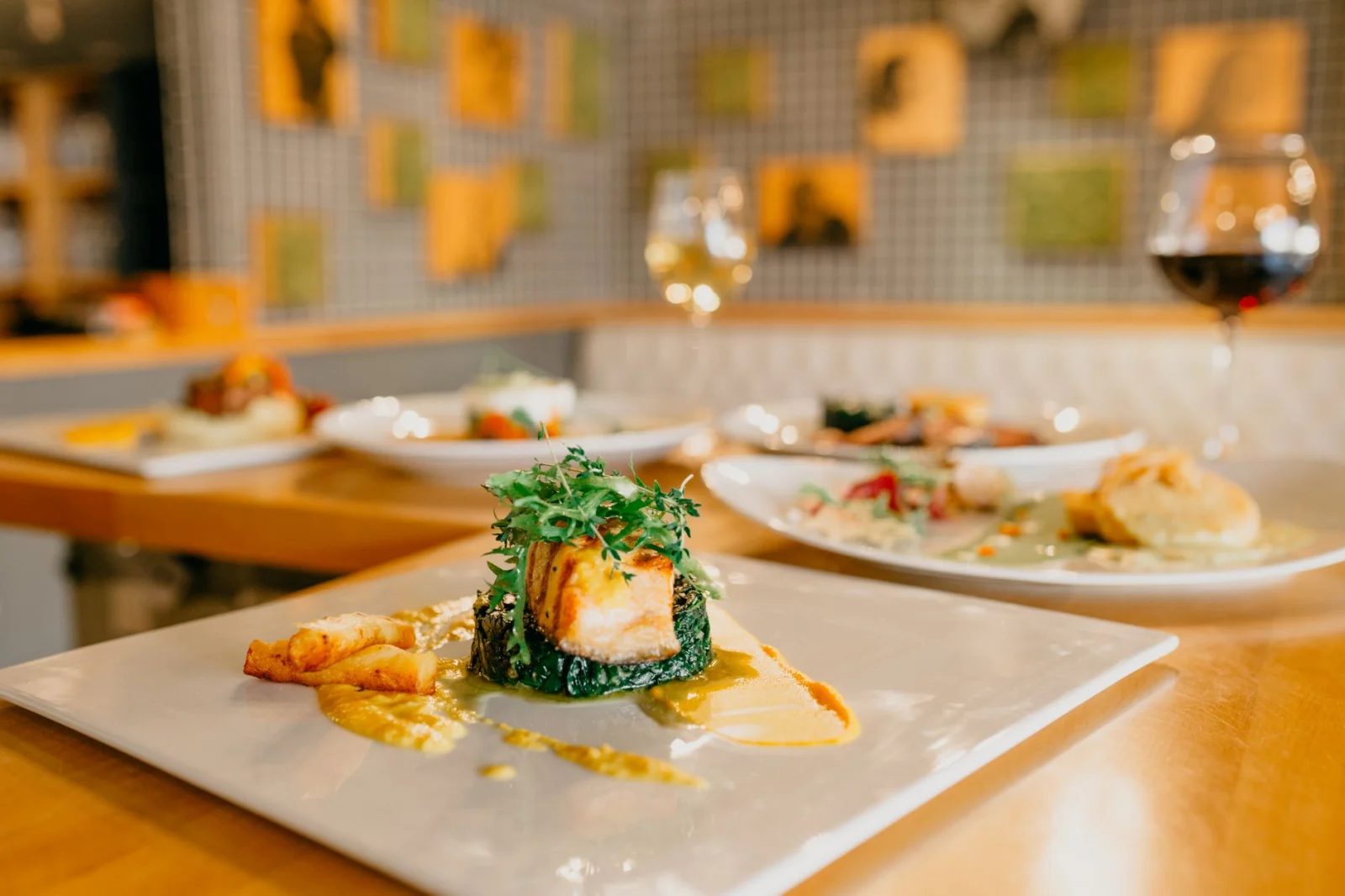
Elegantly plated main course served on a white plate in an upscale restaurant
Premium lines like Celebrity charge extra for their best specialty restaurants. Photo: Taha Samet Arslan on Pexels

Best premium cruise lines for food

Premium lines sit between mass market and luxury. You get better main dining rooms and more polished service, but still pay for the best restaurants.

5. Celebrity Cruises: best specialty dining in its class

Celebrity won Cruise Critic’s 2025 award for Best Specialty Dining among ocean lines. On the Edge-class ships, including the newest, Celebrity Xcel, the list of paid venues is long: Le Voyage by Michelin-starred chef Daniel Boulud, Fine Cut Steakhouse, Raw on 5, Le Petit Chef (where animated projections play out on your plate) and Mosaic at The Bazaar on Xcel. The included main restaurants and the Oceanview Cafe buffet are above the mainstream average, and suite guests eat in the exclusive Luminae restaurant. Expect specialty dinners to cost from around $50 per person or more, so a specialty dining package can make sense if you will use it several times. Celebrity has also changed some Concierge Class perks; see our report on how Celebrity swapped Concierge Class canapés for free room service.

6. Holland America Line: traditional and comforting

Holland America is known for classic dining rooms, bread and pastries baked on board, and the Pinnacle Grill steakhouse (extra charge). It suits travelers who like a slower, more traditional evening. If you are also budgeting for drinks, our guide to whether Holland America drink packages are worth it breaks down the options.

Best upper-premium lines: gourmet food with no surcharges

This is the sweet spot for many food lovers, because the best restaurants are part of the fare.

7. Oceania Cruises: the best food cruise line for the money

Oceania markets itself on its cuisine, and it backs that up. On its newest ship, Oceania Allura, the specialty restaurants (Jacques for French classics, Red Ginger for pan-Asian, Toscana for Italian and Polo Grill steakhouse) carry no surcharge, alongside the Grand Dining Room, the Terrace Café buffet, Waves Grill and the Aquamar Kitchen for lighter, health-focused dishes. Paid extras are limited to private dining and wine-pairing experiences such as Privée. Larger ships also have a hands-on Culinary Center for cooking classes. For many cruisers, Oceania is the cruise line with the best food once you weigh quality against price.

8. Viking: destination dining for adults

Viking’s ocean ships include every restaurant in the fare except The Kitchen Table, a paid cooking-and-dining experience. The Chef’s Table serves rotating tasting menus themed around regions of the world, Manfredi’s is a well-regarded Italian, and Mamsen’s serves Norwegian comfort food. Beer and house wine are included with lunch and dinner. Viking ships carry under 1,000 guests and are adults only, which keeps dining calm rather than crowded.

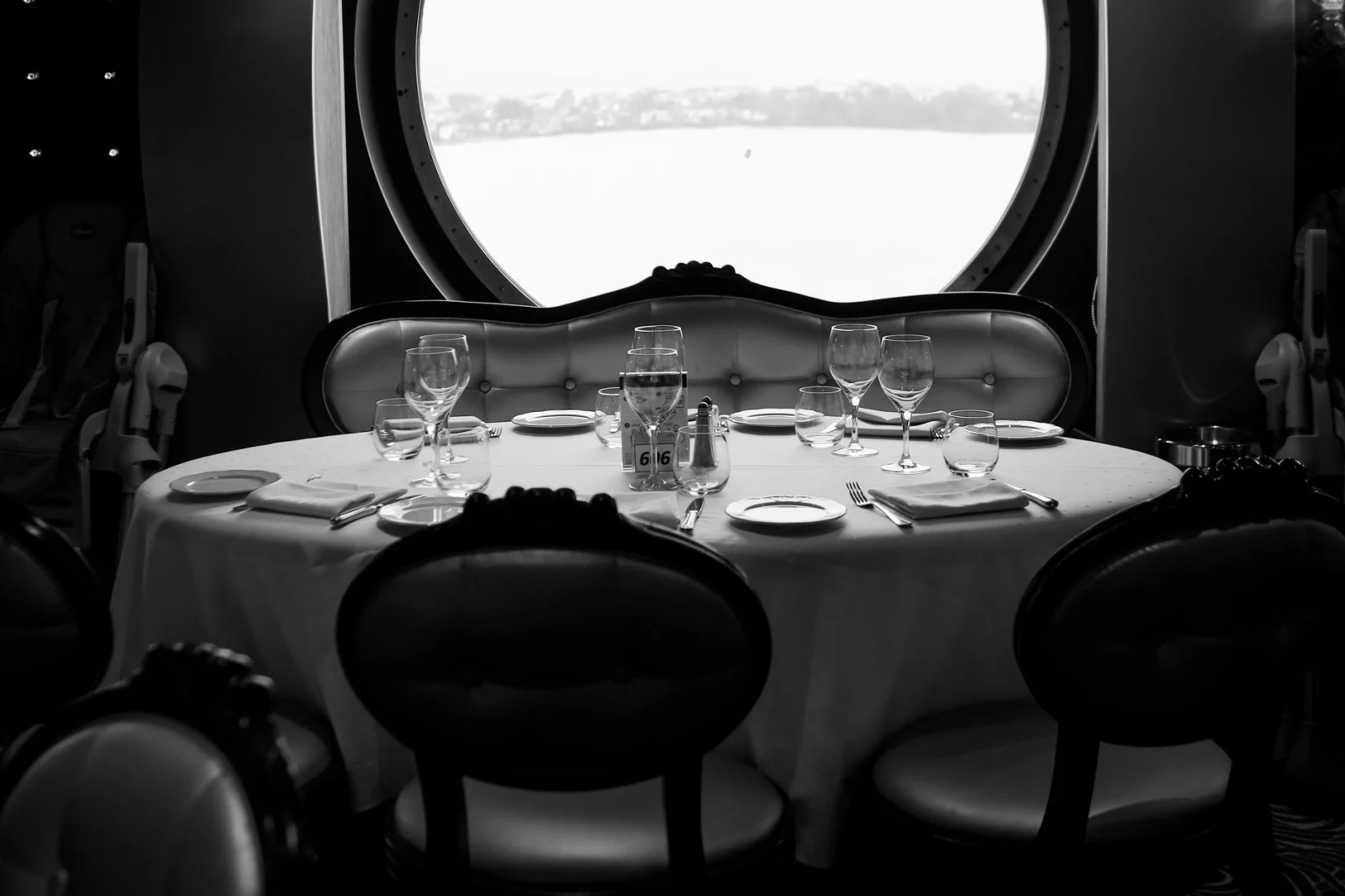
Formal dining room with set tables and sea views through large windows on a cruise ship
Luxury lines include fine dining and wine in the fare. Photo: Elizabeth Ferreira on Pexels

Best luxury cruise lines for food

At luxury level, almost everything is included and portions are cooked to order, so the differences come down to style and atmosphere.

9. Explora Journeys

Explora Journeys won Cruise Critic’s 2025 Best Dining award in the luxury category. Its ships have six restaurants, five of them included, covering pan-Asian, Mediterranean, French and steak (Marble & Co. Grill), while Anthology, a gastronomic tasting-menu venue, costs extra.

10. Regent Seven Seas and Seabourn

Regent includes every specialty restaurant, such as Prime 7 steakhouse and Chartreuse (French), plus drinks, so you rarely sign a bill. Seabourn has dropped its Thomas Keller partnership and now runs Solis, a Mediterranean-inspired restaurant, along with Sushi and caviar service. If you are choosing between luxury lines on more than food, our comparison of Silversea vs Seabourn covers service, suites and price. Silversea’s S.A.L.T. program, built around local ingredients and recipes, is another strong option for curious eaters.

What is included vs what costs extra

This is the part most rankings skip, and it changes which cruise line has the best food for you. A mainstream cruise can end up costing more than an upper-premium one once you add specialty meals.

  1. Always included: main dining room, buffet, most casual venues and basic drinks (water, tea, coffee). Virgin also includes soda.
  2. Usually extra on mainstream and premium lines: steakhouses, sushi, chef’s tables, interactive dining shows and room service on some lines, with most specialty dinners costing roughly $30 to $130+ per person at the time of writing.
  3. Included on Oceania, Viking, Virgin and most luxury lines: all or nearly all specialty restaurants. Only private dining, wine pairings or a single tasting-menu venue costs extra.
  4. Tips and service charges: added daily on most mainstream lines and often charged at 18 to 20 percent on paid restaurant bills and drinks.

A simple test: if you would book specialty restaurants on four or more nights of a seven-night cruise, compare the total against an Oceania or Viking fare. The difference is often smaller than it first looks. For ways to cut the fare itself, see our guide to cruise deals for 2027.

Tips for eating well on any cruise

  • Book specialty restaurants before you sail. Popular slots on sea days and the last night fill quickly.
  • Look for first-night or lunch offers. Many lines discount specialty dining on embarkation day or at lunch.
  • Ask about off-menu items. Main dining rooms often have an always-available menu and can adjust dishes.
  • Tell the line about dietary needs early. Allergies, gluten-free and vegan requests are easier to handle when noted at booking.
  • Eat local in port. Even on a foodie line, a market lunch ashore is part of the experience.

For a slice-by-slice comparison, we have also ranked the best cruise ship pizza, free and paid, by cruise line.

If you eat a fully plant-based diet, see our guide to the best cruise lines for vegans before you book.

If you follow a plant-based diet, read our guide to eating vegan on a Disney cruise before you book.

FAQs

Which cruise line has the best food in 2026?

There is no single winner. In Cruise Critic’s most recent Best in Cruise awards (2025), Virgin Voyages won Best Dining among mainstream ocean lines, Celebrity won Best Specialty Dining and Explora Journeys won in luxury. Oceania and Viking stand out for including gourmet restaurants in the fare.

Which mainstream cruise line has the best food?

Virgin Voyages is the best for included food, since every restaurant is part of the fare. If you are happy to pay for specialty dining, Celebrity Cruises offers the strongest range of extra-cost restaurants, while Princess has dependable main dining rooms.

Who has better food, Carnival or Royal Caribbean?

Carnival is often preferred for included casual food such as Guy’s Burger Joint and BlueIguana Cantina, while Royal Caribbean offers more variety and stronger paid specialty restaurants on its large ships. It depends on whether you plan to pay for specialty dining.

Which cruise line includes specialty restaurants in the fare?

Oceania, Viking, Virgin Voyages, Regent Seven Seas and Seabourn include their specialty restaurants, with only a few exceptions such as private dining or chef’s table experiences. Explora Journeys includes five of its six restaurants.

pexels-photo-11820065.jpeg

5 Skills To Master Before Your Next Cruise

Cruises are more than just a way to get from one destination to another – they’re a whole holiday experience in and of themselves. With so many activities and amenities packed into these floating resorts, there’s never a dull moment. You can spend your day lounging by the pool, exploring exotic ports of call, indulging in gourmet dining, or taking in a West End-style show in the evening…

But what if you could make your time onboard even more enjoyable? You’d be surprised how much more enriching your cruise experience can be by picking up a few skills before you board. Whether knowing how to start a conversation with fellow passengers, learning to play poker for a friendly game in the casino, or even mastering the basics of photography, these skills can transform your cruise from good to unforgettable.

Master the Art of Being Social 

In case you didn’t already know, cruises are inherently social experiences. You’re surrounded by fellow travelers, often for longer than a week, and they’re all likely just as eager to meet and connect with new people. 

Mastering your social skills is essential if striking up conversations isn’t your strong suit. Luckily, if you start practicing now, you’ll become a witty fellow passenger when your cruise comes around. Engage with people you don’t know so well in your daily life, whether that’s a neighbor you’ve barely spoken to or the barista in your daily coffee haunt. Ask questions, and listen actively – before you know it, you’ll chat effortlessly with fellow cruisers.

Learn Some Photography Basics

A cruise is an aspiring photographer’s dream; all those dreamy sea views and breathtaking ocean vistas are begging to be captured. Even if you don’t know your DSLR from your dual ISO, you can still grab some high-quality cruise shots by understanding the basics of photography. 

No, you don’t need a digital camera either, as you can elevate the snaps you take on your smartphone with clever composition, adequate lighting, and framing. There are also plenty of online resources that will help you brush up on your photography game before you sail, from iPhone photography courses to free video tutorials. 

Learn the Rules of Poker

Casino games are still a regular feature of many longer cruises, especially that card gaming classic, poker. Whether your goal is to hit the tournament tables or just enjoy a few casual games with your shipmates, knowing the basics of the game will come in handy. 

Start by familiarising yourself with the rules, getting a good grasp of hand rankings, and some basic strategies before diving into a game. Online platforms make it easy to learn poker at your own pace, with how-to-guides and strategy tips in abundance. You can even practice your skills in playing money games as you work up the confidence and know-how to play in cash games. 

Put on Your Dancing Shoes

The dance class is another staple of onboard cruise entertainment, so there’s no excuse for having two left feet! Whether it’s a high-energy salsa class, an elegant ballroom, or just some free-flowing creative movement, knowing how to coordinate your brain and body in advance will make you stand out for all the right reasons. 

If you’re not a natural dancer, you can take a beginner class or two before your cruise. But nothing beats dancing around in your kitchen to a playlist of your favorite tunes. Remember that dance is all about creative expression, and it can be an enjoyable way to meet new people and stay active while you’re onboard your dream cruise.    

Brush Up on Your Swimming Skills

Swimming pools and water activities are a big part of the recreational cruise experience. Many shore excursions involve snorkeling, diving, and other water sports. 

Being confident in the water is essential for making the most of these opportunities, so, if you haven’t swum in a while, consider taking a refresher course or just spending some time at your local pool before your trip. 

Source link

pexels-matthew-barra-178916-813011-scaled.jpg

Tips For Reducing Your Waste On A Cruise And When You Return To Panama City

Cruising is one of the most enjoyable ways to explore the world, offering the luxury of travel combined with the relaxation of a floating resort. However, with the growing awareness of environmental issues, many travelers seek ways to make their voyages more sustainable. The ocean’s beauty, coupled with the impact of pollution, calls for responsible cruising practices. 

Whether you’re about to set sail or just returning from a cruise to Panama City, there are numerous ways to reduce waste and minimize your environmental footprint. This guide will walk you through practical tips on how to stay eco-friendly both during your cruise and when you return to shore, with resources like Panama City roll-off dumpster rentals to help you manage your waste responsibly.

Reducing Waste on Your Cruise

It is relatively complex to recognize your effects on the environment when you are on a cruise. Being on a train or a bus is very convenient, and this often means that you produce a lot of waste that harms the environment, but if you are a little careful, you can prevent this. 

Start by packing wisely. Consumers should consider using reusable ones to avoid wasting plastics, such as water bottles, coffee mugs, and shopping bags. Some of these small items include reusable water bottles, utensils, bags, and containers, which can assist you in keeping off single-use plastics, which are a leading cause of pollution in our oceans. Some of the things that are now available on most cruises include water refill stations. For this, it is advisable to have your water in these stations rather than buying bottled water.

Another aspect that can be reduced when it comes to cruising is Eating and Drinking. While it is always tempting to help yourself from the big plates at functions like buffets, it creates food waste. It is also essential to respect portion sizes and not overfill your plate with food you cannot possibly finish. Despite these, some companies are trying to address this problem by providing guests with options for smaller serving sizes or plates or by ensuring they only consume what they can consume during their cruise. Such initiatives can use support, and making a difference can be as simple as just showing up.

Cruise ships produce large amounts of waste, including packaging material and the things passengers have thrown away. As for recyclable items, if your chosen cruise line accepts them, do not hesitate to use these services. Pack a small bag for recyclables in your cabin and ensure the items are correctly sorted per the ship’s instructions. Some cruise lines also provide an option for recycling something not so commonly recyclable, such as batteries or electronics, so do not hesitate to inquire about their services.

When going for the products you require in your care, try to look for eco-friendly ones. Most regular toiletries such as body wash, shampoo, and conditioner have microplastic or toxic substances that could reach the sea. Use natural soaps, shampoos, and sunscreen since they are more environmentally friendly and have fewer negative impacts on your skin. Furthermore, do not use the tiny water bottles that are usually provided by the cruise; instead, use your travel bottles.

Another example is shopping onshore, which can be an excellent chance to turn to more sustainable practices. When purchasing souvenirs or snacks, choose items with the least amount of packaging or, even better, those made of recycled materials. Local souvenirs and fair trade products are also available in more environmentally friendly destinations.

Managing Waste After Your Cruise in Panama City

The last thing you want is to stop practicing the great habits of reducing waste once you get off your cruise and are back in Panama City. The amazing city, with its pristine sandy shorelines and friendly people, provides many alternatives for disposing of the waste produced during the cruise in an environmentally friendly manner. 

If you already have a large volume of trash, including plastic-wrapped trinkets and mementoes, items that are no longer needed, Panama City roll-off dumpster rentals are ideal to hire. These services are useful in handling big volumes of waste in a way that does not pollute the area’s environment.

In Panama City, there are also many recycling locations where paper, glasses, and plastics can be taken. Most of these centers also collect electronics and hazardous waste, which are sometimes hard to recycle. When you segregate and recycle your waste, you are saving the city from increased pressure on the landfills to host your waste materials.

Conclusion

Cruising and sustainability are two concepts that are not entirely compatible with each other at first sight; simultaneously, one should admit that traveling aboard a luxurious ship with minimal negative impact on the environment is possible. It matters from only using reusable items when on board, promoting environmentally friendly practices, to properly disposing of their waste when they return to Panama City. Making good choices will ensure that you do not cause any harm to the seas and the places you visit, thus retaining the natural beauty that people want to see in the world.

Source link