emove-the-6.jpg

Bringing Medication On A Cruise? Don’t Make These Mistakes


You don’t really think about medication when you’re booking a cruise.

You think about the ship, the cabin, the ports, whether you’ve packed enough for warm evenings on deck. Then, usually quite late in the day, it hits you – what about your tablets? Can you put them in a weekly pill organiser? Do they need to stay in the original box? And what if one of the countries on your itinerary has rules you know nothing about?
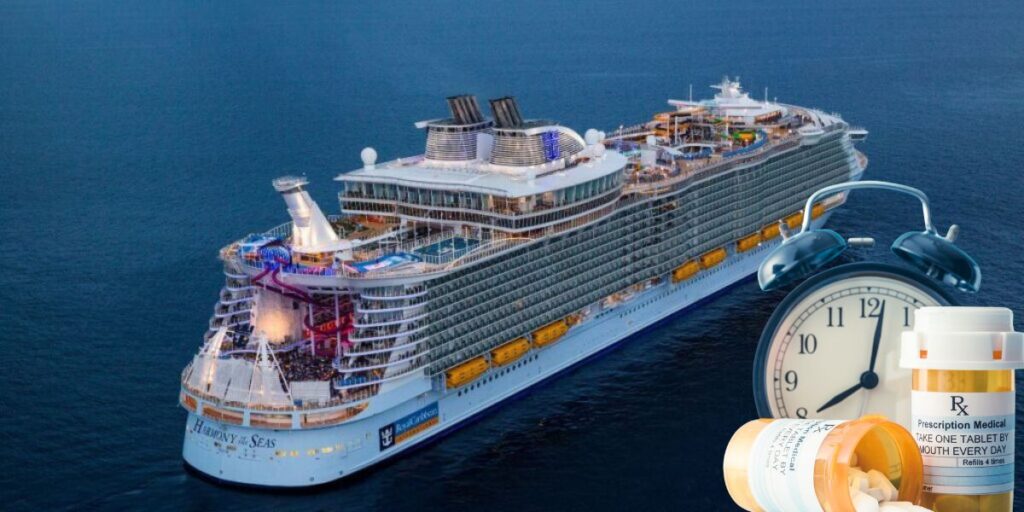
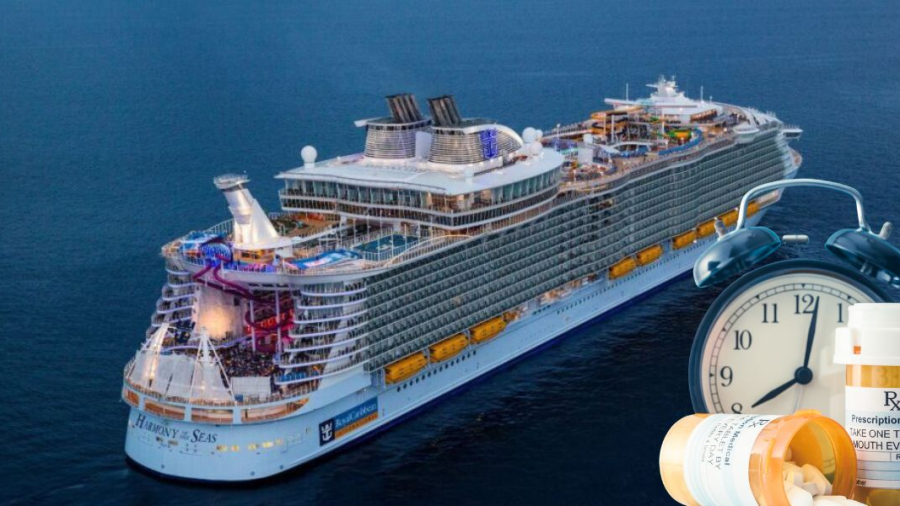
Bringing medication onto a cruise

The good news is that taking medication on a cruise is usually very straightforward. Most people bring what they need, board without any fuss, and never get asked about it at all.

The catch is that a few small details can matter a lot if they go wrong.

It’s not normally the ship itself that causes problems. It’s everything around it – the flight, the airport, security, and the fact that you may be entering several different countries, all with their own rules.

So before you travel, there are really three things worth checking:

• how you’re packing your medication
• what your cruise line allows on board
• whether any of your ports have restrictions on what you’re carrying

Get those right, and the rest is usually pretty simple.

Don’t Worry – You Can Take (Most) Medications Onto A Cruise Ship

In general, yes, you can take medication on a cruise. That includes prescription drugs, over-the-counter treatments, and most medical supplies.

Close-up of hands pouring white pills from an orange prescription bottle, symbolizing medication management or healthcare.

Cruise lines are used to this. They expect passengers to travel with medication, and they’re not trying to make life difficult. For most people, it’s a complete non-issue.

  • You can take most prescription and over-the-counter medication on a cruise without any issue.
  • Keep medication in your hand luggage, not your checked suitcase.
  • Original packaging is the safest option, even if you normally use a pill organiser.
  • Bring enough for the full trip, plus extra in case of delays.
  • Check the rules for every country on your itinerary, not just the cruise line’s policy.
  • Carry a prescription copy or doctor’s letter for anything controlled, injectable, or likely to raise questions.
  • Don’t assume medical cannabis or cannabis-based products will be allowed, even with a prescription.

Where people come unstuck is when they assume that because something is fine on the ship, it must also be fine everywhere else involved in the trip. That’s not always true.

You may be flying before you cruise. You may be going through airport security. You may be visiting countries with much stricter rules than the UK. That’s why it’s worth thinking about the whole journey, not just embarkation day.

Read more: The 14 Most Commonly Confiscated Items at Cruise Ports (and What to Pack Instead)

Most major cruise lines are broadly similar when it comes to medication. Prescription medicines are generally allowed, and you’re expected to bring enough for the full cruise, ideally with a little extra in case of delays.

The smaller differences tend to be around practical things such as whether medication should stay in its original packaging, whether you need to tell the cruise line about certain medical equipment, and whether they can provide refrigeration for medication that needs it.

Below is a simplified comparison of what you can usually expect from the bigger cruise lines:

Cruise LineMedication In Original Packaging?Is There A Fridge In Cabins For Storing Temperature Controlled Meds?
Ambassador Cruise LineYesYes on Ambience & Renaissance, only in limited cabins on Ambition. Use Guest Services.
CarnivalYesYes but guests are told not to use them. Limited mini-coolers can be borrowed otherwise use Guest Services.
Celebrity CruisesYes*Coolers that may not be cold enough – best to use Guest Services.
Costa“If possible”Coolers aren’t cold enough. Medical fridges occasionally supplied, or use Guest Services
Cunard LineOnly specifies “for flights”Use Guest Services.
Disney Cruise Line“Recommended”Yes – but check with the Health Center onboard if temperature has to be strictly regulated.
Fred. OlsenNot specifiedYes
Holland AmericaYesIn most cabins – otherwise use Guest Services.
MSC CruisesYesCoolers aren’t cold enough. Use Guest Services
Norwegian Cruise LineYesCoolers aren’t cold enough. Medical fridges occasionally supplied, or use Guest Services
P&O CruisesYesCoolers aren’t cold enough. Medical fridges occasionally supplied, or use Guest Services
Princess CruisesYesYes – but check with Guest Services if temperature has to be strictly regulated.
Royal Caribbean“Advised”Coolers aren’t cold enough. Medical fridges occasionally supplied, or use Guest Services
Virgin VoyagesYesCoolers that may not be cold enough – best to use Guest Services.

Where there isn’t a link to a cruise line’s policy, that simply means there isn’t a relevant section published on its website. I’ve checked directly with those cruise lines to confirm the details.

Celebrity Cruises’ wording is slightly inconsistent, as it describes original packaging as both “strongly recommended” and a “requirement”. Realistically, it’s safest to treat that as required.
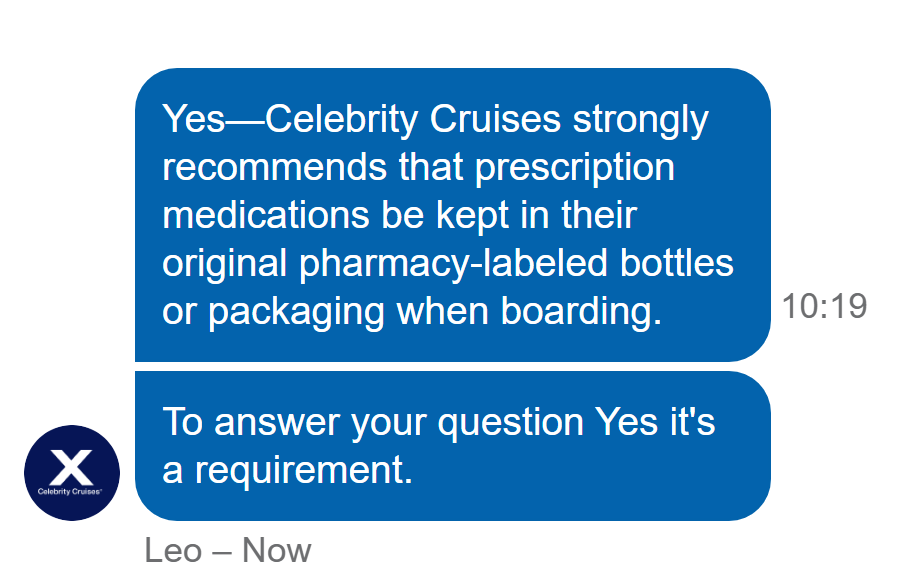
Celebrity Cruises medication reply.

Original Packaging Vs Pill Dispensers – What’s Actually Allowed?

This is the bit that confuses people most, because the official guidance and real-life experience don’t always sound like they match.

Most cruise lines say medication should be kept in its original packaging, with the pharmacy label visible. Sometimes that’s framed as a requirement, sometimes as strong advice, but the general message is the same.

At the same time, plenty of regular cruisers will tell you they use pill organisers all the time and have never had a problem.

Honestly, both can be true.
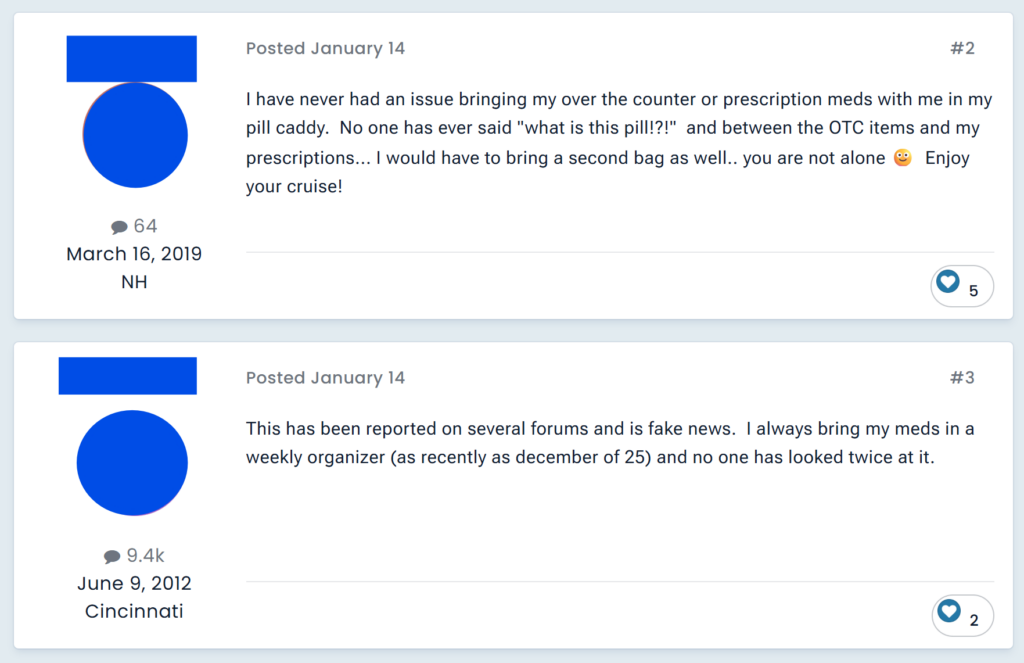
"I have never had an issue bringing my over the counter or prescription meds with me in my pill caddy.  No one has ever said "what is this pill!?!"  and between the OTC items and my prescriptions... I would have to bring a second bag as well.. you are not alone 🙂  Enjoy your cruise!""This has been reported on several forums and is fake news.  I always bring my meds in a weekly organizer (as recently as december of 25) and no one has looked twice at it. "

In day-to-day reality, cruise staff rarely inspect medication closely. Most people aren’t stopped, questioned, or asked to explain what’s in their organiser. But that doesn’t mean the rule is meaningless. It just means you may not be checked.

The issue is what happens if you are.

Original packaging makes everything much easier. It shows exactly what the medication is, who it belongs to, and that it’s been legitimately prescribed or purchased. If you’re dealing with airport security, embarkation staff, or border officials in a stricter country, that clarity helps.

Loose tablets in a pill organiser are much harder to identify. Even when they’re completely legitimate, they can invite extra questions simply because they’re not obvious at a glance.

Honestly, the bigger risk usually isn’t the cruise line at all. It’s airport security or border control in one of your ports of call, where rules may be stricter and staff may be less relaxed about unlabelled medication.

Port security check

So while pill organisers are undeniably convenient – and for some people essential – they’re best used as a backup to original packaging, not a replacement for it.

The most sensible approach is to take both. Travel with your medication in its original boxes or labelled containers, then use a pill organiser once you’re on board if that makes daily life easier.

That way, you’re covered if anyone asks questions, and you’re not relying on luck or vague reassurance from people online who “never had a problem”.

Because chances are, you won’t have a problem either. But it’s not something you want to be sorting out at the check-in desk while a queue forms behind you.

Medications That Are Restricted or Banned in Certain Countries

A medication that’s completely routine in your home country can be restricted – or even banned – somewhere on your itinerary. It doesn’t matter that it’s prescribed, labelled, and essential. Local laws still apply.
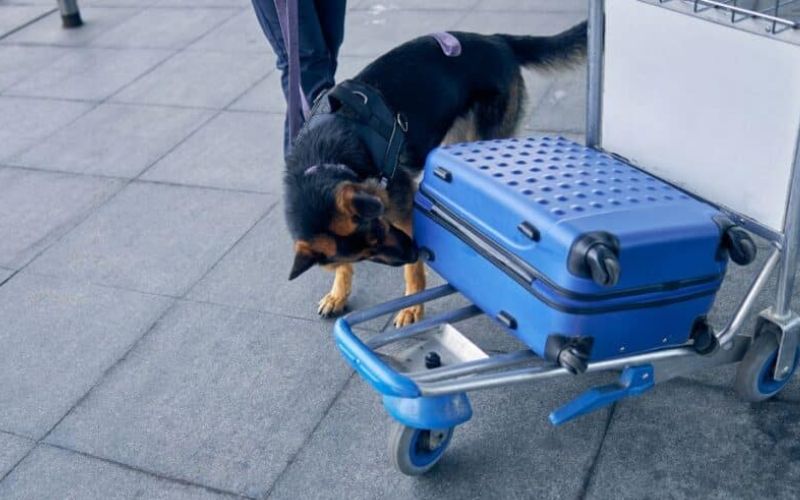
drug dogs at cruise ports and on ships

Some countries take a much stricter approach to controlled substances, and that includes medications many people take every day.

A few examples that regularly trip people up:

  • United Arab Emirates: anti-anxiety meds, sleeping tablets, and strong painkillers (including codeine) may need approval in advance.
  • Japan: certain ADHD medications and stimulants aren’t allowed at all, even with a prescription, except with special clearance.
  • Singapore: strict drug laws apply to some sedatives and sleeping pills – documentation is key.
  • Thailand: controlled medications like codeine can require a permit, especially in larger quantities.
  • Indonesia (including Bali): some prescription drugs, particularly stronger painkillers, are tightly restricted.

Even something as familiar as codeine can sit in a grey area depending on where you are and how much you’re carrying.

And it’s worth saying again – cruise line policies don’t override any of this. A medication can be perfectly fine on board and still be an issue when you step ashore.

Sometimes you won’t be asked about it at all. Other times, especially in stricter destinations, you might be stopped and questioned.

Checking official government or embassy guidance for each country might feel like overkill, but it’s the one thing that removes the guesswork.

Read more: 12 Things That Are Banned on Cruise Ships (But Fine on Land)

Cannabis-Based Medications – A Special Case

Even with a valid prescription, cruise lines won’t allow cannabis or cannabis-derived products on board. That can include oils, edibles, and CBD products depending on how they’re classified.

That’s before you even factor in local laws, which in many countries are far stricter than people expect.

A bottle of CBD oil with a dropper cap is placed on a wooden surface surrounded by dried cannabis buds, leaves, and empty capsules. An open glass jar lies in the background, emphasizing the natural and holistic presentation of CBD products.

So you can end up in a situation where your medication is legal at home, banned by the cruise line, and illegal in one or more of your ports.

If this applies to you, it’s worth speaking to your doctor well in advance about alternatives that are actually suitable for travel.

This isn’t something that tends to get waved through quietly. Rules around cannabis are usually clear, and they’re enforced.

Read more: Everything You Need To Know About Bringing Marijuana On A Cruise – Edibles, Pens, Delta 8

Controlled Drugs Explained In Plain English

“Controlled drugs” sounds more intimidating than it needs to. It simply means certain medications are more tightly regulated because they carry a higher risk of misuse. Many of them are commonly prescribed and taken without any issues day to day.

The difference shows up when you travel.

There may be limits on how much you can carry, extra documentation required, or stricter checks at borders. In some cases, you may need permission before you travel.

If you’re unsure whether your medication falls into this category, it’s worth checking before your trip rather than trying to figure it out mid-journey.

Carrying A Doctor’s Letter Or Prescription Copy Can Be Helpful

Most people won’t be asked for proof of their medication. But if you are, having something to hand makes things much smoother.

Prescription medication

A prescription copy is a good baseline. For anything more sensitive – controlled drugs, injectables, or larger quantities – a doctor’s letter is a sensible extra.

It should confirm:

  • your name and date of birth
  • the medication
  • the dosage
  • that it’s for personal use

Nothing complicated, just clear and official.

You’ll probably never need to show it. But if you do get asked, it can turn a potentially awkward situation into a quick formality.

Travelling With Medical Equipment (CPAP, Oxygen, Injectables, Dialysis)

Tablets are one thing. Equipment takes a bit more planning.

Cruise lines are generally well set up for this, but they do expect advance notice.
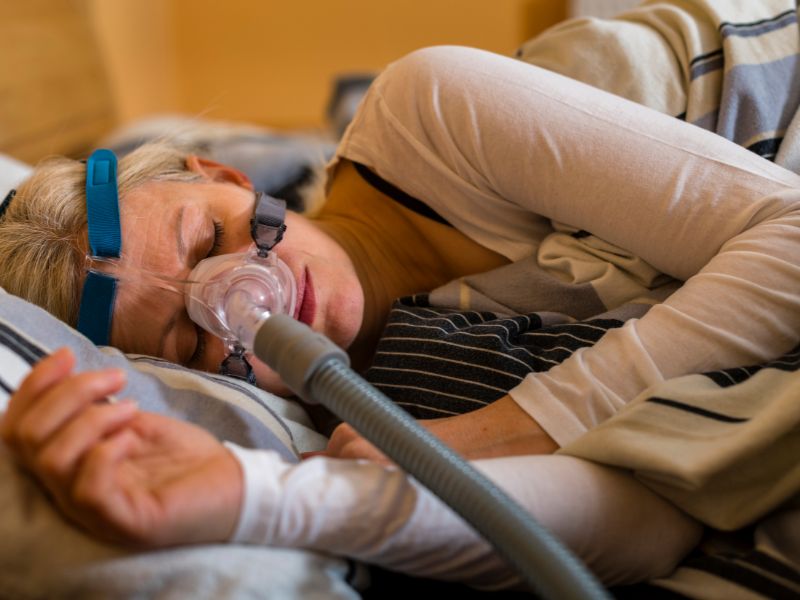
CPAP user sleeping on a cruise

There are medical facilities on any cruise ship, but they’re designed to handle emergencies or unexpected treatments. If you need use of a CPAP machine, oxygen canisters, injectable meds or you’re on Peritoneal dialysis treatment, you need to bring your own equipment and make sure you’ve cleared it with the cruise line in advance.

If you’re on haemodialysis, you may be able to book a specific cruise which has a dialysis treatment room onboard for you.
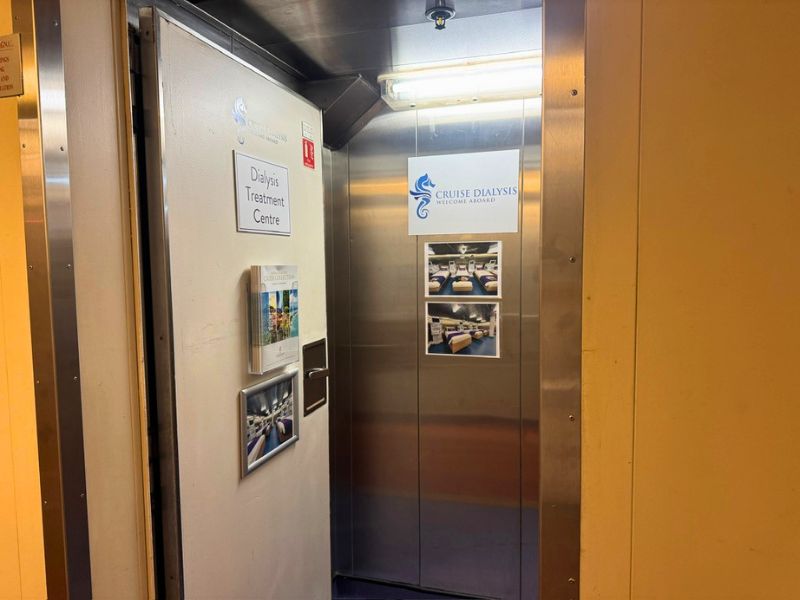
dialysis treatment room on Ambassador cruise

If you plan to bring any medical equipment, you should let the cruise line know in advance. There may be some nuanced rules on things like the size of oxygen canisters that you’ll need to consider.

Also for CPAP machines, consider distilled water requirements. Cruise lines may be able to provide it but some may charge. Again, ask in advance.

Travelling With Liquid Medication And Airport Security

A quick bit of reassurance for you – liquid medication isn’t treated the same as toiletries. You can carry more than 100ml in your hand luggage if it’s essential and for personal use.

liquid medication

Still, a bit of preparation helps.

Keep it in your hand luggage, not checked bags. If it’s a larger quantity, mention it at security rather than waiting to be asked. And make sure it’s clearly labelled so there’s no confusion about what it is.

Sometimes it’ll be screened separately. That’s routine, not a red flag.

If you’re unsure how it’ll be handled, just give yourself a bit of extra time at the airport. It removes the stress.

TODAY’S BEST CRUISE DEALS!

Don’t miss these offers…

Once you’re on the ship, things tend to settle down. At that point, it’s less about rules and more about making sure your medication stays effective and easy to manage.

Keeping Medication At The Right Temperature

Cabin mini coolers aren’t always true fridges, and they’re not reliable for medication that needs strict temperature control.

If that applies to you, it’s worth requesting a medical fridge ahead of time or speaking to Guest Services as soon as you board.
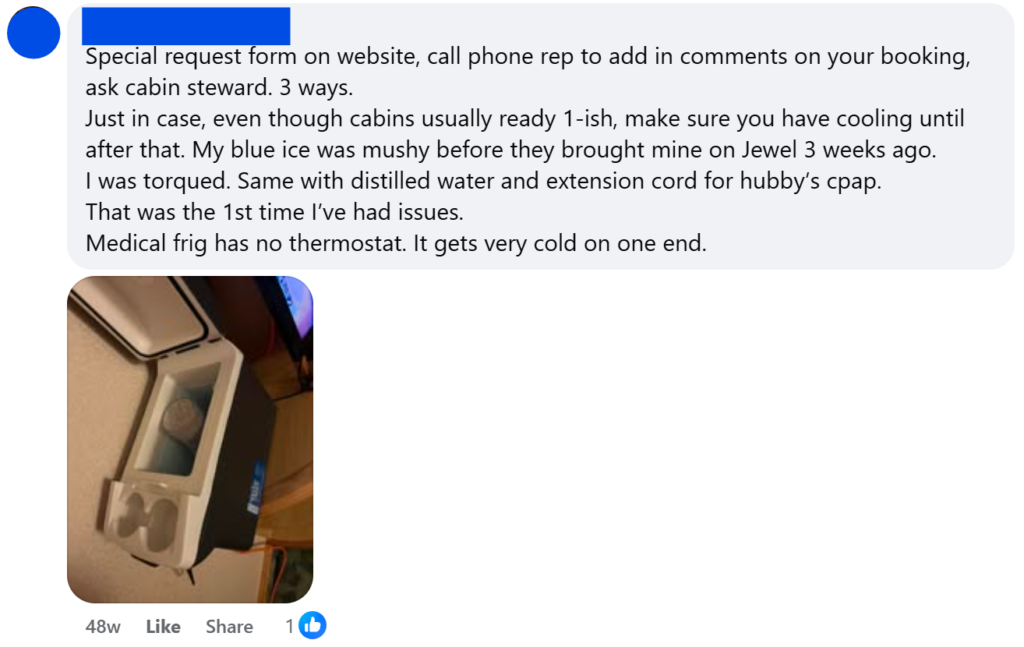
"Special request form on website, call phone rep to add in comments on your booking, ask cabin steward. 3 ways.Just in case, even though cabins usually ready 1-ish, make sure you have cooling until after that. My blue ice was mushy before they brought mine on Jewel 3 weeks ago.I was torqued. Same with distilled water and extension cord for hubby’s cpap.That was the 1st time I’ve had issues.Medical frig has no thermostat. It gets very cold on one end."

Also think about embarkation day – there’s a good chance you won’t be getting access to your cabin until later in the afternoon or even early evening, so you might not have access to cooling equipment for a large part of your day.

Most people in this situation use ice packs or other coolers in their hand luggage, just to make sure their meds stay at the right temperature until they can get it stored properly onboard.

Where To Store Medication In Your Cabin

Some people overlook this, but it’s worth thinking about. Bathrooms seem convenient, but they’re usually too warm and humid – extractor fans on cruise ships aren’t always the best!

A drawer or shelf in the main cabin area is a better option – somewhere dry, relatively cool, and out of direct sunlight. Or you could always use the safe, if it’s not something you’re going to need emergency access to at any point, such as allergy medication.

Time Zones And When To Take Your Medication

Crossing time zones can throw off your usual routine more than you expect – it’s another of those little things that people just don’t consider!
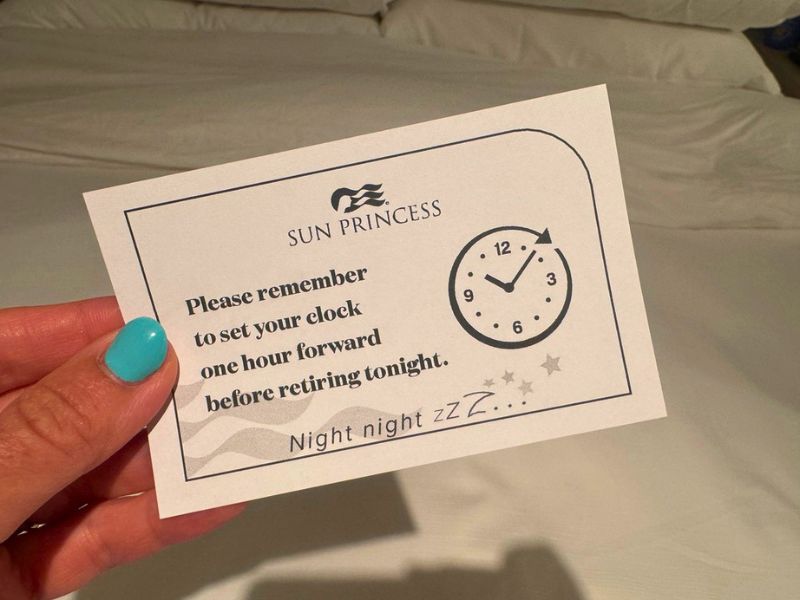
clocks go forward card

For most medications, a slight shift isn’t a problem. But if timing matters, it’s worth planning ahead.

Gradual adjustments tend to work better than sudden changes, and if the timing is critical, your GP or pharmacist can give you specific guidance before you travel.

Sharps Disposal Onboard

You won’t be left to deal with this on your own.

Sharps bin for medication

Sharps containers are available on board, usually via Guest Services or the medical centre. When one fills up, it can be collected and replaced.

It’s worth sorting early so it’s not something you’re thinking about later in the trip.

Forgetting your medication, accidentally not bringing enough, or losing it – all sound like nightmare scenarios, but all are manageable. Don’t panic!

The ship’s medical centre is your first stop. They won’t have everything, but they can often help with basic medication or short-term solutions.

For more specific prescriptions, things depend on where you are. You may need to arrange a replacement in port, which can involve seeing a local doctor first.

This is where having documentation helps. A prescription copy, GP details, or even a photo of the medication can make the process quicker.

Doctor and patient on a cruise

It’s also why bringing extra is so important. Replacing medication abroad isn’t always fast or straightforward.

The team onboard your ship can hopefully help direct you to a reputable pharmacy ashore, if needed, or give you information on who to contact port-side for official recommendations.

Unfortunately, in some ports, there will be some dodgy retailers offering cheap medication – don’t risk it.

Medication You Can Buy On A Cruise Ship

Think convenience, not pharmacy – that’s the sort of thing you’ll find on a cruise ship.

You’ll usually find basics on board, either in the shop or via the medical centre:

  • pain relief (paracetamol, ibuprofen)
  • seasickness remedies
  • cold and flu treatments
  • antihistamines
  • simple stomach medications

That’s enough for minor issues, but the range is limited. It’s also more expensive than buying it at home.
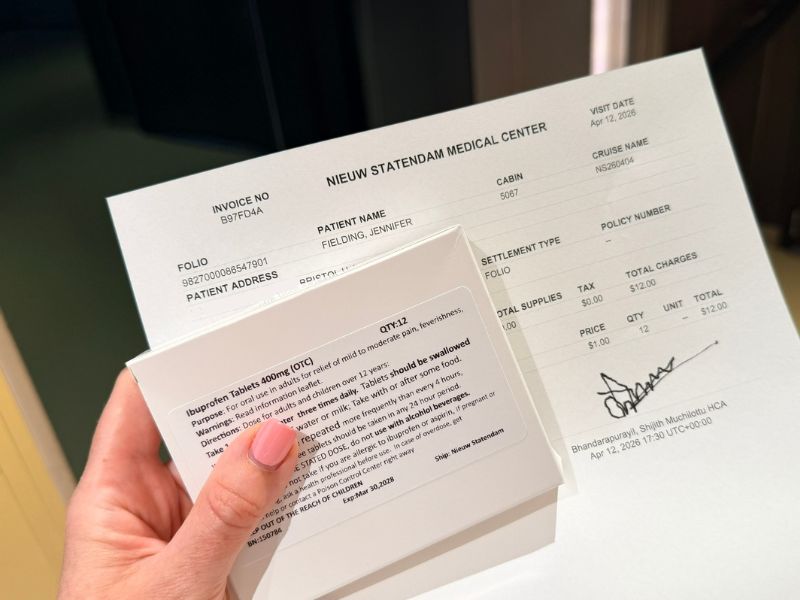
Anything more specific will usually mean seeing the ship’s doctor, which comes with a consultation fee.

Read more: Cruise Ship Doctors: What Passengers Don’t Realise

Why It’s Almost Always Cheaper To Bring Your Own

Prices on board can be surprisingly high, even for simple items.

You’re paying for convenience, and there’s no real competition once you’re at sea.

Something inexpensive at home can easily cost several times more on a ship. It’s fine as a backup. It’s not something you want to rely on. So if you think you might need any of the above, buy before you sail!

Seasickness Medication – What To Bring Vs Buy Onboard

This is one of the few things worth planning for even if you’re not sure you’ll need it.

Most treatments work better if you take them before symptoms start, which is much easier if you already have them with you.
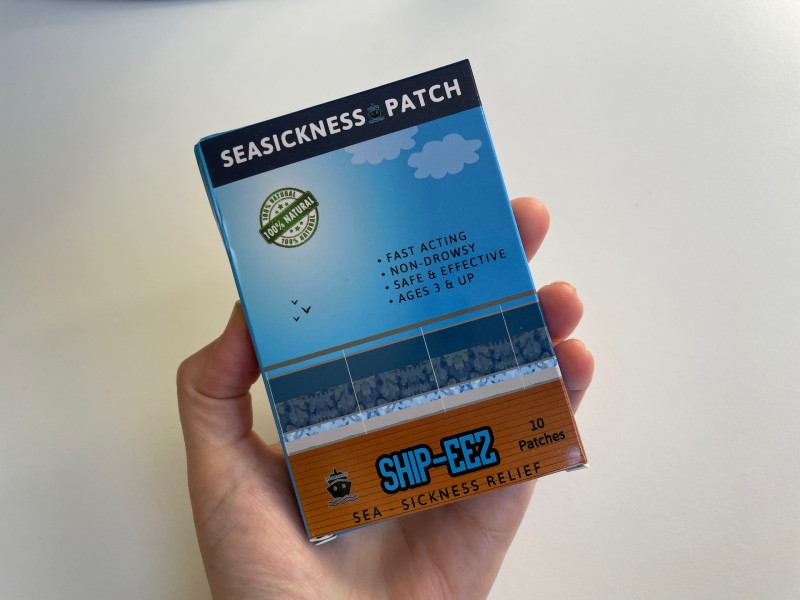
A hand holding a box of seasickness patches labeled "SHIP-EEZ" for sea sickness relief. The box indicates that the patches are fast-acting, non-drowsy, safe and effective, and suitable for ages 3 and up. The packaging design features a maritime theme with a blue sky, clouds, and ocean waves.

There’s no single best option. Tablets, patches, wristbands, and natural remedies all work for different people.

If you’ve found something that works for you, bring it. Onboard options are usually limited and more expensive. If you’ve never encountered seasickness before then I’d say it’s not an essential purchase before you cruise, but a cheap pack of tablets or patches could be worth buying if you’re at all concerned.

Read more: Cruise Seasickness Tips That Actually Work

Supplements, Vitamins And Non-Prescription Medication

Vitamins, supplements, and over-the-counter medication can generally be packed without much thought.

Where people run into minor issues is with quantity or unclear labelling. Large amounts of unlabelled tablets can attract questions, particularly at airports or in stricter countries.

Herbal supplements can also fall into a grey area if ingredients aren’t clearly listed or widely recognised.

Keeping everything labelled and, where possible, in original packaging avoids most of that.

For small, personal quantities, problems are rare. It’s just about making things easy to explain if anyone does ask.

Final Checklist – Taking Medication On A Cruise

By now, it probably feels like a lot of detail for something that’s usually straightforward.

In reality, it comes down to a few key habits:

  • keep medication in your hand luggage
  • stick to original packaging where you can
  • bring copies of prescriptions or a doctor’s letter if needed
  • check rules for every country on your itinerary
  • avoid anything that may be banned, including cannabis-based products
  • arrange storage or equipment needs in advance
  • pack extra in case of delays
  • bring basic remedies so you’re not relying on onboard shops

Get those right and, for most people, the whole thing passes without a single issue.

My Recommendation

My recommendation for cruise insurance depends on where you live.

These are trusted price comparison sites that will quickly get you lots of quotes to match your exact needs.

Related Posts
If you found this interesting, please share!


Jenni with Disney Cruise ship at Castaway Cay


Source link
carry-on-bag.jpg

11 Packing Tricks That Let You Cruise With Just A Carry-On


You don’t need a giant suitcase to enjoy a cruise – but most people pack like they do.

Between “just in case” outfits, multiple pairs of shoes and things you never even touch, it’s easy to end up dragging far more than you need.

I’ve found that sticking to a single carry-on for a whole week isn’t just doable, it actually makes the whole trip smoother. No waiting around, no heavy lifting, no stress. But there are a few tricks that make it work – and a couple of things people don’t realise until it’s too late.

1. Plan Your Outfits Backwards from Your Cruise

It’s tempting to start with what you want to wear, but the smarter move is to start with your itin erary.

Think about your ports, excursions, sea days and onboard evenings, then build outfits around those. A beach-heavy Caribbean sailing looks very different to a Norwegian fjords cruise, after all.

Your packing list might look like this:

  • 4 port outfits for exploring
  • 3 sea day outfits for by the pool
  • 1 formal outfit
  • 4 smart evening outfits
  • 2 casual evening outfits

Get those outfits out of the closet, but, here’s the key part, know that you’re not going to pack all of those!

That’s because many things can be worn multiple times. You don’t need two brand new outfits for every day. A pair of jeans, for example, might be worn on three days with different tops. If you only wear an evening dress for three hours, you can probably wear it again on another evening.

I promise, if your clothes look clean and smell clean, nobody will notice or care if you rewear things.

Suggested read: What To Wear On A Cruise (And What Not To Pack)

2. Be Realistic About Cruise Dress Codes

Dress codes aren’t as strict as they once were.

Many cruise lines now treat formal nights as optional, and you can always dine in more casual venues if you’d rather skip dressing up entirely. That’s an easy way to cut down your packing.

This is especially true if you’re a man, as the dress code may require long trousers and a jacket, whereas women can get away with a lightweight dress.

Formal night Iona

If you do enjoy getting dressed up, you can still make it work with a carry-on – just stick to one versatile outfit rather than several “Plan B” options. A simple dress or shirt that can be styled differently goes further than you’d expect.

Read more: The Best Cruise Dresses for Formal Night

3. Try Everything On To Narrow Down Your Top Picks

The next step is annoying, but definitely worth it. Once you’ve laid out all of your clothes, try everything on in front of the mirror.

Doing this not only ensures everything fits (and has space left for post-buffet bloat!) but it means that you can identify which shorts or skirts go with which tops, and which cardigans or jackets you might need to match those.

If you don’t love any of the outfits, now’s the time to remove them from your packing pile.

Read more: 5 Stylish Cruise Outfits That Make Me Feel Confident (Even After Two Desserts!)

4. Choose The Right Case for the Job

Not all carry-ons are equal. A lightweight case with four wheels makes a huge difference when you’re navigating terminals or rolling along pavements near the port.

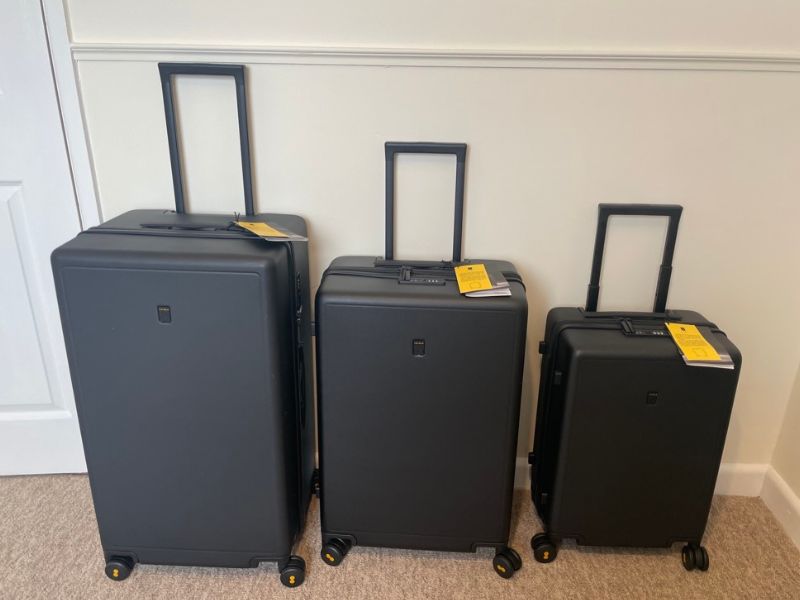
Level 8 luggage set

Hard shells protect better, but soft cases can squeeze into tighter spaces or expand slightly if needed.

If you’re flying with carry-on, most airlines only care about the size, not the weight. So check their policy, get a case that’s as large as your airline will allow, and then stuff it full. (see number 7 for how I do that)

Read more: The BEST Suitcase I’ve Ever Had (Finally!)

Get 10% OFF Level8 Luggage

Enter code CruiseMummy10 at checkout to get this discount

5. Limit Shoes Ruthlessly

Shoes are the quickest way to fill a suitcase. A good rule of thumb is three pairs max – something comfortable for walking, something lighter or smarter for evenings, and something practical for beach or pool days.

Choose pairs that work across multiple outfits rather than niche options. And if you’ve got bulkier shoes, wear them during travel instead of packing them. You’ll instantly free up a surprising amount of space.

Read more: The 6 Pairs Of Shoes Every Woman Needs For a Cruise

On that note…

6. Wear Your Bulkiest Items on Travel Day

Anything chunky should go on your body, not in your case.

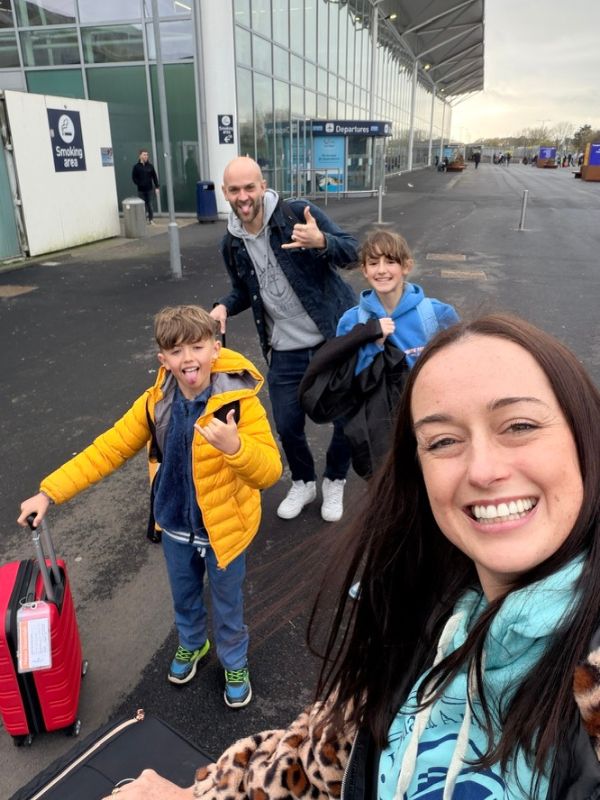
Think trainers, jackets, hoodies or even jeans. This is especially useful if you’re flying, but it still applies for no-fly cruises too – less bulk in your bag means easier handling.

wearing coats at airport

Layers are your friend here, especially if you’re heading somewhere with a different climate. You can always take things off once you’re onboard or settled.

7. Use Vacuum Compression Bags

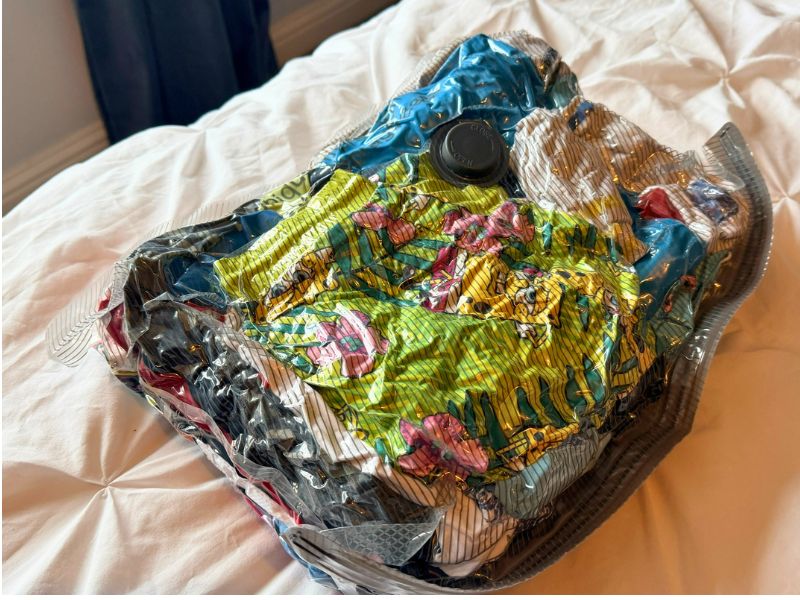
With these bags, I can get 20kg of clothes into a carry-on bag. So I don’t actually need to pack any less than I would have done with a large checked bag!

The bags I use come with a miniature vacuuum device that sucks the air out. That’s key, as it I can take the device with me to enable me to vacuum pack everything again on the way home.

These are the bags I use. They’re strong, come in all sizes, and the pump is tiny yet powerful.

8. Plan For Laundry Instead of Packing More

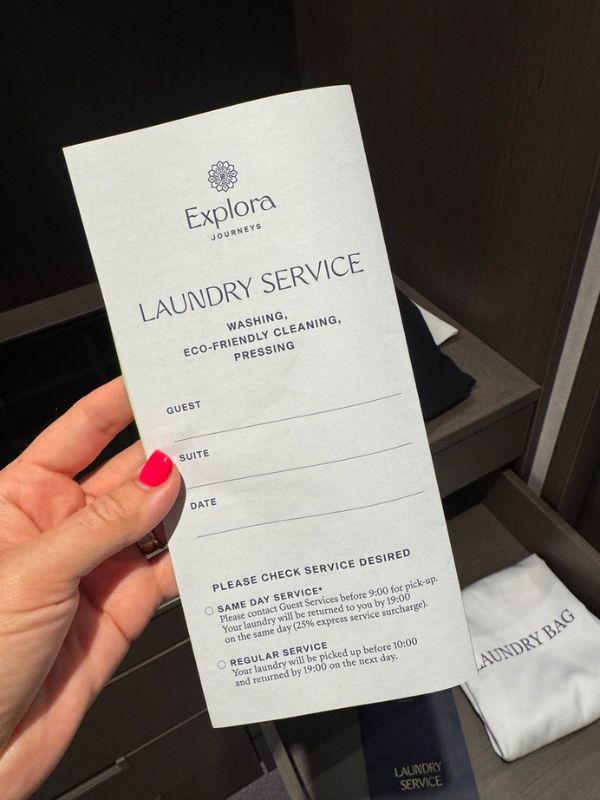
You don’t need a fresh outfit for every single day. Most cruise lines offer laundry services, and some even sell packages with unlimited washing during your trip, which can be surprisingly good value. That can be a game-changer for carry-on travellers.

Explora Journeys laundry

Even without that, a bit of sink washing with travel detergent goes a long way. Packing for half the cruise and re-wearing items makes a huge difference to space, especially on longer sailings.

Read more: Laundry on Cruise Ships: What They Don’t Tell You

9. Downsize Your Toiletries Properly

Cruise cabins always come with the basics like shower gel and shampoo, so you don’t need to bring those.

Some also provide conditioner and body lotion, so check that as you may be able to leave those at home too.

cruise toiletries

Decant your essentials into smaller containers and only bring what you’ll actually use. And if you need something specific like a big spray deodorant, consider buying it at the airport.

10. Bring A Big Backpack

Your carry-on isn’t just your suitcase. A small backpack or personal bag is just as important. This is where you keep travel documents, valuables, electronics and anything you might need during embarkation.

This is the one I use…

It’s also handy for excursions later in the cruise, so you don’t need to pack an extra bag. Think of it as your day bag for the entire trip, not just the journey.

11. Use Every Inch of Space

Think beyond the obvious. Stuff socks inside shoes, use gaps between compression bags, and make the most of every corner.

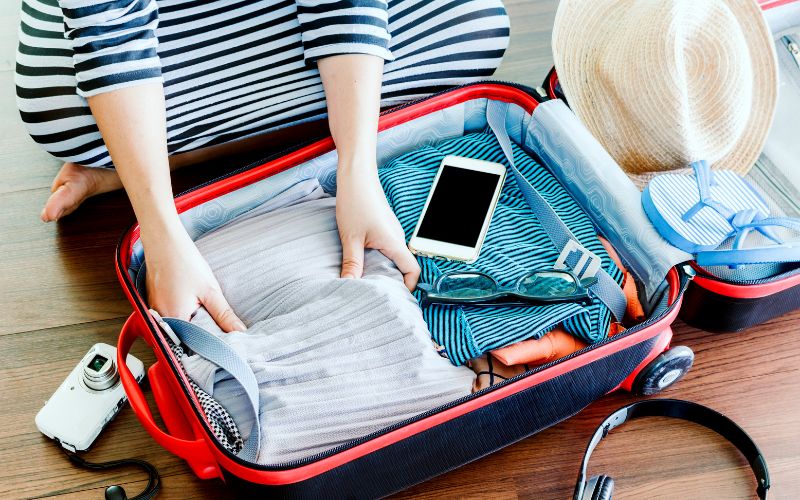
Person in a striped shirt packing a red suitcase with neatly organized clothes, a sun hat, smartphone, camera, and headphones, capturing the process of preparing for a trip with essential travel gadgets and attire.

Smaller items can disappear into unused spaces if you’re strategic.

It’s a bit like a puzzle, but once you get the hang of it, you’ll fit far more into a small case than you expect. Hard cases in particular reward careful packing.

TODAY’S BEST CRUISE DEALS!

Don’t miss these offers…

The One-Carry-On Mindset – Why It’s Worth It

There’s something genuinely freeing about travelling this light.

No waiting at baggage claim, no worrying about lost luggage, no dragging heavy cases around. On a cruise, where you’re already unpacking once, it makes things even simpler.

It also forces you to pack more intentionally, which usually leads to a better, less cluttered trip overall. Once you’ve done it successfully, it’s hard to go back to overpacking again.

Related Posts

If you found this interesting, please share!


Jenni with Disney Cruise ship at Castaway Cay


Source link
Legend-of-the-Seas-vs-Hero-of-the-Seas.jpg

7 Big Differences to Expect with Royal’s Next Ship


When Royal Caribbean launched the Icon Class, it didn’t just build the world’s biggest cruise ships – it completely reimagined what a family cruise could be.

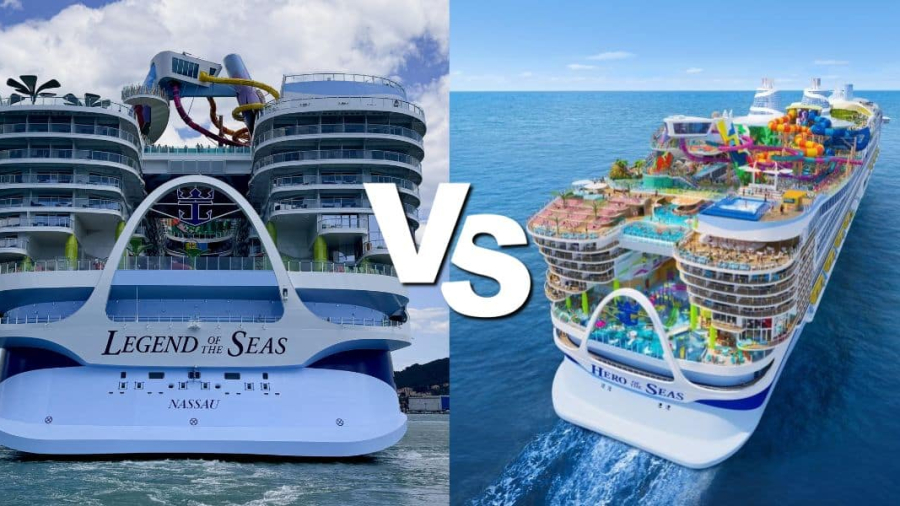
Legend of the Seas vs Hero of the Seas

First came Icon of the Seas, then Star of the Seas, followed by Legend of the Seas. While each introduced a few tweaks and improvements, they all shared the same core design, with differences that were relatively subtle.

Hero of the Seas changes that...

As the fourth announced Icon Class ship, Hero is the first to introduce more significant changes to the formula. Royal Caribbean is keeping everything that has made the Icon Class so popular, but it’s also making some much bigger updates to the ship’s layout and onboard experience.

Not every detail has been revealed yet, so there are still a few unknowns. But enough has been announced to see that Hero won’t simply be another copy of Legend…

Size

When it comes to size, there’s almost nothing to separate Legend of the Seas and Hero of the Seas. Both ships are part of Royal Caribbean’s Icon Class and share the same overall design, dimensions and guest capacity.

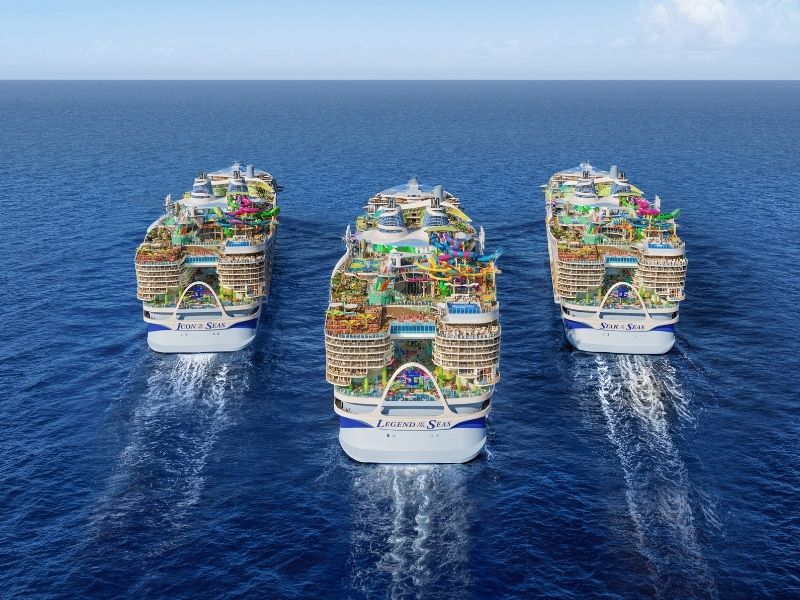
Star Legend Icon of the Seas

Like Legend, Hero of the Seas measures around 250,800 gross tons and stretches approximately 1,198 feet (365 metres) from bow to stern.

Both ships feature 20 decks in total, with 18 accessible to guests, and accommodate around 5,610 passengers at double occupancy, rising to roughly 7,600 when every berth is filled. Around 2,350 crew members are onboard to keep everything running smoothly.

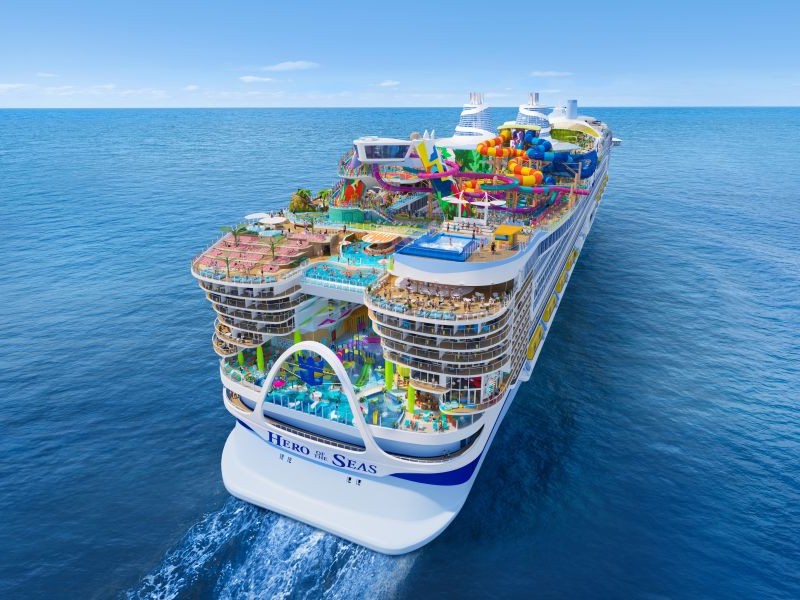
Hero of the Seas

Prior to the Icon-class of ships, Royal Caribbean had a history of making each new flagship just a tiny bit bigger than the last, but that isn’t the case here. Instead of chasing another world record, the cruise line has focused on refining the Icon Class design and introducing new features within the same footprint.

So, while Hero of the Seas brings some exciting changes elsewhere onboard, size isn’t one of them. If you’re choosing between these two ships, this section ends in a very straightforward draw.

Want the best Royal Caribbean deal?

Get a free quote from Cruise Mummy’s trusted travel agent, with exclusive onboard credit and expert help at no extra cost.

Neighborhoods

Like the other Icon Class ships, both Legend of the Seas and Hero of the Seas are divided into themed Neighborhoods. Each one has its own atmosphere, attractions and purpose, making it easy to find exactly the kind of holiday you’re in the mood for.

Surfside Balcony Cabins

Both ships feature the same eight Neighborhoods:

  • AquaDome – A spectacular glass-enclosed venue with casual dining and bars during the day, transforming into the home of breathtaking AquaTheater performances at night.
  • Chill Island – The main pool district, with multiple pools, whirlpools, swim-up bars and plenty of places to soak up the sunshine.
  • Thrill Island – Packed with adrenaline-fuelled attractions including the Category 6 waterpark, FlowRider surf simulator, Crown’s Edge, rock climbing and sports courts.
  • The Hideaway – An adults-only retreat centred around an infinity pool, with whirlpools, loungers and a lively beach club atmosphere.
  • Surfside – A family-focused Neighborhood with splash zones, family dining venues, kids’ activities and family-friendly accommodation.
  • Royal Promenade – The vibrant indoor heart of the ship, lined with bars, restaurants, shops and entertainment, along with the impressive Pearl feature.
  • Central Park – A peaceful open-air space filled with thousands of real plants, alongside speciality restaurants, bars and boutique shopping.
  • Suite Neighborhood – An exclusive area reserved for suite guests, with private restaurants, lounges and a dedicated sun deck.

On paper, the Neighborhood line-up is identical across both ships. But that doesn’t mean every space is exactly the same.

The Hideaway on Icon of the Seas

Hero of the Seas is introducing some of the biggest changes the Icon Class has seen so far, with updates to several venues and experiences within these Neighborhoods. The overall layout remains familiar, but some restaurants, entertainment venues and attractions have been reimagined.

We’ll cover all of those differences as we work through this guide, but if you’ve sailed on Legend of the Seas before, Hero will definitely feel more like an evolution than just another identical sister ship.

Accommodation

As you’d expect from two ships in the same class, Legend of the Seas and Hero of the Seas offer a very similar range of accommodation. Whether you’re looking for a budget-friendly inside cabin or one of the most luxurious suites at sea, you’ll find plenty of choice on both.

Suggested read: Legend of the Seas cabins guide

Balcony stateroom Legend of the Seas

Both ships feature:

  • Interior Staterooms – The most affordable option, with everything you need but no outside view.
  • Ocean View Staterooms – Similar to Interior cabins but with a window looking out to sea.
  • Balcony Staterooms – Including traditional ocean-view balconies, as well as balconies overlooking the lively Surfside Neighborhood or the tranquil Central Park.
  • Infinite Ocean View Balconies – Royal Caribbean’s innovative design that lets you open the top half of a floor-to-ceiling window to create a balcony-like experience.
  • Suites – Ranging from Junior Suites all the way up to spectacular Royal Loft Suites, complete with access to the exclusive Suite Neighborhood.

For most guests, the accommodation experience will feel very familiar whichever ship they choose.

However, this is also where Hero of the Seas introduces one of its biggest changes.

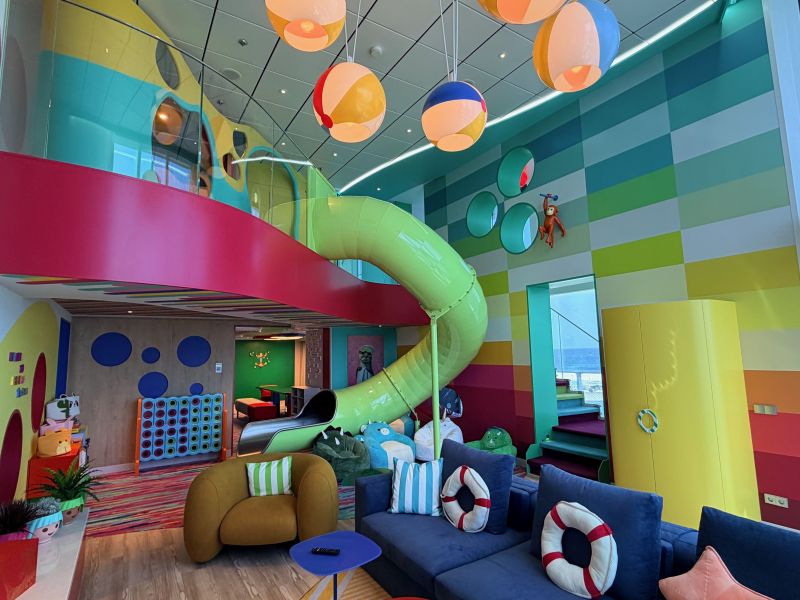
Legend of the Seas Ultimate Family Townhouse

Legend of the Seas features the impressive Ultimate Family Townhouse, a three-storey suite with its own slide, cinema room, private outdoor yard and direct access to Surfside. It’s already one of the most extraordinary cruise suites ever created.

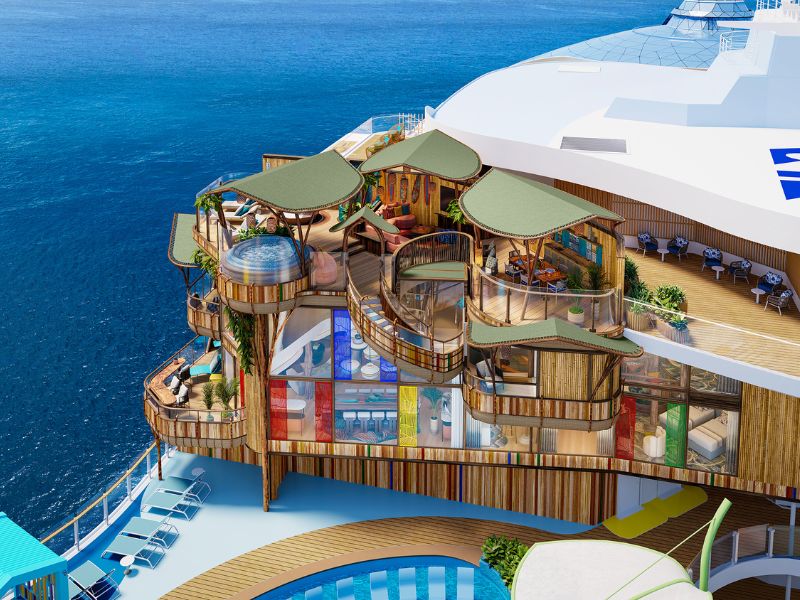
Hero still has the Ultimate Family Townhouse – but it also introduces something completely new: the Ultimate Family Treehouse.

Hero of the Seas Ultimate Family Treehouse

Rather than replacing the Townhouse, the Treehouse gives families another ultra-premium option, and it’s unlike anything that’s ever been built on a cruise ship before.

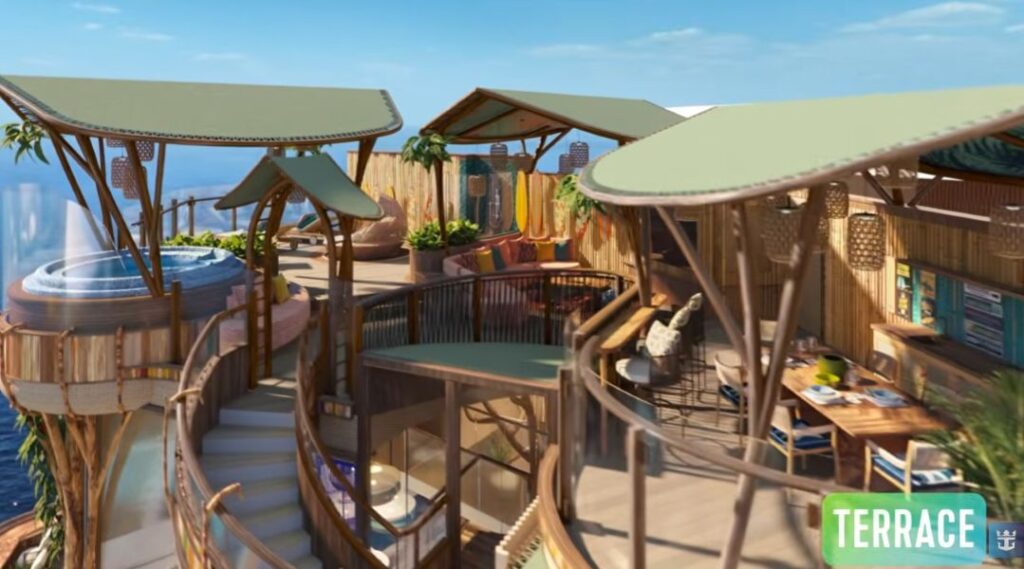
Like the Townhouse, it’s spread across three decks and sleeps up to 12 guests. But instead of embracing a bright, theme park-inspired style, the Treehouse has a much calmer, nature-inspired design with wood-effect finishes and subtle woodland touches throughout.

One of its standout features is the dedicated two-storey teen hideout. This includes its own games room, connected bedrooms and a spiral staircase leading to a private upstairs retreat, giving older children somewhere to escape without taking over the main living areas.

Adults certainly aren’t forgotten either. The rooftop terrace includes a private whirlpool, outdoor dining space and panoramic ocean views, creating a space that feels more like a luxury villa than a cruise ship suite.

Terrace Ultimate Family Treehouse Hero of the Seas

It’s also incredibly practical for larger groups. With two main bedrooms, four full bathrooms and room for up to 12 guests, it’s ideal for multi-generational holidays or two families travelling together while still giving everyone their own space.

Of course, this level of luxury comes at a price. Early sailings saw the Ultimate Family Treehouse priced at almost $90,000 per week, making it one of the most expensive cruise accommodations ever offered – although the Ultimate Family Townhouse on both ships isn’t far behind.

It’s certainly not a suite many people will ever book. But it perfectly sums up the direction Royal Caribbean is taking with Hero of the Seas – keeping everything guests already love while introducing bigger, bolder ideas that set the ship apart from her older sisters.

Read more: The Best & Worst Cabins on Legend of the Seas

Dining

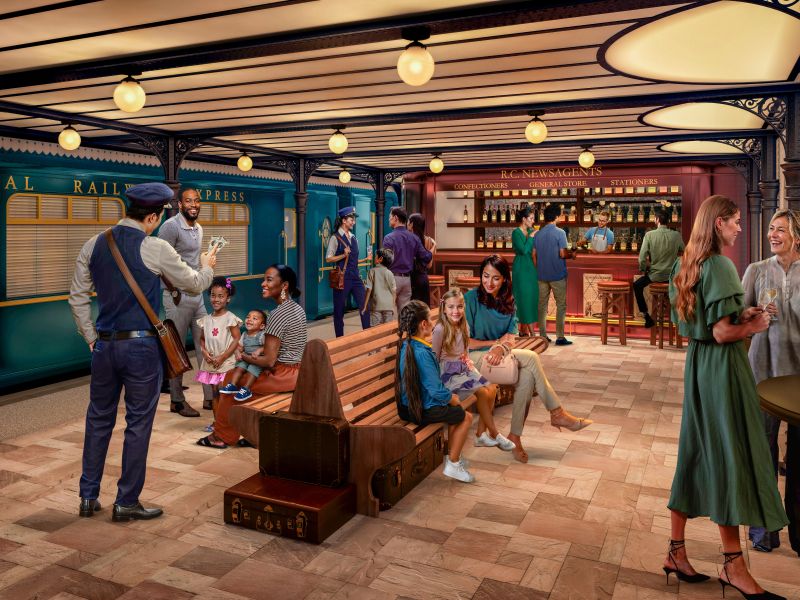
Legend of the Seas already raised the bar for dining across the Icon Class. While it kept many of the restaurants guests already loved from Icon and Star, it also became the first Icon-class ship to feature the immersive Royal Railway dining experience, following the concept’s successful debut on Utopia of the Seas.

Royal Railway Legend Station

Both Legend and Hero offer the huge variety of dining that’s become one of the defining features of the Icon Class. Guests can enjoy quick bites at Basecamp after tackling Thrill Island, family meals at Pier 7 in Surfside, the food hall-style AquaDome Market, or familiar favourites including Sorrento’s Pizza, El Loco Fresh, Windjammer Marketplace, Park Café, Izumi, Chops Grille, Giovanni’s Italian Kitchen and many more.

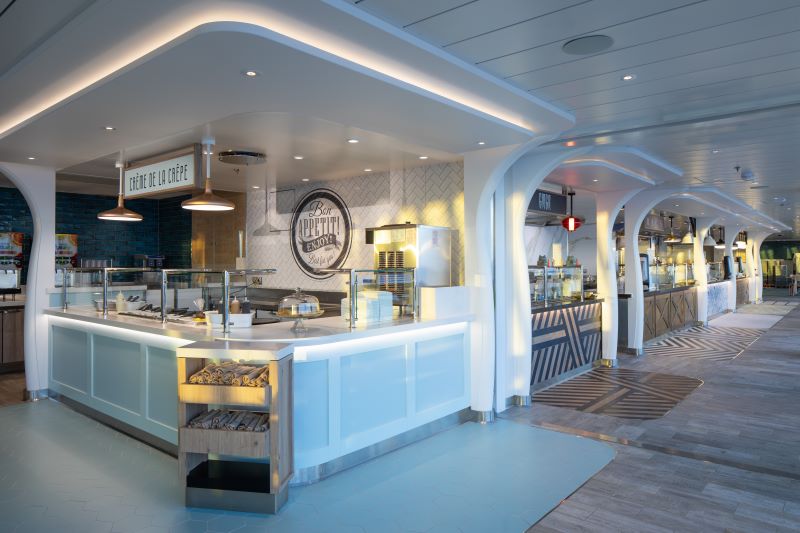
One of Legend’s biggest dining upgrades was its completely refreshed AquaDome Market.

AquaDome Market

Rather than simply carrying over the food stalls from earlier Icon ships, Legend introduced five new concepts.

These included Seoulmate, Royal Caribbean’s first venue dedicated to Korean cuisine, serving umami-rich dishes inspired by East Asia. Guests could also sample Spanish small plates at La Española, Louisiana-inspired comfort food at Cajun Kitchen, fresh juices from Simply Pressed, and Mexican favourites at Adobo. Meanwhile, the popular Crème de la Crêpe returned from previous Icon-class ships.

With Hero of the Seas, Royal Caribbean is evolving rather than standing still…

Its AquaDome Market will feature four brand-new food stalls, alongside returning favourites Crème de la Crêpe and Simply Pressed. At the time of writing, Royal Caribbean hasn’t revealed full details of every new concept, but it’s continuing the idea that each Icon-class ship offers its own unique mix of cuisines rather than simply copying the previous vessel.

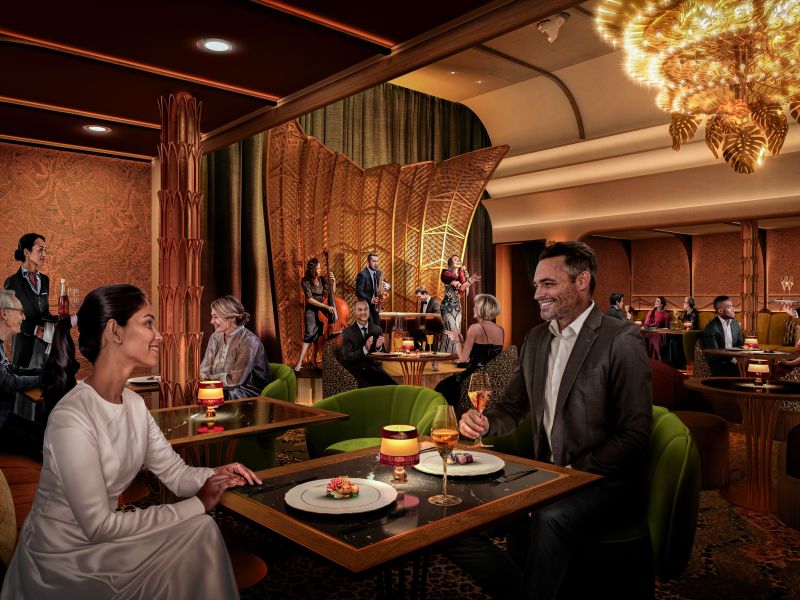
Hollywoodland Supper Club Legend of the Seas

Another area where every Icon-class ship now has its own identity is the elegant Supper Club.

Legend of the Seas features the Hollywoodland Supper Club, inspired by the glamour of Hollywood’s golden age, where guests enjoy an intimate multi-course tasting menu paired with cocktails, live music and immersive entertainment.

Hero of the Seas introduces the Orleans Parish Supper Club, transporting guests to early 20th-century New Orleans. Here, live jazz accompanies gourmet Cajun and Creole cuisine, with every course paired with a carefully selected craft cocktail and music designed to complement the flavours. It’s intended to be as much a theatrical experience as it is a meal.

Hero also nudges the dining count up even further. With 28 dining experiences onboard, it’s set to offer the most food venues ever found on a cruise ship.

That extra venue isn’t another restaurant, though. Instead, Hero introduces Family Cooking Classes, a brand-new interactive experience where parents and children can cook together. Adults and kids prepare recipes side by side, take part in fun culinary experiments and then sit down to enjoy what they’ve created together.

Family Cooking Classes on Hero of the Seas

It might not be somewhere you’ll eat every day of your cruise, but it’s exactly the sort of experience that shows how Hero of the Seas is expanding beyond simply offering more places to dine. Instead, it’s finding new ways to make food part of the holiday itself.

In short – both offer a stunning range of dining options, though there’s a few differences between the specifics when it comes to the AquaDome Market and the Supper Club. But those cooking classes are what really help Hero stand out.

Bars & Lounges

Whether you’re looking for a quiet cocktail, a lively piano bar or somewhere to enjoy a frozen drink by the pool, both Legend of the Seas and Hero of the Seas have you covered. Each ship features more than 20 bars and lounges spread across the various Neighborhoods, giving guests plenty of choice from morning until late into the evening.

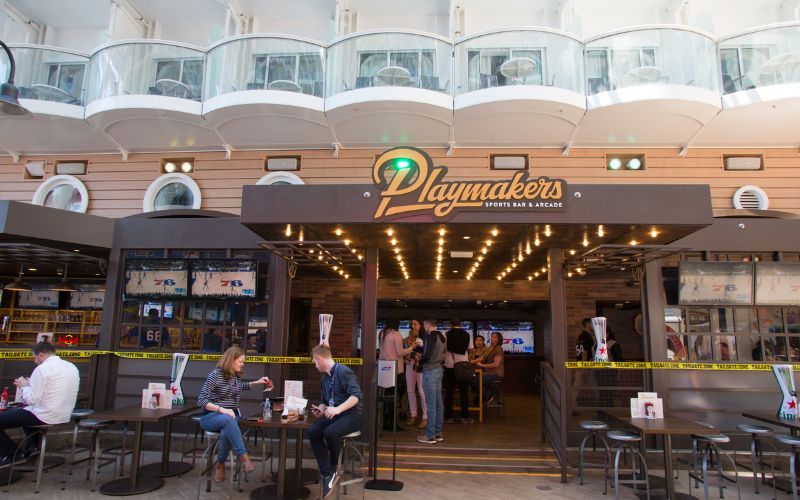
Playmakers Sports Bar

Many of Royal Caribbean’s most popular venues return on both ships, including favourites such as Schooner Bar, Trellis Bar in Central Park, Playmakers Sports Bar & Arcade, Dueling Pianos, Lou’s Jazz ‘n Blues and the ever-popular Lime & Coconut pool bars. There are also plenty of quieter spaces to relax with a coffee or glass of wine if you’re looking to escape the crowds for a while.

Royal Caribbean hasn’t yet confirmed Hero of the Seas’ complete bar lineup, but we do already know about a couple of notable upgrades.

swim and tonic

The Swim & Tonic neighbourhood pool and swim-up bar will be expanded, giving guests even more space to cool off with a drink in the water. Meanwhile, The Hideaway adults-only neighbourhood will feature what Royal Caribbean says will be the largest swim-up bar at sea, building on one of the most popular areas found on the earlier Icon-class ships.

They’re not revolutionary changes, but they continue the trend we’ve already seen throughout Hero of the Seas – taking successful ideas from Legend and making them just a little bigger and better.

Activities & Entertainment

One of the biggest challenges on both Legend of the Seas and Hero of the Seas is accepting that you simply won’t be able to do everything.

Between the shows, attractions, pools, activities and entertainment, there’s enough onboard to keep you busy for weeks rather than days. That’s really the appeal of the Icon Class – every cruise feels like you’ll discover something you missed the last time.

AquaTheater

Guests on both ships can enjoy spectacular AquaTheater performances, live music throughout the ship, comedy, ice skating shows and countless daily activities. There’s also the casino, mini golf, the FlowRider surf simulators, rock climbing walls, escape rooms, sports courts, karaoke, the arcade and, of course, Crown’s Edge – the unique attraction that combines a ropes course with a heart-stopping ride over the side of the ship.

Crown's edge

Live theatre is another huge part of the Icon Class experience. Legend of the Seas features Roald Dahl’s Charlie and the Chocolate Factory as its headline Broadway-style production, bringing the much-loved story to life with spectacular sets, costumes and effects.

Royal Caribbean hasn’t yet announced Hero of the Seas’ main theatre show, but expectations are high. With The Wizard of Oz on Icon of the Seas, Back to the Future: The Musical on Star of the Seas and Charlie and the Chocolate Factory on Legend, it’s safe to assume Hero will also debut a major licensed production rather than relying on an original show.

Charlie and the Chocolate Factory Legend of the Seas

The iconic Category 6 waterpark also returns on both vessels, but Hero of the Seas is introducing the biggest changes it’s seen since the Icon Class debuted.

The headline additions are two brand-new family raft slides, including the first funnel raft slide at sea, giving families a completely new way to experience the waterpark together. Royal Caribbean is also refreshing the popular Storm Chasers mat-racing slides with new layouts and surprises, adding even more replay value for thrill seekers.

Star of the Seas waterpark

For guests looking to slow things down a little, Hero also introduces Coconut Cove, an all-new pool located just steps from The Lime & Coconut bar. Complete with in-water loungers, poolside drink service and views across the greenery of Central Park, it’s designed as another relaxing spot to spend a sea day without having to venture far for your next cocktail.

Just like elsewhere on Hero of the Seas, these aren’t changes that reinvent the Icon Class experience. Instead, they’re thoughtful additions that build on what already works, giving guests even more reasons to come back for another cruise.

Itineraries

While the onboard experience is very similar, the biggest deciding factor for many people may actually be where these ships sail.

Legend of the Seas made history when she became the first-ever Icon-class ship to sail in Europe. Her inaugural European season began in summer 2026, bringing Royal Caribbean’s newest class of ships to the Mediterranean for the first time – something many European cruisers had been waiting for.

Barcelona with La Sagrada Familia during christmas season

During both her 2026 and 2027 summer seasons, Legend offers 7-night Mediterranean itineraries, with guests able to embark in either Barcelona or Rome (Civitavecchia). That flexibility makes it easier to combine a cruise with a city break, while also opening up the Icon Class to travellers who don’t necessarily want to fly to Florida.

When winter arrives, Legend repositions to Fort Lauderdale, where she offers a wider mix of Caribbean itineraries, ranging from shorter getaways to longer voyages depending on the season.

Hero of the Seas, meanwhile, has a much simpler deployment. She will homeport in Miami, sailing 7-night Eastern and Western Caribbean cruises throughout the year.

Every Hero itinerary also includes a visit to Perfect Day at CocoCay, Royal Caribbean’s hugely popular private island in The Bahamas. For many guests, that’s almost as much of a highlight as the ship itself, with its enormous waterpark, beaches, pools and exclusive adults-only areas.

Ships at CocoCay

Ultimately, choosing between these two ships could come down to where you want to cruise. If you’ve always wanted to experience the Icon Class without crossing the Atlantic, Legend is the obvious choice. If you’re planning a classic Caribbean holiday with a stop at Perfect Day at CocoCay, Hero fits the bill perfectly.

Want the best Royal Caribbean deal?

Get a free quote from Cruise Mummy’s trusted travel agent, with exclusive onboard credit and expert help at no extra cost.

Final Word

Legend of the Seas and Hero of the Seas are clearly cut from the same cloth. They share the same groundbreaking Icon Class design, the same Neighborhoods and many of the same restaurants, bars and attractions that have made these ships so popular.

But Hero isn’t simply another copy of Legend.

It’s the first Icon-class ship to introduce more meaningful changes across multiple areas of the onboard experience. From the Ultimate Family Treehouse and revamped waterpark to new dining concepts, expanded pool spaces and other enhancements, Hero feels like the next evolution of the class rather than just another sister ship.

Of course, there are still some details we don’t know yet. Royal Caribbean hasn’t revealed everything Hero will offer, and more announcements are almost certain as her launch gets closer.

If you’re cruising in Europe, though, Legend of the Seas remains an easy choice. She’s the only Icon-class ship sailing the Mediterranean, making her a fantastic opportunity to experience Royal Caribbean’s flagship class without travelling to the Caribbean.

Whichever ship you choose, you’re in for an incredible holiday. The differences between them are exciting, but they’re built on an already outstanding formula. In the end, your decision will probably come down to which itinerary suits you best – because you’re guaranteed an unforgettable experience on either ship.

Related Posts

If you found this interesting, please share!


Jenni with Disney Cruise ship at Castaway Cay


Source link
Untitled-design-5-16.jpg

13 Cruise Ship Food Facts That Most Guests Never Know


Unlimited food is one of the biggest selling points of a cruise – and to be fair, it lives up to the hype. Late-night pizza, multi-course dinners, snacks whenever you feel like it… it’s all there.

Dining on a cruise ship

But once you look a little closer, it’s clear this isn’t just a case of “help yourself and enjoy.” There’s a whole system behind it, and most of it stays completely out of sight.

I’ve always found that side of cruising really interesting. What feels effortless as a guest is actually planned down to an almost obsessive level. Some of it’s impressive, some of it’s a bit surprising, and a few things might even change how you think about eating onboard.

Because as indulgent as it all feels, there’s a lot going on in the background that cruise lines don’t exactly advertise.

1. Cruise Ships Load a Huge Amount of Food – All at Once

Before passengers even step onboard, there’s a massive operation happening at the port.

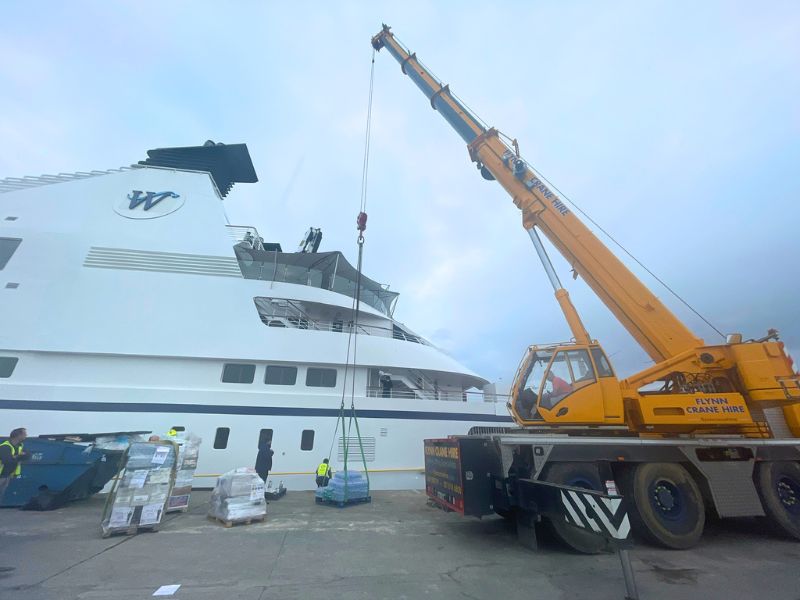
Ships aren’t just topping up supplies. They’re loading everything needed to feed thousands of people for the entire trip. That means tens of thousands of eggs, tonnes of fruit and veg, and more meat, dairy, and dry goods than you can really picture.

What’s even more impressive is how quickly it happens. In just a few hours, pallets are moved onboard in a process that’s clearly been refined over time. It’s fast, organised, and leaves very little room for mistakes.

Once the ship sails, there’s no quick trip to the supermarket if something runs out. Everything depends on getting that initial load right.

Actually, that’s a little white lie. On some more premium cruise ships, the senior kitchen crew might head to local markets while in port to pick up some extra ingredients – and sometimes there’s even excursions where you can join them!

2. There’s a Lot More Thought Put Into Food Waste Than You’d Expect

You’d think waste would be a huge problem with this much food – and in the past, it definitely was.

These days, cruise lines put a lot of effort into reducing it. Kitchens track what gets eaten and what comes back uneaten, then adjust portions and prep accordingly as the cruise goes on.

Princess Cruises Galley Tour

Buffets are a good example. Instead of piling everything out at once, food is topped up in smaller batches. It looks the same to you, but it means less ends up being thrown away.

It’s not perfect, and it probably never will be. When you’re feeding thousands of people with unpredictable appetites, some waste is unavoidable. But there’s a lot more strategy behind it than most people realise.

3. Crew and Guests Eat Very Different Food

It’s easy to assume the crew are eating the same meals as guests, just in a different dining room. In reality, it’s quite different.

Crew have their own dining areas, with menus designed to be practical, filling, and familiar. On an international ship, that usually means a mix of cuisines that reflect where crew members come from.

It’s less about presentation and more about keeping people fed and energised through long shifts.

That doesn’t mean the food is bad – far from it. It’s just not the same multi-course experience you get as a guest. It’s a reminder that behind the holiday atmosphere, this is still a workplace.

4. Buffets Are Designed More Carefully Than They Look

Cruise buffets can feel a bit chaotic at first, but they’re actually very deliberately set up.

Things like plate size, layout, and even the order you see food in all play a role in what people take. Smaller plates naturally limit portions. Putting salads first nudges people to fill some space before reaching the heavier options.

Marketplace buffet

Even the placement of popular dishes is planned, often spread out to avoid queues building up in one spot. It’s why a lot of larger ships have buffets where everything’s duplicated on both sides – and the positions on each are carefully thought through. Anything to cut crowds and queues down and keep things flowing.

It’s not about controlling you, exactly. It’s more about keeping things flowing smoothly and cutting down on waste at the same time. Once you notice it, it’s hard to unsee.

5. A Lot of Food Is Prepped Ahead of Time

With the volume of meals being served, everything can’t be cooked from scratch the second you order it.

A lot of the work is done earlier in the day – chopping, prepping, partially cooking, or even fully preparing components that just need finishing.

In the main dining room, your plate might arrive quickly, but most of the effort has already happened behind the scenes.

That’s how they keep things consistent and avoid long waits. It’s not quite the same as a small restaurant kitchen, but it works for the scale they’re dealing with.

6. Food Safety Is Taken Seriously – Really Seriously

Food safety on cruise ships isn’t something they take lightly.

With so many people in one place, even a small issue could spread quickly. That’s why there are dedicated teams focused entirely on hygiene and safety.

Princess cruise kitchen crew talking with each other

There are strict rules around everything – how food is stored, how long it can sit out, the temperatures it needs to reach. On top of that, ships go through regular inspections to make sure standards are being followed.

Some of it’s visible, like the hand-washing stations at buffet entrances. It might feel a bit over the top, but there’s a good reason for it.

7. Ordering More Than One Dish Is Completely Normal

One of the best things about cruise dining is the flexibility.

In most main dining rooms, you’re not limited to one starter, one main, and one dessert. If you want to try a couple of things, you can. No awkwardness, no raised eyebrows.

Two starters? Go for it. Two desserts? Also fine.

It takes the pressure off choosing, which makes the whole experience feel a lot more relaxed. And if something’s not to your taste, you can just order something else.

You just need to check the specific rules for your cruise line because a couple of them have started charging if you order too much. Starters and desserts are typically fine, but it’s the mains/entrees where there may be a limit. Even then, you’re typically fine with two!

8. Dietary Requirements Are Usually Well Covered

Cruise lines have got pretty good at handling dietary needs.

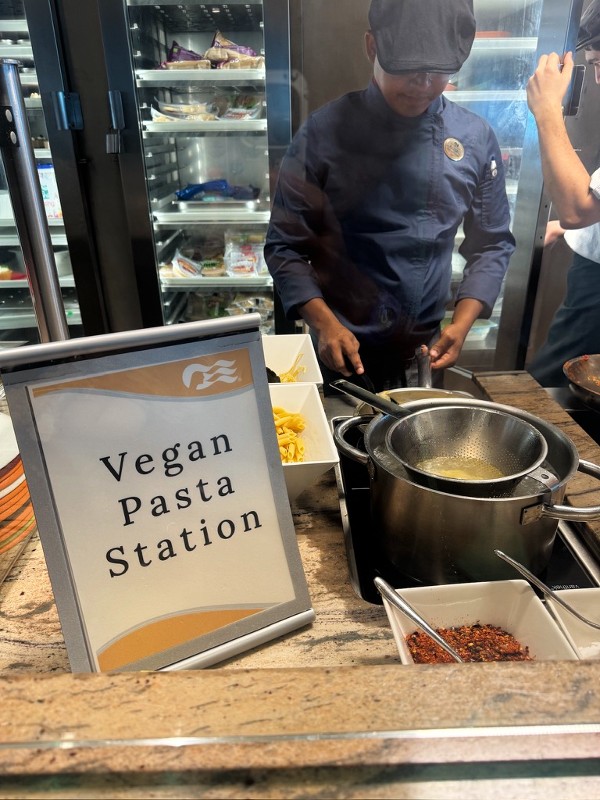
Whether it’s allergies, intolerances, or lifestyle choices like vegetarian or vegan diets, most ships can accommodate with a bit of notice.

Princess vegan pasta station

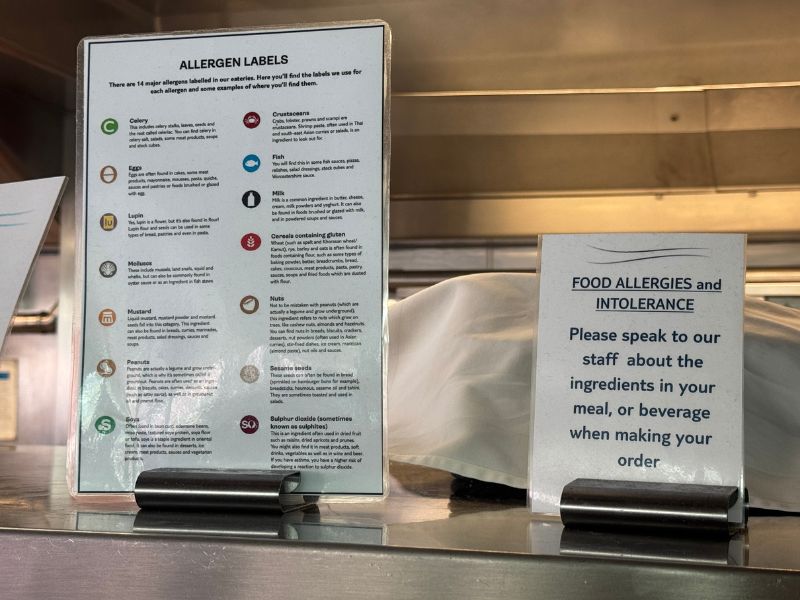
In main dining rooms, you can often pre-order meals a day ahead so the kitchen has time to prepare something suitable. Buffets usually label options too, though it’s always worth double-checking if it’s something serious.

Food allergy labels

It’s not always completely seamless, especially on larger ships, but overall it takes a lot of the stress out of eating away from home.

As a vegan, I rarely find a cruise ship where I can’t enjoy good variety. Some are definitely better than others though!

Read more: The Best & Worst Cruises For Vegans (I Tested 18 Cruise Lines)

9. “Free” Food Isn’t Really Free

It might feel like everything’s included, but of course, the cost of food is built into your cruise fare.

Cruise lines have to balance quality with cost, and part of that strategy is offering specialty restaurants for an extra charge.

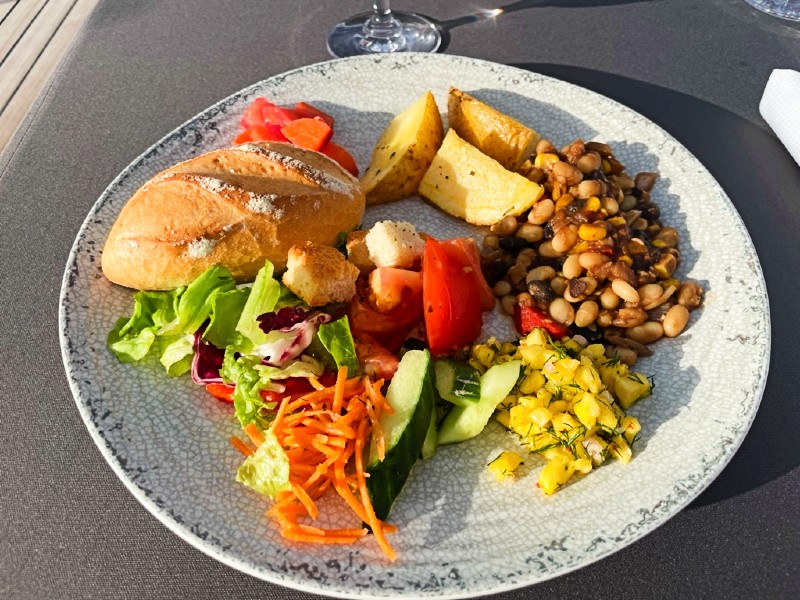
Vegan buffet food

That way, base prices stay competitive, while giving people the option to upgrade if they want something a bit different.

You’ll also notice smaller upsells here and there – drinks, premium items, that sort of thing. Nothing too pushy, but it’s definitely part of the bigger picture.

10. Specialty Restaurants Are Where Things Get More Interesting

If the main dining room is about consistency, specialty restaurants are where cruise lines get a bit more creative.

That’s where you’ll find more unusual dishes, higher-end ingredients, and sometimes even menus designed by celebrity chefs.

The chef garnishing an order of sushi

Because you’re paying extra, these restaurants don’t have to appeal to everyone. That gives them more room to experiment.

If you want something that feels a bit less standard, this is usually where you’ll find it.

11. Not Everything Goes Straight in the Bin

There are strict rules around what can be reused, but not all leftovers are automatically thrown away.

Ships have systems in place to deal with food waste properly – whether that’s processing it onboard or offloading it in port under strict regulations.

vegan barbecue food

You’d be surprised at how sophisticated some of the modern systems are – dehydrating the remains, turning huge volumes into much smaller amounts of waste product. It’s all very clever.

It’s not something you’ll notice as a guest, but it’s a big part of how modern cruise ships operate.

Read more: What Cruise Ships Really Do With All That Sewage

12. Ingredients Come From All Over the World

To keep menus consistent, cruise lines rely on a global supply chain.

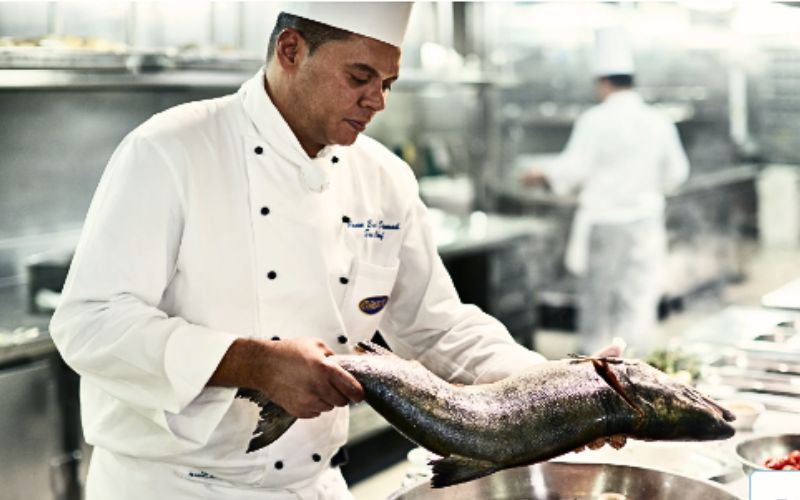
Alaska fish

Different ingredients are loaded at different ports, depending on availability and regulations. Fresh produce might come onboard in one destination, while frozen or dry goods are stocked somewhere else.

It takes a lot of coordination, but it’s what allows ships to serve similar dishes no matter where you are in the world.

13. The Best Food Isn’t Always Where You Expect

It’s easy to stick to the main dining room or buffet, but some of the best food onboard is often in smaller, quieter spots.

Cafés, poolside grills, little grab-and-go places – they don’t always get as much attention, but they can be surprisingly good.

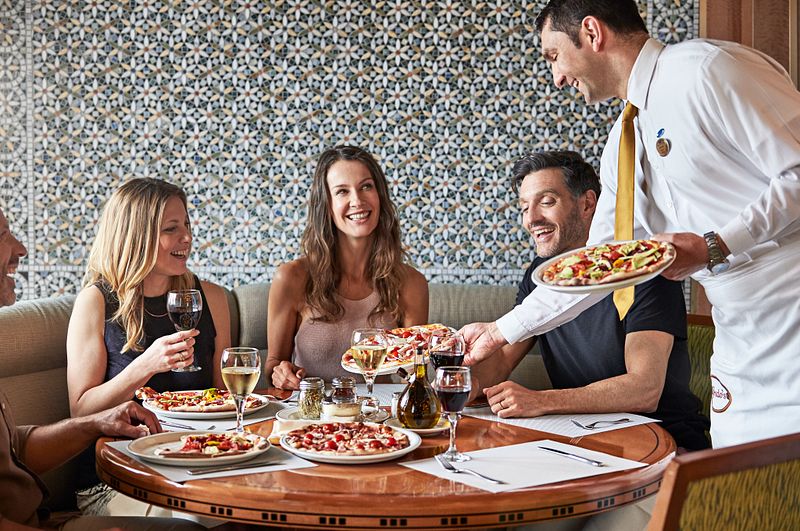
Guests enjoying a delightful dining experience at Alfredo's Pizzeria on Royal Princess, with a waiter serving a fresh, hot pizza. The atmosphere is casual yet elegant, as the diners engage in cheerful conversation, with wine glasses and a variety of pizzas on the table, accentuating the restaurant's cozy and inviting ambiance.

They tend to have simpler menus, but they do those few things really well. And because they’re less crowded, the whole experience feels more relaxed.

It’s worth exploring early on. You might find your favourite meal ends up being somewhere you nearly walked straight past.

TODAY’S BEST CRUISE DEALS!

Don’t miss these offers…

Final Word

Cruise food might feel effortless when you’re piling your plate high or ordering a second dessert, but there’s a huge amount going on behind the scenes to make it all work.

From careful planning and waste control to clever design choices and hidden upsells, it’s a system built to keep things running smoothly while still feeling indulgent.

The good news is you don’t need to think about any of that while you’re onboard – but knowing a few of these details might just help you make the most of it.

Related Posts

If you found this interesting, please share!


Jenni with Disney Cruise ship at Castaway Cay


Source link

emove-the-2-3.jpg

MSC Musica Diverts To Rescue Eight Men Adrift East Of Ibiza


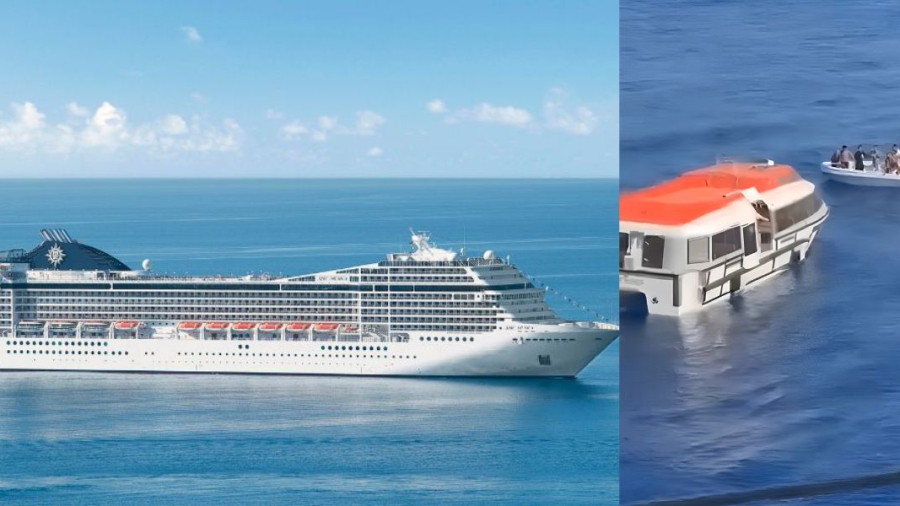
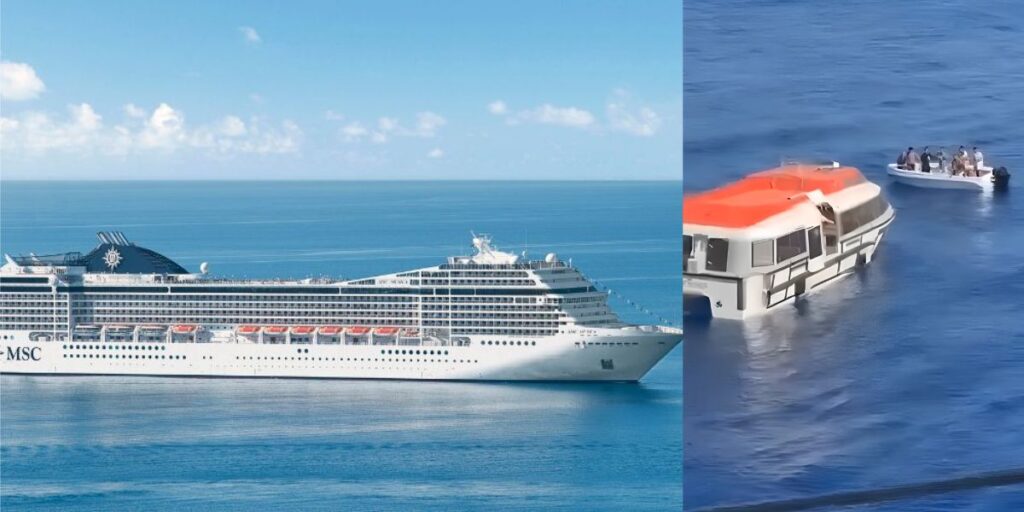
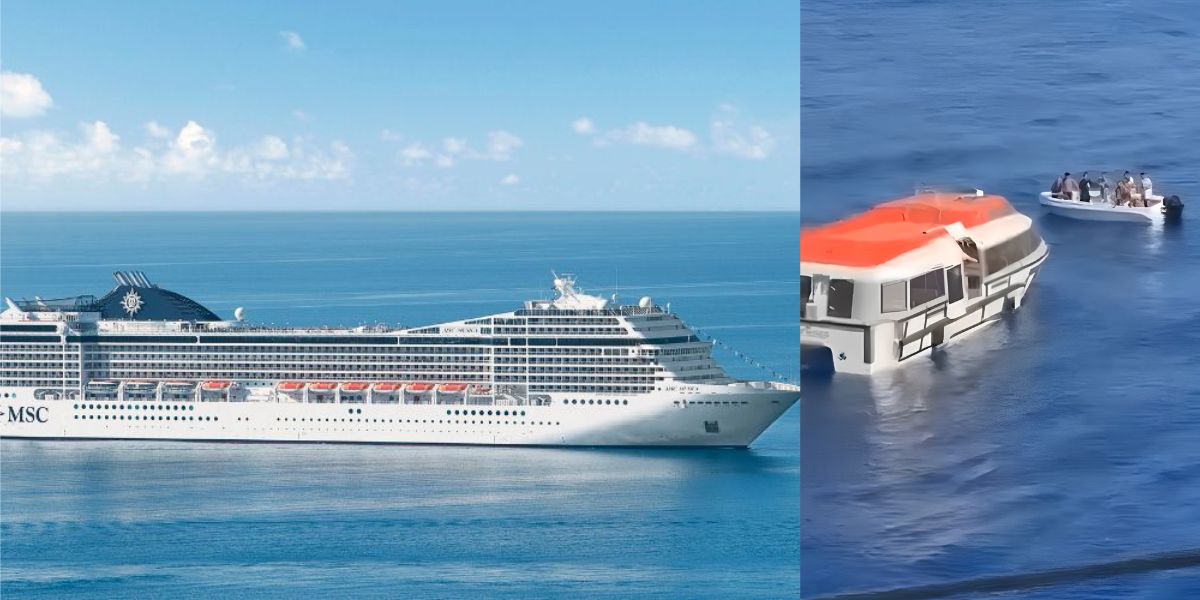
MSC Musica diverted from its scheduled approach to Ibiza on Friday, 31st July 2026, to rescue eight men found adrift in a small, distressed craft approximately 16 miles east of the Spanish island.

The men, reportedly from North Africa, were safely transferred aboard the cruise ship and later handed over to local authorities upon the vessel’s arrival in port.

MSC Musica Rescues Adrift Sailors

The rescue operation unfolded just before 11:30 a.m. as MSC Musica made its way towards Ibiza for a scheduled port call on its Western Mediterranean itinerary.

Crew members aboard the 2,550-guest cruise ship spotted the small boat in distress and immediately initiated rescue procedures in accordance with international maritime law.

Video footage from the incident captured the small craft bobbing helplessly in the Mediterranean waters, apparently without power.

Distress Craft Spotted During Approach To Spanish Port

The vessel appeared to be equipped with only a single outboard motor and lacked any visible mast or alternative means of propulsion, suggesting the men had been left vulnerable to the elements with limited supplies or belongings.

MSC Musica Crew Launches Swift Rescue Operation

The crew of MSC Musica responded with rapid efficiency, deploying one of the ship’s lifeboats to approach the distressed craft safely.

First Mate Roberto de Girolamo, a 27-year-old officer, took command of the rescue mission and coordinated the careful transfer of the eight men from their disabled vessel.

The operation required precision and care, as the men had to be moved first from their small boat into the cruise ship’s lifeboat, then safely brought aboard the much larger MSC Musica.

Such transfers can be particularly challenging in open water conditions, requiring skilled seamanship and adherence to established safety protocols.

North African Men Transferred To Spanish Authorities

According to Italian news outlet Il Dispari, the eight rescued men were identified as originating from North Africa, though no further details regarding their specific nationalities or identities have been publicly released.

Upon MSC Musica’s arrival in Ibiza, the men were promptly handed over to local Spanish authorities, including Salvamento Marítimo (Spain’s Maritime Safety and Rescue Society) and the Guardia Civil based in Sant Josep.

While cruise lines and authorities have not disclosed information about the physical condition of the migrants upon rescue, standard maritime procedure dictates that rescued individuals receive immediate medical assessment, fresh water, food, and any necessary emergency care.

MSC Cruises has not issued an official statement regarding the incident or the condition of those rescued.

MSC Musica’s Western Mediterranean Voyage Continues On Schedule

The 92,409-tonne MSC Musica had departed from her homeport of Civitavecchia, the port serving Rome, Italy, on Monday, 27th July 2026, embarking on a seven-night roundtrip Western Mediterranean cruise.

The itinerary featured multiple port calls across Italy, France, and Spain, offering guests a comprehensive tour of some of the Mediterranean’s most popular destinations.

Ibiza represented the penultimate port of call on this particular sailing, with the Spanish island known for its vibrant nightlife, historic old town, and beautiful beaches attracting cruise passengers from around the world.

Despite the unscheduled rescue operation, there were no reports of significant delays to the ship’s published schedule.

MSC Musica successfully returned to Civitavecchia on Monday, 3rd August 2026, completing the seven-night itinerary as planned.

The ship’s ability to conduct the rescue whilst maintaining its schedule demonstrates the efficiency of modern cruise ship operations and the professionalism of the crew.

International Maritime Law Requires Vessels To Render Aid

Cruise ships and all maritime vessels operate under strict international regulations that mandate assistance to those in distress at sea.

The International Convention for the Safety of Life at Sea, commonly known as SOLAS, establishes comprehensive guidelines covering all aspects of maritime safety, from vessel construction standards to emergency response protocols.

Chapter V, Regulation 33 of SOLAS specifically addresses the obligation to render assistance in distress situations.

The regulation states unequivocally that “the master of a ship at sea which is in a position to be able to provide assistance, on receiving information from any source that persons are in distress at sea, is bound to proceed with all speed to their assistance.”

Crucially, this obligation applies universally, regardless of the nationality, legal status, or circumstances of those requiring rescue.

For cruise ships traversing international waters, this means captains and crew must be prepared to divert course and deploy resources whenever human life is at risk, transforming passenger vessels into potential rescue platforms at a moment’s notice.

Mediterranean Migrant Rescues Increasingly Common For Cruise Ships

Unfortunately, rescues of migrants attempting perilous Mediterranean crossings have become increasingly frequent for cruise ships operating in the region.

Desperate individuals and families seeking to reach European shores often undertake dangerous journeys in overcrowded, unseaworthy vessels ill-equipped for open water navigation.

In October 2025, Norwegian Cruise Line’s Norwegian Epic altered its course to rescue 67 migrants near Greece, demonstrating that such incidents span the entire Mediterranean basin.

That same month, MSC Splendida saved 19 migrants struggling in rough waters off the coast of Mallorca, highlighting the ongoing humanitarian crisis unfolding across these historic waterways.

The Mediterranean Sea, whilst offering stunning vistas and calm waters during summer months, can quickly become treacherous for small, underpowered craft lacking proper navigation equipment, safety gear, or adequate provisions.

Cruise ships, with their advanced radar systems, elevated bridge positions, and round-the-clock watch-keeping, are often the first to spot vessels in distress.

Rescue Operations Extend Beyond Mediterranean Waters

Whilst the Mediterranean receives significant attention due to migration patterns from North Africa and the Middle East towards Europe, cruise ship rescue operations are by no means confined to this region.

Caribbean itineraries frequently see cruise vessels responding to distress calls from migrants attempting crossings near Cuba, Haiti, and Mexico.

The waters between Cuba and Florida have historically been a particularly active area for such incidents, with cruise ships regularly altering course to assist those attempting the dangerous crossing.

Similarly, vessels operating along Mexico’s coastlines have encountered migrants in distress, requiring diversion from scheduled itineraries to fulfil legal and moral obligations.

These rescues place cruise lines in complex situations, balancing passenger expectations for on-time arrivals with the imperative to save lives at sea.

Credit belongs to cruise line management and crew members who consistently prioritise human safety over commercial considerations, upholding the finest traditions of maritime service.

MSC Musica: A Veteran Of Mediterranean Operations

MSC Musica, delivered in 2006, represents one of MSC Cruises’ earlier Musica-class vessels and has spent much of her operational life sailing Mediterranean waters.

The ship accommodates 2,550 passengers at double occupancy, with capacity expanding to over 3,000 when fully booked, served by approximately 987 crew members.

At 92,409 gross tonnes and measuring 293.8 metres in length, MSC Musica offers guests a traditional mid-sized cruise experience with multiple dining venues, entertainment options, and the relaxed Italian-inspired atmosphere that has become synonymous with MSC Cruises.

The vessel features amenities including multiple restaurants, bars and lounges, pools, a spa, and various family-friendly facilities.

The ship’s regular deployment on Western Mediterranean itineraries from Civitavecchia positions her in waters frequently traversed by migrant vessels, making her crew particularly experienced in conducting rescue operations whilst maintaining cruise operations.

This dual capability reflects the modern reality of Mediterranean cruising, where leisure travel and humanitarian response occasionally intersect.

Industry-Wide Commitment To Maritime Safety And Humanitarian Response

The cruise industry’s consistent response to distress situations at sea demonstrates a commitment that extends far beyond regulatory compliance.

Whilst SOLAS and other maritime conventions establish legal requirements, the compassionate and professional manner in which cruise lines execute these rescues reflects deeper values embedded within maritime culture.

Cruise ship crews receive extensive training in emergency procedures, including protocols for rescuing individuals from the water and providing immediate care to those who may be suffering from dehydration, exposure, or injuries.

Medical facilities aboard cruise ships, whilst primarily intended for passenger and crew care, stand ready to serve anyone brought aboard in distress.

The MSC Musica rescue off Ibiza represents just one of countless such operations conducted annually by cruise ships worldwide, many of which receive little public attention.

These incidents remind us that beneath the vacation atmosphere and entertainment offerings, cruise ships remain vessels operating under time-honoured maritime traditions that place the preservation of human life above all other considerations.

NEW DEALS JUST RELEASED!

Don’t miss the latest MSC Cruises offers…

Related Posts

If you found this interesting, please share!


Jenni with Disney Cruise ship at Castaway Cay
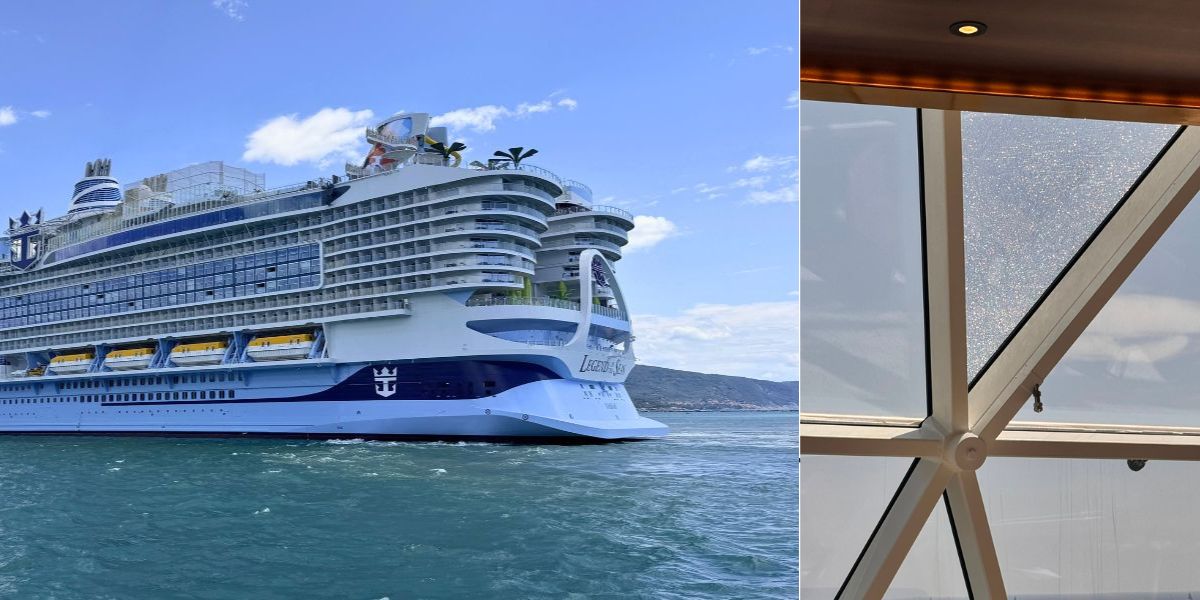
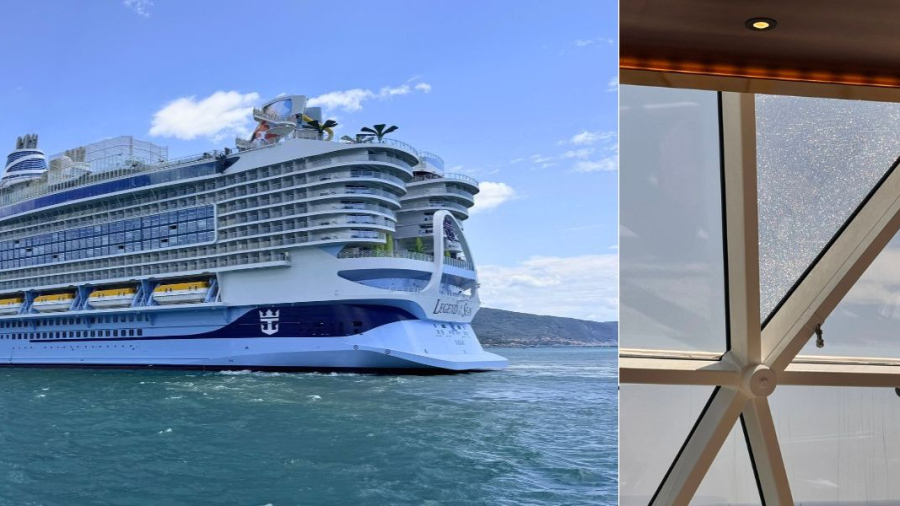
Legend of the Seas glass panel shatter

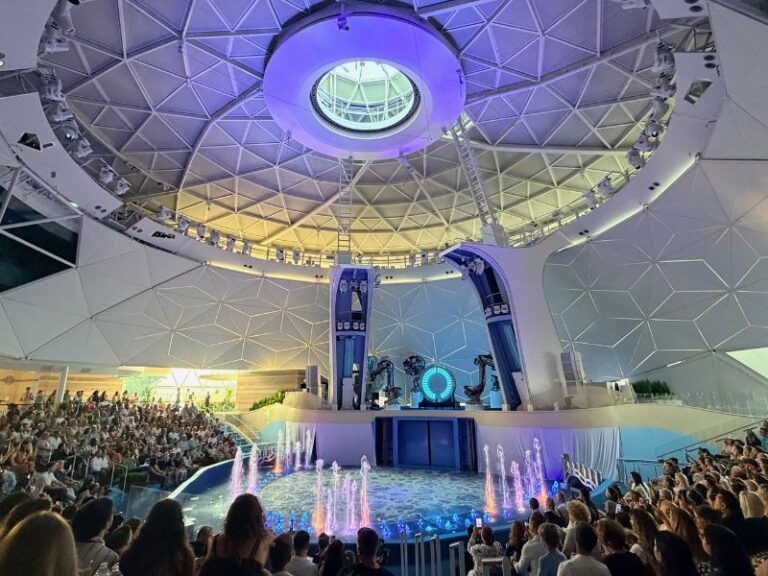
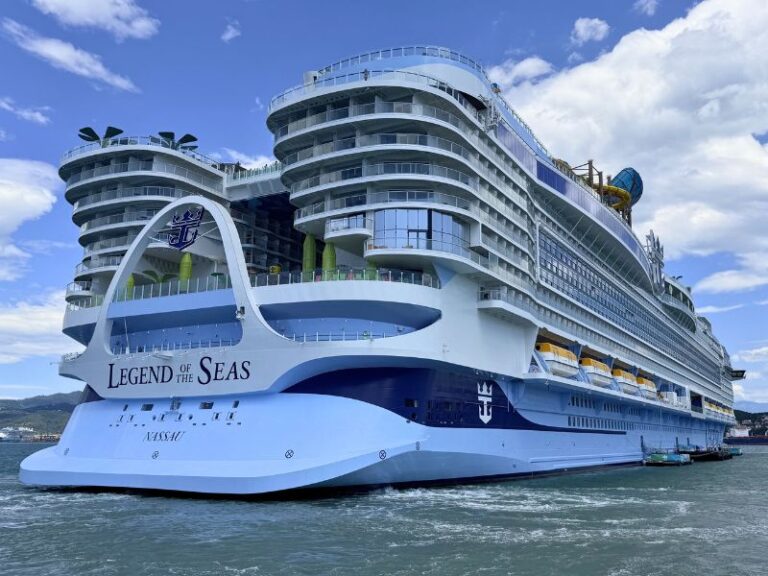
Royal Caribbean’s newest cruise ship Legend of the Seas has suffered a shattered glass panel in its signature AquaDome attraction, just over a month after entering service. The incident marks…

Port Canaveral Cruise Port

Port Canaveral has commenced a $95 million expansion and renovation of Cruise Terminal 10, with completion targeted for November 2027. The ambitious project will increase the facility’s footprint by nearly…

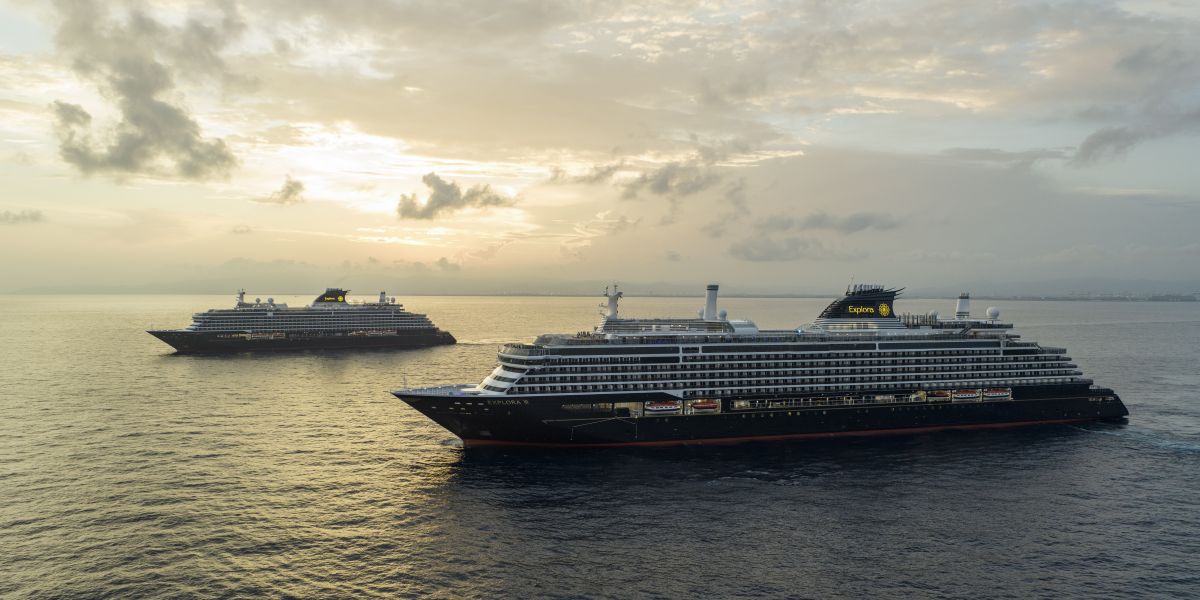
Explora I and Explora III

Explora Journeys has officially welcomed EXPLORA III into its growing fleet, with the luxury cruise ship departing on her maiden voyage after a naming ceremony in Barcelona on 4th August…

Carnival Legend Solar Eclipse Cruise

Carnival Cruise Line has suspended several key Platinum-tier benefits for passengers booked on Carnival Legend’s groundbreaking solar eclipse sailing departing 9th August 2026 from Dover. The 11-night voyage, timed to…


Source link
Untitled-design-106.jpg

Expedition Ship Tows Stranded Skiff While Zuckerberg’s Superyacht Fails to Respond


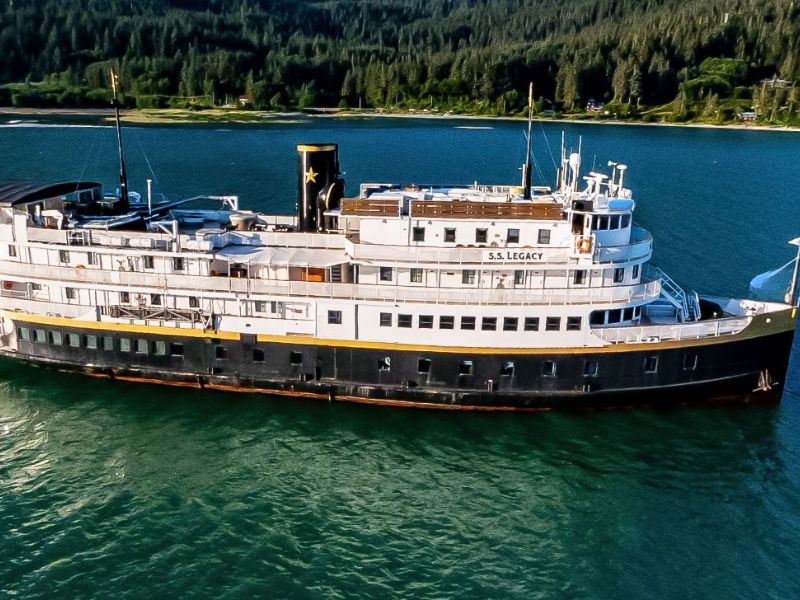
The small-ship cruise operator UnCruise Adventures came to the rescue of a stranded skiff in Alaska’s remote southeastern waters on the night of 3rd August 2026. Wilderness Legacy, an 88-guest expedition vessel, towed the fuel-depleted craft several miles to safety after a luxury superyacht owned by Facebook founder Mark Zuckerberg reportedly failed to respond to the assistance call.

Anchorage in Alaska

The maritime incident unfolded in the intricate fjords of southeastern Alaska, approximately 85 miles south-southeast of Juneau near Point Highland. At 9:32 p.m. on Monday evening, 3rd August, a 21-foot Hewescraft boat contacted the United States Coast Guard (USCG) requesting help after running out of fuel in the challenging waterways.

The vessel’s occupants – believed to be two women, a child, and a dog – found themselves adrift in waters known for their beauty but also their navigational complexity. Alaska’s southeastern region is characterised by narrow passages, strong currents, and remote locations where assistance can be hours away even in ideal conditions.

Coast Guard Coordinates Marine Assistance Request

After establishing communication with the stranded craft, USCG personnel assessed the situation and determined there was no immediate distress or danger to life. However, the vessel clearly required assistance to reach safety, prompting the Coast Guard to issue a marine assistance request at 9:56 p.m., approximately 24 minutes after the initial contact.

SS Wilderness Legacy

This distinction between a distress call and an assistance request carries significant legal implications under international maritime law. Whilst distress calls trigger mandatory response obligations under the International Convention for the Safety of Life at Sea (SOLAS), assistance requests do not carry the same legal weight, though maritime tradition and ethics strongly encourage vessels to render aid when safely able to do so.

The USCG’s role in this incident exemplifies the challenges of coordinating maritime safety across Alaska’s vast and often isolated coastal regions, where commercial vessels, small recreational craft, and luxury yachts frequently share the same waters.

Wilderness Legacy Responds and Executes Towing Operation

Wilderness Legacy received the assistance request and immediately altered course to intercept the disabled skiff. By 10:58 p.m., the expedition cruise ship had reached the smaller vessel and begun rendering aid, demonstrating the vessel’s crew training and commitment to maritime safety protocols.

The cruise ship’s crew assessed the situation and determined that towing would be the safest method to bring the skiff to protected waters. Over the next hours, Wilderness Legacy towed the 21-foot craft approximately nine miles east to Farragut Bay, a sheltered anchorage that would provide the stranded boaters with protection from weather and currents.

In addition to providing the tow service, the cruise ship’s crew supplied supplementary fuel to the skiff, ensuring the smaller vessel would have enough resources to maintain position at anchor and eventually continue to their intended destination once additional assistance or fuel could be arranged.

Safe Anchorage Achieved in Under Four Hours

By approximately 12:50 a.m. on Tuesday, 4th August, Wilderness Legacy reported to the Coast Guard that the skiff was safely anchored in Farragut Bay. The entire rescue operation, from the initial call for assistance to confirmed safe anchorage, took just under three and a half hours – a relatively swift resolution given the remote location and nighttime conditions.

The occupants of the skiff chose to remain with their vessel after assistance was rendered, a common decision when the craft is undamaged and safely positioned. No injuries were reported amongst the boat’s passengers or crew, and neither vessel sustained damage during the towing operation.

Details regarding the identities of those aboard the smaller boat and the specific circumstances that led to their fuel depletion have not been publicly released. Such information is typically not disclosed by the Coast Guard unless relevant to ongoing investigations or public safety concerns.

Limited Impact to Cruise Itinerary and Guest Experience

Despite the several-hour diversion, Wilderness Legacy was not significantly delayed on her scheduled 7-night Alaska expedition voyage. The ship had departed Juneau on Saturday, 1st August, and had already visited Robert Islands and the spectacular Glacier Bay National Park before the rescue occurred.

At the time of the incident, the vessel was en route to Wrangell Narrows, one of the most challenging and scenic passages in southeastern Alaska. The slight delay did not prevent the ship from continuing with her planned itinerary, which showcases the type of intimate, off-the-beaten-path Alaska experiences that larger cruise ships cannot offer.

A guest aboard Wilderness Legacy, Michael Love, shared details of the incident on social media, noting that passengers were kept informed through captain’s announcements throughout the rescue operation. Such transparency is characteristic of small-ship expedition cruising, where passengers often develop a closer connection with crew and operations than is typical on larger vessels.

Launchpad’s Non-Response Raises Questions About Maritime Protocols

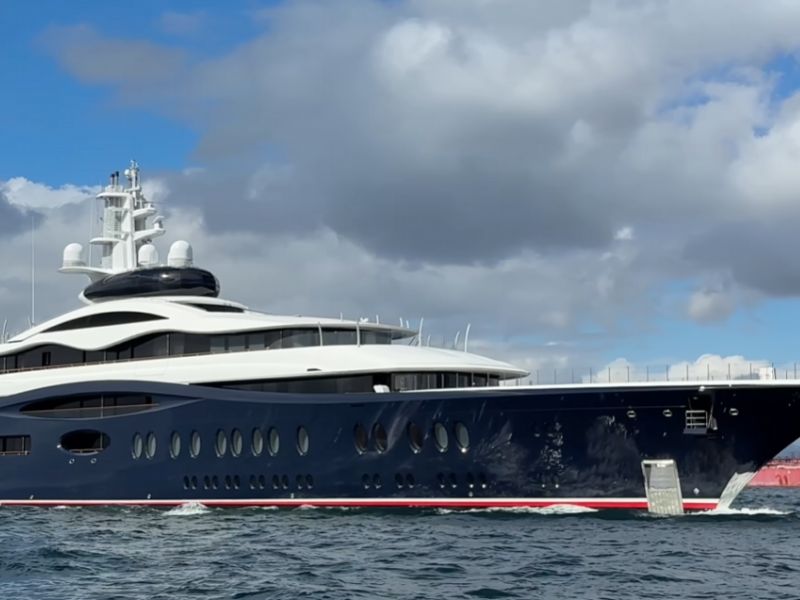
According to USCG information, Wilderness Legacy was not actually the closest vessel to the stranded skiff when the assistance call was issued. The 387-foot superyacht Launchpad, owned by Meta Platforms founder and CEO Mark Zuckerberg, was positioned nearer to the disabled craft but reportedly failed to respond to communications regarding the assistance request.

Launchpad Yacht

Launchpad significantly exceeds Wilderness Legacy in both length and tonnage, measuring 387 feet compared to the cruise ship’s 190 feet, with a gross tonnage of 5,528 tons versus 1,472 tons. The luxury yacht, which represents one of the most sophisticated private vessels in the world, would theoretically have been well-equipped to render assistance.

No information has been released regarding why Launchpad did not respond to the request or who may have been aboard the vessel at the time. Possible explanations could range from communication equipment issues to the vessel being unmanned at anchor, though no official explanation has been provided by representatives of the yacht or its owner.

Legal and Ethical Obligations in Maritime Assistance

The incident highlights the important distinction between legal obligations and maritime tradition when it comes to rendering assistance at sea. Under SOLAS regulations, vessels are legally required to respond to distress calls – situations where life or property is in grave and imminent danger.

However, the USCG has been clear that this particular situation was classified as a request for assistance rather than a distress call. This means there was no immediate danger to life, and therefore no vessel was legally compelled to respond under international maritime law.

Nevertheless, maritime culture has long held that vessels should render assistance to those in need when safely able to do so, regardless of strict legal obligations. This tradition stems from the inherent dangers of sea travel and the understanding that any vessel may one day require similar help.

The decision by Wilderness Legacy to respond, despite not being the closest vessel and having no legal requirement to do so, reflects positively on UnCruise Adventures’ commitment to maritime safety and the professionalism of the vessel’s crew and master.

UnCruise Adventures’ Small-Ship Alaska Programme

Wilderness Legacy represents the type of intimate expedition cruising that has grown increasingly popular amongst travellers seeking authentic experiences beyond the reach of mainstream cruise tourism. The vessel accommodates just 88 guests, a fraction of the thousands carried by major cruise line ships that dominate Alaska’s summer season.

Based in Juneau, Wilderness Legacy operates 7-night and 12-night expedition voyages throughout Alaska’s Inside Passage and surrounding waters. These itineraries are specifically designed to access narrow waterways, remote anchorages, and pristine wilderness areas that larger vessels simply cannot navigate.

UnCruise Adventures has built its reputation on providing these immersive experiences, with activities including kayaking, skiff excursions, hiking, and wildlife viewing in some of North America’s most spectacular and unspoiled landscapes. The company’s fleet of small ships allows for the flexibility to adjust itineraries based on wildlife sightings, weather conditions, and – as this incident demonstrates – maritime emergencies.

The rescue operation showcases not only the vessel’s capabilities but also the training and preparedness of crew members who must be ready to handle a wide variety of situations in Alaska’s challenging maritime environment, far from major port facilities and support services.

TODAY’S BEST CRUISE DEALS!

Don’t miss these offers…

Related Posts

If you found this interesting, please share!


Jenni with Disney Cruise ship at Castaway Cay
MSC Musica Rescues Adrift Sailors

MSC Musica diverted from its scheduled approach to Ibiza on Friday, 31st July 2026, to rescue eight men found adrift in a small, distressed craft approximately 16 miles east of…

Legend of the Seas glass panel shatter

Royal Caribbean’s newest cruise ship Legend of the Seas has suffered a shattered glass panel in its signature AquaDome attraction, just over a month after entering service. The incident marks…

Port Canaveral Cruise Port

Port Canaveral has commenced a $95 million expansion and renovation of Cruise Terminal 10, with completion targeted for November 2027. The ambitious project will increase the facility’s footprint by nearly…

Explora I and Explora III

Explora Journeys has officially welcomed EXPLORA III into its growing fleet, with the luxury cruise ship departing on her maiden voyage after a naming ceremony in Barcelona on 4th August…


Source link

b471fe389ee4ba7cd357d89a3f9d84eb3f71d0bf-5000x2813-1-1024x576.avif.avif

Crystal Moves Forward With Third Ocean Ship After Fincantieri Contract Takes Effect

Crystal has confirmed that its contract with renowned Italian shipbuilder Fincantieri for a third next-generation ocean ship is now effective. Scheduled for delivery in 2034, the new vessel stems from an option exercised in 2024 and represents another significant step in Crystal’s long-term expansion and continued investment in luxury cruising.

The new vessel will join Crystal Grace, currently under construction at Fincantieri’s Marghera shipyard, scheduled to debut in 2028, along with her sister ship arriving in May 2031. Together, the three ships will represent the next evolution of Crystal’s renowned approach to exceptional service, spacious design and immersive luxury travel.

Like her sister ships, the new vessel will accommodate 650 guests (based on double occupancy) and measure approximately 62,000 gross tons. Thoughtfully designed by renowned international architectural firms, the ship will feature spacious all-veranda suites, including an expansive Owner’s Suite and new categories created to meet evolving guest preferences, including solo travelers. Every accommodation is designed to maximize space, comfort and connection to the sea, complemented by one of the highest crew-to-guest ratios in luxury cruising to deliver Crystal’s signature personalized service.

The ship will blend timeless elegance with contemporary innovation through expansive indoor and outdoor spaces designed for effortless luxury living. Guests will enjoy a full wraparound promenade inspired by the beloved walkways aboard Crystal Symphony and Crystal Serenity, along with beautiful open-air venues and inviting outdoor spaces for relaxation and socializing. Outdoor dining terraces will allow guests to enjoy specialty restaurants al fresco while taking in panoramic ocean views, further strengthening Crystal’s connection between exceptional cuisine and life at sea.

“Seeing Crystal Grace move from vision to reality has been tremendously rewarding, and today’s announcement demonstrates our unwavering confidence in Crystal’s future. This third ship reflects our long-term commitment to the brand and to our guests, who continue to inspire us to raise the standard for luxury cruising around the world.”

MANFREDI LEFEBVRE D’OVIDIO, EXECUTIVE CHAIRMAN OF A&K TRAVEL GROUP

Cristina Levis, CEO of A&K Travel Group, added, “The response to Crystal Grace has exceeded our expectations, reaffirming the demand for authentic, exceptional travel experiences. With each new ship, we are building on Crystal’s legacy while thoughtfully evolving the experience for a new generation of luxury travelers.”

“The effectiveness of the contract signed back in 2024 is a testament to the strength of our partnership with Crystal and A&K Travel Group and reflects our shared commitment to innovation, craftsmanship and excellence,” commented Luigi Matarazzo, General Manager of the Fincantieri Merchant Ships Division. “We are proud to continue building a new generation of luxury ships that combine Italian shipbuilding expertise with Crystal’s uncompromising vision for exceptional hospitality at sea.” 

The announcement builds on significant momentum for Crystal, including the successful steel-cutting ceremony for Crystal Grace, the opening of bookings for her inaugural 2028 season and continued strong demand for the brand’s expanding portfolio of global itineraries.

To learn more about the new ships, or book any of Crystal’s exceptional itineraries, contact your travel advisor, visit crystalcruises.com or call 1-800-446-6620.

Source link
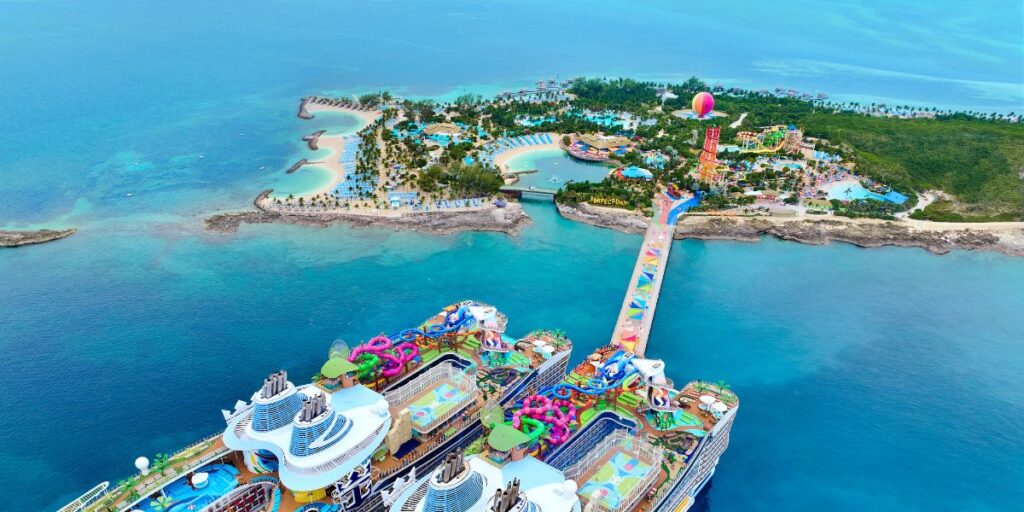
American-Wine-School-Photo-scaled.jpg

Azamara Launches WSET Wine Certification Program At Sea

Azamara Cruises has partnered with American Wine School® to launch a new onboard wine education experience, giving guests the opportunity to earn the globally recognized WSET® Level 1 Award in Wines while cruising.

The program will debut on select sailings aboard Azamara Quest® beginning in December 2026. Guests will combine professional wine education with immersive visits to some of the world’s most celebrated wine regions, while also experiencing updates introduced through Azamara’s fleet-wide Azamara Forward renovation initiative.

Led by Marianne Frantz, founder of American Wine School®, WSET-certified educator, and Advanced Sommelier, the immersive course combines expert instruction with guided tastings, giving guests an engaging introduction to the world of wine. Participants will learn about major grape varieties, wine styles, service, storage, and food pairings before taking the official WSET® Level 1 Wine exam onboard. In addition to the certification course, guests will have the opportunity to enjoy destination-inspired wine programming, including curated tastings and food and wine pairing experiences that celebrate the flavors and traditions of the regions visited.

The experience extends beyond those enrolled in the certification course. All guests aboard the featured sailings will also have access to wine programming led by Frantz, including pop-up tastings and destination-inspired food and wine pairing sessions designed to bring the flavors and traditions of the regions visited onboard.

“At Azamara Cruises, we believe destination immersion is about understanding a place as much as seeing it, and food and wine are among the most meaningful ways to connect with a culture,” said Wayne Fannon, Corporate Director, Food & Beverage Operations at Azamara Cruises. “Through our onboard enrichment experiences, we are continuing to introduce experiences that make the journey itself richer and more rewarding. Our partnership with American Wine School gives guests a unique opportunity to deepen their appreciation of wine while traveling the world and even return home with an internationally recognized qualification inspired by their time with us.”

Frantz brings more than two decades of wine education experience to the program. The founder of American Wine School in 2001, she holds a WSET Diploma, Advanced Sommelier certification from the Court of Master Sommeliers, and numerous international wine education credentials. Her approachable teaching style makes the program accessible for both beginners and experienced wine enthusiasts.

The American Wine School® presentation of the WSET® Level 1 Award in Wines will debut aboard:

  • Azamara Quest® – Quest Debut Panama Canal Holiday & New Year’s Eve Cruise (December 18, 2026) 
  • Azamara Journey® – South America Cruise (March 10, 2027) 

Priced at $275 per guest, the certification course offers savings of approximately 20–30% compared to similar land-based WSET® Level 1 Wine programs, while giving guests the unique opportunity to earn their certification in a relaxed and inspiring setting at sea. With limited availability for just 24 guests per sailing, the experience can be added to a guest’s booking ahead of their sailing.

The program reflects Azamara Cruises’ continued commitment to offering enriching onboard experiences that connect guests more deeply with the cultures, traditions, and flavors of the destinations they explore.

For more information or to book, visit www.azamara.com. 

Source link
disneydestinyship-scaled.jpg

Disney Cruise Line’s Newest Ship Earns Its First Perfect Health Score

Disney Cruise Line’s newest ship, Disney Destiny, earned its first perfect health score, according to a report just posted by the CDC’s Vessel Sanitation Program (VSP).

Disney Destiny
Disney Destiny in Ft. Lauderdale, Florida. Photo: Cruise Fever

Although the surprise health inspection took place in June, the results were just published on the CDC’s website.

Disney Destiny debuted in November 2025, and this was the second time that the ship was inspected. The vessel earned a 96 during its first inspection in December 2025.

This was the fifth perfect health score earned by a Disney cruise ship this year. Disney Dream, Disney Fantasy, Disney Magic, and Disney Treasure have also aced their health inspections in 2026.

Every ship in Disney’s fleet has scored at least a 98 during their unannounced health inspections this year.

About Cruise Health Inspections

All cruise ships that sail to or from a U.S. port are subject to two announced health inspections each year that are carried out by the VSP.

Cruise lines pay for the inspections based on the size of the ship, and one to five inspectors board the ship to make sure it is meeting health standards.

vsp

The inspectors evaluate eight different areas of each ship that range from medical centers to food and water on board.

The eight main areas that are inspected are:

  • Medical Center – Documents are reviewed regarding sickness on board, and staff is interviewed to ensure they are well trained.
  • Drinking water – Water samples are taken and checked for the correct chlorine and pH levels.
  • Galleys and dining rooms – Everything from food storage to dishwashers to employees’ health and personal hygiene is checked.
  • Swimming pools and hot tubs – Water samples are taken to ensure halogen and pH levels are correct.
  • Housekeeping – Housekeeping manager is interviewed to ensure they are well informed about disinfection and measures to prevent the spread of sickness and disease.
  • Pest and insect management – Ensure that pest and insect management procedures are in place.
  • Child activity centers – They make sure toys are clean, and they are properly equipped with hand washing stations, toilets, and a place for diaper changing.
  • Heating, ventilation, and air conditioning (HVAC) – Units are inspected to ensure water is not collecting inside the units and that they are clean.
Disney Destiny pool deck.
The pool deck on Disney Destiny. Photo: Cruise Fever

The inspections usually take six to eight hours and are random and unannounced.

The number of inspectors varies depending on ship size. Inspectors see if conditions on the ship comply with the public health standards found in current VSP guidance.

Cruise ships that sail outside of the U.S. for an extended time may not be inspected twice a year. However, they are normally inspected when they return to a U.S. port.

Fees cruise lines pay for the inspections range from $8,073 for small ships, under 30,000 gross tons, to $64,584 for mega ships over 180,000 gross tons in size.

Disney Cruise Line has historically done well during health inspections conducted by the VSP. Over the past three and a half years, they have not had a ship score under 95 during them. A 100 is the highest score a ship can get and anything under an 86 is considered a failing score.

Get the latest cruise news, tips, and deals sent straight to your inbox with our free newsletter: Sign Up Now


Looking for the Best Cruise Deals?

Search Multiple Sites at Once

Instant Real Time Pricing

Search Now

Source link
emove-the-1-6.jpg

Glass Panel Shatters in Legend Of The Seas’ AquaDome


Royal Caribbean’s newest cruise ship Legend of the Seas has suffered a shattered glass panel in its signature AquaDome attraction, just over a month after entering service. The incident marks the latest in a series of glass-related issues affecting the cruise line’s Icon-class vessels since the groundbreaking ship class debuted in 2024.

Legend of the Seas glass panel shatter

A passenger aboard Legend of the Seas shared photographic evidence of the damaged panel on social media on 3rd August 2026, questioning how such damage could occur on a ship barely a month into service.

The vessel officially launched on 4th July 2026, making it one of the youngest ships in Royal Caribbean International’s fleet. The broken component is one of 673 individual glass panels that comprise the AquaDome, the ship’s forward-facing glass dome that serves as a signature architectural feature of the Icon class.

The triangular segment appears to have remained intact within its frame despite the shattering, preventing glass fragments from falling onto the deck areas below where passengers typically gather.

Understanding The AquaDome’s Design And Purpose

Understanding The AquaDome's Design And Purpose

The AquaDome represents one of the most innovative architectural achievements in modern cruise ship design, occupying the forward section of the upper decks aboard Icon-class vessels. During daylight hours, this expansive glass-enclosed space functions as a tranquil retreat where passengers can relax whilst enjoying panoramic ocean views through the transparent ceiling and walls.

As evening approaches, the AquaDome transforms into a vibrant entertainment venue, hosting performances, events, and gatherings that take advantage of the unique architectural setting. The dual-purpose design philosophy reflects Royal Caribbean’s commitment to maximising the utility of onboard spaces whilst creating Instagram-worthy moments that help market the cruise line to younger demographics.

The 248,663-gross tonne Legend of the Seas accommodates up to 5,610 passengers at maximum capacity, making it one of the largest cruise ships currently operating worldwide. The vessel continues Royal Caribbean’s tradition of pushing the boundaries of cruise ship size and amenity offerings, following in the wake of sister ships Icon of the Seas and Star of the Seas.

Potential Causes Behind The Shattered Panel

Royal Caribbean has not issued an official statement identifying the specific cause of the glass failure, leaving industry observers and passengers to speculate about the underlying reasons. Marine glass can shatter for numerous reasons, each presenting unique challenges for shipbuilders and operators.

Inherent manufacturing defects represent one possible explanation, particularly with specialised marine-grade glass produced in such large quantities for these massive installations. Microscopic flaws in the glass composition or tempering process might not become apparent until the material experiences stress from environmental conditions at sea.

Environmental factors also play a significant role in the structural integrity of glass panels aboard cruise ships. Bird strikes, whilst less common in open ocean sailing, can occur during port calls or coastal navigation. The Mediterranean region where Legend of the Seas currently operates hosts numerous seabird populations that could potentially collide with the transparent structure.

Weather-related stresses including sudden temperature fluctuations, storm conditions, and rogue waves create additional pressure on large glass installations. The Icon-class ships, with their unprecedented size and innovative designs, may encounter environmental stresses that weren’t fully anticipated during the design and testing phases.

Current Sailing Status And Passenger Safety

Current Sailing Status And Passenger Safety

According to maritime tracking data, Legend of the Seas continues operating its scheduled itinerary without disruption despite the damaged panel. The vessel was nearing completion of a seven-night Mediterranean voyage at the time of the incident, with disembarkation scheduled for 9th August 2026 in Barcelona, Spain.

Importantly, no injuries to passengers or crew members have been reported in connection with this glass failure. The structural design of the AquaDome appears to have functioned as intended, with the shattered panel remaining secured within its mounting framework rather than falling and potentially injuring persons below.

This safety feature reflects the rigorous engineering standards applied to cruise ship construction, particularly for innovative architectural elements that push traditional design boundaries. Multiple redundancies and fail-safe mechanisms ensure that even when individual components fail, the overall structure maintains its integrity and protects those aboard.

Pattern Of Glass Issues Across Icon-Class Fleet

Legend of the Seas glass panel shatter

The Legend of the Seas incident represents the third significant glass-related event affecting Icon-class vessels since the ship class entered service. Star of the Seas, the second Icon-class ship and the slightly older sister to Legend of the Seas, experienced its own AquaDome glass failure in May 2026.

That earlier incident involved a triangular panel nearly identical to the one that shattered aboard Legend of the Seas, raising questions about whether a systematic design or manufacturing issue might be affecting these specific components. The similarity between the two failures suggests a potential common cause rather than isolated random incidents.

Even before her official maiden voyage on 31st August 2025, Star of the Seas encountered glass problems during a preview sailing. On the morning of 26th August 2025, a tempered glass panel forming part of an aesthetic safety barrier on Deck 15 suddenly shattered.

The panel served as a protective barrier preventing passengers from accidentally falling overboard whilst maintaining unobstructed ocean views. Crew members responded quickly to that incident, securing the opening with a white tarp and crowd control barriers until permanent repairs could be completed.

No injuries occurred, though nearby passengers who were sunbathing and relaxing reported being startled by the unexpected breakage.

Icon Of The Seas’ Different Glass Challenge

Icon Of The Seas' Different Glass Challenge

Icon of the Seas, the inaugural vessel of the Icon class that launched on 27th January 2024, navigated its first year of service without reported AquaDome glass failures. However, the flagship vessel encountered a different glass-related safety incident that garnered significant media attention and regulatory scrutiny.

In August 2025, an acrylic panel shattered on the Frightening Bolt waterslide whilst a passenger was actively using the attraction. Unlike the AquaDome incidents where no injuries occurred, this failure resulted in injury to the rider, prompting immediate action by Royal Caribbean.

Icon of the Seas Waterslide Break

The cruise line temporarily closed the drop slide on both Icon of the Seas and Star of the Seas whilst conducting a thorough investigation into the cause of the failure and implementing necessary repairs. This precautionary measure demonstrated Royal Caribbean’s commitment to passenger safety, even when it meant temporarily closing a popular onboard attraction.

The Frightening Bolt represents one of several waterslide attractions that have become signature features of Icon-class ships, appealing particularly to families and younger cruisers seeking thrilling experiences at sea. The temporary closure affected thousands of passengers who had specifically chosen Icon-class sailings partly because of these unique amenities.

Royal Caribbean’s Safety Framework And Regulatory Compliance

Despite these incidents, it remains crucial to contextualise them within Royal Caribbean’s broader safety record and the stringent regulatory framework governing cruise operations. The cruise line operates its entire fleet in compliance with the International Convention for the Safety of Life at Sea (SOLAS), the most important international treaty concerning maritime safety.

SOLAS establishes minimum safety standards for the construction, equipment, and operation of ships, with flag states responsible for ensuring compliance. Beyond international requirements, Royal Caribbean’s vessels must also satisfy national regulatory bodies including the United States Coast Guard, which conducts regular inspections and maintains oversight of vessels calling at American ports.

Public health agencies including the Centers for Disease Control and Prevention’s Vessel Sanitation Program add another layer of oversight, conducting unannounced inspections to ensure cruise ships maintain high standards of sanitation and public health protection.

These multiple regulatory frameworks create a comprehensive safety net that protects passengers and crew members. Royal Caribbean has publicly emphasised that safety remains its top priority across all operations, a commitment reflected in the company’s investment in crew training, maintenance programmes, and new safety technologies.

The cruise line’s maintenance schedule involves regular dry dock periods where ships undergo extensive inspections and upgrades to address wear and emerging issues.

Industry Context And Future Implications

Industry Context And Future Implications

The Icon-class ships represent a quantum leap in cruise ship design, introducing architectural features and amenities never before attempted at sea. With innovation inevitably comes unforeseen challenges as theoretical designs encounter real-world operating conditions.

The AquaDome’s extensive use of glass creates a stunning visual experience but also introduces engineering challenges related to thermal expansion, structural flex, and environmental stresses. As Royal Caribbean and its shipbuilding partners gather operational data from the three Icon-class vessels currently in service, they will likely refine designs and specifications for future ships.

The cruise industry’s competitive nature drives constant innovation, with each major cruise line striving to differentiate its offerings through unique architectural features and experiential amenities. Royal Caribbean’s Icon class, MSC Cruises’ World-class vessels, and other next-generation ships push traditional boundaries, sometimes encountering unexpected issues that inform future designs.

Passenger sentiment remains generally positive towards Icon-class ships despite these glass incidents, with the vessels consistently receiving strong reviews for their innovative design, diverse dining options, and entertainment offerings.

Most cruisers recognise that isolated technical issues are inevitable with groundbreaking new ship classes and judge the overall experience rather than individual incidents. As Legend of the Seas continues its inaugural Mediterranean season, Royal Caribbean will likely conduct a thorough investigation into the latest glass failure and implement any necessary corrective measures.

The cruise line’s track record suggests it will prioritise passenger safety whilst working to prevent similar incidents aboard Legend of the Seas and her sister ships.

Want the best Royal Caribbean deal?

Get a free quote from Cruise Mummy’s trusted travel agent, with exclusive onboard credit and expert help at no extra cost.

Related Posts

If you found this interesting, please share!


Jenni with Disney Cruise ship at Castaway Cay
Port Canaveral Cruise Port

Port Canaveral has commenced a $95 million expansion and renovation of Cruise Terminal 10, with completion targeted for November 2027. The ambitious project will increase the facility’s footprint by nearly…

Explora I and Explora III

Explora Journeys has officially welcomed EXPLORA III into its growing fleet, with the luxury cruise ship departing on her maiden voyage after a naming ceremony in Barcelona on 4th August…

Carnival Legend Solar Eclipse Cruise

Carnival Cruise Line has suspended several key Platinum-tier benefits for passengers booked on Carnival Legend’s groundbreaking solar eclipse sailing departing 9th August 2026 from Dover. The 11-night voyage, timed to…

Captain Kate McCue

Captain Kate McCue, one of the world’s most recognisable cruise ship captains, has resigned from her position at Four Seasons Yachts to spend more time with family following the unexpected…


Source link