Cruise ship deck at sunset, the kind of setting where guests wear Princess Medallion accessories

Princess Medallion Accessories: Holders, Lanyards and Tips

The best Princess Medallion accessories are the ones that keep the small, waterproof Medallion on you all day without you thinking about it: a wristband or watch adapter for the pool and shore days, a clip or keyring for people who hate things on their wrist, and a pendant or bracelet for dressier evenings. Every guest gets the Medallion free with a basic lanyard, so an accessory is optional, but most cruisers find one worth the few dollars it costs.

This guide explains what the Medallion does, the main types of Princess Medallion accessories and holders, the pros and cons of each, which official Princess options exist, and what to do about delivery, pickup and lost devices on a 2026 or 2027 sailing.

What is the Princess Medallion?

The Medallion (originally branded OceanMedallion) is a quarter-sized wearable disc that replaces the traditional cruise card on Princess ships. It opens your cabin door as you approach, lets you pay for drinks and shopping onboard, speeds up embarkation and disembarkation, and allows crew to bring orders to wherever you are on the ship through the Princess app. Family members can also find each other on the ship in the app.

A few facts that matter when you are choosing a holder:

  • It is free. Each guest receives a Medallion at no charge for their cruise. Only shipping it to your home and buying optional accessories cost extra.
  • It comes with a basic lanyard. The Medallion arrives in a small plastic holder with a simple fabric lanyard, so you can use it straight out of the box.
  • It is waterproof. Princess says the device is waterproof and resistant to heat, sand and salt, so you can wear it in the pool or hot tub.
  • It stores no personal information. According to Princess, the device only broadcasts an encrypted guest identifier; your details sit in Princess’s own system, not on the disc.
  • It is roughly the size and shape of an Apple AirTag. That is why many AirTag holders and bands fit it, which hugely widens your choice of accessories.

You do not have to wear it in any particular way. Princess simply asks you to keep it with you at all times, whether that is on a lanyard, in a pocket or in an accessory.

Princess Medallion accessories compared

Here is a quick comparison of the main types of Princess Medallion accessories, from the free lanyard to jewelry-style options.

Accessory type Best for Pros Cons
Free lanyard First-timers, short cruises Included, hands-free, easy to see Swings about, tangles in bags, not elegant at dinner
Clip Clipping to a belt, pocket, collar or swimwear strap Cheap, discreet, official version available Can be knocked off if the clip is weak
Sport band or wristband Pool days, excursions, kids Always on you, waterproof, secure Looks casual; cheap silicone bands can let the disc pop out
Watch adapter People who already wear a watch or fitness tracker Nothing extra to remember Must match your strap width; adds bulk to the watch
Pendant or necklace Formal nights and dressier outfits Looks like jewelry, frees up wrists Plated metal can irritate sensitive skin; not ideal near a pacemaker
Bracelet Evening wear Smart and secure Higher price; sizing matters
Keyring or bag holder People who always carry a bag Very cheap, AirTag holders fit Only works if the bag is with you; easy to leave at a sunbed
Phone holder People who never put their phone down One item to carry Leave the phone in the cabin and you are locked out

Types of Princess Medallion holders explained

The free Princess Medallion lanyard

The basic Princess Medallion lanyard is the default, and plenty of cruisers never replace it. It keeps the device visible and hands-free, and you will not lose it in a pocket. The downsides are practical: it swings when you walk, it is awkward in the pool, and many people feel it clashes with a dinner jacket or a smart dress. It is a good backup to pack even if you buy something else.

Clips

A clip is the cheapest upgrade. Princess sells an official hard plastic clip, priced at $7 when bought before the cruise. Third-party clips, including the small clip-on cases designed for fitness trackers, work in the same way. Clip it to a waistband, shirt placket, bag strap or swimsuit strap. Check the clip is firm: a loose one can drop the Medallion on deck without you noticing.

Sport bands and wristbands

Wristbands are the most popular choice for active cruisers because the Medallion stays on through the pool, the gym and shore excursions. Princess offers sports bands and also wrist straps made from reclaimed ocean plastic, which Princess says use the equivalent of two plastic bottles per strap. Families often find these fit more securely than the cheapest silicone bands, which can let the disc pop out, especially on children’s wrists.
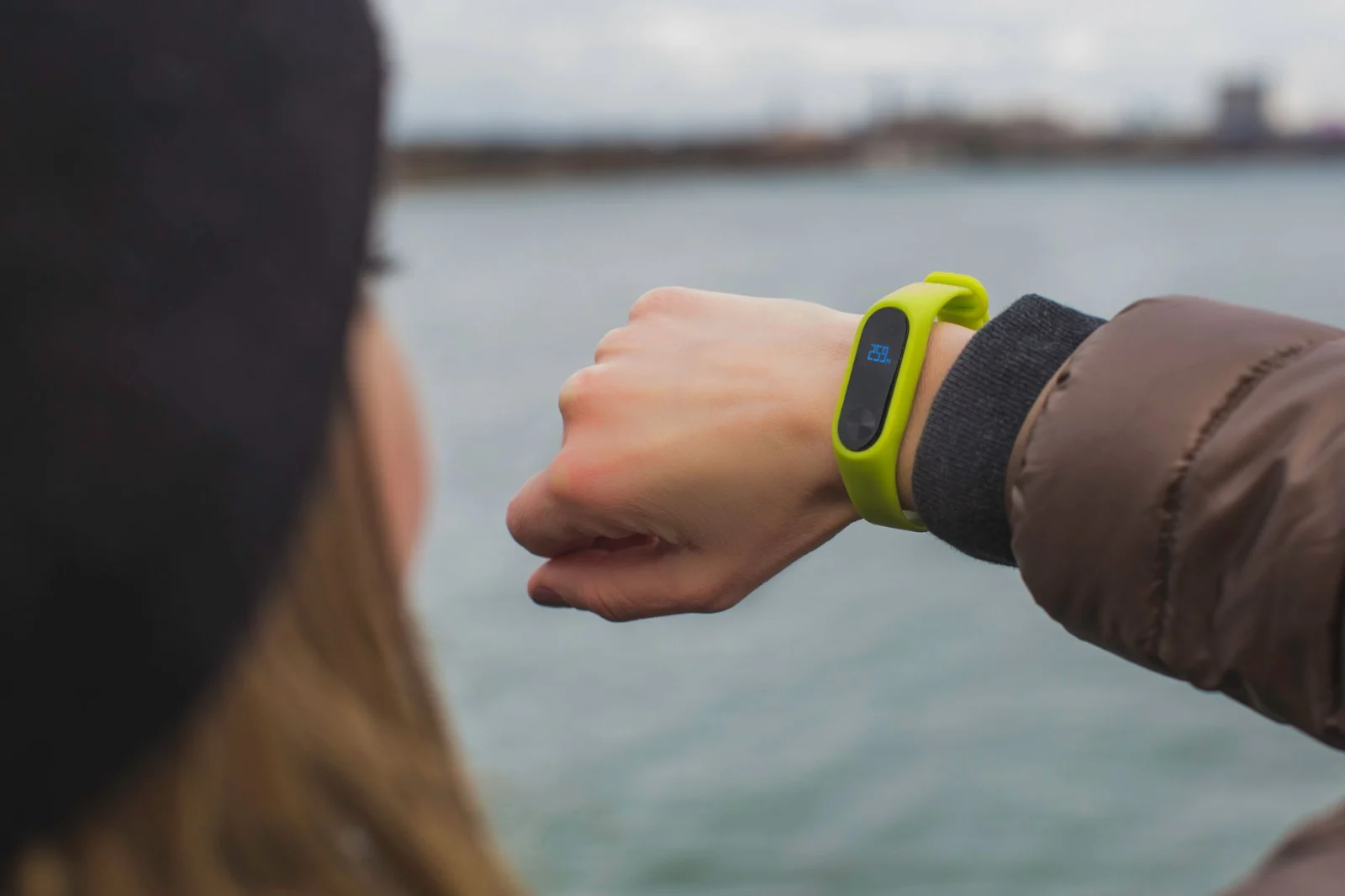
Close-up of a wrist wearing a watch with a slim strap, similar to how a Medallion watch adapter is worn
A watch adapter lets the Medallion ride on a strap you already wear. Photo: Burst on Pexels

Watch adapters

If you already wear a watch or fitness tracker, a Princess Medallion holder that slides onto the strap means there is nothing extra to remember. These adapters are made by independent sellers rather than Princess, so measure your strap width before buying and check the listing says it fits the current Medallion. The disc sits under or beside the watch face, which some people find bulky after a long day.

Pendants, necklaces and bracelets

For formal nights, a jewelry-inspired option looks far smarter than a lanyard. Princess sells necklaces and bracelets onboard and pre-cruise, with its premium bracelet listed at $45. Onboard metal pieces are plated rather than solid precious metal, so anyone with a metal allergy may prefer a fabric, leather or silicone option. Independent makers also sell lockets, bangles and beaded bracelets sized for the Medallion.

Keyrings, bag holders and phone holders

AirTag keyrings and carabiner holders are an inexpensive ocean medallion holder option, and they fit most bags and belt loops. Stick-on phone holders keep the Medallion on the back of your phone. Both work well for some people but share one risk: if the bag or phone is left on a sun lounger or in the cabin, so is your Medallion, and you will not be able to open your door or buy a drink until you get it back.

Official Princess Medallion accessories and where to buy them

Princess sells its own range of Princess Medallion accessories, described as sporty and jewelry-inspired. The current line-up on the Princess website includes:

  • Clip: hard plastic, $7 pre-cruise.
  • Sports bands: for a casual, active look.
  • Reclaimed ocean plastic wrist straps: the sustainable option.
  • Necklace and bracelet: jewelry-style pieces, with the premium bracelet at $45.

You can order through your OceanProfile in the Princess app before you sail, or buy onboard at the OceanFront store. Princess also offers Medallion customization: the face shows your loyalty level as standard, and further personalization costs $5. Accessories ordered in advance can be shipped with your Medallion; the shipping fee applies per order, and you can avoid it by collecting everything at the port. Prices and ranges change, so check the official Princess Medallion accessories page before you buy.

Third-party accessories from online marketplaces cost less and come in far more styles. Princess does not certify them, so read the sizing details and reviews carefully, and avoid anything that covers the disc with thick metal, which could affect how reliably door locks and payment points read it.

How to get your Medallion in 2026

Your Medallion is linked to you when you complete OceanReady, the online check-in in the Princess app or website. You then have two delivery choices:

  1. Home delivery. Available to residential addresses in the US, Canada and Puerto Rico. Princess asks you to confirm shipping at least 13 days before your cruise starts. Princess raised the US shipping fee from $10 to $20 in February 2026, and cruise trade reports say it rose again to around $22 from 20 August 2026 (about $27 for Canada). Some guests who booked Plus or Premier packages before July 2025 kept free shipping. Check the exact amount at checkout in the app.
  2. Port pickup. Free, and the only option for guests living outside those three countries, including UK passengers sailing Princess cruises from Southampton. You collect it at the terminal on embarkation day.

If your Medallion arrives at home, pack it in your hand luggage rather than your checked suitcase, because you need it as soon as you board. A small zip pocket in your cruise carry-on bag is ideal. If you forget it altogether, you can still pick one up at the terminal as long as OceanReady is complete.
Sunny cruise ship pool deck with loungers and swimmers, where a waterproof wristband is useful
Waterproof holders keep the Medallion on you around the pool. Photo: Nuh Isa El Carillo on Pexels

Practical tips for wearing your Medallion

  • Bring two options. A wristband for daytime and a clip or pendant for evenings covers almost every situation. Keep the free lanyard in your bag as a spare.
  • Test the fit before you sail. Press the Medallion into a new holder at home and give it a firm tug. Loose silicone is the most common reason Medallions go missing.
  • Think about children. Secure wristbands work better than lanyards for kids. Families with babies or toddlers who put things in their mouths should keep the small disc out of reach.
  • Pacemakers and implanted devices. The Medallion contains magnets and a battery. Cruise Critic advises keeping it at least six inches from a pacemaker, and other guides suggest a wristband or clip rather than a lanyard worn on the chest. Ask your doctor and device maker for advice before you travel.
  • Do not rely on your phone alone. A phone holder is convenient, but phones get left on charge in the cabin. Many cruisers keep the Medallion on their body instead.
  • Pack accessories with the rest of your small items. Our cruise packing tips include easy ways to keep small essentials organized.

What to do if you lose your Medallion

Report a lost Medallion to the crew straight away, either at Guest Services or through any crew member. Princess disables the missing device so nobody else can use it to charge purchases or open your cabin, and issues a replacement at no cost. Because the Medallion holds no personal information, a lost device does not expose your details. If you are travelling with family, the Princess app’s locator can sometimes help you find a misplaced Medallion before you report it.

Do you need a Princess Medallion accessory?

Strictly, no. The free lanyard works, and Princess is happy for you to carry the Medallion in a pocket or purse. But an accessory makes it easier to keep the device on you, and that is what makes the system work well: doors unlock as you arrive, and drinks and orders find you without fuss. For most people, one inexpensive wristband or clip is enough. Add a pendant or bracelet if you enjoy dressing up for formal nights. Spend more only if you want a keepsake, since Princess describes the customized Medallion as something you can take home.

For other lines, our cruise lanyard guide explains which cruise lines hand them out free and which types work best.

FAQs

Is the Princess Medallion free?

Yes. Every guest receives a Medallion and a basic lanyard at no charge. You only pay for optional accessories, extra personalization or home shipping, and port pickup is free.

Is the Princess Medallion reusable?

Princess issues a Medallion for each sailing through OceanReady and describes it as a keepsake you can take home. Do not assume an old one will work on your next cruise; follow the Medallion step in OceanReady for each voyage.

Do AirTag accessories fit the Princess Medallion?

Generally yes. The Medallion is close to the size and shape of an Apple AirTag, so many AirTag holders, keyrings and bands fit it. Check the fit at home and make sure it holds the disc firmly.

What happens if I lose my Medallion on a Princess cruise?

Tell the crew or Guest Services right away. Princess disables the lost device and replaces it at no cost, and no personal information is stored on the Medallion itself.

Can I wear the Medallion in the pool?

Yes. Princess says the Medallion is waterproof and resistant to heat, sand and salt, so a wristband or clip on your swimwear is fine for the pool and beach.
Cruise ship stateroom with made bed and balcony door, illustrating the cabin types compared in this Majestic Princess guide

Majestic Princess Cabins to Avoid & the Best Cabins to Book

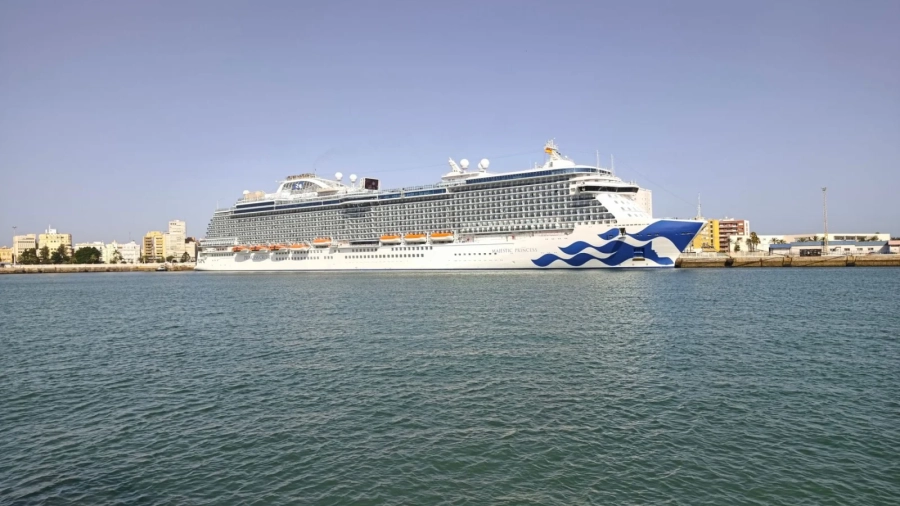
The main Majestic Princess cabins to avoid are Deck 15 cabins below the Lido Deck pools and buffet, starboard midship cabins that sit just below the glass-floored SeaWalk, and the handful of balconies with obstructed views on Decks 8, 15 and 16. Far-forward cabins are also best skipped if you get seasick. For most passengers the best value is a midship balcony or mini-suite on Decks 9 to 12, while the aft-corner Owner’s Suites are the top choice for space.

Majestic Princess is a 143,700-ton Royal-class ship that launched in 2017. She carries 3,560 guests in 1,780 staterooms, and more than 1,400 of them are outside cabins, almost all with a balcony. She is still in the Princess fleet. For winter 2026-27 she moves from Galveston to South America and Antarctica, sailing from Buenos Aires and San Antonio (Chile), and she is named in Princess’s 2027 Northern Europe programme. Whichever itinerary you book, the cabin layout is the same. This guide covers every stateroom type, where the problems are, and how to check a cabin number before you pay.

Majestic Princess cabins at a glance

The ship has no standard oceanview category to speak of. Nearly every outside cabin has a balcony, and cabins run from Deck 8 (Emerald) up to Deck 16 (Lido). There are no cabins on Decks 4 to 7, which hold the public rooms. The sizes below are approximate and include the balcony where there is one. Figures differ slightly between sources, so check the exact cabin on the Princess deck plan.

Cabin type Number Approx. size Where / notes Best for
Inside 342 166-175 sq ft Decks 8-16; many connecting insides on Deck 10 Budget, dark-room sleepers
Balcony 715 About 222 sq ft (41 sq ft balcony) Decks 8-16 Most couples
Deluxe Balcony 313 About 249-333 sq ft Decks 8-16; adds a small sofa, some aft balconies deeper Couples wanting more room or a third guest
Mini-Suite 374 About 299-329 sq ft Decks 10-16; bathtub, separate sitting area Best mid-price upgrade
Premium Suite Part of 36 suites About 554 sq ft Forward, Decks 9-12 Space without the top price
Penthouse Suite Part of 36 suites About 440 sq ft Midship, Deck 14 Suite perks in a central spot
Owner’s Suite Part of 36 suites About 587-682 sq ft Aft corners, wraparound balcony The biggest cabins and wake views

The ship also has 38 wheelchair-accessible staterooms and around 200 connecting staterooms. A note on names: Princess has rebranded what used to be called Club Class as the Reserve Collection. On Majestic Princess this covers all the suites and selected, well-placed mini-suites. Guests get a private section of the main dining room with no wait, wine on arrival, canapés on request and other extras. Suite guests also get the Concierge Lounge, breakfast in a private venue and free laundry. Older reviews that mention “Club Class mini-suites” are talking about the same cabins.

Majestic Princess cabins to avoid

Every one of these Majestic Princess cabins to avoid suits someone. What matters is whether the particular downside will bother you.

1. Deck 15 cabins below the Lido Deck

Deck 16 (Lido) holds the main Fountain Pool area, the plunge pool, the grills and the World Fresh Marketplace buffet. Cruise Critic singles out Deck 15 cabins as ones to avoid because they sit under this busy area. The usual complaint is loungers being dragged and stacked early in the morning and late at night, plus foot traffic overhead. If you want Deck 15, check that what’s directly above your cabin is more cabins rather than pool deck or buffet.

2. Starboard midship cabins under the SeaWalk

The SeaWalk is a glass-bottomed walkway that juts out from the starboard side of the top decks. It’s fun to visit but less fun to sleep under. One Cruise Critic member staying in a mini-suite two decks below it reported that passers-by could look straight down onto the balcony. They also said its blue lighting glowed all night and part of the view was blocked, including while cruising the New Zealand fjords. If balcony privacy matters, choose port side or a cabin forward or aft of the SeaWalk.

3. Obstructed-view balconies

A few standard balconies on Deck 8, and a handful of Deluxe Balconies on Decks 8, 15 and 16, have views partly blocked by lifeboats, solid steel railings or structure. Princess sells these in their own obstructed categories, so the price is usually lower. If you’ll mostly use the balcony for fresh air rather than scenery, they can be good value. For Antarctic or fjord itineraries, where the view is the whole point, avoid them.

4. Forward cabins if you’re prone to seasickness

The bow pitches the most in a swell. That matters more than usual on South America and Antarctica voyages, which cross open water around Cape Horn and the Drake Passage area. Seasick-prone travellers should book low and midship.

5. Cabins where extra berths block the balcony

In some balcony and deluxe balcony cabins, using the pull-down upper berth or sofa bed for a third or fourth guest blocks the balcony door. Cruise Deck Plans flags this on its category notes. A family of four squeezed into one balcony cabin may find two connecting cabins work far better.

6. Interconnecting cabins (if you aren’t using the connection)

With around 200 connecting staterooms on board, there’s a fair chance of booking one by accident. The connecting door lets more sound through than a solid wall. If you’re not travelling with the people next door, choose a cabin without the connecting-door symbol on the deck plan.

7. Cabins near service areas, lifts and the Deck 16 cabins by the pool

Cabins next to crew doors, laundry rooms or lift lobbies get more door noise. A small number of cabins sit on the Lido Deck itself, and those closest to the pool and buffet zones will hear more of the daytime activity.

Cruise ship balcony cabin with sliding glass door open to the sea
A midship balcony on a middle deck avoids most of the common noise and motion problems. Photo: Ankit Gupta on Pexels

Majestic Princess best cabins

Midship balconies on Decks 9 to 12

These decks have cabins above and below, are close to the lifts and move the least. A standard or deluxe balcony here is the safest all-round choice and is usually the sweet spot for price.

Midship mini-suites with angled balconies

Mini-suites are the upgrade most often recommended on Royal-class ships, thanks to the bathtub, sitting area and extra room. The midship mini-suites with angled balconies have more outdoor space than standard ones. If yours is in the Reserve Collection, the dining perks add real value too.

Aft cabins and Owner’s Suites

Some aft deluxe balconies have slightly deeper balconies. The Owner’s Suites wrap around the aft corners with large balconies and are the biggest cabins on the ship. On any ship, aft cabins give wake views but can feel more vibration, particularly when manoeuvring in port.

Penthouse and Premium Suites

The Penthouse Suites are midship on Deck 14, close to the Concierge Lounge, which makes them convenient as well as roomy. The Premium Suites are larger but sit forward on Decks 9 to 12, so they suit good sailors best.

Accessible and connecting cabins

The 38 accessible staterooms come in several categories. Book them early, as they go fast. Families often do best with two connecting balcony cabins rather than four people in one room.

Avoid this, book that instead

If you were going to book… The risk Consider instead
Deck 15 under the pool or buffet Early and late noise overhead Deck 14 or lower, same category
Starboard midship below the SeaWalk Overlooked balcony, night-time glow Port side midship
Obstructed balcony (Antarctica or fjord cruise) Blocked scenery Standard balcony on Decks 9-12
Forward cabin (seasick traveller) Most pitching Low midship balcony
Four people in one balcony cabin Berths block the balcony door Two connecting cabins
White wake trailing behind a cruise ship across a dark blue ocean
Where your cabin sits on the ship shapes how much motion and noise you notice. Photo: enes çimen on Pexels

Quick checklist before booking a Majestic Princess cabin

Most Majestic Princess cabins to avoid can be spotted in a few minutes on the deck plan:

  1. Open the official Princess deck plan and check the deck above your cabin for pools, the buffet, galleys or the SeaWalk.
  2. Check the deck below. Deck 8 cabins sit over public rooms on Deck 7.
  3. Look for connecting-door, accessible and obstructed-view symbols on your cabin.
  4. Note whether you’re starboard midship near the SeaWalk.
  5. If you need a third or fourth berth, confirm whether it blocks the balcony.
  6. Think twice about guarantee fares if you’re a light sleeper or get seasick. Princess picks the cabin for you, and it could be any of the spots above.

Sailing on a sister ship? The same Royal-class logic applies in our Royal Princess cabins guide. For the newer Sphere-class ships, see our Sun Princess best and worst cabins. If you haven’t picked a sailing yet, our roundup of cruise deals for 2027 is a good place to start.

FAQs

What class is Majestic Princess?

Majestic Princess is a Royal-class ship, alongside Royal, Regal, Sky, Enchanted and Discovery Princess. She is 143,700 tons, carries 3,560 guests and entered service in 2017.

Which deck is best on Majestic Princess?

For most people, Decks 9 to 12 midship. They have cabins above and below, easy lift access and the least motion. Deck 14 is also good, except for cabins at the starboard midship SeaWalk location and anything beneath busy areas.

Are Deck 15 cabins on Majestic Princess noisy?

Some can be. Cabins directly below the Deck 16 pools and buffet can hear loungers being moved and foot traffic early and late. Deck 15 cabins with more cabins above them are fine. Check the deck plan for your specific number.

Is Majestic Princess still sailing with Princess in 2026-27?

Yes. For winter 2026-27 she sails South America and Antarctica voyages from Buenos Aires and San Antonio (Chile), replacing her planned Galveston season. Princess has also named her for its 2027 Northern Europe season.

Untitled-design-41.jpg

Irish Firefighter Dives Into The Sea To Rescue Overboard Passenger

An Irish firefighter has been lauded after helping rescue a passenger who fell overboard from a cruise ship in Honduras.

Firefighter rescues overboard passenger from cruise ship

Rory Foy, who himself is on holiday, saw that a passenger fell overboard from the ship as it was docking.

He jumped into the water and grabbed a life ring, swimming to the passenger to help them retrieve it and then swimming with them to the shore.

While it’s not been confirmed which cruise line or ship was involved, social media images and the ship schedules for the time suggest it was Royal Caribbean’s Harmony of the Seas or Enchantment of the Seas.

No information has been released about the passenger’s well-being or how they fell overboard.

Usually, rescues involving cruise ships either involve the cruise ship crew rescuing stranded people on a boat, or the coast guard rescuing people from a ship if they suffer a medical emergency.

People do occasionally go overboard from ships, but a lot of those cases end tragically with no body found.

Rescues of this nature – with a passenger being the hero – are certainly rare and he deserves all the credit he is getting!

NEW DEALS JUST RELEASED!

Don’t miss these hot cruise offers…

Related posts

Source link

Cruise ship balcony cabin with sea view, the kind of room many guests aim for with a cruise cabin upgrade

Cruise Cabin Upgrade Guide: How to Upgrade After Booking (2026)

Yes, you can upgrade your cruise cabin after booking. The most reliable route is to call the cruise line or your travel agent and pay the fare difference for a better cabin before final payment. Closer to sailing, most big lines also run bid programs (RoyalUp, Celebrity MoveUp, NCL Upgrade Advantage, MSC UpGrade, Princess Upgrade, Cunard Upgrade) where you offer what you’re willing to pay. Free upgrades do happen, but they’re rare, so don’t count on one.

This guide covers every realistic cruise cabin upgrade route: what each one costs, when it happens, what you give up (usually your choice of cabin number), and how the major lines compare in 2026.

Can You Upgrade a Cruise Cabin After Booking?

Almost always, yes. A cruise booking isn’t locked to one cabin category. Moving up a category is the easiest change to make, because the line gets more money and frees up a cheaper cabin to sell again. Moving down is harder and often isn’t allowed on non-refundable deposit fares.

There are five main ways to upgrade your cruise cabin after booking:

  1. Pay the difference through the cruise line or your travel agent.
  2. Bid through the line’s upgrade auction program.
  3. Book a guarantee cabin and hope the line assigns you something better.
  4. Use loyalty status to get upgrade offers or better odds.
  5. Ask onboard at guest services once you’ve sailed.

If you’re still deciding whether the jump is worth it at all, our guide to the pros and cons of a balcony vs an inside cabin sets out what you actually get for the extra money.

How to Upgrade Your Cruise Cabin Before You Sail

Pay the fare difference

This is the only route where you choose the exact cabin. Call the line or your agent (or use “Manage Booking” online, where some lines allow it), pick the new category and cabin number, and pay the difference between your current fare and today’s price for the new cabin. The cost depends on current pricing, not the price when you booked, so an upgrade can be cheap on a sailing that isn’t selling well and expensive on one that’s nearly full.

Watch for price drops

If the fare for your sailing falls before final payment, many lines and agents will reprice your booking. Some guests take that saving and put it toward a higher category instead, so they end up in a balcony for roughly what they first paid for an ocean view. Policies differ by line and by fare type, and promotions can change when you reprice, so ask your agent to compare the whole package (fare, onboard credit, drinks or Wi-Fi perks) before switching.

Know your fare rules

  • Non-refundable deposit fares usually let you move up a category but not down, and change fees may apply.
  • After final payment, changes are still possible, but any cancellation penalties tied to the original booking may carry over.
  • Promotional perks such as included drinks or onboard credit can change when you switch category. Check before you confirm.
  • Gratuities are often higher in suites, so factor that in.
Spacious suite with a sofa and large windows overlooking the sea
A suite upgrade usually brings more space and extra perks, but also higher gratuities. Photo: Abdou HILALI STUDIO on Pexels

Cruise Upgrade Bid Programs: How They Work

Upgrade bidding is now standard on most big-ship lines. The process is broadly the same everywhere:

  1. After you’ve booked (and usually paid in full), the line emails an invitation, or you check eligibility on its upgrade page or app. You normally need to be opted in to marketing emails.
  2. You choose one or more higher categories and enter a per-person offer above the minimum shown.
  3. You give a credit card, but it isn’t charged unless the line accepts your offer.
  4. If your bid wins, you’re moved automatically and charged. Accepted upgrades are almost always non-refundable.
  5. If it loses, you keep your original cabin and pay nothing.

The important catch: you can’t choose your cabin number. The line puts you in whatever cabin is left in the new category. That could be a lower deck, a cabin under a noisy venue, a partly obstructed balcony, or one far from the rest of your group. Connecting cabins and adjoining rooms for families are usually not kept together.

Cruise upgrade bid programs compared (2026)

Cruise line Program When bids are decided Payment Choose cabin number?
Royal Caribbean RoyalUp Can be accepted up to about 2 days before sailing Card charged only if you win; non-refundable No
Celebrity Cruises MoveUp Eligible within 90 days of departure; accepted up to 2 days before Charged on acceptance; non-refundable No
Norwegian Cruise Line Upgrade Advantage By invitation; can be accepted up to sailing day Charged on acceptance (or to onboard account on sailing day) No
MSC Cruises MSC UpGrade Any time up to departure Charged automatically if accepted; higher service charge billed onboard No
Princess Cruises Princess Upgrade Opens 85 days out (115 days for 25+ night voyages) You pay after acceptance via Manage Booking or your agent No
Cunard Cunard Upgrade Opens 80 days out; final offers 7 days before Charged on acceptance; payment due within 72 hours No
Virgin Voyages Level Upgrade Most responses around 48 hours before sailing Check current terms No
Carnival No bid program Occasional paid upgrade offers; ask your agent or guest services Fare difference Yes, if you pay the difference

Terms above are based on each line’s published rules at the time of writing. They change, so read the terms on your invitation before you bid.

Tips for winning a cruise upgrade bid

  • Bid a little above the minimum. Lines generally take the highest offers first, and minimum bids often lose on busy sailings.
  • Compare with the fare difference. Look up the current price of the cabin you’re bidding on. If paying the difference costs about the same as a strong bid, pay it and choose your cabin.
  • Bid on more than one category where allowed. You’ll only be charged for one upgrade.
  • Think about quieter sailings. Shoulder season and repositioning cruises have more empty upper cabins, so bids are more likely to win.
  • Check what’s included. On some lines a suite upgrade brings lounge and restaurant access; on others the perks are limited. Celebrity, for example, awards Captain’s Club points on your originally booked category, and RoyalUp suite upgrades don’t earn the double Crown & Anchor points you’d get by booking a suite.

For a closer look at what changes as you move up, see suite vs mini-suite vs balcony.

Guarantee Cabins and Free Upgrades

A guarantee (GTY) booking means you pay for a category, or “at least” a category, and the line assigns your cabin number later, often in the final weeks before sailing. Guarantee fares are usually a little cheaper than picking your own cabin.

Because the line can place you anywhere in that category or higher, guarantee cabins are where most genuinely free upgrades happen. When a lower category is overbooked, the line moves some guests up to free space. You can’t ask for this, and many guarantee guests simply get an ordinary cabin in the category they paid for, sometimes in a less desirable spot.

Guarantee cabins suit flexible travelers who don’t mind where they sleep. Skip them if you need a specific location, such as midship for seasickness, an accessible cabin, or cabins close to family.

Friendly hotel reception desk with staff helping a guest at check-in
Guest services is the place to ask about last-minute cabin upgrades once you're onboard. Photo: AS Photography on Pexels

Loyalty Perks and Cabin Upgrades

Loyalty status rarely gives you a guaranteed free upgrade, but it can help in other ways:

  • Some lines give top-tier members first look at upgrade offers or better pricing.
  • When lines do hand out complimentary upgrades to fill a ship, frequent guests and those who booked higher fares tend to be considered first.
  • Higher tiers may include suite-style perks (priority boarding, lounge access, laundry) without changing your cabin.

The most useful tiers sit at the top of each program, such as Royal Caribbean’s Diamond Plus and Pinnacle Club, Celebrity’s Elite and Elite Plus, and Princess Captain’s Circle Platinum and Elite. Compare them in our guide to cruise line loyalty programs compared.

Upgrading Onboard at Guest Services

If cabins are still empty after embarkation, the line would rather sell them than sail with them empty. Head to guest services (or check the app) on embarkation day and ask whether any upgrades are available and at what price. You’ll normally pay a pro-rated amount for the nights left, charged to your onboard account.

Onboard upgrades aren’t advertised on most ships, availability is unpredictable, and the busiest sailings rarely have spare cabins. Ask early on the first day, be polite, and be ready to move your luggage yourself or wait for your cabin steward to help.

What Happens to Your Cabin Number When You Upgrade?

  • Paying the difference: you pick the new cabin, so you control the location.
  • Winning a bid: the line assigns the cabin. You lose your original cabin, and you usually can’t switch back once the upgrade is accepted.
  • Guarantee bookings: the cabin number appears in your booking once assigned. Check your app or documents in the final few weeks.
  • Onboard upgrades: you’ll be offered whatever is free, sometimes with a choice of two or three cabins.

Your new key card or medallion is reissued for the new cabin, and your dining time, drinks package and other add-ons normally stay with your booking. Check with the line if you’re moving into a suite category with its own restaurant or lounge.

Is a Cruise Cabin Upgrade Worth It?

An upgrade is usually worth it when:

  • You’re on a scenic itinerary (Alaska, Norway, the Mediterranean) where a balcony gets heavy use.
  • The cruise is long. An extra $40 per person per night matters less across 14 nights than it does on a weekend sailing.
  • The suite category includes real extras, such as a private restaurant, lounge, or included drinks.

It may not be worth it on short, port-heavy cruises where you’ll barely be in your cabin. In that case, the money often goes further on excursions, specialty dining, or a future cruise.

FAQs

Can you get upgraded on a cruise for free?

Yes, but it’s uncommon. Free upgrades mostly go to guarantee-cabin guests when a lower category is overbooked, and sometimes to loyal or higher-fare guests. Carnival has said publicly that the chances of a free move from inside to balcony are slim.

How do I upgrade my cabin on Princess Cruises?

You can pay the fare difference through Princess or your travel advisor, or bid through Princess Upgrade. Bidding opens 85 days before sailing (115 days for voyages of 25 nights or more), and your booking must be paid in full.

Do you get charged if your cruise upgrade bid isn’t accepted?

No. On RoyalUp, MoveUp, Upgrade Advantage, MSC UpGrade and similar programs, your card is only charged if the line accepts your offer. If it’s declined, you keep your original cabin at no cost.

Can you choose your cabin number when you bid for an upgrade?

No. Bid programs only upgrade the category, and the line assigns the cabin. If location matters, pay the fare difference and choose the cabin yourself.

When is the best time to upgrade a cruise cabin?

Before final payment is often best, because you can reprice if fares drop and choose your cabin. Bid programs open roughly 2 to 3 months before sailing and are usually decided in the last few days.

Untitled-design-1-7.jpg

Major Impact To Cruise Industry Due To Hurricane Milton

Many of the world’s biggest cruise lines are making changes to cruises this week, due to the impact of Hurricane Milton.

Tropical hurricane

The hurricane, hitting Florida on Wednesday 9th October, is causing major problems for cruise ships that are due to dock in the ports of the state, including Tampa, Port Canaveral, Miami, and Fort Lauderdale.

Several cruises have seen their itineraries altered even before the hurricane reached land, including the world’s biggest cruise ship Icon of the Seas, which had to cancel a planned visit to Royal Caribbean’s private island Perfect Day at CocoCay.

Grandeur of the Seas was another Royal Caribbean ship heavily impacted, sailing to the Bahamas instead of two scheduled port visits to Mexico.

Carnival has been carefully monitoring five ships which have been in the path of the hurricane, with Carnival Paradise due to return to Tampa on 10th October, and Carnival Elation set to return to Jacksonville on the same day.

Carnival Sunrise is also scheduled to return to her port of Miami on Thursday. Carnival Dream and Carnival Pride are set to have their itineraries adjusted to avoid the storm while at sea.

Celebrity Cruises ship Celebrity Reflection was due to call at Key West on Tuesday 8th October, but instead sailed to Nassau in the Bahamas to avoid the oncoming storm.

Virgin Voyages, at the time of writing, hasn’t yet altered plans for Valiant Lady but the cruise line has said that last-minute itinerary changes may be needed.

And another notable change is for Princess Cruises and their newest ship Sun Princess, which was due to complete its inaugural transatlantic cruise on Wednesday 9th October but will now remain out at sea, likely until Friday 11th October.

Obviously, the safety of passengers and crew is paramount. And while the changes to itineraries will be disappointing for many, it’s important to remember that cruise lines must make changes to avoid storms where necessary.

NEW DEALS JUST RELEASED!

Don’t miss these hot cruise offers…

Related posts

Source link

Colorful cruise ship buffet with salads, fruit and hot dishes, illustrating how to avoid cruise weight gain

How to Avoid Cruise Weight Gain Without Missing Out on the Fun

Cruise weight gain is common but usually modest, and a good part of what shows on the scale right after a cruise is temporary water weight from extra salt, carbohydrates and alcohol. You can avoid most of it without skipping the fun by being choosy at the buffet, watching liquid calories and using the ship’s gym, jogging track and active shore days.

This guide looks at how much weight people actually gain, why it happens, and practical, realistic ways to enjoy the food on board and feel good when you get home.

How Much Weight Do You Gain on a Cruise?

You will see claims online that the average cruise passenger gains a pound a day, or even a stone on a two-week cruise. These figures tend to come from informal surveys or anecdotes rather than solid research, so treat them with caution.

There is no large, published study of the average weight gain on a cruise specifically. The closest good evidence is a 2016 study by researchers at the University of Georgia, published in Physiology and Behavior, which followed 122 adults taking vacations of one to three weeks. On average, participants gained a little under 1 pound, though results varied widely: some lost weight while others gained up to around 7 pounds. Alcohol was a big factor, with weekly drinks roughly doubling on vacation.

A cruise, with food available almost around the clock and drinks packages that encourage you to get your money’s worth, may make bigger gains more likely for some people. But for most travelers, a sensible approach keeps the change small and short-lived.

Why Cruise Weight Gain Happens

Food is always available

On most mainstream ships you can move from a buffet breakfast to pizza by the pool, afternoon snacks, a multi-course dinner and a late-night bite without ever paying extra. It is not one big meal that adds up, but the grazing in between.

Bigger, richer meals

Main dining room menus often invite you to order an appetizer, soup, main course and dessert every night, and many dishes are richer than what you would cook at home.

Drinks packages and cocktails

Sugary frozen cocktails, specialty coffees and sodas can carry a lot of calories. A drinks package can make it easy to have more than you otherwise would. Carnival’s own healthy cruising advice notes that liquid calories count and suggests alternating alcoholic drinks with water.

Temporary water weight

Restaurant-style food is often high in salt, and the body holds on to extra water to balance sodium. Carbohydrates are stored as glycogen, and each gram of glycogen is stored with about 3 grams of water. Alcohol and travel can also leave you dehydrated, which can lead to fluid retention. This is why many people step on the scale after a cruise and see a higher number than the extra calories alone could explain, and why some of it drops away within a few days of returning to normal routines.

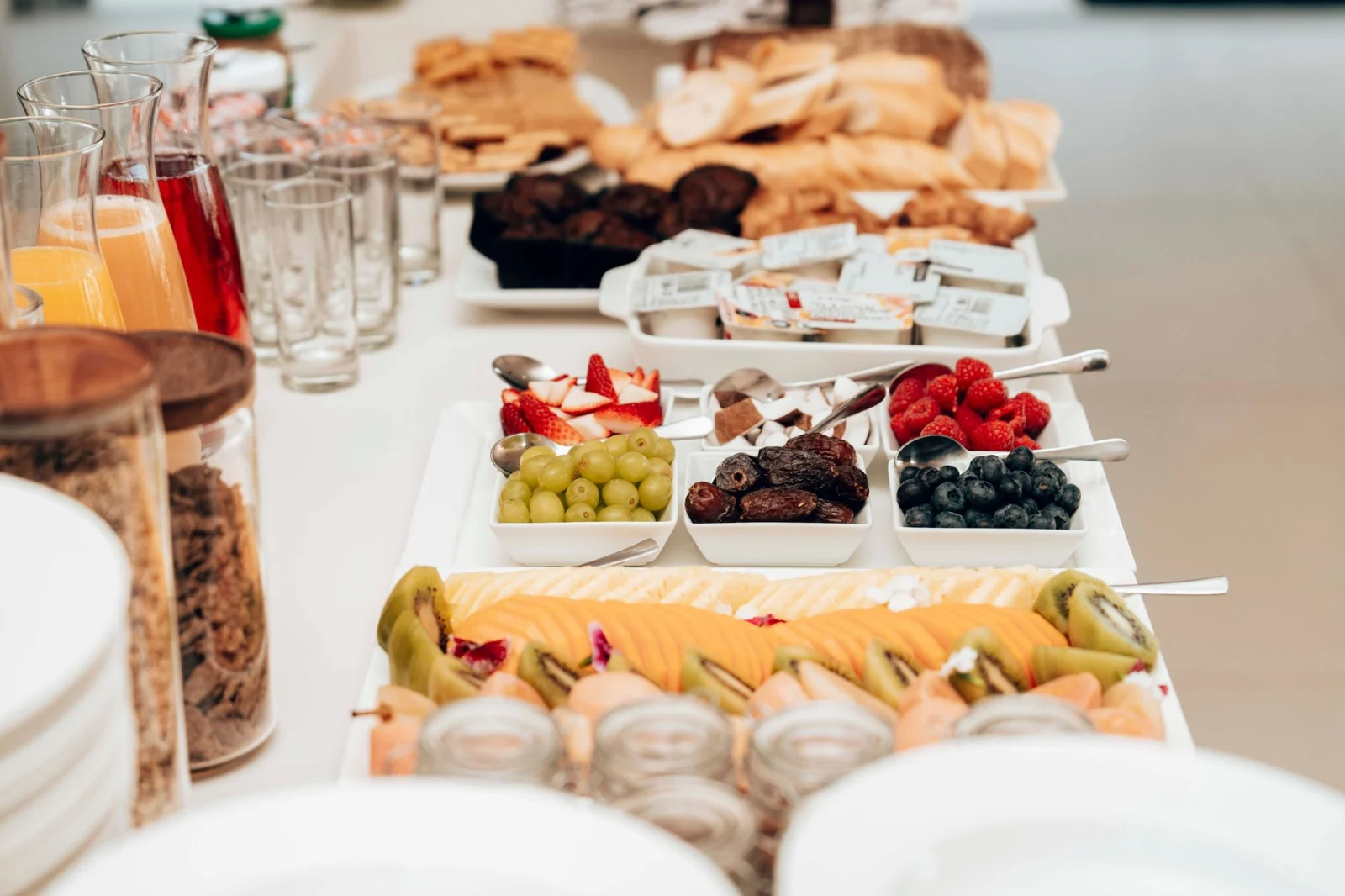
Bowls of fresh fruit, yogurt and granola laid out on a hotel style breakfast buffet
Starting with fruit, eggs or yogurt at the buffet makes it easier to enjoy treats later in the day. Photo: Keegan Checks on Pexels

How to Avoid Gaining Weight on a Cruise: Food Strategies

The aim is not to diet on vacation. It is to enjoy the meals you are really excited about and skip the extras you will not miss.

At the buffet

  • Walk the whole buffet before you pick up a plate. Decide what looks best rather than taking a little of everything.
  • Start with protein, salad or fruit. Then add the dishes you really want.
  • Use a smaller plate where one is available, and sit down to eat rather than grazing as you go.
  • Skip the habit snacks. If you are not hungry, the pool deck pizza will still be there tomorrow.

In the main dining room

  • Pick two or three courses, not five. You can always order a lighter starter instead of a main if you are not very hungry.
  • Ask for sauces on the side or vegetables instead of fries. Dining room staff are used to requests like these.
  • Share desserts or choose fruit or sorbet on some nights.
  • Look for lighter or plant-based options. Many lines now offer them; Carnival, for example, introduced dedicated vegan dining room menus across its fleet, and most lines mark vegetarian dishes on the menu. Healthy labels and menus vary by ship and change over time, so ask your waiter what is available.

Drinks and drinks packages

  • Alternate every alcoholic drink with water. This helps with hydration as well as calories.
  • Choose simpler drinks. A glass of wine, a light beer or a spirit with soda water usually carries fewer calories than a frozen cocktail.
  • Do the math before buying a package. If you are drinking more just to make it pay off, it may not be the best value for your budget or your waistline.
  • Carry a refillable water bottle. Ships are warm, sunny places, and it is easy to mistake thirst for hunger.

Staying Active on Board and Ashore

Being active is one of the easiest ways to offset richer meals, and modern ships make it simple.

Option What to expect Tip
Fitness center Most large ships have a gym with cardio machines and weights, usually free to use Go early in the morning or on port days when it is quieter
Jogging or walking track Common on the top decks of mainstream ships Check how many laps make a mile, which is often posted on signs
Fitness classes Stretching, yoga, spin, boot camp and more; some are free, others carry a fee Check the daily planner or app on embarkation day
Stairs Available everywhere on the ship Take the stairs for a few decks instead of waiting for the elevator
Active shore days Walking tours, hikes, kayaking, snorkeling and cycling Mix in a few active excursions with your relaxing beach days

Packing makes a difference too. Bringing workout clothes and comfortable walking shoes removes an easy excuse, and our cruise packing tips from pro cruisers can help you fit everything in. If you want to know what you will need for dinners and days ashore, see our guide to what to wear on a cruise.

Person running along an outdoor deck track with the open ocean in the background
A morning walk or jog on deck is an easy way to stay active at sea. Photo: J VALTEN on Pexels

Simple Daily Habits That Add Up

  1. Eat when you are hungry, not because it is there. A ship’s schedule can make you feel you should eat at every opportunity.
  2. Plan your treats. If the chocolate buffet or a specialty restaurant is the highlight, enjoy it and go lighter earlier in the day.
  3. Get some daylight movement every day, even if it is just a few laps of the promenade deck.
  4. Prioritize sleep. Late nights and very early port mornings can leave you tired, which often leads to more snacking.
  5. Do not stress about the scale. A vacation is meant to be enjoyed, and a small, temporary change is normal.

For more ideas from people who have sailed many times, read our must-know tips from past guests.

How to Lose Weight After a Cruise

If the scale is higher when you get home, give it a few days before drawing conclusions. A lot of the early change is likely to be water rather than fat.

  • Return to your usual meals straight away rather than crash dieting, which can backfire.
  • Cut back on salty and processed foods and drink plenty of water to help your body rebalance fluids.
  • Get back to your usual activity. The University of Georgia study found that activity dropped in the weeks after vacation, which can make it harder to shift any extra weight.
  • Be patient. Most people find their weight settles within a week or two once normal routines return.

If you have a medical condition, take medication that affects fluid balance, or notice sudden swelling, speak to a doctor rather than relying on general advice.

FAQs

How much weight is normal to gain on a cruise?

There is no reliable cruise-specific figure. Research on vacations of one to three weeks found an average gain of a little under 1 pound, with a wide range. Some of the gain right after a cruise is usually temporary water weight.

Is weight gained on a cruise just water weight?

Often a good part of it is. Salty food, extra carbohydrates and alcohol can make your body hold extra fluid, which tends to drop within days of returning to normal eating. Any real fat gain usually takes longer to shift.

How long does it take to lose weight after a cruise?

Water weight often settles within a few days to a week. Any extra beyond that comes off gradually as you return to your usual meals and activity levels.

How can I eat healthy on a cruise?

Fill up on fruit, vegetables and lean protein at the buffet, choose two or three courses in the dining room, ask for sauces on the side, and look for lighter, vegetarian or plant-based dishes on the menu.

Untitled-design-10-3.jpg

15 ‘Definitely Real’ Reasons Why Icon Of The Seas Doesn’t Sink

A humorous look at how Royal Caribbean’s colossal cruise ship Icon of the Seas manages to stay afloat!

Icon of the Seas floating mansplained

There are still some great discussions on Twitter/X every once in a while. Some are super-useful and informative, but occasionally there’s a thread that is packed with great and funny replies.

In response to a video about Icon of the Seas, user @edmsillygoose made a request:

A couple of people took the assignment a little too literally:

But there were some fantastic funny replies too, which definitely made the thread worth reading!

Here’s a look at some of the best ‘definitely real’ reasons why Icon of the Seas stays afloat:

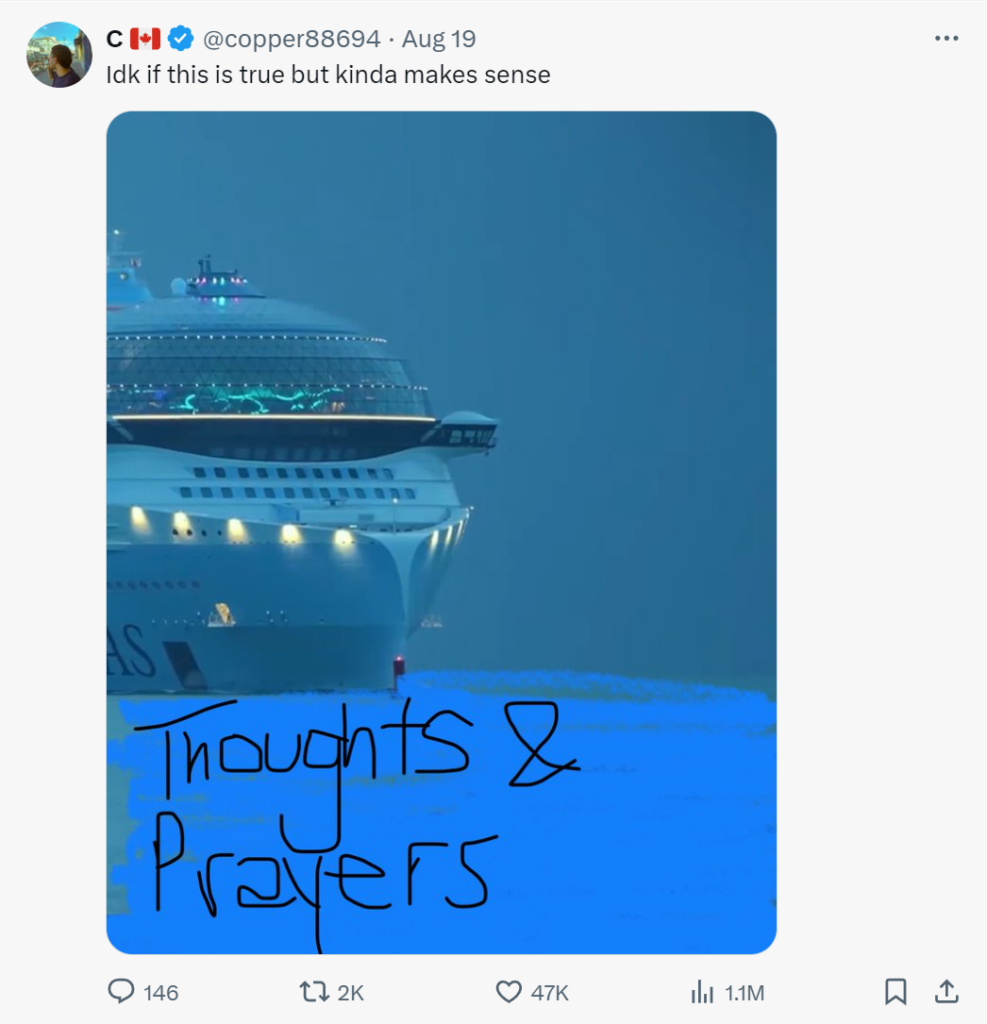
1. Thoughts and prayers

An image of a cruise ship being held up by the words "Thoughts and prayers"

‘Thoughts and prayers’ are apparently all that you need to keep a cruise ship floating on the water.

But does everyone onboard need to think about the ship floating, or pray for it to stay up? What happens if someone gets distracted?

Or is it just the thoughts and prayers of the captain? Maybe that’s why they’re paid so well – to always stay focused on using their brains to keep the ship afloat!

2. Iconic legs

A picture of a cruise ship being supported by lots of long legs in the sea

Turns out, the real secret behind the ship’s buoyancy is its impressive set of iconic legs. Forget complicated engineering or displacement – the ship just gracefully wades through the ocean on its oversized limbs, like some sort of stylish aquatic flamingo.

It raises the question: do the legs get tired after a long journey? Maybe there’s a secret team of masseuses onboard, dedicated solely to giving the ship’s legs a well-deserved break after hours of elegant striding across the waves.

3. Magic

"Magic mostly"

It’s as simple as that – magic. While the engineers might try to convince you with their fancy jargon and science, we all know it’s really just a sprinkle of pixie dust and a flick of the wand.

No need for hulls, stabilisers, or propellers when you’ve got good old-fashioned sorcery keeping the ship afloat.

4. Floating devices

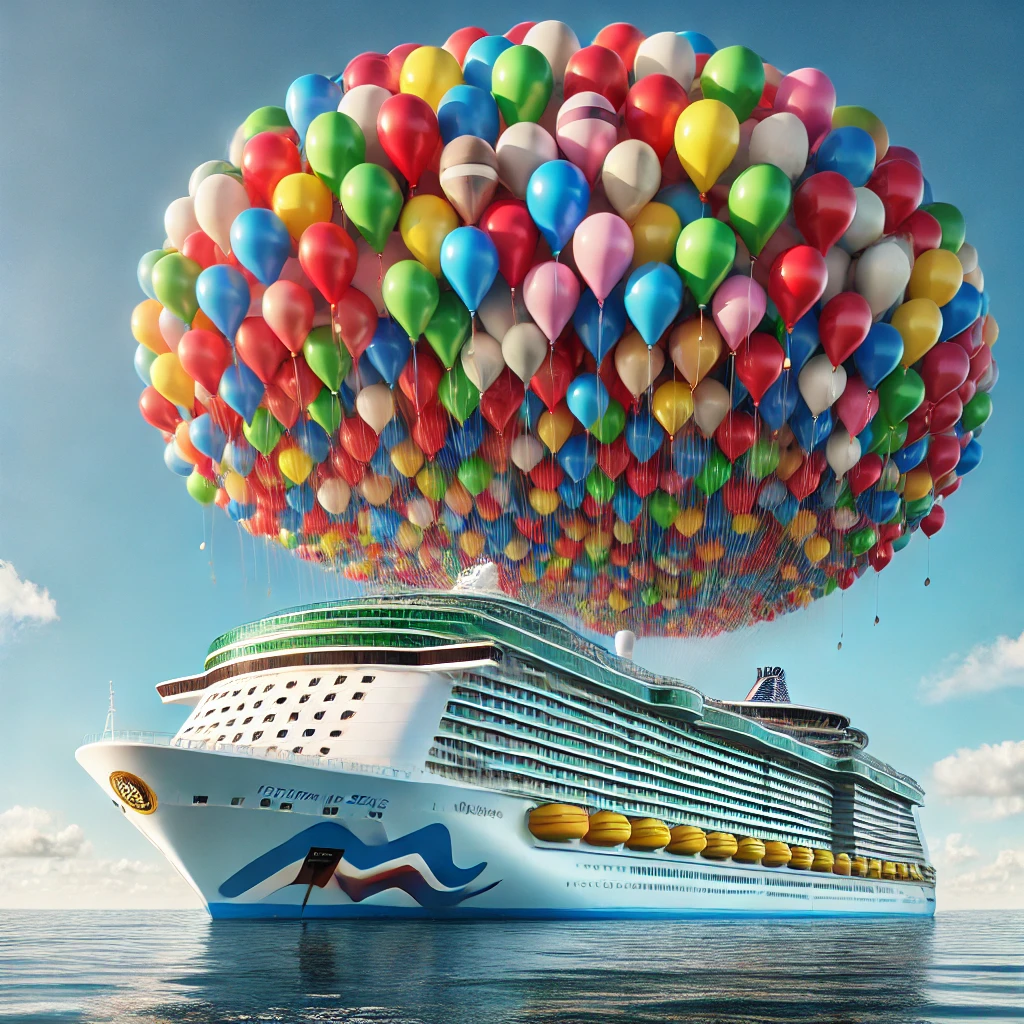
"What they don’t show you is the series of helium balloons hooked up to the back. Don’t believe me? Ask yourself, why have you never seen a photo of the back of any cruise ship? Exactly 😉"

It’s a well-kept secret that the real buoyancy magic happens at the stern, where dozens of brightly coloured helium balloons keep the ship bobbing along.

ship with helium balloons

It’s so obvious once you think about it. Why else would cruise ships need to stay so far from shore? They can’t risk anyone seeing the balloon setup!

And next time you’re on board, try and sneak a peek over the back. If the wind’s just right, you might catch a glimpse of a rogue balloon trying to float away.

5. Clouds

"Clouds.  Always clouds."

Clouds aren’t just for dramatic sunsets and holiday snaps – they’re the real reason cruise ships stay afloat. Like a giant waterbed in the sky, the ship just lounges comfortably on a soft, fluffy cloud as it glides across the ocean.

It explains why cruises are so relaxing. The passengers are basically on a floating pillow! The tricky part is making sure the clouds don’t drift away.

That’s why the crew always keeps an eye on the weather forecast – it’s all about cloud management.

6. Neanderthal poetry

"Water liquid,  boat have many big air pockets. Air no mix with water. Boat float."

In perhaps the most ancient and poetic explanation, our Neanderthal ancestors have cracked the code. With wisdom passed down from the dawn of time, they remind us that it’s all about the big air pockets. Water stays wet, air stays dry, and the boat just… floats.

Simple, right? Who needs modern science when you’ve got the primal power of Neanderthal logic? We can only assume they were also responsible for the earliest cruise designs – probably with fewer decks and a lot more mammoths.

7. Help from another Icon

"Beyonce floats the boat."

When you’re the Icon of the Seas, who better to keep you afloat than another icon? That’s right – the ship doesn’t rely on engineering or physics, but on the sheer power of Beyoncé’s presence. Her energy alone is enough to keep the cruise ship gliding smoothly over the waves.

Forget lifeboats! All you need is a playlist of Queen Bey’s greatest hits, and you’ll stay above water indefinitely. Maybe that’s why the ship has such amazing sound systems – they’re secretly part of the flotation plan!

8. I’m not sure this is right…

"It’s flying, actually."

Buoyancy? Who needs it when the ship is actually airborne? That’s right – Icon of the Seas isn’t floating on the water at all, it’s just hovering slightly above the surface, like a giant luxurious hovercraft.

The smooth ride? That’s because you’re technically flying the whole time. So next time someone asks how a cruise ship stays afloat, you can confidently tell them it doesn’t. It’s secretly just levitating in style.

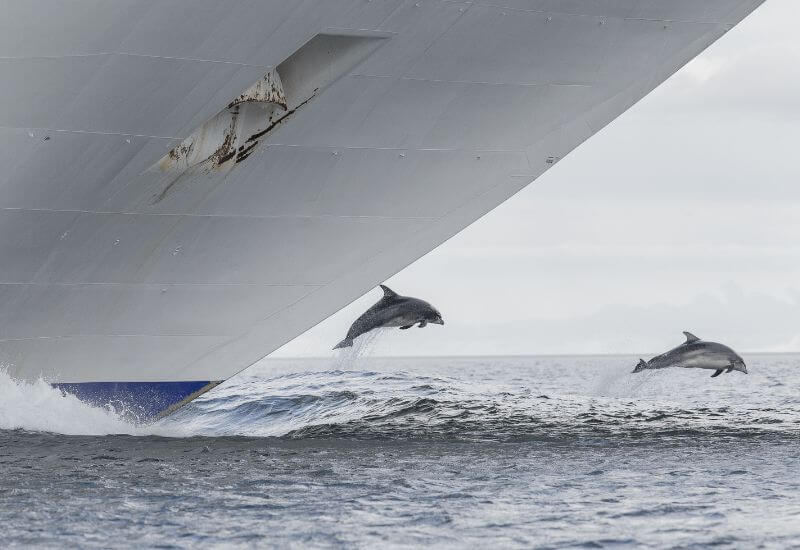
9. The animal kingdom pulls its weight

"Dolphins I think"

Why rely on man-made propulsion when nature’s finest are happy to help? Beneath the waves, a dedicated team of dolphins is hard at work, pushing the ship along with graceful flips and synchronised swimming.

dolphins beneath a cruise ship

They don’t just make for great photo ops – they’re the true power behind the ship’s movement! So the next time you spot dolphins frolicking near the bow, just know they’re not playing. They’re clocking in for another shift keeping the Icon of the Seas afloat and moving.

10. Crouching giant

Picture of a crouching giant holding up a cruise ship on their shoulders

Forget engines and displacement – the real reason the ship floats is thanks to a helpful giant, wading through the ocean like it’s a paddling pool.

With the ship perched delicately on his head, he carefully strolls along the seabed, making sure to keep everything balanced. You can only hope he doesn’t sneeze!

Maybe he’s on the cruise payroll, or maybe he’s just a friendly sea giant who enjoys the steady pace of ocean travel.

Either way, it explains why the ship never seems to struggle, since it’s just along for a ride on a giant’s shoulders.

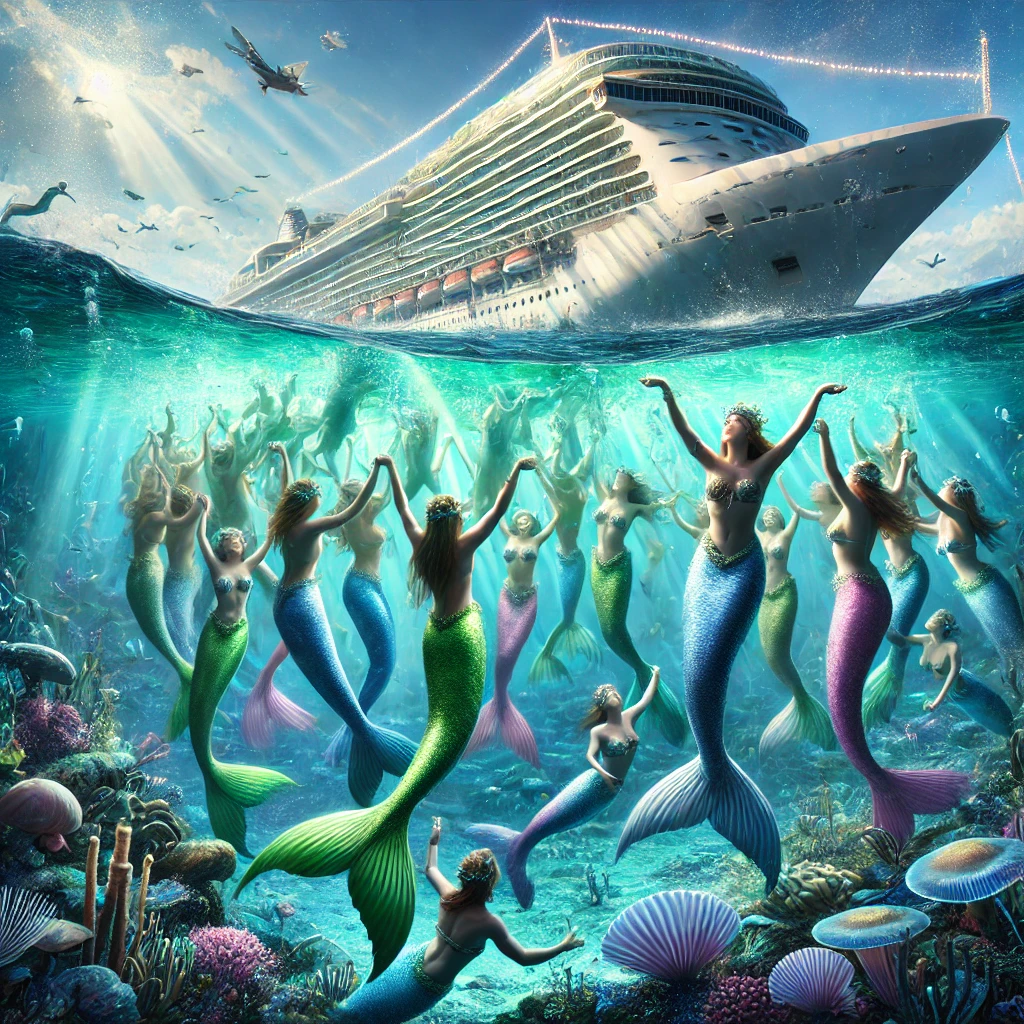
11. Mythical creatures

"Mermaids. 100's of them under the boat.😬"

That’s right, hundreds of mermaids working tirelessly beneath the surface, holding up the ship like a mythical support crew. They don’t just save sailors from storms – they’ve upgraded to luxury cruise ships now.

cruise ship mewrmaid

Their siren songs might explain why everyone’s so relaxed on board. While passengers sip cocktails and sunbathe, a hidden mermaid workforce is keeping everything in balance. I wonder if they’re included in the daily gratuities you’ve got to pay.

12. Human-generated propulsion

"My guess, fart power"

Well, I know that some people do worry about the emissions of a cruise ship…

The next time you’re enjoying the smooth ride on the Icon of the Seas, just remember that somewhere below deck, there’s a hidden team of passengers contributing their share to keep the ship gliding effortlessly over the waves.

13. That’s why you always find them onboard…

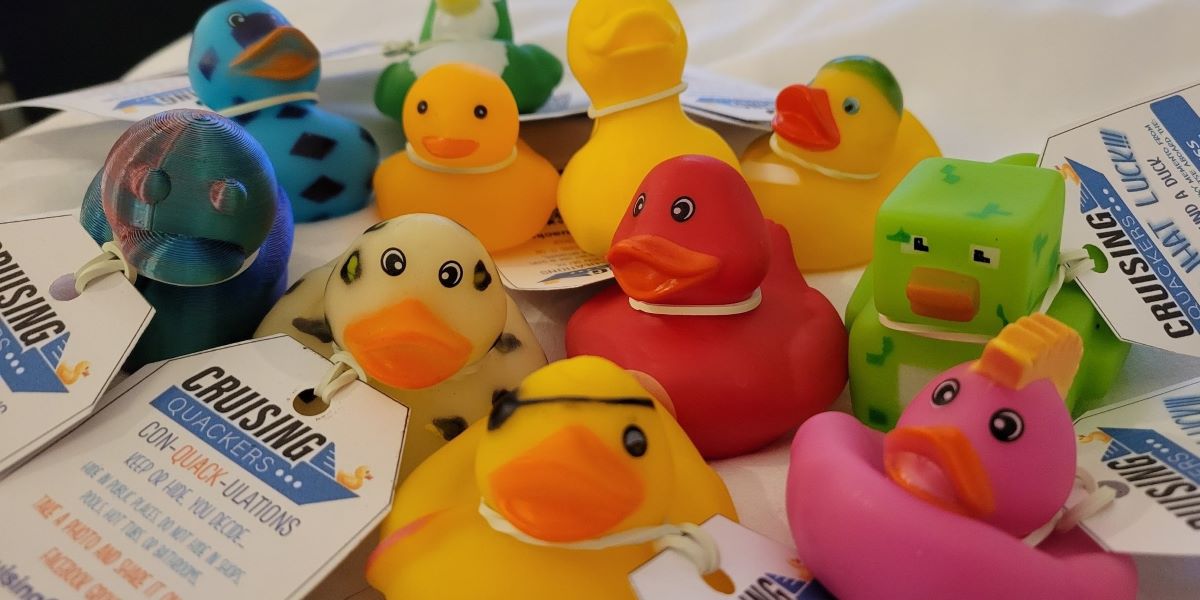
"so basically they just have loads of rubber ducks under the deck to make sure it floats."

The true secret to keeping the ship afloat lies in a vast, hidden army of rubber ducks!

They’re discreetly tucked away under the deck, or all around the ship, creating a buoyant force that ensures the ship stays high and dry. Who knew those little quacking companions were actually the unsung heroes of marine engineering?

Cruising Quackers Ducks

Next time you spot a rubber ducky hidden on a ship, remember: it’s not just a toy. It’s a key component in the high-tech floating system of the Icon of the Seas.

14. Ah, the Finns made it so

When in doubt, trust the Finns! Apparently, the real magic behind the Icon of the Seas is that it’s Finnish-made, and the key to its buoyancy lies in the simple command: “Float.”

In true Finnish fashion, they’ve infused the ship with a special blend of craftsmanship and polite, no-nonsense efficiency. It’s a bit like asking a well-trained husky to pull you along – you just tell it what you need, and it delivers.

15. Of course, it’s so simple…

"Big surface area make it go floaty float. #Science"

It turns out the secret to floating is as straightforward as it gets: just make the ship’s bottom really big, and voilà, it goes ‘floaty float’. Who knew?

Science is the answer, and you don’t need to understand it to believe. Just say “Science!” and you have solved the problem!

Final word

There you have it – lots of reasons why a cruise ship as big as Icon of the Seas can stay afloat. Don’t trust anyone who tells you it’s displacement. It’s clearly a combination of magic, mermaids, rubber ducks and some human-powered emissions.

Feel free to add your own suggestions too!

Or if you’re interested in the actual answer, I spoke to my friend John who is a cruise ship pilot and he explained everything here: How Cruise Ships Float And Not Tip Over.

NEW DEALS JUST RELEASED!

Don’t miss these hot cruise offers…

Related Posts:

Source link

Family relaxing on a cruise ship deck, illustrating the best cruise lines for families

The Best Cruise Lines for Families with Kids (2026-27)

The best cruise lines for families in 2026-27 are Royal Caribbean for the most activities across all ages, Disney Cruise Line for young children and character-led entertainment, and Carnival or MSC Cruises for the lowest cost per family. Norwegian suits families who want flexible dining, while P&O Cruises is the easiest choice for British families who want to sail from Southampton without flying.

The right line depends on three things: how old your children are, what you can spend, and where you want to sail from. Below we rank eight family cruise lines, compare their kids clubs and “kids sail free” deals in one table, and explain the catches that are easy to miss when booking.

Best Cruise Lines for Families: Comparison Table

Kids club ages are for the main supervised programmes. Nurseries and baby areas vary by ship, and some charge an hourly fee.

Cruise line Kids club ages Kids sail free? Standout family feature Best age range Sails from UK?
Royal Caribbean 3-17 (Adventure Ocean and teen zones); nursery 6-36 months on select ships Occasional promotions Icon-class water parks and Perfect Day at CocoCay All ages, especially 6-17 Yes: Liberty of the Seas (2026), Freedom of the Seas (summer 2027)
Disney Cruise Line 3-17 (Oceaneer Club, Edge, Vibe); nursery from 6 months Rarely Characters, Broadway-style shows, Castaway Cay and Lookout Cay 2-10 Yes: Disney Wish from Southampton, summer 2027
Carnival 2-17 (Camp Ocean, Circle C, Club O2); Turtles under 2 Occasional promotions Low fares, WaterWorks, Celebration Key 5-14 No regular UK departures
MSC Cruises Baby to 17 in five age groups Often: under-18s free as third/fourth guest (taxes and fees payable) Strong value on large modern ships All ages, big savings for families of four Yes: MSC Preziosa (winter 2026-27), MSC Meraviglia (summer 2027)
Norwegian (NCL) 3-12 (Splash Academy), 13-17 (Entourage) Occasional “friends and family sail free” deals Freestyle dining, go-karts and slides on newer ships 8-17 Limited sailings only
P&O Cruises 2-17 (The Reef); free Night Nursery 6 months-4 years Not as a standard offer No-fly cruises from Southampton, British-style service Under-5s and UK families Yes, year-round
Princess Cruises 3-17 (Camp Discovery) Periodic Kids Sail Free promotions Calmer ships, good for multigenerational trips Grandparents plus kids 3-12 Yes: Southampton seasons, including Regal Princess in 2027
Celebrity Cruises 3-17 (Camp at Sea) Occasional promotions Premium food and design with a modest kids offer Older kids and teens Some Southampton sailings

This article compares cruise lines. If you already know which line you want and need to choose a ship, see our guide to the best cruise ships for kids and families.

The 8 Best Family Cruise Lines, Ranked

1. Royal Caribbean: best all-round cruise line for kids

Royal Caribbean has more to keep children busy than any other line, and it also suits teenagers better than most. Its Adventure Ocean programme is free for ages 3-17 and is split by age, so younger children are not grouped with teens. The newest Icon-class ships (Icon of the Seas, Star of the Seas and Legend of the Seas) each have a dedicated Surfside area for young families and a large water park.

What’s new for 2026-27: Legend of the Seas launched in July 2026 with Mediterranean sailings from Rome and Barcelona. It moves to Fort Lauderdale in late October 2026 for Caribbean cruises that call at Perfect Day at CocoCay. Its family features include the three-storey Ultimate Family Townhouse and a stage version of Charlie and the Chocolate Factory.

Watch out for: The nursery for babies aged 6-36 months is only on some ships and costs about $9-12 an hour. Many of the headline activities also have extra fees. Our guide to the best Royal Caribbean ships for kids of each age explains which ships suit toddlers, tweens and teens.

From the UK: Liberty of the Seas sails from Southampton in 2026, and Freedom of the Seas takes over for summer 2027.

2. Disney Cruise Line: best for young children

For families with children aged roughly 2 to 10, Disney is very hard to beat. Character meet-and-greets, themed rotational dining, Broadway-style shows and deck parties are all part of the fare. The Oceaneer Club (ages 3-12) is designed like a set from the films, and Edge (11-14) and Vibe (14-17) give older kids their own space. The It’s a Small World Nursery takes babies from 6 months, for an hourly fee.

What’s new: Disney Destiny, a Wish-class ship with a heroes and villains theme, entered service from Fort Lauderdale in November 2025. Disney Adventure, the line’s largest ship and first based in Asia, began three- and four-night cruises from Singapore in March 2026. In the Bahamas, families can visit Castaway Cay and the newer Disney Lookout Cay at Lighthouse Point.

Watch out for: Disney usually costs much more per night than the other big family lines, and its kids-sail-free offers are rare. Even so, for children under 10 it is one of the best cruise lines for kids you can book.

From the UK: Disney Wish will run its first UK season in summer 2027, with 3- to 7-night cruises from Southampton to the Norwegian fjords, Northern Europe, Spain and the British Isles.

Colourful water slides twisting above the pool deck of a large cruise ship
Water parks are now standard on most big family cruise ships. Photo: Stephan Leuzinger on Pexels

3. Carnival Cruise Line: best budget family cruise line

Carnival is often the cheapest way to take a family on a Caribbean cruise. The atmosphere is relaxed and fun, and the youth programme covers almost every age: Turtles for under-2s, Camp Ocean for ages 2-11 (in three groups), Circle C for 12-14 and Club O2 for 15-17. Family Harbor cabins on select ships include a families-only lounge.

What’s new: Celebration Key, Carnival’s private destination on Grand Bahama, opened in July 2025. It has lagoons and splash areas aimed at families. Carnival Festivale arrives at Port Canaveral in 2027 with the line’s biggest WaterWorks water park and about 1,000 interconnecting cabins, which makes it easier for larger groups to stay together.

From the UK: Carnival has no regular UK departures, so British families need to fly to Florida, Texas or another US port.

4. MSC Cruises: best value and kids-sail-free deals

MSC often lets children under 18 sail free as the third or fourth guest in a cabin with two paying adults. You still pay taxes, port fees and service charges for each child, but this can make MSC the cheapest option for a family of four. Its kids clubs cover babies to teenagers in five age groups. The newest ships, such as MSC World America from Miami, have large water parks and family areas. Families heading to the Bahamas also get Ocean Cay, MSC’s private island.

Watch out for: MSC sells cruises in many countries, so menus, announcements and fellow passengers are very international.

From the UK: MSC Preziosa sails week-long cruises from Southampton from October 2026 to April 2027. MSC Meraviglia then takes over for summer 2027, with cruises to Northern Europe and the Norwegian fjords.

5. Norwegian Cruise Line: best for flexible families and tweens

NCL’s “Freestyle” style means there are no fixed dinner times, which helps when children are tired or hungry at odd hours. Splash Academy takes children aged 3-12 who are fully potty trained, Entourage covers 13-17, and the Guppies play sessions are for parents with babies and toddlers aged 6 months to 3 years. Newer ships such as Norwegian Aqua and Norwegian Luna add go-kart tracks, slides and the Aqua Slidecoaster, which tweens and teens enjoy.

From the UK: NCL has only a small number of Southampton sailings, and many are longer or one-way cruises. Most families fly to join an NCL ship.

6. P&O Cruises: best family cruise line for UK no-fly holidays

For British families, P&O is often the easiest choice. You drive to Southampton, board Iona or Arvia, and the money, plugs, food and entertainment all feel familiar. The Reef kids club is free and grouped by age: Splashers (2-4), Surfers (5-8) and Scubas (9-12), plus teen spaces for 13-17. One feature most lines don’t offer is a free Night Nursery for children aged 6 months to 4 years, so parents of toddlers can have dinner on their own.

Watch out for: Arcadia and Aurora are adults-only, so check the ship before you book.

Parents and young children walking along a calm white sand beach with clear turquoise water
Private islands and calm beaches are a big draw for families with small children. Photo: Vishe Artiztry on Pexels

7. Princess Cruises: best for multigenerational trips

Princess is quieter than the mega-ship lines, which suits groups where grandparents are travelling with children. Camp Discovery covers ages 3-17 in separate age groups, and Princess runs Kids Sail Free promotions from time to time. Princess also sails from Southampton, with Regal Princess based there in 2027.

8. Celebrity Cruises: best for food-loving families with older kids

Celebrity is a premium line with better dining and a more grown-up atmosphere than the big family brands. Camp at Sea covers ages 3-17. It is a good fit for families with sensible older children or teens who would choose a good restaurant over a water slide.

How to Choose the Best Cruise Line for Kids of Each Age

  • Babies and toddlers (under 3): Look for a nursery and check whether it charges. P&O’s free Night Nursery, Disney’s nursery and Carnival’s Turtles programme are all strong choices. Most cruise lines require babies to be at least 6 months old, and 12 months on some long sailings.
  • Ages 3-10: Disney is best for characters and theming. Royal Caribbean and Carnival have the biggest water parks.
  • Tweens and teens: Royal Caribbean and NCL have the most thrill rides, and both have separate teen spaces so older kids are not grouped with little ones.
  • Families of five or more: Few standard cabins sleep five, so look at connecting cabins or family suites early. Our guide to the cheapest cabins that sleep five compares options by cruise line.

What “Kids Sail Free” Really Means

A kids-sail-free deal rarely means the child pays nothing. In almost every case:

  • The child must be the third or fourth guest in a cabin with two full-fare adults.
  • Taxes, port fees and government charges still apply to each child. On a week-long cruise these can easily add a few hundred dollars per person.
  • Daily service charges or gratuities are usually still payable for children too.
  • Deals often apply only to certain sailings and cabin grades, and the adult fare may be higher than on a sale without the offer.

Before you book, compare the total price including all taxes and fees for the whole family across two or three lines. A “free” child on one line can still cost more than a heavily discounted family fare on another.

Family Cruise Lines to Skip

Some lines are simply not designed for children. Virgin Voyages is adults-only (18+), and P&O’s Arcadia and Aurora don’t take under-18s. Most river cruise lines and small luxury lines have no kids clubs, and some set minimum ages.

To keep costs down once you have picked a line, read our guide to inside cabins on a family cruise, including family interior rooms that sleep four or more.

For Disney fans, our guide comparing a Disney cruise with Disneyland sets out the costs, inclusions and pace of each holiday.

Festive sailings are popular with families, so read up on what to expect on a Christmas cruise before you book.

FAQs

What is the best cruise line for families with young kids?

Disney Cruise Line is generally the best for children under 10 because of its characters, themed dining and nursery. Royal Caribbean is the best alternative if you want more activities for the money.

Which cruise line is best for families with teens?

Royal Caribbean and Norwegian are the strongest choices for teens. They have dedicated teen lounges, thrill rides, water slides and, on newer NCL ships, go-kart tracks.

Which cruise lines let kids sail free?

MSC Cruises most often lets children under 18 sail free as the third or fourth guest in a cabin. Royal Caribbean, Norwegian and Princess run kids-sail-free promotions from time to time. Taxes, port fees and service charges are still payable.

What is the cheapest cruise line for families?

Carnival and MSC usually offer the lowest prices for families, especially for a family of four sharing one cabin. Always compare the full price including taxes and fees.

Can you go on a family cruise from the UK without flying?

Yes. P&O Cruises, MSC, Royal Caribbean and Princess all sail from Southampton. Disney Wish will also sail from Southampton in summer 2027.

Very large cruise ship at sea, illustrating the scale behind choosing Icon of the Seas cabins to avoid

Icon of the Seas Cabins to Avoid (and the Best Rooms to Book)

The main Icon of the Seas cabins to avoid are the rooms directly below the busy pool and buffet areas on Deck 14, the forward cabins on Decks 12 and 14 closest to the AquaDome, and the Surfside balconies and interiors that sit above the kids’ club, arcade and family cafés. If you get seasick easily, also steer clear of high, far-forward rooms and pick something low and midship instead.

The good news is that Icon of the Seas has more than 2,800 staterooms across 28 categories, so there is almost always a better-placed option at a similar price. Below you’ll find the specific cabin ranges worth skipping, who each problem actually affects, and the rooms that tend to work best for couples, families and suite guests.

Icon of the Seas at a glance in 2026

Icon of the Seas sails year-round from PortMiami on seven-night Eastern and Western Caribbean cruises, departing on Saturdays, with every sailing calling at Perfect Day at CocoCay. Royal Caribbean has said the ship will stay in Miami through at least 2027. She now has two sisters: Star of the Seas, which sails seven-night Caribbean cruises from Port Canaveral, and Legend of the Seas, which moves to Fort Lauderdale from November 2026 for six- and eight-night Caribbean trips after her first summer in the Mediterranean.

Because the three ships share a similar layout, many of the same noise hotspots repeat across the class. If you are comparing ships, our guides to Star of the Seas cabins to avoid and the best and worst cabins on Legend of the Seas follow the same approach.

Icon of the Seas cabin types explained

Before deciding what to avoid, it helps to understand the room layout. Royal Caribbean groups the ship’s staterooms into four broad types, with several new categories designed around families.

Cabin type Approx. size Where you’ll find it Good to know
Interior 160-190 sq ft Decks 3, 7-12 and 14 Includes Surfside and Central Park interiors with virtual or neighborhood-facing windows on some decks
Oceanview window 160-190 sq ft Decks 3, 4 and 7-11 Panoramic Oceanview rooms (about 260 sq ft) sit forward on Deck 14
Infinite Balcony about 200 sq ft Decks 9-12 The glass wall drops down, turning the balcony into part of the room
Oceanview Balcony about 205 sq ft Decks 7-12 and 14 Traditional balcony; connecting versions available on Decks 7, 8 and 12
Neighborhood balconies about 190 sq ft Central Park (Deck 14) and Surfside (Decks 9-12 and 14) Balconies face inward over the neighborhoods, not the sea
Family Infinite Balcony about 285-290 sq ft Decks 9-11 Sleeps up to six with a separate bunk nook
Suites 270-1,770 sq ft Mostly Decks 15-18, plus aft and Surfside suites Split into Sea, Sky and Star tiers with rising perks

About 80 percent of rooms can take three or more guests, using pullman beds, sofa beds, bunks or second bedrooms, which is why this ship is so popular with families. You can check exact positions on the official Royal Caribbean deck plans before you book.

Busy pool area with rows of sun loungers beside the water on a sunny day
Cabins directly below busy pool decks can hear loungers being moved early in the morning. Photo: Kindel Media on Pexels

Icon of the Seas cabins to avoid (with cabin numbers)

None of these rooms are bad in themselves. They simply come with a trade-off that matters more to some guests than others. The cabin ranges below are drawn from deck plan analysis and published guest feedback, so treat them as a guide and double-check the current deck plan for your sailing.

1. Deck 14 cabins below Chill Island

Chill Island is the ship’s main pool area and it is busy from early morning until late afternoon. Cabins roughly 14164-14286 and 14564-14686 sit beneath it, and the most common complaint is the scraping of loungers as crew set up and guests claim spots. Light sleepers and anyone hoping for a lie-in should look a deck or two lower.

2. Cabins below The Hideaway and the Windjammer

Further aft on Deck 14, rooms around 14288-14362 and 14688-14762 sit under the Windjammer buffet and The Hideaway, the adults-only pool with a beach-club feel and music on sea days. Expect foot traffic from breakfast onwards and a livelier soundtrack in the afternoon.

3. Forward rooms near the AquaDome

The AquaDome hosts the AquaTheater shows and evening music. Forward cabins on Decks 12 and 14, roughly 12134-12162, 12530-12562, 14138-14162 and 14538-14562, can pick up bass during performances. It usually stops at a reasonable hour, but it is worth knowing if you turn in early.

4. Surfside balconies and interiors if you are travelling without kids

Surfside is the ship’s dedicated young-family neighborhood, with a splash pad, carousel, Adventure Ocean nearby and the Playmakers arcade. Surfside-facing balconies (for example 7280-7346, 9293-9347, 10293-10347 and 11293-11347, with matching numbers on the other side) look straight down onto it. Surfside and Central Park interiors above Park Café and Surfside Bites, such as 8321-8347 and 9181-9201, can also be noisier. For families with toddlers this is a feature; for couples it can feel like staying above a playground.

5. Cabins above The Pearl and near the Music Hall

Rooms 10219-10235 sit above The Pearl, the large sculpture-and-stairway structure in the Royal Promenade, which brings some noise and a partly obstructed outlook. Low-deck cabins near the Music Hall (around 3180-3200, 4180-4200 and 4577-4591) may hear late-night bands.

6. High, far-forward rooms if you are prone to seasickness

Icon is a very large and stable ship, but you will still feel more movement high up and at the bow in rough seas. If motion is a concern, skip the forward Panoramic and Grand suites and choose a midship cabin on a lower deck, ideally between Decks 7 and 10.

7. Sofa-bed rooms for older children

Many standard cabins sleep three or four using a sofa bed or pullman. These are fine for young kids, but a teenager on a sofa bed in a 190 sq ft room can quickly feel cramped. If your children are older, a Family Infinite Balcony, connecting rooms or two adjoining cabins is usually worth the extra cost.

The best cabins on Icon of the Seas

Once you’ve ruled out the trickier spots, these are the rooms that tend to offer the best value and experience for different types of traveller.

  1. Infinite Balcony, midship on Decks 9-11: A strong all-rounder for couples. You get sea views, a slightly larger usable space when the window is down, and you are well away from pool and theater noise.
  2. Family Infinite Ocean View Balcony: At about 285 sq ft and sleeping up to six, this is one of the most practical family rooms at sea, with a separate bunk area that gives parents some privacy.
  3. Surfside Family Suite: Around 270 sq ft in the heart of Surfside, with a kids’ sleeping nook and split bathroom. It also comes with Sky-tier suite perks, such as all-day access to Coastal Kitchen and the suite lounge.
  4. Central Park balcony on a lower deck: A quieter, leafy outlook that suits couples who are happy to trade sea views for a lower fare. Avoid those directly above busy cafés.
  5. Interior Plus: The best budget choice, with a bigger walk-in closet than standard interiors.
  6. Ultimate Family Townhouse: The three-level aft suite on Decks 7-9, with an in-suite slide, cinema room and private Surfside access. It sleeps up to eight but carries a price tag well into five figures for a week.
Private balcony with two chairs overlooking calm blue sea on a sunny day
A midship balcony away from venue noise is a safe choice for most couples. Photo: Claudia Schmalz on Pexels

Icon of the Seas balcony room: ocean view or neighborhood view?

Choosing an Icon of the Seas balcony room is one of the decisions that trips up first-time guests. Ocean-facing balconies (standard or Infinite) give you sea air and sunsets. Neighborhood balconies in Central Park or Surfside face inward, so you look over gardens or the family zone rather than the water. They are cheaper and fun for people-watching, but they are not private in the same way and can be noisier until late evening.

Infinite Balcony rooms are another quirk. Rather than a separate balcony behind a sliding door, the window lowers to open the room to the sea. Some guests love the extra space; others prefer a traditional balcony for sitting out with the door closed behind them, especially when the air conditioning is running. If you want a classic outdoor balcony, look for the Oceanview Balcony categories on Decks 7-12.

Best deck to stay on for Icon of the Seas

For most people, Decks 9 to 11 midship are the sweet spot. They are low enough to limit motion, sit between the Royal Promenade and the pool decks, and give quick access to the lifts and to dining. Before you choose a room, think about where you will spend your time: if you plan to eat around the ship, our Icon of the Seas restaurants guide shows where each venue sits, so you can pick a cabin close to your favourites.

A quick checklist before you book

  • Check the deck above and below your cabin on the current deck plan, not just your own deck.
  • Avoid rooms right beside lift banks if you are a light sleeper.
  • Avoid connecting cabins if you want quiet; a shared door with strangers lets more sound through.
  • Remember that neighborhood-view balconies do not overlook the sea.
  • If you choose a “guarantee” fare, you lose the ability to pick a quieter location.

If you’re thinking of upgrading, our guide to Icon of the Seas suites explains every category, size and Royal Suite Class perk.

Sailing on Wonder instead? See our guide to Wonder of the Seas cabins to avoid.

If you are choosing between the first two Icon-class ships, our Star of the Seas vs Icon of the Seas comparison covers the differences in shows, dining and homeports.

FAQs

What is the best floor to be on Icon of the Seas?

Decks 9 to 11 midship are a good balance for most guests. They are away from pool and theater noise, feel less motion, and are close to lifts and dining.

Which cabins on Icon of the Seas are the noisiest?

Deck 14 rooms below Chill Island, The Hideaway and the Windjammer, forward rooms near the AquaDome on Decks 12 and 14, and Surfside-facing rooms above the kids’ areas tend to get the most noise.

Are Surfside cabins on Icon of the Seas worth it?

They are excellent for families with young children because the splash pad, carousel and kids’ dining are right outside. Couples or adults travelling without kids usually prefer a quieter location.

What cabins should I avoid on a cruise ship if I get seasick?

Avoid high, far-forward or far-aft cabins. A low, midship cabin moves the least, which is why Decks 7 to 10 midship are the safest choice on Icon of the Seas.

Bedroom with a large window looking out to sea, similar to a balcony stateroom on Grand Princess

Grand Princess Cabins to Avoid (and the Best Cabins) 2026-27

The main Grand Princess cabins to avoid are cabins on Deck 12 (Aloha) under the Lido deck pools and buffet, forward Deck 8 cabins above the Princess Theater and lounges, obstructed oceanview cabins on Deck 8 that look onto lifeboats, and cabins beside the self-service laundrettes. The best cabins for most people are midship on Decks 9, 10 and 11, which have cabins above and below them. If you get seasick, stay midship and low.

This guide covers every Grand Princess cabin type, the locations worth avoiding and what to book instead. It also covers where the ship is sailing in 2026-27, because that has changed.

Is Grand Princess leaving the Princess fleet?

As of late October 2026, we could find no announcement from Princess Cruises or Carnival Corporation that Grand Princess has been sold or transferred, or that it’s leaving the fleet. Princess is still taking bookings on her for sailings into 2028. What has changed is where she sails:

  • Autumn 2026: after US West Coast sailings from Los Angeles, she left on a 29-night voyage from Los Angeles on 5 October 2026, due in Sydney on 3 November 2026.
  • 2026-28: she becomes Princess’s main long-stay ship in Australia, with cruises from Sydney and Brisbane plus some from Melbourne, Adelaide and Fremantle. She also sails Circle Pacific voyages to Alaska, Japan and back.
  • Itineraries on sale currently run to about September 2028.

Grand Princess entered service in 1998, which makes her the oldest ship in the current Princess fleet. If you’re booking far ahead, read the cancellation and change terms on your fare. Cruise lines generally offer a refund or a move to another sailing if a ship is withdrawn. If you’d rather sail on a sister ship, Caribbean, Crown, Emerald and Ruby Princess are all built on a similar Grand-class plan, so most of the advice below applies to them too.

Grand Princess cabins: types and sizes

Grand Princess has about 1,300 cabins. Around three-quarters of the outside cabins have a balcony. Sizes below are approximate. The ship was refurbished in 2011, which added the Piazza atrium and the adults-only Sanctuary sun deck, and again in 2013. Her most recent dry dock, in Portland, Oregon in spring 2025, covered maintenance and light updates to cabins and public rooms.

Cabin type Approx. size Where Who it suits
Interior 160 sq ft Most cabin decks Budget travellers, port-intensive cruises
Oceanview 168 sq ft (larger Deluxe Oceanview on Lido) Decks 5, 8, 14 and others Natural light without a balcony price
Balcony 168 sq ft + 46-89 sq ft balcony Decks 8-12, 14 Most couples
Mini-Suite 277 sq ft + 46 sq ft balcony Decks 8 and 9 More space, sofa bed, tub
Window Suite 319-341 sq ft, no balcony Deck 6 (Fiesta) Suite space and perks without a balcony
Vista Suite 329 sq ft + 166 sq ft balcony Decks 8-10 Large balcony at a lower suite price
Family Suite 335 sq ft + 92 sq ft balcony Deck 9, forward Groups of up to eight
Penthouse / Owner’s Suite 381-411 sq ft + 155-180 sq ft balcony Several decks, mostly aft Suite perks, big balconies
Grand Suite about 615 sq ft + 115 sq ft balcony One on board, aft The top suite on the ship

Interior and oceanview cabins

Interior cabins are the cheapest option. Oceanview cabins add a window, but some on Deck 8 look out onto lifeboats (more on that below). The Deluxe Oceanview cabins on the Lido deck have floor-to-ceiling windows and are a well-priced alternative to a balcony.

Balcony cabins

Grand Princess balconies are terraced, getting deeper on lower decks. That means people on the balconies above can often see down onto yours. Balconies range from about 46 to 89 sq ft, so if outdoor space matters, check the size for your specific cabin.

Mini-suites

Mini-suites are on Decks 8 and 9 and have a sitting area with a sofa bed, two TVs and a bath with a shower. Most of those on Deck 9 have open balconies that are overlooked from above and give no shelter from rain. The aft mini-suites on Deck 8 have covered balconies that offer more privacy and shade. A few, such as E728, E729, D732 and D733, have extra-large balconies.

Suites: Grand, Owner’s, Penthouse, Vista, Window and Family

The single Grand Suite is aft and has a whirlpool tub and its own balcony. Owner’s and Penthouse Suites have separate sitting areas, walk-in closets and large balconies. Vista Suites offer similar balcony space for less. The Window Suites on Deck 6 were added in 2011 and have no balcony. They sit on the same deck as the casino, the dining rooms and the Princess Theater, and some reviewers have complained about noise and smells there. The two Family Suites join a mini-suite and an interior cabin through a shared living room, and sleep up to eight.

Chairs on a terrace overlooking calm blue sea, similar to a quiet balcony
Grand Princess balconies are terraced, so upper decks can see onto lower ones. Photo: Jimmy Liao on Pexels

Grand Princess cabins to avoid

Cabins under the Lido deck

Deck 14 is the Lido deck. It has the Horizon Court buffet, the Neptune’s Reef and Calypso Reef pools, grills, pizza and bars. There is no Deck 13, so Deck 12 (Aloha) sits directly below it. Cabins under the pool and buffet areas can hear early-morning deck chair moving and cleaning, plus footsteps late into the evening. On the Lido deck itself, the forward starboard cabins sit below the fitness centre, which can be noisy early in the morning.

Forward Deck 8 cabins above the theatre and lounges

The Princess Theater is forward on the lower public decks, and Deck 7 also has lounges such as Club Fusion and Explorers. Deck 8 (Emerald) cabins forward, or above those venues, can pick up show bass, rehearsals and late-night music. Some forward cabins on this deck are also near crew areas. The forward balconies on Deck 8 can be seen from the outdoor promenade, so they offer less privacy.

Obstructed oceanview cabins on Deck 8

Deck 8 sits above the lifeboats. Several groups of oceanview cabins here are sold as obstructed, roughly E209-E231, E301-E326, E401-E425, E501-E521, E601-E632 and E701-E715, in categories with codes ending in V, W, Y or Z. They’re cheaper and still get daylight, but the view is partly or largely blocked. That’s fine if you just want natural light, but disappointing if you were expecting a sea view.

Forward balconies and the Family Suites in the wind

Balconies at the front of the ship catch the most wind when the ship is moving. On colder routes, or on a long Circle Pacific crossing, you may not get much use out of them on sea days. That includes the forward-facing Family Suite balconies on Deck 9.

Cabins next to laundrettes and crew doors

Each main cabin deck has a self-service laundrette, and cabins right next to it get steady foot traffic and door noise. On Deck 9 (Dolphin), cabins near the blank space around D123 are next to a crew area. Blank spaces on a deck plan are worth treating with caution anywhere on the ship.

Cabins for seasick travellers

Motion is felt most at the bow and on high decks. Grand Princess will spend 2026-28 sailing waters that can be lively, such as the Tasman Sea and Bass Strait, and on long Pacific crossings. If you get seasick, avoid forward cabins and book midship on Deck 9 or 10.

Long quiet corridor of cabin doors inside a cruise ship
Midship cabins on decks with cabins above and below are usually the quietest. Photo: Sabbir Bhuiyan on Pexels

The best cabins on Grand Princess

  • Quietest all-round: midship on Deck 9 (Dolphin) or Deck 10 (Caribe). Both have cabin decks above and below and no public rooms next to them.
  • Best mini-suites: the aft mini-suites on Deck 8 with covered balconies. These are some of the most sought-after cabins on the ship.
  • Best for cooler weather: aft-facing balconies, which are more sheltered from the wind and tend to stay warmer.
  • Best value: forward or aft cabins in the same category as midship ones. They’re the same size and often cheaper, though you’ll feel more motion.
  • Best for families: a Family Suite for big groups, or connecting balcony cabins.
  • Accessible cabins: there are 27 wheelchair-accessible cabins across several categories, including balcony cabins on Decks 11 and 12 and an accessible Window Suite. Door widths vary, so a collapsible wheelchair is recommended.

Aft cabins

Aft cabins have wake views and some of the larger balconies, and the aft mini-suites and suites are popular. The trade-off is some vibration and motion in a swell. Balconies are terraced at the stern too, so check what overlooks yours.

Avoid vs book instead

Instead of… Because… Try…
Deck 12 under the pools/buffet Chair scraping and cleaning noise Deck 10 or 11 midship
Forward Deck 8 Theatre and lounge noise; overlooked balconies Deck 9 midship
Obstructed oceanview, Deck 8 Lifeboats block the view Deluxe Oceanview on Lido, or an interior to save money
Open Deck 9 mini-suite Overlooked, no rain cover Aft Deck 8 covered mini-suite
A cabin beside the laundrette Foot traffic and door noise Any cabin a few doors away

How to check a cabin before you book

  1. Open the deck plan for your deck and the decks immediately above and below. Remember there’s no Deck 13.
  2. Look for public rooms, laundrettes and unlabelled (crew) spaces near the cabin.
  3. Check the category code. Codes ending in V, W, Y or Z usually mean an obstructed view.
  4. Search for photos of the exact cabin number to see the view and balcony.
  5. If location matters to you, avoid guarantee fares, where Princess picks the cabin for you.

If Grand Princess’s schedule doesn’t suit you, the layouts of her sisters are close enough that our guides to Caribbean Princess cabins, the best and worst cabins on Crown Princess and Ruby Princess cabins to avoid will feel familiar.

Our guide to Sapphire Princess cabins covers another long-serving Princess ship, now sailing in Asia.

Sailing on a smaller Princess ship instead? Read our guide to Island Princess cabins to avoid and the best rooms to book.

FAQs

Which cabins should I avoid on Grand Princess?

Avoid Deck 12 cabins under the Lido pools and buffet, forward Deck 8 cabins above the theatre and lounges, obstructed oceanview cabins on Deck 8, and cabins beside laundrettes or crew areas. If you get seasick, also avoid high forward cabins.

Is Grand Princess being sold or retired?

As of October 2026 no sale or retirement has been announced. She is moving to Australia from November 2026, and Princess is selling cruises on her into 2028.

Where is the best place to get a cabin on Grand Princess?

Midship on Deck 9 or 10 is the quietest and most stable option. For a suite feel at a lower price, the aft mini-suites on Deck 8 with covered balconies are popular.

Do Grand Princess mini-suites have covered balconies?

Most mini-suite balconies on Deck 9 are open and overlooked from above. The aft mini-suites on Deck 8 have covered balconies, which give more shade and privacy.