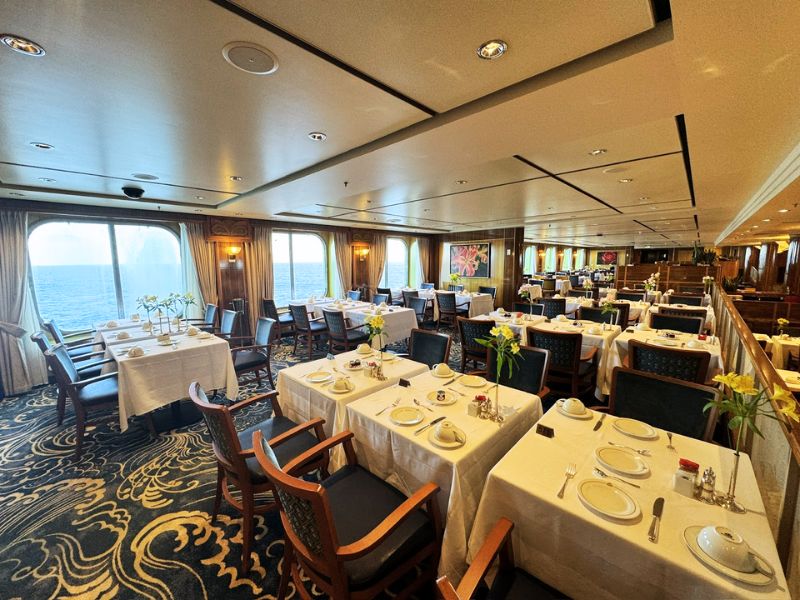
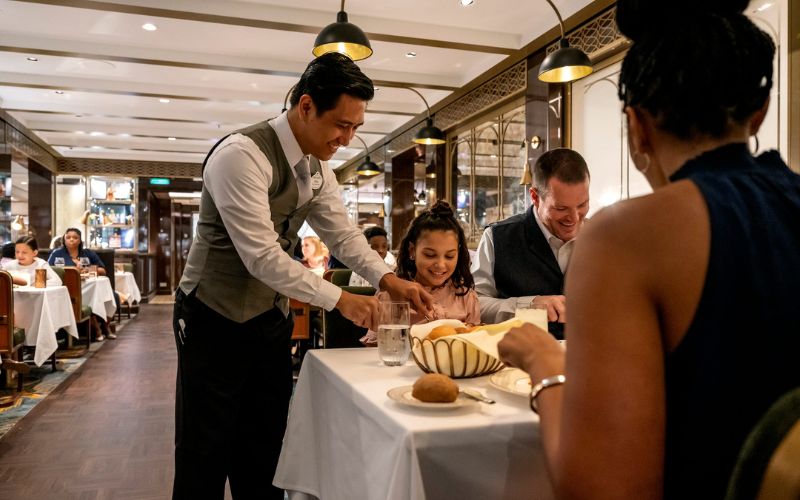
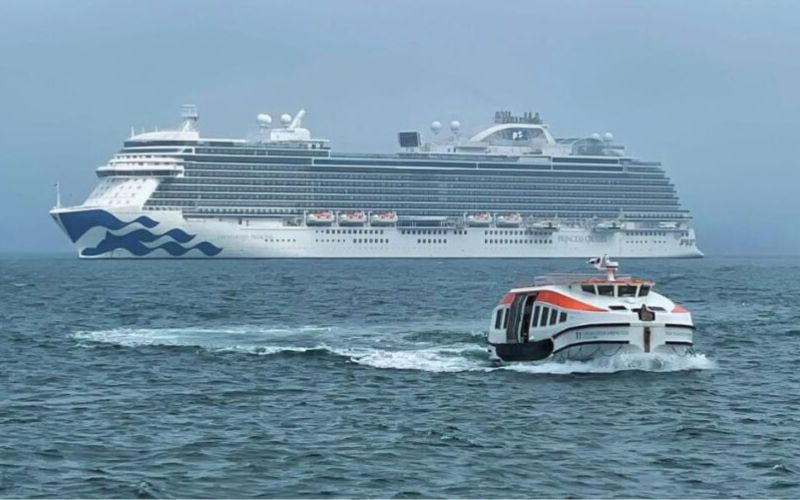
It seems that most people expect to gain weight when they cruise. Around 68% of people who responded to the question on Facebook said they normally gained weight.
Around 12.5% said that they actually lost weight when they cruised. This was either because they were so active when walking around the ship or the ports they visited, or because they used the onboard gyms and tried to be reasonable with their dining and drinking.
The rest of the people who responded said that they would usually stay around the same weight, balancing out activity with eating and drinking on the ship.
Still, that’s the majority of people who will gain weight. And not an insignificant amount either, with an average of around 6 lb (2.7 kg) put on during a typical cruise.
Some people even said that they worked hard before their cruise to lose weight so that, by the end, it all balanced out:
I also think that some people might be in denial…
Not everyone gains weight on a cruise…
There were still plenty of people who said that they didn’t gain weight on a cruise, and either stayed roughly the same or even lost weight.
A lot of people explained how they try to keep similar routines to what they do at home, or they just didn’t go overboard (pun not intended) when they cruised. But for some, it’s just a metabolism thing. Lucky people!
If you’ve never cruised before, then based on the vast majority of responses you should probably expect to gain some weight, and maybe as much as 6 to 7 lb.
The main reasons people gain weight on a cruise
If you want to try and cruise without putting on any extra timber, then some responses highlighted the main reasons people put on weight:
1. Free ice cream
A lot of cruise lines will offer free ice cream by the pool deck, and there’s no limit on how many cones you enjoy. It can be very tempting to just grab another one every hour or so, especially when you’re cruising in a hot destination.
However, while each cone might feel small, they soon add up in terms of calories, sugars and fats. So they can be a key reason why people put on weight.
2. All those amazing desserts
The food on cruises is amazing, and it’s not just the starters/appetisers and the main courses/entrees. Desserts are often spectacular, and the waiters are always happy to get you more than one…
If you don’t tend to eat many sweet things at home, you’ll soon find that the dessert menu will expand that waistline for you.
3. Just all that food and alcohol!
Ultimately, the reason people tend to gain weight on a cruise is because food and drink is freely available, especially if you’ve booked a drinks package.
It’s often booze that’s the problem. People don’t think as much about the calories they’re drinking compared to those they’re eating.
A couple of beers, wines or cocktails can go down so easily, and yet you’re consuming a lot more energy than you need, meaning you’re going to gain weight.
4. Water retention
The other consideration with drinks on a ship is water retention. If you’re drinking more than you normally would (whether alcohol or soft drinks such as coffees), then you’re more likely to retain water, especially in hotter weather.
The good news about this type of weight gain is that it usually corrects itself within a week or two of getting home, with minimal effort.
Top tips to stay in shape on a cruise
Here are some tips from the cruise guests who managed to either maintain their weight or even lose some while on a ship.
1. Use the stairs
One of the top tips from so many people – and something I try to do as well – is to take the stairs when you’re moving between floors on a cruise ship.
It’s not always possible. You might have mobility issues, or you’re right at the bottom of the ship and just don’t want to be flustered when heading for the top deck.
But if you’re able to, and you’re only moving between a few floors, then the stairs can be your ticket to keeping the weight under control as you sail.
As a family, we usually pick a number for how many floors we will do without using the list and then stick to that. So if we decide that four floors or fewer is walkable, then we’ll only use the lift for five or more.
2. Eat when you’re hungry
Food is pretty much available 24/7 on most cruise ships, typically in vast quantities and without anything extra to pay. It’s generally very good quality too, which means it can be tempting to go back for more again, and again, and again…
Remember that you have plenty of days on your cruise to try everything, so don’t overindulge too early. Try to limit your eating to when you’re actually hungry. Make sure your eyes aren’t bigger than your belly, as the saying goes.
Eat what you like, but don’t go so far that you end up feeling bloated and uncomfortable when you should be relaxing.
3. Don’t overdo the booze
Alcohol can be the sneaky issue for anyone who doesn’t want to put on weight during a cruise. It won’t necessarily make you feel full in the same way food will, but the calories will add up.
Cocktails can be particularly bad as they usually have a lot of sugary fruit juice and some even have milk, cream or chocolate sauce in them.
If you don’t drink alcohol, you’ve got a serious advantage. Try to stick to water or sugar-free drinks if you can, and limit the mocktails, coffees and sugar-rich drinks.
But if you like alcoholic drinks, and you’re conscious of weight gain, try to stick to spirits with zero-sugar mixers.
4. Get your exercise in
Cruise ships offer plenty of ways to stay fit and healthy during your cruise if you want to. There’s almost always a gym that’s free for guests to use. There may be exercise classes too, although these may come with an additional charge.
Personally, I just enjoy using the running/walking track around the ship. You get to enjoy amazing views and the fresh sea air as you complete your laps, making it a much more enjoyable experience.
Of course, on port-heavy itineraries you might do a lot of walking ashore too, so bear that in mind. The more sea days, and the more time spent relaxing by the pool, the more you might want to force yourself to get up and walk, jog or swim onboard.
Do what makes you happy!
Assuming you have no health issues, it doesn’t matter if you gain or lose weight on a cruise. There’s a lot of great food and drink to enjoy, so if you want to, then go for it.
The important thing is that you enjoy yourself, and that you’re happy by the end of it. If that means moderation so that you stay in shape, that’s fine. If it means completely letting go and not caring what the scales say, then that’s fine too!
Your cruise holiday is yours to enjoy as you see fit and as long as you’re respectful of other people, and how they choose to cruise, then that’s all that matters.
Don’t be like this, whatever you do:
Oh, and one more key bit of advice from me and other cruisers: pack some stretchy or bigger clothes to wear on the second half of your cruise, especially if it’s a longer one!
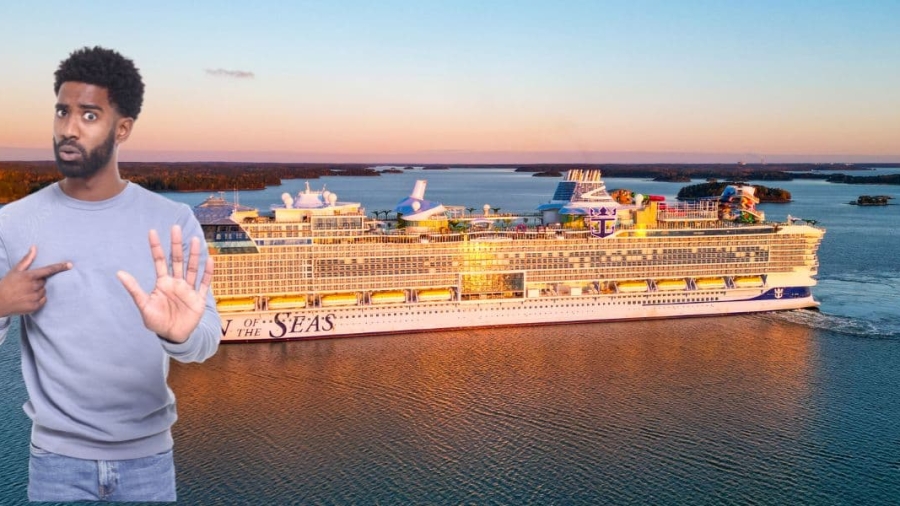
A humorous look at how Royal Caribbean’s colossal cruise ship Icon of the Seas manages to stay afloat!
There are still some great discussions on Twitter/X every once in a while. Some are super-useful and informative, but occasionally there’s a thread that is packed with great and funny replies.
In response to a video about Icon of the Seas, user @edmsillygoose made a request:
— 𝐟𝐨𝐫𝐦𝐞𝐫 𝐥𝐨𝐜𝐚𝐥 𝐜𝐥𝐮𝐛 𝐩𝐫𝐨𝐦𝐨𝐭𝐞𝐫 (@edmsillygoose) August 19, 2024
A couple of people took the assignment a little too literally:
Simple really!
Ah, the age-old question of how something as gargantuan as a cruise ship doesn’t just go “glub glub” and sink to the bottom of the ocean. Here’s the lowdown:
1. **Archimedes’ Principle**: This is the real MVP. It states that any object placed in a fluid (like…
But there were some fantastic funny replies too, which definitely made the thread worth reading!
Here’s a look at some of the best ‘definitely real’ reasons why Icon of the Seas stays afloat:
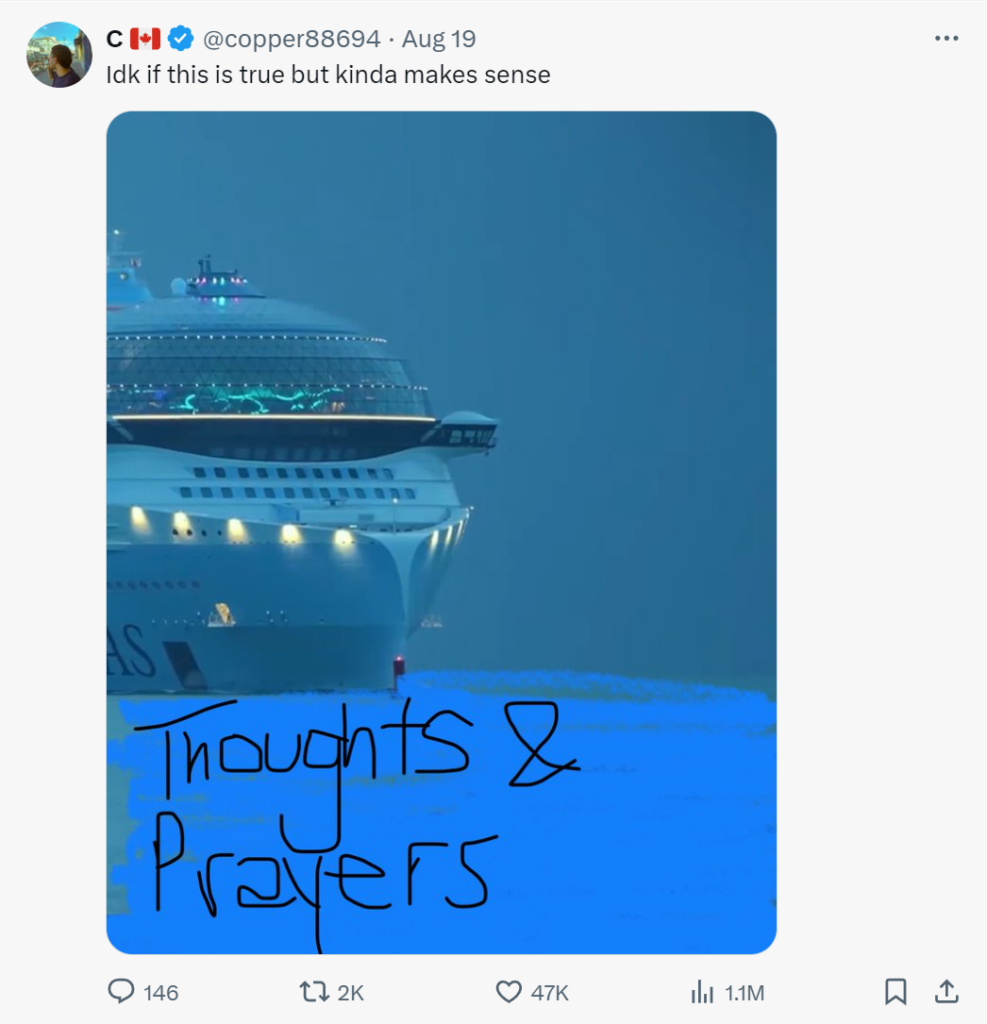
1. Thoughts and prayers
‘Thoughts and prayers’ are apparently all that you need to keep a cruise ship floating on the water.
But does everyone onboard need to think about the ship floating, or pray for it to stay up? What happens if someone gets distracted?
Or is it just the thoughts and prayers of the captain? Maybe that’s why they’re paid so well – to always stay focused on using their brains to keep the ship afloat!
2. Iconic legs
Turns out, the real secret behind the ship’s buoyancy is its impressive set of iconic legs. Forget complicated engineering or displacement – the ship just gracefully wades through the ocean on its oversized limbs, like some sort of stylish aquatic flamingo.
It raises the question: do the legs get tired after a long journey? Maybe there’s a secret team of masseuses onboard, dedicated solely to giving the ship’s legs a well-deserved break after hours of elegant striding across the waves.
3. Magic
It’s as simple as that – magic. While the engineers might try to convince you with their fancy jargon and science, we all know it’s really just a sprinkle of pixie dust and a flick of the wand.
No need for hulls, stabilisers, or propellers when you’ve got good old-fashioned sorcery keeping the ship afloat.
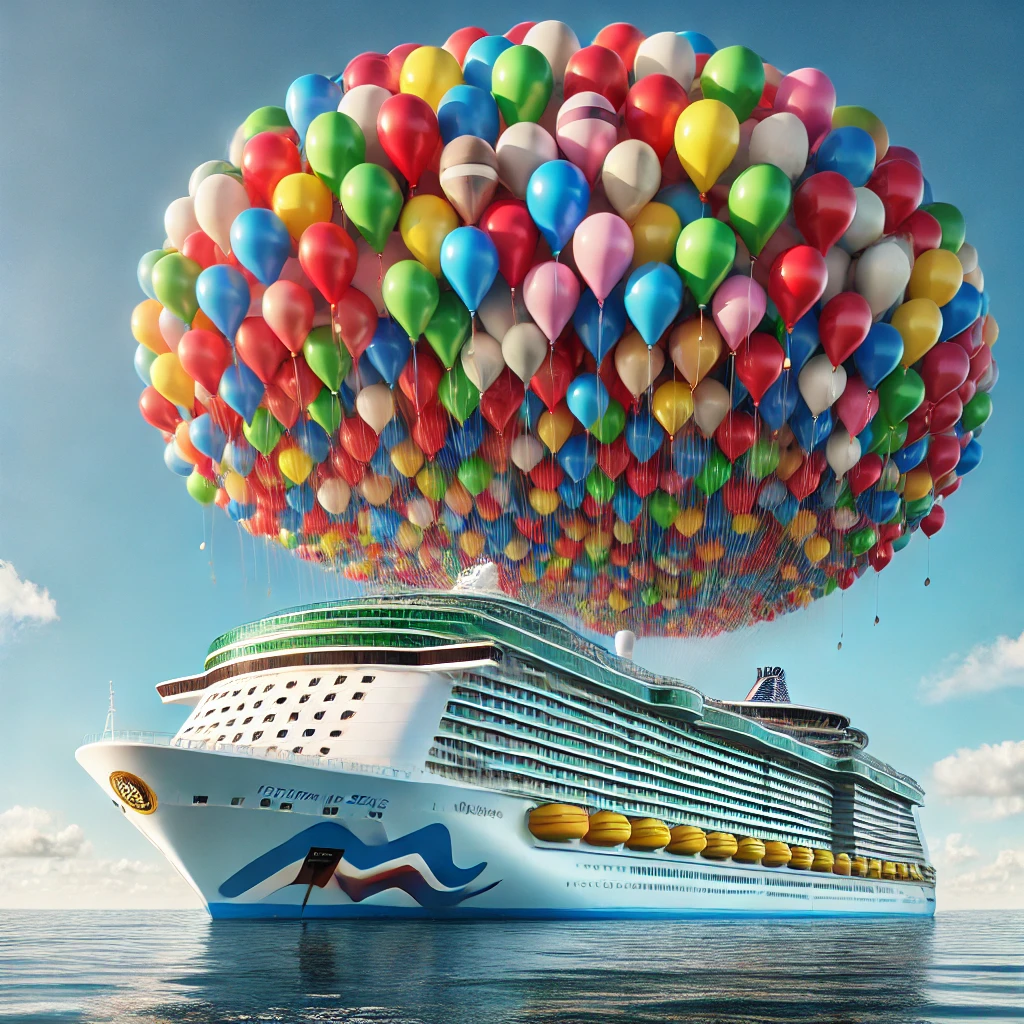
4. Floating devices
It’s a well-kept secret that the real buoyancy magic happens at the stern, where dozens of brightly coloured helium balloons keep the ship bobbing along.
It’s so obvious once you think about it. Why else would cruise ships need to stay so far from shore? They can’t risk anyone seeing the balloon setup!
And next time you’re on board, try and sneak a peek over the back. If the wind’s just right, you might catch a glimpse of a rogue balloon trying to float away.
5. Clouds
Clouds aren’t just for dramatic sunsets and holiday snaps – they’re the real reason cruise ships stay afloat. Like a giant waterbed in the sky, the ship just lounges comfortably on a soft, fluffy cloud as it glides across the ocean.
It explains why cruises are so relaxing. The passengers are basically on a floating pillow! The tricky part is making sure the clouds don’t drift away.
That’s why the crew always keeps an eye on the weather forecast – it’s all about cloud management.
6. Neanderthal poetry
In perhaps the most ancient and poetic explanation, our Neanderthal ancestors have cracked the code. With wisdom passed down from the dawn of time, they remind us that it’s all about the big air pockets. Water stays wet, air stays dry, and the boat just… floats.
Simple, right? Who needs modern science when you’ve got the primal power of Neanderthal logic? We can only assume they were also responsible for the earliest cruise designs – probably with fewer decks and a lot more mammoths.
7. Help from another Icon
When you’re the Icon of the Seas, who better to keep you afloat than another icon? That’s right – the ship doesn’t rely on engineering or physics, but on the sheer power of Beyoncé’s presence. Her energy alone is enough to keep the cruise ship gliding smoothly over the waves.
Forget lifeboats! All you need is a playlist of Queen Bey’s greatest hits, and you’ll stay above water indefinitely. Maybe that’s why the ship has such amazing sound systems – they’re secretly part of the flotation plan!
8. I’m not sure this is right…
Buoyancy? Who needs it when the ship is actually airborne? That’s right – Icon of the Seas isn’t floating on the water at all, it’s just hovering slightly above the surface, like a giant luxurious hovercraft.
The smooth ride? That’s because you’re technically flying the whole time. So next time someone asks how a cruise ship stays afloat, you can confidently tell them it doesn’t. It’s secretly just levitating in style.
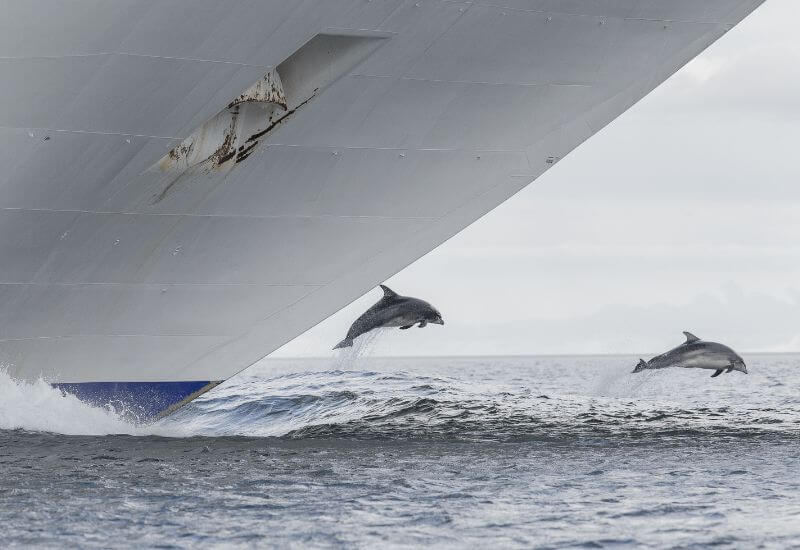
9. The animal kingdom pulls its weight
Why rely on man-made propulsion when nature’s finest are happy to help? Beneath the waves, a dedicated team of dolphins is hard at work, pushing the ship along with graceful flips and synchronised swimming.
They don’t just make for great photo ops – they’re the true power behind the ship’s movement! So the next time you spot dolphins frolicking near the bow, just know they’re not playing. They’re clocking in for another shift keeping the Icon of the Seas afloat and moving.
10. Crouching giant
Forget engines and displacement – the real reason the ship floats is thanks to a helpful giant, wading through the ocean like it’s a paddling pool.
With the ship perched delicately on his head, he carefully strolls along the seabed, making sure to keep everything balanced. You can only hope he doesn’t sneeze!
Maybe he’s on the cruise payroll, or maybe he’s just a friendly sea giant who enjoys the steady pace of ocean travel.
Either way, it explains why the ship never seems to struggle, since it’s just along for a ride on a giant’s shoulders.
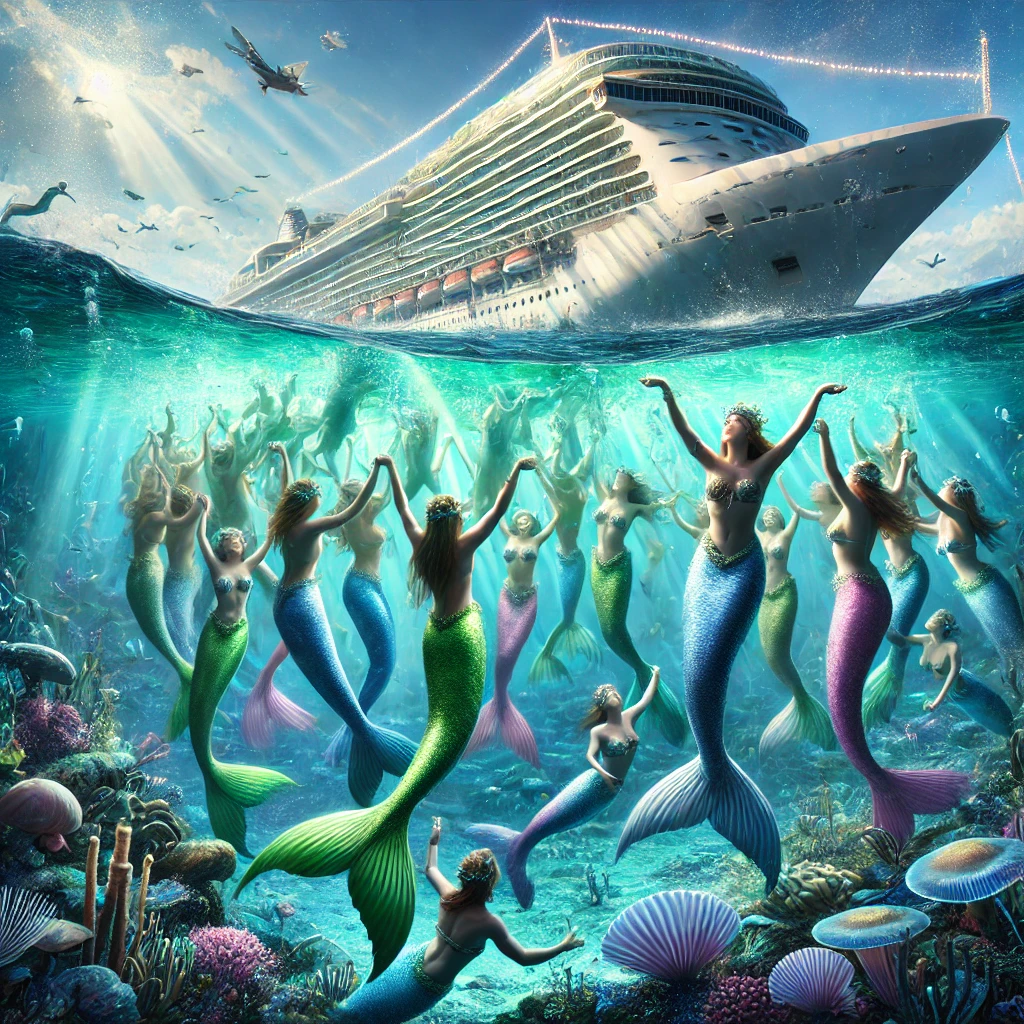
11. Mythical creatures
That’s right, hundreds of mermaids working tirelessly beneath the surface, holding up the ship like a mythical support crew. They don’t just save sailors from storms – they’ve upgraded to luxury cruise ships now.
Their siren songs might explain why everyone’s so relaxed on board. While passengers sip cocktails and sunbathe, a hidden mermaid workforce is keeping everything in balance. I wonder if they’re included in the daily gratuities you’ve got to pay.
12. Human-generated propulsion
Well, I know that some people do worry about the emissions of a cruise ship…
The next time you’re enjoying the smooth ride on the Icon of the Seas, just remember that somewhere below deck, there’s a hidden team of passengers contributing their share to keep the ship gliding effortlessly over the waves.
13. That’s why you always find them onboard…
The true secret to keeping the ship afloat lies in a vast, hidden army of rubber ducks!
They’re discreetly tucked away under the deck, or all around the ship, creating a buoyant force that ensures the ship stays high and dry. Who knew those little quacking companions were actually the unsung heroes of marine engineering?
Next time you spot a rubber ducky hidden on a ship, remember: it’s not just a toy. It’s a key component in the high-tech floating system of the Icon of the Seas.
14. Ah, the Finns made it so
When in doubt, trust the Finns! Apparently, the real magic behind the Icon of the Seas is that it’s Finnish-made, and the key to its buoyancy lies in the simple command: “Float.”
In true Finnish fashion, they’ve infused the ship with a special blend of craftsmanship and polite, no-nonsense efficiency. It’s a bit like asking a well-trained husky to pull you along – you just tell it what you need, and it delivers.
15. Of course, it’s so simple…
It turns out the secret to floating is as straightforward as it gets: just make the ship’s bottom really big, and voilà, it goes ‘floaty float’. Who knew?
Science is the answer, and you don’t need to understand it to believe. Just say “Science!” and you have solved the problem!
Final word
There you have it – lots of reasons why a cruise ship as big as Icon of the Seas can stay afloat. Don’t trust anyone who tells you it’s displacement. It’s clearly a combination of magic, mermaids, rubber ducks and some human-powered emissions.
Feel free to add your own suggestions too!
Or if you’re interested in the actual answer, I spoke to my friend John who is a cruise ship pilot and he explained everything here: How Cruise Ships Float And Not Tip Over.
The best cruise lines for families in 2026-27 are Royal Caribbean for the most activities across all ages, Disney Cruise Line for young children and character-led entertainment, and Carnival or MSC Cruises for the lowest cost per family. Norwegian suits families who want flexible dining, while P&O Cruises is the easiest choice for British families who want to sail from Southampton without flying.
The right line depends on three things: how old your children are, what you can spend, and where you want to sail from. Below we rank eight family cruise lines, compare their kids clubs and “kids sail free” deals in one table, and explain the catches that are easy to miss when booking.
Best Cruise Lines for Families: Comparison Table
Kids club ages are for the main supervised programmes. Nurseries and baby areas vary by ship, and some charge an hourly fee.
Cruise line
Kids club ages
Kids sail free?
Standout family feature
Best age range
Sails from UK?
Royal Caribbean
3-17 (Adventure Ocean and teen zones); nursery 6-36 months on select ships
Occasional promotions
Icon-class water parks and Perfect Day at CocoCay
All ages, especially 6-17
Yes: Liberty of the Seas (2026), Freedom of the Seas (summer 2027)
Disney Cruise Line
3-17 (Oceaneer Club, Edge, Vibe); nursery from 6 months
Rarely
Characters, Broadway-style shows, Castaway Cay and Lookout Cay
2-10
Yes: Disney Wish from Southampton, summer 2027
Carnival
2-17 (Camp Ocean, Circle C, Club O2); Turtles under 2
Occasional promotions
Low fares, WaterWorks, Celebration Key
5-14
No regular UK departures
MSC Cruises
Baby to 17 in five age groups
Often: under-18s free as third/fourth guest (taxes and fees payable)
1. Royal Caribbean: best all-round cruise line for kids
Royal Caribbean has more to keep children busy than any other line, and it also suits teenagers better than most. Its Adventure Ocean programme is free for ages 3-17 and is split by age, so younger children are not grouped with teens. The newest Icon-class ships (Icon of the Seas, Star of the Seas and Legend of the Seas) each have a dedicated Surfside area for young families and a large water park.
What’s new for 2026-27: Legend of the Seas launched in July 2026 with Mediterranean sailings from Rome and Barcelona. It moves to Fort Lauderdale in late October 2026 for Caribbean cruises that call at Perfect Day at CocoCay. Its family features include the three-storey Ultimate Family Townhouse and a stage version of Charlie and the Chocolate Factory.
Watch out for: The nursery for babies aged 6-36 months is only on some ships and costs about $9-12 an hour. Many of the headline activities also have extra fees. Our guide to the best Royal Caribbean ships for kids of each age explains which ships suit toddlers, tweens and teens.
From the UK: Liberty of the Seas sails from Southampton in 2026, and Freedom of the Seas takes over for summer 2027.
2. Disney Cruise Line: best for young children
For families with children aged roughly 2 to 10, Disney is very hard to beat. Character meet-and-greets, themed rotational dining, Broadway-style shows and deck parties are all part of the fare. The Oceaneer Club (ages 3-12) is designed like a set from the films, and Edge (11-14) and Vibe (14-17) give older kids their own space. The It’s a Small World Nursery takes babies from 6 months, for an hourly fee.
What’s new: Disney Destiny, a Wish-class ship with a heroes and villains theme, entered service from Fort Lauderdale in November 2025. Disney Adventure, the line’s largest ship and first based in Asia, began three- and four-night cruises from Singapore in March 2026. In the Bahamas, families can visit Castaway Cay and the newer Disney Lookout Cay at Lighthouse Point.
Watch out for: Disney usually costs much more per night than the other big family lines, and its kids-sail-free offers are rare. Even so, for children under 10 it is one of the best cruise lines for kids you can book.
From the UK: Disney Wish will run its first UK season in summer 2027, with 3- to 7-night cruises from Southampton to the Norwegian fjords, Northern Europe, Spain and the British Isles.
Water parks are now standard on most big family cruise ships. Photo: Stephan Leuzinger on Pexels
3. Carnival Cruise Line: best budget family cruise line
Carnival is often the cheapest way to take a family on a Caribbean cruise. The atmosphere is relaxed and fun, and the youth programme covers almost every age: Turtles for under-2s, Camp Ocean for ages 2-11 (in three groups), Circle C for 12-14 and Club O2 for 15-17. Family Harbor cabins on select ships include a families-only lounge.
What’s new: Celebration Key, Carnival’s private destination on Grand Bahama, opened in July 2025. It has lagoons and splash areas aimed at families. Carnival Festivale arrives at Port Canaveral in 2027 with the line’s biggest WaterWorks water park and about 1,000 interconnecting cabins, which makes it easier for larger groups to stay together.
From the UK: Carnival has no regular UK departures, so British families need to fly to Florida, Texas or another US port.
4. MSC Cruises: best value and kids-sail-free deals
MSC often lets children under 18 sail free as the third or fourth guest in a cabin with two paying adults. You still pay taxes, port fees and service charges for each child, but this can make MSC the cheapest option for a family of four. Its kids clubs cover babies to teenagers in five age groups. The newest ships, such as MSC World America from Miami, have large water parks and family areas. Families heading to the Bahamas also get Ocean Cay, MSC’s private island.
Watch out for: MSC sells cruises in many countries, so menus, announcements and fellow passengers are very international.
From the UK: MSC Preziosa sails week-long cruises from Southampton from October 2026 to April 2027. MSC Meraviglia then takes over for summer 2027, with cruises to Northern Europe and the Norwegian fjords.
5. Norwegian Cruise Line: best for flexible families and tweens
NCL’s “Freestyle” style means there are no fixed dinner times, which helps when children are tired or hungry at odd hours. Splash Academy takes children aged 3-12 who are fully potty trained, Entourage covers 13-17, and the Guppies play sessions are for parents with babies and toddlers aged 6 months to 3 years. Newer ships such as Norwegian Aqua and Norwegian Luna add go-kart tracks, slides and the Aqua Slidecoaster, which tweens and teens enjoy.
From the UK: NCL has only a small number of Southampton sailings, and many are longer or one-way cruises. Most families fly to join an NCL ship.
6. P&O Cruises: best family cruise line for UK no-fly holidays
For British families, P&O is often the easiest choice. You drive to Southampton, board Iona or Arvia, and the money, plugs, food and entertainment all feel familiar. The Reef kids club is free and grouped by age: Splashers (2-4), Surfers (5-8) and Scubas (9-12), plus teen spaces for 13-17. One feature most lines don’t offer is a free Night Nursery for children aged 6 months to 4 years, so parents of toddlers can have dinner on their own.
Watch out for: Arcadia and Aurora are adults-only, so check the ship before you book.
Private islands and calm beaches are a big draw for families with small children. Photo: Vishe Artiztry on Pexels
7. Princess Cruises: best for multigenerational trips
Princess is quieter than the mega-ship lines, which suits groups where grandparents are travelling with children. Camp Discovery covers ages 3-17 in separate age groups, and Princess runs Kids Sail Free promotions from time to time. Princess also sails from Southampton, with Regal Princess based there in 2027.
8. Celebrity Cruises: best for food-loving families with older kids
Celebrity is a premium line with better dining and a more grown-up atmosphere than the big family brands. Camp at Sea covers ages 3-17. It is a good fit for families with sensible older children or teens who would choose a good restaurant over a water slide.
How to Choose the Best Cruise Line for Kids of Each Age
Babies and toddlers (under 3): Look for a nursery and check whether it charges. P&O’s free Night Nursery, Disney’s nursery and Carnival’s Turtles programme are all strong choices. Most cruise lines require babies to be at least 6 months old, and 12 months on some long sailings.
Ages 3-10: Disney is best for characters and theming. Royal Caribbean and Carnival have the biggest water parks.
Tweens and teens: Royal Caribbean and NCL have the most thrill rides, and both have separate teen spaces so older kids are not grouped with little ones.
Families of five or more: Few standard cabins sleep five, so look at connecting cabins or family suites early. Our guide to the cheapest cabins that sleep five compares options by cruise line.
What “Kids Sail Free” Really Means
A kids-sail-free deal rarely means the child pays nothing. In almost every case:
The child must be the third or fourth guest in a cabin with two full-fare adults.
Taxes, port fees and government charges still apply to each child. On a week-long cruise these can easily add a few hundred dollars per person.
Daily service charges or gratuities are usually still payable for children too.
Deals often apply only to certain sailings and cabin grades, and the adult fare may be higher than on a sale without the offer.
Before you book, compare the total price including all taxes and fees for the whole family across two or three lines. A “free” child on one line can still cost more than a heavily discounted family fare on another.
Family Cruise Lines to Skip
Some lines are simply not designed for children. Virgin Voyages is adults-only (18+), and P&O’s Arcadia and Aurora don’t take under-18s. Most river cruise lines and small luxury lines have no kids clubs, and some set minimum ages.
To keep costs down once you have picked a line, read our guide to inside cabins on a family cruise, including family interior rooms that sleep four or more.
What is the best cruise line for families with young kids?
Disney Cruise Line is generally the best for children under 10 because of its characters, themed dining and nursery. Royal Caribbean is the best alternative if you want more activities for the money.
Which cruise line is best for families with teens?
Royal Caribbean and Norwegian are the strongest choices for teens. They have dedicated teen lounges, thrill rides, water slides and, on newer NCL ships, go-kart tracks.
Which cruise lines let kids sail free?
MSC Cruises most often lets children under 18 sail free as the third or fourth guest in a cabin. Royal Caribbean, Norwegian and Princess run kids-sail-free promotions from time to time. Taxes, port fees and service charges are still payable.
What is the cheapest cruise line for families?
Carnival and MSC usually offer the lowest prices for families, especially for a family of four sharing one cabin. Always compare the full price including taxes and fees.
Can you go on a family cruise from the UK without flying?
Yes. P&O Cruises, MSC, Royal Caribbean and Princess all sail from Southampton. Disney Wish will also sail from Southampton in summer 2027.
The main Icon of the Seas cabins to avoid are the rooms directly below the busy pool and buffet areas on Deck 14, the forward cabins on Decks 12 and 14 closest to the AquaDome, and the Surfside balconies and interiors that sit above the kids’ club, arcade and family cafés. If you get seasick easily, also steer clear of high, far-forward rooms and pick something low and midship instead.
The good news is that Icon of the Seas has more than 2,800 staterooms across 28 categories, so there is almost always a better-placed option at a similar price. Below you’ll find the specific cabin ranges worth skipping, who each problem actually affects, and the rooms that tend to work best for couples, families and suite guests.
Icon of the Seas at a glance in 2026
Icon of the Seas sails year-round from PortMiami on seven-night Eastern and Western Caribbean cruises, departing on Saturdays, with every sailing calling at Perfect Day at CocoCay. Royal Caribbean has said the ship will stay in Miami through at least 2027. She now has two sisters: Star of the Seas, which sails seven-night Caribbean cruises from Port Canaveral, and Legend of the Seas, which moves to Fort Lauderdale from November 2026 for six- and eight-night Caribbean trips after her first summer in the Mediterranean.
Before deciding what to avoid, it helps to understand the room layout. Royal Caribbean groups the ship’s staterooms into four broad types, with several new categories designed around families.
Cabin type
Approx. size
Where you’ll find it
Good to know
Interior
160-190 sq ft
Decks 3, 7-12 and 14
Includes Surfside and Central Park interiors with virtual or neighborhood-facing windows on some decks
Oceanview window
160-190 sq ft
Decks 3, 4 and 7-11
Panoramic Oceanview rooms (about 260 sq ft) sit forward on Deck 14
Infinite Balcony
about 200 sq ft
Decks 9-12
The glass wall drops down, turning the balcony into part of the room
Oceanview Balcony
about 205 sq ft
Decks 7-12 and 14
Traditional balcony; connecting versions available on Decks 7, 8 and 12
Neighborhood balconies
about 190 sq ft
Central Park (Deck 14) and Surfside (Decks 9-12 and 14)
Balconies face inward over the neighborhoods, not the sea
Family Infinite Balcony
about 285-290 sq ft
Decks 9-11
Sleeps up to six with a separate bunk nook
Suites
270-1,770 sq ft
Mostly Decks 15-18, plus aft and Surfside suites
Split into Sea, Sky and Star tiers with rising perks
About 80 percent of rooms can take three or more guests, using pullman beds, sofa beds, bunks or second bedrooms, which is why this ship is so popular with families. You can check exact positions on the official Royal Caribbean deck plans before you book.
Cabins directly below busy pool decks can hear loungers being moved early in the morning. Photo: Kindel Media on Pexels
Icon of the Seas cabins to avoid (with cabin numbers)
None of these rooms are bad in themselves. They simply come with a trade-off that matters more to some guests than others. The cabin ranges below are drawn from deck plan analysis and published guest feedback, so treat them as a guide and double-check the current deck plan for your sailing.
1. Deck 14 cabins below Chill Island
Chill Island is the ship’s main pool area and it is busy from early morning until late afternoon. Cabins roughly 14164-14286 and 14564-14686 sit beneath it, and the most common complaint is the scraping of loungers as crew set up and guests claim spots. Light sleepers and anyone hoping for a lie-in should look a deck or two lower.
2. Cabins below The Hideaway and the Windjammer
Further aft on Deck 14, rooms around 14288-14362 and 14688-14762 sit under the Windjammer buffet and The Hideaway, the adults-only pool with a beach-club feel and music on sea days. Expect foot traffic from breakfast onwards and a livelier soundtrack in the afternoon.
3. Forward rooms near the AquaDome
The AquaDome hosts the AquaTheater shows and evening music. Forward cabins on Decks 12 and 14, roughly 12134-12162, 12530-12562, 14138-14162 and 14538-14562, can pick up bass during performances. It usually stops at a reasonable hour, but it is worth knowing if you turn in early.
4. Surfside balconies and interiors if you are travelling without kids
Surfside is the ship’s dedicated young-family neighborhood, with a splash pad, carousel, Adventure Ocean nearby and the Playmakers arcade. Surfside-facing balconies (for example 7280-7346, 9293-9347, 10293-10347 and 11293-11347, with matching numbers on the other side) look straight down onto it. Surfside and Central Park interiors above Park Café and Surfside Bites, such as 8321-8347 and 9181-9201, can also be noisier. For families with toddlers this is a feature; for couples it can feel like staying above a playground.
5. Cabins above The Pearl and near the Music Hall
Rooms 10219-10235 sit above The Pearl, the large sculpture-and-stairway structure in the Royal Promenade, which brings some noise and a partly obstructed outlook. Low-deck cabins near the Music Hall (around 3180-3200, 4180-4200 and 4577-4591) may hear late-night bands.
6. High, far-forward rooms if you are prone to seasickness
Icon is a very large and stable ship, but you will still feel more movement high up and at the bow in rough seas. If motion is a concern, skip the forward Panoramic and Grand suites and choose a midship cabin on a lower deck, ideally between Decks 7 and 10.
7. Sofa-bed rooms for older children
Many standard cabins sleep three or four using a sofa bed or pullman. These are fine for young kids, but a teenager on a sofa bed in a 190 sq ft room can quickly feel cramped. If your children are older, a Family Infinite Balcony, connecting rooms or two adjoining cabins is usually worth the extra cost.
The best cabins on Icon of the Seas
Once you’ve ruled out the trickier spots, these are the rooms that tend to offer the best value and experience for different types of traveller.
Infinite Balcony, midship on Decks 9-11: A strong all-rounder for couples. You get sea views, a slightly larger usable space when the window is down, and you are well away from pool and theater noise.
Family Infinite Ocean View Balcony: At about 285 sq ft and sleeping up to six, this is one of the most practical family rooms at sea, with a separate bunk area that gives parents some privacy.
Surfside Family Suite: Around 270 sq ft in the heart of Surfside, with a kids’ sleeping nook and split bathroom. It also comes with Sky-tier suite perks, such as all-day access to Coastal Kitchen and the suite lounge.
Central Park balcony on a lower deck: A quieter, leafy outlook that suits couples who are happy to trade sea views for a lower fare. Avoid those directly above busy cafés.
Interior Plus: The best budget choice, with a bigger walk-in closet than standard interiors.
Ultimate Family Townhouse: The three-level aft suite on Decks 7-9, with an in-suite slide, cinema room and private Surfside access. It sleeps up to eight but carries a price tag well into five figures for a week.
A midship balcony away from venue noise is a safe choice for most couples. Photo: Claudia Schmalz on Pexels
Icon of the Seas balcony room: ocean view or neighborhood view?
Choosing an Icon of the Seas balcony room is one of the decisions that trips up first-time guests. Ocean-facing balconies (standard or Infinite) give you sea air and sunsets. Neighborhood balconies in Central Park or Surfside face inward, so you look over gardens or the family zone rather than the water. They are cheaper and fun for people-watching, but they are not private in the same way and can be noisier until late evening.
Infinite Balcony rooms are another quirk. Rather than a separate balcony behind a sliding door, the window lowers to open the room to the sea. Some guests love the extra space; others prefer a traditional balcony for sitting out with the door closed behind them, especially when the air conditioning is running. If you want a classic outdoor balcony, look for the Oceanview Balcony categories on Decks 7-12.
Best deck to stay on for Icon of the Seas
For most people, Decks 9 to 11 midship are the sweet spot. They are low enough to limit motion, sit between the Royal Promenade and the pool decks, and give quick access to the lifts and to dining. Before you choose a room, think about where you will spend your time: if you plan to eat around the ship, our Icon of the Seas restaurants guide shows where each venue sits, so you can pick a cabin close to your favourites.
A quick checklist before you book
Check the deck above and below your cabin on the current deck plan, not just your own deck.
Avoid rooms right beside lift banks if you are a light sleeper.
Avoid connecting cabins if you want quiet; a shared door with strangers lets more sound through.
Remember that neighborhood-view balconies do not overlook the sea.
If you choose a “guarantee” fare, you lose the ability to pick a quieter location.
If you’re thinking of upgrading, our guide to Icon of the Seas suites explains every category, size and Royal Suite Class perk.
If you are choosing between the first two Icon-class ships, our Star of the Seas vs Icon of the Seas comparison covers the differences in shows, dining and homeports.
FAQs
What is the best floor to be on Icon of the Seas?
Decks 9 to 11 midship are a good balance for most guests. They are away from pool and theater noise, feel less motion, and are close to lifts and dining.
Which cabins on Icon of the Seas are the noisiest?
Deck 14 rooms below Chill Island, The Hideaway and the Windjammer, forward rooms near the AquaDome on Decks 12 and 14, and Surfside-facing rooms above the kids’ areas tend to get the most noise.
Are Surfside cabins on Icon of the Seas worth it?
They are excellent for families with young children because the splash pad, carousel and kids’ dining are right outside. Couples or adults travelling without kids usually prefer a quieter location.
What cabins should I avoid on a cruise ship if I get seasick?
Avoid high, far-forward or far-aft cabins. A low, midship cabin moves the least, which is why Decks 7 to 10 midship are the safest choice on Icon of the Seas.
The main Grand Princess cabins to avoid are cabins on Deck 12 (Aloha) under the Lido deck pools and buffet, forward Deck 8 cabins above the Princess Theater and lounges, obstructed oceanview cabins on Deck 8 that look onto lifeboats, and cabins beside the self-service laundrettes. The best cabins for most people are midship on Decks 9, 10 and 11, which have cabins above and below them. If you get seasick, stay midship and low.
This guide covers every Grand Princess cabin type, the locations worth avoiding and what to book instead. It also covers where the ship is sailing in 2026-27, because that has changed.
Is Grand Princess leaving the Princess fleet?
As of late October 2026, we could find no announcement from Princess Cruises or Carnival Corporation that Grand Princess has been sold or transferred, or that it’s leaving the fleet. Princess is still taking bookings on her for sailings into 2028. What has changed is where she sails:
Autumn 2026: after US West Coast sailings from Los Angeles, she left on a 29-night voyage from Los Angeles on 5 October 2026, due in Sydney on 3 November 2026.
2026-28: she becomes Princess’s main long-stay ship in Australia, with cruises from Sydney and Brisbane plus some from Melbourne, Adelaide and Fremantle. She also sails Circle Pacific voyages to Alaska, Japan and back.
Itineraries on sale currently run to about September 2028.
Grand Princess entered service in 1998, which makes her the oldest ship in the current Princess fleet. If you’re booking far ahead, read the cancellation and change terms on your fare. Cruise lines generally offer a refund or a move to another sailing if a ship is withdrawn. If you’d rather sail on a sister ship, Caribbean, Crown, Emerald and Ruby Princess are all built on a similar Grand-class plan, so most of the advice below applies to them too.
Grand Princess cabins: types and sizes
Grand Princess has about 1,300 cabins. Around three-quarters of the outside cabins have a balcony. Sizes below are approximate. The ship was refurbished in 2011, which added the Piazza atrium and the adults-only Sanctuary sun deck, and again in 2013. Her most recent dry dock, in Portland, Oregon in spring 2025, covered maintenance and light updates to cabins and public rooms.
Cabin type
Approx. size
Where
Who it suits
Interior
160 sq ft
Most cabin decks
Budget travellers, port-intensive cruises
Oceanview
168 sq ft (larger Deluxe Oceanview on Lido)
Decks 5, 8, 14 and others
Natural light without a balcony price
Balcony
168 sq ft + 46-89 sq ft balcony
Decks 8-12, 14
Most couples
Mini-Suite
277 sq ft + 46 sq ft balcony
Decks 8 and 9
More space, sofa bed, tub
Window Suite
319-341 sq ft, no balcony
Deck 6 (Fiesta)
Suite space and perks without a balcony
Vista Suite
329 sq ft + 166 sq ft balcony
Decks 8-10
Large balcony at a lower suite price
Family Suite
335 sq ft + 92 sq ft balcony
Deck 9, forward
Groups of up to eight
Penthouse / Owner’s Suite
381-411 sq ft + 155-180 sq ft balcony
Several decks, mostly aft
Suite perks, big balconies
Grand Suite
about 615 sq ft + 115 sq ft balcony
One on board, aft
The top suite on the ship
Interior and oceanview cabins
Interior cabins are the cheapest option. Oceanview cabins add a window, but some on Deck 8 look out onto lifeboats (more on that below). The Deluxe Oceanview cabins on the Lido deck have floor-to-ceiling windows and are a well-priced alternative to a balcony.
Balcony cabins
Grand Princess balconies are terraced, getting deeper on lower decks. That means people on the balconies above can often see down onto yours. Balconies range from about 46 to 89 sq ft, so if outdoor space matters, check the size for your specific cabin.
Mini-suites
Mini-suites are on Decks 8 and 9 and have a sitting area with a sofa bed, two TVs and a bath with a shower. Most of those on Deck 9 have open balconies that are overlooked from above and give no shelter from rain. The aft mini-suites on Deck 8 have covered balconies that offer more privacy and shade. A few, such as E728, E729, D732 and D733, have extra-large balconies.
Suites: Grand, Owner’s, Penthouse, Vista, Window and Family
The single Grand Suite is aft and has a whirlpool tub and its own balcony. Owner’s and Penthouse Suites have separate sitting areas, walk-in closets and large balconies. Vista Suites offer similar balcony space for less. The Window Suites on Deck 6 were added in 2011 and have no balcony. They sit on the same deck as the casino, the dining rooms and the Princess Theater, and some reviewers have complained about noise and smells there. The two Family Suites join a mini-suite and an interior cabin through a shared living room, and sleep up to eight.
Grand Princess balconies are terraced, so upper decks can see onto lower ones. Photo: Jimmy Liao on Pexels
Grand Princess cabins to avoid
Cabins under the Lido deck
Deck 14 is the Lido deck. It has the Horizon Court buffet, the Neptune’s Reef and Calypso Reef pools, grills, pizza and bars. There is no Deck 13, so Deck 12 (Aloha) sits directly below it. Cabins under the pool and buffet areas can hear early-morning deck chair moving and cleaning, plus footsteps late into the evening. On the Lido deck itself, the forward starboard cabins sit below the fitness centre, which can be noisy early in the morning.
Forward Deck 8 cabins above the theatre and lounges
The Princess Theater is forward on the lower public decks, and Deck 7 also has lounges such as Club Fusion and Explorers. Deck 8 (Emerald) cabins forward, or above those venues, can pick up show bass, rehearsals and late-night music. Some forward cabins on this deck are also near crew areas. The forward balconies on Deck 8 can be seen from the outdoor promenade, so they offer less privacy.
Obstructed oceanview cabins on Deck 8
Deck 8 sits above the lifeboats. Several groups of oceanview cabins here are sold as obstructed, roughly E209-E231, E301-E326, E401-E425, E501-E521, E601-E632 and E701-E715, in categories with codes ending in V, W, Y or Z. They’re cheaper and still get daylight, but the view is partly or largely blocked. That’s fine if you just want natural light, but disappointing if you were expecting a sea view.
Forward balconies and the Family Suites in the wind
Balconies at the front of the ship catch the most wind when the ship is moving. On colder routes, or on a long Circle Pacific crossing, you may not get much use out of them on sea days. That includes the forward-facing Family Suite balconies on Deck 9.
Cabins next to laundrettes and crew doors
Each main cabin deck has a self-service laundrette, and cabins right next to it get steady foot traffic and door noise. On Deck 9 (Dolphin), cabins near the blank space around D123 are next to a crew area. Blank spaces on a deck plan are worth treating with caution anywhere on the ship.
Cabins for seasick travellers
Motion is felt most at the bow and on high decks. Grand Princess will spend 2026-28 sailing waters that can be lively, such as the Tasman Sea and Bass Strait, and on long Pacific crossings. If you get seasick, avoid forward cabins and book midship on Deck 9 or 10.
Midship cabins on decks with cabins above and below are usually the quietest. Photo: Sabbir Bhuiyan on Pexels
The best cabins on Grand Princess
Quietest all-round: midship on Deck 9 (Dolphin) or Deck 10 (Caribe). Both have cabin decks above and below and no public rooms next to them.
Best mini-suites: the aft mini-suites on Deck 8 with covered balconies. These are some of the most sought-after cabins on the ship.
Best for cooler weather: aft-facing balconies, which are more sheltered from the wind and tend to stay warmer.
Best value: forward or aft cabins in the same category as midship ones. They’re the same size and often cheaper, though you’ll feel more motion.
Best for families: a Family Suite for big groups, or connecting balcony cabins.
Accessible cabins: there are 27 wheelchair-accessible cabins across several categories, including balcony cabins on Decks 11 and 12 and an accessible Window Suite. Door widths vary, so a collapsible wheelchair is recommended.
Aft cabins
Aft cabins have wake views and some of the larger balconies, and the aft mini-suites and suites are popular. The trade-off is some vibration and motion in a swell. Balconies are terraced at the stern too, so check what overlooks yours.
Avoid vs book instead
Instead of…
Because…
Try…
Deck 12 under the pools/buffet
Chair scraping and cleaning noise
Deck 10 or 11 midship
Forward Deck 8
Theatre and lounge noise; overlooked balconies
Deck 9 midship
Obstructed oceanview, Deck 8
Lifeboats block the view
Deluxe Oceanview on Lido, or an interior to save money
Open Deck 9 mini-suite
Overlooked, no rain cover
Aft Deck 8 covered mini-suite
A cabin beside the laundrette
Foot traffic and door noise
Any cabin a few doors away
How to check a cabin before you book
Open the deck plan for your deck and the decks immediately above and below. Remember there’s no Deck 13.
Look for public rooms, laundrettes and unlabelled (crew) spaces near the cabin.
Check the category code. Codes ending in V, W, Y or Z usually mean an obstructed view.
Search for photos of the exact cabin number to see the view and balcony.
If location matters to you, avoid guarantee fares, where Princess picks the cabin for you.
Avoid Deck 12 cabins under the Lido pools and buffet, forward Deck 8 cabins above the theatre and lounges, obstructed oceanview cabins on Deck 8, and cabins beside laundrettes or crew areas. If you get seasick, also avoid high forward cabins.
Is Grand Princess being sold or retired?
As of October 2026 no sale or retirement has been announced. She is moving to Australia from November 2026, and Princess is selling cruises on her into 2028.
Where is the best place to get a cabin on Grand Princess?
Midship on Deck 9 or 10 is the quietest and most stable option. For a suite feel at a lower price, the aft mini-suites on Deck 8 with covered balconies are popular.
Do Grand Princess mini-suites have covered balconies?
Most mini-suite balconies on Deck 9 are open and overlooked from above. The aft mini-suites on Deck 8 have covered balconies, which give more shade and privacy.
A Pullman bed is a space-saving single bed on a cruise ship that folds down from the ceiling or swings out from the wall, turning a two-person cabin into one that sleeps three or four. Your cabin attendant lowers it in the evening and stows it away again during the day, so you get your floor space back. Most Pullman beds are upper berths reached by a small ladder, which is why cruise lines set age and weight limits for them.
If you have spotted the words “Pullman” or “upper berth” on a booking, here is what to expect: how the bed looks and works, who can safely sleep in it, the limits published by the big cruise lines, and how it compares with a sofa bed.
What Is a Pullman Bed on a Cruise Ship?
The name comes from George Pullman, whose railroad sleeping cars from the mid-1800s had beds that folded away to make room for daytime seating. Cruise ships use the same idea. Some standard cabins are designed for two people but have one or two extra beds built in. These extra beds stay hidden until they are needed.
Royal Caribbean describes it simply: a Pullman bed is “a space-saving bed that folds down from either the ceiling or the wall,” found in some staterooms that take three or more guests. Every mainstream line, including Carnival, Norwegian, Princess, MSC, Celebrity and Disney, uses some version of it in family-friendly cabin categories.
The two main types
Ceiling Pullman: The bed is housed in a panel in the ceiling, usually above the main bed or the sofa. When it is lowered on its frame it sits like the top bunk of a bunk bed, with a short ladder for access. When it is folded up, you often hardly notice it is there.
Wall Pullman: The bed folds down from the wall, a bit like a Murphy bed. Some wall versions sit at bunk height and need a ladder. Others fold down closer to floor level. When folded, a wall unit is usually visible as a panel or cabinet, and taller guests sometimes knock their heads on it.
What Does a Pullman Bed Look Like?
When it is down, a ceiling Pullman looks like an upper bunk: a narrow mattress on a metal or wooden frame, a guardrail along the open side, and a ladder that hooks on or clips into place. The attendant makes it up with the same sheets, pillow and duvet as the other beds, so it does not look like a camp bed.
Pullman beds are roughly single-bed size, and often a little narrower and shorter than a standard US twin. Exact measurements vary by ship and are rarely published. The bigger limit is headroom. On a ceiling Pullman the gap between the mattress and the ceiling is often too small to sit up straight, so the bed is more comfortable for lying down than for reading or using a tablet.
Depending on the cabin layout, a lowered Pullman can sit over the main bed, the sofa or the walkway. When you look at a cabin on the deck plan, check where the upper berth will be. One over the sofa often means you lose comfortable seating at night.
Upper berths on cruise ships work much like a home bunk bed, with a rail and ladder. Photo: Max Vakhtbovych on Pexels
Pullman Bed Age Limits: Can Kids Sleep in It?
Children usually love the “secret bed in the ceiling,” and it is mainly meant for them. Even so, an upper berth carries a real risk of falling, and age rules exist for that reason.
Royal Caribbean: Its official FAQ says Pullman beds are for guests aged 6 and over without mobility concerns. That means children under 6 should not sleep in an upper Pullman.
Other lines: Several lines, including MSC Cruises according to widely reported guidance, also recommend 6 as the minimum for upper berths. Others publish no specific age and leave the decision to parents. Policies change, so check the current FAQ or booking terms for your line before you assign beds.
Age is only part of it. Think about how your child sleeps. A child who rolls a lot, sleepwalks, wakes up confused or needs the bathroom in the night is usually safer in a lower bed, whatever their age. A 2024 incident on Disney Wonder, which became the subject of a lawsuit reported in 2026, involved a child who allegedly slipped through a gap between the guardrail and the end of an upper bunk. Before you put a child up top, check how much of the mattress the guardrail actually covers.
Can adults sleep in a Pullman bed?
Yes, as long as they are within the weight limit and can climb the ladder easily, including half asleep at 3am. Pullmans work fine for teenagers and smaller adults on a budget. They are a poor fit for tall guests, anyone with back, knee or balance problems, and anyone who would find a midnight climb down a ladder in a dark cabin difficult.
Pullman Bed Weight Limits by Cruise Line
Every upper berth has a maximum load, but few lines publish theirs prominently. The figures below are the most commonly cited. Only some are confirmed by the cruise line itself, so treat them as a guide and ask your line or travel agent to confirm for your ship.
Cruise line
Reported upper berth weight limit
Status
Royal Caribbean
300 lbs (136 kg)
Stated on Royal Caribbean’s own FAQ
Disney Cruise Line
220 lbs (100 kg)
Quoted by Disney’s official planning Q&A panel
Celebrity Cruises
About 200 lbs (90 kg)
Widely reported; confirm with line
Carnival / Princess
About 250 lbs (113 kg)
Widely reported; confirm with line
MSC Cruises
About 330 lbs (150 kg)
Widely reported; confirm with line
Norwegian Cruise Line
About 360 lbs (163 kg)
Widely reported; confirm with line
Older ships and different cabin refits within the same fleet can have different hardware. If a guest is close to the limit, choose a cabin with a sofa bed or a convertible lower bed instead.
Guard Rails and Ladders
Upper Pullman beds come with a guardrail on the open side and a ladder, which the attendant sets up when the bed is lowered. How good they are varies:
Rail length: Some rails run most of the length of the mattress. Others are short and leave a gap at the foot or head. Look at it on the first night.
Extra rails: Many families ask their attendant whether an extra or longer rail is available. It is not guaranteed, but it is worth asking on embarkation day rather than mid-cruise.
Ladders: Ladders are usually short, steep and hooked or clipped to the bed frame. Make sure it is secure before anyone climbs, and show children how to come down backwards.
Night-time: Cruise cabins, especially inside cabins, get completely dark. A small plug-in or battery night light makes the climb down much safer.
Most cruise cabins that sleep three or four combine lower beds with a sofa bed or a fold-down berth. Photo: Ahmet ÇÖTÜR on Pexels
Pullman Bed vs Sofa Bed vs Convertible Bed
When you book for three or four, the extra sleeping spaces come in a few forms. Each changes how the cabin feels.
Bed type
Where it is
Best for
Drawbacks
Pullman (upper berth)
Folds from ceiling or wall, at bunk height
Kids 6+, teens, small adults
Ladder, low headroom, age and weight limits
Sofa bed
Converts from the cabin sofa at floor level
Young children, older guests, anyone who should not climb
Thinner mattress, takes floor space, no sofa at night
Wall bed at floor level
Folds down from the wall like a Murphy bed
Guests who need a lower bed
Blocks floor space when down
Many travelers find a Pullman more comfortable than a sofa bed because it uses a proper single mattress rather than sofa cushions with a fold-out frame. The trade-off is the climb and the headroom. In a four-person cabin with a sofa bed and a Pullman, the usual setup is the youngest child on the sofa bed and the older child up top.
How to Get Your Pullman Bed Lowered or Raised
You do not set up a Pullman bed yourself. They are heavy, and on most ships you need a key or tool to release them. Your stateroom attendant handles it:
On embarkation day, introduce yourself to your attendant and say who will sleep where.
Choose your routine. The standard approach, which Royal Caribbean describes, is to stow the bed during the day and lower it at evening turndown.
Ask for it to stay down if your kids nap in the afternoon or like having their own space. Many attendants are happy to do this.
Ask for it to stay up if only two of you are using the cabin, or if the third guest can use the sofa bed instead. A folded Pullman gives you noticeably more space.
Check the rail and ladder on the first night, and ask about an extra rail if there is a gap.
Tips for Families Booking a Pullman Bed Cruise Cabin
Read the deck plan carefully. Cabin descriptions and deck plans usually show extra berths with a symbol or note such as “sofa bed” or “upper Pullman.” Two cabins in the same category can differ, so check the specific cabin number.
Know which bed is which before booking. A cabin listed as “sleeps 4” could mean two Pullmans or one Pullman plus a sofa bed. If you have a child under 6, you will want the second option.
Consider headroom for teens. Tall teenagers often fit the weight limit but not the space. A sofa bed or a connecting cabin can be the better choice.
Have a night routine. Bathroom trip before bed, night light on, ladder secured, and the rail checked every night after turndown.
Is a Pullman Bed Worth It?
For most families, yes. A Pullman bed cruise cabin lets you share one room, usually at a much lower fare for the third and fourth guests than booking a second cabin. It is less suitable for under-6s, restless sleepers, tall or heavier adults, and anyone with mobility concerns. In those cases, look for a cabin with a sofa bed or a convertible lower bed.
FAQs
What is a Pullman in a cruise ship room?
It is an extra single bed that folds down from the ceiling or wall, usually as an upper bunk with a ladder and guardrail. It lets a standard cabin sleep three or four people, and it is stowed during the day.
What age can a child sleep in a Pullman bed?
Royal Caribbean says Pullman beds are for guests aged 6 and over, and several other lines advise the same. Some lines publish no minimum, so check your line’s current policy and think about how your child sleeps.
How much weight can a Pullman bed hold?
It depends on the line and the ship. Royal Caribbean states 300 lbs, and Disney has quoted 220 lbs. Other lines are commonly reported at about 200 to 360 lbs. Confirm with your cruise line before you sail.
Is a Pullman bed comfortable for adults?
It is usually comfortable enough for a smaller adult, because it uses a real mattress. Headroom is tight, though, and you have to climb a ladder, so it is not ideal for tall guests or anyone with mobility issues.
Can I ask for the Pullman bed to stay up or down?
Yes. Your stateroom attendant can leave it folded away if nobody needs it, or leave it down during the day if your kids want to nap. Just tell them your preference.
The Emerald Princess cabins to avoid are mainly those on the Riviera deck (14) directly below the Lido deck pools and World Fresh Marketplace buffet, oceanview cabins on the Emerald deck (8) that look straight at lifeboats, and any cabin right beside a launderette, stairwell or busy public room. The best cabins on Emerald Princess are midship balconies and mini-suites on decks 9 to 12, which are quiet, stable and an easy walk from almost everything.
This guide explains each cabin grade, the specific locations worth thinking twice about, the best picks for families, light sleepers and seasick cruisers, and a simple way to check any cabin number before you commit.
Emerald Princess in 2026-27: fleet status and where it sails
Emerald Princess was launched in 2007 (its inaugural cruise was in April that year) and is the middle sister of a three-ship group that also includes Crown Princess and Ruby Princess. It is 113,561 tons, carries 3,090 guests at double occupancy, and has around 1,546 staterooms. As of October 2026 there has been no announcement that it is being sold or leaving the Princess fleet.
The ship’s most recent drydock was in Palermo, Italy, in April 2025. That was routine maintenance and class work rather than a major cabin redesign. The last big cabin change was a 2015 refit that brought in Princess Luxury Beds. Its current pattern is very West Coast focused:
Autumn and winter 2026-27: round trips from Los Angeles to Hawaii and the Mexican Riviera, plus West Coast sailings including San Francisco departures.
Summer 2027: Alaska, with weekly Inside Passage cruises from Vancouver to Glacier Bay or Endicott Arm and Dawes Glacier, plus two 16-day round trips from Los Angeles.
Late 2027 onwards: Caribbean sailings appear in the schedule, including departures from San Juan, Fort Lauderdale and Bridgetown, Barbados.
Hawaii round trips from Los Angeles involve several open-ocean sea days each way, so cabin location matters more than usual on this ship.
Emerald Princess cabins explained: every grade
The table below gives approximate sizes. Figures differ a little between Princess and the deck-plan sites, so treat them as guides rather than exact measurements.
Grade
Approx. size
Typical decks
Who it suits
Watch out for
Inside
About 160 to 180 sq ft
5, 8 to 12, 14, 15
Port-intensive trips, budget
Pull-down berths make rooms tight for 3 to 4
Oceanview
About 160 to 180 sq ft
5, 8, 14 and 15
Light without balcony prices
Lifeboat views on deck 8; obstructed rooms forward on deck 15
Balcony
Cabin of roughly 170 sq ft plus a balcony of about 45 sq ft
10, 11, 12, 14, 15
Couples, Alaska and Hawaii scenery
Lower balconies can be overlooked
Premium Balcony
Larger balcony, often aft
8 to 11
Wake views
More motion at the stern
Mini-Suite / Reserve Collection
About 323 sq ft with a 57 sq ft balcony
8 and 9
Longer voyages, a bathtub, more space
Prices rise quickly near sailing
Suites and Family Suites
From about 460 sq ft to nearly 690 sq ft including balcony
8 to 15
Suite perks, families of up to six
Some corner balconies partly blocked
Inside cabins
Inside cabins are found on almost every cabin deck. Those midship on Dolphin (9), Caribe (10), Baja (11) and Aloha (12) are the pick: quiet, dark and stable. Rooms with third and fourth upper berths are fine for a family but feel cramped once the bunks are down.
Oceanview cabins
The unobstructed oceanview cabins are mainly on Plaza (5) and Emerald (8), with a few aft on deck 14. A large share of the deck 8 rooms face the lifeboats, and a handful forward on the Lido deck (15) are also obstructed. Princess discounts these, but if you want a sea view, choose a cabin that is not marked obstructed.
Balcony and Premium Balcony cabins
Standard balcony cabins line decks 10 to 15. The hull steps out on the lower decks, so balconies there are partly visible from above. From the Caribe deck (10) upwards they feel noticeably more private. Premium Balcony cabins, many at the stern on decks 8 to 11, have bigger outdoor space and views over the wake, which is lovely on a long Hawaii crossing, at the price of more movement in a swell.
Mini-suites and Reserve Collection
Emerald Princess mini-suites are among the best value rooms on board: about twice the size of a standard balcony cabin, with a sitting area and sofa bed, two TVs and a tub. Princess’s former Club Class mini-suites are now sold under the Reserve Collection name. The Reserve Collection mini-suites are on the Dolphin deck (9) and come with a private dining area in the main dining room, wine on arrival, plush bathrobes and canapés on request.
Suites and Family Suites
Vista Suites are on the aft corners of decks 8, 9 and 10, with large wraparound balconies.
Penthouse Suites are aft on decks 10 and 12 with wake views, and midship on the Riviera deck (14) beside the panoramic lifts.
Owner’s Suites are two suites aft on the Aloha deck (12), each nearly 690 sq ft including the balcony, with sweeping wake views.
Family Suites: there are two, forward on the Dolphin deck (9). Each joins two cabins through a shared living room and a large balcony.
The pool deck wakes up early, and the cabins below hear it first. Photo: Glenn Langhorst on Pexels
Emerald Princess cabins to avoid
None of these Emerald Princess cabins to avoid is a deal-breaker for everyone, but each location comes up again and again in passenger feedback.
Under the Lido deck
On Emerald Princess the Lido deck (15) runs from the Lotus Spa at the bow, past Neptune’s Reef and Pool, to Calypso Reef and Pool and the World Fresh Marketplace buffet from midship to the stern. Riviera deck (14) cabins underneath, including the midship Penthouse Suites, are close to the action but can hear deck chairs being moved and decks being cleaned early in the morning. The Terrace Pool is on deck 14 aft, so the nearby cabins get foot traffic and door noise too. If you want quiet mornings, drop down a deck or two.
Next to launderettes, stairwells and service doors
Self-service launderettes on the cabin decks are busy on sea days, and Hawaii round trips have plenty of those. Cabins beside them, or beside lift lobbies and crew doors, hear far more coming and going than rooms a few doors along.
Above or below entertainment venues
The Princess Theater is at the bow on decks 6 and 7, Gatsby’s Casino is forward on deck 6, and Club Fusion is aft on deck 7. Skywalkers Nightclub is high up on deck 18. Cabins on the decks immediately above or below these venues can pick up music and late-night traffic. A cabin-check tool will show you whether yours does.
Lower forward cabins
Some cruisers have reported vibration in certain lower-deck forward cabins on the Plaza deck (5), and bow cabins in general pitch more in a swell and can hear the anchor at tender ports. If you are sensitive to noise or motion, stay midship.
Forward balconies on windy routes
Forward-facing and bow-side balconies catch the full headwind. On an Alaska morning or an open-ocean leg to Hawaii, that can make them almost unusable while the ship is moving.
A midship balcony on a middle deck is the safest all-round choice for most travellers. Photo: Jan van der Wolf on Pexels
Best cabins on Emerald Princess by traveller type
Light sleepers
Choose midship on decks 9 to 12, with cabins above and below and no launderette next door. This is the single most reliable rule on this ship class.
Seasick cruisers
Choose low and central. A midship balcony or mini-suite on deck 8 or 9 rides the swell best. This matters most on the Los Angeles to Hawaii crossings, which have several consecutive sea days.
Families
Book one of the two Family Suites early. Otherwise, Princess lists 100 connecting staterooms on Emerald Princess, so two connecting balcony cabins are a practical alternative. The youth and teen centres are on the Sports deck (17).
Accessible travel
Princess lists 28 wheelchair-accessible staterooms on Emerald Princess across several grades. Ask Princess to confirm the bathroom layout and balcony threshold of the specific cabin before you pay the deposit.
Alaska and Hawaii views
For glacier days, a balcony on either side works, because the ship turns at the glacier face. Aft-facing Premium Balconies and Vista Suites give the widest views. On Hawaii trips, a starboard or port balcony both catch the islands, depending on the day.
How to vet an Emerald Princess cabin before booking
Find your cabin on the Princess deck plan and open the decks directly above and below it.
Look for red flags: pools, the buffet, galleys, the theater, nightclubs, the casino, the fitness centre and launderettes.
Run it through a cabin-check tool such as CruiseDeckPlans, which shows what sits directly above and below a cabin number.
Read the category name. “Obstructed” or “partially obstructed” means lifeboats or structure in the view.
Match the cabin to the route. Sea-day-heavy Hawaii sailings reward a quiet midship cabin. A port-a-day Caribbean week is more forgiving.
A word on guarantee fares: they are cheaper because Princess assigns the cabin, which could be a Riviera deck room under the pool deck or one beside a launderette. If location matters to you, pay for a specific cabin.
Emerald Princess has a near-identical sister, and our guide to Ruby Princess cabins to avoid looks at her layout in the same way.
FAQs
Which cabins should I avoid on Emerald Princess?
The cabins to weigh up are Riviera deck (14) cabins under the Lido deck pools and buffet, lifeboat-view oceanview cabins on deck 8, cabins next to launderettes or stairwells, and lower forward cabins if you are sensitive to motion or vibration.
What is the best deck on Emerald Princess?
Decks 9 to 12 (Dolphin, Caribe, Baja and Aloha) are generally the quietest, with cabins above and below and an easy lift ride to the dining rooms and the pool deck.
What are the benefits of an Emerald Princess suite?
Full suites come with a much larger balcony, a living area, priority embarkation and disembarkation, Concierge Lounge access and complimentary laundry. Reserve Collection mini-suites add dining and in-room perks without the full suite price.
Is Emerald Princess leaving the Princess fleet?
No sale or transfer had been announced as of October 2026. The ship is scheduled for West Coast, Hawaii and Mexico sailings in winter 2026-27 and Alaska from Vancouver in summer 2027.
What potential changes could your favourite cruise line make that would immediately turn you off them?
Most cruising regulars have a favourite cruise line. It might be because of the food, the entertainment or just the general vibe. Cruise lines all offer a different experience, that resonates with different types of cruise passengers.
But what if a cruise line suddenly changed the way they did things?
I asked my Facebook followers what would be the ONE big change that would make them drop all loyalty to their favourite cruise line. And the responses were pretty interesting!
Here are 23 potential changes a cruise line could make that would turn off their loyal customers. Some named their specific cruise line, while others made more general claims, so I’ve grouped them for you:
Specific cruise line announcements
1. Virgin Voyages to allow children onboard
Virgin Voyages is renowned for being a stylish, modern and fun cruise option – but for adults only. It’s not a cruise line where families are welcomed, unless those families are all 18 or over.
This makes the cruise line a popular choice for those who would rather avoid the louder atmosphere of a family-friendly cruise line. So it’s no surprise that a few people mentioned that Virgin accepting children would be their deal-breaker.
2. Cunard getting rid of its dress code
I’m not sure it’s fair to say that Cunard’s dress code gets rid of people who don’t care about others. But I do understand that the Cunard atmosphere is well-loved.
Guests look forward to glamorous evenings where black tie and ball gowns are the norm, especially on the famous gala nights. For many, it’s part of the charm and sets Cunard apart from more casual cruise lines.
So, it’s no wonder that scrapping the dress code would be a step too far for some loyal Cunard passengers. The refined, classic experience would lose its distinctive touch, making it just another cruise option rather than the pinnacle of luxury at sea.
3. No more free laundry for Elite guests on Princess Cruises
Princess Cruises, like many other cruise lines, has its own loyalty programme. And one of the biggest perks for Elite-level guests is the complimentary laundry service. This is a practical and much-appreciated benefit, especially on longer voyages where packing light can make all the difference.
It’s one of those small but meaningful touches that makes guests’ loyalty feel valued. Without it, the experience would start to feel less special, and that could be enough for some to jump ship.
4. No more top-tier benefits for Royal Caribbean or Celebrity Cruises
We all know how divisive the conversation around loyalty programmes would be. But there are some cruisers who do feel like their cruises deserve a lot of rewards.
If a cruise line suddenly took those rewards away, I can get how that would make you look elsewhere. That’s the whole point of the programmes – they make you loyal to one cruise line family. Without the perks, you could look at any other cruise line instead.
5. P&O sacking crew and replacing them with cheap labour
This one might seem a bit left-field, but it’s based on a real event where P&O Ferries (a completely different company to P&O Cruises) tried to do exactly this.
There were also rumours in November 2023 that Carnival Group, which owns P&O Cruises, was looking to do similar.
It ended up being unfounded, or at least deterred. But it’s good to see that some cruise guests wouldn’t stand for this treatment of the crew onboard. They would actively look to sail with another cruise line if the crew were mistreated.
6. MSC Cruises closing Ocean Cay
Several cruise lines have their own private destinations – either an island or a resort on a larger island – and MSC has Ocean Cay Marine Reserve.
It’s a beautiful location with loads of interesting things to see and do, and definitely a highlight of MSC itineraries in the Caribbean.
MSC is a cruise line that already splits opinion, with some people finding it to be a bit cheap (not always in a good way). If the Caribbean itineraries lost a popular destination such as Ocean Cay, it could definitely drive people to consider other cruise lines with their own private islands.
7. Switching to Disney-style cruising
This is less about a cruise line that people are already loyal to, and one that they want to avoid.
Disney Cruise Line very much has its own style. It’s primarily aimed at families, but it has other quirks too. These include rotational dining, where you visit different restaurants each night, with your waiters following you around.
It’s also one of the most expensive cruise lines outside of ultra-luxury options. So I don’t blame anyone who would stop cruising with their favourite line if it began taking more of a Disney-style approach.
8. No more Guy’s Burger Joint on Carnival
Some people will base their cruise plans on food, whether it’s the general quality of the dining or specific venues they know and love.
Guy’s Burger Joint on Carnival is one example: a relaxed place to grab a signature Guy Fieri burger (or hot dog) while you unwind on deck.
If your favourite dining venue disappeared from a ship, would you be fine or would you have to look at alternative options?
Generic announcements
These aren’t specific to a particular cruise line, but would still make travellers look at other options if they were announced.
9. Smoking is allowed everywhere onboard
For many cruisers, the balance between designated smoking areas and smoke-free zones is important. Allowing smoking everywhere onboard would be a nightmare for those who prefer a cleaner, fresher environment.
The idea of smoke wafting through restaurants, lounges and balconies would turn a relaxing cruise into an unpleasant experience. For some, it would be enough to abandon their loyalty to even their favourite cruise line.
10. No smoking on the ship
On the flip side, some guests would be just as outraged if smoking were entirely banned.
For smokers, having designated areas to enjoy their cigarettes, cigars or vapes is part of the experience. Removing those altogether would feel restrictive and unwelcome to guests who appreciate the current balance of smoker-friendly zones.
Although some cruisers love the elegance of formal nights, wearing formal attire all day every day would be exhausting for most.
A cruise is meant to be a relaxing vacation. For many, that means the freedom to choose when to dress up and when to keep it casual.
A strict formal dress code throughout the entire trip would strip away the laid-back vibe, driving some guests to seek out more relaxed options.
12. Vegan food only
Oof. I feel targeted!
Offering vegan options is a great way to cater to a diverse range of diets, but a vegan-only menu would be a hard sell for many cruisers.
A big part of the cruise experience is indulging in the wide variety of food available, whether it’s a steak, fresh seafood or decadent desserts.
Forcing everyone to stick to a plant-based diet would be a deal-breaker for many. It takes away the culinary freedom that so many guests love to enjoy at sea.
I’d love it, though! There are a few all-vegan cruises, but they’re pretty expensive.
For many cruisers, enjoying a cocktail by the pool or a glass of wine at dinner is a highlight. If a cruise line suddenly decided to go alcohol-free, it would likely be a shock to the system.
Sipping a drink while relaxing or mingling with fellow guests is a key part of the experience for many. Without that option, some might look elsewhere for a more lively and carefree atmosphere.
14. No drinks packages
Drinks packages are a popular way for cruisers to enjoy unlimited beverages without a hefty bill at the end of the trip.
Removing that option would feel like a major downgrade for many loyal passengers. Instead of enjoying cocktails, sodas or speciality coffees with ease, they would find themselves constantly calculating costs.
For some, the convenience of the drinks package is essential, and losing it could be enough to make them reconsider their cruise line loyalty.
15. Getting rid of the casino
The onboard casino is a big draw for many cruisers who enjoy a flutter at sea, whether it’s slot machines, poker or roulette. It’s not just about gambling, but also the excitement and social atmosphere that make it a fun part of the trip.
Eliminating the casino would take away one of the key entertainment options for those guests. That could drive them elsewhere, especially since some cruise lines reward serious gamblers with freebies (including free cruises!).
16. No more adults-only spaces
For those who cruise to escape the noise and bustle of everyday life, adults-only spaces like pools, lounges and sun decks offer a peaceful retreat.
Removing those tranquil areas would disrupt the calm that many passengers crave, especially on lines known for providing that serene experience.
Without these kid-free zones, some cruisers would be pushed to explore other lines that still prioritise adult-only escapes.
17. Dormitories instead of cabins
One of the great pleasures of a cruise holiday is the privacy of your own cabin, whether it’s a cosy interior room or a luxurious suite with a balcony.
The idea of dormitory-style accommodation, with shared sleeping spaces, would be an instant turn-off for many.
Losing that personal sanctuary at sea would strip away much of the relaxation and exclusivity, making it feel more like a hostel than a holiday. For most, this change would be the final straw.
18. Compulsory sport each day
Staying active on holiday is a priority for some, but compulsory sport every day would not sit well with most cruisers. A cruise is often seen as a time to relax and unwind, where guests can choose their own activities.
Forcing daily exercise would take away the sense of freedom that many value. Turning a holiday into something that feels more like a fitness retreat would be make some guests abandon ship – almost literally.
19. Ages 18 to 30 only
Cruises appeal to a wide range of ages, from families to retirees. So limiting the age group to those aged between 18 and 30 would alienate a huge portion of loyal guests.
Part of the joy of cruising is the diversity of people you meet, spanning different ages and backgrounds. Imposing such a strict age limit would strip away the community feel that many passengers love. It would certainly send older and younger guests looking for a more welcoming alternative.
Not to mention that 18 to 30s holidays have something of a reputation – and not everyone wants that party vibe on their cruise.
For many cruisers, the buffet is a central part of the experience. They offer a wide variety of food choices and the flexibility to eat whenever it suits.
Getting rid of the buffet would be a major disappointment, particularly for those who enjoy the casual dining style and the chance to try new things each day.
The more formal dining options wouldn’t suit everyone. For some passengers, this change would be enough to make them reconsider their loyalty.
21. Mandatory haircuts by trainees onboard
This one was a bit niche, but still…
I know some people like to get their hair done while they’re on a cruise. Being forced to have a free haircut by trainees would be very weird. I’d certainly say no to that cruise line.
22. All ports become tender ports
Tender ports, where passengers have to take small boats to reach the shore, can be a hassle for many cruisers. They often involve longer waiting times and less convenience compared to docking directly at a port.
If a cruise line made all its ports tender-only, it would seriously frustrate those who value ease and accessibility when getting on and off the ship. For some loyal guests, this would feel like a downgrade in service, making them reconsider their future bookings.
Some people don’t feel comfortable using tender boats at all, worried they will slip or hurt themselves. Another reason why docking at ports is crucial for many.
23. Clothing optional!
The concept of a ‘clothing optional’ cruise would be a step too far for most traditional cruisers. Cruises are generally seen as family-friendly or elegant escapes, and this change would dramatically shift the atmosphere onboard.
Many passengers enjoy the balance of casual and formal attire. But a completely clothes-optional policy would make a lot of guests uncomfortable.
This is all a bit of fun, but it does highlight some of the hard lines that people draw when choosing their cruise.
I know from experience that some people refuse to even try a cruise, or have tried one and decided it’s not for them. I tell them every time: you just haven’t found the right cruise line yet.
Take the time to research your options, and you’ll always find a cruise for you. It may be a relaxed adults-only cruise, one that’s perfect for families, or even one where clothing is optional!
On most cruises, you cannot take your pets with you. If they are permitted, they usually have to stay in kennels. But the Villa Vie Odyssey, and her epic three-and-a-half-year itinerary, is no ordinary cruise.
Three years is a long time to be away from home, with many guests planning to stay onboard the Villa Vie Odyssey indefinitely. So it makes sense that some have special permission to sail with their beloved pets in tow.
Holly Hennessy is a Florida resident who has embarked on the cruise with her cat Captain. I spoke to her to learn more about cruising with a cat.
Holly has purchased a cabin on Villa Vie Odyssey, which gives her the option to use it well beyond the initial three and a half years of sailing. It’s expected that the useful life of the ship will be 15 years.
I love ships. I’ve done three word cruises and countless others. My winter home in Florida was a 53′ boat, and it was Captain’s winter home since he was a kitten (he’s 8 now).
After 17 years of owning my boat, I had just grown tired of the headaches and being disappointed by people who maintained her. And the costs of maintaining a private vessel were becoming crazy. So to be on the water when someone else takes care of all those things? Perfect!
A perpetual world cruise in your own cabin really is ideal, esepcially if you want to explore as many countries as possible in luxurious comfort.
Holly admits that Captain, the ‘Cruising Kitty’, had been cramping her travel style and limiting her options. But now Villa Vie Odyssey offers an exciting opportunity to travel the world together:
The few times I did go away and left him in the care of dear friends who knew him well, his normally very social self didn’t love it, and let everyone know. So I was resigned to the fact that my travel had to include him. Villa Vie is the perfect solution. I love ships, and I love Captain. I can have them both!
Captain’s time onboard (and ashore if possible)
Captain was lucky enough to get a peek at his cabin before the much-delayed cruise set sail, but otherwise he spent the time ashore with Holly while they waited for the ship to launch.
Now that the ship is sailing, Captain enjoys free rein within his cabin. There is also a special area outdoors where cat owners are allowed to enjoy their pets in public.
The company hopes for it to be a social spot so those who left their fur babies at home, and crave some love, can come and share. There has been a contingency of cat haters emerge, and some passengers are allergic. All cat owners will be very respectful and stay out of the way of these passengers.
With a balcony cabin, Captain does still get plenty of fresh air. Although when the balcony door is open, he’s kept in his playpen or on a leash to prevent him getting too adventurous!
Unfortunately, but not surprisingly, Captain won’t be spending much time ashore. There are lots of rules and regulations around bringing animals into other countries. But there is some hope that Captain may get to explore the world a little.
As a private yachtie, I have been a member of a Facebook group called Gatos Del Mar. These are private yachts all over the world cruising with feline crew and they share the hassles in various places. The cruise company will clear us as needed.
Holly made it clear that the cat owners didn’t want to ask for anything that forced the crew to go above and beyond. The fact that cats are allowed onboard at all is definitely seen as enough. However, if she could have anything, there was one feature she would like to make life a little easier for her and Captain:
My wish list would include litter to be for sale at the ship shop so I don’t need to waste precious port time finding litter and having to carry heavy bags of it back to the ship.
There is one other cat on the ship, and some others joining the cruise along the way. So maybe the cat owners can work together on sourcing the litter they need. The cruise line was also going to allow small dogs for the cruise, but that plan had to be cancelled once they purchased the ship, since it does not have the right facilities for dogs.
Getting to the departure port
Before the ship set sail, Holly and Captain had to get to Belfast from Florida. I asked how that went.
Captain has always been a great traveller. We would go between our Florida and Wisconsin homes multiple times of year, both flying and driving.
Holly has some travel tips for anyone who wants to take their cat with them on their next cruise:
Check with your airline multiple times. Policies regarding pets can change at the last minute, and aircraft can vary in terms of under-seat space for pet carriers.
Always check the paperwork needed for travel in advance, and arrange to visit the vet close to departure. It’s important to understand all requirements long before you set off.
Packing light
Packing for any cruise can create a few logistical challenges, never mind a three and a half year itinerary. Thankfully, there’s reliable laundry services onboard! But when you add a cat to the equation, there are a few extra things to think about.
With the UK not allowing pets in flight cabins, Holly flew to Dublin instead, and then took a specialist pet taxi to get to Belfast. She was able to use this wisely:
He was kind enough to let me have all the things a cat needs shipped to his home, so Captain had a litter box, litter, and a scratch pad waiting for him. I do that in the States when we’re flying somewhere he hasn’t been. Hotels are usually very good about holding packages.
Cats, in Holly’s words, are just more portable than dogs. So once you can arrange the associated paraphernalia, it’s relatively easy.
Food is a different matter though, especially with a fussy eater. Captain only eats two types of dry food along with some wet food, so Holly packed as much as she could (with a kind guest bringing back another bag from the US). The ship was originally scheduled to return to the US, but that changed, meaning a re-think was needed:
We are not going to the east coast of the US as originally planned, so I ordered multiple large bags of food to pick up in the Caribbean. Thank goodness for Walmart.com.
Other tips and advice for cruising with a cat
Holly admits that she doesn’t know the full list of challenges she’ll face when sailing with Captain. It’s a question that can be answered as the cruise unfolds.
There is a retired vet tech onboard who has offered to help in case of emergencies, and vets will be visiting the ship for vaccinations as needed too.
I am a tiny bit concerned about really rough seas, which are bound to happen. The last slip I had my cat in was quite bouncy, so he’s had a taste, but big swells will be a new thing for him. Vet says he can have tiny amounts of Dramamine if it comes to that.
Cruising with pets is still a very limited market. You can bring your pets across the Atlantic with Cunard on the Queen Mary 2, but they must remain in the kennels onboard.
Holly has tried to find alternative options too…
I once saw a golden retriever in a Viking commercial, but when I asked, they said no pets. Because I have cruised so much, I have top or near top status with most major cruise lines, and the answer was still no pets.
And when I asked Holly what she was most excited about with this cruise, her answer was touching:
Just the fact that I can live how I have always wanted to live and he can be with me.
The Villa Vie Odyssey has now finally set sail, but not every guest is staying onboard for the whole three-years-plus itinerary, and there are cabins available.
So, if you’d like to try a cruise with your cat, why not get in touch with Villa Vie and see if you can join Holly and Captain on their shared odyssey?
Jenni Fielding is the founder of Cruise Mummy. She has worked in the cruise industry since 2015 and has taken over 30 cruises. Now, she helps over 1 million people per month to plan their perfect cruise holidays.
You know that feeling at the end of a cruise where you’re sad that you have to get back to everyday life…
Wouldn’t it be nice if you didn’t have to worry about that feeling ever again? Can you live on a cruise ship permanently?
It’s actually not as far-fetched a thought as you might think. In this guide, I’ll take you through all the options for living on a cruise ship. You’ll learn how much it costs, and what you’d need to think about if you wanted to try it.
Can You Live Permanently on a Cruise Ship?
It is possible to live on a cruise ship and there are several cruise lines that allow you to purchase an apartment onboard. Alternatively, you could book a series of short cruises on a mainstream cruise line.
It’s better to choose a cruise ship designed for long-term living than one from a mainstream cruise line. Logistically, booking back-to-back cruises with a standard cruise line is often not possible and you may have to change rooms regularly or even switch ships.
Cruise Ships You Can Live On Permanently
Technically you could live on any cruise ship, but it might not be possible. Cruises don’t always sell out, but the most popular staterooms and cabins book up far in advance. You would have to constantly look at booking cruises to make sure you have somewhere to stay.
Let’s look at your options in a little more detail…
Traditional Cruises
You can book yourself onto a traditional cruise ship for the long term. You would need to book each itinerary, one after the other.
If you wanted the same cabin on every cruise, it’s wise to make sure that you’re first in line when bookings open. That’s the only way to make sure you can secure the same room for the long term. Otherwise, someone could book your room and essentially kick you out.
Cruises are available to book around 18 to 24 months in advance, so you’ll need to plan ahead.
Moving cabins might not be the end of the world – but it would be a lot easier if you didn’t have to pack and unpack at the start of every new itinerary.
Note: Some cruise lines might make you leave the ship and re-board between itineraries
World Cruises
The easiest way to enjoy living on a cruise ship for the long term would be to look for world cruises. These itineraries can last a long time. Some of the longest run for six months, but three months is more common.
However, don’t expect world cruises to run back-to-back. Typically a cruise ship that is offering a world cruise will go back to offering more regular sailings for the rest of the year, so you would need to keep booking new cruises every time.
These cruises are often expensive too, so the cost of booking world cruises as frequently as possible may not be something you can afford to do.
I was keen to see what a world cruise ship was like, and I managed to book myself a place on board just for the first two days. You can see what the ship was like in my video…
Ship-Hopping
Another option is to ship-hop every few weeks. This may work out cheaper, especially on some cruise lines that offer cheap nightly rates and one-way repositioning cruises.
You should bear in mind how much work would be involved in constantly booking your next cruise, plus the added stress of worrying about whether you’d miss your chance and end up without a cabin.
It can be done though. One person who’s doing just that is Fraser from the YouTube channel Fraser At Sea. Check out this video where he announced his plans to live on cruise ships in 2023:
I’ve taken cruises that cost as little as £40 ($50) per night with all meals included. So if you’re savvy, living on cruise ships can be pretty cheap.
Below you can see examples of some of the best cruise deals available right now…
Cruise Ships Designed For Permanent Living
Arguably the better way to live on a cruise ship is to choose one that’s designed for permanent living.
There aren’t too many of these in existence, but there are some ships that are planned with full-time living in mind, removing all of the worry about making sure you stay booked onto the ship.
Here are the ships that are designed for full-time living:
Ship name
Operated By
Year of Launch
The World
Residences at Sea
2002
Victoria Majestic
Victoria Cruise Line
2024
Somnio
Somnio Superyachts
2024
Villa Vie Residences
Villa Vie
2024
MS Utopia
Utopia Residences
2025
MV Narrative
Storyline Cruises
2025
Njord
Ocean Residences
2025
MS Dark Island
Clydebuilt Dark Island Residences
2026
It’s important to note that these are all planned launch dates. Already some have been pushed back – MS Utopia was originally scheduled for 2023. If you’re interested in living on a cruise ship, you probably need to be flexible on your start year, as plans can change.
1. The World
Me with The World cruise ship in Piraeus, Greece
The World is the largest private residential ship on the planet with 165 residences. It has 106 two- and three-bedroom apartments, 19 one- and two-bedroom studio apartments and 40 studios.
Instead of booking individual cruises, people purchase one of the residences on the ship and are then free to use it as and when they want. Some people live on the ship full-time while others come and go, using it as a vacation home or an alternative to owning a yacht.
The World tries to distance itself in some ways from comparisons to a traditional cruise ship, but there are a lot of similarities, including in the onboard experience.
Take a look at this video to see what you can expect from life on board…
The ship features guest speakers, musicians, and cultural performances to entertain guests, similar to those which would feature on traditional luxury world cruises.
Daytime activities are available too, with two swimming pools as well as a tennis court, and a gym offering exercise classes like yoga and cardio. This is good, considering there are six gourmet restaurants on the ship!
The residences also have their own kitchens, and there’s a grocery store on the ship, if you want to cook for yourself.
The World has a spa, just like you would find on a cruise ship. So really, the experience is very comparable to a typical cruise ship – the only difference is that you have your own kitchen area and that you’re able to stay on the ship long term.
Although, one more difference is the option to host guests. You own your residence and so you’re able to welcome guests onto the ship if you wish.
The ship isn’t particularly family-friendly – kids are welcome, but there isn’t much for them to do. Understandably, the ship is primarily aimed at a mature audience as it’s likely to be retirees who wish to live on a cruise ship.
But that doesn’t mean your family won’t want to visit every now and then, and they will be permitted onto the ship to say hello, although you may be charged if they use some of the facilities, including the restaurants.
2. MS Utopia
Utopia is a planned luxury residential ocean liner project costing $1.1 billion that was originally ordered all the way back in 2009 by Utopia Residences.
The ship has had the launch date regularly pushed back, with the latest launch date announced as 2025. Everything has since gone a little quiet, so there are no guarantees that this project will actually reach completion.
The ship’s yearly itinerary includes stops at some of the world’s most premier events, such as Wimbledon in London, Carnival in Rio De Janeiro, Running of the Bulls in Spain, and Cannes Film Festival in France.
If it does go ahead as planned, Utopia will have 190 residences and will also feature a 175-room hotel, casino, 16,000-square-foot spa, nightclub, and many other amenities typical of large-scale commercial cruise ships.
3. Victoria Majestic
The former ms Veendam for Holland America Line, Victoria Majestic has now been turned into a residential ship and will soon set sail with Victoria Cruises.
Billed as the “world’s first affordable residential ship”, she doesn’t allow guests to purchase a room, but instead lease one on a long-term basis.
The longer you rent a cabin, the higher a discount you’ll get. For example, an Inside Cabin typically costs $8,000 per month (with a $10,000 refundable deposit), but if you book one of the longest leases for 37 months, you’ll get a 40% discount, meaning you’ll pay $4,800 per month. And that’s for two people – $2,400 per person, per month is a pretty great deal for living on a ship!
The ship will offer plenty of onboard facilities to keep guests entertained, and WiFi access means that you could work remotely from the ship if you’re able to.
The planned itinerary for the ship sees her sail from the US around the Caribbean and then down around South America, back up to the west coast of the US before crossing the Pacific to Asia, then onto Africa and a comprehensive tour of Europe for her first 212 days.
4. Somnio
Not a lot is known about Somnio – the superyacht is still cloaked in mystery, and details are only available to those invited to apply for a residence onboard. It’s that kind of exclusive.
But here’s what we do know…
There are just 39 residential apartments on this exquisite vessel, each of which is customisable to fit the needs of the buyer. Prices are believed to start from around $11 million, with maintenance fees payable on top of that to the tune of around $100,000 or more.
For the money, you get use of the aft deck – the main hub of the yacht where you can enjoy a large lap pool, two spa pools and various bars and seating areas. Watersports equipment is also available, along with boats if you want to go fishing or diving.
The ship will sail a leisurely itinerary, cruising the world slowly to allow guests more time to explore in port (and to be more environmentally friendly, burning less fuel at slower speeds).
5. Villa Vie Residences
Villa Vie Residences is another new live-on-board world cruise option that has an interesting offering. You can choose to own a cabin, or you can just craft your own world cruise by paying for a cabin like you normally would on a ship, for your chosen segment of the cruise.
And that cruise is epic – it’s a planned 3.5 year journey that will visit over 420 ports in 147 continents across all seven continents. And it’ll continue running this cruise in perpetuity, so once it completes the first navigation, it all begins again.
If you choose to own a cabin, prices start from just $99,999, although there is then a monthly fee you need to pay on top of that. However, you can welcome guests to your cabin and only pay the daily port fees and gratuities for them ($33 per day), and what’s cool is you can rent out your cabin when you aren’t on the ship – making your money back.
Otherwise, if you prefer the Voyagers Program, it works like any other cruise. Prices start at $89 per person, per night and there are a range of itinerary options from 35 days up to 120 days, with the option to combine any that you like.
The cruise is all-inclusive with beer and wine served at meals, complimentary healthcare, free high-speed WiFi, selected free excursions, and free laundry.
And even with the monthly fees, it’s one of the best-value options for living on a cruise ship full time.
MV Narrative is a contemporary superyacht offering a luxury residential community at sea. Belonging to Storylines, it’s a more affordable choice than some of the other ships you can live on, with the cheapest residences starting at $875,000.
It’s also much larger, with 547 residences available and 18 decks.
You also have the option of leasing a residence on the yacht, if you can’t afford to buy one outright. This means you can pay yearly fees at a much more reasonable five-figure sum, but the downside is that once your 12- or 24-year lease is finished, you don’t own the residence.
It’s a very beautiful yacht with lots of relaxing places to unwind. There are three swimming pools, along with a mammoth 20 restaurants to choose from. You can also borrow from the 10,000 books in the library, or enjoy a drink brewed in the ship’s own microbrewery.
Everything’s included with MV Narrative, including laundry services, high-speed WiFi, premium satellite TV and even regular wellness visits with the onboard doctors and nutritionists, so you can make sure you stay fit and healthy while enjoying your life at sea.
If you have children, it’s by far the best option. There’s a ‘worldschooling’ program with onboard teachers offering hands-on learning through field trips, tutoring, classes and clubs.
Njord by Ocean Residences is a planned superyacht due to launch in 2025, with a wide variety of luxury residences that you can buy.
Studios on the yacht range from two to six bedrooms, so you can really splash out on a luxury pad for entertaining guests if you want to. The biggest suites are 9,000 square feet – consider how an average interior room on a cruise ship is around 130 square feet, and you get the picture.
Everything about this yacht will be extremely luxurious, including hand-picked furnishings, high-end appliances from Gaggenau and integrated smart-home tech throughout.
The yacht has seven onboard restaurants, an extensive spa and fitness suite, its own concierge hospital and medical centre, a cinema, a games room, arts and craft studios, and even a kids club should you wish to bring the family. There are two pools including an aft infinity pool.
Suites on the Njord start from $8.5 million so this is definitely a yacht aimed at the super-rich.
8. MS Dark Island
Dark Island is another residential cruise ship which is planned to be built by 2026.
The ship offers adventurous itineraries, visiting destinations around the world, with lectures, forums, discussions and field trips by leading academics preceding the destinations and expeditions.
There are 101 ultra-luxurious suites to choose from, each with a balcony and a choice of one, two or three bedrooms.
The Dark Island is built to minimise its impact on the environment, with a focus on sustainability and green initiatives.
The Three-Year World Cruise
There was one more option – and this was designed as a middle option between traditional cruising and residential cruising. That’s the ultra-long-term world cruise option announced by Life At Sea Cruises.
However, just as the ship was due to launch on her three-year itinerary in November 2023, the company cancelled the cruise after revealing they had not been able to secure a suitable ship.Read about the cancellation here.
The company had originally announced a three-year itinerary on their ship MV Gemini, with all-inclusive fares starting at $29,999 per person, per year. At the time, this looked like one of the most affordable long-term options for anyone interested in living on a cruise ship.
But then there were challenges about whether the ship was seaworthy, and so a second ship was sought. But with a deal lined up, the cruise line didn’t pay for the AIDAaura when it came up for sale, and instead it was purchased by Celestyal Cruises.
The cruise was due to set sail on 1st November 2023 and visit 135 countries until late 2026, covering 130,000 miles.
Guests had already travelled to Istanbul for the departure, and are now facing a wait for refunds. The company has promised to repay guests but using monthly installments, which suggests the money may have been spent – hopefully everyone gets their money back.
How Much It Costs To Live on A Cruise Ship
The cost of buying an apartment on a residential cruise ship is between $1 million and $14 million. There are also annual fees of between $60,000 and $300,000 to pay. In theory, you could cruise on traditional cruise ships for around $35,000 per year, if you choose a basic cruise.
There’s no getting away from the fact that residential cruise ships are expensive. That’s because they’re more like luxury ships, and they’re very exclusive. Plus you’re buying an asset, which can be sold on at a later date.
It’s difficult to compare costs directly since ships include different levels of service within their fares, plus you don’t know how long you’re going to want to live on a cruise ship.
But for the sake of comparison, let’s look at the estimated costs of living aboard three residential cruise ships, three traditional cruise lines and the new three-year world cruise.
Table comparing the cost of living on cruise ships for 10 years
Type
Cruise line/ship
Purchase price
Cruise Fare / Fees (10 years)
Taxes (10 years)
Tips (10 years)
Drinks (10 years)
Estimated WiFi cost
Total cost for 10 years (for 2 people)
Asset value after 10 years
Cheap cruise
Carnival
n/a
$156,000
$127,750
$52,925
$219,000
$70,000
$1,251,340
$0
Mainstream cruise
Royal Caribbean
n/a
$360,000
$58,400
$56,300
$325,000
$66,000
$1,731,400
$0
Luxury cruise
Regent Seven Seas
n/a
$2,190,000
$0
$0
$0
$0
$4,380,000
$0
Residential
MS The World
$3,000,000
$1,000,000*
Included
Included
Included
Included
$4,000,000
$3,000,000
Residential
Somnio
$11,000,000
$1,000,000*
Included
Included
Included
Included
$12,000,000
$11,000,000
Residential
Villa Vie
$99,999
$419,880
Included
Included
Included
Included
$519,879
$99,999
Residential (lease)
Victoria Majestic
$10,000 deposit
$576,000
Included
Included
Included
Included
$606,000
$30,000
Residential
MV Narrative
$1,000,000
$650,000
Included
Included
Included
Included
$1,650,000
$1,000,000
Notes about the data
It’s difficult to compare costs directly since ships include different levels of service within their fares, plus you don’t know how long you’re going to want to live on a cruise ship. You can’t really compare the price of owning a residential place on a ship to cruising for just one year. If you’re looking to buy a place on one of the residential ships, you’ll probably be looking to use it for the long term.
With that in mind, I’ve used 10 years as a guideline, comparing the price of buying a room on a residential ship for 10 years, against the cost of booking traditional cruises for the same time period.
The costs for each option is based on the cheapest accommodation using reported figures.
For the Carnival price, I have used a typical 4-day cruise and included the cost of the Cheers drinks package and the premium WiFi packages.
For Regent Seven Seas I’ve based the price on a typical 10-day cruise. Drinks, WiFi, tips and taxes are included as standard.
Where I’ve placed an asterisk for annual costs – these aren’t published by Residences at Sea or Somnio Superyachts, so I’ve used the best estimate I can find.
How To Live On a Cruise Ship Cheaply
The cheapest way to live on a cruise ship would be to choose Life At Sea’s Three Year World cruise. They have the cheapest fares for long-term living, starting at $29,999 per person, per year and including everything you need.
You can even pay monthly if you prefer, with financing options starting at $5,227 per month – a figure that may be within reach for many digital nomads.
With Life at Seas, you get:
Free family & friend visits
Medical consultations during your cruise
Access to a Business Center onboard
Alcohol served with dinner
All port fees and taxes
High-speed internet
Laundry and housekeeping
All entertainment and enrichment seminars
If you would rather stick to a traditional cruise line, you can still keep prices low, but remember you’ll be booking cruises regularly, and you would need to avoid paying for many extras on the ship. You’ll also want to look at cruising with the cheapest cruise lines in the world, such as Carnival or MSC Cruises.
When you’re booking a Carnival cruise, the cheapest fare you can get will be one where you only pay for the cruise itself and the necessary extras – the port fees, taxes and gratuities.
And trust me, while it is possible to opt out of gratuities, you definitely don’t want to do that when you’re living on a cruise ship!
If you cruised in this way – choosing an inside cabin, eating only in the free restaurants and sticking to the free drinks you get on the ship (water, juices, basic tea and coffee at breakfast) then you could possibly cruise for around $35,000 per year.
This would mean you’d have no internet access and you would have to pay for any other drinks separately, but you would be able to enjoy the free accommodation, days at port, and the included daytime and evening entertainment on the ship, along with meals in the main dining restaurant, the buffet and any other included venues on the ship.
Life at Sea’s three-year cruise remains cheaper, and you get more included, but it depends on whether you like the idea of cruising with a more established mainstream cruise line or taking a punt on something new.
How To Live On A Cruise Ship For Free
The absolute cheapest way to live on a cruise ship is to work on one – although it probably isn’t what you had in mind when you thought about living on a cruise ship!
It’s the cheapest option because you’d actually be making money – and your room and food would be free. But you would be working six or seven days a week with only very rare days off, and often for long hours.
In some cases, senior officers, including the ship’s captain and cruise director, may be allowed to have their families staying on the ship with them. It isn’t really standard practice, and most officers live on the ships alone, but if you really wanted to live on a cruise ship for free, then try convincing your partner to take up a career as a ship’s senior officer and then see what the cruise line can do for you!
Comparing The Cost of Cruise Ship Living With Other Options
A cruise ship offers a number of perks over regular living, the main one being that you get to see the world. Living on a cruise ship means travelling all across the globe, experiencing new cultures and thrilling experiences.
But how does the cost compare to regular living?
Is it cheaper to live on a cruise ship than in a house?
It costs a similar amount to live on a cruise ship as it does in a house. In the UK, the average cost of living is £2,200 per month, equal to around $2,650, and in the US the average cost is $3,200. You can live on a cruise ship for around $2,500-$3,000 per month.
Surprising, right? The average cost of living stats for the UK and for the US include typical rent payments, the cost of food, transport and entertainment, so we’re looking at very comparable rates. The UK’s cost of living makes it being cheaper than the average cruise, while the US is slightly more expensive.
Again, these are average costs for the countries. If we just look at the most expensive places to live, then London becomes £3,200 a month, or $3,800, while New York is approximately $5,100. So living on a cruise ship could actually work out cheaper!
Is it cheaper to live on a cruise ship than in a nursing home?
It is usually cheaper to live on a cruise ship than in a nursing home. The UK average cost for living in a care home is £3,550 per month ($4,250), while the US average is much higher at $7,900 per month. It is possible to live on a cruise ship from $2,500 per month.
Of course, if you need to live in a care home, there’s a good chance you need a carer. If that carer’s responsibilities aren’t specialised – if a family member is capable of taking care of you – then you just need to pay for a second person to join you on a cruise.
But that can still work out to be cheaper than paying for a care home.
Accommodation option
Monthly cost for 1 person plus carer
Nursing Home in UK
$4,250
Nursing Home in US
$7,900
3-Year World Cruise (Life At Sea)
$5,000
Mainstream Cruise (Carnival)
$5,800
Luxury Cruise (Regent)
$36,500
So, if you don’t need any specialist medical care and have someone in mind who would like to travel the world with you, then paying for the two of you to live on a cruise ship could work out cheaper than living in a care home.
However, one thing that you’ll certainly need to factor in is travel insurance and medical costs. Travel insurance for such a trip could be very costly indeed, and it is mandatory.
Cruise ships do have doctors, but visits to the onboard medical centre can be very costly indeed, and for any serious medical issues, you would need to visit a hospital on land.
The People Who Live On Cruise Ships
What we’ve gathered from this guide is that financially, it is viable to live on a cruise ship, although you need to plan your cruise carefully.
But is it actually an option, or are we being fanciful?
I’ve looked into some real-life examples of people who have lived on cruise ships, and there are some notable examples that prove it is a lifestyle within reach.
1. Lee Wachtstetter
Lee Wachtstetter was an American author who began living on cruise ships back in 2005, choosing Holland America Line’s MS Prinsendam as her ship of choice. She moved in 2008 to Crystal Serenity, and I love the reason why – it’s because Holland America stopped providing dancing partners.
Wachtstetter remained on Crystal Serenity until 2018 when she apparently had to return to land due to ill health. She’s published a book about her experiences, called I May Be Homeless, But You Should See My Yacht.
2. Morton Jablin
Morton Jablin, affectionately nicknamed ‘Captain’, is another long-term cruise passenger. As of 2018, when Jablin was 94 years old, he had spent 13 years living on Seven Seas Navigator, enjoying a life of luxury.
3. Mario Salcedo
Perhaps the most famous case is of Mario Salcedo, nicknamed Super Mario. Mario has lived continuously on Royal Caribbean ships since 2000, with an average of 15 days a year spent on land to handle life admin. He did live on land for 15 months during the COVID-19 pandemic too.
Salcedo isn’t a retiree – he works on the ship, managing investments for various high-worth individuals. And he isn’t tied to a single ship – at the end of his cruises he will return to his condo in Miami for a few hours, before embarking on his next voyage, often flying to a different port to meet the ship.
Things To Consider When Living On A Cruise Ship
Here are some of the things you’ll need to consider when you’re living on a cruise ship.
1. Tax
There are two main things to mention when considering tax on your cruise.
Firstly, every cruise you take has taxes that need to be paid. On residential cruise ships or long-term world cruises, these are incorporated into the cost, but if you choose to book traditional cruises back-to-back, the taxes and fees may be separate – so be careful when you’re budgeting.
The second tax consideration is if you decide to work while you cruise. Even if you cruise on a ship permanently, you’ll still need to have a home country of residence, and you’ll need to obey the tax laws for that country.
However, there are often exclusions if you spend less than a set number of days residing in the country, so it’s worth checking your local tax laws and speaking to your accountant for advice.
As an example, in the UK you usually only pay tax if you live in the country for more than half the year. So, by living on a cruise ship permanently, you may not have to pay tax at all.
In theory, you could get a work-from-home job and work on a cruise ship, and potentially save yourself tax money by not being permanently based in your home country! And if you’re a high earner, it could even be more cost-effective to work at sea since the cost of the cruise fare may be less than the tax you save.
Especially when you consider that your cruise fare includes your room and food – maybe this is something I need to think about?
Just be careful, though because you may also be paying other benefits at home that you could miss out on if living on a ship. For example, in the UK, if you don’t make National Insurance payments, you won’t get the full state pension later in life.
2. Insurance
Normal travel insurance isn’t going to cover you if you decide to live on a cruise ship. Travel insurance policies count on the fact that medical cover is a rarity when you travel for 2-3 weeks of the year.
You’ll need to look into long-term health insurance, so that you have cover should anything go wrong while you’re sailing, and this is likely to be significantly more expensive than regular travel insurance.
3. Health
Speaking of health, you’ll need to consider how you’re going to stay healthy while living on a cruise ship. Cruise ships generally have a doctor onboard but visits to see them are costly, and they don’t offer most dental treatments.
It would be better to have the option of returning to land on a semi-regular basis to see a doctor and dentist, where prices will be lower.
If you intend to eat in the cruise ship restaurants, remember that they are aimed at vacation guests, and so meals will be richer and higher in calories than a regular diet may be. You might need to be careful with your meal choices, and you’ll want to make sure you visit the gym regularly, or find other ways to stay active.
You probably shouldn’t eat this for breakfast every day!
4. Mail
A minor consideration, but if you sail on a cruise ship, receiving mail isn’t as easy as it would be at home. It is possible for someone to write to you at a cruise port via the port agency, but this requires you to reach an agreement for them to hold your mail.
It may be better to have a post box somewhere that you visit regularly – essentially, set up a home port where you can visit medical services and pick up any mail that you need.
FAQs About Living On A Cruise Ship
Is there a cruise ship you can live on?
There are several cruise ships designed for permanent living. The World is the only one sailing currently but more are coming soon – though you need to be flexible on dates, as launches are often postponed.
How much does it cost to live on a cruise ship for a month?
Living on a cruise ship costs between $2,800 and $6,000 per month for most mainstream cruise lines, including drinks packages and WiFi. Luxury cruise lines can cost more, up to $40,000 per month for a typical suite.
How much does it cost to retire and live on a cruise ship?
You can retire and live on a cruise ship from $2,500 per month, if you choose world cruise itineraries on the cheapest ship options. Choosing other long-term residential cruises, or back-to-back cruises that include drinks and internet access, can cost a lot more than this.
The Bottom Line
That’s a lot of information, but considering how we’re talking about as big a decision as living your life on a cruise ship, there’s always going to be a ton of information you need.
Is it realistic? Yes, it clearly is since others have done it, but it’s not something you can do without having some decent savings.
You’ll need at least $3,000 a month on most cruises, often more, and that’s per person – if you want to live solo then costs may be inflated as well, so bear that in mind.
The best option is to choose one of the specialist cruises aimed at residential guests – such as the MV Narrative from Storylines. These offer the comfort of a long-term solution, while being more affordable than the ultra-luxury MS The World.
It’s definitely a tempting way of living out your retirement, with the chance to be cooked for and pampered while being whisked around the world. Are you considering it?
NEW DEALS JUST RELEASED!
Don’t miss these hot cruise offers…
Related Posts:
If you found this interesting, please share!
Jenni Fielding is the founder of Cruise Mummy. She has worked in the cruise industry since 2015 and has taken over 30 cruises. Now, she helps over 1 million people per month to plan their perfect cruise holidays.