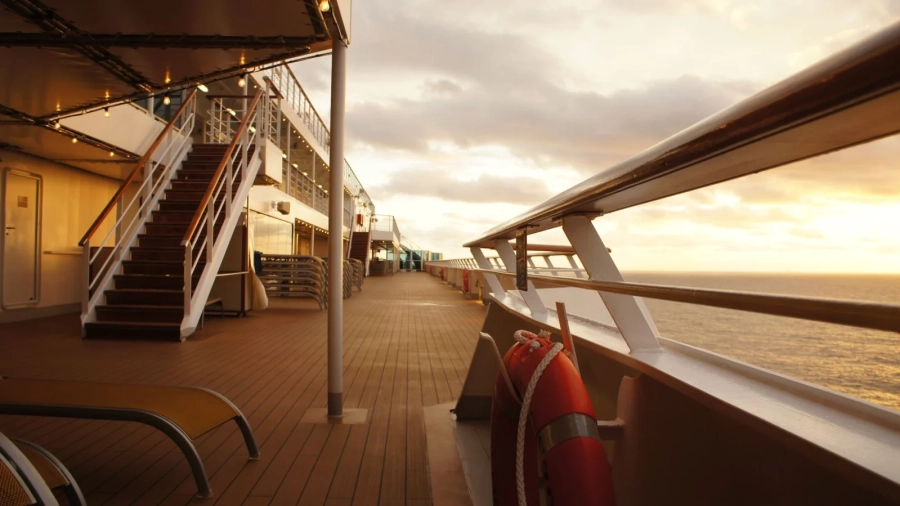
Is a balcony worth it on a cruise? For most people on a sailing of five nights or longer with scenic cruising, sea days or more than two people in the cabin, yes: you get daylight, fresh air and noticeably more space. If you plan to be ashore or around the ship from breakfast to bedtime, an inside cabin gives you the same ship, food and entertainment for a lot less, and that saving can pay for excursions or a longer trip.
This guide sets out the real pros and cons of a balcony vs inside cabin, where an ocean view cabin fits in between, what the price gap usually looks like, and which itineraries make the upgrade easiest to justify.
Balcony vs inside cabin at a glance
Every cabin on a mainstream ship gets the same dining rooms, pools, shows and crew. The difference is mainly what happens inside your own four walls. Sizes vary by ship, but on the big mainstream lines an inside cabin is often around 140 to 160 sq ft, while a standard balcony cabin is often around 175 to 200 sq ft before you count the balcony itself.
| Feature | Inside cabin | Ocean view cabin | Balcony cabin |
|---|---|---|---|
| Natural light | None (unless a virtual window) | Yes, through a fixed window or porthole | Yes, through floor-to-ceiling glass doors |
| Fresh air | No | No, windows do not open | Yes |
| Private outdoor space | No | No | Yes, usually two chairs and a small table |
| Typical size (mainstream ships) | Smallest | Similar to inside or slightly larger | Usually larger indoors as well |
| Price | Lowest | Middle | Typically 20-35% more than inside |
| Darkness for sleeping | Excellent | Good with curtains | Good with blackout curtains |
| Best for | Port-heavy trips, budget, deep sleepers | Light without the full balcony price | Scenic routes, sea days, families, longer cruises |
The pros of a balcony cabin
Daylight and a sense of place
The biggest change is simply knowing what is outside. You open the curtains to see the weather, the port you have arrived in or the open sea.
Private space when the ship is busy
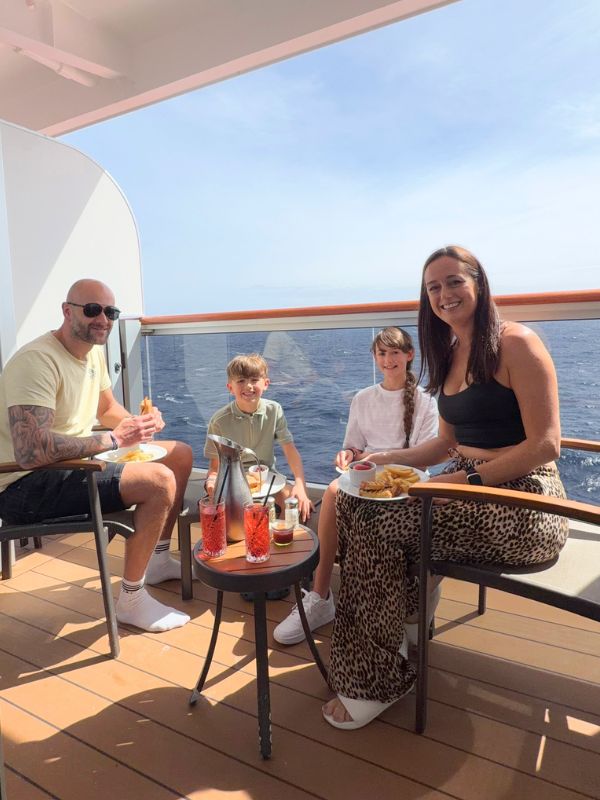
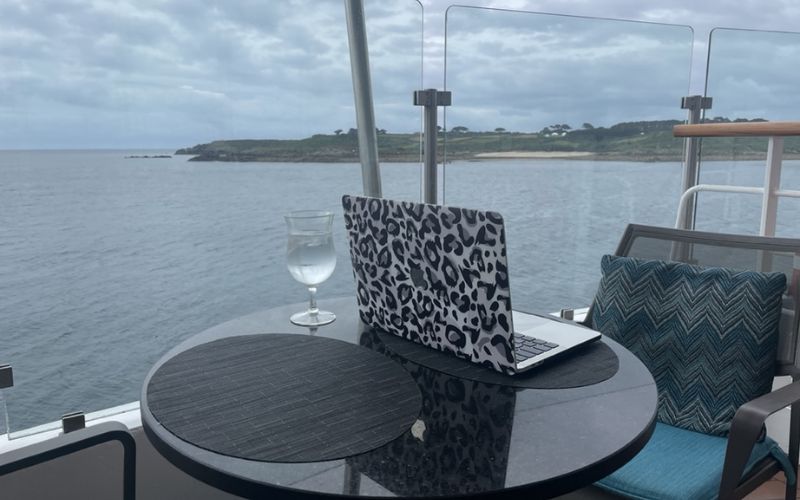
On a large ship with several thousand guests, the pool deck on a sunny sea day can get crowded. A balcony gives you a quiet spot for morning coffee, a room service breakfast, a book in the afternoon or a drink before dinner, without having to find a free lounger.
More room inside the cabin
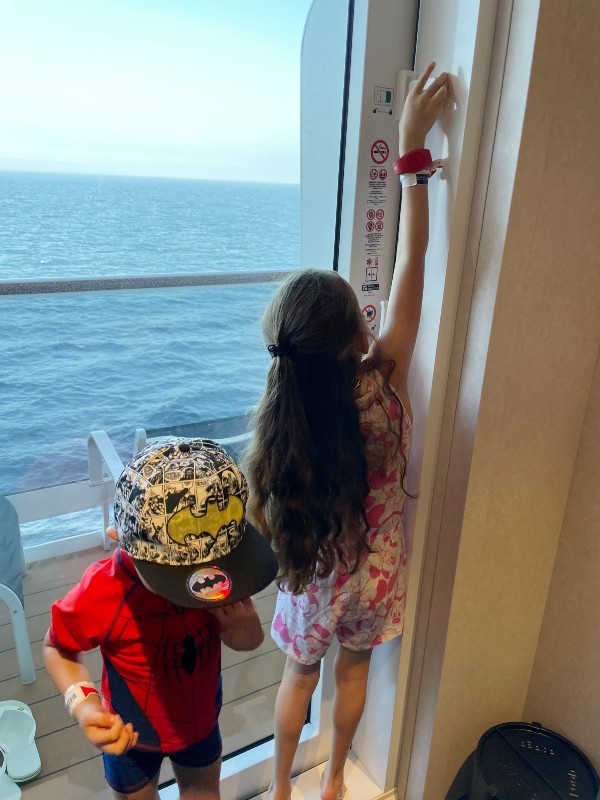
Balcony cabins on most mainstream ships are not just inside cabins with a door added. They are usually larger indoors too, often with a small sofa area. With three or four people sharing, that extra floor space matters, and the balcony acts as an extra room when someone needs to sleep early.
Scenic cruising from your own chair
Sail-ins and sail-aways, glaciers, fjords and island coastlines can all be watched from your own cabin instead of a crowded rail. On itineraries built around scenery, this is the main reason people pay for a balcony.
The cons of a balcony cabin
- Cost. The premium can easily add hundreds of dollars per person to a seven-night cruise, and more on longer or peak-season sailings.
- You may barely use it. On a port-intensive itinerary you leave early and return late. Many balconies sit empty for most of the day.
- Weather. Northern Europe in spring, the North Atlantic or a windy transatlantic can leave the balcony too cold, wet or blustery to enjoy.
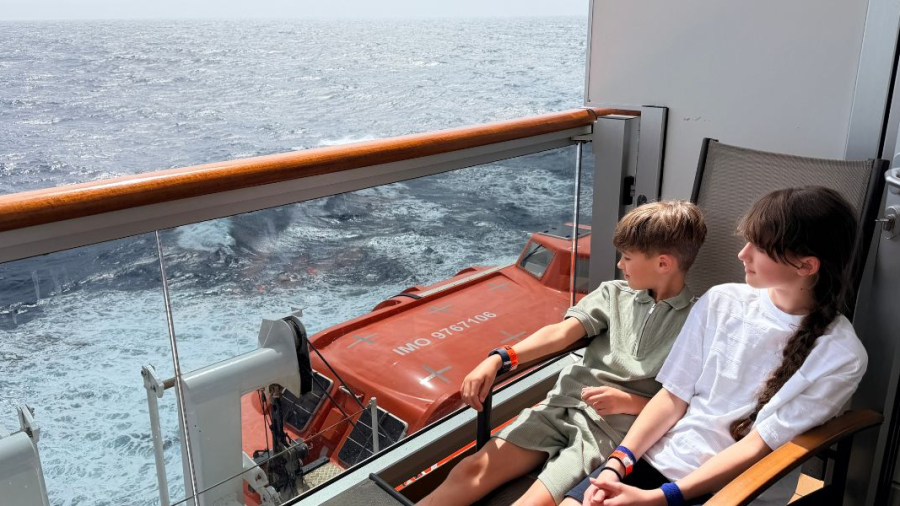
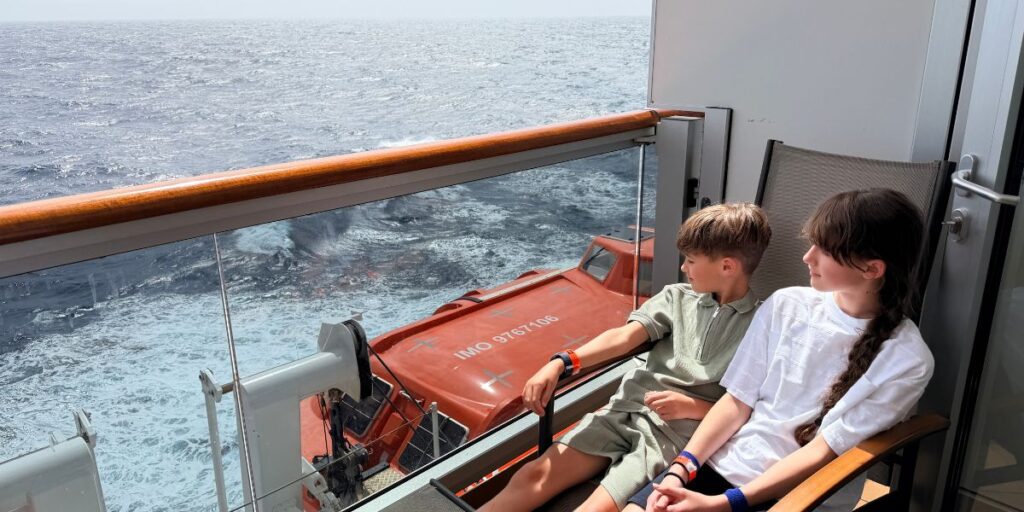
- Not all balconies are equal. Some have lifeboats or structure blocking part of the view, some are overlooked from decks above, and some face inward over an atrium or park area rather than the sea. Smoke from a neighbour can also drift over on lines that still allow it in some areas.
- Light and noise. Light sleepers sometimes find the early sunrise and outdoor noise in port harder to deal with than the total darkness of an inside cabin.
The pros and cons of an inside cabin
Why inside cabins work so well
- Price. Inside cabins are the cheapest way onto any ship, and the saving can cover drinks packages, excursions or an extra cruise.
- Same ship, same experience. You eat in the same restaurants, watch the same shows and use the same pools as everyone outside the suite category.
- Total darkness. With the lights off an inside cabin is pitch black, which many people find helps them sleep well, especially when crossing time zones.
- Often in good locations. Inside cabins are frequently midship and close to lifts, and lower midship cabins tend to feel less motion in rough seas.
The drawbacks
- No sense of time or weather. Without a window, it is easy to oversleep or misjudge what to wear. Keeping the TV on the bridge camera channel helps.
- Less space. Inside cabins are usually the smallest on the ship, which is felt most with three or four people sharing.
- Nowhere private to relax outdoors. Your quiet time has to be spent in public areas.
Where does an ocean view cabin fit?
An ocean view (or oceanview) cabin has a fixed window or porthole that does not open. It gives you daylight and a view without the balcony price. Ocean view cabins are often on lower decks, so they can suit people prone to seasickness who still want light. On many ships the price step from inside to ocean view is small, and on some sailings the jump from ocean view to balcony is smaller still, so always compare all three before booking.
Virtual balconies and other in-between options
Some ships offer inside cabins that feel less enclosed:
- Royal Caribbean virtual balconies. Selected inside cabins have a floor-to-ceiling screen showing a real-time view from outside the ship. According to Royal Caribbean, they are available on Symphony, Harmony, Spectrum, Anthem, Ovation, Quantum, Navigator, Explorer and Voyager of the Seas, but not in every inside cabin, so check the category before you book.
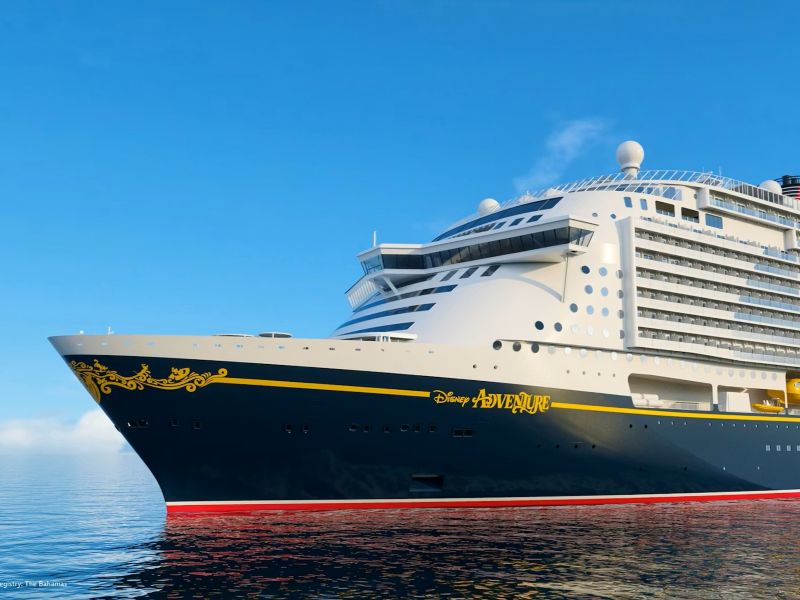
- Disney Cruise Line magical portholes. Most inside staterooms on Disney Dream and Disney Fantasy have a virtual porthole showing a live outside view, with occasional appearances from Disney characters. The newer Disney Wish, Treasure and Destiny do not have this feature.
- Neighbourhood or promenade view cabins. On some large ships, cabins look inward over an indoor promenade or an open-air area such as Royal Caribbean’s Central Park. You get natural light and in some cases a real balcony, but not a sea view.
- Infinite Verandas. On Celebrity’s Edge-series ships, many balcony cabins have the veranda built into the room behind glass doors. When the doors are closed, the top of the window can be lowered to let in air. It gives a bigger room but a less traditional balcony, so read up on which Celebrity Edge cabins to avoid before choosing one.
How much more does a balcony cost?
There is no fixed rule, because cruise lines price each sailing on demand. As a rough guide, recent published fares for seven- and eight-night Caribbean cruises on Carnival and Royal Caribbean have shown balcony cabins costing around 20-35% more than inside cabins. That has worked out to about $250 to $415 per person in the examples published by cruise sites for 2026 sailings. On some sailings, especially longer or premium ones, the gap can be wider and balconies can cost close to double an inside fare.
A practical way to judge it is to work out the extra cost per person per night. Many experienced cruisers treat about $25 to $35 per person per night as a fair price for a balcony upgrade on a mainstream line. Below that, the upgrade is usually good value. Well above it, an inside or ocean view cabin plus a few extra spa treatments or excursions may be better value.
Prices also move over time. Balconies tend to sell first, so booking early gives you more choice of location, while promotions and last-minute deals sometimes narrow the gap. Our guide to when to book cruise deals for 2027 covers the timing in more detail. Also look out for paid or bid-based upgrade offers after booking, which some lines use to fill unsold balconies.

Is a balcony worth it on a cruise? Itineraries where it matters most
- Alaska. Inside Passage scenery, glacier days and wildlife spotting are what you came for. A balcony lets you watch for hours in comfort, with a blanket and hot drink to hand.
- Norwegian fjords. Long, slow sail-ins and sail-outs through steep-sided fjords are among the most dramatic scenery in cruising. See our guide to Norwegian fjords cruises for routes and timing.
- Transatlantic and repositioning cruises. Lots of sea days mean lots of cabin time, and private outdoor space becomes far more valuable.
- Hawaii, the South Pacific and long Caribbean voyages. Warm weather, island views and sea days make the balcony easy to use from morning to night.
When an inside cabin makes more sense
- Short getaways of two to four nights, especially to busy Bahamas or Mexico ports.
- Port-intensive Mediterranean or Northern European cities trips where you are ashore most days.
- Groups who mainly use the cabin to sleep and change.
- Anyone stretching a budget to cruise more often, or to book a better ship or itinerary.
Who should book which cabin?
- Couples on a special trip: a balcony adds a lot to honeymoons and anniversaries, particularly on sea-day-heavy or scenic routes.
- Families: with young children, a balcony gives parents somewhere to sit after an early bedtime. Always check balcony locks and supervise children outside.
- Solo travellers: single supplements can make a balcony expensive, and some newer ships have dedicated solo inside cabins with access to a shared lounge. Our solo cruise guide explains the options.
- First-time cruisers on a budget: an inside cabin is a sensible low-risk way to find out whether you like cruising.
- People prone to seasickness: a lower-deck midship cabin, inside or ocean view, is often more comfortable than a high balcony cabin, though fresh air on a balcony helps some people too.
Tips for getting the most from either choice
- Check the deck plan for lifeboats, overhangs and what is above and below the cabin before booking.
- Compare inside, ocean view and balcony prices on the same sailing, and work out the difference per person per night.
- Look for “obstructed” or “partial view” balcony categories if you want the outdoor space at a lower price and do not mind a restricted view.
- On an inside cabin, set an alarm and use the ship’s live camera channel to see the weather.
If you do book an inside cabin, these cabin organisation hacks for small cruise cabins help make the most of the space.
Cabin choice is only part of the decision, so if you are new to cruising read our guide on how to pick a cruise line first.
Booking a Sea Terrace on Virgin? Check our guide to Virgin Voyages cabins to avoid first.
FAQs
Is a balcony worth it on a cruise?
It is usually worth it on cruises of five nights or more, on scenic itineraries such as Alaska or the Norwegian fjords, and when three or four people share a cabin. On short, port-heavy trips an inside cabin is often better value.
How much more is a balcony than an inside cabin?
It varies by sailing, but on mainstream seven-night cruises balconies often cost about 20-35% more than inside cabins, roughly $250 to $415 per person in recent examples. On some sailings the gap is much larger.
Is an ocean view cabin a good compromise?
Yes, if you mainly want daylight. You get a window and a view but no fresh air or outdoor space, and the price usually sits between inside and balcony.
Which cruise ships have virtual balconies?
Royal Caribbean offers virtual balconies in selected inside cabins on Symphony, Harmony, Spectrum, Anthem, Ovation, Quantum, Navigator, Explorer and Voyager of the Seas. Disney Dream and Disney Fantasy have similar magical portholes in most inside staterooms.
Are inside cabins better for seasickness?
Lower-deck midship cabins feel the least motion, and many of those are inside cabins. Some people find the lack of a horizon unsettling, though, so an ocean view cabin low and midship is a good alternative.