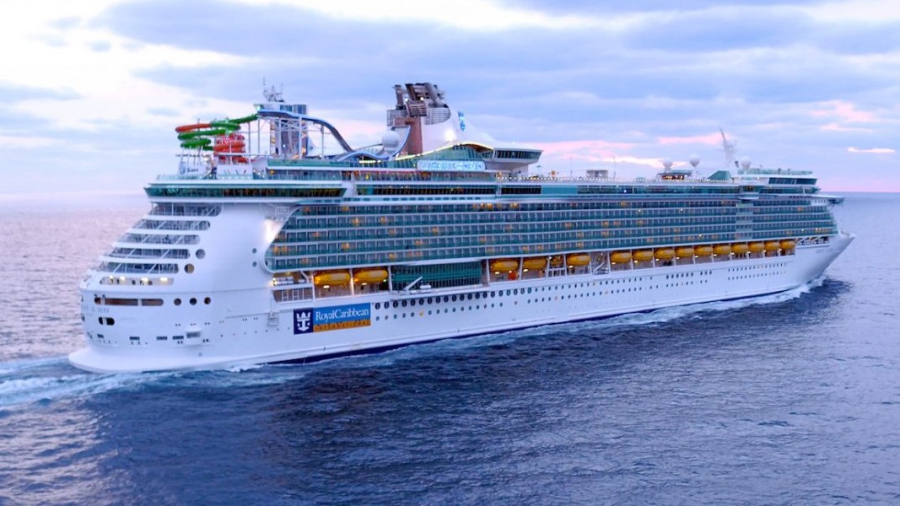
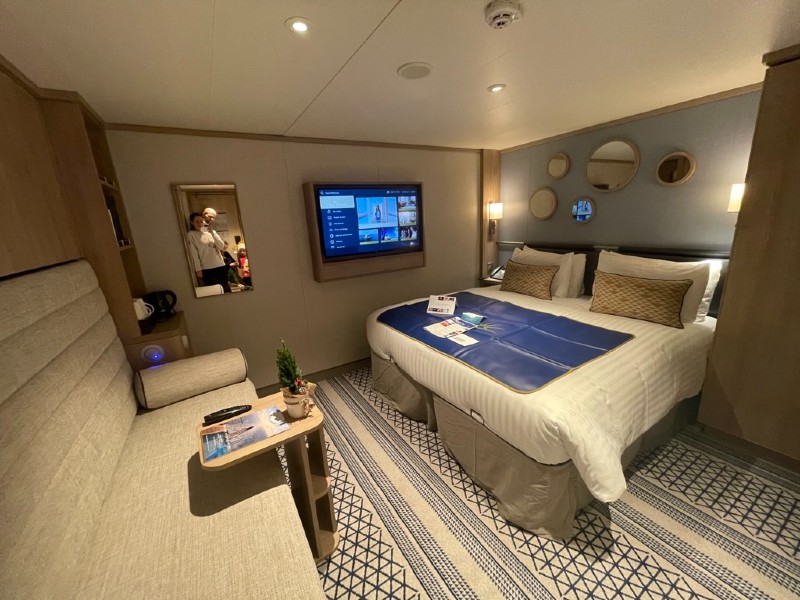
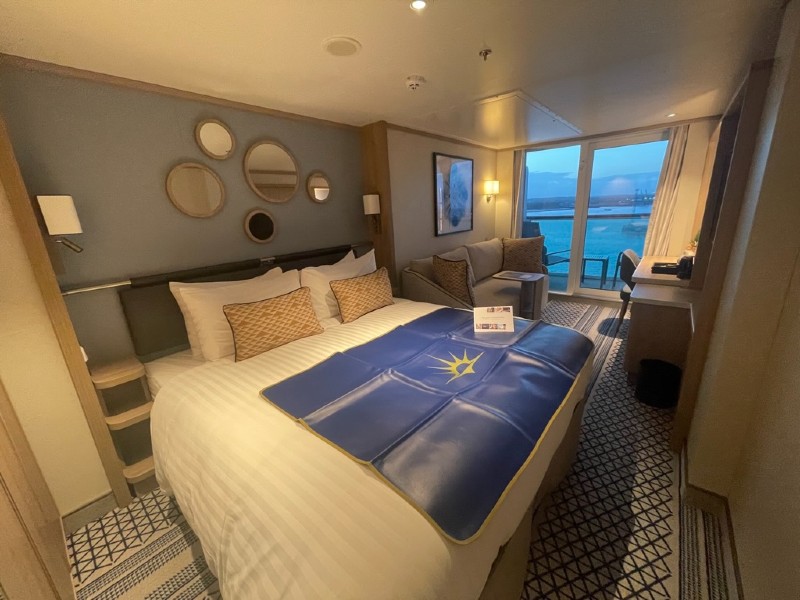
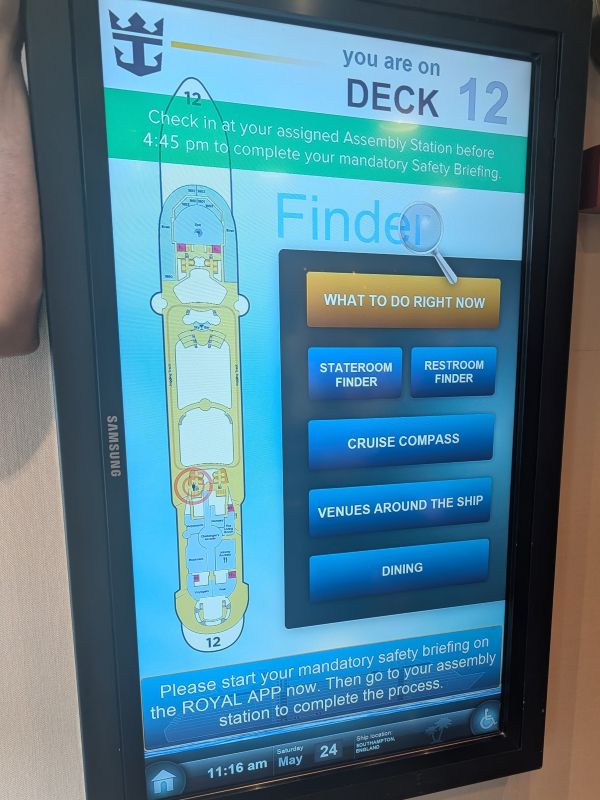
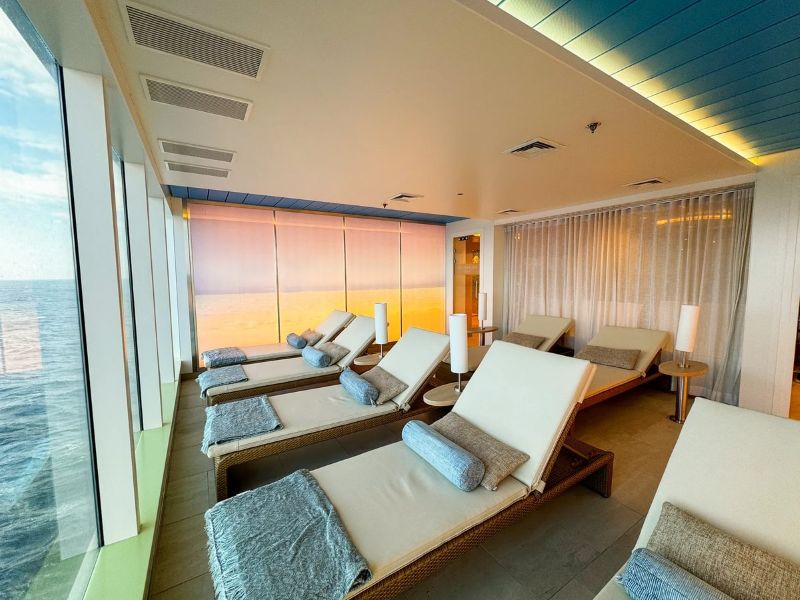
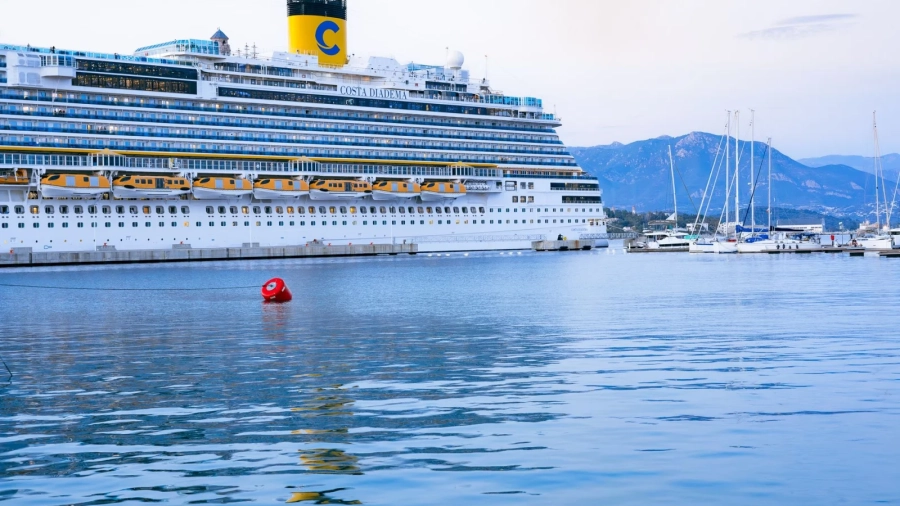
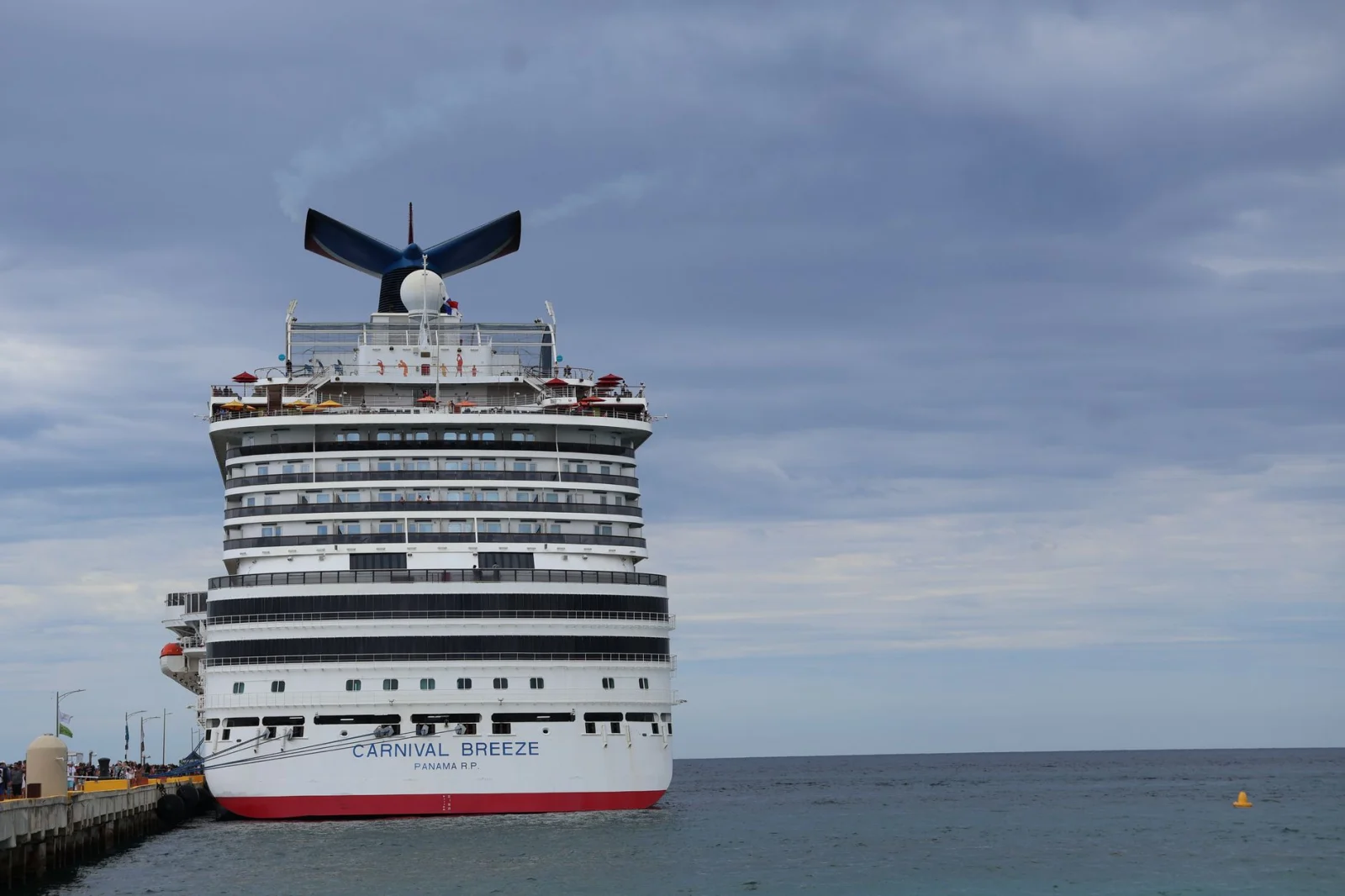
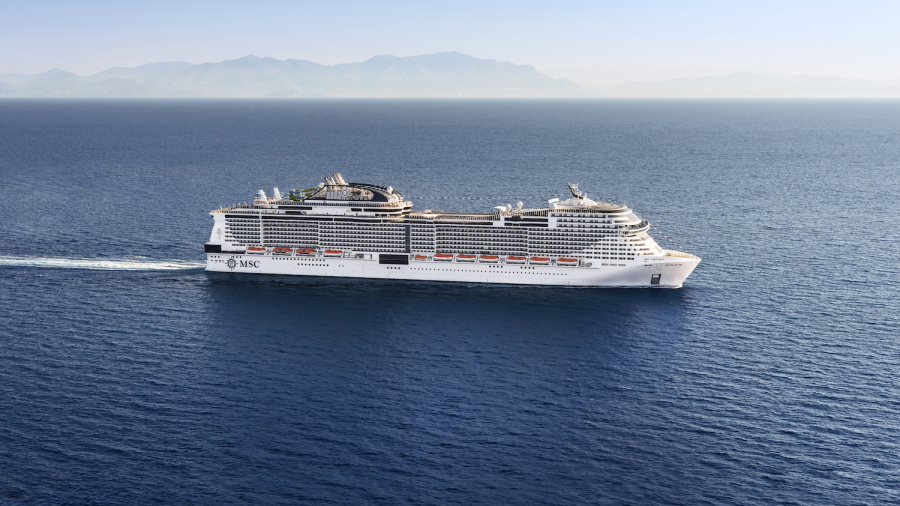
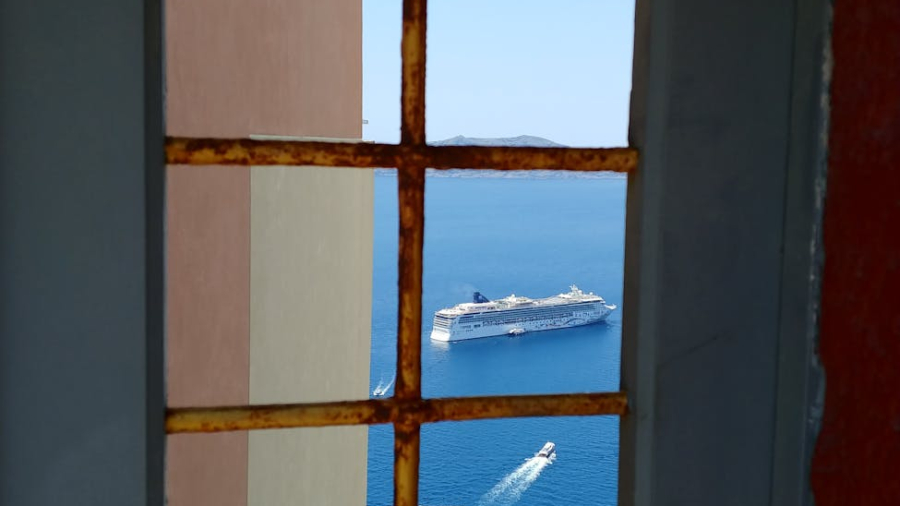
Royal Caribbean has altered the itinerary of Liberty of the Seas to ensure guests enjoy optimal viewing of the total solar eclipse on 12th August 2026, removing a scheduled call to Lisbon in favour of a revised route through northern Spain and France.
The 9-night sailing, departing Southampton on 7th August 2026, will now position the 155,900-gross-ton ship directly within the path of totality, maximising the chances for the ship’s 4,960 guests to witness the full celestial spectacle at sea.
In a message sent to booked passengers, the cruise line confirmed the change. “To give everyone the best possible total solar eclipse viewing experience during our sailing, we’ll adjust our route after our visit to Gijon, Spain,”.
Itinerary Adjusted To Maximise Totality
Under the revised schedule, Liberty of the Seas will no longer visit Lisbon, Portugal. Instead, after calling at Gijon, the ship will sail directly to Vigo, ensuring it is positioned squarely in the eclipse’s path of totality on 12th August.
Originally, the ship was expected to remain within the 94 to 98 per cent totality zone. While that would have provided a dramatic partial eclipse, it falls short of the complete darkness and full corona visibility that only 100 per cent totality can deliver.
The updated itinerary is now as follows:
Friday 7th August – Depart Southampton at 5 pm
Saturday 8th August – Day at sea
Sunday 9th August – Bilbao, Spain from 8 am to 6 pm
Monday 10th August – Gijon, Spain from 9 am to 6 pm
Tuesday 11th August – Vigo, Spain from 10 am to 7 pm
Wednesday 12th August – Solar eclipse day at sea
Thursday 13th August – La Coruna, Spain from 7 am to 6 pm
Friday 14th August – Day at sea
Saturday 15th August – Le Havre, France from 8 am to 9 pm
Sunday 16th August – Arrive Southampton at 5:30 am
Le Havre will serve as the gateway to Paris, replacing what was previously scheduled as a day at sea. La Coruna moves to 13th August, while Vigo shifts forward to 11th August to accommodate the new routing.
Royal Caribbean has confirmed that shore excursions booked for Lisbon will be automatically cancelled, with refunds issued to the original form of payment. Excursions in Vigo and La Coruna will be adjusted to reflect the new dates and times.
Strong Guest Reaction To The Change
While itinerary alterations can often prompt frustration, reaction from booked guests on social media has been largely positive, particularly among those who selected the sailing specifically for the eclipse.
Total solar eclipses are rare events that are highly location dependent. According to TimeandDate, the next total solar eclipse after 12th August 2026 will occur on 2nd August 2027, with the path of totality largely crossing northern Africa.
That trajectory is expected to limit opportunities for cruise ships to position themselves for optimal at-sea viewing compared with the 2026 event.
Despite careful planning and route adjustments, eclipse viewing remains weather dependent. Cloud cover or poor visibility could still impact the experience, regardless of the ship’s precise position within the totality path.
For now, however, Royal Caribbean’s proactive schedule change appears to have reassured guests that the cruise line is committed to delivering what many are billing as a once-in-a-lifetime astronomical experience at sea.
There is still availability for this cruise (book here if you’re interested) although cabins are limited.
NEW DEALS JUST RELEASED!
Don’t miss the latest Royal Caribbean offers…
Related Posts
If you found this interesting, please share!
Carnival Cruise Line has halted all third-party gift requests after an administrative error resulted in a bottle of champagne being delivered to a cabin occupied by children. The decision follows…
A former senior executive at Norwegian Cruise Line Holdings has been arrested in Argentina in connection with an alleged fraud scheme said to have cost the cruise giant more than…
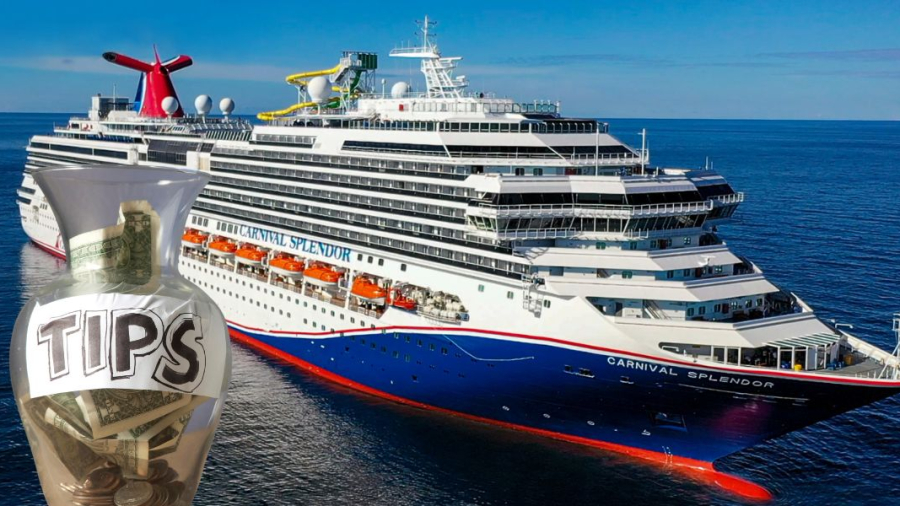
$900 in tips. In one single day. That’s what one former cruise ship bartender says he made behind the bar. And yes, it’s sparked a lot of debate. Tipping is…
Hollywood star Robert Downey Jr. has been confirmed as the official godparent of Disney Cruise Line’s newest and largest vessel, Disney Adventure, in a major announcement made on 23rd February…
A former senior executive at Norwegian Cruise Line Holdings has been arrested in Argentina in connection with an alleged fraud scheme said to have cost the cruise giant more than $2 million.
Thomas “Tom” Markwell, 54, was taken into custody in Buenos Aires on Monday 23rd February 2026. According to local media outlet Infobae, Interpol agents arrested him in the Palermo neighbourhood in the northern part of the Argentine capital. He is now awaiting extradition to the United States to face multiple criminal charges.
The case was first opened in October 2023, when prosecutors alleged that Markwell and two accomplices orchestrated a long-running scheme involving fraudulent invoices submitted to Norwegian Cruise Line Holdings. The total amount in question exceeds $2 million.
Alleged Invoice Scheme Spanned Years
Markwell most recently served as Senior Director of Events for Norwegian Cruise Line Holdings, a role he held from July 2019 until September 2023. While the cruise company has not detailed his precise responsibilities, the position would typically involve organising corporate events, liaising with shareholders and partners, and coordinating corporate gifting and sponsorship activities.
Prosecutors allege that Markwell exploited his authority to approve payments by working with two external accomplices who were not employed by the cruise line or any related company. The pair allegedly issued invoices through a fraudulent supply business known as “The Gifting Company”.
The invoices were reportedly structured to fall below internal financial thresholds that would have triggered additional scrutiny or audit alerts. Authorities claim the documents did not fully disclose the services or products supposedly provided, yet remained within Markwell’s authorised approval limits.
Once the invoices were processed and paid by Norwegian Cruise Line Holdings, investigators allege that Markwell and his accomplices diverted and shared the funds.
Court documents state that dozens of transactions were used to carry out the scheme. Among them were at least two payments totalling $165,000, as well as an $82,000 transfer allegedly made directly into his girlfriend’s bank account.
In addition to fraud-related offences, Markwell is facing identity fraud and theft charges. Prosecutors allege he used his girlfriend’s account as part of the operation. There has been no indication that she was aware of or involved in the alleged criminal activity, and she has not been named.
At least seven charges of wire fraud and identity theft have been filed against Markwell. If convicted, he could face a minimum sentence of 20 years in prison under US law.
Markwell, who was born in Illinois, has spent decades working in the travel industry. He was educated at Eastern Illinois University and Robert Morris University, also in Illinois.
Cruise Fraud Cases Continue To Surface
While this case is one of the most significant to directly involve a senior cruise line executive, it is not the only example of alleged fraud connected to the cruise sector in recent years.
There was a recent story of a New York woman accused of operating a fraudulent travel agency that failed to book clients’ holidays, as well as incidents involving fake cruise gift cards, onboard theft and credit card fraud targeting passengers.
In other cases, cruise guests have been arrested in ports such as Miami and in Brazil over financial crimes linked to sailings.
However, allegations involving an executive at a major cruise corporation are comparatively rare, making this one of the largest cases of its kind to surface within the industry.
As extradition proceedings move forward, further details are expected to emerge regarding the extent of the alleged scheme and the status of Markwell’s two unnamed accomplices, whose whereabouts have not been disclosed.
NEW DEALS JUST RELEASED!
Don’t miss the latest NCL offers…
Related Posts
If you found this interesting, please share!
$900 in tips. In one single day. That’s what one former cruise ship bartender says he made behind the bar. And yes, it’s sparked a lot of debate. Tipping is…
Hollywood star Robert Downey Jr. has been confirmed as the official godparent of Disney Cruise Line’s newest and largest vessel, Disney Adventure, in a major announcement made on 23rd February…
A powerful winter storm has continued to disrupt cruise operations along the US east coast, with several ships from different lines facing delayed departures and altered itineraries. According to the…
Virgin Voyages has moved swiftly to reassure guests that its relaxed approach to onboard attire remains firmly in place, following criticism aimed at Norwegian Cruise Line over new dress code…
Don’t get your cruise holiday off on the wrong foot from the moment you step onboard!
There’s something wonderful about that first step onto a cruise ship. That sudden switch from dragging luggage around outside amongst a crowd of eager passengers, to then being surrounded by soaring atriums, smiling crew and the hum of thousands of excited holidaymakers… I can’t get enough!
But to make the very best start to your voyage, these are the things you absolutely must do once you first step onboard.
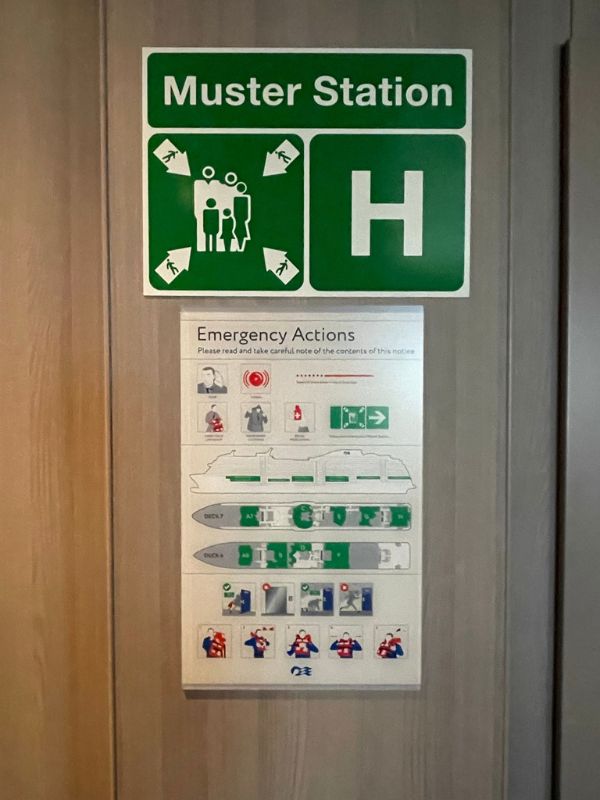
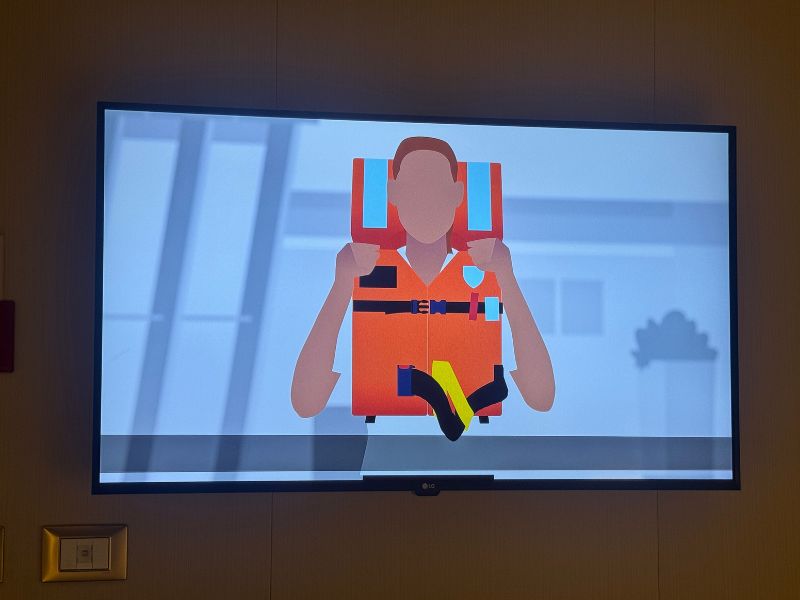
1. Do Your E-Muster or Muster Drill Check-In Immediately
The muster drill is the only non-negotiable task of embarkation day, and fortunately it’s now usually far quicker than the old mass gathering on deck.
Most lines simply require you to watch a short safety video and then pop by your muster station for a quick check-in. Many even let you watch the video on the morning of the cruise – perfect over that hotel breakfast if you’ve stayed near the port the night before.
If you go to your station the moment you board, you’ll have got it out of the way and you’ll be free to enjoy your day without interruption.
2. Consider Upgrading Your Room
If you walk into your cabin and you hate it, now’s the time to see if you can switch it for another one.
I once booked an inside cabin on Arvia for two weeks over Christmas because that’s all my budget would allow. The cabin was in a bad location, right at the very front of the ship, and when I walked in I was shocked at how small it was for four people.
So, I went straight to guest services and asked what else they had. Someone in a balcony cabin had cancelled at the last minute, and so there was a room free.
The balcony cabin was so much bigger, and in an excellent mid-ship spot too.
The price to upgrade was an absolute bargain, and so much cheaper than if I had booked the balcony in the first place! We had a lovely Christmas in this room.
3. Explore The Ship and Get Your Bearings
Cruise ships are floating resorts, and wandering around on day one is the perfect way to get your bearings before things get busy.
Explore! I love to just wander around the ship, peeking into lounges and bars, and looking for fun spots that I’ll want to return to during the cruise.
If you’re travelling with others, choose a central meeting spot too – not for emergencies (that’s your muster station, remember), but simply as a convenient place to regroup if you’re ever separated or staying in different parts of the ship.
4. Look Around The Spa
On embarkation day, the spa will be open so that you can wander around it and take a look at the thermal suite and all of the treatment rooms.
This is the only day that you’ll be able to do it, so even if you don’t think that the spa is for you, it’s definitely worth having a nosy around!
Embarkation day is also when the spa typically offers discounted packages, which can be surprisingly good value. Services on sea days can get booked up quite quickly, so if you’re sure that you want something, it’s worth booking that in on day one.
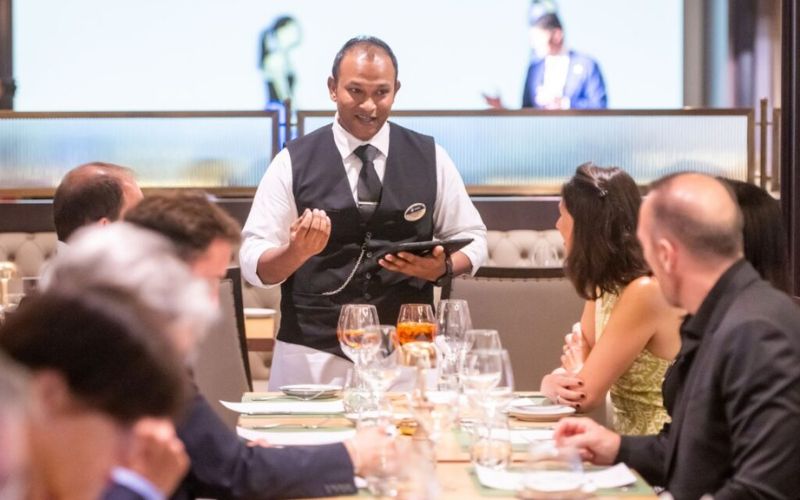
5. Check Dinner Arrangements or Speak to the Maitre D’
If you’re not thrilled with your allocated dining time or wish to switch from traditional seating to anytime dining, the maitre d’ is the person to speak to – and embarkation day is the best time to catch them.
Also if you’ve any dietary requirements and you are worried about the menus, go have a chat – you’d be surprised what some cruise lines can do for you.
For a lot of cruise lines, this is also the time where you can book speciality restaurants. Popular venues like steakhouses and teppanyaki restaurants can book up quickly, so securing your spot early avoids missing out.
If your cruise line accepts bookings before the cruise, and you missed out, go there on embarkation day – you might be able to snag a cancellation slot, or sometimes they hold some spaces back for those guests.
6. Make Entertainment and Show Reservations
Big headline shows, comedy clubs and immersive experiences often require reservations nowadays, especially on the larger ships.
While you may be able to booking things before you get onboard, more slots often open up once you’re on the ship.
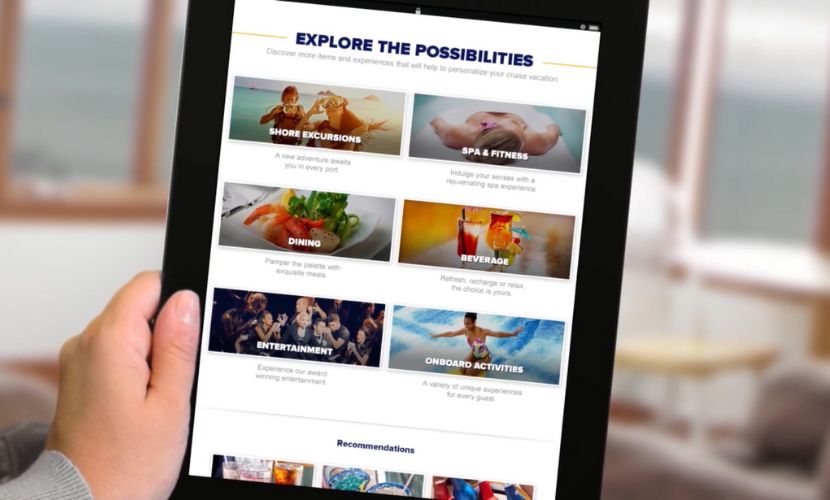
It only takes a few taps in the cruise app to lock in a great time slot, and doing it early means you can plan your evenings around performances you’re genuinely excited about rather than whatever happens to be left.
7. Register at the Kids’ Club
If you’re sailing with little ones, register them at the kids’ club as soon as possible.
The first-day open house is a great time to meet the counsellors, check the timetable and help your children feel comfortable before activities begin.
Many clubs also give the kids their muster bracelets on this day, so you’ll tick off two tasks at once.
It’s a good idea to register even if your child isn’t sure about using them. You aren’t forced to bring them, although some will ask you to pre-book slots. Don’t book those if you aren’t sure, but having them registered in the club is still good, just in case your kid asks you to book them in later.
8. Freshen Up or Change into Cruise Clothes or Swimwear
A travel morning can leave you feeling a bit crumpled, especially if you’ve flown in from a different climate.
Freshening up and slipping into lighter clothes or swimwear immediately helps you feel like your holiday has truly begun.
If you’re clever, board with your swimsuit already on underneath your outfit – you’ll save even more time and can head straight to the pool as soon as you’ve had lunch.
Speaking of lunch…
9. Have Lunch Somewhere Other Than the Buffet
The buffet is the default dining option for new arrivals, which is precisely why it can feel like organised chaos on embarkation day.
Instead, check whether the main dining room, a poolside grill or a small café is open.
These quieter venues let you ease into cruise life at a calmer pace, and you’ll often enjoy far nicer food without juggling plates and weaving through crowds.
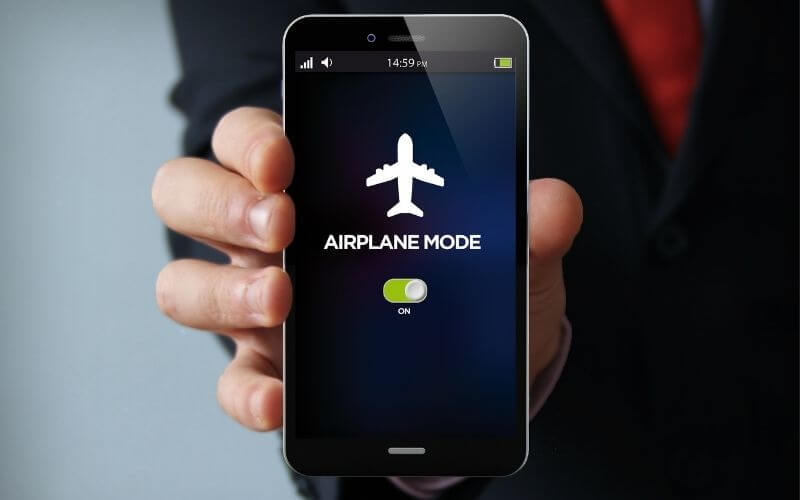
10. Put Your Phone on Airplane Mode
Once you’ve sent your final messages and posted your obligatory “I’m onboard!” photo, switch your phone to airplane mode.
Maritime roaming charges are notoriously expensive and can take effect before you even feel the ship move.
You can still connect to the ship’s WiFi for the app without buying an internet package, but airplane mode ensures you stay in control of your costs.
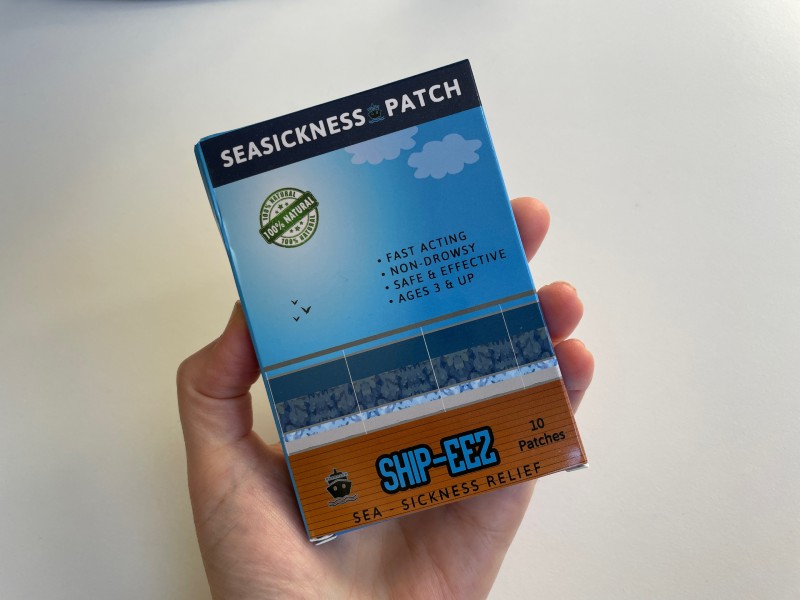
If you know you’re sensitive to motion, take your chosen remedy before the ship even casts off.
Tablets and latched tend to work best when given time to take effect, and taking them early can prevent feeling woozy during sailaway when excitement (and sometimes wind) are at their peak.
It’s an easy precaution that keeps the first evening blissfully comfortable.
Once your cabin is ready, take a few minutes to check that everything is working as it should.
Test the lights, outlets, toilet flush, air-con and shower pressure, and make sure the room is clean and well stocked.
Any problems are usually resolved quickly if reported early, and it’s much easier than trying to chase fixes later in the cruise when maintenance might be busier.
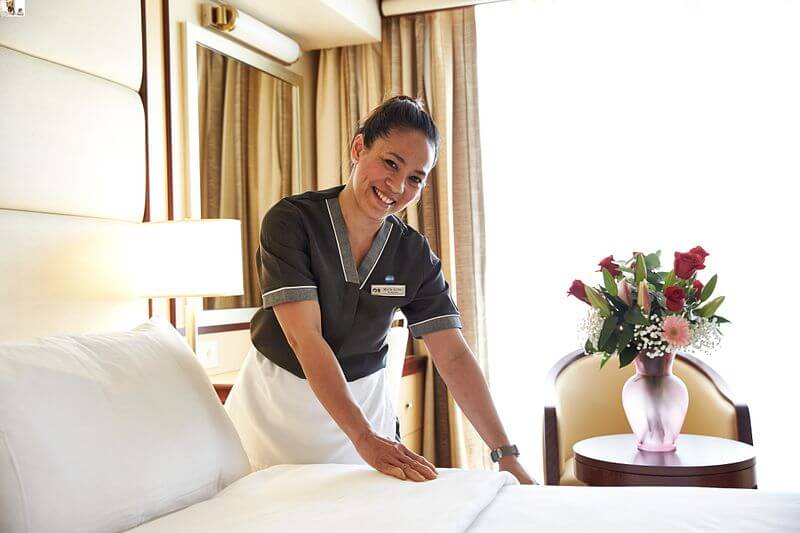
Your cabin steward is the person who will quietly keep your space spotless throughout your voyage.
A quick hello helps build a friendly relationship, and it’s the perfect moment to request any preferences – extra pillows, more hangers, ice each evening, or specific bed arrangements. There are so many things you can get from your cabin steward for free, you just have to ask.
They genuinely want to make your stay comfortable, and being clear from day one helps them help you.
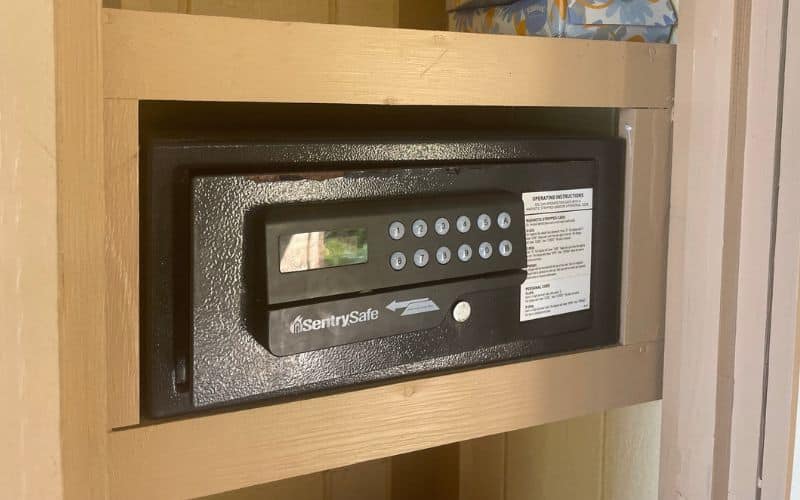
It’s surprisingly easy to misplace things amidst the excitement of exploring the ship, so place passports, wallets, jewellery and other essentials straight into the cabin safe once you have access to your room.
Once they’re secure, you won’t spend the rest of the afternoon patting your pockets or rummaging in bags to check they’re still there.
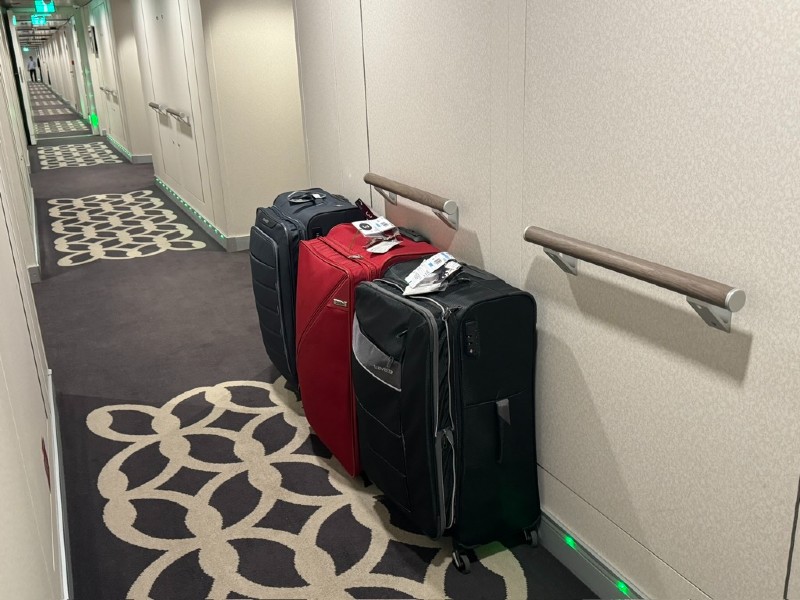
15. Unpack Once Your Luggage Arrives
When your suitcases finally appear, it’s worth unpacking – and sooner rather than later. Having clothes neatly arranged in drawers and wardrobes instantly makes your cabin feel calmer and more spacious.
Hide empty suitcases under the bed, organise your toiletries and make the space your own – you’ll thank yourself when the week starts flowing smoothly. Especially if you’re in a smaller cabin.
16. Grab a Celebratory First Drink
There’s nothing like that first cocktail or cold beer to mark the beginning of your cruise.
Whether you order a classic piña colada, a glass of fizz or your favourite mocktail, take a moment to savour it.
Find a sunny spot, breathe in the sea air and let the stress of travel melt away. It’s your holiday now – officially.
Sailaway is pure cruise magic – music, dancing, drinks flowing and the coastline drifting away as your holiday truly begins.
It doesn’t matter if you join the energy on the top deck or find a quieter railing to watch the world recede, don’t miss it. It’s one of the highlights of every cruise and sets the perfect tone for the days ahead.
Things You SHOULDN’T Do Immediately After Boarding
1. Don’t Go Straight to the Buffet
The buffet is usually packed on day one, with everyone arriving hungry at once. Tables fill up quickly and navigating the crowds can feel stressful rather than celebratory.
Give it a little time and opt for an alternative lunch spot so your first onboard meal feels relaxed and enjoyable. There’s usually some good spots, like the poolside snack bar or a casual pizza outlet.
Or, eat well before you board – and then you’ll be good all the way until dinner.
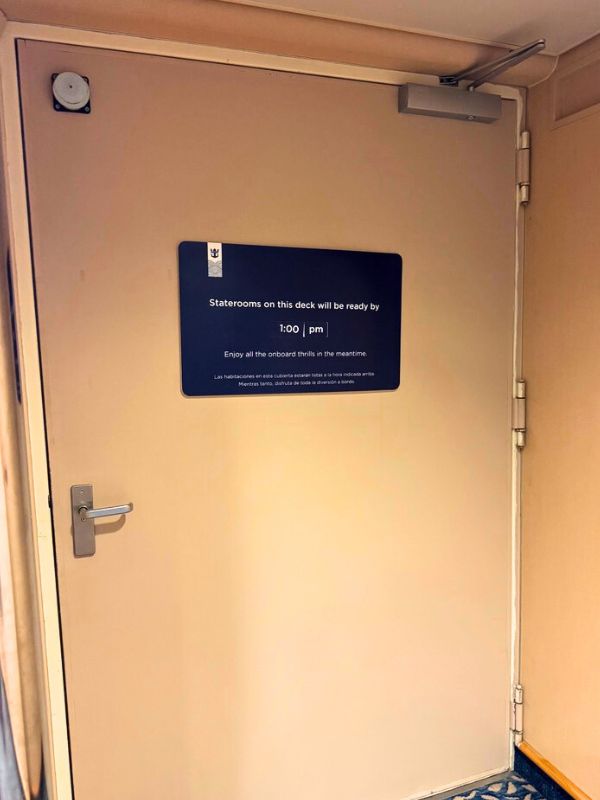
2. Don’t Assume Your Cabin Is Ready Straight Away
Cabins take time to turn over after thousands of guests disembark that morning.
You need to wait until the announcement that cabins are ready. Unless you’ve booked a special package giving you early access, then leave the stewards in peace to do their job.
Go enjoy lunch or explore instead. Relax. It’ll be ready soon.
I’ve heard stories of people who have gone to their stateroom early, left some belingings and then the cabin steward has disposed of them because they assumed they belonged to the previous guest.
3. Don’t Skip Muster
It may not be the most glamorous part of the day, but the muster is something you just can’t get out of.
While the exact tasks vary (watching a video or a presentation in person), one thing’s for sure, you absolutely have to visit your muster station so they can tick you off the list.
This is why it’s number one on the list above – get it done and then you can relax.
4. Don’t Overdo Your First Drinks
It’s tempting to go full party mode the minute you step on board, but it’s wise to pace yourself.
Between travel fatigue, warm weather and the gentle motion of the ship, overindulging early can make you feel rather worse for wear before the evening even starts.
Give it a chance before you hit the bar too hard.
5. Don’t Panic If Your Luggage Doesn’t Arrive Quickly
Suitcases are delivered in batches over several hours, and it’s completely normal for different family members’ bags to show up at different times.
As long as you packed your essentials in your carry-on, you’re all set to relax until they appear.
If the ship has sailed away and your bag hasn’t arrived, don’t worry. Just call guest services. They always have some bags there where the tags have fallen off.
You can prevent your paper tags from coming off by using luggage tag holders. I swear by them!
6. Don’t Stress!
Most of the time, cruises go smoothly. But every now and then there might be a minor issue or two – something wrong with your cabin, or a hiccup with boarding, or maybe another passenger was rude to you or something.
And on those blue moon occasions, sometimes a few things might go wrong at once, and it feels like everything’s snowballing. When that happens, just take a breath.
You’re on a cruise.
Things WILL get better. Even if you aren’t a fan of your cabin or you’ve forgotten to pack something you wanted to bring. It’s fine. Relax, let the stress go, and I bet you’ll start having fun.
Things You Should Have Done Before You Board
I get that there’s a lot to do on embarkation day. But many of the things can be done in the weeks leading up to your cruise.
I advise doing as much as possible in advance, so that you can start your cruise in the most relaxing way possible, rather than in a queue on the ship.
Here’s what you should make sure you tick off before you get anywhere neat the ship.
1. Download The Cruise Line App
Most cruise lines have an app these days, and downloading it in advance makes life easier.
It’s where you’ll check in for muster, view your daily planner, make reservations and keep track of your onboard account.
Doing it ahead of time means you won’t be wrestling with connection settings on embarkation day.
2. Book Shore Excursions
Many of the most popular tours sell out well before departure, and onboard prices are usually higher.
Booking in advance guarantees your spot and helps you plan your days ashore with excitement rather than stress.
It’s also often better to book with a third party, despite the concerns you might have…
Save up to 40% on Cruise Excursions!
Choose from over 4,000 excursions with a return-to-ship guarantee
If you need WiFi during your cruise, pre-purchasing nearly always saves money. Packages bought onboard are often more expensive, and buying early means all you have to do is connect when you board.
And if you want to save even more money, then consider buying an eSIM instead. It’s a lot cheaper.
Get 10% OFF GigSky eSIMs
Enter code CRUISEMUMMY10 at checkout to get this discount
Much like internet packages, drink packages can cost noticeably more once you’re onboard.
Even if the offer on the ship says ‘Buy One Get One Half Price’, this will be on an imflated price, and it will almost certainly cost you more overall.
Sorting them before your cruise means better value and one less decision to make on embarkation day. And it means you can enjoy that first drink without even thinking about your budget.
Drinks packages are not for everyone. I’m not saying everyone should book one before they sail. But, if you think you might want one, then do get it before the cruise. Don’t leave it until the morning of.
Final Word
Embarkation day sets the tone for your entire cruise, and with just a little know-how, you can swap stress and crowds for calm, cocktails and pure ocean-going bliss.
Tackle the must-dos early, skip the rookie mistakes, and let the ship work its magic as you ease into holiday mode.
Remember, even if something goes a bit sideways at the start, you’re still on a cruise – sunshine, sea breezes and unforgettable moments are waiting. Take a breath, smile, and enjoy it!
What can’t you bring on a cruise? The items most often confiscated at cruise security are extra alcohol, surge protectors, clothes irons and steamers, candles, marijuana and CBD products, weapons (including pocket knives and toy guns), drones, and personal Wi-Fi gear such as Starlink dishes and travel routers. Most of these are held until the last day of the cruise, while drugs and opened alcohol are usually discarded.
The good news is that almost everything on the banned list has a cruise-friendly alternative. Below are the 14 items that most often get pulled from bags at the terminal, a line-by-line alcohol table for 2026, and what to pack instead so your luggage reaches your cabin without a call from security.
Cruise prohibited items: the quick version
Every cruise line publishes its own prohibited items list, and they differ in the details. A few rules are close to universal, though:
No weapons, ammunition, fireworks or replicas of weapons.
No illegal drugs, and that includes marijuana and CBD even when they are legal where you live or you hold a medical card.
No open-flame or heat-producing items such as candles, incense, irons and hot plates.
No extension cords or power strips with surge protection.
Strict limits on what you can drink from home, usually wine only.
Security staff also have discretion. Royal Caribbean, for example, says items not on its list can still be refused if they are judged unsafe, with the final call resting with the ship’s senior officers. When in doubt, check your line’s official page before you pack.
The 14 most commonly confiscated items at cruise ports
1. Extra wine, beer and spirits
Alcohol is the number one item pulled at security. Most lines allow one 750 ml bottle of wine or Champagne per adult on embarkation day and nothing else. Beer, hard seltzer and liquor are banned on almost every mainstream line, and staff know the tricks: rum in mouthwash bottles and vodka in water bottles get spotted on the scanners. Pack instead: your single permitted bottle in your carry-on, or look at the cruise drink package loopholes that still work in 2026 if you want to drink more for less.
2. Bottled water and soda
Soft drink rules vary more than people expect. Royal Caribbean allows up to 12 standard (17 oz) cans, bottles or cartons per stateroom on boarding day. Carnival allows 12 cans or cartons of up to 12 oz per person but not plastic or glass bottles. Norwegian and MSC don’t allow guests to bring water or soda at all, apart from sealed water needed for infant formula or medical devices. Pack instead: a refillable water bottle, which you can fill for free at the buffet, or cans and cartons where your line permits them.
3. Surge protectors and surge-protected power strips
Surge protectors are banned because they can interfere with a ship’s electrical system and create a fire risk. Royal Caribbean goes further and bans extension cords, power strips and multi-plug outlets in general. Carnival allows extension cords and power strips without surge protection when used safely. Pack instead: a compact non-surge USB charging cube or a power strip clearly labeled “no surge protection” (often sold as “cruise-approved”), but only if your line permits strips at all. Many newer cabins already have USB ports by the bed.
4. Clothes irons and garment steamers
Irons and steamers are near the top of the confiscated list because they get very hot and are easily left on. Royal Caribbean prohibits both outright, and Carnival returns them at the end of the cruise. Pack instead: wrinkle-release spray, wrinkle-resistant fabrics, or the ship’s pressing service. Hanging clothes in the bathroom during a hot shower also helps.
5. Candles, incense and wax warmers
Open flames are a serious hazard at sea, so candles and incense are banned everywhere, including those that are “just for decoration”. Pack instead: battery-operated LED candles or a small LED string light for a birthday or anniversary setup.
6. Marijuana and CBD products
Cruise ships follow federal and international law, not state law. Royal Caribbean bans marijuana “regardless of medical authorization or local legality”, and Carnival lists CBD items by name. Ports often use detection dogs, and possession can bring trouble with local authorities, not just the cruise line. Pack instead: leave it at home. Bring prescription medication in its original labeled packaging in your carry-on.
7. Starlink dishes, satellite gear and travel routers
This is the newest addition to many banned lists. Carnival bans satellite dishes and routers, and in late 2024 Royal Caribbean added “satellite dishes, routers, and other networking equipment” to its list. Passengers who brought a Starlink Mini aboard have had it confiscated. Pack instead: buy the ship’s Wi-Fi package before sailing (it is usually cheaper pre-cruise) and download shows and maps at home.
8. Drones
Drones are banned outright on many lines because of privacy and navigation concerns. Where they are accepted, for example under Carnival’s rules as reported in 2024, security holds them and you can only use them in port, subject to local laws. Pack instead: a phone gimbal or action camera, which are generally fine.
9. Knives, scissors and tools
Pocket knives, multi-tools and large scissors are frequently pulled. Royal Caribbean allows scissors with blades under four inches, while Princess and Holland America ban many hand and power tools. Some knives and tools are held by security and returned at the end of the cruise. Pack instead: small blunt scissors in your toiletry kit and a TSA-style multi-tool with no blade.
10. Weapons, replicas and self-defense items
Firearms, ammunition, fireworks and sparklers are banned without exception, even if you have a carry permit. Toy guns, replica weapons and many self-defense items are also refused. Pack instead: nothing. If kids want a costume prop for a theme night, choose something that clearly isn’t a weapon.
11. Heating appliances: kettles, coffee makers and hot plates
Anything that heats food or water is treated as a fire hazard, as are electric blankets and heating pads. Pack instead: use the buffet and coffee bars, which run long hours, or ask your cabin steward about tea service.
Packing only line-approved items means your bags reach the cabin on time. Photo: Vlada Karpovich on Pexels
Cruise banned items that catch people out
12. Fans and small appliances
Cabins can feel warm, so many people pack a fan. Carnival allows fans under 12 inches in diameter, while lines with stricter electrical rules may refuse plug-in models. Pack instead: a small battery or USB-powered clip fan, which avoids most electrical rules.
13. Bluetooth speakers
Speakers and radios appear on several lines’ banned or restricted lists because of noise complaints, and they are typically held and returned at the end of the sailing. Pack instead: headphones, plus a few fun games to bring on a cruise for cabin or deck downtime.
14. Door decorations and hanging decor
Decor rules have tightened. Norwegian has long banned door decorations, and since June 2026 Disney limits decorations to the stateroom door itself, not hallway walls or ceilings. Carnival bans curtains and hanging room dividers. Fresh flowers and plants are also refused on many lines. Pack instead: magnets or removable decorations that stay on the door, and order flowers through the cruise line’s gift service. Families should check the rules first, especially on the best cruise lines for families with kids, where door decorating is a popular tradition.
Most lines let each adult bring one bottle of wine on embarkation day. Photo: Julia Filirovska on Pexels
Cruise alcohol rules by line (2026)
Here is how the major US lines compare for bringing your own alcohol as of November 2026. Fees and limits change, so confirm on your line’s site before you sail.
Cruise line
Wine you can bring
Corkage fee
Water and soda
Royal Caribbean
One sealed 750 ml bottle per adult; no beer or spirits
Charged in public venues (around $15); none in cabin
Up to 12 cans, bottles or cartons (17 oz) per stateroom
Carnival
One 750 ml bottle of wine or Champagne per adult
Around $15 in dining rooms and bars; none in cabin
12 cans or cartons (12 oz) per person; no plastic bottles
Norwegian (NCL)
Sealed wine or Champagne only; no limit stated
$15 per 750 ml, $30 per 1.5 L, even in your cabin; waived with a beverage package
Not allowed
MSC
None allowed
N/A
Not allowed
Celebrity
One 750 ml bottle per adult, in carry-on
$35 in restaurants and bars; waived with Classic or Premium package
What you can hand-carry on embarkation day
Princess
One 750 ml bottle per adult free to drink in cabin
Around $20 for public venues and extra bottles
Check current policy
Disney
One 750 ml bottle of wine or six 12 oz beers per adult, carry-on only
$20 in dining rooms
Check current policy
Disney cut its wine allowance from two bottles to one in June 2026 and now holds port-purchased wine and beer until the end of the voyage. Royal Caribbean lets guests on back-to-back sailings bring one bottle per sailing, stored and released at the start of each new voyage, if they can show documentation for the consecutive cruises.
What happens to items confiscated on a cruise?
Most items confiscated on a cruise aren’t thrown away. They are tagged and stored, then handed back on the final night or on disembarkation morning. That usually includes:
Returned at the end: unopened alcohol in original packaging, irons and steamers, surge protectors, speakers, some knives and tools, and alcohol bought in port or in onboard shops.
Discarded: opened or decanted alcohol (Royal Caribbean discards seized drinks not in original unopened packaging), perishable food and fresh flowers.
Escalated: drugs and weapons can lead to denied boarding, removal from the ship or a referral to law enforcement.
One detail most guides skip: if a banned item is in your checked bag, that whole bag may be held back from cabin delivery until you go to a security office to open it. That can cost you hours on embarkation day. Packing anything borderline in your carry-on means it is screened while you’re standing there, so a quick conversation sorts it out in minutes.
What to pack instead: a quick swap list
Surge protector → non-surge USB charging cube (if your line allows it)
Iron or steamer → wrinkle-release spray and the ship’s pressing service
Candles → LED candles or battery string lights
Plug-in fan → USB or battery clip fan
Bluetooth speaker → headphones
Starlink or travel router → pre-purchased ship Wi-Fi
Bottled water → refillable bottle
Pocket knife → small blunt scissors
Drone → action camera or phone gimbal
Tape-heavy decor → door magnets
If your trip is still at the planning stage, it is worth comparing lines on these policies alongside price when you browse cruise deals for 2027, particularly if bringing your own wine matters to you.
Confiscated items are usually just an inconvenience, but it’s worth knowing why cruise passengers get denied boarding, from passport problems to missing travel authorisations.
FAQs
What can’t you bring on a cruise ship?
Weapons, illegal drugs including marijuana and CBD, surge protectors, irons and steamers, candles and other open flames, heating appliances, and most alcohol beyond a single bottle of wine. Many lines also ban drones, satellite internet equipment and travel routers.
Can I bring a 12-pack of water on a Carnival cruise?
Not in plastic bottles. Carnival allows up to 12 cans or cartons of non-alcoholic drinks (12 oz or smaller) per person in carry-on luggage, but bottled water and soda in plastic or glass are not permitted.
Do cruise lines give back confiscated items?
Usually, yes. Most items, such as unopened alcohol, irons and surge protectors, are stored and returned on the last night or disembarkation morning. Opened alcohol and perishables are discarded, and drugs or weapons can lead to denied boarding.
Can I bring a Starlink Mini on a cruise?
No, not on the major lines. Carnival and Royal Caribbean both ban satellite dishes and routers, and passengers have had Starlink devices confiscated onboard.
Is CBD allowed on cruise ships?
No. Cruise lines ban CBD and marijuana products even when they are legal in your home state or prescribed, and ports may use detection dogs.
Marella vs MSC comes down to one big choice: Marella sells an all-inclusive fly-cruise holiday on five mid-sized ships, with flights, transfers, tips and standard drinks in the price. MSC sells a lower base fare on a much larger fleet of mostly big, modern ships, then lets you add drinks, service charges and extras. If you want one price and a relaxed British atmosphere, choose Marella; if you want the newest ships, more cabin choice or a no-fly cruise from Southampton, choose MSC.
Below we compare both lines for UK cruisers sailing in 2026 and 2027: inclusions, fleets, the best ship on each line and the true cost once extras are added.
Marella vs MSC at a glance
This table sums up the key differences. Prices and policies change, so always check the details when you book.
Feature
Marella Cruises
MSC Cruises
Owner and market
TUI; sold almost entirely to UK holidaymakers
MSC Group (Swiss-based, Italian roots); international guests from many countries
Fleet size
5 ships
23 ships, with more on order
Ship sizes
Mid-sized, roughly 69,000 to 77,000 gross tons and around 1,800 to 2,000 guests; all built 1995 to 1997
From around 2,000 guests on the older Lirica-class ships to over 6,000 on the newest World Class ships
What’s included
Meals, standard drinks, tips, and on fly-cruise packages your flights and transfers
Meals in included restaurants, water and basic hot drinks at the buffet; drinks, service charges and Wi-Fi are usually extra
Tips
Included
Daily service charge added (around €12 per adult per night on European sailings, less for children)
Drinks packages
Standard all-inclusive as standard; optional Premium All Inclusive upgrade
Pay-as-you-go or packages such as Easy, Easy Plus and Premium Extra, sometimes bundled in promotional fares
UK departures
Fly-cruise from UK regional airports to the Mediterranean, Canaries and Caribbean
No-fly cruises from Southampton plus fly-cruises to the Med and further afield
Kids
Kids’ clubs on Marella Discovery, Explorer and Voyager
Big kids’ clubs, water parks and family cabins; kids often sail free on selected fares (port charges apply)
Adults-only
Marella Explorer 2 is adults-only; Marella Discovery 2 becomes permanently adults-only from winter 2027-28
No adults-only ships; the MSC Yacht Club offers a quieter, premium ship-within-a-ship
Typical price (7 nights)
Often around £1,000 to £1,600 per person including flights and drinks
Base fares from Southampton can start from a few hundred pounds per person, before service charges and drinks
All-inclusive vs pay-as-you-go: what you actually pay for
The single biggest difference in the Marella vs MSC debate is the pricing model.
Marella: one price, fewer surprises
Marella describes its holidays as all-inclusive as standard. Your fare covers meals, snacks, a standard drinks selection (selected beers, cider, spirits, house wine and a range of cocktails) and tips, and on a fly-cruise package your flights and transfers too. You can upgrade to Premium All Inclusive for premium spirits, upgraded cocktails, juices and more. From August 2026, Marella also widened its alcohol-free range across all five ships, adding 0% wines, beer and cider to the standard package, and Lyre’s alcohol-free spirits and 18 alcohol-free cocktails to the premium tier.
What is still extra on Marella: speciality restaurants, excursions, spa treatments, Wi-Fi and premium drinks if you have not upgraded.
MSC: low fare, then choose your extras
MSC fares cover your cabin, meals in the main dining rooms and buffet, entertainment and most activities. On top of that you will normally pay a daily service charge, drinks (by the glass or via a package), speciality dining, Wi-Fi and excursions. MSC also sells fare levels that bundle some extras, and promotions frequently include a drinks package, so read exactly what your fare includes. Our guide to the MSC drink packages for 2026 explains the Easy, Easy Plus and Premium Extra tiers in detail.
The true cost: a simple way to compare
Headline prices make MSC look much cheaper, but the gap narrows once you compare like for like. Before booking, add these to any MSC quote:
Service charges: nights x guests x the daily rate (around €12 per adult on European sailings, or about €168 for a couple on a 7-night cruise).
Drinks: if you would drink more than two or three alcoholic drinks a day, price a package for every adult in the cabin, as MSC generally requires all adults sharing a cabin to buy the same package.
Travel: parking or trains to Southampton, or flights if you choose an MSC fly-cruise.
Wi-Fi and any speciality meals you know you will want.
Then compare that total with a Marella quote, remembering Marella already includes flights, transfers, tips and standard drinks. As a rule of thumb, couples who enjoy a few drinks each day often find the totals land surprisingly close. Light drinkers who can drive to Southampton will usually save with MSC; anyone who wants a stress-free single price usually prefers Marella.
Cabin choice is one of the clearest differences between the two lines. Photo: Сокіл Sokil on Pexels
Marella cruise ships vs MSC cruise ships
The fleets could hardly be more different. Marella runs five similar mid-sized ships from the mid-1990s, all refitted for British tastes. MSC runs 23 ships, many of them among the largest afloat.
Marella cruise ships in 2026-27: which is best?
The Marella fleet is Marella Discovery, Marella Discovery 2, Marella Explorer, Marella Explorer 2 and Marella Voyager. There is no new Marella ship arriving soon: TUI moved its planned Marella newbuild order to its German brand, Mein Schiff, in 2025. The 2026-27 changes are about who each ship is for:
Marella Explorer 2 is adults-only, so it is the obvious pick for couples who want a quieter ship.
Marella Discovery 2 sails adults-only in winter and becomes a permanently adults-only ship from winter 2027-28, with former kids’ spaces turned into a speakeasy, escape room, karaoke room and arts and crafts area.
Marella Discovery ran adults-only cruises from Cyprus in summer 2026 and spends winter 2027-28 in the Caribbean from La Romana, then Palma.
Marella Explorer and Marella Voyager are the family-friendly choices, with Explorer based in the Canaries in winter and Voyager in the Caribbean from Barbados.
Because the ships are so alike in size and age, the “best Marella cruise ship” for you mostly depends on whether you want an adults-only ship and where it is sailing. For deck-by-deck details, see our guide to Marella cruise ships compared by size and age.
MSC cruise ships: which is best for UK cruisers?
MSC’s newest ships are the World Class trio. MSC World Europa sails in the Mediterranean, MSC World America launched in 2025 for Caribbean cruises from Miami, and MSC World Asia starts seven-night Western Mediterranean cruises in December 2026, calling at Barcelona, Marseille, Genoa, Civitavecchia for Rome, Messina and Valletta. These ships carry well over 6,000 guests and have more than 40 bars, lounges and restaurants, plus a dry slide.
For a no-fly cruise, the ships that matter most to UK passengers are the Southampton ships:
MSC Virtuosa sailed from Southampton from May to autumn 2026, ending with a repositioning voyage on 7 November 2026.
MSC Preziosa (around 4,300 guests) is based at Southampton for winter 2026-27, running seven-night Northern Europe round trips that call at ports such as Hamburg, Rotterdam, Zeebrugge, Le Havre and Cherbourg.
MSC Meraviglia arrives in Southampton on 18 May 2027 for its first UK season.
The best MSC ship for you is usually the newest one sailing the route you want: World Class ships for big-ship thrills, and the Southampton ship if avoiding a flight matters most.
Destinations and departure ports
Marella is a fly-cruise line. You fly from a UK regional airport to join the ship at homeports such as Palma, Malaga, Limassol, Tenerife, Gran Canaria, Barbados and La Romana. Winter 2027-28 adds festive sailings, transatlantic voyages and a new seven-night Atlantic Fusion route returning to Agadir in Morocco.
MSC covers far more ground: the Mediterranean, Northern Europe, the Caribbean, the Middle East, South America and beyond. For UK cruisers its big advantage is Southampton, which lets you drive or take the train to the ship and bring as much luggage as you like.
Cabins and the MSC Yacht Club
Marella’s older ships have a good share of inside and outside cabins, with a smaller number of balconies and suites. If a balcony is essential, book early. MSC’s newer ships are built around balcony cabins, and there is a much wider spread of cabin types, including family cabins and the MSC Yacht Club, a gated area with its own suites, pool deck, lounge, restaurant and butler service. Yacht Club guests pay a higher service charge but get a far more exclusive experience than anything Marella offers.
Both lines include a buffet and main restaurant in the fare. Photo: Markus Winkler on Pexels
Dining and entertainment
Both lines include a main restaurant and a buffet in the fare, with speciality restaurants at extra cost. Marella’s menus lean towards British favourites alongside international dishes, and dress codes are relaxed. MSC has a strong Italian slant, with pizza, pasta and gelato, and the biggest ships offer far more restaurant choice, from steakhouses to Asian dining.
Marella is well known among UK cruisers for its theatre shows, produced in-house and performed in English. MSC’s entertainment is bigger and more international, with announcements in several languages and, on the newest ships, water parks and dry slides.
Families vs adults-only cruising
Families will generally get more from MSC. The newer ships have large kids’ clubs, water parks and family cabins, and MSC regularly runs offers where children sail free (you still pay port charges and service charges). Marella still welcomes families on Marella Discovery, Explorer and Voyager, and its all-inclusive price makes budgeting easy.
Couples who want peace and quiet should look closely at Marella, which now has an adults-only ship in Marella Explorer 2 and is turning Marella Discovery 2 into a second permanent adults-only ship. MSC has no adults-only ships, though the Yacht Club and quieter sailings outside school holidays help.
Marella or MSC: how to choose
Choose Marella if you want an all-inclusive price, flights from your local airport, a British atmosphere, a mid-sized ship or an adults-only option.
Choose MSC if you want a no-fly cruise from Southampton, the newest and biggest ships, the Yacht Club, lots for kids to do, or the lowest base fare and you are happy to add extras.
Our full Marella Cruises review explains which Marella ship suits families, couples and adults-only cruisers.
FAQs
Is Marella or MSC better value?
It depends on how you cruise. MSC usually has the lower headline fare, but service charges, drinks and flights (if you need them) are extra. Marella costs more up front but includes flights, transfers, tips and standard drinks, so it often works out similar or cheaper for couples who like a drink. If you drink little and can drive to Southampton, MSC is hard to beat on price.
What is the best Marella cruise ship?
There is no single best Marella ship because all five are similar mid-sized ships from the mid-1990s. Marella Explorer 2 suits adults who want a quieter, child-free trip, Marella Discovery 2 becomes permanently adults-only from winter 2027-28, and Marella Explorer and Marella Voyager are good picks for families.
What are the top MSC ships?
The newest and most feature-packed MSC ships are the World Class ships: MSC World Europa, MSC World America and MSC World Asia, which debuts in the Mediterranean in December 2026. For UK cruisers who want to avoid flying, MSC Virtuosa, MSC Preziosa and MSC Meraviglia are the ones based at Southampton across 2026 and 2027.
Does MSC sail from the UK?
Yes. MSC Virtuosa sailed from Southampton through summer and autumn 2026, MSC Preziosa takes over for winter 2026-27 with seven-night Northern Europe round trips, and MSC Meraviglia arrives in Southampton in May 2027 for its first UK season.
Does Royal Caribbean own Marella Cruises?
No. Marella Cruises is owned by TUI and sold to UK holidaymakers through TUI. Royal Caribbean once had a stake in TUI’s former UK cruise arm, but Marella today is a TUI brand.
We’ve all experienced the “auto-pilot” problem: checking the time only to end up doomscrolling for thirty minutes, leaving us feeling drained and anxious. Because devices are designed for constant engagement, we reactively reach for them whenever we feel bored or stressed.
Today, we recognize that mental health is built on these tiny digital interactions. You don’t need a drastic “digital detox” to recover. Instead, the secret lies in small, intentional steps. By adjusting just one or two habits, you can clear mental fog and stop technology from depleting your energy. You aren’t a victim of your phone; you simply need better rituals to stay in control of your mind.
Think of your phone’s home screen like your physical living room. If it is cluttered with junk and constant noise, you won’t be able to relax. The first step to reclaiming your peace is “muting the noise.”
Every time your phone buzzes with a non-important notification—like a social media “like” or a shopping alert—your brain experiences a tiny spike of cortisol, the stress hormone. By turning off all notifications except those from actual human beings, you stop these constant “panic” spikes and reclaim your attention.
Next, try organizing your digital space to boost your happiness. Move your most helpful tools—like music, reading, or apps for emotional regulation—to your front screen. These are the apps that help you feel grounded and calm.
Meanwhile, hide your most distracting apps in folders on the second or third page. This adds a “friction” layer that prevents you from tapping them out of habit.
Finally, try to do only one thing at a time. If you are watching a video, just watch the video. If you are texting, just text. Focusing on a single task makes your brain feel much calmer than jumping between five different tabs.
Checking Your Phone with Purpose
Most screen time is “passive,” meaning we mindlessly consume information. To break this cycle, try the “three-second pause.” Before tapping an app, ask: “Why am I opening this?” If the answer is boredom or stress, take a deep breath instead. This tiny moment shifts you from a reactive state to an intentional one, reclaiming your time.
Curating your digital environment is equally vital; your feed is a diet for your mind. Avoid “mental junk food” by unfollowing accounts that trigger jealousy or anger. Instead, seek content that inspires or educates.
Remember, active engagement—like sending a kind message or leaving a thoughtful comment—creates real connection. This is far more rewarding for your brain than scrolling through photos in silence.
Saving Your Sleep and Your Mornings
The two most important times for your mental health are the hour before you sleep and the hour after you wake up. Unfortunately, these are usually the times we are most addicted to our screens.
The “bedtime rule” is the most effective digital habit you can adopt: put your phone away at least 60 minutes before you go to sleep. The blue light from the screen tricks your brain into thinking it is daytime, which ruins your sleep quality and leaves you feeling grumpy the next morning.
Similarly, try to create a “morning buffer.” Most of us reach for our phones before we even open our eyes, immediately filling our heads with other people’s problems and to-do lists. Instead, try starting your day with something analog, like a stretch, a cup of coffee, or just looking out the window for five minutes.
You can also create “phone-free zones” in your house. Making the dining table or the bedroom a screen-free zone helps you reconnect with yourself and the people you live with, creating a physical boundary for your peace of mind.
Using Your Tech to Grow
Technology isn’t just a source of stress; it can also be a powerful tool for self-discovery. You can use your phone to help you reflect on your life. Try “micro-journaling” by using your notes app to write down just one good thing that happened each day. Over time, this trains your brain to look for the positive. You can also set a simple timer once or twice a day for a “one-minute reset.” When the timer goes off, stop whatever you are doing and take five deep breaths. This simple act resets your nervous system and lowers your overall anxiety.
Finally, use your “Screen Time” reports as a mirror. Don’t look at them to judge yourself, but to see if you are actually spending your time on things you love. If you see that you spent three hours on an app that makes you feel tired, you can use that information to make a better choice tomorrow. When you treat your phone as a tool for growth rather than a distraction, you start to see it as a partner in your wellness journey.
To Sum Up
At the end of the day, your phone is a tool, and you are the architect of your digital life. It should work for you, not the other way around. By adopting these simple habits—cleaning up your home screen, pausing before you click, and protecting your sleep—you create a protective barrier around your mental health.
The goal isn’t to be perfect or to never scroll again. The goal is to be aware. When you change your small digital habits, you change the entire “vibe” of your day. You will find that you have more energy, more focus, and more time for the real-world experiences that truly make you happy. You are the boss of your tech, and today is a great day to start acting like it.
Cruise tipping causes more arguments than almost anything else onboard. Some people refuse to pay extra. Others tip on top of gratuities. And both sides are convinced they’re right.
Most cruisers talk about what they think is fair. Very few stop to ask the crew.
The US vs UK culture clash only adds fuel to the fire, especially when automatic gratuities are already built into the bill. It feels like you’ve paid. So why would more be expected?
Then I came across a candid post from a Royal Caribbean crew member that completely shifted the perspective. It wasn’t defensive. It wasn’t demanding. It was honest.
And there’s one thing about tipping that most passengers never consider.
1. Tipping Means More Than You Think
For many crew members – especially those from developing countries – tips aren’t just a bonus; they’re a lifeline.
While they do get a base salary, the crew member explained that extra cash goes a long way. We’re talking school fees, medical bills, supporting families back home, or saving for a better future.
That said, if tipping isn’t your thing, don’t worry – you’ve still got options for showing appreciation.
Of course, your cruise line might insist on automatic gratuities anyway (more on that in a bit), but you don’t have to be obligated to give cash tips in any situation if you really don’t want to.
There are other gestures that mean just as much (or more!) to the crew.
2. The Post-Cruise Survey Is REALLY Important
You know that survey you get at the end of your trip that you’re tempted to skip? Don’t.
Filling out that feedback form – especially if you name-drop a crew member who went above and beyond – can result in serious perks for them:
A rare and well-deserved day off
A specialty restaurant meal enjoyed as a guest
A night in a guest cabin – hello, floor space!
Scratch cards with prizes such as internet time, cash bonuses, or crew discounts
For dining staff, your review could even influence which tables they’re assigned next – meaning more chances to earn tips, or fewer if ratings are low.
So, if someone made your cruise that little bit more special, mention them by name. A few kind words go a long way – maybe further than you realise.
TODAY’S BEST CRUISE DEALS!
Don’t miss these offers…
3. Crew Members Love Handwritten Notes
Sometimes, a simple thank-you note does more than you might expect.
The crew member shared that they’ve kept thank-you cards and notes from guests over the years – and still re-read them on tough days. If someone made your cruise extra memorable, why not leave a postcard or short message behind?
You don’t need to be Shakespeare – just something sincere like, “Thank you for making our trip so wonderful. You made our family smile every day!” can absolutely make their week.
It’s feedback like this that really shows that the crew aren’t just financially motivated. They care about their jobs, and they want to do well, and a little bit of recognition for that will show them that they are doing so.
4. Remembering Names Matters
Want to brighten a crew member’s day in three seconds flat? Say their name.
It might sound small, but remembering and using a crew member’s name helps them feel seen and appreciated. Whether it’s your room steward, bartender, or waiter, a friendly “Hi, John!” or “Thank you, Maria!” goes a long way.
It’s easy to do, since they all wear name badges!
Crew members say that being greeted by name makes a real difference – and can even turn a rough shift around.
A lot of cruise crew members will come from countries with names you may not be used to. But do you want to know the secret to learn how to pronounce a name you’ve not encountered before?
You ask.
Honestly, it isn’t offensive, and the fact that you care enough to get it right is actually a gesture in itself.
5. Gifts Aren’t Always a Good Idea
Thinking of bringing a little something for your favourite crew member? Lovely idea – but there are a few rules to keep in mind.
Gifts to avoid:
Alcohol
Items from onboard shops unless you’ve got a receipt and follow ship policy
Anything bulky
Crew members only have very small cabins, and so they need to avoid clutter. When asked, almost every crew member will say that they prefer cash, as they can use it to buy the things they actually want and need.
If you really do prefer to give a physical gift, here are some ideas based on what crew members have said that they like…
Good gift ideas:
Travel-sized luxury toiletries
Sunscreen (especially if you’re heading to sunny ports)
Laundry detergent (yes, really – they often have to buy it onboard!)
Individually wrapped snacks or sweets
The crew member from Reddit shared a story of a guest who gave them a framed photo. Not only was it treasured – it became a good-luck charm they credit with helping their career take off.
Pair your gift with a thank-you card, and you’ve got a feel-good moment that’ll stay with them long after you’ve disembarked.
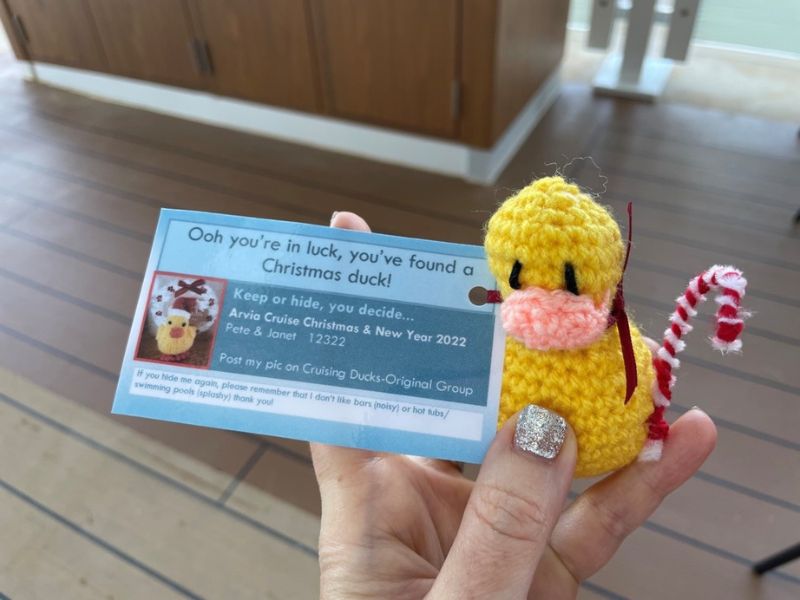
One interesting gift you may consider is a duck.
The cruise duck trend is still going strong, and the cheeky rubber ducks are hidden all over the ship by passengers. And they’re not just a huge hit with fellow cruisers, but also with the crew.
Many crew members collect them for their kids back home. It’s a cute way to stay connected to their families while they’re away at sea.
That said, one crew member was reportedly let go for collecting too many ducks (yikes!).
So, if you want to gift a duck to a crew member, it’s best to hand it over directly, with a quick note explaining why. It’s sweet, safe, and shows thoughtfulness.
The Truth About Automatic Gratuities
It’s important to talk about automatic gratuities at this point.
Most cruise lines now automatically add gratuities to your cruise fare. You can either pay these in advance or you can wait until you’re onboard and pay the gratuities when you’re settling your bill.
Only a handful of cruise lines don’t charge tips – typically the British ones (P&O Cruises, Marella, etc.) or the ultra-luxury ones. MSC Cruises also waives gratuity charges on certain sailings.
For the other cruise lines, they’re automatically added to your account, hence the name.
They aren’t mandatory though. You can remove them by visiting the Guest Services desk onboard.
Some people remove them because they prefer to give cash tips. Which is OK, except that the automatic gratuities are often split between several teams, some of whom you might never see to hand over a cash tip. So they get shorted when you stick to cash only.
Others remove them just because they don’t like the tipping culture.
The issue is that some cruise lines make the automatic gratuities part of the crew’s salary. So they aren’t really tips, more a part of their wage, and each guest who removes their gratuities then harms the salary earned by the crew.
So it’s always best to pay the automatic gratuities, and then if you want to, top it up with a little bit of cash for the crew members who go above and beyond.
Cash tips are really appreciated because the crew receiving them keep 100%, and so it’s really valuable to them.
TODAY’S BEST CRUISE DEALS!
Don’t miss these offers…
Final Word
So here’s the part most passengers never consider.
On many cruise lines, automatic gratuities aren’t just a “thank you” bonus. They form part of the crew’s expected income. When they’re removed, it doesn’t just send a message. It can directly reduce what someone takes home to support their family.
Extra cash tips are always appreciated because the crew member keeps 100%. But recognition matters too. A named mention in a survey can improve future table assignments. A good review can earn rare perks. A short handwritten note might be kept for years.
You don’t have to tip beyond what you’re comfortable with.
But once you understand what gratuities actually mean behind the scenes, it’s hard to see them the same way again.
Marella vs P&O comes down to two things: how you want to pay and how you want to get to the ship. Marella is the all-inclusive, fly-cruise choice: flights, transfers, drinks and tips sit inside one fare on five mid-sized ships. P&O Cruises is the no-fly choice from Southampton, with a bigger, newer fleet and more dining and entertainment, but you pay extra for drinks unless you add a package.
Below we compare the two lines side by side, list every P&O and Marella cruise ship currently sailing (including the fleet changes announced for 2027 to 2029), and finish with a simple guide to which line suits which kind of UK cruiser.
Marella vs P&O at a glance
Marella Cruises
P&O Cruises
Owner
TUI Group
Carnival Corporation (via Carnival UK)
Fleet
5 ships, all built 1995 to 1997 and refurbished
7 ships, built 2000 to 2022
Ship size
Mid-sized, roughly 1,800 to 1,900 guests
From around 1,900 guests (Aurora) to over 5,000 (Iona, Arvia)
Drinks
Included in the fare (premium upgrade available)
Extra, or buy a Classic or Deluxe package
Tips
Included
Included
Flights and transfers
Included on fly-cruises, from UK regional airports
Included on fly-cruise holidays; most sailings are no-fly from Southampton
Adults-only ships
Explorer 2, plus Discovery 2 from winter 2027
Aurora and Arcadia (some family sailings from December 2026)
Dress code
Relaxed, occasional optional dress-up nights
Smart casual, plus formal Celebration Nights
Loyalty scheme
None
Peninsular Club
Best for
Sunshine fly-cruises with no bar bill
No-fly holidays, big-ship variety, longer voyages
All-inclusive vs pay-as-you-go: what the fare covers
This is the biggest difference between the two lines, and the one that makes headline prices hard to compare.
Marella: drinks, tips and flights in one price
A standard Marella fare includes your cabin, meals in the main restaurants and buffet, a wide range of house alcoholic and soft drinks, gratuities, and on fly-cruises your return flights and airport-to-port transfers. If you want branded spirits, better wines and cocktails, you can upgrade to Premium All Inclusive. We break down what each tier covers in our Marella drinks package guide. Speciality restaurants and some extras, such as reserving a specific cabin, cost more.
P&O: gratuities included, drinks extra
P&O Cruises includes gratuities and main dining, but drinks are paid for as you go. Bar prices are broadly in line with a UK pub or a little lower. Since December 2025 P&O has sold two bundles for cruises of five nights or more departing from March 2026:
Classic (about £49 per person per day): standard alcoholic and soft drinks, Essential Wi-Fi and a speciality dining credit.
Deluxe (about £59 per person per day): premium spirits, cocktails and craft beer, Ultimate Wi-Fi and a larger dining credit.
Package prices can change, so check the current rate with P&O before booking. If you only drink a glass or two in the evening, paying as you go on P&O can work out cheaper than Marella’s built-in drinks. If you enjoy a few drinks through the day, Marella usually wins on value.
P&O cruise ships: the full fleet
P&O Cruises sails seven ships. Five are family ships and two are usually adults-only. Passenger figures are approximate, based on standard double occupancy.
Ship
Entered service
Approx. guests
Who it suits
Arvia
2022
5,200
Families, big-ship fans, Caribbean fly-cruises in winter
Iona
2020
5,200
Families, no-fly Norway and Northern Europe
Britannia
2015
3,600
Mixed ages, classic P&O feel on a modern ship
Azura
2010
3,100
Families, fly-cruise Mediterranean
Ventura
2008
3,100
Families, no-fly Southampton breaks
Arcadia
2005
2,000
Adults, longer voyages and world cruises
Aurora
2000
1,900
Adults, traditional smaller-ship cruising
P&O fleet changes: Queen Anne in, Arcadia out
In October 2026 Carnival Corporation confirmed a fleet shuffle. Cunard’s Queen Anne will finish her Cunard career with a 2029 world voyage, then be refitted and renamed before joining P&O Cruises in May 2029. Arcadia’s farewell P&O season ends in August 2029, after which she transfers to Holland America Line. The new name for Queen Anne had not been announced at the time of writing. Read more in our report on Queen Anne heading to P&O and Arcadia moving to Holland America.
P&O has also opened Arcadia and Aurora to all ages on a small number of sailings, starting in December 2026 and running to September 2027, aimed at multi-generational families. For most of the year both ships stay adults-only, so check the sailing before booking if a child-free cruise matters to you.
Which is the best P&O cruise ship?
There is no single answer. Arvia and Iona have the most restaurants, bars and shows, and the biggest choice of cabins. Britannia is a good middle ground. Aurora and Arcadia are the ones to pick if you prefer a quieter, adults-only ship and longer itineraries. If Arvia appeals, our guide to the best and worst cabins on P&O Arvia will help you choose a room.
Both lines put a pool deck at the heart of the ship, but the scale is very different. Photo: Tom Fisk on Pexels
Marella cruise ships: the full fleet
Marella sails five mid-sized ships, all bought second-hand from Royal Caribbean Group brands and refurbished for UK holidaymakers. None is new, but their size means fewer queues and an easier ship to find your way around.
Ship
Built
Joined Marella
Former name
Notes
Marella Voyager
1997
2023
Celebrity Mercury / Mein Schiff Herz
Newest arrival, family ship
Marella Explorer
1996
2018
Celebrity Galaxy / Mein Schiff 1
Family ship, Dining Club
Marella Explorer 2
1995
2019
Celebrity Century
Adults-only
Marella Discovery
1996
2016
Splendour of the Seas
Family ship, Caribbean winters
Marella Discovery 2
1995
2017
Legend of the Seas
Adults-only from winter 2027
Discovery 2 goes adults-only
Marella has confirmed that Discovery 2 will become a permanent adults-only ship from the winter 2027 season. Its children’s spaces are being turned into a speakeasy bar, an escape room, a karaoke room and an arts and crafts area. That gives Marella two adults-only ships alongside Explorer 2. Plans for two brand-new Marella ships ordered in 2025 were later dropped, so the five-ship fleet is what you can expect for the next few years.
Which is the best Marella cruise ship?
For couples who want no children on board, Explorer 2 (and Discovery 2 from winter 2027) is the obvious pick. For families, Explorer and Voyager have the most venues. Discovery is a favourite for Caribbean fly-cruises. Our profile of Marella Discovery covers that ship in more detail.
Itineraries: no-fly from Southampton vs fly-cruise
P&O Cruises is built around Southampton. Most of its programme sails round-trip from there, to Norway, the Baltic, the Canary Islands, Spain and Portugal, and the Mediterranean on longer trips. You can drive to the port, which suits people who dislike flying or want to pack without baggage limits. P&O also runs fly-cruises, typically to the Caribbean and the Mediterranean in winter.
Marella is a fly-cruise line. Its ships are based in sunshine hubs such as Palma, Malaga, Tenerife, Gran Canaria, Barbados and La Romana in the Dominican Republic, with flights from a dozen or so UK regional airports. That makes it easy to avoid a long drive south. Itineraries tend to be port-intensive, with more stops and fewer sea days on a typical seven-night cruise. Marella also offers Cruise and Stay packages that add a hotel stay before or after the cruise.
Cabins compared
P&O’s newer ships have more balcony cabins, and Iona and Arvia add Conservatory Mini-suites with extra glazed outdoor space. Azura and Ventura have a number of single cabins, useful for solo travellers. Marella’s older ships have a higher share of inside and outside (window) cabins, though balconies have been added on several ships and suites are available. Marella charges a fee to choose a specific cabin rather than taking an allocated one. Both lines provide tea and coffee facilities in cabins. Whichever you book, check the current deck plan for noisy spots near bars, theatres and pool decks.
Dining, entertainment and atmosphere
Dining. P&O has the edge on choice, especially on Iona and Arvia, which have around 30 places to eat and drink, including several speciality restaurants such as Sindhu and the Epicurean. Marella offers main restaurants, a buffet and paid speciality venues (Asian, steak and Italian concepts, depending on the ship), with a Dining Club on the Explorer ships.
Entertainment. P&O puts on large production shows, live music and comedy, with the biggest venues on its newest ships. Marella’s entertainment is lively but on a smaller scale, built around its own show company, bars and deck parties.
Atmosphere and dress code. Marella is relaxed, with no formal nights in the traditional sense, only optional dress-up evenings. P&O is smart casual most nights with formal Celebration Nights on most cruises, which some passengers love and others avoid.
Kids and families
Both lines have kids’ clubs. P&O’s Reef clubs run themed activities in partnership with Aardman, and its family ships have children’s pools and family-friendly dining. Marella’s M Club caters for children aged 3 to 11, with sessions for younger children too, though space on some ships is limited, so book activities early in the school holidays. With Discovery 2 going adults-only, Marella will have three family ships from winter 2027, so families should check which ship they are booking.
Working out the real cost means adding drinks and travel to the headline fare. Photo: Hetvi Patel on Pexels
Prices and value
Comparing headline fares is misleading because the inclusions differ. As a rough guide from Cruise Critic, seven-night Mediterranean sailings in May 2027 started from about £992 per person on Marella Discovery 2 (with flights, drinks and tips) and about £829 per person on P&O Azura (with flights, but no drinks). Add a P&O Classic package for seven nights at around £49 a day and the P&O holiday comes to well over £1,100 per person, so Marella can be the better value for drinkers. Non-drinkers, or those happy with the odd glass of wine, may find P&O cheaper. For current offers on both lines, see our roundup of cruise deals for 2027.
A simple test: add up what you would realistically spend on drinks per day on P&O. If it is more than the gap between the two fares divided by the number of nights, Marella is likely the better deal.
Marella or P&O: who should pick which?
Choose Marella if you:
Want one up-front price with drinks and tips included
Prefer to fly from a regional airport rather than travel to Southampton
Like port-heavy itineraries in the sun and a relaxed dress code
Want a smaller, easy-to-navigate ship or an adults-only fly-cruise
Choose P&O Cruises if you:
Want a no-fly cruise from Southampton
Value newer ships, more restaurants and bigger shows
Drink little and would rather pay as you go
Enjoy formal nights, longer voyages or collecting loyalty benefits
If you are also weighing up other UK-friendly lines, our comparison of P&O Cruises vs Princess Cruises covers another popular choice.
UK cruisers looking at smaller, traditional ships may also find our P&O vs Ambassador Cruise Line comparison useful.
If MSC is also on your shortlist, our comparison of P&O vs MSC Cruises covers ships, Southampton departures, drinks and prices.
Drinks are a big part of the comparison, and our guide to P&O drinks package prices sets out what each package includes.
FAQs
Is Marella better than P&O?
Neither is better overall. Marella is better value if you want drinks, tips and flights included on a sunshine fly-cruise. P&O is better for no-fly holidays from Southampton, newer ships and more dining choice.
What are the names of the Marella cruise ships?
Marella sails five ships: Marella Explorer, Marella Explorer 2, Marella Discovery, Marella Discovery 2 and Marella Voyager. Explorer 2 is adults-only, and Discovery 2 becomes adults-only from winter 2027.
What are the P&O cruise ships?
P&O Cruises sails Arvia, Iona, Britannia, Azura, Ventura, Arcadia and Aurora. Cunard’s Queen Anne is due to join P&O in May 2029 under a new name, and Arcadia leaves for Holland America Line later that year.
Who owns P&O Cruises and Marella?
P&O Cruises is part of Carnival Corporation, run through Carnival UK in Southampton. Marella Cruises is owned by the travel company TUI Group.
Are tips included on Marella and P&O?
Yes. Both lines include gratuities in the fare, so there is no daily service charge to budget for.
7 Things Experienced Cruise Travellers Do Differently
If you’ve ever come off a cruise thinking, that was fun but also weirdly exhausting, you’re not alone.
Cruising isn’t like normal travel; it has its own learning curve, and most of it isn’t written anywhere obvious. The seasoned cruisers you see floating around with a drink and zero stress didn’t get lucky – they learned what actually matters after a few trips.
They know what to sort early, what to ignore completely, and how to avoid the little traps that drain your energy.
This article is about drawing from their experience with these seven tips, so your cruise feels a lot more enjoyable from day one.
Pick The Ship Before The Destination
Anyone who’s done this a few times before knows to stop letting the map make the decisions for them.
They’ve learned that the ship is the place you actually live for a week or two, not the ports you’ll pop into for a few hours at a time. Different ships have different vibes and offer a completely different experience.
When the ship fits you, even ordinary sea days feel good. When it doesn’t, even the best destination can’t save it.
Your cabin booking strategy needs to be well thought-out.
A mid-ship cabin means fewer motions and easier walks to everything. Being a few decks away from busy areas saves you from foot traffic and light-night noise. Experienced travellers also think about what’s above and below them, not just the view.
Elevators sound convenient until you’re waiting in a crowd, so being near stairs suddenly makes sense. Focus on choosing a space that works with the rhythm of your day and makes everything easier.
People who’ve been doing this a while don’t gamble with travel days anymore.
They’ve done the mad sprint through an airport, the sweaty watch-checking, the “we’ll be fine” optimism – the whole shebang. Arriving early takes all of that off your dance card.
Arriving the day before means there is plenty of time for a decent coffee, lunch near the port, maybe even a moment or two to feel smug about your life choices. That calm, unhurried state carries straight on board and sets the tone for the cruise.
Cruise insurance is one of those things experienced travellers never skip, because they’ve seen how quickly plans can change.
Flights get delayed, bags go missing, ankles get twisted, and ships don’t hang around while you sort it out. Medical care onboard or in a foreign port can cost more than the cruise itself, and suddenly that “we’ll cross that bridge when we come to it” plan feels super expensive.
Insurance lets you relax properly. You’re not doing mental calculations every time something feels off or plans shift slightly. If something goes sideways, there’s backup and support instead of stress.
Pre-Book Dinners and Shows
Seasoned cruisers know that the best dinners and shows don’t magically stay available.
They book them before the ship even leaves port. It’s not a pedantic thing; it’s more like making sure you get the most out of the cruise experience. When all of your reservations are locked in ahead of time, your evenings will be much more enjoyable.
Absolutely no one enjoys hanging around outside restaurants, waiting for a table to become available – so learn to book before you go.
One of the best things about going on a cruise is the excursion options.
Some days just call for a ship excursion with transport handled and zero thinking required. Other ports are easy to explore independently, often for less money and with more flexibility.
Experienced travellers also know to read recent reviews, check timing carefully, and leave plenty of time to get back on board without stressing or panicking. They avoid overpacking on the day and choose one extraordinary experience rather than stacking activities back to back.
People who cruise often stop letting the dinner bell run their evenings.
They know that when most passengers head to eat all at once, the experience starts to feel hurried and packed. So they choose a different window – earlier, while the ship is still easing into dusk, or later, once the rush has passed.
The difference is immediately noticeable. You’re seated without hovering, meals arrive calmly, and the room isn’t quite so deafening.
Final Thoughts
Cruising has a talent for being brilliant and baffling at the same time. One minute you’re sipping a drink at sea, the next you’re stuck in a long line wondering it all got so busy so quickly.
Follow these seven simple habits above to make things go smoother and with fewer issues.
The result is less rushing, fewer headaches, and far more time actually enjoying the experience. Borrow these small, sensible tricks and your next cruise won’t feel like a learning curve – it’ll feel like you knew what you were doing all along.
Embark on a journey through the azure waters of the Mediterranean, where all-inclusive cruises promise unforgettable adventures. From historic ports to stunning coastlines, these voyages offer a unique blend of luxury and discovery. Whether you seek relaxation or exploration, an all-inclusive cruise in the Mediterranean caters to every traveler’s dream. Many adventurers also delight in a cruise in the Mediterranean for its array of cultural and historical sites. For those who desire a truly pampered experience, an all inclusive cruise ensures seamless relaxation from start to finish.
Setting sail on a cruise in the Mediterranean allows you to explore some of the world’s most captivating destinations while enjoying the comforts of an all inclusive cruise. With its diverse offerings, the Mediterranean entices travelers with rich cultural heritage, breathtaking landscapes, and exquisite cuisine. This region’s allure lies not only in its picturesque scenery but also in the seamless experience that combines travel and leisure into one remarkable journey.
Convenience and value of all-inclusive packages
All-inclusive cruises present a remarkable opportunity for travelers seeking both convenience and value. These packages bundle accommodations, meals, entertainment, and various activities into one comprehensive price, simplifying travel planning. You can enjoy gourmet dining experiences without worrying about additional costs, making it easier to manage your vacation budget effectively. Moreover, an all inclusive cruise can be a smart choice for those who appreciate predictable expenses and top-notch amenities.
Amenities on board these cruises often include luxurious spas, fitness centers, pools, and varied entertainment options like live shows and themed parties. Excursions at different ports allow you to explore local cultures and traditions with guided tours or independent exploration. The ease of having everything arranged enables you to focus on enjoying your vacation without logistical concerns.
Key destinations with unique cultural attractions
The Mediterranean is renowned for its vibrant cities and scenic beauty that draw countless cruise enthusiasts each year. Destinations such as Barcelona, Rome, and Athens offer a rich tapestry of history and culture. In Barcelona, you can marvel at the architectural wonders of Gaudí, while Rome invites you to wander through ancient ruins that tell stories of empires past.
Aside from urban allure, the Mediterranean boasts stunning natural landscapes. The Greek Isles provide idyllic beaches and crystal-clear waters perfect for sunbathing or water sports. Meanwhile, the Amalfi Coast captivates with its dramatic cliffs and charming coastal towns. Each destination presents an opportunity to immerse yourself in local traditions, whether it’s savoring authentic cuisine or participating in regional festivals. Discovering these varied destinations on a cruise in the Mediterranean offers an immersive cultural experience for travelers of all ages.
Tips for selecting the perfect cruise for you
Choosing an all-inclusive cruise involves considering several factors to ensure a memorable journey tailored to your interests. Evaluate the itinerary carefully; some cruises prioritize cultural excursions, while others focus on leisure activities like beach visits or culinary experiences. Identify what excites you most about cruising, whether it’s exploring historical sites or indulging in onboard amenities.
Your ideal cruise may also depend on ship size and onboard offerings. Larger ships provide diverse activities but might feel bustling, whereas smaller vessels offer intimacy and exclusivity with personalized service. Special offerings like wellness programs or themed cruises add another layer of customization to your voyage. With myriad options available, finding the right fit ensures that your travel experience aligns perfectly with your expectations.
Exploring options for an unforgettable travel experience
An all inclusive cruise provides not only a stress-free way to explore the Mediterranean’s diverse landscapes but also enriches your travel experience with unique cultural interactions and leisure activities. As you plan your journey, consider how each element—from destinations visited to services offered—enhances your understanding and enjoyment of this captivating region.
The combination of luxury and adventure makes these cruises a compelling choice for many travelers. By weighing personal preferences against available itineraries and amenities, you can craft an itinerary that resonates with your interests while delivering exceptional value for money spent. Whether embarking alone or with family and friends, this style of cruising offers something special for everyone involved.